Content Menu
● Top Acetylene Regulator Suppliers Serving Indonesia
>> 1. Zhejiang Bril Welding Equipment Co., Ltd.
>> 2. PT Samator Indo Gas Tbk / Samator Group
>> 3. PT Surya Biru Murni Acetylene Tbk
>> 4. Air Products Indonesia and Air Products Welding Equipment Channels
>> 6. Local Indonesian Welding Equipment and Gas-Control Distributors
● Acetylene Regulator Technical Requirements
>> Pressure Range and Acetylene Safety
>> Inlet Threads and Connections
>> The “Same Body, Different Inside” Problem
>> Step 1: Define Your Market Configuration
>> Step 2: Verify Factory Identity
>> Step 3: Use a Real Sample Process
>> Step 4: Set Inspection Requirements
>> Step 5: Plan Logistics Early
● FAQ
>> 1. How can I verify that a supplier’s ISO 9001 certificate is not expired or fake?
>> 2. Does CE marking prove that an acetylene regulator is safe for every market?
>> 3. What is the biggest quality risk in low-cost acetylene regulators?
>> 4. Should a flashback arrestor be included with every acetylene regulator?
>> 5. Can an oxygen regulator be used for acetylene if the thread fits?
Indonesia is an important market for oxy-fuel welding, steel fabrication, ship repair, construction, maintenance, and industrial-gas distribution. However, buyers looking for an acetylene regulator manufacturer in Indonesia should distinguish between three very different supplier types: dedicated regulator factories, industrial-gas companies that supply equipment with gas packages, and local distributors that import or resell branded welding products.
For overseas brands, wholesalers, and welding-equipment distributors seeking private-label acetylene regulators, a local Indonesian gas supplier may offer strong market coverage but not necessarily deep OEM engineering or regulator manufacturing capability. In contrast, a specialized export manufacturer such as Zhejiang Bril Welding Equipment Co., Ltd. can be more suitable where buyers need custom branding, thread configurations, packaging, stable production, and model-level technical documentation.
Indonesia’s industrial-gas ecosystem is supported by strong demand from metals, fabrication, energy, construction, and marine industries. The country is also a significant steel exporter: Indonesia ranked as the world’s seventh-largest iron and steel exporter in 2023, with exports valued at USD 28.41 billion, according to Indonesia’s trade-development reporting. This industrial base supports continued demand for welding gases, cutting systems, pressure-control devices, and safety accessories.
How We Selected Suppliers
This is not a simple “company name list.” The suppliers below were assessed according to what professional procurement teams normally need when choosing an acetylene regulator partner:
– Product relevance: Whether the company is directly involved in acetylene, oxy-fuel welding, cylinder regulators, gas-control equipment, or related safety devices.
– Manufacturing versus distribution role: Whether the supplier is a dedicated regulator producer, a gas producer, an integrated equipment supplier, or a local distributor.
– Quality-system visibility: Availability of ISO 9001, CE-related documentation, recognized technical standards, factory audit evidence, or traceable quality procedures.
– OEM/ODM capability: Ability to support private labels, customized inlet/outlet threads, pressure ranges, dial designs, packaging, manuals, and country-specific product configurations.
– Technical and safety competence: Understanding of acetylene-specific pressure limits, left-hand-thread connections, flashback protection, leak testing, and regulator-material compatibility.
– Supply-chain suitability: Production flexibility, MOQ feasibility, communication efficiency, lead-time stability, after-sales support, and export readiness.
A critical technical benchmark for cylinder-mounted welding regulators is ISO 2503, which covers pressure regulators and regulators with flow-metering devices used on gas cylinders for welding, cutting, and allied processes, within its defined pressure scope. Buyers should ask suppliers whether the exact model—not merely the company in general—has been designed, tested, and documented against the applicable requirements.
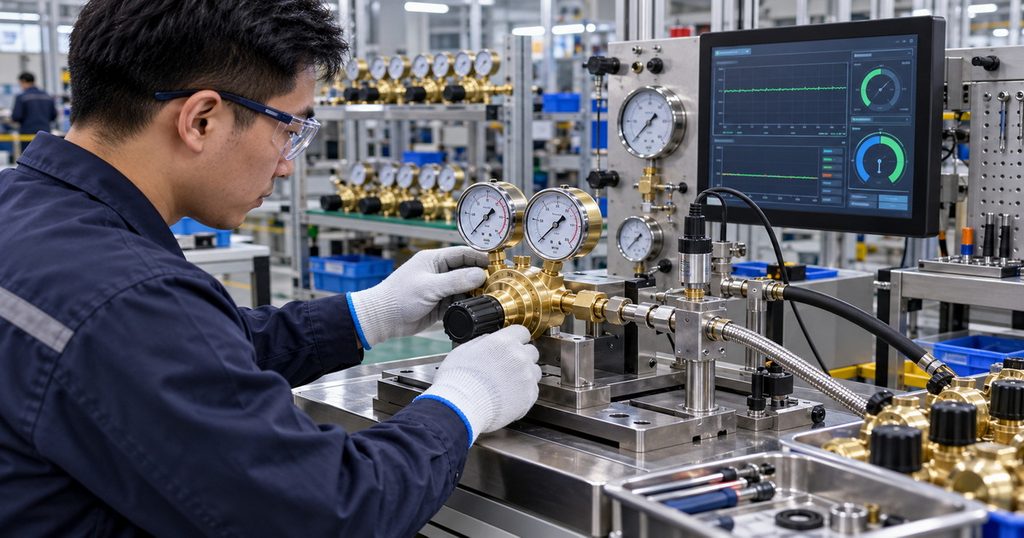
Why Indonesia Matters
Indonesia is not generally known as a concentrated global manufacturing center for acetylene regulators in the same way that Wenzhou and Ningbo are associated with valves, fittings, and industrial hardware supply chains in China. Instead, Indonesia’s strength lies in its wide industrial-gas distribution network, local welding demand, equipment trading channels, and nationwide gas-service infrastructure.
For buyers, this creates two practical sourcing paths:
| Sourcing path | Suitable for | Main benefit | Main limitation |
|---|---|---|---|
| Indonesian industrial-gas supplier | Local end users, fabrication plants, cylinder-gas customers | Gas supply, local service, equipment availability | Usually limited private-label regulator manufacturing |
| Indonesian welding distributor | Buyers needing local stock and brand access | Faster domestic fulfillment and product familiarity | Product specifications and customization may be limited |
| Dedicated regulator OEM manufacturer | Overseas brands, importers, distributors, equipment assemblers | Private label, engineering support, flexible packaging, controlled production | Requires import planning and qualification process |
| Integrated gas-system provider | Large factories and project buyers | Installation, piping, gas equipment, site support | Often not focused on individual OEM regulator programs |
For regional distributors, the strongest strategy is often to combine an export-oriented regulator manufacturer with a local Indonesian gas or equipment channel. The manufacturer provides product consistency and customization, while local partners support market access, cylinders, service, and distribution.
Top Acetylene Regulator Suppliers Serving Indonesia
1. Zhejiang Bril Welding Equipment Co., Ltd.
Best suited for: Overseas brands, welding-equipment importers, industrial-gas distributors, wholesalers, and small-to-mid-sized private-label buyers seeking an acetylene regulator OEM/ODM partner.
| Item | Details |
|---|---|
| Founded | 2002 |
| Manufacturing location | Wenzhou, Zhejiang, China |
| Main products | Acetylene regulators, oxygen regulators, argon regulators, CO₂ regulators, heated CO₂ regulators, nitrogen regulators, propane regulators, flow-meter regulators, and dual-stage regulators |
| Quality credentials stated by company | ISO 9001 system certification under UKAS and IAF recognition; CNAS- and CE-related product certifications stated by the company |
| Manufacturing scale stated by company | More than 200 employees and over 3,500 m² of production area |
| Primary customers | Welding-equipment brands, industrial-gas suppliers, distributors, importers, and OEM customers |
| OEM/ODM scope | Branding, customized configurations, packaging, technical communication, product-range development, and export-oriented private-label support |
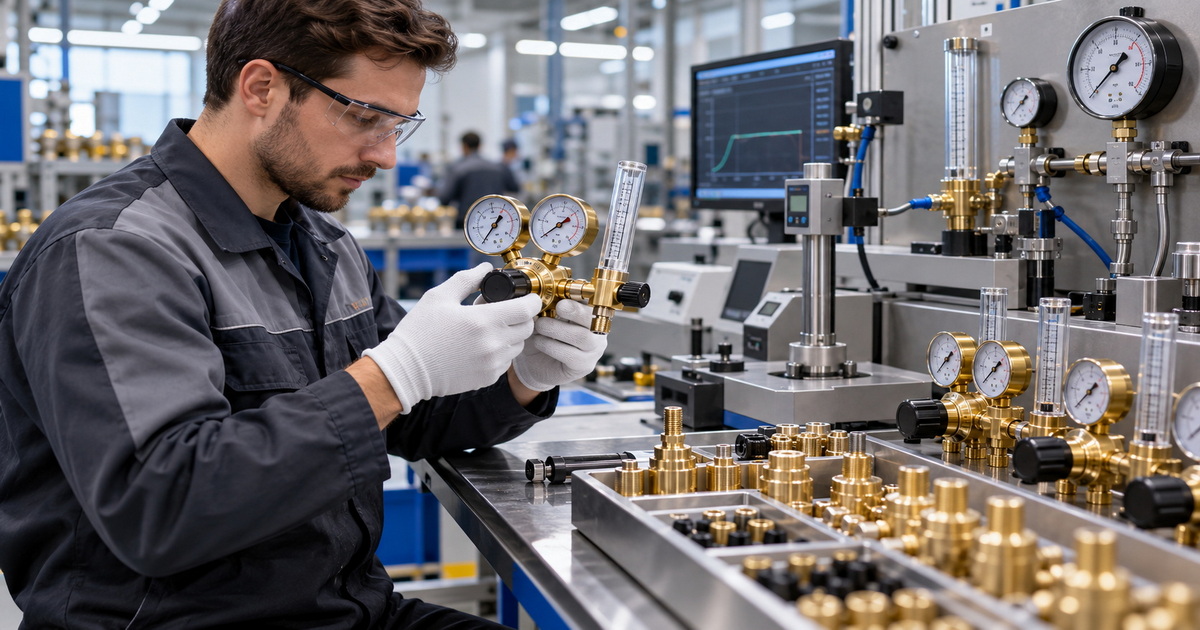
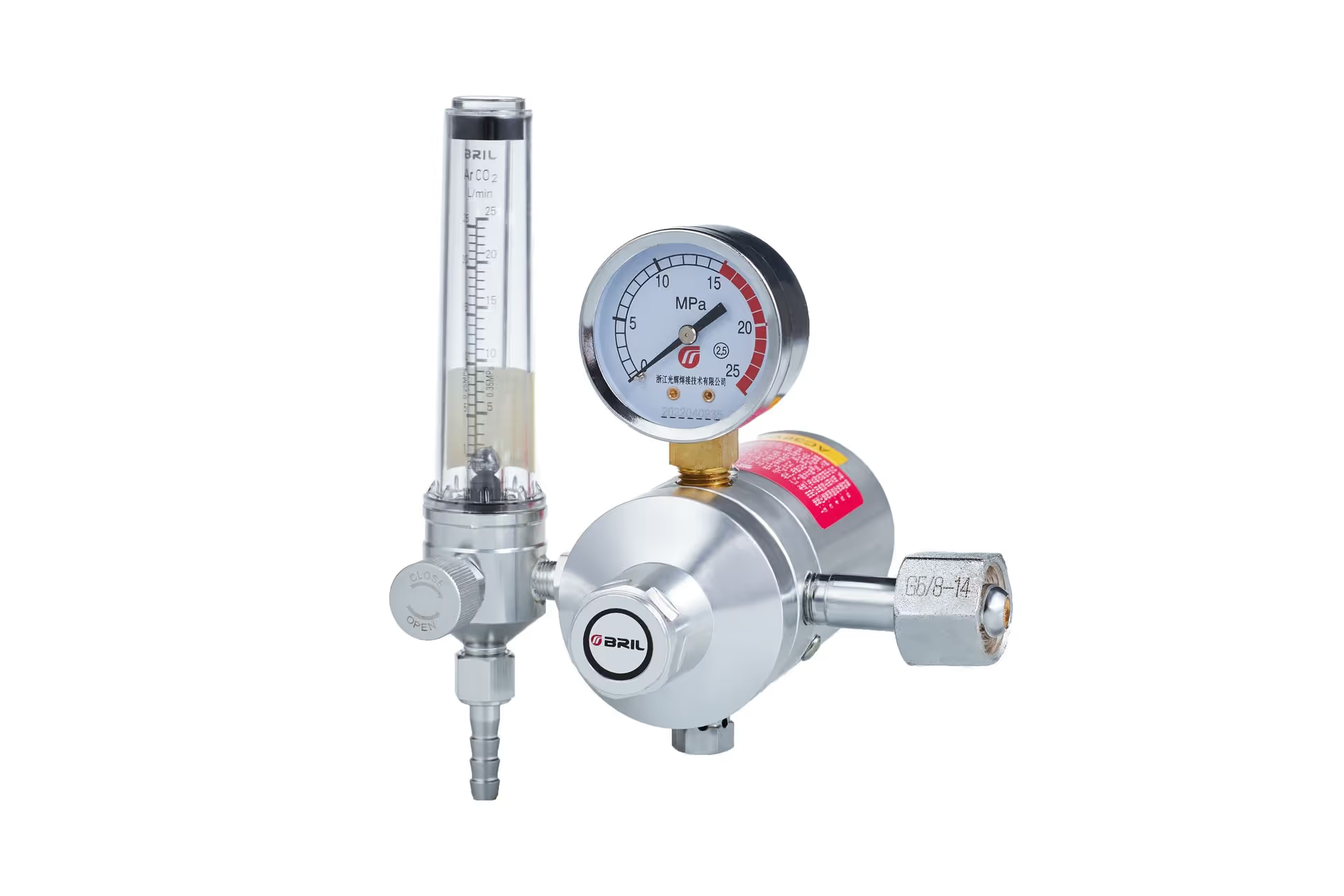
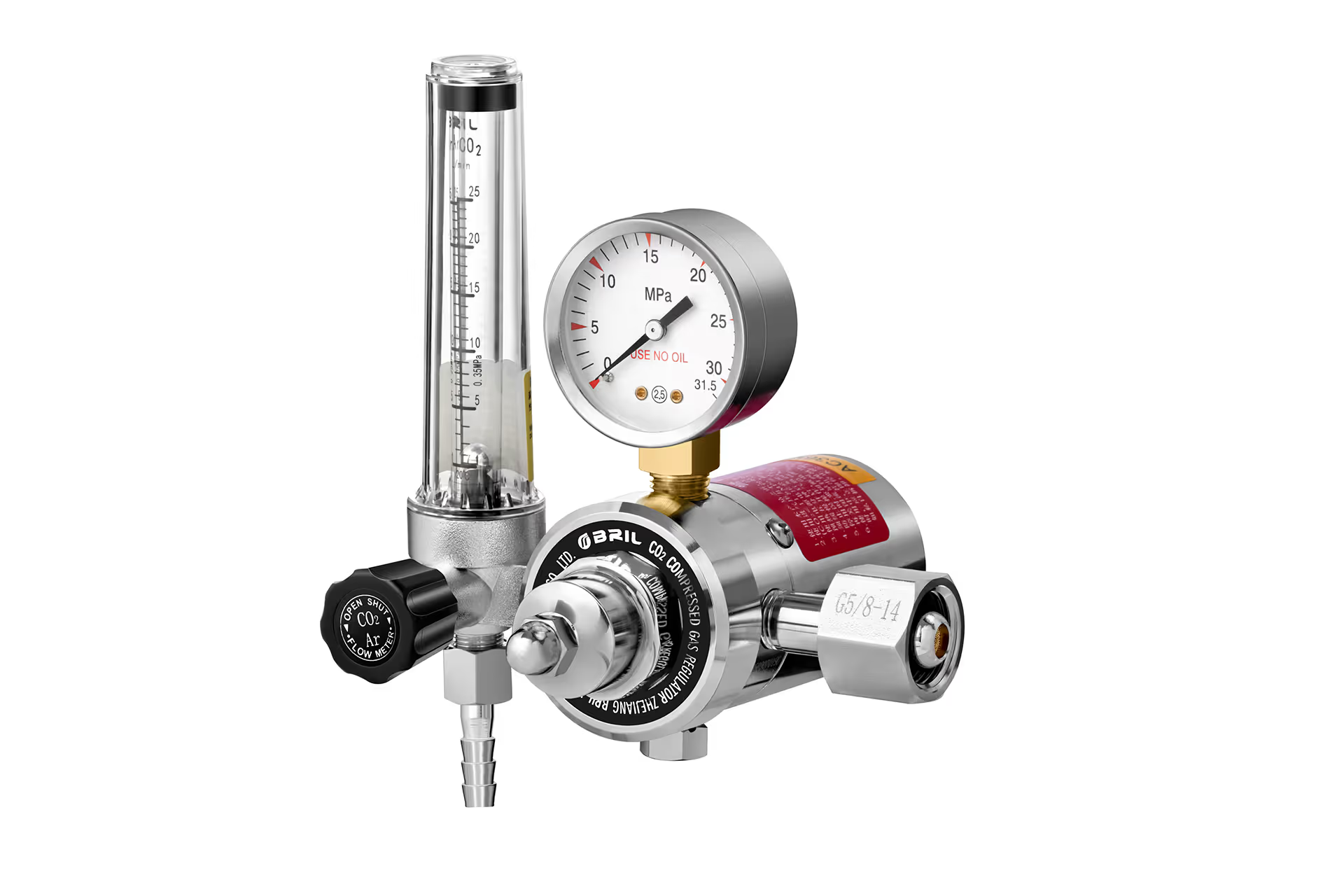
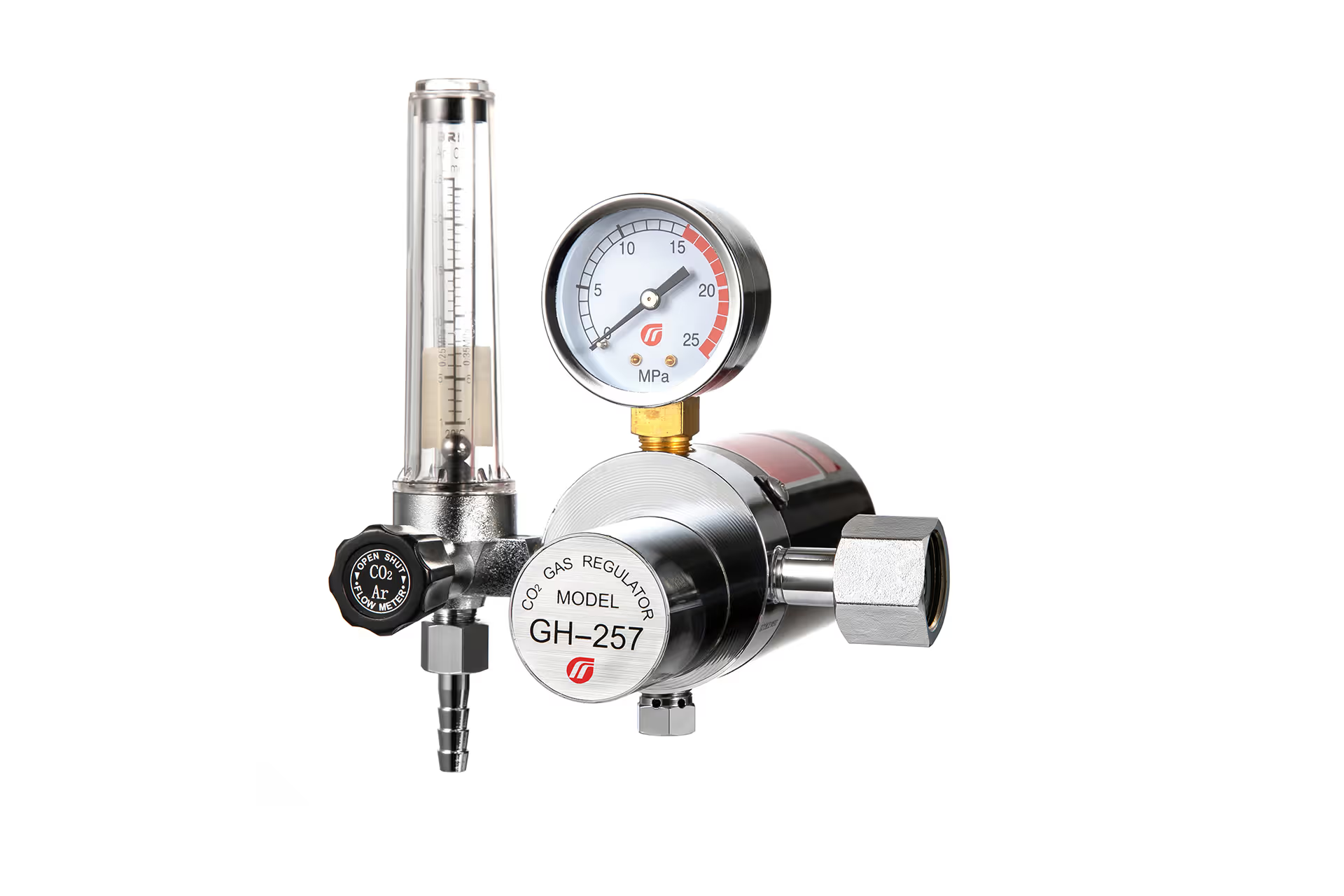
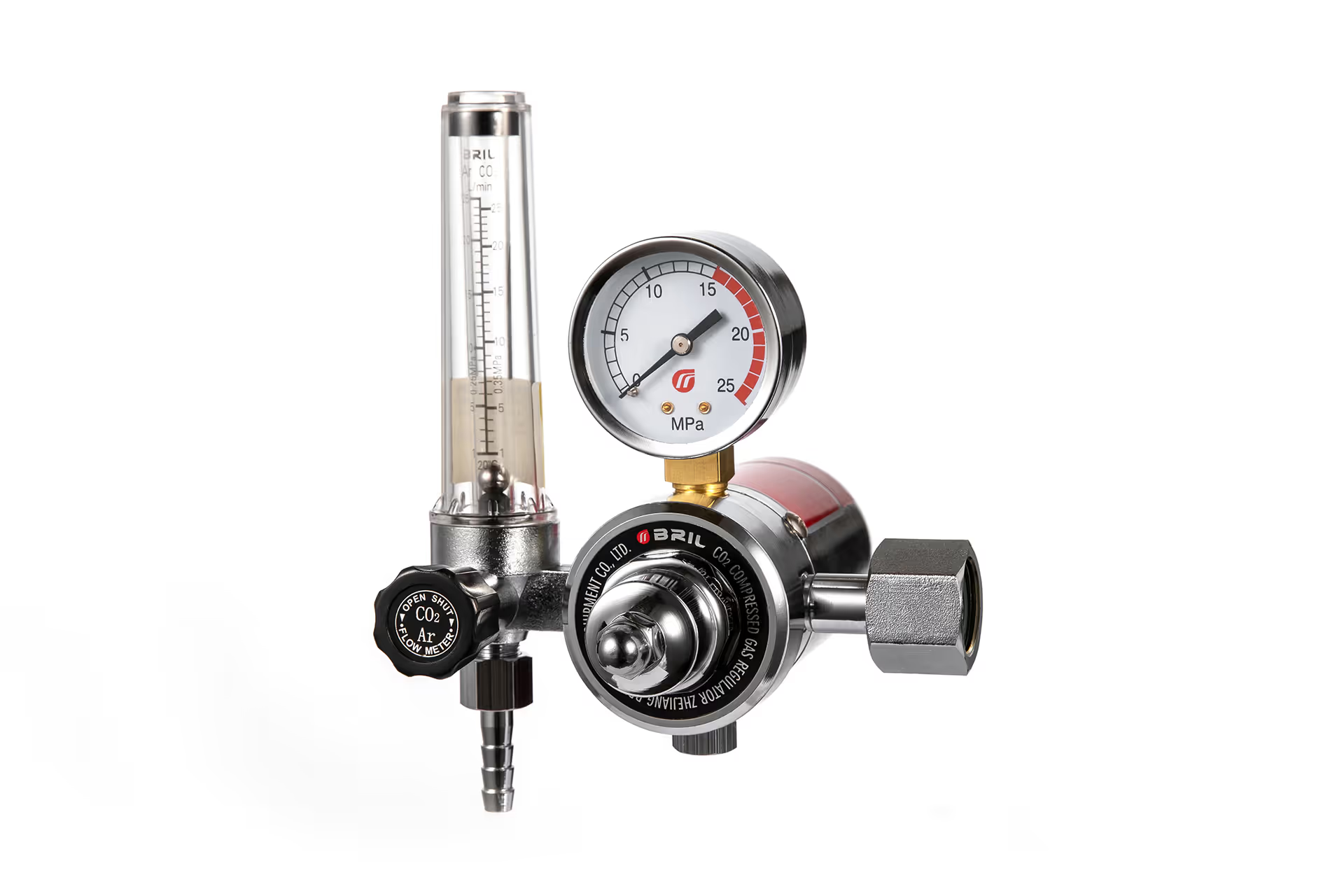
Zhejiang Bril Welding Equipment Co., Ltd. is a specialized industrial gas-regulator manufacturer rather than an Indonesia-based gas distributor. This distinction matters for buyers who need a stable OEM source for acetylene regulators, especially when the goal is to build a branded product line rather than simply purchase locally stocked equipment.
Founded in 2002, Bril focuses on the development, manufacturing, and sale of industrial gas pressure regulators. The company states that it holds ISO 9001 system certification recognized through UKAS and IAF, while its products have CNAS- and CE-related certification support. It also reports supplying regulators to established welding-equipment and gas-industry brands, including domestic Chinese welding-equipment companies and overseas customers such as Panasonic, OTC, and Messer-related OEM programs.
For Indonesian distributors or overseas buyers selling into Indonesia, Bril’s value is primarily its flexibility. A smaller or mid-sized brand may not meet the MOQs required by very large multinational equipment suppliers, but it may still need professional-level customization. In this situation, Bril can be a practical candidate because it combines a focused regulator product range with direct factory communication, OEM packaging support, and a broad portfolio spanning acetylene, oxygen, CO₂, argon, nitrogen, propane, and dual-stage regulators.
The company should not be selected solely on website claims. Buyers should still request the current ISO certificate, product-specific CE or testing documentation where applicable, pressure-test records, incoming brass-material controls, assembly inspection standards, and samples of the exact acetylene model under consideration. Bril’s own company profile states that it has more than 20 years of industry specialization, serves more than 30 countries and regions, and operates comprehensive testing and inspection equipment.
Why it may fit Indonesian-market buyers
– Dedicated regulator manufacturing rather than general equipment trading.
– Suitable for private-label acetylene, oxygen, argon, CO₂, and LPG regulator lines.
– Useful for buyers requiring coordinated product appearance across a full gas-regulator portfolio.
– Better fit for brands that require response speed, direct engineering communication, and customized packaging.
– Can support regulator assortments for welding, cutting, industrial-gas control, and distributor catalog programs.
2. PT Samator Indo Gas Tbk / Samator Group
Best suited for: Indonesian industrial users, regional gas customers, manufacturers requiring integrated industrial-gas supply, and buyers prioritizing domestic distribution coverage.
| Item | Details |
|---|---|
| Company background | Indonesian industrial-gas business with historical roots in the country’s gas industry |
| Group positioning | Industrial gas, healthcare, energy, trading, and EPC-related activities |
| Main relevance | Industrial gases, gas equipment, distribution, installations, and industrial service |
| Acetylene relevance | Hydrocarbon gas portfolio includes acetylene |
| Market focus | Indonesia-wide industrial, healthcare, fabrication, petrochemical, food, and manufacturing sectors |
| OEM/ODM focus | Not primarily positioned as a private-label acetylene regulator manufacturer |
PT Samator Indo Gas Tbk is one of Indonesia’s most important industrial-gas suppliers. It is highly relevant to acetylene-regulator purchasers because the company supplies a broad portfolio of industrial gases and related equipment and services. Its product and service scope includes oxygen, nitrogen, argon, carbon dioxide, hydrogen, propane, acetylene, specialty gases, gas handling, cutting equipment, and gas-system support.
Samator Group reports that it has developed from a gas company founded in 1975 into a multi-sector Indonesian group, while PT Samator Indo Gas operates as a major industrial-gas provider with a broad distribution network. The group states that it serves more than 8,800 customers across manufacturing, healthcare, petrochemical, food and beverage, and other sectors.
For buyers in Indonesia, Samator is a logical option when procurement needs extend beyond a regulator alone. For example, a fabrication plant may need acetylene cylinders, oxygen supply, cylinder delivery, equipment support, piping, safety practices, and ongoing service. In this case, an integrated industrial-gas supplier can reduce coordination complexity.
However, overseas buyers should recognize that Samator is not primarily an acetylene-regulator OEM factory. If the purchasing goal is to develop an own-brand regulator range with customized body marking, gauges, boxes, instructions, pressure ranges, and export cartons, buyers should separately evaluate a specialist regulator manufacturer.
3. PT Surya Biru Murni Acetylene Tbk
Best suited for: Buyers requiring locally produced industrial gases, acetylene supply, oxygen supply, nitrogen supply, and supplier verification in Indonesia.
| Item | Details |
|---|---|
| Founded | 1980, originally established as PT Surya Acetylene |
| Location | Balikpapan, Indonesia |
| Main products | Acetylene, oxygen, and nitrogen |
| Quality credential stated by company | ISO 9001:2015 |
| Main relevance | Industrial-gas manufacturing and local gas supply |
| OEM/ODM scope | Not publicly positioned as a dedicated regulator private-label producer |
PT Surya Biru Murni Acetylene Tbk is directly relevant to the acetylene market because acetylene is part of its core industrial-gas production portfolio. The company states that it was established in 1980 under the name PT Surya Acetylene and produces industrial gases including acetylene, oxygen, and nitrogen. It also states that it is certified to ISO 9001:2015.
For local welding, cutting, shipyard, repair, and construction customers, a reliable acetylene producer can be as important as the regulator itself. Gas quality, cylinder handling, filling discipline, valve condition, delivery reliability, and service coverage directly affect the operating safety and consistency of an oxy-acetylene setup.
That said, buyers should not automatically assume that an acetylene producer manufactures the regulator installed on the cylinder. Before specifying PT Surya Biru Murni or any gas supplier for a complete gas-control package, confirm:
– Whether the regulator is produced in-house, imported, or sourced from a third-party brand.
– Whether flashback arrestors are supplied as standard or optional.
– Which cylinder valve and inlet thread are used.
– Whether acetylene regulator settings are appropriate for the intended torch, tip size, and cutting capacity.
– Whether spare gauges, diaphragms, seats, seals, and repair support are available locally.
4. Air Products Indonesia and Air Products Welding Equipment Channels
Best suited for: Safety-focused users, multinational manufacturers, industrial facilities requiring recognized gas-control equipment, and buyers needing flashback-arrestor compatibility.
| Item | Details |
|---|---|
| Main business | Industrial gases, equipment, safety products, and application support |
| Acetylene relevance | Welding regulators, flashback arrestors, acetylene-compatible equipment |
| Technical strength | Oxy-fuel safety accessories and gas-control systems |
| Key safety reference | EN ISO 5175-1-compliant flashback arrestor systems stated for relevant product ranges |
| OEM/ODM scope | Not primarily designed for small private-label regulator programs |
Air Products is relevant to Indonesian acetylene-regulator sourcing because of its welding-equipment and industrial-gas heritage. Its equipment range includes regulators and flashback arrestors for oxy-fuel applications. In its technical materials, Air Products identifies acetylene regulators suitable for standard cylinders and cylinder packs, including configurations with a maximum outlet pressure of 1.5 bar and left-hand-threaded BS 341 No. 4 cylinder connections for acetylene applications.
The company also describes flashback arrestor equipment designed for oxygen and fuel-gas systems. Its stated safety features can include a flame arrestor, non-return valve, thermal cut-off valve, dust filtration, and—in some resettable models—a pressure-sensitive cut-off mechanism. Relevant flashback arrestor ranges are stated as compliant with EN ISO 5175-1.
For procurement managers, Air Products is a strong benchmark supplier when the main requirement is system safety, technical documentation, and established industrial-gas expertise. It is particularly relevant where end users require integrated gas solutions and documented safety practices rather than branded regulator customization.
5. PT Tira Austenite Tbk
Best suited for: Indonesian industrial customers seeking technical-product distribution, welding-related supply channels, industrial-gas services, and local equipment coordination.
| Item | Details |
|---|---|
| Incorporated | 1975 according to company profile data |
| Headquarters | East Jakarta, Indonesia |
| Business areas | Technical-product distribution, welding and molding, industrial gases, manufacturing |
| Industrial-gas role | Industrial gases, specialty gases, packaging, transport, installation, and related services |
| OEM/ODM scope | More relevant as a local industrial distribution and service channel than a regulator manufacturer |
PT Tira Austenite Tbk is an established Indonesian industrial company active in technical-product distribution, welding and molding, industrial gases, and manufacturing. Company profile information identifies industrial gases and services as one of its operating areas, alongside welding-related activities and technical-product distribution.
For buyers that need local coordination inside Indonesia, Tira Austenite can be relevant as a channel partner, service provider, or source of industrial-gas and technical-product support. Its business scope reportedly includes industrial gas distribution, gas packaging and transportation, installation services, tank and pipe purging, hydrostatic testing, and specialty-gas-related activities.
It should be evaluated differently from an acetylene-regulator factory. Its potential value lies in local industrial reach and technical product distribution, while buyers needing deep OEM/ODM work should investigate whether the company provides private-label regulator programs directly or sources the equipment from third-party manufacturers.
6. Local Indonesian Welding Equipment and Gas-Control Distributors
Best suited for: Buyers requiring ready stock, domestic delivery, spare parts, and access to mixed imported brands.
Indonesia has a broad network of welding-equipment distributors, industrial supply houses, gas agencies, and online B2B marketplaces. These channels can be useful for purchasers who need immediate local access to acetylene regulators, oxy-fuel hoses, torches, flashback arrestors, gauges, valves, and fittings.
However, marketplace listings should never substitute for supplier qualification. Local online channels can show many acetylene-related flashback arrestors, regulators, and accessories at widely varying price points. Such variety is commercially useful, but it also increases the risk of inconsistent specifications, unclear product origin, incomplete safety documentation, and counterfeit branding. Indonesian online listings show acetylene flashback-arrestor products from multiple brands, with varying stated thread sizes, pressure limits, materials, and compatible gases.
When buying through a distributor rather than directly from a manufacturer, ask for:
– Brand authorization documents.
– Product data sheets and installation instructions.
– Manufacturing origin and batch traceability.
– Exact inlet/outlet threads and gauge ranges.
– Pressure-test records or inspection certificates.
– Warranty terms and local repair arrangements.
– Confirmation that the regulator is intended for acetylene, not simply for “general fuel gas.”
Supplier Comparison Table
The following comparison is designed for procurement planning. Where suppliers do not publicly state production capacity or MOQ, buyers should treat the entry as “quotation required,” not as evidence of unlimited capacity.
| Supplier | Supplier type | Acetylene regulator focus | Manufacturing/OEM capability | Typical MOQ approach | Certifications or technical evidence | Best fit |
|---|---|---|---|---|---|---|
| Zhejiang Bril Welding Equipment Co., Ltd. | Dedicated regulator manufacturer | High | High for OEM/ODM and private label | Usually negotiated by model, branding, packaging, and customization level | ISO 9001 system certification stated; CNAS- and CE-related product certifications stated | Overseas brands, distributors, welding-equipment manufacturers |
| PT Samator Indo Gas Tbk | Industrial-gas producer and service provider | Medium | Limited evidence for private-label regulator manufacturing | Project or supply agreement dependent | Industrial-gas and equipment business; nationwide distribution positioning | Indonesian plants and large gas users |
| PT Surya Biru Murni Acetylene Tbk | Industrial-gas producer | Medium | Not publicly positioned as regulator OEM | Quotation required | ISO 9001:2015 stated | Local acetylene, oxygen, nitrogen users |
| Air Products equipment channels | Industrial-gas and equipment supplier | High for system safety | Low for small-scale private-label work | Account and product dependent | EN ISO 5175-1 compliance stated for relevant flashback-arrestor ranges | Safety-sensitive industrial users |
| PT Tira Austenite Tbk | Industrial distributor and gas-service company | Medium | Not publicly positioned as regulator factory | Quotation required | Industrial gases, technical products, welding and installation services | Local sourcing and technical distribution |
| Local welding distributors | Distributor/reseller | Varies by brand | Low | Often low for stocked goods | Must be checked model by model | Urgent domestic stock and replacement purchases |
Acetylene Regulator Technical Requirements
Acetylene is not simply another compressed gas. It is a fuel gas with distinct operating and safety considerations. Buyers should specify the regulator based on the cylinder valve, outlet pressure range, intended torch capacity, safety-device configuration, and applicable market standard.
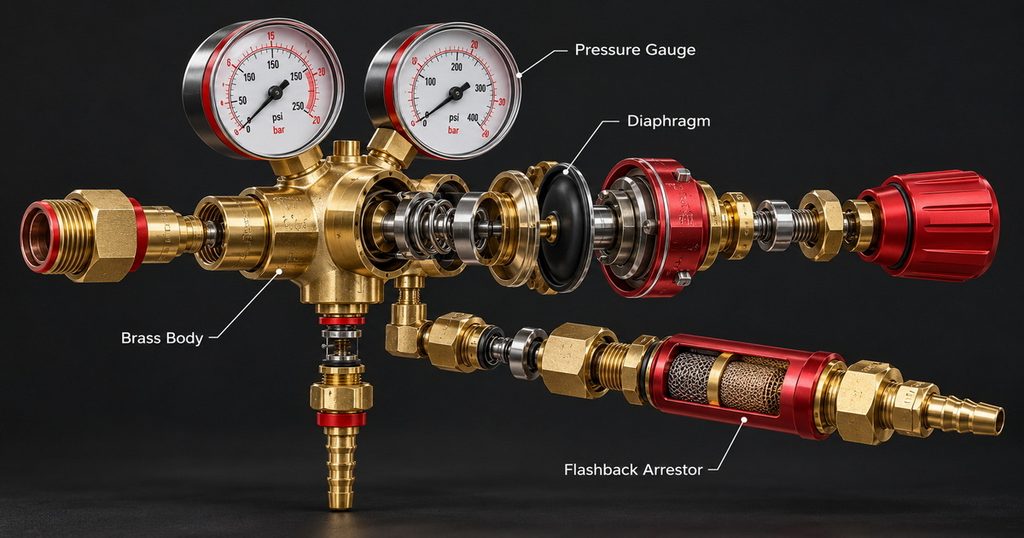
Material Selection
A professional acetylene regulator commonly uses:
– High-quality forged or machined brass for the body, bonnet, stem, and fittings where appropriate.
– Compatible elastomer seals and diaphragms selected for fuel-gas service, pressure stability, and temperature performance.
– Durable gauge components with clear scales, shock protection where required, and calibrated reading accuracy.
– Corrosion-resistant internal components to support long-term operation in workshop, marine, and construction environments.
Buyers should not accept vague descriptions such as “copper material” or “brass-like metal.” Request the material grade, brass composition range where commercially appropriate, forging or machining method, surface treatment, and incoming-material inspection procedure.
Pressure Range and Acetylene Safety
Acetylene regulators are normally designed for lower outlet pressures than oxygen regulators. In one Air Products example, a single-stage acetylene regulator delivers 0–1.5 bar outlet pressure, with a stated maximum flow of 30 m³/h for the listed configuration.
The correct range depends on the application. Light welding, brazing, heating, and cutting use different gas-flow demands. A regulator selected only by appearance or low unit price may create poor flame stability, insufficient flow at higher demand, gauge inaccuracies, or unsafe operating practices.
Inlet Threads and Connections
Thread mismatch is one of the most common procurement failures in international regulator sourcing. Acetylene and fuel-gas connections commonly use left-hand-thread conventions to reduce the risk of cross-connection with oxygen equipment. For example, Air Products identifies a BS 341 No. 4, 5/8-inch left-hand thread for a listed acetylene cylinder-regulator configuration.
Before ordering, confirm all of the following in writing:
– Cylinder inlet standard.
– Inlet-thread size and handedness.
– Outlet-thread type.
– Hose-tail size.
– Gauge thread.
– Flashback-arrestor connection format.
– Country-specific cylinder-valve standard.
– Required sealing method: metal-to-metal, gasket, O-ring, or other design.
Flashback Protection
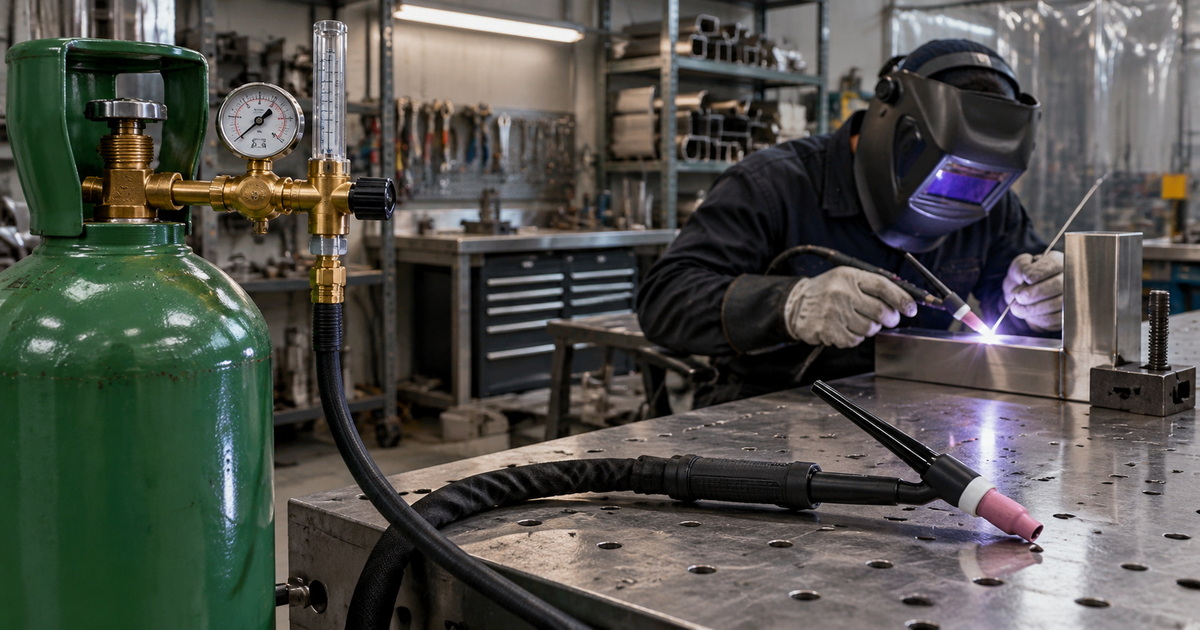
A regulator alone does not replace a flashback arrestor. In oxy-acetylene systems, flashback protection is a critical safety consideration. Flashback arrestors can combine a flame arrestor, non-return valve, thermal cut-off function, and pressure-sensitive cut-off function, depending on design.
For an Indonesian distributor or overseas brand assembling a complete oxy-fuel kit, it is worth deciding early whether the flashback arrestor will be:
– Integrated at the regulator outlet.
– Installed at the torch inlet.
– Installed at both locations according to the user’s risk assessment and applicable requirements.
– Sold as a separate accessory.
– Included as standard in a premium kit.
Internal Sourcing Pitfalls
The “Same Body, Different Inside” Problem
One industry issue that experienced buyers know—but that is rarely emphasized in product listings—is that two acetylene regulators can look almost identical externally while having very different internal quality.
A supplier may use the same or a similar brass body casting, gauge layout, knob design, or carton artwork as a higher-grade model. But internal differences can include:
– Thinner diaphragm material.
– Inconsistent spring wire or heat treatment.
– Lower-grade valve-seat material.
– Poorly machined sealing surfaces.
– Gauge movement with weak calibration stability.
– Uncontrolled brass chemistry or recycled-material content.
– Inadequate 100% leakage testing.
– Inconsistent torque during assembly.
This is why a visual inspection and a low-price comparison are not enough.
How to Avoid It
Ask every shortlisted supplier to provide:
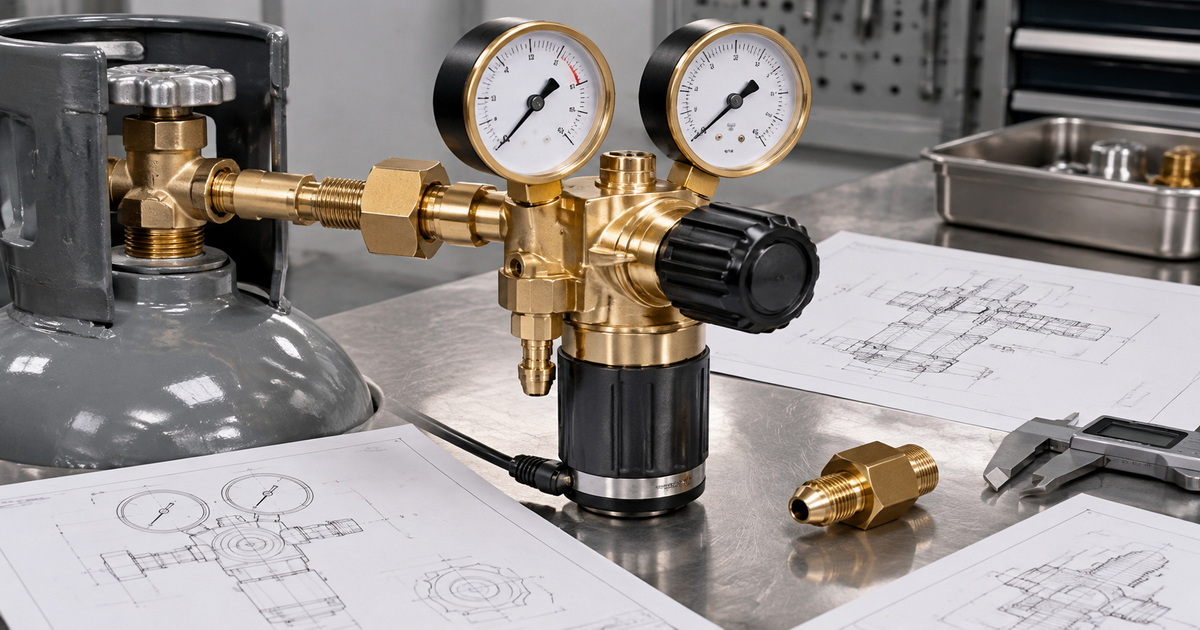
1. A full technical drawing or specification sheet.
2. Photos or video of the actual internal assembly process.
3. A material declaration for brass body and critical internal components.
4. A regulator leakage-test method and acceptance standard.
5. Outlet-pressure stability test data under simulated flow.
6. Gauge calibration or incoming-gauge inspection criteria.
7. Batch coding and traceability practices.
8. Product samples from the same production line intended for the order.
9. A pre-shipment inspection plan.
10. A clear statement showing whether the flashback arrestor is included, optional, or excluded.
A supplier that cannot clearly explain these items may still be able to sell a regulator, but it may not be a suitable long-term OEM partner.
Buyer’s Guide
Step 1: Define Your Market Configuration
Do not send only a photo and ask for “same as this.” Provide a purchase specification that includes:
– Gas type: acetylene only, or a shared fuel-gas design.
– Application: welding, cutting, heating, brazing, or general industrial gas control.
– Cylinder inlet standard.
– Outlet pressure range.
– Gauge scale and unit: bar, MPa, psi, kgf/cm², or dual scale.
– Required flow capacity.
– Flashback arrestor configuration.
– Body finish and knob color.
– Branding method: laser marking, printing, label, embossing, or custom gauge dial.
– Packaging and user manual language.
– Required certifications for your destination market.
Step 2: Verify Factory Identity
For an OEM project, verify that the company you are negotiating with is the actual manufacturer or an authorized exporter. Request:
– Business license and registered legal name.
– Factory address.
– Factory photos and production-line video.
– ISO certificate copy.
– Certification-body name.
– Certificate number, issue date, scope, and expiry date.
– Product test reports relevant to the proposed model.
– Export history or reference markets, where the supplier is willing to disclose them.
For Indonesian-market regulated products, conformity assessment may require documentation including ISO 9001 or equivalent certification, technical specifications, product catalogues, quality-control processes, and—in relevant cases—Indonesian-language documents and laboratory testing. Indonesia’s National Standardization Agency, BSN, administers national standardization, while KAN plays an important role in accrediting conformity-assessment bodies and laboratories.
Step 3: Use a Real Sample Process
A reliable sample process should include more than receiving one visually acceptable unit.
– Approve the final drawing and specification before sampling.
– Request multiple samples from a normal production run, not hand-selected prototypes.
– Check inlet and outlet connections with actual customer-side fittings.
– Conduct leak testing under intended operating conditions.
– Test outlet pressure stability at low, medium, and higher flow demand.
– Inspect gauge readability, needle return, and consistency across multiple units.
– Test the regulator with the intended torch and flashback arrestor.
– Keep one signed “golden sample” for mass-production comparison.
Step 4: Set Inspection Requirements
For mass orders, define an acceptable quality level and inspection procedure before the purchase order is issued. The inspection plan should include:
| Inspection point | What to verify |
|---|---|
| Incoming materials | Brass body, diaphragm, spring, gauges, fittings, seals |
| Machining | Thread accuracy, seat finish, burr removal, dimension tolerance |
| Assembly | Torque, sealing procedure, part orientation, clean assembly |
| Leakage test | Inlet, outlet, gauge threads, joints, and internal sealing |
| Functional test | Outlet pressure adjustment and stability |
| Gauge check | Needle position, scale, reading stability, damage |
| Appearance | Surface finish, markings, logo, knob, labels |
| Packaging | Product protection, carton strength, instructions, accessory count |
Step 5: Plan Logistics Early
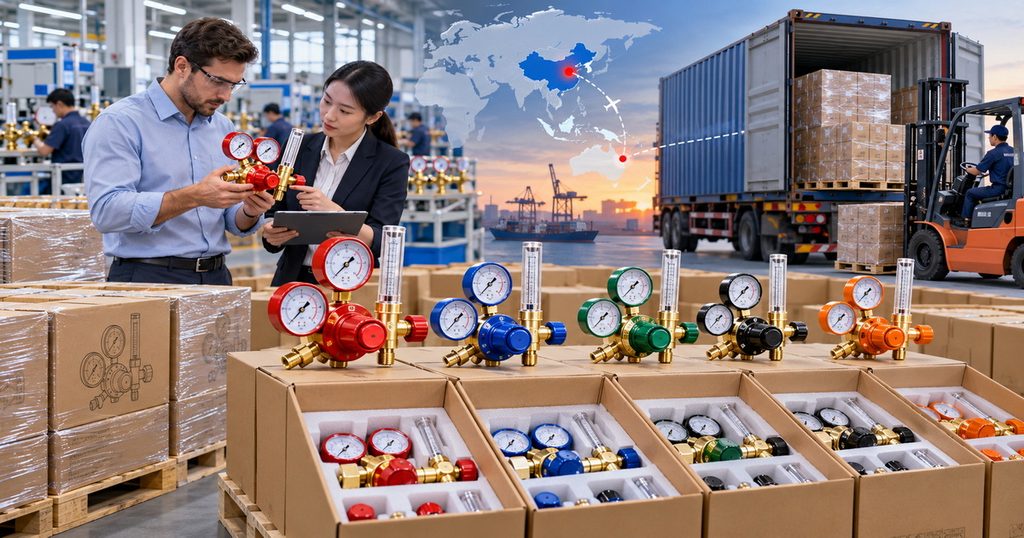
Acetylene regulators are small products, but international logistics still requires careful planning.
– Confirm whether gauges should be protected with caps, foam, or individual cartons.
– Specify export carton strength for sea freight and tropical warehouse conditions.
– Check destination labeling requirements.
– Confirm HS classification with your customs broker.
– Decide whether spare parts and repair kits will travel with the main shipment.
– Use palletization or reinforced cartons for large mixed-SKU shipments.
– Require moisture protection if shipping through humid ports or storing products long term.
For Indonesia, delivery timing can vary between major Java logistics hubs and more remote islands. Buyers should discuss stock planning, consolidated shipments, and domestic onward distribution with their importer or logistics provider.
Conclusion
The Indonesian acetylene-regulator market includes industrial-gas producers, national distribution networks, welding-equipment suppliers, and local trading channels. These businesses are valuable for local gas supply, service coverage, equipment availability, and industrial support.
But if your goal is to build a branded acetylene regulator product line, improve margin control, unify a complete range of oxygen, argon, CO₂, propane, nitrogen, and dual-stage regulators, or develop custom packaging for export distribution, you should prioritize a dedicated regulator manufacturer with documented QC systems and responsive OEM engineering support.
Zhejiang Bril Welding Equipment Co., Ltd. is a practical candidate for buyers looking for that manufacturing-focused route. With a stated history dating to 2002, dedicated industrial-regulator production, ISO 9001 quality-system certification, CE- and CNAS-related product certification claims, and experience serving domestic and international welding and gas-industry customers, the company may be particularly suitable for small and mid-sized brands that require flexible communication and realistic OEM support.
Before placing a mass order, qualify the exact acetylene regulator model through technical drawings, samples, material verification, leak testing, pressure-stability testing, packaging confirmation, and third-party inspection where appropriate.
FAQ
1. How can I verify that a supplier’s ISO 9001 certificate is not expired or fake?
Request the complete certificate rather than a cropped image. Verify the legal company name, factory address, certificate number, certification scope, issue date, expiry date, accreditation mark, and certification body. Then use the certification body’s public directory where available, or contact the issuing body directly. Also confirm that the certificate covers manufacturing activities relevant to gas regulators—not only trading, sales, or unrelated products.
2. Does CE marking prove that an acetylene regulator is safe for every market?
No. CE-related documentation may be relevant for applicable European market requirements, but it does not automatically prove suitability for every country, cylinder connection, customer application, or local standard. Buyers should verify which directive, regulation, test method, and exact regulator model the declaration covers. They should also confirm whether the supplied cylinder connection and safety configuration match their destination market.
3. What is the biggest quality risk in low-cost acetylene regulators?
The biggest risk is not always visible. It is often inconsistent internal components, including diaphragm quality, valve seat performance, spring stability, thread machining, and leakage control. A regulator may look similar to a premium model but fail to maintain stable outlet pressure, develop leaks, or perform poorly after repeated adjustment cycles.
4. Should a flashback arrestor be included with every acetylene regulator?
For many welding and cutting applications, flashback protection should be treated as a core safety requirement rather than an optional decoration. The final configuration depends on the applicable safety rules, torch design, work environment, and system risk assessment. Buyers should clearly specify whether flashback arrestors are mounted at the regulator, torch, both locations, or supplied separately.
5. Can an oxygen regulator be used for acetylene if the thread fits?
No. Oxygen and acetylene regulators have different gas-service requirements, pressure ranges, connection conventions, and safety considerations. A regulator must be specifically designed, marked, and tested for the intended gas. Fuel-gas connections commonly use left-hand threads to help prevent accidental cross-connection, while oxygen systems use different connection arrangements.
References
1. – [Zhejiang Bril Welding Equipment Co., Ltd. — About Us] [chinesewelding]
2. – [ISO 2503:2009 — Gas welding equipment: Pressure regulators] [iso]
3. – [Indonesia Standards for Trade — International Trade Administration] [trade]
4. – [PT Samator Indo Gas — Company History] [samatorgas]
5. – [PT Surya Biru Murni Acetylene — Company Profile] [suryabirumurni.co]
6. – [Air Products Welding Equipment and Flashback Arrestors] [airproducts.co]
7. – [Asia Industrial Gases Association Publications] [asiaiga]
Hot Tags: Acetylene Regulator, Acetylene Regulator Manufacturers, Acetylene Regulator Suppliers, Industrial Gas Regulator, Welding Gas Regulator, Oxygen Acetylene Regulator, Gas Pressure Regulator, Oxy Fuel Welding Equipment, Industrial Gas Control Solutions, Acetylene Regulator OEM