Content Menu
● Dual Gauge Regulator vs Triple Gauge Regulator: Quick Comparison
● What Is a Dual Gauge Regulator?
>> Pressure Gauges and Flow Gauges Are Not Interchangeable
● What Is a Triple Gauge Regulator?
>> Three Gauges Do Not Guarantee Independent Pressure Control
● Gauge Count vs Regulation Stages: The Critical Difference
>> Why This Matters for Industrial Monitoring
● Does a Triple Gauge Regulator Provide Better Accuracy?
>> An Illustrative Gauge-Selection Calculation
● Comparing Pressure Stability and Flow Performance
>> Droop: Pressure Falls as Flow Increases
>> Supply Pressure Effect: Outlet Pressure Changes as the Cylinder Empties
● Choosing Regulators for Different Industrial Gases
>> Argon and CO₂ Welding Regulators
>> Oxygen, Acetylene, and Propane Regulators
● Two Application Scenarios: Where the Comparison Becomes Practical
>> Scenario 1: One Welding Station, One Gas Requirement
>> Scenario 2: Two Processes Requiring Different Pressures
● A Practical Acceptance-Test Plan for Industrial Buyers
>> Step 1: Identify Every Reading
>> Step 2: Check Performance Under Demand
>> Step 3: Evaluate Inlet-Pressure Sensitivity
>> Step 4: Verify Integrity and Documentation
● OEM and ODM Specifications That Prevent Purchasing Mistakes
● Dual Gauge or Triple Gauge: Which Should You Choose?
>> 1.Is a Triple Gauge Regulator Always Better Than a Dual Gauge Regulator?
>> 2.Can a Dual Gauge Regulator Also Be Dual-Stage?
>> 3.Does a Triple Gauge Regulator Always Have Two Outlets?
>> 4.Can One Regulator Supply Two Different Outlet Pressures?
>> 5.Does Adding a Gauge Increase Gas Flow?
>> 6.What Matters Most When Buying an Industrial Gas Regulator?
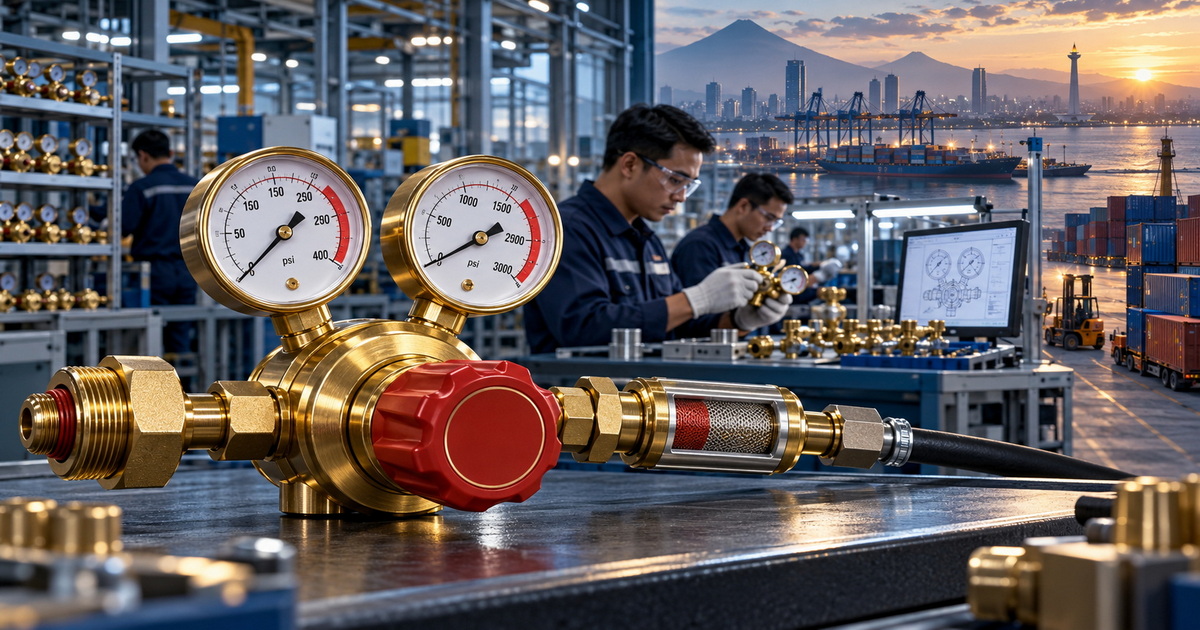
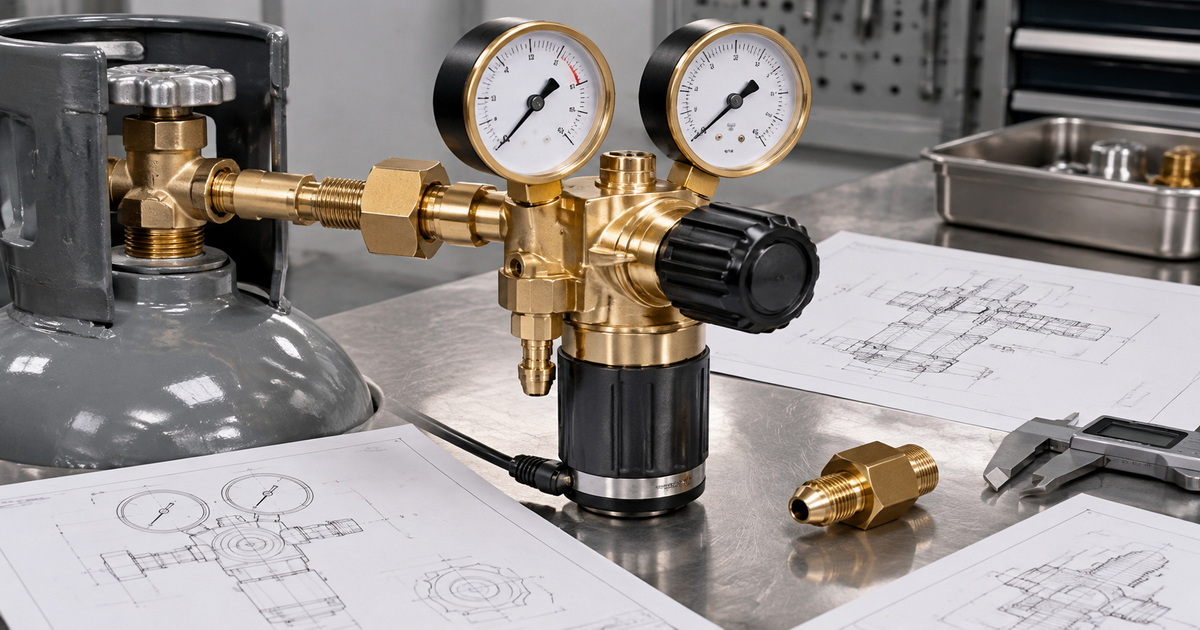
Choosing a dual gauge regulator vs triple gauge regulator for industrial monitoring starts with one question: what does each gauge actually measure? A dual gauge regulator commonly displays cylinder pressure and regulated outlet pressure. A triple gauge regulator adds another reading, but that reading may represent a second independently regulated outlet, an intermediate pressure, or another monitoring point.
From a manufacturing and procurement perspective, measurement purpose matters more than gauge count. An additional dial does not automatically improve pressure stability, increase flow capacity, or make equipment safer.
For welding, cutting, and industrial gas systems, the right choice depends on gas compatibility, required pressures, operating flow, and the decisions operators must make from the readings.
Dual Gauge Regulator vs Triple Gauge Regulator: Quick Comparison
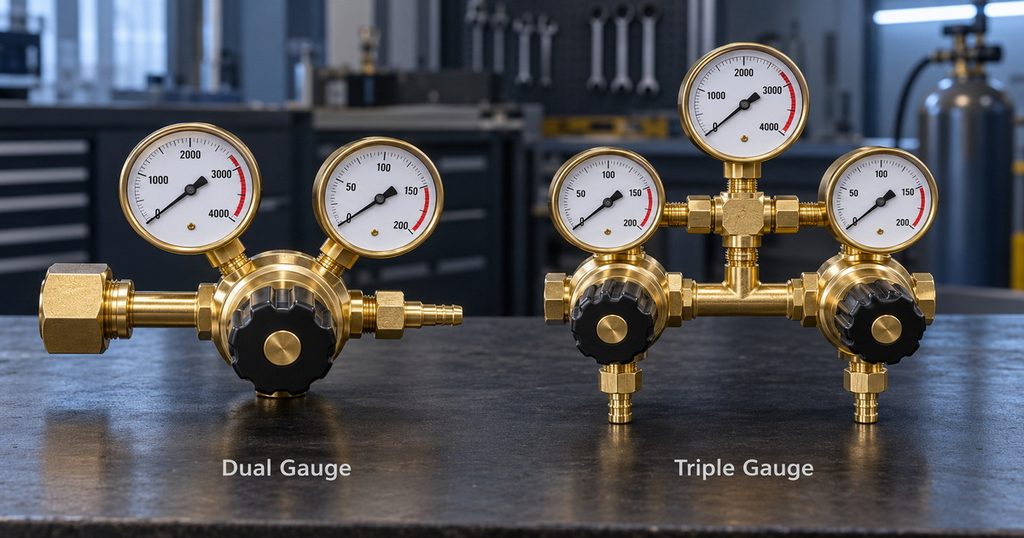
The following comparison describes common arrangements, not universal product definitions. Always confirm the supplier’s schematic.
| Comparison point | Dual gauge regulator | Triple gauge regulator |
|---|---|---|
| Typical readings | Inlet pressure and one outlet pressure | Inlet pressure plus two other pressure readings |
| Outlet control | Commonly one regulated pressure | May provide two independently regulated pressures |
| Best application fit | One pressure requirement with straightforward monitoring | Two pressure requirements or an additional diagnostic measurement |
| Pressure stability | Depends on internal regulator design | Also depends on internal regulator design |
| Flow capacity | Determined by regulator construction and operating conditions | Not inherently greater because of the extra gauge |
| Installation | Usually more compact | May require additional mounting space and connections |
| Maintenance | Fewer instruments to inspect | More instruments and potentially more joints to maintain |
| Buying priority | Correct gas service, pressure range, and flow performance | The same requirements, plus a clearly defined third reading |
What Is a Dual Gauge Regulator?
A conventional dual gauge gas regulator has two indicators:
– An inlet gauge showing pressure supplied by the cylinder or upstream system.
– An outlet gauge showing pressure delivered after regulation.
This arrangement lets operators check whether supply pressure is available and whether the regulated pressure meets the application’s requirement.
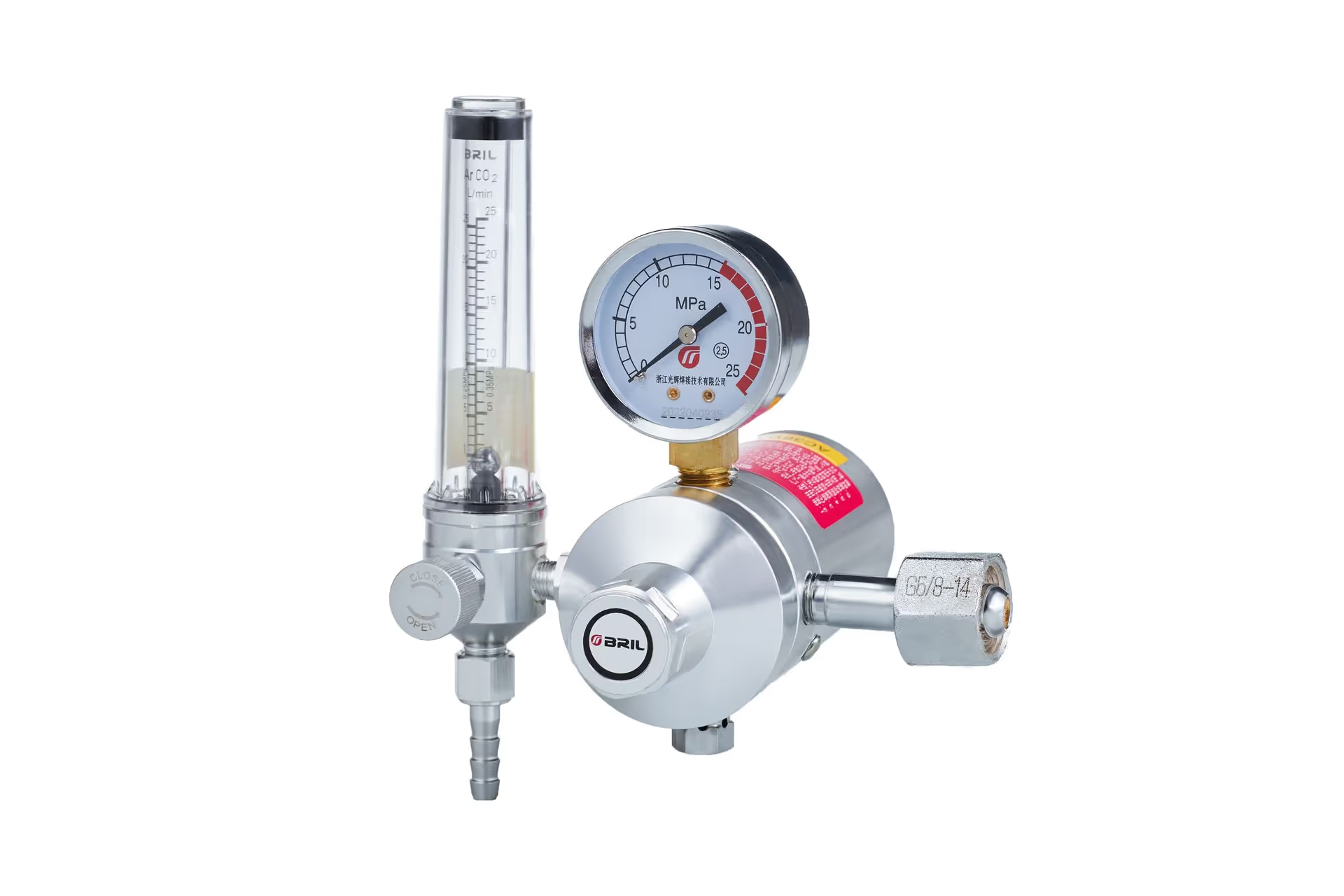
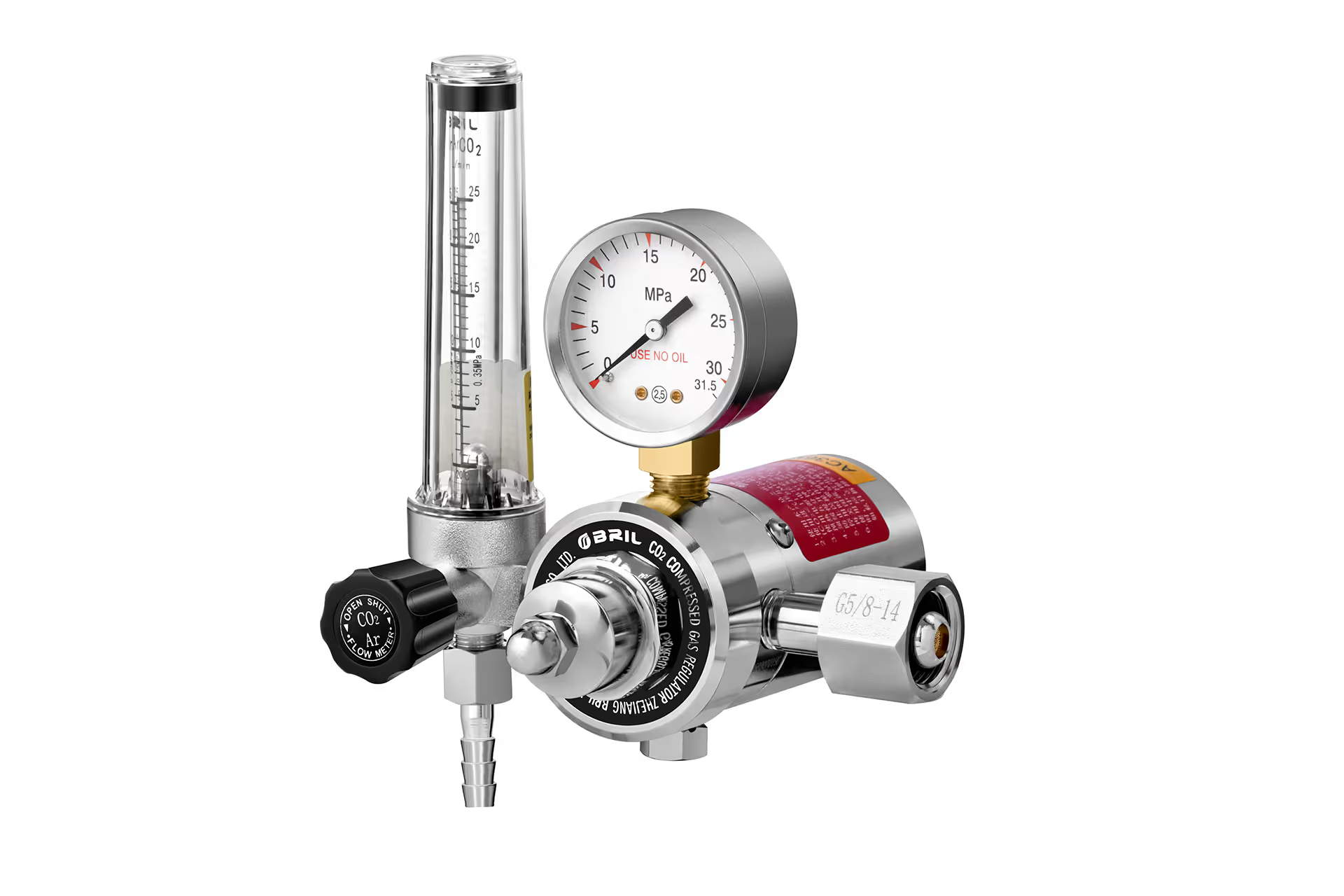
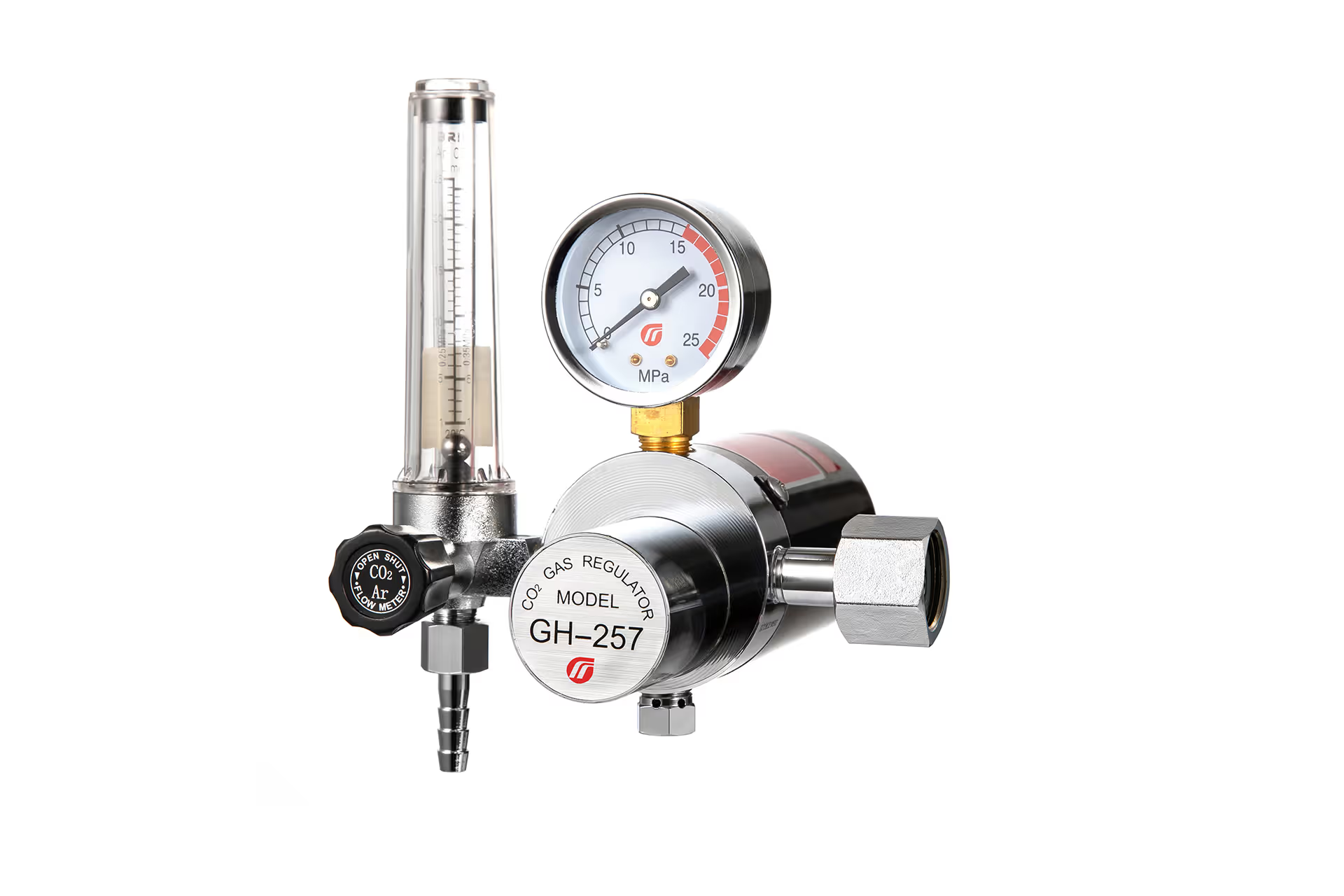
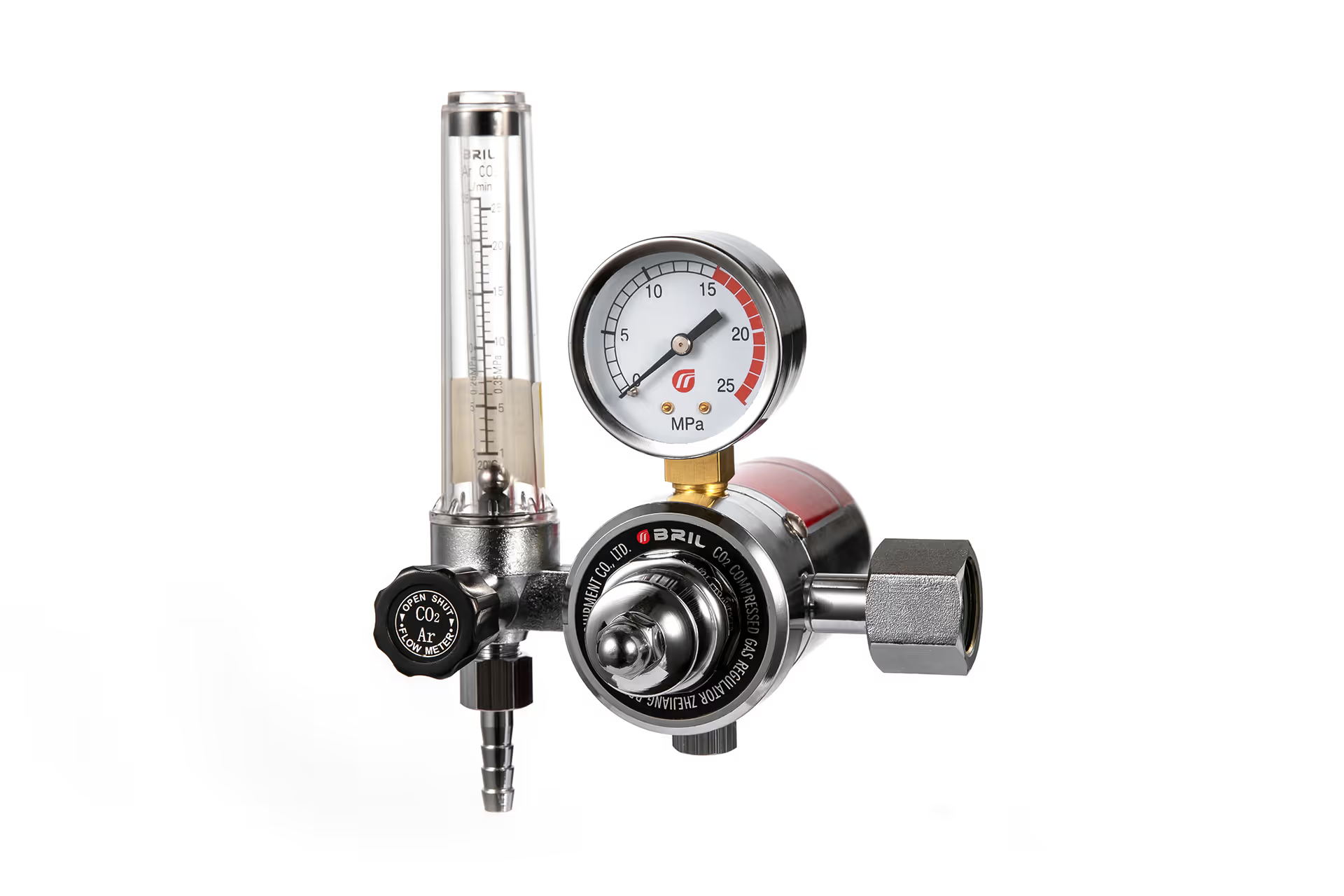
However, two dials do not always mean two pressure measurements. Some welding regulators use a pressure gauge and a flow gauge calibrated in liters per minute or cubic feet per hour.
Pressure Gauges and Flow Gauges Are Not Interchangeable
A pressure gauge measures pressure at its connection point. A pressure-based flow gauge indicates flow using a calibration associated with a specified gas and flow restriction.
A flowmeter uses a different measurement arrangement and also requires the correct gas calibration and operating conditions.
For argon or CO₂ shielding applications, confirm whether the second instrument indicates delivery pressure or gas flow. A pressure reading alone does not establish the flow reaching the welding torch.
What Is a Triple Gauge Regulator?
“Triple gauge regulator” describes an instrument arrangement rather than a single standardized internal design.
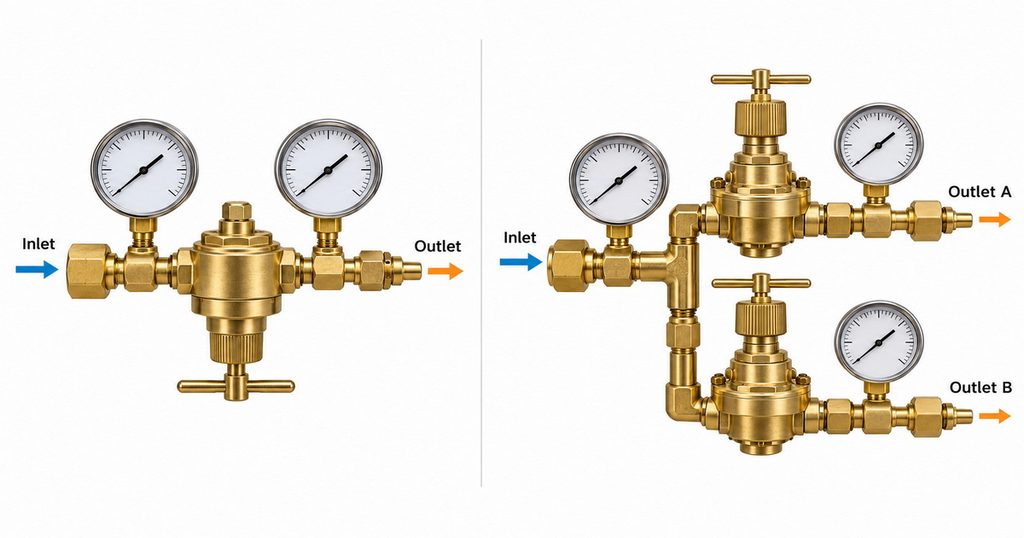
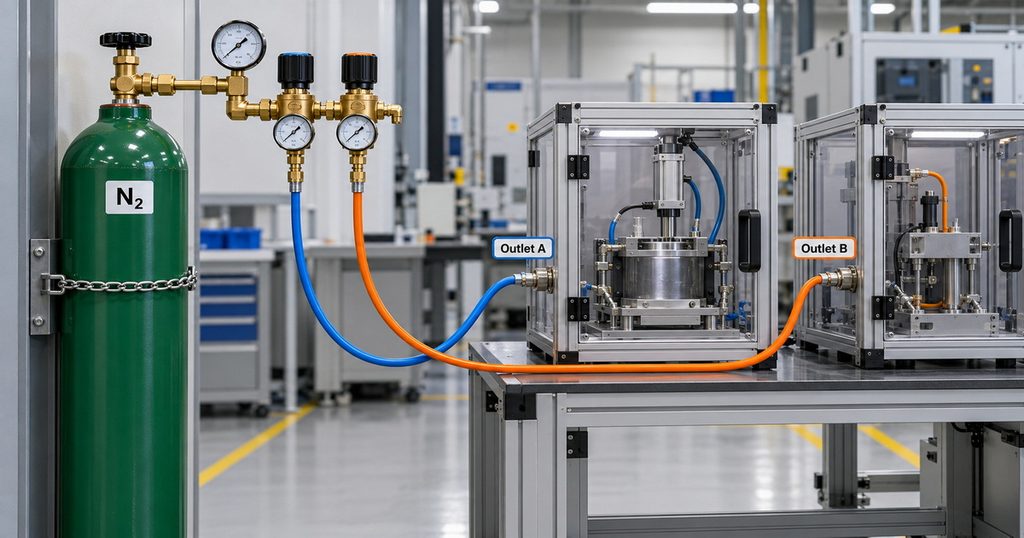
A familiar commercial configuration uses one inlet-pressure gauge and two outlet-pressure gauges. Each outlet has its own adjustment mechanism, allowing two different delivery pressures from one compatible gas supply.
Other engineered assemblies can include an additional pressure measurement for diagnostics. The third gauge’s location must be identified on the drawing.
Three Gauges Do Not Guarantee Independent Pressure Control
Two outlet gauges provide independent control only when the assembly contains suitable separate regulating mechanisms.
Likewise:
– Two outlets can share one pressure setting.
– Two adjustment knobs may belong to separate regulators.
– Three gauges do not prove that the assembly has three regulation stages.
– A gauge cannot create a control function by itself.
For industrial purchasing, request a pressure schematic rather than relying on a product photograph or marketplace description.
Gauge Count vs Regulation Stages: The Critical Difference
Gauge count describes how many readings are displayed. Stage count describes how many successive pressure-reduction steps occur.
A single-stage regulator reduces inlet pressure to working pressure in one step. A dual-stage regulator performs the reduction in two successive steps, usually within one assembly.
Dual-stage regulation can reduce the influence of changing cylinder pressure on the final outlet pressure. It does not require three visible gauges.
Why This Matters for Industrial Monitoring
Consider a nitrogen application requiring a stable delivery pressure as the cylinder empties.
Adding another gauge may make pressure changes easier to observe. It does not necessarily prevent those changes.
A suitable dual-stage design, balanced valve arrangement, or other application-matched regulator may address the underlying control requirement more effectively.
When reviewing a dual gauge regulator vs triple gauge regulator, evaluate measurement architecture and regulation architecture separately.
Does a Triple Gauge Regulator Provide Better Accuracy?
Not automatically. Three separate characteristics must be assessed:
1. Indication accuracy: how closely the instrument reading represents actual pressure.
2. Regulation performance: how well the regulator maintains the required pressure.
3. Process suitability: whether the chosen pressure and flow support the application.
More instruments improve visibility only when their ranges, accuracy, and measurement locations are appropriate.
An Illustrative Gauge-Selection Calculation
A gauge with a 0–100 bar range and accuracy class 1.0 has a permissible indication deviation of 1 bar, subject to its applicable specification.
At a 5 bar operating pressure, that deviation equals 20% of the reading.
A 0–10 bar gauge with the same accuracy class has a corresponding full-scale-based deviation of 0.1 bar.
This comparison illustrates why an oversized gauge can be difficult to use for low-pressure monitoring. It is not a recommendation to choose the narrowest range regardless of overload conditions.
Select a range that supports both useful readability and the manufacturer’s operating limits.
Comparing Pressure Stability and Flow Performance
Two regulators with identical gauge counts can behave differently under changing demand.
Droop: Pressure Falls as Flow Increases
Droop is the reduction in outlet pressure as downstream flow increases.
A regulator may show the desired pressure when equipment is idle but deliver less pressure during operation. Evaluate its flow curve at the intended inlet pressure, outlet setting, and demand.
A third gauge can reveal another part of the system. It cannot compensate for insufficient regulator capacity.
Supply Pressure Effect: Outlet Pressure Changes as the Cylinder Empties
Supply pressure effect describes outlet-pressure changes caused by changes in inlet pressure.
In common unbalanced pressure-reducing designs, decreasing inlet pressure can cause outlet pressure to increase. The magnitude depends on construction.
For continuous processes, ask for published supply-pressure-effect information or representative test results. Gauge quantity is not a substitute for this evidence.
Choosing Regulators for Different Industrial Gases
A regulator must be specified for its actual gas service. Brass construction is valuable in many industrial applications, but body material alone does not establish compatibility.
Seals, seats, diaphragms, pressure ratings, cleanliness, and connections also matter.
Argon and CO₂ Welding Regulators
For shielding gas applications, prioritize:
– Correct gas or mixture calibration.
– Suitable delivery flow.
– Compatible cylinder connections.
– Readable instruments.
– Stable performance under operating demand.
A third gauge is useful only when it supports a defined second outlet or monitoring requirement.
CO₂ Heated Regulators
Where CO₂ expansion cooling affects performance, assess a purpose-designed heated regulator against the expected withdrawal rate and ambient conditions.
Specify heater voltage, power, electrical protection, and installation requirements separately from gauge count.
An additional pressure dial neither supplies heat nor establishes that the heater is adequate.
Oxygen, Acetylene, and Propane Regulators
These gases require dedicated compatibility and safety evaluation.
Oxygen equipment must remain free from oil and grease. Acetylene applications also require strict pressure control: the cited U.S. welding regulation prohibits acetylene use above 15 psig, subject to its stated provisions.
Do not assume that a regulator suitable for one gas becomes suitable for another merely because it has the desired number of gauges.
Two Application Scenarios: Where the Comparison Becomes Practical
These scenarios illustrate selection logic. They are not documented customer performance claims.
Scenario 1: One Welding Station, One Gas Requirement
A workshop supplies one welding station from an argon cylinder.
If the application requires one regulated supply and appropriate flow monitoring, a suitable dual gauge or flowmeter regulator may provide everything necessary.
The purchasing priorities are calibration, flow performance, connection compatibility, and visibility—not an unused third reading.
Scenario 2: Two Processes Requiring Different Pressures
A factory supplies two compatible processes from one gas source, with each process requiring a different pressure.
An assembly with one inlet gauge and two independently regulated outlet gauges can make both settings visible.
However, the supplier must verify simultaneous-flow performance. Separate adjustments do not guarantee that shared supply limitations will never affect both branches.
If both processes require the same pressure, a properly engineered distribution arrangement may be more appropriate than independent regulators.
A Practical Acceptance-Test Plan for Industrial Buyers
A defined test plan provides more useful evidence than counting instruments.
Step 1: Identify Every Reading
Record each gauge’s measurement point, units, range, accuracy specification, and intended operator action.
For example, a second outlet gauge might support verification of a separate process pressure.
Step 2: Check Performance Under Demand
Compare outlet pressure at representative low, normal, and maximum flow conditions.
For multi-outlet assemblies, test individual branches and simultaneous operation.
Step 3: Evaluate Inlet-Pressure Sensitivity
Have qualified personnel assess performance across representative supply conditions using suitable test equipment and an approved procedure.
Record whether the outlet remains within the application’s acceptance limits.
Step 4: Verify Integrity and Documentation
Use manufacturer-approved leak-test methods and qualified personnel.
Check connection specifications, gas-service markings, instrument identification, operating instructions, and any required test records.
Do not use oxygen for general-purpose leak testing or dismantle a pressurized assembly.

OEM and ODM Specifications That Prevent Purchasing Mistakes
For overseas brands, wholesalers, distributors, and equipment manufacturers, the most useful request for quotation defines performance before appearance.
| Specification | Information to provide |
|---|---|
| Gas service | Gas identity, mixture, and purity requirements |
| Supply conditions | Maximum inlet pressure and expected operating range |
| Delivery requirements | Outlet pressure range and required flow |
| Control architecture | Single-stage, dual-stage, or independently regulated branches |
| Instrument arrangement | Measurement point, units, range, and accuracy |
| Connections | Inlet and outlet standards for the destination market |
| Materials | Body, seat, seal, and diaphragm requirements |
| Heated CO₂ options | Electrical supply and environmental requirements |
| Verification | Agreed inspection, leak-test, and performance criteria |
| Documentation | Drawings, instructions, traceability, and applicable conformity evidence |
Our manufacturing focus includes precision machining, high-quality brass materials, stable pressure control, inspection, and customized industrial gas solutions.
Those capabilities should be translated into model-specific specifications. A general statement about international standards should not replace evidence identifying which requirements apply to the supplied product.
Dual Gauge or Triple Gauge: Which Should You Choose?
Choose a dual gauge regulator when one regulated pressure and two relevant readings adequately support the process.
Choose a triple gauge regulator when the third measurement serves a clear purpose, such as monitoring a second independently controlled outlet.
Choose neither solely by dial count when the real requirement is improved stability, higher flow, remote monitoring, or gas-specific safety.
For a tailored OEM or ODM proposal, send your gas type, inlet pressure, required outlet pressures, flow demand, connection standard, and destination market. Our team can develop a regulator configuration and inspection plan around those requirements.
Frequently Asked Questions
1.Is a Triple Gauge Regulator Always Better Than a Dual Gauge Regulator?
No. It provides additional visibility, not automatically better regulation. Its value depends on whether the extra reading supports a useful operational decision.
2.Can a Dual Gauge Regulator Also Be Dual-Stage?
Yes. Gauge count and regulation stages describe different features. A dual-stage regulator can use two gauges to display inlet and final outlet pressure.
3.Does a Triple Gauge Regulator Always Have Two Outlets?
No. The third gauge’s function depends on the assembly. Confirm the measurement locations, outlet arrangement, and adjustment mechanisms using the supplier’s drawing.
4.Can One Regulator Supply Two Different Outlet Pressures?
Yes, when the assembly includes suitable independently controlled branches. Splitting one regulated outlet does not create two independently adjustable pressures.
5.Does Adding a Gauge Increase Gas Flow?
No. Flow capacity depends on regulator construction, pressure conditions, and system restrictions. An additional gauge supplies information rather than extra capacity.
6.What Matters Most When Buying an Industrial Gas Regulator?
Start with gas compatibility, pressure ratings, required flow, and connection standards. Then evaluate regulation performance, instrument suitability, inspection requirements, and documentation.
References
1. Harris Products Group. *Specialty Gas Equipment Condensed Catalog.* Describes inlet and delivery gauges, single-stage regulation, and two-stage pressure reduction. [View catalog]. [ch-delivery.lincolnelectric]
2. ESAB. *G Series Flowmeter.* Provides an example of dual-gauge flowgauge regulators calibrated for argon and CO₂ flow. [View product information]. [esab]
3. Taprite. *Primary Regulators.* Distinguishes one-pressure and two-pressure product arrangements. [View manufacturer information]. [taprite]
4. MoreBeer. *Taprite Dual Body CO₂ Regulator.* Illustrates independently adjustable pressures from a common CO₂ source; this beverage application is not evidence of industrial gas suitability. [View configuration example]. [morebeer]
5. WIKA. *Pressure Gauges—Product Overview.* Explains accuracy classes and permissible deviation as a percentage of full-scale value. [View technical explanation]. [wika]
6. Swagelok. *How to Flatten a Regulator Flow Curve to Reduce Droop.* Defines droop and explains flow-curve interpretation. [Read technical article]. [swagelok]
7. Swagelok. *Managing Supply Pressure Effect in Regulators.* Explains inlet-pressure dependency, balanced designs, and successive regulation stages. [Read technical article]. [swagelok]
8. Occupational Safety and Health Administration. *29 CFR 1910.253—Oxygen-Fuel Gas Welding and Cutting.* Specifies oxygen-equipment cleanliness and acetylene pressure restrictions. [Read regulation]. [osha]
Hot Tags: Dual Gauge Regulator, Triple Gauge Regulator, Industrial Gas Regulator, Gas Pressure Regulator, Dual Stage Gas Regulator, CO₂ Gas Regulator, CO₂ Heated Regulator, Argon Gas Regulator, Gas Regulator Manufacturer, OEM Gas Regulator