Content Menu
● Why CO₂ Supply Struggles in Winter
● Heated CO₂ Regulator vs Cylinder Heater Blanket: Key Differences
>> When a Heated CO₂ Regulator Makes Sense
>> When a Cylinder Heater Blanket Is the Wrong Answer
● A Practical Winter Troubleshooting Method
● What the Published Flow Figures Mean
● How to Specify Winter-Ready CO₂ Equipment
● Safety Rules That Apply to Both Options
● Which Option Should You Choose?
>> 1.Does a heated CO₂ regulator increase cylinder withdrawal capacity?
>> 2.Can a cylinder heater blanket replace a CO₂ regulator?
>> 3.Is frost on the outside of a regulator proof of internal blockage?
>> 4.Should I heat a cold CO₂ cylinder to restore pressure?
>> 5.Is a two-stage regulator automatically better for winter use?
>> 6.What information should I send an OEM regulator supplier?
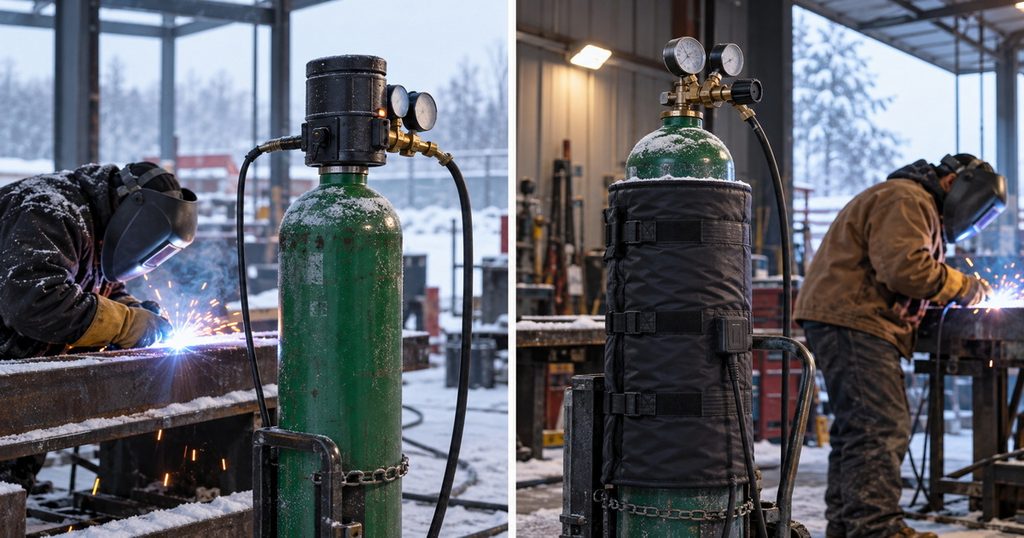
A heated CO₂ regulator vs cylinder heater blanket decision starts with one question: where does your winter CO₂ supply lose performance? A heated regulator adds heat at the pressure-reduction point, where internal icing can interrupt flow. A cylinder heater blanket warms the cylinder, where low temperature and sustained gas withdrawal can reduce available vapor. They address different problems—and a blanket should never be treated as a routine fix without the cylinder supplier’s written approval.
For welding shops, industrial gas users, and distributors specifying winter-ready equipment, the best answer is not always “add more heat.” It may be a correctly rated heated regulator, more vapor-withdrawal capacity, a better cylinder location, or a properly engineered supply system.
Why CO₂ Supply Struggles in Winter
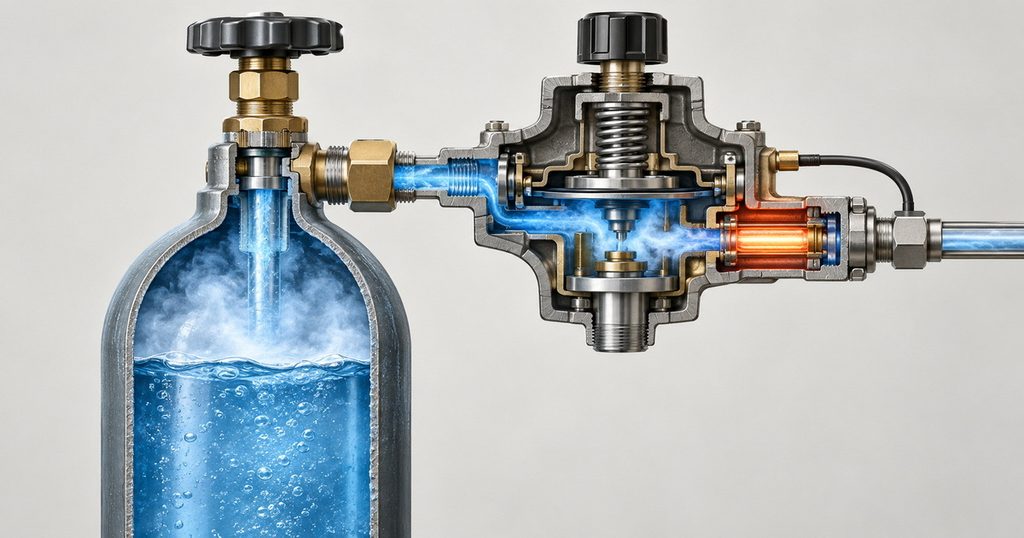
A conventional CO₂ cylinder contains liquefied carbon dioxide and vapor above it. When an application withdraws gas, more liquid must evaporate to replace that vapor. Evaporation draws heat from the remaining contents and the surrounding air. If gas is withdrawn faster than heat enters the cylinder, its temperature and pressure fall. Cold winter air makes recovery harder.
A second cooling process occurs farther downstream. As high-pressure CO₂ passes through a regulator seat and expands to a lower pressure, the regulator can become cold enough for internal ice or solid CO₂ to restrict flow. Importantly, this can happen even when the cylinder is not outdoors or visibly frosted. CONCOA describes this regulator-seat problem in its electrically heated CO₂ regulator documentation.
That distinction matters because external frost is a clue, not a diagnosis. Frost on a cylinder may accompany high withdrawal and cooling. Frost on a regulator may accompany cooling at the pressure drop. Neither observation alone proves where the flow restriction begins. Operators should compare cylinder condition, inlet pressure behavior, outlet pressure, and actual demand before selecting a remedy.
CO₂ also creates hazards beyond lost production. The Compressed Gas Association (CGA) warns that dry-ice blockages can trap pressure and that released CO₂ can accumulate in low or confined spaces. Treat a suspected blockage or leak as a safety issue, not merely a reason to turn up a heater.
Heated CO₂ Regulator vs Cylinder Heater Blanket: Key Differences
| Decision factor | Heated CO₂ regulator | Cylinder heater blanket |
|---|---|---|
| Where heat is applied | At or near the regulator’s gas path and pressure-reduction components | Around part of the cylinder body |
| Primary problem addressed | Regulator-seat icing and flow interruption during pressure reduction | Cold cylinder contents and reduced vapor-generation capacity |
| Pressure regulation | Yes—the regulator controls downstream pressure | No—a separate, suitable regulator is still required |
| Effect on cylinder capacity | Does not, by itself, restore a cylinder’s ability to supply vapor continuously | May affect cylinder temperature and pressure, but suitability must be established for the specific cylinder and gas |
| Best procurement question | “What continuous CO₂ flow can this model deliver under our inlet and ambient conditions?” | “Does our CO₂ supplier explicitly authorize this device and installation?” |
| Main limitation | Cannot make one undersized cylinder meet unlimited demand | Cannot directly solve icing at the regulator seat; cylinder-heating safety is a major constraint |
When a Heated CO₂ Regulator Makes Sense
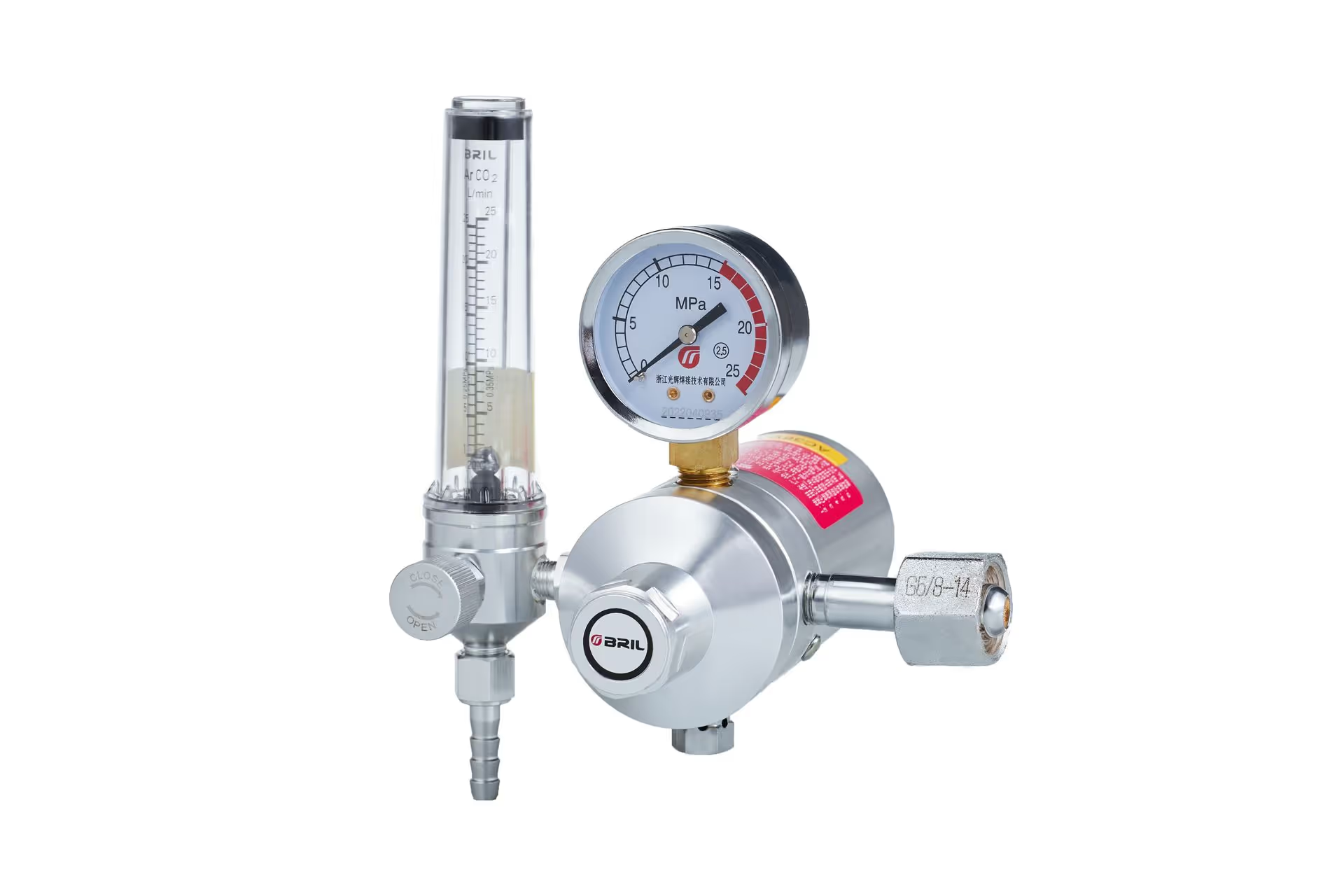
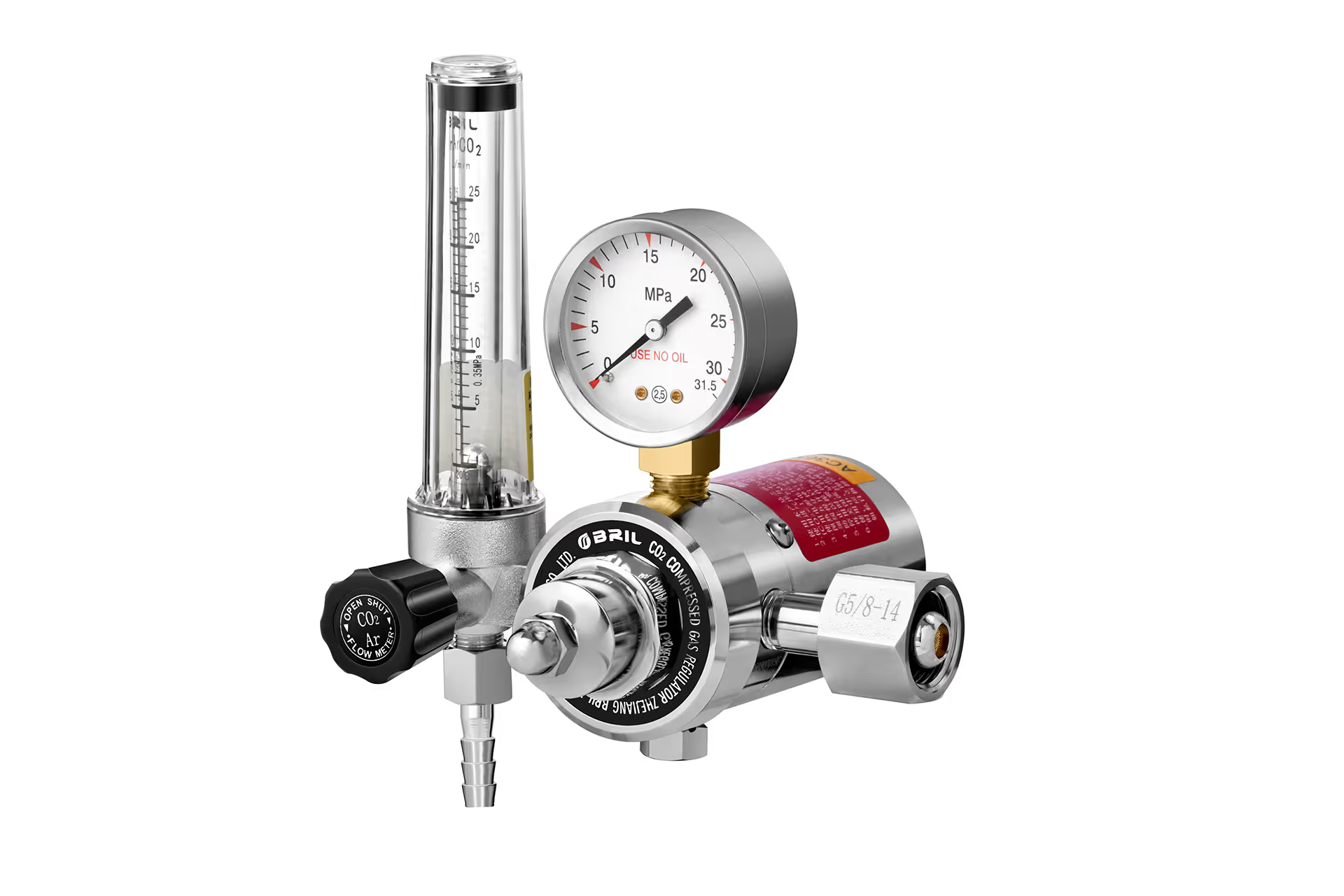
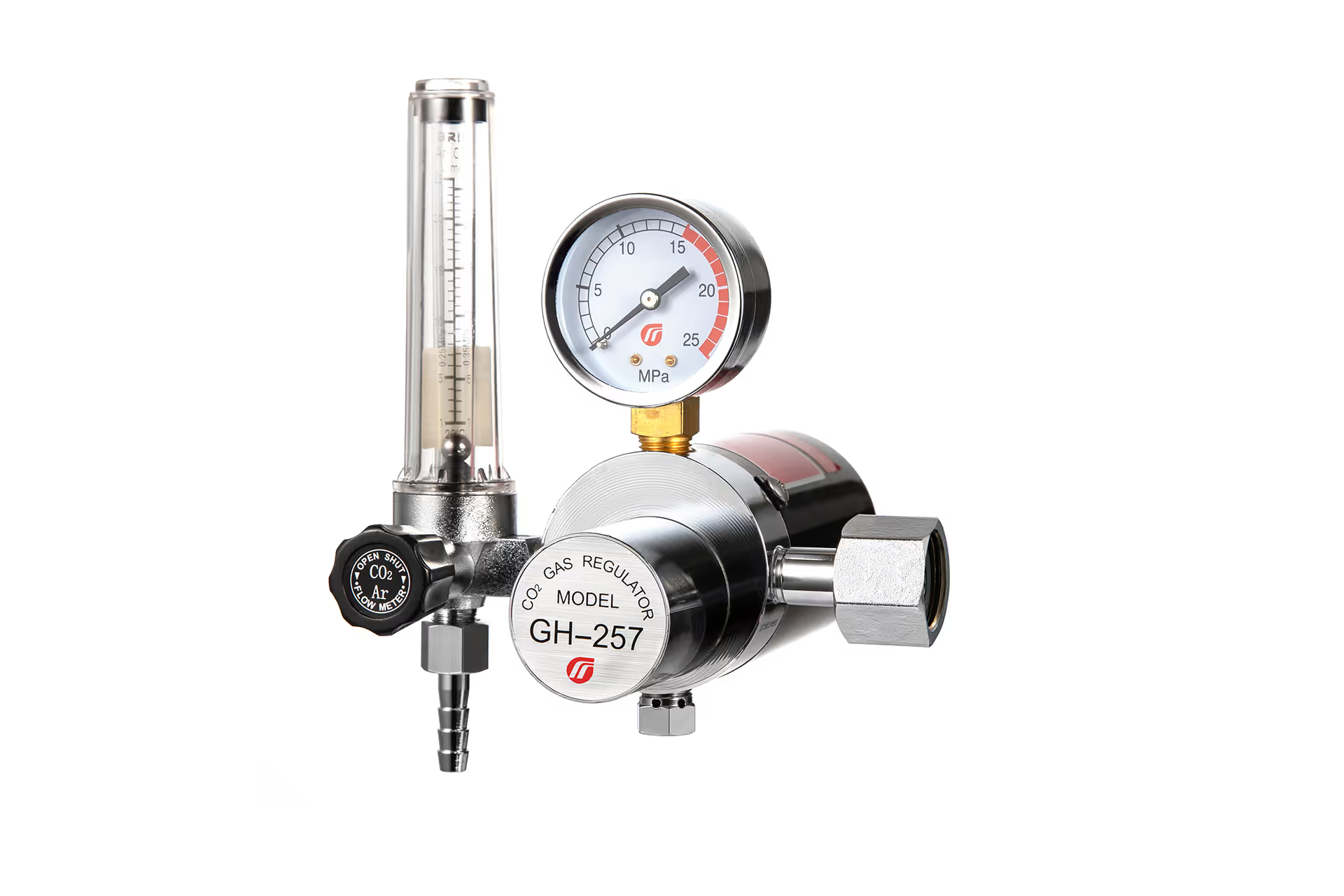
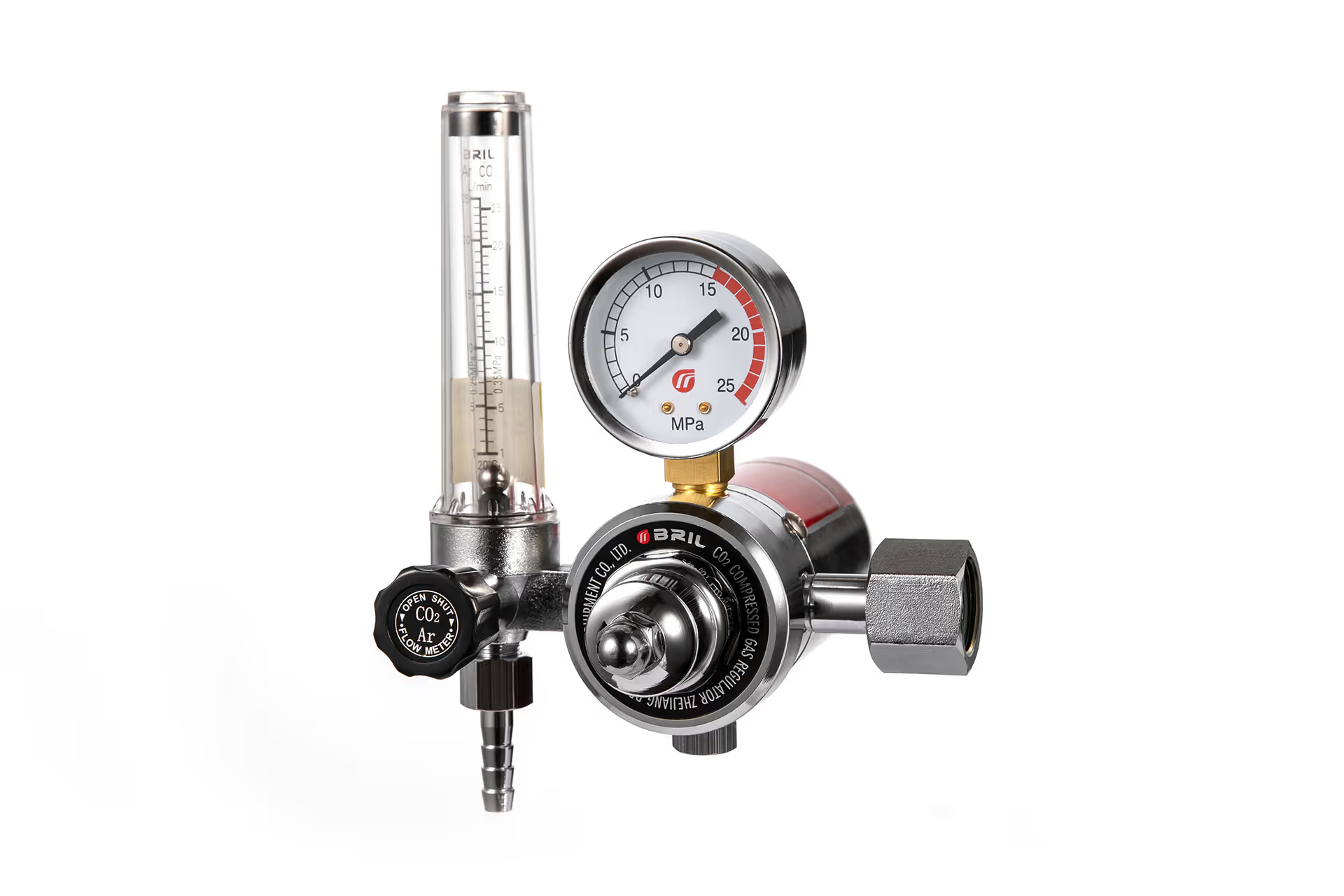
Choose a heated CO₂ regulator for evaluation when the cylinder can supply adequate gas, but pressure or flow repeatedly falters at the regulator during sustained use. In that situation, delivering heat close to the regulator seat targets the location where icing may form. CONCOA, for example, describes a design with heating cartridges, a control thermostat, and a secondary safety cutout that heats the seat directly. Those are model-specific features, not a promise that every heated regulator has them.
For a winter welding line, an engineer should check more than the word *heated* on a catalog page. Confirm the regulator’s rated inlet and outlet pressures, continuous flow, electrical supply, temperature controls, connection type, enclosure suitability, and installation instructions. A regulator selected for a brief flow peak may still disappoint during an entire shift if the cylinder cannot sustain the required withdrawal rate.
A heated regulator is also not a substitute for a correct cylinder. Hydro Instruments distinguishes ordinary gas-withdrawal cylinders from cylinders fitted with siphon tubes for liquid service and advises users to confirm the cylinder type with their gas supplier. Specify the withdrawal arrangement before sizing downstream equipment.
When a Cylinder Heater Blanket Is the Wrong Answer
A blanket can sound attractive when the cylinder feels cold and supply pressure drops. But warming a pressurized CO₂ cylinder raises a separate safety question. Linde’s CO₂ safety advice explicitly says never to heat cylinders with electrical devices to raise pressure or flow. Hydro Instruments likewise advises against direct heating and recommends other ways to address inadequate withdrawal.
For that reason, this article does not recommend an aftermarket cylinder heater blanket as a default winter accessory. If a supplier proposes one, obtain written confirmation covering the exact cylinder, gas, heater, temperature controls, installation, operating limits, and applicable local requirements. If that authorization is unavailable, do not improvise with a generic blanket, heat tape, hot water, or a portable heater.
A blanket also leaves the fundamental equipment roles unchanged: the cylinder supplies gas, and the regulator reduces pressure. Even if an approved heating arrangement improves cylinder-side conditions, it does not replace a suitable regulator or establish that the regulator will remain free of internal icing.
A Practical Winter Troubleshooting Method
Before choosing either product, ask an operator to record what happens from startup through the longest normal production period. The goal is to distinguish cylinder-side depletion from a regulator-side restriction, without opening or modifying pressurized equipment.
1. Record the duty cycle. Note the application, number of simultaneous users, approximate required flow, peak-flow duration, and coldest expected ambient conditions. A short welding burst and continuous industrial consumption impose different demands.
2. Verify the supply arrangement. Confirm cylinder size, gas- versus liquid-withdrawal configuration, regulator specifications, and whether multiple users share the same source. Ask the gas supplier for the allowable withdrawal arrangement.
3. Track when the fault appears. Does performance decline only after sustained use? Does it recover after the cylinder sits idle? Those observations may point toward insufficient vapor generation, but they are not conclusive without checking the full system.
4. Compare inlet and outlet behavior. Have a qualified technician evaluate pressure readings and flow using suitable equipment. A declining supply condition and a restriction near the regulator call for different corrective actions.
5. Check safety conditions first. If there is a suspected leak, dry-ice plug, damaged component, or unexpected pressure behavior, stop normal troubleshooting and follow the site’s isolation and emergency procedures. CGA warns that dry-ice plugs and CO₂ accumulation can be dangerous.
6. Match the remedy to the verified limit. Assess a rated heated regulator for regulator icing. For inadequate cylinder vapor supply, discuss cylinder placement, additional cylinders, manifolding, or a properly designed supply system with the gas supplier and a qualified engineer. Hydro Instruments identifies manifolding as an option when one cylinder cannot provide enough gas.
This method also improves purchasing decisions. Instead of asking a supplier, “Will your heated regulator work in winter?”, provide the actual flow requirement, duty cycle, inlet conditions, target outlet pressure, power availability, and application. A credible response should tie a proposed model to those conditions, not just to its nominal heater wattage.
What the Published Flow Figures Mean
One useful benchmark comes from Hydro Instruments’ *Carbon Dioxide Handling Manual*. It gives approximately 25 standard cubic feet per hour (SCFH) as a dependable gas-withdrawal rate from a 50-pound cylinder, assuming a minimum liquid CO₂ temperature of 70°F. The manual explains that withdrawal depends on heat entering the cylinder and that sustained high demand can lower its temperature and pressure.
That figure is not a universal winter rating. It is tied to the manual’s stated assumptions; a cold outdoor cylinder, a different container, or a different operating pattern needs its own assessment. It does, however, show why buying a regulator with a high advertised flow does not automatically make a single cylinder capable of feeding it continuously.
For contrast, CONCOA lists up to 350 SCFH for a particular electrically heated regulator configuration using three 50-watt heaters. That is a product capability stated by its manufacturer—not proof that one cylinder can sustain 350 SCFH or that another heated regulator will perform identically. Compare the regulator’s rated performance with the entire supply system’s capacity.
Here is a procurement example, not a field-test result: suppose a fabrication shop sees its CO₂ flow weaken late in each winter shift. If cylinder-side supply cannot keep up, replacing the regulator alone may leave the same bottleneck. If cylinder supply remains adequate but the regulator restricts flow at the pressure-reduction point, adding cylinders alone may leave the icing problem. The right quotation should explain which limitation the proposed equipment solves.
How to Specify Winter-Ready CO₂ Equipment
For overseas brands, wholesalers, and industrial buyers, a winter-ready specification should describe verified performance, not rely on broad claims such as “anti-freeze” or “heavy-duty brass.” Brass construction may be relevant to a regulator design, but material alone does not establish cold-weather flow, pressure stability, or electrical safety.
Ask prospective manufacturers for the following:
– Application data: gas grade, cylinder type, gas-withdrawal arrangement, operating location, and required continuous and peak flow.
– Pressure data: maximum expected inlet pressure, required outlet adjustment range, and allowable downstream pressure variation.
– Heater details: voltage, power draw, thermostat arrangement, protective cutout, and instructions for use in the intended environment.
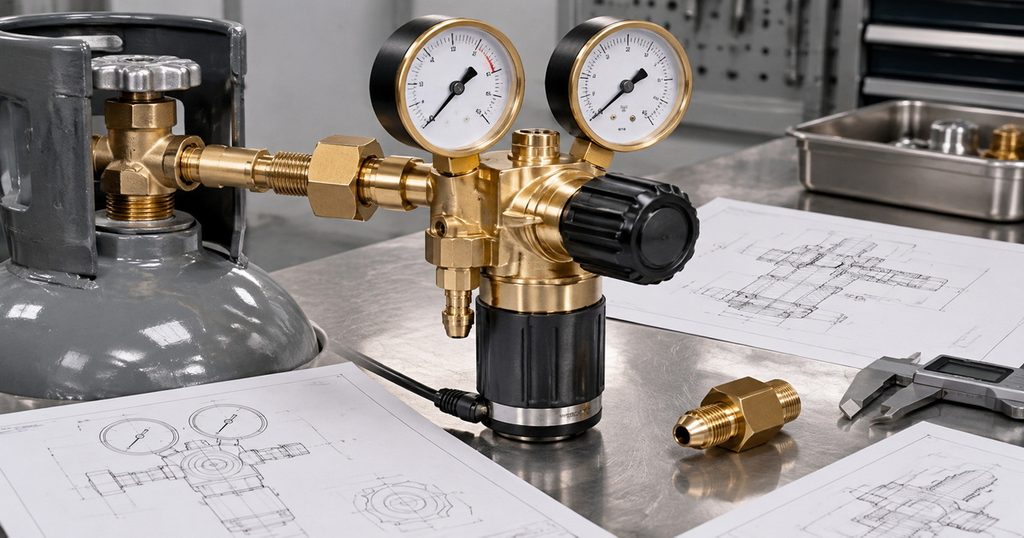
– Mechanical details: documented inlet connection for the destination market, outlet connection, gauge ranges, sealing materials, and dimensional drawings.
– Verification evidence: model-specific flow data, leak-test criteria, inspection records, and applicable compliance documentation.
– Service support: spare parts, replacement procedure, labeling, warranty terms, and instructions in the customer’s required language.
These are buyer questions, not claims that any particular supplier or product meets a standard. They are especially useful for OEM and ODM projects: the brand owner can translate a real operating problem into testable design requirements before approving samples.
If the proposed solution includes any cylinder heating, request the gas supplier’s written authorization before agreeing to a design. The CO₂ safety guidance cited here does not support casually applying heat to raise cylinder pressure or flow. A supplier should be willing to discuss safer supply-capacity alternatives rather than treating a blanket as the automatic companion to a heated regulator.
Safety Rules That Apply to Both Options
Neither cold-weather performance nor production continuity outranks cylinder safety. Airgas’s CO₂ safety data sheet says cylinders should be secured upright, kept in a cool, well-ventilated location, and protected from excessive heat. Its stated cylinder-temperature limit is 52°C (125°F); that is a safety limit in the SDS, not a heater setpoint or an instruction to warm a cylinder toward it.
CO₂ leaks deserve particular attention. CGA notes that CO₂ is heavier than air and can collect in low or confined areas. Sites should assess ventilation and CO₂ monitoring according to their layout and applicable requirements. Never use a disappearing frost patch or a temporarily recovered flow reading as evidence that a suspected leak is safe.
Keep cylinders secure and protect them from welding activity. OSHA’s construction welding-and-cutting rule includes requirements on securing cylinders and keeping them clear of sparks, hot slag, and flame. Its scope matters: buyers should check the rules that apply to their own facility and jurisdiction rather than treating one OSHA provision as a universal CO₂ heater approval.
Which Option Should You Choose?
For regulator freeze-up with otherwise adequate gas supply, evaluate a heated CO₂ regulator rated for the actual duty cycle. For a cylinder that cannot sustain vapor withdrawal, start with the gas supplier and assess supply-system changes such as additional properly configured cylinders or manifolding. Do not use a generic cylinder heater blanket as the shortcut between those two diagnoses.
If your company sources regulators for a winter welding or industrial-gas line, send the manufacturer your application conditions before requesting a quote: required continuous and peak flow, cylinder type, inlet and outlet pressures, lowest operating temperature, voltage, destination-market connection, and OEM/ODM labeling needs. Ask for model-specific test evidence and a written explanation of what the proposed regulator will—and will not—solve.
Frequently Asked Questions
1.Does a heated CO₂ regulator increase cylinder withdrawal capacity?
No. It applies heat at the regulator to address icing there. The cylinder must still generate and deliver enough vapor for the application. Compare cylinder-side capacity and regulator rating separately.
2.Can a cylinder heater blanket replace a CO₂ regulator?
No. A blanket does not reduce and control downstream pressure. Linde states that CO₂ cylinders supplying low-pressure equipment need a proper pressure regulator.
3.Is frost on the outside of a regulator proof of internal blockage?
No. External frost indicates a cold surface, but it does not establish the exact location or cause of a flow problem. Internal restriction is a separate concern that a qualified technician should assess using operating data.
4.Should I heat a cold CO₂ cylinder to restore pressure?
Do not improvise cylinder heating. Linde warns against heating cylinders with electrical devices, flame, or hot water to raise pressure or flow. Consult the cylinder supplier about safe, authorized supply arrangements instead.
5.Is a two-stage regulator automatically better for winter use?
No. Stage count and heating are different design features. Evaluate the manufacturer’s actual CO₂ flow rating, heater arrangement, and suitability for your inlet conditions and duty cycle; do not infer freeze-up resistance from “two-stage” alone.
6.What information should I send an OEM regulator supplier?
Provide the gas and cylinder configuration, continuous and peak flow, inlet and outlet pressures, ambient range, power supply, destination-market connections, and required documentation. That lets the supplier propose and test against a defined application rather than a vague “winter use” claim.
References
1. Compressed Gas Association, [“Carbon Dioxide Safety”] — CO₂ phases, dry-ice blockages, exposure hazards, and handling precautions. [cganet]
2. CONCOA, [“308 Series Regulator”] — manufacturer description of regulator-seat heating, controls, and model-specific flow rating. [concoa]
3. Hydro Instruments, [*Carbon Dioxide Handling Manual*] — cylinder types, conditional withdrawal-rate example, and supply-system guidance. [hydroinstruments]
4. Linde, [*Safety Advice 01 – Carbon Dioxide*] — cylinder-heating warnings, regulator use, and CO₂ hazards. [static.prd.echannel.linde]
5. Airgas, [*Carbon Dioxide Safety Data Sheet*] — cylinder handling, storage, and temperature precautions. [airgas]
6. Gentec/Genstar Technologies, [“Carbon Dioxide Regulators Freezing”] — industry explanation of regulator freeze-up and heated designs. [genstartech]
7. U.S. Occupational Safety and Health Administration, [29 CFR 1926.350, “Gas Welding and Cutting”] — construction-sector cylinder placement and handling provisions. [osha]
Hot Tags: Heated CO₂ Regulator, Industrial CO₂ Regulator, Heated CO₂ Regulator for Welding, CO₂ Regulator Freeze Up Prevention, High Flow CO₂ Regulator, CO₂ Cylinder Heater Blanket, CO₂ Cylinder Vapor Withdrawal, Winter CO₂ Gas Supply Solutions, Heated CO₂ Regulator Manufacturer, OEM CO₂ Regulator Supplier