Content Menu
● What Does a MIG/MAG Welding Gas Regulator Do?
● Which Welding Gas Regulator Type Fits the Job?
>> When Is a Heated CO₂ Regulator Worth Considering?
● How Do You Check Gas and Cylinder Compatibility?
● How Much Shielding-Gas Flow Should You Set?
>> A Six-Step Selection and Setup Check
● New Insight: Audit Gas at the Nozzle
● What Should OEM and ODM Buyers Verify?
● FAQs About MIG/MAG Gas Regulators
>> 1.Can I use an argon regulator on pure CO₂?
>> 2.Is a flowmeter better than a flow gauge?
>> 3.Do I need a two-stage regulator for MIG/MAG welding?
>> 4.Why is my weld porous when the gauge shows gas?
>> 5.Does every CO₂ regulator need a heater?
>> 6.Can I use an oxygen or acetylene regulator for shielding gas?
>> 7.What should an OEM buyer request before placing an order?
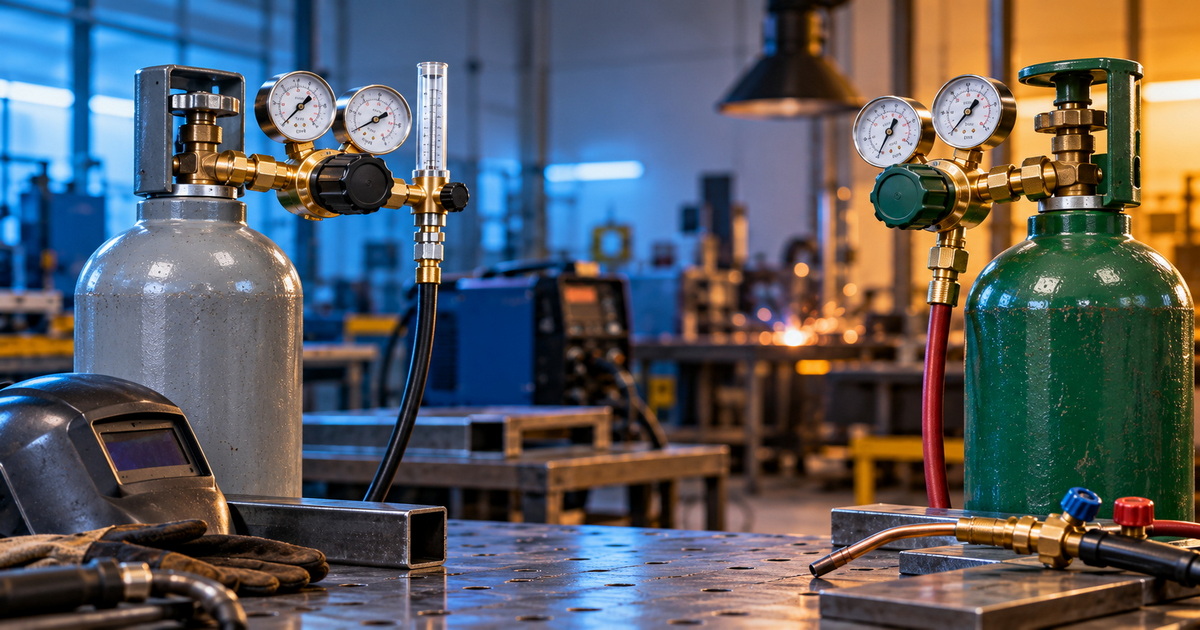
A welding gas regulator for MIG and MAG welding must do more than fit a cylinder. It must safely reduce supply pressure, support the shielding-gas flow your process needs, and match the gas, connection, and equipment at the workstation. For distributors and OEM buyers, consistent performance across a production lot matters as much as the specifications of one sample. This guide explains how to compare regulator types, verify compatibility, and check the gas delivered at the torch.
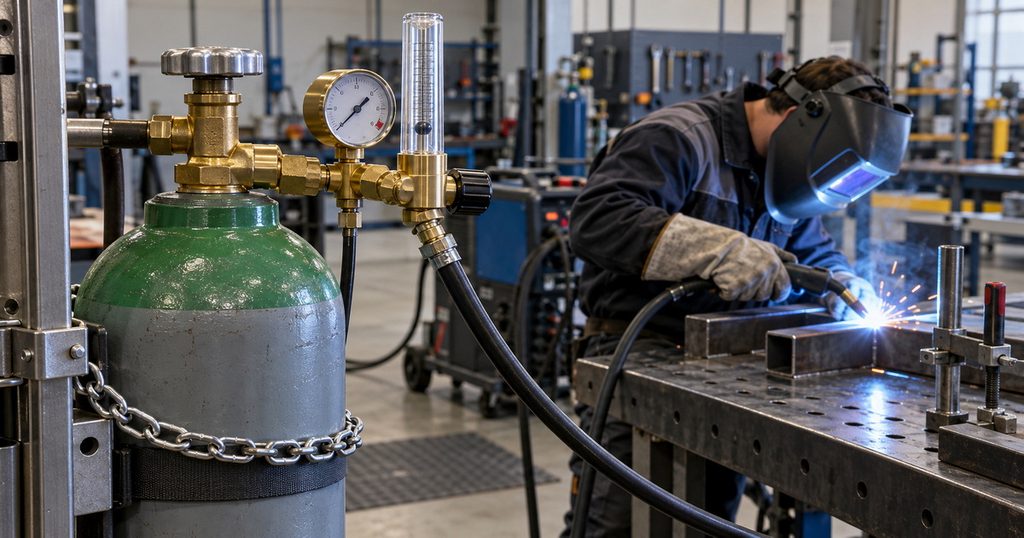
What Does a MIG/MAG Welding Gas Regulator Do?
Gas metal arc welding, or GMAW, uses gas delivered through the welding gun to protect the molten weld pool from surrounding air. “MIG” is familiar shop language, but an argon/CO₂ blend contains an active gas; “MAG” describes that setup more precisely. The American Welding Society identifies GMAW as the standard process name and MIG as a nonstandard term.
A regulator reduces cylinder pressure to a usable delivery pressure. A separate or integrated flow-control device sets or indicates shielding-gas flow. This distinction matters: a pressure gauge marked in psi or bar does not, by itself, measure the volume of gas leaving the welding nozzle. Virginia Tech’s compressed-gas guidance makes the same distinction between pressure regulation and flow measurement.
Even a stable outlet-pressure reading cannot prove that the weld has adequate shielding. A leaking hose, incorrect gas scale, obstructed diffuser, or draft can leave the weld pool exposed. Conversely, excessive gas flow can become turbulent and contribute to porosity rather than preventing it. Select and inspect the complete delivery system, not just the regulator body.
Which Welding Gas Regulator Type Fits the Job?
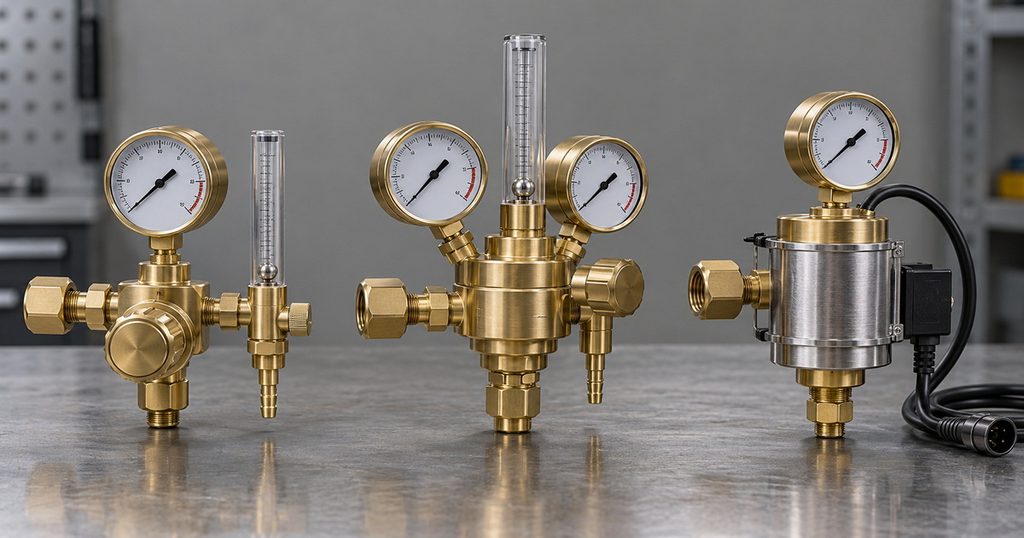
| Regulator configuration | Best-fit application | Main selection check |
|---|---|---|
| Single-stage regulator with flow gauge | Portable or intermittent MIG/MAG stations | Confirm the indicated-flow scale is suitable for the specified gas and operating conditions. |
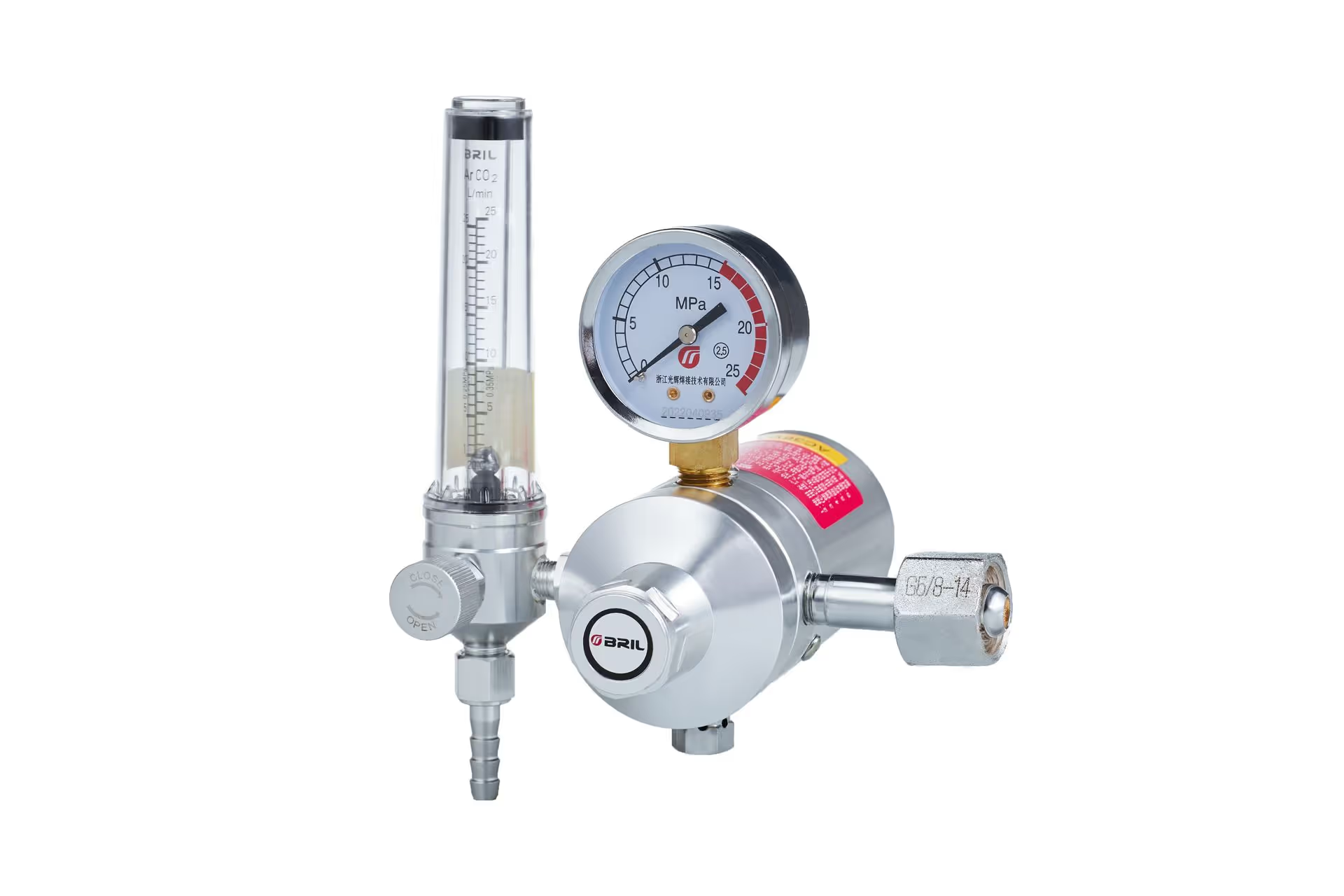
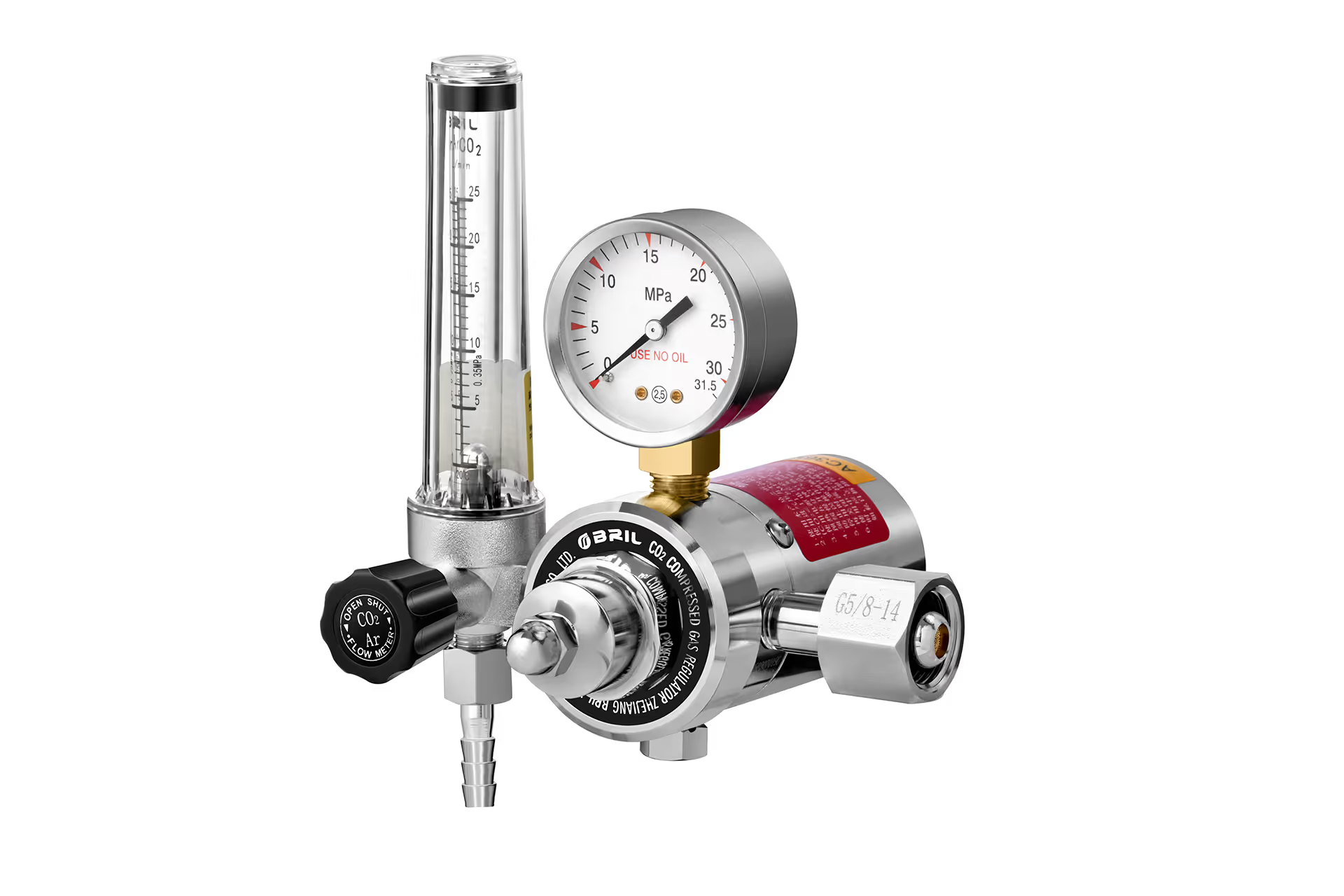
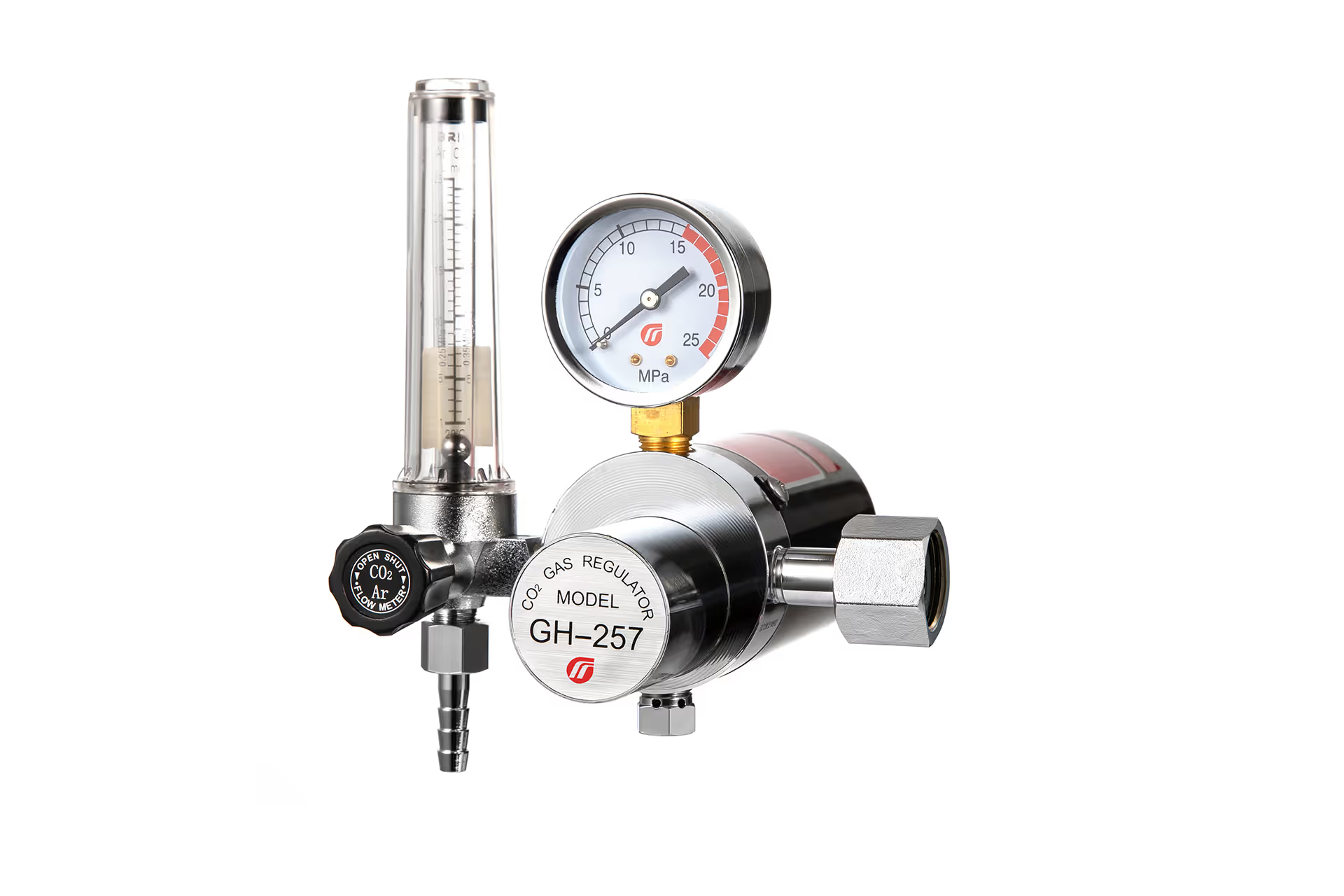
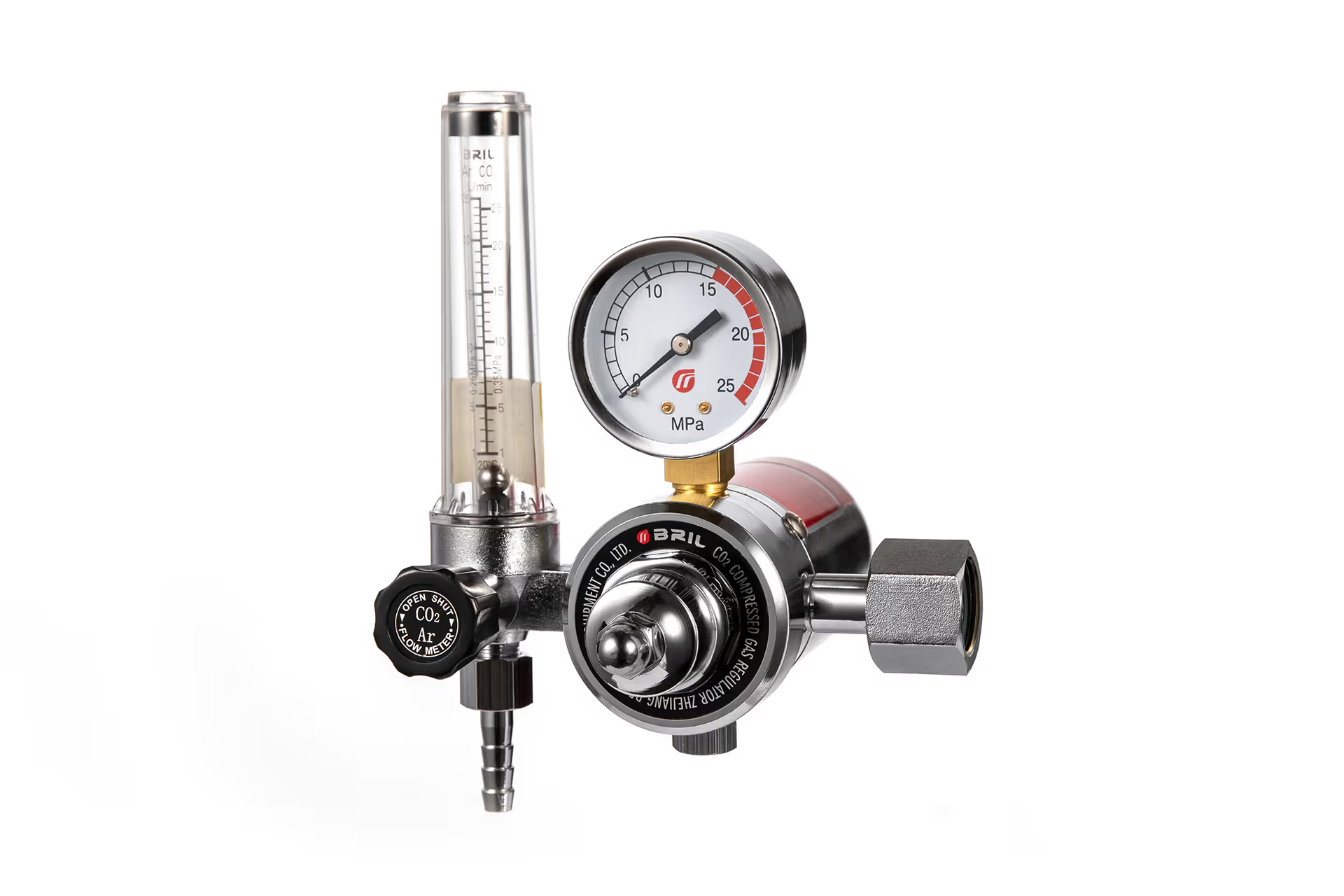
| Single-stage regulator with flowmeter | Routine stations where operators need a visible flow indication | Confirm the gas scale, mounting orientation, and reading method. |
| Two-stage regulator with flow control | Longer runs or applications where steadier delivery pressure is valuable | Confirm that flow control is included; two pressure-reduction stages do not automatically mean two outlets. |
| Heated CO₂ regulator | Pure-CO₂ service where sustained withdrawal creates a freeze-up concern | Confirm CO₂ suitability, heater rating, electrical supply, and equipment instructions. |
A single-stage regulator reduces pressure in one step. A two-stage design reduces it in two steps and can provide steadier outlet pressure as inlet conditions change. ESAB describes the latter as particularly useful where pressure stability is important. Neither design eliminates the need to verify shielding-gas flow.
Product names can also mislead. A “dual-gauge” regulator is not necessarily dual-stage: two gauges may simply display cylinder pressure and outlet pressure, or a flow-indicating scale. Likewise, a dual-outlet unit is a different feature again. Ask the supplier for a sectional drawing and the exact configuration instead of relying on a short catalog title.
When Is a Heated CO₂ Regulator Worth Considering?
Pure CO₂ is one shielding-gas option for mild-steel GMAW. Miller describes it as a cost-effective alternative to a 75% argon/25% CO₂ blend, while noting that it may produce more spatter and a less smooth arc. Gas selection should follow the welding procedure, filler-metal guidance, and power-source instructions—not a regulator advertisement.
Sustained CO₂ withdrawal can cool the regulator assembly and disrupt delivery. An electrically heated unit designed for this service can help resist freeze-up; Lincoln Electric lists a heated two-stage flow-gauge regulator for high-flow CO₂ applications. Some Lincoln equipment manuals also instruct users to employ a CO₂ heater when welding with CO₂.
That does not mean every CO₂ cylinder requires a heater. Evaluate the withdrawal rate, duty cycle, ambient conditions, and instructions for the actual welding equipment. Confirm the heater’s voltage and electrical arrangement for the destination market. Never improvise an electrical heater or use a flame to warm gas equipment.
How Do You Check Gas and Cylinder Compatibility?
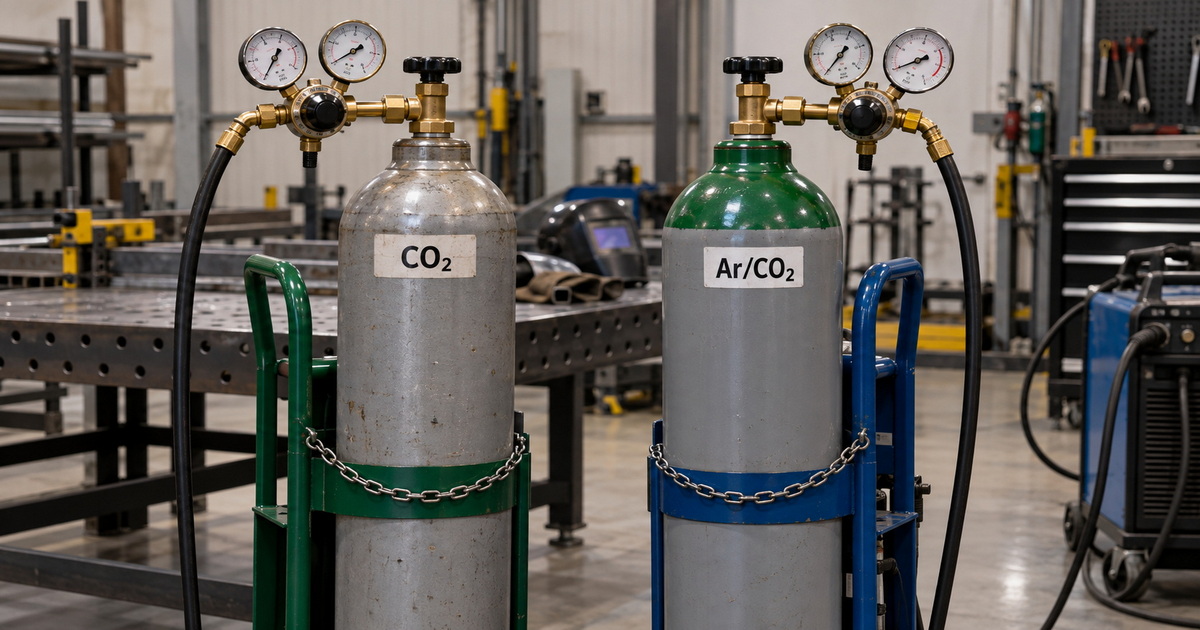
Begin with the cylinder label, not its color or a familiar-looking connector. Confirm the gas or premixed blend, then ask the local gas supplier to verify the cylinder-valve connection used in the destination market. Do not force a fitting or treat an adapter as proof that a regulator is approved for another gas. OSHA requires pressure-reducing regulators to be used only for their intended gases and pressures.
Next, compare the regulator’s maximum inlet rating with the cylinder supply. Check its outlet range against the welding machine’s permitted gas-inlet pressure. Confirm the required flow range, measurement units, hose outlet, and calibration gas. A scale marked for argon should not automatically be treated as an exact CO₂ flow reading; request written compatibility and calibration details for any model advertised for multiple gases.
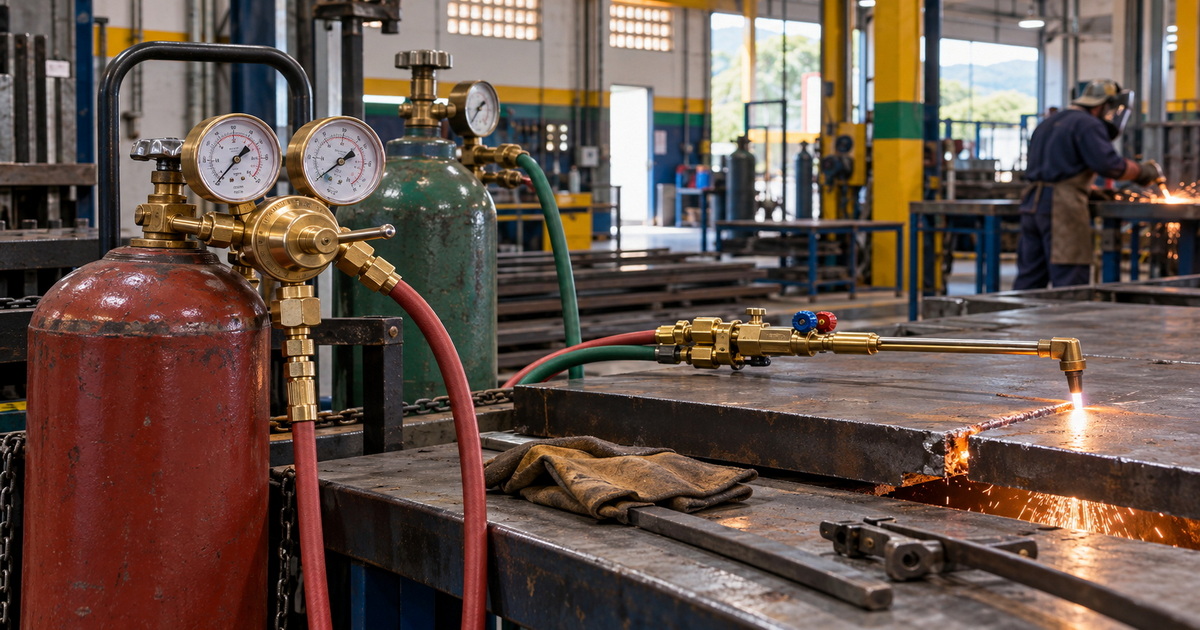
Keep neighboring product categories distinct. Argon and argon/CO₂ equipment commonly serves shielding-gas applications. Oxygen, acetylene, and propane regulators belong to different gas services and must not be presented as interchangeable MIG/MAG accessories. Nitrogen regulators are likewise selected for their specified nitrogen application, not as a default substitute for steel-welding shielding gas.
These distinctions are also safety-critical. OSHA requires oxygen equipment to be kept free of oily or greasy substances and sets restrictions on acetylene pressure. A supplier that offers all these regulator types should document the approved gas service of each configuration, rather than describe one unit as a universal welding regulator.
How Much Shielding-Gas Flow Should You Set?
The wire manufacturer’s recommendations, welding procedure, and machine manual should take priority over a generic flow chart. As examples—not universal settings—Miller gives 20 cubic feet per hour (CFH) as a light-duty MIG starting point in one guide and 25–35 CFH for short-circuit MIG in another. Those figures describe different operating contexts. Twenty CFH is approximately 9.4 liters per minute; 25–35 CFH is approximately 11.8–16.5 liters per minute.
Set and read the flow with gas moving through the system, using the machine’s gas-purge function where available. Then account for nozzle size, gun-to-work distance, shielding-gas blend, and drafts. If a weld shows porosity, simply increasing the flow may waste gas or create turbulence. First inspect the hose, machine connections, gun seating, diffuser, and nozzle.
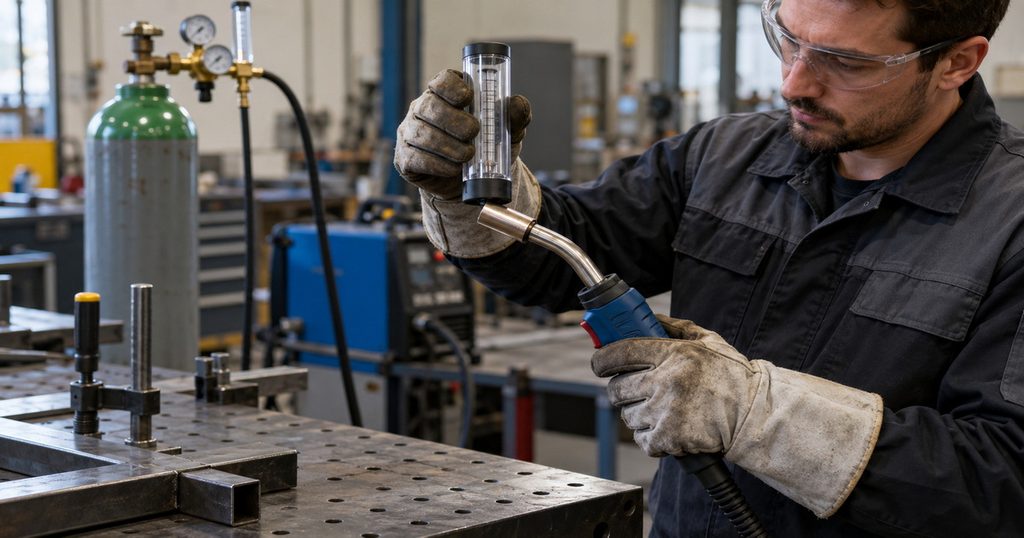
A handheld tester at the gun can reveal a useful difference: the regulator may indicate one flow while less gas reaches the nozzle. Miller recommends checking nozzle-end flow when troubleshooting shielding problems. That makes torch-end verification especially valuable when a station has a long hose, frequently changed consumables, or repeated unexplained defects.
A Six-Step Selection and Setup Check
1. Define the work. Record the base metal, wire, transfer mode, shielding gas, duty cycle, and number of welding stations.
2. Identify the cylinder. Read its gas label and have the gas supplier confirm the local valve connection. Never force or modify an incompatible fitting.
3. Review the datasheet. Check approved gas service, maximum inlet pressure, outlet range, flow range, calibration, connections, and any heater rating.
4. Secure and inspect. Check the cylinder restraint, regulator inlet seat, gauges, seals, and hose for damage. Follow the manufacturer’s attachment instructions.
5. Set and leak-check. Adjust flow while gas is moving. Check connections using an approved, gas-compatible leak-detection method—not a flame.
6. Verify at the torch. Make a trial weld under the applicable procedure. If coverage is inconsistent, investigate delivered flow and drafts before replacing the regulator.
Only trained personnel should install or repair pressurized gas equipment. Applicable local rules, cylinder-supplier instructions, and the equipment manual must guide the actual setup. OSHA specifies inspection and service requirements for regulators used in U.S. oxygen-fuel welding and cutting; those provisions should not be presented as a universal substitute for every MIG/MAG installation manual.
New Insight: Audit Gas at the Nozzle
For a production line, regulator selection affects operating cost as well as weld quality. Harris Products Group describes a brief shielding-gas surge when a welding-gun solenoid opens: pressure stored in the supply path can produce excess flow at each trigger pull. Its guidance recommends first establishing a gas-use benchmark, then identifying where waste occurs before buying gas-saving hardware.
A useful station audit records the regulator setting, steady-purge nozzle flow, approximate number of starts, gas consumed, and weld-quality observations for the same job conditions. Compare a baseline with a properly specified alternative. If a supplier claims gas savings, ask for the test method, conditions, and repeatable measurements; do not publish an unsupported savings percentage.
The audit may also change the purchasing question. In a multi-station shop, inconsistent nozzle flow might point to hose or consumable maintenance. Repeated interruptions for cylinder changes might justify evaluating a changeover supply arrangement. Neither problem is necessarily solved by purchasing a more expensive cylinder-mounted regulator. Harris discusses both gas-surge controls and automatic changeover systems as distinct ways to address different inefficiencies.
What Should OEM and ODM Buyers Verify?
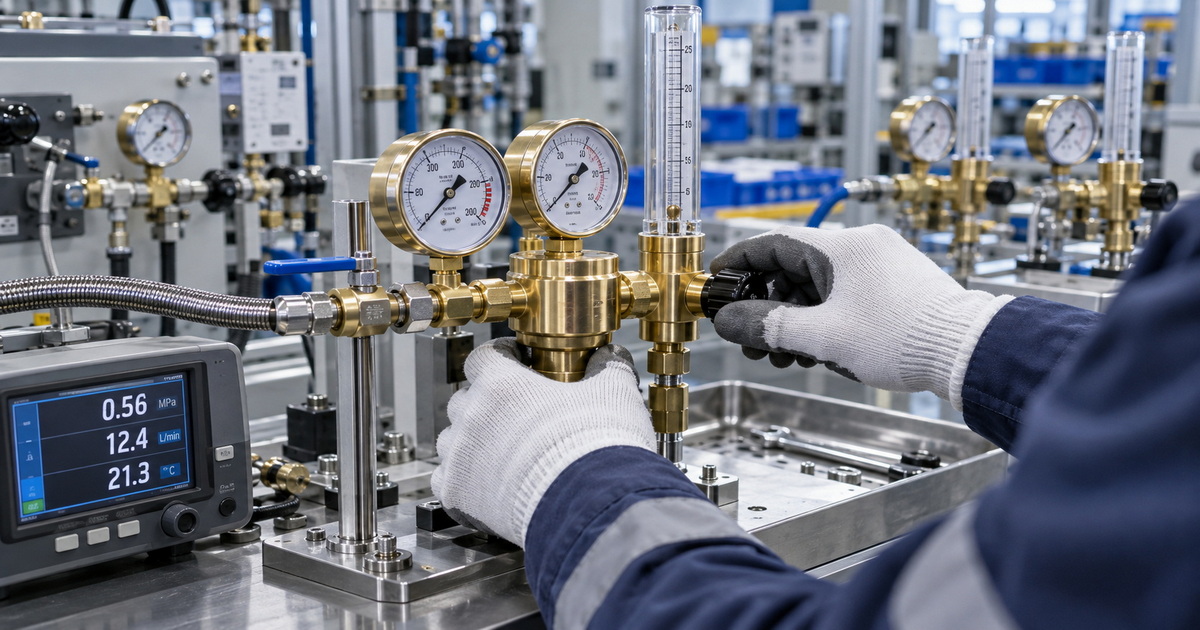
For an overseas brand, wholesaler, or equipment manufacturer, “high-quality brass” is not a sufficient purchasing specification. Request the brass grade, gas-wetted material details, inlet-seat and diaphragm specifications, rated pressure and flow conditions, and dimensioned drawings. State whether the required product is single-stage or two-stage, and whether its indicator is a pressure gauge, flow gauge, or flowmeter.
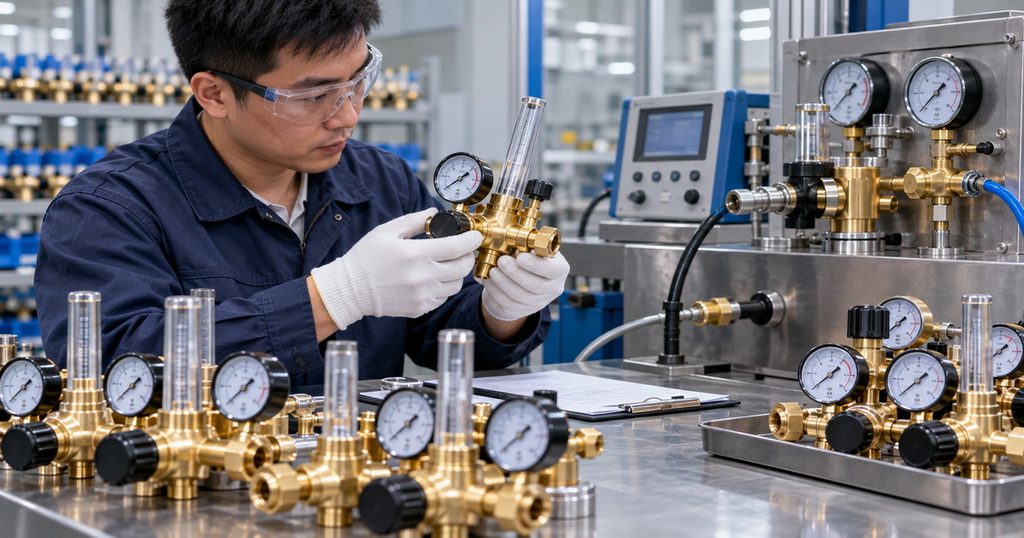
Build acceptance criteria into the order. Ask for documented incoming-material controls, calibrated test equipment, pressure-test and leak-test methods, pass/fail limits, batch traceability, and sample inspection records. If a supplier claims conformity with ISO 2503, request evidence for the exact model and applicable edition. ISO 2503:2009 addresses specified single- and two-stage cylinder regulators used in welding and cutting, including versions with flow-metering devices; the presence of the standard in a catalog does not establish that every listed model conforms.
Before production, approve the destination-market inlet connection, outlet fitting, labeling language, packaging, artwork, spare-parts plan, and—where relevant—the CO₂ heater’s electrical specification. Keep an engineering-approved drawing and controlled sample as purchasing references. These are recommended verification steps, not claims that a particular supplier has already completed them.
For this manufacturer, the commercial message should follow the evidence: explain which CO₂, heated CO₂, argon, or dual-stage configurations can be customized, then attach the relevant model-specific test and inspection documents. Oxygen, acetylene, propane, and nitrogen models can be introduced as separate product lines without implying they are interchangeable shielding-gas regulators.
FAQs About MIG/MAG Gas Regulators
1.Can I use an argon regulator on pure CO₂?
Only if the manufacturer approves the exact model for CO₂ and confirms its fittings, pressure rating, and flow indication are suitable. Similar appearance does not establish gas compatibility. OSHA’s gas-and-pressure-specific regulator rule reinforces the importance of checking intended service.
2.Is a flowmeter better than a flow gauge?
Neither is automatically better for every station. A flowmeter offers a visible indication under its specified operating and calibration conditions; a flow gauge can offer a compact setup. Compare the actual product’s gas scale, accuracy information, operating requirements, and ease of reading.
3.Do I need a two-stage regulator for MIG/MAG welding?
Not always. A suitable single-stage unit can serve routine work; a two-stage design may be preferable where steadier delivery pressure is important as supply conditions change. The welding setup still needs appropriate flow control and verification.
4.Why is my weld porous when the gauge shows gas?
A gauge reading does not confirm adequate gas at the nozzle. Check for leaks, an incorrectly connected or seated gun, clogged consumables, drafts, and inappropriate flow. Too much flow can also create turbulent coverage.
5.Does every CO₂ regulator need a heater?
No. Consider a purpose-built heated model when equipment instructions, sustained high withdrawal, or observed freeze-up justify it. Match the heater and electrical supply to the approved application.
6.Can I use an oxygen or acetylene regulator for shielding gas?
Do not substitute regulators across gases without explicit manufacturer approval for that exact configuration. Oxygen and fuel-gas services carry their own equipment and safety requirements.
7.What should an OEM buyer request before placing an order?
Request approved drawings, gas and pressure ratings, material specifications, calibration details, documented test criteria, traceable inspection records, applicable conformity evidence, and a controlled production sample.
Need a regulator program for your market? Send our engineering team the gas or blend, destination country, cylinder-valve specification, required flow range, application duty cycle, and expected order volume. We can review the appropriate CO₂, heated CO₂, argon, or dual-stage configuration and discuss OEM/ODM drawings, branding, and inspection requirements before sampling.
References
1. Google Search Central. [Creating Helpful, Reliable, People-First Content]. Guidance on sourcing, authorship, original value, and E-E-A-T. [developers.google]
2. American Welding Society. [“What’s Wrong with MIG and TIG?”]. Discussion of MIG terminology and GMAW. [aws]
3. Miller Electric. [“What Type of Gas Is Best for MIG Welding in DIY Applications?”]. Gas selection, short-circuit flow guidance, and troubleshooting. [millerwelds]
4. Miller Electric. [“MIG Welding Tips and Techniques for Beginners”]. Light-duty flow starting point and process overview. [millerwelds]
5. ESAB. [“Single Stage vs. Two Stage Regulators”]. Pressure-reduction designs and their applications. [esab]
6. U.S. Occupational Safety and Health Administration. [29 CFR 1910.253, Oxygen-Fuel Gas Welding and Cutting]. Gas-specific regulator use and oxygen-fuel safety requirements. [osha]
7. Virginia Tech Environmental Health and Safety. [Compressed Gas Cylinders]. Regulator function, cylinder handling, and leak-detection guidance. [ehs.vt]
8. International Organization for Standardization. [ISO 2503:2009]. Scope of the pressure-regulator standard. [iso]
9. Harris Products Group. [“Shielding Gas: Lower Your Costs by Eliminating Inefficiencies”]. Gas-surge, benchmarking, and supply-system discussion. [ch-delivery.lincolnelectric]
10. Lincoln Electric. [Heated CO₂ Flow-Gauge Regulator, Model HP715] and [SPEEDTEC 200C operator manual]. Product and equipment-manual examples concerning CO₂ heating. [lincolnelectric]
Hot Tags: Welding Gas Regulator Manufacturer, MIG Welding Gas Regulator Supplier, MAG Welding Gas Regulator, Argon CO₂ Regulator Manufacturer, CO₂ Heated Regulator Supplier, Dual Stage Gas Regulator Manufacturer, Welding Gas Flowmeter Regulator, Industrial Gas Regulator Supplier, OEM Welding Gas Regulator, Wholesale Argon CO₂ Flowmeter