Content Menu
● Introduction and selection criteria
>> What a qualified factory must show
>> 1. Zhejiang Bril Welding Equipment Co., Ltd.
>> 3. Ningbo Starex Industry & Trading Co., Ltd.
>> 4. Ningbo Kimpin Industrial Pte. Ltd. / RICHU
>> 5. TOPWELL
>> 7. Shanghai Vigour Technologies
>> 8. Ningbo Longtime Gas Control System Co., Ltd.
>> 9. Ningbo Shanfeng Valve Co., Ltd.
>> 10. Yuyao Hualong Welding Meter Factory
● Buyer’s guide and hidden risks
>> The overlooked substitution trap
>> 1. How can I check whether a factory’s ISO 9001 certificate has expired or been suspended?
>> 2. Does an ISO 2503 claim prove that the heater is safe for EU sale?
>> 3. What is the most useful cold-performance acceptance test?
>> 4. Why can two suppliers quote very different MOQs for “the same” regulator?
>> 5. How do I verify that the bulk shipment matches the approved sample?
Introduction and selection criteria
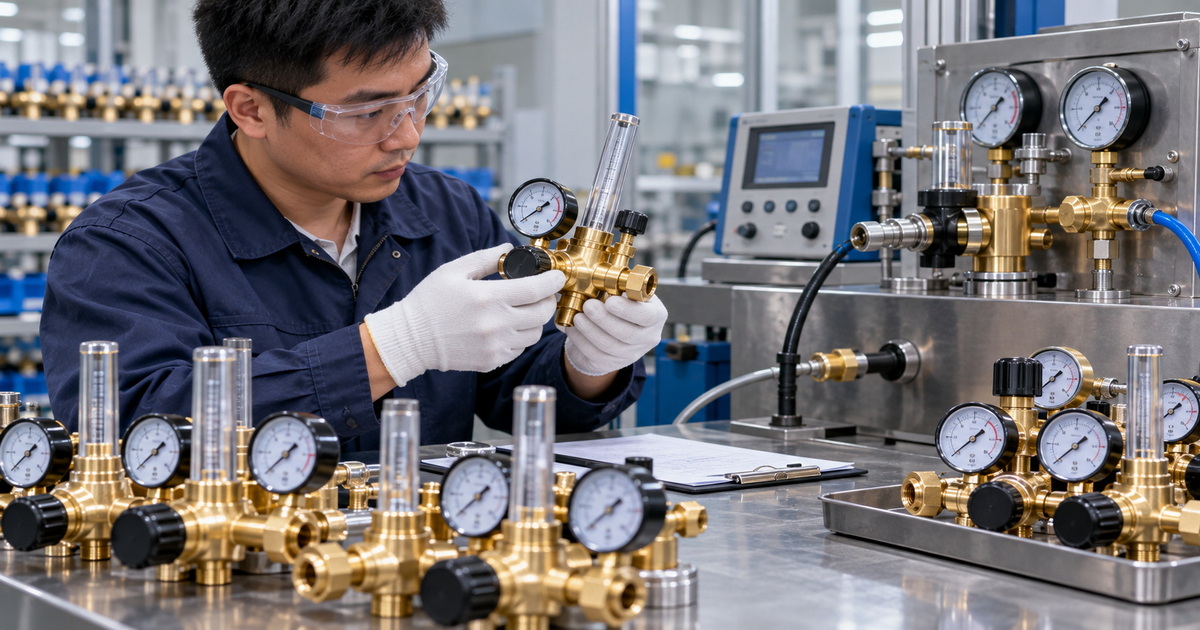
China offers a practical sourcing base for heated CO₂ regulators because buyers can find regulator makers, brass-machining suppliers, gauges, electrical components, welding accessories, and export services within connected manufacturing regions. The advantage is not that every supplier is interchangeable. It is that an importer can compare several supply-chain models: a specialist regulator factory in Wenzhou, a welding-accessory supplier in Ningbo, a gas-control developer in Jiangsu, or a welding-equipment company that bundles regulators with machines.
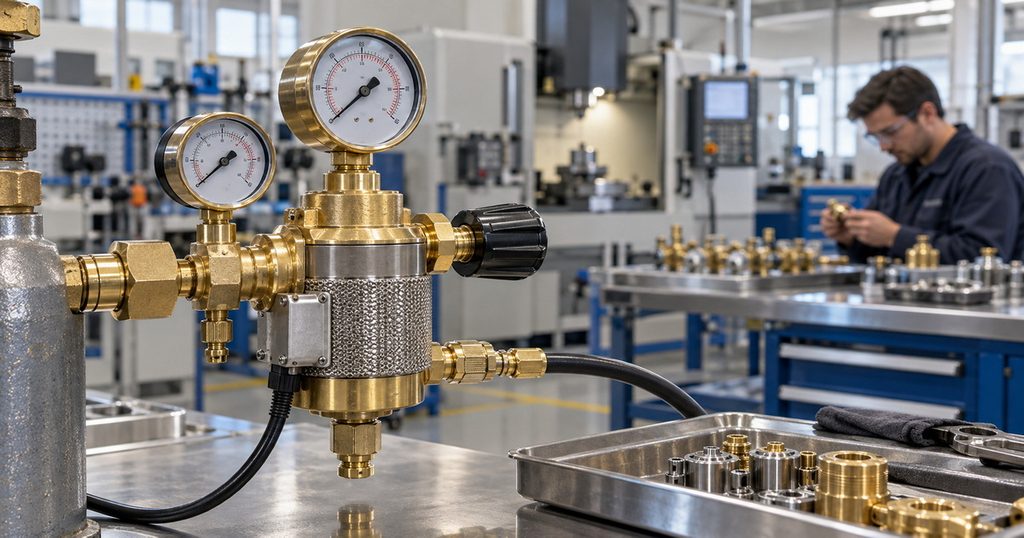
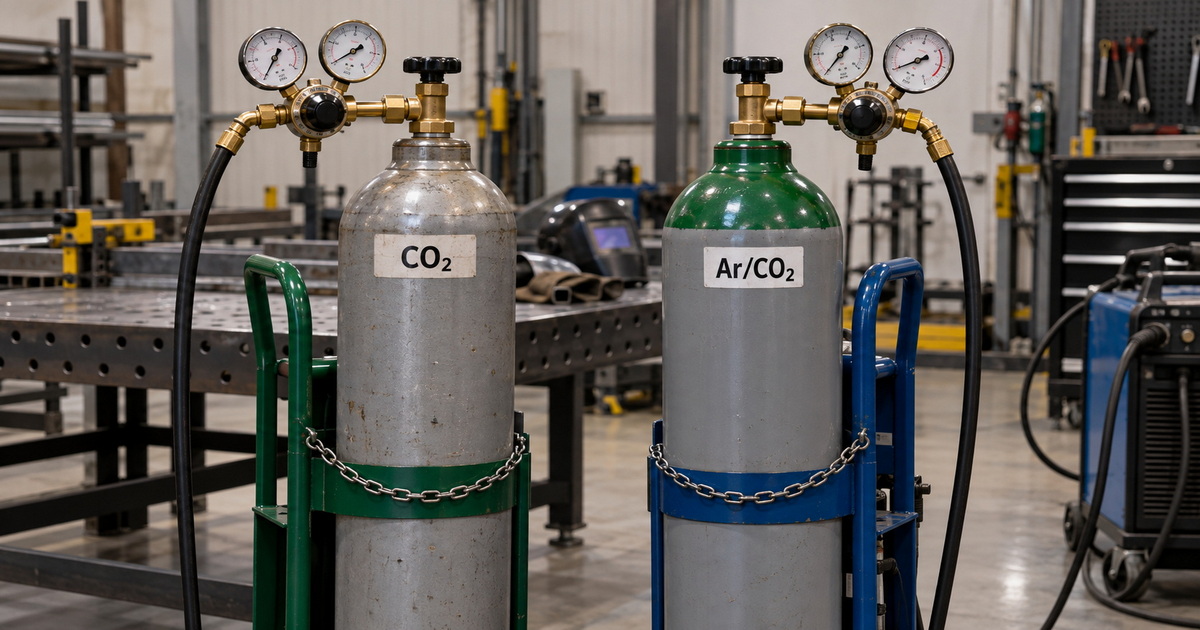
A heated CO₂ regulator combines pressure reduction with an electrically heated gas path or body. Its purpose is to reduce icing and flow instability when CO₂ expands during sustained withdrawal, particularly in cold workshops or continuous MIG/MAG welding. The relevant purchase decision is therefore broader than “Does it have a heater?” Buyers need to confirm the regulator’s pressure-control performance, thermal behavior at the specified flow, electrical protection, cylinder connection, and repeatability across production lots.
What a qualified factory must show
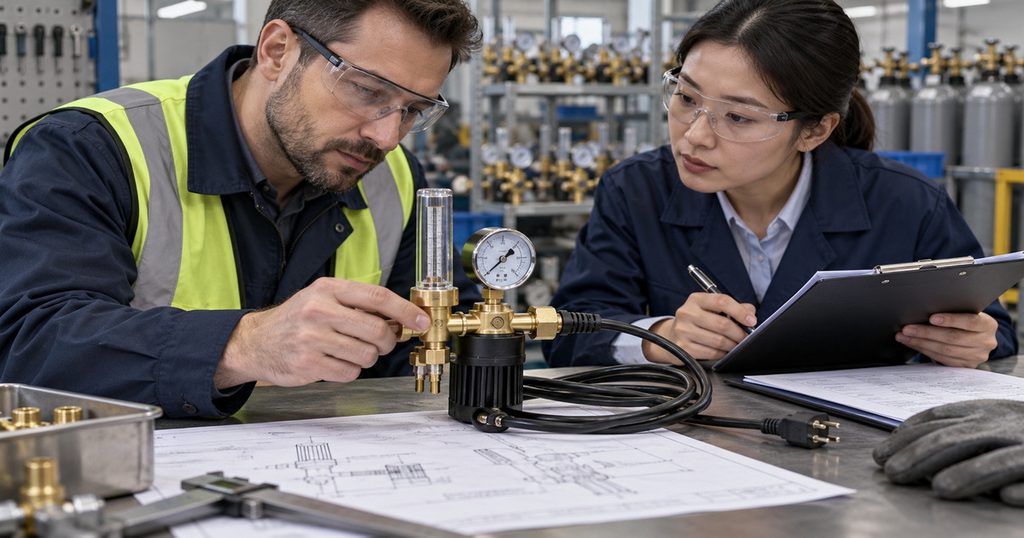
Before reviewing names, establish the minimum evidence package. For the pressure-regulating portion of a cylinder-mounted welding unit, ask how the applicable model is assessed against ISO 2503; ISO identifies that standard as covering cylinder-connected pressure regulators, including versions with flow-metering devices for CO₂. It is not a blanket certificate for an entire heated electrical assembly.
For an electrically heated export model, request its exact rated voltage, power, heater-control design, insulation and grounding details, abnormal-temperature protection, and destination-market documentation. In the EU, the Low Voltage Directive generally covers equipment rated from 50 to 1,000 V AC; its applicability therefore differs between, for example, a 36 V and a 220 V version. RoHS addresses restricted substances in electrical and electronic equipment. A generic “CE certificate” image does not replace an applicable conformity assessment, technical documentation, and an EU Declaration of Conformity.
Ten suppliers to shortlist
The order below begins with Zhejiang Bril Welding Equipment Co., Ltd. as the requested example of a regulator-focused OEM partner. Positions 2–10 are not a measured quality ranking. Some are direct heated-regulator candidates; others are useful comparison candidates whose precise product configuration or factory role must be confirmed.
| Supplier | Documented focus and heated-product evidence | Published capacity | Published MOQ | Public quality or compliance signal |
|---|---|---|---|---|
| Zhejiang Bril Welding Equipment Co., Ltd. | Industrial regulators; dedicated CO₂ heater-regulator range | Not stated for heated models | Confirm by configuration | Company states ISO 9001 and product-related CE/CNAS evidence; obtain model-specific documents |
| DEM Machinery Co., Ltd. | Integrated heated CO₂ flowmeter regulator, WR1690E | Not stated | Samples and bulk OEM discussed; threshold not stated | Company states ISO 9001 and ISO 2503 conformity; verify model records |
| Ningbo Starex Industry & Trading Co., Ltd. | CRF587 CO₂ heater-regulator flowmeter | Not stated | Confirm | Product is presented as conforming to EN ISO 2503; request test evidence |
| Ningbo Kimpin Industrial Pte. Ltd. / RICHU | CO₂ heater-pressure regulator and wider welding-gas range | Not stated | Confirm | Company states ISO 9001-based production and standards-compatible regulator capability |
| TOPWELL | Heated CO₂ regulator within a wider welding-equipment range | Not stated for regulators | Confirm | Model specifications published; request regulator-specific test and compliance files |
| GET STAR WELD | GS-2020 electrically powered CO₂ regulator | Not stated for regulators | Confirm | Model electrical and gas specifications published; request test files |
| Shanghai Vigour Technologies | CO₂ heater and industrial gas-control systems; integrated heated model to confirm | Company states 2,000 systems daily across its broader range—not heated units | Confirm | Company reports CE-marked products; confirm relevance to proposed SKU |
| Ningbo Longtime Gas Control System Co., Ltd. | Gas regulators and customization; heated welding model to confirm | Company reports a 36,000 m² site—not unit output | Confirm | R&D and tooling capability stated; request SKU-level documentation |
| Ningbo Shanfeng Valve Co., Ltd. | Gas-regulator manufacturing; heated CO₂ suitability to confirm | Not established | Confirm | Verify gas type, heater capability, and product-specific evidence |
| Yuyao Hualong Welding Meter Factory | Welding regulators, including CO₂ pressure-regulator category; heated SKU to confirm | Not established | Confirm | Request current certificates and sample-test reports |
1. Zhejiang Bril Welding Equipment Co., Ltd.
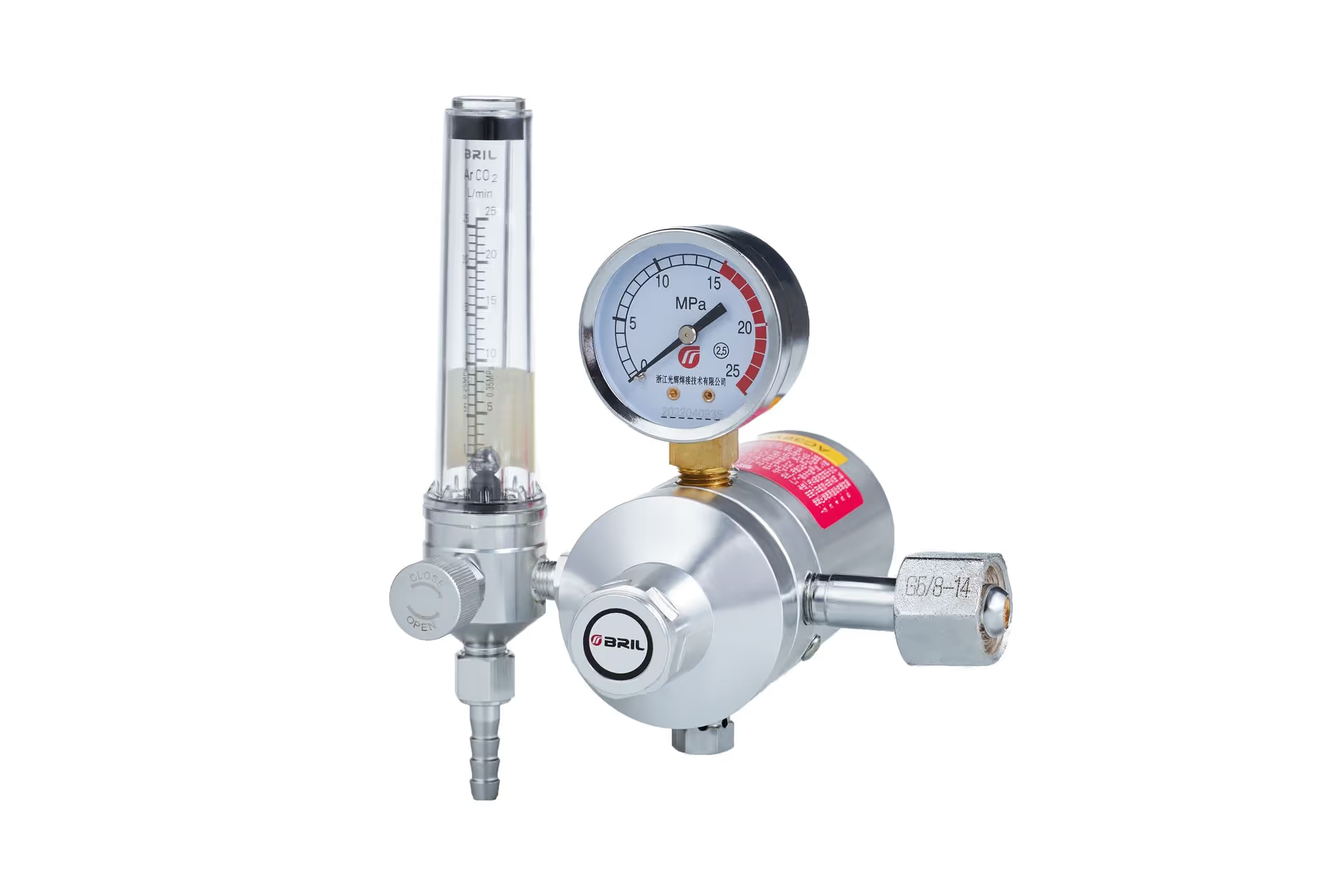
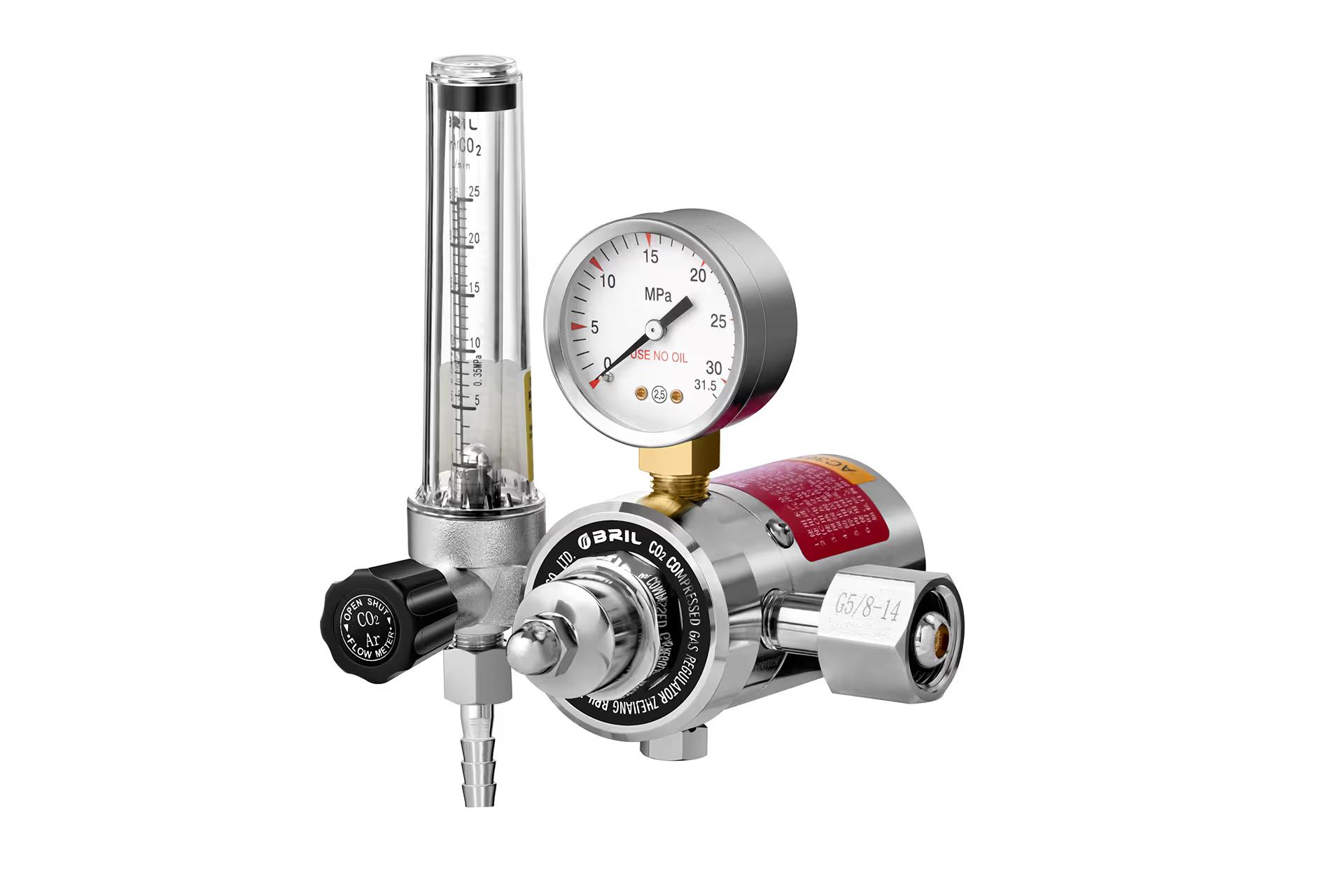
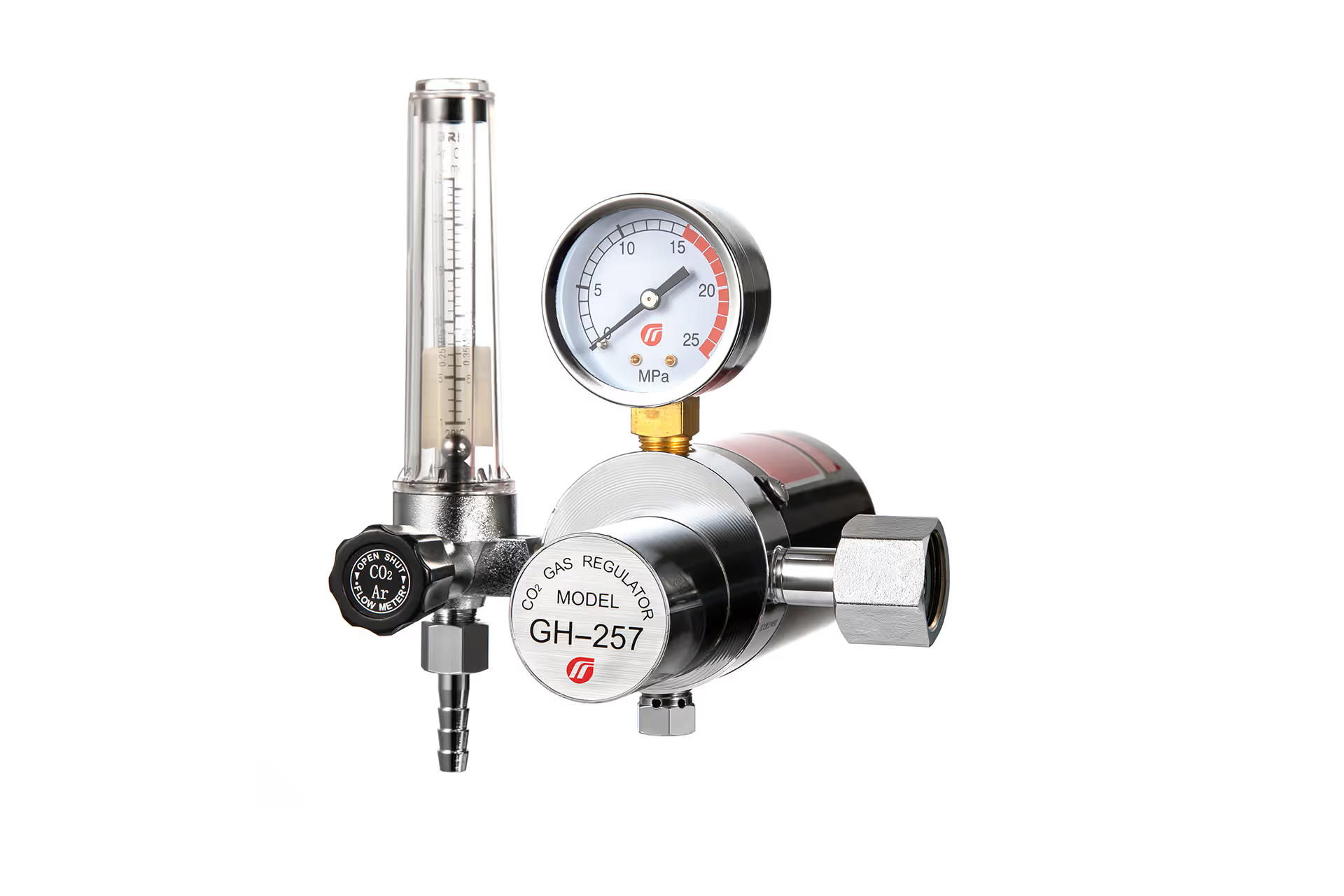
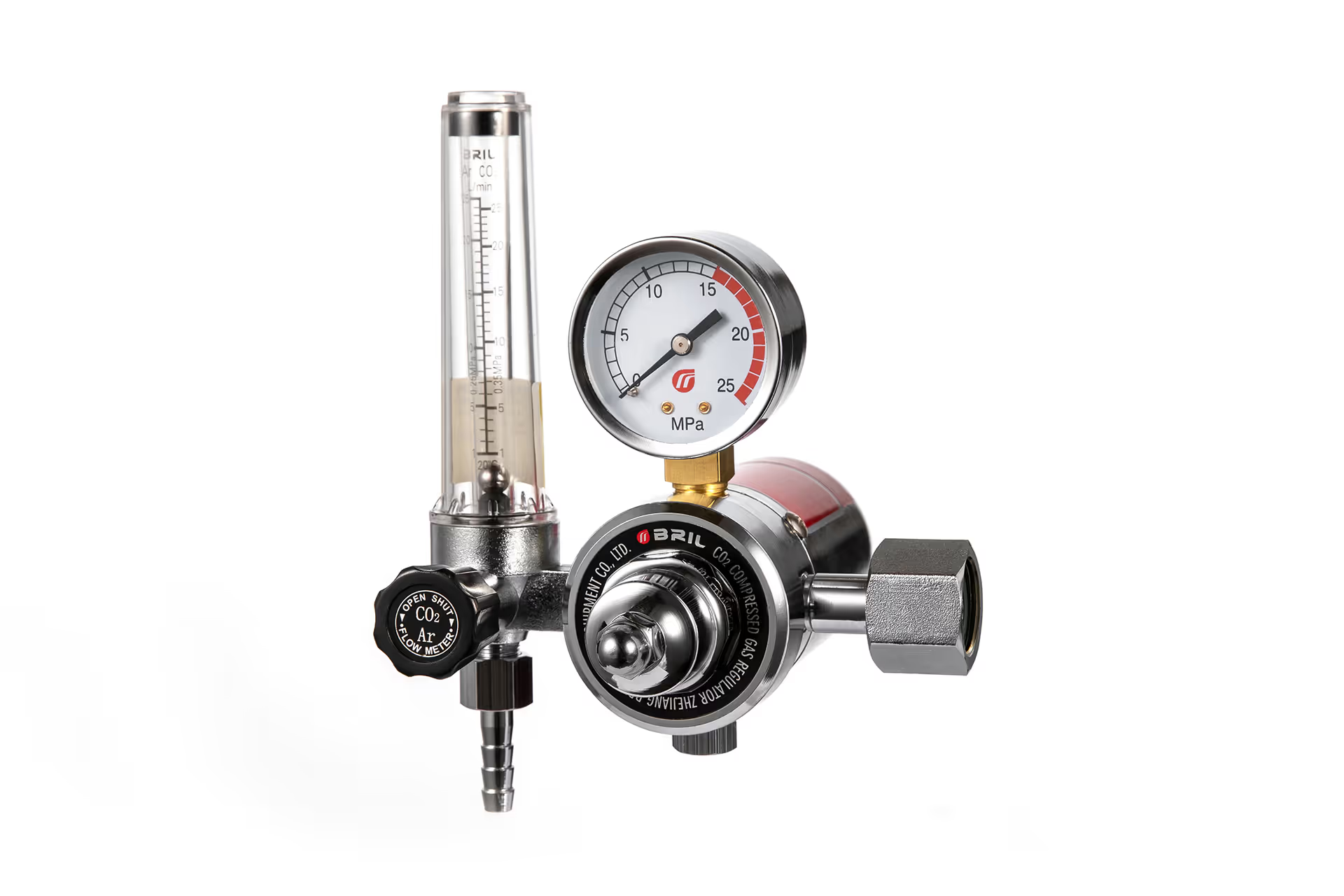
Location and founding year: Wenzhou, Zhejiang; founded in 2002. Likely buyer fit: Small and mid-sized welding brands, distributors, and equipment OEMs that need a regulator-focused development partner rather than a general accessories catalog. Bril describes its core business as developing, manufacturing, and selling industrial gas pressure regulators; its published CO₂ heater-regulator range includes several model families rather than one isolated heated listing.
Bril’s relevant strength is the breadth of its configurable regulator platform. Its published OEM options include connections, heater voltage and power, gauges, markings, labels, packaging, and plug specifications. It also says each regulator is inspected and leak-tested before shipment. That is a credible starting point for a private-label program, although a purchaser should still request the actual inspection plan and test limits for the quoted SKU.
The company reports more than 200 employees, an ISO 9001 system certificate, and product-related CNAS and CE documentation. Its website also names domestic welding-equipment customers and overseas brand relationships. These are company statements, not independently verified endorsements or proof that a proposed heater variant has destination-market approval. Request current certificates, the precise model’s reports, and permission before repeating customer names in downstream marketing.
For a growing brand, Bril is a sensible first conversation where communication speed and incremental OEM changes matter: a buyer could begin with a validated standard heated model, then localize its inlet, plug, label, manual, and carton. However, neither a published MOQ nor an independently verified heated-model production capacity was established here. Treat flexibility and value as procurement hypotheses to test through an RFQ, sample revision, and pilot order—not as guaranteed commercial terms.
2. DEM Machinery Co., Ltd.
Location and founding year: Changzhou, Jiangsu; a DEM catalog states the business was founded in 2009. Main markets: DEM describes a worldwide customer base, while its heated-model page identifies customers across Europe, North America, Asia-Pacific, and the Middle East. OEM/ODM: Inlet and outlet connections, 110 V/220 V versions, branding, labels, and packaging are offered for its WR1690E model.
DEM publishes unusually specific WR1690E details: a stated 0–25 L/min range, 190 W heater, forged-brass body, and 110 V or 220 V variants. Its page also claims ISO 9001 manufacturing and ISO 2503 conformity. That level of model definition makes it easier to construct a comparable RFQ, but buyers should ask for the drawing, flow-test conditions, heater safety tests, and documents tied to the exact variant ordered. DEM says samples and bulk OEM/ODM orders are available; it does not publish a universal OEM MOQ.
3. Ningbo Starex Industry & Trading Co., Ltd.
Location and founding year: Ningbo, Zhejiang; the precise incorporation year was not verified from the reviewed material. Its website reports more than 20 years of industry experience, which should not be converted into an assumed founding date. Main markets: The company positions itself for global welding and cutting customers, but a country-level heated-regulator sales breakdown was not established. OEM/ODM: Custom logos and product-specific configuration should be discussed against the CRF587 drawing.
Starex is relevant because it identifies a CO₂ heater-regulator flowmeter, the CRF587, within its own product range. A listing describes 110 V and 220 V versions, a 190 W heater, and a 1–25 L/min flow range; its site presents the model as conforming to EN ISO 2503. Ask which legal entity manufactures the regulator and heater, which operations occur in-house, and whether the cited conformity evidence covers both electrical variants. “Industry & Trading” in a company name is not, by itself, evidence for or against factory ownership.
4. Ningbo Kimpin Industrial Pte. Ltd. / RICHU
Location and founding year: Ningbo; established in 2003, according to Kimpin. Main markets: The company describes an export focus across welding, gas cutting, HVAC/R, brazing, and pipeline applications, without publishing a country-by-country split for heated regulators. OEM/ODM: A RICHU heated CO₂ product listing welcomes OEM orders and special packaging; confirm drawing-level customization directly.
Kimpin’s broader range of gauges, regulators, and torches may suit distributors buying several gas-equipment lines together. Its website states that its production follows an ISO 9001 quality system and that it can produce regulators complying with BS/EN ISO 2503. These claims should be narrowed to the exact heated CO₂ SKU: obtain the certificate scope, the relevant regulator test report, electrical safety evidence, and confirmation of who builds the heater assembly.
5. TOPWELL
Location and founding year: Hangzhou, Zhejiang; its corporate history traces the business to 2005. Main markets: Its website lists service presence in the United States, Norway, New Zealand, Australia, Poland, and Brazil. OEM/ODM: Heated-regulator private-label scope was not established from the reviewed pages and must be specified in an RFQ.
TOPWELL is principally a welding-equipment provider, which gives it a different sourcing role from a specialist regulator factory. Its published range includes a CO₂ regulator with heater, and a product page states that AC 36 V, 110 V, and 220 V versions are available. This may appeal to importers assembling a coordinated welding-machine and accessory range. Do not infer from machine-manufacturing capabilities that the regulator body or heater is made on the same line; ask for the actual regulator manufacturing location, approved component list, and SKU-specific test records.
6. GET STAR WELD
Location and founding year: China-based; the company says its business originated in 1987, but the legal establishment year of the entity supplying the regulator should be confirmed. Main markets: Its website reports supply to more than 90 countries, without separating heated-regulator shipments. OEM/ODM: Confirm tooling, private-label, connection, and heater changes at SKU level.
The GS-2020 listing gives buyers a concrete comparison point: electrical-power options of 36 V, 110 V, and 220 V; a stated 0–25 L/min outlet flowmeter; and published gas and connection specifications. For procurement purposes, those specifications are a draft—not permission to substitute a local cylinder connection or power plug without engineering approval. Request a controlled drawing and model-specific safety documentation before ordering branded stock.
7. Shanghai Vigour Technologies
Location and founding year: Shanghai; the company history records establishment of Shanghai Haogu and its production/R&D base in 2014, with subsequent VIGOUR-brand development. The current legal entity’s incorporation date should be checked separately. Main markets: Vigour describes domestic and global gas-control customers, particularly industrial and higher-purity systems. OEM/ODM: Its engineering-led, customized fluid-control scope may suit a specification-driven project.
Vigour publishes a separate CO₂ gas-heater product and describes broad regulator capabilities. Its website reports production of 2,000 systems daily across its business; that number must not be presented as heated CO₂ regulator capacity. Similarly, its general CE claims do not establish approval for a proposed assembled unit. Shortlist Vigour when the application involves a defined gas-control system or heater integration, then confirm whether it supplies the required cylinder-mounted heated regulator as one qualified product.
8. Ningbo Longtime Gas Control System Co., Ltd.
Location and founding year: Ningbo, Zhejiang; founded in 2008, according to its website. Main markets: Its public positioning covers gas-regulator and accessory customers; a verified destination-market breakdown for heated welding products was not found. OEM/ODM: The company states that it has its own R&D department and tooling workshop for customization.
Longtime is an engineering comparison candidate, not a confirmed integrated heated CO₂ regulator producer on the evidence reviewed. Its reported 36,000 m² site indicates premises, not monthly regulator output or heater-line capacity. Send a technical drawing and ask whether it can produce, assemble, and validate the full heated configuration; if it proposes a partner-sourced heater, make responsibility for electrical testing and traceability explicit.
9. Ningbo Shanfeng Valve Co., Ltd.
Location and founding year: Yuyao, Ningbo. Public company pages conflict: one says founded in 1987, while its about page says founded in 1999. The legal founding year therefore requires business-registration verification. Main markets and OEM/ODM: Its site establishes gas-regulator manufacturing and R&D, but the reviewed evidence does not substantiate a particular overseas heated-CO₂ market or integrated-heater customization program.
Shanfeng belongs on a broader factory-discovery list because it has regulator-manufacturing relevance. It should move onto a heated CO₂ shortlist only after producing a current product drawing, heater design, sample, and full test plan for that application. Do not equate an LPG-regulator capability with approval for cylinder-mounted CO₂ welding service.
10. Yuyao Hualong Welding Meter Factory
Location and founding year: Yuyao, Zhejiang; a reliable founding year was not established from the evidence reviewed. Main markets: Its public CO₂ pressure-regulator category shows welding and cutting relevance, but specific export destinations for a heated model were not verified. OEM/ODM: Confirm whether it can customize the regulator, procure or build the heater, and control the complete assembly under one quality plan.
Hualong is included as a category-adjacent sourcing lead, not as a confirmed maker of an integrated heated model. That qualification is important: a purchaser comparing it with suppliers publishing specific heater-regulator SKUs should apply a higher documentary threshold before adding it to a final bid list.
A reliable comparison starts with a single, shared RFQ. Without it, two quotations that both say “heated CO₂ regulator” may describe different body materials, voltage configurations, heater protections, flow conditions, and inspection levels.
Build a comparable RFQ
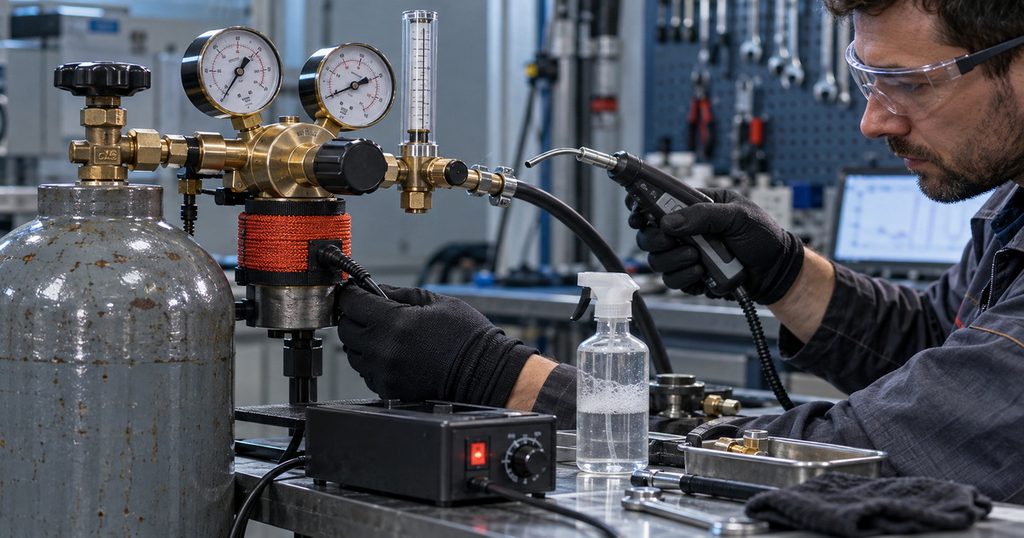
Specify the gas and application; maximum inlet pressure; target outlet pressure or flow range; required continuous operating time; ambient-temperature test condition; cylinder and outlet connection drawings; destination voltage, frequency, plug, and cord; required markings; and annual forecast. Ask every bidder to return a marked drawing and list of exceptions.
Then require a documentary package: business license and factory address; materials specification and purchasing traceability; incoming inspection criteria; machining and assembly controls; pressure and leakage test methods; gauge or flowmeter calibration records; heater insulation and abnormal-temperature tests; final inspection records; and a change-control procedure. Ask for a dated capacity statement showing the proposed SKU’s normal monthly output, available surge capacity, and critical-component lead times. A factory tour is useful, but it cannot replace records showing that the quoted model was tested.
Sampling should have three stages. First, approve the engineering sample against a signed drawing. Second, qualify a pilot lot made with production tooling, production components, and production inspection methods. Third, compare retained pilot samples with randomly selected mass-production units. For a cold-operation application, test the assembly at the agreed CO₂ flow and ambient condition for the required duty period, recording outlet stability, heater behavior, and any icing. Do not accept an unloaded heater demonstration as evidence of gas-flow performance.
The overlooked substitution trap
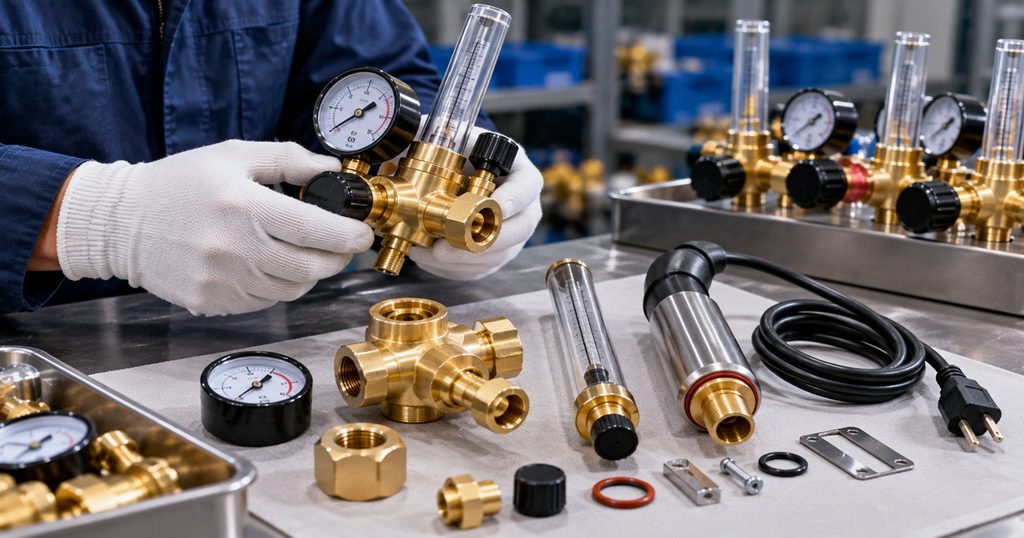
One easy-to-miss risk is calibration and variant drift. A supplier may validate a CO₂-specific flowmeter and heater on one variant, then quote a visually similar regulator with a different tube scale, or substitute the heater cartridge, thermostat, cord, or plug during production. The outside can look correct while the indicated gas flow or thermal protection no longer matches the approved sample.
Prevent this by locking the bill of materials and drawing revision to the purchase order. Identify the flowmeter scale’s gas and calibration conditions; approve the heater, thermostat, cable, and plug specifications; prohibit substitutions without written consent; and include those items in pre-shipment inspection. When evaluating a surprisingly cheap brass unit, also request the body-alloy designation, mill or supplier evidence, component weight range, and a material-verification method agreed with the factory. Price alone cannot establish whether brass, plating, or internal parts meet the original specification.
Check the landed order
An MOQ is meaningful only when it states per model, voltage, inlet connection, branding variant, and carton design. Ask whether a mixed-SKU order shares the threshold and whether custom tooling or packaging has a separate minimum. Tie the agreed lead time to drawing approval, deposit receipt, and component availability, then define the consequence of a late or altered batch.
Before booking freight, confirm the commercial invoice describes the actual assembly; verify the HS classification with a qualified customs adviser for the destination; and check whether the heater’s electrical documents, country-of-origin marking, instructions, and importer details meet that market’s rules. Protect gauges and flowmeter tubes from impact and vibration, and make carton markings identify the voltage and connection variant. China Customs’ broad HS4 categories are useful background, not a substitute for classifying the finished product being shipped.
Bottom line: Begin technical conversations with suppliers that publish identifiable heated models, and keep adjacent regulator makers in a separate development track. Bril is a relevant first contact for a customizable, regulator-focused OEM program; DEM, Starex, Kimpin, TOPWELL, and GET STAR WELD provide additional model-level comparisons. Award the contract to the supplier whose production samples, traceable tests, compliant documents, and achievable delivery plan withstand verification—not the one with the most persuasive catalog language. To start an OEM inquiry with Bril, send its team your target market, cylinder connection, voltage, flow and duty requirements, labeling files, forecast, and required documentation.
Frequently asked questions
1. How can I check whether a factory’s ISO 9001 certificate has expired or been suspended?
Obtain the full certificate, including its number, certified legal name, site addresses, scope, issuing certification body, accreditation details, and validity dates. Check the certificate’s current status in IAF CertSearch; match the listed entity and manufacturing scope to the factory that will build your order. If a record is absent or ambiguous, ask the issuing body directly rather than accepting a logo on a brochure. ISO 9001 certification describes a management system; it does not certify every heated regulator model.
2. Does an ISO 2503 claim prove that the heater is safe for EU sale?
No. ISO 2503 addresses specified performance requirements for cylinder-connected welding-gas pressure regulators, including certain flow-metering versions. An electrically heated assembly raises additional electrical and materials-compliance questions. For a proposed EU SKU, obtain the applicable technical file, test evidence, and Declaration of Conformity; assess the actual voltage and design against relevant legislation, including the Low Voltage Directive where applicable and RoHS where applicable.
3. What is the most useful cold-performance acceptance test?
Test the finished production configuration at the agreed inlet conditions, CO₂ flow, ambient temperature, and continuous-duty period. Record outlet pressure or indicated flow over time, heater power and control behavior, and visible icing or interruption. Repeat with pilot-lot units rather than only a hand-selected sample, and define acceptance limits before testing. A catalog wattage—whether 190 W or another value—does not, by itself, prove that the regulator will meet your operating duty.
4. Why can two suppliers quote very different MOQs for “the same” regulator?
One quote may use a stocked body and standard heater, while the other includes a new inlet, plug, flowmeter scale, printed packaging, or dedicated testing. Ask each supplier to split its MOQ into standard-model, custom-component, and private-label requirements, then state whether voltage and connection variants can be combined. Compare the approved bill of materials and inspection plan before interpreting the price difference; no universal MOQ can be inferred from the public supplier pages reviewed.
5. How do I verify that the bulk shipment matches the approved sample?
Retain a signed master sample and controlled drawing. On the purchase order, specify the approved body material, critical internal components, heater and thermostat, cord and plug, gauges or flowmeter scale, pressure and leakage criteria, and document revision. Require production-lot traceability and test records, then inspect randomly selected units before shipment for markings, electrical variant, connections, workmanship, and agreed functional tests. Any component substitution should trigger written approval and, where relevant, repeat qualification.
References
1. – [Zhejiang Bril Welding Equipment Co., Ltd., company profile] and [CO₂ heater-regulator range]. Company-published history, product scope, and OEM claims. [chinesewelding]
2. – [ISO, ISO 2503:2009]. Scope of the welding-gas cylinder-regulator standard. [iso]
3. – [European Commission, Low Voltage Directive] and [RoHS Directive]. Primary sources for relevant EU electrical and substance-restriction checks. [single-market-economy.ec.europa]
4. – [IAF CertSearch]. Certificate-status verification resource. [iafcertsearch]
5. – [General Administration of Customs of China, July 2025 HS4 export index]. Broad trade-category context only; it does not measure the heated CO₂ regulator market. [english.customs.gov]
6. – Supplier product and company pages: [DEM], [Starex], [Kimpin], [TOPWELL], [GET STAR WELD], [Vigour], [Longtime], and [Shanfeng]. Supplier-published information should be verified during qualification. [demwelding]
Hot Tags: Heated CO₂ Regulator Manufacturers in China, CO₂ Heater Regulator Manufacturers, Heated CO₂ Regulator Supplier, CO₂ Regulator With Heater Factory, Wholesale Heated CO₂ Regulators, OEM Heated CO₂ Regulator, Electric Heated CO₂ Regulator for Welding, Heated CO₂ Flowmeter Regulator, Brass CO₂ Heater Regulator, Industrial CO₂ Regulator Manufacturer