Content Menu
● Why a CO₂ Regulator Is Not an Oxygen Regulator
● Oxygen-Service Cleaning Is a Critical Difference
● CO₂ vs. Oxygen Cylinder Fittings
● What Happens If You Use the Wrong Regulator?
● Choose the Right Regulator for Welding
>> Single-Stage vs. Dual-Stage: Which Matters?
● A Five-Point Oxygen Regulator Checklist
● What If the Wrong Regulator Was Connected?
● Specify Safer OEM and ODM Products
>> 1.Can I put an adapter on a CO₂ regulator to use it with oxygen?
>> 2.Are CGA-320 and CGA-540 interchangeable?
>> 3.Can I use an oxygen regulator for CO₂ instead?
>> 4.Is a brass CO₂ regulator safe for oxygen?
>> 5.Does a heated CO₂ regulator work with oxygen?
>> 6.Should I choose a single-stage or dual-stage oxygen regulator?
>> 7.What should an OEM oxygen regulator supplier document?
Do not use a CO₂ regulator for oxygen unless the manufacturer explicitly identifies that exact regulator configuration as suitable for oxygen service. A matching pressure reading, a brass body, or an adapter does not establish that suitability. For welding and cutting in the United States, OSHA requires pressure-reducing regulators to be used only for the gases and pressures for which they are intended.
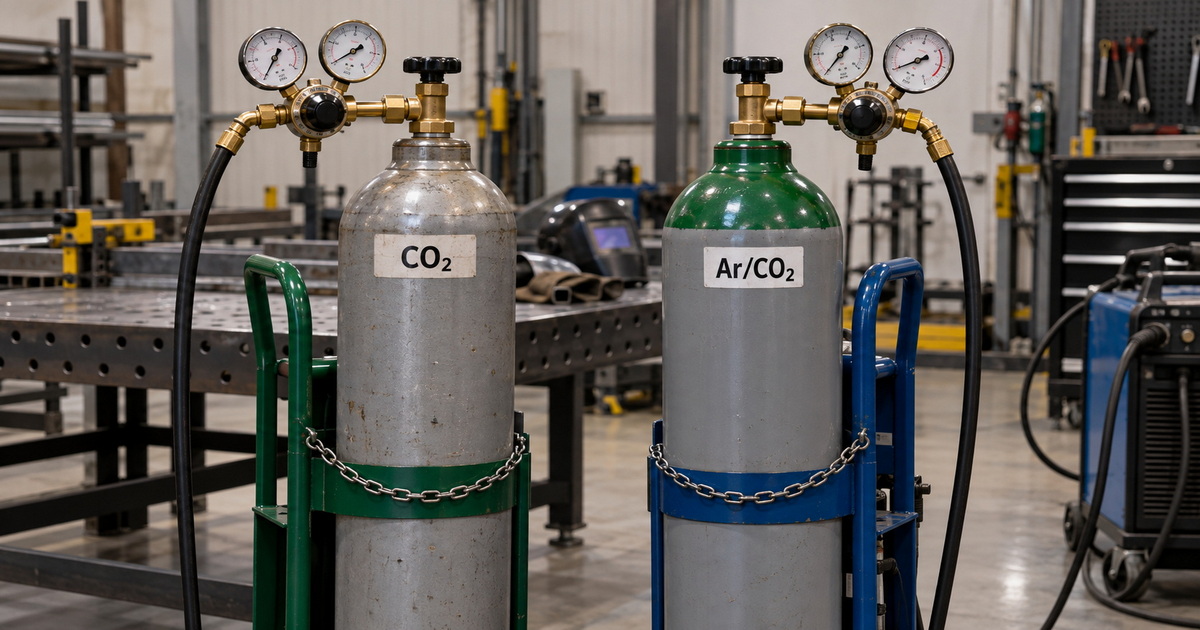
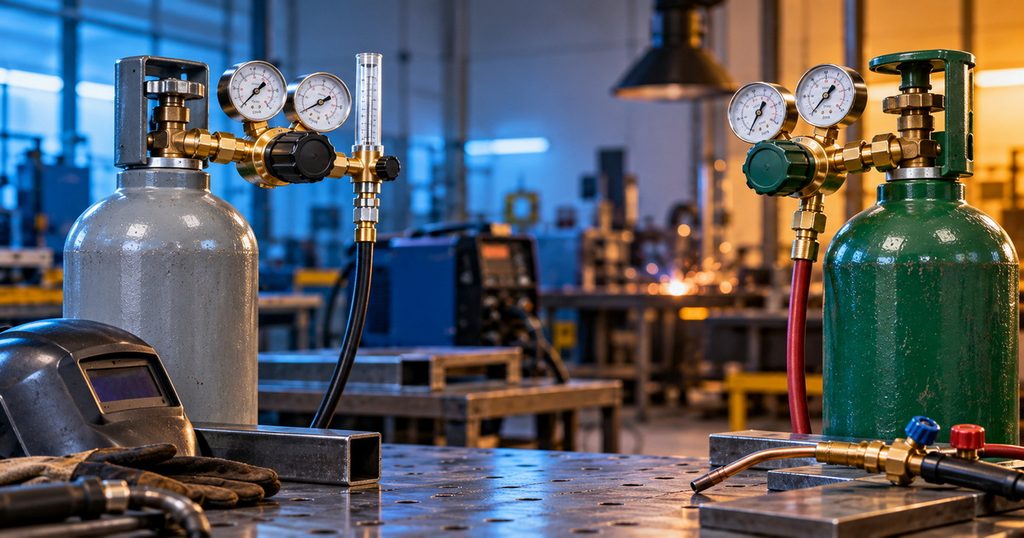
The question matters because CO₂ and oxygen regulators can look similar from across a workshop. Both reduce supply pressure. Both may have two gauges and a substantial metal body. Yet oxygen service brings different fire and cleanliness requirements. If you are replacing a regulator, equipping a production line, or specifying an OEM product, the safe decision starts with its approved gas service, not its appearance.
Why a CO₂ Regulator Is Not an Oxygen Regulator
A pressure regulator controls delivery pressure; it is not automatically suitable for every gas within its gauge range. Gas service affects the chosen inlet connection, internal components, manufacturing and cleaning controls, labeling, and instructions. Oxygen is an oxidizer. In oxygen-rich conditions, contamination or unsuitable internal materials can contribute to a serious fire.
A CO₂ regulator is selected for carbon dioxide service. Depending on its design and application, it may also be configured to address cooling and freeze-up during sustained, high-flow CO₂ withdrawal. Those features do not demonstrate that its internal surfaces were cleaned, assembled, and protected for oxygen service. Conversely, an oxygen regulator should not be reassigned to CO₂ merely because its inlet can be adapted. Air Products cautions against changing gas service or swapping inlet fittings.
The practical rule is simple: use the regulator specified for the gas, cylinder connection, supply pressure, required delivery pressure, and application. If any one of those points is uncertain, stop and check the manufacturer’s documentation or ask the gas supplier before connecting the equipment.
Oxygen-Service Cleaning Is a Critical Difference
Oxygen does not need to be flammable to create a fire hazard. It supports combustion. Oils, greases, particles, and other contaminants can act as fuels or contribute to ignition inside oxygen equipment. OSHA requires oxygen-fuel welding equipment, including regulators and couplings, to be kept free of oily or greasy substances. It also requires oxygen regulator gauges to bear the warning “USE NO OIL.”
That is why “made of brass” is not the same claim as “suitable for oxygen.” The body material is only one consideration. Internal seats, seals, diaphragms, filters, assembly practices, and cleanliness all matter. Air Products says oxidizer-service equipment must use appropriate construction materials and be cleaned to remove contaminants such as oil and grease.
Cleaning is a controlled process, not a last-minute wipe with a cloth. Oxygen-safety specialist WHA International describes a sequence of starting clean, verifying cleanliness, assembling clean, and maintaining that condition. The European Industrial Gases Association also identifies its *Cleaning of Equipment for Oxygen Service* publication as oxygen-safety guidance. Buyers should ask what cleaning specification and acceptance criteria apply to the finished regulator supplied, rather than relying on an undefined “oxygen clean” marketing phrase.
If a regulator has previously been used in CO₂ or another non-oxidizer service, do not assume it can be switched to oxygen after casual cleaning. Air Products recommends maintaining oxygen regulators exclusively in oxidizer service because another service may compromise their required cleanliness. Whether an item can be requalified is a matter for its manufacturer and appropriately qualified personnel—not an operator’s field modification.
CO₂ vs. Oxygen Cylinder Fittings
In a common U.S. industrial-cylinder arrangement, a CO₂ regulator uses a CGA-320 inlet, while an oxygen regulator uses a CGA-540 inlet. CONCOA lists CGA-320 for carbon dioxide and CGA-540 for oxygen. These are examples, not universal worldwide connection rules: cylinder sizes, gas mixtures, markets, and local standards can require different connections. Confirm the actual cylinder valve specification with the gas supplier.
| Selection point | CO₂ regulator | Oxygen regulator |
|---|---|---|
| Intended gas | Carbon dioxide, as specified for the model | Oxygen, as specified for the model |
| Common U.S. inlet example | CGA-320 | CGA-540 |
| Primary issue in this question | Not automatically prepared for oxygen service | Must retain oxygen-service suitability and cleanliness |
| What to verify | CO₂ duty, pressure, flow, and any heating requirements | Oxygen rating, clean status, pressure, components, and documentation |
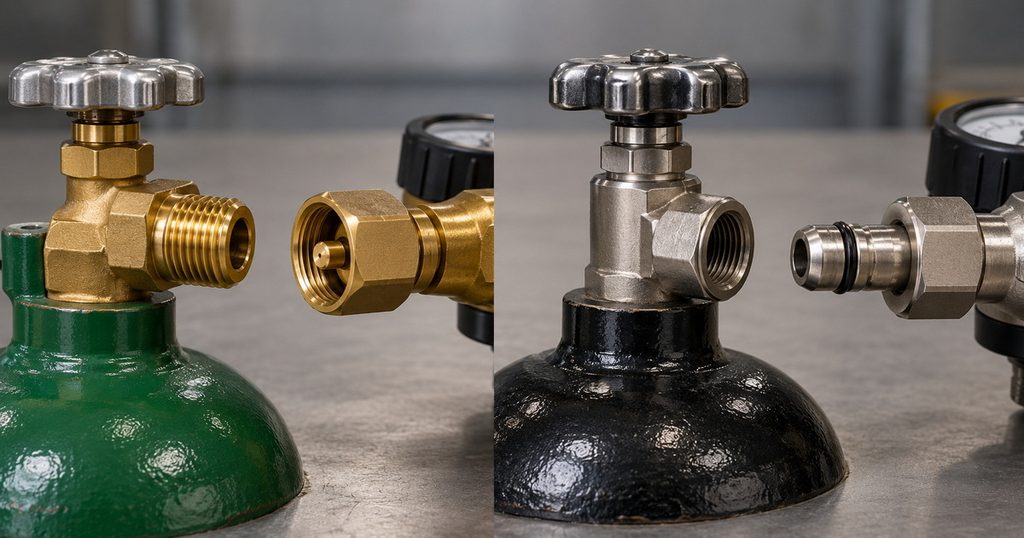
The inlet is an important safeguard, but it is not a complete safety assessment. Replacing a nipple, changing a nut, or adding an adapter does not verify the regulator’s internal materials, pressure rating, cleanliness, or previous use. Air Products expressly warns users not to swap inlet fittings or change gas service. Never force a connection that does not mate as intended.
What Happens If You Use the Wrong Regulator?
The concern is not limited to whether gas will flow. An unsuitable regulator can expose the system to fire, leakage, incorrect pressure control, or equipment damage. The precise failure mode depends on its construction, condition, contamination, and operating conditions; it cannot be diagnosed from a photograph or gauge range alone. Oxygen contamination is particularly important because small amounts of incompatible oil, grease, or debris can help initiate an oxygen fire.
Consider a purchasing mistake: a workshop orders a CO₂ flowmeter/regulator for MIG shielding gas, then notices that an oxygen cylinder is available with an adapter that appears to fit. The adapter answers only the mechanical-connection problem. It says nothing about oxygen cleaning or the regulator’s approved service. The correct response is to obtain an oxygen-rated regulator matched to the cylinder and the intended process—not to test whether the adapted assembly seems to hold pressure.
A second misconception is that “high-quality brass” makes a regulator interchangeable. Brass may be part of an appropriate design, but suitability applies to the complete, documented assembly. Buyers should examine the specified gas service and components rather than treating one material claim as proof of safety.
Choose the Right Regulator for Welding
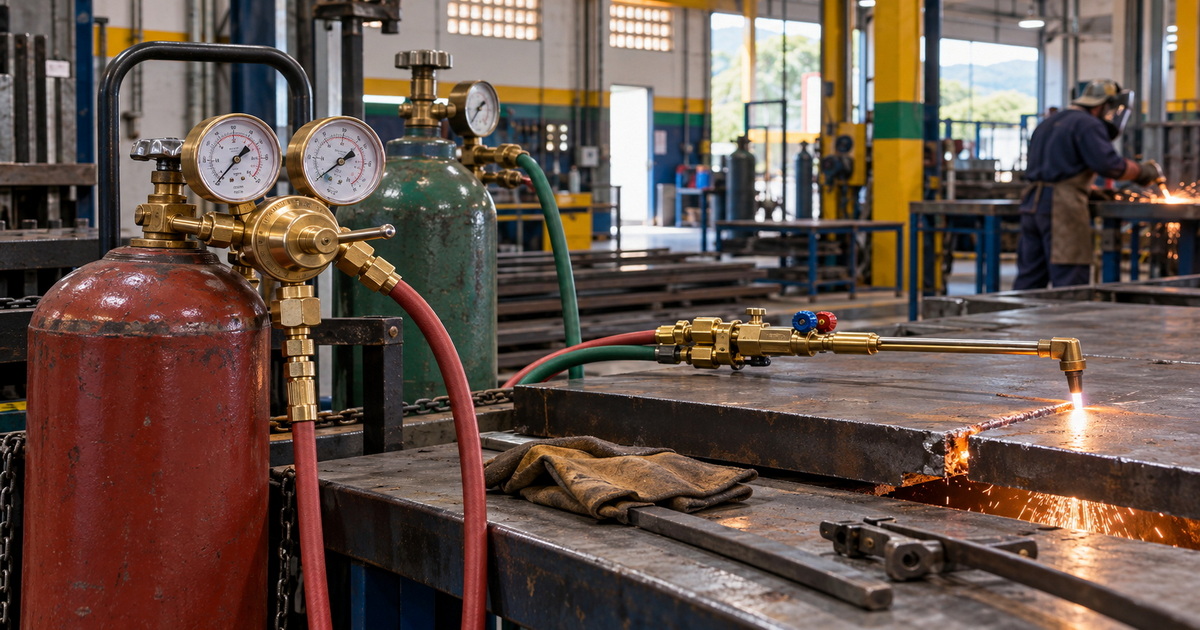
For oxy-fuel cutting or welding, select an oxygen regulator identified for the relevant oxygen supply and equipment. Match its inlet to the cylinder valve, confirm that the inlet and outlet pressure ranges suit the job, and check the manufacturer’s instructions for the complete setup. OSHA’s welding and cutting rule requires equipment to be used in the service for which it is approved and as recommended by the manufacturer.
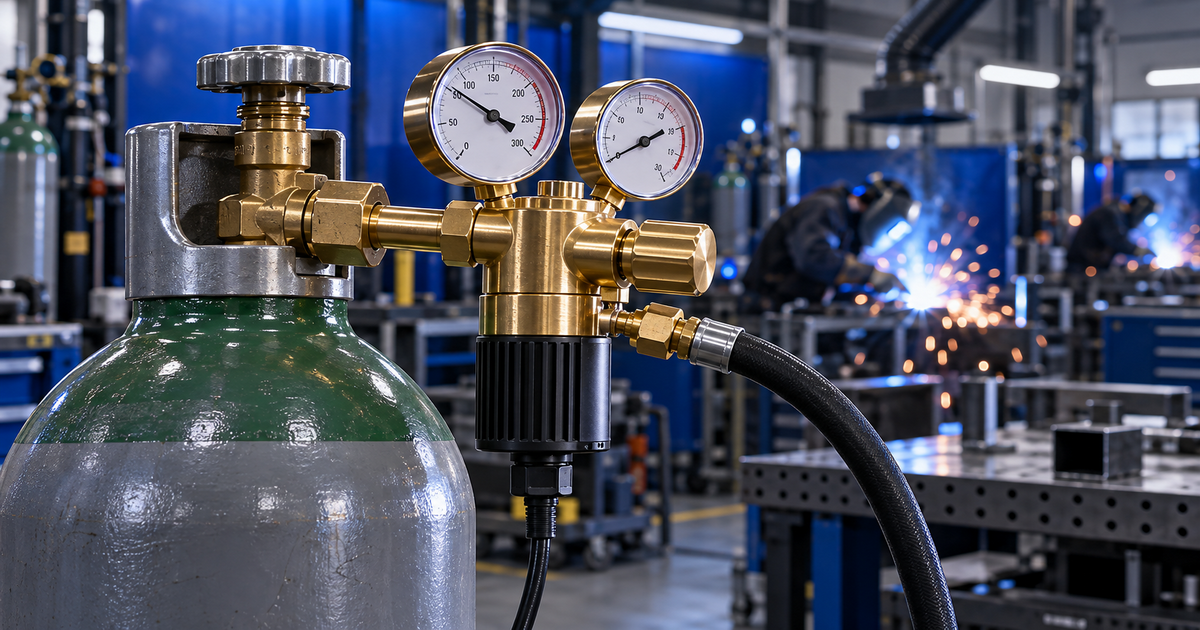
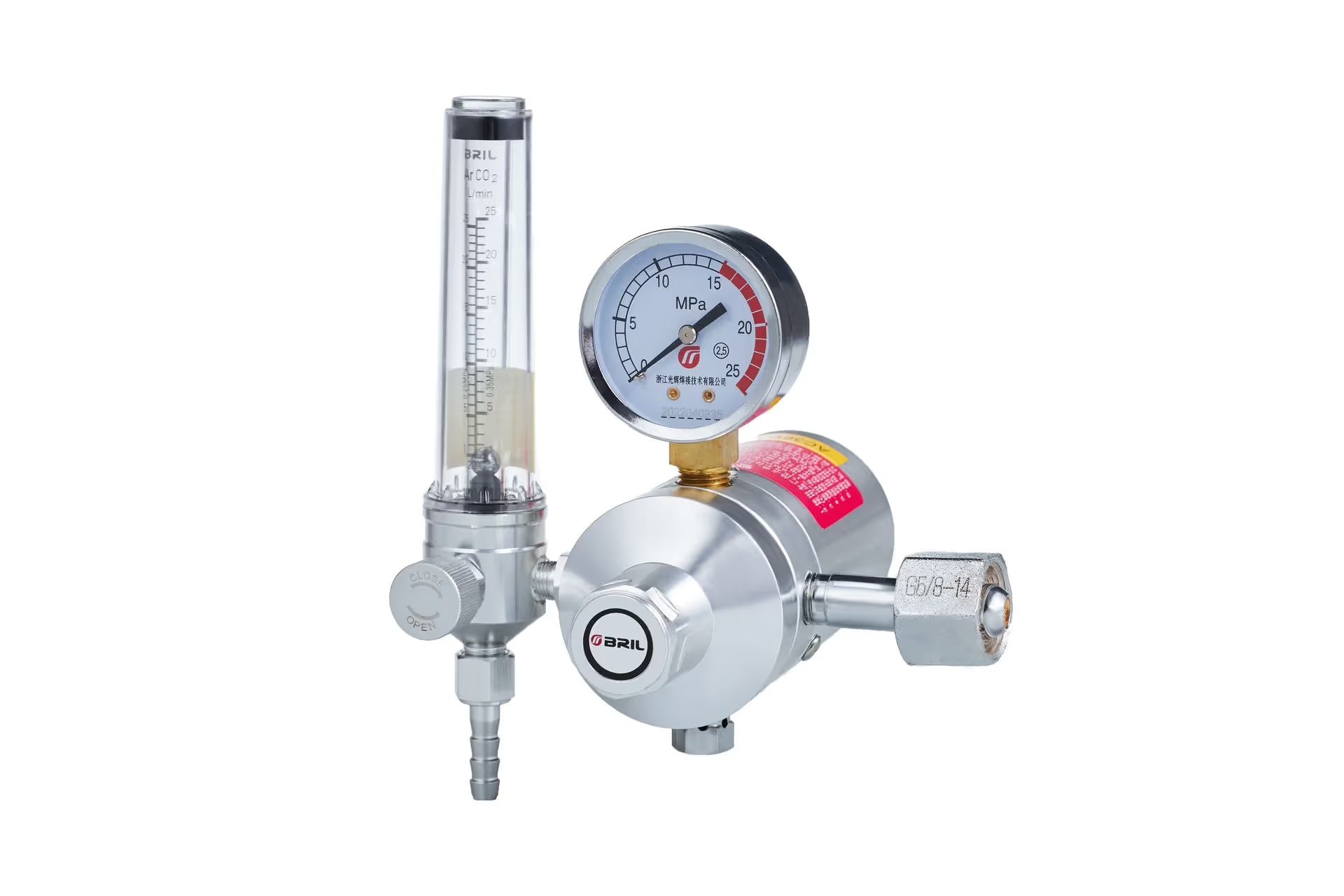
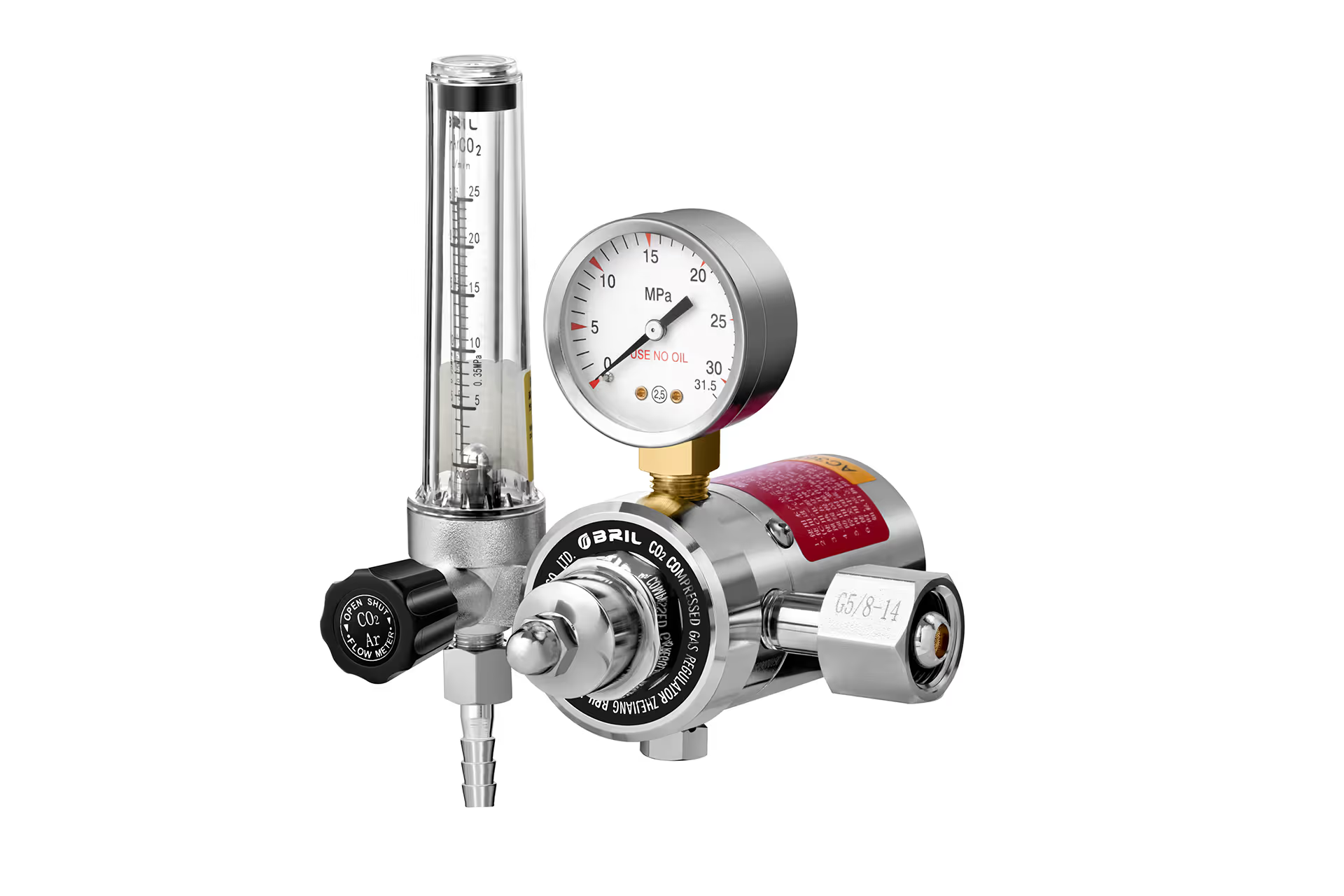
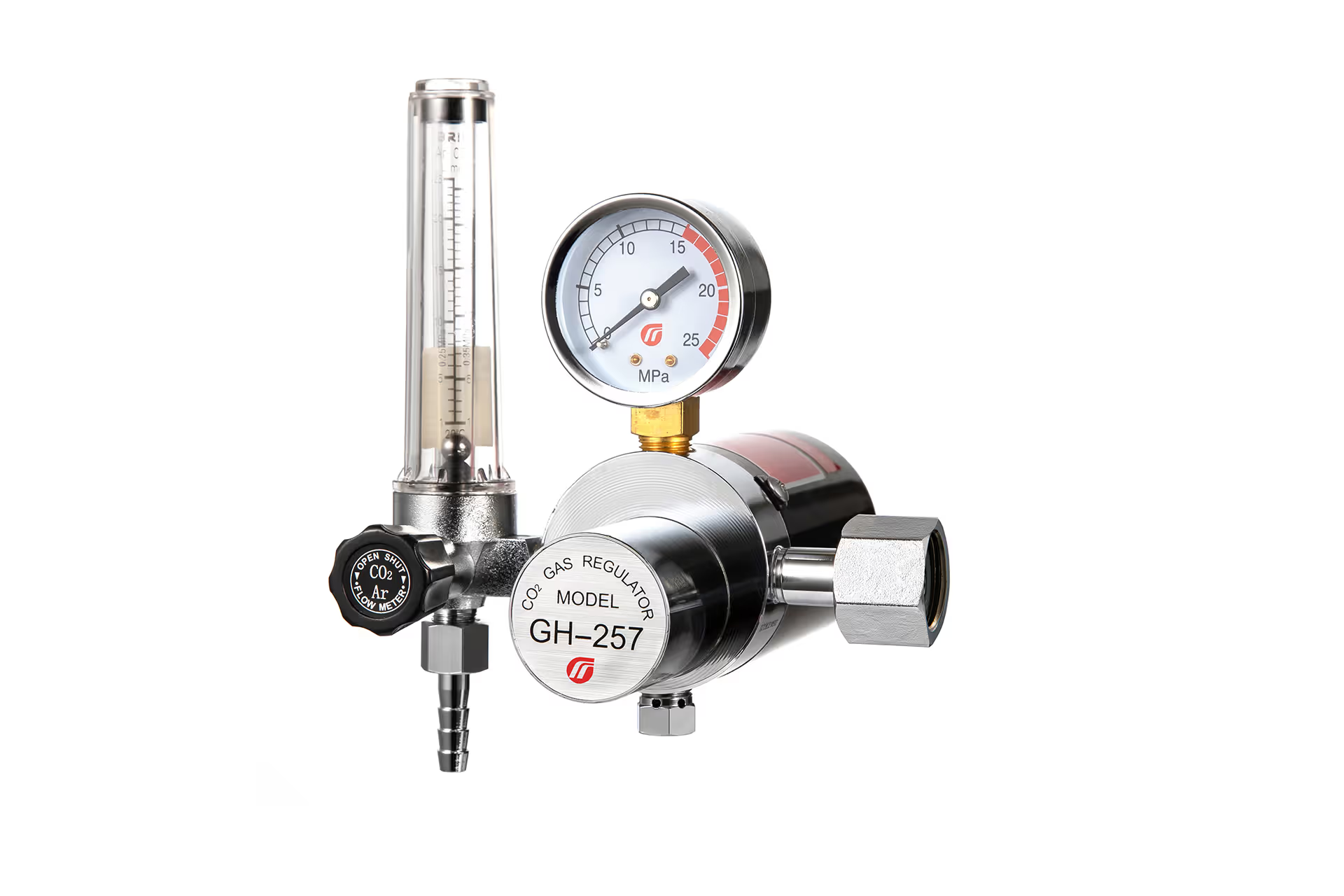
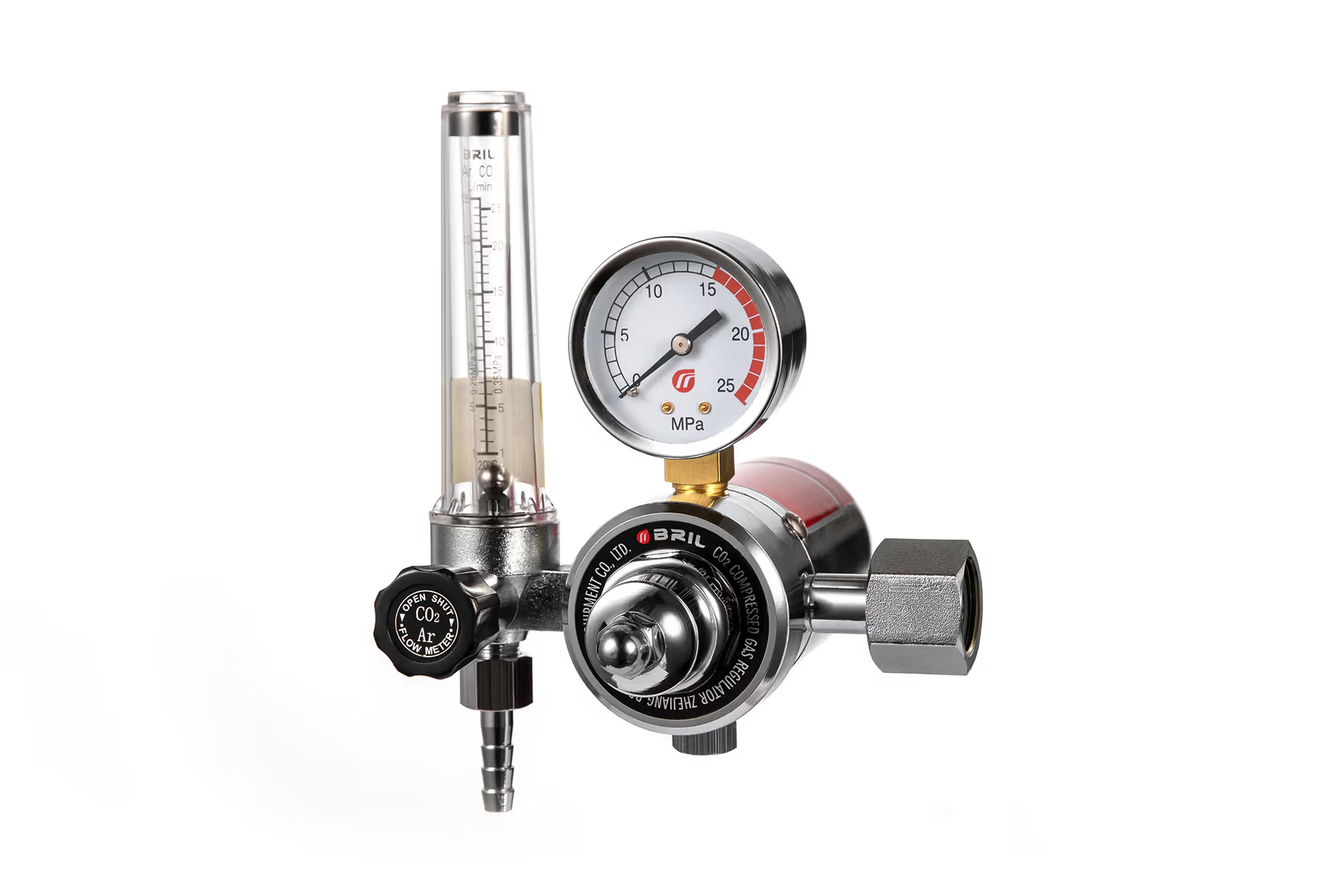
For CO₂ shielding gas in MIG welding, choose equipment specifically identified for the CO₂ supply arrangement. Continuous or demanding CO₂ flow can create cooling and freeze-up problems; suppliers offer heated CO₂ flowmeter/regulator products to help maintain delivery in those applications. A heater solves a CO₂ performance requirement. It does not turn the equipment into an oxygen regulator.
For argon and nitrogen, do not assume that two gases can share a regulator simply because a reference chart lists the same common U.S. cylinder connection. CONCOA lists CGA-580 for both gases, but the actual model must still be suitable for the specified gas, pressure, purity, and process. Acetylene and propane likewise require equipment selected for their particular service; neither should be treated as interchangeable with oxygen equipment.
Single-Stage vs. Dual-Stage: Which Matters?
A dual-stage regulator reduces pressure in two steps and can provide more consistent delivery pressure as cylinder pressure falls. A single-stage regulator reduces pressure in one step and may require more adjustment as supply pressure changes. That distinction helps you choose a pressure-control configuration; it does not override gas compatibility. Specify the gas and safety requirements first, then choose the stage configuration that fits the process.
A Five-Point Oxygen Regulator Checklist
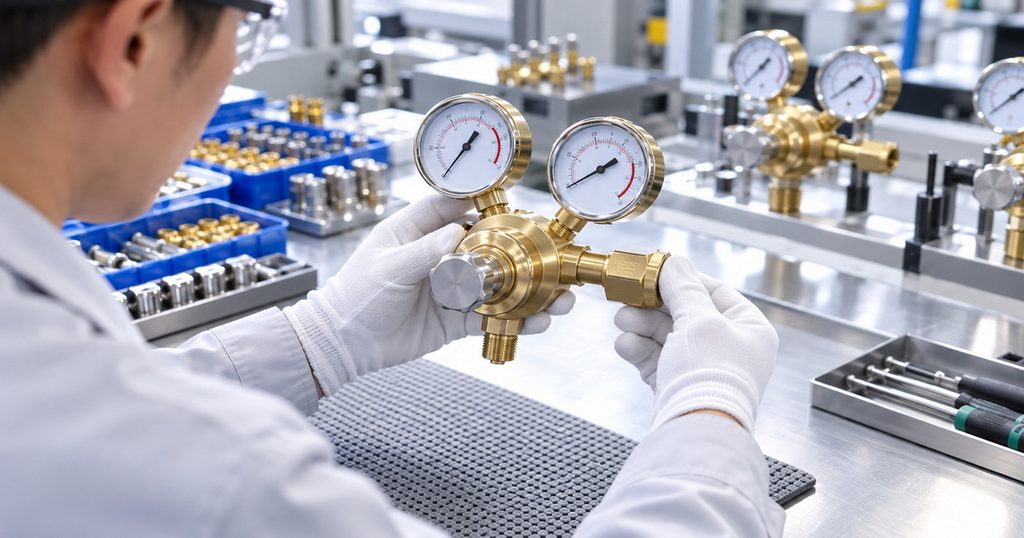
Use this checklist when comparing a finished regulator or drafting an OEM specification. It is a purchasing aid, not permission for an untrained person to install or alter high-pressure gas equipment.
1. Confirm the intended gas. Look for an explicit oxygen-service designation on the model documentation and product identification; do not infer it from brass construction or a gauge label alone.
2. Match the actual connection. Verify the cylinder outlet and the regulator inlet against the gas supplier’s specification for the destination market. CGA-540 is a common U.S. oxygen example, not a global shortcut.
3. Check the complete pressure specification. Obtain the maximum inlet pressure, adjustable delivery range, and relevant downstream equipment requirements. A gauge scale by itself does not establish the assembly’s rating.
4. Request oxygen-service evidence. Ask which cleaning specification, inspection criteria, assembly controls, and protective packaging apply to the supplied product. Record what the manufacturer can actually document.
5. Review use and maintenance instructions. Confirm inspection, leak-check, operating, storage, and service procedures with the manufacturer and your trained personnel. OSHA requires regulator connections to be inspected before use for faulty seats that could cause leaks.
For an overseas distributor, the checklist also improves the quotation process. Two products called “oxygen regulators” may differ in inlet standard, delivery range, outlet configuration, labeling, and documentation. Sending those requirements with the inquiry makes a technically meaningful comparison possible.
What If the Wrong Regulator Was Connected?
Do not continue operating the assembly or try to make the fitting work. Keep people clear of a suspected leak or damaged component. Have trained personnel follow the site’s gas-isolation and depressurization procedures, the cylinder supplier’s guidance, and the equipment manufacturer’s instructions. OSHA specifies that a cylinder valve be closed and gas released from a regulator before the regulator is removed; Air Products also warns that regulators, particularly two-stage units, can retain hazardous pressure.
Set the questionable regulator aside and identify it as not cleared for oxygen use pending assessment by the manufacturer or a qualified service provider. Do not treat a successful leak check, a replacement inlet fitting, or visible cleanliness as proof that it is now suitable for oxygen. If equipment is damaged or behaving abnormally, do not return it to service until it has been properly evaluated.
Specify Safer OEM and ODM Products
For brands, wholesalers, distributors, and equipment manufacturers, a useful OEM/ODM brief should define the gas first. Then state the destination-market connection, inlet and delivery-pressure requirements, flow needs, stage configuration, outlet interface, labeling, packaging, and inspection records required for your project. Oxygen-service cleaning requirements should be written into the specification rather than assumed from a generic product name.
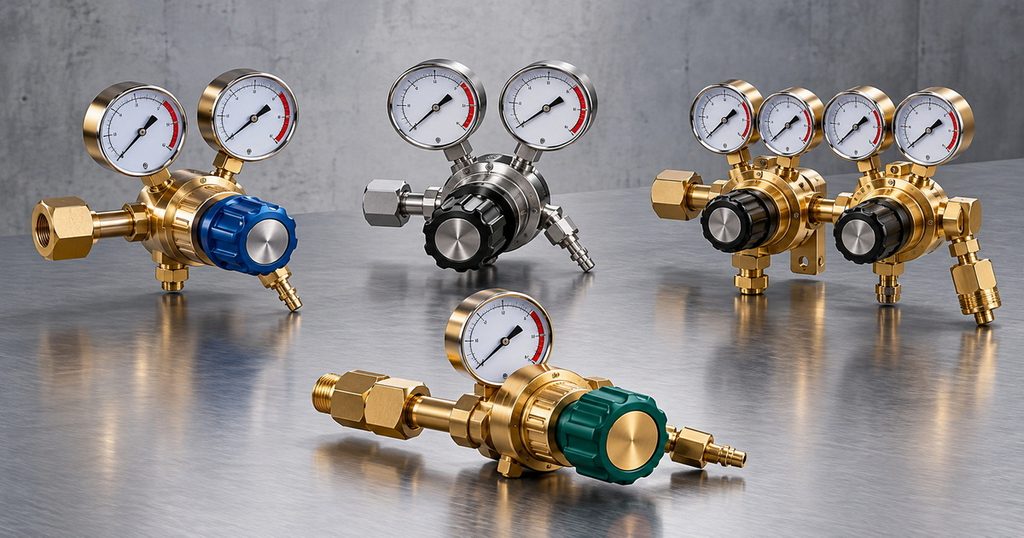
Our product range includes CO₂ regulators, heated CO₂ regulators, and regulators specified for gases such as argon, oxygen, acetylene, propane, and nitrogen, as well as dual-stage configurations. We support OEM and ODM discussions for industrial gas-control applications, with a focus on precision manufacturing, stable pressure control, brass construction, inspection, and customization. The exact gas-service designation and supporting documents must be confirmed for each proposed model.
Need an oxygen regulator for a cutting application, or a heated CO₂ regulator for continuous welding production? Send us the gas, cylinder connection, inlet pressure, required outlet range, expected flow, destination market, and quantity. Our team can use those details to recommend a suitable configuration and clarify the available specifications and quality documents before you order.
Frequently Asked Questions
1.Can I put an adapter on a CO₂ regulator to use it with oxygen?
No. An adapter changes a connection, not the regulator’s approved gas service, internal compatibility, or cleanliness. Use a regulator expressly specified for your oxygen application.
2.Are CGA-320 and CGA-540 interchangeable?
No. CONCOA identifies CGA-320 as a carbon dioxide connection and CGA-540 as an oxygen connection in its U.S. fitting reference. Check the cylinder supplier’s specification for your actual cylinder and market.
3.Can I use an oxygen regulator for CO₂ instead?
Do not change its gas service on your own. Air Products advises never using a regulator for an unintended gas and warns against swapping fittings. A manufacturer-approved, separately specified product configuration is a different matter from adapting an existing regulator in the field.
4.Is a brass CO₂ regulator safe for oxygen?
Brass construction alone does not establish oxygen suitability. The complete regulator must be specified for oxygen service, including its relevant materials, cleanliness, pressure rating, connection, and documented configuration.
5.Does a heated CO₂ regulator work with oxygen?
Do not assume so. Heating addresses CO₂ flow or freeze-up requirements in certain applications. It is not evidence that a regulator is approved and prepared for oxygen service. Follow the exact model’s gas-service documentation.
6.Should I choose a single-stage or dual-stage oxygen regulator?
Start with an oxygen-rated model that matches the supply and process. Then compare pressure-control needs: dual-stage designs can maintain steadier delivery as cylinder pressure falls, while single-stage designs may need more adjustment. Ask the manufacturer to confirm the configuration for your application.
7.What should an OEM oxygen regulator supplier document?
Ask for the model’s intended gas service, rated pressures, specified connections, relevant material details, oxygen-cleaning and inspection requirements, labeling, and instructions. The appropriate evidence depends on your market and application; do not assume a claimed standard or certification applies without product-specific documentation.
References
1. [Occupational Safety and Health Administration, 29 CFR 1910.253: Oxygen-Fuel Gas Welding and Cutting]. Relevant provisions include equipment service, regulator gas and pressure suitability, oil and grease precautions, and oxygen-gauge marking. [osha]
2. [Air Products, Safetygram 12: Regulator Selection, Installation, and Operation]. Guidance on gas-specific selection, oxidizer-service cleanliness, single- and two-stage designs, and operating precautions. [airproducts]
3. [CONCOA, CGA Fitting Reference]. Reference for the cited U.S. CGA-320, CGA-540, and CGA-580 connection examples. [concoa]
4. [WHA International, Why Clean for Oxygen Service?]. Industry explanation of contamination hazards and oxygen-cleaning controls. [wha-international]
5. [European Industrial Gases Association, Oxygen Safety]. Points readers to EIGA guidance, including *Cleaning of Equipment for Oxygen Service*. [eiga]
6. [Arc-Zone, CO₂ Heaters & Regulators]. Product-category context for heated CO₂ regulation in demanding-flow applications. [arc-zone]
Hot Tags: Industrial Gas Regulator Manufacturer, Oxygen Regulator Manufacturer, CO₂ Regulator Manufacturer, Welding Gas Regulator Supplier, Wholesale Oxygen Regulators, OEM Gas Regulators, Custom Gas Pressure Regulators, Heated CO₂ Regulator, Dual Stage Gas Regulator, Oxygen Regulator CGA 540