Content Menu
● Why CO₂ Regulator Quality Matters
>> 1. Zhejiang Bril Welding Equipment Co., Ltd.
>> 2. ABYDA
>> 3. NOVORS
>> 4. LONGTIME
>> 5. Beijing Jingcheng Gas Equipment Co., Ltd.
>> 6. Ningbo Keryfine Electronic Co., Ltd.
>> 7. Shenzhen Wofly Technology Co., Ltd.
>> 8. Shanghai Empire Mechanical Engineering Co., Ltd.
>> 9. Hangzhou Zhenda Precision Metallic Technology Co., Ltd.
>> 10. Suzhou Maxonic Automation Control Co., Ltd.
>> 1. Brass appearance does not prove brass quality
>> 2. A certificate may not cover your model
>> 3. Sample quality may not equal mass-production quality
>> 4. Wrong connection standards delay market entry
>> 5. Heated CO₂ regulators need application-specific validation
>> Logistics and packaging checks
● FAQ
>> 1. How can I verify whether an ISO 9001 certificate is still valid?
>> 2. What tests should I request for a CO₂ pressure regulator sample?
>> 3. Why do two regulators with similar appearance have different pressure stability?
>> 4. Is CE marking enough to sell CO₂ regulators in Europe?
>> 5. How should I control quality after the first order?
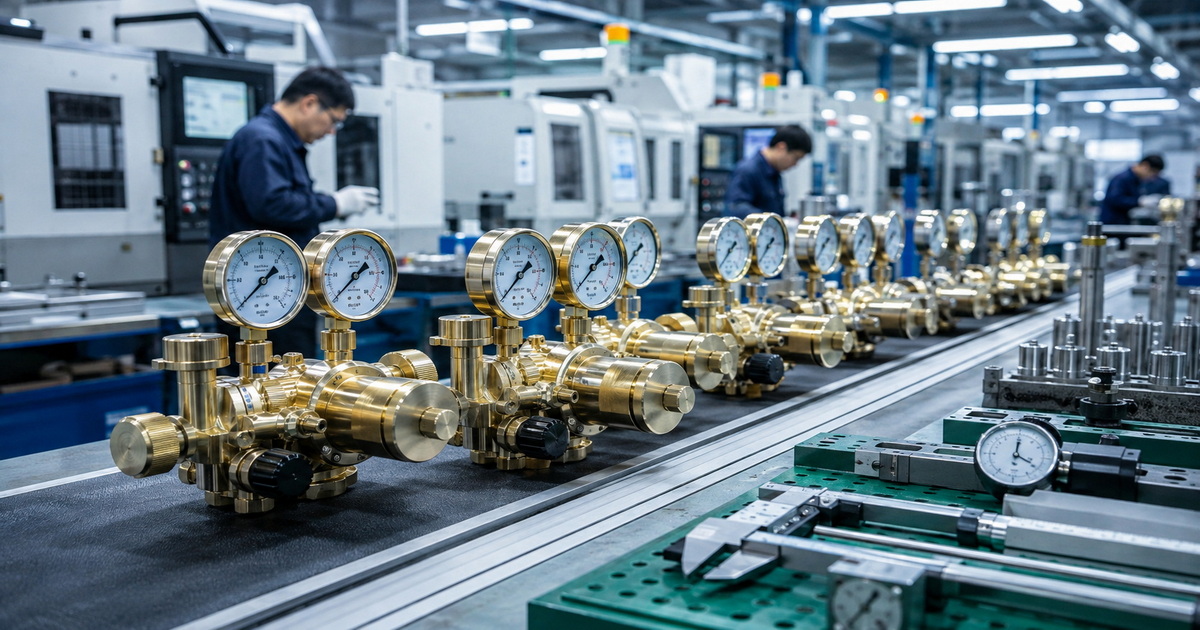
China remains an important sourcing base for CO₂ pressure regulators because it combines brass machining, pressure-gauge supply chains, valve-component manufacturing, welding-equipment production, and export-oriented OEM capability. For professional buyers, however, the lowest quotation is rarely the safest decision: stable outlet pressure, material consistency, certificate scope, lot traceability, and communication speed determine whether a regulator program can scale reliably.
How Suppliers Were Selected
The manufacturers below were selected based on publicly available information and practical B2B sourcing factors. This is not a laboratory ranking or endorsement; buyers should validate every model, certificate, and performance claim before contracting.
Key evaluation dimensions included:
– Manufacturing focus in industrial gas regulators, welding regulators, CO₂ regulators, or related pressure-control products.
– Experience in export, OEM, ODM, private-label packaging, and market-specific connection standards.
– Product relevance for CO₂, argon, oxygen, acetylene, propane, nitrogen, and dual-stage regulator applications.
– Quality-system and compliance visibility, including ISO 9001, CE, CSA, UL, AGA, RoHS, or other product-specific signals where publicly stated.
– Engineering capability, including custom inlet/outlet threads, pressure ranges, gauges, flowmeters, heating functions, and packaging.
– Suitability for repeat orders, documentation management, sampling, and long-term procurement.
China’s strength is not one single factory cluster. Wenzhou has a mature valve and fluid-control ecosystem; Ningbo and Yuyao have strong hardware, brass-component, and export-manufacturing capabilities; Shenzhen and Suzhou contribute engineering and automation expertise. These regional supply chains can shorten the path between machining, assembly, inspection, packaging, and export logistics.
Why CO₂ Regulator Quality Matters
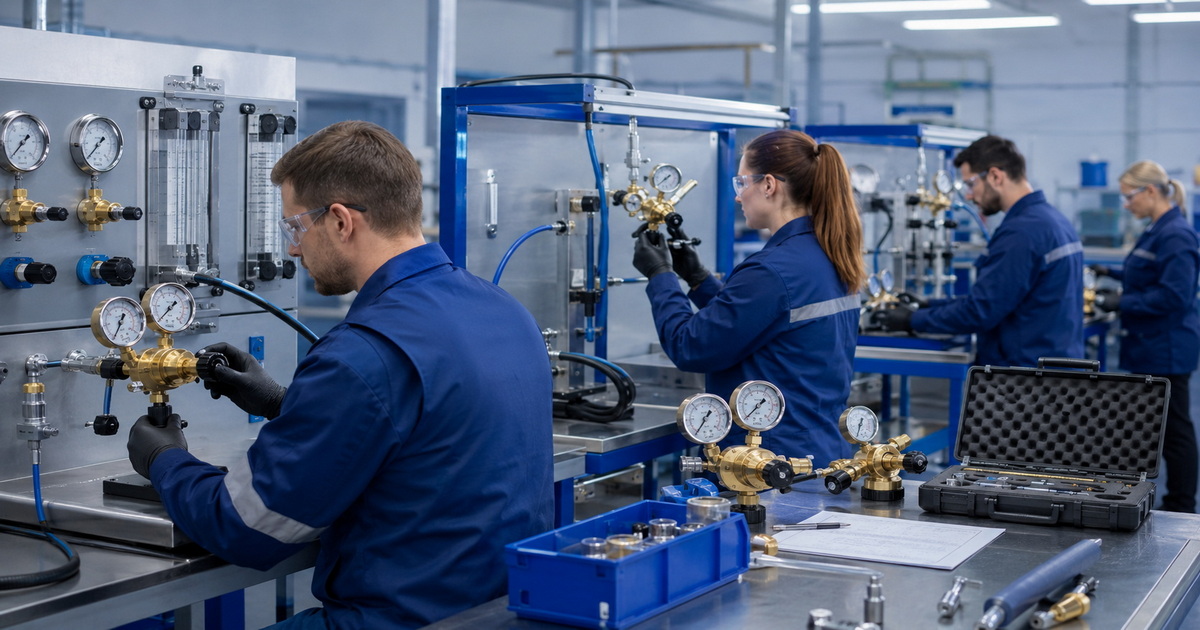
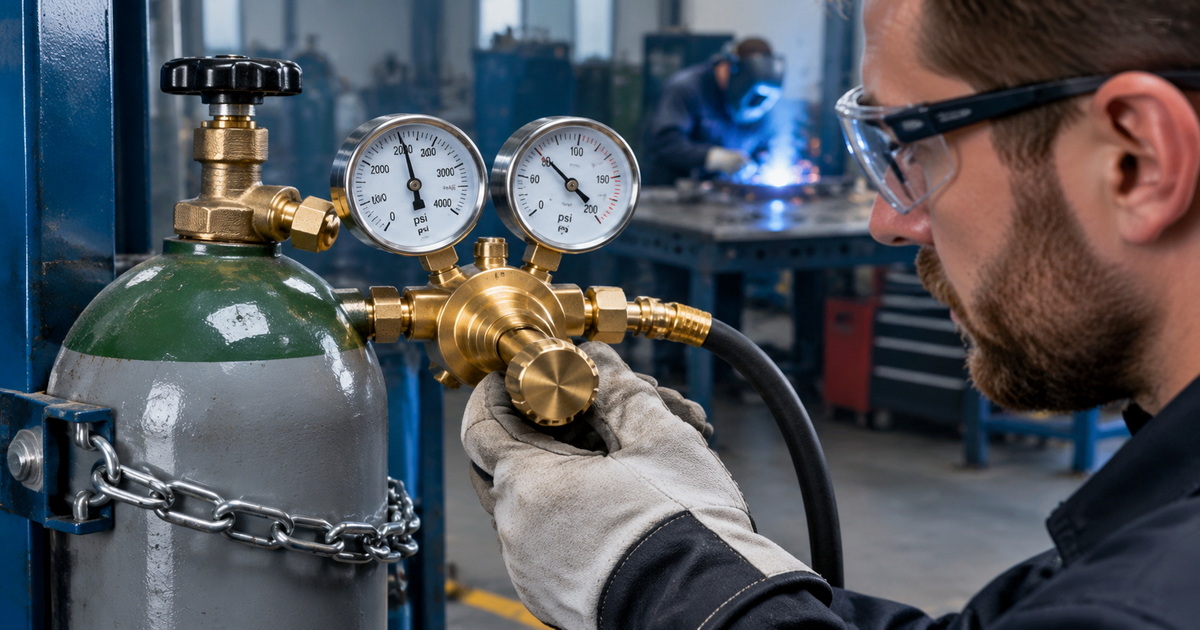
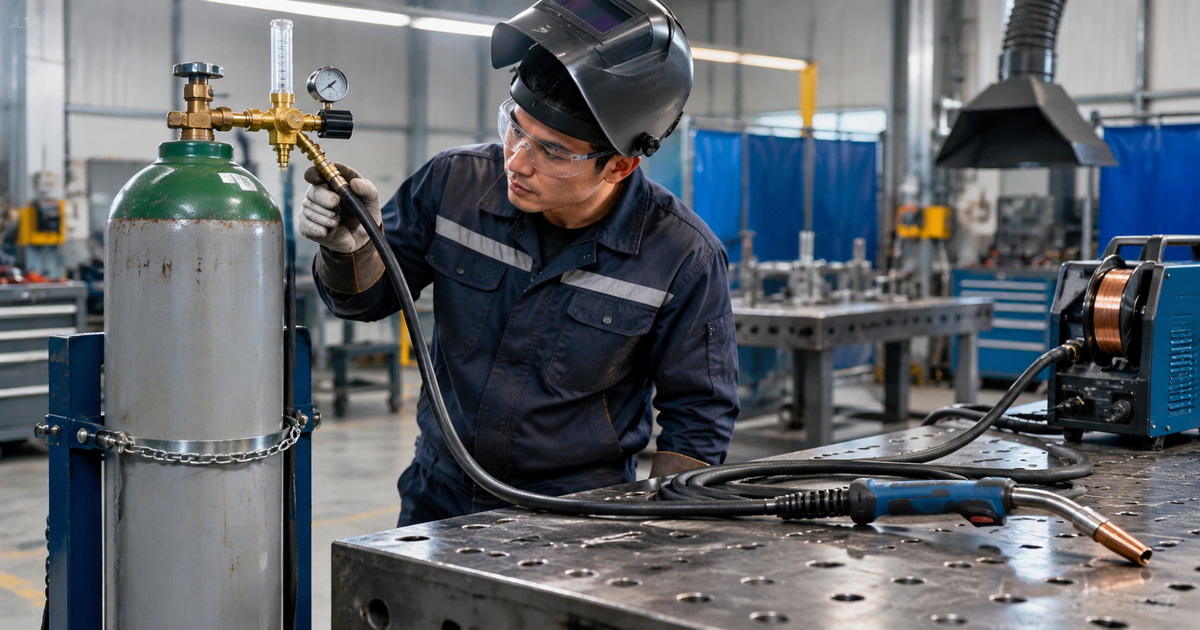
A CO₂ pressure regulator reduces cylinder pressure to a usable working pressure and helps maintain stable gas delivery. In welding and cutting, pressure instability can affect shielding-gas flow and therefore weld consistency. In beverage dispensing, inaccurate pressure can cause carbonation inconsistency. In industrial or laboratory systems, incorrect material selection, leakage, or outlet-pressure creep can create operational and safety risks.
Professional buyers should evaluate more than the external appearance of a regulator:
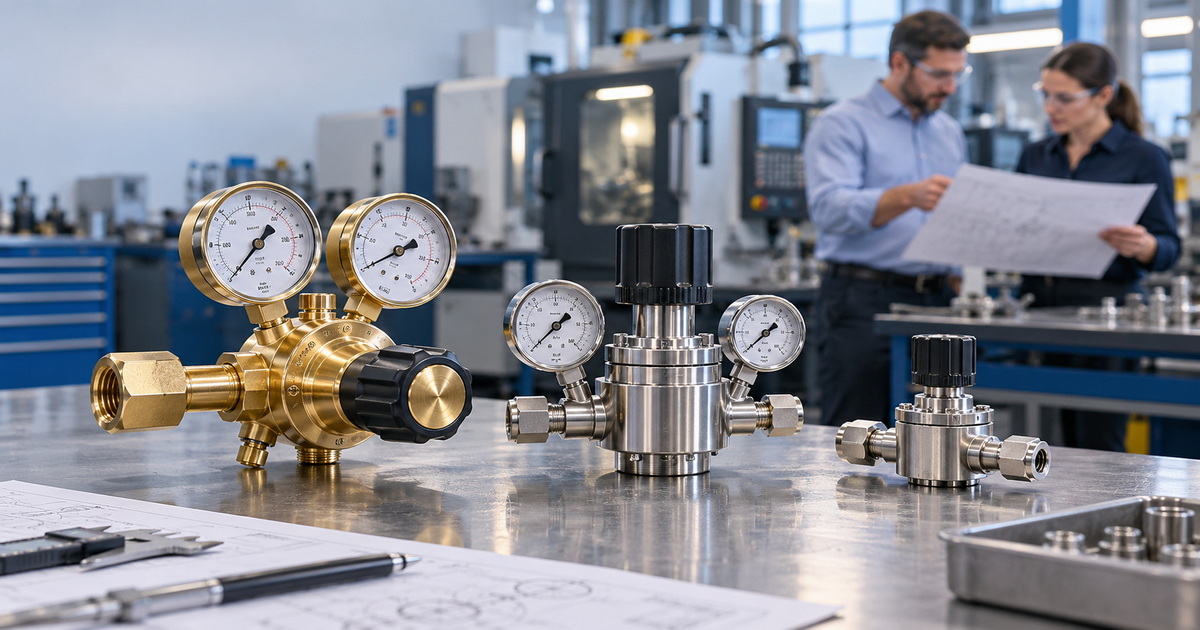
– Body material: Brass is commonly used for CO₂, argon, mixed gas, and many non-corrosive industrial-gas applications. Buyers should define the required alloy, machining finish, plating, and material traceability in the purchase specification.
– Diaphragm and seat design: These internal components influence sensitivity, sealing, outlet-pressure stability, and service life.
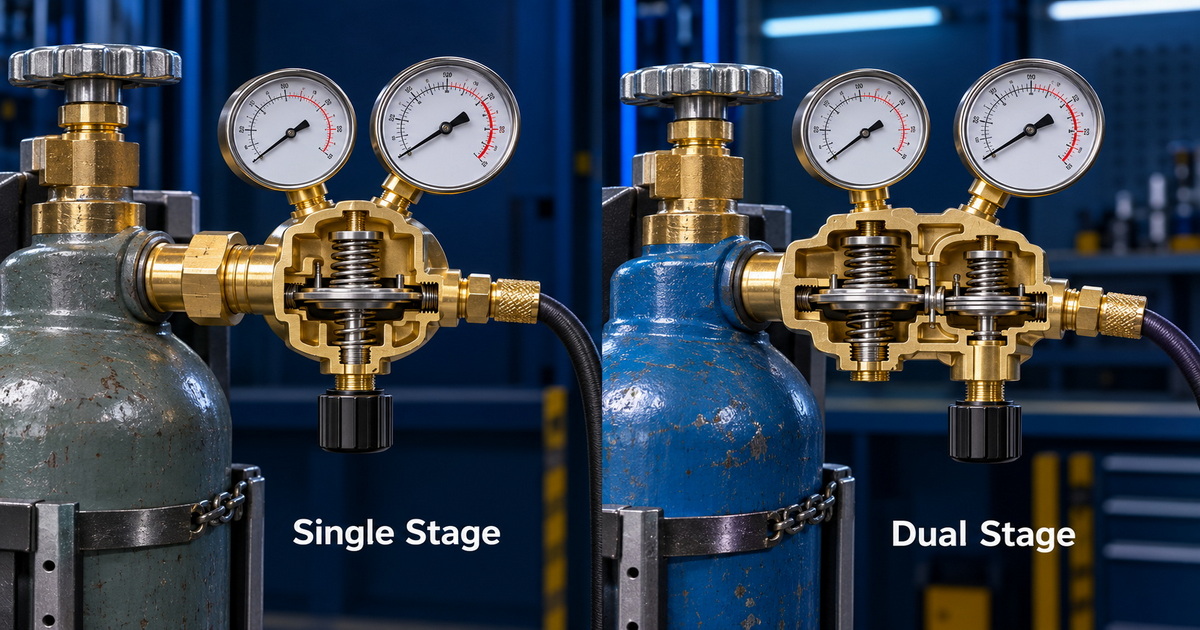
– Single-stage vs. dual-stage: Single-stage regulators are often suitable for general applications. Dual-stage regulators reduce pressure in two steps and are usually selected where tighter output stability is required as cylinder pressure declines.
– Gauges and flow control: Buyers should confirm gauge scale, unit system, accuracy class, calibration expectations, and whether the application requires pressure control only or an integrated flowmeter.
– Connection compatibility: Cylinder inlet and downstream outlet threads vary by gas, country, and standard. CGA, DIN, BS, JIS, and local standards must be defined before tooling or mass production.
– Safety functions: Relief devices, leak testing, oxygen-clean requirements where relevant, and appropriate protection against backflow must be addressed in the technical specification.
Top 10 Manufacturers
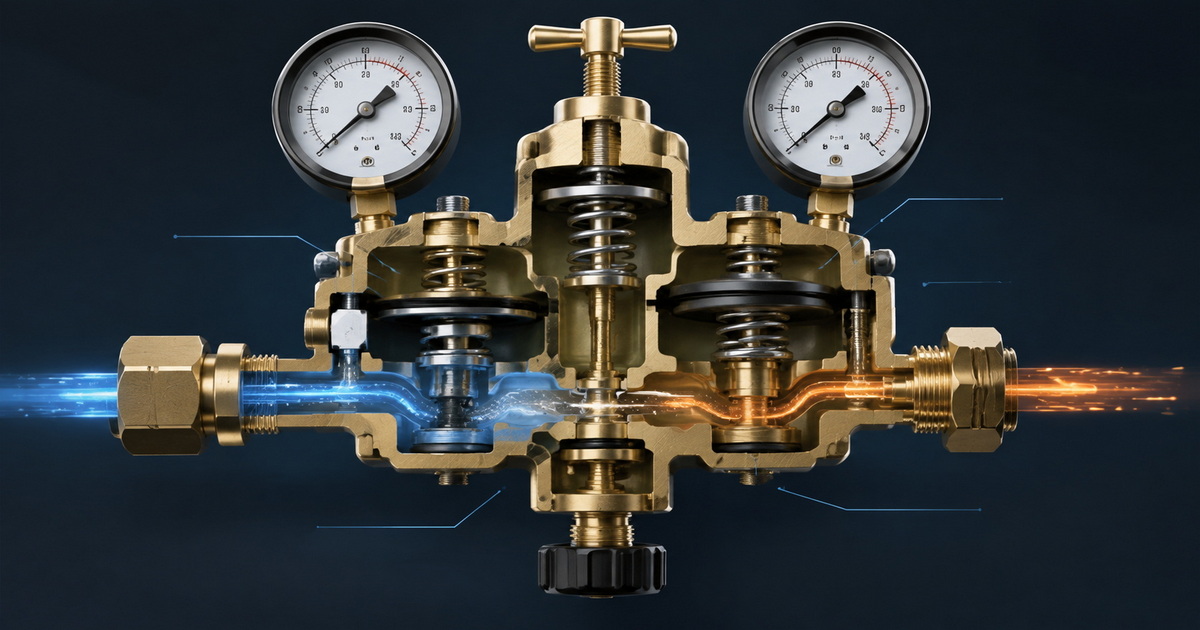
1. Zhejiang Bril Welding Equipment Co., Ltd.
Founded: 2002
Location: Wenzhou, Zhejiang, China
Core focus: CO₂ regulators, heated CO₂ regulators, argon regulators, oxygen regulators, acetylene regulators, propane regulators, nitrogen regulators, and dual-stage gas regulators.
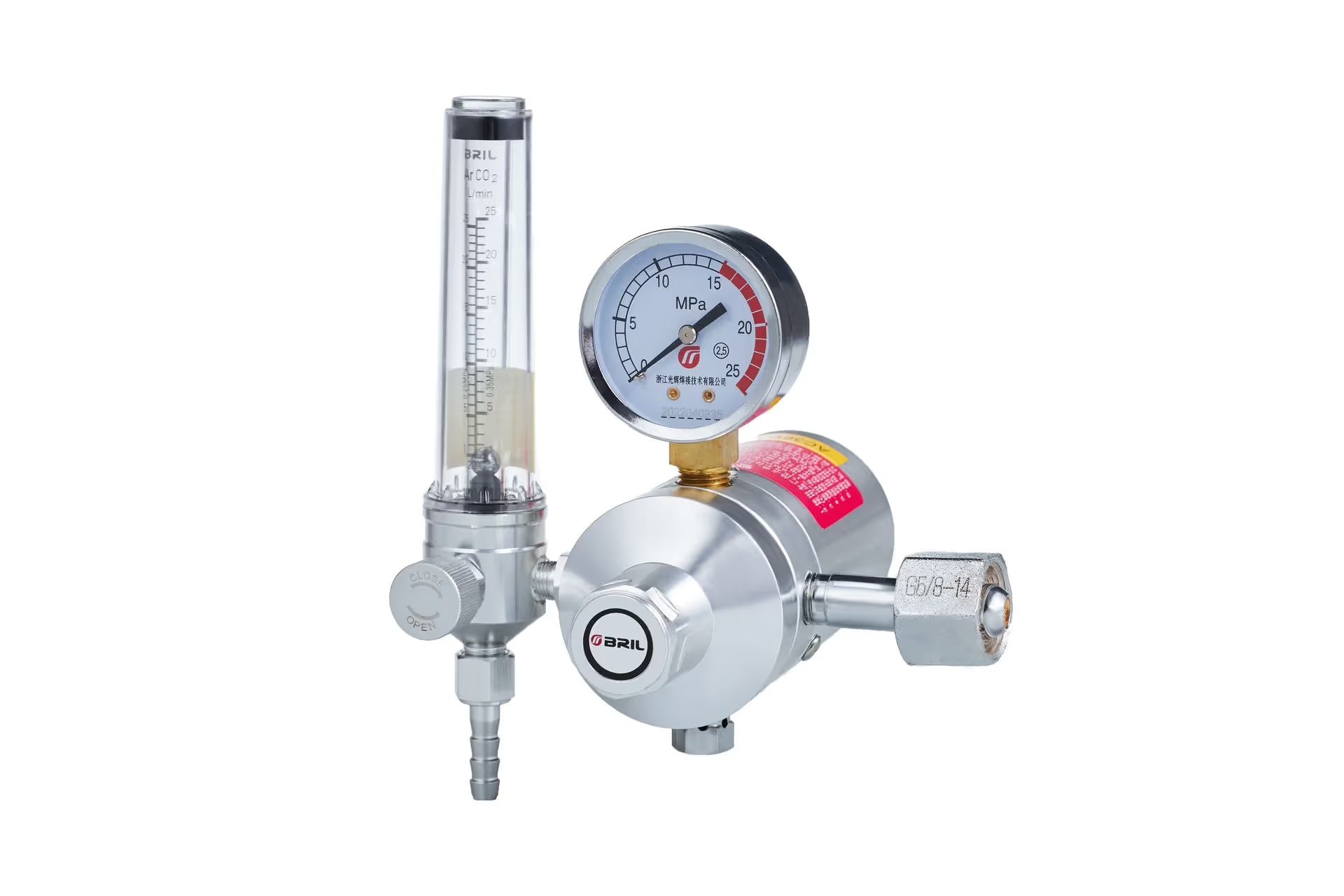
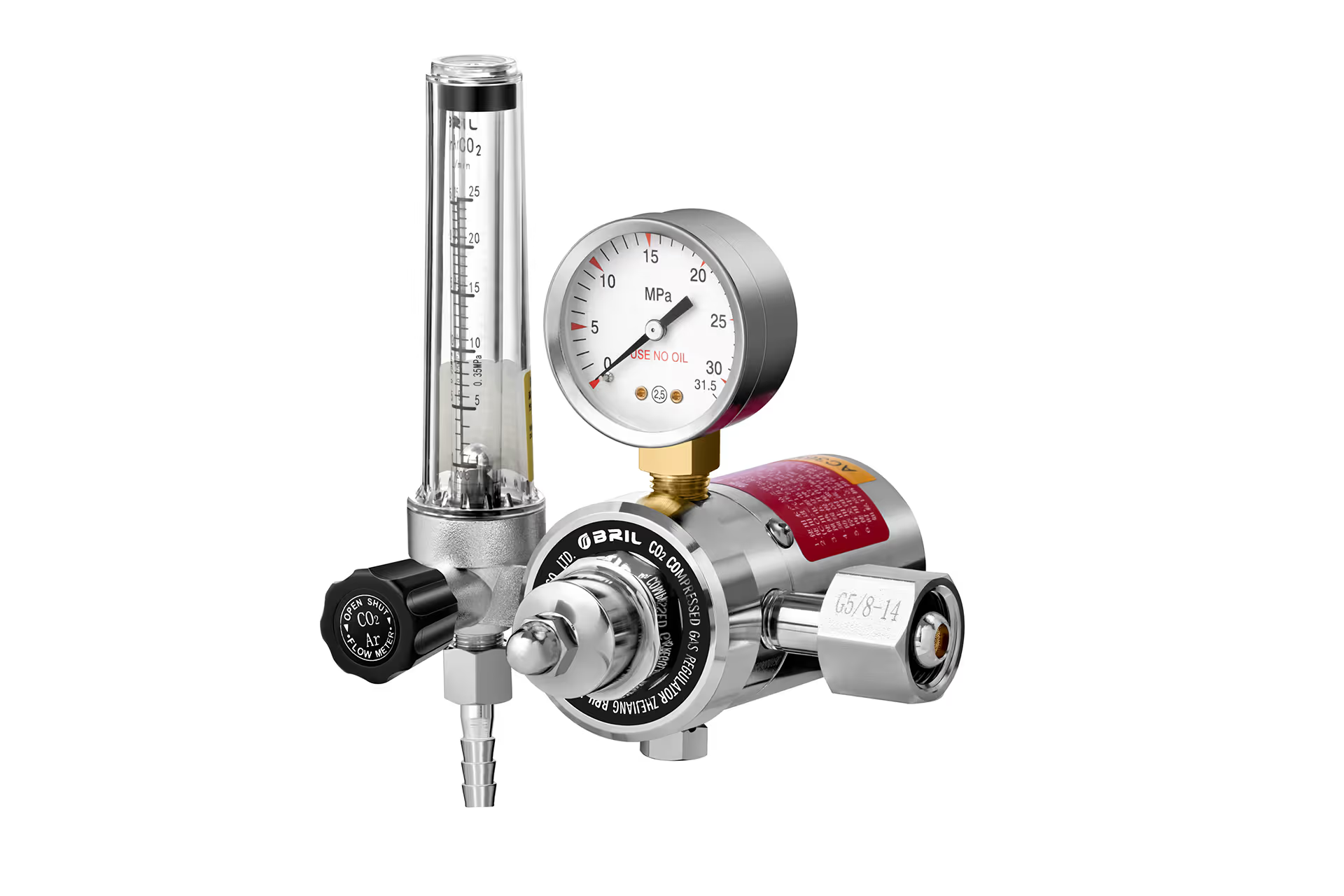
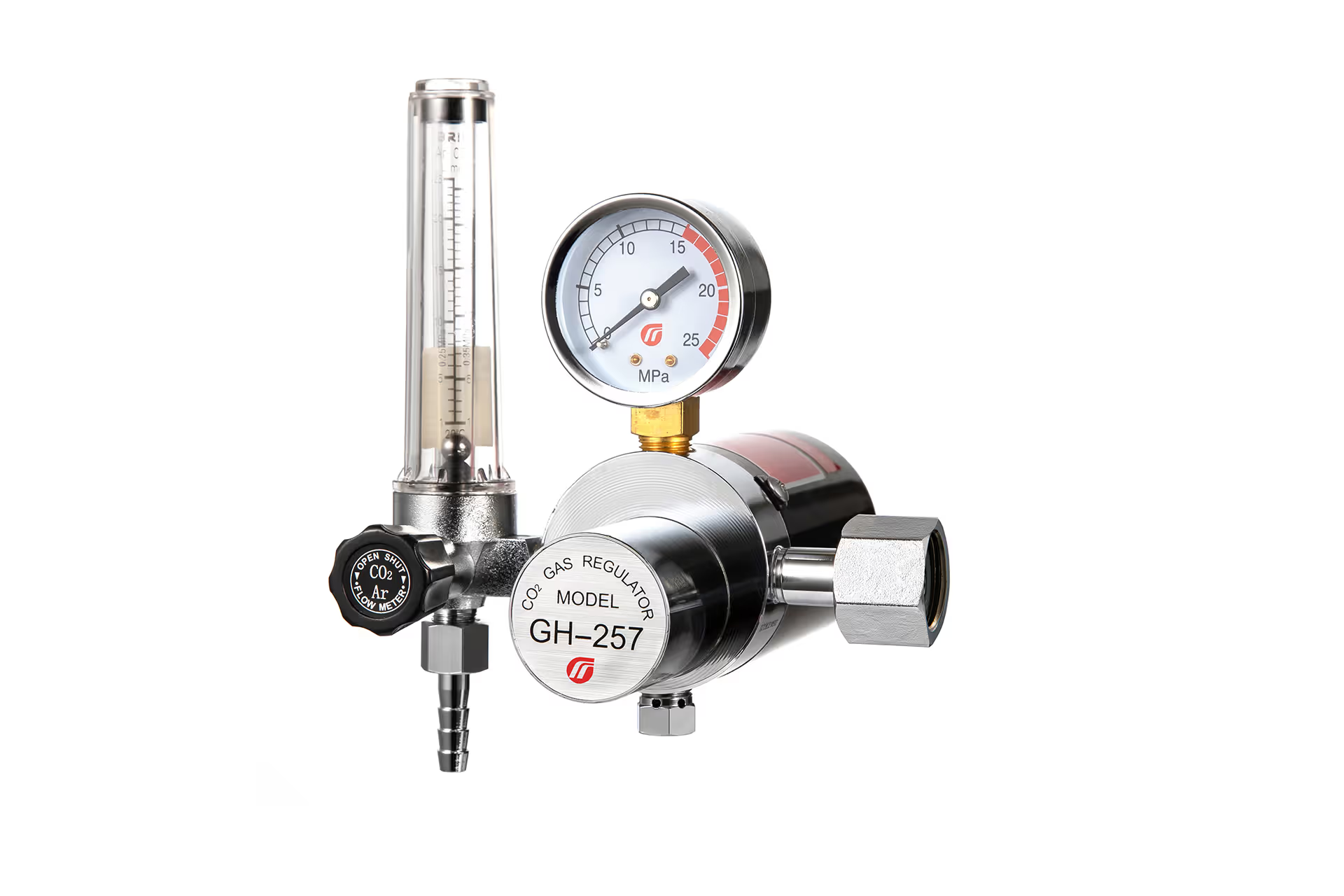
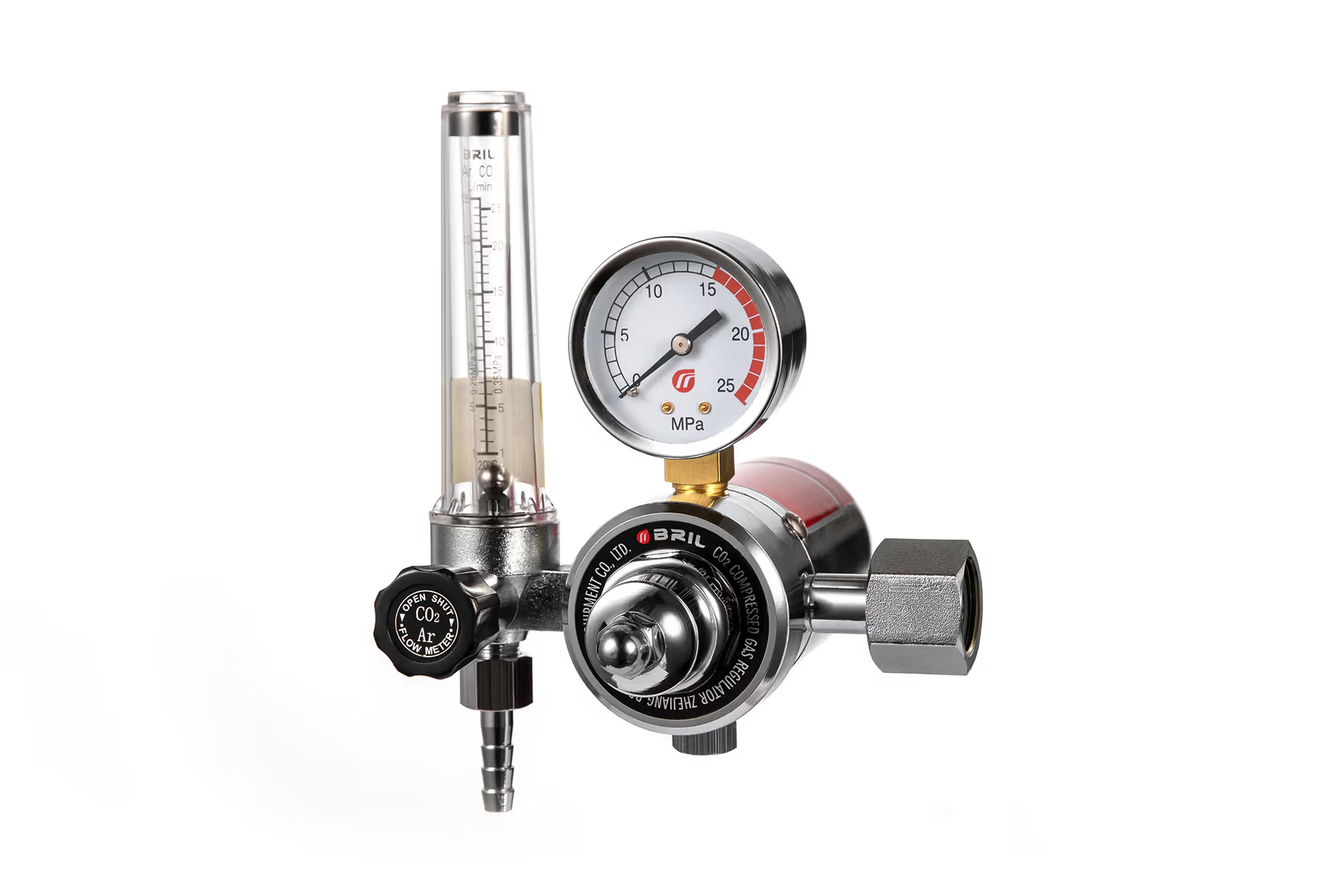
Zhejiang Bril Welding Equipment Co., Ltd. is a focused industrial gas regulator manufacturer serving welding, cutting, and industrial gas-control applications. The company is particularly relevant for small and medium-sized overseas brands, distributors, and welding-equipment manufacturers that need a responsive OEM/ODM partner rather than a supplier limited to standard catalogue products.
Its public company profile states that it has ISO 9001 system certification, with UKAS and IAF references, and that products have CNAS and CE certification. It also reports more than 20 years of experience, over 200 employees, testing and inspection capability, and OEM cooperation with domestic and international welding-equipment brands, including stated supply relationships involving Messer, Panasonic, OTC, and several Chinese welding brands. Buyers should still request model-specific documentation and verify certificate scope independently.
Why buyers shortlist Bril:
– Focused product range rather than a broad unrelated hardware catalogue.
– Suitable for CO₂ welding regulators, heated CO₂ regulator programs, argon/CO₂ flowmeter regulators, and dual-stage pressure-control requirements.
– Flexible OEM/ODM support for branded gauges, logos, packaging, inlet/outlet fittings, pressure ranges, and market-specific configurations.
– A practical option for buyers that need faster technical communication, lower development friction, and repeatable support for private-label projects.
– Wenzhou location provides access to a dense ecosystem of valve, brass-machining, sealing, gauge, and industrial-component suppliers.
Best fit: Overseas welding brands, industrial-gas distributors, wholesalers, and mid-sized importers that value customization depth, communication efficiency, and stable repeat-order support.
2. ABYDA
Founded: Reported factory history from 2004
Core focus: Brass gas valves, gas regulators, and related gas-control accessories.
ABYDA is positioned as a broader gas-valve and gas-regulator supplier, which may appeal to procurement teams looking to combine regulator sourcing with related brass valve or fitting categories. Public information highlights ISO 9001 and testing capability, with compliance claims that buyers should validate against exact models and destination-market requirements.
Core advantages:
– Broad brass gas-control product coverage.
– Potentially useful for buyers consolidating gas valves and regulators under one sourcing program.
– Quality-system positioning and laboratory-testing claims.
OEM/ODM scope: Branding, gas-control component customization, and project-based orders should be discussed during RFQ review.
Best fit: Distributors requiring both regulators and adjacent gas-control hardware.
3. NOVORS
Founded: More than 15 years of experience publicly stated
Core focus: General gas pressure regulators.
NOVORS is presented as a professional gas regulator manufacturer with ISO 9001:2015 certification. It may be suitable for buyers seeking a supplier with a formal quality-management framework and a conventional regulator product range.
Core advantages:
– Established manufacturing experience.
– ISO 9001:2015 compliance signal.
– Potentially suitable for standard regulator programs with OEM branding needs.
OEM/ODM scope: Confirm minimum order quantity, gauge branding, connection options, and sample-to-production consistency before project approval.
Best fit: Buyers seeking standardized regulator lines with a formalized quality-system signal.
4. LONGTIME
Core focus: High-pressure gas regulators.
Compliance signals: CE and CSA approvals are publicly stated for relevant products.
LONGTIME may be relevant for buyers that prioritize certification documentation for regulated markets. Its positioning around high-pressure gas regulators and export-oriented approval signals can be useful for distributors serving markets where certification traceability is part of the purchasing decision.
Core advantages:
– High-pressure regulator orientation.
– Reported CE and CSA compliance signals.
– Wholesale-friendly product positioning.
OEM/ODM scope: Ask whether approvals remain valid after modifications to threads, gauges, logos, pressure range, or packaging.
Best fit: Wholesale programs requiring a more certification-oriented product roadmap.
5. Beijing Jingcheng Gas Equipment Co., Ltd.
Founded: Around 30 years of experience publicly stated
Core focus: Gas equipment for welding, cutting, heating, and laboratory applications.
Beijing Jingcheng Gas Equipment is positioned as an established gas-equipment manufacturer with multi-application coverage. Its longer operating history can be attractive to procurement teams seeking broader industrial-gas engineering experience beyond a single welding-regulator category.
Core advantages:
– Long operating history.
– Broad coverage across welding, cutting, heating, and laboratory use.
– Potential fit for industrial programs with varied application requirements.
OEM/ODM scope: Confirm whether the company supports branded welding regulator lines, specific international valve connections, and aftermarket spare-parts supply.
Best fit: Buyers sourcing across several gas-control application categories.
6. Ningbo Keryfine Electronic Co., Ltd.
Core focus: Industrial, commercial, and residential gas regulators.
Compliance signals: CE, CSA, AGA, and UL are publicly listed.
Ningbo Keryfine is positioned as a broad gas-regulator supplier with certifications that may be attractive to channel partners serving different markets and product segments. Buyers should verify that the certificate applies to the exact CO₂ regulator model, working pressure, connection configuration, and destination market.
Core advantages:
– Broad regulator portfolio.
– Multiple publicly stated certification signals.
– Potential channel and distribution suitability.
OEM/ODM scope: Request an approval matrix showing the relationship between product model, certificate number, pressure range, gas type, and market.
Best fit: Distributors building a diversified industrial, commercial, and gas-control product portfolio.
7. Shenzhen Wofly Technology Co., Ltd.
Core focus: Gas pressure regulators, welding/cutting systems, laboratory gas solutions, and custom gas-control assemblies.
Shenzhen Wofly is relevant for technical projects that go beyond a standard cylinder regulator. Its custom-solution positioning may suit buyers requiring specific connections, pressure-control assemblies, gas-panel integration, or project documentation.
Core advantages:
– Custom engineering orientation.
– Coverage across welding, cutting, laboratory, and gas-control applications.
– Potential for application-specific regulator assemblies.
OEM/ODM scope: Drawings, bill of materials, pressure-test requirements, and document-control procedures should be agreed before prototype approval.
Best fit: Engineering-driven projects, laboratory-related systems, or custom gas-control assemblies.
8. Shanghai Empire Mechanical Engineering Co., Ltd.
Core focus: Customized gas regulators for oil and gas, aviation, and chemical applications.
Shanghai Empire Mechanical Engineering is positioned toward engineered, industrial applications rather than mainstream welding-only CO₂ regulator sourcing. This makes it potentially relevant where buyers require specialized specifications, project documentation, or integration into broader process systems.
Core advantages:
– Engineering-oriented industrial positioning.
– Potential experience with more demanding application environments.
– May support custom technical requirements beyond catalogue products.
OEM/ODM scope: Confirm materials, pressure ratings, testing protocol, traceability requirements, and product qualification timeline.
Best fit: Process-industry, chemical, aviation, or customized engineering projects.
9. Hangzhou Zhenda Precision Metallic Technology Co., Ltd.
Founded: 1995
Core focus: Gas regulators and gas valves.
Hangzhou Zhenda, also associated with the ZHENDAR brand, has a long stated operating history in gas regulators and valves. Its precision-metal positioning can make it relevant for buyers that value an established manufacturing identity and experience in metal-component production.
Core advantages:
– Long manufacturing history.
– Regulator and gas-valve product focus.
– Precision-metalworking orientation.
OEM/ODM scope: Verify whether custom branding, outlet configurations, gauge options, and batch-level performance tests are available for CO₂ regulator projects.
Best fit: Buyers seeking an established supplier with a precision-metal manufacturing background.
10. Suzhou Maxonic Automation Control Co., Ltd.
Core focus: Industrial, commercial, and residential gas pressure regulators and control valves.
Suzhou Maxonic is positioned as a broader automation and control-component supplier. Its wider control-valve background may be useful for buyers that need regulators as part of a broader industrial control-components sourcing strategy.
Core advantages:
– Wider control-valve and automation component coverage.
– Potential fit for industrial sourcing consolidation.
– Relevant for buyers with multi-component requirements.
OEM/ODM scope: Confirm regulator-specific experience, required pressure-control performance, and whether product compliance documents apply to the actual CO₂ regulator model.
Best fit: Industrial buyers sourcing regulators alongside broader valve or automation components.
Supplier Comparison
| Manufacturer | Primary Positioning | Main Strength | MOQ Style* | Certification / Compliance Signal |
|---|---|---|---|---|
| Zhejiang Bril Welding Equipment | CO₂, heated CO₂, argon, oxygen, dual-stage welding regulators | Focused regulator manufacturing, flexible OEM/ODM, responsive project support | Medium-volume or customized projects | ISO 9001; CNAS and CE stated; verify per model |
| ABYDA | Brass valves and gas regulators | Broad gas-control portfolio | Mixed volume/project orders | ISO 9001 and other claims; verify scope |
| NOVORS | General gas regulators | Mature manufacturing and formal quality-system positioning | Standard catalogue orders | ISO 9001:2015 stated |
| LONGTIME | High-pressure gas regulators | Export-oriented certification positioning | Wholesale-oriented | CE and CSA stated |
| Beijing Jingcheng | Multi-application gas equipment | Long operating history and broad use cases | Industrial/project orders | Verify per model |
| Ningbo Keryfine | Industrial, commercial, residential regulators | Broad portfolio and stated multi-market certifications | Channel-friendly | CE, CSA, AGA, UL stated |
| Shenzhen Wofly | Custom gas-control solutions | Engineering customization and system integration | Project-based | Verify per model |
| Shanghai Empire | Industrial engineered regulators | Specialized applications and customized requirements | Engineered/custom orders | Verify per model |
| Hangzhou Zhenda | Gas regulators and valves | Long history and precision-metal focus | Catalogue plus OEM | Verify per model |
| Suzhou Maxonic | Control valves and regulators | Broader control-component sourcing | Industrial project orders | Verify per model |
Common Sourcing Risks
1. Brass appearance does not prove brass quality
A regulator may look like a solid brass product while using different internal materials, thinner walls, lower-grade springs, or inconsistent valve-seat components. Buyers should specify:
– Body alloy or approved material equivalent.
– Critical dimensions and acceptable tolerances.
– Plating and surface-finish requirements.
– Internal component materials for seat, diaphragm, spring, seals, and filters.
– Material declarations and lot-level traceability for critical parts.
2. A certificate may not cover your model
A supplier may send a CE, ISO, RoHS, or CSA certificate that belongs to a different model family, a different factory address, an expired quality system, or a configuration not matching your inlet/outlet connection. Never treat a PDF certificate as sufficient evidence.
Verify:
– Certificate number.
– Certification body.
– Scope of certified products.
– Factory name and address.
– Expiration date.
– Whether the approval remains valid after OEM modifications.
– Whether the target country requires a product approval beyond CE marking.
3. Sample quality may not equal mass-production quality
A carefully prepared sample can perform well, while mass production contains different internal springs, diaphragms, gauges, or plating. This is especially important for CO₂ regulators because pressure stability and leak performance depend on small internal components.
Use a controlled approval process:
1. Sign a technical specification and approved drawing.
2. Approve a pre-production sample.
3. Keep a sealed “golden sample” at both buyer and supplier sites.
4. Define leakage, pressure-creep, gauge, and flow-test criteria.
5. Conduct pre-shipment inspection by batch.
6. Require production-lot records for critical parts.
4. Wrong connection standards delay market entry
A regulator suitable for one country may be incompatible with the cylinders, hoses, or fittings used in another. Before approving a design, confirm cylinder-valve inlet standards, outlet threads, pressure units, gauge language, and legal labeling requirements.
5. Heated CO₂ regulators need application-specific validation
Heated CO₂ regulators are often selected where continuous high-flow CO₂ use may cause cooling effects. Do not buy solely based on heater wattage or appearance. Verify electrical rating, voltage, plug type, thermal protection, wire routing, insulation, heating uniformity, and performance under realistic duty cycles.
Internal Buyer Tip
A less-discussed but highly valuable audit point is batch consistency of springs, valve seats, diaphragms, and gauges.
Many buyers inspect the regulator body, plating, logo, and packaging but do not inspect the parts that determine outlet-pressure creep and long-term repeatability. A factory can machine an attractive body yet purchase springs or sealing components from changing sources without adequate incoming inspection.
Ask the supplier these questions:
– Can you identify the production lot of the diaphragm, spring, valve seat, and gauge used in each shipment?
– Do you conduct incoming inspection on these critical parts?
– Is there a defined spring-force or seat-leakage acceptance standard?
– Can you provide pressure-hold, leakage, and functional-test records by batch?
– If a field issue appears six months later, can you trace the production lot and component source?
A supplier that can answer these questions with documents is generally more prepared for long-term OEM programs than one that only shares product photos and generic certificates.
Buyer’s Guide
How to verify a factory
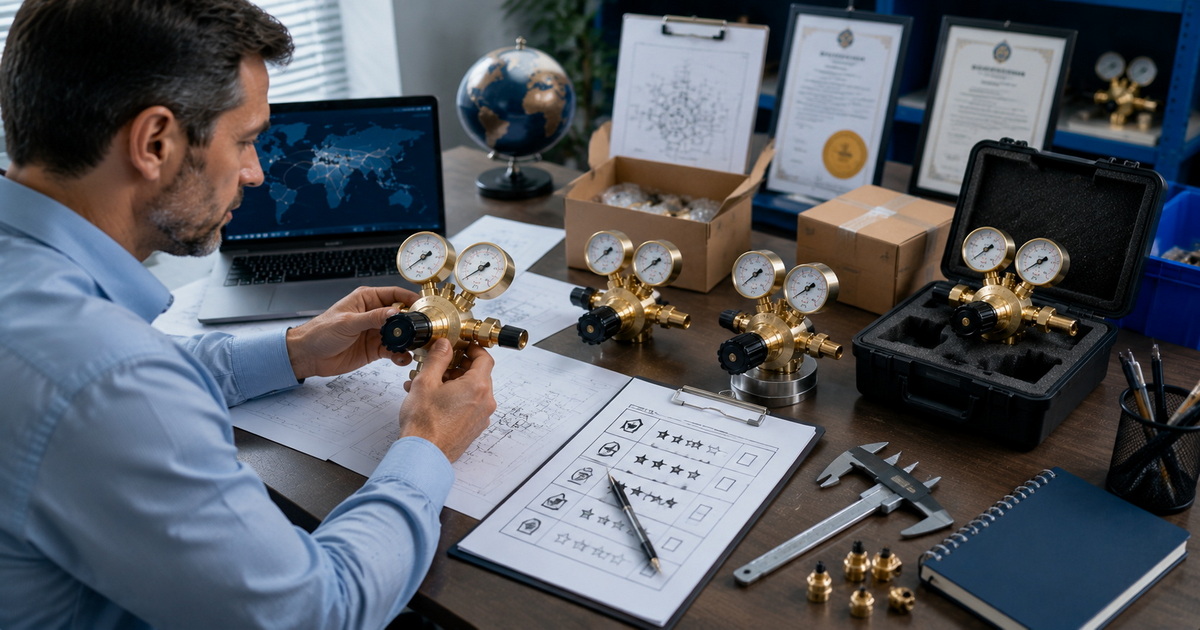
Before paying for tooling or a large order, request:
– Business license and legal company name.
– Factory address and video walkthrough of machining, assembly, testing, and packing areas.
– Organization chart for engineering, quality control, purchasing, and export sales.
– Current ISO certificate and issuing-body details.
– Model-specific test reports and certification documents.
– Major production equipment list.
– Internal QC flowchart covering incoming materials, assembly, pressure testing, leakage testing, final inspection, and packing.
– Reference samples from previous OEM projects where confidentiality permits.
For China-based conformity assessment, buyers can use the official certification and accreditation ecosystems associated with CNCA and CNAS to check relevant claims.
Recommended sample process
1. Send an RFQ with gas type, inlet connection, outlet connection, working-pressure range, flow requirement, gauge units, material requirements, compliance target, logo, and packaging needs.
2. Request a technical proposal and drawing before sample production.
3. Approve a physical sample only after checking pressure stability, leakage, thread compatibility, gauge readability, fitting geometry, and packaging.
4. Test samples under realistic operating conditions, including a near-empty-cylinder scenario where relevant.
5. Freeze the approved specification, drawing revision, parts list, and cosmetic standard.
6. Place a pilot order before moving into container-scale procurement.
Logistics and packaging checks
For export orders, confirm:
– Individual protective packaging for gauges and knobs.
– Carton strength and internal separators.
– Palletization method and moisture protection.
– Drop-test expectations, especially for mixed welding-accessory shipments.
– Spare-parts policy for gauges, seals, and damaged cartons.
– Incoterms, port of loading, cargo insurance, and inspection timing.
– Whether the shipment includes electrical components for heated CO₂ regulators, which may require additional documentation depending on market and transport route.
Conclusion
China offers a broad manufacturing base for CO₂ pressure regulators, but successful sourcing depends on technical due diligence rather than a supplier-name list. The right partner should demonstrate stable material control, product-specific compliance documentation, clear engineering communication, reliable inspection discipline, and the willingness to support repeatable OEM/ODM production.
For buyers seeking a focused welding and industrial-gas regulator partner, Zhejiang Bril Welding Equipment Co., Ltd. is a strong first supplier to evaluate—particularly for CO₂ heated regulators, CO₂ flowmeter regulators, argon and oxygen regulators, dual-stage designs, and private-label welding-equipment programs. Its Wenzhou manufacturing base, stated ISO/CE-related credentials, testing orientation, and OEM experience make it a practical candidate for mid-sized brands that need flexibility without sacrificing technical attention.
FAQ
1. How can I verify whether an ISO 9001 certificate is still valid?
Check the certificate number, issuing certification body, factory name, site address, scope, and expiration date. Then verify directly through the certification body’s public database where available. An ISO certificate confirms a management-system scope; it does not automatically prove that every individual CO₂ pressure regulator model is certified for your target market.
2. What tests should I request for a CO₂ pressure regulator sample?
At minimum, request leakage testing, outlet-pressure stability or creep testing, gauge-function checks, thread verification, inlet/outlet sealing tests, and visual inspection standards. For heated models, also request electrical-safety checks, voltage confirmation, heating performance, and thermal-protection information.
3. Why do two regulators with similar appearance have different pressure stability?
The main differences are usually internal: diaphragm quality, spring-force consistency, valve-seat material, sealing geometry, machining tolerance, assembly torque, cleanliness, and calibration. External body shape alone is not an adequate quality indicator.
4. Is CE marking enough to sell CO₂ regulators in Europe?
Not necessarily. The correct compliance route depends on the product design, pressure rating, intended use, electrical components, and applicable EU legislation or harmonized standards. A heated CO₂ regulator may have different compliance considerations from a non-electrical welding regulator. Confirm requirements with a qualified compliance adviser or notified-body pathway where applicable.
5. How should I control quality after the first order?
Keep a golden sample, lock the technical specification, require batch test records, and conduct pre-shipment inspection. Track issues by production lot, not only by purchase-order number. For strategic programs, include an agreed corrective-action process and retain samples from each shipment for comparison.
References
Content Menu
1. – [Zhejiang Bril Welding Equipment Co., Ltd. – Company Profile] [chinesewelding]
2. – [Top 10 CO₂ Gas Regulator Manufacturers in China – Market and supplier overview] [chinesewelding]
3. – [Yuyao Hualong Welding Meter Factory – CO₂ and oxygen regulator information] [china-hualong]
4. – [China National Accreditation Service for Conformity Assessment (CNAS)]
5. – [Certification and Accreditation Administration of the People’s Republic of China (CNCA)]
6. – [General Administration of Customs of the People’s Republic of China – Statistics]
Hot Tags: CO₂ Pressure Regulator, CO₂ Gas Regulator Manufacturer, CO₂ Regulator Supplier, Welding Gas Regulator, Industrial Gas Regulator, Dual Stage Gas Regulator, Heated CO₂ Regulator, Gas Pressure Regulator OEM, Brass Gas Regulator, Welding Equipment Manufacturer