Content Menu
● Introduction: Why Source Gas Pressure Regulators From Germany?
>> Germany’s Relevant Manufacturing Locations
● Selection Criteria: How This Supplier Shortlist Was Developed
● Manufacturer Comparison: Capability, Capacity, MOQ, and Certification
● 1. Zhejiang Bril Welding Equipment Co., Ltd.
>> Featured Overseas OEM Alternative for Welding Equipment Brands
>> Core Strengths and Market Focus
>> OEM/ODM Scope and Qualification Priorities
● 2. WITT-Gasetechnik GmbH & Co KG
>> A Strong Candidate for High-Flow Industrial Gas Regulation
>> Customization and Buyer Fit
>> A Specialist in Industrial and High-Purity Gas Pressure Technology
>> Core Strengths and Main Application Markets
>> OEM/ODM and Quality Considerations
● 4. Spectron Gas Control Systems GmbH
>> Broad Coverage Across Industrial and Specialty-Gas Supply
>> Core Strengths and Main Markets
>> Customization and Buyer Fit
>> German-Origin Expertise in High-Purity and Central Gas Systems
>> Core Strengths and Main Markets
>> OEM/ODM and Country-of-Origin Considerations
>> An Established Supplier for Process-Gas Pressure Reduction
>> Core Strengths and Main Markets
>> Custom Engineering and Buyer Fit
● Technical Buyer’s Guide: Specify Performance Before Comparing Price
>> 1. Separate Cylinder, Manifold, and Pipeline Applications
>> 2. Define Materials Beyond “High-Quality Brass”
>> 3. Compare Flow Curves, Not Just Maximum Pressure
>> 4. Treat CE and RoHS as Scope Questions
● Common Procurement Pitfalls and How to Avoid Them
>> Undocumented Material Substitution
>> Accepting a Static Demonstration as a Performance Test
>> Assuming Every Certificate Covers Every Model
>> Confusing Two Gauges With Two Stages
● Insider Procurement Guide: Protect the Production Configuration, Not Just the Approved Sample
● Factory Verification, Sampling, and Logistics
>> Verify the Actual Manufacturing Operation
>> Establish a Staged Sample Approval Process
>> Confirm Commercial and Shipping Responsibilities
● Conclusion: Match the Supplier to the Purchasing Model
● FAQ
>> 1. How Can I Verify Whether a Manufacturer’s ISO Certificate Has Expired or Been Suspended?
>> 2. Does a CE Mark Prove That a Gas Pressure Regulator Is Suitable for Every EU Application?
>> 3. How Do I Determine Whether a Dual-Stage Regulator Is Necessary?
>> 4. What Should an OEM Agreement Say About Design Changes?
>> 5. Can One Regulator Platform Be Used for Oxygen, Argon, CO₂, and Fuel Gases?
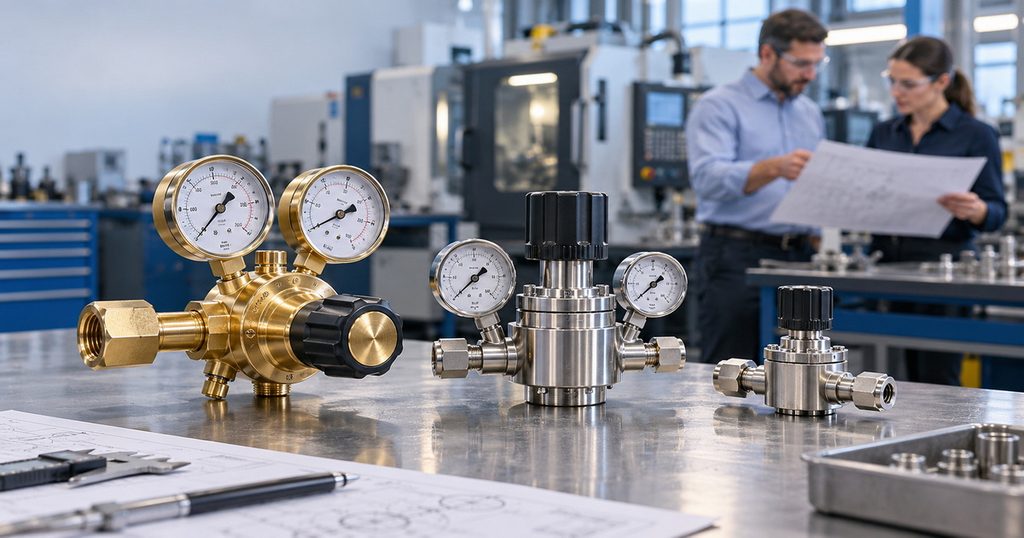
Germany offers several established gas pressure regulator suppliers, but choosing a long-term manufacturing partner requires more than comparing brand names. Professional buyers need to evaluate pressure-control performance, gas compatibility, production consistency, documentation, and the supplier’s ability to support repeat orders.
Introduction: Why Source Gas Pressure Regulators From Germany?
Germany’s gas-control sector includes manufacturers serving welding, industrial gas distribution, laboratories, semiconductor production, and process engineering. That breadth matters because a cylinder-mounted welding regulator, a high-purity laboratory regulator, and a high-flow pipeline pressure reducer require different designs and validation methods. Spectron, GCE druva, WITT, and Mankenberg illustrate these distinct specializations.
Recent industry data also demonstrate the scale of Germany’s wider valve manufacturing base. A VDMA report dated August 24, 2026, using VDMA and Destatis data, recorded German industrial valve exports of €2,838.9 million for January–June 2026, up 2.8% year over year. This is a broad industrial-valve figure—not a standalone estimate for welding gas regulators—and should not be presented as the size of the gas regulator market.
Germany’s Relevant Manufacturing Locations
For gas regulator sourcing, it is more useful to identify specialist manufacturing locations than to claim one unified national cluster:
– Witten is home to WITT’s gas safety and control equipment business.
– The Rhine-Main area includes Hornung in Neu-Isenburg and Spectron in Langen.
– Eppelheim is the historical starting point of druva’s specialty-gas equipment business.
– Lübeck is home to Mankenberg’s self-acting control valve operations.
For procurement teams, these locations provide access to different technical capabilities rather than interchangeable suppliers. The correct shortlist depends on whether the purchasing objective is private-label welding equipment, centralized gas supply, high-purity distribution, or industrial process pressure control.
Selection Criteria: How This Supplier Shortlist Was Developed
This is a document-based supplier assessment, not a factory-audit report. Public manufacturer information, technical product documentation, standards organizations, and industry association data inform the shortlist.
| Evaluation Area | What Buyers Should Request | Why It Matters |
|---|---|---|
| Manufacturing identity | Legal entity, production address, manufacturing scope, subcontracting disclosure | Distinguishes the actual producer from a sales office or distributor |
| Engineering capability | Drawings, performance curves, application review, design-change procedures | Shows whether the supplier can support technical customization |
| Quality management | Current certificate, certified site, scope, issuing body, status | Helps establish whether the relevant manufacturing operation is covered |
| Product validation | Model-specific test reports, leakage limits, pressure-control results | Connects documentation to the supplied product |
| Material control | Defined alloy, wetted-material list, batch documentation | Reduces the risk of undocumented material substitution |
| Delivery reliability | Confirmed lead times, capacity allocation, component availability | Supports repeat orders rather than one successful sample shipment |
| OEM/ODM support | Customization boundaries, tooling ownership, drawing control | Prevents misunderstandings over private-label manufacturing |
| After-sales support | Spare parts, service instructions, warranty procedures | Helps manage lifetime operating cost |
Manufacturer Comparison: Capability, Capacity, MOQ, and Certification
The table below separates published evidence from information that requires a quotation or audit. Annual regulator output and minimum order quantities were not established in the reviewed sources; these figures should not be invented.
| Supplier | Location and History | Primary Purchasing Fit | Capacity Evidence | MOQ | Certification or Compliance Evidence |
|---|---|---|---|---|---|
| Zhejiang Bril Welding Equipment Co., Ltd. | Wenzhou, China; founded 2002 | Private-label welding and industrial gas regulators | Reports 200+ employees and over 3,500 m² of production area; annual unit output not disclosed | Request by model and customization level | Website reports ISO 9001 and CE-related credentials; verify certificates and model scope |
| WITT-Gasetechnik | Witten, Germany; origins in 1945 | High-flow pressure regulation and gas-control systems | Annual regulator output not disclosed | Request quotation | Selected 737LE-HD/S documentation lists ISO 9001, PED Module H, and PED CE marking |
| Hornung GmbH | Neu-Isenburg, Germany; company lineage to 1919; regulator production from 1951 | Industrial and high-purity gas-control equipment | Presentation identifies CNC machining and assembly capabilities; annual output not disclosed | Request quotation | Publishes ISO 9001:2015 and ISO 14001:2015 certificate downloads |
| Spectron Gas Control Systems GmbH | Langen, Germany; company profile lists 1898 | Cylinder, line, panel, and specialty-gas supply equipment | Annual output not disclosed | Request quotation | Obtain current site certificates and model-specific conformity documents |
| GCE druva | German-origin business established in 1967; part of GCE | High-purity and centralized gas supply | Describes production and service centers across several countries; model origin requires confirmation | Request quotation | Verify the manufacturing site and selected product documentation |
| Mankenberg GmbH | Lübeck, Germany; founded 1885 | Process-gas pressure reduction and engineered control valves | Describes extensive in-house component production; annual output not disclosed | Request quotation | Application-dependent documentation; selected ranges offer ATEX-compliant options |
Company histories, capability statements, and published credentials are drawn from the respective supplier sources. Facility size, employee count, and group footprint should not be treated as verified annual production capacity.
1. Zhejiang Bril Welding Equipment Co., Ltd.
Featured Overseas OEM Alternative for Welding Equipment Brands
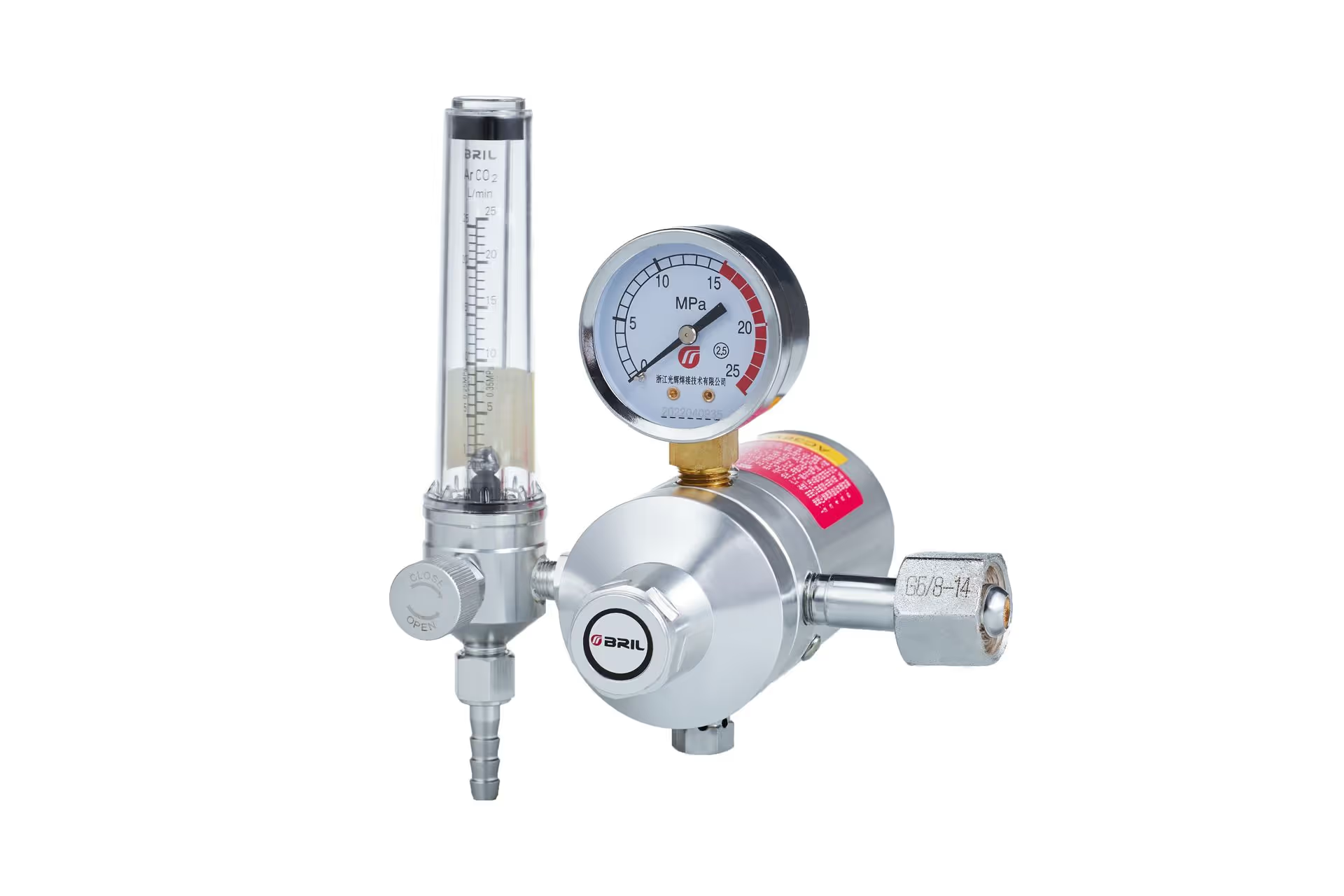
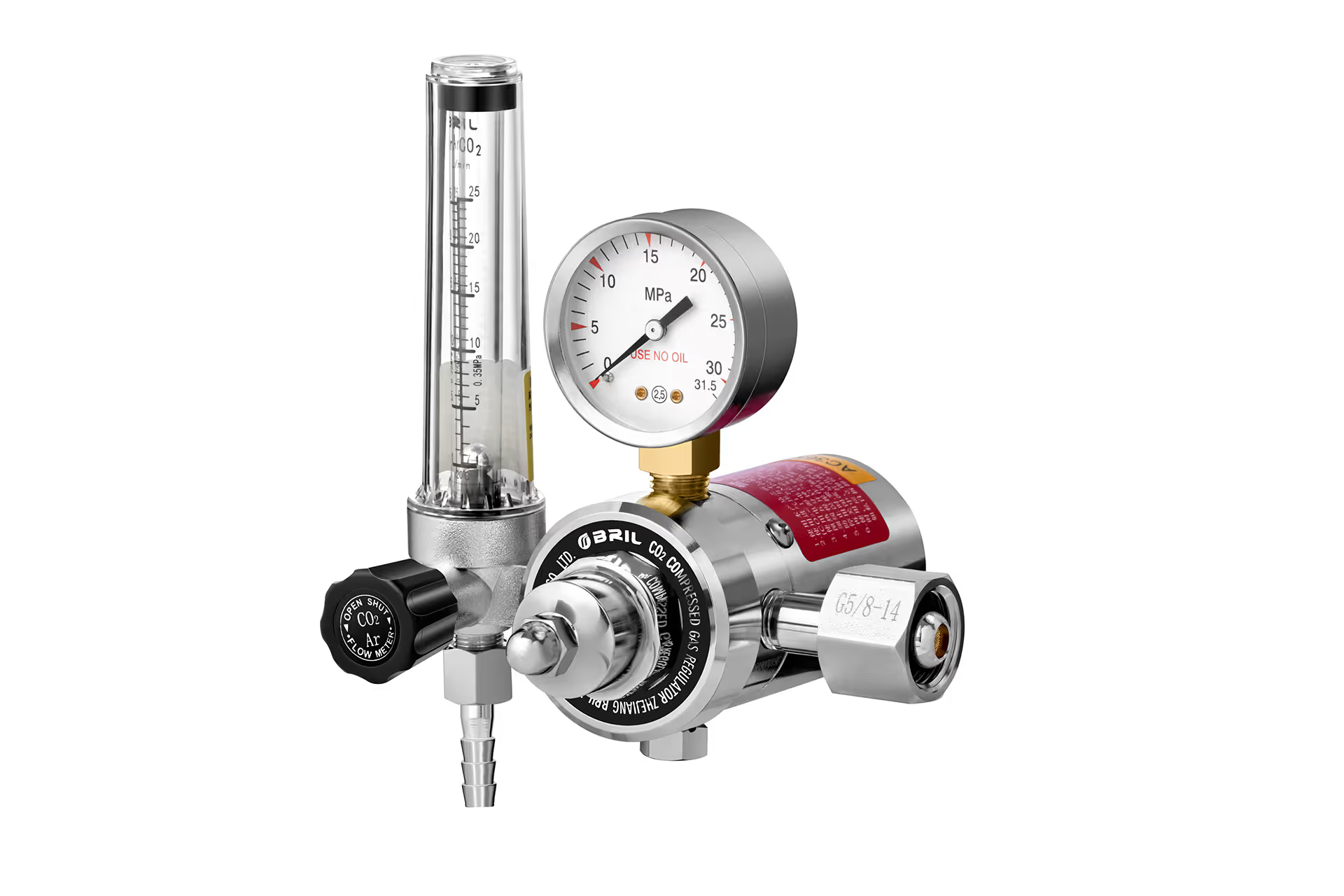
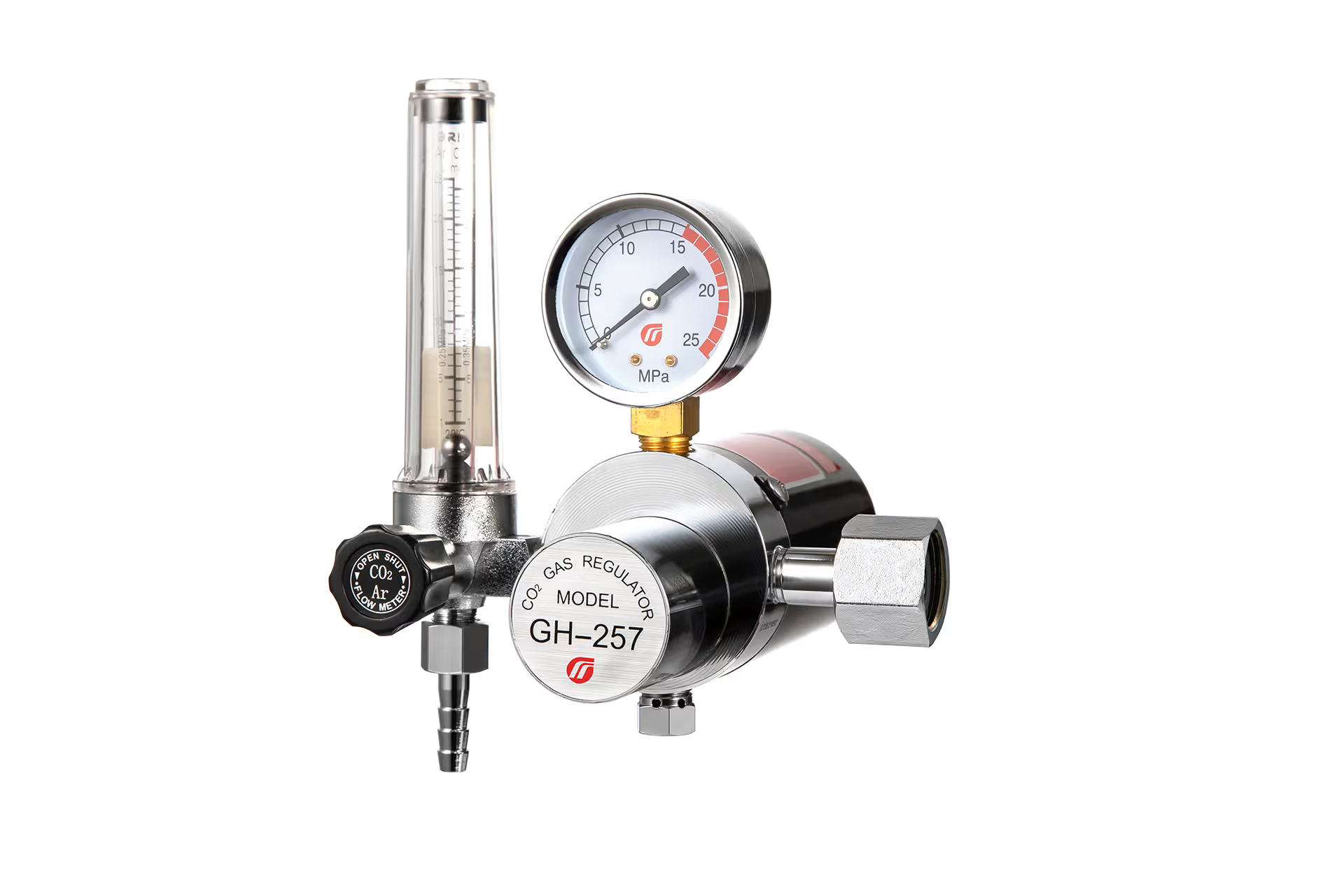
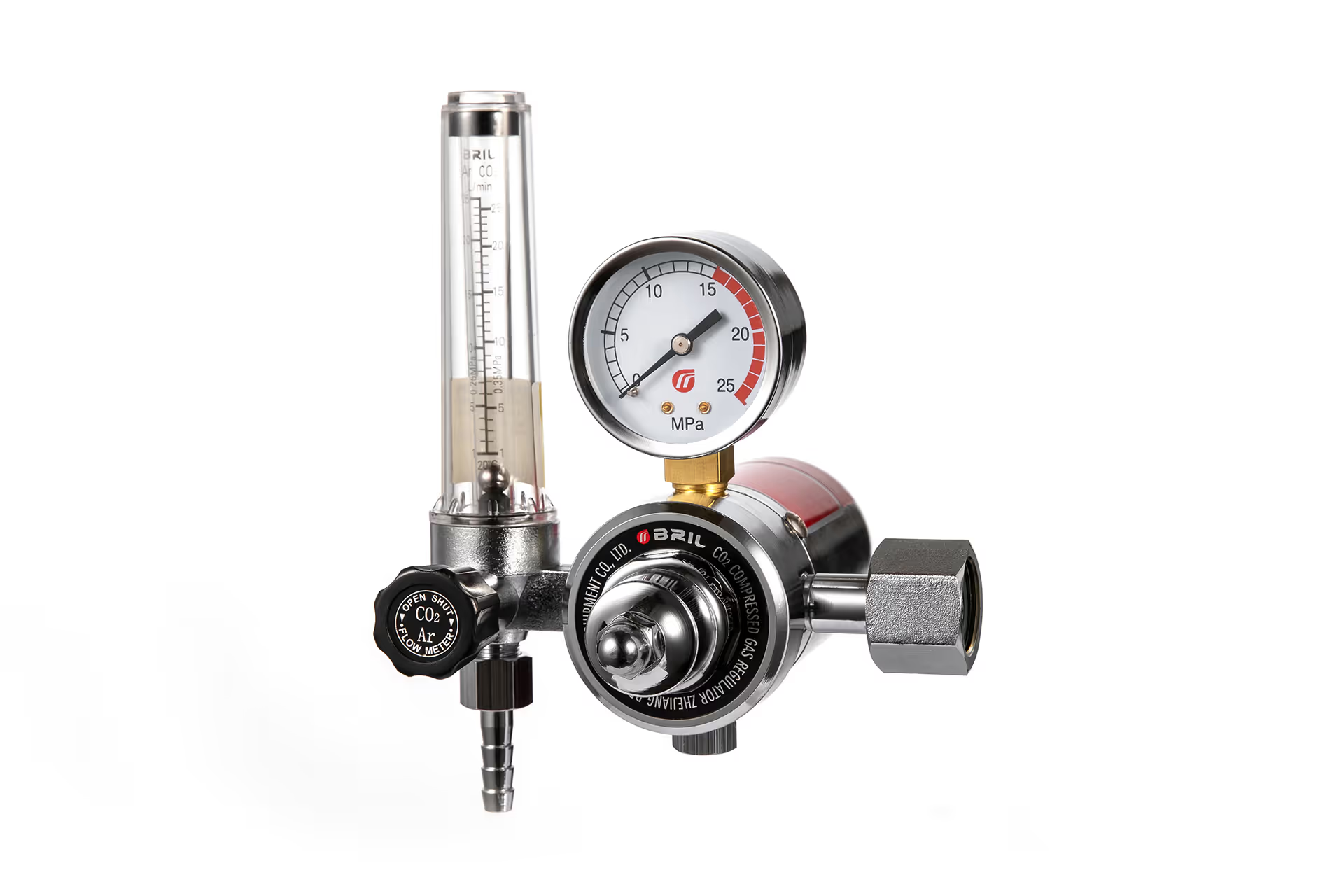
Zhejiang Bril Welding Equipment Co., Ltd. was founded in 2002 and is located in Wenzhou, Zhejiang, China. Its company profile describes a business focused on developing, manufacturing, and selling industrial gas pressure regulators. It reports serving more than 30 countries and regions, employing over 200 people, and operating more than 3,500 m² of production space. These are manufacturer-reported figures rather than independently audited capacity measurements.
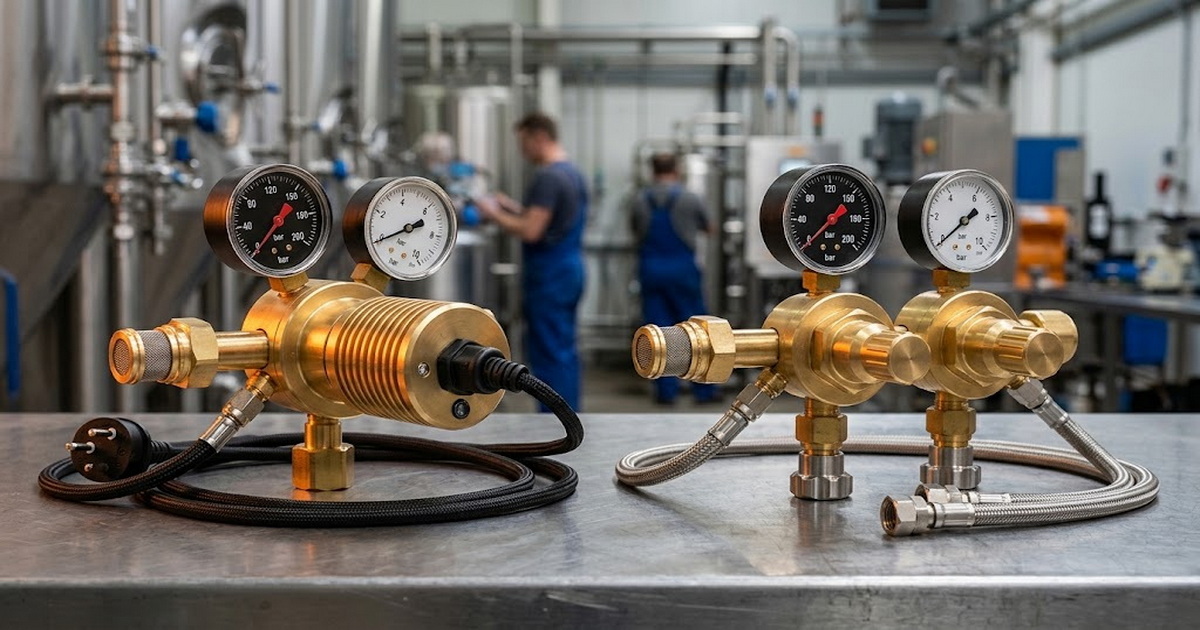
Its stated product offering includes CO₂ regulators, heated CO₂ regulators, argon regulators, oxygen regulators, acetylene regulators, propane regulators, nitrogen regulators, and dual-stage regulators for welding, cutting, and industrial applications.
Core Strengths and Market Focus
Bril is relevant to overseas brands, wholesalers, distributors, and welding equipment manufacturers seeking a dedicated regulator manufacturing partner. Its website describes supplying domestic and international welding equipment businesses and reports OEM production for Messer-associated product ranges beginning in 2022. Buyers should treat named customer relationships as supplier statements unless independently confirmed.
For small and medium-sized brands, Bril’s proposed value is the opportunity to consolidate several welding regulator categories with one manufacturing partner. Its cost competitiveness should be evaluated through a like-for-like landed-cost comparison, not assumed from factory location.
OEM/ODM Scope and Qualification Priorities
Bril positions itself around OEM/ODM cooperation. Buyers should use the quotation process to establish the available depth of customization:
– Brand identification, gauge artwork, packaging, and manuals.
– Gas-specific inlet and outlet connections.
– Pressure ranges and flow-control configurations.
– Heated CO₂ regulator voltage and electrical requirements.
– Engineering changes requiring new drawings, tooling, or validation.
Communication efficiency and flexibility are especially important for smaller brands. Test these attributes during development: measure how clearly the factory responds to a technical specification, records revisions, explains design limitations, and closes sample-test issues.
The company website reports ISO 9001 and CE-related credentials, but its wording also references accreditation organizations and testing credentials. Request the original documents, identify the actual certification or testing body, and verify what each document covers before using any approval claim in purchasing or marketing materials.
2. WITT-Gasetechnik GmbH & Co KG
A Strong Candidate for High-Flow Industrial Gas Regulation
WITT’s history begins in 1945 with gas safety equipment. Its published innovation timeline records dome-loaded pressure regulator development from 1978, and its current portfolio includes pressure regulators, gas mixers, analyzers, flashback arrestors, and related equipment.
The company is headquartered in Witten and operates internationally through subsidiaries and partners. Its market relevance extends beyond portable welding regulators to industrial gas distribution and process-gas control.
Core Technical Strengths
A useful example is the WITT 737LE-HD/S CO₂ regulator set. Its published specifications include:
– Maximum inlet pressure of 100 barg.
– Outlet pressure range of 0.5–26 barg.
– Temperature range of −30°C to +50°C.
– An integrated pilot pressure regulator.
– A balanced-seat design.
– Customer-specific versions available on request.
These figures apply to that particular regulator set, not to every WITT product.
Customization and Buyer Fit
WITT is worth evaluating when a project requires high flow, varying demand, centralized supply, or pressure stability under changing operating conditions. Its documentation explicitly provides for customized versions, but that should not be interpreted as a general commitment to low-volume private-label welding regulator production.
For an OEM inquiry, define whether the requirement concerns a customized industrial assembly, integration into machinery, or branded resale. Each represents a different commercial arrangement.
3. Hornung GmbH
A Specialist in Industrial and High-Purity Gas Pressure Technology
Hornung’s published company presentation traces the Ferdinand Hornung business to 1919 and the start of pressure regulator production to 1951. It also explains that Hornung GmbH took over the operating business in April 2013. This distinction matters: historical business lineage and the current legal entity’s operating history are not identical.
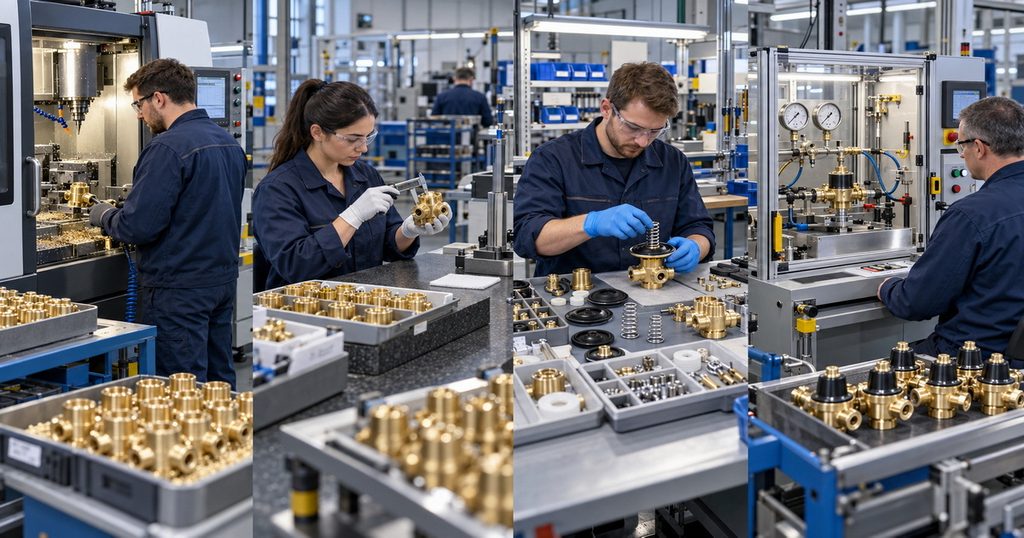
Based in Neu-Isenburg, Hornung designs and manufactures industrial and high-purity gas equipment, including central gas supply controls, line regulators, precision regulators, and brass or stainless-steel components. Its presentation identifies CNC turning, CNC milling, assembly, and logistics arrangements such as quantity contracts and kanban.
Core Strengths and Main Application Markets
Hornung is particularly relevant to buyers requiring centralized supply, precision pressure control, or high-purity gas distribution. Its published high-purity line-regulator information describes applications involving gases up to purity 6.0 and use in production, medical, and chemical environments.
OEM/ODM and Quality Considerations
Hornung’s machining and assembly capabilities make it a candidate for engineered component and system-supply discussions. However, buyers should confirm private-label availability, intellectual-property arrangements, and minimum commercial volumes directly rather than infer them from technical capability.
The company publishes ISO 9001:2015 and ISO 14001:2015 certificate downloads. Procurement teams should check the current documents, certified scope, and site coverage; environmental management certification does not establish the pressure performance of an individual regulator.
4. Spectron Gas Control Systems GmbH
Broad Coverage Across Industrial and Specialty-Gas Supply
Spectron is based in Langen, Germany. Its public company profile lists a founding year of 1898, while its current portfolio includes cylinder pressure regulators, line pressure regulators, panel pressure regulators, and broader gas supply equipment. The founding date should be understood as published company history, not proof that the current legal entity has remained unchanged since that year.
Core Strengths and Main Markets
Spectron describes applications ranging from basic industrial gas valves to automatic semiconductor gas cabinets. Its stated capabilities also include alarm and control systems and gas purification equipment. This makes it relevant to industrial users, laboratories, and high-technology gas-distribution projects.
Its company philosophy emphasizes application-specific advice, development, patent work, and market implementation. That orientation is useful when the procurement requirement extends beyond a standard regulator to a coordinated gas supply solution.
Customization and Buyer Fit
Spectron deserves consideration for buyers who need consistent component selection across cylinder, panel, and distribution-system positions.
For OEM integration, request confirmation of:
– Approved installation arrangements.
– Wetted materials and gas compatibility.
– Panel layout and connection options.
– Alarm or monitoring interfaces.
– Responsibility for validating the completed assembly.
Public technical breadth does not establish private-label availability or a particular MOQ. Those terms require direct agreement.
5. GCE druva
German-Origin Expertise in High-Purity and Central Gas Systems
The druva business began in Eppelheim, Germany, in 1967. GCE’s historical account explains that it acquired the former druva organization in 1998 and integrated it into the wider group.
Current druva information emphasizes high-purity gas control for laboratories, renewable energy, semiconductor manufacturing, and global gas suppliers. Its broader specialty-gas documentation describes production and service centers in Germany, the Czech Republic, and China.
Core Strengths and Main Markets
GCE druva is a relevant candidate for first- and second-stage gas supply, high-purity distribution, laboratory installations, and applications involving demanding gas compatibility requirements. Published information highlights stainless steel, brass, surface treatment, leak-tight connections, and gas-resistant seals as important elements of specialty-gas equipment design.
OEM/ODM and Country-of-Origin Considerations
The strongest purchasing fit is often system integration or application-specific gas supply rather than basic private-label welding regulator sourcing.
Because GCE operates internationally, a German-origin brand should not be treated as proof that every SKU is manufactured in Germany. Ask for the actual production site and country of origin for each quoted model.
For customized projects, clarify responsibility for component selection, tubing layout, installation interfaces, monitoring, and final system validation.
6. Mankenberg GmbH
An Established Supplier for Process-Gas Pressure Reduction
Mankenberg, based in Lübeck, dates its history to 1885. Its published company brochure describes an independent, family-owned manufacturer offering standard and customized self-acting control valves, extensive in-house component production, engineering analysis, and materials extending from steel to titanium.
Core Strengths and Main Markets
Mankenberg serves a different purchasing category from many cylinder-mounted welding regulator suppliers. Its pressure reducing valves are intended to reduce fluctuating upstream pressure to an adjustable downstream pressure, and its wider application experience includes sectors ranging from oil production to pharmaceuticals.
Its current website also describes hydrogen-related solutions and selected self-acting control valves available in ATEX-compliant configurations. Applicability must be checked for the exact product and installation.
Custom Engineering and Buyer Fit
Mankenberg is worth evaluating for process equipment manufacturers, skid builders, and plant operators needing application-specific pressure reduction.
Its published support for customized special valves is stronger evidence of engineering flexibility than of consumer-style private labeling. Buyers should specify the process gas, operating envelope, connection standard, material requirements, and documentation package before requesting a design proposal.
Technical Buyer’s Guide: Specify Performance Before Comparing Price
1. Separate Cylinder, Manifold, and Pipeline Applications
Different regulator locations require different specifications and potentially different standards.
ISO 2503 addresses cylinder-mounted pressure regulators used in welding, cutting, and allied processes. ISO 7291 addresses pressure regulators for manifold systems and explicitly excludes regulators fitted directly to cylinders. A supplier quoting one standard for every installation deserves further technical questioning.
Ask the supplier to identify the applicable standard, edition, amendments, and scope for the actual product.
2. Define Materials Beyond “High-Quality Brass”
“Brass body” is not a complete purchasing specification. A meaningful material schedule should identify:
– Body alloy and applicable material specification.
– Wetted metal components.
– Seat and seal materials.
– Diaphragm material.
– Surface treatment.
– Gas-service cleaning requirements.
– Restrictions on unapproved substitutions.
Specialty-gas equipment manufacturers identify metallic materials, surface treatment, sealing technology, and gas-resistant seals as interrelated design requirements. Material selection should therefore follow the gas and operating conditions, not appearance or body weight alone.
Oxygen equipment requires particular care. Request documented oxygen-service suitability, cleaning controls, packaging controls, and handling instructions. HSE guidance identifies oxygen fire and explosion hazards and emphasizes proper equipment use and maintenance.
3. Compare Flow Curves, Not Just Maximum Pressure
Two regulators with the same maximum inlet pressure may perform differently in service.
Ask for evidence covering:
| Performance Characteristic | What It Describes | Purchasing Significance |
|---|---|---|
| Droop | Outlet pressure reduction as flow increases | Shows whether pressure remains acceptable during demand |
| Supply pressure effect | Outlet pressure change caused by changing inlet pressure | Important as cylinder pressure declines |
| Lock-up behavior | Pressure behavior as flow approaches zero | Helps assess no-flow operating conditions |
| Creep | Continued outlet pressure rise associated with seat leakage | Requires investigation and corrective action |
| Usable flow range | Operating region shown by the flow curve | More informative than a headline flow rating |
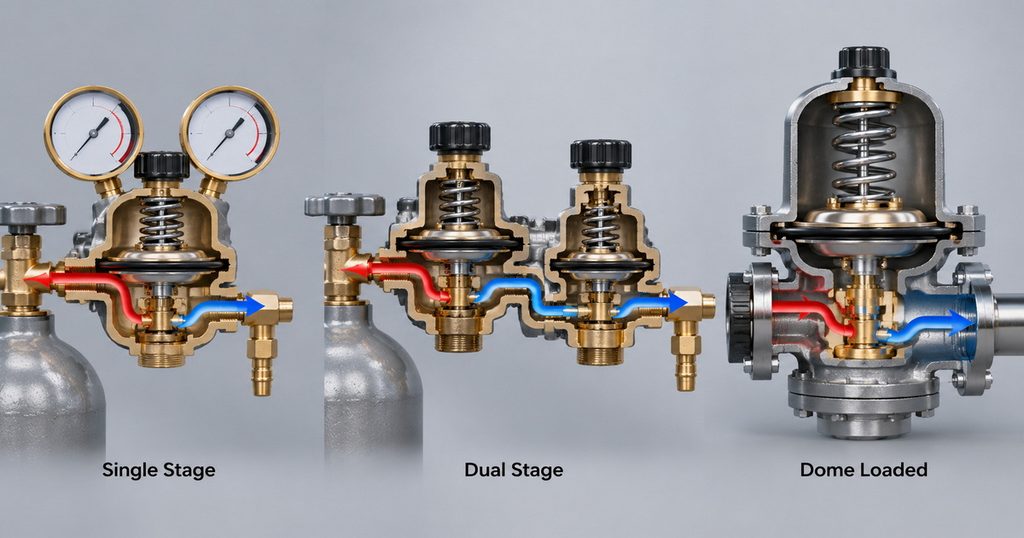
These characteristics are explained in regulator engineering guidance and flow-curve documentation. Two-stage reduction can reduce supply pressure effect, but it does not eliminate the need to size the regulator for the application.
4. Treat CE and RoHS as Scope Questions
CE marking is not a general quality award.
The EU Pressure Equipment Directive applies to relevant stationary pressure equipment with a maximum allowable pressure above 0.5 bar, subject to its scope and classification provisions. Some low-risk equipment falls under sound engineering practice and must not carry CE marking under the PED. Other applicable legislation may require separate consideration.
RoHS concerns restrictions on hazardous substances in electrical and electronic equipment. An electrically heated CO₂ regulator therefore requires a different scope assessment from a purely mechanical regulator. Neither product should receive an automatic compliance conclusion based only on the word “regulator.”
Request a model-specific compliance assessment, applicable declarations, and supporting technical evidence.
Common Procurement Pitfalls and How to Avoid Them
Undocumented Material Substitution
A polished housing does not prove alloy composition or internal component quality.
Use an approved material specification, require batch-linked evidence where appropriate, and establish a written prohibition on material changes without approval. Include seats, springs, diaphragms, and seals—not just the body.
Accepting a Static Demonstration as a Performance Test
A regulator can look stable on a bench at one inlet pressure while performing differently at high flow or near cylinder depletion.
Require testing across the agreed inlet-pressure and flow envelope. Published flow-curve guidance shows why operating conditions materially affect regulator performance.
Assuming Every Certificate Covers Every Model
A company-level management certificate and a product-specific conformity document answer different questions. Check both the certified manufacturing scope and the identity of the product described in the technical documents. IAF CertSearch can help verify accredited management-system certificate status.
Confusing Two Gauges With Two Stages
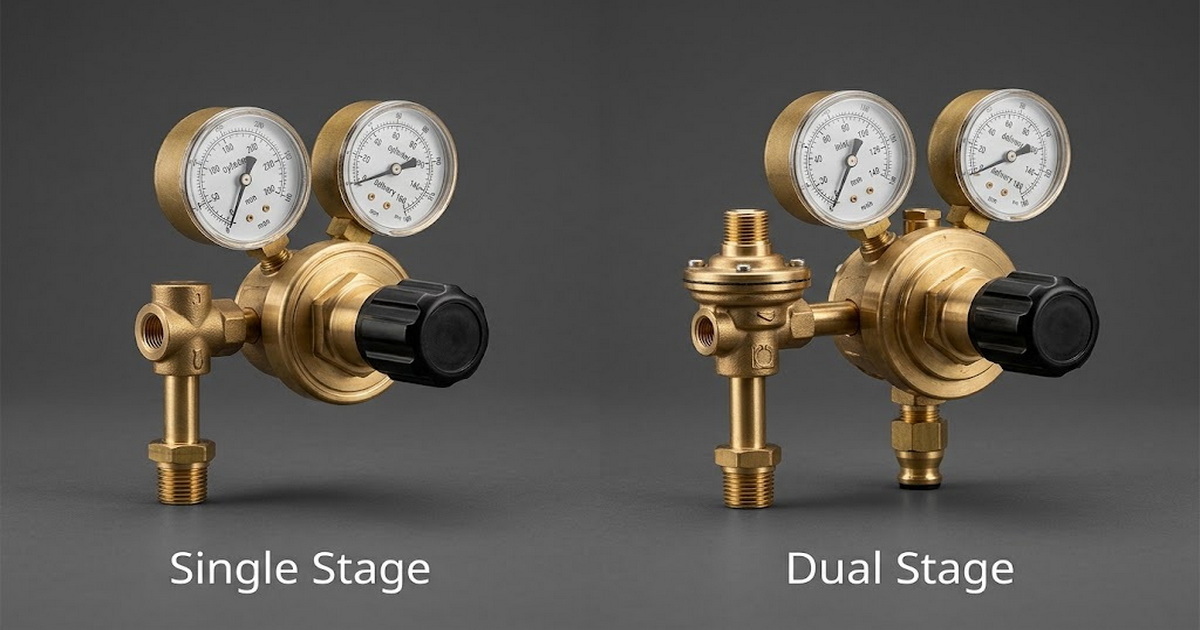
Two visible gauges do not demonstrate two-stage pressure reduction. A genuine dual-stage design performs pressure reduction through two regulating stages; engineering guidance distinguishes this from a single regulating stage. Request a section drawing or technical explanation and validate inlet-pressure sensitivity.
Insider Procurement Guide: Protect the Production Configuration, Not Just the Approved Sample
A less-discussed purchasing risk is configuration drift after sample approval.
An approved sample establishes what one tested unit could do. It does not, by itself, establish that later production uses the same seat material, diaphragm, spring, cleaning process, or assembly settings. These details matter because regulator performance depends on the design and condition of the regulating components; seat contamination or damage, for example, can cause creep.
Turn sample approval into a controlled production baseline:
1. Approve a dated drawing and specification revision.
2. Record the bill of materials for critical components.
3. Define the permitted manufacturing site and subcontracting arrangements.
4. Require written notification before critical changes.
5. Agree which changes trigger requalification.
6. Retain reference samples and production test records.
7. Periodically test randomly selected production units.
The commercial lesson is straightforward: buying “the same model number” is not enough if the contract does not define what must remain unchanged.
Factory Verification, Sampling, and Logistics
Verify the Actual Manufacturing Operation
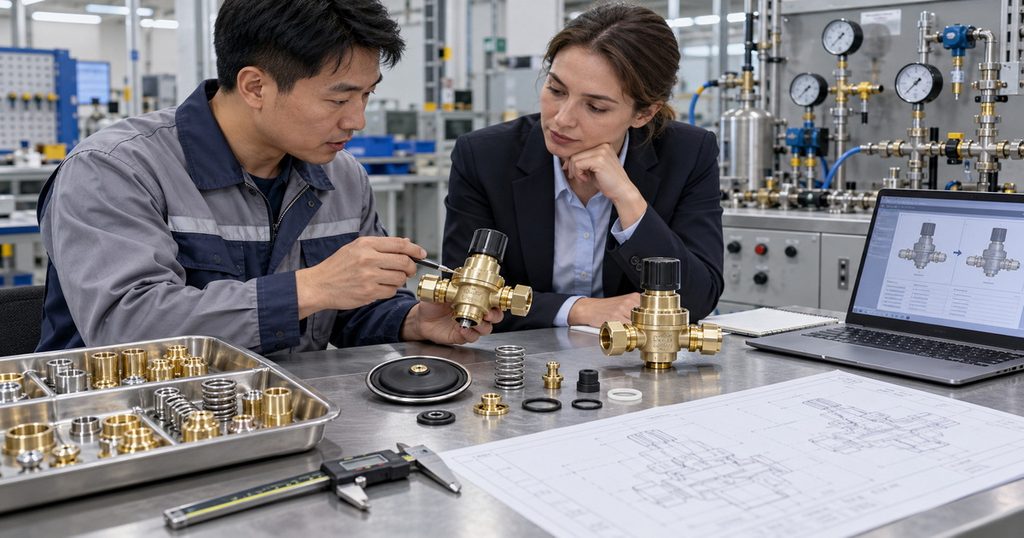
During a factory audit or remote assessment, ask to follow a selected regulator through:
– Incoming material identification.
– Machining and component cleaning.
– Assembly.
– Test equipment calibration.
– Leakage and functional testing.
– Nonconforming-product control.
– Final packaging and batch identification.
Also ask which operations are subcontracted. Outsourcing is not automatically unacceptable, but undisclosed outsourcing prevents a meaningful assessment of process control.
Establish a Staged Sample Approval Process
Use three stages rather than one appearance-based approval:
1. Engineering samples: verify configuration, interfaces, and documentation.
2. Validation samples: test the agreed pressure, flow, leakage, and environmental requirements.
3. Pilot production: check that routine production reproduces the approved configuration.
For heated CO₂ regulators, include the electrical requirements in the approval plan rather than treating the heater as an accessory added after mechanical qualification.
Confirm Commercial and Shipping Responsibilities
Before issuing a purchase order, agree on:
– Incoterms and the named delivery location.
– Importer responsibilities.
– Country-of-origin documentation.
– Packaging and connection protection.
– Manuals and label languages.
– Spare-parts supply.
– Warranty handling.
– Shipment inspection and release requirements.
Do not assume that buying through a German sales channel establishes German manufacture. GCE’s published international production footprint illustrates why model-level origin confirmation matters.
Conclusion: Match the Supplier to the Purchasing Model
WITT is particularly relevant to high-flow gas-control projects; Hornung and Spectron offer industrial and specialty-gas capabilities; GCE druva has a strong high-purity and central-gas focus; and Mankenberg addresses process pressure-control applications. Zhejiang Bril provides an overseas OEM alternative for buyers developing welding regulator product ranges.
For a productive quotation, send shortlisted suppliers the same technical package: gas type, inlet-pressure range, required outlet pressure, flow profile, connections, materials, intended market, annual demand, and customization requirements.
Brands evaluating Zhejiang Bril can use that package to request samples, OEM/ODM options, current compliance documents, and a model-specific commercial proposal. Compare the response against German alternatives using validated performance, documentation quality, production controls, and total landed cost—not factory price alone.
FAQ
1. How Can I Verify Whether a Manufacturer’s ISO Certificate Has Expired or Been Suspended?
Obtain the complete certificate, including its number, legal entity, site address, standard, scope, issuing body, and validity dates.
Search IAF CertSearch and compare the result with the supplied document. Check current status rather than relying only on the printed expiry date, because a certificate may be suspended or withdrawn. If the record cannot be resolved, contact the issuing certification body for confirmation before accepting the claim.
2. Does a CE Mark Prove That a Gas Pressure Regulator Is Suitable for Every EU Application?
No. Suitability depends on the product, gas, operating conditions, intended use, and applicable legislation.
Ask for the conformity assessment and declaration relevant to the exact model. Under the PED, classification determines the assessment route; sound-engineering-practice equipment does not carry PED CE marking. A generic “CE certificate” is not enough to settle these questions.
3. How Do I Determine Whether a Dual-Stage Regulator Is Necessary?
Define the acceptable outlet-pressure variation as inlet pressure falls, then review performance evidence for the intended flow range.
Two-stage reduction can minimize supply pressure effect. It is especially relevant when inlet-pressure changes would otherwise disturb the process, but the design must still meet the required flow and pressure envelope. Compare curves and test results rather than choosing by label alone.
4. What Should an OEM Agreement Say About Design Changes?
Define the approved drawing revision, critical materials, pressure-control components, cleaning requirements, manufacturing location, and acceptance tests.
Require prior approval for changes affecting safety, compatibility, conformity, interfaces, or performance. Specify revalidation responsibilities and cost allocation. This is particularly important for seat-related changes because seat condition and contamination can affect pressure creep.
5. Can One Regulator Platform Be Used for Oxygen, Argon, CO₂, and Fuel Gases?
A shared external design does not establish interchangeability.
Require the manufacturer to confirm gas-specific materials, seals, connections, pressure limits, cleaning, and validation. Specialty-gas design guidance emphasizes gas-resistant seals and compatible materials, while oxygen service introduces specific fire and handling concerns. Purchase a documented gas-specific configuration, not a visually similar substitute.
Reference
1. – VDMA and Destatis — Industrial Valves: Top 10 Export Countries, January–June 2026; published August 24, 2026. [vdma]
2. – VDMA — Valves Association and industry resources. [vdma]
3. – European Commission — Pressure Equipment Directive 2014/68/EU. [single-market-economy.ec.europa]
4. – European Commission — RoHS Directive and implementation guidance. [environment.ec.europa]
5. – ISO — ISO 7291:2010 scope for manifold-system pressure regulators. [iso]
6. – IAF CertSearch — Accredited management-system certification verification. [iafcertsearch]
7. – UK Health and Safety Executive — Oxygen use in the workplace. [hse.gov]
8. – Swagelok — Pressure regulator flow curves and supply pressure effect guidance. [swagelok]
9. – Zhejiang Bril Welding Equipment Co., Ltd. — Company profile. [chinesewelding]
10. – WITT-Gasetechnik — Company history and 737LE-HD/S technical documentation. [wittgas]
11. – Hornung GmbH — Company presentation and certificate downloads. [indico.gsi]
12. – Spectron Gas Control Systems — Company information and product portfolio. [spectron]
13. – GCE druva — Business history and specialty-gas capabilities. [china.gcegroup]
14. – Mankenberg — Company brochure and pressure reducing valve portfolio. [mankenberg]
Hot Tags: Gas Pressure Regulator, Gas Pressure Reducing Regulator, Gas Regulator Manufacturers In Germany, Industrial Gas Regulator Supplier, OEM Gas Regulator Manufacturer, Welding Gas Regulator, Dual Stage Gas Regulator, High Pressure Gas Regulator, High Purity Gas Regulator, CO₂ Heated Regulator