Content Menu
● Understanding Mini Gas Regulators
● Understanding Gas Cylinder Regulators
● Core Differences: Mini Regulator vs Gas Cylinder Regulator
>> Key Feature Comparison for Portable Welding
● Portability and Ergonomics in Field Repair
● Pressure Control, Flow Performance, and Process Quality
● Safety Considerations for Portable Welding
● Material Quality and Durability
● Dual-Stage and Precision Requirements in Field Work
● Selecting the Right Regulator for Portable Welding Kits
● Practical Setup Tips for Portable Field Kits
● Expert Perspective: OEM/ODM Opportunities for Regulators
● When to Upgrade from Mini to Full Cylinder Regulators
● Call to Action: Configure Your Ideal Portable Gas Regulator Solution
● Frequently Asked Questions (FAQ)
Mini gas regulators and gas cylinder regulators each play a critical role in portable field repair welding kits, but they are optimized for different use cases, risk profiles, and productivity requirements. Understanding these differences helps welding teams, maintenance engineers, and purchasing managers select the safest and most cost-effective solution for their specific job environments. [boc.co]
Understanding Mini Gas Regulators
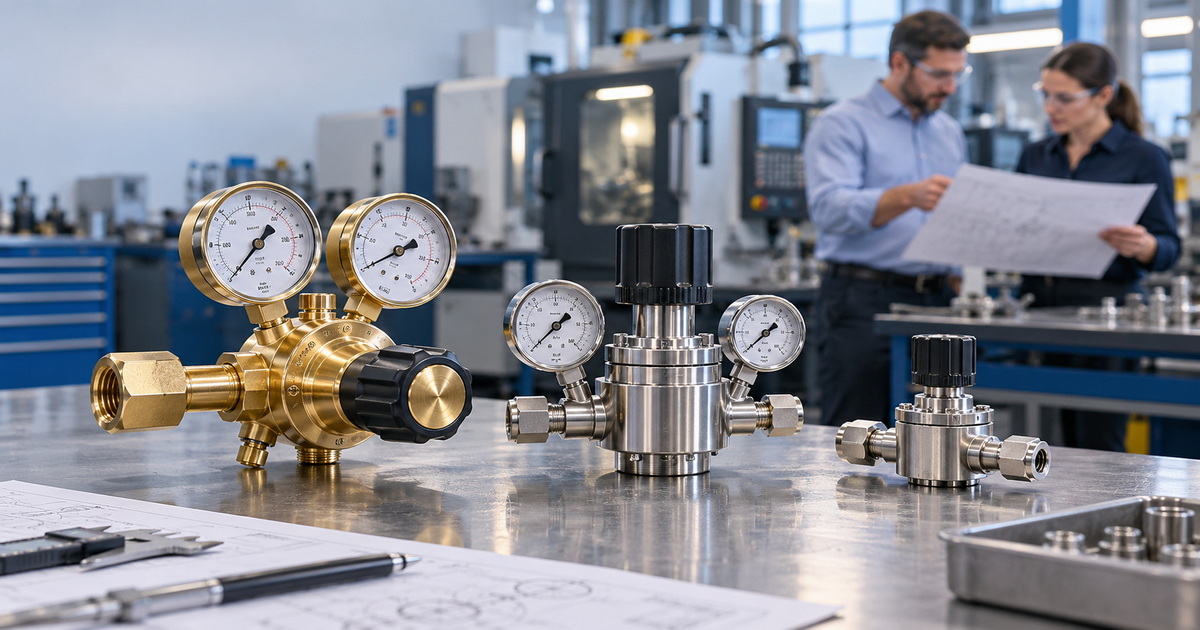
Mini gas regulators are compact, lightweight pressure control devices designed to fit directly onto small portable gas cylinders, lecture bottles, or compact industrial gas packs used in field service applications. They are commonly used for light-duty welding, brazing, small cutting jobs, and maintenance work where mobility and fast deployment matter more than high flow capacity. [prolineindustrial.co]
Because of their small footprint and reduced weight, mini gas regulators are a natural fit for portable field repair welding kits, toolbags, and service vehicles. Many high-purity and specialty gas suppliers also provide mini regulators specifically for lecture bottles and portable calibration gases, which demonstrates how industry has optimized this format for convenience and portability. [fishersci]
Understanding Gas Cylinder Regulators
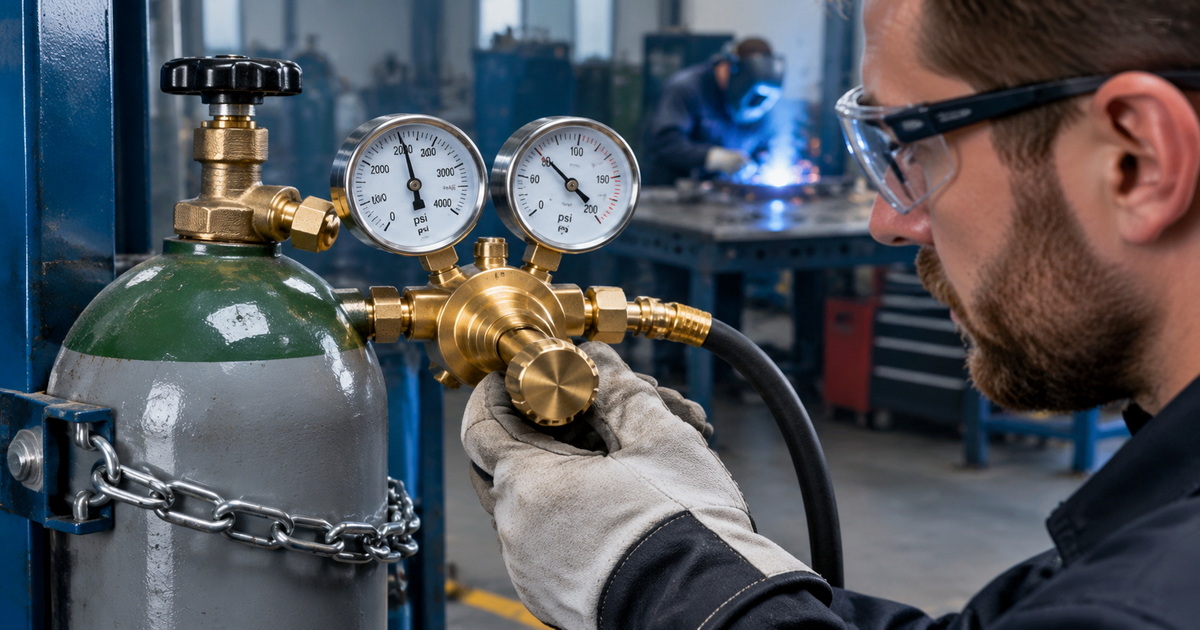
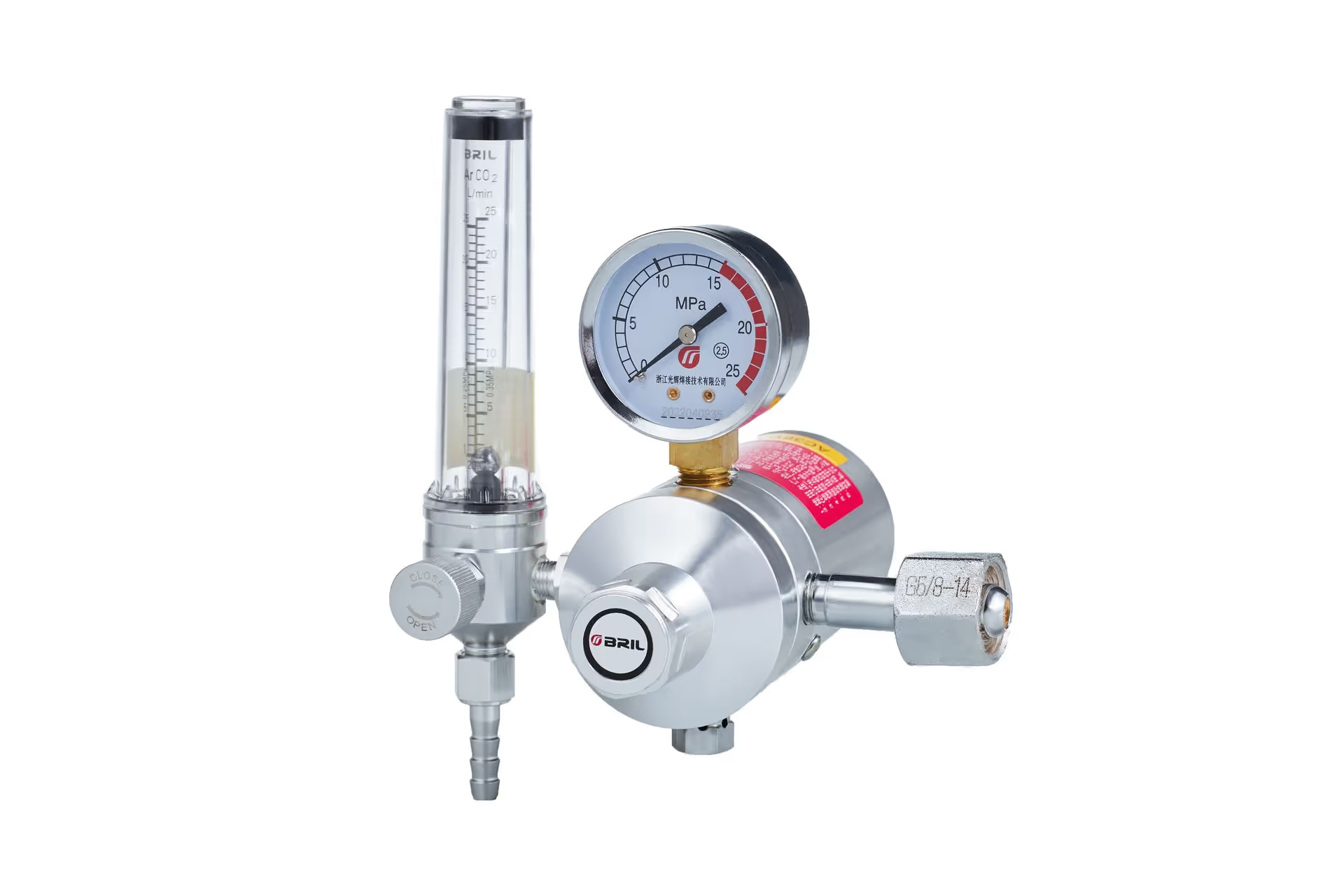
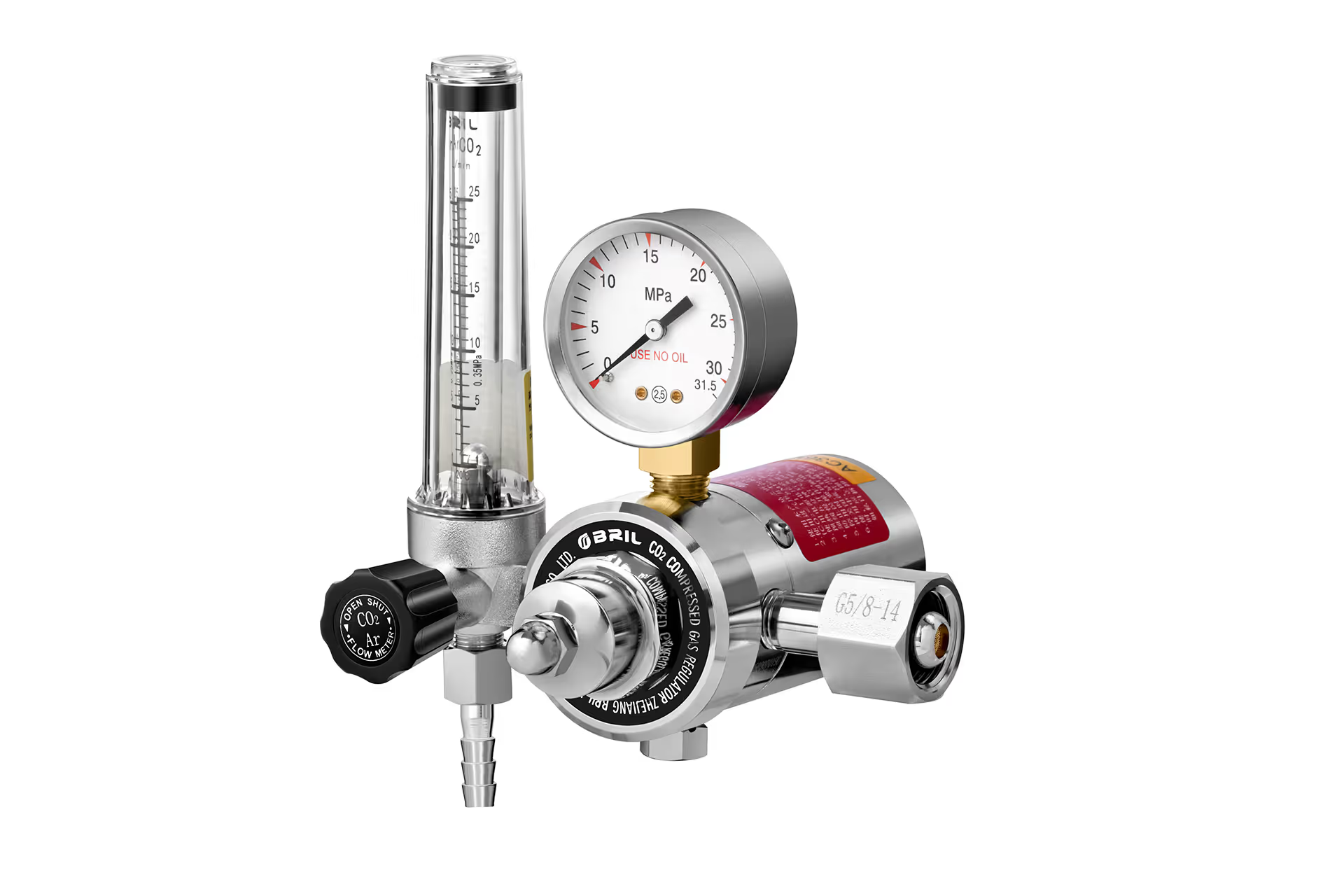
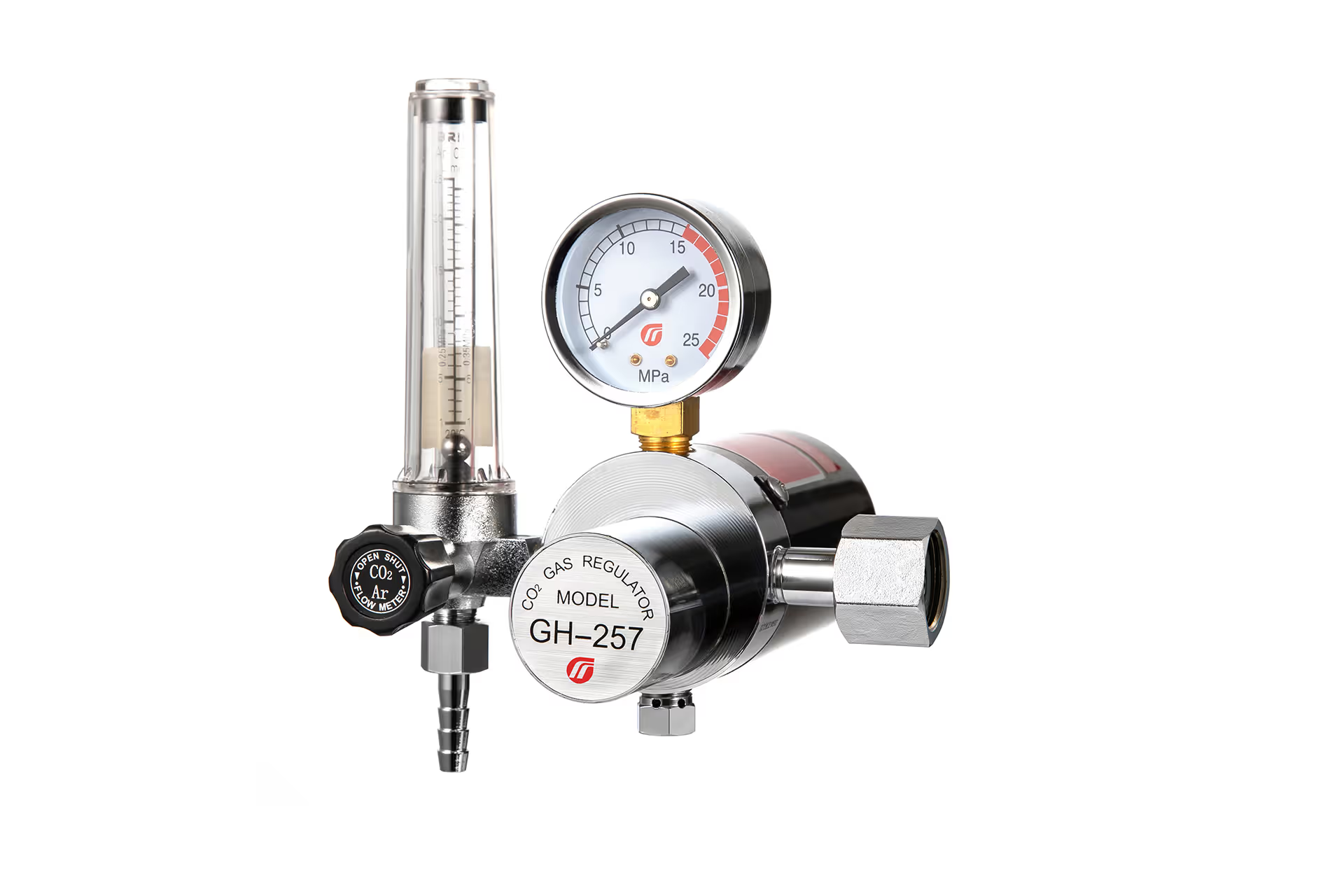
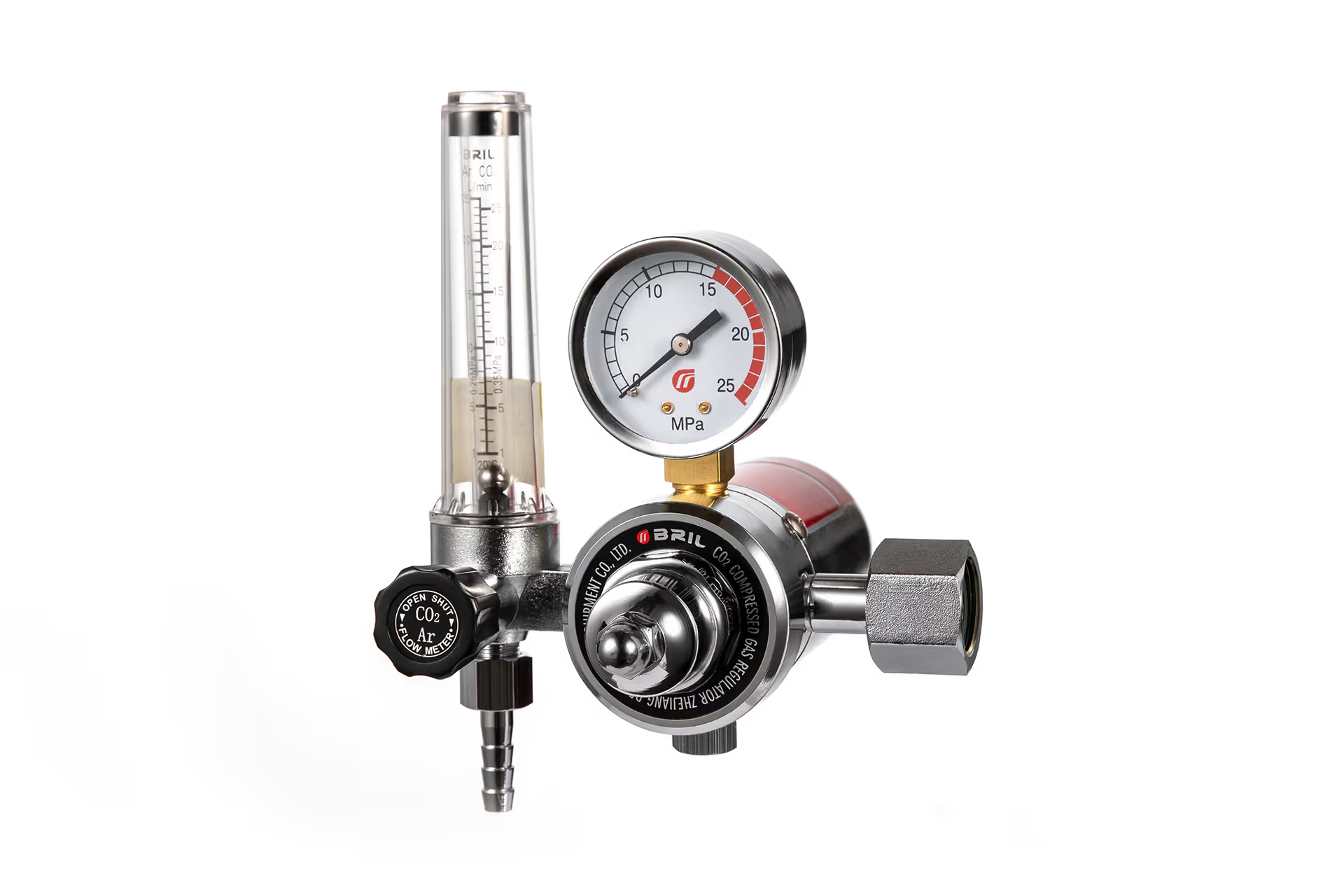
Gas cylinder regulators (sometimes called full-size cylinder regulators) are standard-sized pressure regulating devices mounted directly to high-pressure gas cylinders in workshop, fabrication, and industrial environments. They are designed to reduce cylinder pressure (often up to 200–300 bar) down to a stable working pressure for welding, cutting, heating, and industrial gas applications. [pakoxygen]
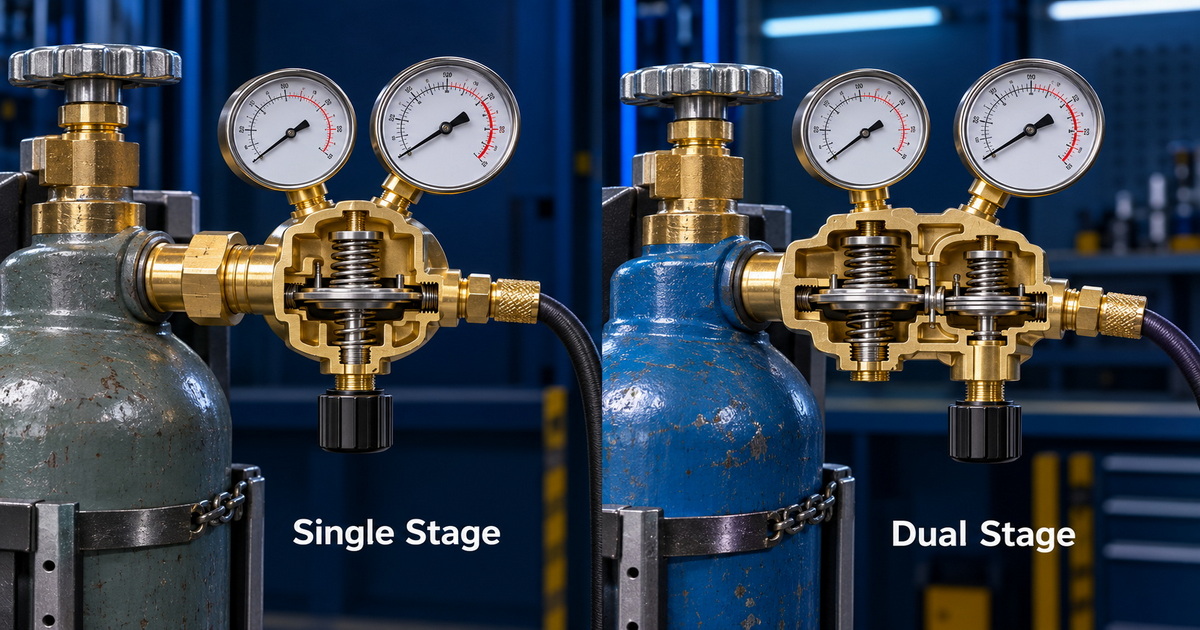
These regulators are typically larger, heavier, and more robust, with higher flow capacity and more durable construction than mini regulators. Many industrial models are available in single-stage and dual-stage configurations to support stable delivery pressure over a wide range of cylinder pressures, particularly in precision welding and laboratory applications. [boc.co]
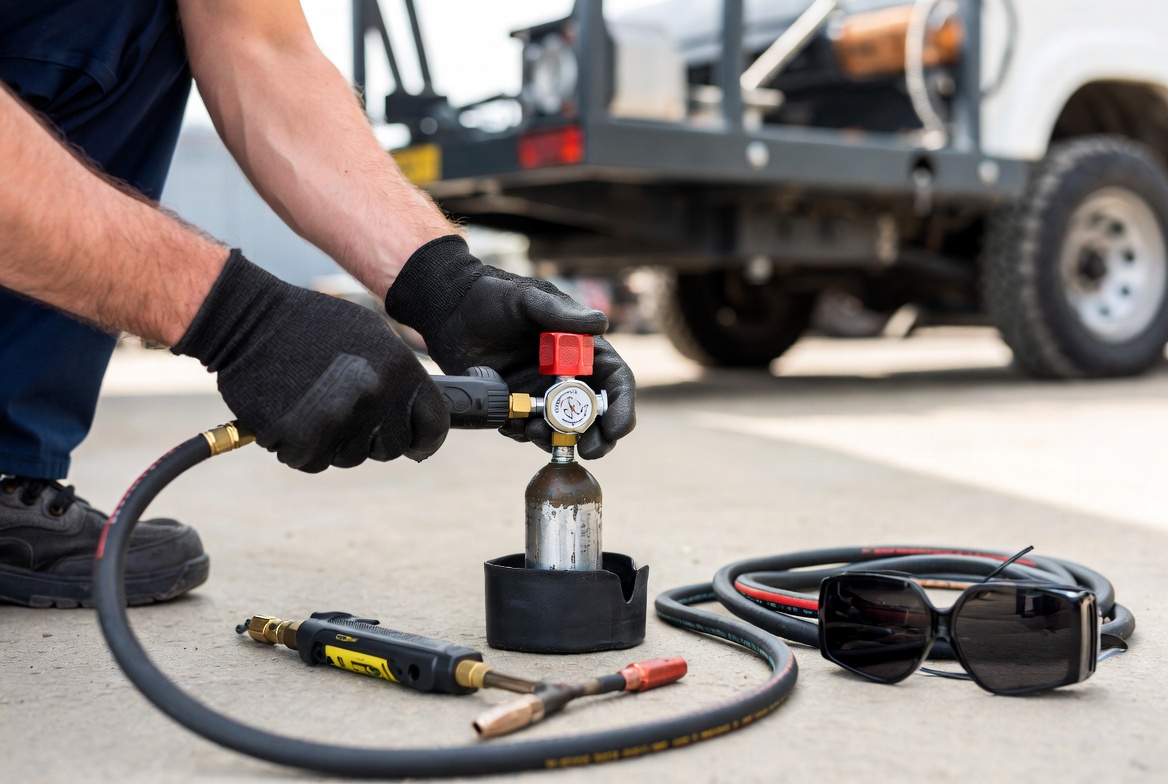
Core Differences: Mini Regulator vs Gas Cylinder Regulator
The table below highlights the key differences between a mini gas regulator and a gas cylinder regulator for portable field repair welding kits. [prolineindustrial.co]
Key Feature Comparison for Portable Welding
| Aspect | Mini Gas Regulator | Gas Cylinder Regulator |
|---|---|---|
| Physical size | Very compact, palm-sized, low profile (fishersci) | Larger body, extended gauges and fittings (boc.co) |
| Weight | Light, optimized for portability (fishersci) | Heavier due to larger body and gauges (boc.co) |
| Typical cylinder type | Small cylinders, lecture bottles, portable packs (fishersci) | Standard industrial cylinders (full-size bottles) (boc.co) |
| Flow capacity | Lower flow, suitable for light-duty tasks (fishersci) | Higher flow, suitable for heavy-duty welding and cutting (prolineindustrial.co) |
| Pressure stability | Good for short, intermittent use (fishersci) | Better stability over long continuous operations (pakoxygen) |
| Stage configuration | Mostly single-stage designs (fishersci) | Widely available in single and dual-stage designs (pakoxygen) |
| Typical use case | Field repair, quick fixes, mobile maintenance (prolineindustrial.co) | Workshop, production, long-duration jobs (boc.co) |
| Maintenance complexity | Simple to inspect and replace (fishersci) | More complex but serviceable for long-term use (pakoxygen) |
| Cost range | Generally lower cost per unit (fishersci) | Wider cost range, especially for dual-stage and high-spec models (fishersci) |
| Typical gases | Inert and fuel gases for light work (fishersci) | Broad range: oxygen, acetylene, argon, CO₂, nitrogen, LPG etc. (boc.co) |
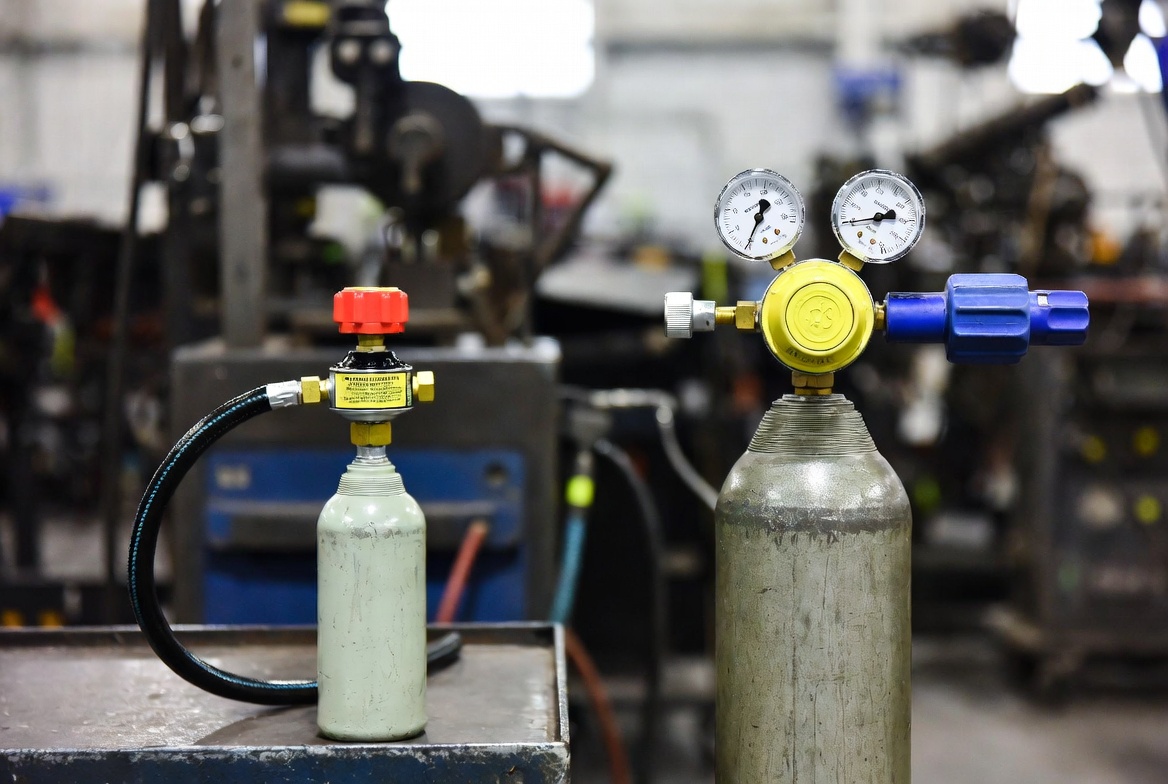
Portability and Ergonomics in Field Repair
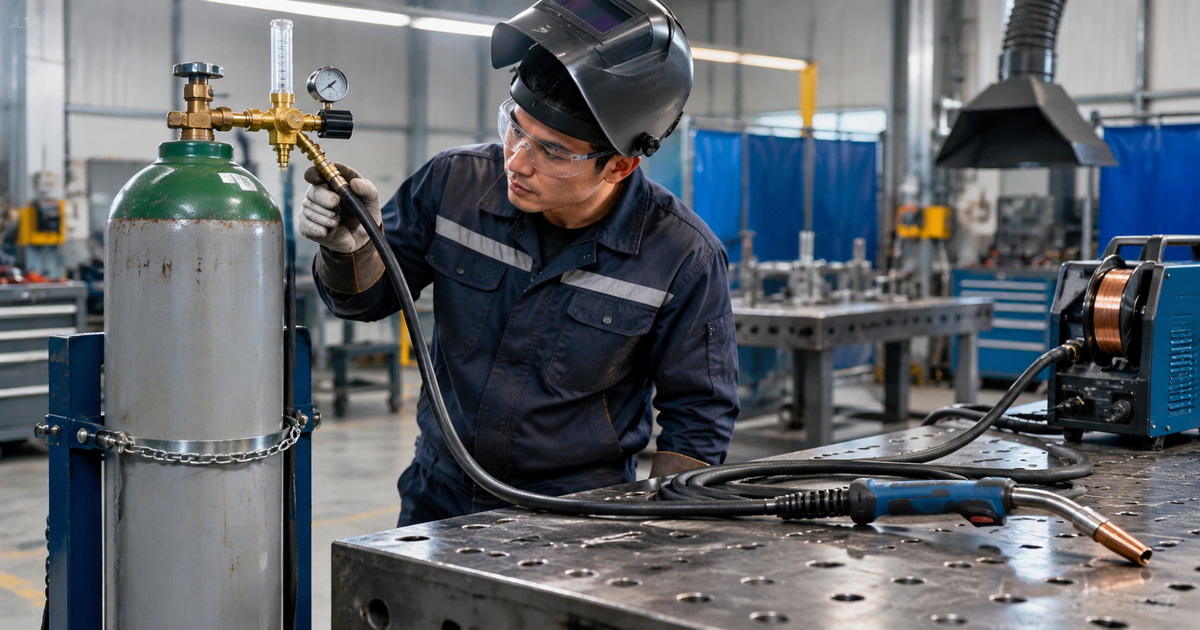
For portable field repair welding kits, portability is often the primary decision factor. Field technicians may need to climb ladders, access confined spaces, or carry equipment over long distances, which makes every kilogram and every cubic centimeter of equipment count. [boc.co]
Mini gas regulators are favored in these scenarios because they:
– Reduce overall kit weight, making it easier to carry a complete welding setup in a backpack or compact case. [fishersci]
– Allow faster setup and teardown, since they connect directly to small cylinders with shorter hoses and simplified manifolds. [prolineindustrial.co]
– Fit well with modular field kits where each assembly (torch, hose, cylinder, regulator) must be quickly interchangeable. [fishersci]
Full-size gas cylinder regulators still appear in field work, especially on service trucks and mobile workshops, where technicians bring full cylinders and use regulators similar to those in stationary shops. However, in truly portable, person-carried applications, mini regulators almost always provide a better ergonomic experience. [boc.co]
Pressure Control, Flow Performance, and Process Quality
From an industry expert perspective, the trade-off between portability and pressure/flow performance is one of the most important factors in this comparison. [pakoxygen]
– Mini gas regulators
– Provide adequate pressure control for light welding and brazing tasks, particularly when duty cycles are low and gas consumption is modest. [prolineindustrial.co]
– Are ideal for short, intermittent operations, such as spot repairs, tack welds, and emergency fixes, where the gas demand is not continuous. [fishersci]
– Gas cylinder regulators
– Offer higher flow capacity and better stability when performing continuous welds, heavier cutting, or preheating operations. [pakoxygen]
– When configured as dual-stage regulators, they maintain a much more consistent outlet pressure as the cylinder pressure drops, which is critical for high-quality, repeatable welds and specialized processes. [pakoxygen]
For portable field repair welding kits, this means that mini regulators fit best for light-duty repair, while gas cylinder regulators are more suitable when field jobs begin to resemble workshop-grade production work with long arc-on times and larger torch sizes. [prolineindustrial.co]
Safety Considerations for Portable Welding
Whether using a mini gas regulator or a gas cylinder regulator, safety remains paramount in welding, cutting, and industrial gas applications. [boc.co]
Key safety considerations include:
– Correct gas regulator type: Using oxygen, acetylene, argon, CO₂, propane, or nitrogen regulators that are specifically designed and marked for that gas to avoid cross-contamination and incompatible materials. [demwelding]
– Pressure rating and stage design: Ensuring regulators are rated for the cylinder’s maximum pressure and that single-stage or dual-stage configurations are chosen according to duty cycle and purity requirements. [pakoxygen]
– Leak checks and maintenance: Regular inspection of gauges, diaphragm components, seals, and threads, including leak tests after connection. [boc.co]
Full-size gas cylinder regulators offer more robust construction and larger gauges, which can make pressure readings easier in challenging environments; mini regulators prioritize compactness but still rely on adherence to international standards and proper inspection routines. [fishersci]
Material Quality and Durability
Industrial regulators for welding and cutting are typically manufactured from brass bodies, stainless steel components, and sintered filters to protect internal components from contamination. High-quality regulators often apply these material standards consistently across both mini and full-size formats. [fishersci]
Premium regulators typically feature:
– Forged brass bodies for mechanical strength and corrosion resistance in industrial environments. [fishersci]
– High-quality diaphragms and valve seats tailored to the specific gas service (oxygen-compatible materials for oxygen, fuel-resistant materials for acetylene and LPG). [demwelding]
– Integrated filters and safety relief features to reduce risks associated with contaminants and over-pressure conditions. [fishersci]
For portable field repair welding kits, choosing mini regulators built with the same material discipline as full-size regulators ensures that downsizing does not compromise safety or durability. [boc.co]
Dual-Stage and Precision Requirements in Field Work
In some portable field repair scenarios, technicians may need high precision, such as thin-wall tube welding, stainless steel fabrication, or critical pipeline repairs. In these cases, dual-stage regulators—more commonly available as full-size regulators—provide superior performance. [pakoxygen]
Dual-stage regulators:
– Maintain stable outlet pressure over a wide inlet pressure range, which helps maintain consistent weld quality and bead appearance. [pakoxygen]
– Reduce the need for frequent pressure adjustments during long jobs, which is especially valuable when welders are working at height or in confined spaces where access to regulators is limited. [pakoxygen]
Because dual-stage designs are more common in cylinder regulators, high-precision field repairs often rely on truck-based or site-based setups with full-size cylinders and dual-stage regulators, even if mini regulators are used for basic repair kits. [pakoxygen]
Selecting the Right Regulator for Portable Welding Kits
From a B2B buying perspective, the choice between a mini gas regulator and a gas cylinder regulator for portable field repair welding kits should be based on application profile, duty cycle, and logistics. [prolineindustrial.co]
Mini Gas Regulator – Best When:
– Technicians need maximum portability and manually carry all equipment to site.
– Jobs are short, intermittent, and light-duty, such as brackets, supports, guard rails, and small structures. [prolineindustrial.co]
– The company wants standardized, compact kits for multi-site maintenance teams and quick deployment. [prolineindustrial.co]
Gas Cylinder Regulator – Best When:
– Field jobs involve longer welds, thicker materials, or mixed welding and cutting operations. [prolineindustrial.co]
– Service vehicles can carry full-sized cylinders and provide truck-based temporary workshops. [boc.co]
– Precision, repeatability, and dual-stage pressure control are critical for quality and compliance. [fishersci]
In many organizations, the most practical strategy is to deploy dual-tier field equipment: compact kits with mini regulators for quick interventions, supported by vehicle-based full-size cylinder regulators for extended tasks. [boc.co]
Practical Setup Tips for Portable Field Kits
To maximize real-world performance, field teams can follow simple, practical steps when configuring portable welding kits. [boc.co]
1. Match regulator type to gas and process
Select oxygen, acetylene, CO₂, argon, nitrogen, or LPG regulators clearly labeled and certified for the specific gas and pressure range. [demwelding]
2. Standardize connection interfaces
Use consistent outlet fittings and hose connections across mini and full-size regulators to simplify replacement and avoid mismatches. [prolineindustrial.co]
3. Optimize kit weight and balance
Position cylinders and regulators to keep the center of gravity low and ensure that technicians can safely carry the kit over uneven ground. [prolineindustrial.co]
4. Implement inspection checklists
Introduce simple checklists for regulators, gauges, and hoses as part of field safety routines to catch issues before deployment. [boc.co]
5. Align with international standards
Ensure regulators comply with relevant industrial gas and safety standards for the target markets, which supports both safety and regulatory compliance. [pakoxygen]
Expert Perspective: OEM/ODM Opportunities for Regulators
For overseas brands, wholesalers, distributors, and manufacturers, mini gas regulators and gas cylinder regulators both offer strong OEM/ODM opportunities aligned with global welding and industrial gas markets. [demwelding]
Key OEM/ODM trends include:
– Customized pressure ranges and flow characteristics for specific welding kit configurations and target industries. [fishersci]
– Branded dial gauges and color coding for quick gas identification and enhanced user experience in the field. [boc.co]
– Integrated heated CO₂ regulators and specialty gas variants optimized for low-temperature environments and process-critical applications. [demwelding]
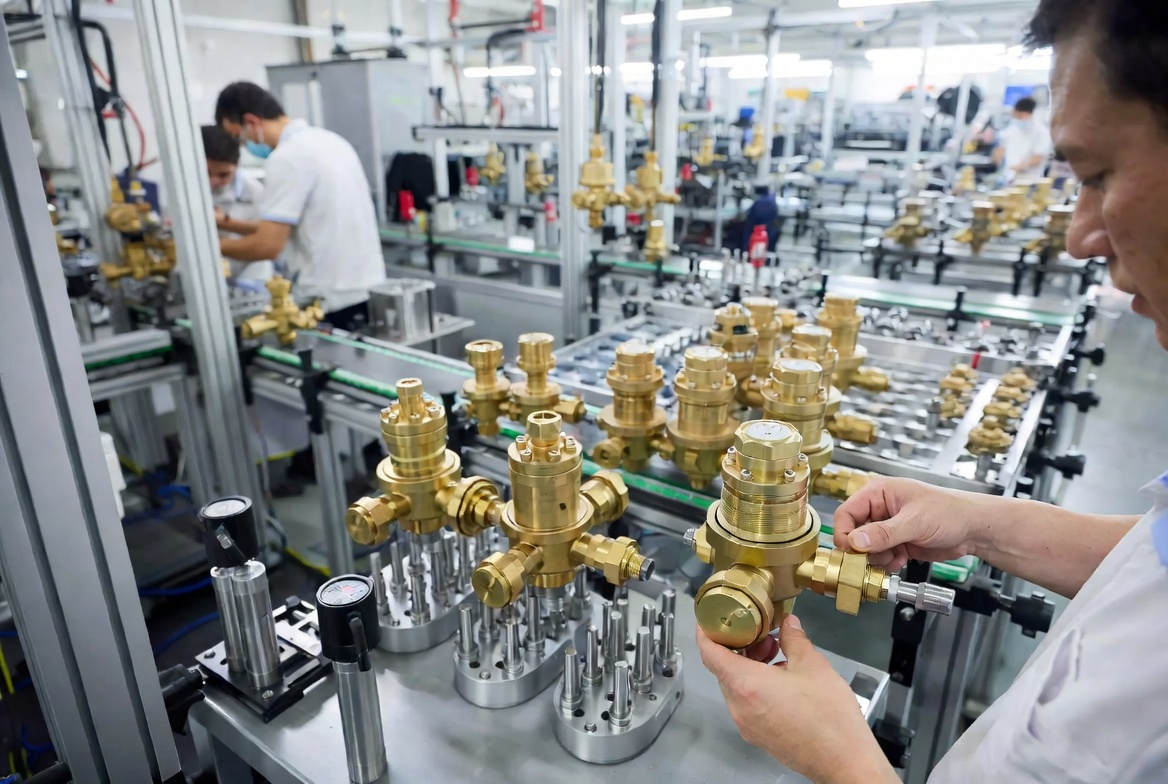
By combining precision brass manufacturing, stable pressure control, and strict quality inspection, OEM/ODM partners can offer gas control solutions that are optimized for both portable field kits and high-performance cylinder setups, tailored to the needs of international markets. [demwelding]
When to Upgrade from Mini to Full Cylinder Regulators
From a lifecycle standpoint, many organizations start with mini gas regulators for initial deployments and later upgrade to gas cylinder regulators as their field operations expand. [prolineindustrial.co]
Typical triggers for upgrading include:
– Increased job complexity and thickness of materials being welded or cut. [prolineindustrial.co]
– Need for higher duty cycles and longer continuous welding times. [pakoxygen]
– Requirements for advanced process control, such as dual-shield or multi-pass welding applications. [fishersci]
In such cases, maintaining a mixed fleet of regulators allows companies to align capital investment with actual usage patterns, while still ensuring that every job has the appropriate level of gas control. [boc.co]
Call to Action: Configure Your Ideal Portable Gas Regulator Solution
If your business operates portable field repair welding kits—whether for construction, plant maintenance, or infrastructure repair—choosing the right balance between mini gas regulators and gas cylinder regulators can significantly improve safety, productivity, and total cost of ownership. [boc.co]
By partnering with a professional gas regulator manufacturer that offers CO₂, argon, oxygen, acetylene, propane, nitrogen, and dual-stage regulators, you can develop customized OEM/ODM solutions that match your exact gas control requirements, branding, and regional standards. For detailed consultation on portable welding kit configurations, gas selection, and regulator design, consider engaging with a supplier that combines precision manufacturing, strict quality inspection, and international-standard compliance for both mini and cylinder regulators. [demwelding]
Frequently Asked Questions (FAQ)
Q1: Can I use a mini gas regulator on any gas cylinder?
Mini gas regulators are designed for specific cylinder sizes and pressure ratings, so they should only be used on cylinders and gases for which they are approved and labeled. [fishersci]
Q2: Is a dual-stage gas cylinder regulator necessary for portable welding?
Dual-stage regulators are not always necessary, but they are recommended when long-duration welding, high precision, or strict process consistency is required in portable or stationary applications. [pakoxygen]
Q3: How often should gas regulators in field kits be replaced?
Replacement intervals depend on usage intensity and environmental conditions, but many industrial users adopt scheduled inspections and replacements based on internal safety policies and industry guidelines. [prolineindustrial.co]
Q4: Are mini gas regulators suitable for cutting operations?
Mini regulators can support light cutting operations with compatible gases and torches, but heavy-duty cutting typically requires higher flow and more robust cylinder regulators. [pakoxygen]
Q5: What materials should I look for in high-quality gas regulators?
High-quality regulators often feature brass bodies, appropriate diaphragm materials, sintered filters, and components selected for compatibility with the specific gas and application. [fishersci]
References
– BOC. “Industrial Gas Regulators – Argon, CO₂, Oxygen, Nitrogen and Acetylene Regulators.” Available at: https://www.boc.co.nz/shop/en/nz/gas-welding-heating-cutting-brazing/gas-regulator/industrial-gas-regulators [boc.co]
– Proline Industrial. “Welding Gas Regulators for a Controlled Gas Pressure.” Available at: https://www.prolineindustrial.co.nz/equipment/welding-equipment/gas-regulators [prolineindustrial.co]
– Fisher Scientific. “Gas Regulators – Single-Stage and Dual-Stage Regulators.” Available at: https://www.fishersci.com/us/en/browse/90126178/gas-regulators [fishersci]
– DEM Welding. “Gas Regulator Suit for Oxygen/Acetylene/Argon/CO₂/Nitrogen Gas.” Available at: https://demwelding.com/gas-regulator/ [demwelding]
– Pakistan Oxygen Limited. “Gas Regulators (Single & Multi-Stage).” Available at: https://pakoxygen.com/Hardgoods/GasRegulators [pakoxygen]
Hot Tags: Mini Gas Regulator, Gas Cylinder Regulator, Portable Welding Kit, Field Repair Welding, Industrial Gas Regulator, Dual Stage Gas Regulator, CO2 Gas Regulator, OEM Gas Regulator Supplier, Welding Gas Control, B2B Welding Equipment