Content Menu
● Why Regulator Choice Affects Flame Stability
● Acetylene Regulator vs Oxygen Regulator: Core Differences
● How Each Regulator Supports Flame Stability
>> Acetylene Regulator: Controlling the Fuel Side
>> Oxygen Regulator: Controlling the Oxidizing Side
● Flame Chemistry: Why Pressure Balance Matters
>> Three Common Oxy-Acetylene Flame Conditions
● Single-Stage vs Dual-Stage Regulators for Stable Flame Output
● Expert Setup Procedure for Better Flame Stability
>> 1. Confirm Gas-Specific Compatibility
>> 2. Inspect the Regulator and Connections
>> 3. Keep Oxygen Equipment Clean
>> 4. Open Cylinder Valves Slowly
>> 5. Set Pressure According to the Torch Tip
>> 6. Leak-Test Before Lighting
>> 7. Light and Adjust the Flame Gradually
● Common Flame Problems and Regulator-Related Causes
>> Popping or Backfiring at the Torch
>> Flame Lifts Away From the Tip
>> Weak, Soft, or Yellow Flame
>> Oxygen Pressure Drops During Cutting
● How to Select a Reliable Acetylene and Oxygen Regulator
● Build a Matched Regulator Set
● The Best Regulator Pair Creates a More Stable Flame
● FAQ
>> 1. Can I use the same regulator for oxygen and acetylene?
>> 2. Why is my oxy-acetylene flame unstable?
>> 3. What is the maximum safe acetylene pressure?
>> 4. Do I need a dual-stage regulator for oxy-acetylene cutting?
>> 5. Why must oxygen regulators be kept free of oil and grease?
>> 6. How do I know whether a regulator has enough flow capacity?
>> 7. What should I inspect before using an acetylene or oxygen regulator?
Acetylene regulators and oxygen regulators must work as a matched control system to produce a stable, safe, and efficient oxy-fuel flame. Although both devices reduce high cylinder pressure to usable working pressure, they are designed for different gas properties, pressure ranges, connection standards, materials, and safety requirements.
For welding distributors, OEM brands, metal-fabrication shops, and industrial gas-equipment buyers, the comparison is not simply “which regulator is better?” The correct question is: How do an acetylene regulator and an oxygen regulator work together to maintain flame stability without compromising safety?
A reliable flame depends on stable gas delivery, correct regulator selection, compatible hoses and fittings, clean internal components, suitable flashback protection, and proper operator adjustment. In real cutting and welding work, a pressure fluctuation on either side of the system can turn a neutral flame into an oxidizing, carburizing, popping, lifting, or unstable flame.
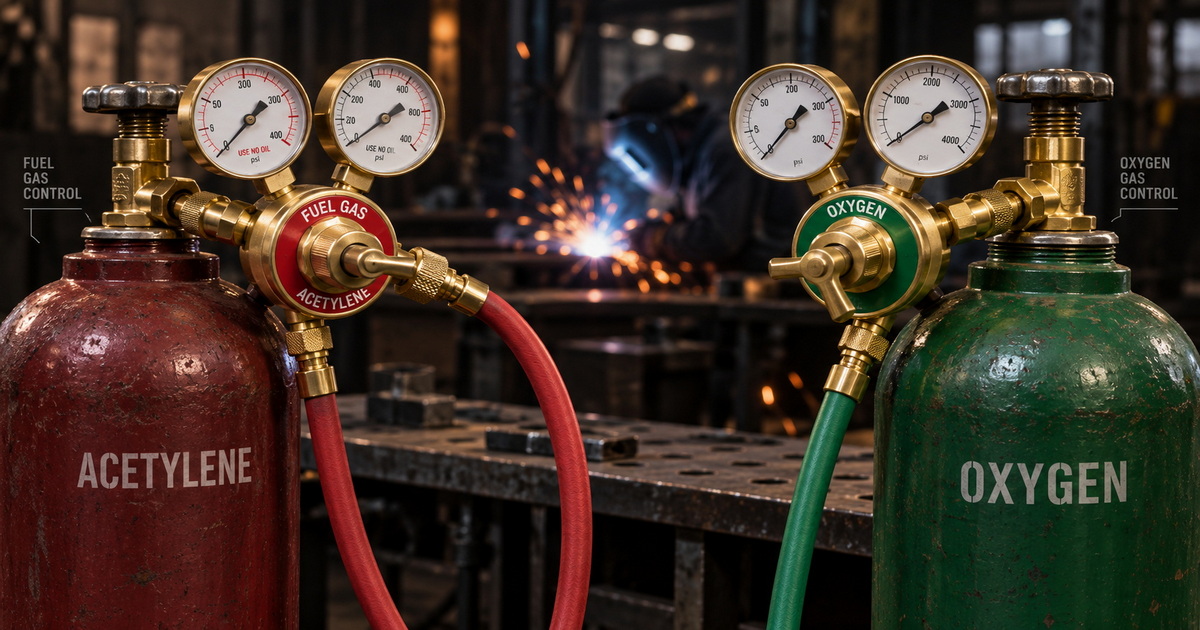
Why Regulator Choice Affects Flame Stability
An oxy-fuel torch does not create a stable flame simply because both cylinders contain gas. Flame quality depends on the ratio, pressure, flow consistency, and delivery response of oxygen and acetylene.
The acetylene regulator controls the fuel gas supply. The oxygen regulator controls the oxidizer supply. When their outlet pressures and flow capacities are suitable for the torch tip and application, the operator can establish a predictable flame profile.
A stable oxy-acetylene flame usually requires:
– Consistent outlet pressure from both regulators
– Accurate and readable pressure gauges
– Correct regulator-to-gas matching
– Compatible cylinder inlet connection
– Proper hose size and hose condition
– Clean, oil-free oxygen-side components
– Correct torch tip selection
– Flashback arrestors and check valves where required
– No leaks at valves, regulator seats, hose connections, or torch fittings
For manufacturers and buyers, this is why a regulator should not be treated as a generic brass accessory. It is a pressure-control component that influences process quality, operator safety, consumable life, and production efficiency.
The U.S. National Institute for Occupational Safety and Health notes that acetylene must be generated, piped, or used at no more than 15 psig, while OSHA-based requirements also emphasize competent operator training, suitable equipment, and regular inspection of regulators, hoses, torches, and connections. [cdc]
Acetylene Regulator vs Oxygen Regulator: Core Differences
The table below provides a clear comparison for buyers evaluating oxygen and acetylene regulators for welding, brazing, heating, and cutting applications.
| Feature | Acetylene Regulator | Oxygen Regulator | Impact on Flame Stability |
|---|---|---|---|
| Primary gas | Dissolved acetylene fuel gas | Compressed oxygen oxidizing gas | Both must deliver controlled flow at the required ratio |
| Main function | Reduces acetylene cylinder pressure to safe, usable torch pressure | Reduces high oxygen cylinder pressure to usable torch and cutting pressure | Pressure imbalance can distort the flame |
| Typical working-pressure range | Generally low-pressure service; acetylene must not be used above 15 psig | Often supports higher working pressures depending on torch and process | Oxygen pressure requirements can be much higher for cutting |
| Gas behavior | Flammable fuel gas with special pressure limitations | Strong oxidizer that accelerates combustion | Different hazards require different design and handling practices |
| Connection direction | Often left-hand threaded on fuel-gas equipment, depending on local standard | Often right-hand threaded on oxygen equipment, depending on local standard | Helps prevent cross-connection |
| Safety focus | Preventing unsafe acetylene pressure and fuel-gas leakage | Preventing oxygen ignition hazards and contamination | Both sides need clean, gas-specific components |
| Material considerations | Brass construction is common, with compatible seals and internal parts | Brass construction is common, with strict oxygen-clean handling requirements | Material quality supports sealing, durability, and pressure consistency |
| Gauge emphasis | Clear low-pressure adjustment is essential | High-pressure cylinder gauge and reliable outlet-pressure gauge are important | Accurate gauges improve repeatable flame setup |
| Typical applications | Oxy-acetylene welding, brazing, heating, cutting | Oxy-fuel welding, heating, gouging, and especially oxygen cutting | The oxygen regulator often handles greater process demand during cutting |
Important: Acetylene and oxygen regulators are not interchangeable. Even if two regulators look physically similar, they may have different inlet fittings, outlet connections, pressure ranges, seat materials, gauges, safety markings, and internal cleanliness requirements.
ISO 2503 covers single-stage and two-stage regulators used with gas cylinders for welding, cutting, and related processes, including compressed gases, dissolved acetylene, LPG, and carbon dioxide. It covers equipment connected to cylinders up to 300 bar for applicable gases, while stating that the standard does not cover regulators with nominal outlet pressure above 20 bar.
How Each Regulator Supports Flame Stability
Acetylene Regulator: Controlling the Fuel Side
The acetylene regulator has one central responsibility: deliver fuel gas at a controlled pressure that supports ignition and maintains the desired flame without exceeding safe operating limits.
Acetylene is widely used because it produces a high-temperature flame with oxygen and can support welding, cutting, brazing, soldering, heating, and metal repair. However, acetylene requires careful control because its pressure limitations differ from those of compressed oxygen.
In practical torch work, insufficient acetylene pressure or flow may cause:
– A weak or undersized flame
– Flame lift-off from the torch tip
– Popping during adjustment
– Difficulty maintaining a stable neutral flame
– Slow preheating during cutting
– Inconsistent heat input across the workpiece
Excessive acetylene pressure is not the solution. The priority is to select a regulator with an appropriate working-pressure range, dependable low-pressure adjustment, stable diaphragm response, leak-resistant construction, and suitable flow capacity for the intended torch tip.
For safe oxy-fuel operation, acetylene is generally limited to 15 psig, a limit emphasized in OSHA-related guidance and NIOSH’s oxy-fuel inspection checklist.
Oxygen Regulator: Controlling the Oxidizing Side
An oxygen regulator performs a different role. Oxygen is not the fuel; it supports combustion and, in oxygen cutting, contributes directly to the cutting reaction.
For welding and heating, the oxygen regulator helps the operator balance the flame. For cutting, its stability becomes even more critical because the system may require:
– Preheat oxygen flow
– A stable preheat flame
– Consistent cutting oxygen pressure
– Fast and reliable gas delivery after the cutting lever is engaged
– Adequate flow capacity for the selected cutting tip
If oxygen pressure is too low, the flame may become fuel-rich and carburizing. Cutting performance may suffer, with slow piercing, incomplete kerfs, heavy slag, and rough cut edges.
If oxygen pressure is too high for the selected tip and fuel setting, the flame may become excessively oxidizing. The flame can become harsh, noisy, or unstable, and the weld pool may be affected by excessive oxidation.
Oxygen-side cleanliness is also essential. OSHA-based guidance specifically states that cylinders, cylinder valves, couplings, regulators, hoses, and related apparatus must be kept free from oily and greasy substances. It also notes that oxygen-regulator gauges should be marked “USE NO OIL.”
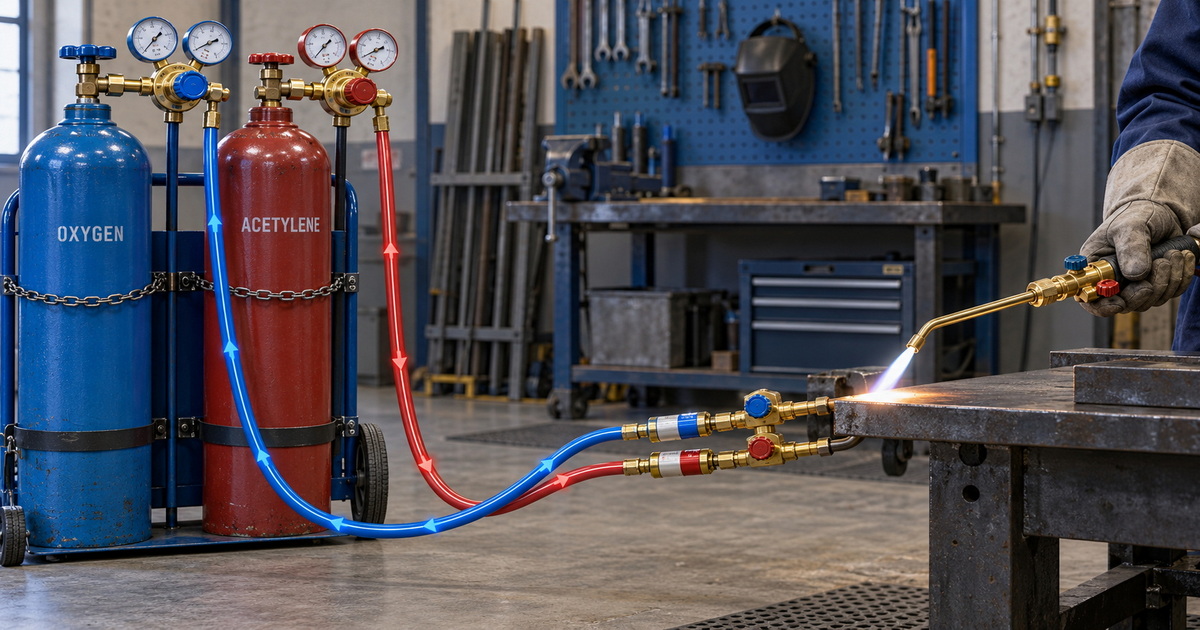
Flame Chemistry: Why Pressure Balance Matters
A stable flame is not just visual. It reflects the combustion balance between oxygen and acetylene.
In simplified form, complete combustion of acetylene can be represented as:
2C2H2+5O2→4CO2+2H2O
In a torch, however, combustion occurs in stages and mixes with surrounding air. The operator adjusts the oxygen and acetylene valves to create a flame suitable for the job.
Three Common Oxy-Acetylene Flame Conditions
| Flame Type | Gas Balance | Visual Characteristics | Common Uses |
|---|---|---|---|
| Carburizing or reducing flame | Excess acetylene | Feathered secondary flame, softer flame appearance | Some brazing, heating, and special alloy applications |
| Neutral flame | Balanced oxygen and acetylene | Clear inner cone, minimal feather, defined flame shape | General welding, many repair tasks, standard oxy-acetylene work |
| Oxidizing flame | Excess oxygen | Shorter, sharper inner cone; more intense sound | Certain brazing applications and specific material processes |
For general welding work, operators often target a neutral flame because it provides balanced heat characteristics without excessive oxidation or carbon addition. The correct regulator settings depend on the torch manufacturer’s guidance, tip size, material thickness, gas system, and application.
A common mistake is to blame the torch when the flame is unstable. In practice, the issue may originate upstream:
1. A worn regulator seat may cause pressure creep.
2. A damaged diaphragm may reduce adjustment consistency.
3. A partially blocked inlet filter may restrict flow.
4. A leaking hose fitting may create pressure loss.
5. An undersized regulator may fail to maintain flow during cutting.
6. An unsuitable regulator pressure range may make precise adjustment difficult.
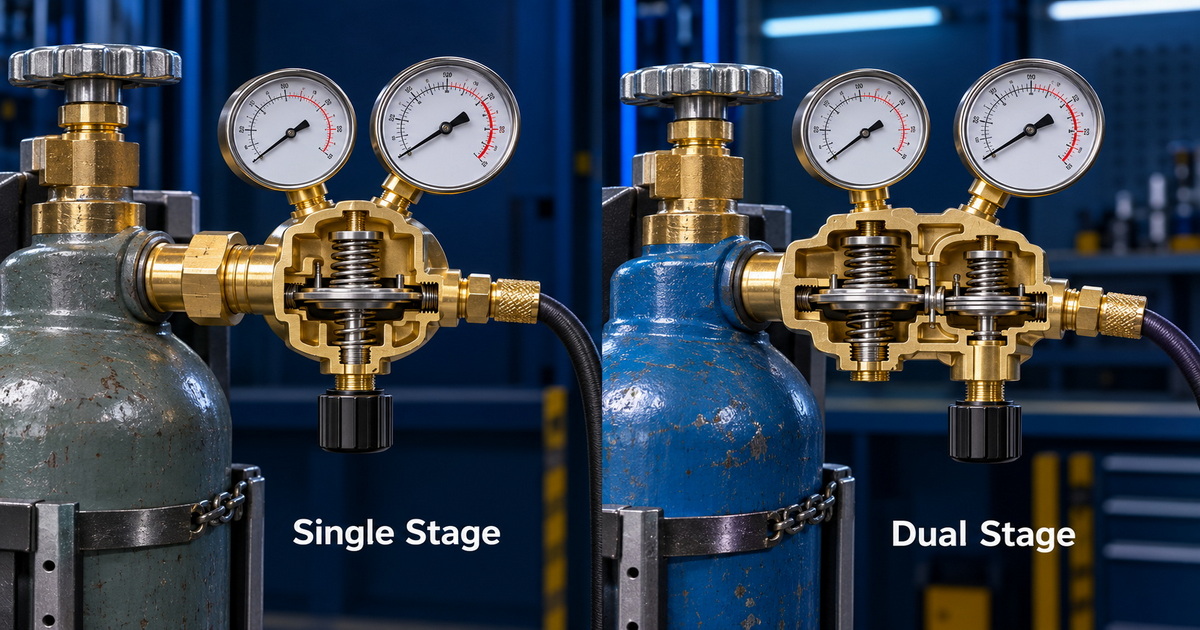
Single-Stage vs Dual-Stage Regulators for Stable Flame Output
Both acetylene and oxygen regulators are available in single-stage and dual-stage configurations. The best option depends on the required level of pressure consistency, the operating duration, the application, and the buyer’s positioning strategy.
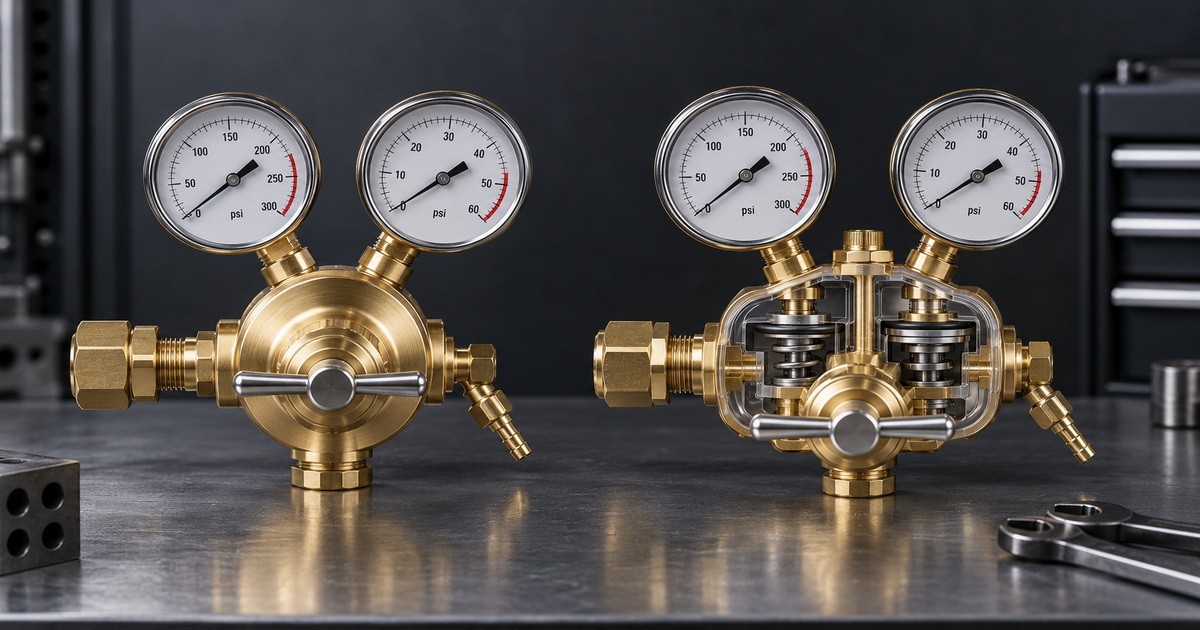
Single-Stage Regulators
A single-stage regulator reduces cylinder pressure in one step. It is commonly selected for standard portable welding, maintenance, repair, and general workshop use.
Advantages include:
– Lower cost
– Simple structure
– Compact size
– Suitable performance for many routine applications
– Widely used in portable torch kits
However, as cylinder pressure declines, the outlet-pressure setting can gradually change. The operator may need to readjust the regulator during longer work cycles.
Dual-Stage Regulators
A dual-stage regulator reduces pressure in two steps. This design can provide more consistent outlet pressure as the cylinder pressure falls.
Advantages include:
– Improved outlet-pressure stability
– Reduced need for frequent adjustment
– Better process consistency during longer duty cycles
– Useful for precision work and repeatable production
– Valuable for industrial users who prioritize stable performance
For high-demand cutting, extended heating, production welding, or OEM product lines positioned for professional users, a dual-stage oxygen regulator can offer meaningful value. A dual-stage acetylene regulator can also help improve low-pressure consistency where repeatability matters.
Expert Setup Procedure for Better Flame Stability
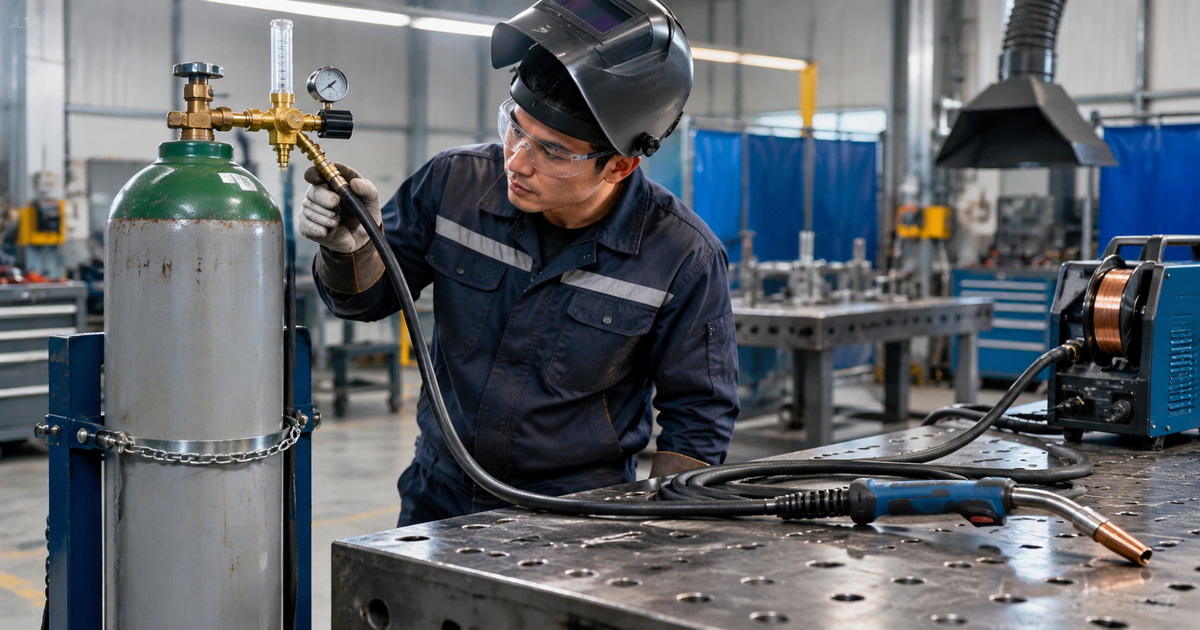
From an equipment-manufacturing perspective, flame stability should be designed into the system before the torch is lit. The following workflow helps operators reduce common setup errors.
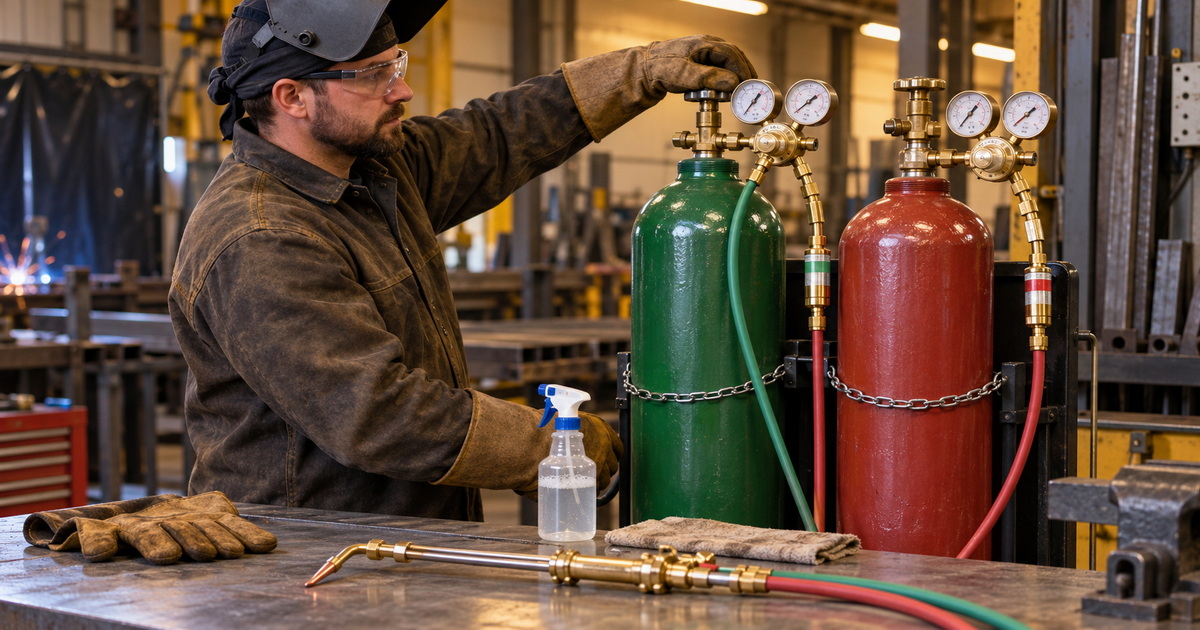
1. Confirm Gas-Specific Compatibility
Check that the regulator is specifically intended for the cylinder gas and cylinder valve connection.
Never install an oxygen regulator on an acetylene cylinder or an acetylene regulator on an oxygen cylinder. Gas-specific regulator design, fittings, threads, gauges, seals, and markings exist to reduce misuse risks.
2. Inspect the Regulator and Connections
Before installation, inspect:
– Brass body for cracks, severe corrosion, or impact damage
– Pressure gauges for broken lenses or incorrect zero readings
– Inlet nut and nipple for damage
– Regulator seat and connection surfaces for contamination
– Hoses for burns, cuts, leaks, stiffness, or loose couplings
– Torch valves and tip for blockage or damage
– Flashback arrestor and check valve condition, where installed
NIOSH’s checklist recommends daily hose inspection and states that leaking, defective, burned, or worn hoses should be removed from use, repaired, or replaced.
3. Keep Oxygen Equipment Clean
Do not use oil, grease, lubricants, or contaminated gloves on oxygen valves, regulator fittings, or gauges.
This is a non-negotiable rule for oxygen service. Oxygen-rich environments can dramatically intensify combustion, and oil or grease contamination can create a serious ignition hazard.
4. Open Cylinder Valves Slowly
Stand to the side of the regulator outlet when opening a cylinder valve. Open valves slowly and monitor the high-pressure gauge for normal response.
For acetylene cylinders, do not open the valve excessively. NIOSH’s OSHA-based checklist advises that acetylene cylinder valves should not be opened more than 1½ turns and preferably no more than ¾ turn.
5. Set Pressure According to the Torch Tip
Use the torch or tip manufacturer’s pressure chart as the first reference. Required settings vary according to:
– Tip size
– Metal thickness
– Welding, heating, brazing, or cutting task
– Torch design
– Hose diameter and length
– Gas-system configuration
– Required heat input and cutting speed
Do not rely on one “universal” pressure setting for every job.
6. Leak-Test Before Lighting
Use an approved leak-detection solution on connections. Do not use an open flame to find a gas leak.
If bubbles appear, close the cylinder valve, release pressure safely, correct the connection or replace the defective component, and test again.
7. Light and Adjust the Flame Gradually
Open the acetylene torch valve slightly and ignite with an approved friction lighter. Increase acetylene only enough to eliminate heavy smoke, then introduce oxygen gradually until the required flame profile is achieved.
This staged adjustment gives the regulator time to stabilize and makes it easier to identify pressure or flow problems.
Common Flame Problems and Regulator-Related Causes
Popping or Backfiring at the Torch
Possible causes include:
– Incorrect tip pressure
– Loose or damaged tip
– Dirty tip or blocked tip orifice
– Low gas flow
– Damaged hose
– Worn regulator components
– Incorrect flame adjustment
Check the tip, hoses, torch valves, gas pressures, and regulator performance before returning to work.
Flame Lifts Away From the Tip
A lifting flame often indicates that gas velocity is too high for the flame to remain attached to the tip. It may result from excess pressure, incorrect tip selection, or improper oxygen-fuel balance.
Weak, Soft, or Yellow Flame
Possible causes include insufficient acetylene flow, low cylinder pressure, a blocked tip, a partially closed valve, or an unstable acetylene regulator setting.
Oxygen Pressure Drops During Cutting
This may indicate inadequate regulator flow capacity, a restrictive hose, a partially closed cylinder valve, a blocked filter, a low cylinder supply, or a regulator not sized for the selected cutting tip.
Outlet Pressure Creep
Pressure creep occurs when outlet pressure rises after the regulator is set and downstream flow is stopped. It can indicate a worn or contaminated valve seat and should be evaluated by qualified service personnel.
OSHA-based guidance states that regulators and gauges should be repaired only by skilled mechanics with proper instruction.
How to Select a Reliable Acetylene and Oxygen Regulator
For distributors, importers, and industrial brands sourcing regulators, evaluating only price can create avoidable field failures. A better approach is to define product requirements around the actual end-use environment.
Key Purchasing Criteria
– Gas compatibility: Confirm the regulator is designed for acetylene or oxygen service.
– Working-pressure range: Ensure the outlet-pressure range fits the intended welding, heating, or cutting application.
– Flow capacity: Match capacity to torch type, tip size, and expected duty cycle.
– Single-stage or dual-stage design: Choose based on pressure-stability requirements.
– Body material: High-quality brass is widely valued for corrosion resistance, machinability, mechanical strength, and reliable sealing surfaces.
– Gauge readability: Use clear, accurate gauges with appropriate scale ranges.
– Connection standard: Confirm cylinder inlet, outlet, hose connection, thread direction, and regional market requirements.
– Safety marking: Ensure correct gas identification and oxygen-specific “no oil” warnings where applicable.
– Leak testing and quality control: Verify incoming-material control, assembly checks, pressure testing, gauge inspection, and final leak testing.
– OEM and ODM flexibility: Consider logo customization, color identification, gauge design, packaging, inlet fittings, outlet fittings, and application-specific pressure ranges.
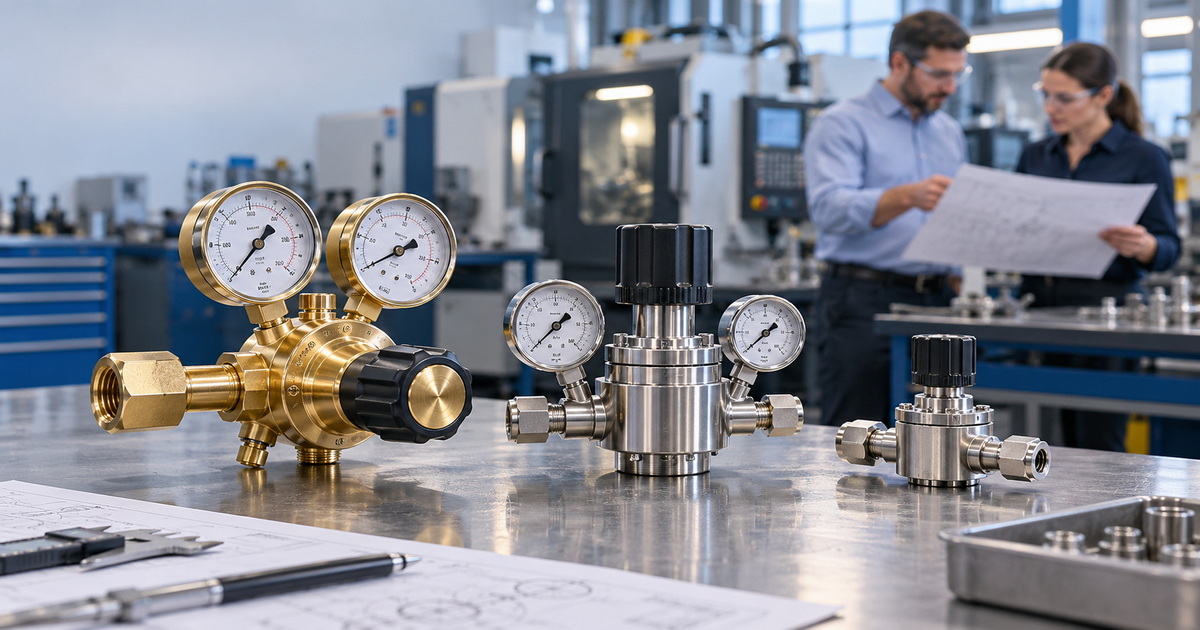
For B2B buyers, the ideal supplier should be able to discuss more than catalog specifications. A capable gas-regulator manufacturer should understand the relationship between pressure stability, flow demand, brass machining quality, diaphragm performance, seat sealing, gauge accuracy, and downstream flame behavior.
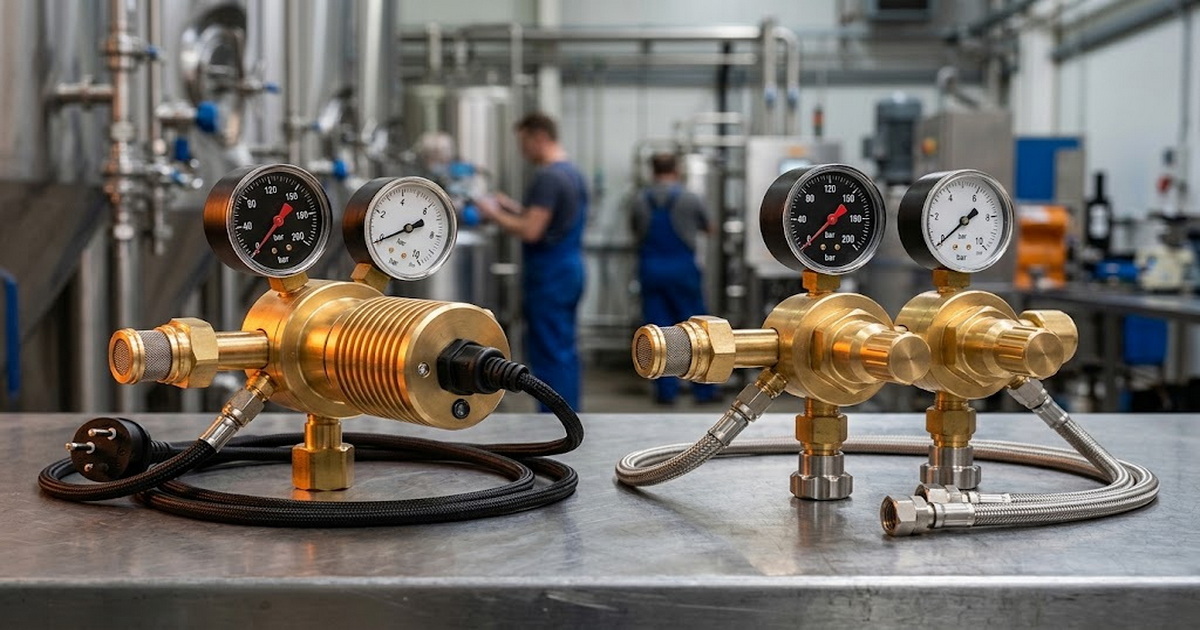
Build a Matched Regulator Set
A strong product strategy is to sell acetylene and oxygen regulators as a coordinated set rather than as unrelated spare parts.
A matched oxy-fuel regulator kit can include:
– Acetylene regulator with correct fuel-gas fitting
– Oxygen regulator with correct oxygen-service design
– Color-coded hoses
– Flashback arrestors
– Check valves
– Torch and cutting attachment options
– Pressure-adjustment guidance
– Product labels and safety instructions
– Retail packaging or private-label packaging
This approach improves user confidence and reduces the chance of cross-connection or incorrect product selection. It also helps overseas distributors develop a clearer catalog structure for entry-level, professional, and industrial-grade oxy-fuel systems.
For global markets, manufacturers should also assess the applicable regional connection standards, labeling requirements, pressure-unit preferences, and product-certification expectations before production begins.
The Best Regulator Pair Creates a More Stable Flame
When comparing an acetylene regulator vs oxygen regulator for flame stability, the most important conclusion is that both are essential—and neither can compensate for the wrong choice on the other side.
The acetylene regulator provides controlled low-pressure fuel delivery within acetylene’s strict safety limits. The oxygen regulator provides stable oxidizer delivery and may need higher flow capacity, especially for cutting. Together, they determine whether a torch produces a controlled neutral flame, an unstable flame, or inconsistent cutting performance.
For reliable oxy-fuel results, choose gas-specific regulators with the correct fittings, appropriate pressure range, sufficient flow capacity, dependable gauges, robust brass construction, strict leak testing, and suitable safety accessories.
Looking for a dependable OEM or ODM gas regulator supplier? Our team manufactures acetylene regulators, oxygen regulators, argon regulators, CO₂ heated regulators, propane regulators, nitrogen regulators, and dual-stage gas regulators for welding, cutting, and industrial gas-control applications. Contact us to discuss custom fittings, pressure ranges, branding, packaging, quality-control requirements, and international-market solutions.
FAQ
1. Can I use the same regulator for oxygen and acetylene?
No. Oxygen and acetylene regulators are not interchangeable. They are designed for different gases, pressure characteristics, fittings, materials, internal cleanliness requirements, and safety conditions. Always use the regulator specified for the gas cylinder and application.
2. Why is my oxy-acetylene flame unstable?
An unstable flame can result from incorrect regulator pressure, low gas supply, leaks, damaged hoses, a blocked torch tip, poor torch-valve adjustment, incorrect tip selection, regulator pressure creep, or inadequate flow capacity. Check the full gas-delivery system rather than adjusting only the torch.
3. What is the maximum safe acetylene pressure?
For standard oxy-fuel use, acetylene should not be used above 15 psig. This limit is stated in OSHA-related guidance and the NIOSH oxygen-fuel welding and cutting inspection checklist.
4. Do I need a dual-stage regulator for oxy-acetylene cutting?
Not always. A high-quality single-stage regulator can be suitable for many portable and routine cutting tasks. However, a dual-stage regulator may provide more stable outlet pressure as cylinder pressure decreases, making it useful for longer work cycles, repeatable production, and applications that demand greater consistency.
5. Why must oxygen regulators be kept free of oil and grease?
Oxygen itself does not burn, but it strongly supports combustion. Oil, grease, or other contaminants in an oxygen-rich environment may ignite or burn violently. Oxygen regulators, valves, gauges, hoses, and fittings must remain clean and free from oil or grease.
6. How do I know whether a regulator has enough flow capacity?
Check the torch manufacturer’s specifications, the tip chart, the intended process, and expected duty cycle. Large cutting tips and sustained heating applications require more gas flow than light welding or small brazing tips. Select the regulator based on both pressure range and flow demand.
7. What should I inspect before using an acetylene or oxygen regulator?
Inspect the regulator body, pressure gauges, fittings, hose connections, torch, tip, flashback arrestors, check valves, and cylinder valve area. Look for leaks, physical damage, contamination, missing safety labels, or gauge abnormalities. Hoses should also be inspected routinely for wear, leaks, burns, and damage.
References
1. Occupational Safety and Health Administration. “[Oxygen-Fuel Gas Welding and Cutting, 29 CFR 1910.253].” Provides U.S. occupational safety requirements for oxygen-fuel welding and cutting. [osha]
2. National Institute for Occupational Safety and Health. “[Welding and Cutting with Oxygen-Fuel Gas: Self-Inspection Checklist].” Covers acetylene pressure limits, equipment inspection, cylinder handling, oil-free oxygen equipment, flashback protection, regulator maintenance, and hose inspection. [cdc]
3. International Organization for Standardization. “[ISO 2503:2009—Gas Welding Equipment: Pressure Regulators and Pressure Regulators with Flow-Metering Devices for Gas Cylinders Used in Welding, Cutting and Allied Processes].” Describes the international standard covering relevant pressure-regulator requirements. [iso]
4. GCE Group. “[Industrial Standards for Welding and Cutting Equipment].” Summarizes ISO 2503, ISO 5171, ISO 3821, ISO 5175, ISO 7291, ISO 9090, and related gas-welding-equipment standards. [gcegroup]
5. Occupational Safety and Health Administration. “[Gas Welding and Cutting, 29 CFR 1926.350].” Provides construction-industry requirements related to gas welding, cutting, cylinders, hoses, and equipment handling. [osha]
Hot Tags: Acetylene Regulator, Oxygen Regulator, Oxy Acetylene Welding Regulator, Industrial Gas Pressure Regulator, Dual Stage Gas Regulator, Oxygen Acetylene Cutting Equipment, Brass Gas Regulator, Welding Gas Regulator Manufacturer, OEM Gas Regulator Supplier, Industrial Gas Control Solutions