Content Menu
● Industrial CO₂ Regulator vs Brewery CO₂ Regulator: Quick Comparison
● What Is an Industrial CO₂ Regulator?
>> Pressure Regulators and Flowmeter Regulators Are Different
>> Why Cooling Can Affect Industrial Performance
● What Is a Brewery CO₂ Regulator?
>> Primary Regulators vs Secondary Regulators
>> Dispensing Pressure Depends on the Beer System
● Pressure Accuracy, Flow Capacity, and Operating Stability
>> Choose a Useful Pressure Range
>> Compare Rated Flow at Relevant Conditions
>> Dual-Gauge Does Not Mean Dual-Stage
● Materials, Beverage Gas Quality, and Backflow Protection
>> Assess the Complete Gas-Wetted Assembly
>> Gas Quality and Regulator Suitability Are Separate
>> Prevent Liquid from Entering Gas Lines
● Heated CO₂ Regulators: Industrial Feature or Brewery Requirement?
>> When Heating Deserves Evaluation
>> What to Specify for an Electrically Heated Regulator
● Two Practical Selection Scenarios
>> Scenario 1: A Welding Distributor Replaces a Flowmeter Regulator
>> Scenario 2: A Brewery Adds Independently Controlled Kegs
● Can an Industrial CO₂ Regulator Be Used in a Brewery?
● Safety Requirements Both Categories Share
● An OEM and ODM Specification Checklist for Buyers
● Specify the Right CO₂ Regulator for Your Application
>> 1.What is the main difference between an industrial CO₂ regulator and a brewery CO₂ regulator?
>> 2.Does a brewery CO₂ regulator require beverage-grade CO₂?
>> 3.Is a dual-gauge CO₂ regulator the same as a dual-stage regulator?
>> 4.Do all industrial CO₂ regulators need heaters?
>> 5.Can one brewery regulator supply several kegs?
>> 6.Is brass construction enough to confirm brewery suitability?
An industrial CO₂ regulator and a brewery CO₂ regulator both reduce supply pressure, but they serve different operating priorities. Industrial applications may emphasize shielding-gas flow, continuous duty, and resistance to cooling. Brewery applications emphasize accurate low-pressure adjustment, carbonation consistency, and protection against beverage backflow.
From a manufacturing and procurement perspective, application compatibility matters more than the product label. A brass body, two gauges, or a familiar cylinder connection does not automatically make a regulator suitable for either environment.
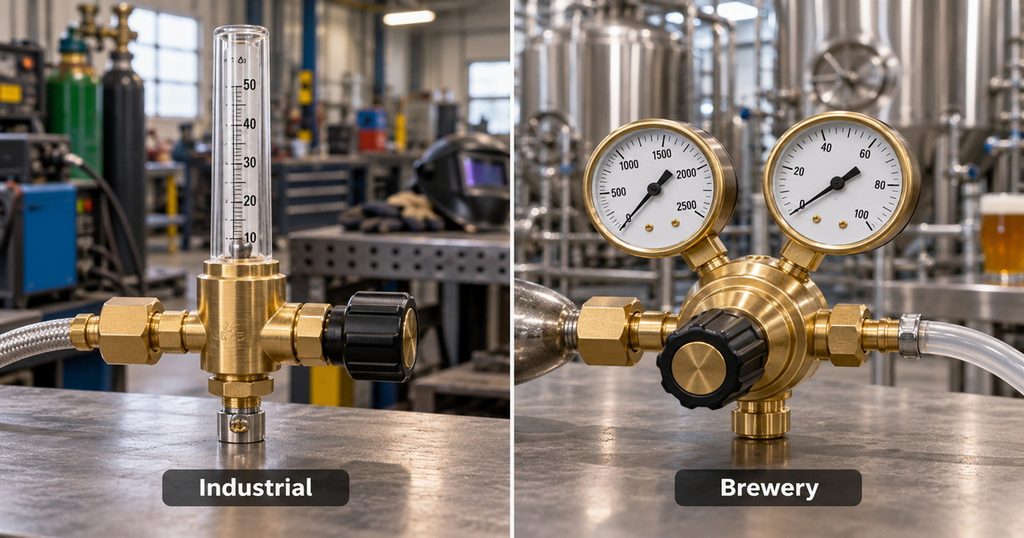
Industrial CO₂ Regulator vs Brewery CO₂ Regulator: Quick Comparison
“Industrial” and “brewery” describe broad application categories, not universal specifications. A brewery carbonation installation can demand substantial flow, while an industrial process may require carefully controlled low pressure.
| Comparison point | Industrial CO₂ regulator | Brewery CO₂ regulator |
|---|---|---|
| Typical applications | Welding shielding gas and industrial gas delivery | Beer dispensing, carbonation, purging, and transfers |
| Main control priority | Required pressure or flow under process demand | Pressure appropriate to carbonation and dispensing conditions |
| Outlet configuration | Pressure outlet or calibrated flowmeter assembly | Adjustable pressure outlet, sometimes feeding secondary regulators |
| Flow demand | May be continuous or rapidly changing | Varies from individual kegs to production-scale operations |
| Cooling management | Heat exchanger or heater on selected models | Selected according to source and peak demand |
| Backflow protection | Determined by the industrial process | Important where beer or cleaning liquid could enter gas lines |
| Purchasing emphasis | Flow performance, duty cycle, and process compatibility | Adjustment resolution, hygiene-related documentation, and system balance |
The practical difference is not simply “high pressure versus low pressure.” It is how the regulator behaves within the complete gas system.
What Is an Industrial CO₂ Regulator?
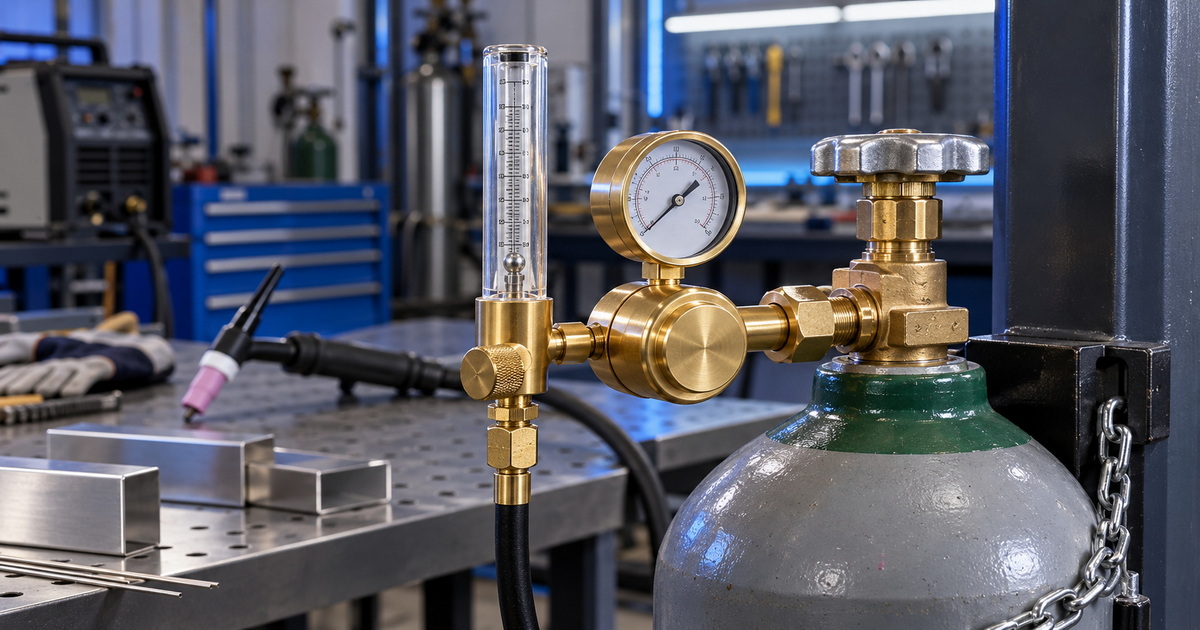
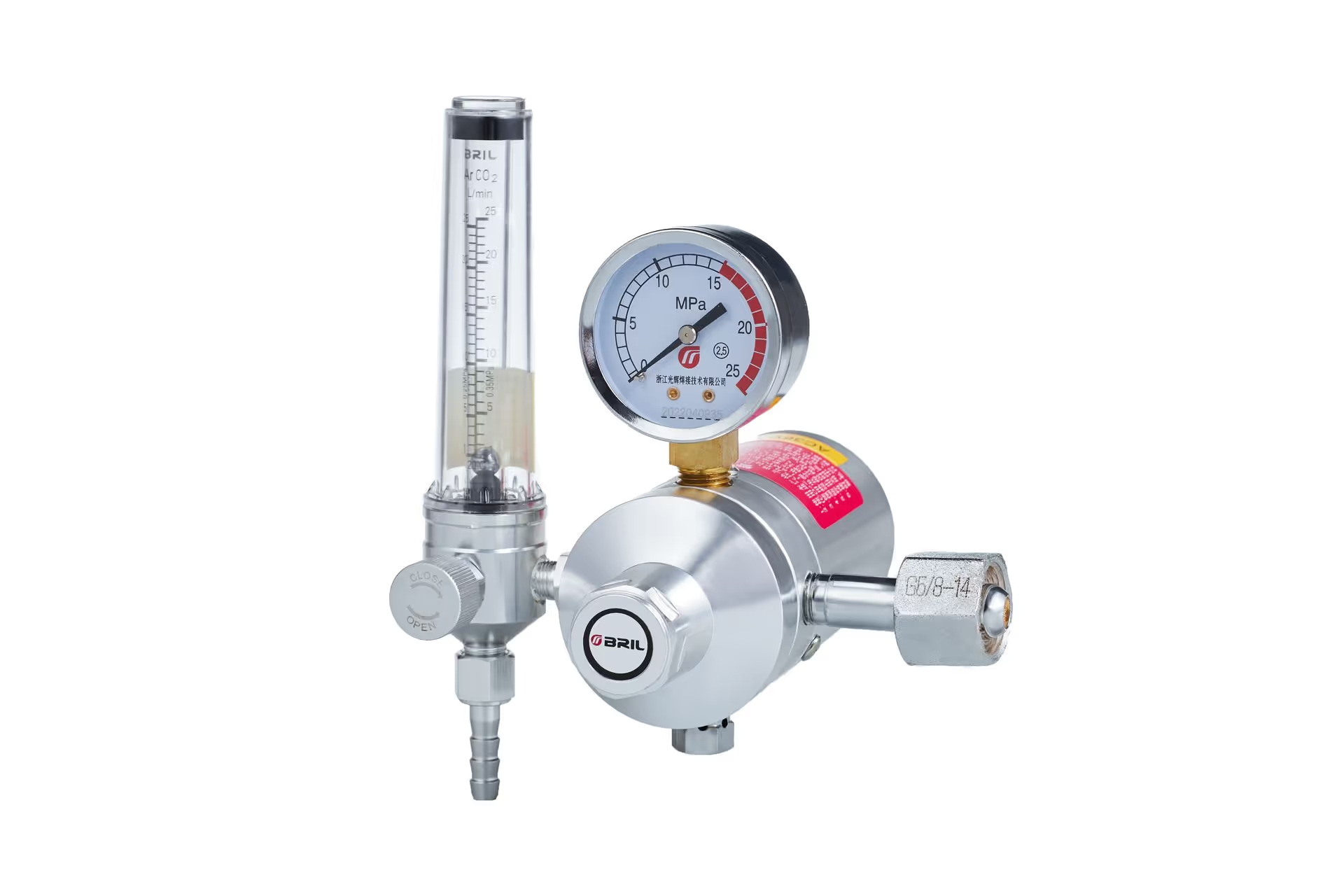
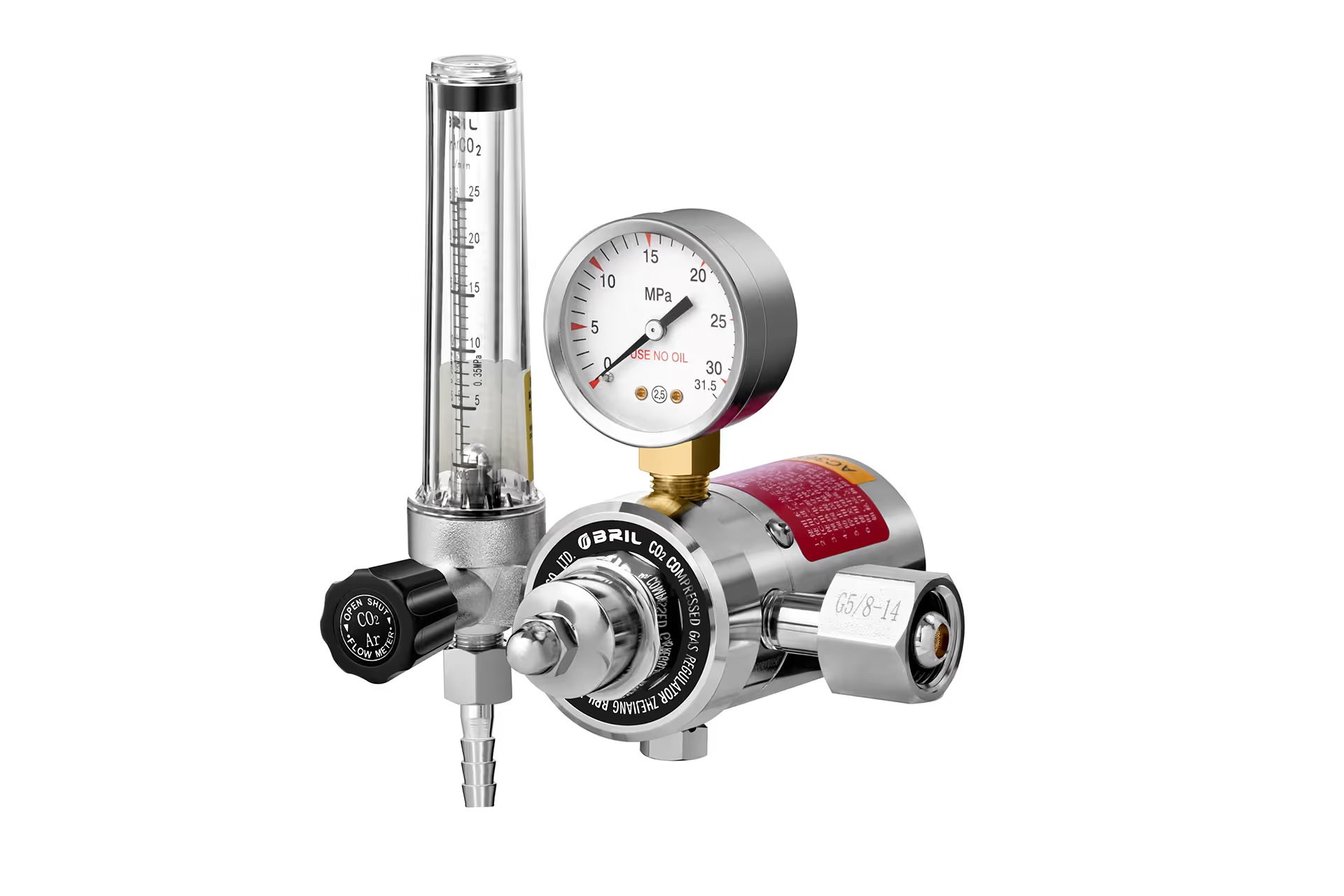
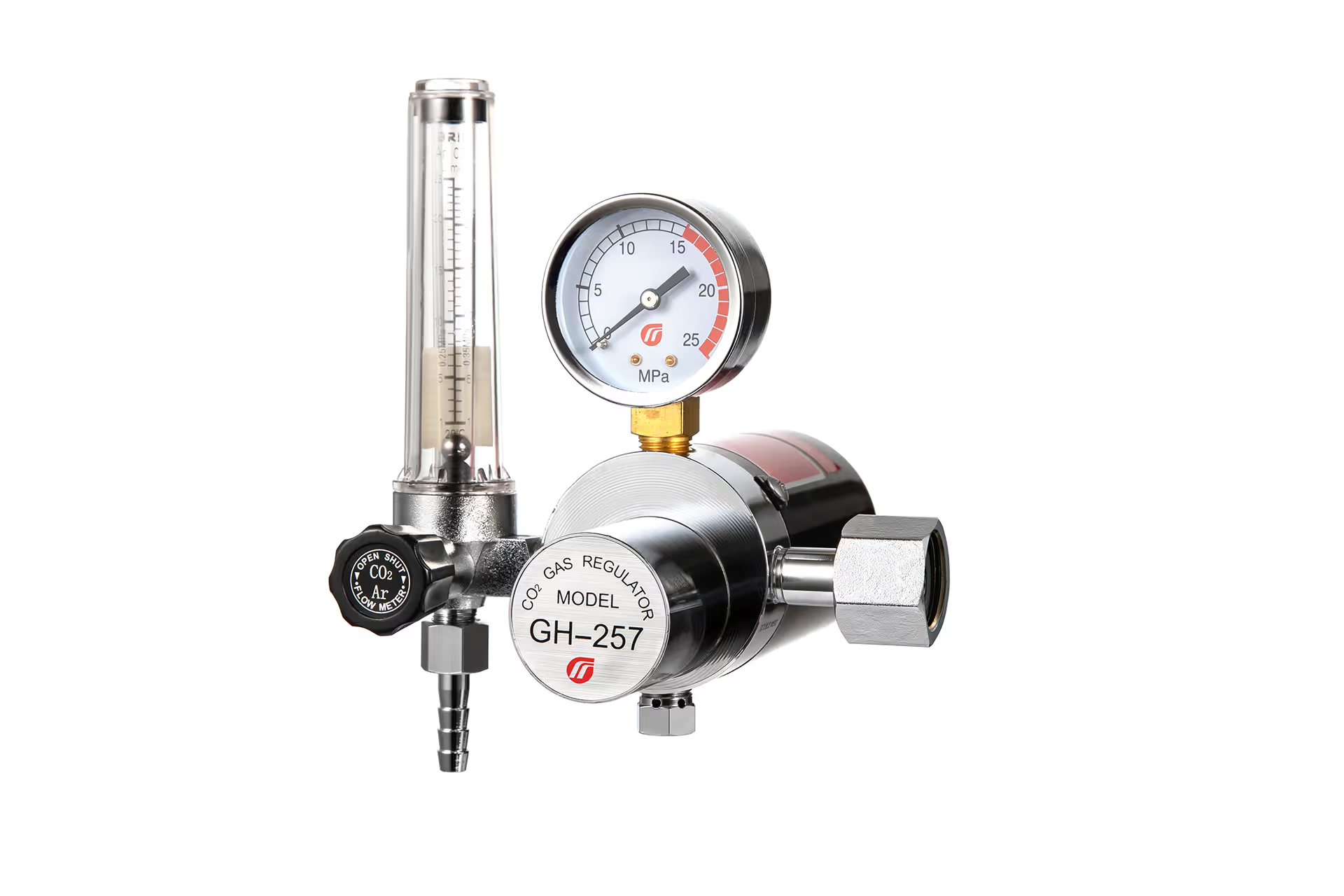
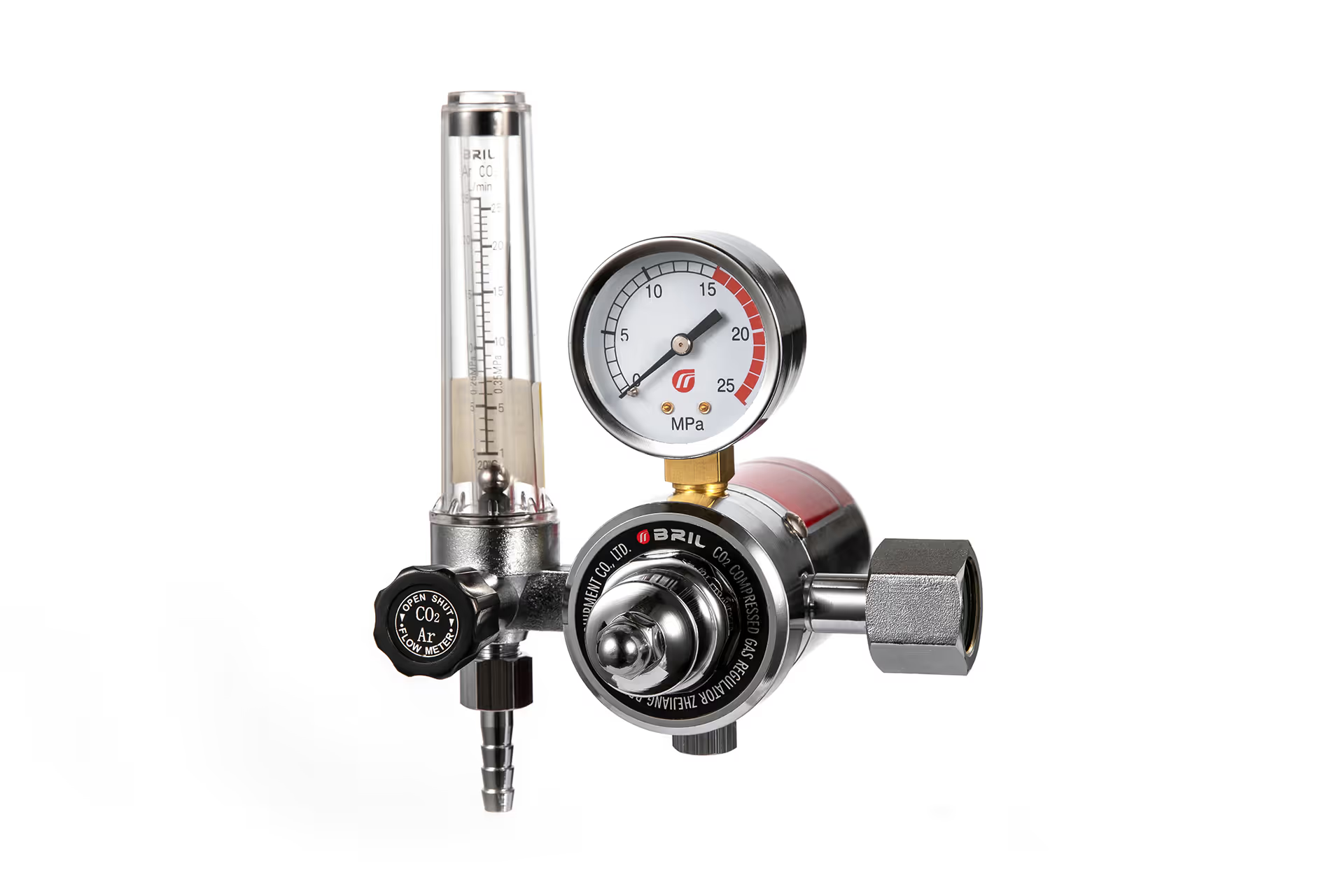
An industrial CO₂ regulator reduces supply pressure to a level suitable for downstream equipment. In welding, it may supply a flowmeter that controls shielding-gas delivery. Other industrial installations use pressure regulation without a flowmeter.
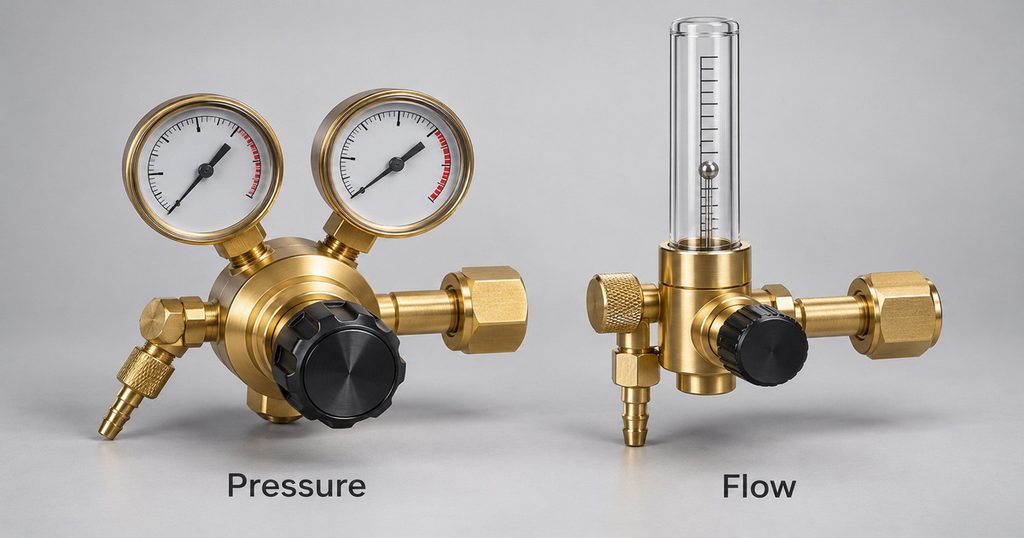
Pressure Regulators and Flowmeter Regulators Are Different
A pressure regulator controls outlet pressure. A flowmeter indicates gas flow under specified operating conditions. Buyers should not treat pressure readings and flow readings as interchangeable.
For example, Miller lists a CO₂ flowmeter regulator with a heat exchanger, a preset outlet pressure of 30 psig, and a flow range of 10–55 SCFH. A separate Miller CO₂ pressure regulator has a maximum delivery pressure of 150 psig.
These examples demonstrate the range within industrial equipment. They are individual product specifications, not standard requirements for every industrial CO₂ regulator.
Why Cooling Can Affect Industrial Performance
CO₂ delivery can produce substantial cooling as the gas expands and the supply releases gas. Under demanding conditions, cooling may affect flow consistency or contribute to freeze-up.
Selected industrial designs use heat exchangers or electrically heated assemblies to manage this problem. Miller specifically describes its heat exchanger as reducing high-flow CO₂ freeze-up.
A CO₂ heated regulator should therefore be selected against actual demand, not purchased automatically because the application is industrial.
What Is a Brewery CO₂ Regulator?
A brewery CO₂ regulator supplies controlled pressure for beer dispensing, carbonation, vessel purging, and other brewery operations.
These tasks have different requirements. A keg dispensing system and a production carbonation system should not be specified solely from the same generic “beer regulator” description.
Primary Regulators vs Secondary Regulators
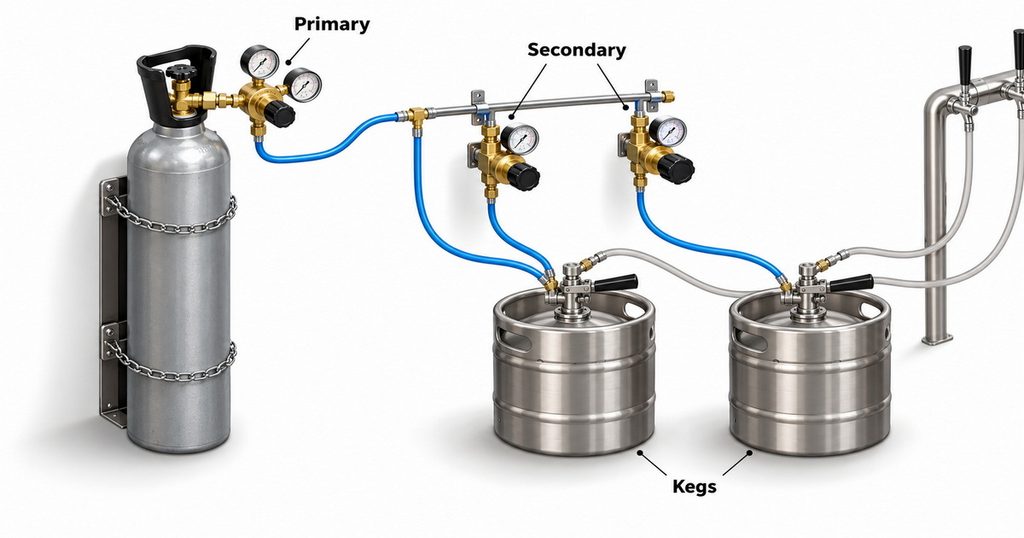
A primary regulator reduces pressure directly from the gas supply. A secondary regulator receives already-reduced pressure and provides another adjustable pressure downstream.
Micro Matic illustrates this arrangement with a primary regulator supplying 35–45 psi and secondary regulators adjusted to 12 and 14 psi for separate kegs.
The primary pressure must provide sufficient operating margin for the secondary regulators. The required margin depends on the equipment; follow the selected manufacturer’s instructions rather than assuming one universal value.
Dispensing Pressure Depends on the Beer System
Beer pressure should reflect temperature, carbonation requirements, and the dispensing installation.
Micro Matic advises adjusting secondary regulators according to beer temperature and carbonation level. It also warns that reducing pressure is not necessarily the answer to foaming.
For buyers, this means a brewery CO₂ regulator should offer useful adjustment resolution around the intended operating pressure—not merely a high maximum rating.
Pressure Accuracy, Flow Capacity, and Operating Stability
The most useful comparison examines performance under operating conditions.
Choose a Useful Pressure Range
A broad adjustment range is not always an advantage. Buyers need clear readings and practical control around their normal setpoint.
For a low-pressure dispensing application, an appropriately scaled gauge can be easier to interpret than a gauge intended for a much wider pressure range.
Ask suppliers for:
– Recommended operating range.
– Gauge range and accuracy information.
– Adjustment sensitivity.
– Outlet-pressure behavior at minimum and maximum demand.
– Permitted inlet pressure and temperature conditions.
Maximum delivery pressure alone does not describe pressure-control quality.
Compare Rated Flow at Relevant Conditions
A regulator may reach the requested pressure without sustaining it at the required flow.
Consequently, “high flow” should be supported by operating conditions and performance data. Specify inlet pressure, outlet pressure, gas, temperature, and duty cycle when requesting a quotation.
For brewery installations, include simultaneous demand from multiple users. For welding applications, include the intended shielding-gas flow and whether operation is continuous or intermittent.
Dual-Gauge Does Not Mean Dual-Stage
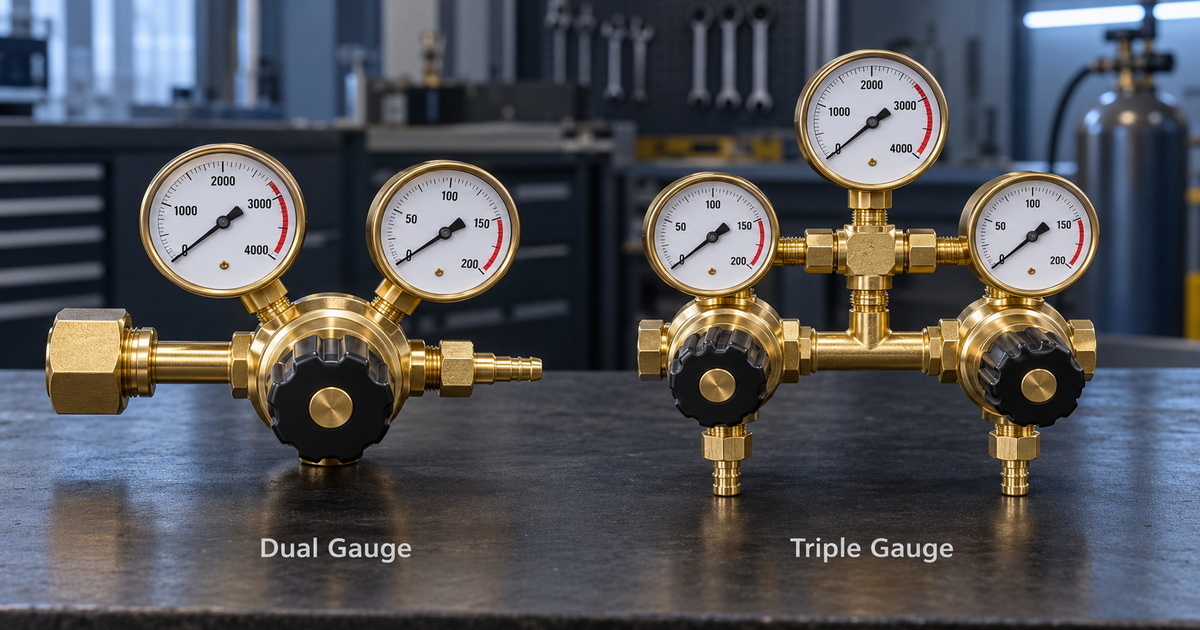
Two gauges generally display inlet and outlet conditions. They do not prove that the regulator contains two pressure-reduction stages.
Likewise, a two-outlet assembly does not necessarily provide two independently adjustable pressures.
For precise procurement, distinguish among:
– Dual-gauge regulators.
– Dual-outlet regulators.
– Independently adjustable multi-pressure assemblies.
– Dual-stage regulators.
Ask the manufacturer to confirm the internal pressure-control architecture and its performance. A product photograph cannot establish these details.
Materials, Beverage Gas Quality, and Backflow Protection
Both regulator categories may use brass bodies. Material appearance, however, provides limited evidence of suitability.
Assess the Complete Gas-Wetted Assembly
Review the body, diaphragm, valve seat, seals, lubricants, and internal cleanliness.
For industrial equipment, these components must suit the specified gas and operating conditions. For brewery equipment, buyers should also request documentation relevant to the intended beverage application and destination market.
“High-quality brass” is a useful manufacturing description, but it does not replace material traceability or compatibility information.
Gas Quality and Regulator Suitability Are Separate
A brewery regulator cannot convert unsuitable CO₂ into beverage-quality gas.
EIGA guidance addresses food-gas supply throughout production, storage, repackaging, and distribution. It also identifies specific guidance for beverage CO₂ source qualification, quality standards, and verification.
Accordingly, brewery procurement has two separate tasks:
1. Confirm the supplied CO₂ meets the applicable beverage requirements.
2. Confirm the gas-control equipment suits the intended service.
Avoid treating a general purity percentage as complete evidence of beverage suitability.
Prevent Liquid from Entering Gas Lines
Beer or cleaning liquid entering a regulator can compromise equipment intended for gas service.
Specify an appropriate backflow-prevention arrangement for the installation. Check valves should not be confused with pressure-relief devices: they perform different functions.
Also establish inspection and replacement procedures. Backflow protection is a system requirement, not merely a feature name on a quotation.
Heated CO₂ Regulators: Industrial Feature or Brewery Requirement?
Heating is not exclusively relevant to welding. Brewery operations with substantial CO₂ demand can also require cooling-management measures.
However, small dispensing installations and production-scale carbonation systems differ significantly.
When Heating Deserves Evaluation
Evaluate heating or heat-exchange options when:
– Demand is high or sustained.
– Flow becomes unstable during operation.
– Cooling repeatedly interrupts the process.
– The regulator manufacturer recommends thermal management.
Before choosing a heater, verify whether the restriction originates at the cylinder, supply system, regulator, or downstream equipment.
What to Specify for an Electrically Heated Regulator
Request details on:
– Rated voltage and electrical connection.
– Heating power and temperature control.
– Intended ambient conditions.
– Electrical protection and installation requirements.
– Maintenance instructions and replacement components.
Never use an improvised heat source to compensate for incorrectly selected gas equipment.
Two Practical Selection Scenarios
The following scenarios are illustrative purchasing exercises, not documented customer case studies.
Scenario 1: A Welding Distributor Replaces a Flowmeter Regulator
A distributor finds a brewery regulator with the correct cylinder connection and sufficient outlet pressure.
The connection may fit, but that does not establish equivalent welding performance. The buyer must still verify shielding-gas flow control, required calibration conditions, continuous-duty performance, and cooling behavior.
The lesson: matching threads and pressure ratings is only the beginning of compatibility assessment.
Scenario 2: A Brewery Adds Independently Controlled Kegs
A brewery wants to serve beers requiring different carbonation conditions.
A simple manifold distributes gas, but it does not independently regulate each branch. Micro Matic identifies dual primary regulators or secondary regulators as solutions for beers requiring different pressures.
The lesson: additional outlets and additional pressure settings are different purchasing requirements.
Can an Industrial CO₂ Regulator Be Used in a Brewery?
Potentially—but only after application-specific verification.
Confirm that the proposed regulator has:
– A suitable pressure range and adjustment resolution.
– Adequate flow capacity.
– Compatible gas-wetted materials.
– Relevant cleanliness and application documentation.
– Appropriate connections and backflow protection.
– Instructions supporting the intended service.
The reverse question requires the same discipline. A brewery regulator should not be assumed suitable for welding or other industrial work merely because it handles CO₂.
For critical installations, obtain written suitability confirmation from the equipment manufacturer.
Safety Requirements Both Categories Share
Compressed-gas hazards remain present regardless of the application.
OSHA identifies oxygen displacement and high-pressure hazards among the risks associated with compressed-gas equipment. CGA’s CO₂ safety guidance also emphasizes ventilation to prevent dangerous concentrations.
A purchasing and operating review should address:
– Cylinder condition and secure installation.
– Correct, gas-specific connections.
– Equipment pressure ratings.
– Suitable pressure-relief arrangements.
– Ventilation and site-specific CO₂ detection requirements.
– Leak-testing and maintenance procedures.
– Operator training.
Follow the equipment instructions and applicable local requirements. Never defeat safety devices or adapt incompatible cylinder connections simply to make equipment fit.
An OEM and ODM Specification Checklist for Buyers
For overseas brands, wholesalers, distributors, and manufacturers, a clear specification reduces the risk of receiving a visually suitable but technically unsuitable product.
Use this checklist before requesting samples:
1. Define the application: welding, dispensing, carbonation, purging, or another process.
2. Identify the supply: cylinder connection, supply conditions, and withdrawal arrangement.
3. State the outlet requirements: normal pressure, maximum permitted pressure, and peak flow.
4. Describe the duty cycle: continuous operation, intermittent operation, and simultaneous users.
5. Specify construction: materials, seals, gauges, outlets, and adjustment mechanism.
6. Identify safeguards: relief arrangements, backflow protection, and thermal management.
7. Request evidence: drawings, test procedures, inspection records, and relevant conformity documentation.
8. Plan customization: branding, packaging, instructions, spare parts, and market-specific connections.
For our manufacturing offering, this application-led approach complements precision production, brass construction, strict inspection, and customized gas-control solutions.
Rather than requesting only “an industrial regulator” or “a brewery regulator,” send a working specification. It creates a stronger basis for meaningful OEM and ODM development.
Specify the Right CO₂ Regulator for Your Application
Send us your destination market, cylinder connection, required pressure range, peak flow, and application details. For brewery projects, include carbonation or dispensing requirements. For industrial projects, include operating duty and thermal-management needs.
Our CO₂ regulator manufacturing and OEM/ODM services support customized configurations for overseas brands and distribution partners. A clear specification helps align materials, pressure control, inspection requirements, and packaging with your commercial needs.
Frequently Asked Questions
1.What is the main difference between an industrial CO₂ regulator and a brewery CO₂ regulator?
Industrial models are selected around process pressure, flow, and operating duty. Brewery models are selected around carbonation, dispensing conditions, pressure adjustment, and beverage-system compatibility. Neither category has one universal specification.
2.Does a brewery CO₂ regulator require beverage-grade CO₂?
The brewery must obtain CO₂ meeting the applicable beverage requirements. The regulator does not determine or improve gas quality. Equipment suitability and gas-supply qualification require separate checks.
3.Is a dual-gauge CO₂ regulator the same as a dual-stage regulator?
No. Gauge count describes displayed measurements. Stage count describes the internal pressure-reduction arrangement. Confirm the design with the manufacturer.
4.Do all industrial CO₂ regulators need heaters?
No. Heating requirements depend on demand, operating conditions, and equipment design. Some applications use a heat exchanger; others do not require additional heating.
5.Can one brewery regulator supply several kegs?
Yes, where the installation and regulator capacity support it. However, a manifold alone does not provide different pressures. Independently controlled branches require suitable regulation.
6.Is brass construction enough to confirm brewery suitability?
No. Buyers should assess all gas-wetted components, cleanliness, operating performance, application documentation, and the complete installation.
References
1. – Compressed Gas Association. “Carbon Dioxide Safety.” Supports the discussion of ventilation and CO₂ handling hazards. [cganet]
2. – Micro Matic. “Regulator Basics.” Supports primary and secondary regulator functions and the illustrative 35–45 psi supply arrangement. [micromatic]
3. – Miller. “CO₂ Flowmeter Regulator w/Heat Exchanger, 30 PSIG.” Supplies the cited flow range, preset pressure, and freeze-up-management example. [millerwelds]
4. – Miller. “Series 30™ CO₂ Medium-Duty Regulator, CGA 320.” Supplies the example maximum delivery pressure of 150 psig. [millerwelds]
5. – Micro Matic. “Set Up Gas Equipment for Two Draft Beers That Require Different CO₂ Pressures.” Supports independently controlled keg pressures and temperature/carbonation-based adjustment. [micromatic]
6. – Micro Matic. “Lowering Keg Pressure Is Not the Answer.” Supports the distinction between correct dispensing pressure and simplistic foam troubleshooting. [micromatic]
7. – European Industrial Gases Association. “Guide to the Supply of Gases for Use in Foods,” Document 125. Supports food-gas supply-chain qualification and beverage CO₂ quality considerations. [eiga]
8. – Occupational Safety and Health Administration. “Compressed Gas and Equipment—Overview” and “1910.101—Compressed Gases.” Support the general safety and cylinder-handling discussion. [osha]
Hot Tags: Industrial CO₂ Regulator, Brewery CO₂ Regulator, CO₂ Regulator Manufacturer, CO₂ Regulator Supplier, Wholesale CO₂ Regulators, OEM CO₂ Regulator, ODM CO₂ Regulator, CO₂ Heated Regulator, Dual Stage CO₂ Regulator, CO₂ Flowmeter Regulator