Content Menu
● Why Source Gas Regulators From China?
● How We Selected These Manufacturers
● Top 10 Gas Regulator Manufacturers in China
>> 1. Zhejiang Bril Welding Equipment Co., Ltd.
>> 2. Ningbo Longtime Gas Control System Co., Ltd.
>> 3. Ningbo Keryfine Electronic Co., Ltd.
>> 4. Ningbo Fenghong Instrument Manufacturing Co., Ltd.
>> 5. Hualong Welding Meter Factory
>> 7. Zhejiang-Based Welding Regulator OEM Factories
>> 8. Guangdong Welding Equipment Suppliers
>> 9. Shanghai and Jiangsu Industrial Gas Equipment Suppliers
>> 10. Chinese Trading Companies With Controlled Factory Partnerships
● Manufacturer Comparison Table
● Technical Details Buyers Should Understand
>> Brass Body Material and Manufacturing Route
>> Single-Stage Versus Dual-Stage Regulators
>> Seals, Diaphragms, and Valve Seats
● Common Sourcing Risks and How to Avoid Them
>> Risk 1: “Same Appearance, Different Internal Quality”
>> Risk 3: Incorrect Gas Connection Standards
>> Risk 4: Unverified Gauge Accuracy
>> Risk 5: Poor Export Packaging
● Insider Sourcing Tip: The “Pressure Creep” Test Is Often More Revealing Than a Basic Leak Test
● Buyer’s Guide: How to Verify a Gas Regulator Factory
>> Step 1: Define Your Application Before Requesting Quotes
>> Step 2: Request a Technical Package
>> Step 3: Use a Three-Stage Sample Process
>> Step 4: Audit the Factory or Use Third-Party Inspection
>> Step 5: Plan Logistics Early
● FAQ
>> 1. How can I verify whether a supplier’s ISO 9001 certificate has expired?
>> 2. Is a CE mark enough to sell gas regulators in Europe?
>> 3. What is the practical difference between a single-stage and dual-stage gas regulator?
>> 4. How should I test a heated CO₂ regulator before placing a bulk order?
>> 5. What is the most important document to include in an OEM gas regulator purchase order?
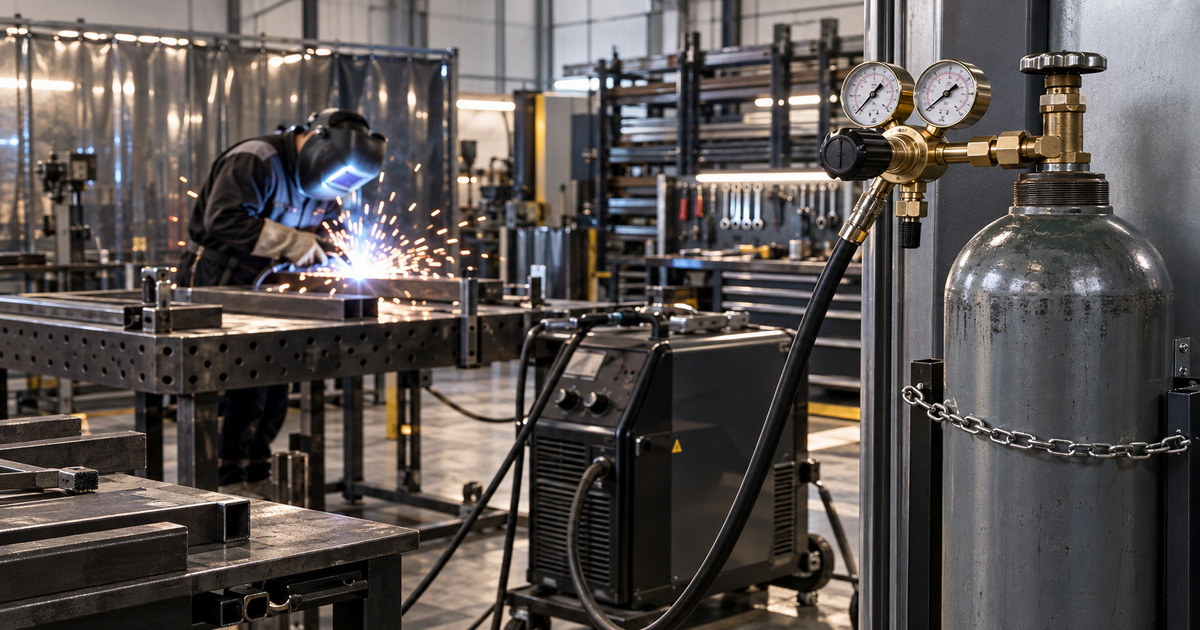
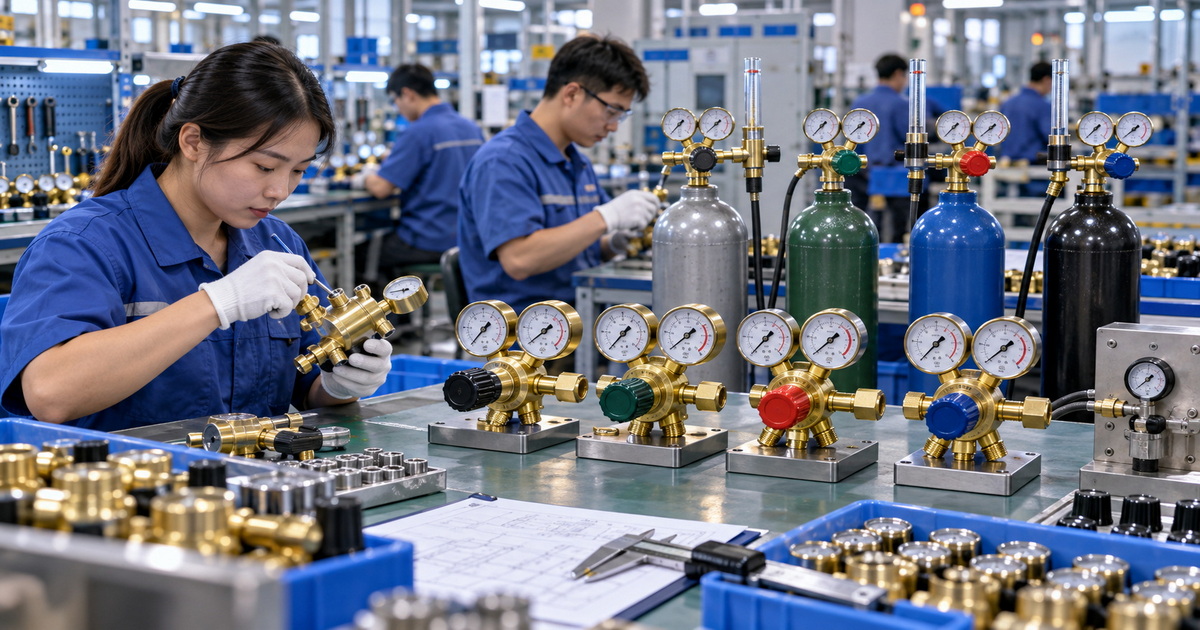
China is one of the world’s most important manufacturing bases for welding equipment, industrial gas accessories, brass fittings, pressure-control components, and private-label gas regulators. For overseas importers, distributors, welding brands, industrial-gas companies, and OEM buyers, Chinese suppliers can offer a broad product range, competitive tooling costs, flexible branding options, and scalable production.
However, choosing a gas regulator manufacturer should not be based on catalog appearance, unit price, or a certificate logo alone. A regulator is a pressure-control and safety-related component. The real purchasing question is whether the supplier can consistently deliver the specified pressure stability, leak resistance, thread accuracy, material grade, gauge reliability, labeling, packaging, and regulatory documentation across repeated production batches.
Why Source Gas Regulators From China?
China’s advantage in the gas regulator sector comes from a mature industrial supply chain rather than only low labor cost. Welding regulators typically require coordinated sourcing of brass bodies, forged or machined parts, diaphragms, valve seats, gauges, plastic knobs, safety valves, threads, packaging materials, and testing equipment.
Several regional manufacturing clusters support this ecosystem:
– Wenzhou, Zhejiang: Known for valves, brass components, precision hardware, fluid-control products, and welding accessories. The Longwan and Binhai areas are especially relevant to industrial valve and gas-control supply chains.
– Ningbo and Cixi, Zhejiang: Strong in instruments, gauges, regulators, hardware, electrical components, and export-oriented light industrial production.
– Yongkang and Jinhua, Zhejiang: Important production areas for welding machines, power tools, metalworking equipment, and related accessories.
– Shenzhen and Guangdong: Important for electronics, welding machines, automation products, and export supply-chain integration.
– Shanghai, Jiangsu, and Shandong: More relevant for industrial-gas systems, large welding-equipment brands, pressure equipment, and heavy manufacturing.
For buyers, this clustering can reduce component lead times and simplify OEM development. A regulator manufacturer located near brass-processing, gauge, valve, and welding-equipment suppliers can usually respond more efficiently to custom inlet connections, outlet threads, pressure ranges, color coding, packaging, and branding requirements.
China also remains a major manufacturing and export base for welding and industrial equipment. However, market scale alone does not prove a specific supplier’s quality level. The correct approach is to treat supplier selection as a technical verification project.
How We Selected These Manufacturers
A professional gas regulator manufacturer should be assessed on more than whether it can produce a familiar-looking oxygen or CO₂ regulator. This shortlist emphasizes the factors that directly affect safety, long-term supply consistency, and private-label success.
| Evaluation area | What professional buyers should verify | Why it matters |
|---|---|---|
| Product specialization | CO₂, argon, oxygen, acetylene, propane, nitrogen, LPG, mixed gas, flowmeter, heated, and dual-stage configurations | Different gases and applications require different seals, threads, pressures, labels, and safety features |
| Quality management | ISO 9001 validity, incoming inspection, leak testing, pressure testing, gauge calibration, traceability, and final inspection | Reduces risks of leakage, pressure creep, gauge errors, unstable output, and inconsistent batch quality |
| Material transparency | Brass grade, forging versus casting route, diaphragm material, valve-seat material, gauge specification, plating, and thread tolerances | Low-cost material substitutions can reduce corrosion resistance, sealing performance, and service life |
| Engineering capability | In-house design support, tooling development, technical drawings, flow testing, pressure-stability testing, and custom connection options | Essential for OEM buyers who need more than standard catalog products |
| Regulatory readiness | CE, RoHS, REACH, ISO 9001, EN ISO 2503 references, and market-specific product approvals where applicable | Certificates and declarations must match the exact model and intended market |
| OEM/ODM support | Logo marking, gauge artwork, packaging, labels, manuals, thread standards, color coding, and carton customization | Determines whether a supplier can support overseas brands and distributors |
| Delivery reliability | Production planning, component inventory, supplier management, export packaging, and quality-release process | Important for distributors managing seasonal demand and inventory commitments |
| Factory transparency | Factory audit access, equipment list, production process visibility, sample testing, and document responsiveness | Helps distinguish a genuine manufacturer from a trading company or loosely controlled subcontractor |
A useful rule is simple: do not place a bulk order based only on product photographs and a generic specification sheet. Require a model-specific technical package that identifies the gas service, inlet connection, outlet connection, working pressure, maximum inlet pressure, gauge range, flow range, materials, marking, and applicable test requirements.
Top 10 Gas Regulator Manufacturers in China
1. Zhejiang Bril Welding Equipment Co., Ltd.
Founded: 2002
Location: Binhai Economic Development Zone, Longwan District, Wenzhou, Zhejiang
Main markets: Domestic welding-equipment brands, overseas OEM customers, distributors, welding and cutting equipment suppliers
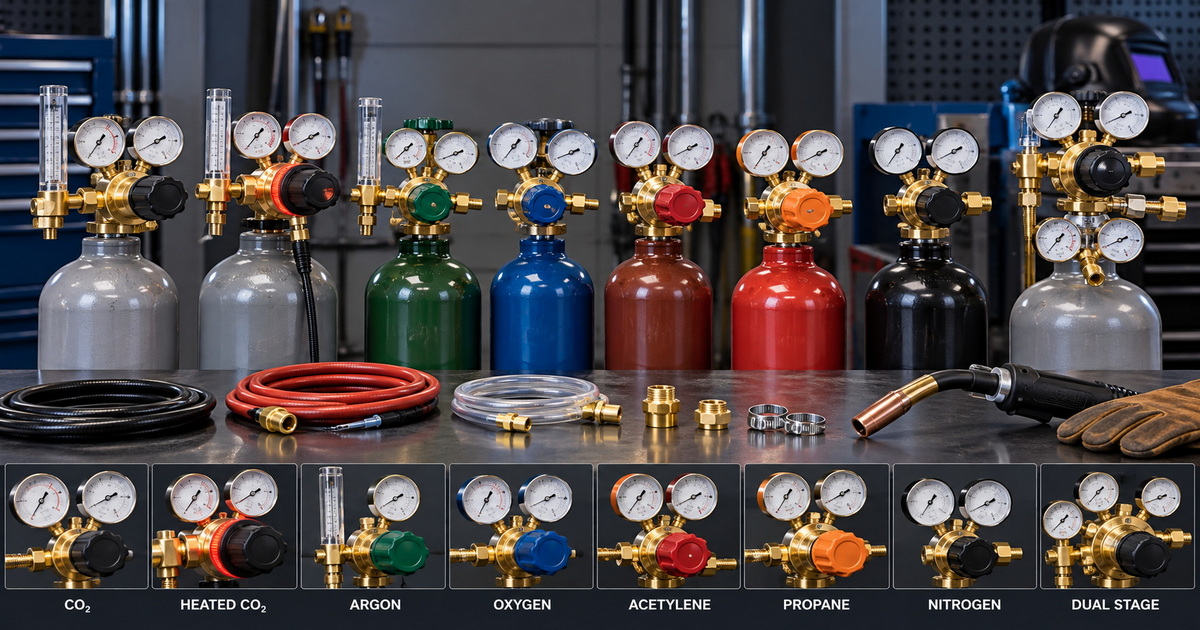
Core products: CO₂ regulators, heated CO₂ regulators, argon regulators, oxygen regulators, acetylene regulators, propane regulators, nitrogen regulators, flowmeter regulators, and dual-stage gas regulators
OEM/ODM focus: Private-label gas regulators, custom product configurations, packaging, marking, gauge design, inlet/outlet threads, and application-specific solutions
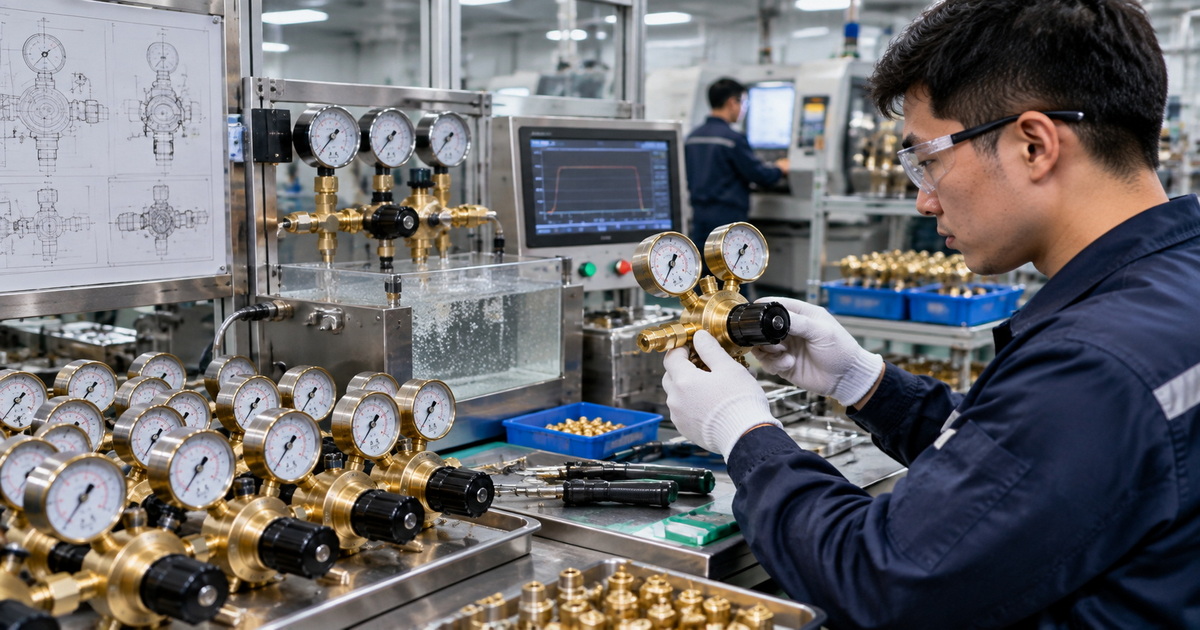
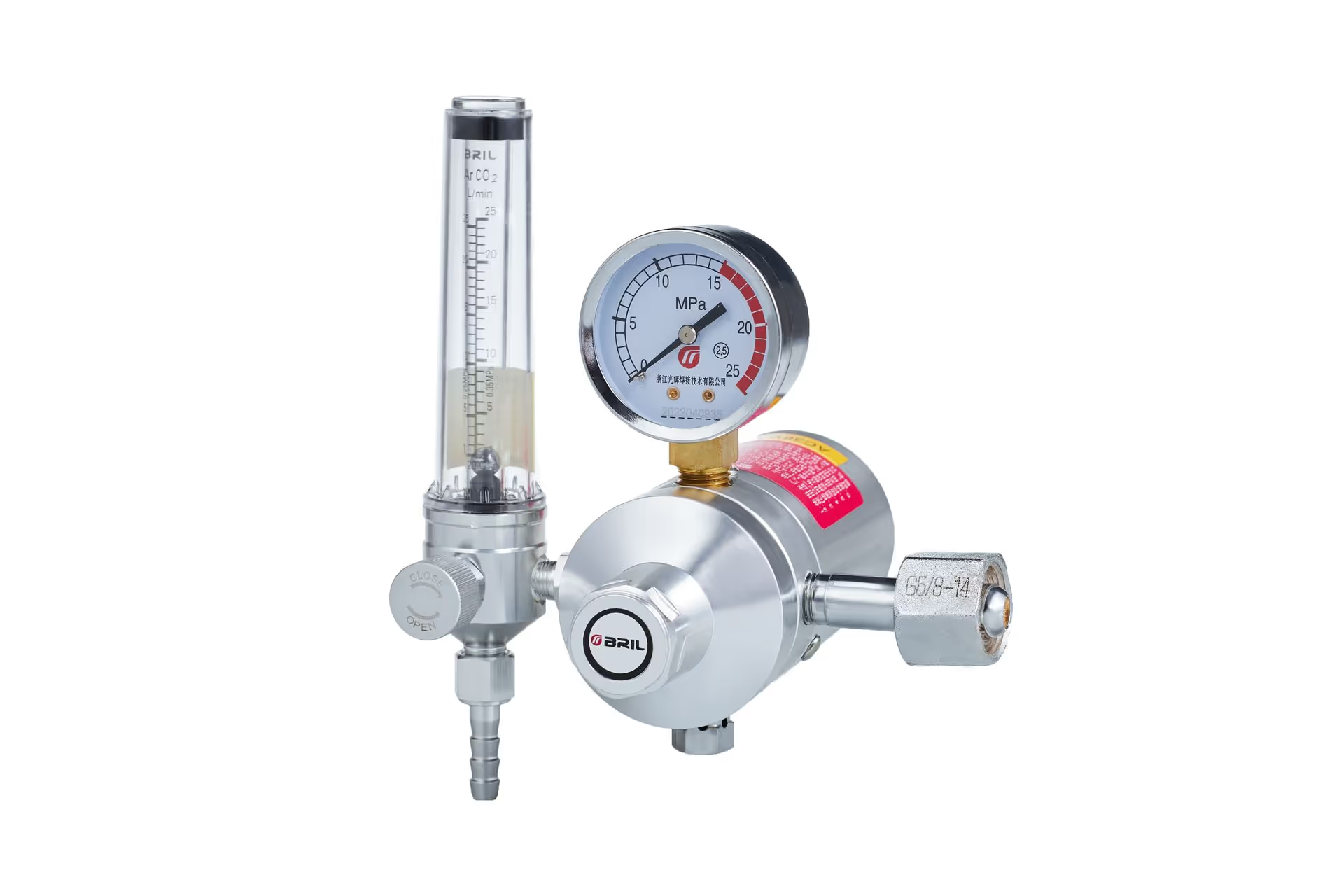
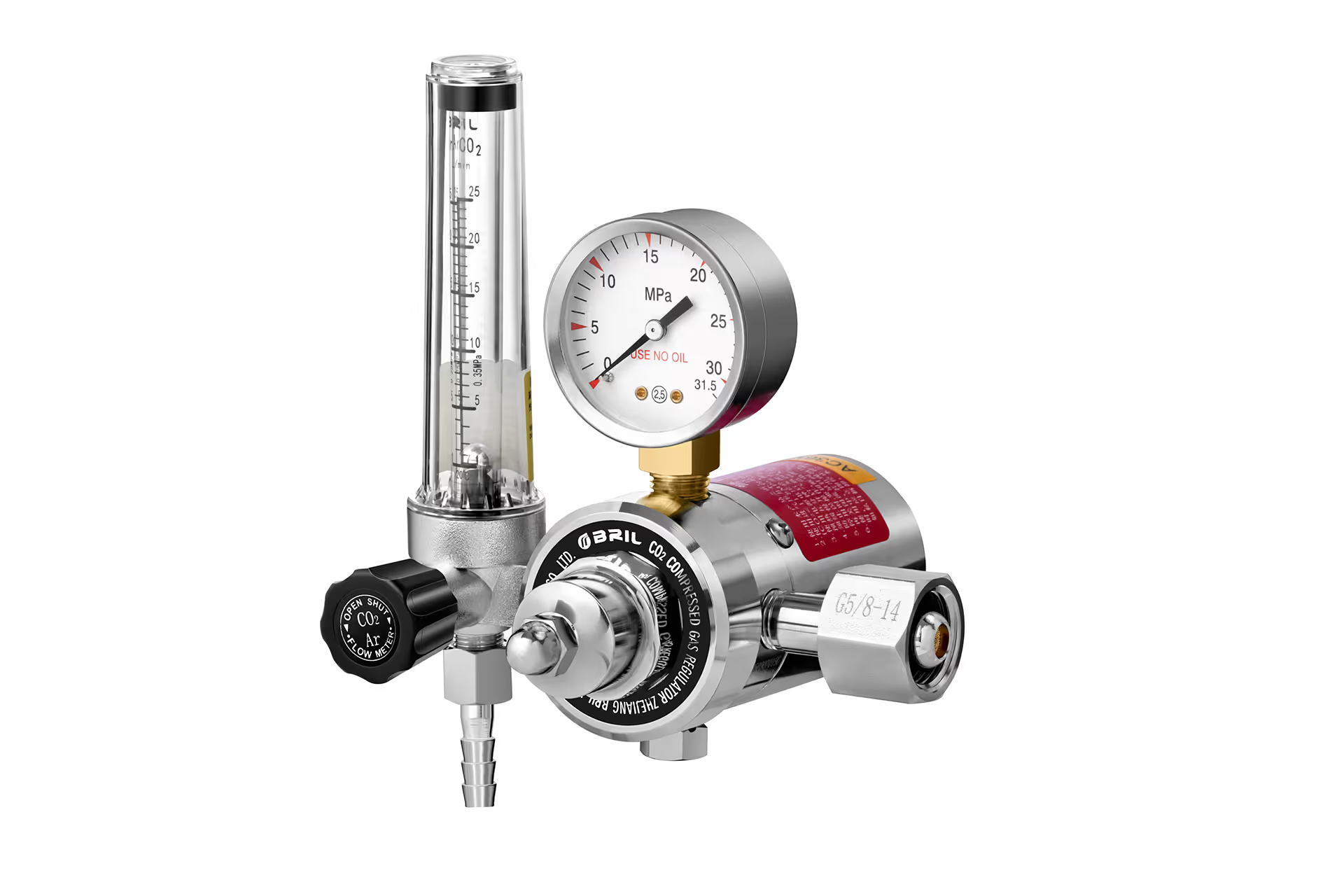
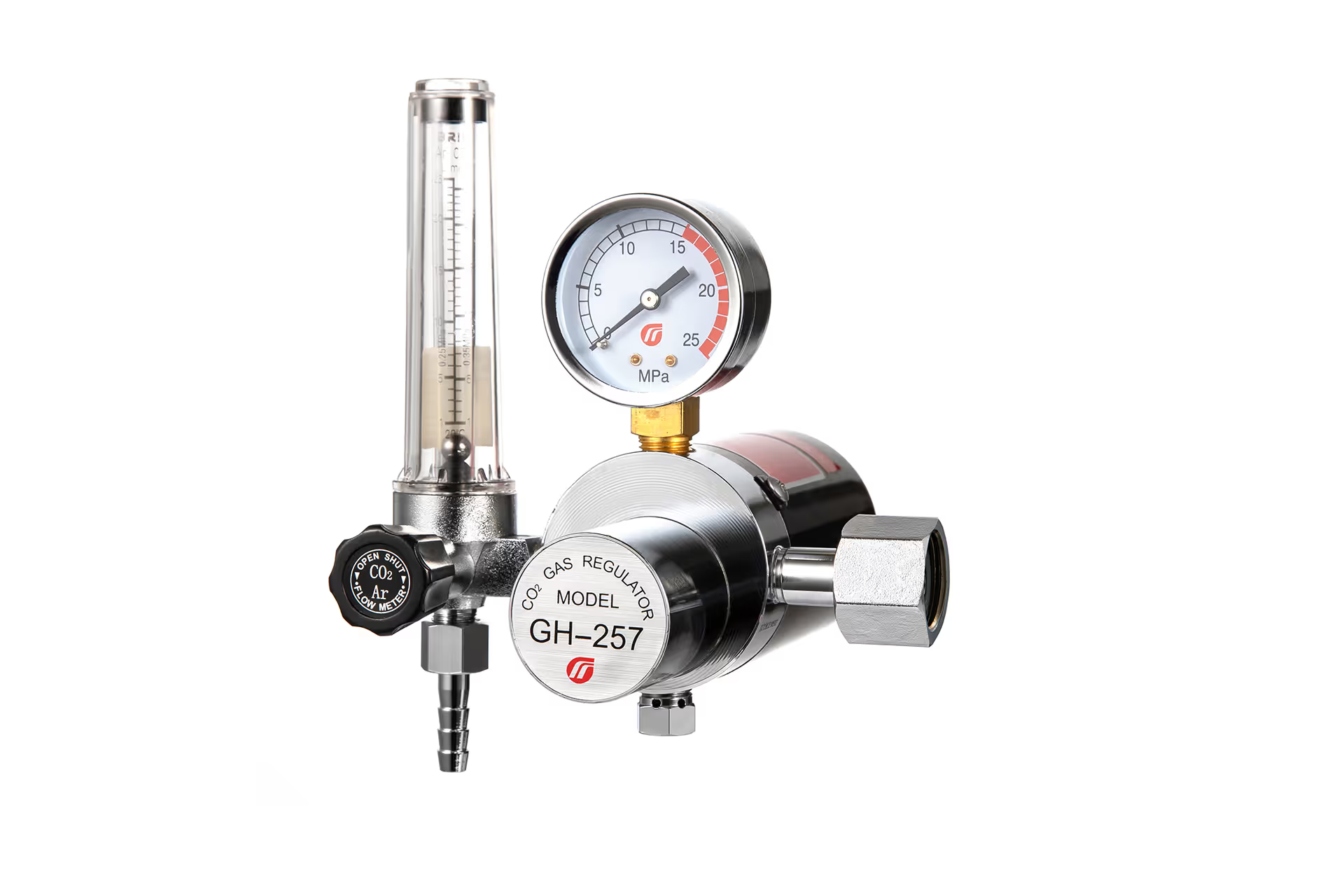
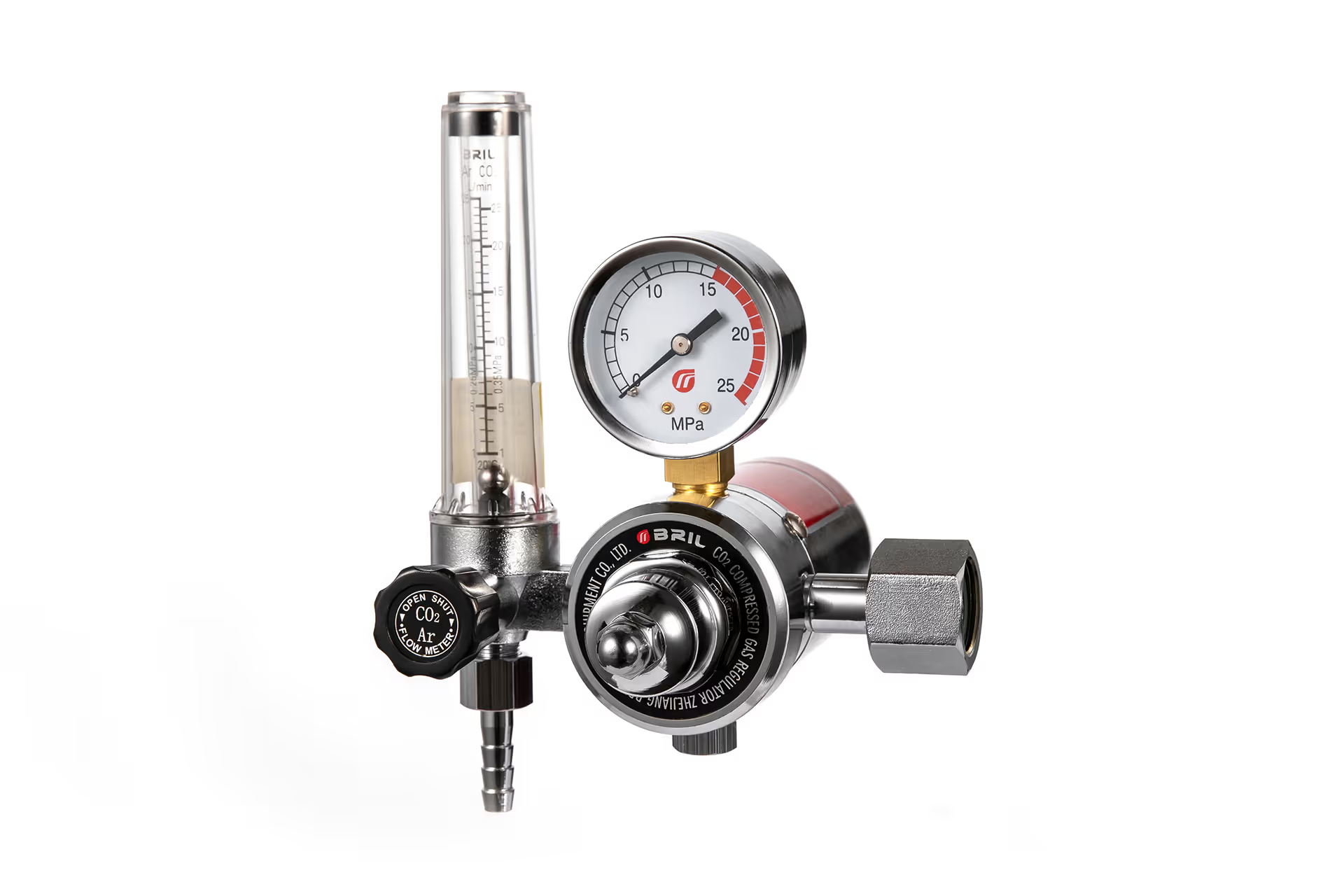
Zhejiang Bril Welding Equipment Co., Ltd. is a specialized industrial gas pressure regulator manufacturer with more than two decades of experience in welding and cutting gas-control products. The company is based in Wenzhou, a manufacturing area with established supply chains for brass components, valves, pressure-control parts, and industrial hardware.
Bril is especially relevant for overseas buyers seeking a balance between technical depth, practical OEM flexibility, and accessible communication. Rather than positioning only for ultra-large, standardized procurement programs, it can be a suitable option for medium-sized brands, regional distributors, welding-equipment assemblers, and industrial-gas accessory importers that require customized support without the rigidity often associated with very large suppliers.
Its public company profile states that it was founded in 2002 and focuses on the development, manufacturing, and sales of industrial gas pressure regulators. The company reports ISO 9001 certification through UKAS and IAF channels, along with CE and CNAS-related product certification claims. It also states that it has supplied domestic and international welding-equipment brands, including OEM work for Messer product ranges from 2022 onward. Buyers should still request current certificate files, product-specific declarations, scope details, and verification records before purchase.
For an OEM buyer, Bril’s practical strengths may include:
– Broad compatibility across CO₂, argon, oxygen, acetylene, propane, nitrogen, and dual-stage configurations.
– Potentially flexible customization for regional cylinder standards, gauge units, outlet fittings, color coding, and private-label packaging.
– A manufacturing orientation that is useful for buyers who need engineering communication rather than simple catalog resale.
– A quality-management and testing emphasis appropriate for welding and cutting applications.
– The ability to support both standard products and branded product-line development.
A relevant example is a distributor selling welding equipment in Latin America or Eastern Europe. Such a buyer may require a CO₂/argon regulator with local cylinder compatibility, bar/psi gauge combinations, Spanish-language packaging, a private-label dial face, and export-carton markings. A specialist OEM supplier can support these coordinated changes more efficiently than a general trading company.
Best fit: Importers, welding-equipment brands, industrial distributors, and mid-sized private-label customers that value product customization, responsive engineering support, and a long-term regulator manufacturing partner.
2. Ningbo Longtime Gas Control System Co., Ltd.
Location: Ningbo, Zhejiang
Main focus: Industrial and commercial gas regulators
Main markets: Export wholesalers, industrial gas-control distributors, commercial regulator buyers
OEM/ODM focus: Standardized regulator platforms, export-oriented configurations, private-label supply
Ningbo Longtime Gas Control System Co., Ltd. is frequently positioned as a supplier of high-pressure and industrial gas regulators. Publicly available supplier information associates the company with CE- and CSA-oriented product offerings, making it worth evaluating for buyers targeting markets that require more formal compliance documentation.
For purchasers in North America, Europe, Australia, or regulated commercial-gas segments, a supplier’s claimed approval portfolio can be attractive. However, buyers should not assume that every model is covered by every approval. The exact certification, test report, and declaration must match the model number, pressure range, gas type, connection configuration, and intended sales jurisdiction.
Best fit: Buyers requiring export-oriented industrial or commercial regulators and those seeking a supplier with a compliance-focused product presentation.
3. Ningbo Keryfine Electronic Co., Ltd.
Location: Ningbo, Zhejiang
Main focus: Industrial, commercial, and residential gas-control products
Main markets: International distribution channels and regulated export markets
OEM/ODM focus: Channel-ready products, branded packaging, multi-market configurations
Ningbo Keryfine Electronic Co., Ltd. is positioned as a diversified gas regulator supplier serving industrial, commercial, and residential-related applications. Its publicly listed certification signals include CE, CSA, AGA, and UL-related claims, which may be relevant for buyers supplying regulated market channels.
The company may be particularly useful for buyers looking beyond welding-only regulators and seeking broader gas-control product coverage. That said, welding and cutting regulators should be assessed independently from residential gas-control products because service conditions, gas purity, connection standards, pressure ranges, and safety expectations differ.
Best fit: Buyers seeking broader gas-control product categories and certification-oriented export positioning.
4. Ningbo Fenghong Instrument Manufacturing Co., Ltd.
Founded: 2003
Location: Cixi, Ningbo, Zhejiang
Main focus: Oxygen, CO₂, acetylene, and argon gas regulators
Main markets: Welding and gas-equipment distributors
OEM/ODM focus: Standard welding regulator configurations and export customization
Ningbo Fenghong Instrument Manufacturing Co., Ltd. is a Cixi-based manufacturer whose public profile indicates a 2003 founding date and a product range including oxygen, CO₂, acetylene, and argon regulators. It also lists ISO 9001 management-system certification.
This product concentration makes Fenghong relevant for buyers looking for mainstream welding gas regulator categories rather than highly specialized laboratory or semiconductor gas systems. The most important evaluation point is whether the factory can provide model-specific test evidence for pressure stability, leakage, gauge accuracy, thread fit, and gas-specific compatibility.
Best fit: Buyers sourcing conventional welding regulators for oxygen, argon, acetylene, and CO₂ applications.
5. Hualong Welding Meter Factory
Location: China
Main focus: Oxygen regulators, CO₂ regulators, and welding gas-control products
Main markets: Welding accessory buyers and industrial distributors
OEM/ODM focus: Custom carbon dioxide and oxygen regulator options
Hualong Welding Meter Factory presents itself as a manufacturer of CO₂ and oxygen regulators, with custom carbon dioxide regulator offerings intended to meet varied operational requirements. Its product information also discusses basic leak testing and connection inspection practices, reflecting the importance of sealing integrity in regulator installation and use.
For professional sourcing, buyers should go beyond general leak-test descriptions and ask whether each production unit undergoes documented air-pressure testing, gas-tightness testing, flow testing, and final functional inspection. A visual inspection process is not enough for a pressure-control product.
Best fit: Buyers looking for traditional welding gas regulator categories and custom CO₂-focused configurations.
6. DEM Welding
Location: China
Main focus: Welding equipment and gas pressure regulators
Main markets: Welding distributors, fabrication supply channels, export buyers
OEM/ODM focus: Welding-accessory supply and product catalog integration
DEM Welding offers gas pressure regulators as part of its welding-related product portfolio. A welding-equipment-focused supplier can be useful for distributors seeking to consolidate purchasing of regulators, torches, accessories, consumables, and related workshop products.
The advantage of a broader welding supplier is purchasing convenience. The potential drawback is that the regulator may be one product category among many. Buyers should clarify whether the regulator is made in-house, produced through a dedicated partner factory, or sourced from subcontractors.
Best fit: Distributors seeking to bundle regulators with a wider welding-accessory purchasing program.
7. Zhejiang-Based Welding Regulator OEM Factories
Location: Wenzhou, Ningbo, Cixi, Yongkang, and nearby industrial areas
Main focus: Welding regulators, flowmeters, pressure gauges, valves, brass fittings, and accessories
Main markets: Export brands, wholesalers, and industrial distributors
OEM/ODM focus: Private-label product development and component-level customization
Zhejiang is not a single company, but it is an important sourcing region for gas regulators because of its component ecosystem. Wenzhou offers access to valve, brass, and fluid-control supply chains, while Ningbo and Cixi provide strong manufacturing capability in instruments, regulators, hardware, electrical products, and export-oriented production.
For buyers developing a custom regulator line, this regional density can be an advantage. A factory may source brass forgings, gauges, diaphragm materials, knobs, fittings, and packaging locally, reducing component lead times and supporting faster engineering iterations.
However, Zhejiang’s dense supply chain also creates a sourcing risk: two suppliers may show nearly identical products but use different brass grades, gauge movements, seals, valve seats, assembly controls, and inspection standards. Never assume products are equivalent merely because their exterior shape looks similar.
Best fit: Private-label buyers willing to conduct structured factory audits, sample validation, and technical specification reviews.
8. Guangdong Welding Equipment Suppliers
Location: Shenzhen, Foshan, Guangzhou, and surrounding manufacturing zones
Main focus: Welding machines, inverter equipment, automation products, accessories, and gas-control systems
Main markets: Export welding brands and large distribution networks
OEM/ODM focus: Complete welding-equipment packages and branded export programs
Guangdong is a major manufacturing base for welding machines, electronics, automation, consumer hardware, and export products. Buyers sourcing welding equipment may encounter suppliers that offer regulators alongside MIG/MAG machines, TIG welders, plasma cutters, helmets, torches, and consumables.
These companies can be a practical choice if the priority is a complete welding-product assortment. But procurement teams should verify whether the gas regulator is manufactured internally or outsourced. If outsourced, ask for the actual regulator factory’s name, quality documentation, product test reports, and audit availability.
Best fit: Buyers procuring complete welding-equipment packages rather than stand-alone regulator product lines.
9. Shanghai and Jiangsu Industrial Gas Equipment Suppliers
Location: Shanghai, Suzhou, Changzhou, Wuxi, and surrounding areas
Main focus: Industrial gas systems, pressure-control assemblies, laboratory equipment, process equipment, and industrial instrumentation
Main markets: Industrial plants, engineering projects, laboratories, and gas-system integrators
OEM/ODM focus: Higher-specification industrial assemblies and project-based customization
Shanghai and Jiangsu suppliers may be relevant when buyers need more than conventional welding regulators. These regions are stronger in industrial automation, gas distribution systems, process equipment, instrumentation, and technical engineering support.
This category may suit buyers requiring gas manifolds, pipeline regulators, multi-cylinder control systems, high-purity gas configurations, or integrated pressure-control assemblies. Such products typically require more detailed specification work, including gas purity, inlet pressure, outlet pressure, materials, leak-rate requirements, thread standards, and process safety documentation.
Best fit: Industrial gas-system integrators, engineering contractors, laboratories, and higher-specification process applications.
10. Chinese Trading Companies With Controlled Factory Partnerships
Location: Nationwide, especially Ningbo, Yiwu, Guangzhou, Shenzhen, and Shanghai
Main focus: Consolidated sourcing, export documentation, mixed product portfolios
Main markets: Small importers, online sellers, distributors, and buyers seeking multi-category orders
OEM/ODM focus: Packaging, branding, bundled sourcing, and export coordination
A well-managed trading company can be useful when a buyer needs regulators together with welding machines, accessories, hoses, flashback arrestors, cutting torches, gauges, PPE, and packaging materials.
However, trading companies should not be evaluated as factories unless they can provide complete transparency about the actual production site. The buyer should know exactly who manufactures the regulator, where the factory is located, which entity owns the ISO certificate, and whether the stated product approvals apply to the actual manufacturer.
A trading company can coordinate logistics effectively, but it cannot replace direct technical verification of the factory making the safety-critical component.
Best fit: Buyers seeking consolidated sourcing, mixed-container orders, or export coordination across multiple product categories.
Manufacturer Comparison Table
The following table is intended as a sourcing framework. Production capacity and MOQ can change by model, season, packaging requirements, order complexity, and component availability. Buyers should request written quotations and production schedules for the exact configuration they intend to purchase.
| Manufacturer / supplier type | Typical product focus | Capacity approach | Typical MOQ approach | Certification / compliance signals | OEM/ODM suitability |
|---|---|---|---|---|---|
| Zhejiang Bril Welding Equipment Co., Ltd. | CO₂, heated CO₂, argon, oxygen, acetylene, propane, nitrogen, dual-stage regulators | Mid-to-high-volume specialist production; confirm exact model capacity | Often suitable for staged OEM programs; confirm by model and packaging | ISO 9001 claims via UKAS/IAF; CE and CNAS-related product claims | Strong for private label, technical customization, packaging, gauges, fittings, and branded product lines |
| Ningbo Longtime Gas Control System | Industrial and commercial regulators | Export-oriented regulator production | Confirm according to approval, model, and order configuration | CE and CSA-oriented claims; confirm model scope | Suitable for wholesale and regulated-market product programs |
| Ningbo Keryfine Electronic | Industrial, commercial, and residential gas controls | Broad product portfolio | Often channel-friendly; verify product-specific MOQ | CE, CSA, AGA, UL-related claims; verify applicability | Suitable for multi-market product ranges and branded channels |
| Ningbo Fenghong Instrument Manufacturing | Oxygen, CO₂, acetylene, argon welding regulators | Standard welding-regulator production | Usually model-based MOQ | ISO 9001 claim; verify current validity | Suitable for mainstream welding regulator programs |
| Hualong Welding Meter Factory | CO₂ and oxygen regulator products | Conventional regulator supply | Confirm by configuration | Product-specific evidence should be requested | Suitable for CO₂ and oxygen regulator sourcing |
| DEM Welding | Welding equipment and gas regulators | Portfolio-based production or sourcing | May support bundled orders | Verify factory ownership and product documentation | Suitable for distributors buying multiple welding categories |
| Zhejiang OEM cluster | Regulators, gauges, brass components, valves | Highly variable by factory | Often flexible but dependent on tooling and customization | Varies significantly | Strong potential for custom projects after audit |
| Guangdong welding suppliers | Welding machines and accessories with regulators | Package-oriented | Often suited to mixed-category export orders | Varies by actual regulator factory | Suitable for complete welding-product lines |
| Shanghai/Jiangsu industrial suppliers | Industrial gas systems and technical control assemblies | Project-driven | Usually specification-dependent | May require application-specific standards | Suitable for high-specification and system-level projects |
| Trading companies with factory partners | Multi-category export sourcing | Depends on underlying factory | Often flexible for consolidated orders | Must verify actual manufacturing source | Suitable only with transparent factory disclosure |
Technical Details Buyers Should Understand
Gas regulators are not interchangeable simply because they share a similar body shape. The correct design depends on gas type, cylinder connection, inlet pressure, outlet pressure, flow rate, use environment, and end application.
Brass Body Material and Manufacturing Route
For industrial welding regulators, brass is commonly used because it offers corrosion resistance, machinability, and suitable mechanical performance. However, the word “brass” alone is insufficient.
Buyers should ask:
– Is the regulator body forged, hot-stamped, machined, die-cast, or made through another route?
– What brass alloy is used?
– Is the material traceable by lot?
– Are incoming brass materials inspected?
– Are threads checked by gauges or only visually inspected?
– Is plating used, and if so, what is its purpose and thickness?
A poorly controlled low-cost body can lead to thread damage, porosity, cracking, leakage, poor corrosion resistance, and inconsistent pressure behavior.
Single-Stage Versus Dual-Stage Regulators
A single-stage regulator reduces cylinder pressure in one step. It is widely used for welding, cutting, and routine gas-control applications because it is compact and cost-effective.
A dual-stage regulator reduces pressure in two stages. Its key advantage is improved outlet-pressure stability as cylinder pressure declines. This can matter in applications where pressure consistency is especially important, such as long-duration welding, laboratory work, sensitive gas delivery, or precision industrial processes.
Buyers should not specify “dual-stage” only as a marketing feature. They should request pressure-creep test data, delivery-pressure stability information, flow curves, and test conditions.
Heated CO₂ Regulators
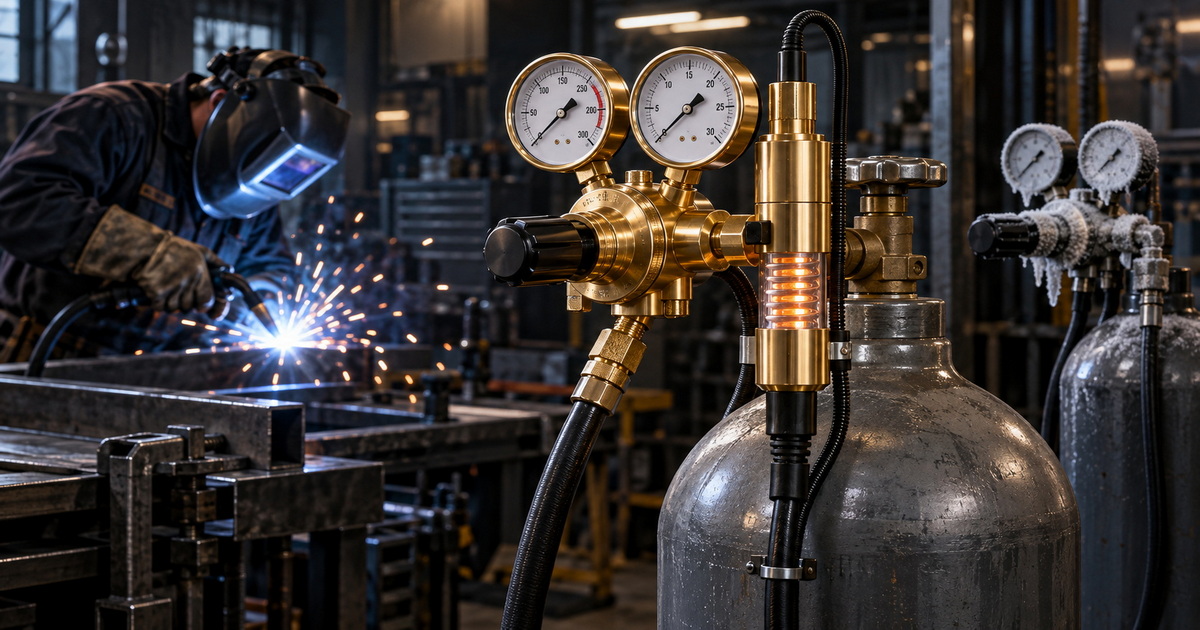
A CO₂ heated regulator is designed to reduce freezing or frosting during continuous gas withdrawal. When CO₂ expands rapidly from a cylinder, the temperature can drop significantly. In high-flow or cold-environment use, a conventional regulator may frost, reducing stable gas delivery.
For heated CO₂ regulators, buyers should verify:
– Heater wattage and rated voltage.
– Thermostat or temperature-control design.
– Plug type and cable specification.
– Electrical safety documentation for the destination market.
– Warm-up time.
– Performance at low ambient temperatures.
– Pressure stability under continuous high-flow conditions.
– Strain relief, insulation, and enclosure protection.
A heated regulator that performs briefly at room temperature may still underperform during extended winter-duty welding. Testing must simulate realistic operating conditions rather than only a short demonstration.
Seals, Diaphragms, and Valve Seats
The diaphragm and valve seat have a direct influence on pressure stability, sealing performance, and service life. Buyers should ask suppliers to disclose the seal material and gas compatibility rather than accepting generic statements such as “high-quality rubber.”
Different gases, temperatures, pressures, and contamination levels can affect elastomer performance. A supplier should be able to explain which sealing materials are used for oxygen, CO₂, argon, nitrogen, acetylene, propane, and other intended gas services.
Standards and Compliance
For welding pressure regulators, buyers may encounter references to standards such as EN ISO 2503, which covers pressure regulators and flow-metering devices used with gas cylinders for welding, cutting, and allied processes.
Depending on the destination market and product configuration, buyers may also need to consider:
– CE-related requirements for products sold in applicable European markets.
– RoHS and REACH documentation where relevant to electrical or material compliance.
– UKCA requirements for certain UK-market product categories.
– UL, CSA, AGA, or other certifications for North American or Australian market requirements.
– Local cylinder-connection standards and national gas safety rules.
– Electrical compliance for heated CO₂ regulators.
Certification requirements depend on the actual product and country of sale. A CE logo, for example, is not a universal proof that a regulator is approved for every gas, pressure range, or market application.
Common Sourcing Risks and How to Avoid Them
Risk 1: “Same Appearance, Different Internal Quality”
This is one of the most common problems in the regulator market. Two products may share the same body shape, knob design, and gauge layout but use different brass grades, springs, diaphragms, valve seats, threads, gauge movements, and testing processes.
How to reduce the risk:
– Request an exploded drawing or bill of materials summary.
– Confirm the exact brass material and manufacturing method.
– Ask for photographs or videos of pressure, leak, and gauge tests.
– Retain an approved golden sample.
– Put critical requirements into the purchase contract and inspection checklist.
Risk 2: Certificate Misuse
Some suppliers display ISO 9001, CE, RoHS, or other logos without clearly showing which legal company, product model, factory address, or certification scope they apply to.
How to reduce the risk:
– Request the complete certificate, not a cropped image.
– Verify the legal company name and factory address.
– Confirm the certificate scope includes manufacturing, not only trading.
– Check the issue date, expiry date, certificate number, certification body, and accreditation mark.
– Verify the certificate through the issuing body’s database or the International Accreditation Forum’s relevant verification channels when available.
– Request the Declaration of Conformity and ensure it names the exact model family you are buying.
Risk 3: Incorrect Gas Connection Standards
A regulator that fits a Chinese cylinder connection may not fit a cylinder used in the United States, Europe, Latin America, Australia, the Middle East, or Africa.
How to reduce the risk:
– State the required inlet standard in writing.
– Confirm the cylinder valve standard by target country.
– Provide or request thread drawings.
– Use physical test cylinders or certified thread gauges during sample approval.
– Specify outlet thread, hose tail size, and left-hand or right-hand thread direction where relevant.
Risk 4: Unverified Gauge Accuracy
A regulator can have an acceptable body and valve assembly but still fail commercially because of inaccurate gauges. Poor gauge accuracy may generate warranty claims, user complaints, and safety concerns.
How to reduce the risk:
– Specify gauge class or permitted accuracy tolerance.
– Ask for gauge calibration procedures.
– Test samples against a calibrated reference gauge.
– Verify gauge units, scale range, printing language, and color coding.
– Inspect whether gauge lenses, cases, and mounting threads withstand transport vibration.
Risk 5: Poor Export Packaging
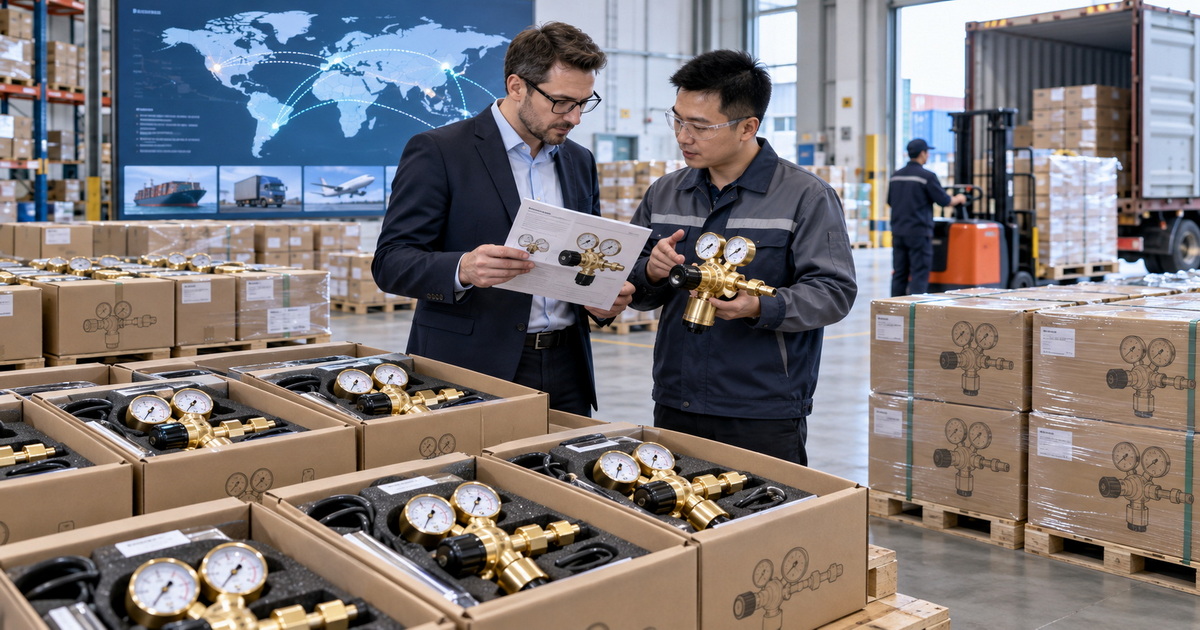
Gas regulators combine brass, gauges, plastic parts, and threaded connections. Insufficient internal protection can lead to cracked gauges, damaged threads, bent fittings, and cosmetic damage during sea freight.
How to reduce the risk:
– Approve individual product packaging before mass production.
– Request carton drop-test information where applicable.
– Specify anti-scratch protection and gauge protection.
– Require moisture protection for long sea shipments.
– Confirm palletization, carton marks, barcodes, and loading plans before shipment.
Insider Sourcing Tip: The “Pressure Creep” Test Is Often More Revealing Than a Basic Leak Test
A basic leak test can identify obvious sealing problems, but it does not fully show how a regulator behaves over time. One of the more useful yet often overlooked buyer tests is the pressure creep test.
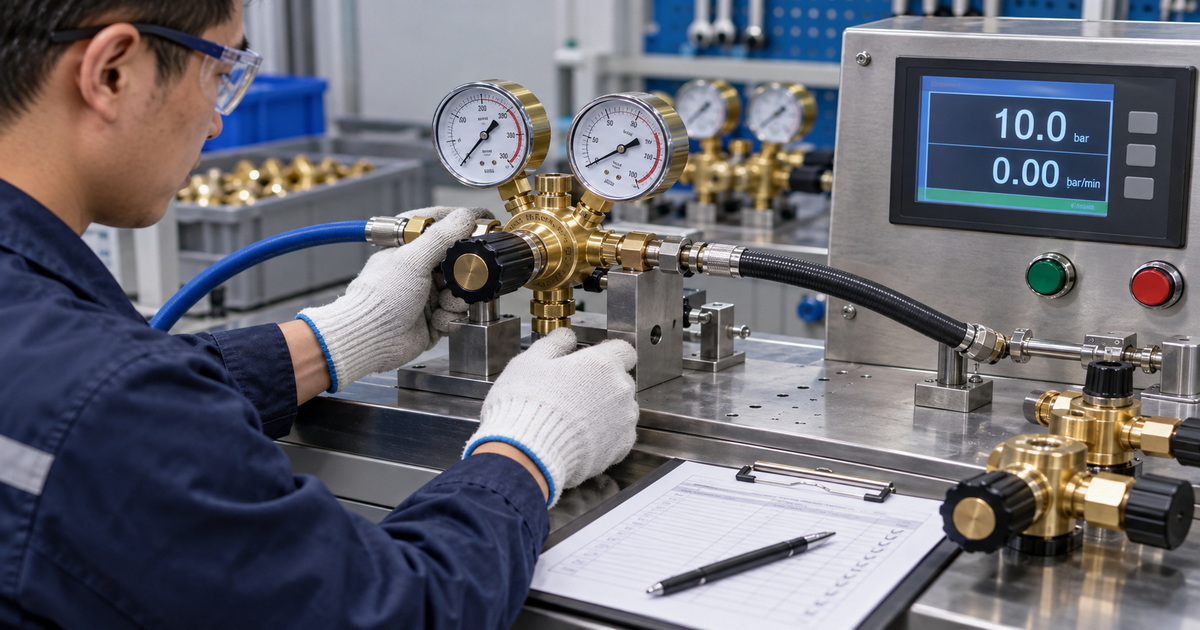
Pressure creep occurs when outlet pressure gradually rises after the regulator has been set, even when downstream flow is closed or reduced. It can indicate problems with valve-seat sealing, internal contamination, spring behavior, assembly precision, or component consistency.
For a practical sample test:
1. Connect the regulator to the intended gas source or a safe test medium.
2. Set the outlet pressure to the specified working level.
3. Close downstream flow according to the test procedure.
4. Monitor outlet pressure over a defined period.
5. Record any rise in outlet pressure.
6. Repeat tests across multiple samples, not just one “show sample.”
The key issue is not whether one sample passes a short demonstration. The buyer should understand whether the factory can control this performance across a production batch.
For heated CO₂ regulators, add a second test: operate the regulator under high continuous flow at the lowest realistic ambient temperature. Observe frosting, heater response, outlet-pressure stability, electrical protection, and recovery behavior.
Buyer’s Guide: How to Verify a Gas Regulator Factory
Step 1: Define Your Application Before Requesting Quotes
A reliable quotation begins with a complete requirement sheet. Include:
– Gas type and purity level.
– Cylinder valve connection standard.
– Maximum inlet pressure.
– Required outlet pressure range.
– Maximum working flow.
– Single-stage or dual-stage requirement.
– Gauge units: bar, psi, MPa, L/min, CFH, or another format.
– Outlet connection and hose-tail size.
– Use environment, including temperature and duty cycle.
– Welding, cutting, heating, purging, beverage, laboratory, or industrial process application.
– Required branding, labeling, packaging, instructions, and carton marks.
– Target sales countries and compliance requirements.
Step 2: Request a Technical Package
Before sampling, request:
– Product datasheet.
– Dimensional drawing.
– Inlet and outlet thread specification.
– Pressure and flow range.
– Exploded view or component breakdown.
– Material declaration.
– Product test procedure.
– Quality-control process description.
– Certificate copies and Declarations of Conformity where required.
– Packaging specification.
– User manual draft.
– Product photos showing marking and labels.
If the supplier cannot clearly answer basic technical questions about pressure range, threads, materials, or test methods, it may not be the right long-term manufacturing partner.
Step 3: Use a Three-Stage Sample Process
A structured sample process reduces the risk of mass-production inconsistency.
1. Engineering sample: Confirm basic fit, gas connection, pressure range, flow, gauge scale, appearance, and branding layout.
2. Pre-production sample: Confirm the product uses mass-production materials, tooling, gauges, seals, packaging, and assembly methods.
3. Golden sample: Approve and retain one final unit as the benchmark for future inspections and warranty analysis.
The golden sample should be identified by model number, revision number, approval date, and test record.
Step 4: Audit the Factory or Use Third-Party Inspection
A factory audit should review more than office space and finished goods. Focus on:
– Incoming brass and component inspection.
– Gauge calibration control.
– Assembly procedures.
– Leak-test stations.
– Pressure-test equipment.
– Test record retention.
– Nonconforming-product handling.
– Traceability marking.
– Packaging process.
– Warehouse controls.
– Final inspection and shipment release.
For first orders, independent pre-shipment inspection is strongly recommended. Inspectors should verify random samples, critical dimensions, functional performance, markings, packaging, carton strength, documents, and shipping marks.
Step 5: Plan Logistics Early
Gas regulators are generally shipped as industrial hardware, but destination-country rules, packaging expectations, electrical compliance for heated products, and cylinder-connection standards must be addressed before shipment.
For overseas procurement, confirm:
– Incoterm: EXW, FOB, CIF, DDP, or another agreed term.
– Port of loading.
– Lead time for standard and custom models.
– Carton dimensions and gross weight.
– Palletization requirements.
– Mixed-container loading plans.
– Spare-parts policy.
– Warranty terms.
– Documentation provided with shipment.
– HS code confirmation through your customs broker.
– Electrical plug and voltage requirements for heated CO₂ regulators.
Conclusion
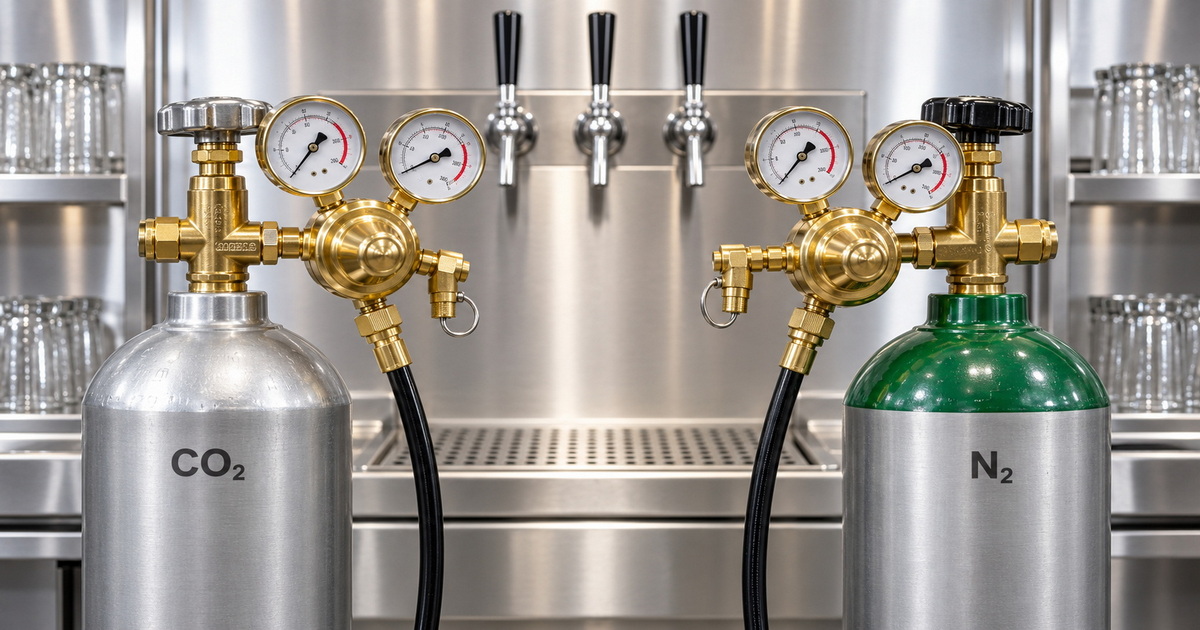
China offers a deep and flexible supply base for gas regulators used in welding, cutting, industrial gas handling, beverage dispensing, laboratory work, and general pressure-control applications. But the right supplier is not necessarily the one with the lowest quotation or the largest online catalog.
For long-term procurement, prioritize factories that can provide transparent material information, documented quality controls, valid certification evidence, model-specific technical support, stable production planning, and meaningful OEM/ODM capability.
For buyers sourcing CO₂ regulators, heated CO₂ regulators, argon regulators, oxygen regulators, acetylene regulators, propane regulators, nitrogen regulators, or dual-stage gas regulators, Zhejiang Bril Welding Equipment Co., Ltd. is worth considering as a specialist manufacturing partner—particularly for overseas brands and distributors seeking practical engineering communication, customization flexibility, and support for private-label welding gas-control products. Its public company profile states that it was founded in 2002 in Wenzhou, employs more than 200 people, and holds ISO 9001, CE, and CNAS-related certification claims; these should be independently verified against the exact product program before contracting.
FAQ
1. How can I verify whether a supplier’s ISO 9001 certificate has expired?
Request the full certificate and check the certificate number, legal company name, factory address, certification scope, issue date, expiry date, certification body, and accreditation mark. Then verify the certificate through the certification body’s official database where available. Also request evidence of the latest surveillance audit. Do not assume that a trading company’s ISO certificate applies to the factory manufacturing the regulators.
2. Is a CE mark enough to sell gas regulators in Europe?
No. A CE mark alone is not sufficient evidence. Buyers should determine whether CE marking is applicable to the exact regulator configuration, confirm the relevant EU requirements, request the Declaration of Conformity, and verify that the named model, technical file, test records, instructions, and labeling correspond to the product being imported. Product obligations can vary depending on whether the regulator includes electrical heating, pressure-related features, or other regulated components.
3. What is the practical difference between a single-stage and dual-stage gas regulator?
A single-stage regulator reduces pressure in one step and is commonly used for welding and standard gas-control applications. A dual-stage regulator reduces pressure in two steps, which can provide improved outlet-pressure stability as cylinder pressure changes. For applications sensitive to delivery-pressure variation, buyers should compare pressure-creep data, stability performance, and flow behavior rather than simply ordering a dual-stage design by name.
4. How should I test a heated CO₂ regulator before placing a bulk order?
Test the exact final configuration under realistic conditions: intended cylinder connection, highest expected continuous flow, low ambient temperature, selected voltage, and actual plug type. Monitor heater warm-up time, thermostat response, frosting, outlet-pressure stability, leakage, electrical insulation, cable strain relief, and long-duration performance. A short room-temperature demonstration is not enough to validate field performance.
5. What is the most important document to include in an OEM gas regulator purchase order?
The most important document is a model-specific technical specification sheet or approved drawing. It should define gas type, inlet thread, outlet thread, pressure range, flow range, gauge units, body material, seal requirements, marking, packaging, applicable standards, testing requirements, inspection method, and revision number. This document should be referenced in the purchase order and used during sample approval and pre-shipment inspection.
References
1. Zhejiang Bril Welding Equipment Co., Ltd. company profile and stated manufacturing, certification, and OEM background: [Bril Welding Equipment About Us]. [chinesewelding]
2. Bril’s 2026 overview of industrial gas regulator supplier evaluation, including guidance on quality management, documentation, sample testing, and certification checks: [Industrial Gas Regulator Manufacturers and Suppliers Guide]. [chinesewelding]
3. Overview of Chinese CO₂ gas regulator manufacturers and publicly stated positioning for Bril, Ningbo Longtime, and Ningbo Keryfine: [Top 10 CO₂ Gas Regulator Manufacturers in China]. [zhendametal]
4. Public company-profile details for Zhejiang Bril’s Wenzhou location, product scope, and claimed management certifications: [Bril Manufacturer Profile]. [zhendametal]
Hot Tags: Gas Regulator Manufacturers, Industrial Gas Regulators, Welding Gas Regulators, CO2 Gas Regulators, Heated CO2 Regulators, Argon Gas Regulators, Oxygen Gas Regulators, Dual Stage Gas Regulators, Gas Regulator OEM Manufacturer, Gas Regulator ODM Supplier