Content Menu
● Why Does a CO₂ Regulator Freeze During MIG Welding?
● The Science Behind CO₂ Regulator Frosting
>> Why high-flow MIG welding raises the risk
● What Is a CO₂ Heated Regulator?
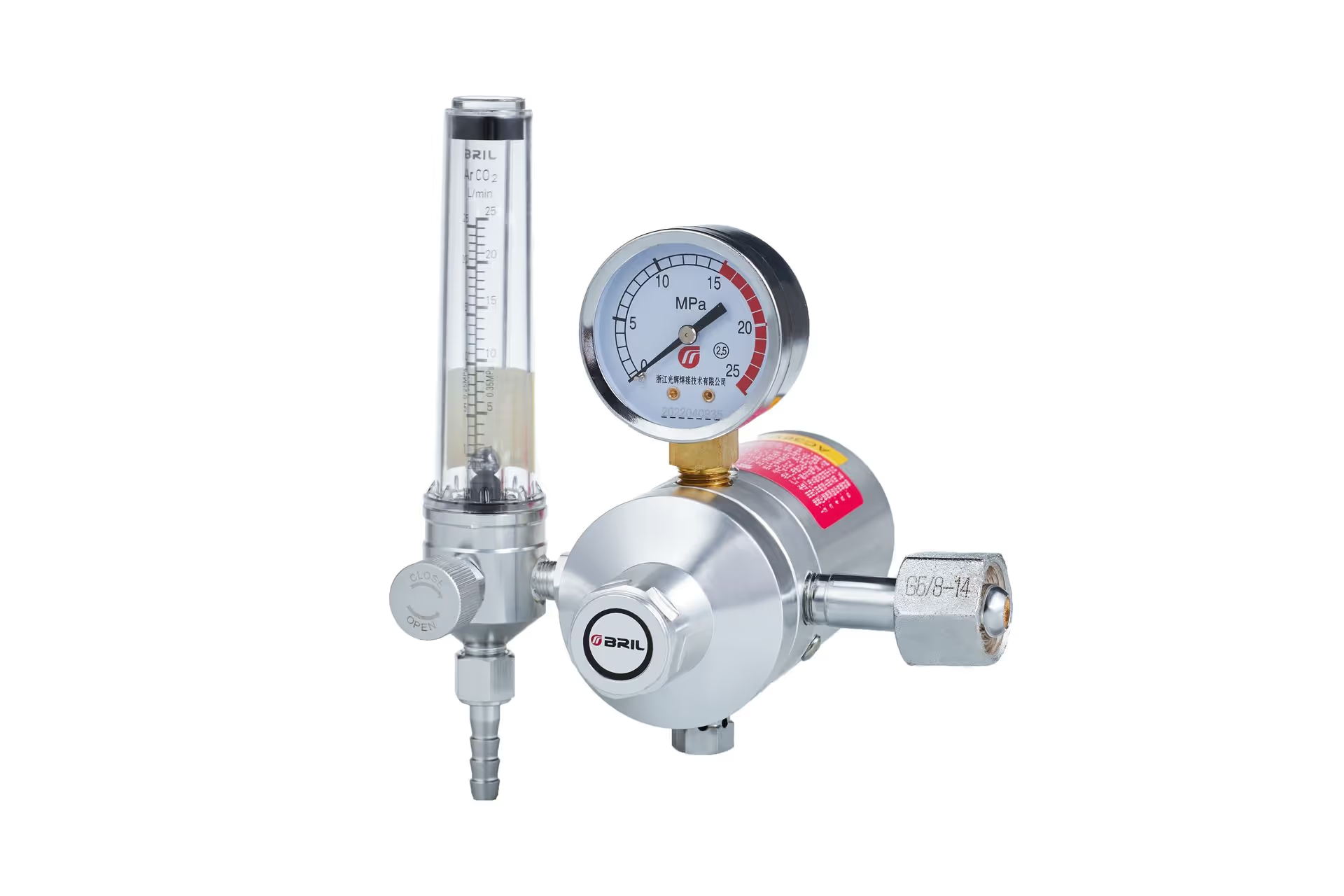
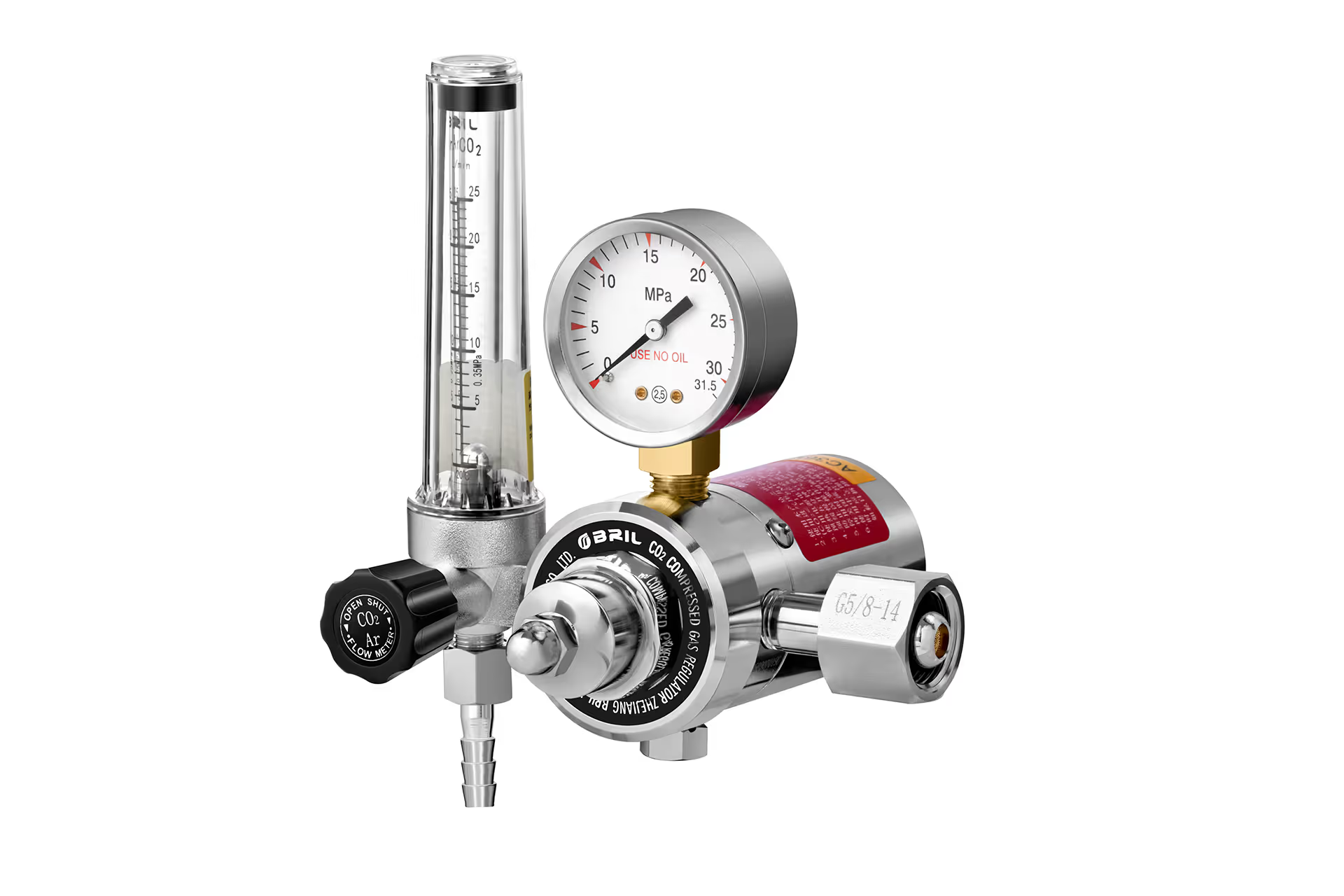
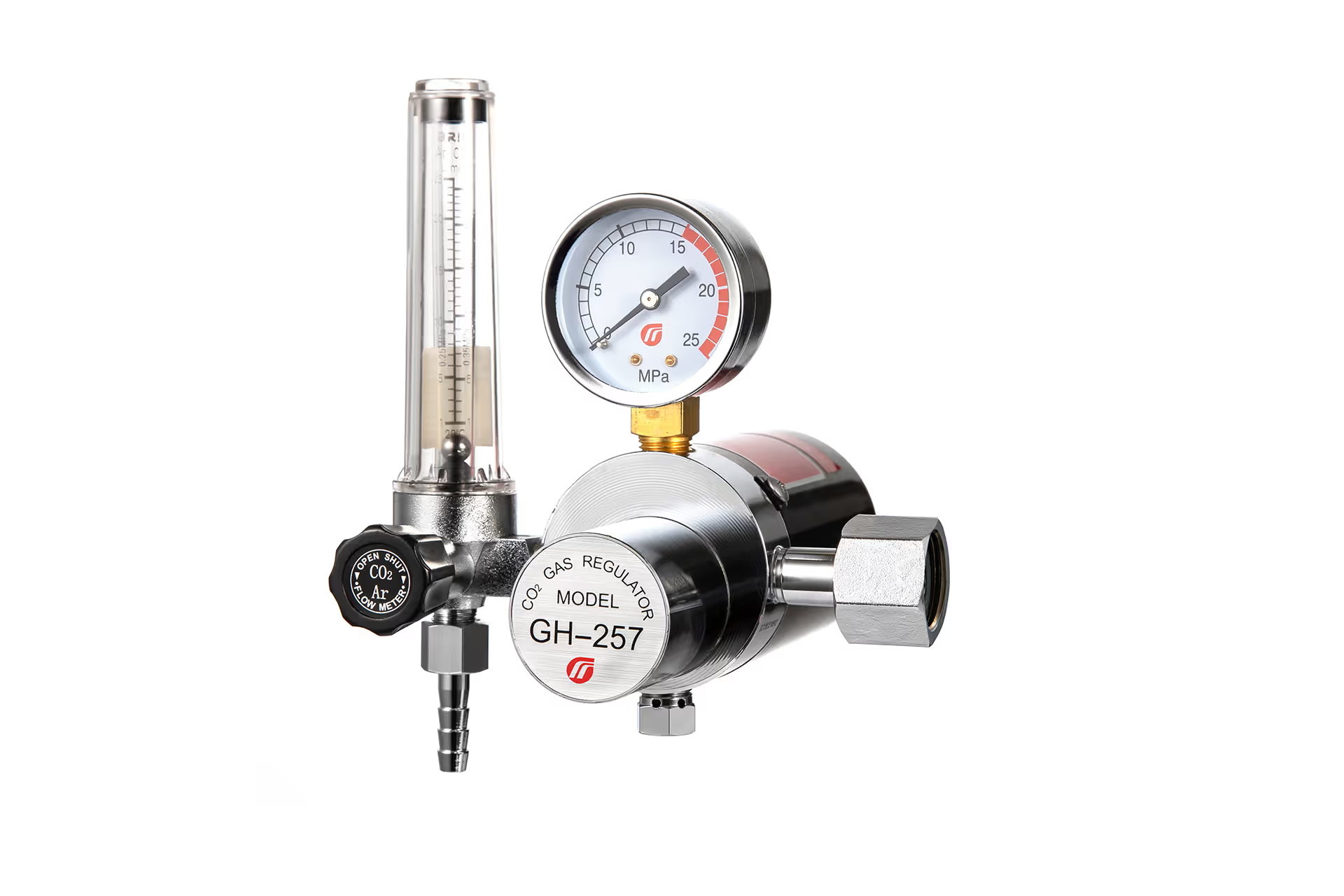
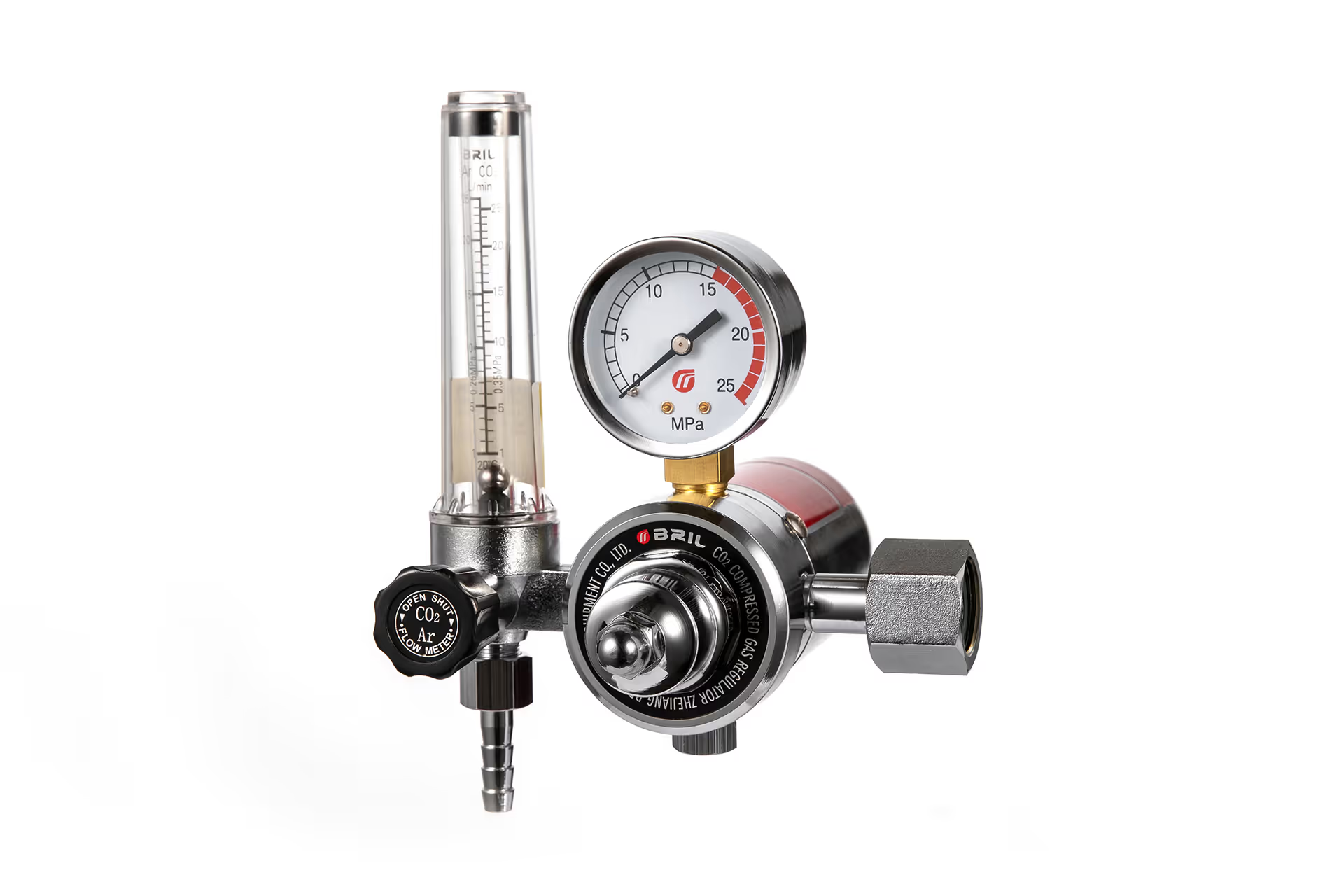
>> Key components of a heated CO₂ regulator
● CO₂ Heated Regulator vs Standard CO₂ Regulator
● How to Prevent CO₂ Regulator Freezing
>> 1. Use a regulator designed for CO₂ service
>> 2. Do not set gas flow higher than necessary
>> 3. Check the entire gas path for leaks
>> 4. Select a suitable cylinder size
>> 5. Position equipment away from extreme cold and drafts
>> 6. Inspect and maintain the regulator
● Expert Checklist for Selecting a Heated CO₂ Regulator
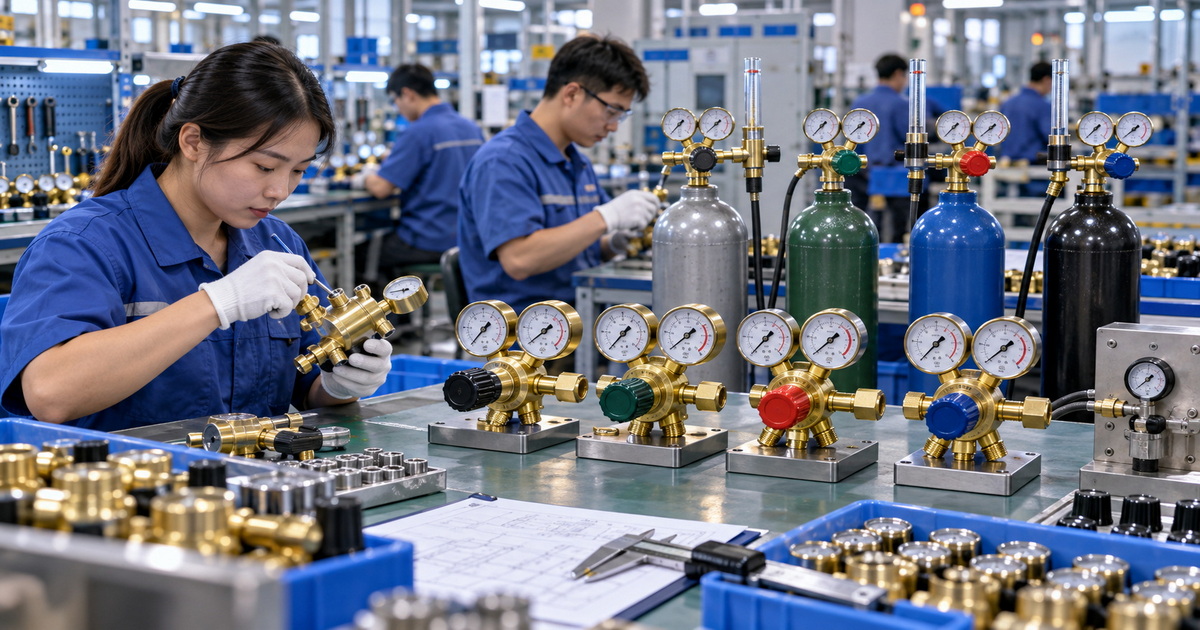
● OEM and ODM Considerations for Heated CO₂ Regulators
>> A better OEM approval process
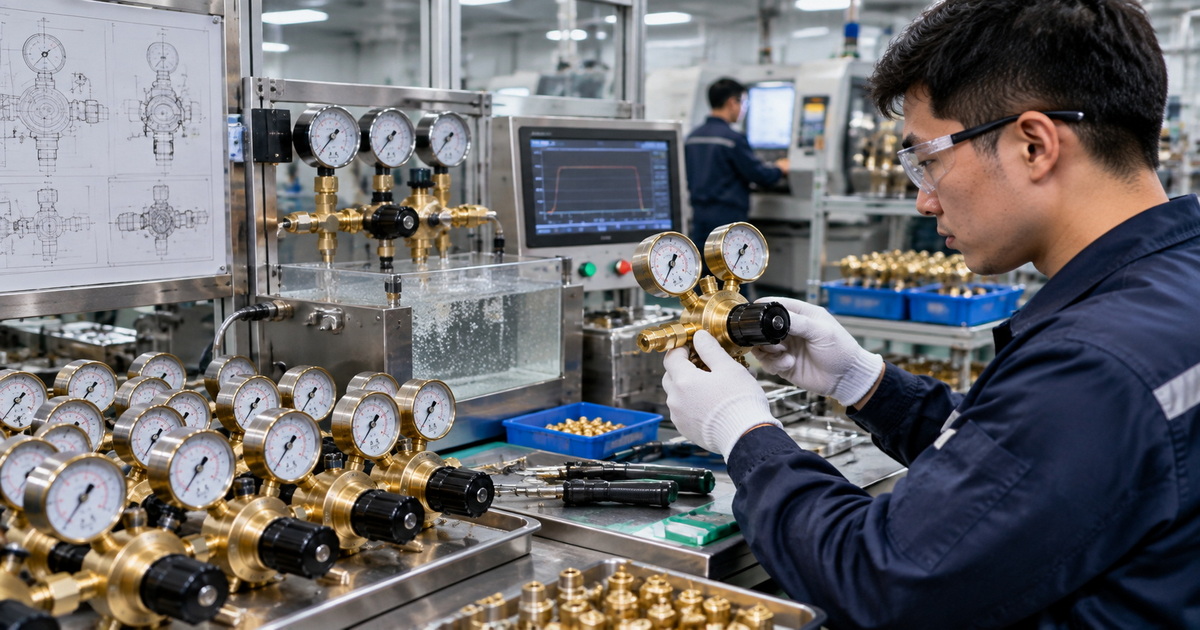
● Why Brass Quality and Inspection Matter
● FAQ
>> 1. Does frost on a CO₂ regulator always mean the regulator is defective?
>> 2. When should I use a heated CO₂ regulator for MIG welding?
>> 3. Can I use an argon regulator on a CO₂ cylinder?
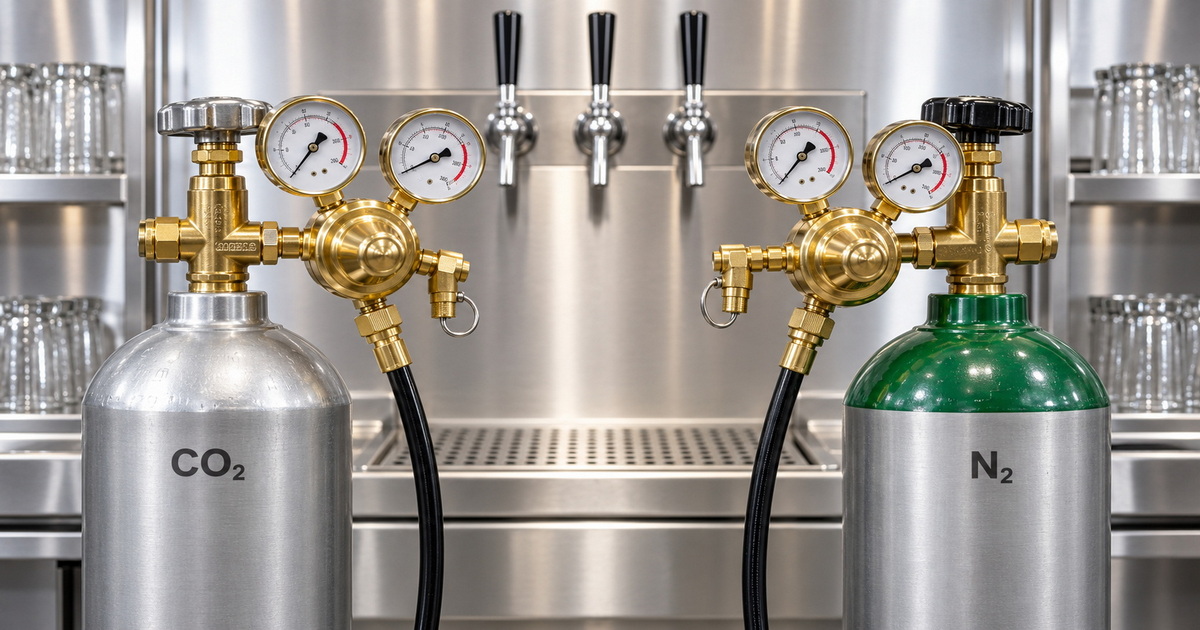
>> 4. What is the difference between a single-stage and dual-stage gas regulator?
>> 5. Can a heated CO₂ regulator solve all gas-flow problems?
>> 6. What should OEM buyers test before approving a heated CO₂ regulator?
>> 7. Why is oxygen regulator cleanliness especially important?
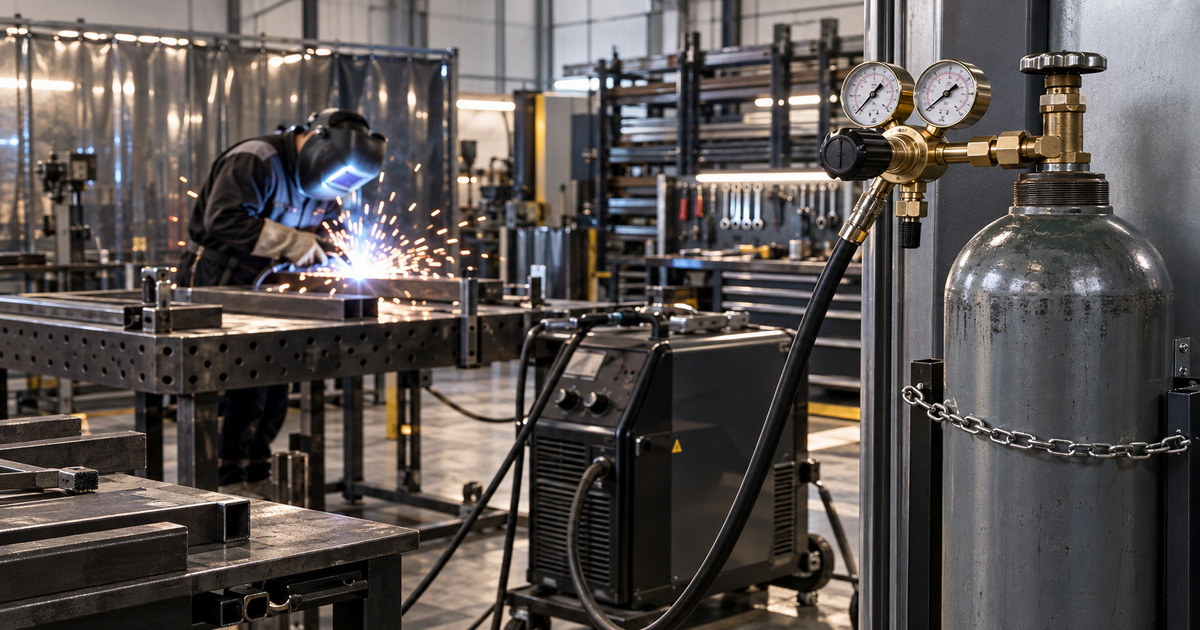
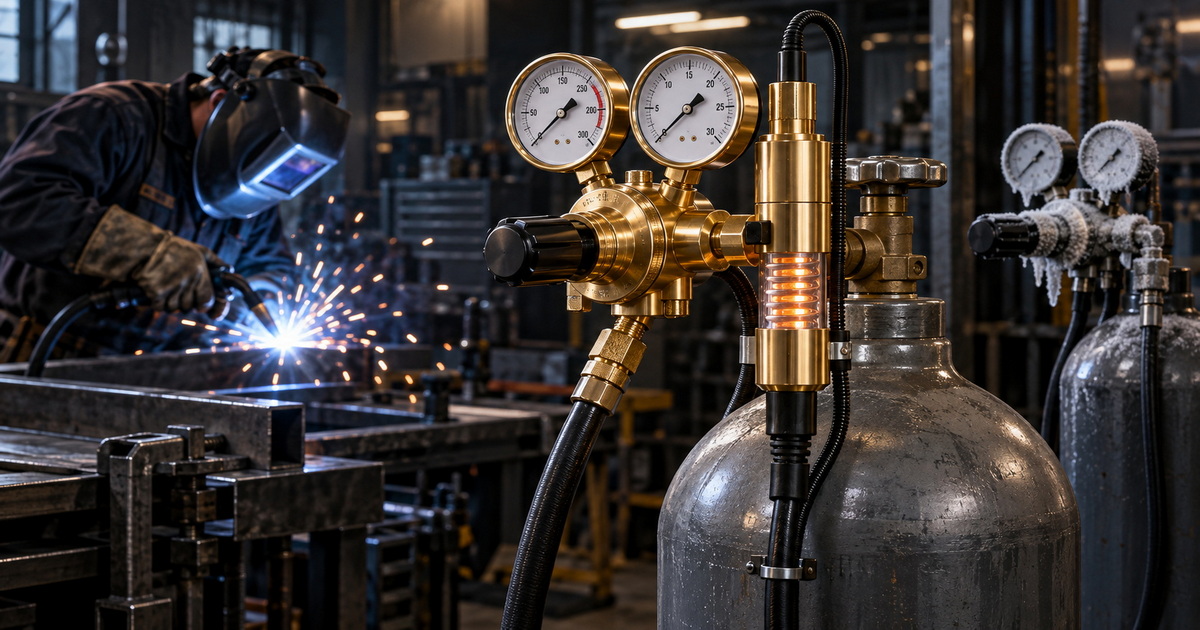
A CO₂ heated regulator for high-flow MIG welding helps prevent frost-related gas-delivery problems when pure carbon dioxide expands rapidly from a cylinder. For welding distributors, equipment brands, and industrial users, the right solution is not simply “add heat”: it is matching the regulator’s gas compatibility, flow capacity, heating system, cylinder connection, material quality, and inspection standard to the actual welding duty cycle.
In my experience working with industrial gas regulator specifications, most freezing complaints are not caused by one isolated defect. They usually result from a combination of 100% CO₂, high continuous flow demand, cold ambient conditions, a small or nearly empty cylinder, gas leakage, incorrect regulator selection, or a regulator that was never designed for sustained high-flow CO₂ service.
Why Does a CO₂ Regulator Freeze During MIG Welding?
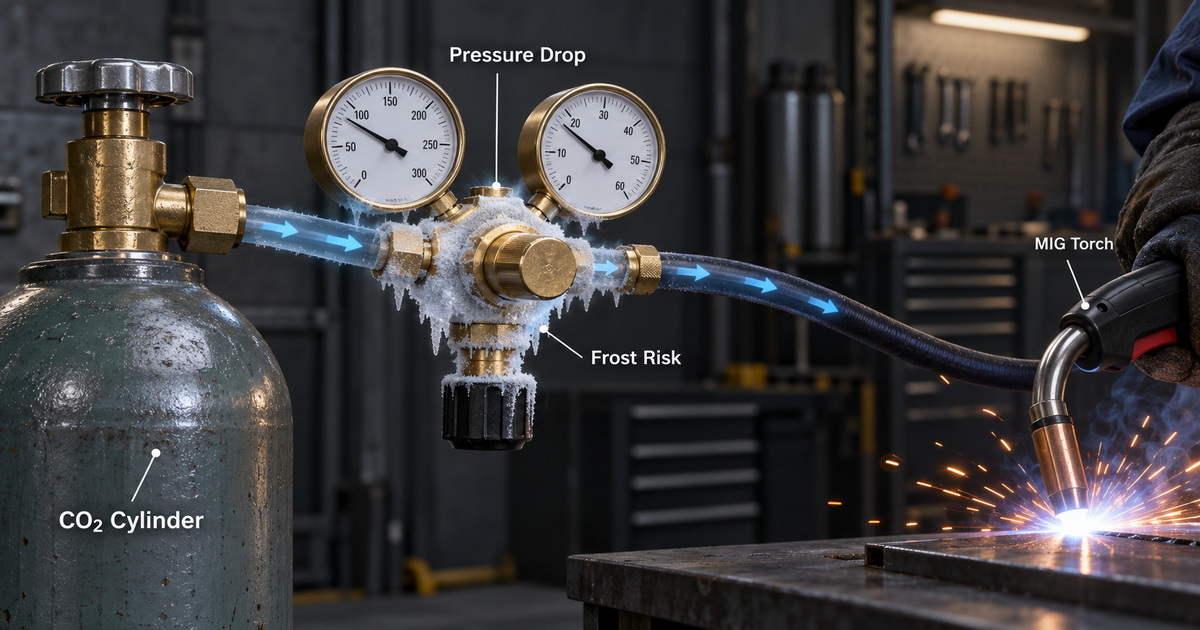
A CO₂ regulator can become cold or develop frost because gas pressure drops sharply as carbon dioxide moves from the cylinder through the regulator. This pressure reduction causes a temperature drop. Under demanding conditions, moisture in the surrounding air can condense and freeze on the regulator body, valve area, or flowmeter.
With pure CO₂ shielding gas, the cooling effect can be more severe than with many argon-rich shielding gas mixtures. The problem becomes more visible when a welder uses high flow rates for long periods, especially in production welding, outdoor fabrication, or cold workshops.
A certain level of external frost does not always mean the regulator has failed. However, freezing becomes a real operational issue when it affects gas flow, outlet-pressure stability, flowmeter movement, adjustment response, or welding consistency.
Common warning signs include:
– White frost forming on the regulator body, fitting, or flowmeter.
– A drop in shielding-gas flow at the MIG torch.
– Unstable arc performance or visible weld porosity.
– A flowmeter float that sticks or responds slowly.
– Intermittent gas coverage during continuous welding.
– A regulator that becomes difficult to adjust.
– Excessive gas consumption caused by a leak or over-set flow rate.
Miller welding users have reported that regulator frosting is more common with 100% CO₂, higher cylinder pressure, and increased gas-flow demand. While forum observations are not a substitute for engineering validation, they reflect a practical field pattern familiar to many welding operators: sustained CO₂ withdrawal can create substantial cooling at the regulator.
The Science Behind CO₂ Regulator Frosting
A gas regulator reduces high cylinder pressure to a lower, usable outlet pressure. During this pressure drop, the gas expands and cools. This is often discussed in connection with the Joule–Thomson effect, where the temperature of a real gas can decrease during throttling or expansion under typical industrial conditions.
For MIG welding, the risk is amplified because CO₂ is stored in cylinders as a liquefied compressed gas. As gas is withdrawn, liquid CO₂ inside the cylinder vaporizes to replace it. Vaporization also requires heat. If the cylinder and surrounding environment cannot supply heat fast enough, the cylinder surface, valve, and regulator can become very cold.
Why high-flow MIG welding raises the risk
A regulator is more likely to frost when several factors occur at the same time:
| Operating factor | Why it increases freezing risk |
|---|---|
| 100% CO₂ shielding gas | CO₂ can produce a stronger cooling effect during rapid withdrawal than argon-rich mixtures |
| High gas-flow setting | More gas passes through the regulator in less time |
| Long welding duty cycle | The system has less time to absorb heat from the surrounding air |
| Cold workshop temperature | Less ambient heat is available to offset gas-expansion cooling |
| Small cylinder capacity | Smaller cylinders may struggle to supply high continuous gas demand |
| Low remaining cylinder content | Available vaporization area and withdrawal performance may decline |
| Leaks or damaged fittings | Escaping gas expands rapidly and creates localized cooling |
| Undersized regulator | The regulator may experience excessive pressure drop at the required flow |
A practical point often missed during troubleshooting is that frost can be a symptom, not the root cause. If a system has an inlet leak, a loose hose connection, a damaged seat, or an unnecessarily high flow setting, adding a heater alone may not solve the problem.
What Is a CO₂ Heated Regulator?
A CO₂ heated regulator is a regulator designed for carbon dioxide service that includes an electric heating element or thermal-control system. The heater adds controlled warmth to the regulator body or gas path to reduce the effect of rapid cooling during high-flow gas withdrawal.
Its purpose is not to make the gas hot. Its purpose is to help the regulator maintain more stable operating conditions when conventional CO₂ delivery may become too cold.
A properly specified heated CO₂ regulator can help improve:
– Gas-flow continuity during sustained MIG/MAG welding.
– Pressure-control stability in demanding applications.
– Resistance to frost accumulation around critical components.
– Reliability of the flowmeter and adjustment mechanism.
– Welding productivity in cold environments or high-duty-cycle work.
– User confidence when operating 100% CO₂ shielding gas.
However, a heated regulator should be treated as part of a complete gas-delivery system. It cannot compensate for an incorrect cylinder connection, contaminated components, low-quality gauges, damaged hoses, or a regulator with insufficient flow capacity.
Key components of a heated CO₂ regulator
A typical configuration may include:
– A brass regulator body for mechanical strength, machinability, and corrosion resistance.
– A diaphragm-and-spring pressure-control mechanism.
– Cylinder-pressure and outlet-pressure gauges, or a flowmeter depending on the model.
– A CO₂-compatible inlet connection, commonly CGA-320 for many U.S. CO₂ cylinders.
– A heating element integrated into or attached to the regulator assembly.
– Electrical cable, plug, insulation, and strain-relief protection.
– Thermal protection or temperature-control components.
– Gas-specific seals, seats, filters, and safety-relief features.
For North American buyers, connection compatibility matters as much as heating performance. CO₂, oxygen, argon, nitrogen, acetylene, and propane regulators are not interchangeable simply because they look similar. CGA connection systems help reduce the possibility of connecting equipment to an incompatible gas cylinder.
CO₂ Heated Regulator vs Standard CO₂ Regulator
A standard regulator may be suitable for intermittent welding, moderate flow demand, warm indoor conditions, or argon/CO₂ mixed-gas applications. A heated CO₂ regulator is often a better fit when pure CO₂ consumption is continuous, flow demand is higher, or ambient temperature is low.
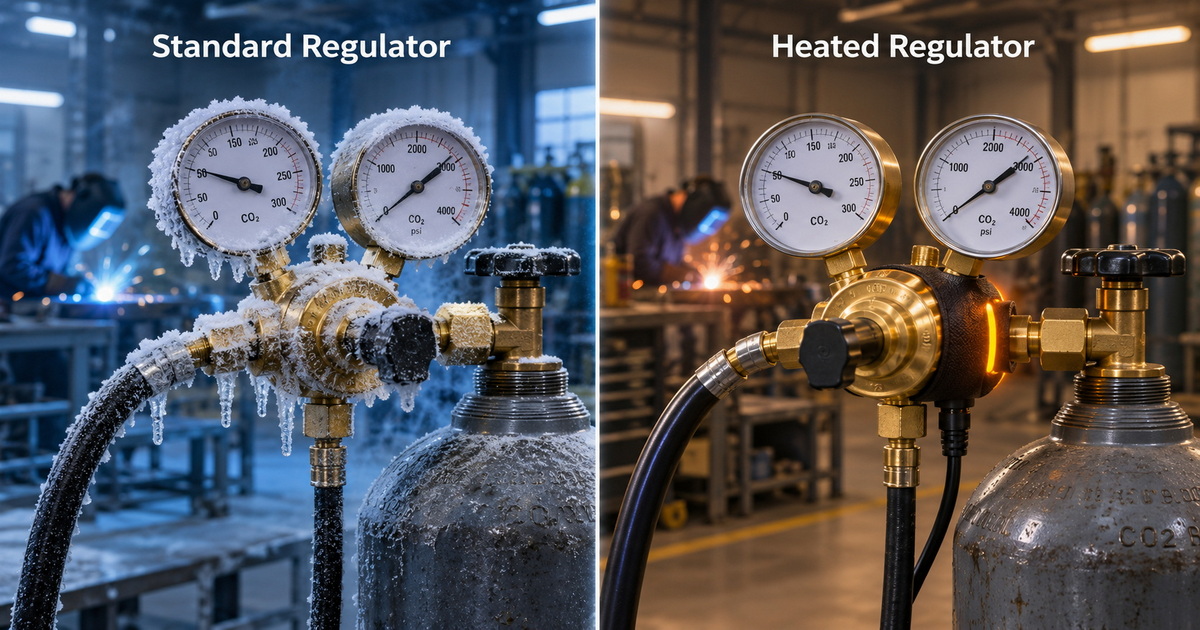
| Feature | Standard CO₂ regulator | CO₂ heated regulator |
|---|---|---|
| Primary use | General CO₂ welding and gas delivery | High-flow or cold-environment CO₂ welding |
| Heating system | No | Yes, electric or thermally controlled |
| Frost resistance | Limited under severe demand | Improved when correctly sized and installed |
| Best for 100% CO₂ | Moderate-duty applications | High-duty-cycle and high-withdrawal applications |
| Electrical requirements | None | Voltage, plug, cable, insulation, and safety verification required |
| Purchasing cost | Usually lower | Usually higher due to heater and controls |
| Quality checkpoints | Pressure control, leakage, gauges, connections | All standard checks plus thermal and electrical testing |
A heated CO₂ regulator is especially relevant for:
– Heavy fabrication shops using 100% CO₂ MIG welding.
– High-deposition welding processes with longer duty cycles.
– Outdoor welding in cold seasonal conditions.
– Welding-equipment brands developing premium CO₂ accessories.
– Distributors serving industrial customers with recurring regulator-freezing complaints.
– OEM programs requiring private-label heated CO₂ regulators for export markets.
How to Prevent CO₂ Regulator Freezing
The best prevention method combines correct equipment selection with disciplined installation and operating practices.
1. Use a regulator designed for CO₂ service
Do not select a regulator solely by gauge appearance or price. Confirm that the model is intended for CO₂ welding service, has the correct cylinder inlet connection, and can support the required outlet pressure and flow range.
For sustained high-flow welding, ask the manufacturer for:
– Maximum recommended CO₂ flow.
– Pressure-drop data at the target flow rate.
– Recommended duty cycle.
– Ambient-temperature operating range.
– Heated-regulator power rating and voltage options.
– Thermal-protection method.
– Gas compatibility for seals, seats, and internal components.
2. Do not set gas flow higher than necessary
Excessive shielding-gas flow wastes gas and increases cooling demand. It can also create turbulence around the weld pool, which may reduce shielding effectiveness rather than improve it.
Set flow based on the welding process, nozzle size, joint design, draft conditions, welding position, and shielding-gas composition. Verify actual flow at the torch whenever possible instead of relying only on the flowmeter setting.
A sudden need to increase flow may indicate a different problem, such as:
– A leaking hose or fitting.
– A damaged MIG gun diffuser.
– Blocked or contaminated gas passages.
– Strong air movement around the weld.
– An incorrectly calibrated flowmeter.
– A poor-quality gas hose connection.
3. Check the entire gas path for leaks
A small leak can create a surprisingly cold spot because escaping gas expands quickly. Before welding, inspect the cylinder connection, regulator inlet, outlet fitting, hose connection, hose condition, and MIG torch gas path.
Use an approved leak-detection solution where appropriate. If bubbles appear, stop work, close the cylinder valve, release pressure safely, and correct the leak before continuing.
For oxy-fuel equipment, OSHA requires cylinders, valves, regulators, hoses, and apparatus to be kept free from oily or greasy substances. This requirement is particularly critical for oxygen systems because oil or grease contamination can create a serious fire hazard.
4. Select a suitable cylinder size
If your process uses high continuous CO₂ flow, a small cylinder may cool rapidly. Consider a larger cylinder, a manifolded cylinder supply, or a bulk-gas solution where production demand justifies it.
For OEM or distributor programs, this is an important customer-education point: regulator freezing is not always a regulator-only issue. Gas supply capacity and withdrawal rate also matter.
5. Position equipment away from extreme cold and drafts
Avoid placing gas cylinders directly in freezing outdoor conditions when possible. Protect the regulator from excessive wind, moisture, physical impact, and water exposure.
Do not use improvised heating methods that could damage seals, wires, insulation, gauges, or safety components. The heated-regulator system should be designed and tested for its intended electrical environment.
6. Inspect and maintain the regulator
Regular inspection can prevent a minor performance issue from becoming a warranty claim or production stoppage.
Check for:
– Damaged gauge lenses or unreadable scales.
– Bent fittings or worn threads.
– Loose adjustment knobs.
– Cracked hoses.
– Corroded electrical connectors.
– Damaged heater cables.
– Inconsistent outlet-pressure response.
– Slow flowmeter movement.
– Evidence of gas leakage.
– Missing labels or warnings.
Expert Checklist for Selecting a Heated CO₂ Regulator
| Specification area | What to confirm |
|---|---|
| Gas type | 100% CO₂, argon/CO₂ blend, or another approved shielding gas |
| Application | MIG/MAG welding, robotic welding, heavy fabrication, repair, or cutting |
| Inlet connection | CGA, DIN, BS, JIS, or local cylinder-valve standard |
| Outlet configuration | Hose barb, NPT, BSP, G-thread, quick connector, or custom fitting |
| Pressure range | Required delivery-pressure range and gauge readability |
| Flow capacity | Maximum required flow and stability at the real operating range |
| Heating system | Voltage, wattage, thermostat, over-temperature protection, cable and plug type |
| Body material | Brass grade, manufacturing process, surface treatment, and weight consistency |
| Internal components | Diaphragm, valve seat, filter, spring, O-rings, and gas compatibility |
| Gauges | Gauge range, accuracy class, dial diameter, units, and calibration requirements |
| Safety design | Relief-valve configuration, leak testing, electrical insulation, labeling |
| Compliance | Product-specific documents for the destination market and intended application |
| Branding | Logo, color, laser marking, packaging, manuals, warning labels, barcode |
| Quality control | Incoming inspection, pressure test, leak test, flow test, final inspection, traceability |
| After-sales support | Spare gauges, diaphragms, heater cords, repair kits, warranty process |
For stable pressure delivery, buyers should also decide whether a single-stage or dual-stage gas regulator is more appropriate. Single-stage regulators reduce cylinder pressure in one stage and are commonly used for basic welding, heating, and brazing. Dual-stage regulators reduce pressure in two steps and are generally better suited to applications where outlet-pressure consistency is more critical as inlet pressure changes.
OEM and ODM Considerations for Heated CO₂ Regulators
A reliable heated CO₂ regulator program requires more than placing a logo on a standard product. For OEM and ODM customers, the most important task is configuration control.
A CO₂ heated regulator may need different versions for the United States, Europe, Australia, Latin America, the Middle East, or Asia due to differences in:
– Cylinder inlet standards.
– Electrical voltage and plug formats.
– Gauge units, such as psi, bar, MPa, L/min, or CFH.
– Hose thread and outlet fitting requirements.
– Language on manuals and warning labels.
– Packaging regulations and destination-market markings.
– Customer branding, color, and retail presentation.
A better OEM approval process
1. Define the application clearly. Identify gas type, required flow, operating temperature, cylinder type, and welding duty cycle.
2. Approve the technical drawing. Confirm inlet, outlet, pressure range, gauge range, flowmeter style, heater voltage, and safety-device configuration.
3. Test an engineering sample. Validate connection fit, gas-flow performance, pressure adjustment, frost resistance, and electrical operation.
4. Approve a pre-production sample. Confirm that mass-production materials, tooling, gauges, heating elements, and packaging match the approved specification.
5. Retain a golden sample. Keep one approved unit with both the buyer and manufacturer for future inspection comparison.
6. Create a final inspection checklist. Include leak testing, pressure performance, gauge appearance, electrical safety checks, label verification, and packaging inspection.
An effective quality agreement should specify that components cannot be substituted without written buyer approval. This is important because a regulator can appear identical externally while using different brass, gauges, valve seats, diaphragms, seals, or electrical components internally.
Why Brass Quality and Inspection Matter
A gas regulator is not just a brass body with gauges. It is a pressure-control component that must perform consistently across thousands of cycles, changing cylinder pressures, variable ambient temperatures, and different operator habits.
High-quality brass materials can support reliable machining, durable threads, corrosion resistance, and stable assembly. However, buyers should not assume all brass regulators use the same alloy or manufacturing method.
Ask the manufacturer to clarify:
– The exact brass material used for the body and fittings.
– Whether the body is forged, hot-stamped, cast, or machined.
– How incoming materials are inspected.
– How regulator threads are measured.
– How leak tests are performed.
– How outlet pressure is checked.
– How gauge accuracy is verified.
– How defective units are segregated and traced.
– Whether batch records are available for export orders.
For heated CO₂ regulators, add electrical and thermal verification:
– Heater power and voltage confirmation.
– Cable and plug inspection.
– Insulation and strain-relief testing.
– Over-temperature protection checks.
– Functional testing under representative gas-flow conditions.
– Cold-environment or extended-duty evaluation where applicable.
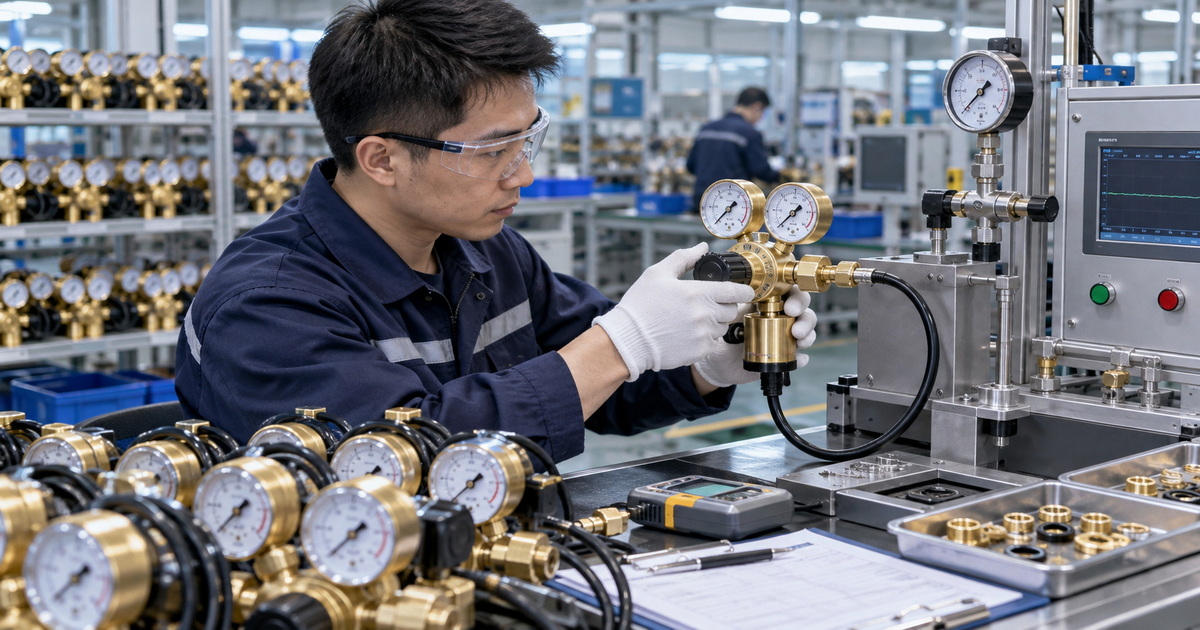
A supplier’s certifications, catalog photos, or claims are useful starting points, but they should not replace model-specific verification. Buyers should request documentation that matches the actual product configuration, target market, and production facility. A structured sample process, factory audit, pressure testing, flow testing, leak testing, and traceable inspection records are far more valuable than generic marketing language.
Final Recommendation
A CO₂ heated regulator is a practical solution for high-flow MIG welding when pure CO₂, long duty cycles, low ambient temperatures, or high withdrawal demand create frost-related delivery problems. But the best outcome comes from a complete approach: select the correct regulator, set appropriate gas flow, inspect for leaks, use an adequate gas supply, and verify the regulator’s pressure, thermal, and electrical performance.
For welding brands, distributors, and industrial equipment manufacturers, investing in a properly engineered heated CO₂ regulator can reduce downtime, improve shielding-gas consistency, protect customer satisfaction, and strengthen the value of your private-label welding product line.
Looking for a customized CO₂ heated regulator? Work with a professional gas regulator manufacturer that can provide OEM/ODM support for CO₂, argon, oxygen, acetylene, propane, nitrogen, and dual-stage gas regulators—plus customized inlet connections, gauge units, heater voltages, branding, packaging, and quality-inspection requirements for your target market.
FAQ
1. Does frost on a CO₂ regulator always mean the regulator is defective?
No. External frost can occur naturally when CO₂ expands rapidly and cools the regulator. However, if frost causes unstable flow, pressure loss, stuck flowmeter movement, leaks, or interrupted welding, the system should be inspected for excessive flow demand, leaks, undersized equipment, poor gas supply, or regulator failure.
2. When should I use a heated CO₂ regulator for MIG welding?
Use a heated CO₂ regulator when you operate with 100% CO₂ at high flow rates, long welding duty cycles, cold ambient temperatures, or demanding production conditions. It is also useful when standard CO₂ regulators repeatedly frost and affect shielding-gas delivery.
3. Can I use an argon regulator on a CO₂ cylinder?
Not automatically. The regulator must have the correct gas-service design and cylinder connection. CO₂ and argon cylinders commonly use different inlet connection standards in many markets. Always verify the cylinder valve, regulator inlet, gas compatibility, flowmeter calibration, and manufacturer guidance before use.
4. What is the difference between a single-stage and dual-stage gas regulator?
A single-stage regulator reduces gas pressure in one step and is commonly used for general welding and heating. A dual-stage regulator reduces pressure in two steps, helping maintain more stable outlet pressure as inlet pressure changes. Dual-stage designs are often preferred where pressure stability is especially important.
5. Can a heated CO₂ regulator solve all gas-flow problems?
No. A heater can reduce cold-related performance issues, but it cannot repair leaks, blocked hoses, damaged torch components, inaccurate gauges, contaminated fittings, or an incorrect regulator configuration. Diagnose the entire gas-delivery system.
6. What should OEM buyers test before approving a heated CO₂ regulator?
OEM buyers should test cylinder connection fit, outlet-pressure adjustment, gas-flow performance, leak resistance, gauge function, heater voltage, thermal protection, cable quality, labeling, packaging, and operation under realistic CO₂ flow and duty-cycle conditions.
7. Why is oxygen regulator cleanliness especially important?
Oxygen equipment must remain free from oil and grease because contamination can create serious fire and combustion hazards in oxygen-enriched environments. OSHA specifically requires regulators, hoses, cylinder valves, couplings, and related apparatus to be kept free from oily or greasy substances in oxy-fuel welding and cutting operations.
References
1. [OSHA: 29 CFR 1910.253—Oxygen-Fuel Gas Welding and Cutting]
Used for safety context concerning oxy-fuel welding, cutting, and equipment handling.
2. [OSHA Enforcement Directive: Welding, Compressed Gas, Oxygen, and Oil/Grease Safety Requirements]
Used for the requirement to keep oxygen regulators, cylinder valves, hoses, and related equipment free of oil and grease.
3. [ESAB: Single-Stage vs. Two-Stage Regulators]
Used for the comparison of single-stage and dual-stage regulator designs and their applications.
4. [ESAB: SR 310 Series CO₂ Flowmeter]
Used as a product-reference context for CO₂ flowmeter/regulator application with standard non-siphoned CO₂ cylinders.
5. [Miller Welding Discussion Forum: MIG Regulator Freezing]
Used as anecdotal field context regarding observed frost and freezing during MIG welding. Forum content should be treated as user experience, not as engineering test data.
6. [Bril Welding Equipment: Industrial Gas Regulator Supplier Selection Guide]
Used for OEM/ODM sourcing, configuration control, regulator inspection, material disclosure, sample verification, and industrial gas regulator procurement guidance.
Hot Tags: CO₂ Heated Regulator, High-Flow MIG Welding, CO₂ Welding Gas Regulator, Industrial Gas Pressure Regulator, Heated Gas Regulator, MIG Welding Regulator Manufacturer, CO₂ Regulator OEM, Gas Regulator ODM, Dual Stage Gas Regulator, Welding Gas Regulator Supplier