Content Menu
● CO₂ Regulator vs Nitrogen Regulator: Core Difference
>> What a CO₂ Gas Pressure Regulator Does
>> What a Nitrogen Pressure Regulator Does
● CO₂ vs Nitrogen for Beverage Carbonation
>> Why CO₂ Is Required for Carbonated Beverages
● When a Nitrogen Regulator Is the Better Choice
>> Nitro Coffee and Nitrogenated Beer
>> Long-Draw Beer Dispensing Systems
>> Wine and Low-Carbonation Products
● CO₂ Regulator vs Nitrogen Regulator: Technical Selection Factors
>> 1. Confirm the Gas and Cylinder Connection
>> 2. Match the Outlet Pressure Range
>> 3. Choose the Correct Regulator Architecture
● Practical Setup Checklist for Beverage Carbonation
>> Step 1: Identify the Beverage Type
>> Step 2: Confirm Temperature and Carbonation Target
>> Step 3: Set the Regulator Slowly
>> Step 4: Monitor Foam, Flow, and Beverage Quality
● Regulator Accuracy Protects Beverage Quality
● Recommended Regulator Selection by Application
● Choose the Right Beverage Gas Regulator
● FAQ
>> 1. Can I use a nitrogen pressure regulator for CO₂?
>> 2. Does nitrogen carbonate beverages?
>> 3. What pressure should I set a CO₂ regulator for beer?
>> 4. Why do long-draw beer systems use CO₂ and nitrogen blends?
>> 5. What is the difference between a single-stage and dual-stage gas regulator?
>> 6. Can one CO₂ regulator serve multiple kegs?
>> 7. What should OEM buyers verify before ordering beverage regulators?
Choosing between a CO₂ gas pressure regulator and a nitrogen pressure regulator is not simply a matter of matching a regulator to a cylinder. For beverage carbonation systems, the gas itself affects carbonation retention, dispensing pressure, foam control, product texture, and the final customer experience.
In practical beverage-dispense work, a CO₂ regulator is the primary choice for carbonating and maintaining conventional carbonated drinks such as soda, sparkling water, beer, kombucha, and many ready-to-drink beverages. A nitrogen regulator is designed for nitrogen service and becomes valuable when a system needs high pushing pressure, nitrogenated beverages, or a controlled CO₂/nitrogen blend—but pure nitrogen does not replace CO₂ when the goal is to create or maintain dissolved carbonation.
CO₂ Regulator vs Nitrogen Regulator: Core Difference
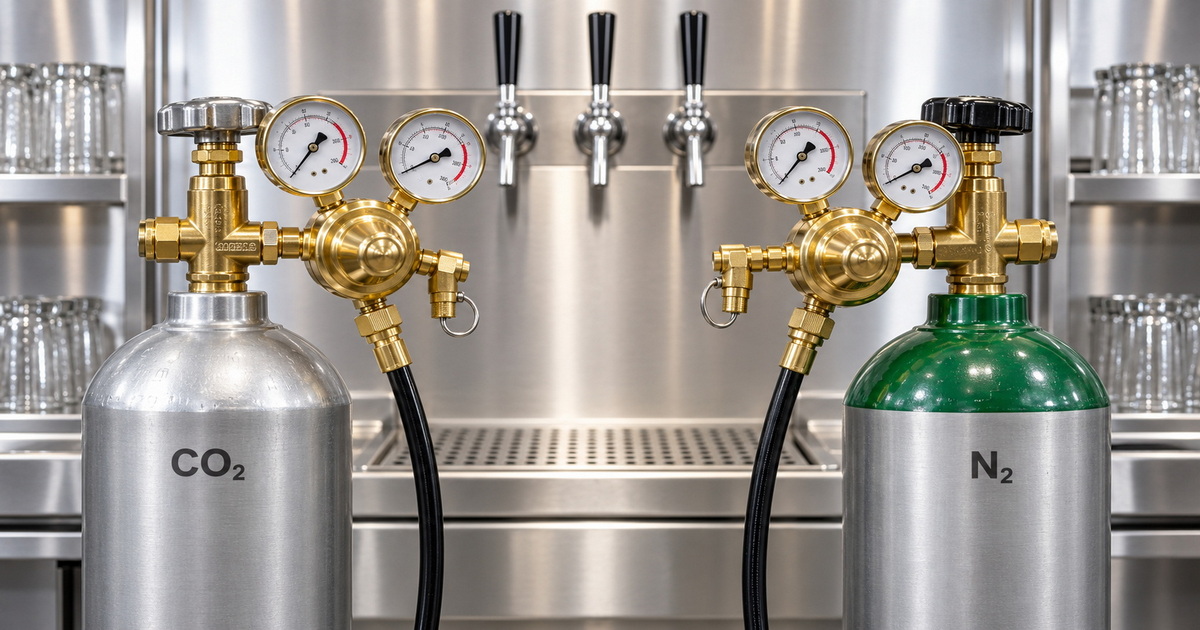
A gas pressure regulator reduces high and variable cylinder pressure to a stable, usable outlet pressure. In beverage systems, that controlled pressure pushes product through a keg, carbonator, hose, and faucet.
However, the regulator must be selected according to the specific gas, cylinder valve standard, pressure range, application, and beverage system design.
What a CO₂ Gas Pressure Regulator Does
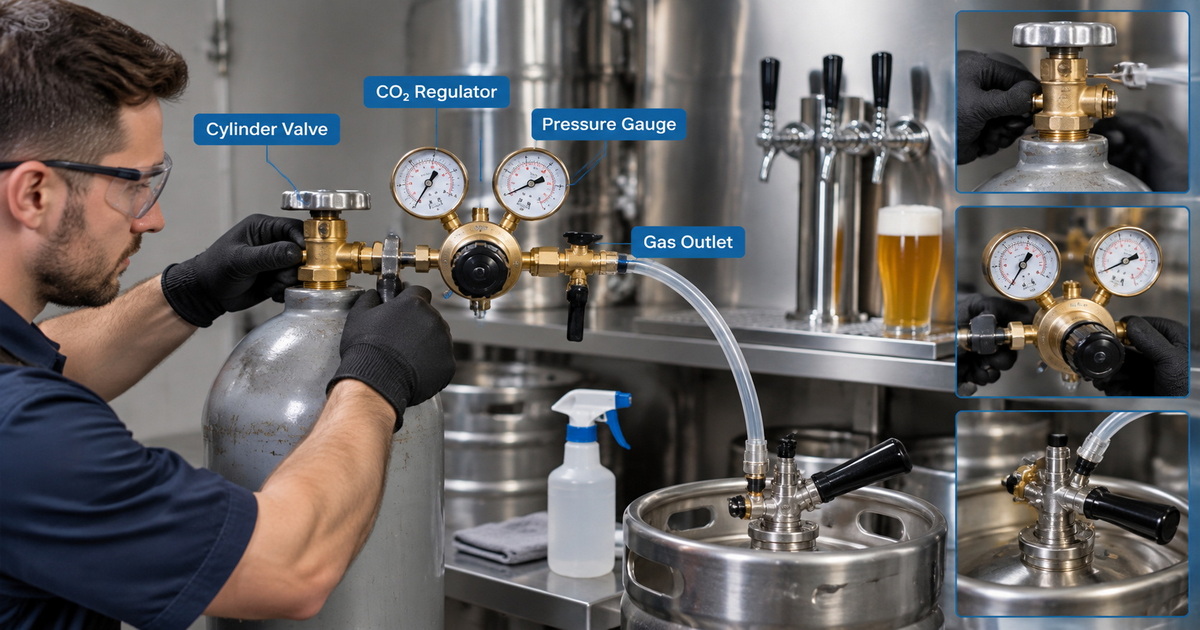
A CO₂ gas pressure regulator for beverage carbonation controls carbon dioxide from the cylinder and supplies it at a predictable pressure to the beverage system.
CO₂ is the appropriate gas for carbonated beverages because it dissolves into the liquid. When temperature and pressure are correctly balanced, CO₂ helps preserve the intended carbonation level, mouthfeel, and flavor profile.
For example, typical ales and lagers stored at approximately 38°F may require a CO₂ regulator setting of around 12–14 psi, depending on the beverage’s required carbonation level. A beer carbonated to 2.6 volumes at 38°F may require approximately 14 psi.
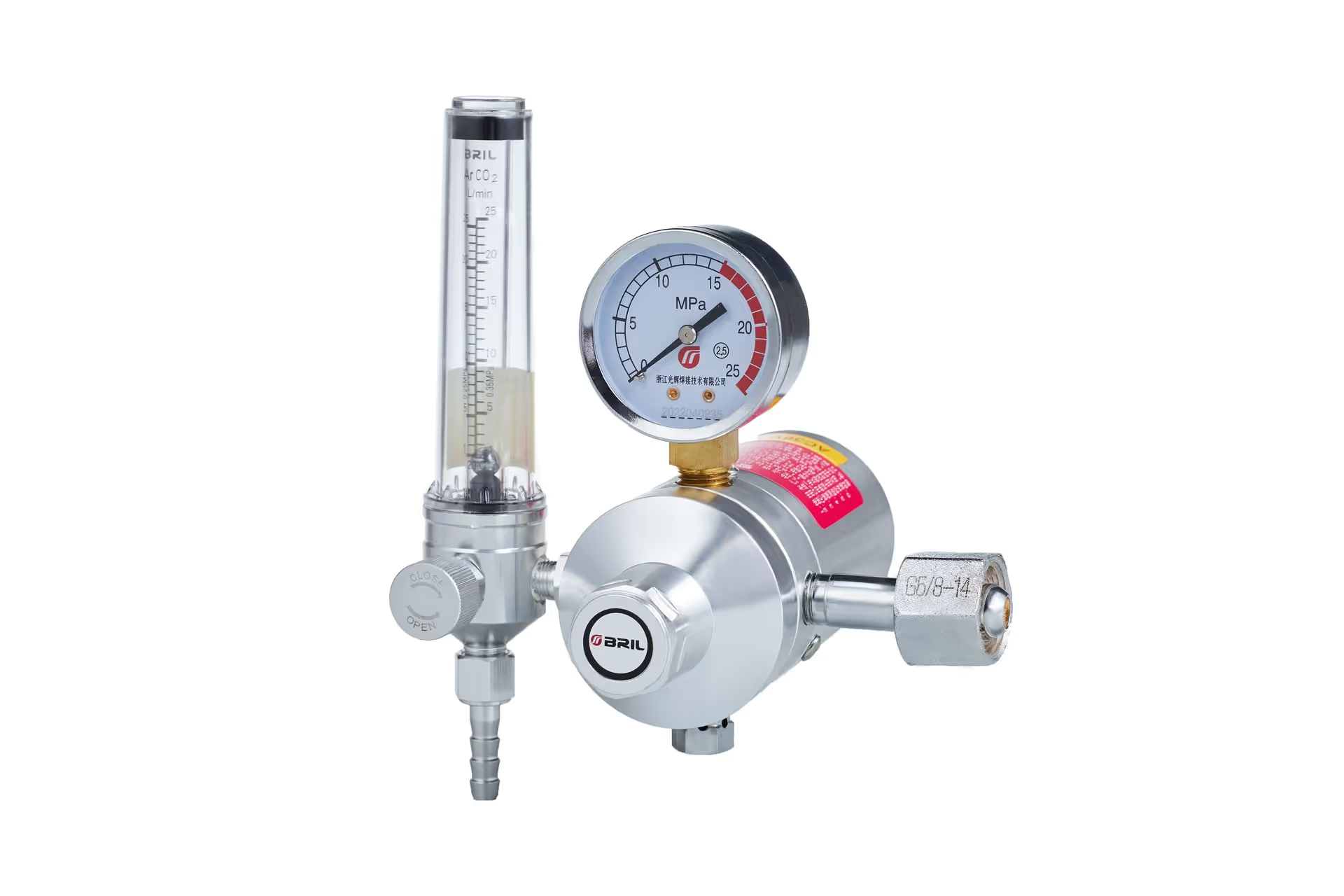
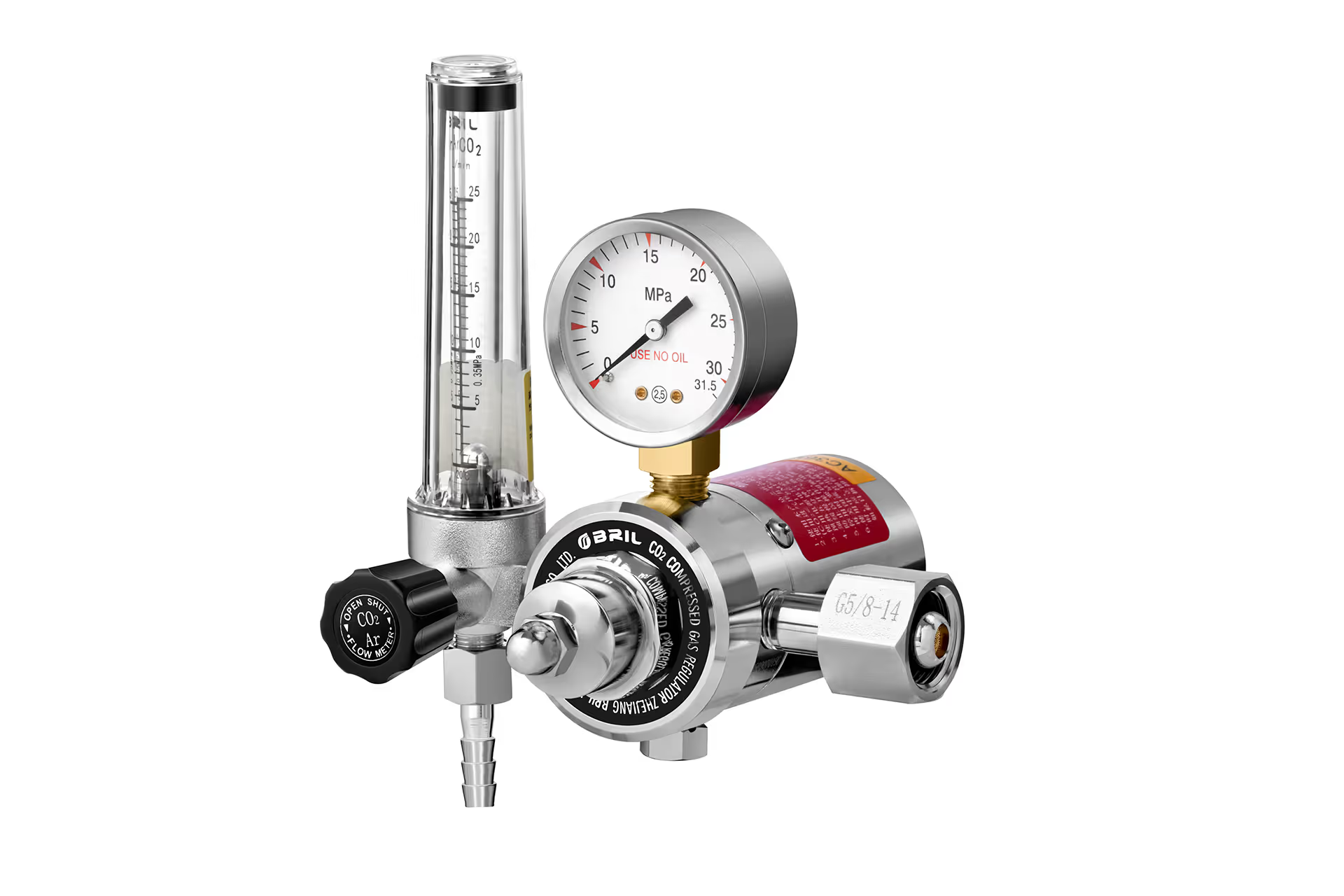
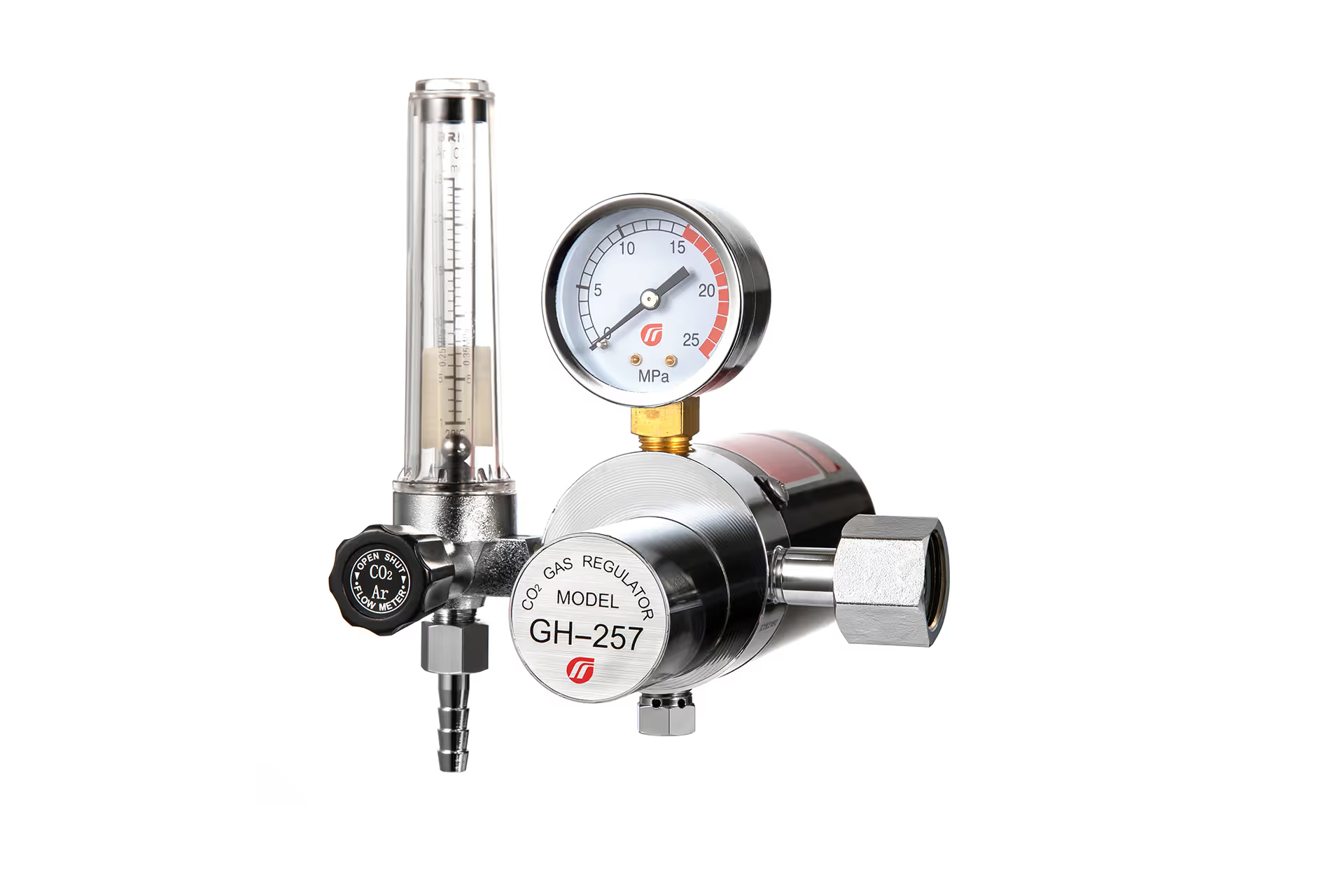
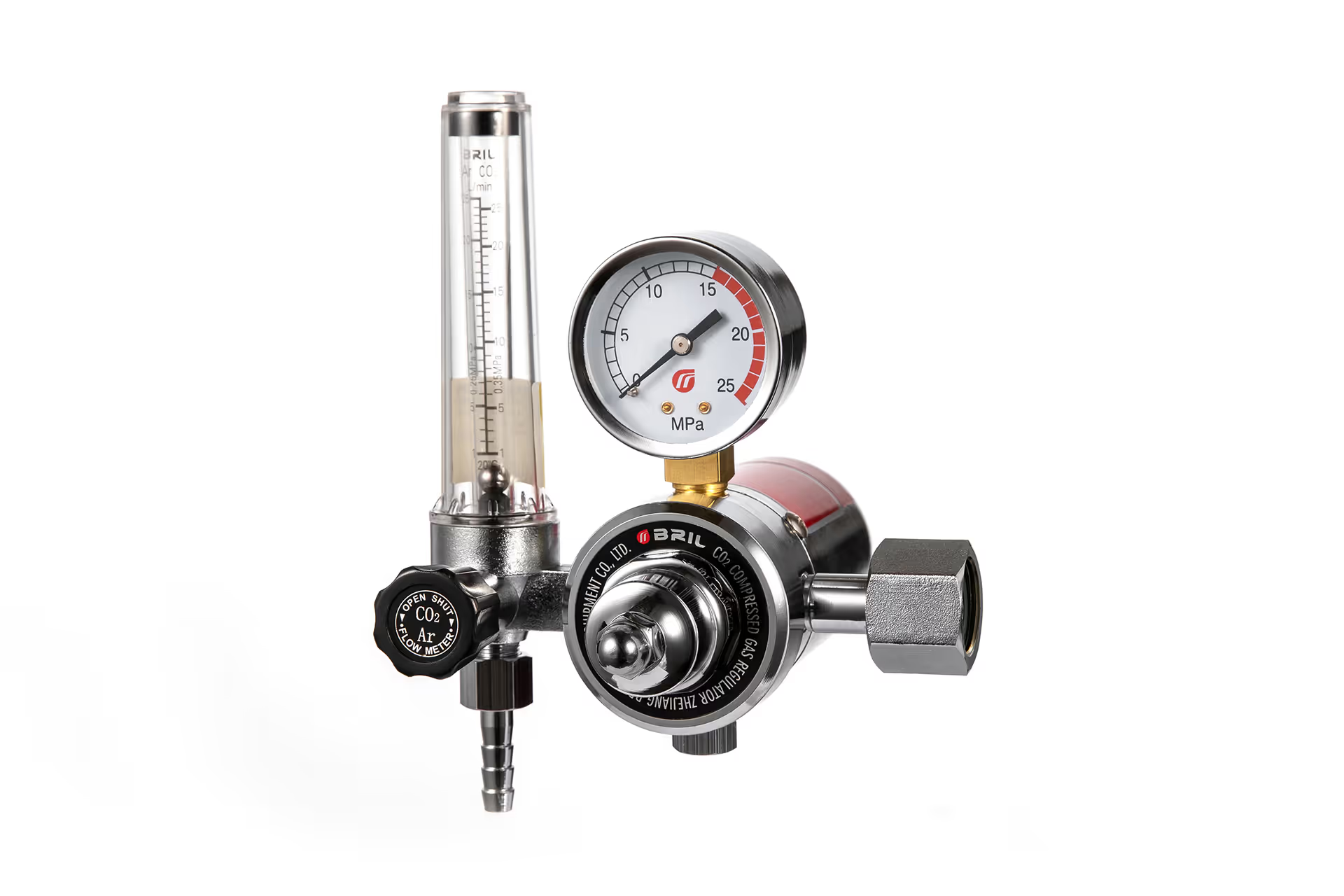
A quality CO₂ beverage regulator typically includes:
– A cylinder inlet designed for CO₂ service
– A high-pressure gauge to monitor cylinder condition
– A low-pressure gauge to show adjustable outlet pressure
– A pressure-adjustment screw or knob
– A safety relief valve
– A shutoff valve or outlet connection
– Brass body construction for strength and corrosion resistance
– Optional multi-body or secondary-regulator configurations
What a Nitrogen Pressure Regulator Does
A nitrogen pressure regulator for beverage dispensing reduces the high pressure in a nitrogen cylinder to a usable pressure for pushing beverages through a dispensing system.
Nitrogen is much less soluble in beverage than CO₂. This distinction is critical. Nitrogen can provide pressure to move product through long lines, but it will not maintain the carbonation of a conventional sparkling beverage in the way CO₂ does.
Nitrogen regulators are commonly used for:
– Nitro cold brew coffee
– Nitrogenated stout
– Certain wine dispensing systems
– Long-draw beverage systems
– CO₂/nitrogen gas blending equipment
– Beverage systems that require higher dispensing pressure
Micro Matic notes that a primary nitrogen regulator is used to reduce cylinder pressure for wine dispensing or for supplying a gas blender.
CO₂ vs Nitrogen for Beverage Carbonation
The most important technical difference is the gas-to-liquid relationship.
CO₂ is a carbonating gas. Nitrogen is primarily a pushing or dispensing gas.
| Comparison Factor | CO₂ Gas Pressure Regulator | Nitrogen Pressure Regulator |
|---|---|---|
| Primary gas | Carbon dioxide | Nitrogen |
| Main beverage function | Carbonation and dispensing | Dispensing pressure, nitrogenation, gas blending |
| Gas solubility in beverage | Relatively high | Very low |
| Best for sparkling drinks | Yes | No, not by itself |
| Typical applications | Soda, beer, sparkling water, kombucha, carbonated cocktails | Nitro coffee, stout, wine, long-draw systems |
| Typical pressure need | Often lower for direct draw systems | Often higher for long-draw or nitrogenated applications |
| Cylinder valve connection | CO₂-specific connection, often CGA 320 in the U.S. | Nitrogen-specific connection, often CGA 580 in the U.S. |
| Carbonation retention | Helps preserve carbonation when pressure and temperature are matched | Does not replenish dissolved CO₂ |
| Interchangeability | Should not be substituted with nitrogen regulator | Should not be substituted with CO₂ regulator |
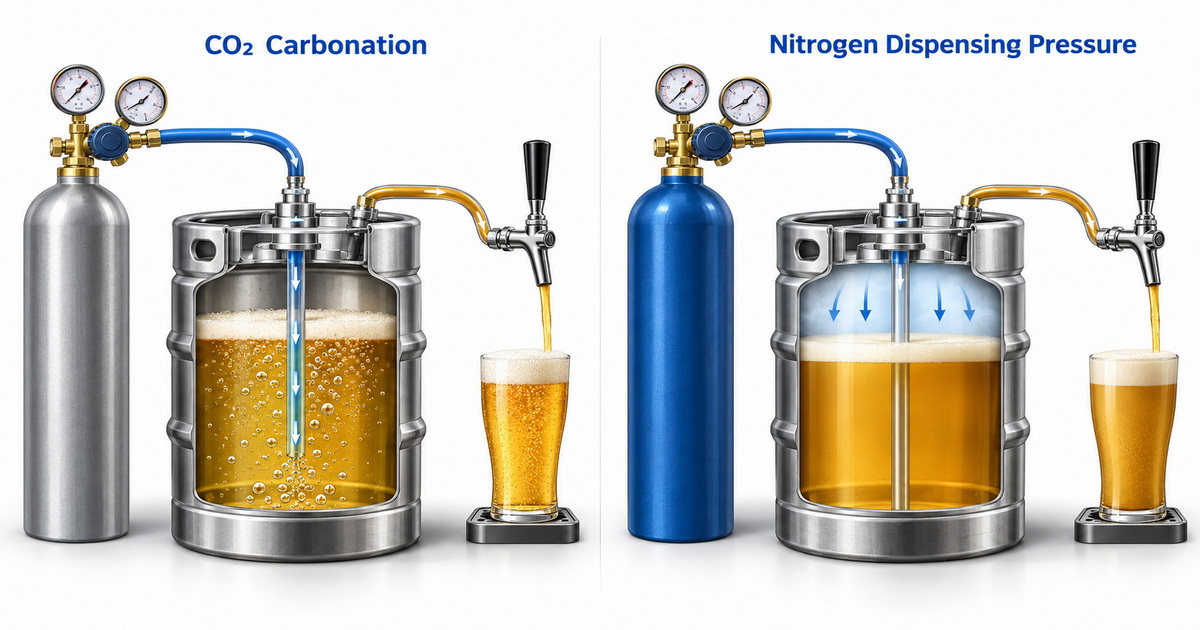
For U.S. draft systems, CO₂ cylinders commonly use a CGA 320 valve connection, while nitrogen cylinders commonly use a CGA 580 connection. These different interfaces help prevent accidental cross-connection.
Why CO₂ Is Required for Carbonated Beverages
Carbonation exists because CO₂ is dissolved under pressure. Once pressure drops or the beverage warms, CO₂ begins escaping from solution. That can result in flat drinks, inconsistent foam, flavor changes, and product waste.
A CO₂ regulator supports the equilibrium between:
– Beverage temperature
– Carbonation level
– Head pressure
– Dispensing line resistance
– Required flow rate
If a carbonated beverage is pushed using pure nitrogen, nitrogen may move the liquid, but it does not replace the CO₂ that leaves the beverage during serving. Over time, the product can lose carbonation.
This is why a conventional carbonated beer, soda, kombucha, or sparkling beverage should normally be supplied with CO₂—not pure nitrogen—unless a qualified system design specifies a blended gas.
When a Nitrogen Regulator Is the Better Choice
A nitrogen regulator is not “wrong” for beverage applications. It is simply designed for different operating requirements.
Nitro Coffee and Nitrogenated Beer
Nitrogenated drinks require nitrogen because the goal is not high carbonation. Instead, the beverage is designed to create a creamy texture, dense cascading effect, tight bubbles, and smooth mouthfeel.
Common products include:
– Nitro cold brew coffee
– Nitrogenated stout
– Nitrogenated tea
– Specialty cocktails
– Some craft beverage products
For these applications, a nitrogen pressure regulator must provide stable and accurate outlet pressure suitable for the product recipe and dispensing hardware.
Long-Draw Beer Dispensing Systems
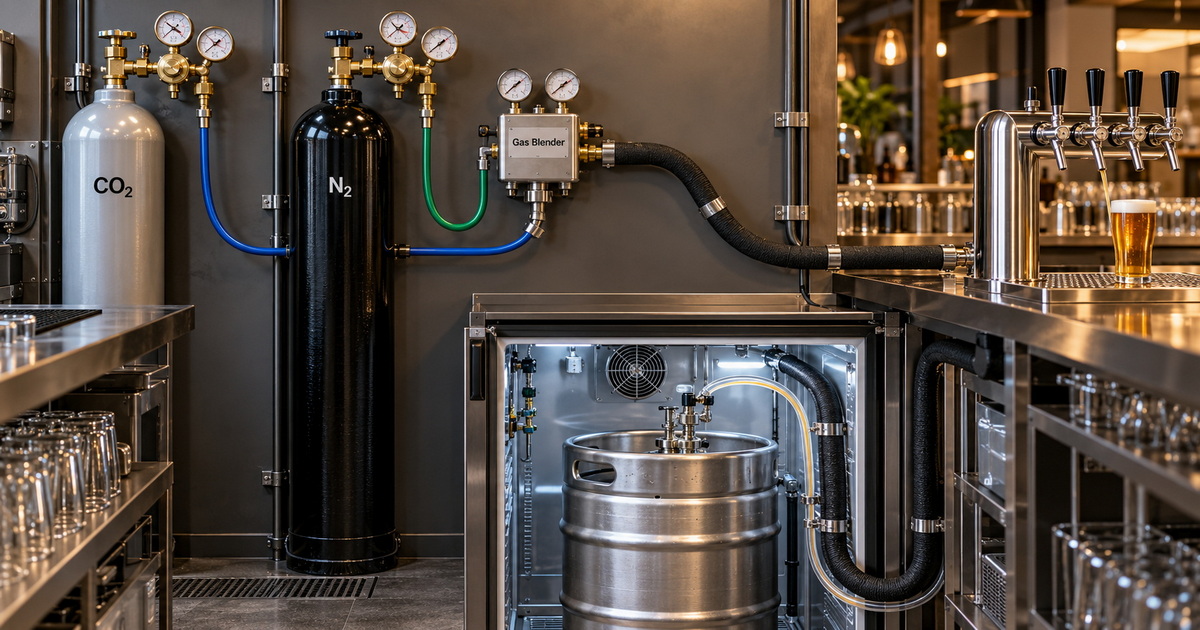
Long-draw beer systems have long product lines between the keg and faucet. They often need higher pressure to overcome elevation changes, line resistance, and longer hose runs.
In this situation, pure CO₂ can create over-carbonation if high pressure is continuously applied. A blended gas system can help solve this challenge.
For many long-draw ale and lager systems, an example blend is 70% CO₂ and 30% nitrogen, with dispensing pressures around 20–25 psi at approximately 38°F. The CO₂ supports carbonation, while nitrogen provides additional non-reactive pushing pressure.
For nitrogenated stout products, industry equipment guidance often uses a substantially higher nitrogen proportion, such as 25% CO₂ and 75% nitrogen.
Wine and Low-Carbonation Products
Nitrogen is also useful where operators need to dispense a product while minimizing CO₂ interaction. For still wine or low-carbonation beverages, nitrogen can provide pressure without deliberately increasing carbonation.
However, the correct choice depends on the packaging, beverage formulation, dispensing method, food-service environment, and supplier recommendations.
CO₂ Regulator vs Nitrogen Regulator: Technical Selection Factors
For distributors, beverage-equipment brands, and OEM buyers, selecting a regulator involves more than choosing “CO₂” or “nitrogen” on a product catalog page.
1. Confirm the Gas and Cylinder Connection
Never assume that a regulator can safely serve another gas simply because the thread appears similar.
Confirm:
– Gas type: CO₂, nitrogen, or blended gas
– Cylinder valve standard
– Inlet nut and stem specification
– Outlet thread type
– Hose-barb or push-fit connection
– Regional market requirements
– Cylinder pressure range
A regulator should be designed for the intended gas service and matching cylinder valve. This reduces installation risk and protects both the operator and the beverage system.
2. Match the Outlet Pressure Range
A beverage CO₂ regulator does not always need the same outlet-pressure range as a nitrogen regulator.
For direct-draw beer, soda, sparkling water, or kombucha systems, operating pressure is often relatively modest. For instance, many ales and lagers at 36–38°F operate in the 12–15 psi range, depending on the carbonation specification.
By contrast, nitrogen and blended-gas systems may require a higher outlet-pressure capacity for long-draw lines or specialty drinks.
A strong OEM specification should define:
– Minimum outlet pressure
– Maximum outlet pressure
– Normal working pressure
– Maximum flow requirement
– Required gauge scale
– Acceptable outlet-pressure variation
– Relief-valve setting
– Ambient-temperature range
3. Choose the Correct Regulator Architecture
A single-stage regulator reduces pressure in one main step. It can be suitable for many standard beverage applications.
A dual-stage gas regulator reduces pressure in two stages. It can provide improved outlet-pressure stability as cylinder pressure declines, which is valuable in applications with demanding pressure-control needs.
For beverage-equipment manufacturers and distributors, dual-stage design may be worth considering when:
– The product requires highly stable pressure
– The system operates for long periods
– Cylinder pressure changes could affect dispensing quality
– The equipment serves premium commercial applications
– The buyer wants a higher-specification regulator platform
A manufacturer should be able to provide clear technical documentation rather than relying only on a “dual-stage” label. Ask for drawings, internal architecture details, pressure-performance data, and pressure-cycle test procedures.
Practical Setup Checklist for Beverage Carbonation
Before connecting a gas regulator to a beverage system, verify the application with a structured process.
Step 1: Identify the Beverage Type
Determine whether the beverage is:
– Carbonated beer
– Soda or fountain beverage
– Sparkling water
– Kombucha
– Carbonated cocktail
– Nitro cold brew
– Nitrogenated stout
– Still wine
– Mixed-gas draft beverage
This decision determines whether CO₂, nitrogen, or a blended gas system is appropriate.
Step 2: Confirm Temperature and Carbonation Target
Carbonation pressure cannot be selected in isolation.
A cold beverage holds CO₂ differently than a warm beverage. As temperature rises, more pressure may be required to maintain the same carbonation level. Product specifications from the beverage producer should always take priority over generic pressure recommendations.
Step 3: Set the Regulator Slowly
A safe basic adjustment process includes:
1. Secure the correct regulator to the correct cylinder.
2. Inspect the washer, gasket, seal, fitting, and hose.
3. Confirm the adjustment screw is backed out before opening the cylinder.
4. Open the cylinder valve gradually.
5. Adjust outlet pressure slowly to the target setting.
6. Check all joints with an approved leak-detection method.
7. Observe dispensing quality before making small pressure corrections.
Do not use a regulator adjustment screw as a substitute for proper system balancing. If a beverage pours too quickly, excessive pressure may not be the only cause. Line length, internal diameter, temperature, faucet condition, and carbonation level also matter.
Step 4: Monitor Foam, Flow, and Beverage Quality
Common symptoms can reveal setup problems:
| Symptom | Possible Cause | Recommended Check |
|---|---|---|
| Excessive foam | High pressure, warm product, poor line balance | Verify temperature, carbonation target, line restriction, and regulator setting |
| Flat beverage | Insufficient CO₂ pressure or pure nitrogen used incorrectly | Confirm gas type and carbonation pressure |
| Slow pour | Low pressure, restricted line, faulty coupler | Inspect line, coupler, faucet, and pressure setting |
| Inconsistent pours | Pressure creep, leaks, changing temperature | Check regulator stability, fittings, and refrigeration |
| Poor nitro cascade | Incorrect gas blend or pressure | Confirm nitrogen blend, restrictor faucet, and product specification |
Regulator Accuracy Protects Beverage Quality
From a manufacturing perspective, the regulator is a quality-control component, not merely a connector between a gas cylinder and a beverage keg.
A poorly controlled regulator can contribute to:
– Uneven carbonation
– Gas waste
– Product loss
– Excess foam
– Flat beverages
– Service complaints
– Inconsistent pouring performance
– Higher maintenance costs
For OEM and ODM beverage-equipment brands, product reliability should begin with regulator design and inspection.
Important quality checkpoints include:
– Brass body material verification
– Inlet and outlet thread inspection
– Leak testing
– Pressure adjustment testing
– Pressure creep testing
– Gauge accuracy verification
– Relief-valve performance
– Repeated pressure-cycle testing
– Packaging and shipping-vibration evaluation
For applications where outlet stability is critical, buyers should request controlled test data showing performance as cylinder pressure decreases.
Recommended Regulator Selection by Application
| Beverage Application | Recommended Gas | Recommended Regulator Type | Key Consideration |
|---|---|---|---|
| Direct-draw lager or ale | CO₂ | CO₂ primary regulator | Maintain the beverage’s specified carbonation |
| Soda fountain system | CO₂ | CO₂ regulator with suitable pressure range | Stable carbonation and syrup/carbonator performance |
| Sparkling water | CO₂ | CO₂ beverage regulator | Match pressure to system design and water temperature |
| Kombucha on tap | CO₂ | CO₂ regulator | Preserve carbonation and control foam |
| Nitro cold brew | Nitrogen | Nitrogen regulator | Requires nitrogen service and nitro dispensing hardware |
| Nitrogenated stout | CO₂/N₂ blend | Nitrogen/blended-gas regulator setup | Use the gas blend and pressure specified for the beverage |
| Long-draw beer system | CO₂/N₂ blend | CO₂ and nitrogen regulators with gas blender | Higher pressure without excessive carbonation |
| Still wine dispensing | Nitrogen | Nitrogen regulator | Nitrogen can push product without intentionally adding carbonation |
Choose the Right Beverage Gas Regulator
For conventional beverage carbonation, a CO₂ gas pressure regulator is the correct starting point. It helps preserve carbonation, supports consistent dispensing, and protects the intended taste and texture of sparkling beverages.
A nitrogen pressure regulator is the better choice for nitro drinks, still-beverage dispensing, high-pressure applications, and gas-blending systems. It is not a direct replacement for CO₂ when maintaining carbonation is the core requirement.
If you are sourcing beverage gas regulators for an overseas brand, wholesale program, dispensing-equipment manufacturer, or industrial distributor, work with a supplier that can provide more than a standard catalog model. Look for precision-manufacturing capability, brass material control, stable pressure performance, strict quality inspection, customized inlet and outlet connections, gauge options, branding support, and OEM/ODM documentation.
Contact our team to discuss custom CO₂ regulators, nitrogen regulators, dual-stage gas regulators, gauge configurations, cylinder connections, private-label packaging, and OEM/ODM beverage gas-control solutions for your target market.
FAQ
1. Can I use a nitrogen pressure regulator for CO₂?
No. A nitrogen regulator should not be used as a substitute for a CO₂ regulator. The cylinder connection, gas-service design, pressure range, and application requirements may differ. Use the regulator designed for the specified gas and cylinder valve.
2. Does nitrogen carbonate beverages?
No. Nitrogen does not dissolve into beverages in the same way as CO₂. It can create a smooth texture and cascading effect in nitro drinks, but it does not provide conventional sparkling carbonation.
3. What pressure should I set a CO₂ regulator for beer?
The exact setting depends on beer temperature and the brewery’s carbonation target. For many ales and lagers around 36–38°F, a range of approximately 12–15 psi is common, but always follow the beverage producer’s recommendation and a carbonation chart for the specific product.
4. Why do long-draw beer systems use CO₂ and nitrogen blends?
Long beverage lines need higher pressure to move product to the faucet. Using pure CO₂ at higher pressure can over-carbonate beer. A CO₂/nitrogen blend can preserve carbonation while adding the pressure needed for long-distance dispensing.
5. What is the difference between a single-stage and dual-stage gas regulator?
A single-stage regulator reduces cylinder pressure in one main stage. A dual-stage regulator reduces pressure in two stages and may provide better outlet-pressure stability as cylinder pressure changes. Dual-stage designs are often selected when stable gas delivery is especially important.
6. Can one CO₂ regulator serve multiple kegs?
Yes, if the kegs require the same gas pressure and carbonation conditions. A gas distributor can route one regulated CO₂ supply to multiple kegs. If different beverages require different pressures, use secondary regulators or a multi-pressure regulator configuration.
7. What should OEM buyers verify before ordering beverage regulators?
Verify gas compatibility, inlet and outlet connections, pressure range, gauge units, body material, relief-valve function, leak-test process, pressure-stability data, certification scope, branding options, packaging specifications, and sample-test requirements.
References
1. Micro Matic. “Beer CO₂ Pressure Settings Explained: What Pressure Do I Need to Set the CO₂ Beer Regulator To?”
[https://www.micromatic.com/en-us/pressure-what-pressure-do-i-need-to-set-the-co2-beer-regulator-to] [micromatic]
2. Micro Matic. “Regulator Basics.”
[https://www.micromatic.com/en-us/seo/gasequipment-top/regulators-bot] [micromatic]
3. Micro Matic. “6 Costly Beer Tap Mistakes in Commercial Beer Tap Systems.”
[https://www.micromatic.com/en-us/education/dispensing-knowledge/learning-center/6-gotchas-to-watch-for] [micromatic]
4. Micro Matic. “Draft Beer Systems Guide: Know the 10 Key Elements.”
[https://www.micromatic.com/en-us/learn/dispensing-knowledge/learning-center/10-key-elements-of-a-draft-beer-system] [micromatic]
5. Micro Matic. “The 5-Cs Check List for a Glycol Cooled Long Draw Beer System.”
[https://www.micromatic.com/en-us/learn/dispensing-knowledge/learning-resource-center/the-5-cs-check-list] [micromatic]
6. Micro Matic. “Draft Beer System Components Guide.”
[https://www.micromatic.com/en-us/learn/dispensing-knowledge/learning-resource-center/basic-draft-beer-components] [micromatic]
7. Micro Matic. “The Essential Guide: Kombucha on Tap.”
[https://www.micromatic.com/en-us/learn/dispensing-knowledge/learning-resource-center/essential-guide-how-keg-kombucha-on-tap] [micromatic]
8. Bril Welding Equipment. “Top Industrial Gas Regulator Manufacturers and Suppliers in Americas: Expert Selection Guide.”
[https://www.chinesewelding.com/top-industrial-gas-regulator-manufacturers-and-suppliers-in-americas-2026-updated-expert-selection-guide/] [chinesewelding]
9. Bril Welding Equipment. “Top 10 Dual Stage Gas Pressure Regulator Manufacturers in China: Expert Selection Guide.”
[https://www.chinesewelding.com/top-10-dual-stage-gas-pressure-regulator-manufacturers-in-china-2026-updated-expert-selection-guide/] [chinesewelding]
Hot Tags:CO₂ Gas Pressure Regulator, Nitrogen Pressure Regulator, Beverage Gas Regulator, Beverage Carbonation System, Draft Beer Gas Regulator, CO₂ Beverage Regulator, Nitrogen Beverage Regulator, Dual Stage Gas Regulator, Gas Blender For Beer Dispensing, OEM Gas Regulator Manufacture