Content Menu
>> Evaluation criteria for industrial gas regulator suppliers
● Leading Suppliers Serving Indonesia
>> 1. Zhejiang Bril Welding Equipment Co., Ltd.
>> 3. Samator Group / PT Samator Indo Gas
>> 4. BCA Gas / CV Bintang Cahaya Asia
>> 6. PT Tira Austenite Tbk and Local Industrial Valve/Fitting Channels
>> 7. PT Sinar Agung Pratama and Specialist Gas-Equipment Distributors
● Technical Requirements Buyers Should Specify
>> 1. Gas medium and intended application
>> 2. Single-stage or dual-stage design
>> 3. Brass body, forging, and material traceability
>> 4. Gauges and pressure ranges
>> 5. Connection and thread standards
>> Pitfall 1: A “brass regulator” that is not structurally equivalent
>> Pitfall 2: Generic certificates used for unrelated models
>> Pitfall 3: Confusing CE marking with technical suitability
>> Pitfall 4: Ordering “CO₂ regulator” without considering freezing
>> Pitfall 5: Assuming all dual-stage regulators are suitable for high-purity gases
● An Industry Insider Tip Few Buyers Ask About
>> Build a proper sample program
>> Confirm Indonesian compliance early
>> Plan logistics and packaging
>> 1. How can I verify whether a supplier’s ISO 9001 certificate is still valid?
>> 2. Is a CE certificate enough to prove an industrial gas regulator is safe?
>> 3. What is the difference between a dual-gauge and a dual-stage gas regulator?
>> 4. How do I know whether I need a heated CO₂ regulator?
>> 5. What is the safest way to approve an OEM regulator order?
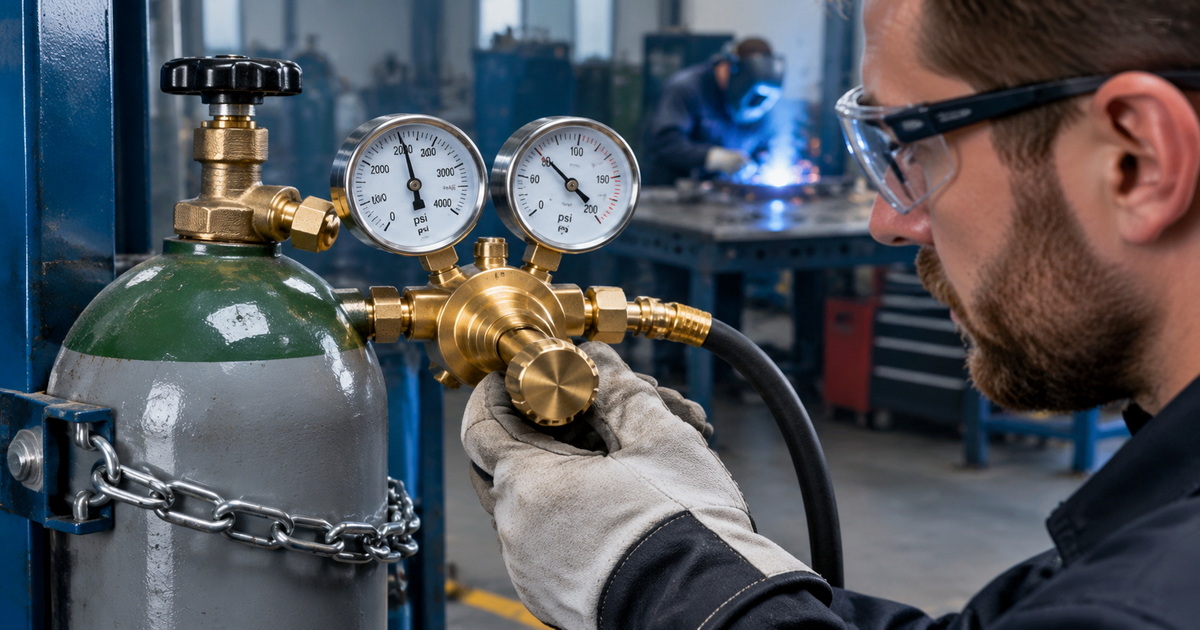
Indonesia is an important Southeast Asian market for welding, metal fabrication, shipbuilding, construction, industrial gases, medical gases, and process manufacturing. However, for professional buyers sourcing Industrial Gas Regulator products, the market is not simply a list of local factories: it is a combination of Indonesian gas suppliers, regional distributors, international brands, and export-oriented OEM manufacturers serving the country.
Indonesia has a large nationwide industrial-gas distribution environment led by established gas companies and equipment suppliers. Samator, for example, has supplied industrial gases across Indonesia for more than 50 years, while Air Products Indonesia provides industrial gases and gas-control equipment for welding and specialty-gas applications. At the same time, the country remains an import-oriented market for many higher-specification pressure-control products, especially applications requiring advanced materials, precise machining, dual-stage stability, specialty-gas compatibility, or international OEM documentation.
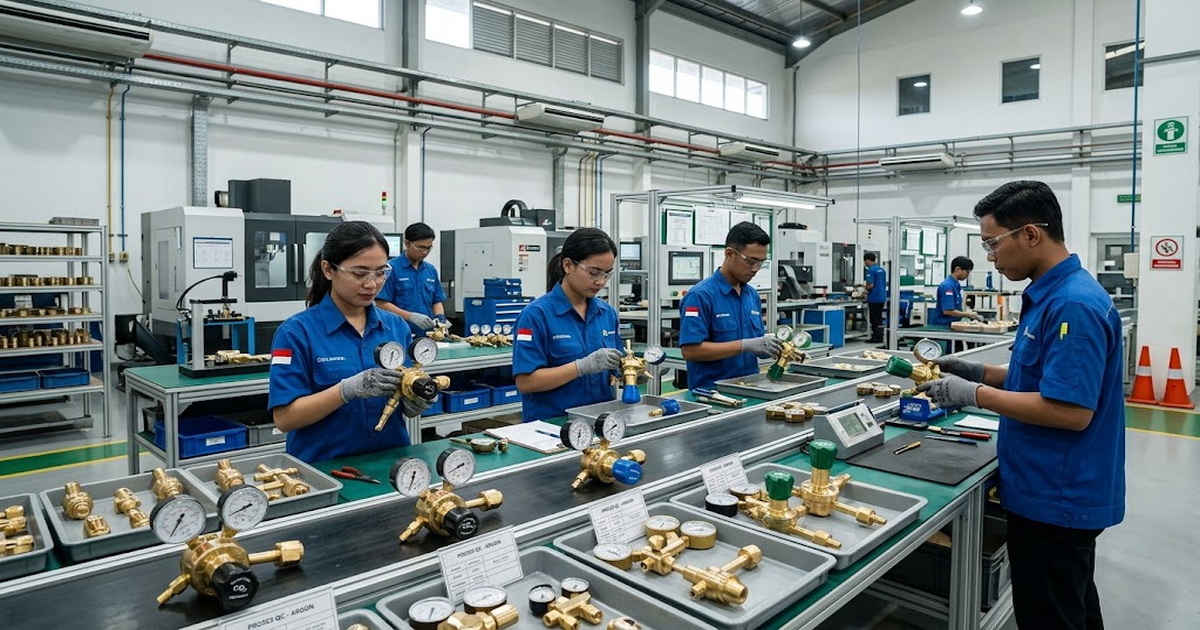
How We Selected Suppliers
This is not a simple “best companies” list. The companies below are included because they represent different sourcing models relevant to professional buyers:
– Export-oriented OEM/ODM regulator factories for private-label welding and gas-equipment brands
– Industrial-gas suppliers with local application knowledge and nationwide supply capability
– Equipment distributors and solution providers serving welding, cutting, laboratory, medical, and cylinder-gas users
– Suppliers with identifiable technical product coverage, quality-system claims, or established industrial-gas operations
– Organizations with practical relevance to Indonesian buyers seeking regulators, gas-control equipment, cylinders, manifolds, or complete supply solutions
Evaluation criteria for industrial gas regulator suppliers
Professional buyers should assess a supplier on more than price. The following criteria were used to structure this review:
| Evaluation Area | What Buyers Should Verify | Why It Matters |
|---|---|---|
| Product specialization | Gas types supported: oxygen, acetylene, CO₂, argon, nitrogen, propane, LPG, mixed gases | Different gases require different seat, seal, pressure, thread, and safety designs |
| Material quality | Brass grade, forged vs. cast body, diaphragm material, gauge construction, valve-seat material | Low-grade brass or poorly controlled castings can cause leakage, thread damage, and unstable delivery pressure |
| Pressure stability | Single-stage vs. dual-stage design, inlet-pressure effect, flow capacity, creep performance | Stable delivery pressure affects weld consistency, cutting quality, and downstream process safety |
| Compliance documentation | ISO 9001, CE where applicable, product test reports, EN ISO 2503 reference, RoHS declarations | Certificates must match the product and be valid for the actual production site |
| Quality control | Incoming-material inspection, leak testing, gauge calibration, endurance testing, final inspection | Regulators are safety-related products; visual inspection alone is insufficient |
| OEM/ODM capability | Logo, packaging, inlet/outlet threads, gas-specific labeling, color coding, carton design, instructions | Private-label buyers need more than a standard catalog product |
| MOQ and delivery | Sample lead time, tooling needs, production capacity, shipment planning, spare parts | A supplier may be technically capable but unsuitable for smaller distributors or fast-launch brands |
| Local-market readiness | Bahasa Indonesia labeling, import classification, SNI applicability, distributor support | Indonesian compliance requirements depend on the product category and intended use |
For welding and cutting cylinder regulators, EN ISO 2503 / ISO 2503 is a central technical reference. It covers single-stage and two-stage pressure regulators, including regulators with flow-metering devices, used with compressed gases, acetylene, LPG/MPS, and CO₂ for welding, cutting, and allied processes—within the standard’s defined scope and pressure limits. For manifold-system regulators, ISO 7291 is also relevant because it addresses regulators used in welding, cutting, and allied-process manifold systems.
Leading Suppliers Serving Indonesia
1. Zhejiang Bril Welding Equipment Co., Ltd.
Best suited for: Overseas brands, welding-equipment importers, regional distributors, industrial-gas suppliers, and small-to-mid-sized private-label buyers seeking OEM/ODM gas regulators with flexible communication and product customization.
| Profile Item | Information |
|---|---|
| Founded | 2002 |
| Manufacturing focus | Industrial gas pressure regulators for welding, cutting, and industrial gas control |
| Core products | CO₂ regulators, heated CO₂ regulators, argon regulators, oxygen regulators, acetylene regulators, propane regulators, nitrogen regulators, flow-meter regulators, and dual-stage regulators |
| Quality credentials stated by company | ISO 9001 system certification; products stated as CNAS- and CE-certified |
| OEM/ODM capability | Private label, customized regulator configurations, packaging, gas-specific inlet/outlet arrangements, branding support |
| Typical buyer profile | Importers, wholesalers, welding brands, gas distributors, and equipment manufacturers |
| Manufacturing location | Wenzhou, Zhejiang, China |
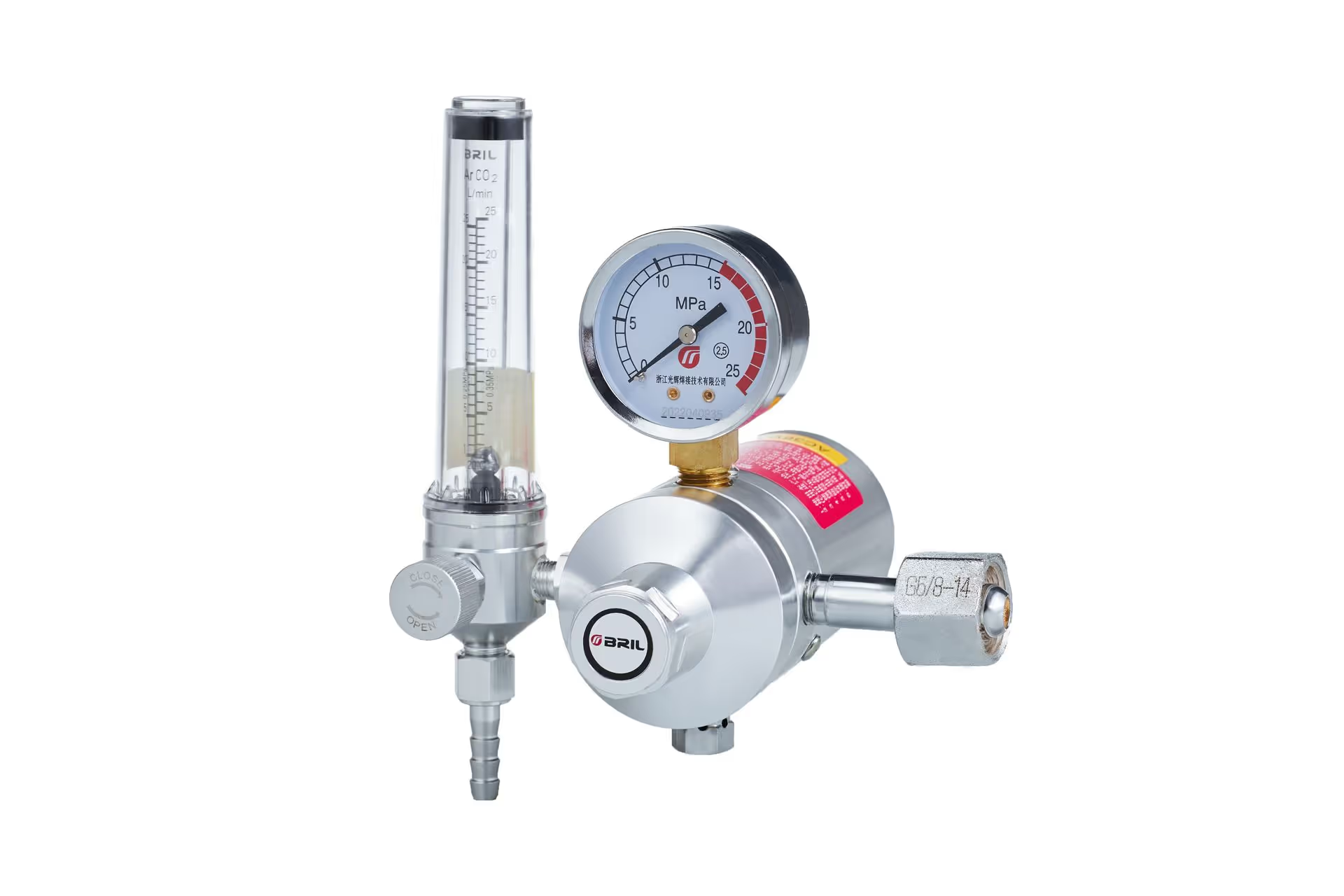
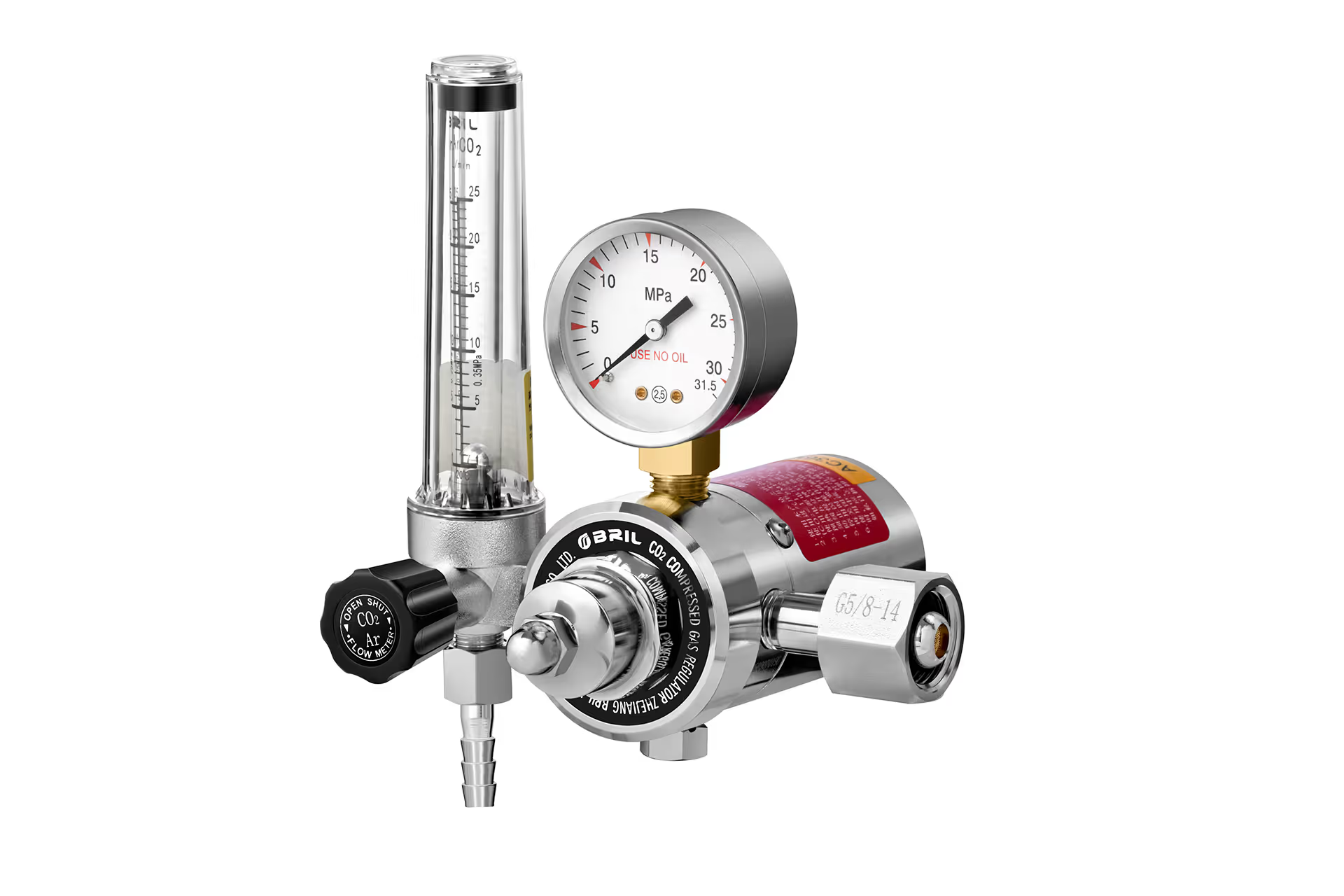
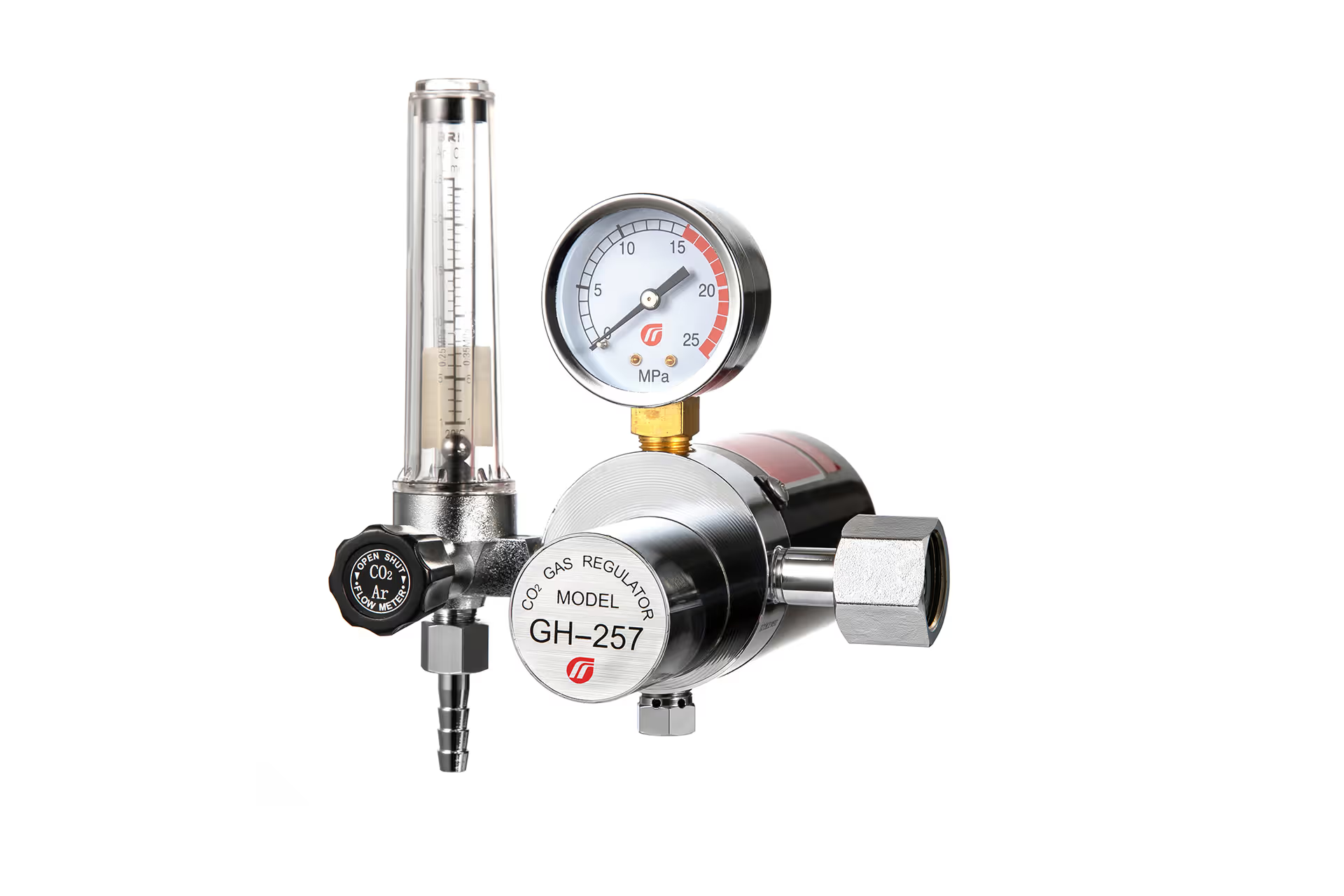
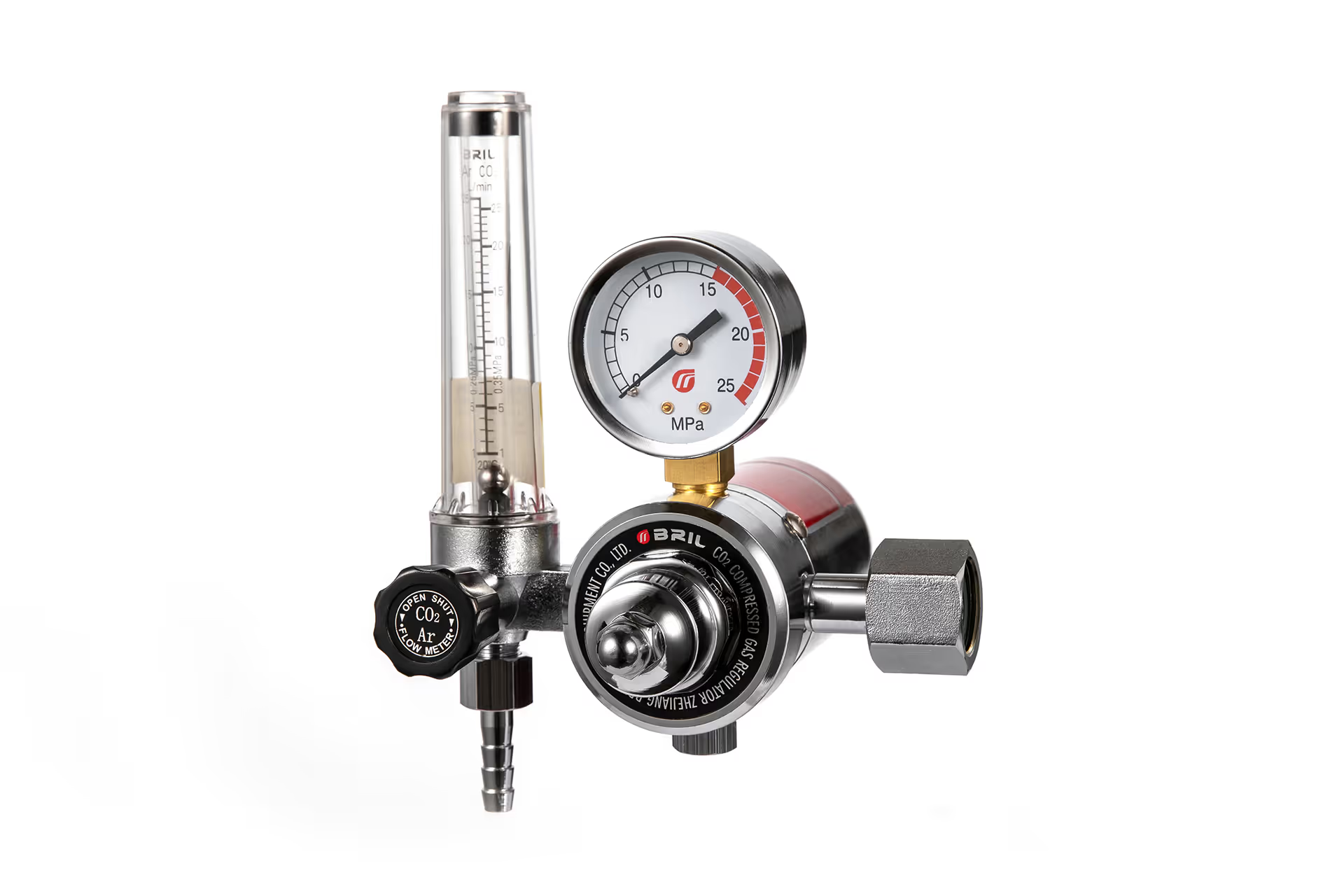
Zhejiang Bril Welding Equipment Co., Ltd. is an export-oriented regulator manufacturer that can be relevant to Indonesian distributors and brands looking beyond the local distribution market for a dedicated manufacturing partner. Founded in 2002, the company specializes in developing, manufacturing, and selling industrial gas pressure regulators. Its stated product and quality background includes ISO 9001 certification under UKAS and IAF recognition, as well as CNAS and CE-related product certifications.
From a buyer’s perspective, Bril’s value is not simply low unit cost. Its practical positioning is stronger for companies that need an OEM factory able to support product differentiation without the inflexibility that can come with very large multinational suppliers. This is especially relevant for distributors launching their own regulator line, welding-equipment brands creating a private-label accessory range, or industrial-gas suppliers that require consistent branding across cylinders, regulators, manifolds, and associated welding accessories.
The company states that it has more than 20 years of industry experience and works with established welding-equipment and gas-industry customers. Its published profile identifies domestic customers including Shanghai Hugong, Tayor Heavy Industry Group, Kaierda, Aotai, Jasic, and Riland, as well as overseas cooperation with Panasonic, OTC, and OEM supply for Messer product ranges beginning in 2022. Buyers should independently validate project scope, product models, and current authorization status during supplier due diligence.
For Indonesia-bound sourcing, Bril can be particularly suitable where the buyer requires:
– Custom brass regulator body styles or gas-specific configurations
– CO₂ and argon shielding-gas regulator programs for MIG/MAG and TIG welding
– Heated CO₂ regulator options for environments where gas cooling and frosting can reduce flow consistency
– Oxygen and acetylene regulator sets for oxy-fuel cutting systems
– Dual-stage nitrogen or specialty-gas regulator programs where pressure stability is a priority
– Private-label color schemes, engraved or printed logos, retail packaging, manuals, and master cartons
– Support for lower-to-medium MOQ projects compared with large-volume industrial contracts
A major advantage for smaller and mid-sized overseas brands is communication efficiency. Buyers often need quick clarification on thread standards, gauge ranges, outlet connection types, carton artwork, labeling, and sample adjustments. A specialized regulator manufacturer with an established export workflow can often provide more direct engineering feedback than a general trading company.
What buyers should ask Bril before placing an order
– Which brass alloy, diaphragm material, O-ring material, and valve-seat material are used for the selected model?
– Is the regulator forged brass, hot-stamped brass, machined brass, or cast brass?
– Which test records are available for leakage, outlet-pressure stability, gauge accuracy, burst resistance, and endurance?
– Can the regulator be supplied with the required inlet connection for Indonesian cylinder valves or the buyer’s target export market?
– Are the CE documents product-specific, current, and linked to the correct factory and model family?
– What are the minimum order quantity, sample cost, packaging MOQ, tooling requirements, and lead-time commitments?
– Can replacement gauges, diaphragms, valves, and repair kits be supplied as after-sales parts?
2. Air Products Indonesia
Best suited for: Industrial end users, gas customers, welding shops, fabrication operations, and projects requiring gas supply plus compatible gas-control equipment.
| Profile Item | Information |
|---|---|
| Market role | Industrial-gas supplier and gas-control equipment provider |
| Indonesia relevance | Supplies industrial gases, cylinder solutions, welding equipment, and specialty-gas equipment |
| Regulator focus | Single-stage and two-stage regulators, high- and low-pressure models, brass and stainless-steel options |
| Application strengths | Welding, cutting, specialty gases, laboratory-type gas handling, industrial gas supply |
| OEM/private label | Not primarily positioned as a private-label regulator manufacturer |
Air Products Indonesia is a major local-market option for buyers that prioritize integrated gas supply, application support, and access to gas-control equipment rather than private-label regulator manufacturing. Its specialty-gas equipment range includes single-stage and two-stage regulators, high- and low-pressure options, brass and stainless-steel designs, drop-point regulators, and line regulators.
For welding applications, Air Products Indonesia also states that it offers a range of regulators, including single-stage oxygen regulators and high-flow nitrogen regulators. Its acetylene product offering references integrated cylinder systems with a built-in regulator and flashback-arrestor features, demonstrating the company’s relevance to safety-focused cylinder gas applications.
This supplier is appropriate when a buyer needs more than a standalone regulator. For example, a fabrication plant may need gases, cylinders, regulator selection, welding equipment, safety accessories, and delivery support from one supply chain. In these situations, a local industrial-gas supplier can reduce integration risk.
However, it may be less suitable for importers looking for custom logos, proprietary regulator body designs, low-MOQ private-label programs, or exclusive brand development. For those requirements, a specialized OEM factory is normally a better sourcing route.
3. Samator Group / PT Samator Indo Gas
Best suited for: Indonesian industrial customers seeking a nationwide industrial-gas partner, localized service coverage, and gas-related project support.
| Profile Item | Information |
|---|---|
| Established | 1975 |
| Market role | Indonesian industrial, medical, and related gas group |
| Coverage | National network, serving regions from Aceh to Papua |
| Core strength | Gas supply, distribution infrastructure, industrial customer coverage |
| Regulator sourcing model | Buyers should verify whether the required regulator is supplied directly, sourced from partner brands, or specified per project |
Samator Group is among Indonesia’s most visible industrial-gas organizations. The company states that it has served Indonesia for more than 50 years and provides industrial, medical, and energy-related gas solutions across the country, from Aceh to Papua. Its group structure includes PT Samator Indo Gas, based in Surabaya.
For gas-regulator buyers, Samator is most relevant as a local industrial-gas partner rather than as a dedicated export OEM regulator factory. Its value lies in its Indonesian operating footprint, gas-industry experience, and ability to support customers who need reliable gas supply alongside cylinders, gas handling, and operational support.
Procurement teams should clearly define the scope of supply. For instance, ask whether the supplier will provide:
– Cylinder-mounted regulators
– Manifold regulators
– Pipeline pressure-reduction stations
– CO₂ or argon shielding-gas regulator sets
– Medical-gas pressure regulators
– Repair and inspection services
– Replacement parts and calibration support
– Product-level conformity documentation for the exact regulator model
This clarification is important because “industrial gas supplier” does not automatically mean “manufacturer of every gas-control component.” For long-term procurement, buyers should distinguish between the gas supplier, the regulator brand, the actual regulator factory, and the local warranty provider.
4. BCA Gas / CV Bintang Cahaya Asia
Best suited for: Buyers requiring a local Indonesian supplier for industrial gases, cylinders, valves, regulators, dry ice, and central medical-gas-related products.
| Profile Item | Information |
|---|---|
| Founded | 2007 |
| Location focus | Indonesia |
| Product scope | Medical equipment, central medical gas systems, industrial gases, calibrated gases, dry ice, cylinders, valves, regulators |
| Supply model | Local supplier and system-oriented source |
| OEM/private label | Buyers should verify directly |
BCA Gas, operated by CV Bintang Cahaya Asia, states that it was founded in 2007 and works with medical equipment, central medical gas systems, industrial gases, calibrated gases, dry ice, cylinders, valves, and regulators.
This makes BCA Gas potentially relevant for Indonesian customers needing mixed procurement: gas cylinders, valves, basic regulators, central gas-system components, and industrial or medical-gas accessories. It may be particularly useful for local buyers who value immediate domestic coordination, localized invoicing, and service access.
For international brand owners or distributors, however, BCA Gas should be assessed as a local supply and system partner rather than assumed to be a regulator manufacturing source. Before placing an order, buyers should ask for the exact brand, model, country of origin, product datasheet, spare-parts availability, and applicable quality documentation.
5. PT Amcoweld Indonesia
Best suited for: Welding-equipment buyers in Indonesia seeking equipment supply, established-brand access, and locally oriented distribution support.
| Profile Item | Information |
|---|---|
| Market role | Welding and cutting equipment supplier |
| Regional positioning | States it is a leading supplier of cutting and welding equipment in Southeast Asia |
| Relevance | Can support buyers seeking regulator-related welding equipment and associated accessories |
| Product verification | Buyers should confirm current regulator brands, product families, and service capability |
PT Amcoweld Indonesia positions itself as a supplier of cutting and welding equipment in Southeast Asia and represents established brands. For buyers purchasing complete welding packages rather than individual regulator components, suppliers of this type can be valuable.
A welding distributor may prefer sourcing machines, torches, PPE, consumables, and regulators through one channel. That can simplify procurement and reduce compatibility issues. For example, oxy-fuel cutting operators need not only oxygen and acetylene regulators but also hoses, flashback arrestors, cutting torches, tips, valves, and safe cylinder connections.
Still, buyers should request a precise regulator offer rather than relying on broad “welding equipment” positioning. Technical requirements should include gas type, inlet pressure, required outlet-pressure range, gauge scale, inlet/outlet thread, maximum flow, flashback-arrestor arrangement, and whether the regulator complies with the applicable standards for the intended application.
6. PT Tira Austenite Tbk and Local Industrial Valve/Fitting Channels
Best suited for: Industrial projects requiring broader valve, fitting, tubing, pressure-control, or engineering procurement rather than only cylinder welding regulators.
| Profile Item | Information |
|---|---|
| Market role | Industrial valve, fitting, and engineering supply channel |
| Indonesia relevance | Identified as serving industrial valves and fittings |
| Application fit | Industrial gas systems, process piping, fittings, and project-based supply |
| Regulator specialization | Must be confirmed by product model and project scope |
For industrial users, the regulator decision may extend beyond a welding-cylinder regulator. Process plants, laboratories, manifold systems, gas distribution systems, and engineered installations can require regulators alongside valves, fittings, gauges, tubing, filters, safety devices, and control panels.
Market information identifies PT Tira Austenite Tbk as a Jakarta-based organization associated with industrial valves and fittings. It should therefore be assessed as a potential project-supply or engineering channel rather than automatically classified as a dedicated manufacturer of welding gas regulators.
This distinction matters. A high-pressure nitrogen line regulator for a plant, for example, is not necessarily equivalent to a dual-gauge argon regulator used on a welding cylinder. Buyers should specify the use case before requesting quotations.
7. PT Sinar Agung Pratama and Specialist Gas-Equipment Distributors
Best suited for: Local sourcing of gas equipment, replacement components, imported regulator brands, and project-specific gas-control requirements.
| Profile Item | Information |
|---|---|
| Market role | Gas equipment and valve supplier/distributor |
| Typical relevance | Imported equipment, aftermarket supply, localized sourcing |
| Buyer fit | End users, maintenance departments, and Indonesian importers needing available stock |
| Important verification point | Confirm genuine brand origin, warranty coverage, and traceable model documentation |
Indonesia’s market includes specialized local distributors and stockists that help buyers source gas equipment, valves, regulators, and imported products. Market reporting identifies PT Sinar Agung Pratama as a Jakarta-based gas-equipment and valve supplier, particularly relevant to specialized regulator sourcing.
Local distributors play an important role in Indonesia because lead time, local stock, field support, and access to replacement components can be more important than the factory price for urgent plant maintenance or equipment repair. This is especially true when a failed regulator interrupts welding production, gas supply, laboratory testing, or cylinder-filling operations.
The main buyer risk is traceability. Ask the distributor to confirm:
– Actual manufacturer and country of origin
– Authorized-distribution status
– Serial or batch traceability
– Product test certificate availability
– Warranty conditions
– Spare-part support
– Local repair capability
– Compatibility with the gas, cylinder valve, and downstream equipment
Supplier Comparison Table
| Supplier | Primary Role | Product Focus | OEM/ODM Suitability | Typical MOQ Approach | Certification/Documentation Focus | Best For |
|---|---|---|---|---|---|---|
| Zhejiang Bril Welding Equipment Co., Ltd. | Dedicated regulator manufacturer | CO₂, heated CO₂, argon, oxygen, acetylene, propane, nitrogen, flow-meter, dual-stage regulators | High | Usually negotiable by model, packaging, customization, and tooling requirements | ISO 9001, CE-related product documentation, test records to be confirmed by model | Private-label brands, distributors, welding-equipment manufacturers |
| Air Products Indonesia | Industrial-gas supplier and equipment provider | Specialty-gas regulators, line regulators, welding regulators, integrated cylinder solutions | Low | Project-, equipment-, or supply-contract based | Product-specific technical documentation and system compatibility | Industrial end users needing gases plus equipment |
| Samator Group / PT Samator Indo Gas | National industrial-gas supplier | Industrial and medical gas supply; related equipment and project support | Low | Contract or project dependent | Local supply documentation and product verification required | Indonesian industrial buyers needing nationwide support |
| BCA Gas | Local gas, cylinder, valve, and regulator supplier | Industrial gas, medical gas systems, cylinders, valves, regulators | Low to medium | Quote dependent | Product and origin documents should be requested per item | Local mixed-product purchasing |
| PT Amcoweld Indonesia | Welding-equipment supplier | Welding and cutting equipment; regulator-related accessories | Low | Distributor or project dependent | Brand-specific documentation should be confirmed | Complete welding-package procurement |
| PT Tira Austenite Tbk / engineering channels | Industrial valves and fittings channel | Valves, fittings, industrial system components | Low | Project dependent | Engineering data and suitability verification required | Industrial piping and gas-system projects |
| PT Sinar Agung Pratama / distributors | Local specialist equipment sourcing | Gas equipment, valves, imported regulator supply | Low | Stock or project dependent | Distributor authorization and product traceability are critical | Replacement, maintenance, and local-stock needs |
Technical Requirements Buyers Should Specify
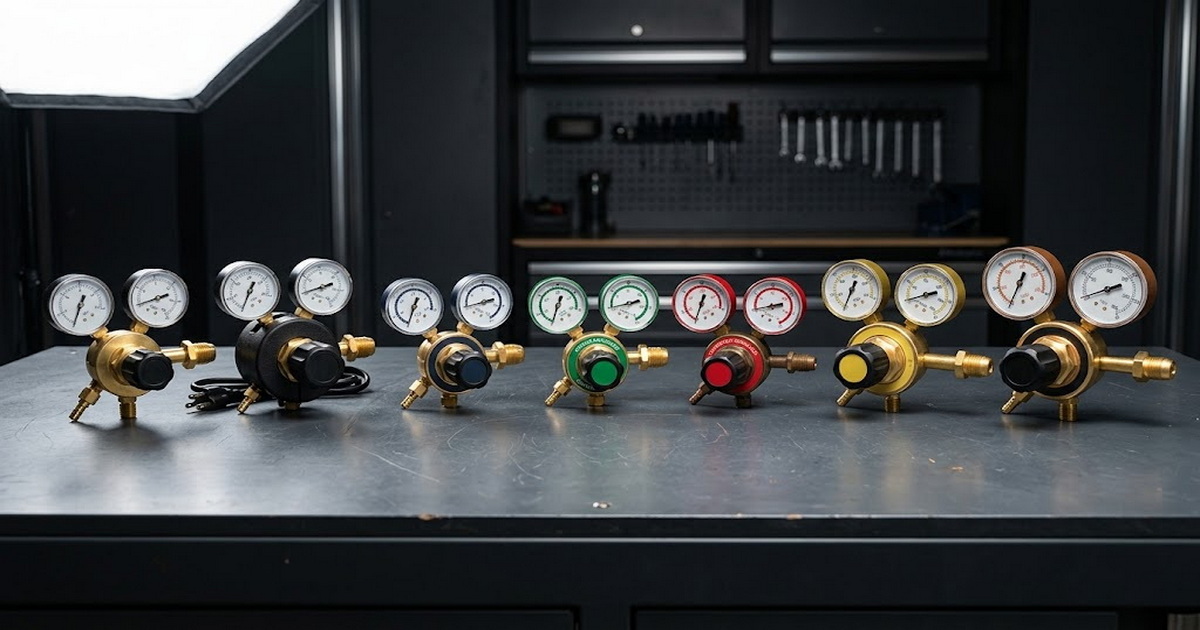
The phrase “Industrial Gas Regulator” is too broad for an effective request for quotation. A professional RFQ should state the engineering parameters clearly.
1. Gas medium and intended application
Specify whether the regulator is for:
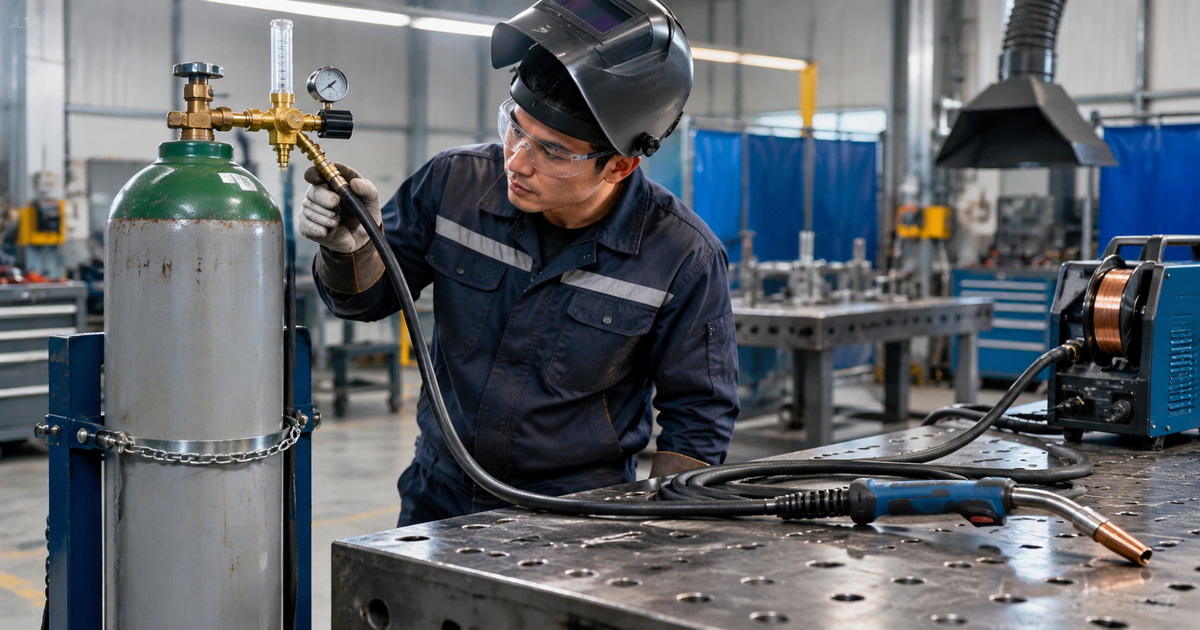
– CO₂ shielding gas for MIG/MAG welding
– Heated CO₂ service
– Argon for TIG/MIG welding
– Oxygen for welding, cutting, heating, or industrial use
– Acetylene for oxy-fuel cutting
– Propane or LPG for heating and cutting
– Nitrogen for purging, testing, blanketing, or high-flow industrial use
– Mixed argon/CO₂ shielding gas
– Specialty gas, laboratory gas, calibration gas, or high-purity gas
– Manifold or pipeline service rather than direct cylinder connection
Gas compatibility affects the regulator’s materials, seals, thread direction, connection design, pressure range, and safety requirements.
2. Single-stage or dual-stage design
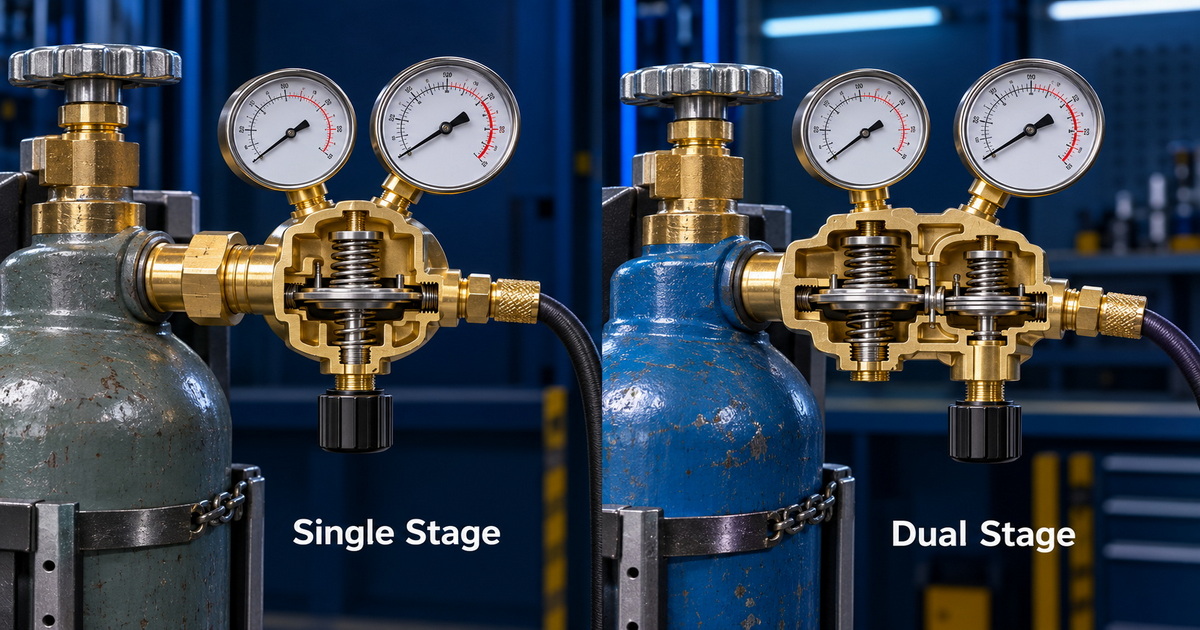
A single-stage regulator reduces cylinder pressure to the desired delivery pressure in one step. It is commonly selected for standard welding and cutting applications when some outlet-pressure variation as cylinder pressure falls is acceptable.
A dual-stage regulator uses two pressure-reduction stages. It is generally preferred when delivery-pressure stability matters more, such as laboratory use, calibration gas, precision process control, certain specialty-gas applications, or applications where cylinder pressure changes could affect output consistency.
A common procurement mistake is ordering a dual-gauge regulator and calling it “dual-stage.” These are not the same thing.
– Dual-gauge regulator: Usually has one gauge for cylinder pressure and one for outlet pressure.
– Dual-stage regulator: Has two pressure-reduction stages internally to improve pressure stability.
This distinction should be written explicitly in the PO and technical drawing approval.
3. Brass body, forging, and material traceability
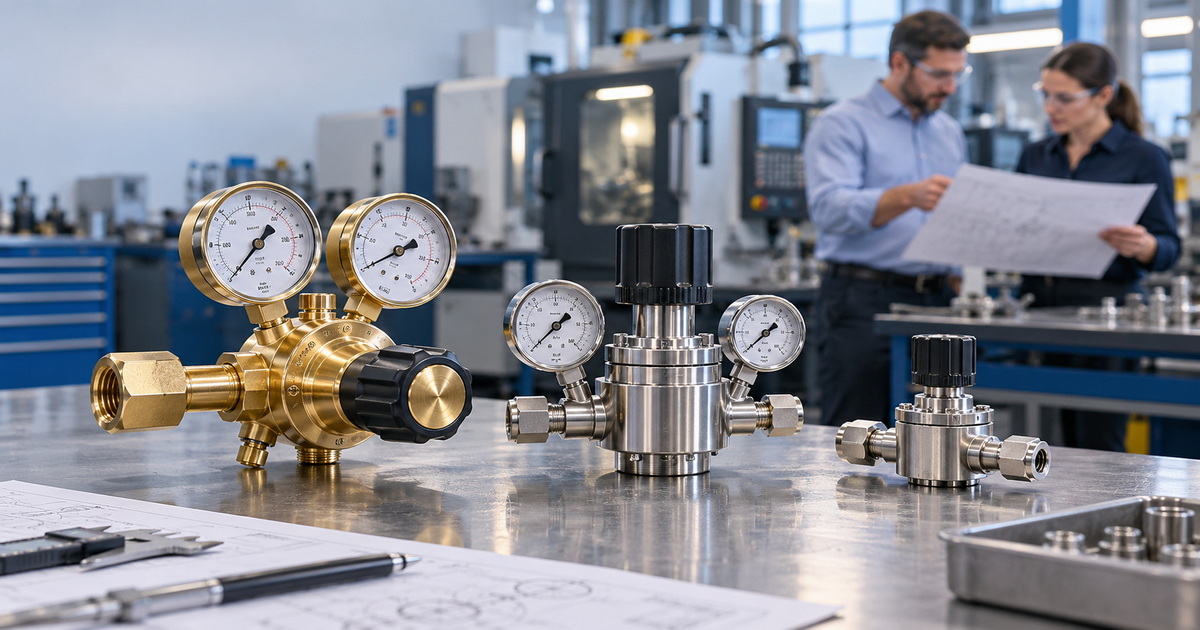
For common industrial-gas cylinder regulators, brass is widely used because it offers corrosion resistance, machinability, and compatibility with many non-reactive gas applications. But “brass regulator” is not a sufficient quality description.
Buyers should ask whether the body is:
– Hot-forged brass
– Hot-stamped brass
– Machined from brass bar
– Gravity-cast brass
– Die-cast zinc alloy with a brass-colored finish
– A mixed construction using different alloys for the body, bonnet, valve, and connection
The sourcing risk is that a regulator may look like a solid brass product but use lower-cost materials in critical structural areas. A low-quality body can create risks around threads, repeated cylinder installation, impact resistance, and long-term sealing.
For oxygen service, cleanliness and material compatibility deserve special attention. Oil, grease, contamination, or inappropriate assembly practices can create severe hazards in oxygen-enriched systems. Buyers should require oxygen-clean assembly controls when applicable.
4. Gauges and pressure ranges
Gauge quality directly affects operator safety and process control. Verify:
– Inlet gauge range
– Outlet gauge range
– Gauge diameter
– Gauge accuracy class
– Over-pressure tolerance
– Lens material
– Dial language and unit system
– Color coding for gas identification
– Whether the gauge is protected against transport damage
Avoid specifying only “two gauges.” Instead, define the working pressure range. For example, a 0–25 MPa cylinder-pressure gauge paired with a 0–1 MPa outlet gauge may be appropriate for one use case but unsuitable for another.
5. Connection and thread standards
Thread mismatch is one of the most common causes of sourcing failure in industrial gas regulators. The same regulator body may need different inlet nuts, stems, threads, and outlet fittings for different markets.
Your RFQ should identify:
– Cylinder inlet connection standard
– Outlet thread standard
– Hose-tail size
– Right-hand or left-hand thread direction
– Gas-specific non-interchangeability requirements
– Required sealing method
– Whether an adapter is permitted or prohibited
– Local Indonesian cylinder-valve compatibility
Never assume that a “European style,” “American style,” or “universal regulator” will fit the target cylinder. The cylinder valve connection must be confirmed using a controlled drawing or physical sample.
Common Sourcing Pitfalls
Pitfall 1: A “brass regulator” that is not structurally equivalent
Some low-cost regulators use thin brass shells, zinc-alloy components, low-grade castings, or minimally controlled machining. The product may look acceptable in photographs but fail under repetitive cylinder installation, high inlet pressure, vibration, or accidental impact.
How to avoid it: Request material declarations, net weight, body cross-section photos, factory process information, and samples for destructive or third-party testing when order value justifies it.
Pitfall 2: Generic certificates used for unrelated models
A supplier may provide an ISO 9001 certificate for its quality system but imply that every product is certified to every standard. ISO 9001 certifies a management system; it does not, by itself, prove that a specific regulator model complies with CE, EN ISO 2503, RoHS, or an Indonesian requirement.
How to avoid it: Match every certificate to the legal company name, factory address, certificate scope, issuing body, validity date, and actual product model. Ask for test reports that name the specific product family.
Pitfall 3: Confusing CE marking with technical suitability
CE-related documentation may be relevant in certain markets and applications, but it does not replace engineering verification. A regulator must still be compatible with the gas, pressure range, connection system, local regulations, and actual operating environment.
How to avoid it: Evaluate CE documentation alongside drawings, gas compatibility, leak-test requirements, safety features, and model-specific technical data.
Pitfall 4: Ordering “CO₂ regulator” without considering freezing
CO₂ expands and cools as it flows. Under high continuous demand, some CO₂ regulators can frost, leading to unstable output or reduced usable flow. This is a practical concern for high-duty welding, beverage, dry ice, or other CO₂ applications.
How to avoid it: State your expected flow rate, duty cycle, ambient temperature, cylinder orientation, and whether an electrically heated CO₂ regulator is required. Heated regulator selection should be based on actual operating conditions—not added as a generic upsell.
Pitfall 5: Assuming all dual-stage regulators are suitable for high-purity gases
A dual-stage design improves pressure control, but it does not automatically make the regulator suitable for high-purity, corrosive, toxic, reactive, or analytical gases. Such applications may require stainless steel, specific diaphragm materials, low internal volume, low particle shedding, special cleaning, and specific leak-rate standards.
An Industry Insider Tip Few Buyers Ask About
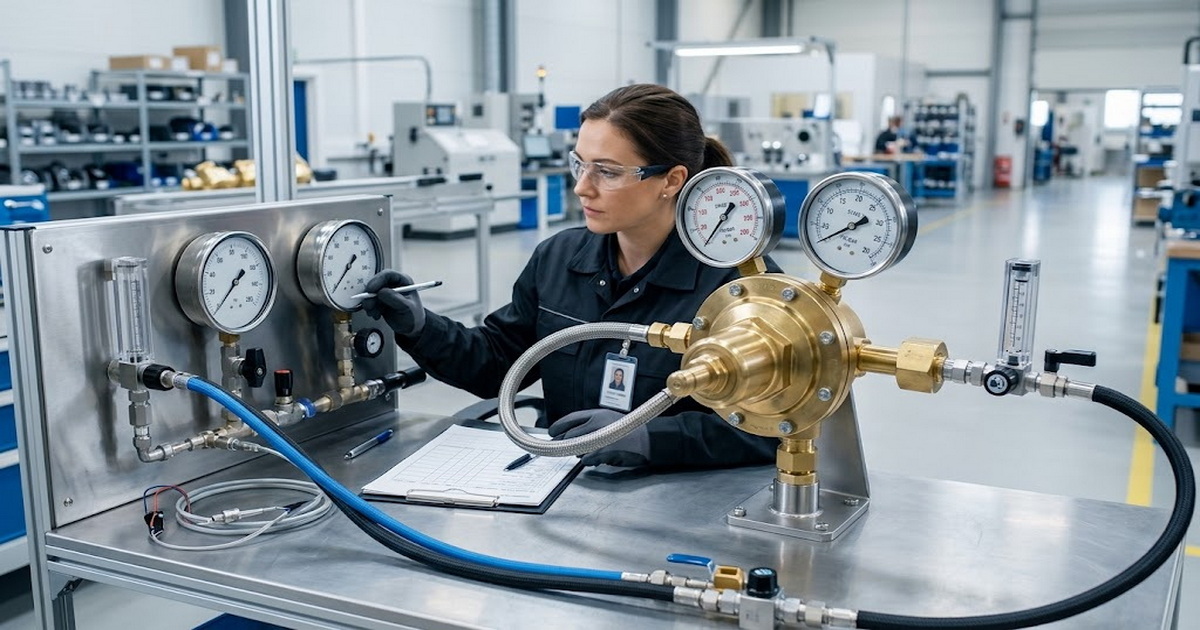
One of the least-discussed risks is inlet-pressure creep after the cylinder valve is closed and reopened during a stabilized test.
A supplier may demonstrate a regulator by setting outlet pressure once, opening the valve briefly, and showing an acceptable gauge reading. That is not enough. A more meaningful test is:
1. Connect the regulator to a test cylinder or pressure source.
2. Set the outlet pressure at the specified flow condition.
3. Stop downstream flow and allow the system to stabilize.
4. Observe whether the outlet pressure gradually rises above the set value.
5. Repeat after cycling the inlet pressure and after a defined endurance interval.
This gradual outlet-pressure rise is often called creep. It can indicate poor valve-seat sealing, contamination, seat wear, or inconsistent internal machining. In welding applications, creep can affect shielding-gas flow; in cutting or process applications, it can create more serious pressure-control risks.
Ask suppliers to provide a controlled leak and creep-test method rather than relying only on a cosmetic final inspection video.

Buyer’s Guide for Indonesia
Verify the actual factory
For overseas sourcing, do not rely only on website images or marketplace claims. Verify:
– Legal company registration and factory address
– Manufacturing process videos or live video audit
– Number and type of machining, forging, assembly, and test stations
– Evidence of incoming-material control
– Gauge calibration process
– Leak-testing method and pressure medium
– Traceability labels or production batch controls
– Export packaging and container-loading experience
– Existing experience with Indonesian or Southeast Asian customers
A useful approach is to request a live factory walkthrough focused on the regulator production line. Ask the supplier to show the body machining process, assembly line, air or gas leak testing, gauge installation, final inspection, carton packing, and warehouse dispatch.
Build a proper sample program
A sample program should not mean ordering one random unit and immediately approving mass production. For branded procurement, use a staged sample process:
1. Catalog sample: Confirm basic appearance, fitting compatibility, gauge range, and general function.
2. Engineering sample: Confirm the exact body style, inlet/outlet fittings, gas type, pressure range, and material configuration.
3. Pre-production sample: Confirm logo, color, packaging, labels, barcode, manual, and carton marks.
4. Golden sample: Sign and retain a sealed reference sample before mass production.
5. Pre-shipment inspection sample: Compare finished goods against the approved golden sample.
For higher-risk regulator programs, buyers should arrange third-party inspection for appearance, quantity, packaging, marking, pressure testing, leak testing, and random functional testing.
Confirm Indonesian compliance early
Indonesia’s National Standard framework is administered by the National Standardization Agency of Indonesia, known as BSN. Whether SNI is mandatory depends on the exact product category and intended market use; it should not be assumed from a supplier’s general statement.
Before shipment, confirm:
– Whether SNI is mandatory for the exact regulator category
– Whether Bahasa Indonesia labeling or instruction materials are required
– Import classification and customs documentation
– Local agent, importer-of-record, or distributor requirements
– Product liability and warranty expectations
– Applicable gas-cylinder and workplace safety rules
For products used in medical gas, food and beverage, laboratory, or high-purity gas settings, requirements may be more stringent than for ordinary welding regulators.
Plan logistics and packaging
Gas regulators are compact but damage-sensitive products. The gauges, inlet stems, outlets, and knobs need protective packaging. Ask suppliers about:
– Individual blister, box, foam, or molded-pulp protection
– Gauge protectors
– Drop-test approach
– Master carton strength
– Palletization
– Container moisture protection
– Spare-parts packing
– Correct HS classification support
– Shipping terms such as EXW, FOB, CIF, or DDP where appropriate
For Indonesia, buyers commonly route shipments through major gateways such as Jakarta/Tanjung Priok or Surabaya/Tanjung Perak, depending on the final distribution plan. Align the shipping port with the warehouse, customs broker, and regional customer base before booking.
Conclusion
Indonesia is a strong and expanding market for industrial gases, welding, cutting, fabrication, and related gas-control equipment. Local industrial-gas suppliers such as Samator and Air Products Indonesia are valuable when buyers need local gas supply, application support, equipment access, and nationwide service coverage.
For distributors, overseas brands, and welding-equipment companies building their own regulator range, a specialized OEM/ODM manufacturer such as Zhejiang Bril Welding Equipment Co., Ltd. can offer a different advantage: focused regulator engineering, private-label flexibility, customized configurations, responsive technical communication, and support for CO₂, argon, oxygen, acetylene, propane, nitrogen, and dual-stage regulator programs. Bril states that it has manufactured industrial gas regulators since 2002 and provides OEM production for recognized welding and gas-industry customers.
The most successful procurement strategy is usually not choosing the cheapest quotation. It is building a supplier qualification process that verifies materials, pressure performance, connection compatibility, documentation validity, inspection methods, packaging reliability, and long-term service capability.
A reliable industrial gas regulator supplier should be able to answer technical questions clearly, provide product-specific evidence, support controlled sampling, and maintain consistency from the first container to repeat orders.
Frequently Asked Questions
1. How can I verify whether a supplier’s ISO 9001 certificate is still valid?
Ask for the complete certificate, not a cropped image. Check the legal company name, factory address, certificate number, certification scope, issuing certification body, accreditation mark, issue date, and expiry date. Then verify the certificate through the certification body’s public directory or by contacting the issuing body directly. Also confirm that the factory shown on the certificate is the same location producing the regulators.
2. Is a CE certificate enough to prove an industrial gas regulator is safe?
No. CE-related documentation may be useful for applicable markets and products, but safety must be evaluated model by model. You still need to confirm gas compatibility, pressure range, connections, materials, leakage performance, pressure creep, relevant standard scope, and correct installation. For welding and cutting cylinder regulators, EN ISO 2503 is a key technical reference.
3. What is the difference between a dual-gauge and a dual-stage gas regulator?
A dual-gauge regulator normally uses two gauges: one shows cylinder pressure and the other shows outlet pressure. A dual-stage regulator contains two internal pressure-reduction stages to maintain more stable outlet pressure as inlet cylinder pressure decreases. A regulator can have two gauges without being dual-stage.
4. How do I know whether I need a heated CO₂ regulator?
A heated CO₂ regulator is worth considering when CO₂ consumption is high, ambient conditions are cold, or continuous operation causes frosting and unstable gas flow. Provide the supplier with required flow rate, continuous operating time, cylinder size, ambient temperature, and application details. Do not choose a heated model solely because it is marketed as an upgrade.
5. What is the safest way to approve an OEM regulator order?
Use a formal technical specification, approved drawings, controlled samples, and pre-shipment inspection. The PO should state gas type, inlet/outlet connection, pressure range, gauge range, material requirements, logo artwork, packaging, labeling, inspection standard, acceptable quality level, spare-parts requirement, and applicable documentation. Keep one sealed “golden sample” for comparison with all future production batches.
References
1. – Zhejiang Bril Welding Equipment Co., Ltd. company profile, certifications, manufacturing focus, and OEM customer information. [chinesewelding]
2. – ISO overview of ISO 2503 for gas welding equipment and cylinder pressure regulators. [iso]
3. – ISO overview of ISO 7291 for manifold-system pressure regulators used in welding, cutting, and allied processes. [iso]
4. – GCE explanation of EN ISO 2503 scope for cylinder regulators used in welding, cutting, and allied processes. [gcegroup]
5. – Air Products Indonesia specialty-gas control equipment, including single-stage and two-stage regulator options. [airproducts.co]
6. – Air Products Indonesia welding equipment and regulator availability. [airproducts.co]
7. – Samator Group corporate information and nationwide Indonesian industrial-gas presence. [samator]
8. – BCA Gas company profile covering industrial gases, medical-gas systems, cylinders, valves, and regulators. [bcagas]
9. – Indonesia regulator-market and local supply-chain context, including the importance of checking SNI applicability by product category. [chinesewelding]
Hot Tags: Industrial Gas Regulator, CO2 Gas Regulator, Argon Gas Regulator, Oxygen Gas Regulator, Acetylene Gas Regulator, Propane Gas Regulator, Nitrogen Gas Regulator, Dual Stage Gas Regulator, Welding Gas Regulator, Gas Regulator Manufacturer