Content Menu
● What Is a High Pressure Gas Regulator?
>> Typical high pressure regulator characteristics
>> Where high pressure capability matters most
● What Is a Dual Gauge Pressure Regulator?
>> Why two gauges improve cylinder monitoring
>> A key limitation: cylinder pressure is not always “gas remaining”
● High Pressure vs Dual Gauge Regulator: Core Differences
● Single-Stage, Dual-Stage, and Dual-Gauge: Do Not Confuse Them
>> When a dual-stage regulator adds value
● How to Choose the Right Regulator for Cylinder Monitoring
>> 1. Identify the gas service
>> 2. Confirm maximum inlet pressure
>> 3. Set the required delivery pressure and flow
>> 4. Decide whether cylinder monitoring is operationally necessary
>> 6. Verify the connection and outlet configuration
● Expert Inspection Checklist Before Startup
>> Pre-use regulator inspection
● Real-World Application Examples
>> CO₂ beverage and dispensing systems
>> Argon welding and TIG/MIG fabrication
>> Oxygen and fuel-gas cutting
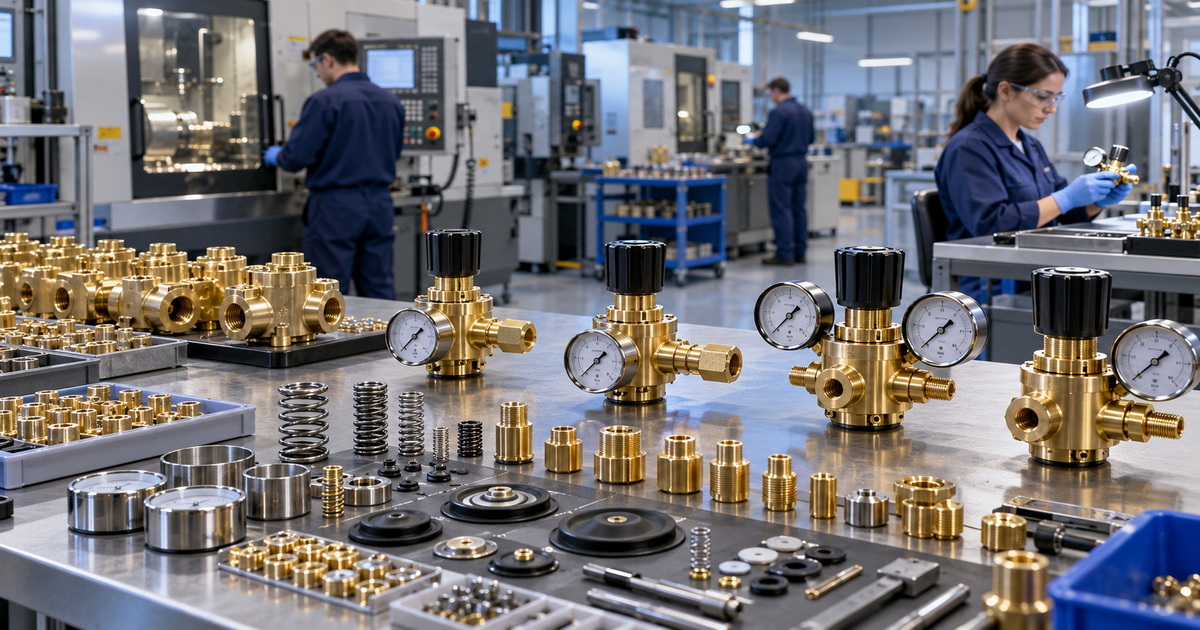
● Why Brass Construction and Quality Control Matter
● FAQs
>> 1. Is a high pressure gas regulator the same as a dual gauge regulator?
>> 2. Why does a cylinder regulator need two gauges?
>> 3. Does cylinder pressure accurately show how much CO₂ is left?
>> 4. When should I use a dual-stage gas regulator?
>> 5. Can I use one gas regulator for different gases?
>> 6. What causes outlet pressure to rise after adjustment?
>> 7. What information should I provide for a custom regulator quotation?
Choosing between a high pressure gas regulator and a dual gauge pressure regulator is not simply a matter of selecting a stronger-looking device or adding another dial. The right choice depends on the gas type, cylinder pressure, required delivery pressure, need for remaining-gas visibility, operating environment, and the consequences of an unstable supply.
For welding, cutting, CO₂ dispensing, shielding-gas supply, laboratory use, and industrial gas distribution, a high-quality cylinder regulator must safely reduce high inlet pressure while giving operators practical control over outlet pressure. A dual gauge pressure regulator adds a major operational advantage: it allows the user to monitor both cylinder-side pressure and regulated delivery pressure at the same time. This visibility supports better cylinder-change planning, troubleshooting, and day-to-day process control.
As a professional manufacturer of CO₂ regulators, heated CO₂ regulators, argon regulators, oxygen regulators, acetylene regulators, propane regulators, nitrogen regulators, and dual-stage gas regulators, we see a common sourcing mistake: buyers compare regulators only by inlet pressure rating or gauge count. In practice, pressure capacity, material compatibility, connection standard, gauge range, pressure stability, and application-specific safety requirements all matter.
What Is a High Pressure Gas Regulator?
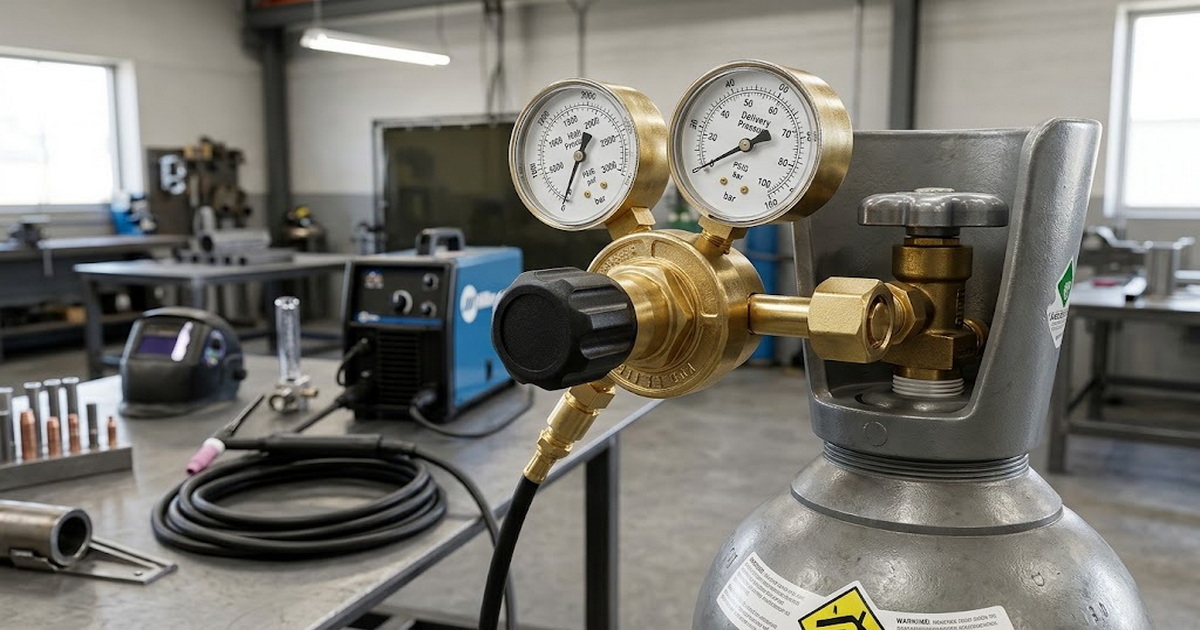
A high pressure gas regulator is designed to reduce gas pressure from a high-pressure source—typically a compressed gas cylinder—to a lower, usable, controlled outlet pressure.
The regulator generally uses a diaphragm, valve seat, spring, adjustment mechanism, and pressure-bearing body to balance the force of incoming gas against the selected outlet setting. The goal is to provide a usable downstream pressure even when cylinder pressure is much higher than the pressure required by the torch, welding machine, gas mixer, manifold, or production equipment.
For cylinder applications, the regulator must be rated for the actual maximum inlet pressure of the gas cylinder and must use the correct gas-specific inlet connection. Cylinder connections are designed to help prevent dangerous cross-connection between incompatible gases; the applicable CGA connection also relates to the source-pressure range the regulator is intended to handle.
Typical high pressure regulator characteristics
– High inlet-pressure capability for compressed cylinders.
– A pressure-reducing mechanism that delivers lower working pressure.
– Available in single-stage or dual-stage designs.
– May have one gauge, two gauges, or a different monitoring arrangement.
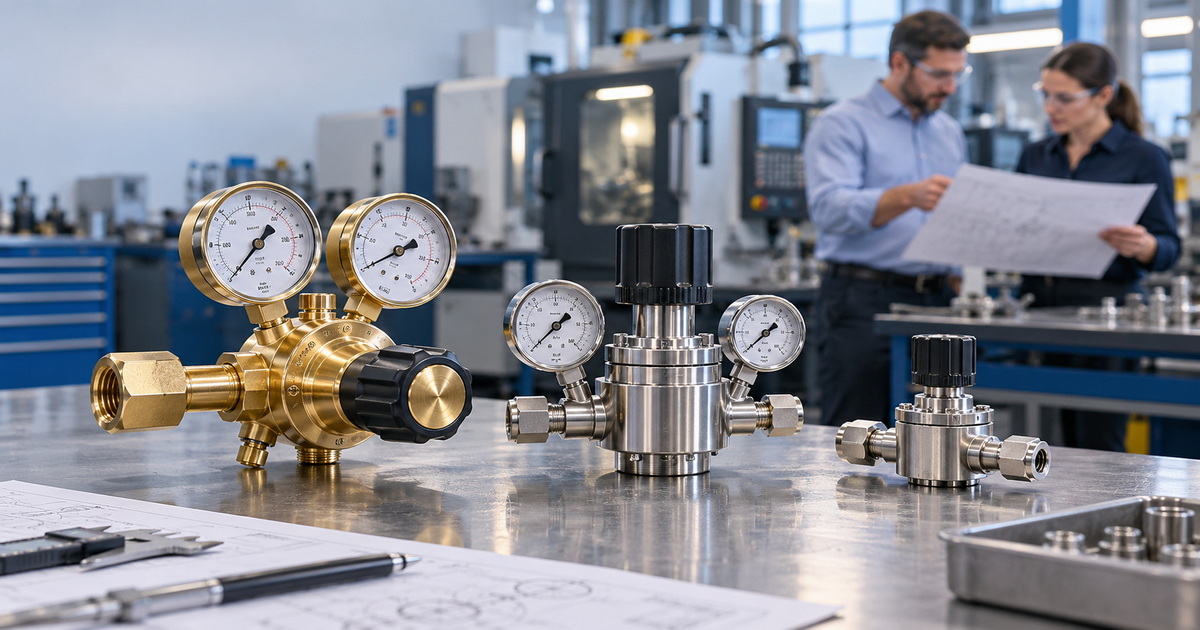
– Often manufactured from brass, stainless steel, or other gas-compatible materials.
– Can be configured for oxygen, argon, nitrogen, CO₂, acetylene, propane, and other services.
A high-pressure regulator is especially relevant for gases such as nitrogen, argon, oxygen, and CO₂ when the source cylinder contains pressure far above the final application requirement. However, the correct regulator is not defined by pressure rating alone. The materials, seals, CGA inlet, outlet connection, pressure range, and gas-service cleanliness must all match the application.
Where high pressure capability matters most
A high pressure gas regulator is usually the right starting point when the application involves:
– Industrial gas cylinders with high stored pressure.
– Welding and cutting systems requiring stable working pressure.
– Argon and nitrogen shielding-gas supply.
– CO₂ systems where a cylinder source must be reduced to usable pressure.
– Gas distribution panels and cylinder manifolds.
– OEM equipment that must be compatible with a specified cylinder inlet condition.
What Is a Dual Gauge Pressure Regulator?
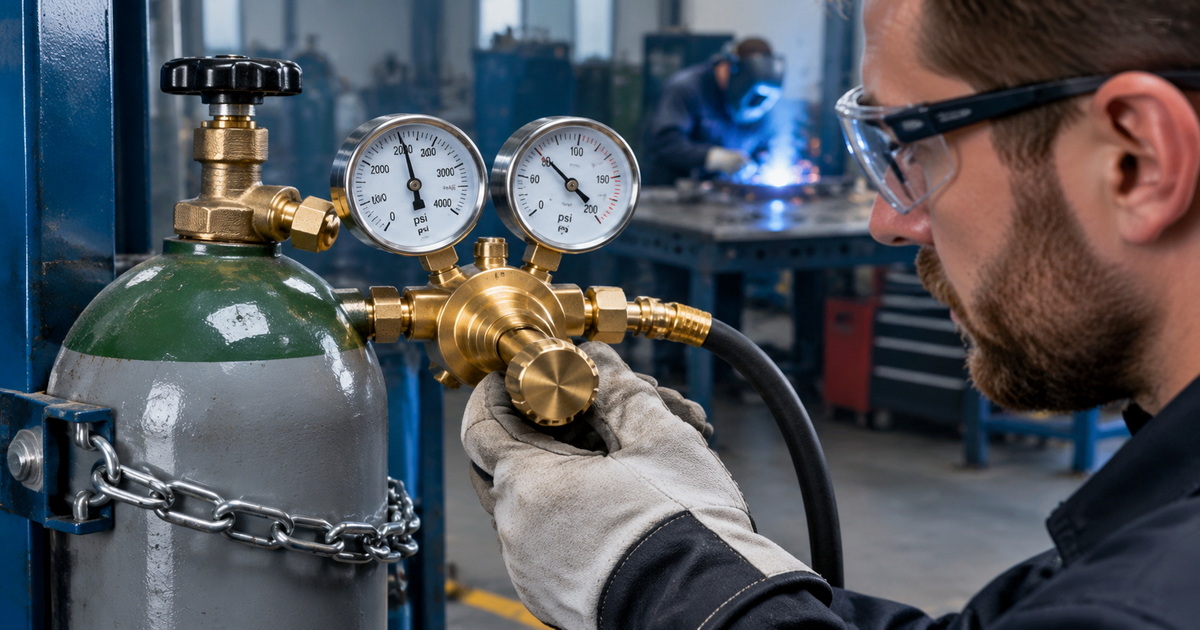
A dual gauge pressure regulator normally includes two separate pressure gauges:
1. Cylinder or inlet-pressure gauge — shows the pressure entering the regulator from the cylinder.
2. Outlet or delivery-pressure gauge — shows the pressure supplied downstream after regulation.
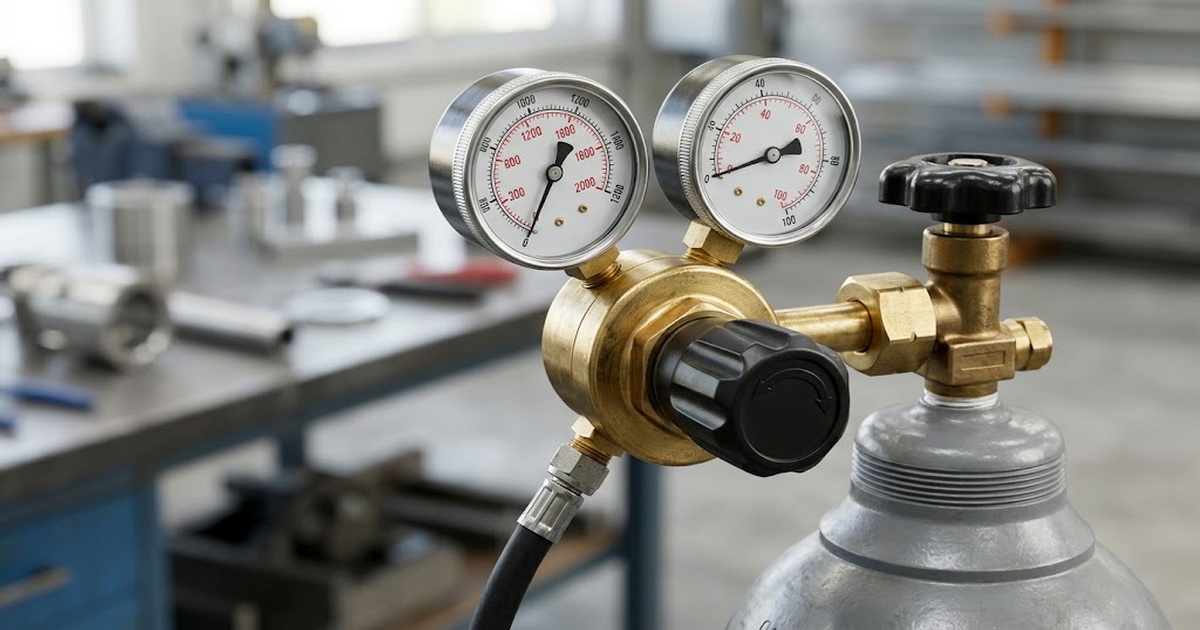
This two-gauge format is widely used on cylinder regulators because the operator needs to know both the upstream condition and the selected working pressure. A pipeline regulator may use only an outlet gauge because the gas supply is already managed elsewhere; by contrast, a cylinder regulator commonly has one gauge for inlet pressure and one for delivery pressure.
For example, a dual-gauge CO₂ regulator may use a cylinder gauge with a scale up to 3,000 psi and an outlet gauge designed for a lower working range, such as 0–60 psi in beverage-dispensing service. The exact gauge range must always match the gas and intended operating pressure.
Why two gauges improve cylinder monitoring
The main value of a dual gauge pressure regulator is not cosmetic. It provides operational information that a single gauge may not reveal.
With both gauges visible, an operator can:
– Confirm that the cylinder valve is open and gas is reaching the regulator.
– Set and verify the downstream working pressure.
– Observe pressure changes during consumption.
– Identify abnormal pressure behavior during shutdown or leak testing.
– Plan cylinder replacement before process interruption.
– Distinguish a potential cylinder-side issue from a downstream pressure-control issue.
For operations that run continuously, such as automated welding cells, beverage dispensing, laser support-gas systems, packaging equipment, or gas blending, this visibility can reduce avoidable downtime.
A key limitation: cylinder pressure is not always “gas remaining”
A common misconception is that a cylinder gauge always acts like a fuel gauge. That is more reliable for many compressed gases, but it is less reliable for liquefied gases such as CO₂ and propane.
For a CO₂ cylinder, pressure may remain relatively stable while liquid CO₂ is still present, then drop more quickly as the cylinder approaches depletion. Temperature also affects indicated pressure. Therefore, the high-pressure gauge is useful for confirming pressure and identifying unusual changes, but it should not be treated as a precise remaining-content indicator for every gas or every storage condition.
For operations that require accurate inventory control, use a cylinder scale, level-monitoring system, delivery schedule, or consumption-trend record in addition to the regulator’s inlet gauge.
High Pressure vs Dual Gauge Regulator: Core Differences
The most important comparison is not “which one is better?” It is which technical attribute solves your operating problem.
| Comparison factor | High pressure gas regulator | Dual gauge pressure regulator |
|---|---|---|
| Primary purpose | Safely reduces a high-pressure source to a controlled outlet pressure | Displays both inlet/cylinder pressure and outlet/delivery pressure |
| Defines pressure capability? | Yes. The inlet rating must suit the source cylinder | Not by itself; gauge count does not prove high-pressure capability |
| Cylinder monitoring | May be limited if only one gauge is fitted | Stronger visibility of both source and outlet conditions |
| Typical gauge arrangement | One or two gauges, depending on model | Usually two gauges: inlet and outlet |
| Best for | High-pressure cylinder supply, industrial gas control, OEM equipment | Applications needing regular cylinder status and working-pressure checks |
| Key buying question | Can it safely handle the maximum inlet pressure and gas type? | Are the two gauge ranges, accuracy, and monitoring needs appropriate? |
| Main risk if selected incorrectly | Overpressure exposure, incompatibility, poor pressure control | Misleading monitoring, wrong gauge range, false assumption of pressure capability |
| Can it be combined? | Yes | Yes; many cylinder regulators are both high-pressure rated and dual gauge |
The practical conclusion is straightforward:
– Choose a high pressure gas regulator when inlet pressure rating, gas compatibility, and safe pressure reduction are the primary requirements.
– Choose a dual gauge pressure regulator when the operator also needs clear, simultaneous visibility of cylinder pressure and regulated outlet pressure.
– For many cylinder-based industrial applications, the optimum product is a high-pressure-rated dual gauge regulator configured for the correct gas service.
Single-Stage, Dual-Stage, and Dual-Gauge: Do Not Confuse Them
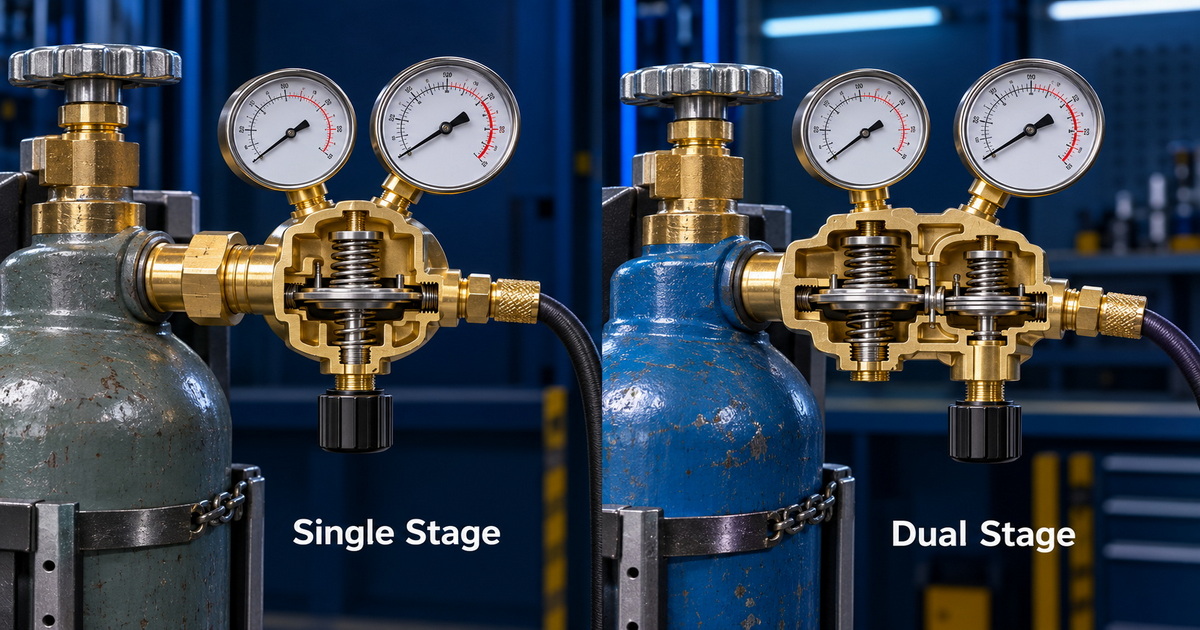
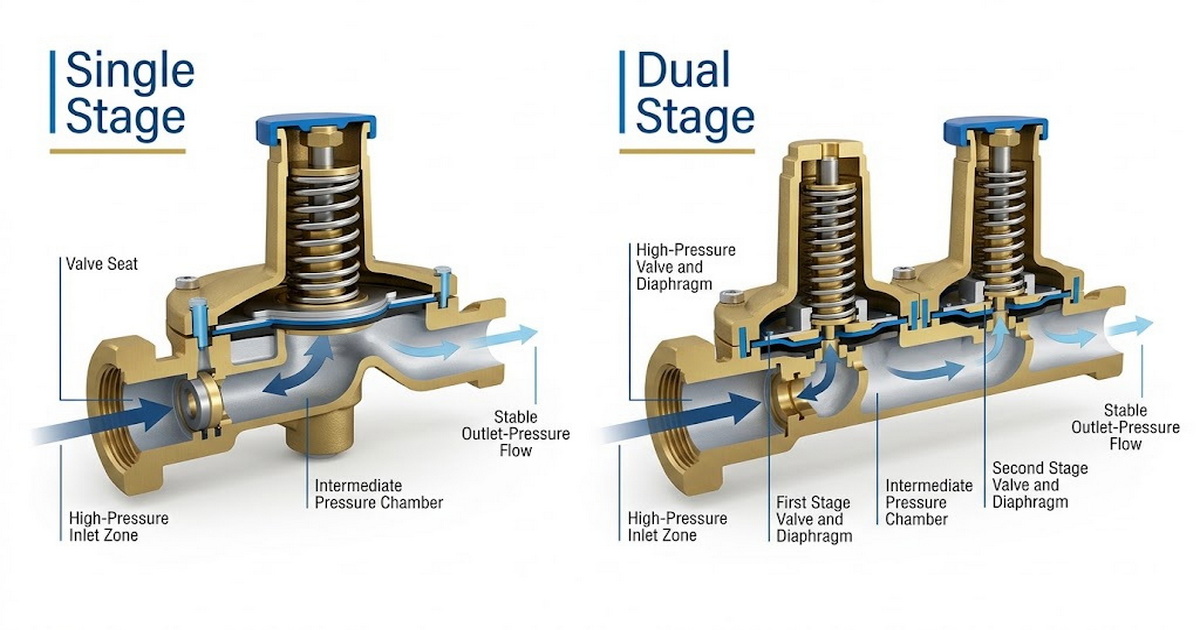
The terms dual gauge and dual stage are often confused, but they refer to different parts of regulator performance.
– Dual gauge means the regulator has two pressure indicators.
– Dual stage means the regulator reduces pressure in two sequential regulation stages.
A single-stage regulator reduces high inlet pressure to the target outlet pressure in one step. A two-stage regulator performs the reduction in two steps, typically creating more stable delivery pressure as the cylinder pressure falls.
This matters because every pressure regulator can experience some degree of supply pressure effect (SPE), also called inlet dependency. In simple terms, the outlet pressure may change as inlet pressure changes. One industry explanation defines SPE as the change in outlet pressure caused by a change in supply pressure; for a single-stage regulator, outlet pressure can rise as cylinder inlet pressure declines.
When a dual-stage regulator adds value
A dual-stage gas regulator is usually worth considering when:
– Delivery pressure must remain highly stable for a long period.
– Cylinder pressure decreases substantially during operation.
– The process is sensitive to pressure variation.
– The system runs unattended or with minimal operator adjustment.
– A high-value process could be affected by fluctuating gas delivery.
– The user wants to reduce the need for periodic manual readjustment.
For example, a welding shop may accept a robust single-stage argon regulator for intermittent fabrication work. A precision industrial process that requires stable pressure over extended cylinder depletion may instead benefit from a dual-stage argon or nitrogen regulator, especially if downstream process consistency is critical.
How to Choose the Right Regulator for Cylinder Monitoring
A reliable specification process begins with the gas and the cylinder, not with the regulator’s appearance.
1. Identify the gas service
Start by defining the exact gas:
– CO₂
– Argon
– Oxygen
– Acetylene
– Propane
– Nitrogen
– Mixed shielding gas
– Specialty gas or calibration gas
Different gases create different requirements for materials, seals, connections, cleaning practices, and safety controls. Oxygen service, for example, requires careful attention to cleanliness and compatibility. Flammable gases such as acetylene and propane require suitable connections and application-specific safety practices. Never use an adapter to force a regulator onto a cylinder with a different CGA fitting.
2. Confirm maximum inlet pressure
The regulator must safely accommodate the cylinder’s maximum expected inlet pressure. Do not select a model based only on its outlet range.
A regulator designed for a lower-pressure gas source is not automatically suitable for a high-pressure nitrogen or argon cylinder. The inlet gauge range, regulator body, valve seat, and connection configuration must all be appropriate for the service.
3. Set the required delivery pressure and flow
Specify:
– Normal outlet-pressure range.
– Maximum required outlet pressure.
– Expected flow rate.
– Continuous or intermittent duty cycle.
– Number of downstream outlets.
– Pressure sensitivity of the connected equipment.
Choose a gauge range that allows the normal operating point to be read clearly. A gauge with an excessively high scale can make low-pressure adjustment difficult to interpret.
4. Decide whether cylinder monitoring is operationally necessary
A dual gauge regulator is strongly recommended when the operator needs to monitor:
– Cylinder-side pressure.
– Delivery pressure.
– Pressure loss during leak checks.
– Changes in system performance over time.
– Cylinder replacement timing.
For basic, low-risk, manually attended work, a simpler setup may be acceptable. For production environments, maintenance teams, or distributors supplying professional users, two gauges generally provide a clearer operating picture.
5. Evaluate stage design
Choose a single-stage regulator for many general welding, cutting, dispensing, and standard industrial tasks.
Choose a dual-stage pressure regulator where stable delivery pressure throughout cylinder depletion is more important than initial purchase cost. Two-stage regulators are specifically recommended in applications where delivery pressure must remain constant as cylinder pressure decreases.
6. Verify the connection and outlet configuration
Confirm:
– Correct CGA inlet connection.
– Inlet thread direction where applicable.
– Outlet thread or hose-barb requirement.
– Gauge orientation.
– Panel-mount, cylinder-mount, or manifold configuration.
– Need for a relief valve, check valve, flowmeter, or heated CO₂ function.
For OEM and ODM projects, these details should be defined in the technical drawing and sample-approval process before mass production.
Expert Inspection Checklist Before Startup
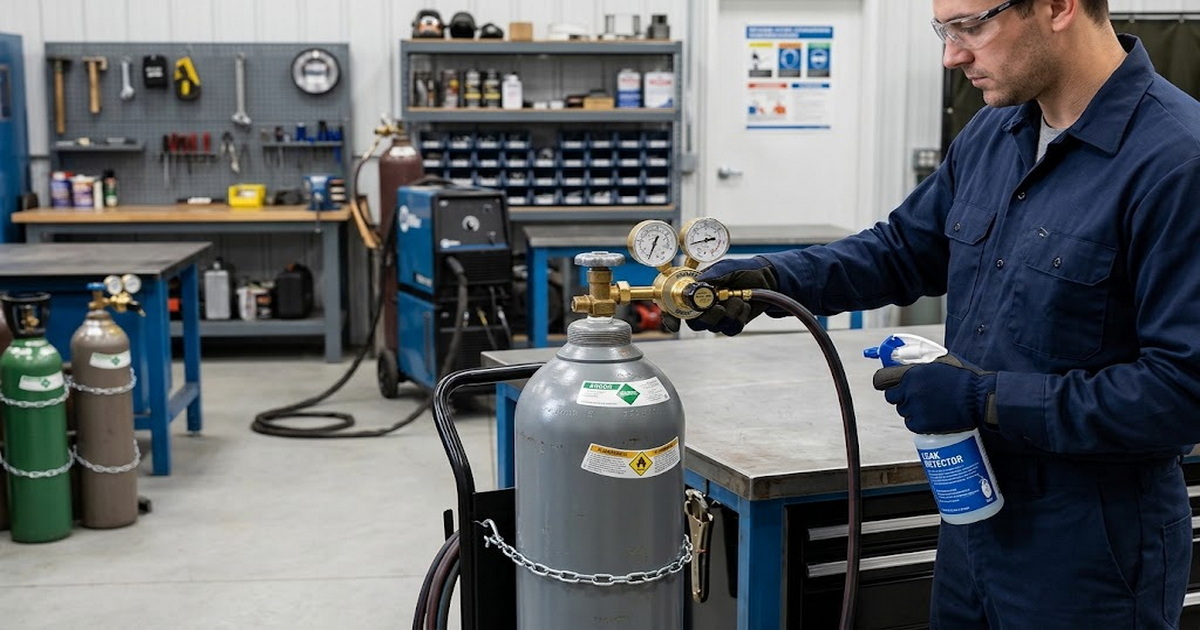
A regulator can be correctly specified and still perform poorly if installation and pre-use inspection are neglected. From a manufacturing and field-support perspective, we recommend a consistent startup routine.
Pre-use regulator inspection
1. Check the regulator body, gauges, threads, knob, hose, and fittings for visible damage.
2. Confirm that the gas name, inlet connection, and pressure rating match the cylinder and application.
3. Ensure the pressure-adjustment knob is backed out before opening the cylinder valve.
4. Open the cylinder valve slowly and stand clear of the gauge face.
5. Observe the inlet gauge and confirm normal source pressure behavior.
6. Adjust the outlet pressure gradually to the required setting.
7. Perform a leak check using an approved method suitable for the gas service.
8. Watch the outlet gauge for unexpected pressure creep after adjustment.
9. Record abnormal gauge behavior, leakage, vibration, or unstable pressure before operating.
NOAA’s cylinder-regulator guidance recommends installing, leak-checking, flushing, pressure-checking, and conditioning regulators. Its guidance also describes comparing high- and low-side gauge behavior after the cylinder valve is closed to help identify leaks or diaphragm-related faults.
A practical warning sign is pressure creep: if outlet pressure rises when the adjustment mechanism is fully backed out or when the downstream outlet is closed, the regulator may have an internal sealing problem and should be removed from service for qualified inspection or replacement.
Real-World Application Examples
CO₂ beverage and dispensing systems
For beverage dispensing, a dual gauge CO₂ regulator gives the operator visibility into both the cylinder condition and the dispensing pressure. However, because CO₂ is commonly stored as a liquefied gas, cylinder pressure alone may not show remaining content precisely. A scale or scheduled cylinder-change system provides more reliable inventory management.
For cold environments or high-flow CO₂ applications, a heated CO₂ regulator may help reduce performance issues associated with temperature drop and regulator freezing. The selection should consider expected flow demand, ambient temperature, cylinder configuration, and intended outlet pressure.
Argon welding and TIG/MIG fabrication
Argon cylinders are commonly used for shielding gas. A high-pressure argon regulator must match the cylinder connection and pressure rating, while the outlet side must provide controllable delivery to the welding system. Where flow control is required, the regulator may be paired with a flowmeter.
For production welding, a dual-gauge configuration helps maintenance staff observe source pressure and confirm that delivery pressure remains within the process window.
Oxygen and fuel-gas cutting
Oxygen, acetylene, and propane systems require special attention because incorrect connections, contamination, leaks, or damaged components can create serious hazards. OSHA identifies compressed gas hazards that include oxygen displacement, fire, explosion, toxic exposure, and high-pressure physical hazards.
Use only gas-specific equipment and follow applicable workplace procedures. A dual gauge regulator can improve visibility, but it does not replace proper gas compatibility, cylinder handling, flashback protection where required, leak checks, or trained operation.
Why Brass Construction and Quality Control Matter
For many industrial gas regulators, brass is a practical material because it offers machinability, corrosion resistance in appropriate services, and reliable performance in precision-manufactured pressure-control components. But “brass regulator” alone is not a complete quality claim.
A dependable regulator program should include:
– Controlled material sourcing.
– Precision machining of critical threads and sealing surfaces.
– Gauge and valve-seat verification.
– Inlet and outlet leak testing.
– Pressure-performance testing.
– Gas-specific assembly controls.
– Visual inspection and traceability procedures.
– Packaging designed to protect gauges and threads during export transport.
For overseas brands, wholesalers, and equipment manufacturers, the ideal supplier does more than sell a standard catalog product. The supplier should be able to support OEM branding, customized gauge faces, connection configurations, outlet ranges, packaging, technical drawings, and product validation.
Final Recommendation
The best choice is often not “high pressure gas regulator versus dual gauge pressure regulator.” For cylinder-based industrial gas control, the most practical option is frequently a high-pressure-rated dual gauge regulator designed specifically for the gas, cylinder connection, outlet-pressure range, and application flow requirement.
Choose a basic high-pressure regulator when safe pressure reduction is the central requirement and monitoring needs are limited. Choose a dual gauge pressure regulator when users must monitor both cylinder-side and delivery pressure for production control, diagnostics, and cylinder-change planning. Choose a dual-stage regulator when outlet-pressure stability as the cylinder empties is a critical process requirement.
For OEM, ODM, distribution, and industrial equipment projects, request a technical review before ordering. A well-matched regulator improves pressure stability, reduces installation risk, supports safer operation, and gives end users the monitoring visibility they need.
Looking for a customized CO₂, argon, oxygen, acetylene, propane, nitrogen, or dual-stage gas regulator? Contact our technical sales team with your gas type, cylinder connection, inlet pressure, outlet-pressure range, flow requirement, and branding needs to receive an OEM/ODM recommendation and quotation.
FAQs
1. Is a high pressure gas regulator the same as a dual gauge regulator?
No. A high pressure gas regulator refers to the regulator’s ability to handle a high-pressure inlet source. A dual gauge regulator refers to the use of two gauges, typically one for cylinder pressure and one for delivery pressure. One regulator can have both features.
2. Why does a cylinder regulator need two gauges?
The first gauge shows inlet or cylinder pressure, while the second gauge shows regulated outlet pressure. This helps users verify gas supply, set working pressure, detect abnormal pressure changes, and better manage cylinder replacement.
3. Does cylinder pressure accurately show how much CO₂ is left?
Not always. Because CO₂ is commonly stored as a liquefied gas, pressure can remain relatively stable while liquid remains in the cylinder. Temperature also affects the reading. Use cylinder weight or a dedicated level-monitoring approach for more accurate CO₂ inventory control.
4. When should I use a dual-stage gas regulator?
Use a dual-stage regulator when outlet pressure must remain highly stable as cylinder pressure declines, such as in sensitive industrial processes, specialty gas systems, or applications that run for long periods without frequent operator adjustment.
5. Can I use one gas regulator for different gases?
Only if the regulator is specifically designed, cleaned, fitted, and approved for those gases and their corresponding connections. Do not use adapters to connect a regulator to an incompatible CGA cylinder fitting.
6. What causes outlet pressure to rise after adjustment?
Unexpected outlet-pressure rise, often called pressure creep, can indicate an internal sealing or valve-seat issue. The regulator should be removed from service and inspected or replaced by a qualified provider.
7. What information should I provide for a custom regulator quotation?
Provide the gas type, cylinder inlet connection, maximum inlet pressure, outlet-pressure range, required flow rate, gauge range, outlet connection, operating temperature, stage design, desired certifications, OEM branding, packaging requirements, and estimated order quantity.
References
1. [OSHA — Compressed Gases: General Requirements] — General OSHA requirement for employers to maintain compressed-gas cylinders in safe condition. [osha]
2. [OSHA — Compressed Gas and Equipment Overview] — Overview of compressed-gas hazards, including high-pressure physical hazards, fires, explosions, oxygen displacement, and toxic exposure. [osha]
3. [NOAA — Guidelines for Standard Gas Cylinder and Pressure Regulator Use] — Installation, flushing, pressure-check, and gauge-based troubleshooting guidance for cylinder regulators. [gml.noaa]
4. [Swagelok — Managing Supply Pressure Effect in Regulators] — Explanation of supply pressure effect and the role of two-stage arrangements in managing outlet-pressure variation. [swagelok]
5. [Lincoln Electric — High Purity Pressure Regulator Selection] — Distinction between cylinder and pipeline regulator gauges, inlet pressure, and CGA connection considerations. [ch-delivery.lincolnelectric]
6. [ESAB — Single Stage vs. Two Stage Regulators] — Description of single-stage and two-stage pressure-reduction principles. [esab]
7. [USC Environmental Health & Safety — Gas Regulators] — Gas compatibility guidance and warning against using adapters with incompatible CGA fittings. [ehs.usc]
8. [Chromatography Online — Gas Cylinder Safety, Part II: Setup and Use] — Practical gauge checks, leak indications, and pressure-creep observations. [chromatographyonline]
Hot Tags: High Pressure Gas Regulator, Dual Gauge Pressure Regulator, Gas Cylinder Pressure Regulator, Industrial Gas Regulator, CO2 Gas Regulator, Argon Gas Regulator, Oxygen Pressure Regulator, Dual Stage Gas Regulator, Gas Cylinder Monitoring, OEM Gas Regulator Manufacturer