Content Menu
● Core Definitions – Nitrogen Cylinder Regulator vs Mini Gas Regulator
● Typical HVAC Use Cases and Application Scenarios
>> When a Full Nitrogen Cylinder Regulator Is Ideal
>> When a Mini Gas Regulator Excels in the Field
● Technical Design Differences That Matter
>> Pressure Ranges and Control Resolution
>> Flow Capacity and Response Stability
● Materials, Safety, and Compliance Considerations
● Expert Perspective – How Regulator Choice Impacts Testing Quality
● Practical Field Scenario – Commercial VRF Installation
● Feature‑by‑Feature Comparison Table
>> Nitrogen Cylinder Regulator vs Mini Gas Regulator
● OEM/ODM Considerations for Overseas Brands and Distributors
● Practical Selection Guidelines for HVAC Professionals
>> When to Choose a Nitrogen Cylinder Pressure Regulator
>> When to Choose a Mini Gas Regulator
● Best‑Practice Steps for Safe Nitrogen Pressure Testing
● How a Specialized Manufacturer Adds Value
● Call to Action – Build the Right Regulator Lineup for Your HVAC Market
● FAQ – Nitrogen Regulators and Mini Gas Regulators
Nitrogen gas cylinder pressure regulators and mini gas regulators for field HVAC pressure testing serve very different use cases, safety margins, and control requirements, even though both are used to manage nitrogen or other gases during system checks and commissioning. Understanding these differences is essential if you are an HVAC contractor, commissioning engineer, or OEM brand owner responsible for selecting reliable gas control solutions that balance portability, accuracy, and long‑term safety. [pakoxygen]
What This Comparison Covers
In this guide, we will compare nitrogen gas cylinder pressure regulators and mini gas regulators for field HVAC pressure testing from a practical, real‑world perspective, based on what actually happens at construction sites, rooftops, and mechanical rooms. The goal is to help you choose the right regulator configuration for your teams or your product line, especially if you are evaluating OEM/ODM options for overseas markets. [specialisedwelding.co]
– Which regulator type is safer for high‑pressure nitrogen cylinders
– How outlet pressure stability impacts leak testing accuracy
– When a compact mini regulator is more efficient than a full‑size unit
– How material quality, manufacturing precision, and standards compliance affect lifetime cost
Core Definitions – Nitrogen Cylinder Regulator vs Mini Gas Regulator
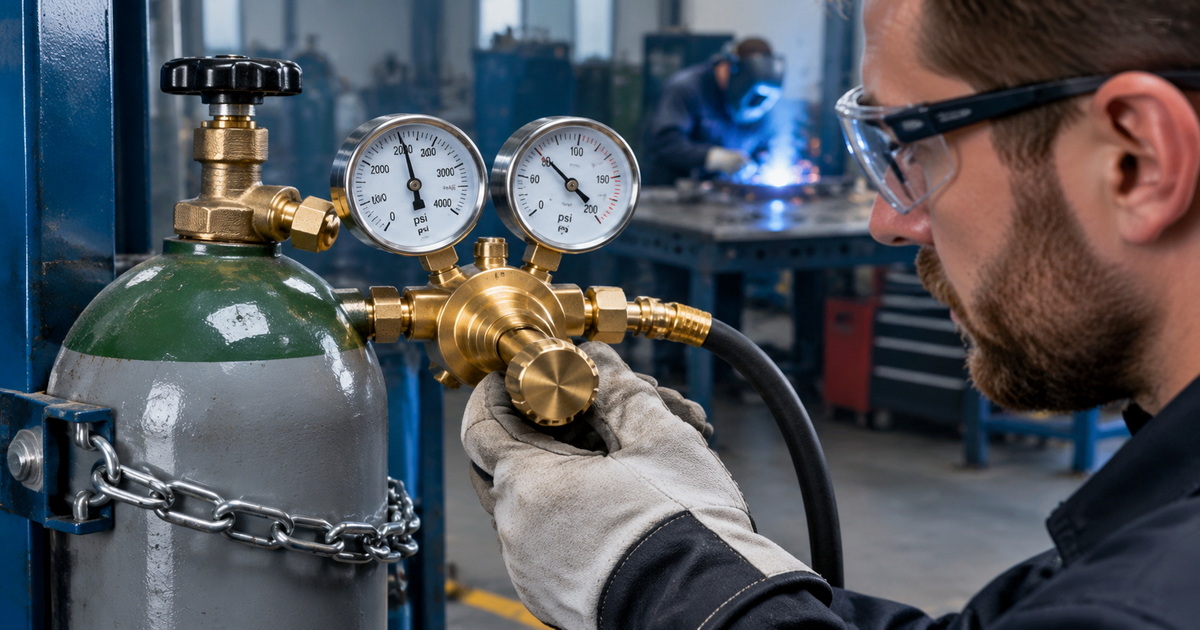
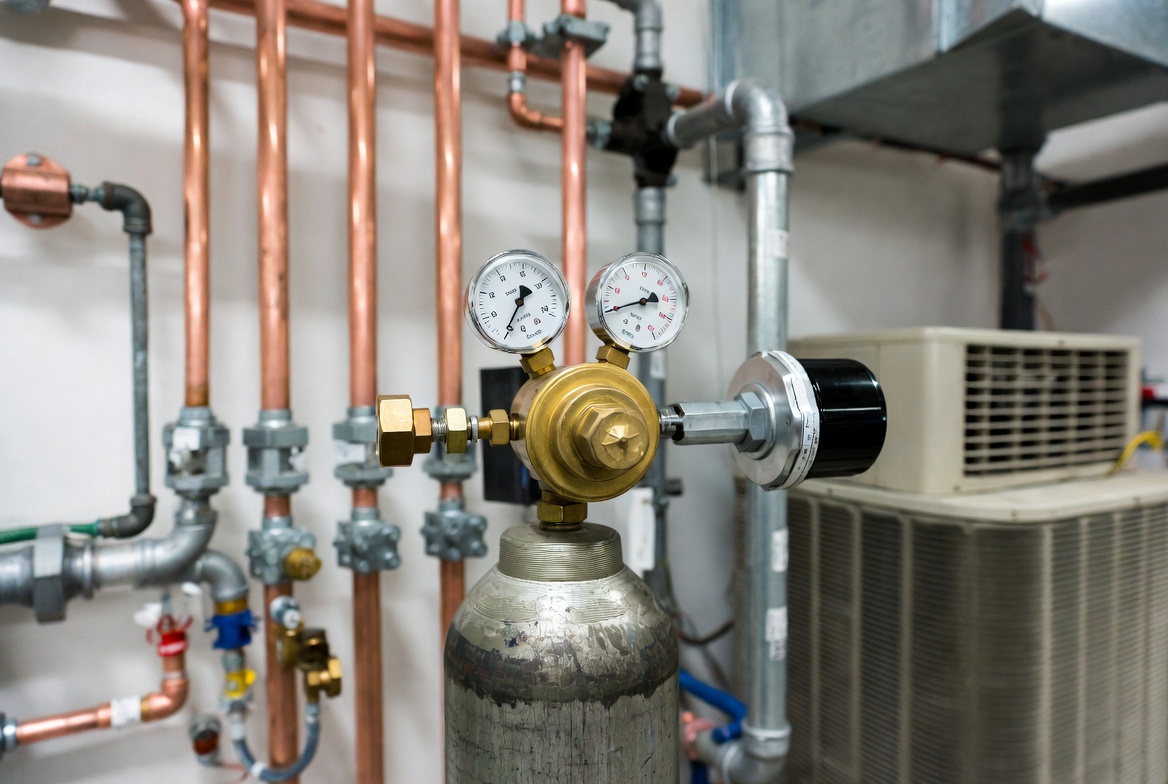
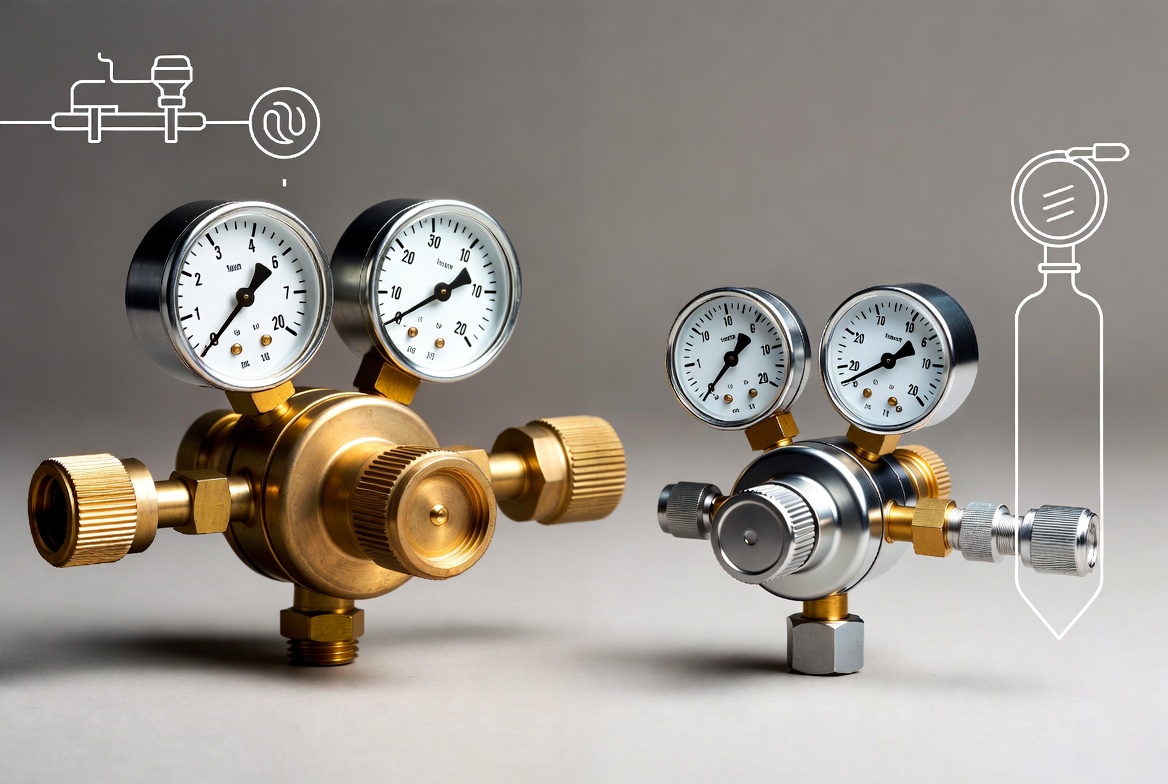
A nitrogen gas cylinder pressure regulator is a full‑size pressure control device designed to reduce high cylinder pressure (often up to 200–300 bar) down to a safe, adjustable working pressure for HVAC leak and strength testing. These regulators typically mount directly on nitrogen cylinders and are built with robust brass bodies, larger diaphragms, and clear dual gauges to display both cylinder and outlet pressure. [boc.co]
A mini gas regulator for field HVAC pressure testing is a compact, lightweight regulator designed primarily for portability, rapid connection, and moderate outlet pressures rather than continuous high‑flow industrial usage. Technicians often pair mini regulators with smaller test cylinders or portable nitrogen bottles for quick pressure checks, purge operations, and on‑the‑spot troubleshooting. [bakersgas]
Typical HVAC Use Cases and Application Scenarios
From an HVAC field engineer’s practical viewpoint, the choice between these two regulator types often depends on project size, location, and testing requirements. [prolineindustrial.co]
– Full nitrogen cylinder regulators are preferred on large commercial or industrial projects where high test pressures, long pipe runs, or repeated tests are required throughout the day. [pakoxygen]
– Mini gas regulators are popular for service calls, small split systems, and rooftop units where portability and fast setup matter more than sustained flow capacity. [bakersgas]
When a Full Nitrogen Cylinder Regulator Is Ideal
You typically choose a full‑size nitrogen regulator when:
– You are pressure‑testing long refrigerant lines in high‑rise or industrial facilities.
– You need stable outlet pressure over extended periods to comply with commissioning procedures or third‑party inspections.
– Your nitrogen cylinders are standard industrial bottles with high inlet pressures requiring rugged pressure reduction.
Experienced installers frequently keep at least one full nitrogen regulator in the workshop or service vehicle as the primary test and commissioning tool. [boc.co]
When a Mini Gas Regulator Excels in the Field
A mini regulator becomes the better tool when:
– Technicians climb ladders, access roofs, or move between multiple small systems in one day.
– Rapid setup and removal reduce non‑productive time per job.
– The test pressure range is moderate, and extreme precision is less critical than convenience.
Many HVAC contractors issue mini regulators to each technician while keeping full‑size nitrogen regulators as shared, centralized assets for more demanding tasks. [prolineindustrial.co]

Technical Design Differences That Matter
Beneath the surface, there are several engineering differences that define how each regulator behaves under real load conditions.
Pressure Ranges and Control Resolution
Nitrogen cylinder regulators typically offer:
– High inlet pressure ratings compatible with industrial nitrogen cylinders.
– Finer control at higher ranges, which is critical for precise leak and strength testing.
Mini gas regulators generally:
– Support lower inlet pressures or are paired with smaller portable cylinders.
– Offer adequate control for moderate test pressures but may show greater outlet fluctuation when the inlet pressure drops significantly. [pakoxygen]
For tight commissioning tolerances, the ability to hold pressure over time, rather than just reaching a target once, becomes a key discriminator between the two designs. [boc.co]
Flow Capacity and Response Stability
Full‑size nitrogen regulators are built to maintain flow and outlet stability even when multiple points are being tested or when the system volume is large. A larger diaphragm, optimized valve seat, and higher flow coefficients help the regulator respond smoothly to dynamic demand, reducing the risk of overshoot that could stress piping or components. [prolineindustrial.co]
Mini regulators, by contrast, are optimized for compactness and quick operations rather than maximum flow. In many HVAC service scenarios this is perfectly acceptable, but on long or complex piping networks they may take longer to charge the system or show more pronounced pressure drops when volume is high. [specialisedwelding.co]
Materials, Safety, and Compliance Considerations
For both regulator types, brass is still the most widely used body material for nitrogen and general industrial gases due to its corrosion resistance, machinability, and compatibility with a wide range of gases. Full‑size cylinder regulators often include thicker wall sections, reinforced joints, and higher‑grade seals to cope with continuous exposure to full cylinder pressure. [pkengineers]
Mini regulators usually follow similar material principles but may incorporate more lightweight alloys and compact gauges to reduce total carried weight in the field. In both cases, adherence to international regulator and cylinder connection standards is critical for safety, especially when equipment is sold under multiple overseas OEM brands. [wkswelding.com]
From an OEM/ODM perspective, consistent machining tolerances, leak‑free assembly, and 100% pressure testing are non‑negotiable to avoid warranty issues or reputational risk in global markets. [demwelding]
Expert Perspective – How Regulator Choice Impacts Testing Quality
From the standpoint of an industry expert who has observed hundreds of leak tests, startups, and system failures, regulator selection directly influences test reliability and field repeatability. [ftipv]
– A stable nitrogen cylinder regulator allows you to set, hold, and re‑verify test pressure with minimal drift, which is especially important when inspections span several hours. [pakoxygen]
– A mini regulator offers enough stability for short tests and quick diagnostics but may require more frequent adjustments and monitoring on larger systems. [bakersgas]
In practice, many seasoned technicians default to full‑size nitrogen regulators for final commissioning tests and use mini regulators mainly for troubleshooting and routine service checks. This hybrid approach improves both productivity and quality control across the project lifecycle. [ftipv]
Practical Field Scenario – Commercial VRF Installation
Consider a multi‑story VRF (Variable Refrigerant Flow) installation with long refrigerant pipe runs and multiple indoor units. The commissioning engineer is responsible for nitrogen strength testing and vacuum procedures before final refrigerant charging. [specialisedwelding.co]
– Using a full nitrogen cylinder regulator: The engineer connects the regulator to a standard high‑pressure nitrogen cylinder, gradually raises the pressure in stages, and records data over several hours. Stable outlet pressure makes it easier to distinguish genuine leaks from temperature‑related pressure fluctuations. [prolineindustrial.co]
– Using a mini gas regulator: The engineer can still reach the required test pressure, but charging the system takes longer and pressure may drift more noticeably as the portable cylinder empties, requiring re‑adjustment and closer supervision. [bakersgas]
From a risk and time‑management perspective, the full‑size regulator provides higher confidence during critical acceptance tests, while the mini regulator remains useful later for periodic maintenance work. [pakoxygen]
Feature‑by‑Feature Comparison Table
Nitrogen Cylinder Regulator vs Mini Gas Regulator
| Aspect | Nitrogen Gas Cylinder Pressure Regulator | Mini Gas Regulator for Field HVAC Testing |
|---|---|---|
| Typical inlet pressure | High cylinder pressure, industrial grade (pakoxygen) | Lower to medium pressures, portable cylinders (bakersgas) |
| Outlet pressure stability | High stability over long tests (pakoxygen) | Adequate for short tests, more drift on long runs (bakersgas) |
| Flow capacity | Suited to large systems and long pipe runs (pakoxygen) | Optimized for smaller systems and quick checks (specialisedwelding.co) |
| Size and weight | Larger, heavier, workshop or trolley use (pakoxygen) | Compact, lightweight, easy to carry on site (bakersgas) |
| Gauges and visibility | Larger dual gauges for precise reading (prolineindustrial.co) | Smaller gauges, focused on essential ranges (bakersgas) |
| Primary use case | Commissioning, strength/leak tests on big projects (prolineindustrial.co) | Service calls, diagnostics, small installations (specialisedwelding.co) |
| Safety margin | Higher margins for high‑pressure cylinders (pakoxygen) | Designed for moderate pressures and mobility (bakersgas) |
| Lifetime and robustness | Long service life with proper maintenance (pakoxygen) | Good for frequent handling but lighter construction (specialisedwelding.co) |
This structured view helps both field users and purchasing managers align regulator specifications with real application requirements rather than buying on price alone. [specialisedwelding.co]
OEM/ODM Considerations for Overseas Brands and Distributors
If you are an overseas brand owner, wholesaler, or distributor, the choice between a full nitrogen cylinder regulator and a mini regulator is not only a technical question but also a portfolio strategy decision. [demwelding]
– Stocking both types allows you to cover commissioning, service, and light industrial testing under one coherent product line.
– Differentiating SKUs by inlet connection, outlet range, and gauge specification makes it easier to address local market preferences and regulatory requirements. [wkswelding.com]
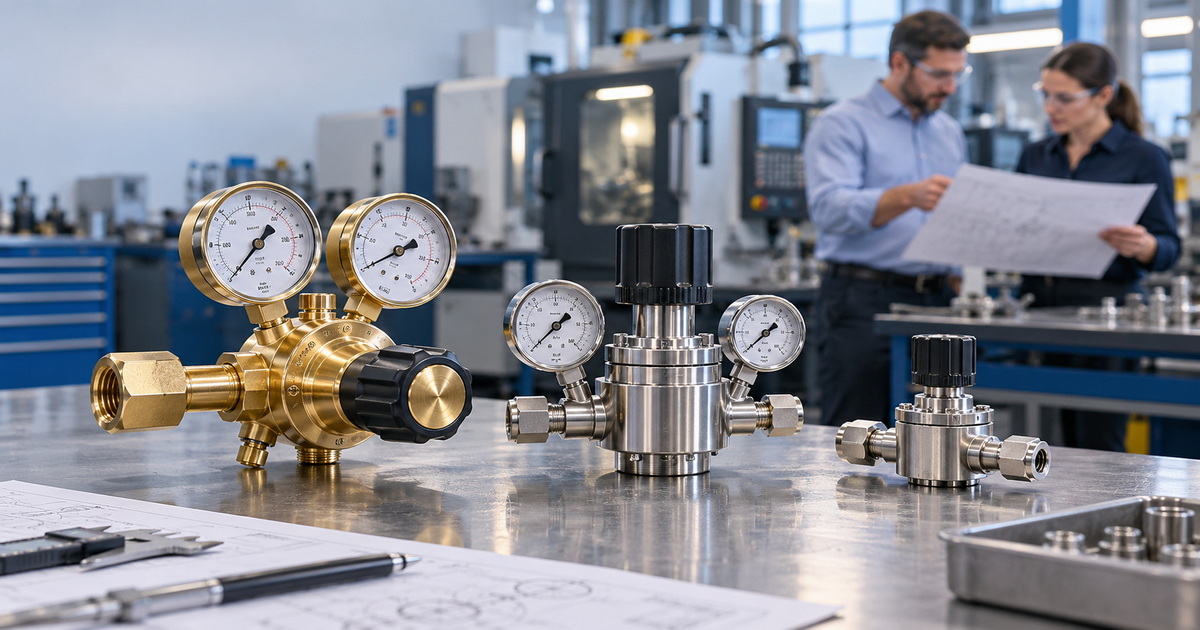
An experienced gas regulator manufacturer can adapt body design, gauge layout, logo printing, and packaging to fit your brand image while maintaining standardized internal components to control cost and quality. This is particularly valuable when scaling into new markets where local HVAC contractors expect region‑specific cylinder connections and pressure ranges. [ftipv]
Practical Selection Guidelines for HVAC Professionals
When to Choose a Nitrogen Cylinder Pressure Regulator
Select a nitrogen gas cylinder pressure regulator when:
1. You regularly work with full‑size high‑pressure nitrogen cylinders.
2. Your projects involve large or complex piping networks.
3. You must document leak tests for clients, consultants, or insurers.
4. Your team performs extended pressure holds and needs minimal drift.
In these conditions, the additional size and weight are a reasonable trade‑off for higher precision and long‑term stability. [prolineindustrial.co]
When to Choose a Mini Gas Regulator
Choose a mini gas regulator for field HVAC testing when:
1. Your technicians focus on small to medium systems and frequent service calls.
2. Access is difficult, such as rooftops, tight shafts, or remote outdoor units.
3. You need to keep personal tool kits as light and compact as possible.
4. Test pressures are moderate and tests are relatively short in duration.
For many service organizations, equipping every technician with a mini regulator while maintaining a smaller pool of full‑size nitrogen regulators for complex jobs yields an effective balance between productivity and equipment cost. [bakersgas]
Best‑Practice Steps for Safe Nitrogen Pressure Testing
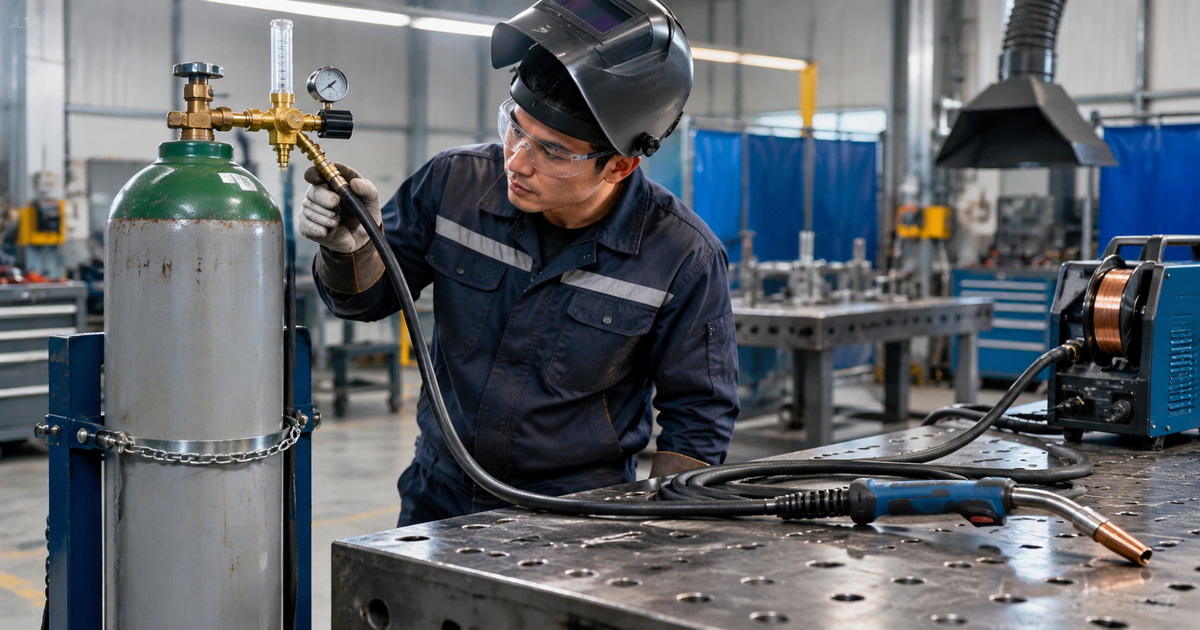
From a user‑experience and safety standpoint, both regulator types should follow disciplined, repeatable procedures during HVAC pressure testing. [pakoxygen]
1. Verify regulator compatibility
– Confirm that the regulator is rated for nitrogen and matches the cylinder valve connection and required pressure range.
2. Inspect before use
– Check body, gauges, and connections for visible damage; confirm that O‑rings and seals are intact.
3. Secure connections
– Mount the regulator firmly to the cylinder, using appropriate tools and avoiding over‑tightening.
4. Increase pressure gradually
– Open the cylinder valve slowly, then adjust outlet pressure in stages, monitoring both gauges carefully.
5. Monitor and record
– Hold the test pressure for the required duration, noting any changes and investigating potential leaks systematically.
Training technicians to treat both full‑size and mini regulators with the same level of respect dramatically reduces incidents and ensures consistent, repeatable test results across teams. [prolineindustrial.co]
How a Specialized Manufacturer Adds Value
Working with a dedicated industrial gas regulator manufacturer gives HVAC brands and distributors more flexibility in how they position nitrogen cylinder regulators and mini field regulators in their catalogues. [demwelding]
– Precision machining and stringent quality control help ensure stable pressure control and long‑term reliability in demanding jobsite conditions. [demwelding]
– Customizable OEM/ODM options, such as dual‑stage designs, heated CO₂ versions, or specific outlet fittings, allow you to build coherent regulator families that share a consistent look and feel across gases and applications. [ftipv]
This partnership approach enables overseas partners to focus on sales, training, and service while relying on a deep manufacturing base for engineering support and continuous product improvement. [demwelding]
Call to Action – Build the Right Regulator Lineup for Your HVAC Market
If you are evaluating nitrogen gas cylinder pressure regulators vs mini gas regulators for your HVAC service teams or your branded product line, now is the time to define a clear, application‑based strategy. Work with a specialized gas regulator manufacturer that can provide OEM and ODM solutions, align specifications with your local standards, and support you with technical documentation and testing know‑how. [ftipv]
By combining high‑precision nitrogen cylinder regulators for commissioning with compact mini regulators for everyday service work, you can raise safety standards, reduce callbacks, and deliver a more efficient, professional user experience to every HVAC customer you serve. [pakoxygen]
FAQ – Nitrogen Regulators and Mini Gas Regulators
Q1: Can I use a mini gas regulator for all nitrogen pressure tests?
A1: Mini regulators are suitable for many service‑level tests, but for high‑pressure strength tests on large systems, a full nitrogen cylinder regulator with higher flow and better stability is generally recommended for safety and accuracy. [prolineindustrial.co]
Q2: Do I need different regulators for nitrogen and other gases?
A2: Yes, regulators are usually gas‑specific due to different pressure ranges, safety standards, and cylinder connections, so you should use a regulator clearly rated and labeled for nitrogen rather than repurposing one from another gas. [boc.co]
Q3: How often should nitrogen regulators be inspected or serviced?
A3: Many industrial users adopt annual inspections and periodic functional tests, with earlier service if gauges drift, leaks appear, or regulators suffer mechanical damage during transport or use. [pakoxygen]
Q4: Are dual‑stage nitrogen regulators necessary for HVAC testing?
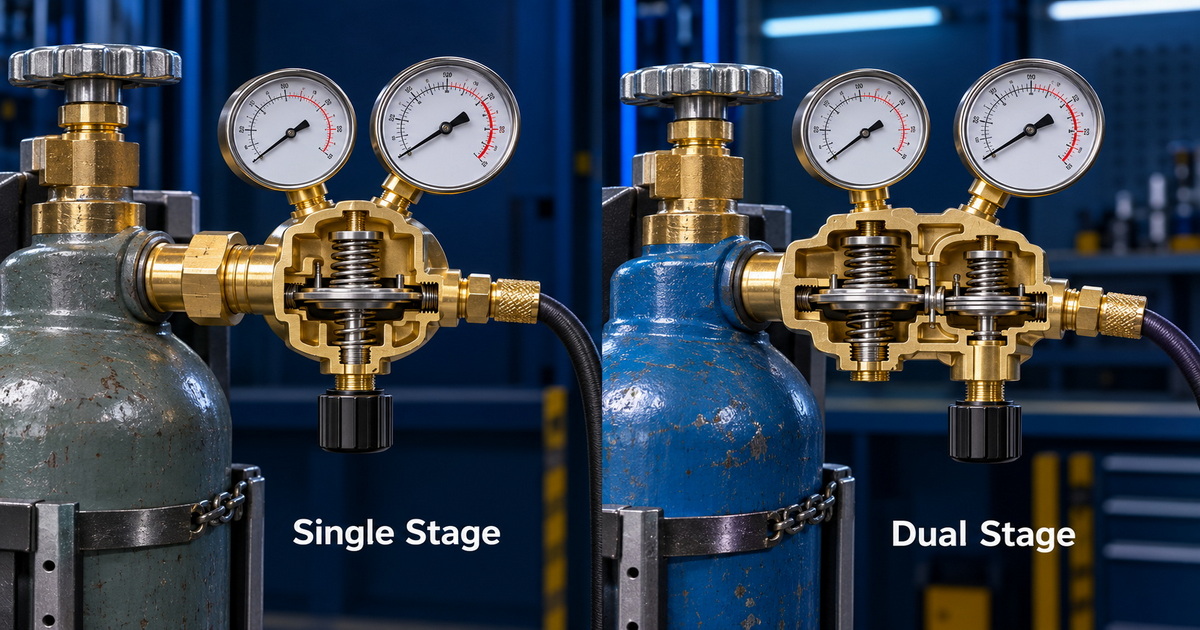
A4: Dual‑stage regulators improve outlet stability as cylinder pressure falls, which can be beneficial for long, critical tests, though single‑stage regulators are common and adequate for many routine HVAC applications. [pkengineers]
Q5: What should OEM/ODM buyers focus on when sourcing regulators?
A5: Key factors include material quality (such as high‑grade brass), machining precision, test certifications, compliance with relevant standards, and the manufacturer’s ability to customize connections, gauges, and branding for your target market. [ftipv]
References
1. BOC – Industrial Gas Regulators – industrial range of gas regulators for oxygen, nitrogen, argon, CO₂ and other gases. [https://www.boc.co.nz/shop/en/nz/gas-welding-heating-cutting-brazing/gas-regulator/industrial-gas-regulators]
2. P. K. Engineers – Gas Regulator – technical overview of oxygen, acetylene, CO₂ and nitrogen gas regulators. [https://www.pkengineers.net/gas-regulator.html]
3. Baker’s Gas & Welding Supplies – Regulators – product listings for compact and full‑size gas regulators. [https://bakersgas.com/collections/regulators]
4. Pakistan Oxygen Limited – Gas Regulators (Single & Multi‑Stage) – specifications and usage notes for industrial gas regulators. [https://pakoxygen.com/Hardgoods/GasRegulators]
5. Specialised Welding – Gas Regulators & Flowmeters – selection of regulators for welding and general gas applications. [https://specialisedwelding.co.uk/collections/gas-regulators]
6. FTIPV – Gas Regulators – overview of regulator products and applications across gas types. [https://www.ftipv.com/category/gas-regulators/]
7. DEM Welding – Gas Regulator for Oxygen/Acetylene/Argon/CO₂/Nitrogen – multi‑gas regulator applications in welding and industry. [https://demwelding.com/gas-regulator/]
8. Proline Industrial – Welding Gas Regulators for a Controlled Gas Pressure – practical insights on maintaining safe and stable gas pressure. [https://www.prolineindustrial.co.nz/equipment/welding-equipment/gas-regulators]
9. Regulator Supply – Carbon Dioxide Regulator – CO₂‑specific regulator product information. [https://regulatorsupply.com/collections/carbon-dioxide-regulator]
10. WKS Welding Products – Regulators – regulators for various gases with different connections and standards. [https://www.wkswelding.com.sg/regulators]
Hot Tags: Nitrogen Gas Cylinder Regulator, Mini Gas Regulator, HVAC Pressure Testing, Nitrogen Pressure Testing Regulator, HVAC Nitrogen Regulator OEM, Industrial Gas Regulator Manufacturer, OEM ODM Gas Regulator, B2B HVAC Tools Supplier, Nitrogen Leak Testing Equipment, Field HVAC Service Regulator