Content Menu
● Introduction: Why Shielding Gas Conservation Matters
● What Is a Flowmeter Regulator?
● What Is a Dual Gauge Pressure Regulator?
● Core Functional Difference: Pressure vs Flow
● Shielding Gas Conservation: How Each Regulator Type Performs
>> Flowmeter Regulators and Gas Savings
>> Dual Gauge Regulators and Gas Usage
● Practical UX Perspective: How Welders Actually Use These Regulators
● Materials and Build Quality: Why Brass and Precision Machining Matter
● Single-Stage vs Dual-Stage Regulation in Gas Conservation
● Comparison Table: Flowmeter Regulator vs Dual Gauge Pressure Regulator
● Expert Insight: When Does Flowmeter Control Deliver the Highest ROI?
● Case-Type Scenario: Multi-Station Fabrication Shop
● Practical Steps to Optimize Shielding Gas Conservation
>> Step 1 – Map Your Current Gas Use
>> Step 2 – Compare Settings to WPS Recommendations
>> Step 3 – Standardize and Upgrade Where Needed
● OEM/ODM Perspective: Designing Regulators for Gas Conservation
● When a Dual Gauge Pressure Regulator Still Makes Sense
● Making the Right Choice for Your Operation
● Clear Action Steps and How We Can Help
● FAQ
Introduction: Why Shielding Gas Conservation Matters
In modern welding and cutting operations, shielding gas is no longer just a consumable cost – it is a controllable variable that directly impacts weld quality, production efficiency, and total operating expense. When fabricators compare a flowmeter regulator with a dual gauge pressure regulator, the real question behind the choice is how to maintain stable gas delivery while minimizing waste, especially in high-volume CO₂, argon, and mixed gas applications. [prolineindustrial.co]
As a professional gas regulator manufacturer focused on precision brass construction, dual-stage designs, and OEM/ODM solutions for CO₂, argon, nitrogen and other industrial gases, we see the downstream impact of regulator selection on shielding gas consumption every day in welding shops, fabrication lines, and automated robotic cells. From that combined personal and industry-expert perspective, this article will walk through a practical, detailed comparison of flowmeter regulators versus dual gauge pressure regulators, with a clear focus on shielding gas conservation and long‑term performance in industrial environments. [boc.co]
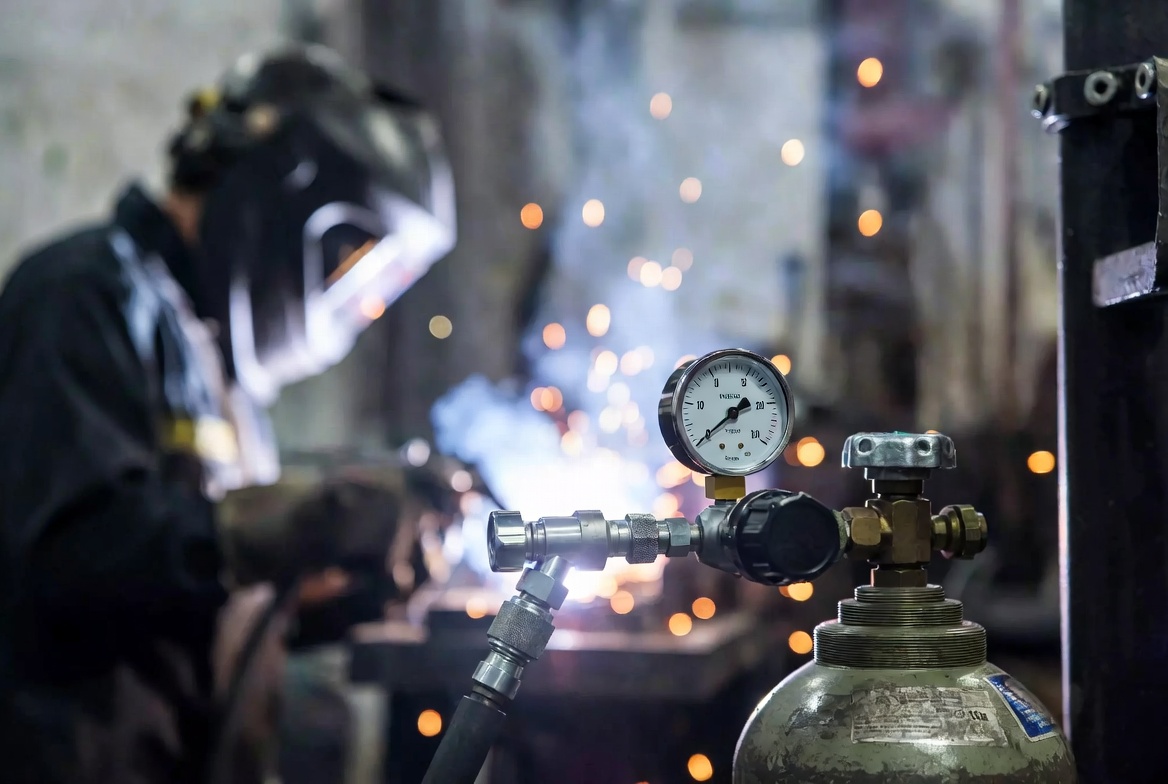
What Is a Flowmeter Regulator?
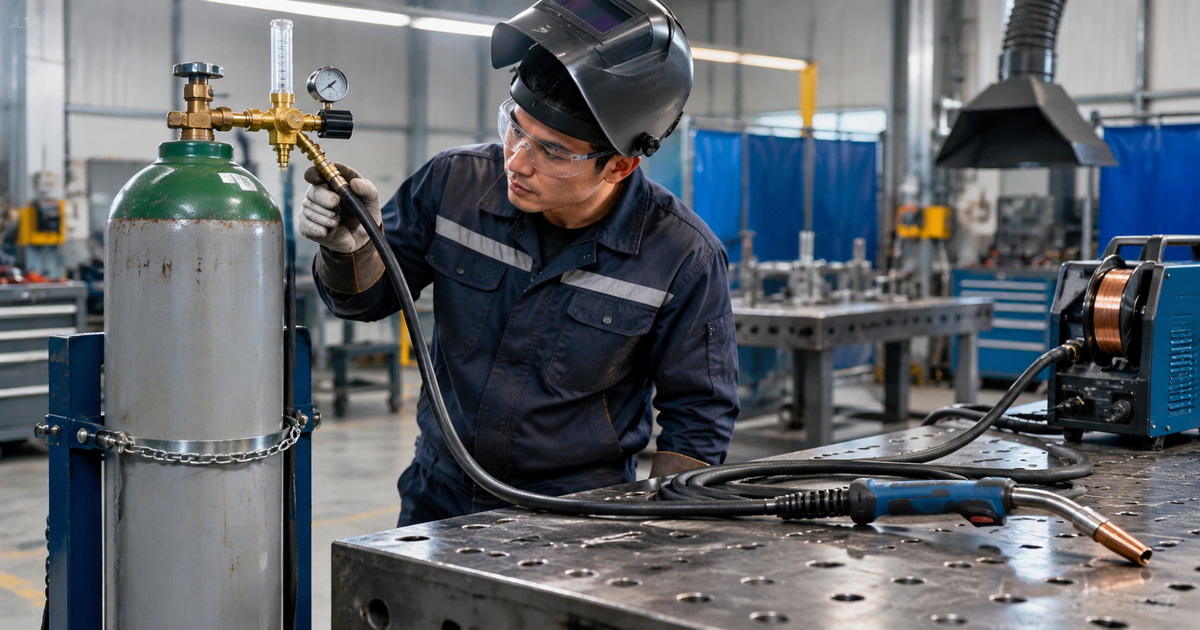
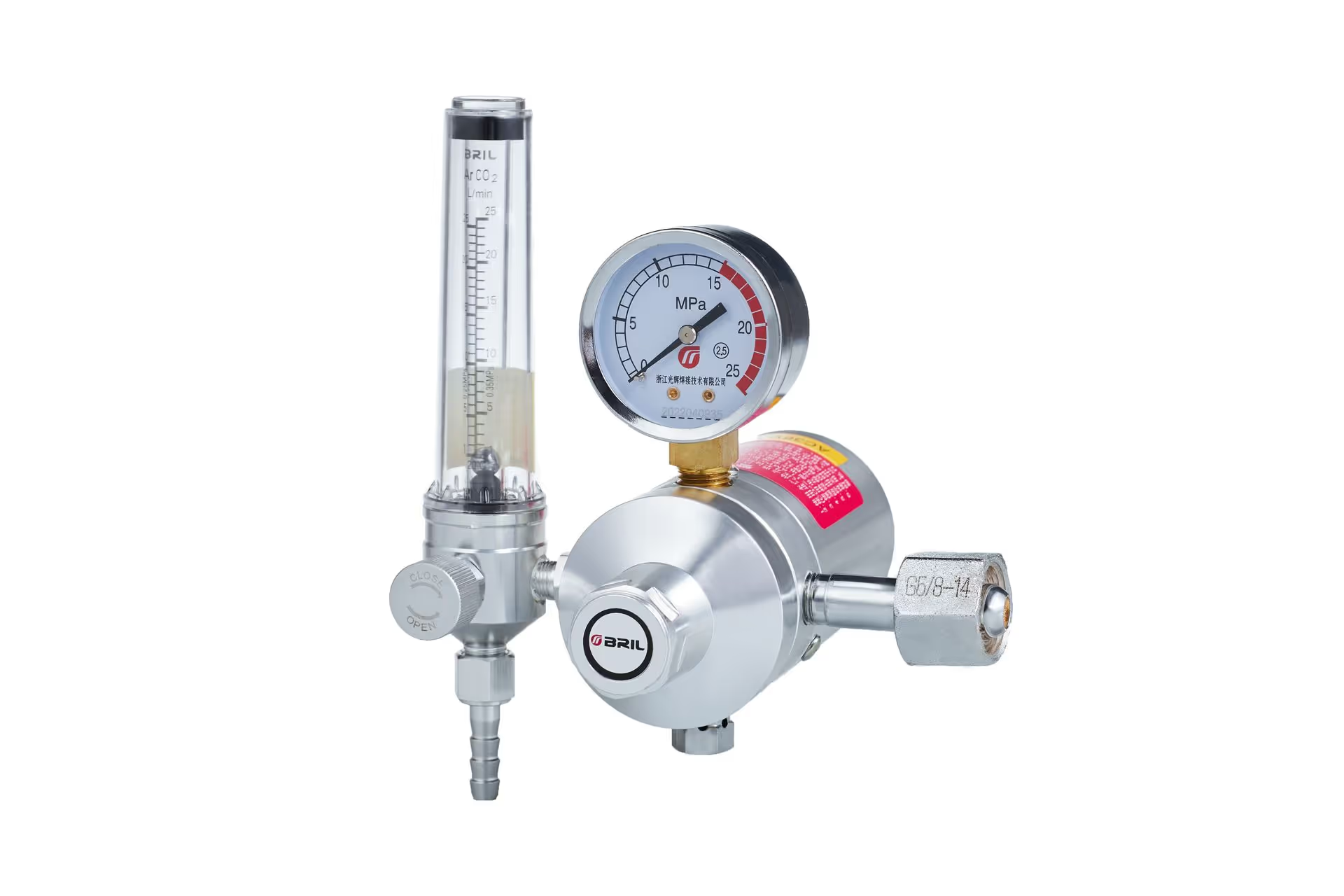
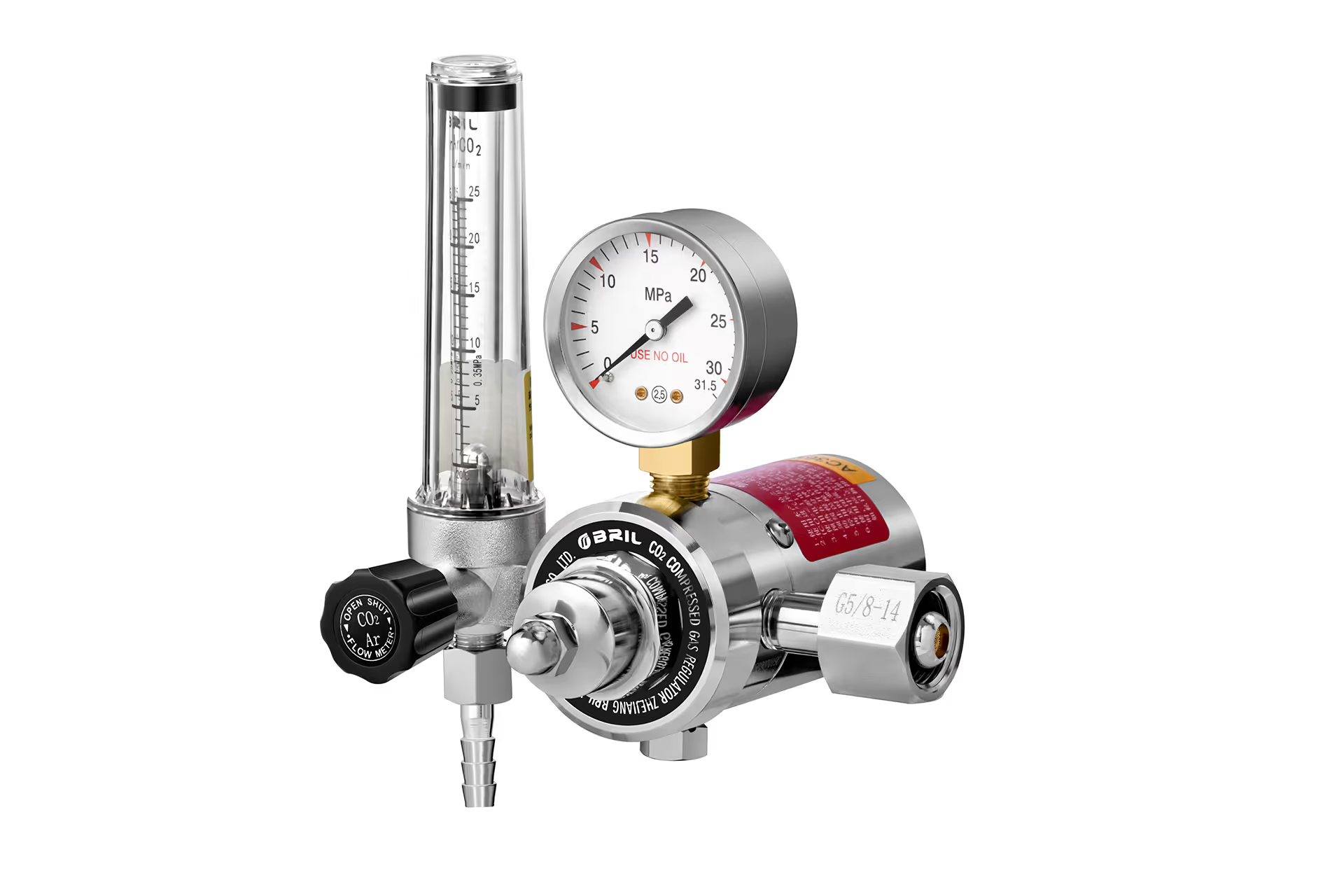
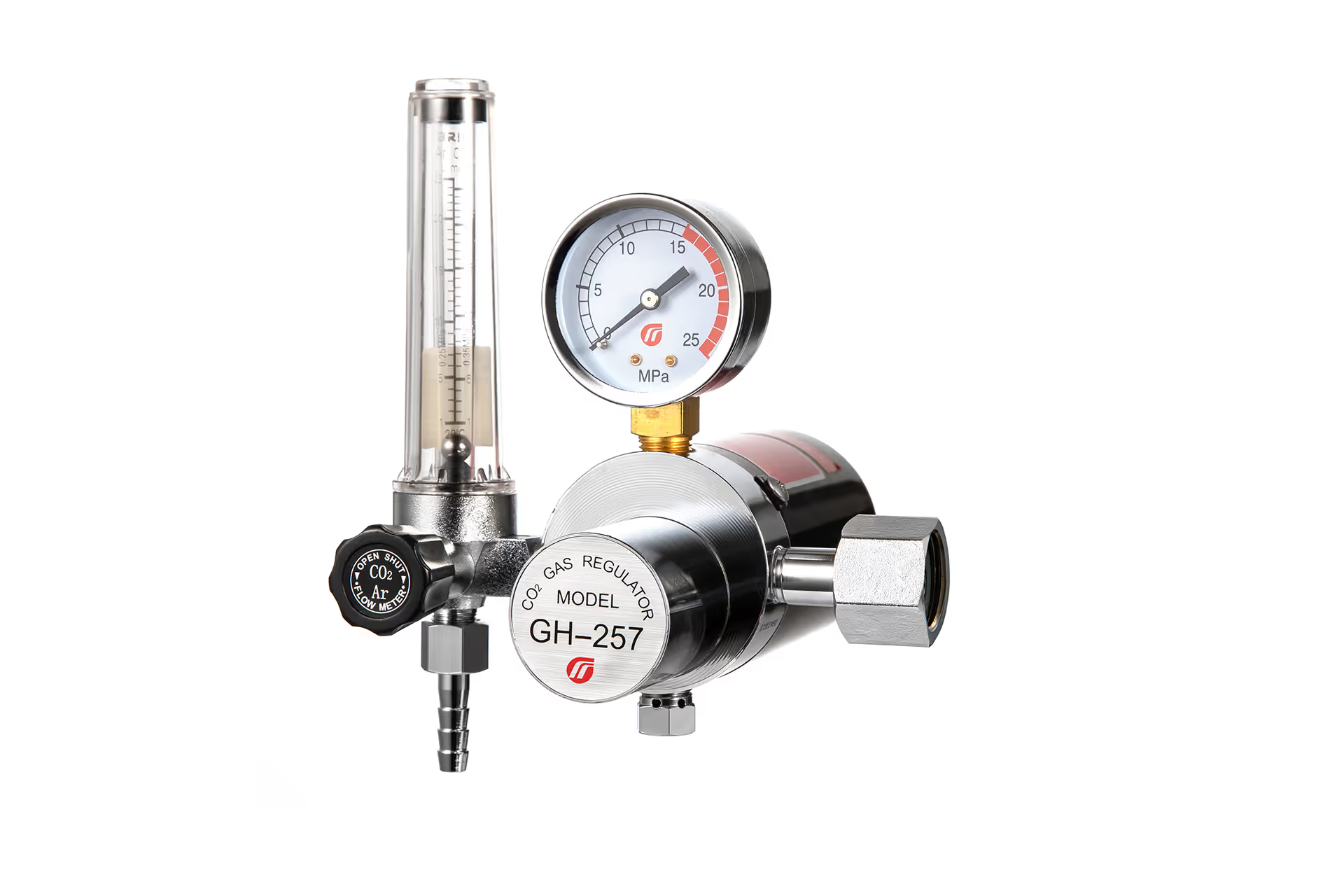
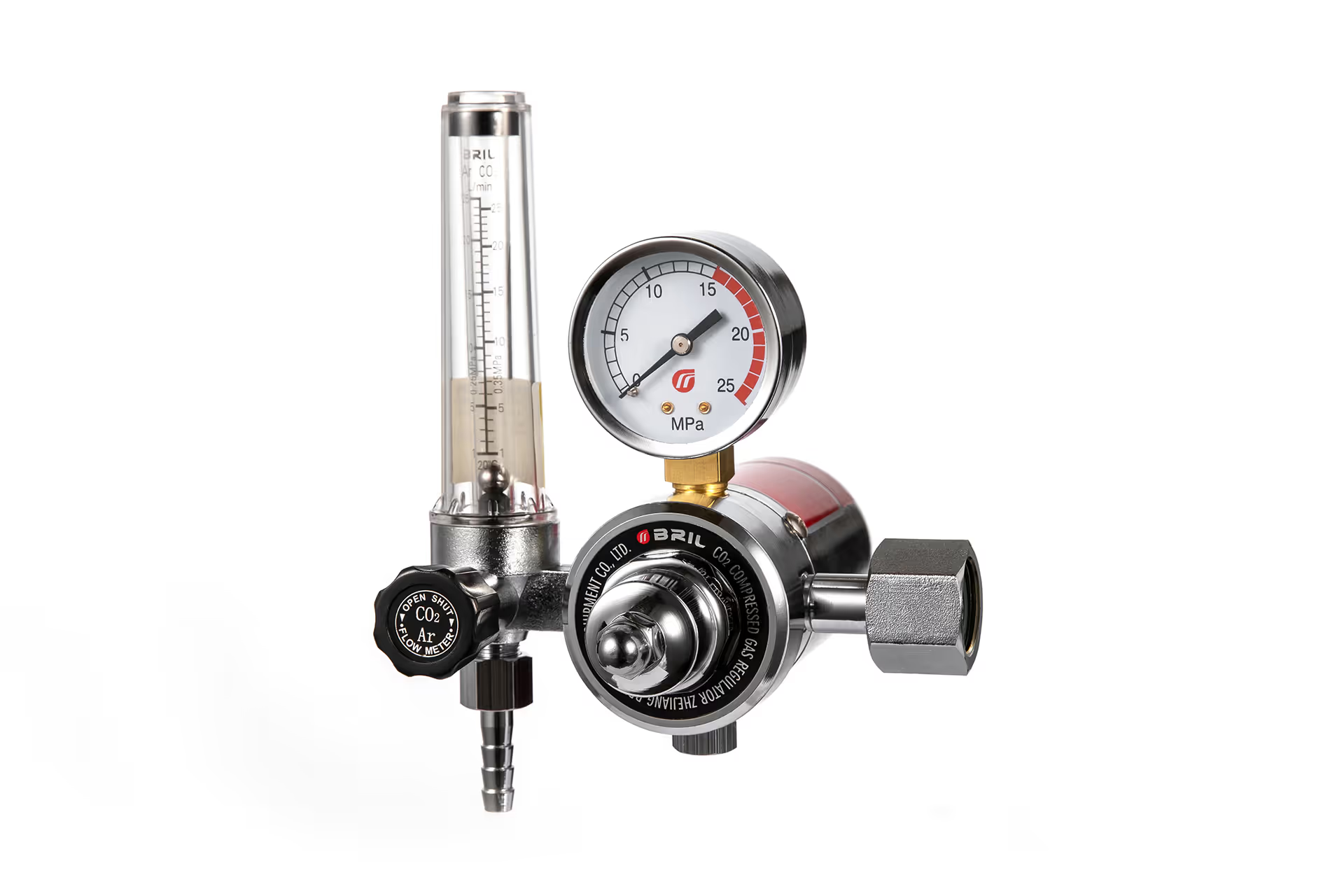
A flowmeter regulator is a device that combines pressure reduction with a direct measurement of gas flow expressed in liters per minute (L/min) or cubic feet per hour (CFH). Unlike simple pressure-only regulators, it allows the welder to set shielding gas based on actual flow, usually via a rotameter tube with a floating ball or indicator. [specialisedwelding.co]
From an engineering standpoint, the flowmeter section is calibrated for a particular gas, such as argon, CO₂, or oxygen, so the displayed value closely represents real volumetric flow at the torch. Because of this direct visualization, welding technicians can quickly optimize gas flow for different joint types, positions, and nozzle diameters without guessing. [regulatorsupply]
What Is a Dual Gauge Pressure Regulator?
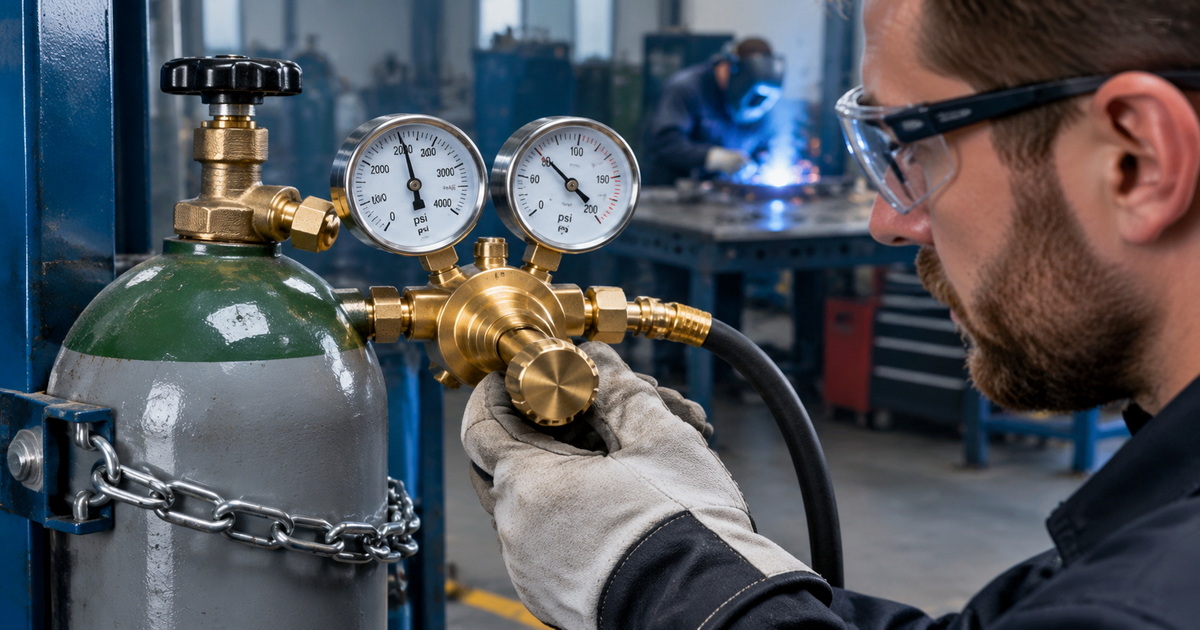
A dual gauge pressure regulator uses two gauges: one for cylinder pressure and one for outlet (delivery) pressure. The inlet gauge shows remaining gas in the cylinder, while the outlet gauge indicates the regulated pressure downstream. [bakersgas]
In typical welding applications, the operator sets a delivery pressure which then feeds into hoses, manifolds, and sometimes additional flow control devices. Dual gauge regulators are widely used because they are robust, familiar, and suitable for multi-gas use when matched with the correct CGA connection and internal materials. However, by nature they control pressure rather than flow, so they require either calibration charts or experience to translate outlet pressure into approximate shielding gas flow. [pakoxygen]
Core Functional Difference: Pressure vs Flow
The most important technical distinction is that a flowmeter regulator is flow-centric, while a dual gauge regulator is pressure-centric. For shielding gas conservation, this difference is critical. [fishersci]
– Flowmeter regulator: The welder sets gas delivery at the exact flow rate recommended by welding procedure specifications (WPS) or electrode manufacturer guidelines, such as 12–18 L/min for many GMAW operations. [prolineindustrial.co]
– Dual gauge regulator: The welder sets outlet pressure, often between 15–30 psi for common welding setups, and relies on experience or reference charts to estimate corresponding flow at the torch. [fishersci]
Because shielding gas consumption is fundamentally a function of flow over time, the ability to see and control that flow directly often leads to more consistent and lower gas usage across shifts and operators. [regulatorsupply]
Shielding Gas Conservation: How Each Regulator Type Performs
From the perspective of a manufacturing plant manager looking at monthly gas invoices, shielding gas conservation comes down to several practical factors: accuracy of setting, stability of delivery, and reduction of excess purge or leakage. [prolineindustrial.co]
Flowmeter Regulators and Gas Savings
Flowmeter regulators typically provide: [fishersci]
– Precise flow control at the welder’s torch, helping avoid over‑gassing thin materials or simple butt joints.
– Visual confirmation of actual flow, enabling quick detection of leaks or wrong settings when the ball floats unexpectedly high or low.
– Better alignment with WPS, since most procedural documents specify gas in L/min or CFH rather than pure pressure. [specialisedwelding.co]
These characteristics tend to reduce habitual “safety margins” where operators overshoot recommended flow rates “just to be safe,” which is one of the most common causes of unnecessary shielding gas consumption in manual welding. [prolineindustrial.co]
Dual Gauge Regulators and Gas Usage
Dual gauge pressure regulators can be efficient when used with proper training and standardized outlet pressure settings. [fishersci]
Advantages include:
– Stable pressure control, especially when paired with high-quality brass bodies and dual-stage designs that flatten pressure fluctuations as the cylinder empties. [fishersci]
– Visibility of remaining gas, so operators can plan cylinder changeovers and avoid mid‑weld interruptions that cause defective starts and additional gas purging. [pakoxygen]
However, because outlet pressure does not directly show volumetric flow, less experienced operators may set higher pressures than necessary, especially when switching processes or torch styles. Over time, this can lead to subtle but significant shielding gas wastage across multiple stations. [regulatorsupply]
Practical UX Perspective: How Welders Actually Use These Regulators
From a user‑experience standpoint on the shop floor, welders care about clarity, speed, and repeatability. They want to dial in gas settings quickly and confidently, without complex conversions or guesswork. [specialisedwelding.co]
– With a flowmeter regulator, the welder reads a clear number, such as 15 L/min, and sets it for a given job or material thickness. If a supervisor or WPS specifies a certain flow, it is simple to verify visually. [prolineindustrial.co]
– With a dual gauge regulator, the welder sees a pressure value like 20 psi and relies on prior experience to know whether this equates to an appropriate shielding gas flow for a given nozzle and hose. [fishersci]
In mixed‑experience teams or multi‑shift operations, the higher transparency of flow settings usually translates to more consistent gas usage and fewer “mystery parameters” during troubleshooting. [specialisedwelding.co]
Materials and Build Quality: Why Brass and Precision Machining Matter
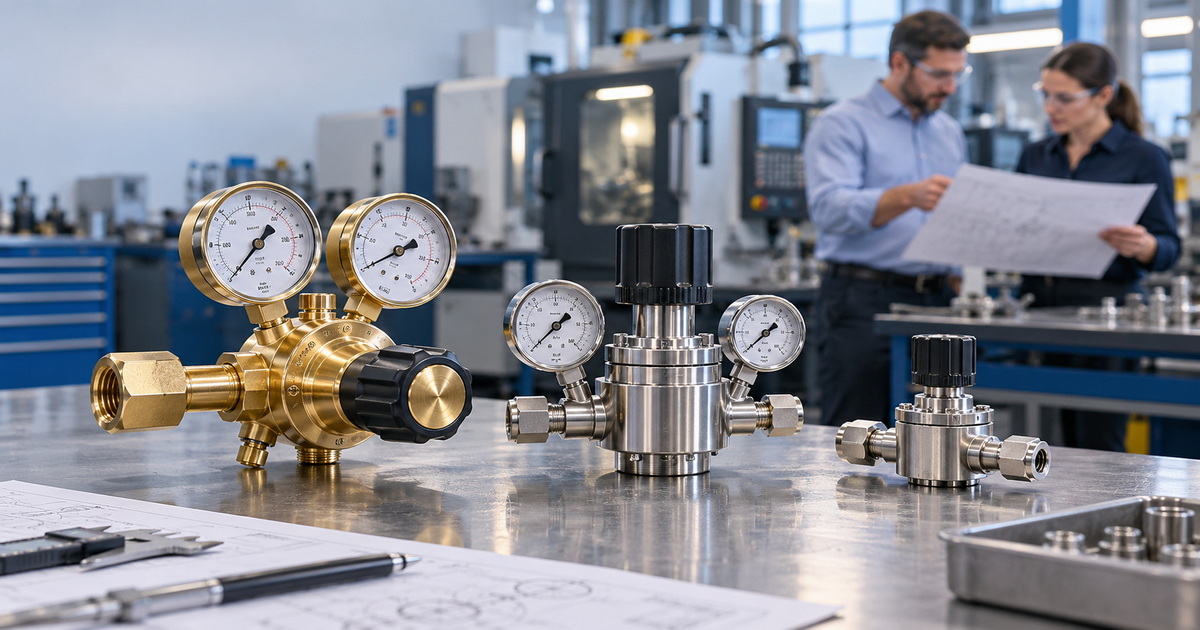
Long‑term shielding gas conservation is strongly influenced by leak tightness and regulator stability. High-quality brass bodies with properly machined threads, durable diaphragms, and sintered inlet filters help maintain stable delivery and resist damage from repeated cylinder changes. [fishersci]
Industrial regulators for CO₂, argon, oxygen, acetylene, propane, and nitrogen routinely operate at cylinder pressures ranging from several hundred to over 2000 psi, and any micro‑leaks at fittings or internal joints result in continuous gas loss even when no welding arc is running. Regulators manufactured under strict quality control, including pressure testing and leak checking, minimize this hidden waste and provide a more predictable gas consumption baseline for cost optimization. [demwelding]
Single-Stage vs Dual-Stage Regulation in Gas Conservation
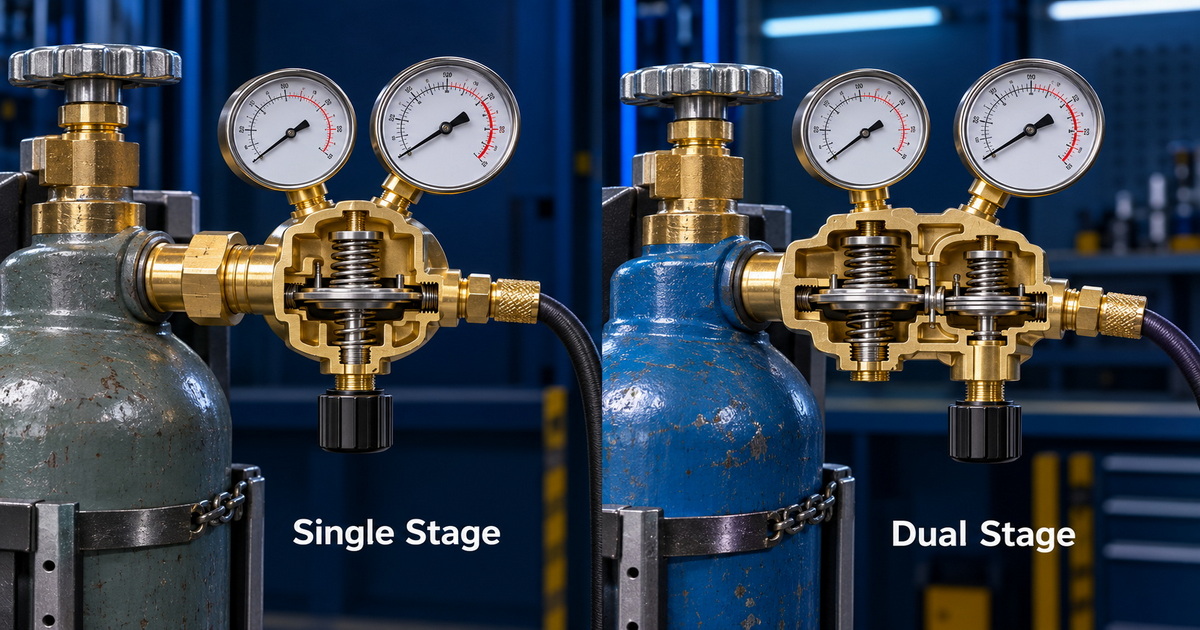
Although our title compares a flowmeter regulator to a dual gauge pressure regulator, many industrial models also incorporate dual-stage regulation to improve gas stability. [fishersci]
– Single-stage regulators reduce cylinder pressure to the desired outlet pressure in one step, which can lead to delivery fluctuations as cylinder pressure drops over time. [fishersci]
– Dual-stage regulators use two sequential pressure reduction steps, providing more constant outlet pressure and better control over actual flow at the torch, especially on long production runs. [fishersci]
In practical terms, pairing a flowmeter with a dual‑stage pressure section offers the best of both worlds: precise flow monitoring and stable pressure, which supports consistent shielding gas delivery and reduces the temptation to “compensate” by turning up the regulator. [fishersci]
Comparison Table: Flowmeter Regulator vs Dual Gauge Pressure Regulator
Below is a concise comparison focused on shielding gas conservation in welding and industrial gas applications. [prolineindustrial.co]
| Aspect | Flowmeter Regulator | Dual Gauge Pressure Regulator |
|---|---|---|
| Primary control parameter | Flow (L/min or CFH) (fishersci) | Pressure (psi/bar) (fishersci) |
| Visibility of actual gas usage | Direct visual flow indication (prolineindustrial.co) | Indirect, based on pressure setting and experience (fishersci) |
| Typical user experience | Easy to match WPS flow recommendations (specialisedwelding.co) | Requires interpretation of pressure vs flow (fishersci) |
| Suitability for shielding gas conservation | Strong, precise flow avoids over‑gassing (prolineindustrial.co) | Moderate, depends on operator discipline (regulatorsupply) |
| Monitoring remaining cylinder contents | Usually uses one upstream pressure gauge or relies on separate gauge (fishersci) | Built‑in cylinder pressure gauge indicates remaining gas (pakoxygen) |
| Best use cases | High‑quality MIG/TIG welding, robotic cells, gas‑critical procedures (prolineindustrial.co) | General welding, cutting, multi‑purpose industrial gas use (boc.co) |
| Training requirements | Lower, flow values are intuitive (specialisedwelding.co) | Higher, pressure‑to‑flow relationship must be learned (fishersci) |
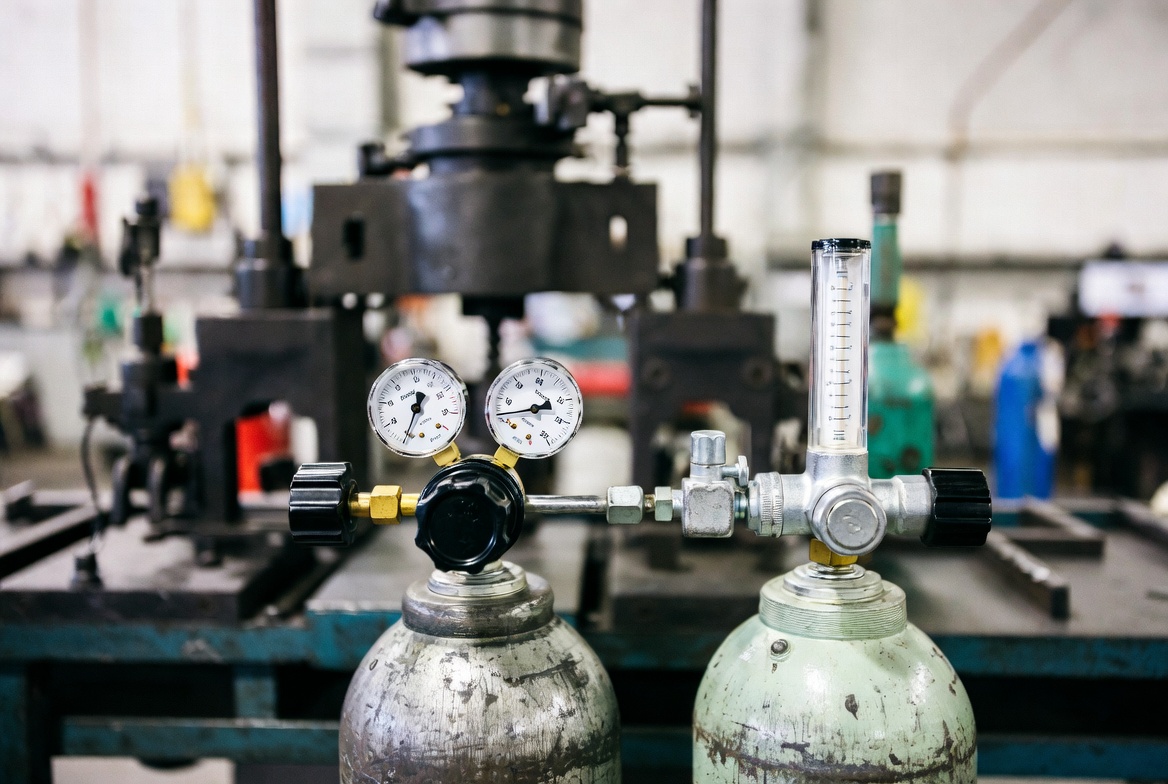
Expert Insight: When Does Flowmeter Control Deliver the Highest ROI?
From an industry expert standpoint, flowmeter regulators deliver the highest return on investment in environments where shielding gas represents a significant portion of variable cost and weld quality expectations are strict. Examples include automated welding lines for automotive components, pressure vessels, or large OEM assemblies, where consistent shielding gas envelopes are necessary for compliance with procedures and standards. [specialisedwelding.co]
In these scenarios, small deviations in gas flow can lead to porosity, lack of fusion, or excessive spatter, all of which increase rework and scrap. A flowmeter regulator helps welding engineers standardize gas settings across cells and verify them visually during audits, which reduces process drift and supports continuous improvement programs. [specialisedwelding.co]
Case-Type Scenario: Multi-Station Fabrication Shop
Consider a fabrication shop running multiple stations with CO₂ or argon‑mix shielding gas. When dual gauge pressure regulators are used and individual welders set outlet pressures based on personal preference, recorded shielding gas consumption often varies significantly between stations performing similar work. [regulatorsupply]
Switching to flowmeter regulators with standardized flows – for example, 12 L/min for standard fillet welds and 16 L/min for heavy multi‑pass joints – typically reveals that some stations had been running significantly above recommended flows without improving weld quality. Over the course of a month, the shop observes more stable consumption data and reduced overall gas use, while maintaining or improving weld consistency. [prolineindustrial.co]
Practical Steps to Optimize Shielding Gas Conservation
For welding engineers and production supervisors wanting to actively reduce shielding gas consumption, a structured approach is more effective than isolated adjustments. [prolineindustrial.co]
Step 1 – Map Your Current Gas Use
1. Record cylinder change frequency at each welding station over a standard period. [pakoxygen]
2. Note regulator type (flowmeter vs dual gauge) at each station. [fishersci]
3. Document typical settings (L/min for flowmeters, psi for dual gauge regulators) for key jobs. [prolineindustrial.co]
Step 2 – Compare Settings to WPS Recommendations
1. Review WPS documents or filler metal data sheets for recommended shielding gas flow ranges. [prolineindustrial.co]
2. Identify stations consistently above recommended values and quantify the deviation. [specialisedwelding.co]
Step 3 – Standardize and Upgrade Where Needed
1. Standardize flow settings for similar weld types using flowmeter regulators. [prolineindustrial.co]
2. Consider upgrading critical stations from dual gauge pressure regulators to flowmeter‑equipped or dual‑stage flowmeter regulators for more accurate control. [fishersci]
3. Train welders to recognize typical flow ranges and the impact of nozzle size, stick‑out, and joint design on shielding gas needs. [specialisedwelding.co]
OEM/ODM Perspective: Designing Regulators for Gas Conservation
As an OEM/ODM supplier to overseas brands and distributors, designing regulators for long‑term shielding gas conservation goes beyond simply selecting gauge types. We focus on several engineering and quality dimensions: [ftipv]
– Precision brass construction with tight tolerances to minimize internal leakage and drift. [fishersci]
– Dual-stage regulation in high‑stability models to maintain consistent outlet pressure as cylinder pressure decreases. [fishersci]
– Calibrated flowmeters tailored to specific shielding gases (CO₂, argon, mixed gases) for accurate reading at typical welding temperatures and pressures. [prolineindustrial.co]
– Heated CO₂ regulators where necessary to stabilize gas delivery and reduce freezing issues that can cause erratic flow and waste. [demwelding]
For overseas manufacturers, wholesalers, and distributors, partnering with a regulator producer that understands welding process requirements and gas conservation goals enables differentiated product lines with real operational value to end users. [boc.co]
When a Dual Gauge Pressure Regulator Still Makes Sense
Despite the clear advantages of flow‑based control for shielding gas conservation, dual gauge pressure regulators remain the right choice for certain scenarios. [fishersci]
– Multi‑purpose cylinders where the same gas supply supports cutting, heating, and non‑shielding applications. [boc.co]
– Situations where pressure insight – knowing the remaining cylinder pressure at a glance – is more critical than fine‑tuning flow, such as portable oxy‑fuel setups. [pakoxygen]
– Environments with well‑trained operators who are comfortable translating pressure settings into approximate flow using charts or experience. [regulatorsupply]
In these cases, combining dual gauge pressure regulators with good training, preventive maintenance, and leak checks can still provide respectable shielding gas efficiency without switching all stations to flowmeter devices. [prolineindustrial.co]
Making the Right Choice for Your Operation
Ultimately, choosing between a flowmeter regulator and a dual gauge pressure regulator for shielding gas conservation should be driven by your welding process mix, operator experience, and gas cost profile. [prolineindustrial.co]
– If shielding gas costs are rising and weld quality demands are strict, upgrading to flowmeter‑based or dual‑stage flowmeter regulators on key lines is a practical, high‑impact step. [specialisedwelding.co]
– If your main need is robust multi‑purpose gas control with clear cylinder pressure visibility, high‑quality dual gauge pressure regulators remain a solid choice, provided you standardize outlet pressure settings and monitor gas usage. [pakoxygen]
Clear Action Steps and How We Can Help
For overseas brands, wholesalers, and industrial manufacturers seeking to optimize shielding gas conservation across welding operations, partnering with a specialist regulator manufacturer is a strategic way to align equipment performance with process cost control. [ftipv]
We develop customized flowmeter regulators, dual-stage CO₂ heated regulators, argon and nitrogen regulators, and dual gauge pressure regulators designed for stable delivery, leak‑tight performance, and long service life. With OEM and ODM capabilities, we can adapt connection standards, calibration ranges, and branding to match the requirements of specific markets and distribution networks. [ftipv]
If you are planning a regulator upgrade program or designing a new product line for welding gas control, consider starting with a detailed audit of your current shielding gas usage and regulator mix, then define a phased transition plan that incorporates flowmeter regulators in gas‑critical stations and dual-stage designs where maximum stability is required. [prolineindustrial.co]
For technical consultations or custom regulator development for CO₂, argon, oxygen, acetylene, propane, nitrogen, and dual‑stage industrial gas control, you can get in touch with our engineering team to review your applications and performance goals in detail. [boc.co]

FAQ
Q1: Does a flowmeter regulator always use less shielding gas than a dual gauge pressure regulator?
Not automatically; however, because flowmeters display actual gas flow, they help operators avoid unnecessary over‑gassing and maintain consistent settings aligned with WPS recommendations. [prolineindustrial.co]
Q2: Can I use a dual gauge pressure regulator and still optimize gas conservation?
Yes. By standardizing outlet pressure settings, training operators on pressure‑to‑flow relationships, and performing regular leak checks, you can achieve good shielding gas efficiency even with pressure‑based control. [regulatorsupply]
Q3: When is a dual-stage regulator worth the extra investment?
Dual-stage regulators are most valuable in high‑duty cycle operations where stable outlet pressure over cylinder life is critical for consistent weld quality and gas usage, such as automated or robotic welding lines. [fishersci]
Q4: Are flowmeters accurate for all shielding gases?
Flowmeters are calibrated for specific gases. Using them with a different gas than specified can introduce error, so it is important to match the regulator and flowmeter design to the intended shielding gas. [regulatorsupply]
Q5: How can OEM/ODM regulators help overseas brands stand out?
Custom regulators with optimized flow ranges, dual-stage stability, heated CO₂ designs, and brand-specific configurations allow overseas brands and distributors to offer equipment that reduces total gas cost and supports higher weld quality for end users. [demwelding]
References
1. BOC – Industrial Gas Regulators. Available at: [https://www.boc.co.nz/shop/en/nz/gas-welding-heating-cutting-brazing/gas-regulator/industrial-gas-regulators] [boc.co]
2. P.K. Engineers – Gas Regulator Product Range. Available at: [https://www.pkengineers.net/gas-regulator.html] [pkengineers]
3. Baker’s Gas & Welding Supplies – Regulators Collection. Available at: [https://bakersgas.com/collections/regulators] [bakersgas]
4. Proline Industrial – Welding Gas Regulators. Available at: [https://www.prolineindustrial.co.nz/equipment/welding-equipment/gas-regulators] [prolineindustrial.co]
5. Specialised Welding Products – Gas Regulators & Flowmeters. Available at: [https://specialisedwelding.co.uk/collections/gas-regulators] [specialisedwelding.co]
6. FTIPV – Gas Regulators Category. Available at: [https://www.ftipv.com/category/gas-regulators/] [ftipv]
7. Pakistan Oxygen Limited – Gas Regulators (Single & Multi-Stage). Available at: [https://pakoxygen.com/Hardgoods/GasRegulators] [pakoxygen]
8. Regulator Supply – Carbon Dioxide Regulators. Available at: [https://regulatorsupply.com/collections/carbon-dioxide-regulator] [regulatorsupply]
9. DEM Welding – Gas Regulators for Oxygen/Acetylene/Argon/CO₂/Nitrogen. Available at: [https://demwelding.com/gas-regulator/] [demwelding]
10. Fisher Scientific – Gas Regulators Product Listings. Available at: [https://www.fishersci.com/us/en/browse/90126178/gas-regulators] [fishersci]
Hot Tags: Flowmeter Regulator, Dual Gauge Pressure Regulator, Shielding Gas Regulator, Industrial Gas Regulator, CO2 Heated Regulator, Argon Welding Regulator, Dual Stage Gas Regulator, OEM ODM Gas Regulator, Welding Gas Conservation, B2B Gas Regulator Supplier