Content Menu
● Indonesia’s Position in the Industrial Gas Regulator Supply Chain
>> Industrial Locations Relevant to Buyers
● How These Suppliers Were Selected
>> 1. Manufacturing or Supply-Chain Identity
>> 2. Engineering and Product Relevance
>> 4. Production and Delivery Evidence
● Supplier Comparison: Capacity, MOQ, Certification, and Purchasing Fit
● 1. Zhejiang Bril Welding Equipment Co., Ltd.
>> Profile and Market Position
>> Profile and Market Position
>> OEM/ODM Scope and Verification Priorities
>> Profile and Market Position
>> Main Markets and OEM/ODM Scope
>> Profile and Market Position
>> OEM/ODM Scope and Verification Priorities
>> Profile and Market Position
>> OEM/ODM Scope and Limitations
● Technical Buying Guide: What Determines Regulator Quality?
>> Brass Quality Requires More Than a Material Label
>> Match the Standard to the Product
>> Understand CE and RoHS Claims
>> Oxygen Cleanliness Is a Separate Purchasing Requirement
● Buyer’s Guide: From Supplier Verification to Shipment
>> Step 1: Verify the Business and Its Role
>> Step 2: Issue a Complete Technical Inquiry
>> Step 3: Approve Samples Against Written Criteria
>> Step 4: Turn Approval Into a Controlled Production Specification
>> Step 5: Plan Logistics Before Placing the Order
● The Often-Overlooked Procurement Trap: An Uncontrolled “Equivalent” Component
● Conclusion: Select the Supply Model Before Negotiating the Price
● FAQ
>> 1. How Can I Verify Whether a Supplier’s ISO 9001 Certificate Is Expired, Suspended, or Misleading?
>> 3. Does a Regulator With Two Gauges Have Two Pressure-Reduction Stages?
>> 4. How Can I Compare Capacity When Suppliers Will Not Publish Annual Output?
>> 5. What Should I Do If a Supplier Provides Only a Generic CE Document?
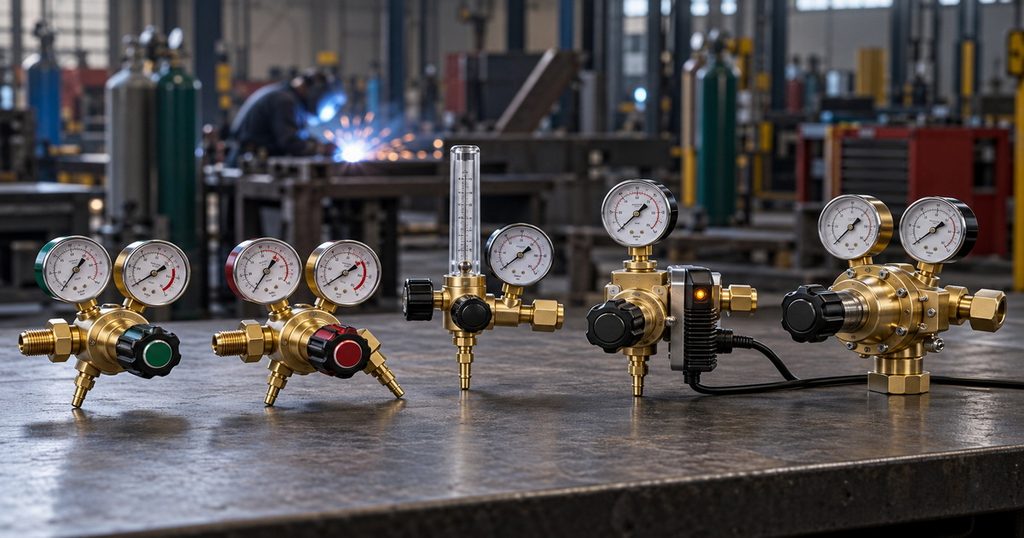
Indonesia offers several practical sourcing routes for industrial gas pressure regulators: specialist equipment distributors, integrated gas suppliers, welding-equipment partners, and overseas factories supporting local private-label businesses. The right partner depends on whether your priority is immediate availability, application support, or control over product design and branding.
Indonesia’s Position in the Industrial Gas Regulator Supply Chain
Indonesia’s manufacturing economy creates a substantial customer base for welding, cutting, metal fabrication, and industrial gas equipment. Government broadcaster RRI, reporting Statistics Indonesia data, states that manufacturing grew 5.30% in 2025 and accounted for 19.07% of national gross domestic product.
Official trade reporting also provides useful context. Statistics Indonesia reported manufacturing exports of US$167.85 billion during January–September 2025, up 17.02% year on year. Its March 2026 release reported that manufacturing export value increased 8.19% year on year in January 2026. These figures describe the broader manufacturing sector—not the size or growth rate of the gas regulator market.
The distinction matters. A growing industrial economy supports demand for gas-control equipment, but it does not prove that every local supplier manufactures regulators.
Industrial Locations Relevant to Buyers
Buyers should investigate suppliers near their operating sites rather than assuming that one location is a dedicated regulator-manufacturing cluster.
Useful sourcing locations include:
– Cikarang–Bekasi, where industrial fabrication businesses operate within established industrial estates.
– Surabaya and Sidoarjo, where PT Aneka Mega Energi maintains its head office and warehouse.
– Jakarta and Batam, where the same supplier lists representative offices.
These locations offer access to industrial customers, equipment distribution, and fabrication activity. However, the sources reviewed do not establish an Indonesian industrial cluster dedicated specifically to manufacturing welding-cylinder regulators.
How These Suppliers Were Selected
This is an application-based shortlist, not an audited ranking by revenue, annual output, or market share. Inclusion reflects publicly documented relevance to industrial gas equipment, welding procurement, or regulator manufacturing.
Supplier statements are identified as such. No factory visits, independent product tests, or live stock checks were performed for this article.
1. Manufacturing or Supply-Chain Identity
The first question is whether the business is:
– A regulator manufacturer.
– An authorized equipment distributor.
– A multi-brand procurement platform.
– An integrated gas and equipment supplier.
These models serve different purchasing needs. Private-label product development requires a different relationship from buying replacement regulators for an existing workshop.
2. Engineering and Product Relevance
For welding-cylinder applications, ISO 2503 is a relevant technical reference covering pressure regulators and regulators with flow-metering devices. Manifold and pipeline regulators fall into different product categories, so a supplier should identify the standard applicable to the actual equipment offered.
3. Quality-System Evidence
An ISO 9001 certificate should be verified against the supplier’s legal entity, manufacturing location, certification scope, and current status. Accredited certification can be checked through IAF CertSearch and, where necessary, directly with the issuing certification body.
4. Production and Delivery Evidence
Buyers should request:
– Model-specific production capacity.
– Current production loading.
– Sample and repeat-order lead times.
– Inspection capacity.
– Spare-parts availability.
– Records supporting delivery commitments.
A factory’s floor area or employee count does not establish how many compliant regulators it can deliver each month.
5. OEM/ODM Suitability
Meaningful customization extends beyond printing a logo. Buyers should establish whether the supplier can control drawings, connection specifications, pressure ranges, approved components, packaging, and engineering changes.
Supplier Comparison: Capacity, MOQ, Certification, and Purchasing Fit
| Supplier | Business Model and Location | Published Capacity Information | Published MOQ | Certification or Compliance Evidence | Main Purchasing Fit |
|---|---|---|---|---|---|
| Zhejiang Bril Welding Equipment Co., Ltd. | Regulator manufacturer; Wenzhou, China | Reports over 200 employees and over 3,500 m² of production area; annual unit capacity not disclosed | Not disclosed | Company reports ISO 9001 and CE/CNAS-related credentials; current documents require verification | OEM/ODM regulator sourcing and private-label development |
| PT Aneka Mega Energi | Industrial equipment distributor; Indonesia | Regulator manufacturing capacity not established | Not disclosed | Company identifies itself as an authorized distributor; regulator-specific conformity documents require confirmation | Industrial gas equipment and Gentec regulator sourcing |
| BCA GAS | Gas and equipment supplier; Indonesia | Regulator manufacturing capacity not established | Not disclosed | No regulator-specific certification established from the reviewed page | Coordinated gas, cylinder, valve, and regulator procurement |
| PT Maxxima Hersam Solusi | Welding and industrial equipment distributor; Indonesia | Regulator manufacturing capacity not established | Not disclosed | Company lists several authorized brand relationships; verify the current relationship for the quoted product | Welding and gas-cutting equipment packages |
| MonotaRO Indonesia | Multi-brand industrial procurement platform | Manufacturing capacity not applicable to the platform | Confirm by listing and quotation | Model- and brand-specific documentation must be requested | Catalog comparison and standardized replacement purchases |
1. Zhejiang Bril Welding Equipment Co., Ltd.
Profile and Market Position
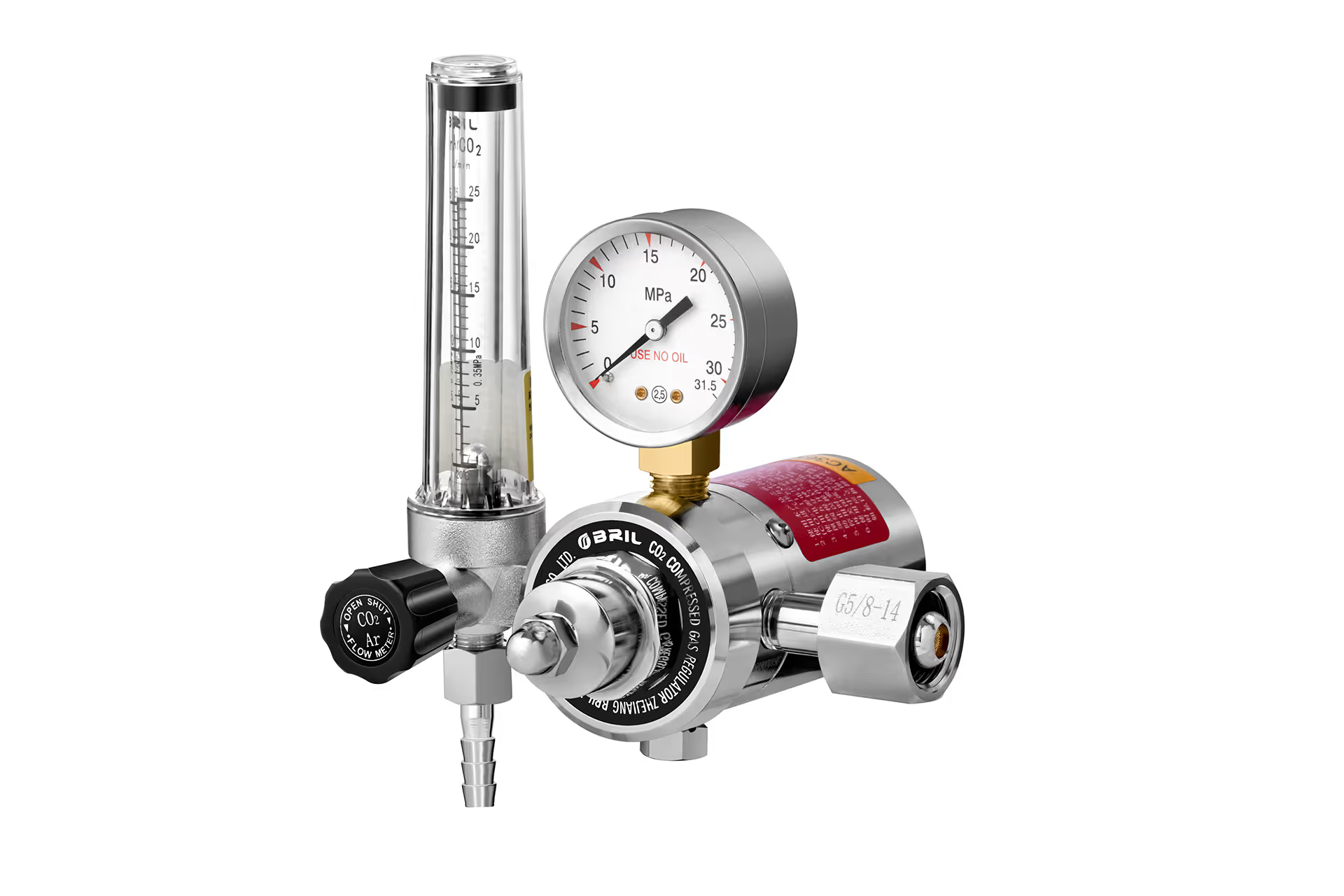
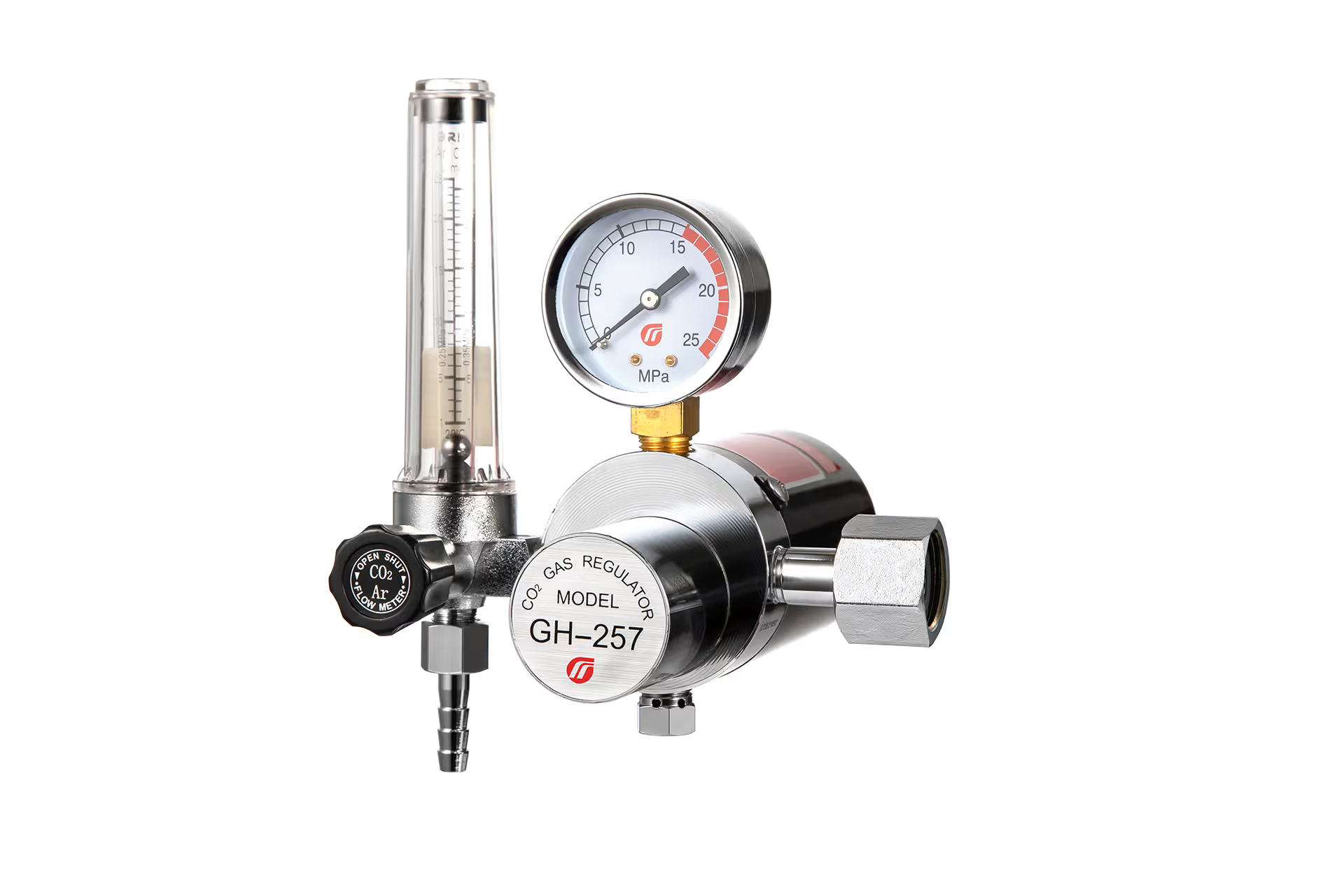
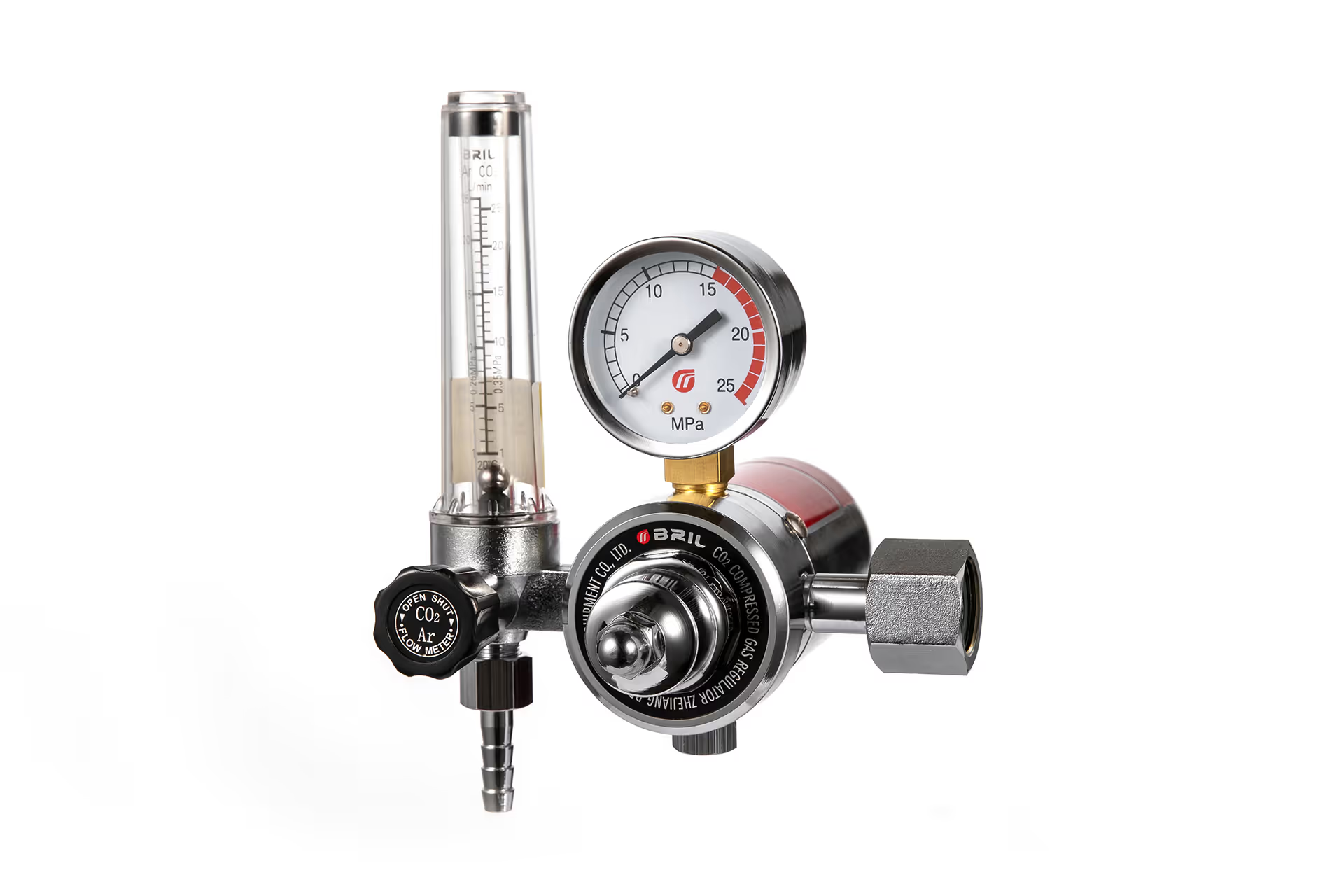
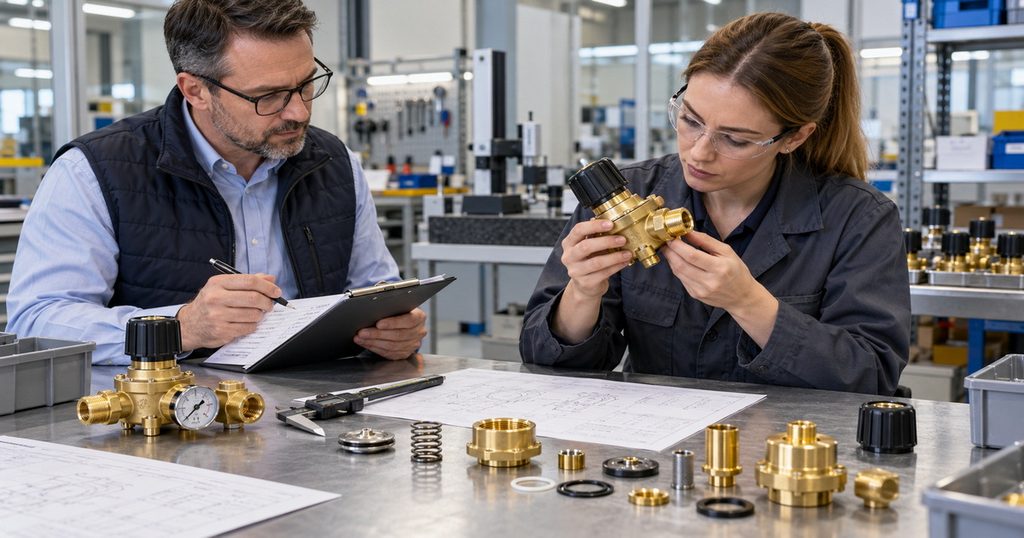
Founded in 2002, Zhejiang Bril Welding Equipment Co., Ltd. specializes in developing, manufacturing, and selling industrial gas pressure regulators. Its manufacturing location is Wenzhou, Zhejiang, China. The company reports serving more than 30 countries and regions.
For Indonesian wholesalers and overseas brands, Bril represents a direct-manufacturing sourcing route rather than a local-stock distribution route.
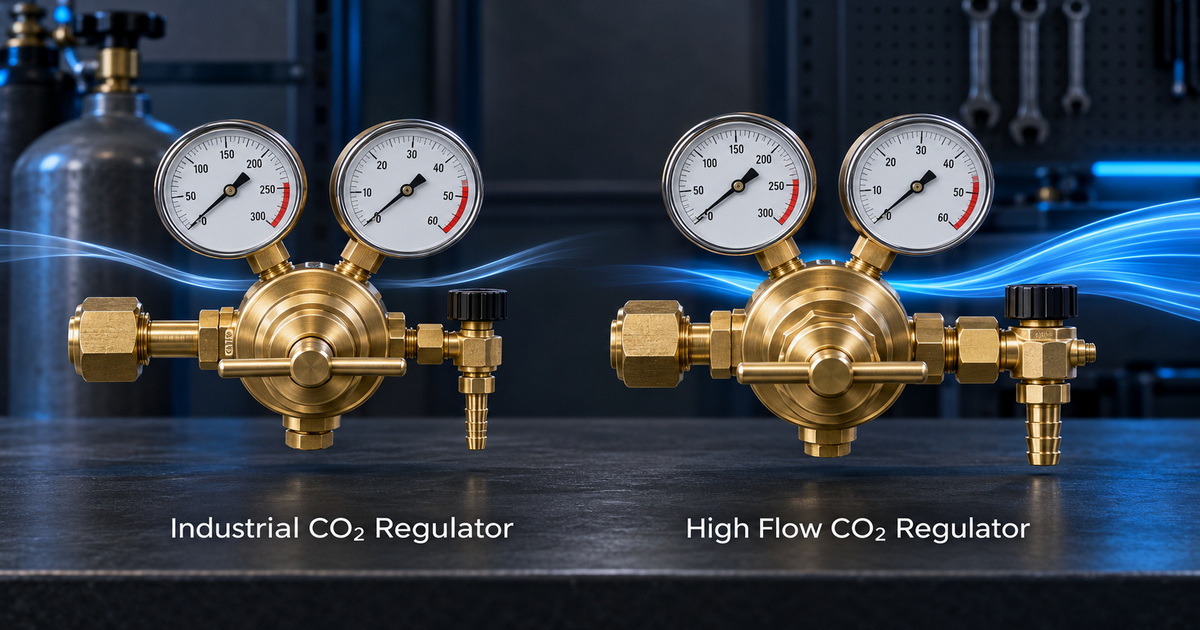
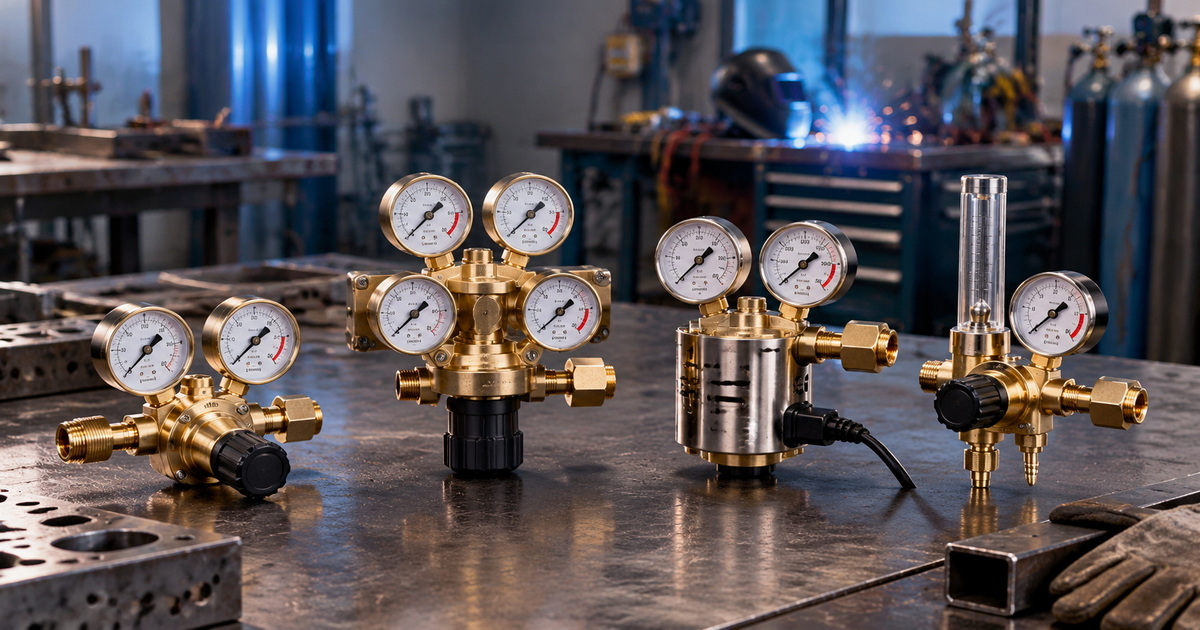
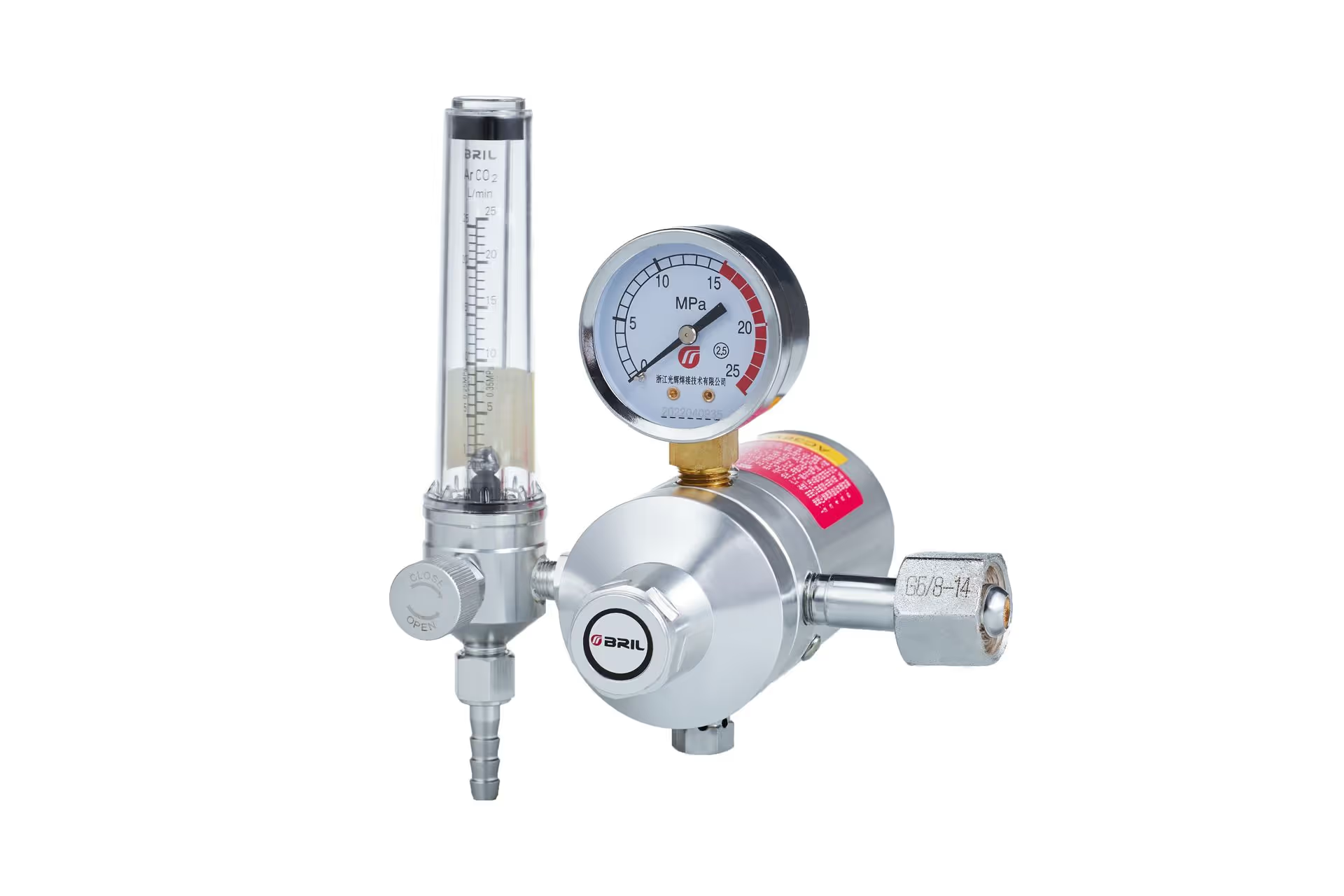
Its stated product offering covers CO₂ regulators, heated CO₂ regulators, argon, oxygen, acetylene, propane, nitrogen, and dual-stage regulators, alongside OEM and ODM services.
Core Strengths
Bril’s company profile describes dedicated regulator production, technical capabilities, testing equipment, and OEM supply relationships. It also names several welding-equipment customers and reports OEM production for Messer product ranges from 2022. These are company-published statements and should be verified through appropriate commercial references before becoming part of a purchasing decision.
The practical attraction for smaller and mid-sized brands is the opportunity to discuss customization directly with a specialist factory. Buyers should assess that opportunity through measurable evidence rather than assuming that direct sourcing automatically produces the lowest total cost.
OEM/ODM Scope to Discuss
A suitable inquiry should cover:
– Gas-specific product configuration.
– Cylinder inlet and outlet connections.
– Pressure and flow ranges.
– Gauge scales and brand presentation.
– Heated CO₂ regulator electrical requirements.
– Packaging and instruction manuals.
– Spare-parts and warranty arrangements.
Communication efficiency should be evaluated during sampling: does the supplier answer engineering questions clearly, maintain drawing revisions, and confirm specifications in writing?
Bril is a relevant first candidate for buyers seeking cost-conscious private-label development, but MOQ flexibility, tooling costs, development ownership, and delivery performance require project-specific confirmation.
2. PT Aneka Mega Energi
Profile and Market Position
PT Aneka Mega Energi describes itself as an industrial equipment distributor with more than two decades of industry experience. Its reviewed company page does not provide an exact founding year.
The company lists a Surabaya head office, a Sidoarjo warehouse, and representative offices in Jakarta and Batam. Its product range includes industrial gas equipment, compressors, vacuum pumps, filters, and welding-related equipment.
Core Strengths
Aneka Mega Energi publishes Gentec oxygen and nitrogen regulator offerings, providing direct evidence of relevance to industrial gas regulator procurement. Its oxygen regulator page describes equipment intended for gas welding, cutting, and heating applications.
Its principal market is Indonesian industrial procurement. The combination of gas equipment and broader industrial products may be useful for buyers consolidating purchases across multiple equipment categories.
OEM/ODM Scope and Verification Priorities
The reviewed sources establish distribution activity, not private-label regulator manufacturing.
Buyers should ask for:
– The exact regulator manufacturer and model.
– Current authorization for the offered brand.
– Connection and pressure specifications.
– Local stock and replenishment times.
– Warranty responsibility.
– Availability of original service components.
Aneka Mega Energi is most relevant when the procurement priority is a locally accessible branded equipment supply route rather than ownership of a customized regulator design.
3. BCA GAS
Profile and Market Position
BCA GAS states that it was established in 2007. Its published activities include industrial gases, calibrated gases, cylinders, valves, regulators, medical equipment, and central medical gas services. The company describes a network intended to serve customers across Indonesia.
Core Strengths
Its main procurement advantage is the possibility of coordinating gas supply and associated equipment through one commercial relationship.
This can be useful when a buyer needs the gas specification, cylinder arrangement, valve connection, and regulator selection considered together. However, BCA GAS’s participation in medical gas supply should not be interpreted as evidence that every regulator it offers is approved for medical use.
Main Markets and OEM/ODM Scope
The company identifies hospitals, industry, and wider community needs among its customer groups. Its reviewed page does not establish regulator manufacturing, proprietary regulator development, or private-label OEM production.
For industrial projects, request a complete equipment schedule rather than a generic description such as “nitrogen regulator.” The schedule should identify the actual regulator brand, pressure rating, connection, intended gas, documentation, and warranty terms.
BCA GAS is a practical candidate for buyers seeking coordinated gas-and-equipment procurement, subject to model-specific technical verification.
4. PT Maxxima Hersam Solusi
Profile and Market Position
PT Maxxima Hersam Solusi supplies welding equipment, industrial tools, safety products, and gas-cutting-related equipment.
Its website describes the founding engineer’s experience as exceeding 25 years, but this is not the company’s founding date. An exact establishment year was not confirmed from the reviewed page.
Core Strengths
The company lists brands including ESAB, CIGWELD, GCE, and KOIKE, and identifies Indonesian manufacturing, construction, mining, automotive, engineering, oil and gas, and palm oil businesses among its target sectors.
Its relevance is strongest where regulators form part of a wider welding or cutting package.
For such purchases, buyers should evaluate the compatibility of the regulator with hoses, torches, fittings, and safety devices. The UK Health and Safety Executive specifically advises using regulators and associated equipment appropriate to the gas and application.
OEM/ODM Scope and Verification Priorities
Public information supports a distribution and technical-supply role, not confirmed regulator OEM/ODM manufacturing.
Before ordering, verify:
– The exact regulator brand and current model.
– Current brand authorization.
– Gas and pressure compatibility.
– Original replacement-parts availability.
– Local warranty and service arrangements.
The company is a candidate for integrated welding-equipment procurement rather than a substitute for a dedicated private-label regulator factory.
5. MonotaRO Indonesia
Profile and Market Position
MonotaRO Indonesia provides a multi-brand industrial purchasing route. Its regulator category includes listings associated with Harris, Yamato, Victor, Wipro, and other brands, covering different gases and applications.
An establishment year was not verified from the reviewed source. Buyers requiring corporate-history validation should obtain the legal entity’s registration details.
Core Strengths
A catalog platform makes it easier to compare model numbers, listed specifications, and price points. The reviewed category includes argon, nitrogen, acetylene, and LPG regulator listings.
This makes it relevant to industrial maintenance teams and buyers replacing an already specified component.
OEM/ODM Scope and Limitations
A broad catalog does not establish custom engineering or private-label manufacturing capability.
Buyers should also avoid assuming that products in the same category are interchangeable. Different listings may have different inlet connections, gas approvals, operating pressures, and outlet fittings.
MonotaRO is therefore a useful route for standardized purchases when the required model is already known. For product development, substantial customization, or a distributor-owned regulator range, a direct manufacturer relationship is more appropriate.
Technical Buying Guide: What Determines Regulator Quality?
Brass Quality Requires More Than a Material Label
“High-quality brass” is not a complete engineering specification.
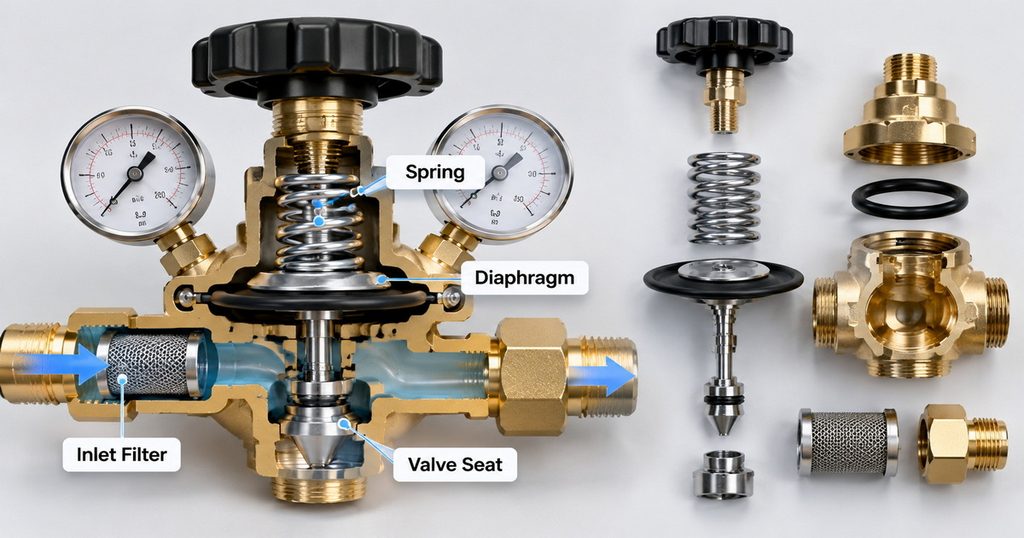
Ask suppliers to identify the alloy designation, manufacturing route, and acceptance criteria for the pressure-containing body. Request evidence appropriate to the purchasing risk, including material declarations, batch traceability, and agreed verification testing.
Do not assume that a higher copper percentage is always better. Acetylene requires specific material compatibility: HSE guidance warns about acetylide formation with certain metals and identifies copper and alloys containing more than 70% copper by mass as unsuitable for acetylene service.
Match the Standard to the Product
| Product Category | Technical Reference or Verification Focus |
|---|---|
| Welding-cylinder regulator | Relevant ISO 2503 requirements and declared operating envelope |
| Manifold regulator | Relevant manifold-regulator standard and system duty |
| Pipeline regulator | Applicable line-regulator standard and installation conditions |
| Oxygen regulator | Gas compatibility, controlled cleaning, contamination prevention |
| Heated CO₂ regulator | Pressure performance plus applicable electrical safety requirements |
Understand CE and RoHS Claims
CE and RoHS are not interchangeable claims.
European legislation includes separate requirements for pressure equipment, certain electrical equipment, and hazardous substances in electrical and electronic equipment. Applicability depends on the product design and regulatory scope. A mechanical regulator and an electrically heated CO₂ regulator should not be assumed to require the same documentation.
For each quoted model, request:
– The manufacturer’s applicable conformity declaration.
– The legislation and standards cited.
– Supporting test documentation.
– A clear match between the documents and the supplied model.
Avoid accepting an unexplained “CE certificate” as a complete compliance package.
Oxygen Cleanliness Is a Separate Purchasing Requirement
An oxygen regulator needs more than suitable pressure ratings. HSE guidance emphasizes freedom from oil, grease, particles, and other contamination in oxygen-service equipment.
The purchase specification should therefore address cleaning, handling, assembly controls, and protective packaging—not merely the body alloy.
Buyer’s Guide: From Supplier Verification to Shipment
Step 1: Verify the Business and Its Role
Confirm the legal company name, registered address, bank beneficiary, manufacturing location where applicable, and responsibility for after-sales service.
For a distributor, verify the supply route and brand authorization. For a factory, request a process-focused audit covering machining, cleaning, assembly, testing, and product identification.
Step 2: Issue a Complete Technical Inquiry
Include:
1. Gas type and intended application.
2. Maximum inlet pressure.
3. Required outlet pressure and flow.
4. Cylinder connection specification.
5. Outlet connection.
6. Operating environment.
7. Applicable standards and destination market.
8. Branding and packaging requirements.
9. Forecast demand and delivery schedule.
10. Required spare parts and warranty terms.
This reduces the risk of comparing quotations for superficially similar but technically different products.
Step 3: Approve Samples Against Written Criteria
Do not approve a sample only because the gauge responds and the regulator does not visibly leak.
Agree on qualified testing for pressure stability, leakage, shutoff behavior, flow performance, and relevant operating conditions. Oxygen and other hazardous-gas tests should be conducted under suitable procedures by competent personnel.
The regulator must also be considered within the downstream safety design. HSE notes that pressure regulators are not intended to serve as protective devices against downstream overpressure.
Step 4: Turn Approval Into a Controlled Production Specification
Record the approved:
– Drawing revision.
– Bill of materials.
– Gas designation.
– Pressure ranges.
– Connection dimensions.
– Markings.
– Packaging.
– Inspection requirements.
Retain reference samples, but do not rely on a sample alone to define all production requirements.
Step 5: Plan Logistics Before Placing the Order
For imports, ask a qualified customs broker to confirm classification, documentation, and current Indonesian requirements for the actual product.
Agree on transport packaging, thread protection, moisture protection, carton identification, shipment terms, and responsibility for damaged or nonconforming goods. Heated models should have their electrical configuration clearly identified before dispatch.
The Often-Overlooked Procurement Trap: An Uncontrolled “Equivalent” Component
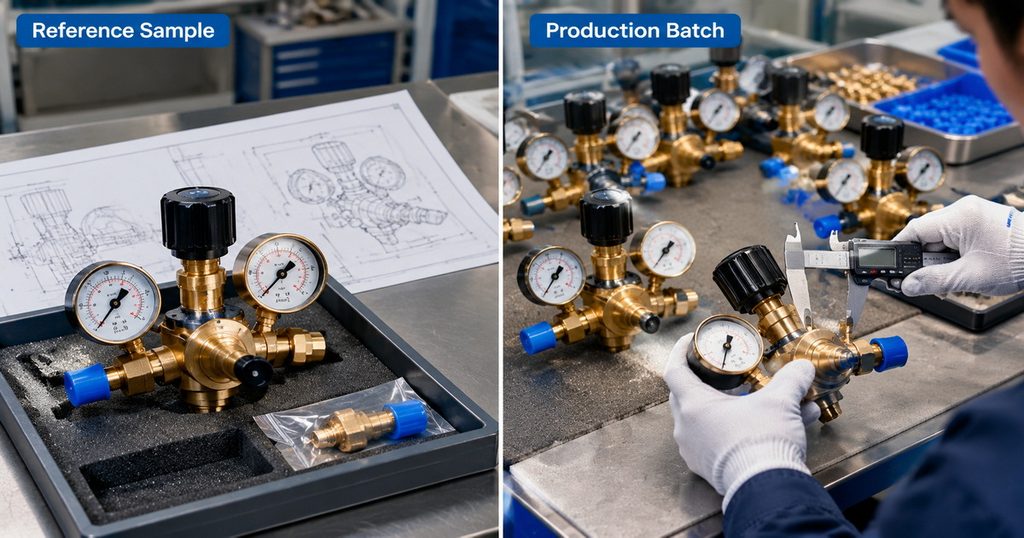
A regulator can keep the same appearance and model number while an internal component changes.
Potential changes include the seat material, diaphragm, spring, inlet filter, seal, or machining detail. The key procurement risk is not simply whether the replacement is cheaper; it is whether the delivered configuration remains the one that was approved.
A strong purchasing agreement should require:
– Written notification of material and component changes.
– Approval before substitutions.
– Traceability to drawing and bill-of-material revisions.
– Revalidation where changes affect performance or compatibility.
– Access to investigation records for field failures.
This approach also helps prevent disputes over substituted body materials or undocumented parts. Instead of relying on the word “equivalent,” define which characteristics must remain equivalent and what evidence demonstrates that equivalence.
Conclusion: Select the Supply Model Before Negotiating the Price
The five candidates represent different purchasing routes.
Bril is the direct-manufacturing option for buyers exploring OEM/ODM regulator development. Aneka Mega Energi offers an Indonesian industrial gas equipment distribution route. BCA GAS combines gases and related equipment, Maxxima serves broader welding and fabrication procurement, and MonotaRO supports catalog-based purchasing.
For a private-label program, begin with a technical inquiry rather than a request for a generic price list. Send Zhejiang Bril Welding Equipment Co., Ltd. your target gases, pressure ranges, cylinder connections, branding requirements, forecast volumes, and destination-market documentation needs. Request a model-specific proposal, sample plan, and written quality requirements before committing to repeat orders.
FAQ
1. How Can I Verify Whether a Supplier’s ISO 9001 Certificate Is Expired, Suspended, or Misleading?
Search the legal company name or certificate number in IAF CertSearch. Check the status, certified location, scope, issuing certification body, and accreditation information—not just the expiry date.
If the details cannot be reconciled, contact the certification body directly. An apparently current certificate is still unsuitable if it covers a different entity, site, or activity from the factory supplying your regulators.
2. Can One Regulator Model Be Used for Oxygen, Nitrogen, Argon, and Acetylene by Changing the Connector?
Do not approve this without model-specific manufacturer documentation.
Gas compatibility includes internal materials, cleaning, pressure ratings, and service conditions—not only connector geometry. HSE advises selecting regulators for the particular gas and application, with additional cleanliness requirements for oxygen and material restrictions for acetylene.
3. Does a Regulator With Two Gauges Have Two Pressure-Reduction Stages?
No. Two gauges may simply indicate inlet and outlet pressure.
For procurement purposes, require a sectional drawing or manufacturer specification identifying the number of pressure-reduction stages. Also request performance information across the intended inlet-pressure range rather than treating “dual-stage” as a sufficient performance guarantee.
4. How Can I Compare Capacity When Suppliers Will Not Publish Annual Output?
Compare order-specific evidence.
Ask each manufacturer for the proposed production allocation, current workload, inspection throughput, sample lead time, and repeat-order schedule. Ask distributors for confirmed stock, replenishment lead time, and allocation arrangements instead.
Use the same proposed order quantity and specification for every comparison. Otherwise, a claimed capacity figure may describe a different regulator family or an operating schedule unavailable to your order.
5. What Should I Do If a Supplier Provides Only a Generic CE Document?
Request documentation identifying the exact model, manufacturer, relevant legislation, and supporting technical evidence.
European requirements distinguish pressure equipment from electrical equipment and restrictions on substances in electrical and electronic products. A generic document covering an unrelated product or omitting the applicable legal basis is not sufficient evidence for your regulator.
Source Documentation
1. – Zhejiang Bril Welding Equipment Co., Ltd., company profile and manufacturing disclosures. Founding year, location, stated facilities, export reach, and OEM background. [chinesewelding]
2. – PT Aneka Mega Energi, company profile and operating locations; Gentec regulator product information. [anekamega]
3. – BCA GAS, company history and gas-equipment supply scope. [bcagas]
4. – PT Maxxima Hersam Solusi, company profile, stated brands, and customer sectors. [maxximasolusi.co]
5. – MonotaRO Indonesia, industrial gas regulator category and product listings. [monotaro]
6. – Statistics Indonesia, November 2025 trade release: January–September 2025 manufacturing exports. [bps.go]
7. – Statistics Indonesia, March 2026 trade release: January 2026 exports and manufacturing export growth. [bps.go]
8. – RRI, reporting Statistics Indonesia’s 2025 manufacturing growth and GDP contribution. [rri.co]
9. – International Organization for Standardization, welding-equipment standards catalog. [iso]
10. – IAF CertSearch, accredited management-system certificate validation guidance. [iafcertsearch]
11. – UK Health and Safety Executive, welding and flame-cutting safety guidance and HSG139 compressed-gas guidance. [hse.gov]
12. – European Commission, industrial-product legislation covering pressure equipment, electrical equipment, and RoHS. [commission.europa]
Hot Tags: Gas Pressure Regulator, Gas Pressure Reducing Regulator, Industrial Gas Regulator, Gas Regulator Manufacturer, Gas Regulator Supplier Indonesia, Welding Gas Regulator, CO₂ Gas Regulator, Oxygen Pressure Regulator, Dual Stage Gas Regulator, OEM Gas Regulator Manufacturer