Content Menu
● Choosing a Gas Regulator Partner, Not Just a Product
● How These Suppliers Were Selected
● The 2026 Market Context: What the Available Reports Actually Show
● Leading Gas Pressure Reducing Regulator Manufacturers and Suppliers
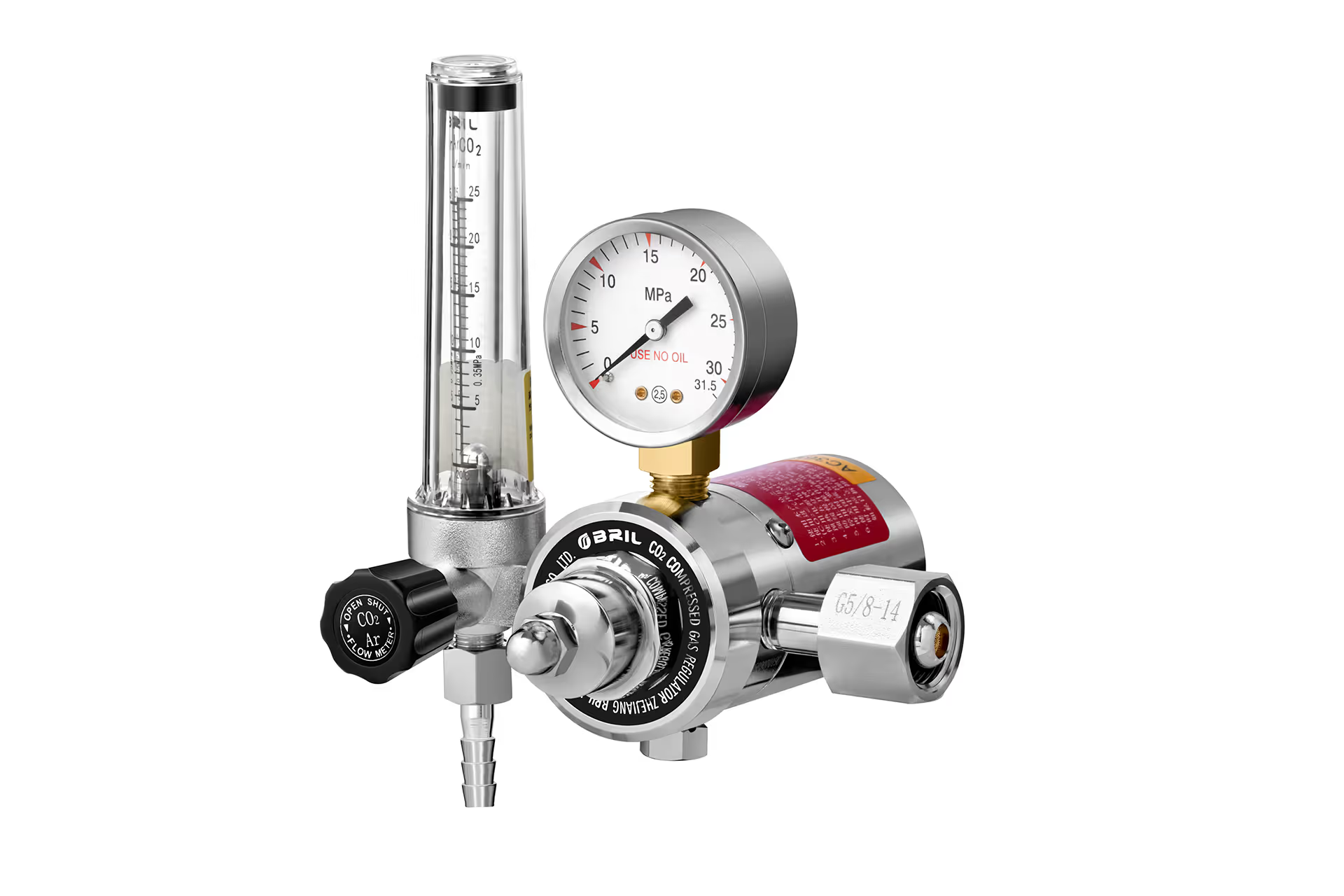
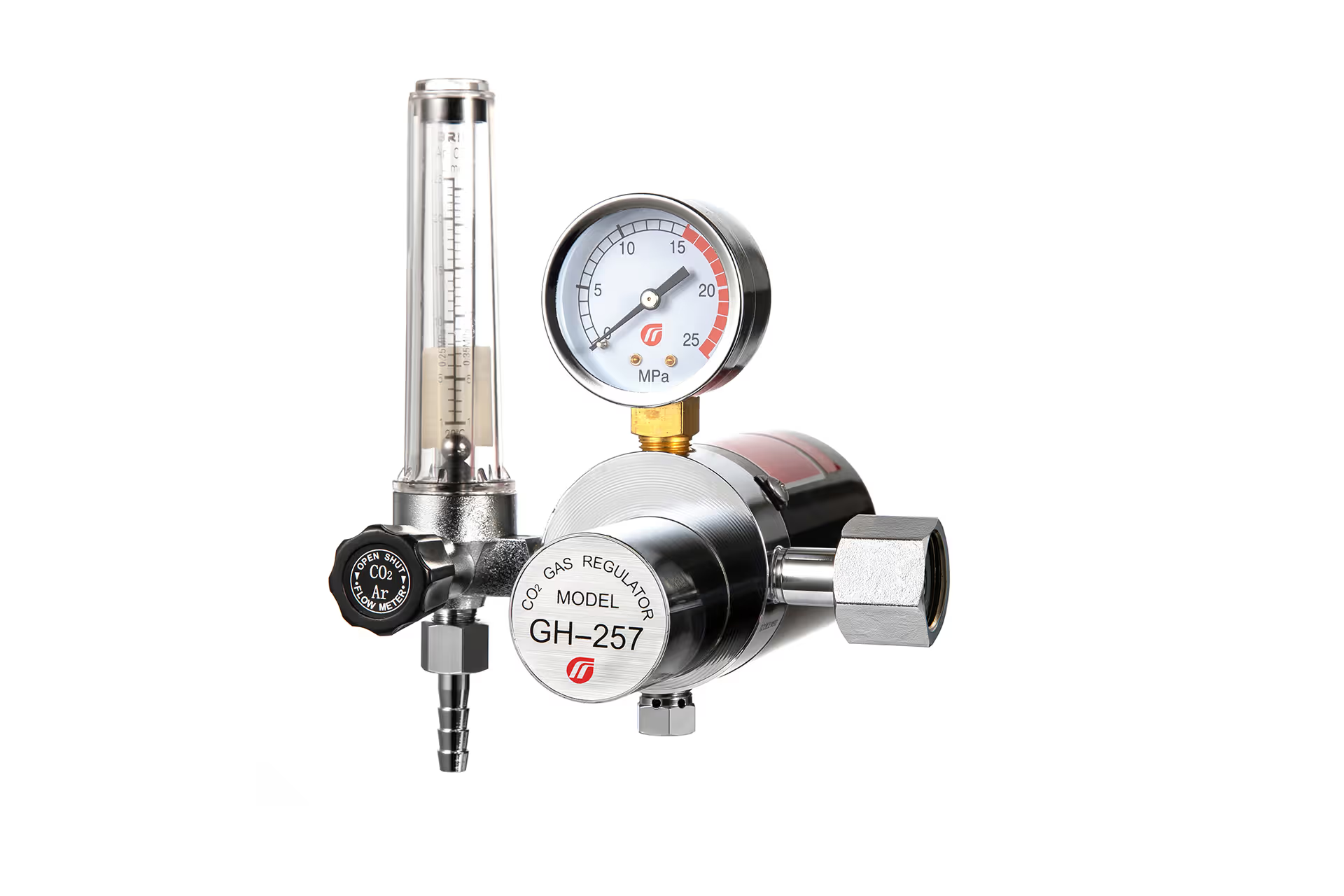
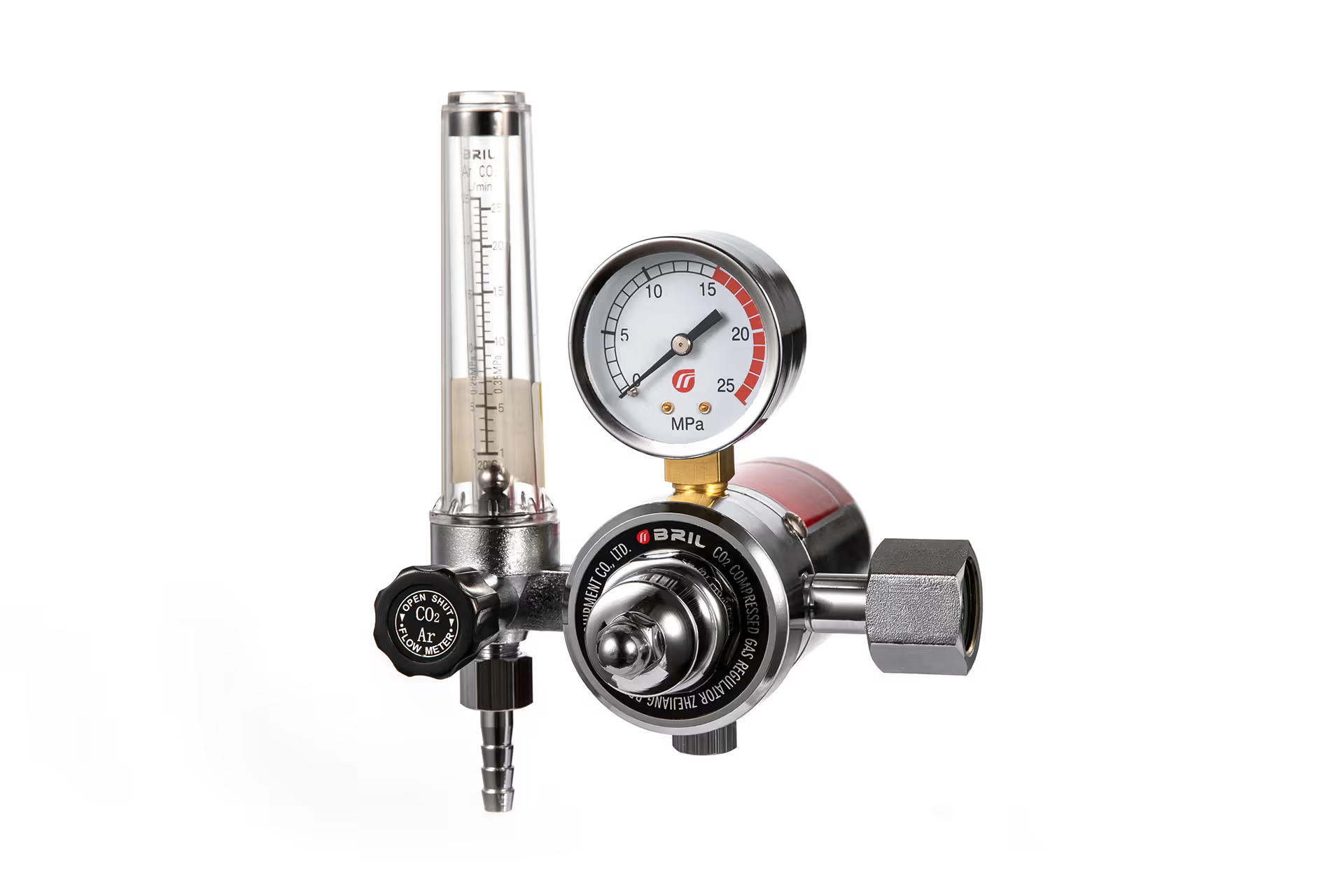
>> 1. Zhejiang Bril Welding Equipment Co., Ltd.
>>> Company Background and Market Position
>>> Core Strengths and OEM/ODM Scope
>>> Compliance and Procurement Checks
>>> Company Background and Main Markets
>>> Core Strengths
>>> OEM/ODM and Qualification Limits
>>> Company Background and Main Markets
>>> Core Strengths
>>> OEM/ODM and Qualification Limits
>> 4. CONCOA — Controls Corporation of America
>>> Company Background and Main Markets
>>> Core Strengths
>>> OEM/ODM Scope
>> 5. TESCOM, an Emerson Brand
>>> Company Background and Main Markets
>>> Core Strengths
>>> OEM/ODM Scope
● Supplier Comparison: Capacity, MOQ, and Certification Transparency
● Technical Buyer’s Guide: What Determines Regulator Quality?
>> Specify Operating Conditions Before Comparing Prices
>> Define Brass and Other Wetted Materials Precisely
>> Separate Pressure Stability from Flow Capacity
>> Treat Heated CO₂ Regulators as Both Gas and Electrical Equipment
>> Interpret CE, RoHS, and ISO Claims Correctly
● An Overlooked Procurement Trap: Samples and Production Can Differ Without Looking Different
● Factory Verification, Samples, and Logistics
>> Verify the Manufacturing Process
>> Control Landed Cost and Packaging
● Conclusion: Choose the Supplier Model That Matches Your Business
● FAQ
>> 1. How Can I Check Whether a Manufacturer’s ISO 9001 Certificate Has Expired?
>> 2. Can One Regulator Platform Be Sold for Oxygen, CO₂, Nitrogen, and Acetylene?
>> 3. What Evidence Shows That an Oxygen Regulator Is Clean Enough?
>> 4. How Can We Confirm That a Supplier Has Enough Capacity for Our Forecast?
>> 5. Who Owns the Tooling and Technical Files in an OEM/ODM Project?
Choosing a Gas Regulator Partner, Not Just a Product
A gas pressure reducing regulator sits between a high-pressure gas source and the process that depends on it. When its performance changes, the consequences can extend beyond an unstable gauge reading: inconsistent shielding gas delivery, interrupted cutting operations, production downtime, or a safety incident.
For procurement managers, the right supplier must therefore offer more than an attractive quotation. Material traceability, gas-specific engineering, documented testing, spare-parts support, and repeatable manufacturing all influence the long-term value of a purchasing agreement.
The Americas offer established gas-control manufacturers, industrial distribution networks, and technical support infrastructure. Examples include Victor’s manufacturing, distribution, and development operations in Denton, Texas, and CONCOA’s vertically integrated gas-control production in Virginia Beach, Virginia. These are specific industrial hubs—not evidence that every regulator sold by an American brand is manufactured locally.
How These Suppliers Were Selected
| Evaluation Dimension | What Buyers Should Verify | Why It Matters |
|---|---|---|
| Manufacturing identity | Legal entity, factory address, production processes, outsourced operations | Distinguishes the actual manufacturer from an intermediary |
| Quality management | Current certificate, certified location, scope, issuing body | Establishes whether certification covers the relevant activity |
| Engineering capability | Pressure-control design, gas compatibility, application review, controlled drawings | Determines whether customization goes beyond changing a label |
| Inspection and testing | Material inspection, leak testing, pressure performance, calibrated instruments | Supports consistent production quality |
| Delivery reliability | Model-specific capacity, component constraints, production scheduling | Reduces dependence on unsupported lead-time promises |
| Commercial support | Sample policy, engineering communication, warranty, spare parts | Influences the cost of maintaining a long-term supply relationship |
The 2026 Market Context: What the Available Reports Actually Show
The March 2026 GAWDA supplier forecast describes an improving outlook across the gases and welding supply industry. For example, Weldcoa projected 8–12% growth, while SuperFlash Compressed Gas Equipment anticipated double-digit growth. These are company expectations—not measured growth rates for gas pressure reducing regulators.
A January 2026 welding gas/shielding gas market report estimates that adjacent market at $3.68 billion in 2026, rising to $5.08 billion by 2030. Its relevance is demand context: shielding-gas applications support demand for gas-delivery equipment. It should not be presented as the market size of pressure regulators themselves.
For purchasing teams, the distinction matters. Broad industry growth does not prove that an individual supplier has spare capacity, stable prices, or shorter delivery times. Those conditions require supplier-level evidence.
Leading Gas Pressure Reducing Regulator Manufacturers and Suppliers
1. Zhejiang Bril Welding Equipment Co., Ltd.
Company Background and Market Position
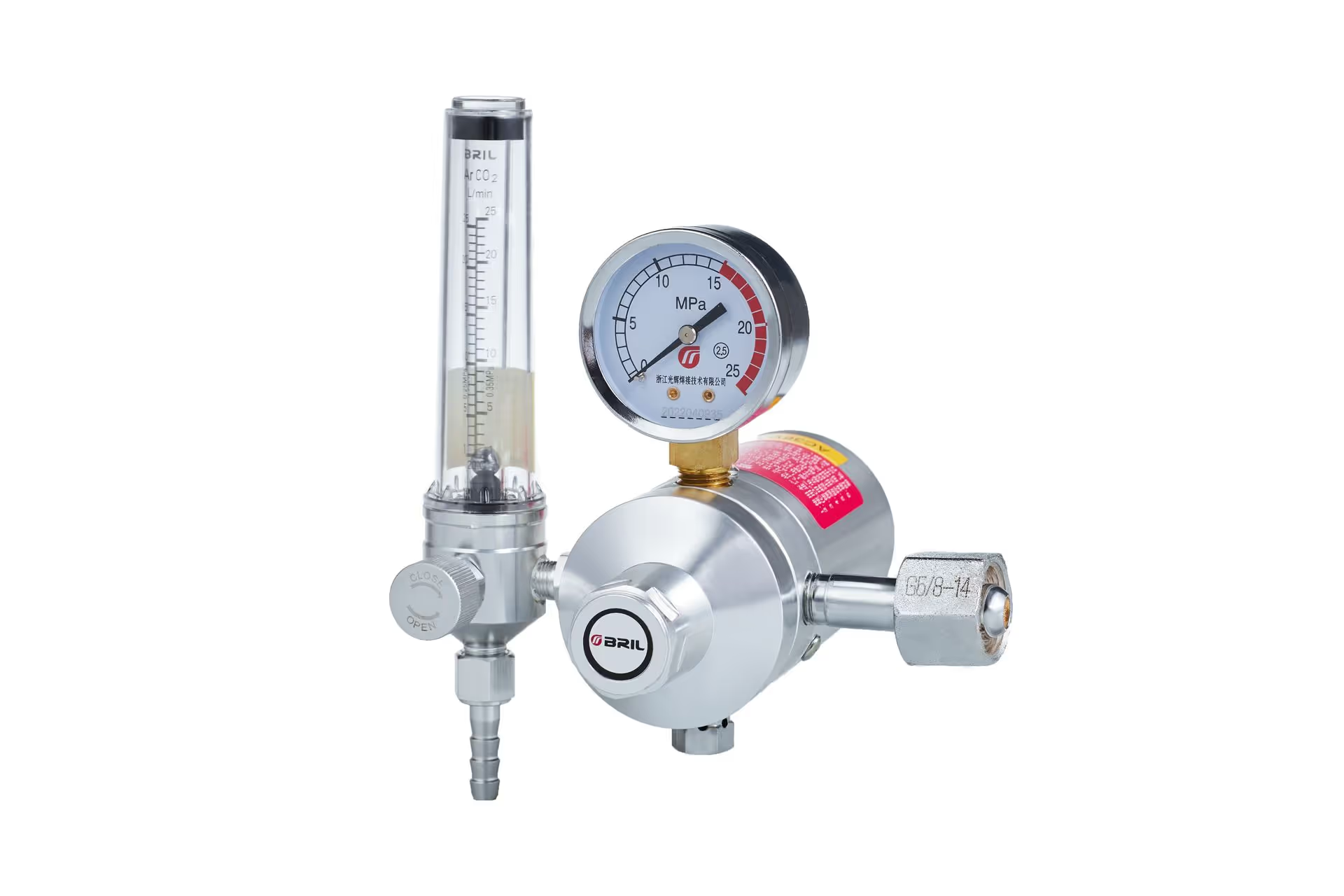
Founded in 2002, Zhejiang Bril Welding Equipment Co., Ltd. is located in Wenzhou, Zhejiang, China. Its company profile identifies industrial gas regulator development, manufacturing, and sales as its core business. It reports more than 200 employees, over 3,500 square meters of production space, and sales into more than 30 countries and regions. These are company-published figures rather than independently audited capacity data.
Bril is relevant to American wholesalers, importers, and equipment brands evaluating an overseas manufacturing partner. Its stated portfolio includes CO₂ regulators, heated CO₂ regulators, argon, oxygen, acetylene, propane, nitrogen, and dual-stage gas regulators.
Core Strengths and OEM/ODM Scope
Bril’s public profile emphasizes supporting production for welding equipment suppliers and describes established OEM relationships. This makes it a relevant candidate for buyers seeking a manufacturing partner rather than purchasing only finished products under an existing international brand. Customer relationships mentioned on its website remain supplier-reported claims and should be verified when material to a purchasing decision.
For smaller and growing brands, the most useful qualification discussion concerns:
– Gas-specific product configurations.
– Inlet and outlet connection requirements.
– Gauge units, scales, and artwork.
– Brand identification and packaging.
– Engineering changes, sample approval, and production documentation.
– Replacement parts and after-sales arrangements.
These should be treated as proposed project requirements, not automatically available options.
Bril’s potential positioning is a cost-conscious, development-oriented OEM alternative. However, price competitiveness, communication efficiency, development flexibility, and small-order suitability should be demonstrated through comparable quotations, response records, and a pilot project—not assumed from marketing language.
Compliance and Procurement Checks
Bril’s website states ISO 9001 and CE-related qualifications and references UKAS, IAF, and CNAS. Buyers should request the actual documents to distinguish the certification body, accreditation body, laboratory accreditation, applicable product models, and test scope. These are different forms of evidence, not interchangeable approvals.
Best purchasing scenario: a distributor or equipment brand seeking deeper OEM cooperation and willing to manage international supplier qualification.
2. Harris Products Group
Company Background and Main Markets
The Harris name dates to 1905. Its official product information covers industrial pressure regulation, including regulators intended for different gas services and application budgets. Its relevance to this shortlist is conventional welding, cutting, and industrial gas purchasing.
Core Strengths
Harris is a useful reference supplier when procurement teams want an established industrial regulator range rather than starting with a new private-label design.
Its regulator product page states that industrial regulators are 100% tested before shipment. Buyers should nevertheless clarify which tests apply to their selected model, what acceptance criteria are used, and whether individual or batch records are available. “100% tested” describes coverage, not the complete test method.
OEM/ODM and Qualification Limits
The reviewed sources do not establish a general low-volume private-label or ODM program. Buyers requiring custom branding, modified pressure ranges, or nonstandard fittings should obtain written confirmation of feasibility and commercial terms.
For buyers across the Americas, the quotation should identify the actual manufacturing origin, local supplying entity, repair route, and spare-parts availability. Brand history alone does not establish the origin or service arrangements of every model.
Best purchasing scenario: industrial distributors and fabrication businesses prioritizing an established regulator portfolio and conventional branded procurement.
3. Victor, an ESAB Brand
Company Background and Main Markets
Victor was founded in 1913 and became an ESAB brand in 2014. Its product background centers on industrial gas equipment, pressure control, and oxy-fuel cutting, heating, welding, and brazing applications.
ESAB identifies its Denton, Texas facility as a continuing core manufacturing location, North American distribution center, and research and development facility. This provides concrete evidence of American operational infrastructure rather than merely an American sales presence.
Core Strengths
Victor is especially relevant where the purchasing requirement extends beyond a regulator to a coordinated oxy-fuel equipment system.
Its EDGE Series 2.0 product information highlights protective design features, including gauge protection and an inlet filter. These features are useful evaluation points for equipment exposed to routine handling and demanding fabrication environments. They do not eliminate the need for gas-specific selection or safe operating procedures.
OEM/ODM and Qualification Limits
The reviewed materials emphasize Victor-branded equipment rather than a broadly advertised private-label manufacturing service.
For an equipment integration project, ask whether the proposed changes are approved configurations, special-order assemblies, or engineering modifications requiring separate validation. Confirm warranty and repair eligibility in the country where the equipment will operate.
Best purchasing scenario: fabrication, maintenance, and industrial distribution buyers seeking an established oxy-fuel equipment ecosystem.
4. CONCOA — Controls Corporation of America
Company Background and Main Markets
Founded in 1987, CONCOA manufactures gas-control equipment in Virginia Beach, Virginia. Its regulator portfolio includes single-stage, dual-stage, high-pressure, low-pressure, and specialty-gas products for industrial, research, and other applications.
Core Strengths
CONCOA is particularly relevant when a project involves more than basic cylinder pressure reduction: laboratory supply, specialty gases, manifolds, switchover systems, or integrated gas distribution.
The company states that products sold in the Americas and Asia are designed, assembled, and tested in the United States. It also describes continuing investment in machining and vertical integration at its Virginia Beach operation. Buyers with domestic-content requirements should request product-specific documentation rather than applying a broad company statement to every purchase.
CONCOA also states that its gas cabinets are designed, manufactured, and tested under an ISO 9001:2015 quality system. That statement should not be expanded into a claim that every regulator has the same product approval.
OEM/ODM Scope
CONCOA’s documented custom-solution capability makes it relevant to engineered gas-delivery projects. This is different from confirming an unrestricted private-label program or a particular OEM minimum order quantity.
Best purchasing scenario: buyers prioritizing gas-system engineering, specialty-gas applications, and documented American operations.
5. TESCOM, an Emerson Brand
Company Background and Main Markets
TESCOM was founded in 1916. Historical acquisition reporting identifies precision pressure-control manufacturing operations in Elk River, Minnesota, and Selmsdorf, Germany. That historical footprint should not be treated as proof of the current origin of every product.
Emerson’s current TESCOM portfolio emphasizes high-pressure regulators and valves for demanding industrial and aerospace applications.
Core Strengths
TESCOM is a relevant candidate when the requirement involves demanding pressure-control conditions, precision equipment integration, or a custom system rather than a standard welding-cylinder regulator.
Published materials describe standard and custom-engineered pressure-control solutions, as well as manifold assemblies and systems. This supports an engineering-focused purchasing discussion, although project acceptance, development charges, and minimum quantities require confirmation.
OEM/ODM Scope
For TESCOM, the useful distinction is engineered integration versus consumer-style private labeling. Buyers should submit operating conditions and interface requirements first, then establish whether an existing product, configured assembly, or custom development is appropriate.
Best purchasing scenario: industrial equipment manufacturers and specialist engineering teams procuring precision pressure-control components.
Supplier Comparison: Capacity, MOQ, and Certification Transparency
| Supplier | Main Purchasing Focus | Public Capacity Evidence Reviewed | OEM/Custom MOQ | Certification or Compliance Evidence |
|---|---|---|---|---|
| Zhejiang Bril | Overseas OEM gas regulators for welding and industrial use | Reports 200+ employees and 3,500+ m²; annual regulator output not disclosed | Not publicly disclosed | Website states ISO 9001 and CE-related qualifications; obtain model-specific documentation |
| Harris | Branded industrial welding and cutting regulators | Annual regulator output not disclosed | Private-label terms not established | States 100% testing before shipment; request applicable test and conformity documents |
| Victor / ESAB | Oxy-fuel equipment and industrial gas regulation | Denton manufacturing, distribution, and development operations documented; annual output not disclosed | Private-label terms not established | Product features documented; verify approvals for the selected model |
| CONCOA | Specialty gas, industrial gas delivery, integrated systems | Virginia Beach machining, assembly, and testing documented; annual output not disclosed | Custom-project terms by quotation | Published ISO 9001:2015 quality-system statement for gas cabinets; verify relevant scope |
| TESCOM / Emerson | Precision and high-pressure control, engineered integration | Historical American and German manufacturing footprint; current model capacity requires confirmation | Project-specific | Request current site certification and product-specific conformity evidence |
Technical Buyer’s Guide: What Determines Regulator Quality?
Specify Operating Conditions Before Comparing Prices
An effective request for quotation should state:
– Gas identity and, where relevant, mixture composition and purity.
– Maximum and minimum inlet pressures.
– Required outlet pressure range.
– Normal and peak flow.
– Ambient and operating temperature limits.
– Cylinder, manifold, or pipeline installation.
– Connection standard and destination country.
– Continuous or intermittent duty.
– Permitted leakage and pressure variation.
ISO 2503 addresses specified categories of cylinder regulators used in welding, cutting, and allied processes, including single-stage and two-stage designs. Its scope has limits; it should not be applied indiscriminately to all high-pressure industrial gas-control equipment.
Define Brass and Other Wetted Materials Precisely
“High-quality brass” is not a complete material specification.
Request the alloy designation, applicable material standard, manufacturing route, and traceability for the regulator body and other pressure-retaining components. Where substitution risk is material, agree on independent alloy verification and a sampling plan.
A purchasing specification should also identify seats, seals, diaphragms, filters, and other gas-contact components. Body appearance or weight does not establish that the complete assembly is suitable for the intended gas.
For oxygen service, cleanliness is a separate requirement. Published operating guidance describes degreasing, controlled cleaning, and protective packaging to prevent contamination during storage and transport. A correct brass alloy does not compensate for contaminated internal surfaces.
Separate Pressure Stability from Flow Capacity
A regulator should be evaluated under conditions resembling its intended use, not only at one convenient test point.
Ask the supplier to provide performance data across the specified inlet-pressure and flow ranges. Include:
– Outlet pressure at low, normal, and peak flow.
– Behavior as cylinder pressure decreases.
– Lock-up pressure after flow stops.
– Internal seat leakage and external leakage.
– Performance after repeated operating cycles.
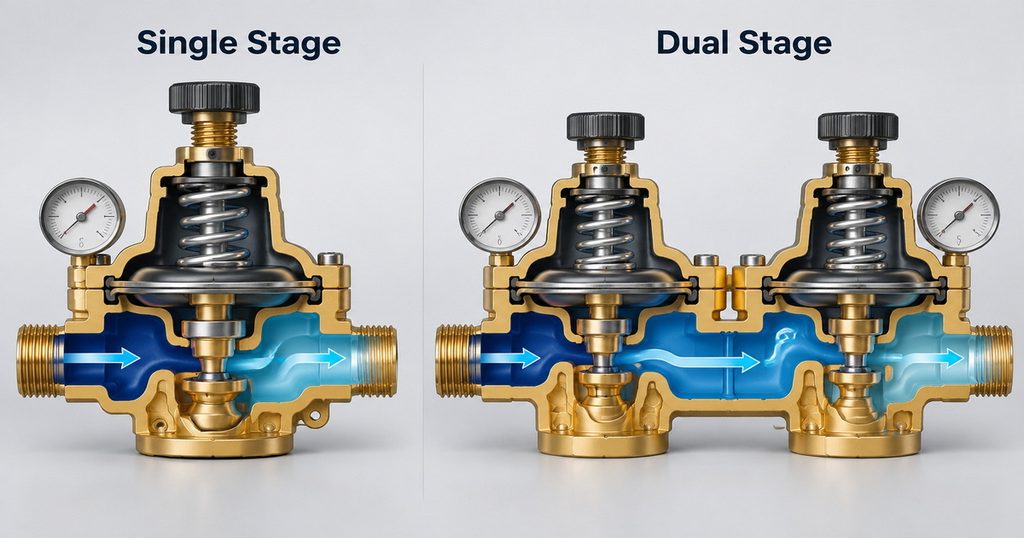
Dual-stage construction can be a relevant selection option, but the purchasing decision should rest on the required performance envelope and test evidence—not the number of gauges or a product photograph.
Treat Heated CO₂ Regulators as Both Gas and Electrical Equipment
For heated CO₂ regulators, the request should cover heater voltage, frequency, power, plug configuration, temperature protection, and required gas-delivery duty.
Request a sustained-duty demonstration under agreed operating conditions. A photograph showing an illuminated heater does not establish that the regulator will maintain the required delivery performance throughout a production shift.
The electrical configuration also requires its own destination-market compliance review; do not assume that evidence for a mechanical regulator automatically covers a heated version.
Interpret CE, RoHS, and ISO Claims Correctly
Do not treat these labels as substitutes for one another.
ISO 9001 concerns a quality management system. For CE-related claims, request the declaration of conformity, identified legislation, model coverage, and supporting technical evidence where applicable. For RoHS claims, first establish whether the product configuration falls within the relevant electrical and electronic equipment requirements.
A purely mechanical regulator and an electrically heated regulator should not automatically receive an identical compliance checklist. Resolve applicability with a qualified conformity specialist for the destination market.
An Overlooked Procurement Trap: Samples and Production Can Differ Without Looking Different
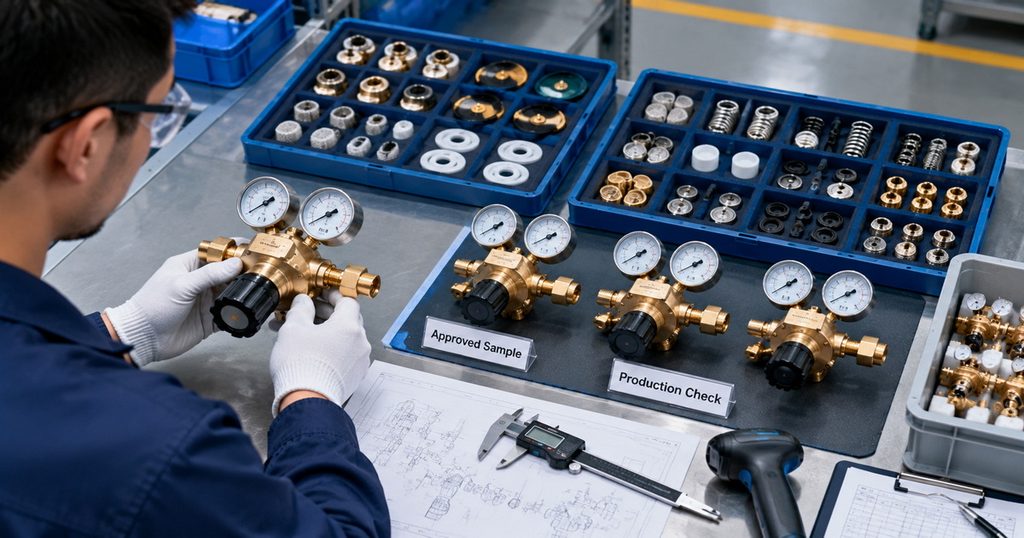
One of the most useful safeguards is to control the approved product configuration—not merely retain an approved sample.
A regulator can retain the same exterior while internal components or manufacturing sources change. The commercial risk is especially significant when the purchase order specifies only a model name, pressure range, and logo.
Build a controlled approval package containing:
1. Approved drawings and connection details.
2. Material specifications for critical components.
3. Agreed pressure and leakage acceptance criteria.
4. A defined bill-of-materials revision.
5. Traceability requirements.
6. Written approval before substitutions.
7. Production-sample verification after significant changes.
A practical protection is to test randomly selected pilot-production units against the same criteria used for development samples.
This is a recommended procurement control, not an allegation that any supplier in this guide substitutes materials or components.
Factory Verification, Samples, and Logistics
Verify the Manufacturing Process
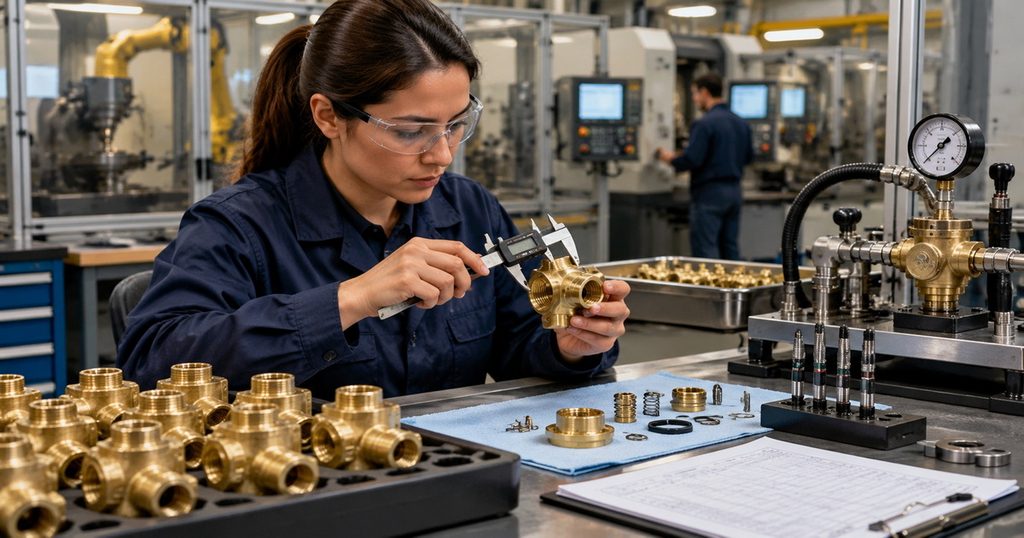
During a factory audit or live remote assessment, request a traceable walkthrough from incoming materials through machining, cleaning, assembly, testing, and packaging.
Ask the supplier to identify subcontracted activities. Outsourcing is not automatically a weakness; undisclosed outsourcing and weak process control are the more important concerns.
For delivery planning, request model-specific monthly capacity, current utilization, critical component lead times, and a recovery plan for delayed gauges, seats, or fittings. A factory’s total floor area cannot answer these questions.
Approve Samples in Stages
Use a structured sequence:
1. Technical drawing and specification review.
2. Development or standard-product samples.
3. Relevant independent testing.
4. Pilot production.
5. Random pre-shipment inspection.
6. Controlled release for repeat orders.
Gas-connection compatibility deserves particular attention. CGA connections use gas-specific designations intended to prevent incompatible connections. Do not solve a procurement mismatch by casually adding adapters.
Control Landed Cost and Packaging
Compare quotations on the same commercial basis. Include freight, duties, brokerage, inspections, replacement parts, warranty handling, and any tooling or development charges.
Require protective packaging for gauges and fittings, clear model and gas identification, and appropriate protection of cleaned connections. Oxygen-service packaging should preserve the cleanliness achieved during manufacturing.
Confirm manufacturing origin and customs classification with the supplier and broker rather than inferring them from the brand’s headquarters.
Conclusion: Choose the Supplier Model That Matches Your Business
Harris and Victor are relevant starting points for established branded welding and cutting equipment. CONCOA deserves consideration for specialty-gas delivery and integrated systems. TESCOM is relevant to precision and high-pressure engineering projects. Zhejiang Bril offers an overseas OEM alternative for buyers developing their own gas-regulator range, subject to technical and commercial qualification.
The strongest purchasing decision comes from comparable specifications, verified documentation, production-representative samples, and controlled changes.
To evaluate Zhejiang Bril for an OEM project, send the gas type, inlet and outlet pressures, required flow, cylinder connection, destination market, branding requirements, and expected annual demand. Request a documented sample and validation plan before authorizing production.
FAQ
1. How Can I Check Whether a Manufacturer’s ISO 9001 Certificate Has Expired?
Search the certificate number or legal company name in IAF CertSearch. Check the status, scope, certified location, issuing certification body, and accreditation information—not just the expiry date on a PDF.
If the certificate cannot be found, request direct confirmation from the issuing certification body. Do not assume that a missing search result proves fraud, and do not accept an unverifiable image as sufficient evidence.
2. Can One Regulator Platform Be Sold for Oxygen, CO₂, Nitrogen, and Acetylene?
A shared external platform does not establish interchangeability.
Gas-specific suitability depends on the approved design, components, pressure ratings, cleanliness requirements, markings, and connections. Published operating guidance states that regulators must be used only for the gases for which they were designed.
Require a separate approved configuration and technical record for each gas service. Treat field conversion as a controlled engineering question, not a labeling exercise.
3. What Evidence Shows That an Oxygen Regulator Is Clean Enough?
Ask for the cleaning specification, process controls, acceptance criteria, inspection records, and packaging requirements.
The evidence should explain how the supplier prevents recontamination after cleaning and during assembly, inspection, storage, and shipment. Published technical guidance specifically addresses degreasing, cleaning, and protective packaging for compatible oxygen-service equipment.
A generic statement such as “oil-free” is not a complete acceptance procedure.
4. How Can We Confirm That a Supplier Has Enough Capacity for Our Forecast?
Request a model-specific capacity review rather than a company-wide output claim.
Ask for demonstrated production rates, testing-station capacity, current utilization, critical purchased-component constraints, and the schedule for your proposed order. Then validate the planning assumptions through a pilot run and subsequent delivery performance.
Where annual output is not publicly documented—as with the shortlisted suppliers—do not convert employee counts or factory area into invented production figures.
5. Who Owns the Tooling and Technical Files in an OEM/ODM Project?
Ownership depends on the contract; paying a development charge does not, by itself, define every right.
The agreement should distinguish pre-existing supplier technology from buyer-funded tooling, drawings, artwork, and newly developed designs. It should also address access to tooling, maintenance, exclusivity, permitted use, change approval, and transfer arrangements.
References
1. – Zhejiang Bril Welding Equipment Co., Ltd., company profile: [https://www.chinesewelding.com/about-us/] — Company-reported history, facilities, export reach, OEM background, and qualification statements. [chinesewelding]
2. – Harris Products Group, corporate information: [https://www.harrisproductsgroup.com/en] — Brand history dating to 1905. [harrisproductsgroup]
3. – Harris Products Group, industrial regulators: [https://www.harrisproductsgroup.com/en/Products/Equipment/Pressure-Regulation/Regulators] — Product positioning and published shipment-testing statement. [harrisproductsgroup]
4. – ESAB, Victor brand profile: [https://esab.com/us/nam_en/brands/esab-family-brands/victor/] — Industrial gas-equipment applications. [esab]
5. – ESAB, Denton facility announcement: [https://esab.com/us/nam_en/about/news-folder/esab-unveils-its-massive-denton-facility-renovation/] — Manufacturing, distribution, and development infrastructure. [esab]
6. – Weldmark, Victor company history: [https://www.weldmark.com/brand-partners/victor-equipment/] — Founding and brand history. [weldmark]
7. – CONCOA, manufacturing-origin information: [https://www.concoa.com/resources/made-in-america] — Published American operations and domestic-content statements. [concoa]
8. – CONCOA, pressure regulators: [https://www.concoa.com/taxonomy/term/1] — Regulator types and application markets. [concoa]
9. – Emerson, TESCOM products: [https://discreteautomation.emerson.com/catalog/tescom-products] — Current high-pressure regulator and valve portfolio. [discreteautomation.emerson]
10. – Automation.com, Emerson acquisition of TESCOM: [https://www.automation.com/article/emerson-acquires-tescom-corporation] — Historical founding and manufacturing information. [automation]
11. – Compressed Gas Association, standards: [https://www.cganet.com/standards/] — Industry standards for industrial and other compressed-gas applications. [cganet]
12. – GAWDA Media, 2026 Supplier Forecast: [https://gawdamedia.com/gawda-suppliers-growth-outlook-2026/] — Supplier expectations across the gases and welding industry. [gawdamedia]
13. – Research and Markets, Welding Gas/Shielding Gas Market Report 2026: [https://www.researchandmarkets.com/reports/5767014/welding-gasshielding-gas-market-report] — Adjacent-market estimates, not regulator-market figures. [researchandmarkets]
14. – IAF CertSearch: [https://www.iafcertsearch.org/] — Accredited management-system certification verification. [iafcertsearch]
15. – LIBNOR, ISO 2503 scope information: [https://libnor.gov.lb/CatalogDetails.aspx?id=6741&language=en] — Scope and limitations of welding-cylinder regulator requirements. [libnor.gov]
16. – Air Liquide, technical cylinder regulator operating instructions: [https://at.airliquide.com/statics/2023-01/op_110_en_technical_cylinder_pressure_regulators_112022.pdf] — Gas-specific use, cleaning, and packaging guidance. [at.airliquide]
Hot Tags: Gas Pressure Regulator Manufacturers, Gas Pressure Regulator Suppliers, Industrial Gas Pressure Regulators, Gas Pressure Reducing Regulators, Welding Gas Regulators, OEM Gas Regulators, CO₂ Gas Regulators, Dual Stage Gas Regulators, Oxygen Pressure Regulators, Wholesale Gas Regulators