Content Menu
● Leading Manufacturers and Suppliers
>> 1. Zhejiang Bril Welding Equipment Co., Ltd.
>> 2. Yıldız Gaz Armatürleri San. Tic. A.Ş.
>> 3. Kasweld / Güneş Gaz Welding and Cutting
>> 4. Engaz Gaz Armatürleri ve Medikal Ürünler
>> 5. Alkan Gaz Aletleri Bakım ve İmalat San. ve Tic. A.Ş.
● Technical Requirements for Flow Meter Regulators
● The Most Common Sourcing Traps
>> “Brass body” that is not the same brass everywhere
>> A flowmeter calibrated for the wrong gas
>> Gauge substitution after sample approval
>> Treating CE as a logo instead of a document package
>> Ignoring regulator creep testing
>> Define the product before requesting quotes
>> Sample and validation workflow
● FAQ
>> 2. What test data should I request for a flow meter regulator sample?
>> 3. Is a CE mark enough to sell a welding flowmeter regulator in Europe?
>> 4. Why do two regulators with the same 0–25 L/min flow tube perform differently in welding?
>> 5. What is the safest way to launch an OEM regulator program?
Turkey is an important regional sourcing location for welding, cutting, cylinder-gas, and central gas-distribution equipment—particularly for buyers serving Europe, the Middle East, North Africa, and nearby Central Asian markets. Its Istanbul-centered industrial ecosystem includes established manufacturers of oxy-fuel equipment, pressure regulators, manifolds, flashback arrestors, and related gas-control fittings. Türkiye’s overall annualized exports reached $269.7 billion in 2025, reflecting its continuing role as a cross-regional manufacturing and export hub.
However, a professional buyer should not assume that every company marketing an “argon flowmeter regulator” is a true manufacturer. In this category, the difference between a reliable supplier and a trading-led offer is often visible in its machining control, diaphragm consistency, pressure test records, gas-specific inlet connections, and ability to document conformity to applicable standards.
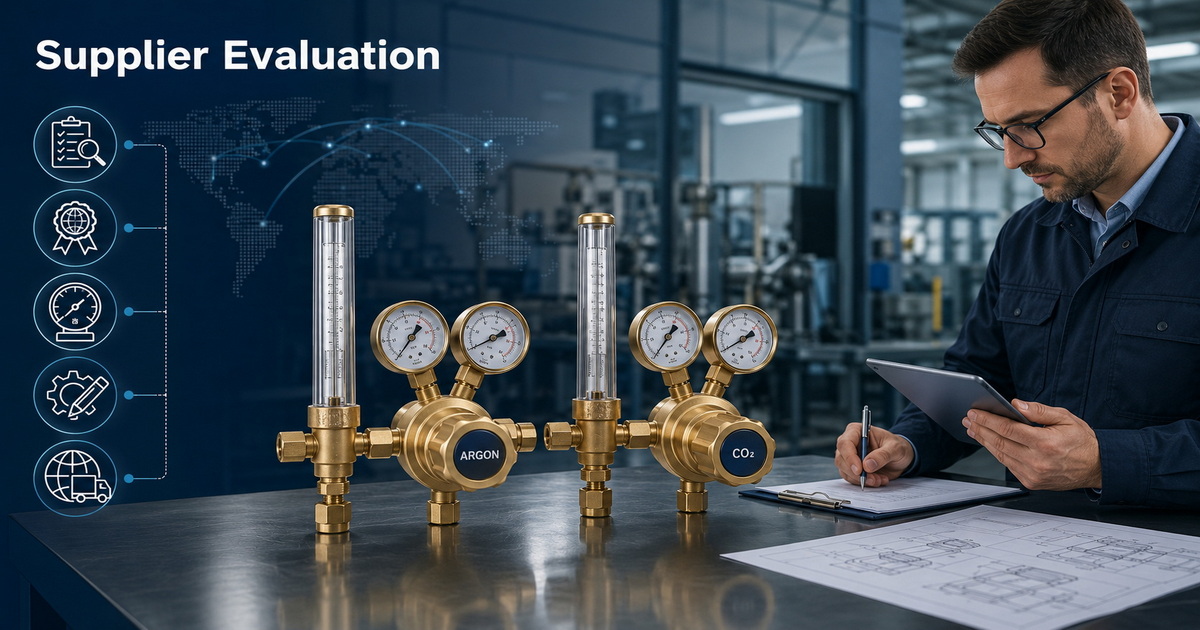
How We Evaluated Suppliers
This list is not a simple directory. It focuses on manufacturers and suppliers relevant to Flow Meter Regulators for MIG, TIG, cutting, industrial-gas, and cylinder applications.
The evaluation considers the following procurement criteria:
– Manufacturing history and demonstrated specialization in gas-control or welding-and-cutting equipment.
– Product relevance, including pressure regulators, argon/CO₂ flowmeter regulators, oxygen and acetylene regulators, manifolds, and central-gas systems.
– Publicly stated quality-system credentials, such as ISO 9001, CE-related conformity claims, or third-party approvals.
– Evidence of factory scale, technical capability, machining, assembly, pressure testing, and product-development capacity.
– Ability to serve distributors, private-label programs, equipment brands, and repeat-order customers.
– Export readiness, including documentation, packaging, port access, communication capability, and market coverage.
– Transparency: whether the supplier makes verifiable information about products, certifications, and production capability available.
> Important sourcing note: “Flow meter regulator” can refer to a welding shielding-gas regulator with a rotameter, a pressure regulator paired with an external flowmeter, or a medical/laboratory gas flow-control device. Buyers must define the end use, gas medium, inlet standard, outlet thread, working pressure, and required flow range before comparing quotations.
Leading Manufacturers and Suppliers
1. Zhejiang Bril Welding Equipment Co., Ltd.
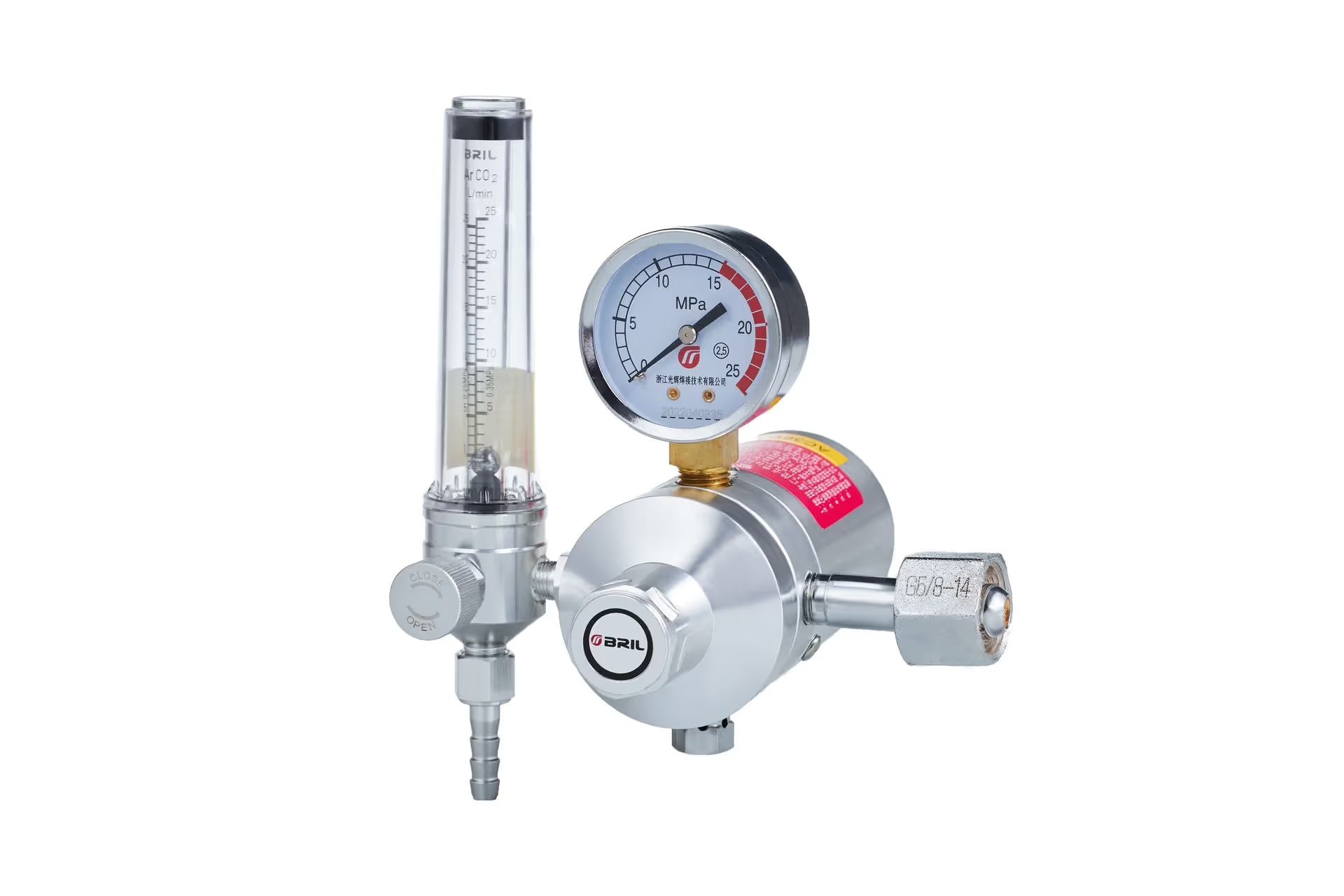
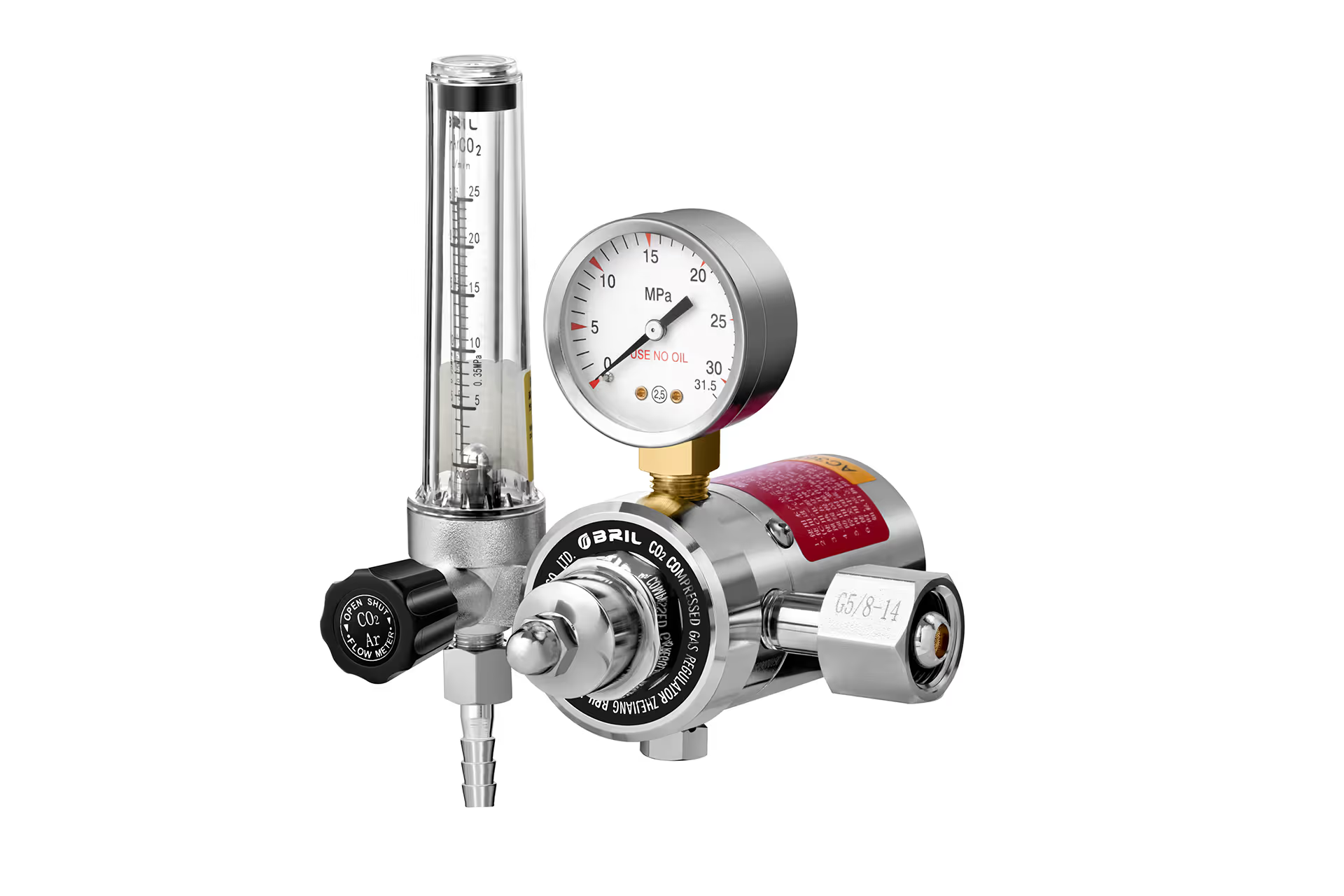
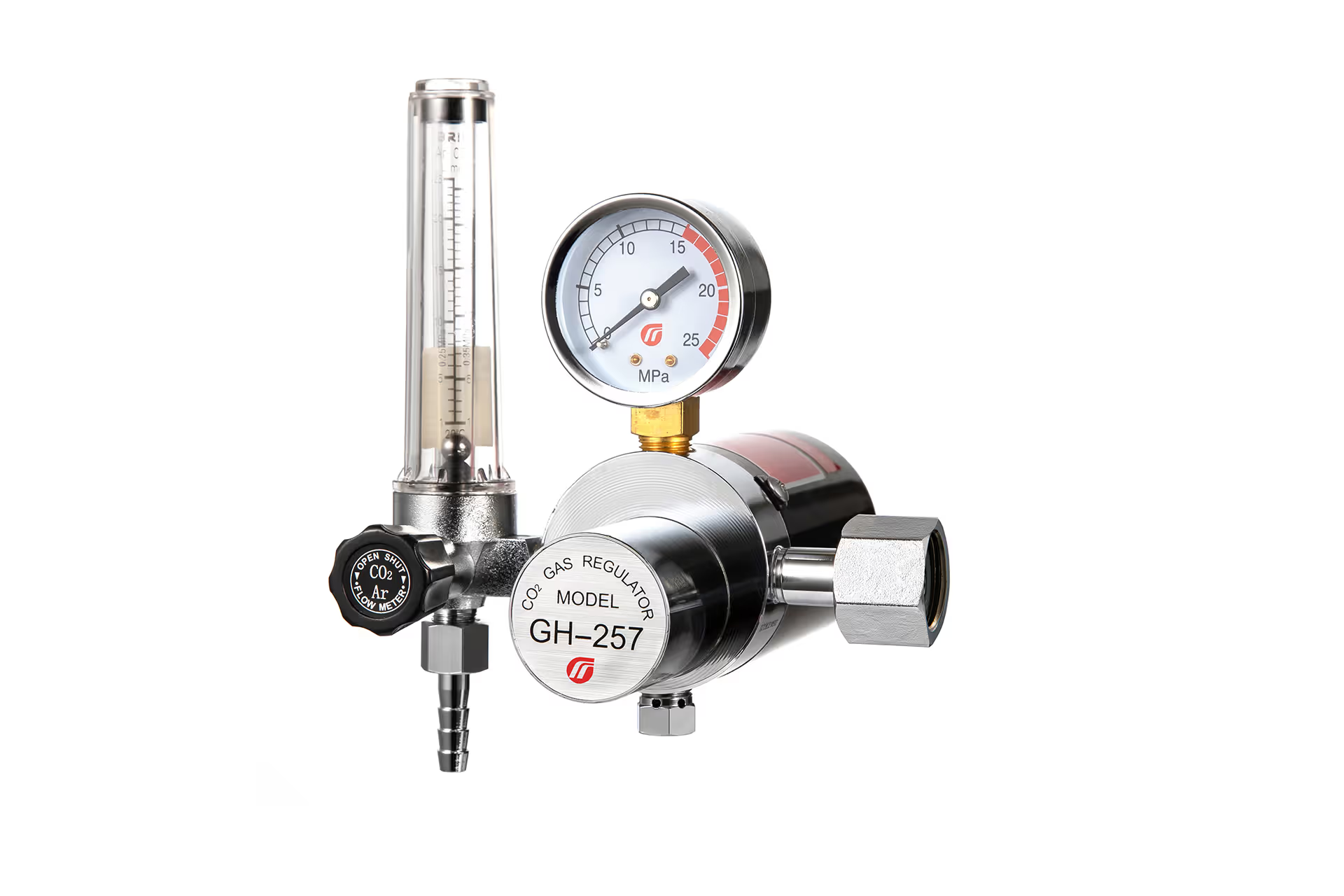
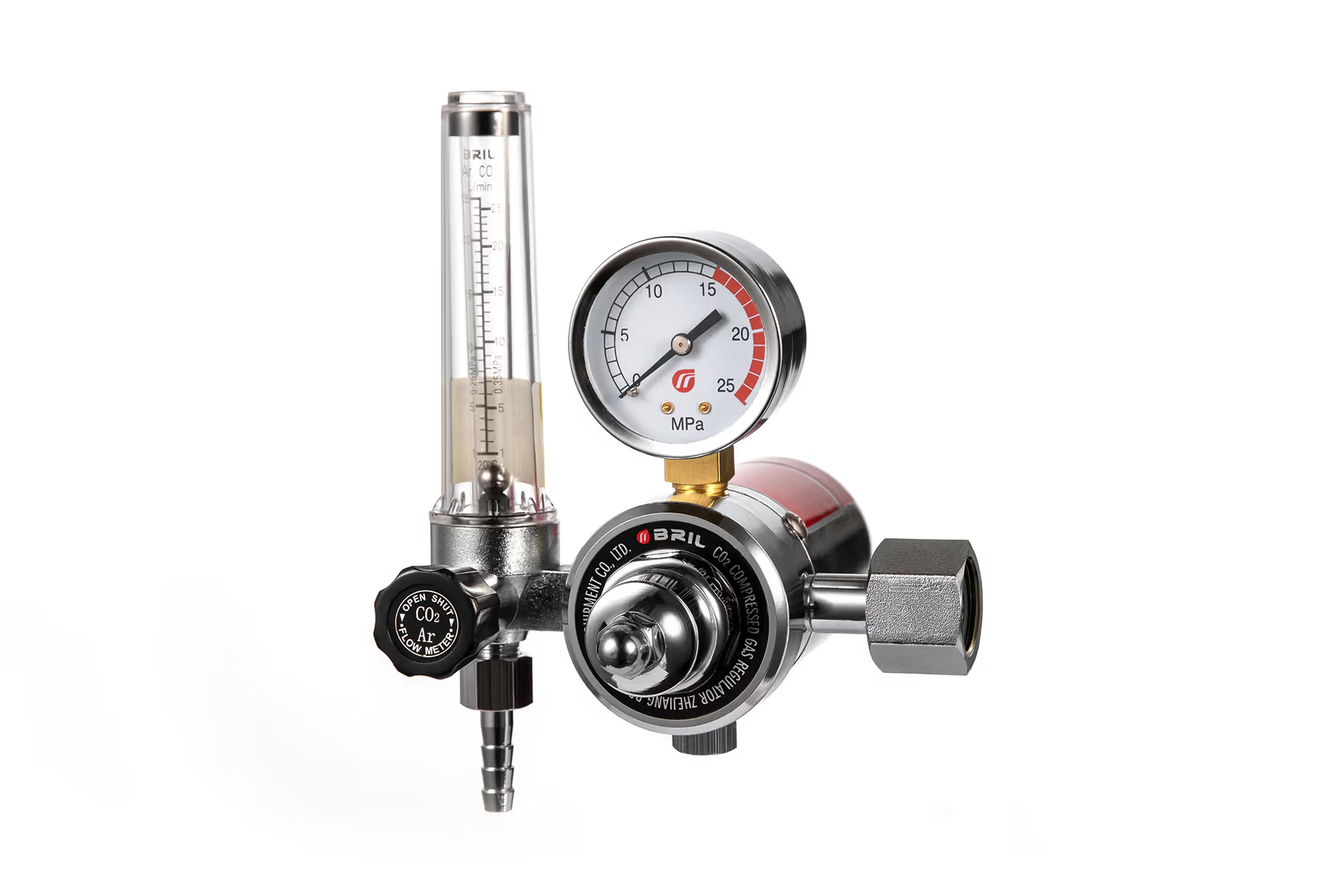
Although Zhejiang Bril Welding Equipment is based in China rather than Turkey, it deserves consideration for Turkish distributors, European importers, and overseas brands that want a specialized OEM/ODM manufacturing partner for gas regulators. For buyers comparing Turkish local supply with Asian factory-direct sourcing, Bril represents a practical option for mid-sized brands seeking product customization, stable quality control, and responsive project communication.
Founded in 2002, Bril specializes in the development, manufacturing, and sale of industrial gas pressure regulators. Its published profile states that it holds ISO 9001 certification through UKAS and IAF, and that its products have CNAS and CE certification coverage. The company also states that it has more than 200 employees and has supplied products to established welding-equipment brands, including Panasonic, OTC, Messer, Shanghai Hugong, Jasic, and Riland.
Core strengths
– Broad regulator range for CO₂, argon, oxygen, acetylene, propane, nitrogen, and dual-stage industrial-gas applications.
– Suitable for flowmeter regulator programs used in MIG/MAG and TIG welding.
– OEM/ODM support for private labels, customized gas connections, pressure ranges, dial designs, packaging, and product configurations.
– A suitable fit for smaller and mid-sized brands that may need more flexibility than they can obtain from high-volume legacy manufacturers.
– Experience serving industrial welding-equipment customers and supplying full-range OEM programs for Messer from 2022, according to the company’s public profile.
Recommended buyer profile: Importers, welding-machine brands, regional distributors, and industrial-gas accessory wholesalers that need tailored flowmeter-regulator designs rather than only standard catalog products.
What to verify: Request the certificate number and issuing-body details for the specific factory; obtain batch-level pressure-test requirements; confirm flowmeter graduations, gas-specific fittings, and the applicable product-level CE documentation for the intended destination market.
2. Yıldız Gaz Armatürleri San. Tic. A.Ş.
Yıldız Gaz Armatürleri is among the most established Turkish manufacturers in the welding and cutting equipment segment. Founded in 1979, the company states that its Istanbul facility covers 18,000 m² of enclosed space and employs more than 150 skilled workers. Its product scope includes pressure regulators, cylinder equipment, safety devices, gas-mixing equipment, and central pressure-regulating systems.
The company publicly identifies ISO 9001 certification and approvals or conformity recognition involving TÜV, APRAGAZ, and TSE. These claims should still be verified against the certificate holder, scope, version, and expiration date during supplier qualification.
Core strengths
– Long operating history in Turkey’s oxy-gas welding and cutting market.
– Broad portfolio beyond flowmeter regulators, supporting one-stop purchasing of regulators, torches, safety devices, and gas-distribution equipment.
– Relevant capability for cylinder regulators, central gas systems, and safety-related fittings.
– Istanbul manufacturing location that can support regional export logistics.
OEM/ODM relevance: Better suited to structured distributor programs, standard industrial portfolios, and regional product ranges. Ask early whether a private-label program requires dedicated tooling, annual volume commitments, or existing-model branding only.
3. Kasweld / Güneş Gaz Welding and Cutting
Kasweld, operated by Güneş Gaz Welding and Cutting, was established in 1994 as a manufacturer and developer of gas welding and cutting equipment, central gas-line systems, and related components in Turkey. Its public catalog includes high-flow line-pressure regulators, gas manifolds, central-system gas equipment, cylinder valves, and welding/cutting torches.
For procurement teams sourcing a flow meter regulator alongside industrial distribution equipment, Kasweld is relevant because it offers products beyond the common single-cylinder welding regulator. This can reduce supplier fragmentation for projects involving manifolds, high-flow outlets, and line-pressure control.
Core strengths
– Focus on industrial gas-control systems as well as welding and cutting equipment.
– Product relevance for high-flow regulators, manifolds, and centralized gas-supply projects.
– Potential fit for industrial distributors, fabrication-facility projects, and central gas-system integrators.
– Turkish manufacturing base with established market presence since 1994.
OEM/ODM relevance: Discuss whether the required flowmeter regulator is an existing platform with custom branding or requires a new body, bonnet, inlet, gauge, or rotameter configuration. The latter has very different cost and validation requirements.
4. Engaz Gaz Armatürleri ve Medikal Ürünler
Engaz is a Turkish gas-equipment producer that states it has more than 40 years of experience in manufacturing gas fittings and gas equipment. Its positioning across gas equipment and medical products makes it relevant for buyers whose projects overlap between industrial gas-control components and regulated medical-gas infrastructure.
Core strengths
– Long experience in gas fittings and related equipment.
– Potential relevance for buyers that require a broader gas-control supply chain rather than only welding accessories.
– Turkish location may be useful for regional distribution and shorter replenishment routes into neighboring markets.
OEM/ODM relevance: Confirm whether the requested product is within its internally manufactured range, especially for welding-specific rotameter regulators. Medical and industrial product categories should never be assumed interchangeable: materials, labeling, validation, threads, cleanliness, and conformity requirements can differ substantially.
5. Alkan Gaz Aletleri Bakım ve İmalat San. ve Tic. A.Ş.
Alkan Gaz Aletleri is an Istanbul-based company listed in Turkey’s gas-equipment sector, with a public business address in Tuzla, Istanbul. It is a sourcing candidate for buyers looking for Turkish industrial-gas equipment contacts, particularly where local service, maintenance, and gas-armature knowledge are priorities.
Core strengths
– Istanbul/Tuzla location near an industrial and logistics corridor.
– Relevance to gas equipment and fittings sourcing in the Turkish market.
– Potential local support value for buyers needing factory visits, inspections, or faster regional communication.
OEM/ODM relevance: The public information available is more limited than for some larger manufacturers. Conduct a factory audit before assigning a private-label regulator program. Ask whether the company performs body machining, assembly, calibration, leak testing, and final inspection in-house or uses subcontractors.
6. Evren Gas Armatures
Evren Gas Armatures has a long history in Turkish welding and cutting equipment. Public company information indicates that it was established in 1961 to manufacture oxygen, acetylene, and propane cutting and welding tools, pressure regulators, and gas armatures. It also notes experience in fulfilling special requests from different sectors and regions.
Core strengths
– Long-established specialization in oxy-fuel equipment and gas regulators.
– Relevant product background for oxygen, acetylene, and propane regulator programs.
– Potential fit for traditional welding-and-cutting distributors and buyers with regional-specification requirements.
OEM/ODM relevance: Its historical ability to make special-request products may be useful where buyers need regional threads, local cylinder-valve standards, branded gauge faces, or special cutting-kit configurations. Confirm current engineering, tooling, and export-certification scope directly.
Supplier Comparison
The table below is designed for preliminary screening, not final supplier approval. Where public production figures or MOQ data are unavailable, buyers should request written confirmation rather than relying on estimates.
| Supplier | Location | Established | Main Product Focus | Publicly Reported Quality Evidence | Capacity / MOQ Position | OEM/ODM Suitability |
|---|---|---|---|---|---|---|
| Zhejiang Bril Welding Equipment Co., Ltd. | China | 2002 | Industrial gas regulators, CO₂ heated regulators, argon/CO₂ flowmeter regulators, oxygen, acetylene, propane, nitrogen, dual-stage models | ISO 9001 via UKAS/IAF; CNAS and CE stated | 200+ employees reported; MOQ should be quoted by model and customization level | High for private label, customized configurations, packaging, gas connections, and mid-sized brands |
| Yıldız Gaz Armatürleri | Istanbul, Turkey | 1979 | Welding/cutting equipment, pressure regulators, safety devices, central gas systems | ISO 9001; TÜV, APRAGAZ, and TSE approvals claimed | 18,000 m² enclosed factory; 150+ workers reported; MOQ not publicly disclosed | Suitable for established distributor and industrial-equipment portfolios |
| Kasweld / Güneş Gaz | Turkey | 1994 | Gas welding/cutting products, high-flow regulators, manifolds, central gas systems | Certification page available; verify current scope and validity directly | Capacity and MOQ not publicly disclosed | Suitable for project-oriented and central gas-system requirements |
| Engaz | Turkey | 40+ years stated | Gas equipment, gas armatures, medical products | Verify product-specific documentation directly | Not publicly disclosed | Potential fit for gas-equipment and medical/industrial product sourcing |
| Alkan Gaz Aletleri | Tuzla, Istanbul, Turkey | Not publicly confirmed in reviewed sources | Gas equipment and armatures | Verify directly | Not publicly disclosed | Requires factory-level due diligence before a private-label launch |
| Evren Gas Armatures | Turkey | 1961 | Pressure regulators, oxy-fuel welding/cutting tools, gas armatures | Verify directly | Not publicly disclosed | Potentially suitable for regional or special-request gas-armature programs |
Technical Requirements for Flow Meter Regulators
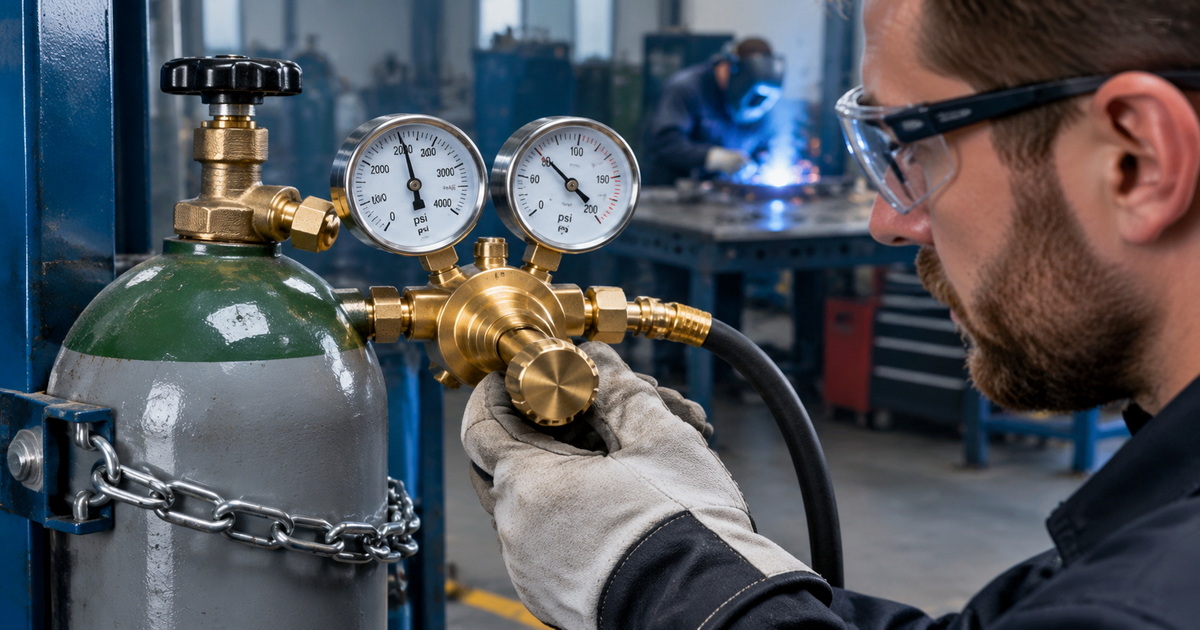
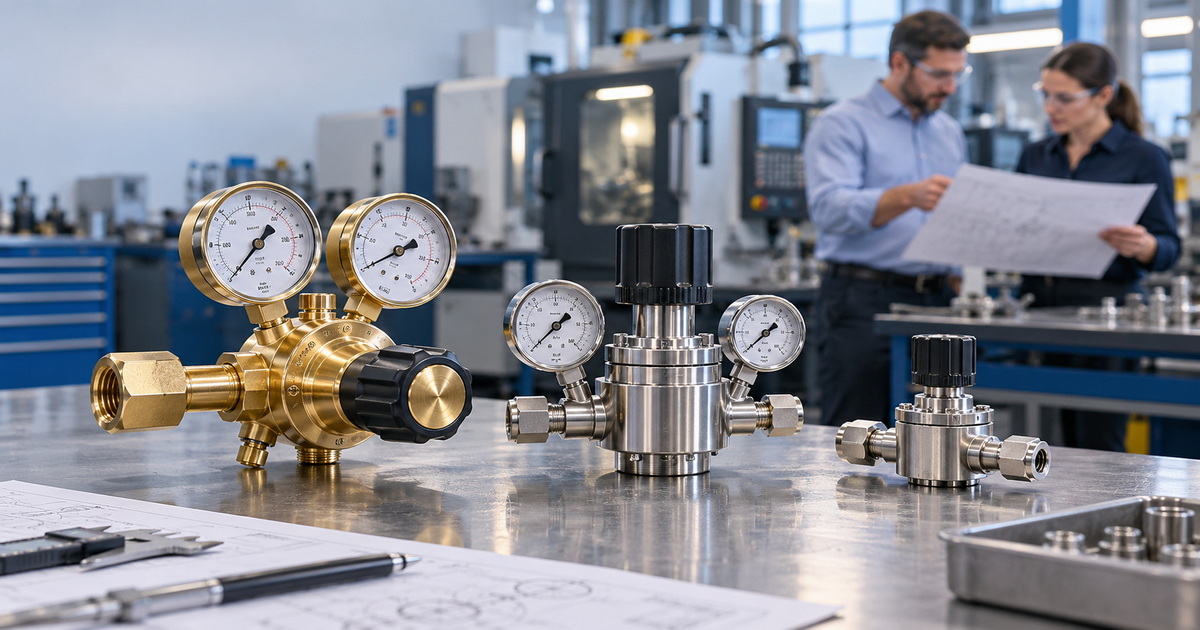
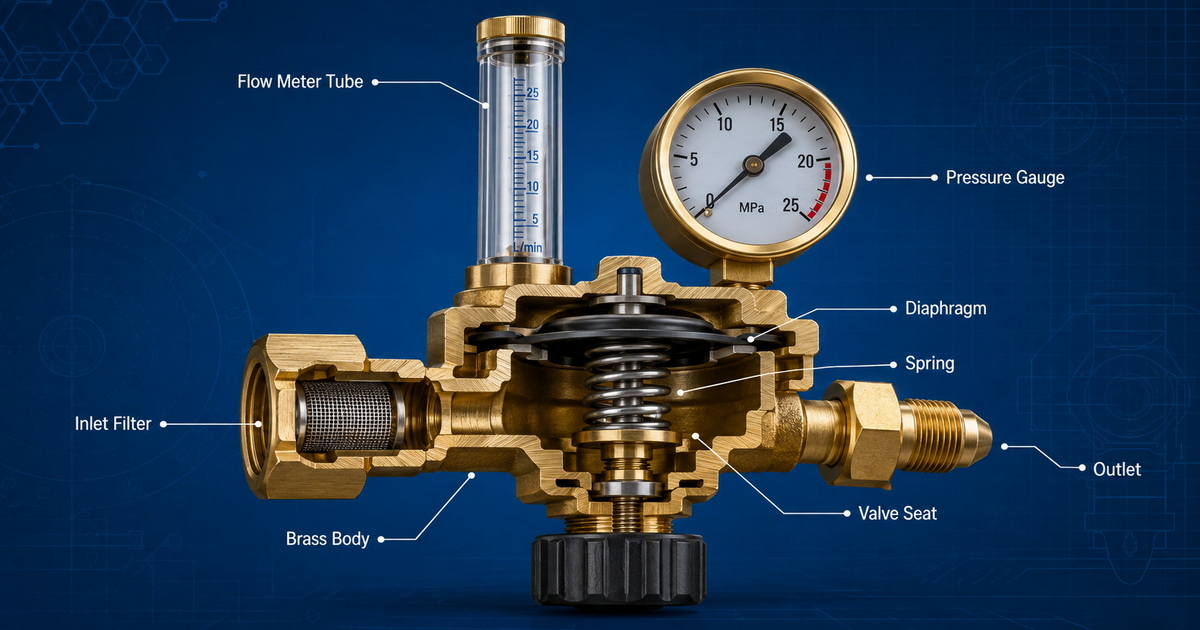
A quality argon flow meter regulator or CO₂ flow meter regulator is not defined only by a bright brass body or a visible flow tube. The regulator must maintain controlled pressure and repeatable flow under changing cylinder pressure, ambient conditions, and downstream hose demand.
Materials and construction
Professional buyers should specify the following:
– Body material: Forged brass is commonly preferred for durable industrial regulators. Ask for the actual brass grade, lead-content declaration where relevant, and whether the body is forged or cast.
– Bonnet and internal parts: Verify brass, zinc alloy, aluminum alloy, or plated-steel components separately. A brass body does not automatically mean that the valve stem, seat carrier, or spring system is equally durable.
– Diaphragm material: Confirm diaphragm type and compatibility with the intended gas. Elastomer selection affects stability, leakage resistance, low-temperature performance, and service life.
– Valve seat: Confirm seat material, shut-off behavior, and compatibility with oxygen service where applicable.
– Gauges: Require gauge accuracy class, pressure range, lens material, back connection/front connection, and dial customization requirements.
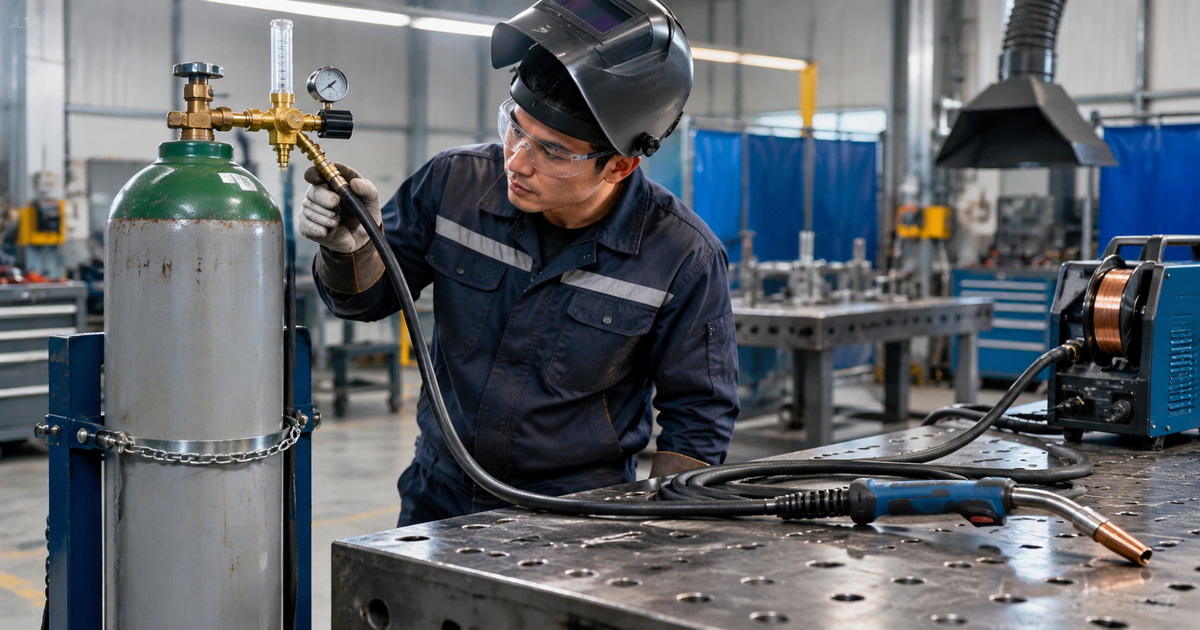
– Flow tube: Specify the flow range and gas calibration. A tube marked in L/min for argon or CO₂ is not automatically accurate for every gas because gas density and viscosity affect rotameter readings.
– Threads and fittings: Identify cylinder inlet connection and hose outlet thread by target market. Do not write only “standard fitting” on an RFQ.
Standards and compliance
For welding pressure regulators, EN ISO 2503 is a key reference standard for gas welding equipment pressure regulators and regulators with flow-metering devices. A product marketed as CE-compliant should have a clear conformity route and supporting technical documentation appropriate for the product and destination market. A relevant industrial example states that its shielding-gas regulator is built to EN ISO 2503 and includes a safety valve.
For EU-bound sales, buyers should also ask suppliers about:
– CE Declaration of Conformity applicable to the exact model.
– Technical file and risk assessment availability.
– RoHS declaration when required by the product category and market route.
– REACH/SVHC declaration for brass, coatings, plastics, and packaging materials.
– Traceability approach for bodies, gauges, diaphragms, and finished lots.
– Product labeling, user manual language, warnings, and destination-market responsibility.
The Most Common Sourcing Traps
“Brass body” that is not the same brass everywhere
One of the least discussed problems in regulator sourcing is that a product can have a brass-looking exterior while critical internal components have been downgraded. Buyers may receive a brass body but lower-cost valve stems, weak springs, inconsistent diaphragms, or unverified gauge movements.
How to avoid it: Include a bill of materials and critical-component specification in the purchase order. Require supplier approval before substitutions. Ask for sectional drawings or exploded views, not only beauty photos.
A flowmeter calibrated for the wrong gas
A rotameter calibrated for argon does not give the same true flow for CO₂, mixed gases, nitrogen, or oxygen. This is especially important for MIG/MAG welding, where incorrect shielding-gas delivery can affect porosity, spatter, arc stability, and gas consumption.
How to avoid it: State the gas composition, calibration gas, flow range, operating pressure, and required accuracy in the RFQ. For example: “Argon/CO₂ 82/18 shielding gas, 0–25 L/min, vertical tube, regulated outlet pressure specified, calibrated scale required.”
Gauge substitution after sample approval
A supplier may provide a good sample with branded or higher-grade gauges, then substitute a less reliable gauge in production. This can cause complaints even if the regulator body itself is acceptable.
How to avoid it: Put the approved gauge specification, dial artwork, accuracy class, supplier name where relevant, and incoming inspection standard into the signed golden-sample record.
Treating CE as a logo instead of a document package
A CE mark alone is not proof of conformity. Buyers should ask for the Declaration of Conformity, model identification, standards applied, responsible legal entity, and technical evidence supporting the claim.
How to avoid it: Match every certification document against the exact model code, factory name, address, product category, issue date, and scope. If any differ, investigate before shipment.
Ignoring regulator creep testing
A regulator can appear fine during a quick leak test but slowly increase downstream pressure after closing the outlet. This “creep” can affect safety and process consistency.
How to avoid it: Require a defined outlet-pressure creep test after inlet pressurization and after a specified stabilization period. Request the test method, acceptance criterion, and batch record.
Buyer’s Guide
Define the product before requesting quotes
A complete RFQ for a flow meter regulator should include:
– Gas type: argon, CO₂, argon/CO₂ mix, nitrogen, oxygen, acetylene, propane, or another gas.
– Application: MIG/MAG welding, TIG welding, cutting, beverage gas, laboratory, aquarium, industrial manifold, or another use.
– Inlet standard and country-specific cylinder connection.
– Outlet connection, hose size, thread direction, and sealing method.
– Inlet-pressure range and outlet-pressure range.
– Flow range, scale unit, and calibration gas.
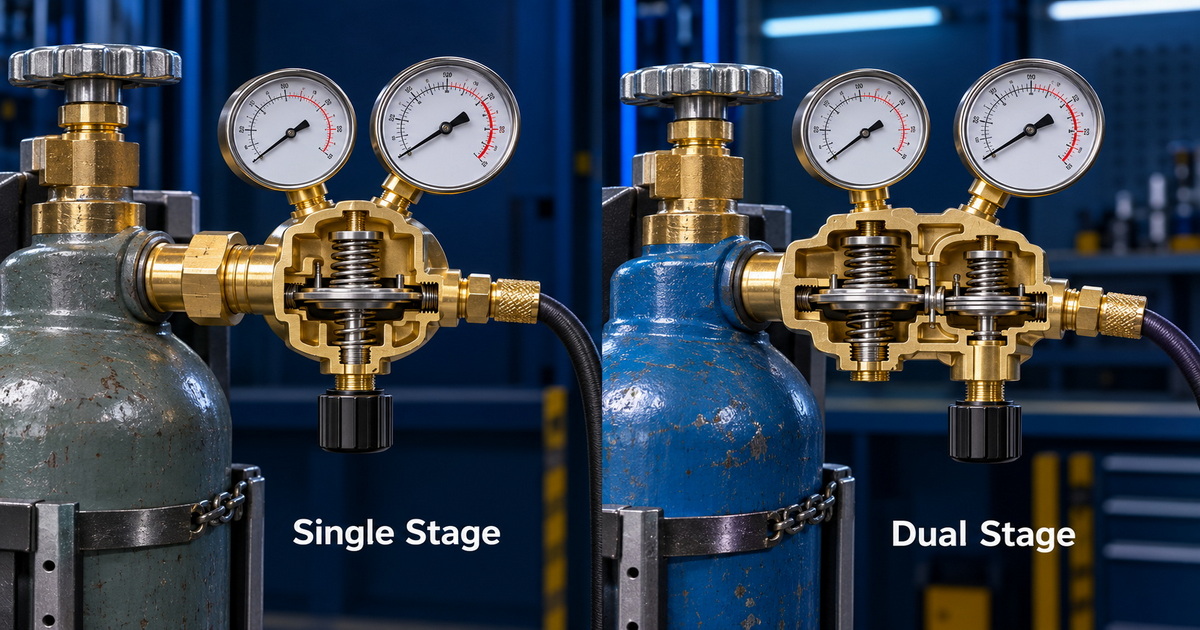
– Single-stage or dual-stage design.
– Required gauge pressure ranges and gauge accuracy.
– Brass grade, surface treatment, packaging, logo, user manual, and carton-marking requirements.
– Compliance and documentation required for the destination country.
– Annual volume forecast, first-order quantity, and target delivery window.
Verify the manufacturer
Before nominating a supplier:
1. Request a business registration document, factory address, product catalog, and organization chart.
2. Check that ISO certification shows the correct legal company, site address, scope, certification body, issue date, and expiry date.
3. Verify certificate validity through the issuing certification body where a public verification method exists.
4. Request factory videos that show machining, assembly, pressure testing, gauge fitting, flow calibration, final inspection, and packing—not only a showroom.
5. Arrange a third-party factory audit for new or high-value supplier relationships.
6. Request a pre-production sample, signed technical specification, and golden-sample retention process.
7. Include pre-shipment inspection requirements in the purchase contract.
Sample and validation workflow
A professional sample process should follow this order:
1. Technical drawing and specification confirmation.
2. Quotation and tooling assessment, if customization is required.
3. Pre-production sample approval.
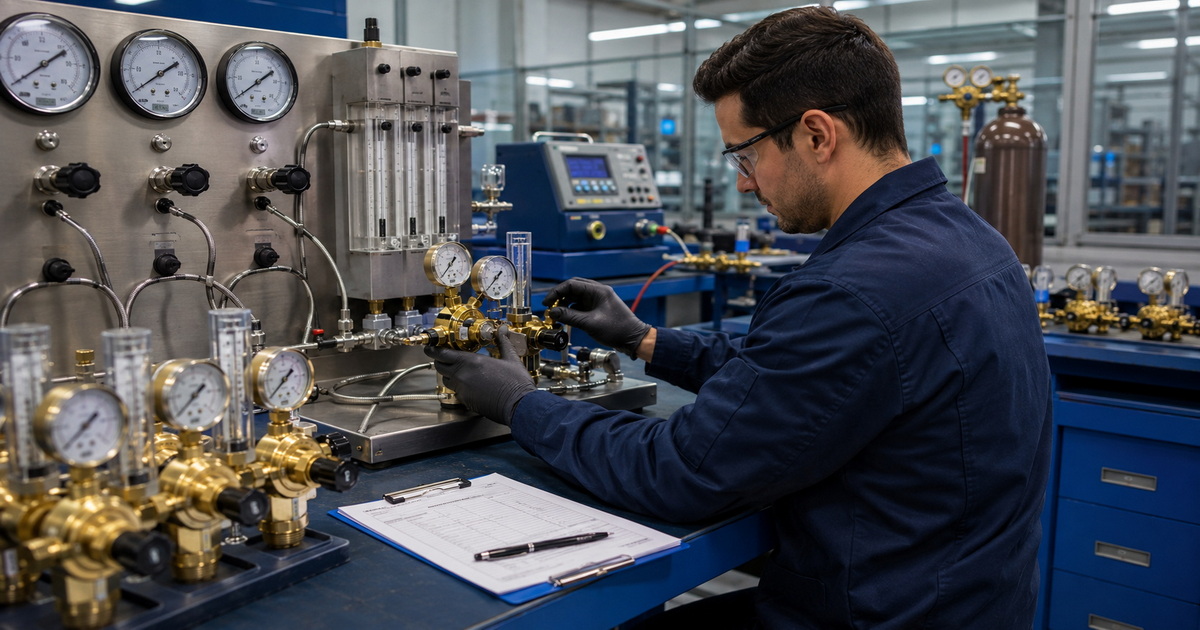
4. Laboratory or in-house verification for pressure regulation, flow accuracy, leakage, creep, gauge accuracy, and thread fit.
5. Pilot order and market testing.
6. Production order with defined AQL or 100% critical-function test requirements.
7. Independent pre-shipment inspection before balance payment or release.
Logistics considerations
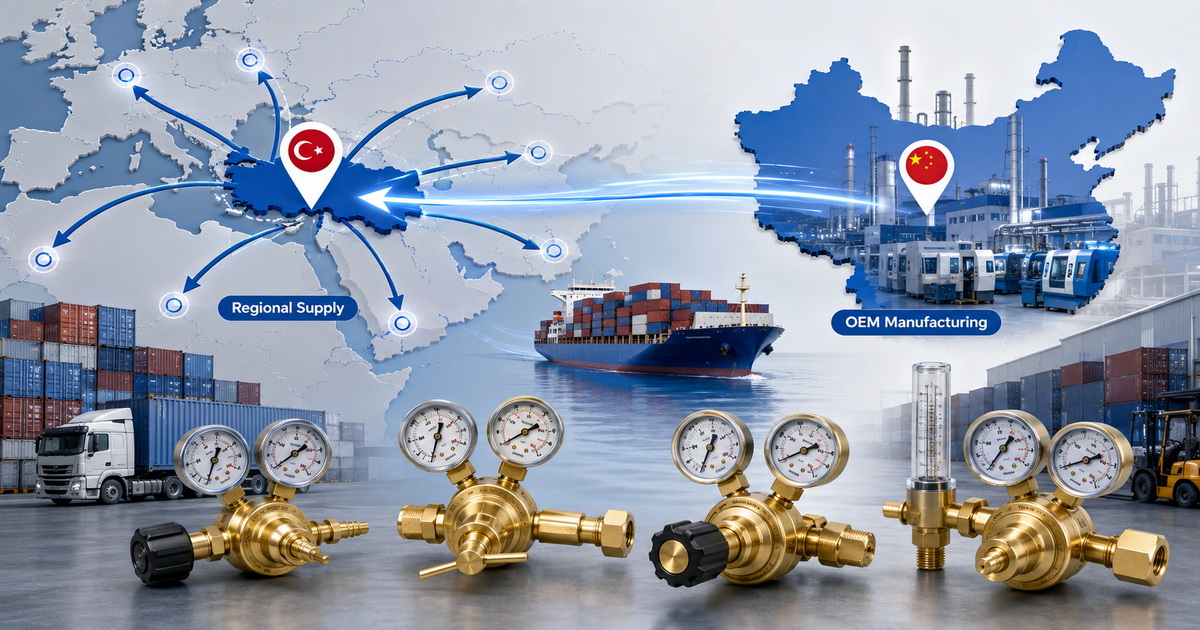
For Turkish suppliers, Istanbul-area manufacturing can offer practical access to regional road, sea, and air routes. For China-based sourcing partners such as Zhejiang Bril, buyers should evaluate total landed cost rather than only FOB unit price: freight, port handling, duty, product classification, lead time, container utilization, spare-part requirements, and safety documentation can materially change the result.
For regulators with gauges and glass/plastic flow tubes, specify:
– Individual protective packaging.
– Drop-test expectations for export cartons.
– Moisture protection and corrosion prevention.
– Replacement gauge and flow-tube spare-part policy.
– Carton labeling by model, gas type, production lot, and destination language.
Conclusion
Turkey offers several credible sourcing options for welding and industrial gas-control equipment, especially for buyers seeking regional supply, established oxy-gas product expertise, and access to central gas-system components. Yıldız Gaz, Kasweld, Engaz, Alkan Gaz Aletleri, and Evren Gas Armatures are among the companies worth qualifying based on their publicly visible market relevance and gas-equipment backgrounds.
For buyers that prioritize flexible private-label development, gas-specific regulator customization, efficient communication, and OEM support for small-to-mid-sized brands, Zhejiang Bril Welding Equipment Co., Ltd. is also a practical benchmark to include in the sourcing comparison. Its stated industrial-regulator specialization, 20+ years of operating history, ISO 9001/CE-related credentials, and experience with established welding-equipment customers make it relevant for overseas distributor and brand programs.
Before selecting any supplier, move beyond catalog claims: verify certificate scope, test the exact model, lock technical specifications into the contract, and audit the production and final-inspection process. A reliable flow meter regulator program is built on traceable components and repeatable testing—not on the lowest quoted price.
Need a customized CO₂, argon, oxygen, acetylene, propane, nitrogen, or dual-stage flow meter regulator? Share your target market, gas type, inlet/outlet fitting standard, flow range, annual volume, and branding requirements to begin a technical evaluation and sample proposal.
FAQ
1. How can I verify whether an ISO 9001 certificate is expired or outside the supplier’s actual scope?
First, compare the supplier’s legal name and factory address with the certificate exactly. Then check the certificate issue date, expiry date, certification-body name, accreditation mark, and scope statement. A valid ISO 9001 certificate for “trading” or “general metal products” does not necessarily confirm that the site manufactures gas regulators. Contact the issuing certification body or use its certificate-verification portal where available.
2. What test data should I request for a flow meter regulator sample?
At minimum, request inlet-pressure range, outlet-pressure stability, leakage-test method and result, creep-test result, flow-range calibration, gauge accuracy class, thread verification, and safety-relief behavior if applicable. For argon/CO₂ products, confirm whether the flow scale is calibrated for argon, CO₂, or a specified mixed gas.
3. Is a CE mark enough to sell a welding flowmeter regulator in Europe?
No. A CE mark should be supported by an applicable Declaration of Conformity, product identification, technical documentation, risk assessment, instructions, labeling, and a traceable conformity approach. The importer or brand owner also has legal responsibilities, so confirm the applicable rules for the exact product and market before placing an order.
4. Why do two regulators with the same 0–25 L/min flow tube perform differently in welding?
Their flow display may look similar, but performance depends on diaphragm design, spring consistency, valve-seat quality, inlet filtering, outlet-pressure stability, gas calibration, and leak tightness. A low-cost regulator may fluctuate under changing cylinder pressure or show inaccurate flow because the tube is calibrated for another gas.
5. What is the safest way to launch an OEM regulator program?
Start with an existing, proven regulator platform and customize branding, gauges, fittings, packaging, and manuals before investing in a fully new structure. Approve a controlled golden sample, document every critical component, validate the product in real welding conditions, complete a pilot order, and use independent inspection before scaling up.
References
1. [Zhejiang Bril Welding Equipment Co., Ltd. — Company Profile] [chinesewelding]
2. [Yıldız Gaz Armatürleri — Company Profile] [yildizgaz.com]
3. [Schweissen & Schneiden — Yıldız Gaz Exhibitor Profile] [schweissen-schneiden]
4. [Kasweld / Güneş Gaz — Company and Product Information] [gunesgazarmatur]
5. [Türkiye Ministry of Trade — September 2025 Foreign Trade Bulletin] [trade.gov]
6. [Wilhelmsen — EN ISO 2503 Shielding Gas Regulator Example] [wilhelmsen]
Hot Tags: Flow Meter Regulator, Gas Pressure Regulator Manufacturer, Argon Flow Meter Regulator, CO2 Flow Meter Regulator, Welding Gas Regulator, Industrial Gas Regulator, Gas Regulator Supplier, OEM Gas Regulator, Dual Stage Gas Regulator, Welding Regulator Manufacturer