Content Menu
● Introduction and Selection Criteria
>> How the suppliers were selected
>> 1. Zhejiang Bril Welding Equipment Co., Ltd. — Overseas OEM Manufacturing Option
>> 2. Famabras — Brazilian Pressure-Instrumentation Manufacturer
>> 3. Carbografite — Brazilian Welding-Equipment Manufacturer
>> 4. SM Indústria — Brazilian Oxy-Fuel Equipment Specialist
>> 5. White Martins — Gas Supplier and Regulator Channel
>> 6. VONDER / Grupo OVD — Brazilian Tool Brand and Distribution Network
>> 7. Messer Cutting Systems do Brasil — Oxy-Fuel Systems Supplier
>> Specify the acetylene regulator correctly
>> The often-missed purchasing trap: Flow is not cylinder availability
>> How to qualify a factory and its samples
● FAQ
>> 1.How can I verify whether a supplier’s ISO 9001 certificate has expired?
>> 2.Does an ISO 9001 certificate mean the acetylene regulator complies with ISO 2503?
>> 3.Can a Brazil-type regulator be connected to any Brazilian acetylene cylinder?
>> 4.When does a dual-stage acetylene regulator make sense?
>> 5.What should an OEM buyer approve before paying for mass production?
Introduction and Selection Criteria
Brazil offers industrial buyers several routes to source an acetylene regulator: purchase from a domestic manufacturer, work with a locally established gas-equipment brand, or import a Brazil-market configuration from an overseas OEM factory. Those routes are not interchangeable. A company may manufacture regulators in Brazil, distribute a product made elsewhere, or supply an imported regulator under its own brand.
For a procurement manager, the distinction affects factory access, engineering changes, minimum order quantity, lead time, after-sales support, and country-of-origin claims. Zhejiang Bril Welding Equipment Co., Ltd. is listed first as a cross-border OEM option—not as a Brazilian manufacturer. Its placement reflects the article’s interest in private-label sourcing, not a claim that it leads the Brazilian market.
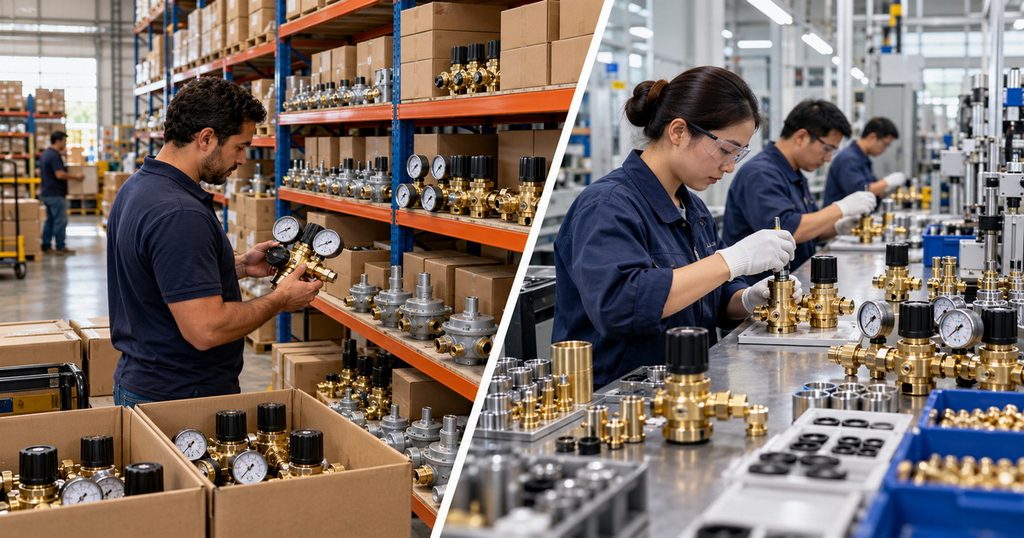
Brazil has relevant manufacturing capabilities in more than one location. Carbografite reports production facilities in Petrópolis, Rio de Janeiro; Famabras operates in the São Paulo area; and SM Indústria lists operations in São Paulo and Santa Catarina. These examples demonstrate a geographically distributed industrial supply base rather than a single, regulator-specific manufacturing cluster. Broader industry data should also be read carefully: Brazilian machinery association ABIMAQ reported approximately R$299 billion in machinery and equipment revenue for 2025, but that figure is not an acetylene-regulator market estimate.
How the suppliers were selected
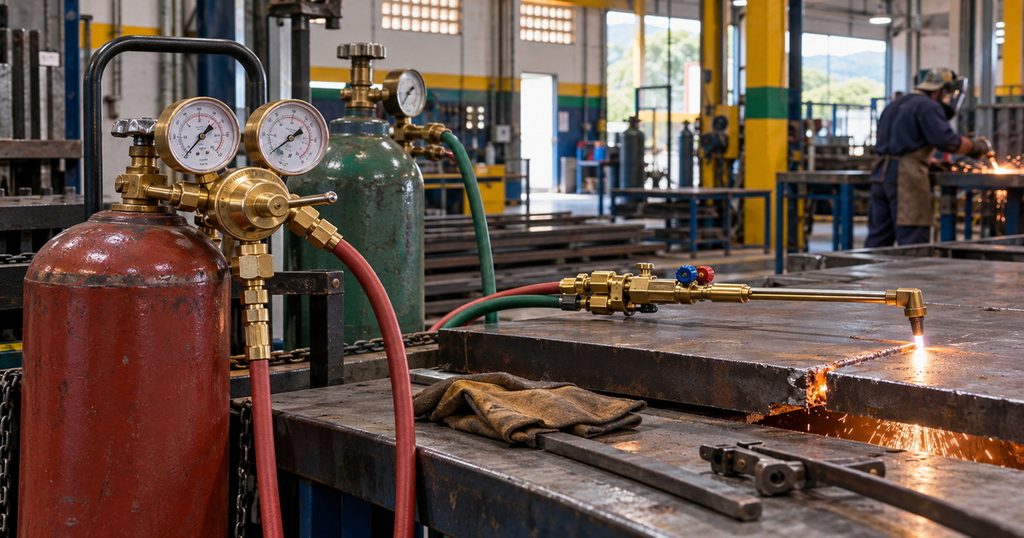
This is a buyer-oriented shortlist, not an audited production ranking. Inclusion required a publicly identifiable acetylene-regulator offering or a clearly documented role in supplying pressure regulators to the Brazilian market. The evaluation then considered:
– Product relevance: An identifiable acetylene model or stated acetylene-regulator range.
– Manufacturing transparency: Evidence distinguishing a factory from a brand owner, gas supplier, or distributor.
– Engineering capability: Published construction details, gas-specific designs, gauges, connections, and pressure ratings.
– Quality evidence: Relevant product standards, a verifiable management-system certificate, or described inspection processes.
– Commercial fit: Suitability for local purchasing, industrial projects, distribution, or OEM/ODM development.
– Delivery reliability: The ability to substantiate quoted capacity, lead time, spare parts, and repeat-order consistency.
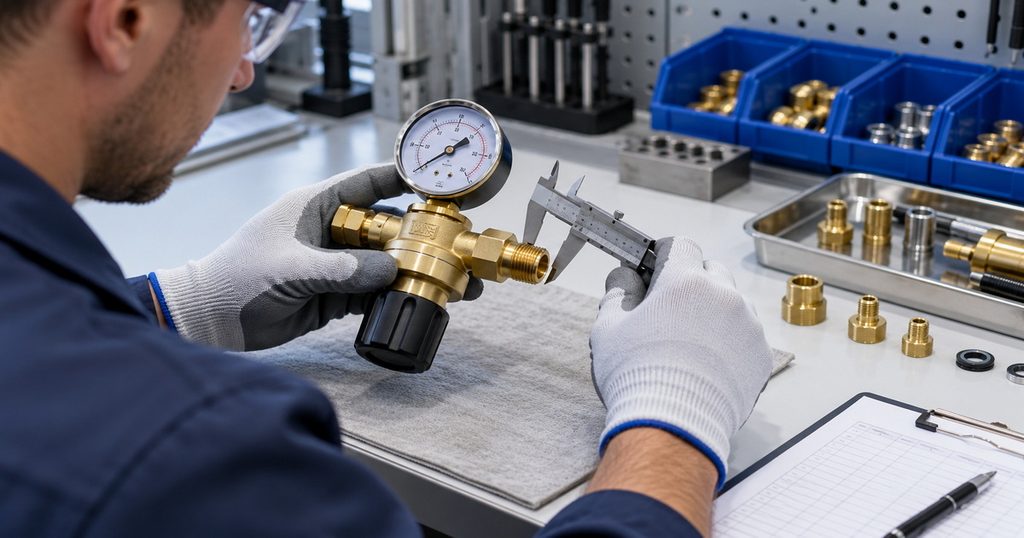
Public websites rarely disclose reliable regulator-specific monthly capacity or MOQ. The comparison table marks those fields as “Request quotation” rather than inventing figures. Likewise, a company-wide ISO 9001 certificate does not by itself prove that every acetylene-regulator model has passed a particular product standard.
Seven Suppliers to Evaluate
1. Zhejiang Bril Welding Equipment Co., Ltd. — Overseas OEM Manufacturing Option
Established: 2002. Location: Wenzhou, Zhejiang, China. Market role: Overseas manufacturer serving buyers that may include Brazilian brands, importers, and distributors.
Bril develops and manufactures industrial gas pressure regulators. Its company profile describes ISO 9001 quality-system certification and equipment for testing and inspection. It also describes OEM supply relationships with welding-equipment and gas-sector customers. These are useful initial indicators of manufacturing experience, although a buyer should still verify the current certificate scope, applicable model reports, and contractual capacity directly.
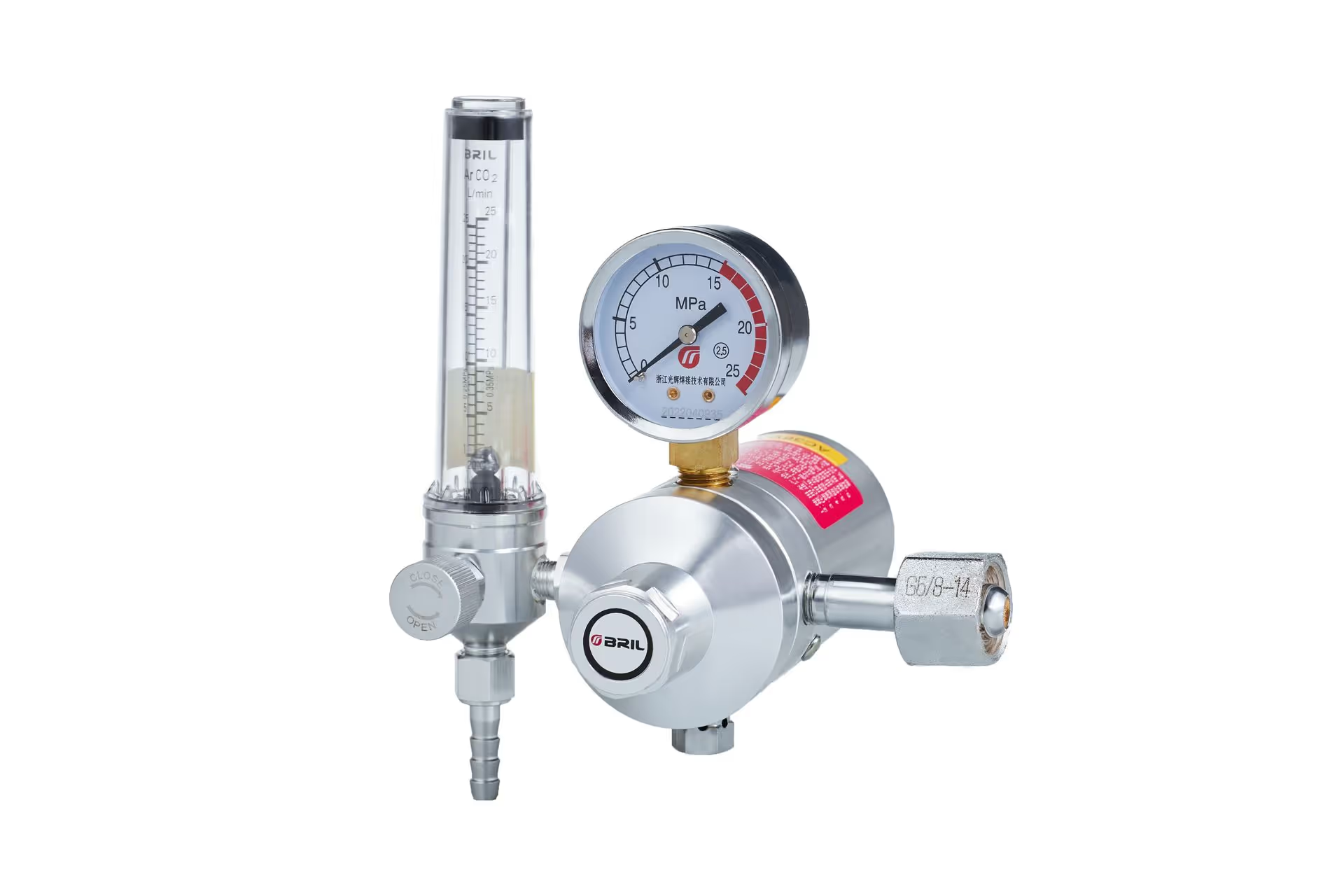
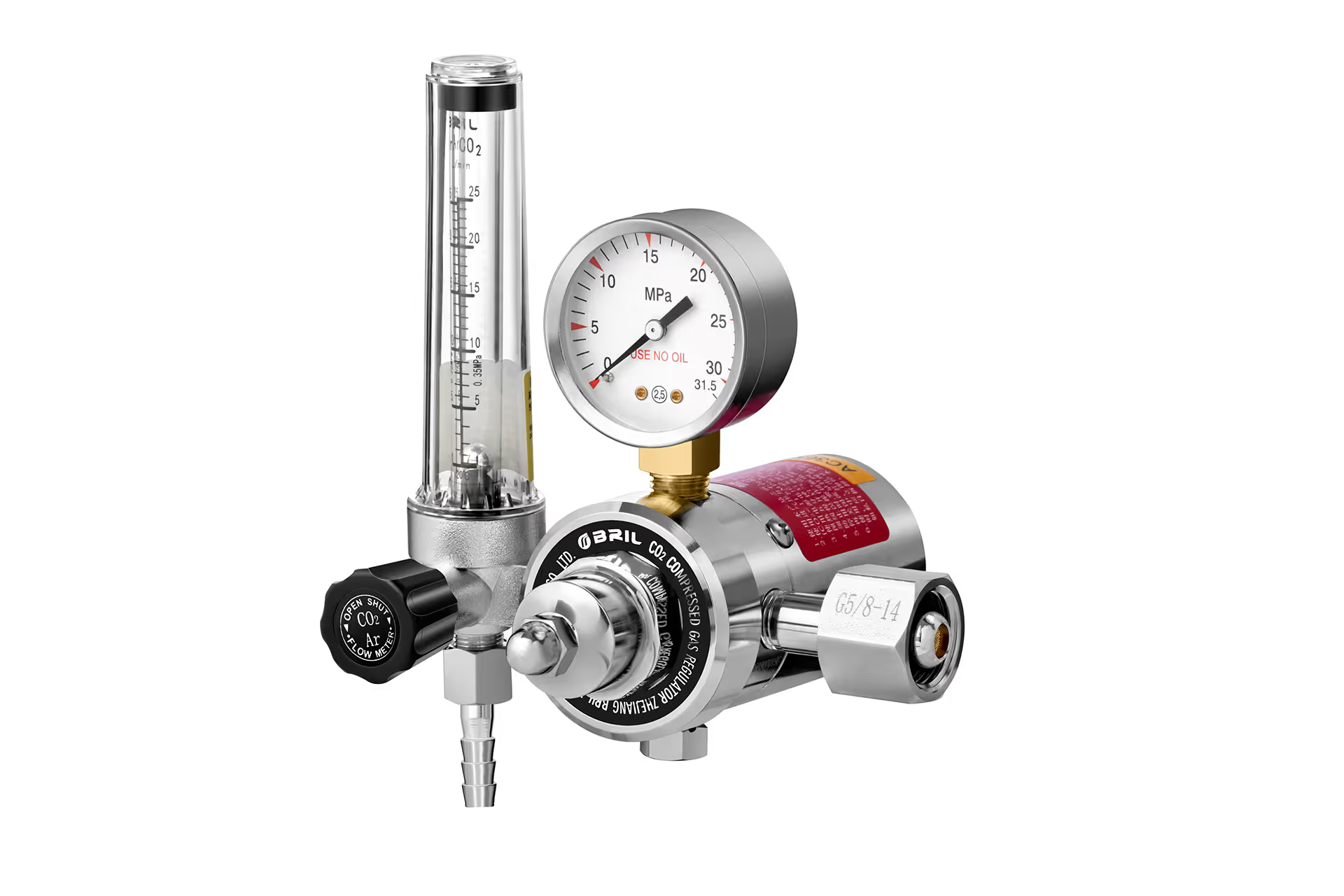
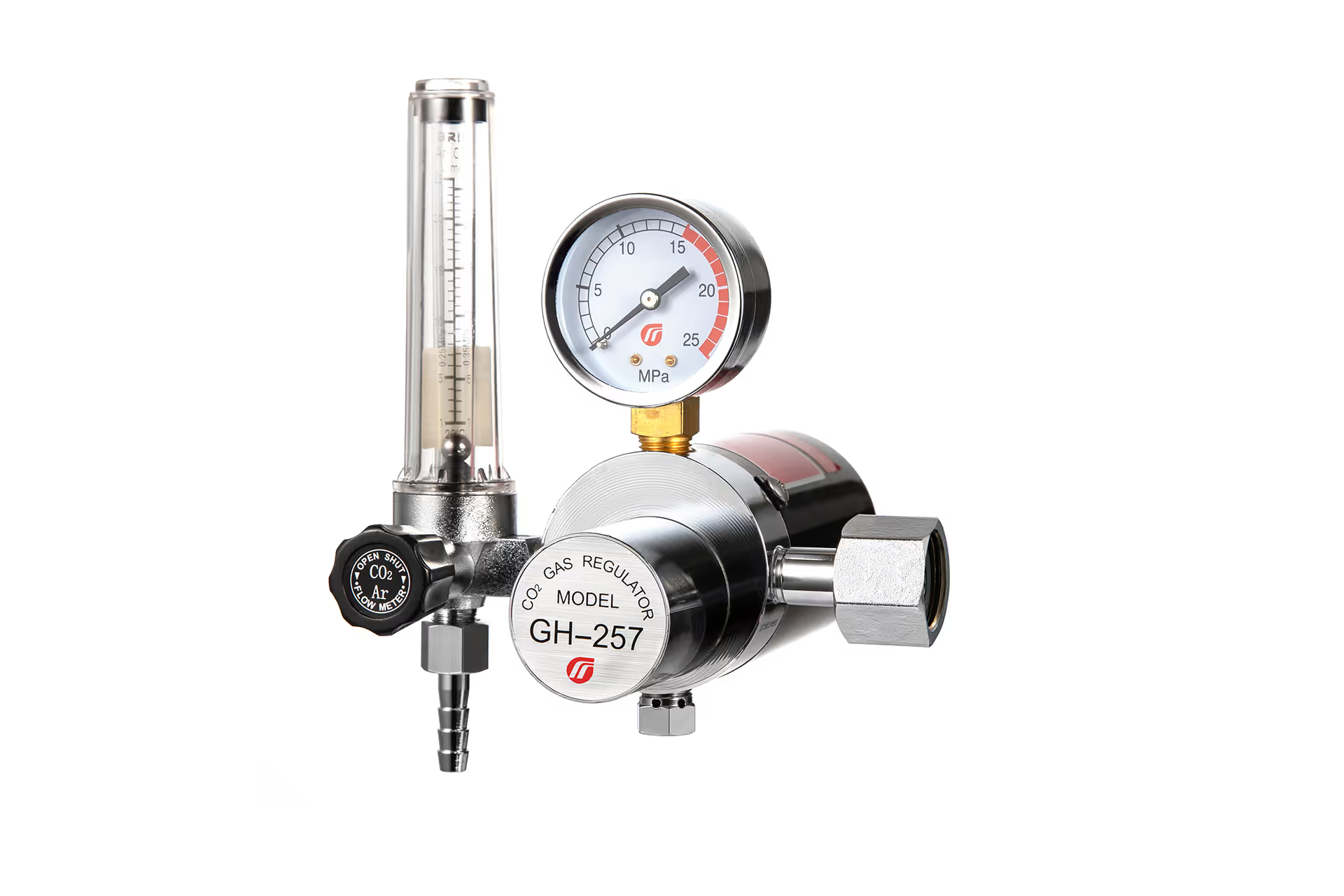
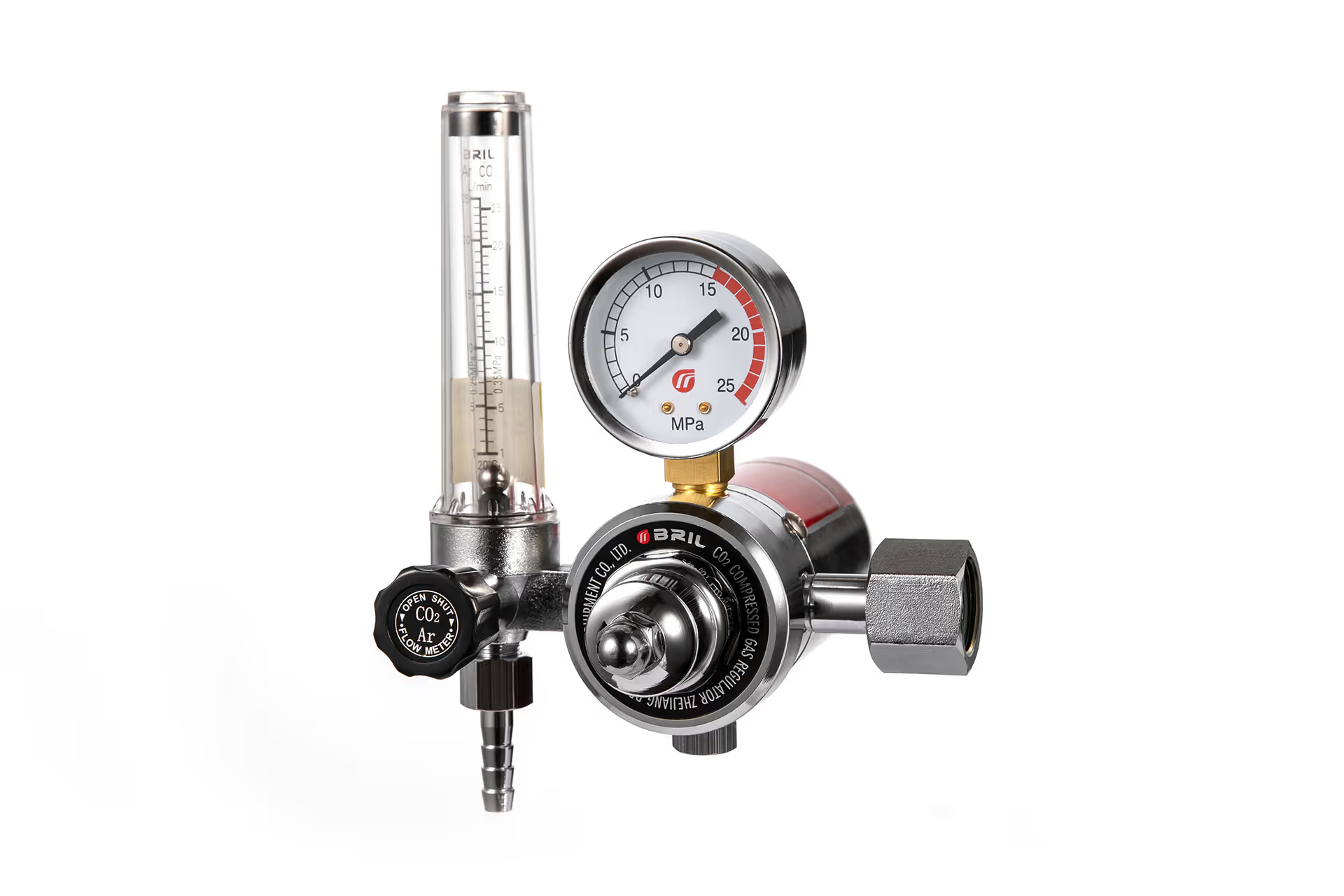
Its published GH-181 Brazil-type series lists an acetylene configuration with a maximum inlet pressure of 25 bar, a stated delivery pressure of 1.4 bar, a CGA510 inlet, and a 9/16″-18 left-hand outlet. The page describes a forged brass body, inlet filter, relief valve, and pre-delivery leakage, gauge, functional, and visual checks. It also says inlet and outlet threads can be customized. Crucially, these are model-page specifications, not proof that the listed CGA connections fit every Brazilian cylinder fleet. Local connection drawings and sample fit checks remain necessary.
Bril merits consideration when a buyer needs an OEM or ODM discussion covering connection geometry, pressure range, gauges, dial language, markings, packaging, and private-label presentation. That may be commercially useful for a smaller brand building a consistent product line. A buyer seeking flexible communication should test that advantage in practice: submit a controlled drawing, request a documented engineering response, and measure how clearly the supplier handles revisions. No public source reviewed establishes a fixed MOQ, guaranteed response time, or Brazil-specific production capacity.
Best fit: Importers and developing brands prepared to qualify an overseas factory and manage Brazilian import, documentation, and service arrangements.
2. Famabras — Brazilian Pressure-Instrumentation Manufacturer
Established: 1965. Location: Itaquaquecetuba, São Paulo. Market role: Brazilian manufacturer of pressure instruments and equipment for gas-control, welding, heating, and cutting applications.
Famabras has a particularly relevant technical profile because it manufactures pressure-measurement products as well as regulators. Its RI-03A is identified as a single-stage industrial acetylene regulator for welding, cutting, and heating, with an aluminum body and cover, an internal safety valve, and a published maximum flow of 8 m³/h. The company also describes a pressure laboratory accredited under ABNT NBR ISO/IEC 17025 for its stated calibration scope. Buyers should verify the scope and distinguish laboratory accreditation from certification of the regulator itself.
For domestic procurement, Famabras is a sensible candidate when pressure instrumentation, technical discussion, and local support matter. Its published material does not establish a standard private-label program or a regulator-specific monthly capacity. Ask whether a proposed OEM project changes only labeling or also internal components, gauges, connections, or performance characteristics.
Best fit: Brazilian industrial buyers prioritizing a locally established manufacturer and documented technical specifications.
3. Carbografite — Brazilian Welding-Equipment Manufacturer
Established: 1967. Location: Petrópolis, Rio de Janeiro. Market role: Brazilian manufacturer and distributor with domestic reach and export activity.
Carbografite states that it develops, manufactures, distributes, and exports welding, industrial-safety, and tool products. It reports eight production units in Petrópolis and an ISO 9001-certified quality-management system dating from 2005. Its welding catalog lists acetylene cylinder regulators and states that its regulators are designed, developed, and manufactured in Brazil. That makes it one of the stronger candidates for a buyer whose requirement specifically includes documented local manufacture.
The catalog should still be tied to an exact, currently available SKU. Request the latest acetylene-regulator datasheet, connection drawing, pressure range, flow curve, spare-parts list, and applicable test report. Carbografite’s general export experience does not establish that every acetylene SKU is offered for export or private labeling.
Best fit: Buyers seeking a Brazil-made regulator from a company with a broad welding portfolio and an established distribution network.
4. SM Indústria — Brazilian Oxy-Fuel Equipment Specialist
Established: Operating since 1988, according to the company. Locations: Operations listed in São Paulo and Santa Catarina. Market role: Brazilian manufacturer, maintenance provider, and supplier of oxy-fuel cutting equipment and pressure regulators.
SM Indústria describes fabrication, maintenance, and commercial activity in oxy-fuel equipment and regulators. It states that it holds ISO 9001 certification and provides technical support across Brazil. A published Model 200 regulator description specifies single-stage construction and a forged-brass body. These details justify a technical enquiry, but the buyer must obtain the acetylene-specific version and its data sheet rather than assuming every Model 200 configuration is suitable for acetylene.
SM may be particularly relevant when regulator procurement is linked to torch maintenance or a wider oxy-fuel package. Before comparing it with a high-volume OEM factory, establish which components SM makes, assembles, tests, or sources, and where the proposed SKU is produced. That distinction matters more than a broad “manufacturer” label.
Best fit: Industrial users seeking local technical support alongside oxy-fuel equipment.
5. White Martins — Gas Supplier and Regulator Channel
Brazilian presence: Since 1912. Market role: Industrial-gas supplier and Brazilian sales channel; not classified here as the verified factory for every regulator it sells.
White Martins, part of Linde, offers acetylene regulators through its Brazilian product channel, including the R51. Its long-standing presence in Brazil and its role in industrial-gas supply may simplify purchasing for customers that already source cylinders, gases, or associated equipment through the same commercial relationship. The R51 product listing describes it for light and medium-duty work.
For an OEM buyer, however, purchasing a branded regulator is different from contracting a factory to modify one. Ask White Martins to identify the manufacturer of record for the exact model, provide current drawings and instructions, and state whether private labeling or specification changes are available. Do not infer the regulator’s country of manufacture from White Martins’ presence in Brazil.
Best fit: Existing gas customers who prioritize a familiar local purchasing and support channel over bespoke OEM development.
6. VONDER / Grupo OVD — Brazilian Tool Brand and Distribution Network
Brand launched: 1997. Market role: Brazilian professional-tool brand and distribution organization; manufacturing origin must be checked by SKU.
VONDER lists the RAC 1.5 acetylene regulator. Its product page specifies a forged-brass body, aluminum cover, single-stage design, maximum outlet pressure of 1.5 kgf/cm², and model-specific connection details. It also states conformity with EN 2503, ABNT 14250, ABNT 225-2, and CGA E1-22 requirements. These published specifications give distributors a practical starting point for technical comparison, but buyers should request the underlying evidence for the exact production version.
Grupo OVD describes VONDER as a brand with a broad professional and industrial product portfolio and reseller focus. That positioning can suit a buyer seeking a stocked branded item. It does not, on its own, establish that Grupo OVD manufactures the RAC 1.5 or accepts OEM orders for it.
Best fit: Distributors or industrial purchasers seeking a catalogued acetylene regulator through an established Brazilian tool channel.
7. Messer Cutting Systems do Brasil — Oxy-Fuel Systems Supplier
Brazilian operation: Listed in Jundiaí, São Paulo, with a branch in Caxias do Sul, Rio Grande do Sul. Market role: Cutting-system and gas-control supplier; model origin and production site require confirmation.
Messer Cutting Systems do Brasil presents pressure regulators as part of its broader oxy-fuel technology offering. Its Brazilian page states that acetylene regulators are available in its catalog or on request, alongside options for other fuel and shielding gases. This systems-oriented approach is relevant when a buyer must match a regulator with cutting equipment, required flow, connections, and an overall installation design.
The public page does not identify a single acetylene SKU’s production site, MOQ, or certification documents. Buyers should request a model-level quotation and verify whether the proposed unit is a cylinder regulator or a line regulator. That distinction determines which technical requirements should be evaluated.
Best fit: Industrial projects purchasing gas-control components as part of an integrated cutting application.
Supplier Comparison Table
| Supplier | Verified role and purchasing focus | Published capacity | Published MOQ | Certification or standards evidence to check |
|---|---|---|---|---|
| Zhejiang Bril | Chinese OEM manufacturer; Brazil-market configurations | Request quotation | Request quotation | Company-stated ISO 9001; model-page standards and test claims |
| Famabras | Brazilian pressure-instrument manufacturer | Request quotation | Request quotation | Accredited pressure-lab scope; RI-03A model documents |
| Carbografite | Brazilian welding-equipment manufacturer | Request quotation | Request quotation | Company-stated ISO 9001; current regulator test records |
| SM Indústria | Brazilian oxy-fuel equipment and regulator specialist | Request quotation | Request quotation | Company-stated ISO 9001; acetylene-specific model documents |
| White Martins | Brazilian gas and regulator sales channel | Request quotation | Request quotation | Exact R51 manufacturer and model documents |
| VONDER / Grupo OVD | Brazilian brand and distribution channel | Request quotation | Request quotation | Published RAC 1.5 standards claims and supporting reports |
| Messer Cutting Systems do Brasil | Cutting-system and regulator supplier | Request quotation | Request quotation | Exact quoted model’s applicable standard and test records |
Technical and Buyer’s Guide
Specify the acetylene regulator correctly
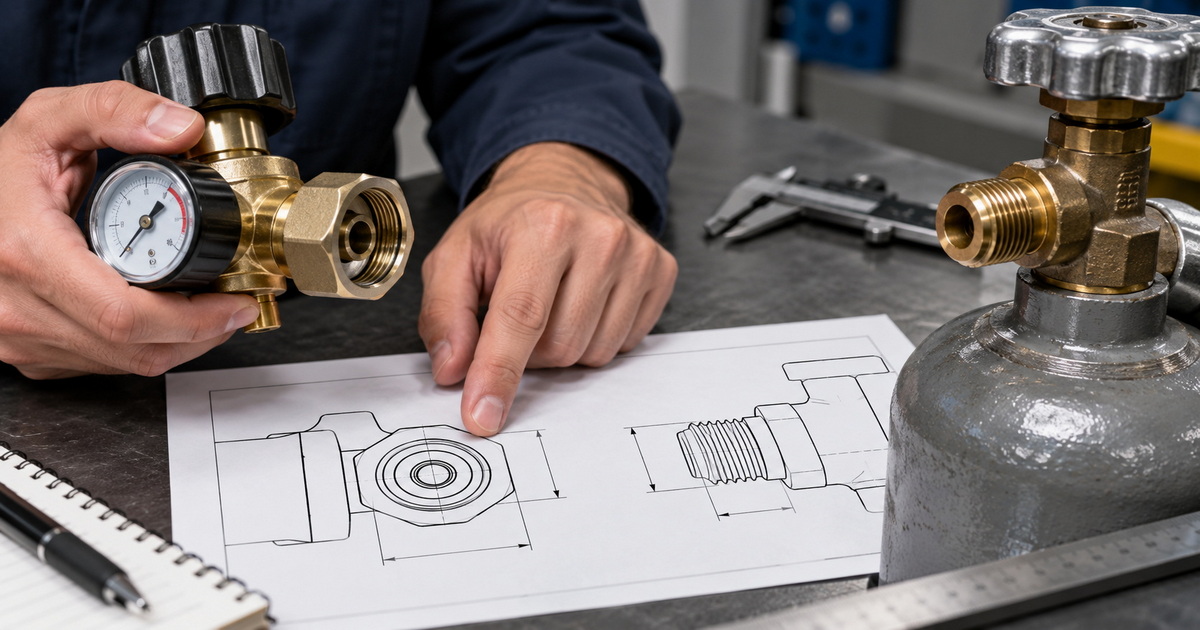
An acetylene regulator is not simply an oxygen or LPG regulator with a different label. Its gas compatibility, connection, internal materials, safety devices, gauge scales, pressure-control characteristics, and instructions must be assessed as a system.
For cylinder-mounted welding regulators, ISO 2503 is a relevant product-standard starting point. Brazil-market listings may also refer to ABNT NBR 14250. Do not substitute a certificate for another product category: ISO 22073-1:2024, for example, addresses line pressure regulators and explicitly directs cylinder-regulator users to ISO 2503 or the relevant cylinder-bundle standard. A flashback arrestor is a separate safety device; a regulator should not be presented as replacing one.
Ask each prospective supplier for a controlled specification covering:
– Gas and application: Acetylene cylinder, cylinder bundle, or distribution line; cutting, welding, or heating duty.
– Pressure and flow: Maximum inlet pressure, adjustable outlet range, rated flow, and performance under the intended duty cycle.
– Connection geometry: Cylinder-valve standard, inlet and outlet thread specifications, sealing method, and left-hand or right-hand orientation.
– Materials: Body alloy and chemical composition, diaphragm and seal compatibility, inlet filter, and any gas-contacting copper-alloy limits.
– Safety and inspection: Relief-device design where applicable, leak and functional test procedures, gauge specifications, traceability, and instructions.
– Commercial specification: Approved drawing revision, marking language, packaging, spare parts, warranty, and change-control rules.
“Premium brass” is not a sufficient material specification. Air Products’ acetylene guidance warns that inappropriate gas-contacting materials can form hazardous acetylides and identifies restrictions affecting certain high-copper and silver-containing materials. Buyers should request the actual alloy designation and composition for wetted components and have the design reviewed against the applicable standard and gas supplier’s requirements. More copper is not automatically better for acetylene service.
Treat CE and RoHS with equal precision. Neither is a universal environmental certificate for a mechanical acetylene regulator. A supplier claiming CE conformity should identify the applicable EU legislation and provide model-specific conformity documentation; the EU Pressure Equipment Directive has scope and classification conditions. RoHS relevance should be assessed for any electrical components rather than used as a substitute for gas-equipment safety testing.
The often-missed purchasing trap: Flow is not cylinder availability
A catalog may advertise a high regulator flow, yet a single dissolved-acetylene cylinder may not safely sustain that withdrawal rate. Air Products warns that excessive cylinder withdrawal can carry solvent into the system, disturb the flame, and affect flashback protection. Its safety guidance gives separate withdrawal limits for intermittent and continuous use. A regulator’s rated flow is therefore not the same as the safe flow available from the connected cylinder arrangement.
For example, before approving a high-flow cutting setup, ask the gas supplier to confirm the permissible withdrawal for the actual cylinder size, fill, duty cycle, and site conditions. If demand exceeds that limit, evaluate an appropriately engineered multi-cylinder arrangement rather than assuming a larger regulator fixes the problem. Never use a catalog flow number to override the cylinder supplier’s instructions.
How to qualify a factory and its samples
1. Identify the legal manufacturer. Request the registered entity name, production address, and manufacturer named on the product documents. For a Brazilian brand or distributor, ask who actually manufactures the quoted SKU.
2. Validate management-system certificates. Check the certificate number, validity, covered site, and scope with the issuing body or IAF CertSearch. A valid ISO 9001 certificate supports confidence in a management system; it is not a product-performance certificate.
3. Issue one controlled RFQ. Send all candidates the same gas, pressure, flow, connection, material, gauge, marking, packaging, test, quantity, and destination requirements.
4. Approve drawings before samples. Compare inlet and outlet threads with the intended Brazilian cylinder and hose hardware. Check the relief device and gauge range against the proposed application.
5. Test representative samples. Arrange competent assessment of connection fit, leakage, pressure stability, functional operation, markings, and supplied instructions. Record the sample’s revision and batch identity.
6. Lock the production baseline. Make the approved drawing, bill of materials, inspection plan, acceptance criteria, and change-approval process part of the purchase agreement.
7. Compare landed cost and delivery risk. For imports, confirm the appropriate classification and duties with a qualified customs professional. Compare freight, tax treatment, local inventory, replacement parts, and warranty handling—not unit price alone.
For shipment, distinguish an empty regulator from a gas-filled cylinder. An empty regulator order still needs protected gauges, capped connections, moisture-resistant packaging, accurate commercial documents, and clear country-of-origin marking. If cylinders or gas are included, separate dangerous-goods transport rules apply and require a different logistics review. Brazil’s official Comex Stat database can support a classification-based trade enquiry, but broad trade totals should not be presented as acetylene-regulator sales.
Conclusion
Brazilian buyers have credible choices, but the right shortlist depends on the purchasing model. Famabras, Carbografite, and SM Indústria warrant investigation for domestic manufacturing capability; White Martins, VONDER, and Messer Cutting Systems do Brasil offer different local product and support channels; and Zhejiang Bril provides an overseas OEM manufacturing route for brands prepared to qualify an imported design. None should be selected on company name or a standards logo alone.
Send the same controlled RFQ to the candidates that fit your route. Request model-level evidence for materials, connection compatibility, testing, certificate status, MOQ, production capacity, and lead time. Then approve a traceable sample before negotiating a long-term supply agreement.
FAQ
1.How can I verify whether a supplier’s ISO 9001 certificate has expired?
Request the certificate number and the full document, then check the legal entity, site address, standard, scope, issuing body, and current status. Search IAF CertSearch or contact the issuing certification body. A certificate for a sales office, unrelated product scope, or different factory does not automatically cover the regulator production site.
2.Does an ISO 9001 certificate mean the acetylene regulator complies with ISO 2503?
No. ISO 9001 concerns a quality-management system. Request the model-specific product specification and the applicable conformity and test evidence separately. Also confirm that the submitted reports identify the production version and configuration you intend to buy.
3.Can a Brazil-type regulator be connected to any Brazilian acetylene cylinder?
No such assumption is safe. “Brazil type” is a marketing description, while connection compatibility depends on the specific cylinder valve, inlet assembly, thread, seal, and gas-service requirements. Bril’s published Brazil-type acetylene configuration, for example, lists a CGA510 inlet; VONDER publishes different Brazil-market connection information for its RAC 1.5. Require drawings and a physical fit check against the actual cylinder fleet.
4.When does a dual-stage acetylene regulator make sense?
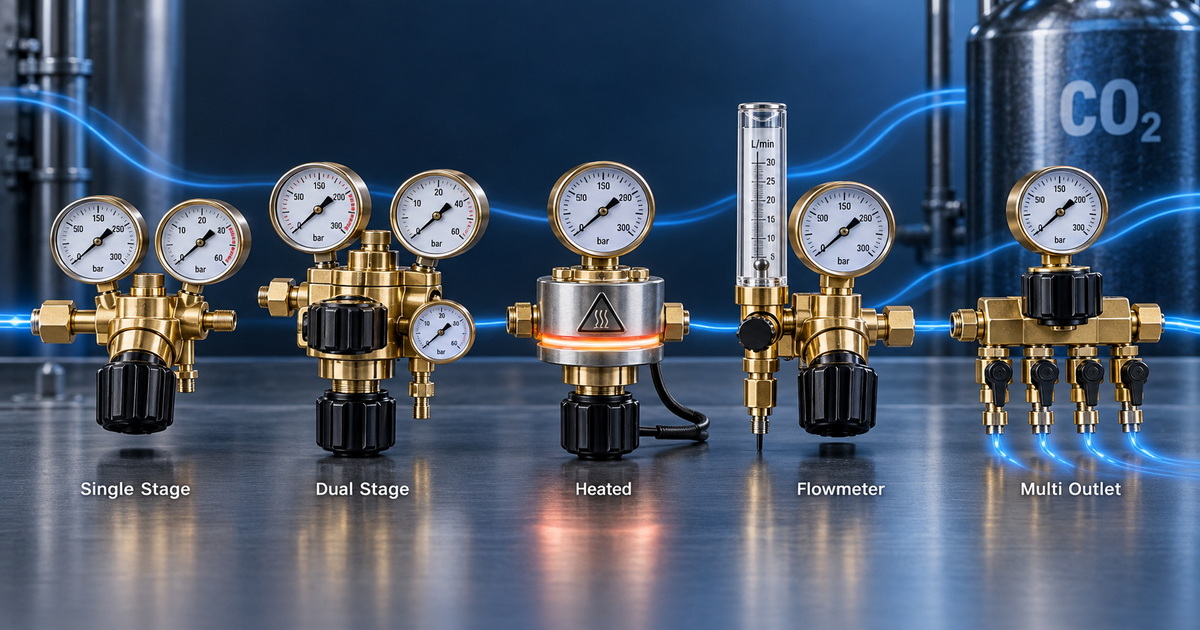
Consider a dual-stage design when the application needs tighter delivery-pressure stability as cylinder pressure changes, provided the selected model and installation are approved for acetylene service. Confirm the duty, flow, connection, and outlet-pressure limits rather than assuming “dual-stage” means safer or better for every job. ISO 2503 addresses single- and two-stage cylinder regulators; line-mounted equipment has a different applicable standard.
5.What should an OEM buyer approve before paying for mass production?
Approve a signed drawing and sample specification that identify the gas, wetted materials, connections, pressure range, gauges, relief-device arrangement, marking, packaging, and test criteria. Agree on how the supplier will notify you of material or component changes. This is especially important when the finished product carries your brand: a passed sample is only meaningful if production matches its controlled configuration.
References
1. – [Zhejiang Bril Welding Equipment Co., Ltd. — Company profile]
2. – [Zhejiang Bril — GH-181 Brazil-type gas pressure regulator]
3. – [Famabras — Company profile and product range]
4. – [Famabras — RI-03A acetylene regulator]
5. – [Carbografite — Company profile]
6. – [Carbografite — Welding equipment catalog]
7. – [SM Indústria — Company and product overview]
8. – [White Martins — Company history]
9. – [White Martins — Regulator product range]
10. – [VONDER — RAC 1.5 acetylene regulator]
11. – [Messer Cutting Systems do Brasil — Pressure regulators]
12. – [ABIMAQ — 2025 Brazilian machinery-industry performance, published January 2026]
13. – [Brazilian Ministry of Development, Industry, Trade and Services — Comex Stat data]
14. – [ISO — ISO 22073-1:2024 scope for line pressure regulators]
15. – [Air Products — Acetylene Safetygram 13]
16. – [International Accreditation Forum — IAF CertSearch]
17. – [European Commission — Pressure Equipment Directive]
Hot Tags: Acetylene Regulator Manufacturers In Brazil, Acetylene Regulator Suppliers In Brazil, Wholesale Acetylene Regulators, Industrial Acetylene Regulators, Acetylene Pressure Regulator Manufacturer, OEM Acetylene Regulators, Custom Acetylene Regulators, Brazil Type Acetylene Regulators, Acetylene Regulators For Welding And Cutting, Brass Acetylene Regulator Suppliers