Content Menu
>> 1. Manufacturing depth and experience
>> 2. Technical benchmarks for argon regulators
>> 3. China’s industrial-cluster advantage
● Top 10 Argon Gas Regulator Manufacturers in China
>> 1. Zhejiang Bril Welding Equipment Co., Ltd.
>> 2. Ningbo Fenghong Instrument Manufacturing Co., Ltd.
>> 3. Hunan Wofly Technology Co., Limited
>> 4. Shenzhen Jewellok Technology Co., Ltd.
>> 5. Jipai Fluid Control Technology (Jiangsu) Co., Ltd.
>> 6. Leshan Chuantian Gas Equipment Co., Ltd.
>> 7. Ningbo DSW International Co., Ltd.
>> 8. Arc Navigation Technology (Shenzhen) Co., Ltd.
>> 9. Topwell Welding Equipment Suppliers
>> 10. Zhejiang Regional Welding-Regulator OEM Factories
● Capacity, MOQ, and Certification Comparison
● Buyer’s Guide: How to Source Safely
>> Verify the manufacturer, not just the sales office
>> Use a staged sample process
>> Evaluate pressure creep—not only leakage
>> Confirm materials with evidence
>> Plan logistics and documentation
● FAQ
>> 1. How can I verify whether an ISO 9001 certificate is valid?
>> 2. Is CE certification enough to sell argon regulators in Europe?
>> 3. What sample quantity should we order before confirming an OEM supplier?
>> 4. How do we identify a trading company posing as a factory?
>> 5. Which is more important: low MOQ or stable QC?
China remains a practical sourcing base for argon gas regulators because its welding-equipment, brass-processing, pressure-gauge, valve, and export-supply chains are concentrated in established industrial regions such as Zhejiang, Jiangsu, Guangdong, Shanghai, and Beijing. China’s total exports reached RMB 26.99 trillion in 2025, up 6.1% year on year, reflecting the continuing scale of its export manufacturing ecosystem.
For professional buyers, however, the key question is not simply “Where can I buy an Argon Gas Regulator at the lowest price?” It is: Which factory can repeatedly deliver stable pressure performance, compliant documentation, consistent materials, and dependable OEM support as my brand grows?
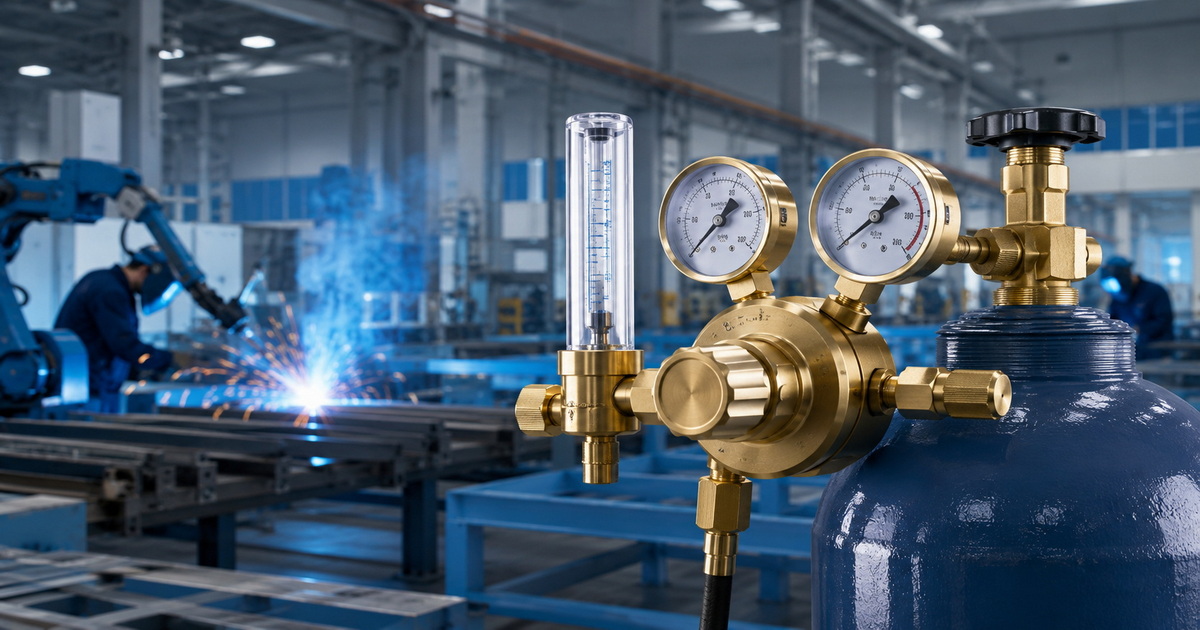
How We Selected Suppliers
A credible Argon Gas Regulator supplier should be assessed through four practical dimensions: factory experience, engineering competence, compliance control, and supply-chain stability.
1. Manufacturing depth and experience
A supplier that only trades welding accessories is different from a factory that designs, machines, assembles, calibrates, and pressure-tests regulators. For a critical gas-control component, buyers should favor manufacturers with a long-term focus on pressure regulators rather than a catalog made mainly of unrelated hardware products.
Key checks include:
– Founding year and specialization in gas regulators.
– Whether machining, assembly, gauge installation, calibration, and leak testing are controlled in-house.
– Export experience with welding brands, industrial gas companies, and private-label distributors.
– Availability of engineering support for inlet connections, outlet fittings, gauge units, flow ranges, colors, packaging, and manuals.
2. Technical benchmarks for argon regulators
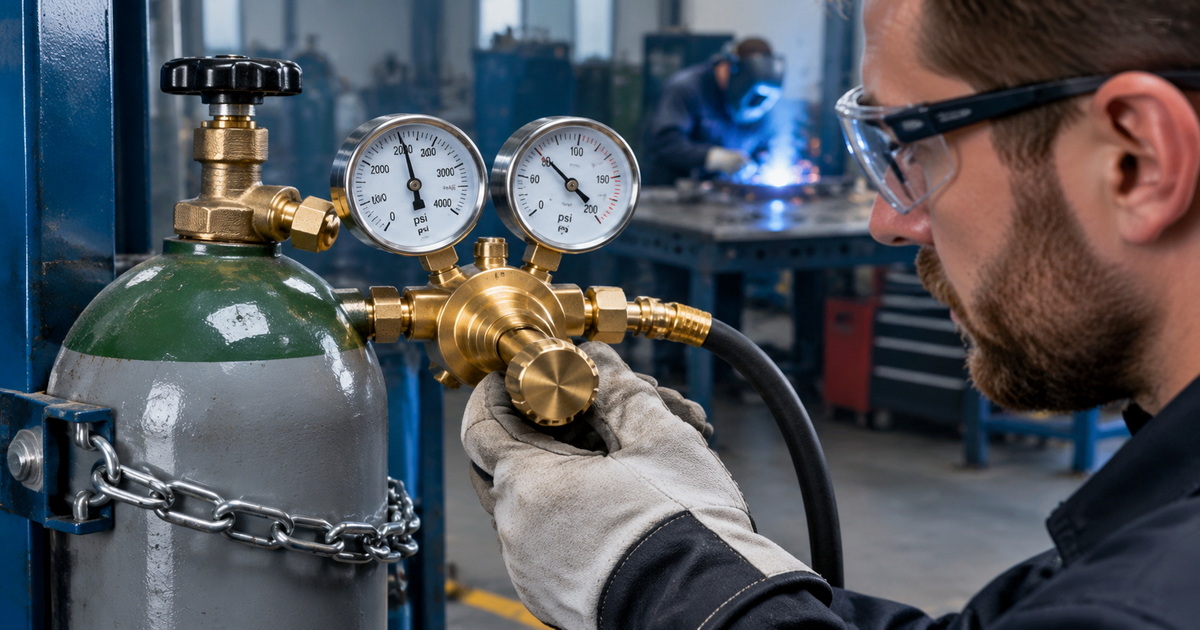
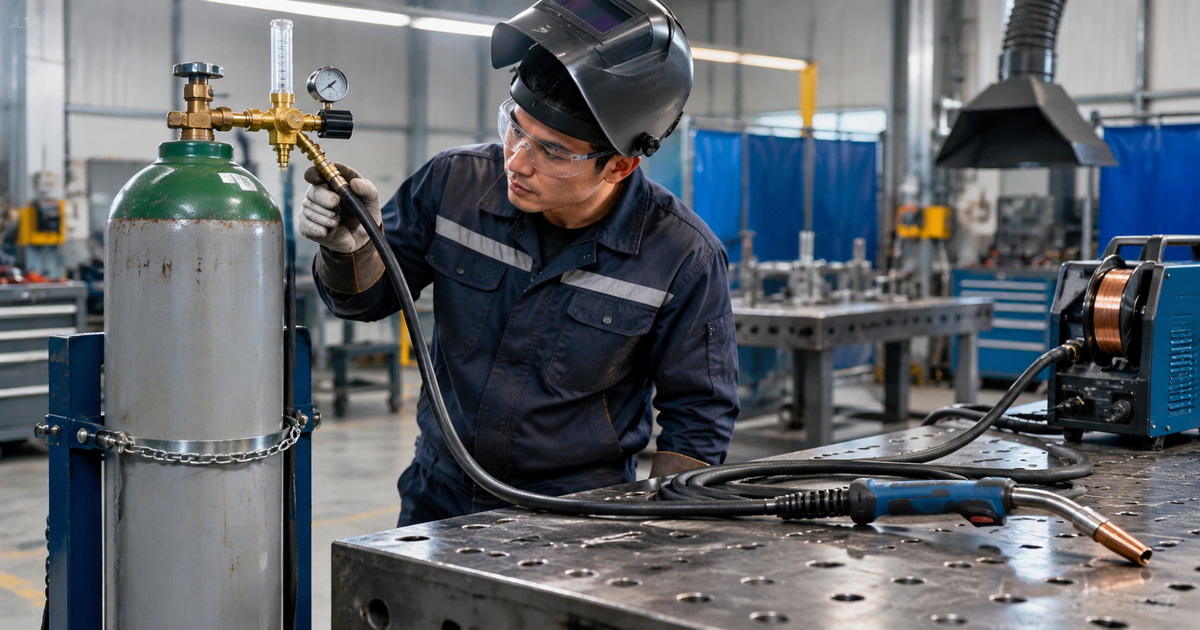
Argon is commonly used in TIG welding, MIG welding, stainless-steel fabrication, aluminum welding, laboratory systems, and industrial shielding-gas applications. A regulator should therefore deliver controlled flow and stable outlet pressure as cylinder pressure declines.
Professional procurement specifications should cover:
– Body material: Forged brass or verified high-quality brass alloy is generally preferred for welding regulators because it provides strength, machinability, and corrosion resistance.
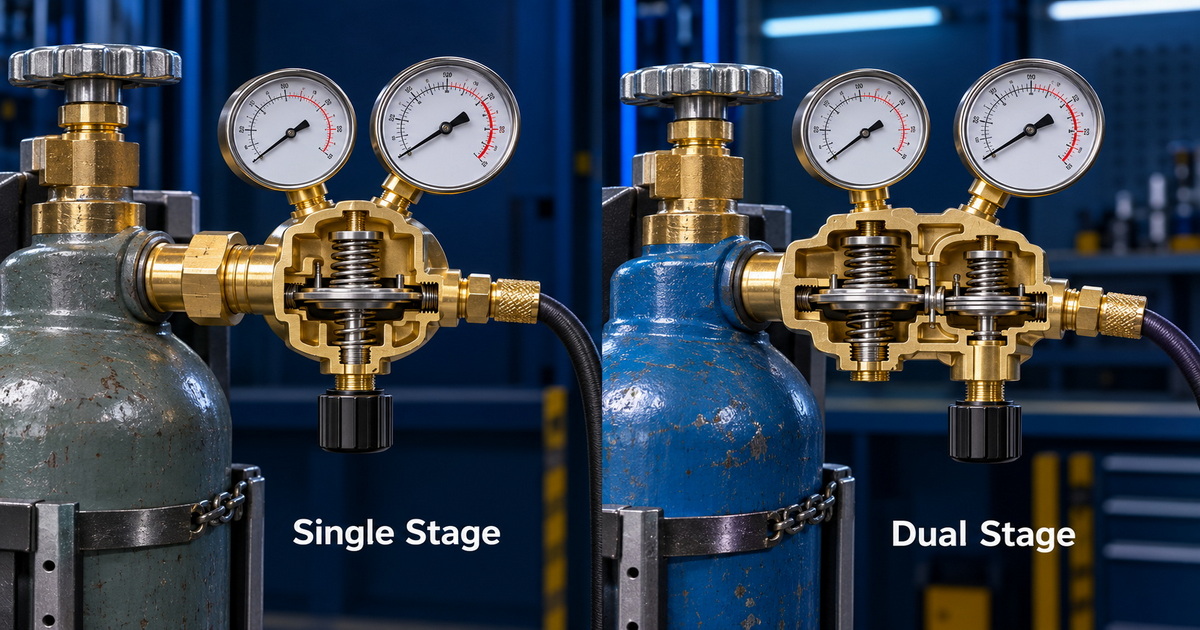
– Diaphragm and valve-seat design: These components influence pressure creep, repeatability, and service life.
– Pressure rating: Confirm actual inlet-pressure rating, outlet-pressure range, and flow range—not only catalog claims.
– Gas compatibility: Confirm the intended gas is argon, argon/CO₂ blend, or another inert shielding gas; do not assume one regulator is universal across every gas and connection standard.
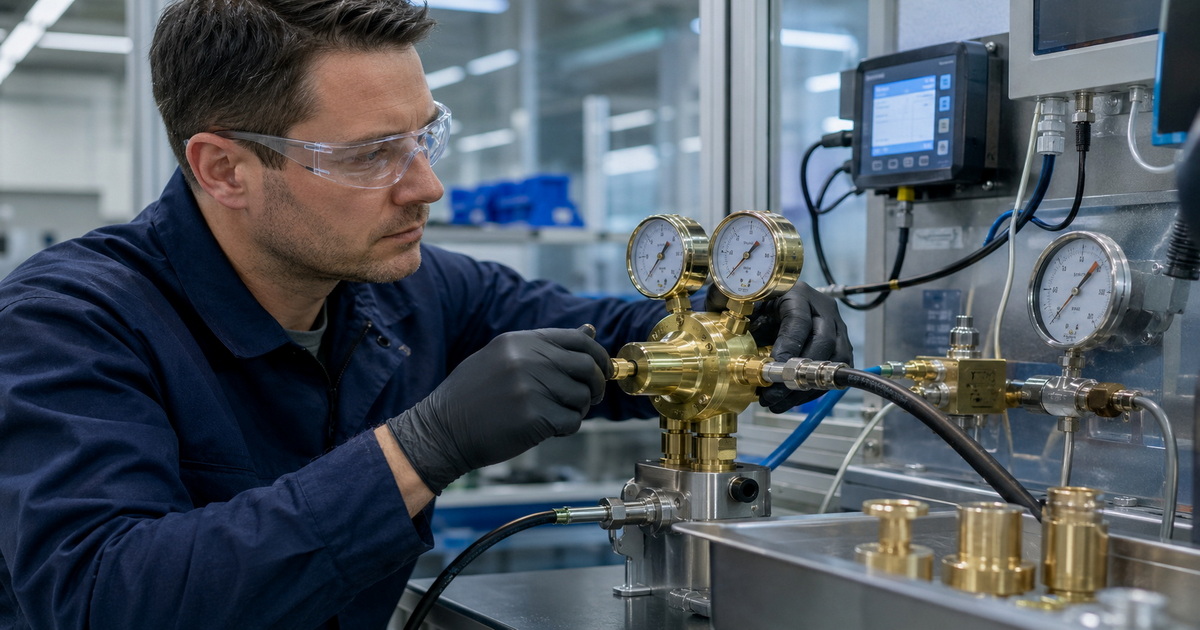
– Leakage and endurance testing: Ask whether every completed regulator undergoes air-tightness testing and whether the supplier can provide batch-level records.
– Market compliance: ISO 9001 confirms a quality-management system, but it does not by itself prove product compliance. For EU-bound products, request the Declaration of Conformity and supporting technical documentation for the actual model being purchased.
3. China’s industrial-cluster advantage
China’s supplier base is not concentrated in one city. Buyers benefit from several overlapping clusters:
| Cluster | Typical strengths | Buyer relevance |
|---|---|---|
| Zhejiang: Wenzhou, Ningbo, Cixi | Brass components, regulators, gauges, welding accessories, export manufacturing | Suitable for standard and private-label welding regulators |
| Jiangsu: Suzhou, Zhenjiang, Yangzhou | Fluid control, valves, instrumentation, pressure gauges, industrial systems | Suitable for industrial-control and project-oriented products |
| Guangdong: Shenzhen and Pearl River Delta | Welding equipment, export services, electronics, high-purity gas-control products | Useful for integrated welding systems and specialized gas-control projects |
| Shanghai | Engineering documentation, export coordination, industrial sourcing | Useful for buyers requiring multi-category coordination |
| Beijing | Industrial gas equipment and broader gas-system experience | Relevant for industrial and multi-gas applications |
Marketplace data shows a broad China-based supply base: one directory alone lists 399 CO₂ regulator manufacturers and suppliers, including companies offering OEM and ODM services. This breadth creates buyer choice—but also increases the importance of factory verification.
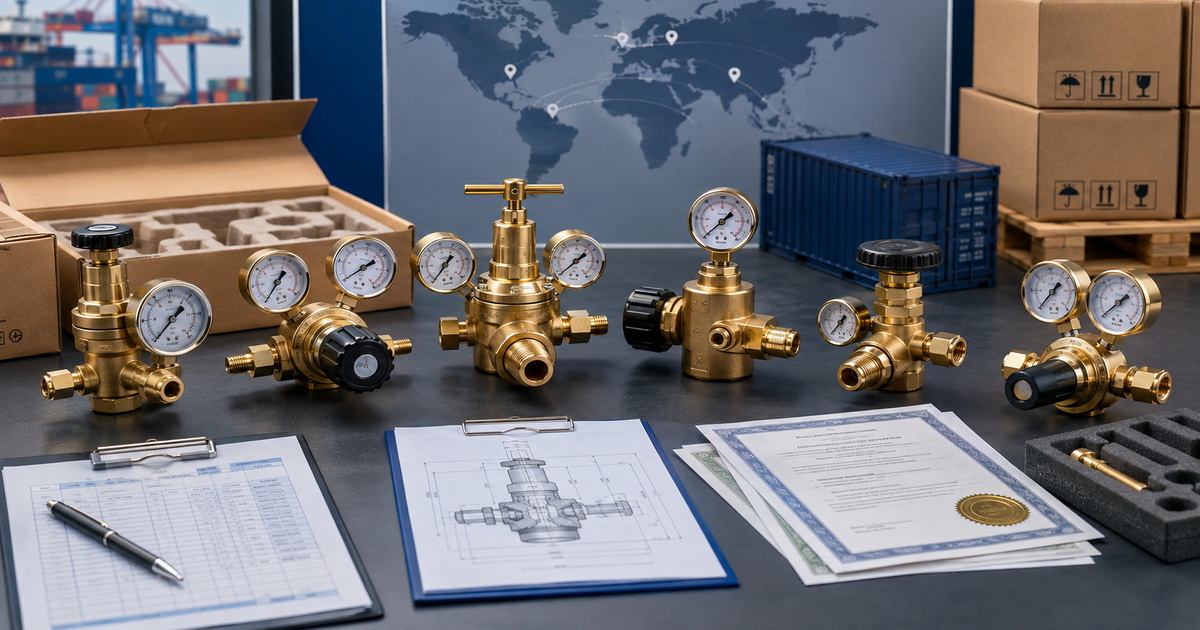
Top 10 Argon Gas Regulator Manufacturers in China
1. Zhejiang Bril Welding Equipment Co., Ltd.
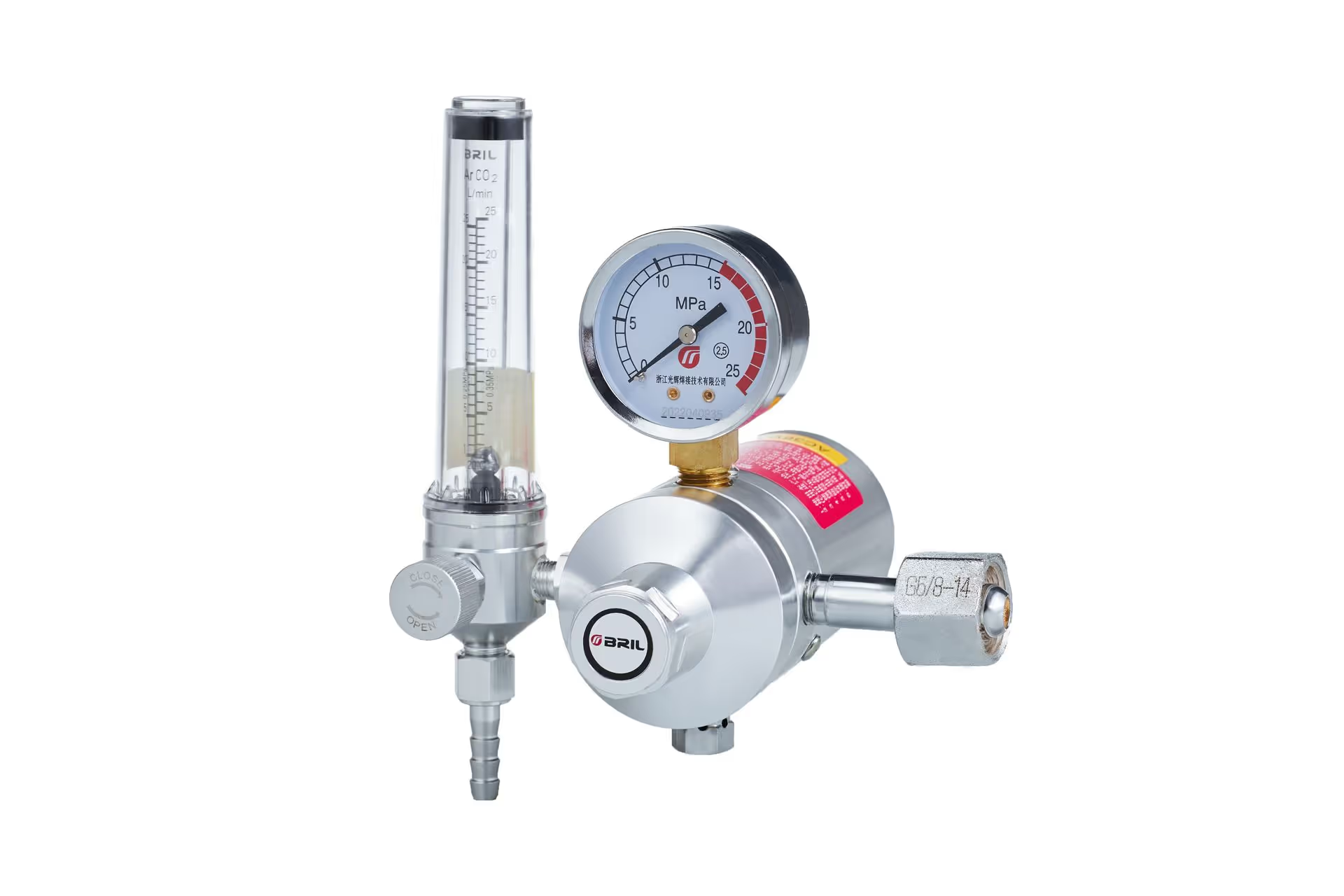
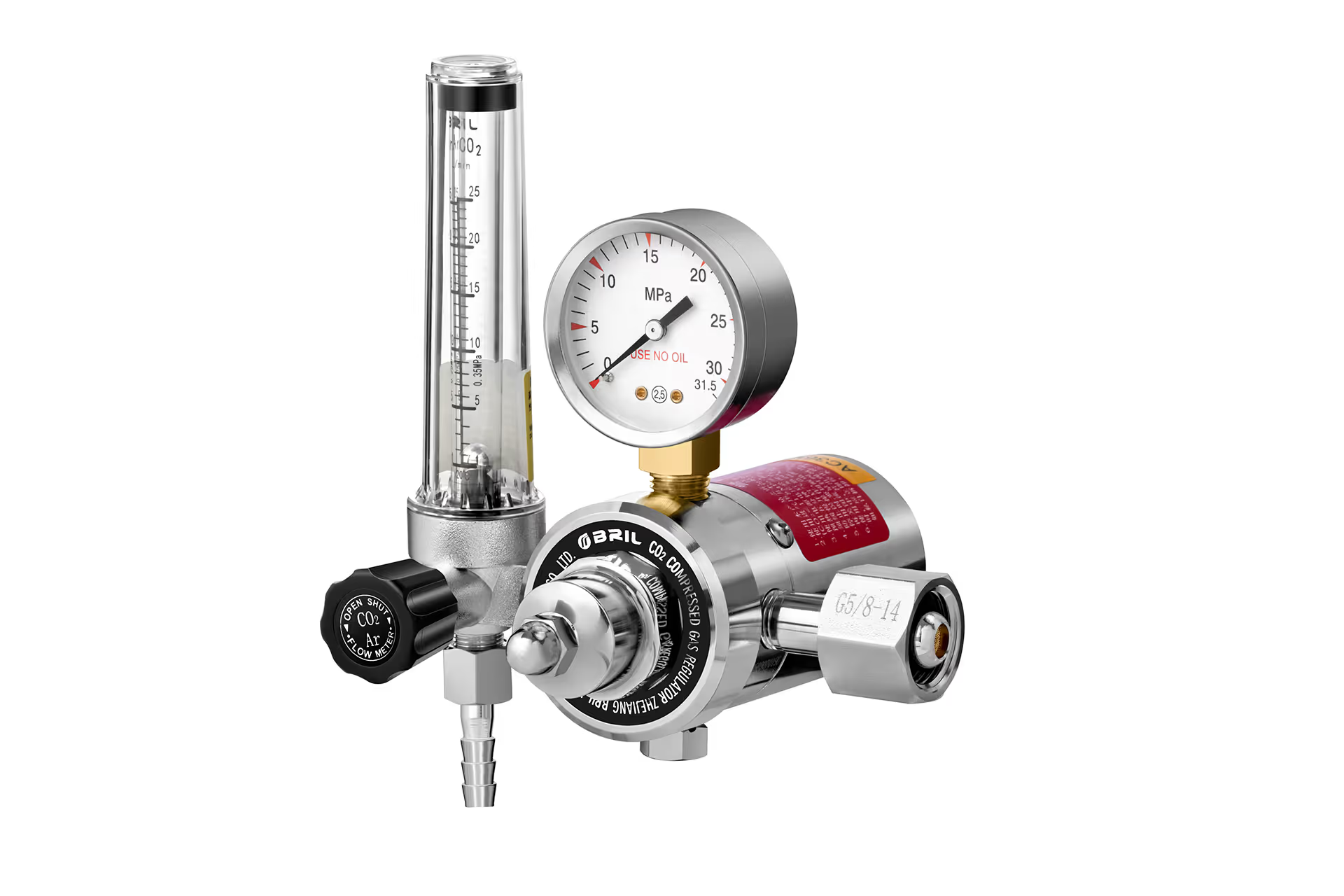
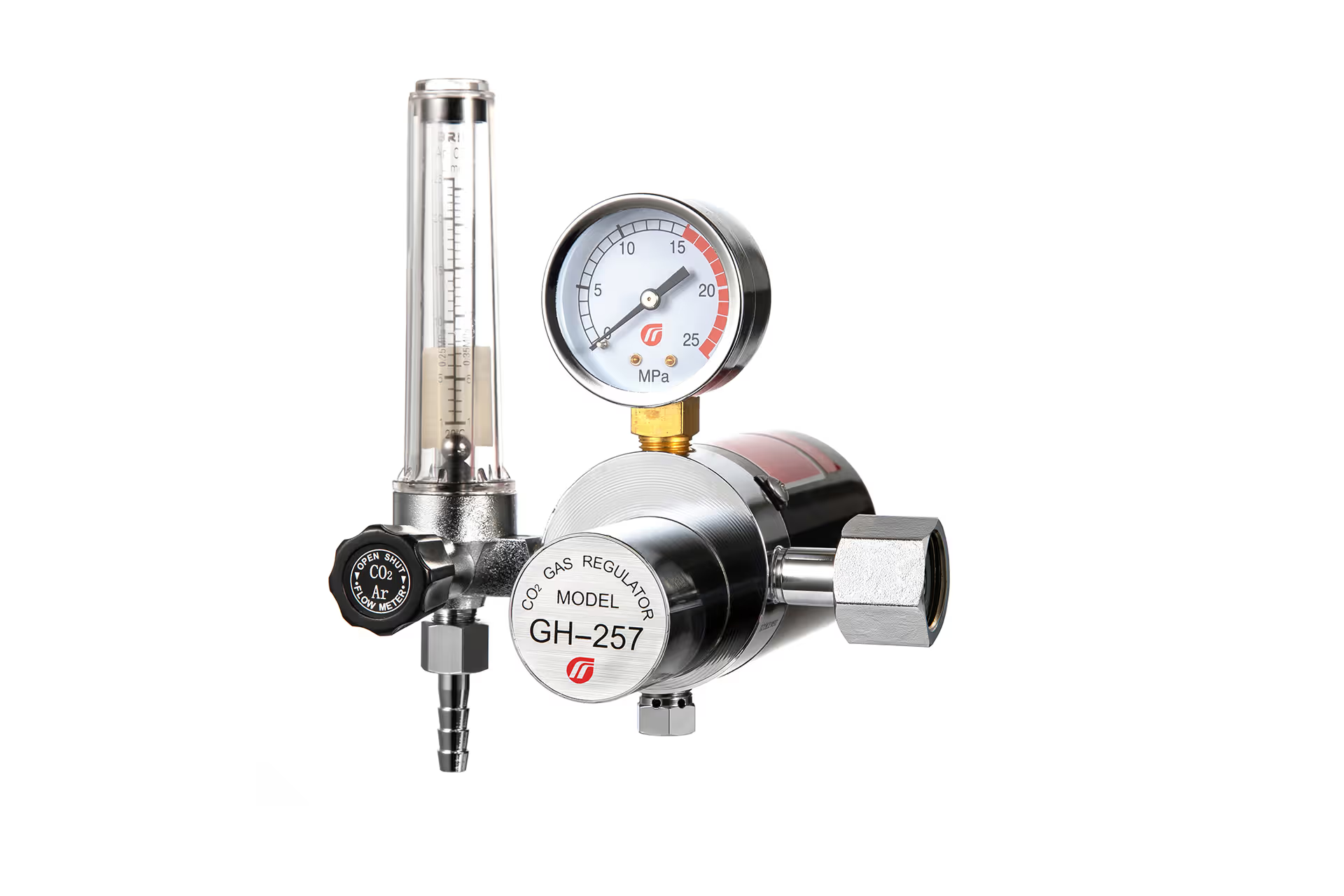
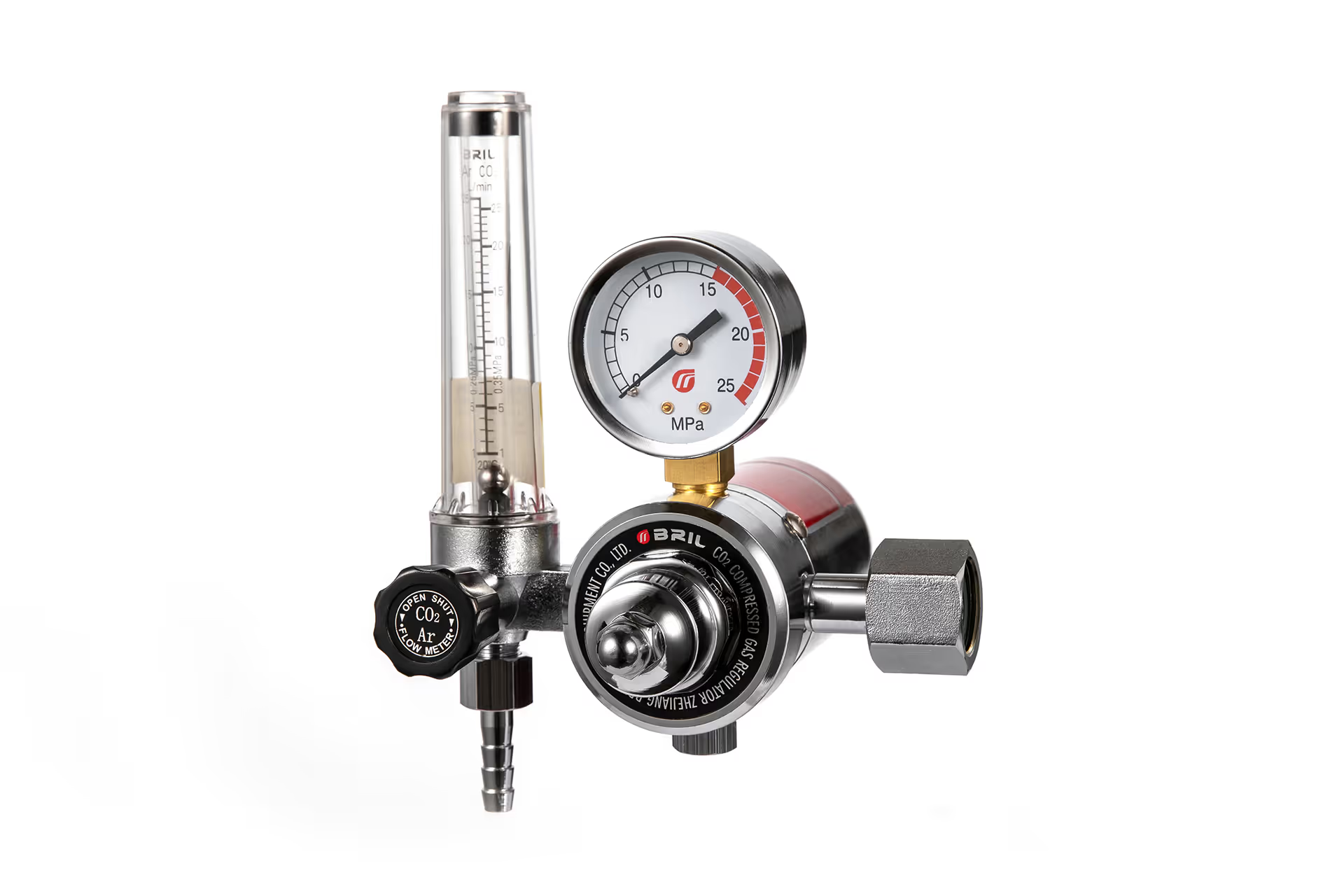
Zhejiang Bril Welding Equipment Co., Ltd. is a specialist manufacturer of industrial gas pressure regulators for welding and cutting applications. Founded in 2002 and located in Wenzhou, Zhejiang, the company focuses on argon regulators, CO₂ regulators—including heated CO₂ models—oxygen, acetylene, propane, nitrogen, and dual-stage regulator products.
For overseas welding brands, wholesalers, and medium-sized distributors, Bril is a practical example of a regulator-focused OEM/ODM factory rather than a broad trading catalog. Its publicly stated profile highlights ISO 9001 certification through UKAS and IAF, plus CE and CNAS-related certification claims for its products. Buyers should still request current certificates and product-specific documentation for their destination market.
Its value proposition is especially relevant for buyers that need technical communication and customization without starting at extremely high volume. Typical OEM/ODM discussion areas can include private-label branding, dial/gauge layouts, inlet and outlet configurations, packaging, color treatments, instruction manuals, and model selection for different regional cylinder standards.
| Profile item | Publicly available information |
|---|---|
| Founded | 2002 |
| Location | Binhai Economic Development Zone, Longwan District, Wenzhou, Zhejiang |
| Core range | Argon, CO₂, oxygen, acetylene, nitrogen, propane, heated and dual-stage gas regulators |
| Quality/compliance claims | ISO 9001 via UKAS/IAF; CE and CNAS-related product certification claims |
| OEM/ODM suitability | Private-label welding brands, distributors, wholesalers, and small-to-mid-volume projects |
| Key strength | Regulator specialization, flexible communication, export-oriented customization support |
Bril states that it has more than 20 years of experience and supplies supporting regulator production to recognized welding-equipment and industrial-gas brands, including Messer-related OEM programs from 2022 onward. This makes it a candidate worth including in a structured RFQ and sample-validation process, particularly when stable pressure control and flexible OEM coordination matter as much as unit price.
2. Ningbo Fenghong Instrument Manufacturing Co., Ltd.
Ningbo Fenghong Instrument Manufacturing Co., Ltd. is based in Cixi, Ningbo, Zhejiang. Its public company profile states that the factory was founded in 2003 and manufactures oxygen, CO₂, acetylene, and argon gas regulators. It also lists ISO 9001 management-system certification.
Ningbo’s location can be attractive for buyers who want access to Zhejiang’s broader export manufacturing ecosystem and nearby port logistics. This supplier may be worth evaluating for standard welding-regulator projects where established product configurations are more important than extensive engineering redevelopment.
| Profile item | Publicly available information |
|---|---|
| Founded | 2003 |
| Location | Cixi, Ningbo, Zhejiang |
| Core range | Oxygen, CO₂, acetylene, and argon regulators |
| Quality-system claim | ISO 9001 |
| OEM/ODM suitability | Confirm directly during RFQ |
| Key strength | Long-standing multi-gas regulator product experience |
3. Hunan Wofly Technology Co., Limited
Hunan Wofly Technology appears in industrial-gas-control supplier listings as a manufacturer and trading company for diaphragm valves, compression fittings, tube fittings, pressure regulators, and check valves, with OEM and ODM service availability.
This profile suggests a stronger fit for buyers whose argon projects extend beyond standard welding regulators into gas-distribution lines, laboratory systems, fittings, or controlled gas-panel assemblies. Buyers should distinguish between welding-grade flow regulators and higher-purity or instrumentation-oriented pressure-reduction systems during technical discussions.
| Profile item | Publicly available information |
|---|---|
| Location | Hunan |
| Core range | Diaphragm valves, fittings, pressure regulators, check valves |
| OEM/ODM | Listed as available |
| Best fit | Industrial gas-control, fittings, and system-oriented projects |
| Buyer verification priority | Product-specific argon regulator range, pressure class, cleanliness requirements |
4. Shenzhen Jewellok Technology Co., Ltd.
Shenzhen Jewellok Technology is listed as a manufacturer of high-purity gas valves, ultra-high-purity gas valves, high-purity gas regulators, diaphragm valves, and UHP pressure regulators.
Compared with welding-accessory suppliers, a high-purity gas-control specialist may be more relevant for semiconductor-adjacent, laboratory, analytical, or specialty-gas projects. For conventional TIG/MIG regulator procurement, buyers should assess whether the supplier’s engineering level and product cost structure match the application rather than assuming higher-purity positioning automatically means better commercial value.
| Profile item | Publicly available information |
|---|---|
| Location | Shenzhen, Guangdong |
| Core range | High-purity valves, UHP pressure regulators, diaphragm valves |
| OEM/ODM | Confirm directly |
| Best fit | High-purity, laboratory, analytical, or specialty-gas systems |
| Buyer verification priority | Gas purity class, internal surface requirements, particle-control documentation |
5. Jipai Fluid Control Technology (Jiangsu) Co., Ltd.
Jipai Fluid Control Technology is listed in China supplier directories for high-pressure valves, ball valves, pressure regulators, alloy valves, and Hastelloy valves, with ODM support.
Its fluid-control orientation may suit buyers seeking regulators for higher-pressure or chemically demanding gas-control applications. For argon welding regulators, the key is to verify whether the supplier has dedicated models, appropriate flowmeter configurations, and established production experience with welding-cylinder inlet standards.
| rofile item | Publicly available information |
|---|---|
| Location | Jiangsu |
| Core range | High-pressure valves, ball valves, pressure regulators, alloy-valve solutions |
| OEM/ODM | ODM listed |
| Best fit | Industrial fluid-control and higher-pressure projects |
| Buyer verification priority | Welding regulator specialization versus general valve capability |
6. Leshan Chuantian Gas Equipment Co., Ltd.
Leshan Chuantian Gas Equipment is listed as a manufacturer and trading company supplying gas pressure regulators, with OEM and ODM services. Its marketplace product categories include gas-cylinder valves, SCBA valves, cryogenic valves, gas mixers, and CNG valves.
This diversified gas-equipment portfolio can be useful for buyers that source regulators together with cylinder or gas-system components. However, such breadth also makes factory due diligence important: confirm which argon regulator models are made in-house, which components are outsourced, and how welding-regulator QC differs from CNG or cryogenic product QC.
| Profile item | Publicly available information |
|---|---|
| Location | Sichuan |
| Core range | Gas pressure regulators, cylinder valves, SCBA, cryogenic and CNG-related products |
| OEM/ODM | Listed as available |
| Best fit | Multi-product gas-equipment sourcing |
| Buyer verification priority | Dedicated argon-regulator production and testing process |
7. Ningbo DSW International Co., Ltd.
Ningbo DSW International is listed as a trading company with an OEM offering that includes oxygen cylinders, oxygen regulators, gas cylinders, and related equipment.
A trading company can be useful for consolidated procurement, documentation coordination, and container loading across multiple product categories. For pressure regulators, though, professional buyers should ask for the actual manufacturing factory name, factory audit access, test reports, and a clear division of responsibility for warranty claims.
| Profile item | Publicly available information |
|---|---|
| Location | Ningbo, Zhejiang |
| Business type | Trading company |
| Core range | Oxygen cylinders, regulators, gas cylinders, related items |
| OEM | Listed as available |
| Best fit | Consolidated or multi-category buying |
| Buyer verification priority | Actual factory identity and product traceability |
8. Arc Navigation Technology (Shenzhen) Co., Ltd.
Arc Navigation Technology is listed as a Shenzhen trading company for welding machines, welding accessories, welding consumables, PPE, and workshop tools, with OEM and ODM offerings.
This type of supplier is most relevant when an importer wants a one-stop welding-equipment program rather than a regulator-only supply relationship. It may support mixed shipments of welding machines, torches, safety products, and gas-control accessories. The trade-off is that buyers need to verify the regulator manufacturer and ensure direct technical access when pressure stability is a critical brand requirement.
| Profile item | Publicly available information |
|---|---|
| Location | Shenzhen, Guangdong |
| Business type | Trading company |
| Core range | Welding machines, consumables, accessories, PPE, tools |
| OEM/ODM | Listed as available |
| Best fit | Bundled welding-equipment procurement |
| Buyer verification priority | Regulator factory source and technical accountability |
9. Topwell Welding Equipment Suppliers
Topwell publicly promotes Argon Gas Regulator private-label and contract-manufacturing options. Its product page lists an inlet gauge range of 0–4,500 psi / 0–315 bar and an outlet flow range of 0–30 L/min for listed argon-regulator products.
This is a useful example of why procurement teams must review actual model specifications instead of relying on generic category terms. A 0–30 L/min flow range may suit many TIG and MIG applications, but the buyer still needs to verify the gauge accuracy class, actual flow-control behavior, connection standard, test method, and intended cylinder pressure.
| Profile item | Publicly available information |
|---|---|
| Product positioning | Argon regulator manufacturer, private label, contract manufacturing |
| Published inlet range | 0–4,500 psi / 0–315 bar |
| Published flow range | 0–30 L/min |
| OEM/ODM | Private-label and contract manufacturing promoted |
| Buyer verification priority | Factory identity, certification status, flow accuracy, and production controls |
10. Zhejiang Regional Welding-Regulator OEM Factories
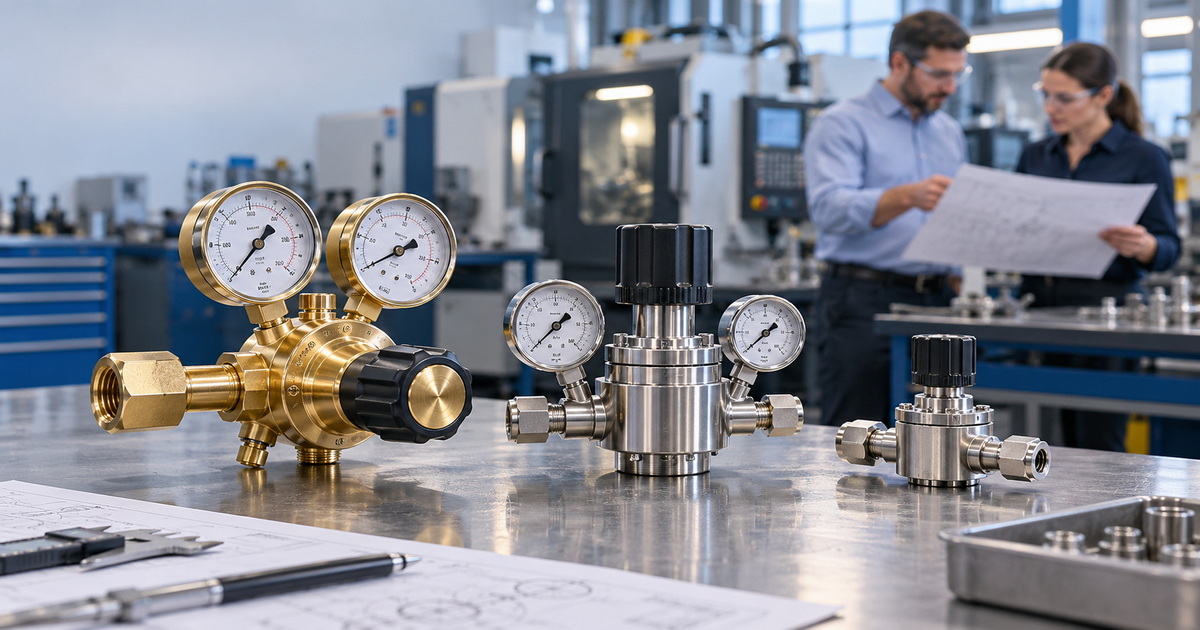
The Zhejiang region contains numerous specialized and semi-specialized welding-accessory factories that manufacture regulators, flowmeters, cutting torches, pressure gauges, brass fittings, and related products. Supplier directories show a wide mix of direct factories, factory-plus-trading entities, and trading companies within this ecosystem.
For buyers building a private-label program, this cluster can be valuable because it supports flexible supply-chain sourcing. Yet it is not a substitute for supplier qualification. A procurement team should shortlist actual factories based on regulator specialization, testing facilities, documentation quality, and willingness to provide controlled samples.
Capacity, MOQ, and Certification Comparison
Publicly verified capacity and MOQ figures are rarely presented consistently across manufacturers, and buyers should not treat broad marketplace statements as binding commercial terms. The table below is therefore a screening framework, not a factual quotation sheet.
| Supplier type / example | Typical project fit | Indicative OEM MOQ approach | Certification focus to verify | Main buyer advantage |
|---|---|---|---|---|
| Zhejiang Bril Welding Equipment | Welding-regulator specialist | Small-to-mid private-label programs; confirm by model | ISO 9001, CE, CNAS-related reports | Flexible OEM/ODM coordination and regulator focus |
| Ningbo Fenghong Instrument | Standard multi-gas regulators | Usually model-dependent | ISO 9001 | Established product range in Zhejiang cluster |
| Hunan Wofly Technology | Industrial gas-control systems | Project-dependent | QMS and product-specific reports | Valves, fittings, and system integration |
| Shenzhen Jewellok | High-purity gas systems | Engineering/project-dependent | Product-specific purity and test documentation | UHP and specialty-gas orientation |
| Jipai Fluid Control | Industrial valve and regulator projects | Project-dependent | Material and pressure documentation | Higher-pressure fluid-control focus |
| Leshan Chuantian | Multi-gas equipment | Model-dependent | System and product-specific compliance | Broader gas-equipment portfolio |
| Trading companies | Consolidated orders | Negotiable | Actual factory certifications | One-stop sourcing and export coordination |
| Regional Zhejiang OEM factories | Standard private-label welding products | Variable | ISO/CE claims must be model-specific | Cost flexibility and supply-chain density |
Buyer’s Guide: How to Source Safely
Verify the manufacturer, not just the sales office
Ask these questions in the first RFQ:
– Are you the manufacturer or a trading company?
– Which operations are completed in-house?
– Can you provide the factory business license and factory address?
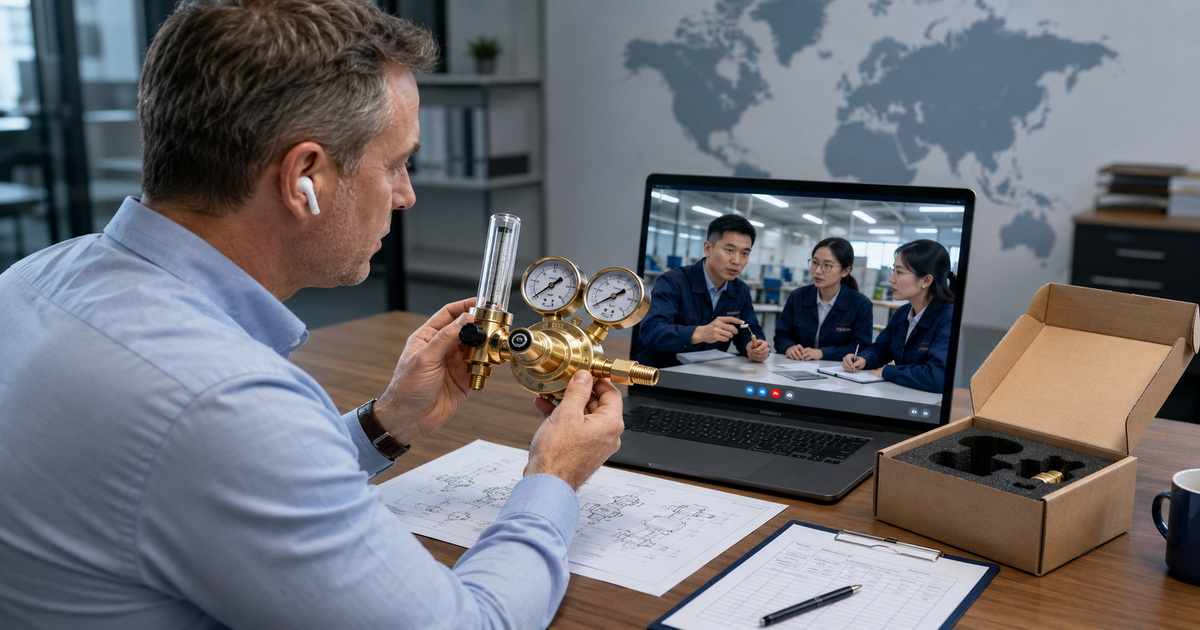
– Can we conduct a live video audit of assembly, pressure testing, calibration, and final packing?
– Who owns the tooling, drawings, packaging artwork, and brand-specific gauges?
– Can your engineers join a technical call before sample approval?
A supplier that avoids discussing test stations, assembly flow, or the source of brass bodies should be treated cautiously.
Use a staged sample process
Do not move directly from catalog image to container order. A disciplined approval process should include:
1. Technical specification: Confirm gas type, cylinder inlet standard, outlet thread, flow range, inlet-pressure rating, gauge units, flowmeter type, and required markings.
2. Engineering sample: Approve drawings, appearance, dimensions, logo location, gauge face, packaging, and user manual.
3. Functional validation: Test 3–5 samples under expected operating conditions.
4. Extended testing: Perform leak, pressure-creep, flow-repeatability, and repeated on/off-cycle testing.
5. Pilot batch: Purchase a controlled pilot order before larger-scale production.
6. Pre-shipment inspection: Use AQL inspection plus functional checks, packaging inspection, barcode verification, and random leakage tests.
Evaluate pressure creep—not only leakage
A regulator can pass a quick leak test and still perform poorly in service. Pressure creep occurs when downstream pressure rises gradually after the regulator has been set, often because the valve seat does not seal consistently.
For welding distributors, pressure creep can create unstable shielding-gas flow, inconsistent weld appearance, excess gas use, and avoidable warranty claims.
Request test evidence for:
– Initial set pressure.
– Outlet-pressure stability over time.
– Results at different inlet-cylinder pressures.
– Repeated opening and closing cycles.
– Leak-test medium, duration, and acceptance criteria.
Confirm materials with evidence
One common sourcing problem is hidden material substitution. A brass-looking body may not match the brass grade, wall thickness, or machining quality described during negotiation.
Practical controls include:
– Put material requirements into the purchase contract.
– Request material certificates for critical brass components.
– Define whether forged brass, cast brass, or another alloy is required.
– Conduct random XRF material testing or destructive verification for initial shipments.
– Approve a retained “golden sample” signed by both parties.
Plan logistics and documentation
Argon regulators are generally shipped as hardware components, but buyers should still clarify:
– Correct HS classification with their customs broker.
– Country-specific labeling and instruction-manual requirements.
– Packaging strength for heavy brass products and glass gauges.
– Spare-part policy for gauges, diaphragms, valves, and flowmeter tubes.
– Whether shipments include regulators only or cylinders with pressurized gas; the latter introduces very different dangerous-goods obligations.
– Incoterms, port of loading, cargo insurance, lead time, and carton/pallet requirements.
Internal Sourcing Insight
One of the most useful—but rarely published—checks is to compare the factory’s claimed pressure and flow performance against the physical regulator architecture.
If a supplier claims unusually high inlet pressure, high flow, extremely low pressure drop, and long service life in a very compact, lightweight regulator body, do not accept the statement at face value. Ask for:
– Cross-section drawing or exploded-view diagram.
– Brass-body weight and wall-thickness specification.
– Diaphragm diameter and material.
– Valve-seat material and size.
– Internal passage dimensions.
– Test setup used to support the published specification.
Experienced buyers know that a regulator’s real performance is constrained by its diaphragm area, seat design, internal passages, spring calibration, and body construction. A catalog claim that appears significantly stronger than comparable products should trigger deeper sample testing—not automatic rejection, but verification.
Conclusion
China offers a broad supply base for Argon Gas Regulators, from standard welding-accessory factories to specialized high-purity and industrial gas-control suppliers. The strongest sourcing decision comes from matching the supplier’s real technical depth, quality documentation, OEM flexibility, and capacity discipline to your own market strategy.
For buyers seeking a regulator-focused manufacturing partner for welding and industrial gas applications, Zhejiang Bril Welding Equipment Co., Ltd. is a relevant first supplier to evaluate because of its long operating history, specialized product range, stated ISO 9001/CE/CNAS credentials, and flexible support for private-label projects. Its profile is particularly suitable for overseas brands and distributors that need responsive communication, customized specifications, and controlled production development—not just a low initial quotation.
*Preparing an Argon Gas Regulator OEM project? Start with a documented RFQ that defines gas type, inlet/outlet standards, flow range, pressure limits, material requirements, labeling, packaging, inspection method, and annual forecast. Then compare at least three qualified factories through samples, audit evidence, and pilot-batch results before awarding the long-term program.
FAQ
1. How can I verify whether an ISO 9001 certificate is valid?
Request a clear copy of the certificate showing the legal company name, certificate number, scope, issue date, expiry date, and certification body. Then check the certificate through the certification body’s official database where available. Also confirm that the certified address matches the factory you are auditing. An ISO certificate for unrelated products or a different legal entity does not automatically cover your Argon Gas Regulator project.
2. Is CE certification enough to sell argon regulators in Europe?
Not necessarily. “CE” is not a universal product-quality label. Ask for the EU Declaration of Conformity, applicable regulations or directives, technical file references, product-identification details, and supporting reports tied to the exact model. Obtain advice from an EU compliance specialist or importer-of-record for your specific product configuration and sales market.
3. What sample quantity should we order before confirming an OEM supplier?
For an initial review, 3–5 pieces per model is usually enough to assess build quality, fittings, gauge readability, and basic function. For a serious launch, place a pilot batch—often 50–200 units depending on the product and market—and conduct field testing with real welders before scaling to full production.
4. How do we identify a trading company posing as a factory?
Ask for a live walkthrough from raw-material storage to assembly, leak testing, final inspection, and packing. Request the production line to show the exact regulator model quoted. Confirm the business license, factory address, equipment list, and quality records. Trading companies are not inherently unsuitable, but they should disclose the actual factory and provide direct technical access.
5. Which is more important: low MOQ or stable QC?
For long-term private-label business, stable QC is generally more valuable. A very low MOQ can be useful for market testing, but it may come with higher unit cost, lower process control, or changing component sources. Negotiate MOQ together with a written quality plan, approved sample, inspection standard, warranty process, and component-consistency requirement.
References
1. [Zhejiang Bril Welding Equipment Co., Ltd. company profile and stated certifications] [chinesewelding]
2. [China’s 2025 import and export statistics, State Council Information Office] [english.scio.gov]
3. [China CO₂ regulator supplier directory, Made-in-China.com] [made-in-china]
4. [Ningbo Fenghong Instrument Manufacturing company profile] [made-in-china]
5. [Topwell Argon Gas Regulator product information] [topwellwelders]
Hot Tags: Argon Gas Regulator, Argon Gas Regulator Manufacturer, China Argon Gas Regulator Supplier, Welding Gas Regulator, Industrial Gas Regulator, OEM Gas Regulator, Argon Flowmeter Regulator, Dual Stage Gas Regulator, CO₂ Argon Regulator, Gas Regulator Factory