Content Menu
● What Is Flashback – And Why Regulators Matter
● Oxygen Regulator vs Acetylene Regulator: Core Design Differences
>> Working pressure and stability
>> Materials, seals, and internal components
● How Regulators Influence Flashback Risk in Manual Torch Cutting
>> Oxygen regulator behavior and flashback
>> Acetylene regulator behavior and flashback
● Safety Devices: Regulators vs Flashback Arrestors
>> What flashback arrestors actually do
>> Why regulators still matter
● Practical Pressure Settings: Oxygen vs Acetylene in Cutting
>> Typical ranges in manual torch cutting
>> How incorrect settings cause flashback
● Professional Setup Workflow to Minimize Flashback Risk
● Comparative Table: Oxygen vs Acetylene Regulators in Flashback Prevention
● Advanced Design Considerations: Dual‑Stage and Heated Regulators
>> Dual‑stage oxygen regulators
>> Heated and specialty regulators
● Expert Recommendations for Preventing Flashback in Oxy‑Acetylene Cutting
● When to Upgrade Your Regulators for Better Flashback Protection
● Call to Action: Specify Safer Regulators in Your Next Torch Cutting Project
● FAQ
Oxygen and acetylene gas pressure regulators work together to prevent flashback in manual torch cutting, but they do it in very different ways and must be selected, installed, and adjusted with equal care to keep operators and equipment safe. When you understand how each regulator behaves under dynamic cutting conditions — and combine it with proper flashback arrestors and setup practices — you dramatically reduce the risk of backfire, hose burnout, and cylinder explosions. [eiga]
What Is Flashback – And Why Regulators Matter
Flashback is a dangerous condition where the flame front travels backward from the torch tip into the mixing chamber, hose, or even toward the cylinders. It is usually triggered by incorrect gas pressures, clogged tips, or momentary blockages that cause reverse flow and unstable mixed-gas zones. [ehs.cornell]
In oxy‑acetylene cutting, a sustained flashback can burn through hoses, damage regulators, or in extreme cases reach the cylinders and cause an explosion. That is why regulators, check valves, and flashback arrestors are treated as a single safety system rather than isolated components in professional setups. [fireapparatusmagazine]
Oxygen Regulator vs Acetylene Regulator: Core Design Differences
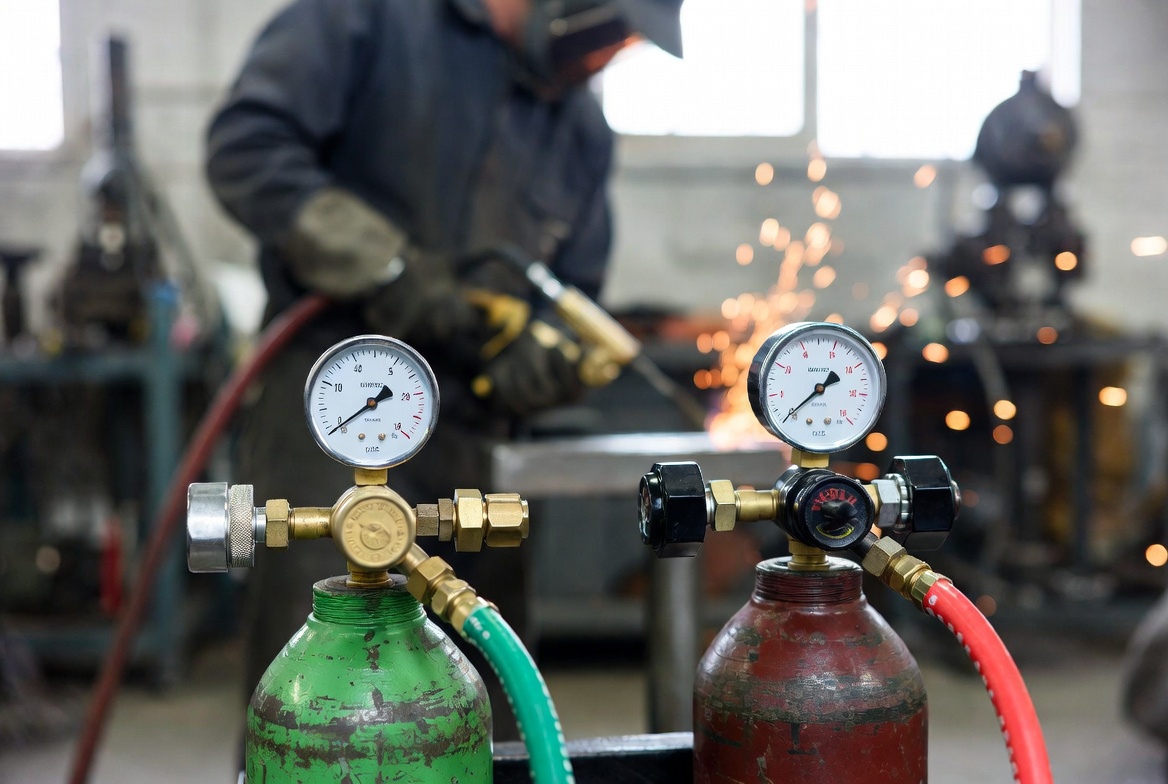
Although both components are called “gas pressure regulators,” an oxygen regulator and an acetylene gas pressure regulator are engineered for very different operating ranges and behaviors. Understanding these differences is essential before you optimize for flashback prevention. [boc.co]
Working pressure and stability
– Oxygen regulators are designed for higher outlet pressures (often in the 30–40 psi range for general cutting, depending on tip size and thickness). [arcsolinc]
– Acetylene regulators are designed for low‑pressure, fuel‑gas service, and must keep delivery pressure safely below 15 psi because acetylene becomes unstable above that point. [arcsolinc]
Because oxygen generally runs at higher pressure and flow, the oxygen regulator plays a major role in maintaining a steady cutting oxygen jet that keeps the flame front at the tip instead of migrating back into the torch body. Acetylene, by contrast, must be controlled more gently to avoid over‑pressurization and decomposition in hoses or internal passages. [badgerwelding]
Materials, seals, and internal components
– Oxygen regulators use clean, oil‑free internal passages and elastomers compatible with high‑pressure oxygen to avoid ignition from contaminants. [millerwelds]
– Acetylene regulators use materials and seat designs selected for fuel compatibility and low‑pressure stability, often combined with left‑hand threaded connections to avoid mis‑connection with oxygen lines. [ehs.cornell]
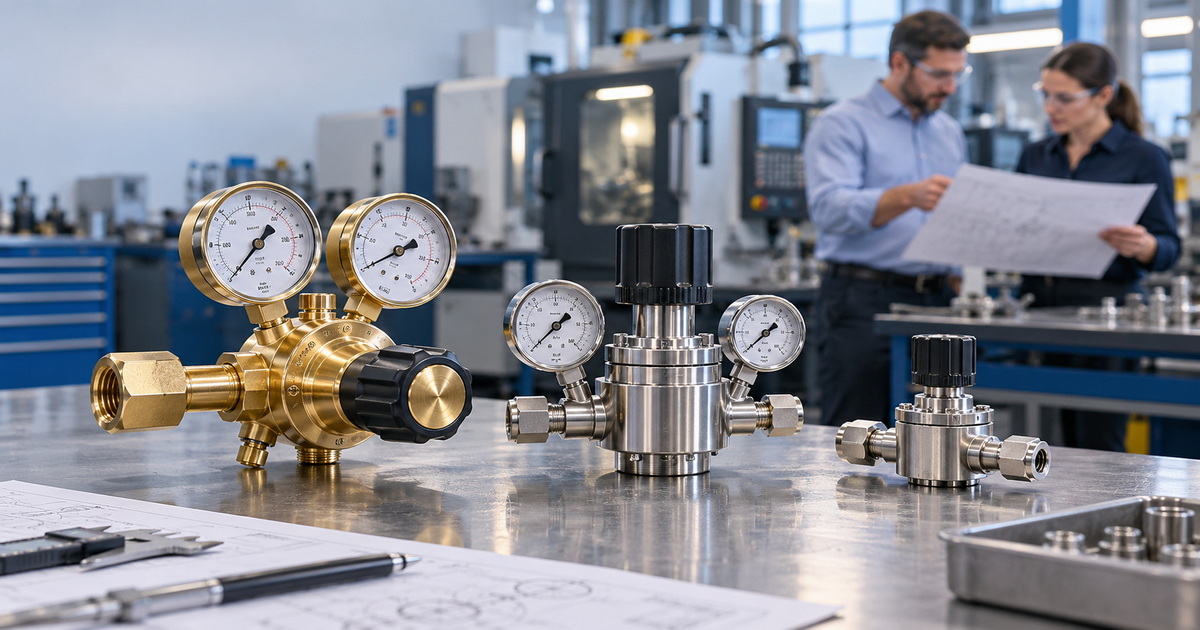
From a manufacturing perspective, a high‑precision brass body, robust diaphragm, and finely machined valve seat are non‑negotiable on both oxygen and acetylene regulators when they are expected to withstand years of thermal cycling, vibration, and pressure shocks in industrial cutting environments. [boc.com]
How Regulators Influence Flashback Risk in Manual Torch Cutting
Flashback rarely comes from a single failure; instead, it is the result of a combination of factors where regulator performance is one critical link. [concoa]
Oxygen regulator behavior and flashback
An unstable or incorrectly set oxygen regulator can trigger or aggravate flashback in several ways:
– Pressure too low under flow: If the oxygen regulator droops significantly when the cutting lever is pressed, the oxygen jet can become weak, making the flame easier to pull back into the tip and mixing chamber.
– Pressure spikes: Poorly built or damaged regulators can overshoot when valves open, creating momentary imbalance in the gas mixture that leads to backfire.
– Slow response: A regulator with sluggish seat/diaphragm response may not maintain a stable neutral flame when operators cycle between preheat and cutting oxygen.
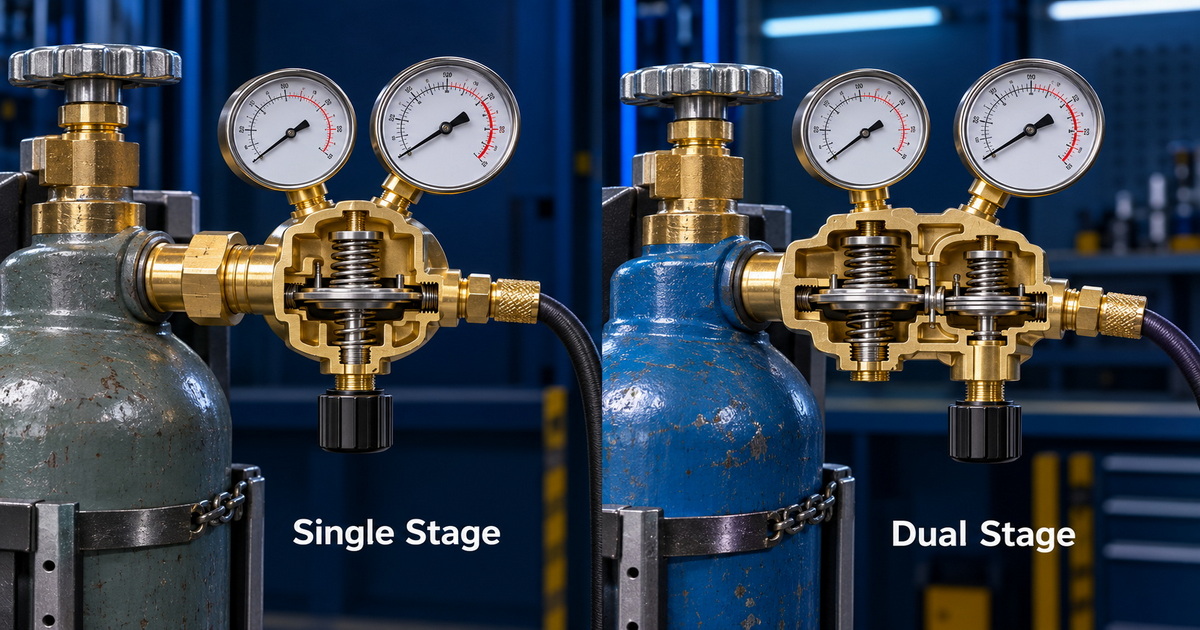
A high‑quality, dual‑stage oxygen regulator is particularly effective for flashback prevention in demanding cutting operations because it maintains a very stable outlet pressure as the cylinder pressure falls, reducing the chance of mixture fluctuations at the torch. [boc.co]
Acetylene regulator behavior and flashback
On the acetylene side, the regulator must prevent both over‑pressure and reverse flow:
– Pressure above safe limits (approaching or exceeding 15 psi) increases the risk of acetylene decomposition and violent flashback events inside hoses or equipment. [arcsolinc]
– Under‑pressure or starvation can cause the flame to burn back into the tip when the operator tries to compensate by moving the torch too close to the workpiece.
– Reverse flow becomes more likely if an acetylene regulator cannot maintain positive pressure during oxygen surges, allowing oxygen to push back into the fuel line without proper check valves. [facebook]
This is where precision manufacturing, leak‑tight seats, and correctly sized internal orifices in an acetylene gas pressure regulator directly support flashback prevention.
Safety Devices: Regulators vs Flashback Arrestors
It is critical to clarify the role of the regulator compared to dedicated flashback arrestors and check valves.
What flashback arrestors actually do
Industry safety guidance defines flashback arrestors as devices that combine a non‑return (check) valve and a flame arresting element. [eiga]
– The check valve prevents reverse gas flow and formation of explosive mixtures in the wrong line. [facebook]
– The flame arrestor cools and quenches the flame front below the ignition temperature, stopping a flashback once it has started. [fireapparatusmagazine]
Best‑practice welding safety recommendations specify installing flashback arrestors on the outlets of both oxygen and acetylene regulators and/or at the torch inlets. [millerwelds]
Why regulators still matter
A flashback arrestor responds to a flashback; a well‑designed and properly used regulator helps avoid conditions that cause flashback in the first place. In practice, professional cutting setups use: [concoa]
– High‑precision oxygen and acetylene regulators
– Check valves and flashback arrestors
– Correct tips and pressure settings for the metal thickness
– Clean, leak‑free hoses and connections
This layered approach significantly reduces the probability and consequences of flashback compared with relying on any single device.
Practical Pressure Settings: Oxygen vs Acetylene in Cutting
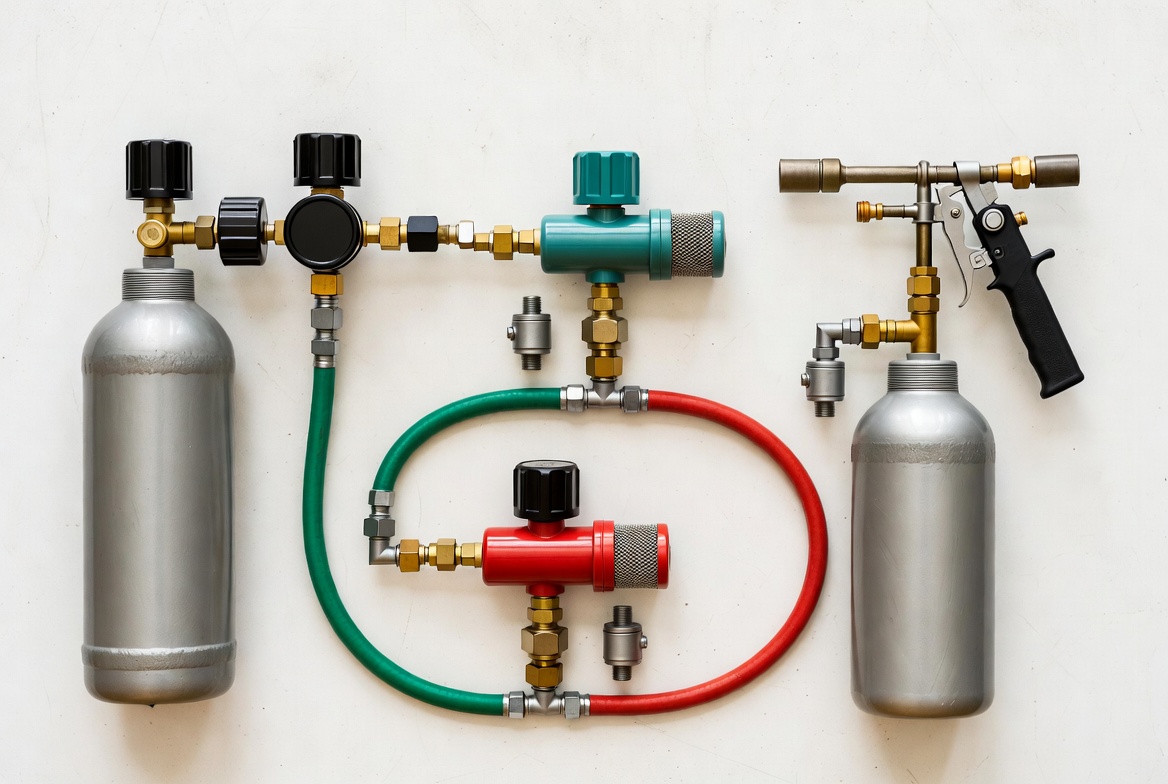
From a field‑practice standpoint, cutting performance and flashback risk are tightly linked to how operators set oxygen and acetylene pressure at the regulators. Industry manuals and training materials provide typical starting points that are widely followed in shops. [facebook]
Typical ranges in manual torch cutting
While exact values depend on tip design and material thickness, commonly referenced guidelines for mild steel under about 1–1.5 inches include: [facebook]
– Oxygen regulator: approximately 30–40 psi outlet pressure for multi‑hole cutting tips
– Acetylene regulator: approximately 5–10 psi outlet pressure, always below 15 psi
Manufacturers also provide rules of thumb and tip charts, which should be the primary reference whenever they are available. [badgerwelding]
How incorrect settings cause flashback
– Oxygen too low vs acetylene: The preheat flame becomes fuel‑rich and unstable, increasing backfire risk.
– Oxygen much too high: The cutting jet can blow out the preheat flame or cause violent popping in the tip.
– Acetylene near or above 15 psi: The gas becomes thermally unstable, greatly increasing the severity of any flashback. [ehs.cornell]
From an OEM perspective, designing regulators that maintain stable outlet pressure under flowing conditions, with clear, legible gauges and repeatable adjustment, directly supports safe setup by welders and fabricators.
Professional Setup Workflow to Minimize Flashback Risk
As an industrial manufacturer and an end‑user, I have seen that flashback incidents almost always trace back to inconsistent setup steps, not just faulty hardware. Below is a simplified, field‑tested workflow adapted from established safety guidance. [arcsolinc]
Step‑by‑step setup process
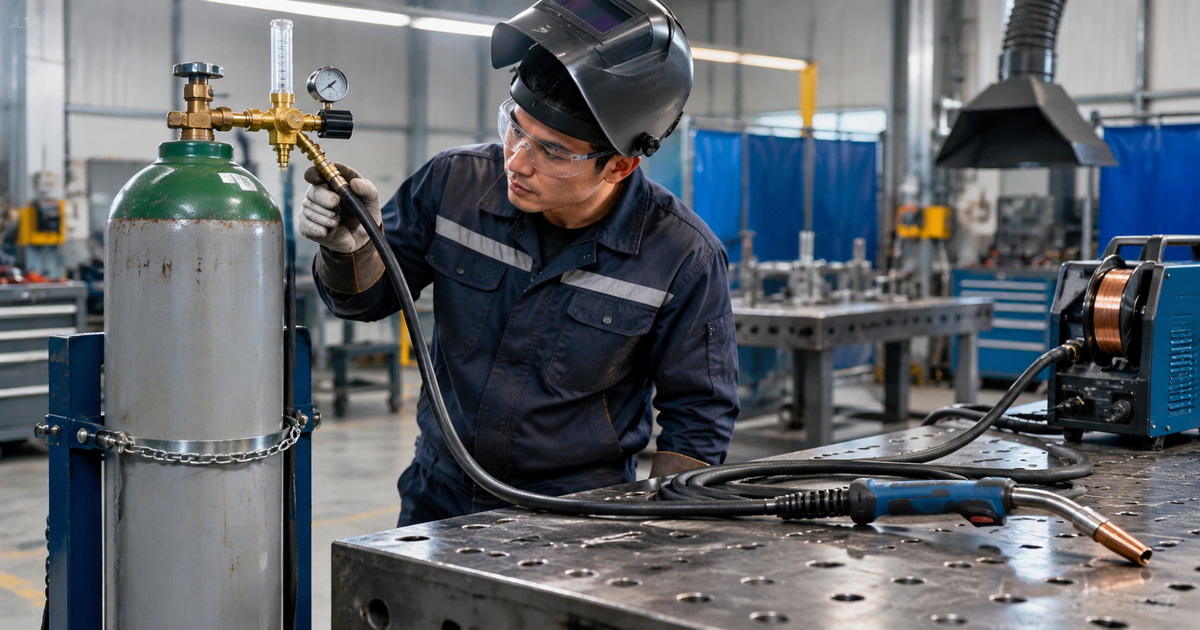
1. Secure cylinders properly
– Keep them upright, chained, and away from traffic paths.
2. Blow out cylinder valves before fitting regulators
– “Crack” each valve briefly to clear dust before installing oxygen and acetylene regulators. [arcsolinc]
3. Install the correct regulators on the correct cylinders
– Oxygen to oxygen; acetylene to acetylene, with appropriate threads and torque. [ehs.cornell]
4. Fit hoses with correct colors and threads
– Green for oxygen, red for acetylene, and ensure no cross‑connection.
5. Verify check valves and flashback arrestors
– Confirm they are installed at regulators and/or torch inlets according to your safety standard. [eiga]
6. Open cylinder valves properly
– Open the oxygen valve fully; open the acetylene valve no more than one full turn for quick shut‑off. [arcsolinc]
7. Set regulator pressures with gas flowing
– Adjust oxygen and acetylene regulators based on tip charts while gas is flowing through the torch, not static. [badgerwelding]
8. Purge hoses individually
– Briefly open each torch valve one at a time to remove air and avoid explosive mixtures. [ehs.cornell]
9. Light and adjust flame correctly
– Light with fuel gas only, then add oxygen gradually to reach a neutral flame. [ehs.cornell]
Following a standard, repeatable procedure like this aligns with both safety guidance and real‑world welding practice, and it makes your regulator design features truly effective. [arcsolinc]
Comparative Table: Oxygen vs Acetylene Regulators in Flashback Prevention
The table below summarizes how oxygen and acetylene regulators contribute differently to flashback control in manual torch cutting.
| Aspect | Oxygen regulator | Acetylene gas pressure regulator |
|---|---|---|
| Typical outlet pressure range in cutting | Often around 30–40 psi for common cutting tips and moderate plate thickness, per widely used rules of thumb and tip charts. (arcsolinc) | Often around 5–10 psi and always kept below 15 psi to avoid acetylene instability and decomposition. (arcsolinc) |
| Primary control objective | Provide a stable, high‑energy cutting oxygen jet that keeps the flame front at the tip and ensures clean kerf formation. (arcsolinc) | Deliver a steady, low‑pressure fuel supply without over‑pressurization, avoiding decomposition and violent flashback events. (arcsolinc) |
| Contribution to flashback prevention | Minimizes mixture fluctuations and pressure drops that can pull the flame back into the mixing chamber, especially when the cutting lever is cycled. (eiga) | Prevents reverse flow, fuel decomposition, and fuel‑rich instability that can make flashback more severe if it occurs. (eiga) |
| Interaction with flashback arrestors | Usually fitted with flashback arrestors at the regulator outlet or torch inlet to stop reverse oxygen‑fed flashbacks. (eiga) | Also fitted with flashback arrestors and check valves to stop mixed‑gas flame fronts from returning to the fuel cylinder. (eiga) |
| Design emphasis in industrial products | High‑pressure oxygen compatibility, clean internals, precision machining, and dual‑stage options for constant delivery pressure as cylinder pressure falls. (boc.co) | Fuel‑gas compatibility, low‑pressure stability, and safe outlet limits, often combined with fuel‑specific connections and robust seats. (boc.co) |
Advanced Design Considerations: Dual‑Stage and Heated Regulators
From an OEM and engineering standpoint, several advanced regulator features can further reduce flashback risks and support better cutting quality in demanding environments.
Dual‑stage oxygen regulators
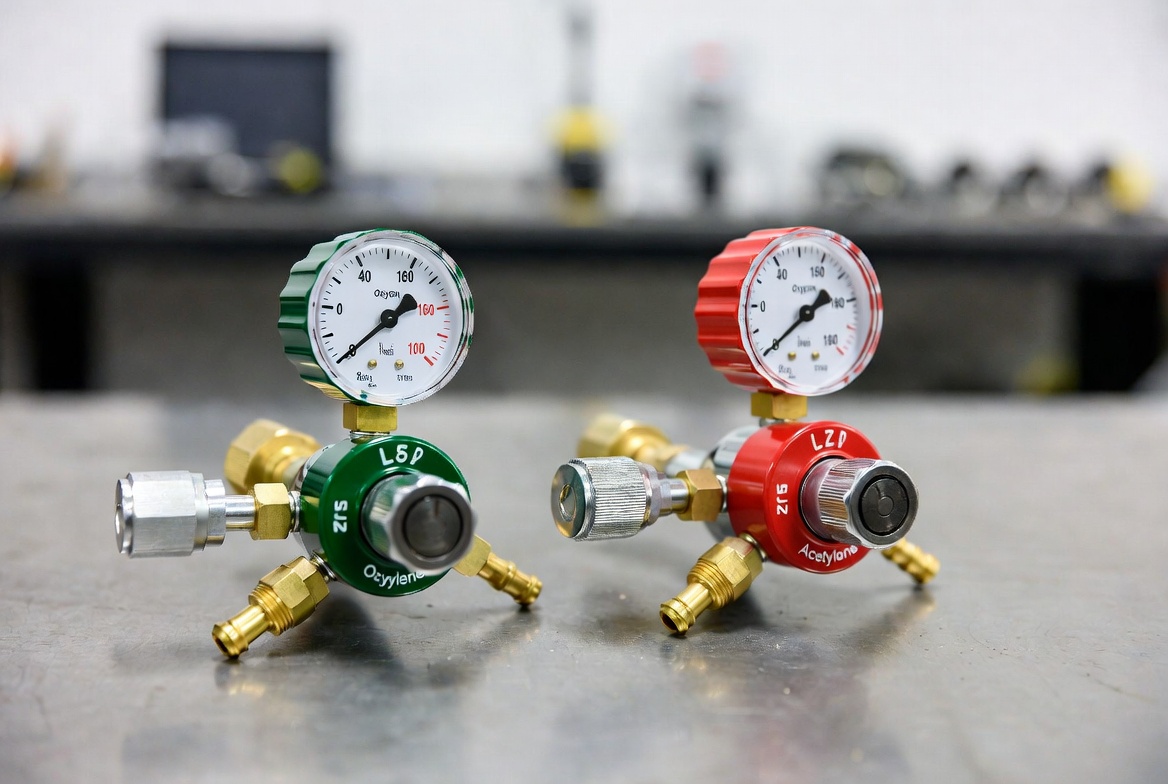
Dual‑stage regulators use two pressure‑reduction stages to maintain a nearly constant delivery pressure until the cylinder is almost empty. For oxy‑fuel cutting, this provides several benefits: [store.mathesongas]
– Minimal pressure drift as cylinder pressure decays, resulting in a more consistent flame and cut.
– Reduced need for frequent manual adjustments during long shifts.
– Lower risk of operators inadvertently running with oxygen pressure that has fallen below optimal for the selected tip.
These characteristics directly align with both productivity and safety targets in large fabrication shops.
Heated and specialty regulators
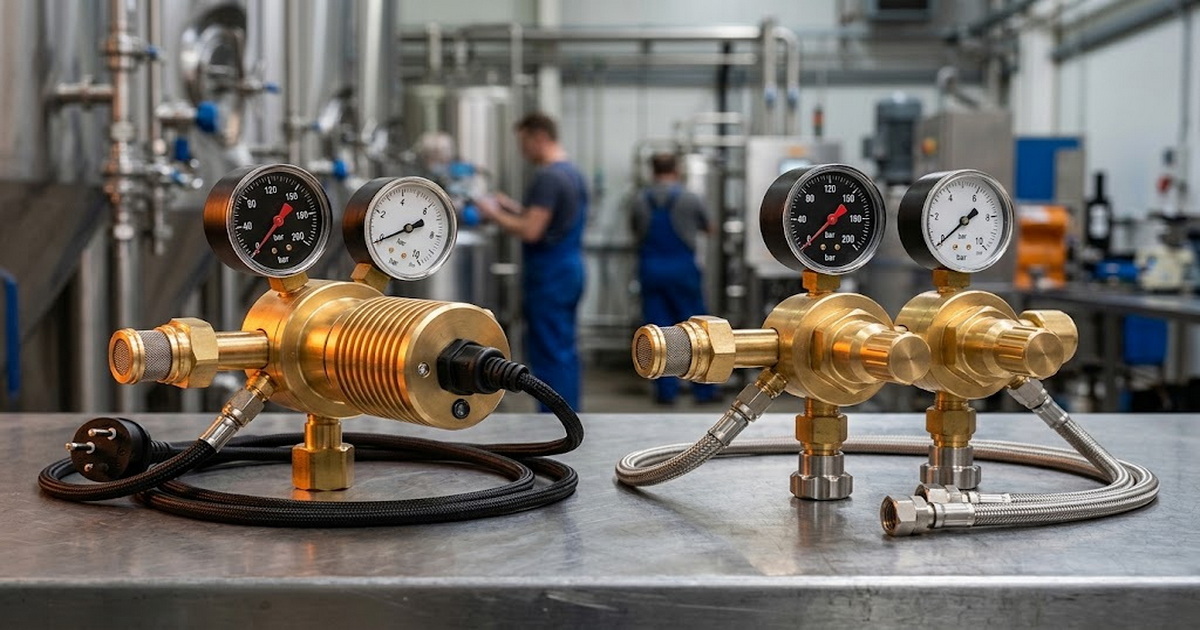
In high‑flow or low‑temperature environments, heated CO₂ or specialty gas regulators are widely used to prevent freezing and pressure drop. While oxy‑acetylene regulators are not typically heated, the underlying principle — stabilizing outlet pressure and preventing internal condensation or freezing — still applies to other gases used in multi‑process shops, such as propane or oxygen‑rich cutting systems. [boc.com]
For global OEM and ODM customers, offering a modular product line that includes single‑stage, dual‑stage, and specialty regulators allows standardized safety practices across different gases and cutting processes.
Expert Recommendations for Preventing Flashback in Oxy‑Acetylene Cutting
Drawing on industry safety guidance and field practice, several recommendations consistently stand out as high‑impact.
Equipment selection
– Use dedicated oxygen and acetylene regulators rated for the cylinder pressures and flow rates you require; never mix or repurpose them.
– Choose regulators with clear, easy‑to‑read gauges and robust brass bodies to withstand industrial abuse and vibration. [boc.co]
– In high‑duty operations, specify dual‑stage oxygen regulators for more stable flame control over the full cylinder life. [boc.co]
System configuration
– Install combination check valve/flashback arrestors at the outlets of both regulators and/or at the torch inlets according to your facility’s safety standard. [millerwelds]
– Follow the hose color‑coding and thread standards strictly to avoid cross‑connection. [ehs.cornell]
Operating practices
– Never exceed 15 psi on acetylene, and always set regulator pressures with gas flowing through the torch rather than static. [badgerwelding]
– Purge oxygen and acetylene lines individually before lighting, and always light with fuel gas first, then add oxygen. [arcsolinc]
– Inspect hoses, regulators, and arrestors regularly, using soapy water rather than open flame for leak detection. [ehs.cornell]
These measures combine hardware design and operator behavior into a coherent flashback‑prevention strategy for manual torch cutting.
When to Upgrade Your Regulators for Better Flashback Protection
From a user‑experience perspective, many end‑users live with marginal regulator performance because failures develop slowly over time. Several signals indicate that it is time to upgrade or replace your oxygen and acetylene regulators:
– Frequent popping, backfires, or irregular flames despite clean tips and correct procedures.
– Noticeable pressure droop when the cutting oxygen lever is engaged.
– Difficulty keeping acetylene pressure in a narrow, safe band at typical flow rates.
– Visible damage, corrosion, or sticking adjustment mechanisms.
For overseas brands, wholesalers, and distributors, this is where a reliable manufacturing partner that can provide precision‑machined regulators, strict quality inspection, and customized performance curves for different markets becomes a strong differentiator. High‑quality regulators reduce warranty claims, improve end‑user safety metrics, and support compliance with international gas handling standards. [boc.com]
Call to Action: Specify Safer Regulators in Your Next Torch Cutting Project
If you are an overseas brand, distributor, or equipment manufacturer, the most effective way to reduce flashback risk in your customer’s cutting operations is to bake safety into your hardware decisions. That starts with specifying oxygen and acetylene regulators that are:
– Engineered for stable pressure control under real cutting flow rates
– Manufactured from high‑quality brass with precise internal machining
– Tested against stringent leak and performance criteria
– Compatible with integrated check valves and flashback arrestors
By upgrading your regulator portfolio now, you help your customers protect their people, cut more efficiently, and comply with the safety expectations of modern fabrication shops.
FAQ
1. Does the oxygen regulator or the acetylene regulator play a bigger role in preventing flashback?
Both are critical: the oxygen regulator stabilizes the high‑energy cutting jet, while the acetylene regulator prevents fuel over‑pressure and reverse flow; flashback prevention depends on the entire system working together. [eiga]
2. Can I use the same regulator for oxygen and acetylene?
No. Oxygen and acetylene regulators are not interchangeable; they are designed for different pressure ranges, materials compatibility, and connection standards, and using the wrong regulator can create serious safety hazards. [boc.co]
3. Are flashback arrestors inside the torch enough, or do I still need them at the regulators?
Many safety guidelines recommend arrestors at regulators and/or torch inlets; built‑in devices are helpful, but relying on a single location can leave gaps if components are removed, damaged, or incorrectly installed. [reddit]
4. How often should I replace my gas regulators?
There is no universal calendar rule, but regulators exposed to daily industrial service, mechanical damage, or contamination should be inspected regularly and replaced when they show unstable pressure control, leaks, or mechanical wear. [millerwelds]
5. Why is keeping acetylene pressure below 15 psi so important?
Acetylene becomes thermally unstable above about 15 psi; exceeding this limit significantly increases the risk of decomposition and violent flashback events inside hoses or equipment. [arcsolinc]
Hot Tags: Oxygen Regulator, Acetylene Gas Pressure Regulator, Oxy Fuel Cutting Equipment, Flashback Arrestor Safety, Industrial Gas Pressure Regulator, Welding And Cutting OEM Supplier, Dual Stage Oxygen Regulator, Manual Torch Cutting System, Oxy Acetylene Gas Control, Welding Regulator Manufacturer