Content Menu
● LP Gas Regulator vs Natural Gas Regulator: Why the Difference Matters
● LP Gas and Natural Gas Explained
● Main Differences Between The Two
● Pressure Control in Real Use
● How To Choose The Right Regulator
● Why Material Quality Matters
● Application Scenarios For Industrial Buyers
● OEM And ODM Value For Global Buyers
● FAQ
LP Gas Regulator vs Natural Gas Regulator: Why the Difference Matters
If you are comparing an LP gas regulator and a natural gas regulator, the short answer is simple: they are not interchangeable. Although both devices reduce inlet pressure to a stable outlet pressure for appliances, they are designed for different fuel properties, pressure conditions, and system requirements.
In industrial and residential gas systems, regulator selection affects safety, combustion performance, appliance life, and overall system stability. Choosing the wrong regulator can lead to poor fuel delivery, unstable flame behavior, inefficient operation, and potential safety risks.
For manufacturers, distributors, and OEM buyers, understanding this difference is also important because the correct product must match the gas source, the working pressure, and the end-use application.
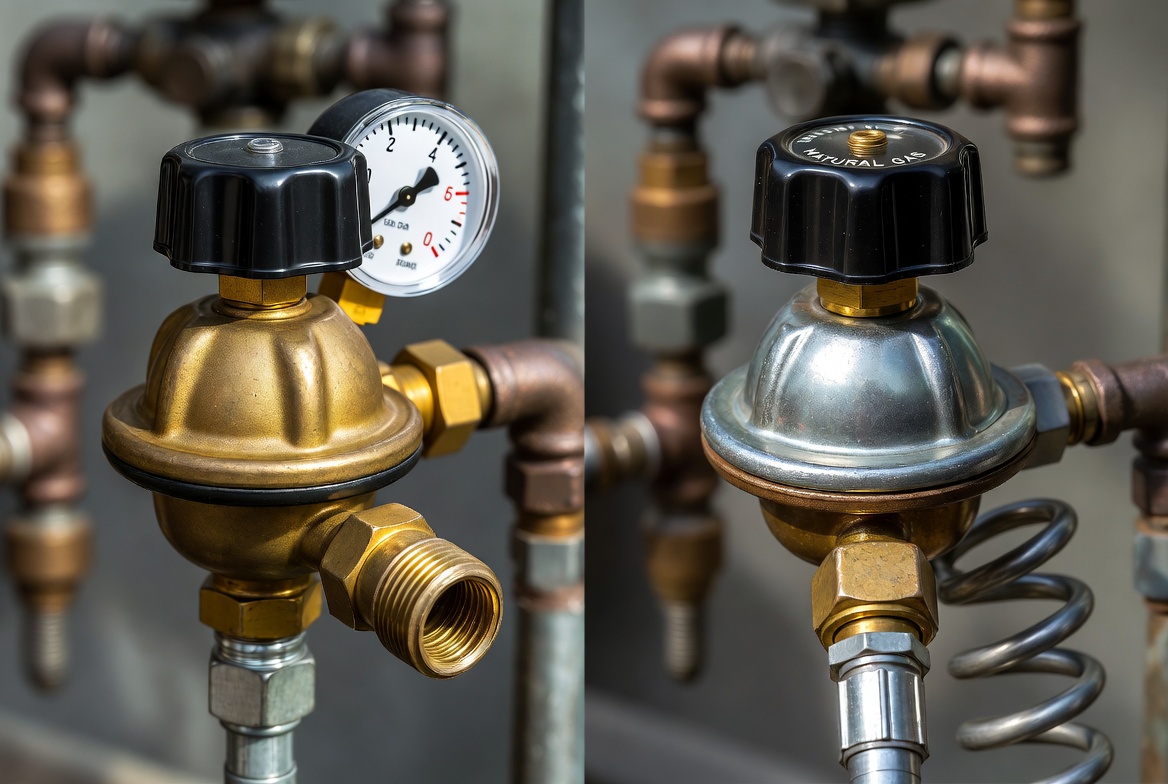
What a Gas Regulator Does
A gas regulator is a mechanical device that reduces high inlet pressure to a lower, usable outlet pressure and keeps that outlet pressure steady as demand changes. In other words, it helps equipment receive gas at the pressure it was designed to use.
Gas regulators are widely used in cylinders, pipelines, welding systems, fuel delivery systems, and industrial gas applications. They do not measure flow; instead, they control pressure, which is why correct sizing and application matching are essential.
For industrial users, stable pressure means more consistent performance, fewer interruptions, and better process control.
LP Gas and Natural Gas Explained
LP gas usually refers to liquefied petroleum gas, such as propane or butane, which is stored in a pressurized liquid state and vaporized for use. Natural gas is primarily methane and is delivered as a gas through pipelines or similar supply systems.
These differences matter because LP gas and natural gas behave differently in storage, pressure delivery, and appliance consumption. LP gas is typically supplied from cylinders or tanks, while natural gas is commonly supplied from a pipeline network.
Because the fuel sources are different, the regulators must be engineered and calibrated differently as well.
Main Differences Between The Two
The clearest way to understand the distinction is to compare them side by side.
| Feature | LP Gas Regulator | Natural Gas Regulator |
|---|---|---|
| Typical fuel source | Propane, butane, or mixed LP gas | Methane-rich pipeline gas |
| Supply condition | High-pressure cylinder or tank | Pipeline or distribution network |
| Pressure characteristics | Designed for higher inlet pressure | Designed for lower, variable inlet pressure |
| Typical outlet pressure | Commonly around 11 inches water column in many applications | Commonly around 7 inches water column in household applications |
| Internal design | Different spring and diaphragm tuning | Different spring and diaphragm tuning |
| Interchangeability | Not interchangeable | Not interchangeable |
The key point is that gas composition and supply pressure drive regulator design. Even if two regulators look similar on the outside, their internal settings and performance targets can be very different.
Pressure Control in Real Use
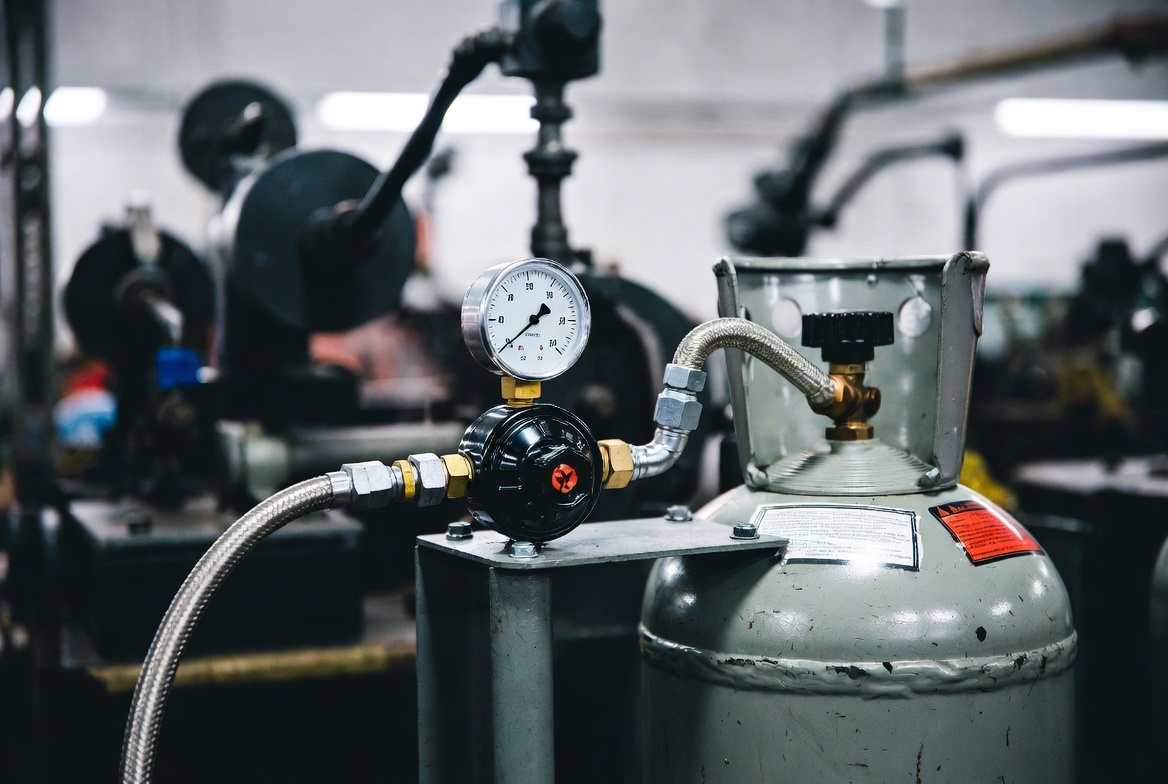
A regulator’s job is to keep the outlet pressure stable even when the inlet pressure changes or when demand rises and falls. This is especially important in welding, cutting, industrial gas distribution, and fuel gas systems where pressure fluctuations can affect quality and safety.
For example, a propane system may need a regulator that can manage the transition from tank pressure down to a much lower operating pressure. A natural gas system, by contrast, usually starts from a different upstream supply condition and must maintain a separate outlet pressure target.
In both cases, the regulator must be matched to the gas type, flow demand, and installation environment.
How To Choose The Right Regulator
Selecting the right regulator is not just about choosing the right gas label. It requires a careful look at the full application.
Use this checklist:
1. Identify the gas type. Confirm whether the system uses LP gas, natural gas, oxygen, acetylene, argon, nitrogen, carbon dioxide, or another gas.
2. Check inlet pressure. Make sure the regulator can safely handle the maximum upstream pressure.
3. Define the required outlet pressure. Match the regulator to the pressure needed by the appliance or process.
4. Estimate flow demand. The regulator must support the full downstream demand without starving the system.
5. Choose the right stage. Single-stage models are common, while dual-stage regulators improve stability where pressure consistency matters more.
6. Confirm material compatibility. Brass, seals, and internal components must suit the gas and the operating environment.
7. Verify compliance requirements. For industrial buyers, standards, certifications, and inspection procedures should be reviewed before purchase.
This selection process is especially important for OEM and ODM projects, because product mismatch can create avoidable risk and costly returns.
Single Stage Or Dual Stage
Single-stage regulators reduce pressure in one step and are often used where demand is simple or where cost efficiency is a priority. Dual-stage regulators reduce pressure in two steps, which usually improves outlet pressure stability when the inlet pressure drops as the cylinder empties or the system load changes.
For many industrial buyers, dual-stage regulators are preferred when consistent downstream pressure is critical. That can be useful in welding, precision cutting, and multi-point gas delivery systems where stable performance matters more than simple cost control.
If pressure consistency is a major concern, dual-stage design is often the smarter option.
Safety And Installation
A regulator should always be installed by a qualified professional who understands the system design and applicable local requirements. Incorrect installation can create dangerous pressure issues, leakage concerns, and appliance malfunction.
Important safety practices include:
– Make sure the regulator is marked for the correct gas type.
– Inspect the regulator body, diaphragm area, vents, and connections before use.
– Use the correct fittings and thread types for the gas system.
– Confirm that the installation location supports proper ventilation and access.
– Replace damaged or aged regulators according to manufacturer guidance.
For LP gas systems, special attention should be paid to pressure stability and seasonal temperature changes, since outdoor conditions can influence system behavior. For natural gas systems, stable line pressure and correct sizing remain the main priorities.
Why Material Quality Matters
In industrial gas control, material quality directly affects durability, sealing performance, and long-term reliability. Brass bodies are widely used because they offer good machinability, corrosion resistance, and dependable mechanical performance in many gas applications.
For manufacturers and importers, a well-built regulator should also support stable pressure control, consistent spring performance, and strong internal sealing under repeated use. That is why many buyers look for precision manufacturing, strict inspection, and product traceability when sourcing gas regulators for international markets.
If you are supplying export markets, these details become a selling point, not just a technical feature.
Application Scenarios For Industrial Buyers
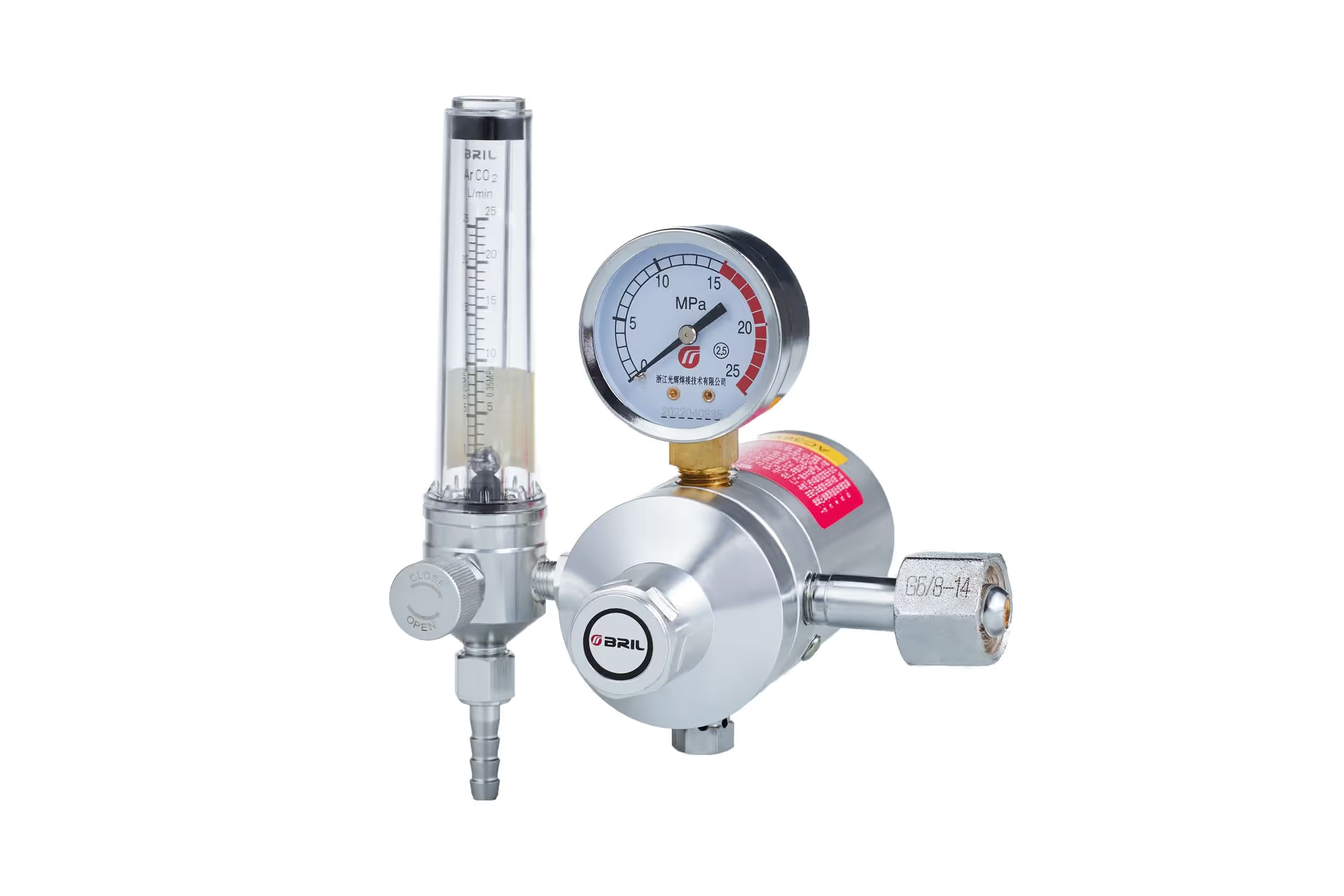
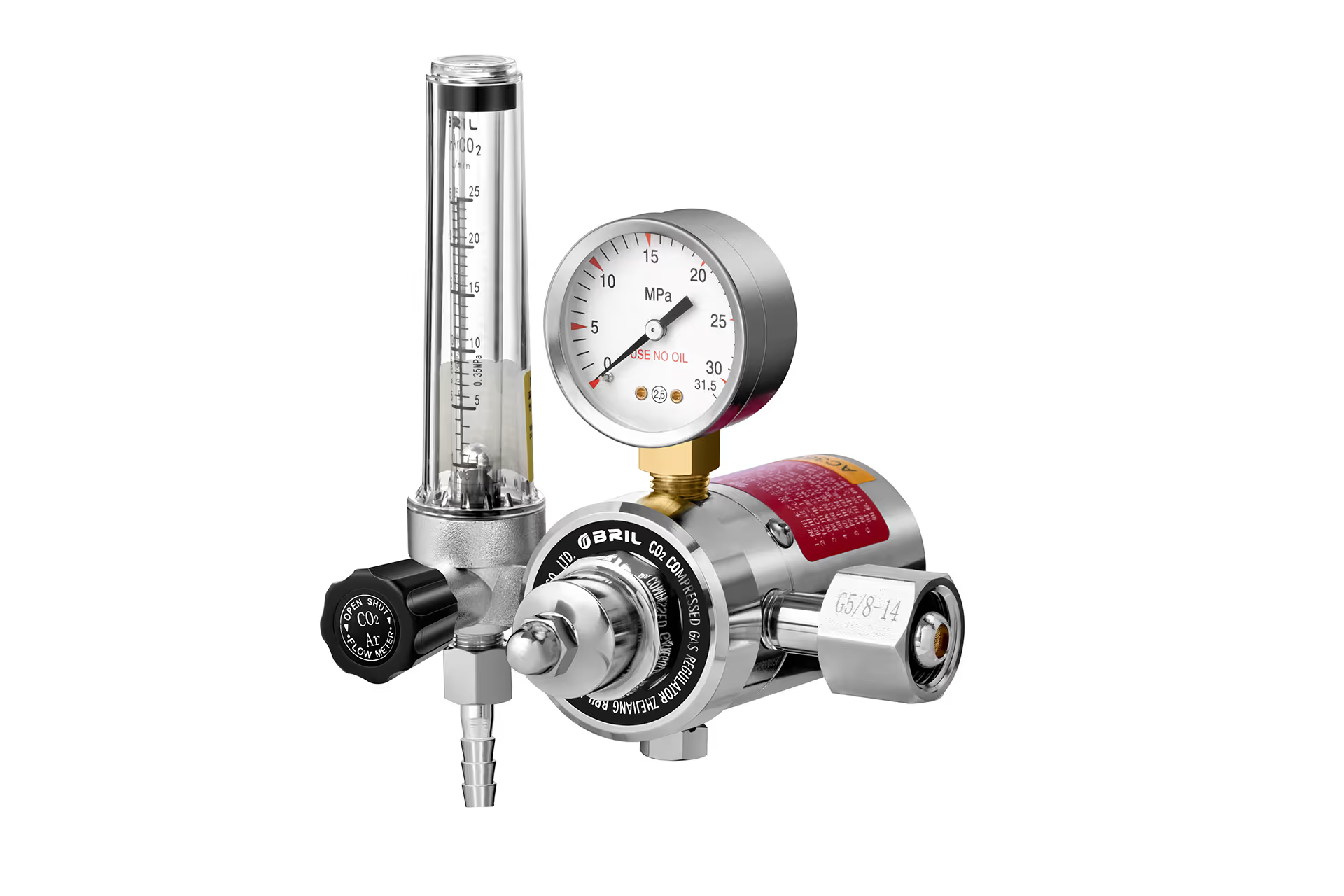
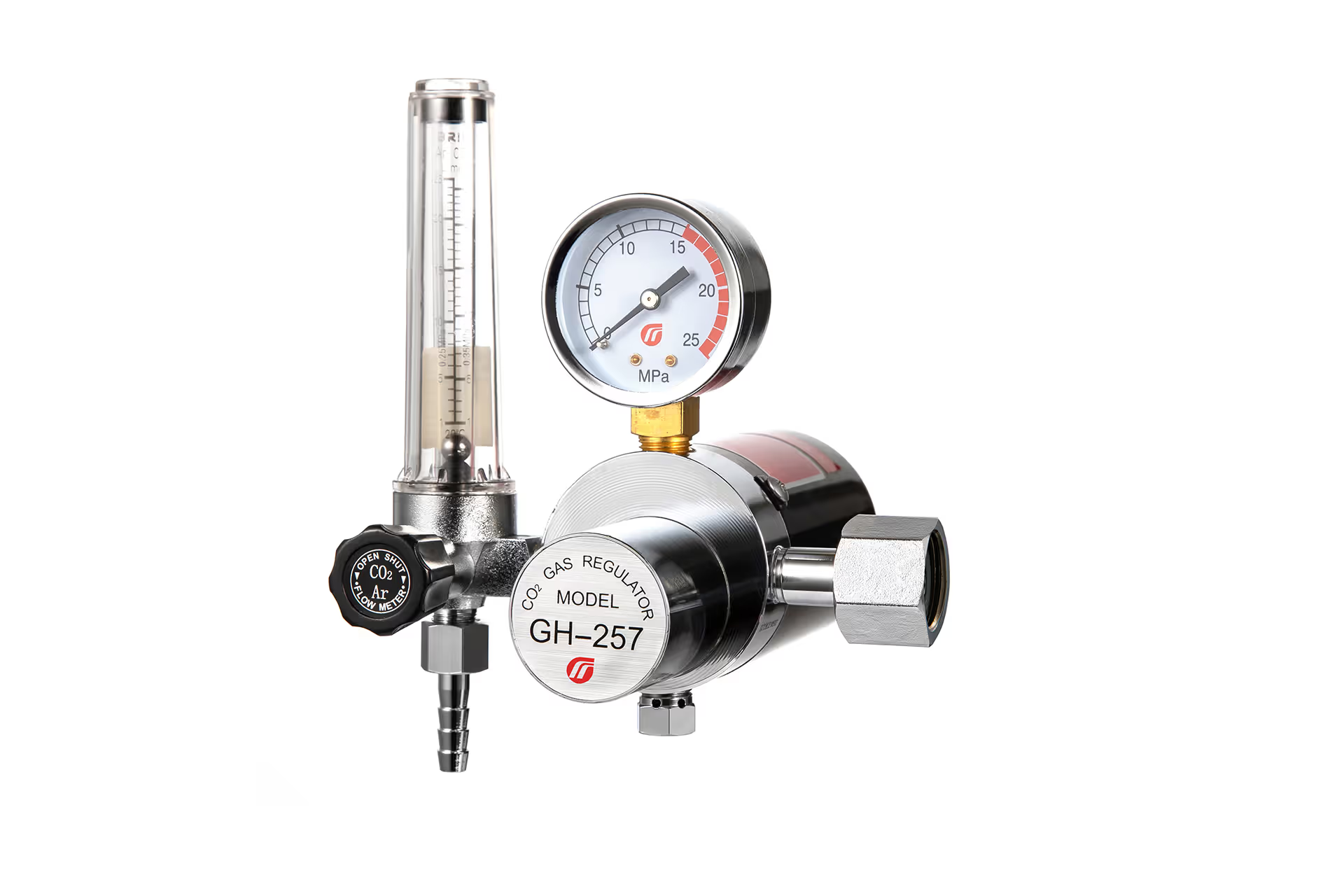
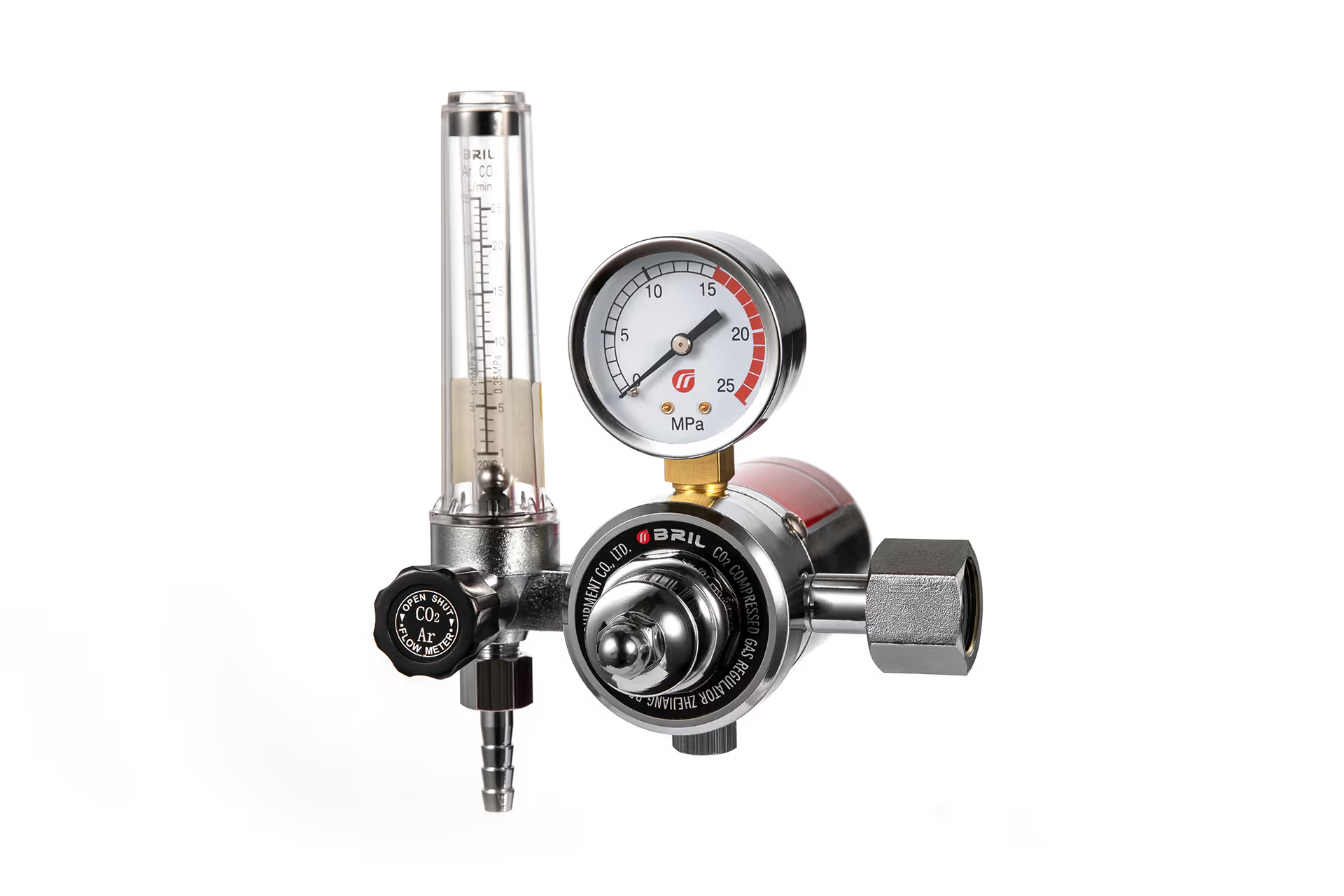
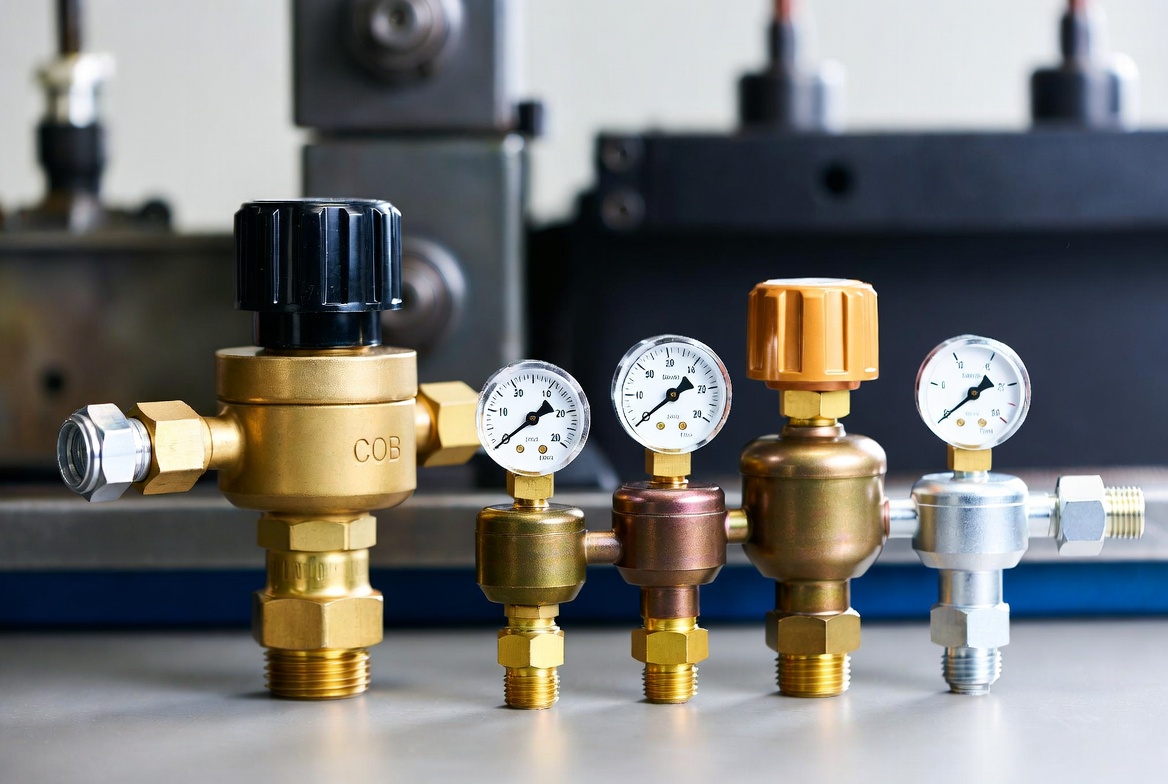
Gas regulators are used across a wide range of industries, including welding, cutting, food processing, laboratories, packaging, and industrial gas supply. Different gases require different regulator families, such as CO2 regulators, oxygen regulators, acetylene regulators, propane regulators, nitrogen regulators, and argon regulators.
For example:
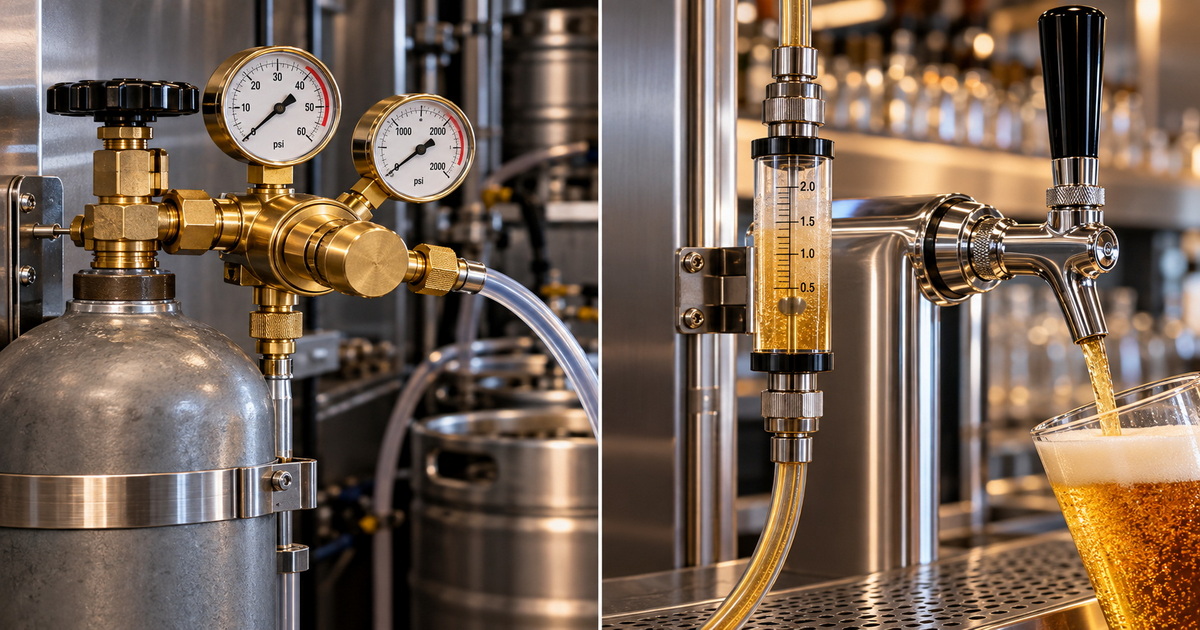
– CO2 regulators are commonly used in welding and beverage systems.
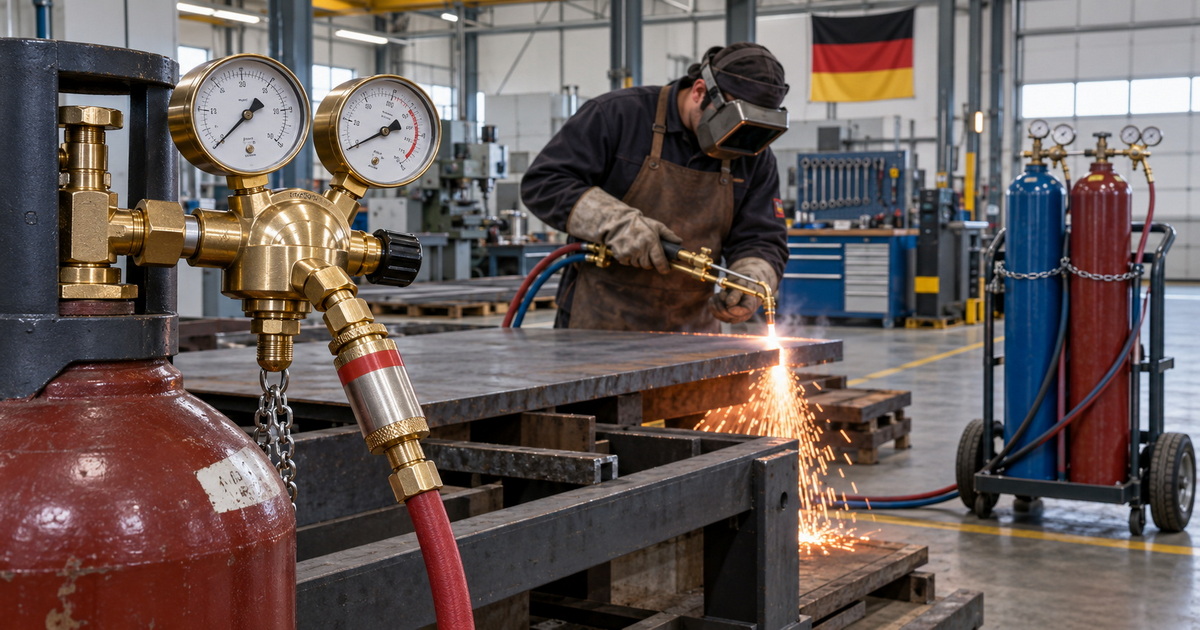
– Oxygen regulators are used in welding and medical or industrial applications.
– Acetylene regulators are used in cutting and welding systems.
– Argon and nitrogen regulators are widely used in inert-gas processes and purging tasks.
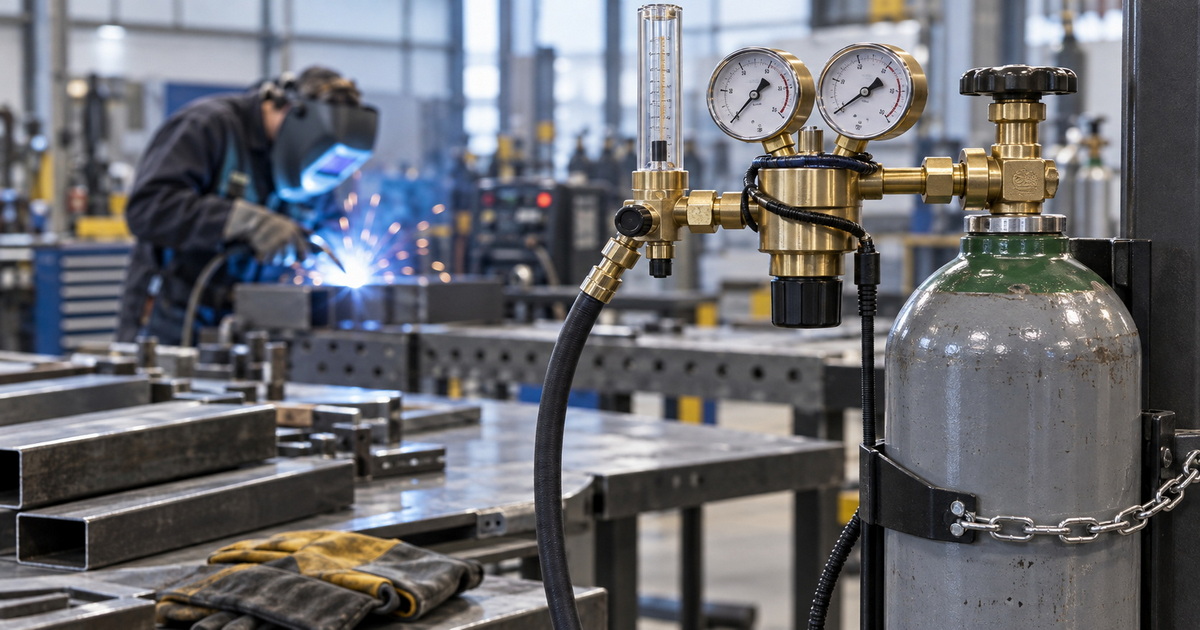
– Dual-stage gas regulators are preferred where stable output pressure is especially important.
This broader product context helps buyers see that LP and natural gas regulators are only one part of a much larger gas control portfolio.
Common Mistakes To Avoid
Many regulator failures begin with simple selection mistakes. The most common issues are:
– Using a regulator for the wrong gas type.
– Choosing a model with insufficient inlet pressure capacity.
– Ignoring required outlet pressure.
– Selecting a regulator without considering flow demand.
– Overlooking environmental conditions such as weather, corrosion, or vibration.
– Replacing a regulator with a visually similar but technically different model.
A visually similar regulator is not necessarily a technically correct replacement. The safest approach is to match the regulator to the gas, the pressure range, and the actual application requirement.
OEM And ODM Value For Global Buyers
For overseas brands, wholesalers, and distributors, OEM and ODM support can shorten product development cycles and improve market fit. That is especially valuable in industrial gas equipment, where different regions may need different pressure settings, inlet connections, or branding requirements.
A strong manufacturing partner should provide:
– Precision machining and assembly.
– Stable pressure performance.
– Brass and other suitable material options.
– Quality inspection procedures.
– Custom labeling and packaging support.
– Application-specific design adjustments.
This is where a manufacturer can move beyond simple supply and become a long-term technical partner.
Final Guidance For Buyers
The difference between LP gas regulators and natural gas regulators is not cosmetic. It is a matter of gas type, pressure range, internal design, and safe operation. If the regulator is selected correctly, the system runs more safely, more efficiently, and with fewer interruptions.
For industrial buyers and brand owners, the best choice is to work with a manufacturer that understands both product engineering and application demands. If your project requires custom gas control solutions, pressure stability, and export-ready quality, a specialized OEM/ODM supplier is the right place to start.
FAQ
1. Can I use an LP gas regulator for natural gas?
No. LP and natural gas regulators are designed for different pressure conditions and are not interchangeable.
2. Why do LP and natural gas regulators look similar?
They may share a similar外观, but their internal spring and diaphragm settings are different, and each is calibrated for a specific gas type.
3. What pressure do these regulators usually deliver?
In many applications, LP gas regulators are set around 11 inches of water column, while natural gas regulators are often around 7 inches of water column.
4. Should I choose a single-stage or dual-stage regulator?
Choose single-stage for simpler applications and dual-stage when you need better pressure stability across changing supply conditions.
5. What should I check before buying a regulator?
Check gas type, inlet pressure, outlet pressure, flow demand, material compatibility, and whether the product is suitable for the intended installation.
6. Are brass regulators suitable for industrial gas applications?
Brass is widely used because it offers durability, machinability, and solid performance in many gas control applications.
References
1. [Bril Welding Equipment – OEM Welding Gas Regulator Manufacturer]
2. [Grainger – Gas Regulators]
3. [Emerson – Natural Gas Pressure Regulators]
4. [Emerson – Pressure Reducing Regulators]
5. [Starex Weld – Is There A Difference between LP And Natural Gas Regulators?]
6. [Norgas Controls – Line Gas Regulators 101]
7. [AllSafe – Compressed Gas Regulators]
Hot Tags: LP Gas Regulator, Natural Gas Regulator, Gas Pressure Regulator, Dual Stage Gas Regulator, Industrial Gas Regulator, Propane Regulator, Oxygen Regulator, Acetylene Regulator, CO2 Regulator, Brass Gas Regulator