Content Menu
● What Is a Gas Pressure Reducing Regulator?
>> Why High Cylinder Pressure Matters
● What Is a Standard Pressure Regulator?
● Key Differences for High Cylinder Pressure
>> Stage Design Is Often the Deciding Factor
● Pressure Stability: The Real Performance Test
>> Single-Stage Regulator Behavior
>> Dual-Stage Regulator Behavior
● How to Choose the Right Regulator
>> 1. Identify the Gas and Its Hazard Profile
>> 2. Confirm Maximum Inlet Pressure Rating
>> 3. Match the Outlet Range to the Process
>> 4. Consider Flow Demand, Not Pressure Alone
>> 5. Choose Materials for Service Life
● Avoid the “Same Gauge, Same Regulator” Mistake
>> OEM/ODM Checklist for Gas Regulators
● Installation and Safe Operating Steps
● Gas Pressure Reducing Regulator vs Standard Regulator: Which Should You Buy?
● FAQ
>> 1. Is a gas pressure reducing regulator the same as a pressure regulator?
>> 2. When should I use a dual-stage gas regulator?
>> 3. Can I use the same regulator for oxygen and argon?
>> 4. Why does my CO₂ regulator freeze during use?
>> 5. Does a regulator control gas flow?
>> 6. How do I confirm a regulator is suitable for high cylinder pressure?
>> 7. What should OEM buyers customize on a gas regulator?
When working with high-pressure industrial gas cylinders, the choice between a gas pressure reducing regulator and a standard pressure regulator directly affects safety, outlet-pressure stability, gas utilization, and process quality. Although the two terms are sometimes used interchangeably, buyers should assess the regulator’s actual inlet-pressure rating, stage design, gas compatibility, pressure-control accuracy, and application requirements—not simply its product name.
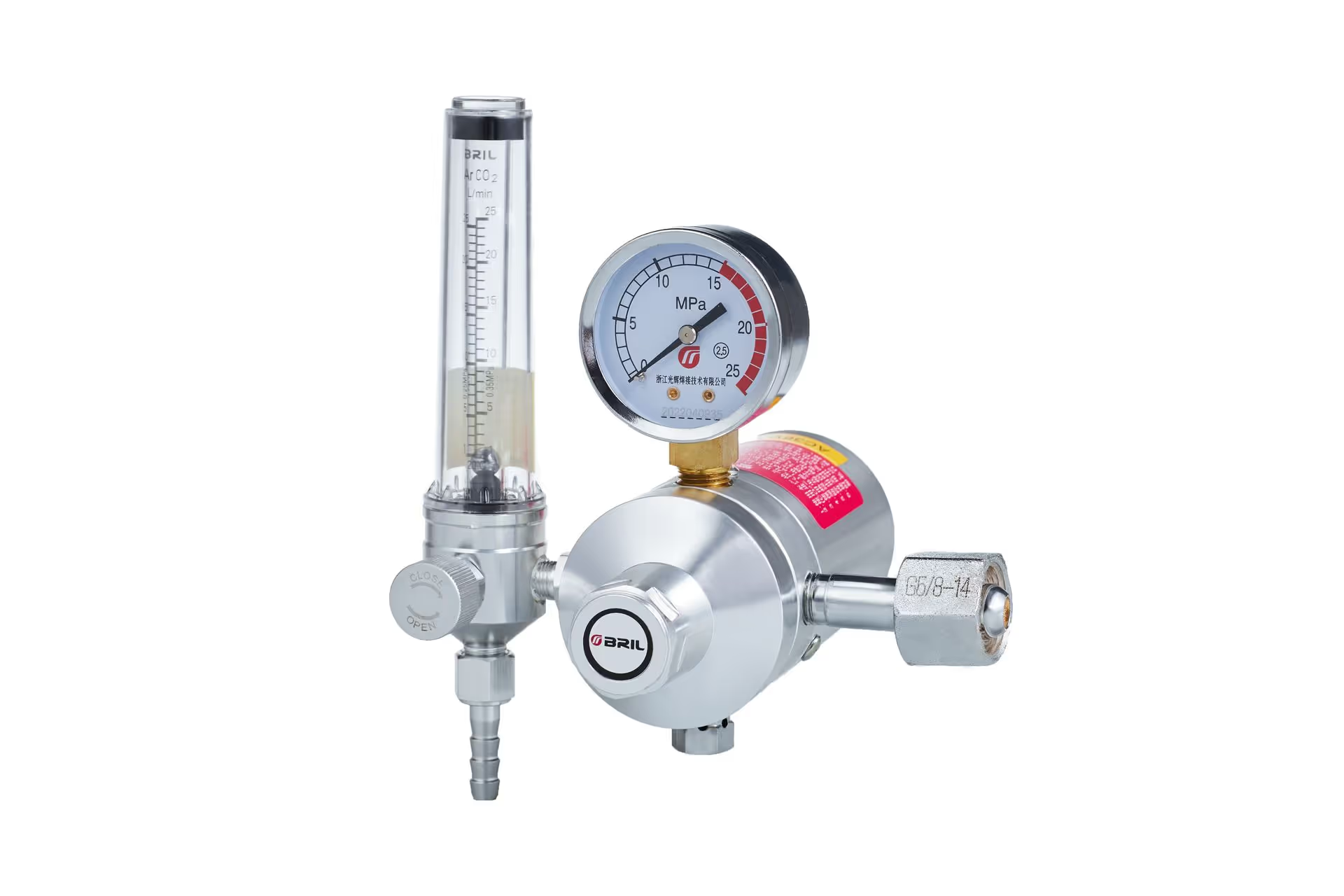
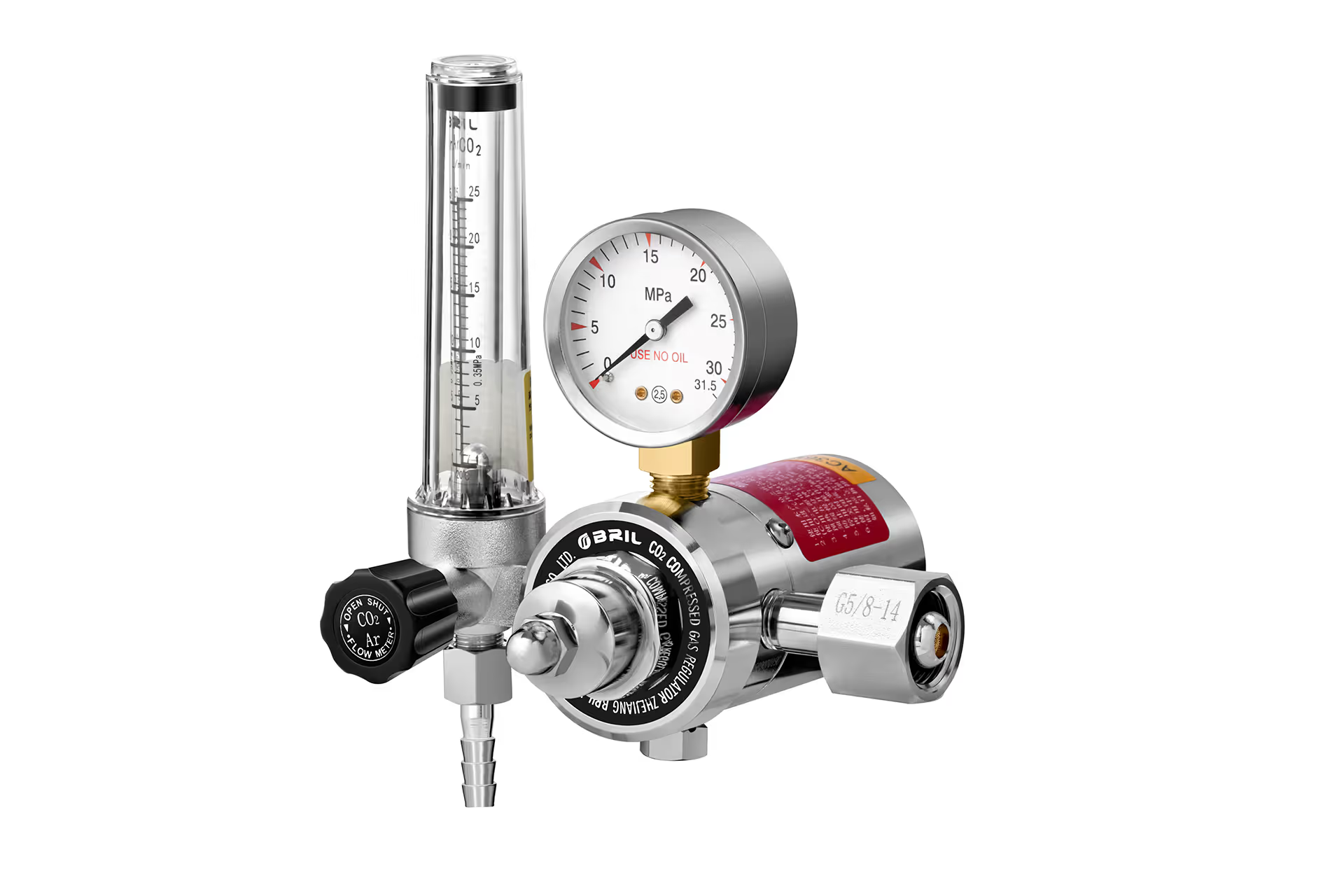
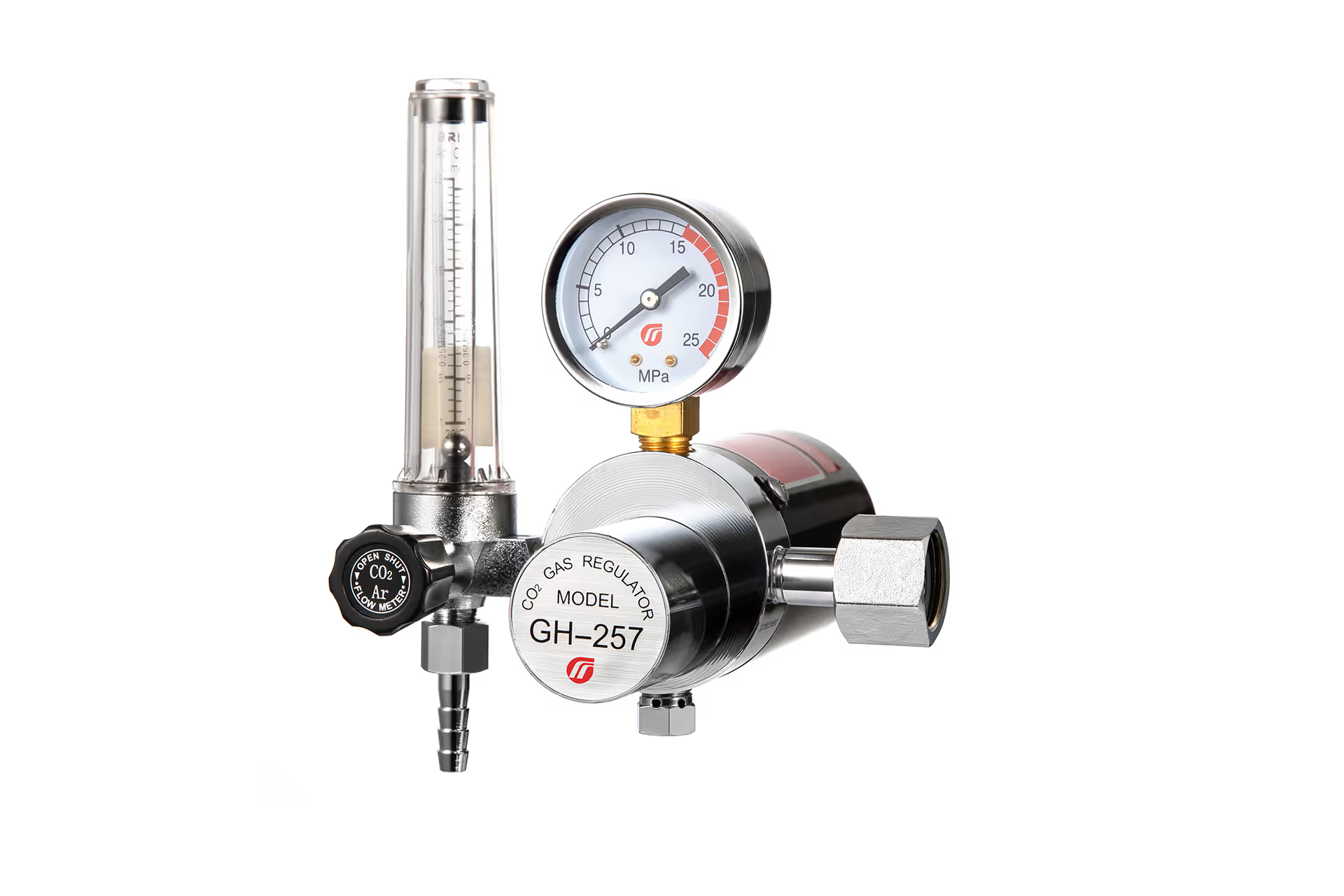
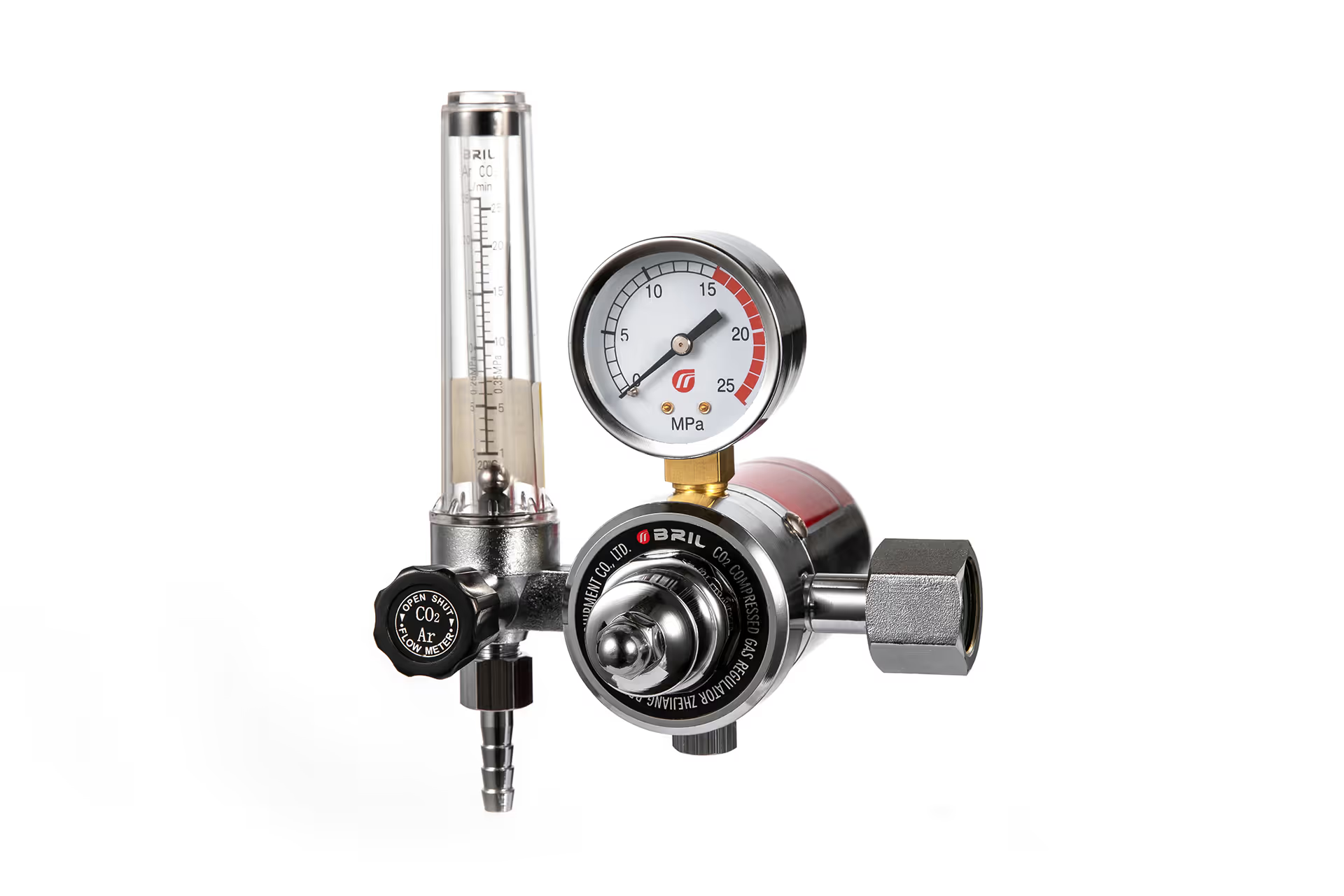
For welding, cutting, beverage dispensing, laboratory supply, and industrial gas control, a properly selected high cylinder pressure regulator reduces variable cylinder pressure to a controlled, usable delivery pressure. A regulator must be compatible with the gas, accommodate the cylinder’s maximum pressure, and provide a suitable outlet-pressure range.
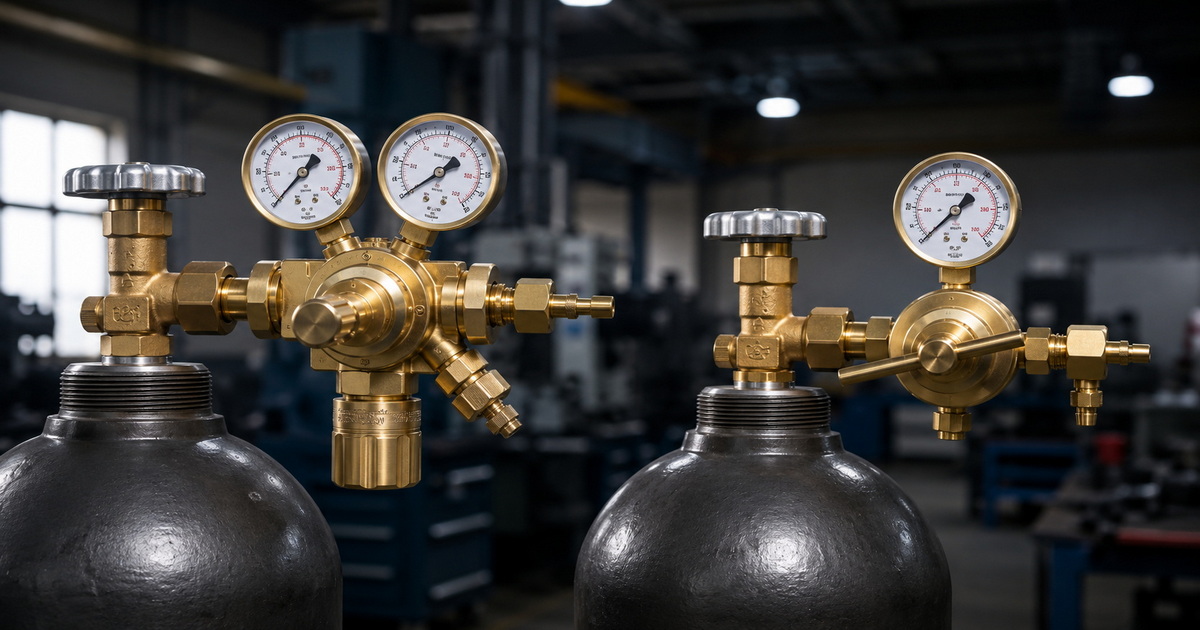
What Is a Gas Pressure Reducing Regulator?
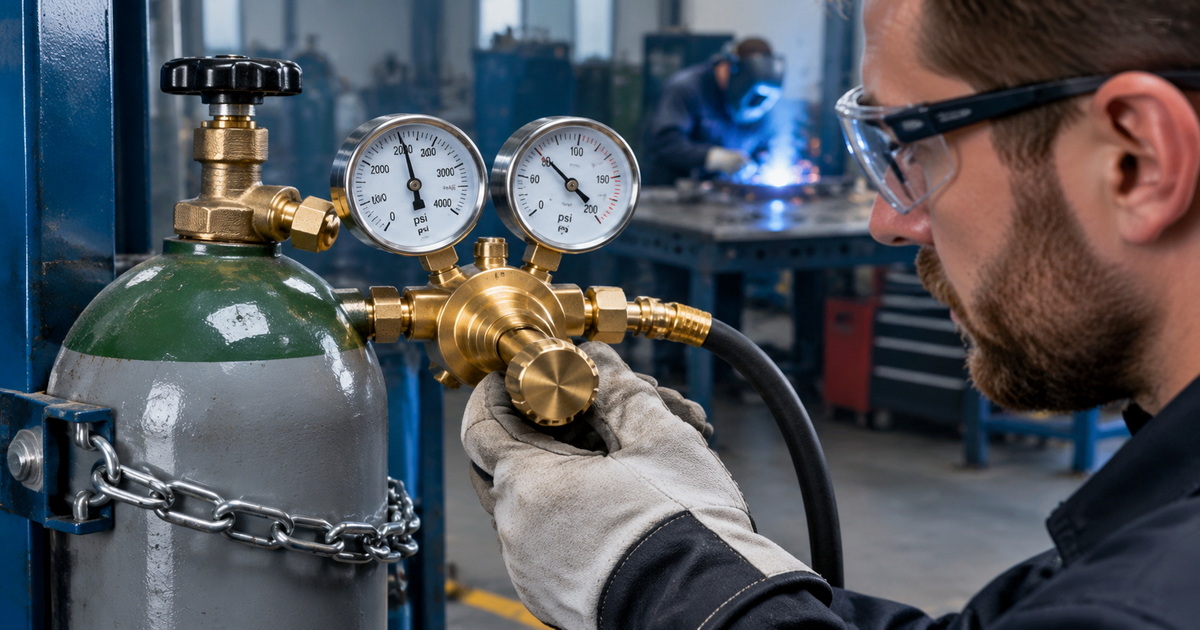
A gas pressure reducing regulator is a mechanical device designed to reduce a high and changing inlet pressure from a gas cylinder to a lower, controlled outlet pressure. It does not merely “lower pressure once.” It continuously responds to changes in cylinder pressure and downstream demand.
Industrial cylinders can store gases at significant pressure. The regulator creates a controlled boundary between that stored energy and the equipment, hose, torch, welding machine, manifold, or process line downstream.
In practical terms, a pressure reducing regulator normally includes:
– High-pressure inlet connection matched to the cylinder valve.
– Main valve seat and diaphragm to sense and regulate pressure.
– Adjustment mechanism for setting delivery pressure.
– High-pressure gauge to indicate cylinder-side pressure where applicable.
– Low-pressure gauge to indicate delivery pressure.
– Outlet connection matched to the hose or downstream system.
– Relief or safety design features appropriate to the regulator and application.
For welding and allied processes, ISO 2503 covers single-stage and two-stage pressure regulators connected to cylinders for compressed gases up to 300 bar, as well as dissolved acetylene, LPG, MPS, and CO₂.
Why High Cylinder Pressure Matters
The pressure inside a cylinder is not the same as the pressure your equipment should receive.
For example, oxygen, argon, nitrogen, and mixed shielding gases may be stored at high pressure. If that pressure entered a hose, torch, flowmeter, or low-pressure process line without proper reduction, it could cause equipment damage, leaks, unstable operation, or serious safety hazards.
A regulator therefore performs two jobs:
1. Pressure reduction: It converts high inlet pressure into a usable delivery-pressure range.
2. Pressure control: It maintains the selected outlet pressure as inlet conditions and gas demand change.
A university compressed-gas safety guide notes that regulators reduce the high pressure stored in cylinders to lower pressures that can be safely used in an operating system. It also emphasizes that regulators control pressure—not flow—unless a properly designed flow-control device, such as a flowmeter, is included.
What Is a Standard Pressure Regulator?
A standard pressure regulator commonly refers to a conventional, usually single-stage, regulator designed for general-purpose gas applications. It can still be a pressure reducing regulator in the functional sense, but it may have fewer features or less compensation for changing inlet pressure than a heavy-duty or dual-stage model.
In the industrial gas market, “standard” may describe a regulator with:
– A single-stage pressure-reduction design.
– A conventional diaphragm and valve-seat structure.
– A standard inlet-pressure rating for the intended cylinder gas.
– A typical delivery-pressure range for welding, cutting, purging, or general supply.
– Basic gauges and standard outlet fittings.
– Cost-focused construction for routine work.
A standard regulator is not automatically low quality. A well-made single-stage brass regulator can be an excellent choice for many welding and cutting applications. However, users should not assume that every standard regulator is suitable for every high cylinder pressure condition.
The correct question is: Can this regulator safely accept the maximum cylinder pressure and maintain the outlet-pressure stability required by the process?
Key Differences for High Cylinder Pressure
The most meaningful comparison is not simply “pressure reducing vs standard.” It is usually high-performance pressure reduction versus basic single-stage control.
| Comparison factor | Gas pressure reducing regulator for high cylinder pressure | Standard pressure regulator |
|---|---|---|
| Primary purpose | Reduces high cylinder pressure and provides controlled delivery pressure | Provides routine pressure reduction for standard applications |
| Typical design | May be single-stage or dual-stage; engineered for higher stability or demanding service | Often single-stage |
| Inlet pressure suitability | Must be rated for the cylinder’s full pressure | Rating varies; must be verified before use |
| Outlet-pressure stability | Higher-end or dual-stage models can provide tighter stability during cylinder depletion | Outlet pressure may rise as inlet pressure falls |
| Application fit | High-pressure cylinders, critical processes, long runs, analytical use, automated equipment | Routine welding, cutting, purging, general shop use |
| Adjustment needs | Lower for dual-stage designs | More frequent adjustment may be needed as cylinder pressure changes |
| Initial purchase cost | Usually higher | Usually lower |
| Long-term value | Can reduce process variation, rework, and operator intervention | Cost-effective when pressure variation is acceptable |
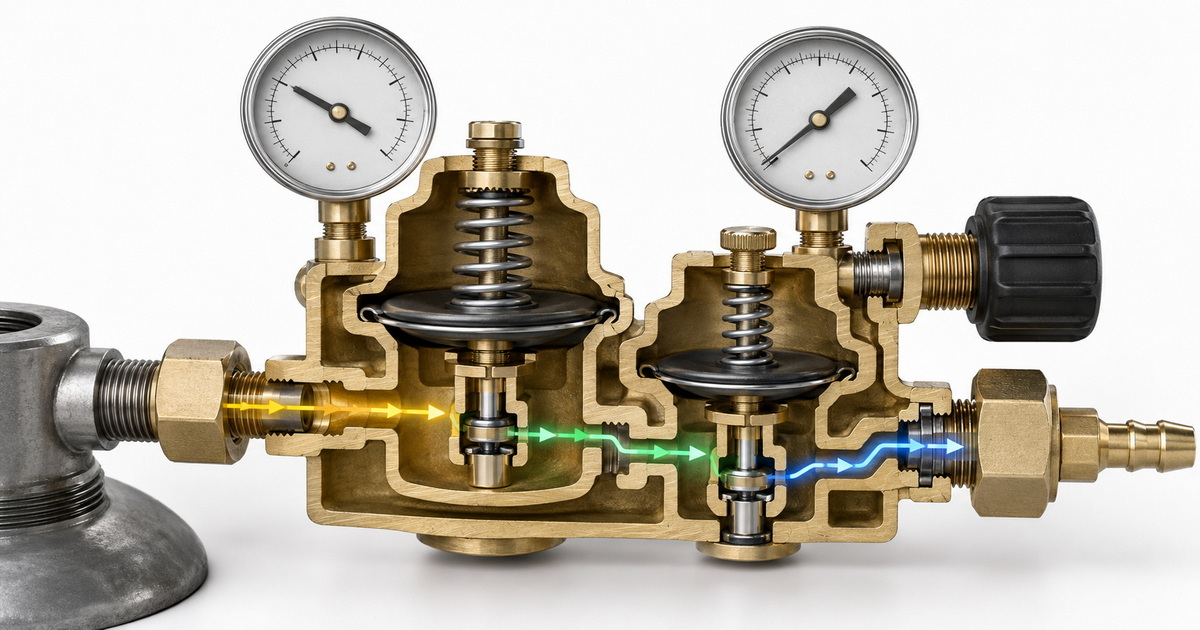
Stage Design Is Often the Deciding Factor
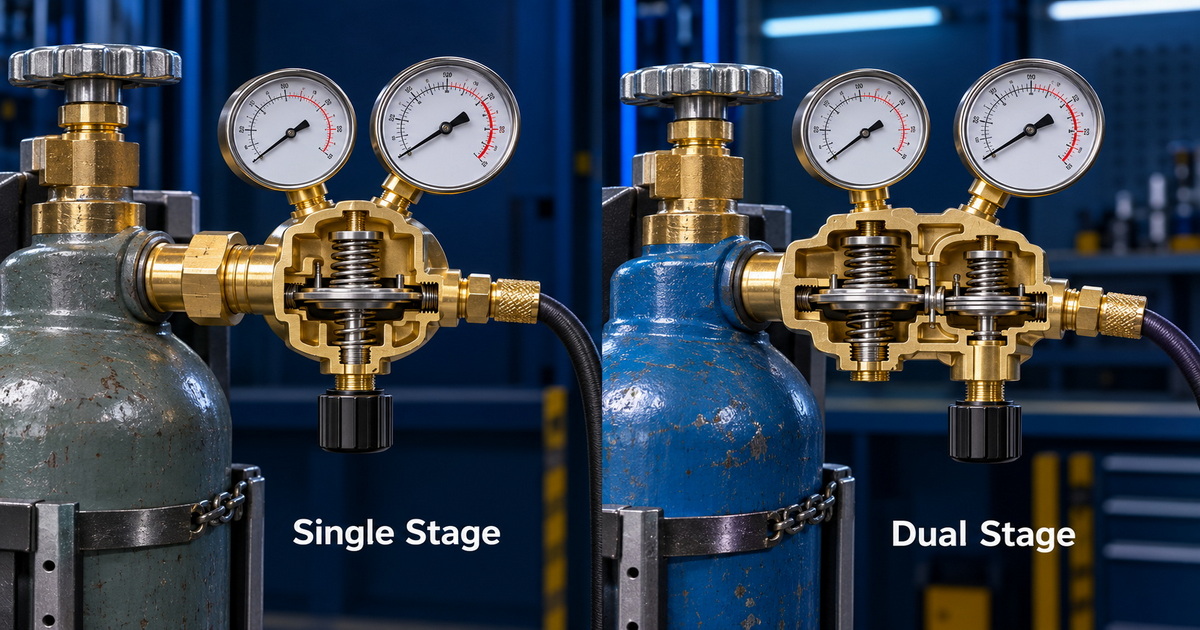
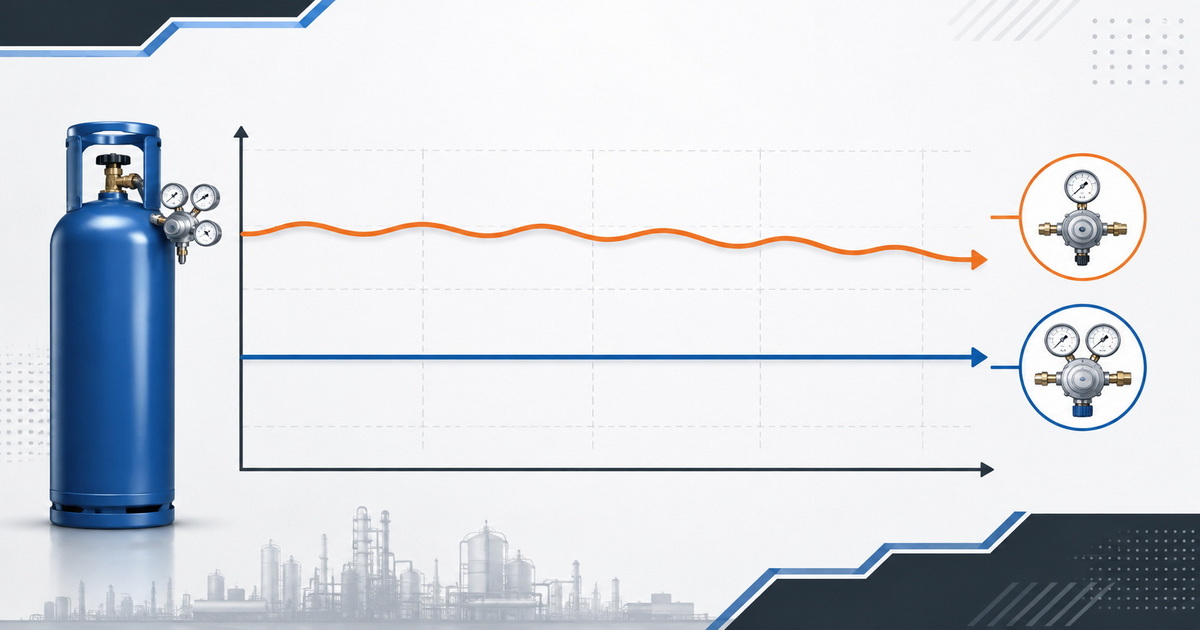
A single-stage regulator lowers cylinder pressure in one mechanical reduction step. As cylinder pressure declines, the outlet pressure may gradually change. This effect is commonly called supply-pressure effect or “droop/rise” depending on design and operating conditions.
A dual-stage gas regulator reduces pressure in two sequential steps:
1. The first stage reduces full cylinder pressure to an intermediate pressure.
2. The second stage reduces that intermediate pressure to the selected delivery pressure.
This architecture helps isolate the final outlet setting from changes in cylinder pressure. A technical datasheet for the Harris Model 896 dual-stage regulator states that its first stage reduces full cylinder pressure by approximately 90%, while the second-stage diaphragm provides accurate delivery-pressure control. The model is rated for a maximum inlet pressure of 230 bar.
For applications where stable pressure is essential, this distinction is substantial.
Pressure Stability: The Real Performance Test
A regulator’s job is not finished when it produces the correct outlet pressure at the beginning of a cylinder’s life. The more meaningful test is whether it remains stable as the cylinder is consumed.
Single-Stage Regulator Behavior
A standard single-stage regulator may be suitable when:
– The operation is intermittent.
– Minor delivery-pressure variation does not affect results.
– An operator can periodically adjust the pressure.
– The process has a relatively wide pressure tolerance.
– The cylinder is replaced before pressure becomes very low.
Typical examples include general metal fabrication, workshop cutting, occasional purging, and many non-critical welding operations.
Dual-Stage Regulator Behavior
A dual-stage regulator is generally more appropriate when:
– Outlet pressure must remain stable over the cylinder’s service life.
– Gas is supplied to sensitive downstream equipment.
– The system runs for long, unattended periods.
– Pressure fluctuations can affect weld consistency, test results, or product quality.
– Operators need to minimize repeated adjustment.
– Multiple shifts rely on repeatable gas settings.
A practical safety guide explains that a two-stage regulator delivers more constant pressure without continual minor adjustment as cylinder pressure changes; its first stage lowers cylinder pressure to a preset level, and the second stage reduces it to the desired delivery pressure.
How to Choose the Right Regulator
Selecting a high cylinder pressure regulator should be a specification-based process. A visually similar regulator may have a different inlet rating, thread standard, seat material, diaphragm design, gas compatibility, or outlet range.
1. Identify the Gas and Its Hazard Profile
Start with the gas—not the regulator body style.
Different gases create different material, cleanliness, and safety requirements:
– Oxygen regulators must be oxygen-clean and free from oil, grease, and incompatible contaminants.
– Acetylene regulators require gas-specific design and connections due to acetylene’s unique storage and operating characteristics.
– Propane regulators must suit LPG service and the relevant pressure range.
– CO₂ regulators should be selected for carbon dioxide’s operating behavior; heated CO₂ regulators may help prevent freezing during high-flow or continuous-demand use.
– Argon and nitrogen regulators must match cylinder pressure, connection type, and required delivery pressure.
– Corrosive or specialty gases may require materials and designs beyond standard brass industrial regulators.
The Compressed Gas Association has standardized numbered connectors so that matching fittings help prevent the use of incompatible regulators with gases that present special hazards, including flammable, toxic, corrosive, and oxidizing gases.
2. Confirm Maximum Inlet Pressure Rating
Never select a regulator based only on outlet pressure.
The regulator’s maximum inlet pressure must equal or exceed the maximum pressure of the intended cylinder. This is especially important for high-pressure nitrogen, argon, oxygen, and mixed-gas cylinders.
Ask the supplier for:
– Maximum inlet pressure.
– Recommended gas service.
– Inlet connection standard.
– Outlet pressure range.
– Flow capacity at the required delivery pressure.
– Test and inspection information.
– Applicable product standard or certification details.
3. Match the Outlet Range to the Process
A regulator should operate within a useful part of its adjustment range. Choosing a 0–20 bar regulator for a process that needs highly controlled 0.2 bar delivery may reduce adjustment precision. Conversely, a low-range regulator should not be forced into a higher-pressure application.
For example:
– Fine pressure control for laboratory or sensitive instrumentation may require a low-range, dual-stage model.
– Heavy cutting operations may require higher flow capacity and a suitable outlet-pressure range.
– Beverage, aquarium, greenhouse, or low-pressure CO₂ systems need a regulator range aligned with their actual working pressure.
4. Consider Flow Demand, Not Pressure Alone
Pressure and flow are related but not identical.
A regulator may show the right pressure on its gauge yet fail to maintain that pressure when downstream demand increases. This can happen if the orifice, valve seat, diaphragm area, or internal gas path is undersized for the actual flow requirement.
For OEM and industrial buyers, provide the manufacturer with:
– Gas type.
– Cylinder inlet pressure.
– Required outlet pressure.
– Maximum and normal flow rate.
– Duty cycle.
– Ambient temperature.
– Connection requirements.
– Whether the system is manual, automated, or manifold-based.
5. Choose Materials for Service Life
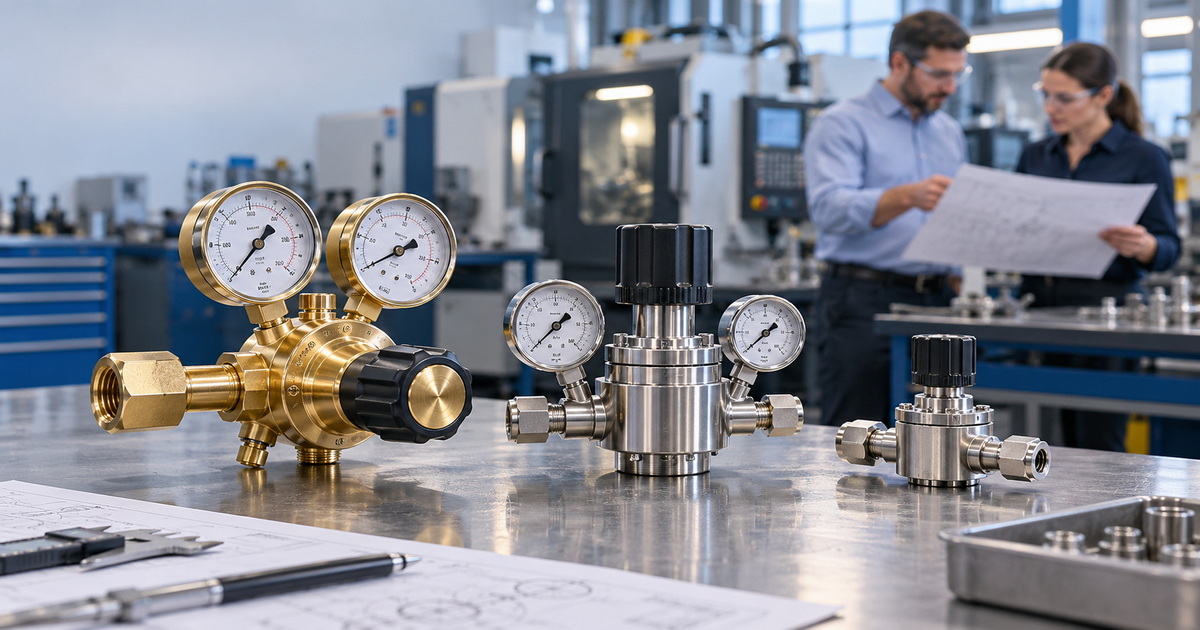
For common industrial gases, a high-quality brass body offers good machinability, corrosion resistance, and durability. However, component selection should be based on the gas and working environment.
A strong regulator design considers:
– Brass body and bonnet quality.
– Diaphragm material.
– Seat material.
– Gauge protection and readability.
– Thread quality and sealing design.
– Internal cleanliness.
– Leak testing and final pressure testing.
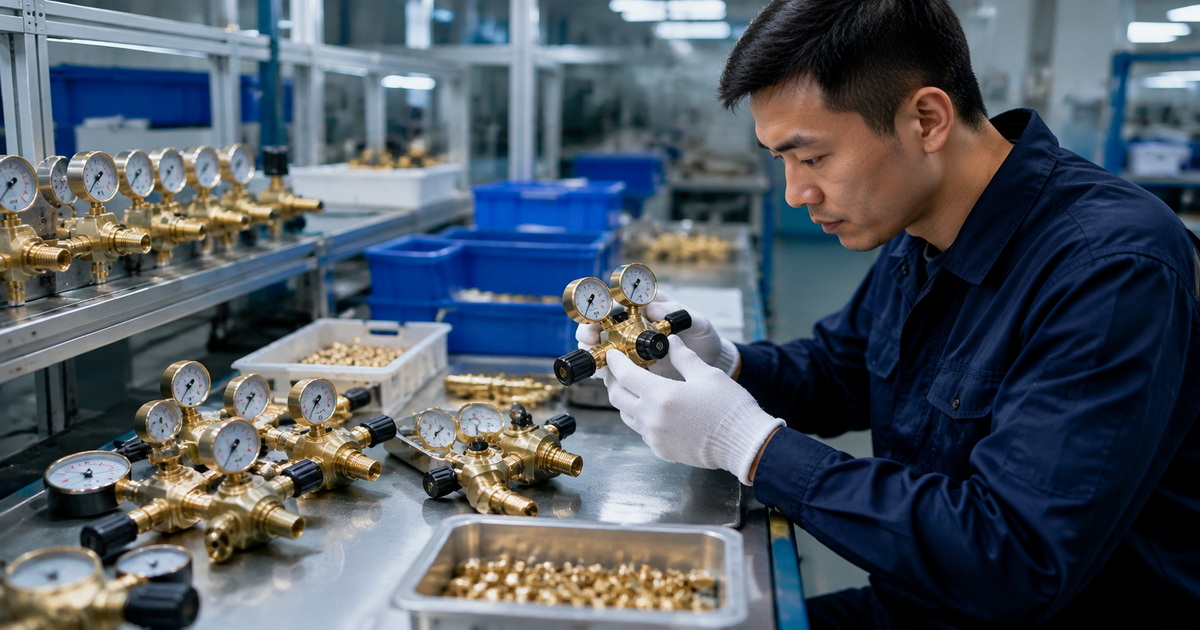
Avoid the “Same Gauge, Same Regulator” Mistake
From a manufacturing and sourcing perspective, one of the most common buyer mistakes is assuming two regulators are equivalent because they have similar gauges, knobs, or brass finishes.
They may differ in critical ways:
– Actual inlet-pressure rating.
– Seat sealing performance.
– Diaphragm sensitivity.
– Gauge accuracy.
– Thread tolerances.
– Safety relief design.
– Gas-specific cleaning requirements.
– Internal contamination control.
– Batch consistency and testing procedures.
For an overseas brand, importer, or distributor, the real product specification should be documented in an engineering data sheet—not inferred from appearance.
OEM/ODM Checklist for Gas Regulators
When developing a private-label or customized regulator program, confirm these points before mass production:
1. Define the target gas: CO₂, oxygen, argon, acetylene, propane, nitrogen, or mixed gas.
2. Confirm cylinder-valve connection requirements for the destination market.
3. State maximum inlet pressure and delivery-pressure range.
4. Select single-stage or dual-stage architecture.
5. Confirm required flow capacity and duty cycle.
6. Specify body material, diaphragm, seat, gauges, and outlet fitting.
7. Determine logo, color, packaging, instruction manual, and labeling requirements.
8. Establish incoming-material inspection, assembly checks, leak tests, gauge tests, and final inspection criteria.
9. Request pre-production samples and application validation before mass production.
10. Keep traceable batch and quality records for distribution support.
Installation and Safe Operating Steps
Even the best pressure reducing regulator cannot compensate for incorrect installation or poor operating practice.
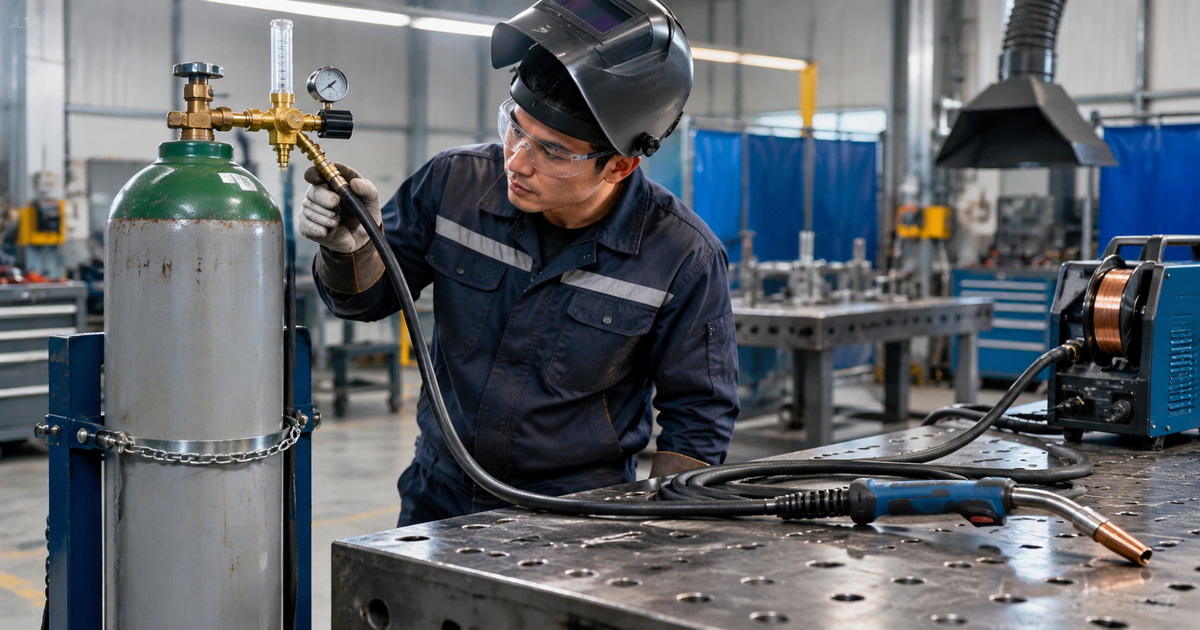
Basic Setup Procedure
1. Verify gas identity and confirm that the regulator is designed for that gas and cylinder connection.
2. Inspect the cylinder valve, regulator, gauges, threads, and seals for damage, contamination, or missing components.
3. Ensure the regulator adjustment knob is fully released before opening the cylinder valve.
4. Attach the regulator securely using the proper fitting and tool. Do not force incompatible threads.
5. Open the cylinder valve slowly while standing to the side of the regulator gauges.
6. Check for leaks with an approved leak-detection solution or appropriate gas-detection method.
7. Set the required delivery pressure gradually.
8. Monitor the system during use for pressure drift, frost, gauge damage, or abnormal leakage.
9. Close the cylinder valve after use, release downstream pressure, and back out the adjustment knob before storage or regulator removal.
NOAA’s regulator-use guidance similarly recommends fully opening the cylinder valve to pressurize the high side, setting delivery pressure through the adjustment handle, closing the cylinder valve, and turning the delivery handle fully counterclockwise to shut off the regulator.
Gas Pressure Reducing Regulator vs Standard Regulator: Which Should You Buy?
Choose a standard single-stage pressure regulator when your process is routine, the pressure tolerance is relatively broad, cylinder changes are frequent, and periodic adjustment is acceptable.
Choose a high-quality gas pressure reducing regulator, particularly a dual-stage regulator, when you need more stable outlet pressure, long operating cycles, better process repeatability, reduced adjustment, or reliable high cylinder pressure control.
For distributors and OEM brands, the best commercial approach is often to offer a structured product range:
– Standard single-stage regulators for cost-sensitive general industrial use.
– Heavy-duty regulators for higher flow and demanding fabrication environments.
– Dual-stage regulators for stable pressure control.
– Heated CO₂ regulators for applications with high CO₂ demand and frost risk.
– Gas-specific models for oxygen, acetylene, propane, argon, and nitrogen.
– Customized versions with branded gauges, fittings, packaging, and quality documentation.
Need a reliable gas regulator for your product line or industrial application? Contact our engineering and OEM/ODM team with your gas type, cylinder pressure, required outlet pressure, flow demand, fittings, and target market. We can help configure a precision brass CO₂, argon, oxygen, acetylene, propane, nitrogen, or dual-stage gas regulator for stable and dependable pressure control.
FAQ
1. Is a gas pressure reducing regulator the same as a pressure regulator?
In many industrial contexts, yes. A gas pressure reducing regulator is a pressure regulator specifically used to reduce higher inlet pressure to a lower outlet pressure. However, product performance varies widely based on stage design, inlet rating, gas compatibility, flow capacity, and outlet-pressure range.
2. When should I use a dual-stage gas regulator?
Use a dual-stage gas regulator when stable outlet pressure is important as cylinder pressure drops. It is especially suitable for long-duration processes, sensitive equipment, automated systems, laboratory work, and applications where frequent adjustment is undesirable.
3. Can I use the same regulator for oxygen and argon?
Not automatically. The regulator must have the correct cylinder connection, pressure rating, gas compatibility, and cleanliness level. Oxygen regulators require strict oxygen-service cleanliness and should never be contaminated with oil or grease. Connection systems are designed to reduce the risk of mixing incompatible gas equipment.
4. Why does my CO₂ regulator freeze during use?
CO₂ cooling can occur during rapid gas expansion, especially under high flow or continuous demand. A heated CO₂ regulator may help reduce frost-related interruption in suitable applications. Selection should also consider flow demand, ambient conditions, regulator capacity, and installation design.
5. Does a regulator control gas flow?
A standard pressure regulator controls pressure, not flow. Flow depends on the downstream restriction, pressure setting, hose size, equipment demand, and whether a dedicated flowmeter or flow-control device is used.
6. How do I confirm a regulator is suitable for high cylinder pressure?
Check the manufacturer’s documented maximum inlet-pressure rating, gas compatibility, cylinder connection, outlet-pressure range, flow capacity, construction materials, and test information. Do not rely on appearance, gauge size, or a generic product description alone.
7. What should OEM buyers customize on a gas regulator?
Common OEM/ODM options include brand logo, gauge face design, body finish, color coding, inlet and outlet fittings, pressure range, packaging, manuals, barcode labels, and inspection requirements. Critical pressure and safety specifications should be validated before production.
References
1. OSHA. “Compressed Gas and Equipment – Standards.” [OSHA]. Covers applicable OSHA standards for compressed-gas equipment and related workplace safety requirements. [osha]
2. National Oceanic and Atmospheric Administration. “Guidelines for Standard Gas Cylinder and Pressure Regulator Use.” [NOAA Global Monitoring Laboratory]. Provides practical operating guidance for pressurizing, setting, and shutting down cylinder regulators. [gml.noaa]
3. Lincoln Electric / Harris. “Harris 896 Technical Datasheet.” [Technical datasheet]. Documents a two-stage regulator design, approximately 90% first-stage pressure reduction, 230 bar maximum inlet pressure, and ISO 2503 reference. [ch-delivery.lincolnelectric]
4. Virginia Tech Environmental Health and Safety. “Compressed Gas Cylinders.” [Virginia Tech EHS]. Explains regulator selection, pressure control, flow-control distinctions, and compressed-gas safety guidance. [ehs.vt]
5. University of Southern California Environmental Health & Safety. “Gas Regulators.” [USC EHS]. Covers regulator compatibility, maximum cylinder pressure, outlet range, and CGA connection standards. [ehs.usc]
6. ISO / CEN. “EN ISO 2503:2009—Gas Welding Equipment: Pressure Regulators and Pressure Regulators with Flow-Metering Devices.” [Standard overview]. Describes requirements for single-stage and two-stage cylinder pressure regulators used in welding, cutting, and allied processes. [standards.iteh]
7. Harris Products Group. “Model 45-145-540 Single-Stage Pressure Regulator.” [Product specification]. Example of documented regulator material and delivery-pressure specifications. [harrisproductsgroup]
8. USA Safety. “Gas Cylinder Safety Guide.” [USA Safety]. Explains the functional difference between pressure reduction and flow control, including the role of single-stage and two-stage regulators. [usasafety]
Hot Tags: Gas Pressure Reducing Regulator, Standard Pressure Regulator, High Pressure Gas Regulator, Dual Stage Gas Regulator, Single Stage Gas Regulator, Industrial Gas Pressure Regulator, CO2 Pressure Regulator, Oxygen Pressure Regulator, Argon Gas Regulator, OEM Gas Regulator Manufacturer