Content Menu
● What Is the Difference Between Argon and CO₂ Gas Regulators?
● Argon Regulator vs CO₂ Regulator: Side-by-Side Comparison
● Why Cylinder Connections Cannot Be Ignored
>> Export Specification Checklist for Gas Connections
● How Shielding Gas Changes MAG Welding Results
>> Argon/CO₂ Mixed Gas in MAG Welding
● When Should You Use a CO₂ Heated Regulator?
● Regulator vs Flowmeter: Why Both Matter
● Expert Setup Procedure for Stable MAG Shielding Gas
>> 1. Confirm Gas and Connection Compatibility
>> 2. Inspect the Regulator Before Installation
>> 3. Close the Adjustment Knob First
>> 4. Open the Cylinder Valve Correctly
>> 6. Set Flow During Actual Gas Delivery
● How Manufacturers Build Better Argon and CO₂ Regulators
>> Brass Body and Internal Component Quality
>> Pressure Stability and Flow Repeatability
● Buying Recommendation: Which Regulator Is Best for MAG Welding?
● Choose the Right Regulator Partner
● FAQ
>> 1. Can I use an argon regulator for a CO₂ cylinder?
>> 2. Can I use a CO₂ regulator for argon/CO₂ mixed gas?
>> 3. Why does my CO₂ regulator freeze during welding?
>> 4. What gas flow should I use for MAG welding?
>> 5. Is a flowmeter better than a pressure gauge for MAG welding?
>> 6. Do I need a dual-stage gas regulator for MAG welding?
>> 7. What should an OEM buyer ask a gas regulator manufacturer?
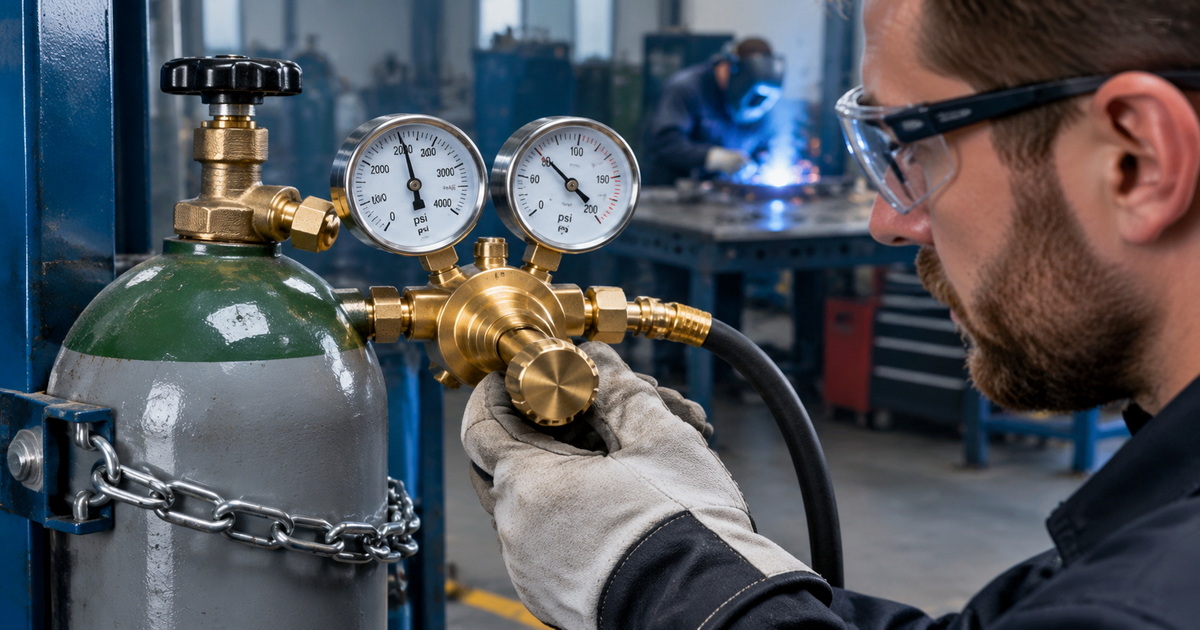
For MAG welding, an argon gas regulator and a CO₂ gas regulator may look similar, but they are not automatically interchangeable. The correct regulator must match the shielding gas, cylinder-valve connection, operating pressure characteristics, flow-control requirements, and the welding shop’s safety standards.
In practice, MAG welding commonly uses pure CO₂ or argon-rich shielding-gas blends such as 75% argon / 25% CO₂. The gas choice affects arc behavior, spatter, penetration, weld appearance, and the type of regulator connection required. For distributors, welding-equipment brands, and industrial buyers, choosing the wrong regulator can cause connection incompatibility, unstable gas delivery, leaks, poor weld quality, and unnecessary service claims.
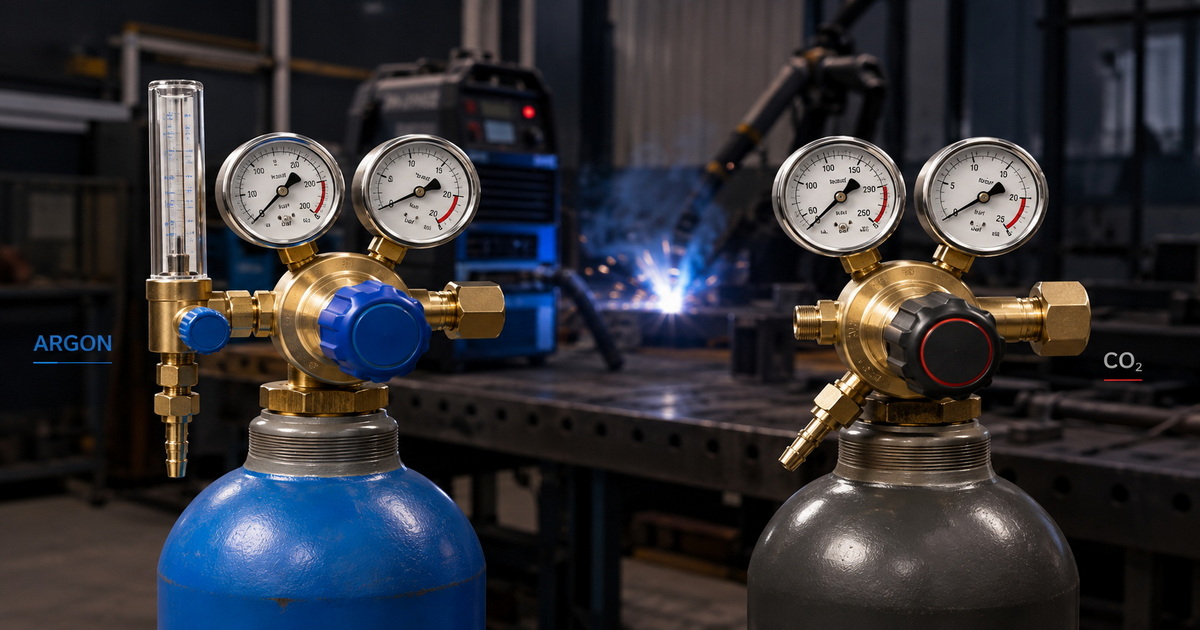
What Is the Difference Between Argon and CO₂ Gas Regulators?
Both products are pressure-reducing devices. They lower high cylinder pressure to a stable, controllable delivery pressure or gas-flow range suitable for a MAG welding machine. However, the most important differences are usually found in the inlet connection, gas-service design, and, in some markets, the need for features that manage CO₂ cooling effects.
An argon gas regulator for welding is generally designed for inert-gas cylinders and is widely used with argon, helium, nitrogen, and certain argon-based shielding-gas mixtures, depending on local cylinder-valve standards. In the United States, argon commonly uses a CGA-580 connection.
A CO₂ gas regulator is intended for carbon dioxide cylinders. In the U.S. market, CO₂ cylinders typically use a CGA-320 connection, which is different from CGA-580. This difference is intentional: standardized connections help prevent a regulator intended for one gas family from being installed on an incompatible cylinder.
For buyers, the first decision is therefore not simply “argon or CO₂?” It is:
1. What shielding gas will the end user connect?
2. Which cylinder-valve standard applies in the destination market?
3. Is the regulator specified for pure CO₂, pure argon, or a mixed shielding gas?
4. Does the welder need pressure control only, or a regulator with a flowmeter?
5. Will cold, high-duty-cycle, or automated welding conditions require a heated CO₂ regulator?
Argon Regulator vs CO₂ Regulator: Side-by-Side Comparison
| Comparison Factor | Argon Gas Regulator | CO₂ Gas Regulator | Why It Matters for MAG Welding |
|---|---|---|---|
| Primary gas service | Argon and inert-gas service | Carbon dioxide service | The regulator must be compatible with the actual shielding gas |
| Typical U.S. inlet connection | CGA-580 | CGA-320 | Incorrect fittings create installation and safety problems |
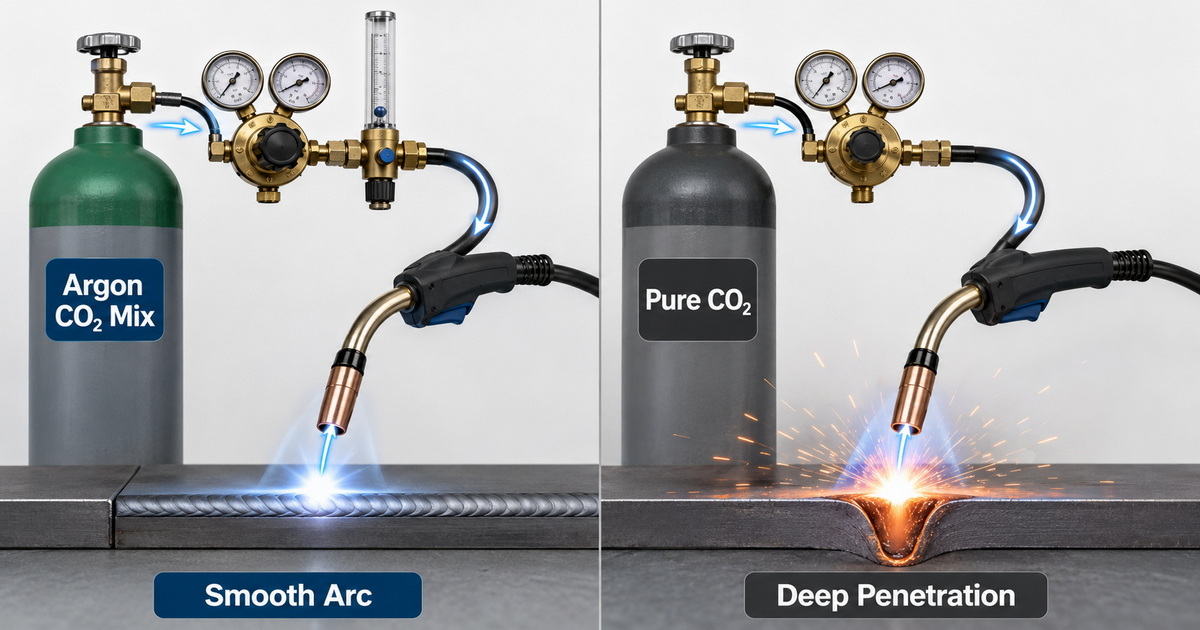
| Common MAG application | Argon/CO₂ mixed gas, argon-rich blends, specialized metal applications | Pure CO₂ MAG welding | Shielding gas influences penetration, spatter, and arc characteristics |
| Cylinder gas behavior | Usually supplied as compressed gas | Often stored as liquefied CO₂ with vapor pressure behavior | CO₂ flow can cause cooling and frost at high draw rates |
| Heated option | Less commonly required | Often specified for demanding CO₂ use | Heating helps reduce regulator freeze-up risks in specific applications |
| Flow-control format | Pressure gauge, flow gauge, or flowmeter | Pressure gauge, flow gauge, flowmeter, or heated flow-control design | Welding requires repeatable shielding-gas delivery |
| Typical material selection | Brass body, durable diaphragm, corrosion-resistant internal components | Brass body, seals and valve components suitable for CO₂ service | Material quality influences durability and pressure stability |
| OEM/ODM customization focus | Connection type, gauge scale, outlet fitting, hose configuration, branding | Heating voltage, anti-freeze design, connection type, gauge scale, branding | Export brands must align specifications with local requirements |
The most visible difference is the cylinder connection. A regulator may be mechanically high quality and still be unusable if its inlet nut and nipple do not match the customer’s gas cylinder valve.
Why Cylinder Connections Cannot Be Ignored
A common sourcing mistake is to assume that a “universal MIG regulator” will fit every welding-gas cylinder. It will not.
The Compressed Gas Association connection system assigns specific cylinder-valve and regulator-inlet fittings to gases or gas families. For example, CGA-580 is associated with inert, nonflammable gases such as argon, helium, and nitrogen, while CO₂ commonly uses a distinct connection such as CGA-320.
This has direct implications for importers and private-label welding brands:
– A regulator for the U.S. market may not fit cylinders in Europe, Australia, the United Kingdom, South America, or the Middle East.
– A distributor selling both argon and CO₂ products may need two regulator inlet configurations.
– A combined argon/CO₂ regulator may require interchangeable adapters, dual inlet options, or market-specific SKUs.
– The regulator’s outlet should also match the hose, welding machine, quick connector, or flowmeter configuration required by the customer.
Never recommend adapters as the default solution without checking local regulations, gas supplier practices, seal requirements, and final-use safety expectations. The better commercial approach is to manufacture the regulator with the correct inlet connection from the beginning.
Export Specification Checklist for Gas Connections
Before confirming an OEM regulator order, request the following information from the buyer:
– Target country or market
– Gas type: pure argon, pure CO₂, Ar/CO₂ blend, oxygen, nitrogen, or another gas
– Cylinder-valve connection standard
– Required inlet thread or nut-and-nipple format
– Outlet connection type and hose size
– Gauge units: PSI, bar, MPa, L/min, CFH, or mixed scales
– Required flow range
– Required delivery-pressure range
– Need for a flowmeter, flow gauge, or heated system
– Packaging, logo, instruction manual, and certification requirements
This process reduces rework and makes an OEM/ODM proposal more credible for professional welding-supply buyers.
How Shielding Gas Changes MAG Welding Results
MAG welding is a form of gas metal arc welding that uses active shielding gases or active gas mixtures. For carbon steel, argon/CO₂ mixtures and pure CO₂ are common options. The American Welding Society notes that mild steel commonly uses a mixture of carbon dioxide and argon, while pure argon is commonly applied to aluminum welding.
The regulator does not change the chemical composition of the gas. However, it must deliver the selected gas consistently enough for the operator to obtain repeatable weld performance.
Pure CO₂ in MAG Welding
Pure CO₂ is widely used because it can offer strong penetration and economical gas cost. It may be a practical choice for general steel fabrication, repair work, structural components, agricultural equipment, and high-volume production where appearance requirements are moderate.
Potential characteristics include:
– Strong penetration on carbon steel
– Lower gas cost in many regions
– More spatter than argon-rich blends in many applications
– A less stable or harsher arc compared with some mixed gases
– Greater attention needed for regulator freezing under high withdrawal conditions
Because CO₂ is commonly stored as a liquefied gas, rapid gas withdrawal can create a pronounced cooling effect. In cold workshops or high-duty-cycle welding, moisture can freeze around the regulator or cylinder valve, potentially restricting flow. A CO₂ heated regulator can be an appropriate solution where the duty cycle, ambient temperature, and gas-consumption rate justify it.
Argon/CO₂ Mixed Gas in MAG Welding
Argon/CO₂ blended shielding gas is often selected when welders want a smoother arc and more controlled weld-bead appearance. A 75% argon / 25% CO₂ blend is a familiar combination for carbon-steel welding procedures, including short-circuit GMAW applications.
Potential advantages include:
– Smoother arc performance
– Reduced spatter compared with pure CO₂ in many setups
– Improved bead appearance
– Good all-around performance for mild-steel MIG/MAG fabrication
– Compatibility with common argon-style regulator connections in many markets, subject to local gas-cylinder standards
The correct choice still depends on wire type, base-metal thickness, welding position, transfer mode, joint design, gas availability, and weld-quality requirements. AWS guidance emphasizes that shielding gases affect arc characteristics and weld outcomes across welding processes.
When Should You Use a CO₂ Heated Regulator?
A heated CO₂ regulator is not necessary for every welding operation. But it can prevent avoidable interruptions in certain industrial environments.
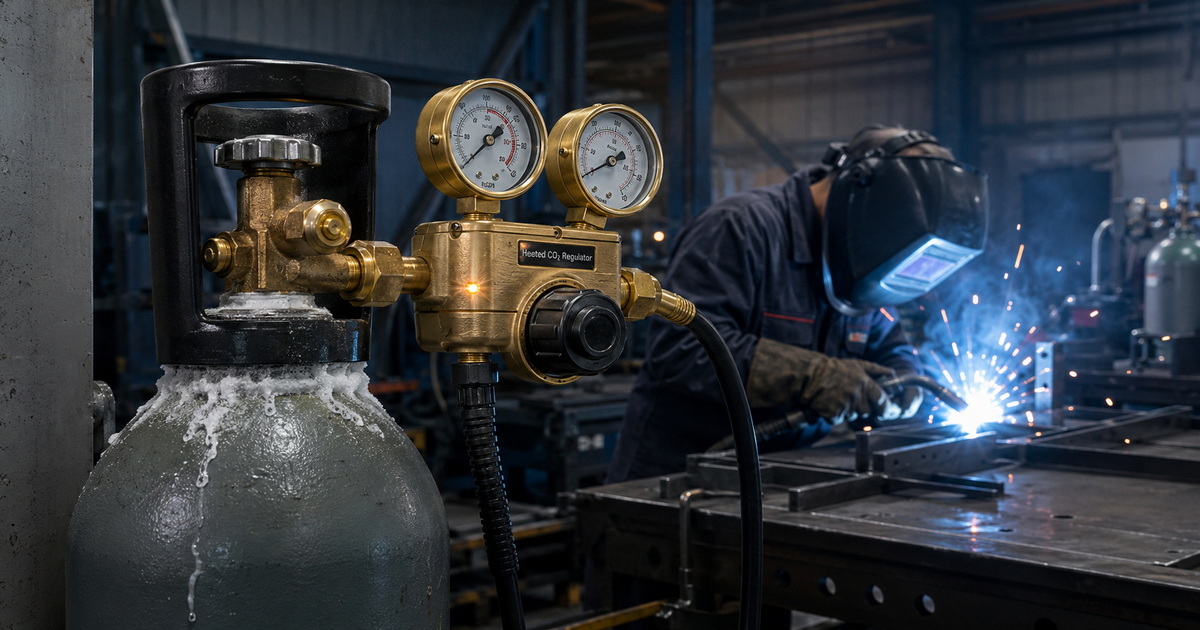
From a manufacturing and after-sales perspective, I recommend evaluating a heated CO₂ regulator when the application has one or more of these conditions:
– High gas consumption during long welding cycles
– Multiple shifts or continuous production
– Cold ambient temperatures
– Large-diameter wire or high-deposition welding
– Repeated complaints about frost, pressure drop, or unstable shielding-gas flow
– Automated welding cells that cannot tolerate unexpected gas-flow interruption
A heated regulator generally uses an electrical heating element to counteract cooling around the regulator body. Buyers must specify the correct voltage, plug style, electrical safety requirements, cable length, power rating, and local compliance expectations.
For OEM projects, a heated CO₂ regulator should be treated as a technical product, not merely a cosmetic variation. The manufacturer should validate:
– Heating consistency
– Electrical insulation
– Cable and plug quality
– Thermostat or temperature-control reliability
– Regulator-pressure stability
– Leak performance
– Long-duration operational safety
Regulator vs Flowmeter: Why Both Matter
Many buyers use the words “regulator” and “flowmeter” interchangeably. They perform related but different functions.
A pressure regulator reduces cylinder pressure to a lower, controlled working pressure. A flowmeter indicates the volume of shielding gas flowing to the welding torch, often in CFH or L/min.
For MAG welding, gas flow is usually the setting that the welder needs to adjust most directly. Flowmeters are generally more accurate for observing gas-flow volume than relying on a pressure-only gauge.
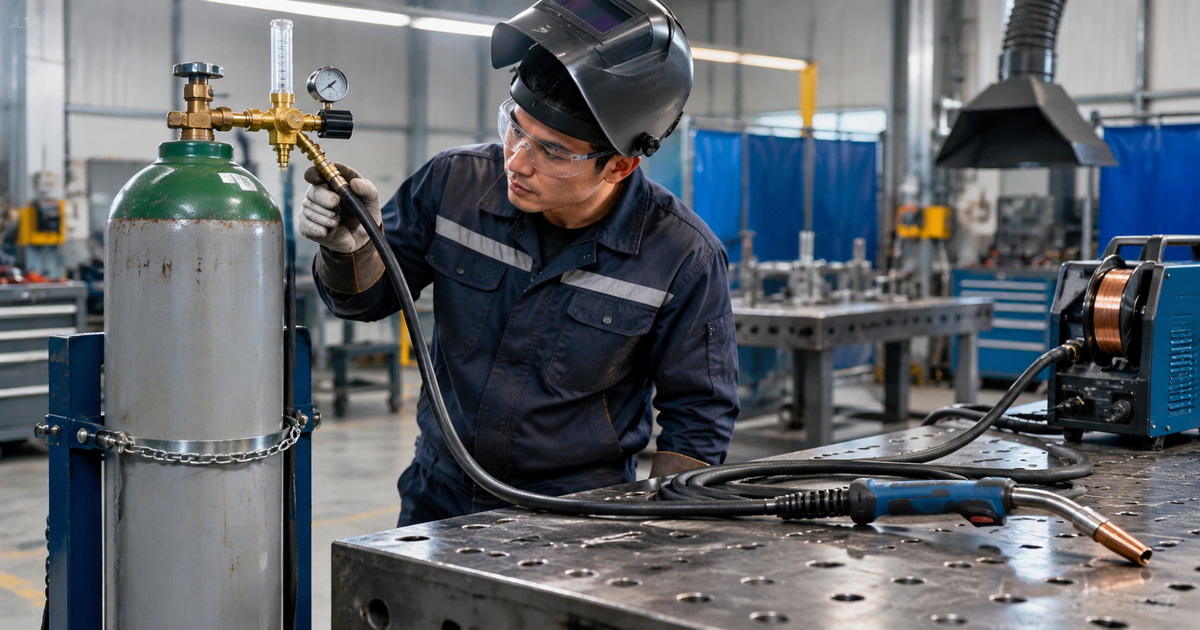
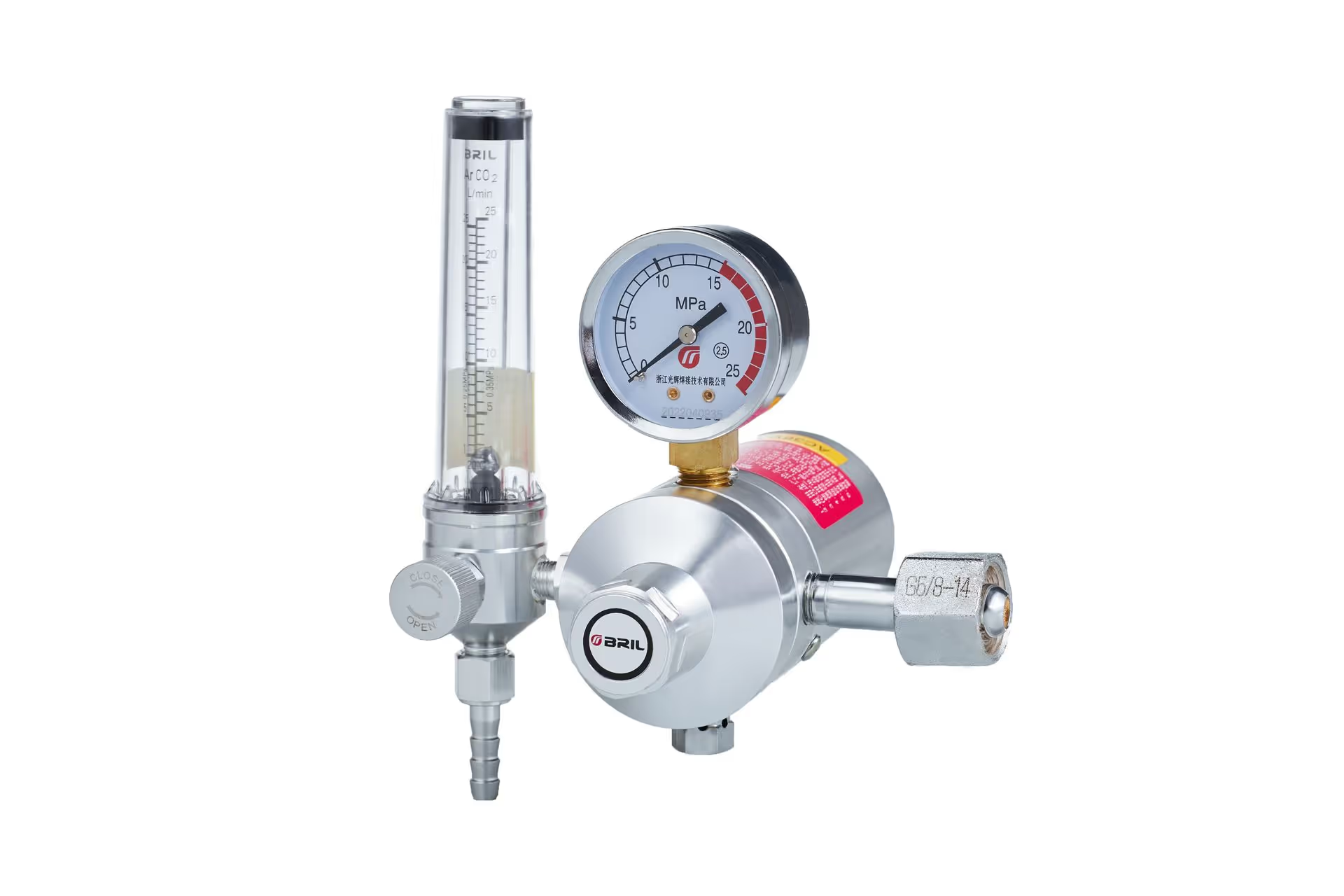
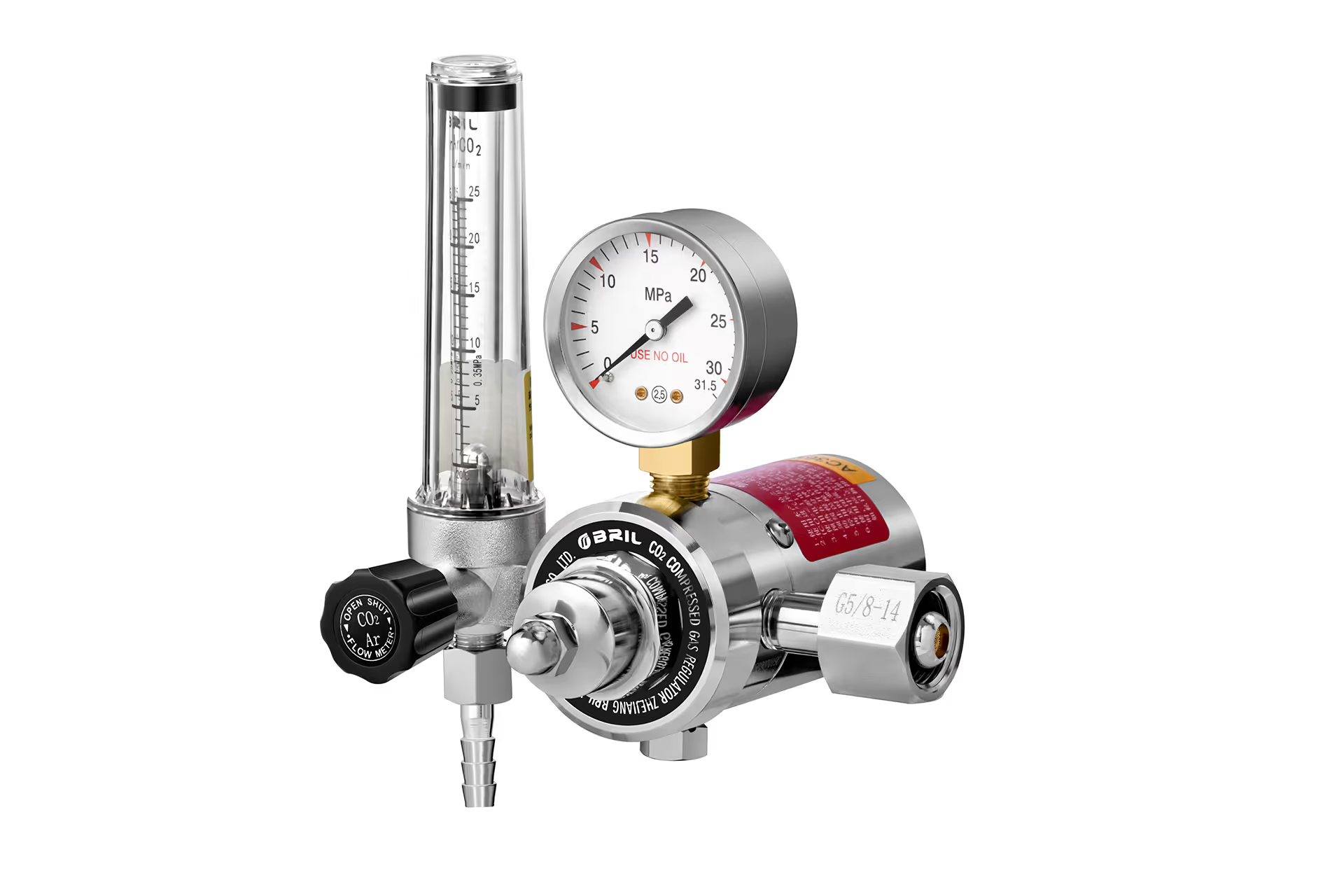
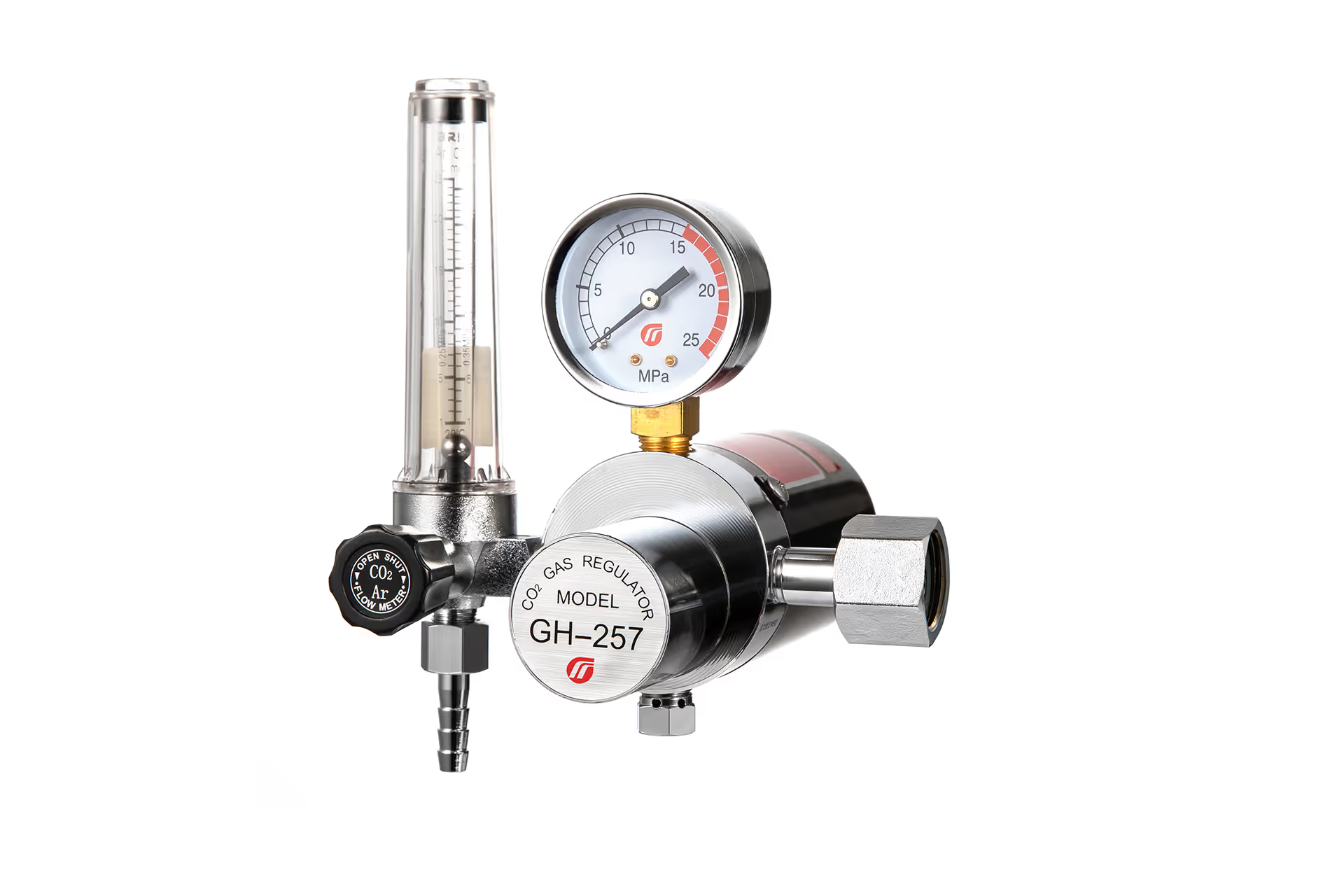
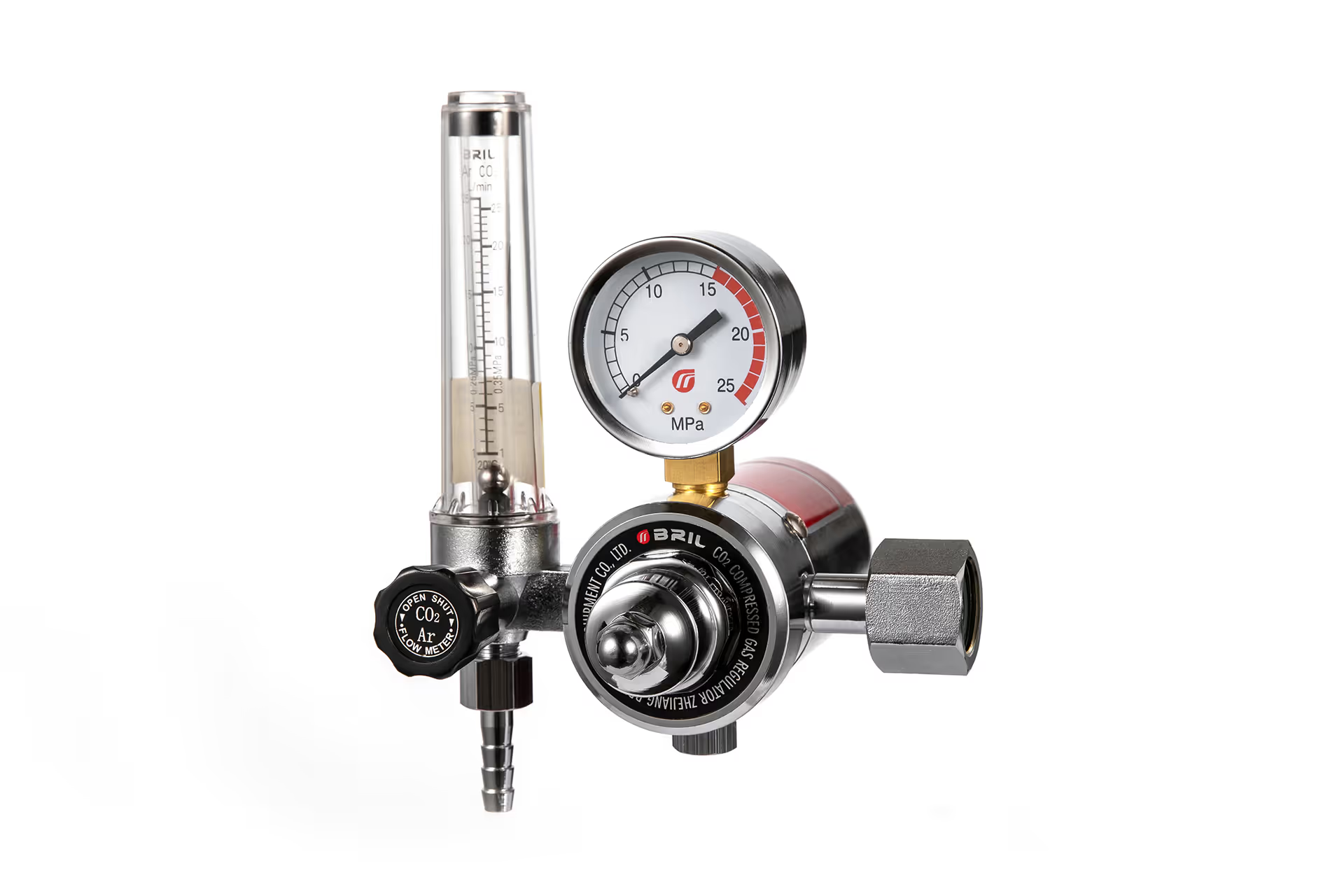
A practical welding regulator assembly may include:
– High-pressure cylinder gauge
– Low-pressure or delivery-pressure gauge
– Vertical flowmeter tube
– Ball-type flow indicator
– Flow-control valve
– Hose barb or quick-connect outlet
– Safety-relief design where required
– Optional heater for CO₂ service
For many MIG/MAG applications, published practical guides commonly place shielding-gas flow in the approximate range of 15–30 CFH, but the final value should be set according to welding process, nozzle size, draft conditions, joint access, and the welding procedure specification.
Important operating rule: Set the final flow while gas is actually flowing through the torch, such as when the trigger is pressed or the gas solenoid is activated. A static reading can be misleading.
Expert Setup Procedure for Stable MAG Shielding Gas
A dependable gas regulator is only one part of weld quality. The setup process matters just as much.
1. Confirm Gas and Connection Compatibility
Verify the cylinder label and gas composition. Then confirm that the regulator inlet matches the cylinder valve without forcing, modifying, or improvising the connection.
For example:
– Pure argon cylinder: typically requires an argon-compatible connection.
– Pure CO₂ cylinder: typically requires a CO₂-compatible connection.
– Argon/CO₂ mix: verify the exact cylinder-valve standard with the gas supplier.
2. Inspect the Regulator Before Installation
Check the inlet seal, gauges, flowmeter tube, outlet fitting, hose connection, and adjustment knob. Do not install a regulator with cracked gauges, damaged threads, missing seals, or contaminated fittings.
3. Close the Adjustment Knob First
Before opening the cylinder valve, turn the regulator adjustment knob counterclockwise until no spring force is applied. This supports a more controlled pressurization sequence.
4. Open the Cylinder Valve Correctly
Open the cylinder valve slowly while standing to the side of the regulator gauges. This helps reduce the risk associated with sudden pressurization and makes it easier to identify abnormal leaks or gauge behavior.
5. Perform a Leak Check
Use an approved leak-detection solution around connections. If bubbles appear, stop, depressurize the system, and correct the issue before welding. NOAA’s regulator guidance also recommends rechecking for leaks after tightening or repositioning regulator connections.
6. Set Flow During Actual Gas Delivery
Activate the gas flow through the torch, then adjust to the welding procedure’s required flow rate. Avoid excessive flow. Too much shielding gas can create turbulence and draw surrounding air toward the weld zone.
7. Monitor Welding Results
If porosity, excessive spatter, arc instability, or inconsistent bead appearance occurs, check the whole shielding-gas system:
– Gas composition
– Cylinder pressure and gas availability
– Regulator function
– Flowmeter reading
– Hose leakage
– Torch consumables
– Nozzle contamination
– Drafts and crosswinds
– Welding parameters
How Manufacturers Build Better Argon and CO₂ Regulators
For professional distributors and OEM brands, the lowest unit cost is rarely the best purchasing benchmark. A regulator is a pressure-control component placed between a high-pressure gas cylinder and a welding process. Its material quality, assembly accuracy, and inspection discipline directly influence customer confidence.
A high-quality argon or CO₂ gas regulator should be evaluated through several manufacturing criteria.
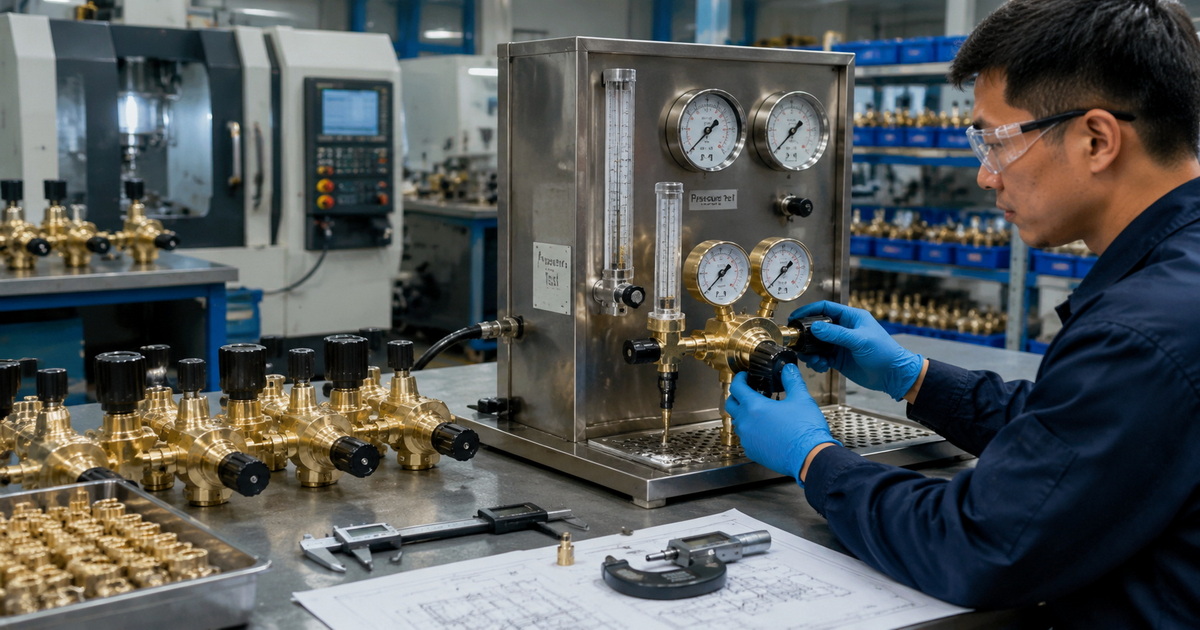
Brass Body and Internal Component Quality
Brass remains a preferred material for many welding-gas regulator bodies because of its machinability, durability, and suitability for industrial gas-service components. However, buyers should look beyond the word “brass.”
Ask about:
– Brass grade and traceability
– Forged versus machined body construction
– Wall thickness in high-pressure areas
– Thread accuracy
– Valve-seat design
– Diaphragm material
– Seal compatibility
– Gauge quality and calibration process
Pressure Stability and Flow Repeatability
A regulator should not only reduce pressure. It should maintain stable output as cylinder pressure decreases and as welding demand changes.
Useful quality-control checks include:
– Inlet-pressure leak test
– Outlet-pressure leak test
– Pressure-creep test
– Delivery-pressure stability test
– Flow calibration verification
– Gauge accuracy verification
– Thread and connection inspection
– Long-cycle endurance testing
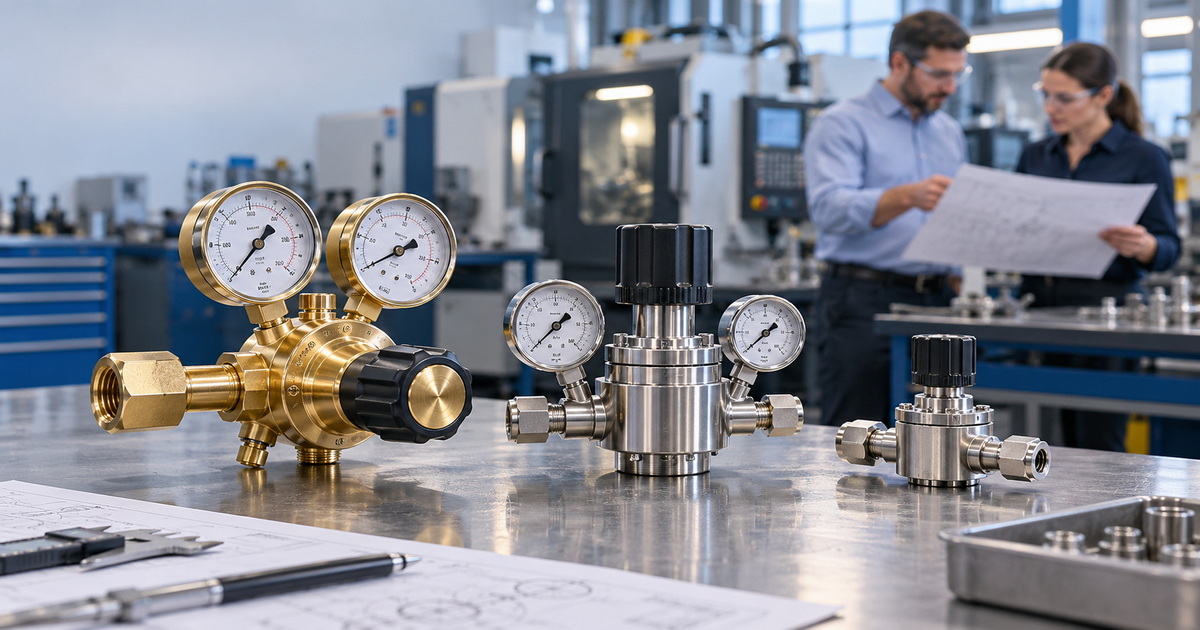
OEM and ODM Customization
For overseas brands, OEM/ODM capability should include practical engineering support, not only logo printing.
A capable supplier can support:
– Market-specific inlet fittings
– Custom outlet connections
– Gauge faces in PSI, bar, MPa, CFH, or L/min
– Private-label logos and color schemes
– Retail-ready packaging
– Multilingual manuals
– Heated CO₂ options
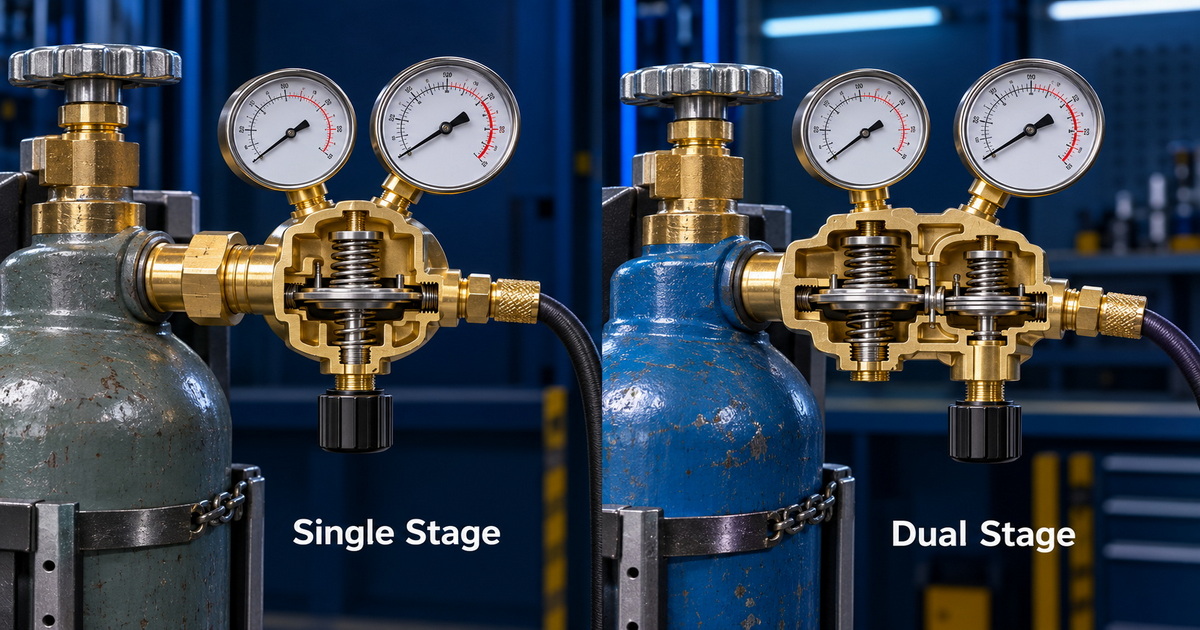
– Single-stage and dual-stage gas regulator designs
– Customized flow ranges and delivery pressures
– Product-inspection reports and batch traceability
Dual-stage gas regulators may be worth considering when exceptionally stable delivery pressure is important. By reducing pressure in two stages, they can offer better stability as cylinder pressure changes, although they are typically more complex and may cost more than standard single-stage designs.
Buying Recommendation: Which Regulator Is Best for MAG Welding?
There is no universal winner. The correct regulator depends on the shielding gas and the working environment.
| Application Scenario | Recommended Regulator Choice | Reason |
|---|---|---|
| Mild-steel MAG welding with pure CO₂ | CO₂ gas regulator | Correct CO₂ cylinder connection and suitable CO₂-service configuration |
| High-duty-cycle pure CO₂ welding | Heated CO₂ gas regulator | Helps address cooling or frost-related flow interruption risks |
| Mild-steel MAG welding with Ar/CO₂ blend | Argon/mixed-gas regulator with the correct local inlet | Supports common mixed-gas welding applications |
| Mobile repair welding | Compact regulator with durable gauges and protected body | Better portability and resistance to jobsite handling |
| Automated welding line | Stable, high-quality regulator or dual-stage design where needed | Consistent gas delivery supports repeatable production |
| Distributor private-label project | Customized regulator platform | Enables local fittings, branded gauges, packaging, and compliance documentation |
The best purchasing decision is based on a documented application specification rather than product photos alone. A reliable manufacturer should help convert your target market, gas type, fitting standard, pressure range, flow range, and branding requirements into a clear technical proposal.
Choose the Right Regulator Partner
For MAG welding, the correct answer is not simply “argon regulator” or “CO₂ regulator.” It is a regulator engineered for the actual shielding gas, local cylinder connection, welding duty cycle, required flow range, and end-user environment.
If you are sourcing gas regulators for a welding brand, distributor network, or industrial equipment project, work with a manufacturer that can provide stable pressure control, quality brass construction, strict leak and performance inspection, and OEM/ODM customization for your export market.
Contact us to discuss your argon regulator, CO₂ regulator, heated CO₂ regulator, or dual-stage gas regulator requirements. Share your target market, gas type, fitting standard, gauge units, flow range, and branding needs, and we can help develop a suitable industrial gas-control solution.
FAQ
1. Can I use an argon regulator for a CO₂ cylinder?
Usually, no. The cylinder-valve connection is commonly different. In the U.S., argon commonly uses CGA-580, while CO₂ commonly uses CGA-320. Always confirm the gas supplier’s valve specification and use a regulator designed for the correct gas and connection.
2. Can I use a CO₂ regulator for argon/CO₂ mixed gas?
Not automatically. The answer depends on the cylinder valve and regional connection standard for that specific mixed gas. Confirm the cylinder inlet requirement before purchasing. The safest solution is a regulator manufactured with the correct inlet for the exact gas cylinder used by the customer.
3. Why does my CO₂ regulator freeze during welding?
Rapid CO₂ withdrawal can cool the cylinder valve and regulator. Frost may be more likely in cold environments, during long welding cycles, or when gas consumption is high. A heated CO₂ regulator, correct cylinder sizing, and appropriate gas-delivery design may help reduce this problem.
4. What gas flow should I use for MAG welding?
Many practical MIG/MAG welding applications use roughly 15–30 CFH, but the correct setting depends on nozzle size, wire diameter, welding position, drafts, process parameters, and the qualified welding procedure. Set the flow while gas is actively flowing through the torch.
5. Is a flowmeter better than a pressure gauge for MAG welding?
A flowmeter is generally more useful for setting shielding-gas volume because it shows actual flow in units such as CFH or L/min. A pressure regulator remains essential for reducing cylinder pressure, while the flowmeter provides more direct control of welding-gas delivery.
6. Do I need a dual-stage gas regulator for MAG welding?
Not for every application. A single-stage regulator is suitable for many standard welding tasks. A dual-stage regulator can be valuable where highly stable delivery pressure is required during long runs, precision work, automated production, or applications sensitive to cylinder-pressure changes.
7. What should an OEM buyer ask a gas regulator manufacturer?
Ask about body material, pressure range, flow range, inlet and outlet fittings, gauge scale, flowmeter accuracy, leak testing, pressure-creep testing, heating options, packaging, private-label capability, inspection records, and target-market compliance requirements.
References
1. American Welding Society. “[What Is Gas Metal Arc Welding?]” Explains common shielding-gas applications, including argon/CO₂ mixtures for mild steel and pure argon for aluminum. [aws]
2. American Welding Society. “[Recommended Practices for Shielding Gases for Welding and Cutting]” Covers industrial shielding gases, handling, gas properties, and their effects on welding processes and arc characteristics. [pubs.aws]
3. American Welding Society. “[AWS B2.1-1-232:2020 Standard Welding Procedure Specification]” Includes a procedure using 75% argon / 25% CO₂ shielding gas for carbon-steel welding conditions. [webstore.ansi]
4. CONCOA. “[CGA Fitting Reference]” Provides examples of standardized compressed-gas cylinder connection types, including CGA-580 for argon and CGA-320 for CO₂. [concoa]
5. National Oceanic and Atmospheric Administration. “[Guidelines for Standard Gas Cylinder and Pressure Regulator Use]” Provides leak-checking and regulator-operation guidance. [gml.noaa]
6. The Fabricator. “[A Guide to Shielding Gases for GMAW]” Discusses gas choice, CO₂ content, and regulator considerations for GMAW applications. [thefabricator]
7. SPARC. “[Ultimate Argon Regulator and Flowmeter Guide for MIG and TIG]” Discusses the difference between pressure regulation and flow measurement for shielding gas. [sparc-usa]
Hot Tags: Argon Gas Regulator, CO₂ Gas Regulator, MAG Welding Gas Regulator, CO₂ Heated Regulator, Welding Gas Regulator Manufacturer, Industrial Gas Pressure Regulator, Dual Stage Gas Regulator, MIG Welding Flowmeter Regulator, OEM Gas Regulator Supplier, Welding Gas Control Solutions