Content Menu
● Why Source Gas Pressure Reducing Regulators From Turkey?
>> An Established Machinery Export Base
>> A Relevant Manufacturing Corridor Around Istanbul, Kocaeli, and Sakarya
● Selection Criteria: How These Suppliers Were Evaluated
● Supplier Comparison: Product Focus, Capacity, MOQ, and Certification
● 1. Zhejiang Bril Welding Equipment Co., Ltd.
>> An International OEM Alternative for Buyers Comparing Turkish and Chinese Supply
>> Core Strengths and Purchasing Relevance
>> OEM/ODM Scope and Main Markets
>> A Directly Relevant Turkish Welding Regulator Manufacturer
>> Main Markets and OEM/ODM Scope
>> A Broad Welding Supply Partner With Gas Regulator Products
>> Main Markets and OEM/ODM Scope
>> A Process-Control Supplier for Natural Gas and Propane Applications
>> Main Markets and OEM/ODM Scope
>> A Specialist in Natural Gas Regulation and Safety Systems
>> Main Markets and OEM/ODM Scope
● Technical Buyer’s Guide: What to Check Before Comparing Prices
>> Match the Standard to the Regulator’s Actual Function
>> Specify Materials Rather Than “High-Quality Brass”
>> Treat Oxygen Cleanliness as a Separate Requirement
>> Evaluate CE and RoHS Claims by Product Configuration
● An Overlooked Procurement Trap: Testing the Gauge Instead of the Regulator
● Common Sourcing Problems and How to Reduce Them
● From Supplier Shortlist to First Shipment
>> Step 1: Issue a Complete Technical RFQ
>> Step 2: Qualify the Factory and Documentation
>> Step 3: Approve Samples Against Written Criteria
>> Step 4: Place a Pilot Order
>> Step 5: Define Logistics and Warranty Responsibilities
● Conclusion: Build a Shortlist Around Product Fit and Verifiable Evidence
● FAQ
>> 1. How Can I Check Whether a Supplier’s ISO 9001 Certificate Is Expired or Suspended?
>> 2. Can One Regulator Design Be Used for Oxygen, Argon, Nitrogen, and Acetylene?
>> 3. Is ISO 2503 Evidence Sufficient for a Nitrogen Regulator With a 50-Bar Outlet?
>> 4. How Can Buyers Distinguish Genuine ODM Capability From Private Labeling?
>> 5. What Should Happen if Production Units Differ From the Approved Sample?
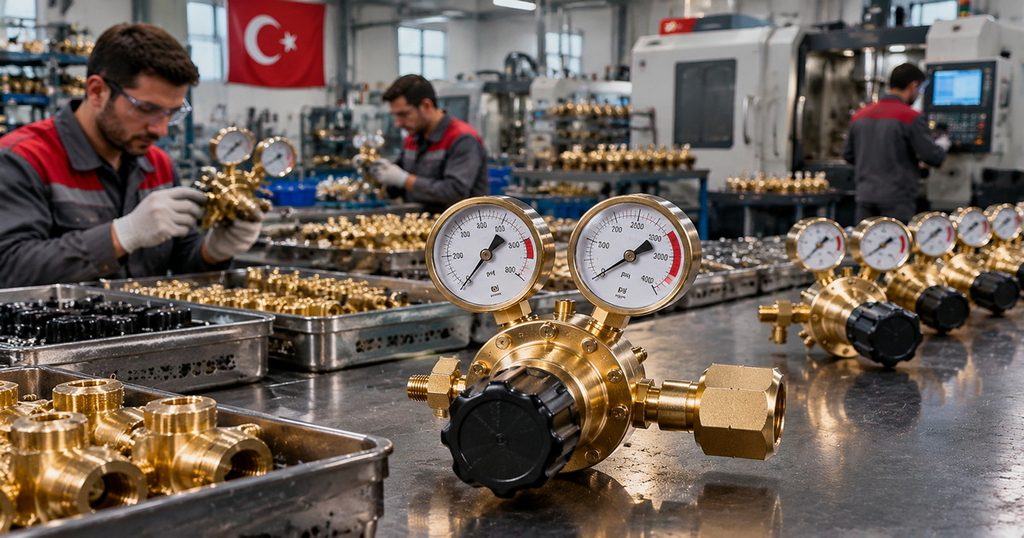
Turkey offers a practical sourcing base for industrial gas control equipment, particularly for buyers supplying welding workshops, fabrication plants, industrial maintenance contractors, and gas distribution projects. Its supplier landscape includes dedicated welding regulator manufacturers, broader welding equipment companies, and specialists in natural gas pressure control.
However, selecting a Gas Pressure Reducing Regulator supplier requires more than comparing catalog prices. A dependable partner must demonstrate gas-specific engineering, traceable materials, repeatable inspection procedures, and the ability to maintain the approved specification across production batches.
Why Source Gas Pressure Reducing Regulators From Turkey?
An Established Machinery Export Base
The Machinery Exporters’ Association reports that Turkey exported approximately US$28.707 billion in machinery during 2025, compared with US$28.312 billion in 2024—an increase of 1.4%. These figures describe the wider machinery sector, not the size of Turkey’s gas regulator market. They nevertheless provide useful context for the country’s industrial export capabilities.
For regulator buyers, the more relevant consideration is the presence of established companies with dedicated product ranges and international distribution experience.
Yıldız publishes a welding and cutting regulator portfolio, Gedik supplies industrial gas regulators alongside welding equipment, and ESKA manufactures pressure-control equipment for natural gas distribution and industrial installations.
A Relevant Manufacturing Corridor Around Istanbul, Kocaeli, and Sakarya
The supplier locations reviewed here illustrate a concentration of relevant manufacturing activity across northwestern Turkey:
– Yıldız identifies an Istanbul manufacturing facility.
– SMS-TORK manufactures in the IMES Organized Industrial Zone in Dilovası, Kocaeli.
– ESKA operates a manufacturing facility in Arifiye, Sakarya.
– Gedik’s welding and cutting catalog identifies operations in Istanbul and Sakarya.
This corridor is a useful starting point for planning supplier visits. However, geographic proximity should not substitute for a factory audit or confirmation that the specific regulator model is manufactured at the address being evaluated.
Selection Criteria: How These Suppliers Were Evaluated
| Selection criterion | Evidence buyers should request | Why it matters |
|---|---|---|
| Manufacturing identity | Legal registration, factory address, production-process map | Distinguishes manufacturers from resellers and identifies outsourced operations |
| Product and gas suitability | Model-specific datasheets, gas compatibility, inlet and outlet ratings | Prevents selection of an unsuitable regulator family |
| Engineering capability | Drawings, change-control procedures, performance reports | Supports repeatable customization rather than cosmetic relabeling |
| Quality control | Material records, calibration records, leakage and functional test procedures | Helps determine whether production can consistently match approved samples |
| Compliance documentation | Current certificates, applicable declarations, relevant test reports | Connects claims to the exact product and destination market |
| Delivery and after-sales support | Capacity evidence, lead-time history, spare-parts policy | Tests the supplier’s ability to support a long-term purchasing program |
Supplier Comparison: Product Focus, Capacity, MOQ, and Certification
| Supplier | Established | Main sourcing fit | Public capacity information | Public MOQ | Certification and documentation position |
|---|---|---|---|---|---|
| Zhejiang Bril Welding Equipment Co., Ltd. | 2002 | China-based OEM alternative for welding and industrial gas regulators | Reports 200+ employees and more than 3,500 m² of production area; monthly regulator output not disclosed | Not publicly disclosed | Company reports ISO 9001 and CE-related credentials; verify issuer, scope, and model coverage |
| Yıldız Gaz Armatürleri | 1979 | Turkish welding and cutting regulators; documented OEM activity | Reports 120+ personnel and 18,000 m² enclosed factory area; monthly regulator output not disclosed | Not publicly disclosed | Reports ISO 9001; selected regulator pages state EN ISO 2503 conformity |
| Gedik Welding | 1963 | Broad welding equipment procurement, including gas regulators | Published consumables tonnage is not regulator capacity; regulator output not disclosed | Not publicly disclosed | Obtain regulator-specific reports; do not transfer approvals from other product categories |
| SMS-TORK | 1985 | Process control, natural gas, and propane pressure regulation | Reports a 9,000 m² enclosed manufacturing facility; regulator-specific output not disclosed | Not publicly disclosed | Confirm documentation for the selected regulator and configuration |
| ESKA Valve | 1968 | Natural gas distribution and industrial gas-control installations | Current Sakarya manufacturing location disclosed; regulator-specific output not disclosed | Not publicly disclosed | Request current model-specific conformity and performance documentation |
1. Zhejiang Bril Welding Equipment Co., Ltd.
An International OEM Alternative for Buyers Comparing Turkish and Chinese Supply
Founded in 2002, Zhejiang Bril Welding Equipment Co., Ltd. is based in Wenzhou, Zhejiang, China. Its published profile describes a business focused on developing, manufacturing, and selling industrial gas pressure regulators. The company reports more than 200 employees, over 3,500 m² of production area, and sales to more than 30 countries and regions. These are company-reported figures rather than independently audited capacity measurements.
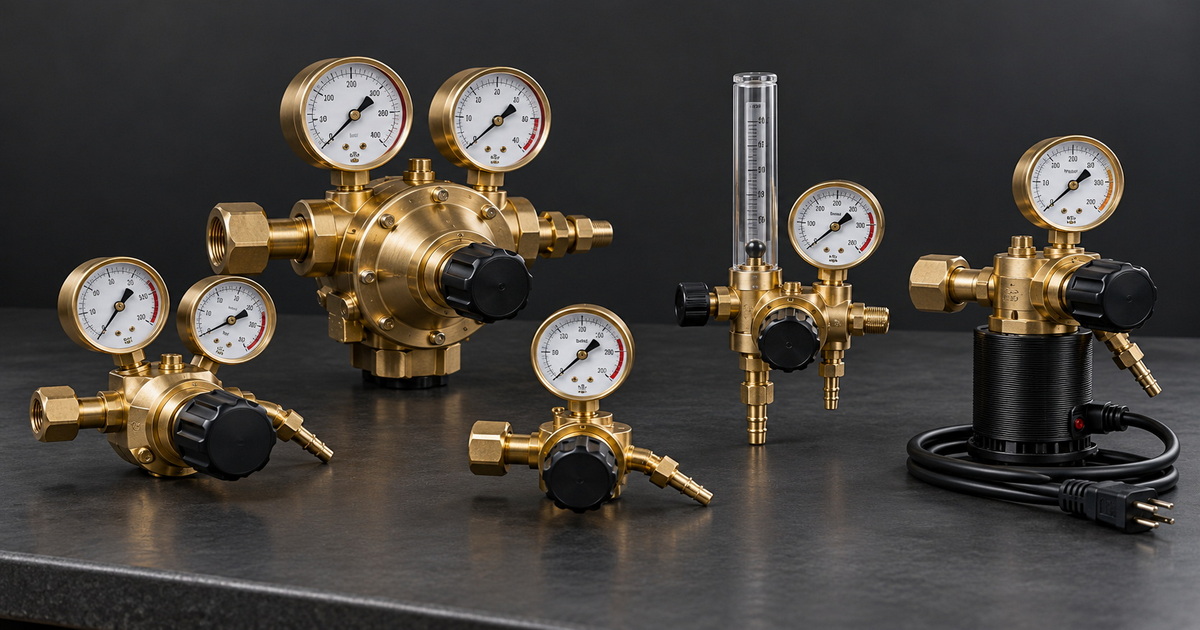
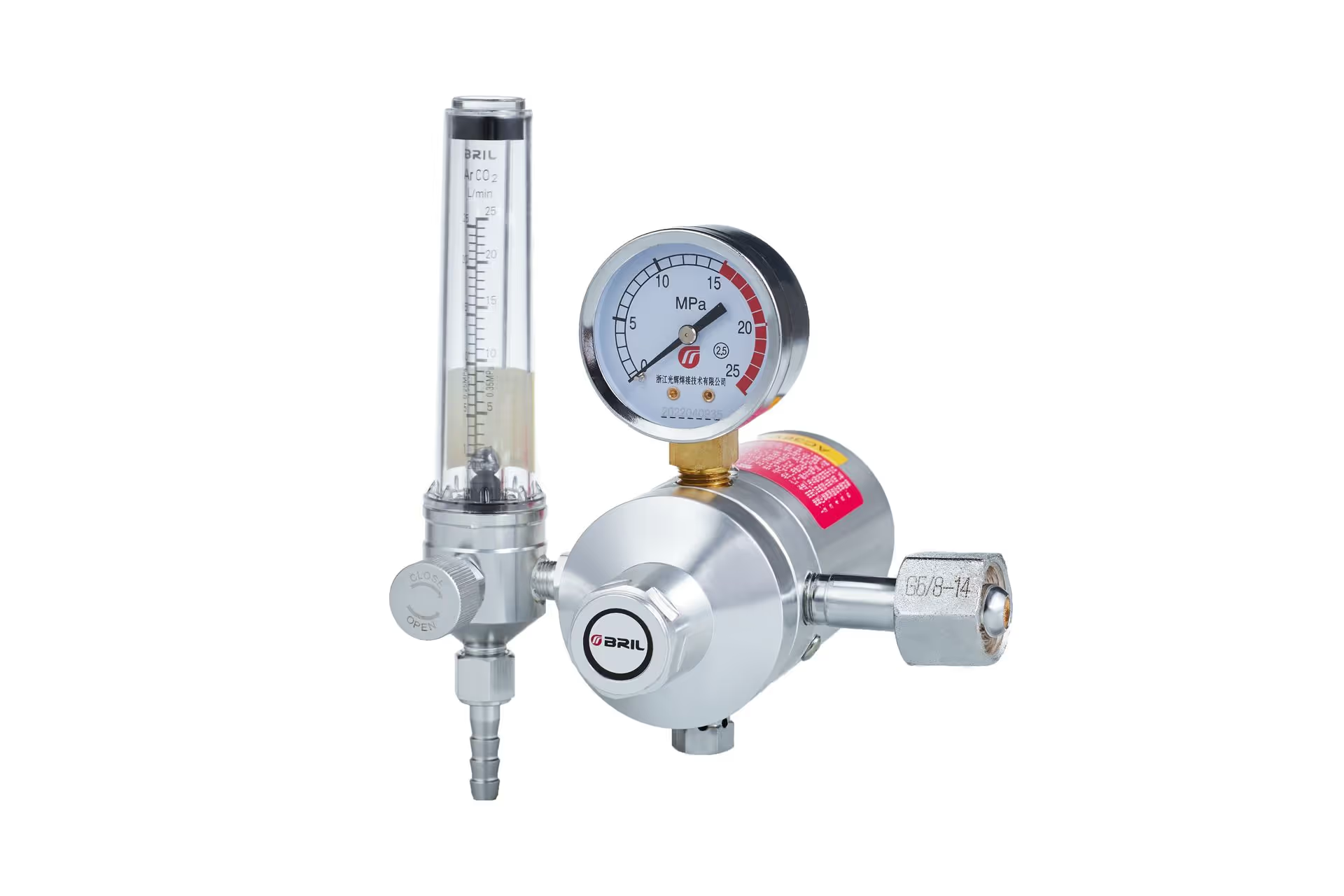
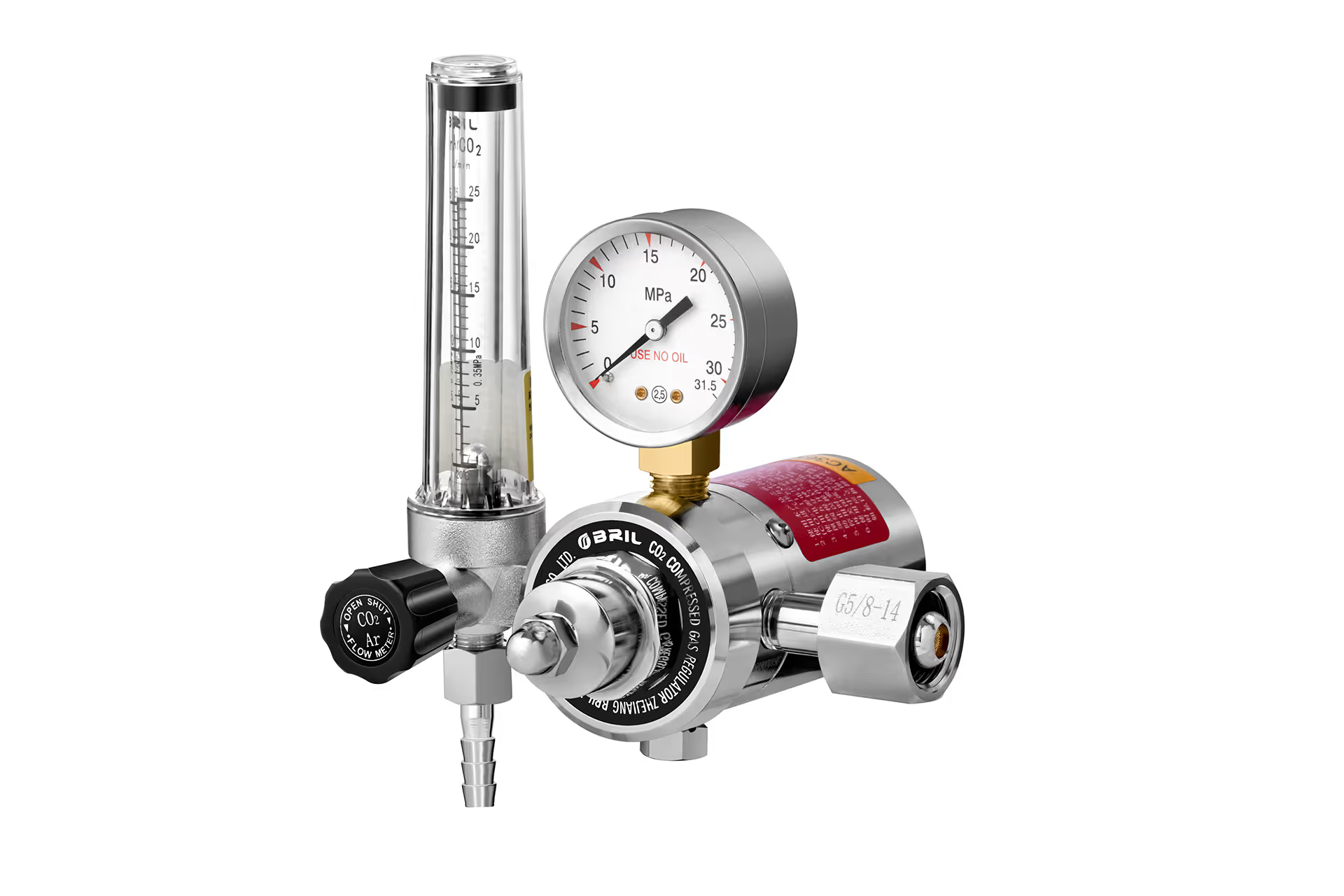
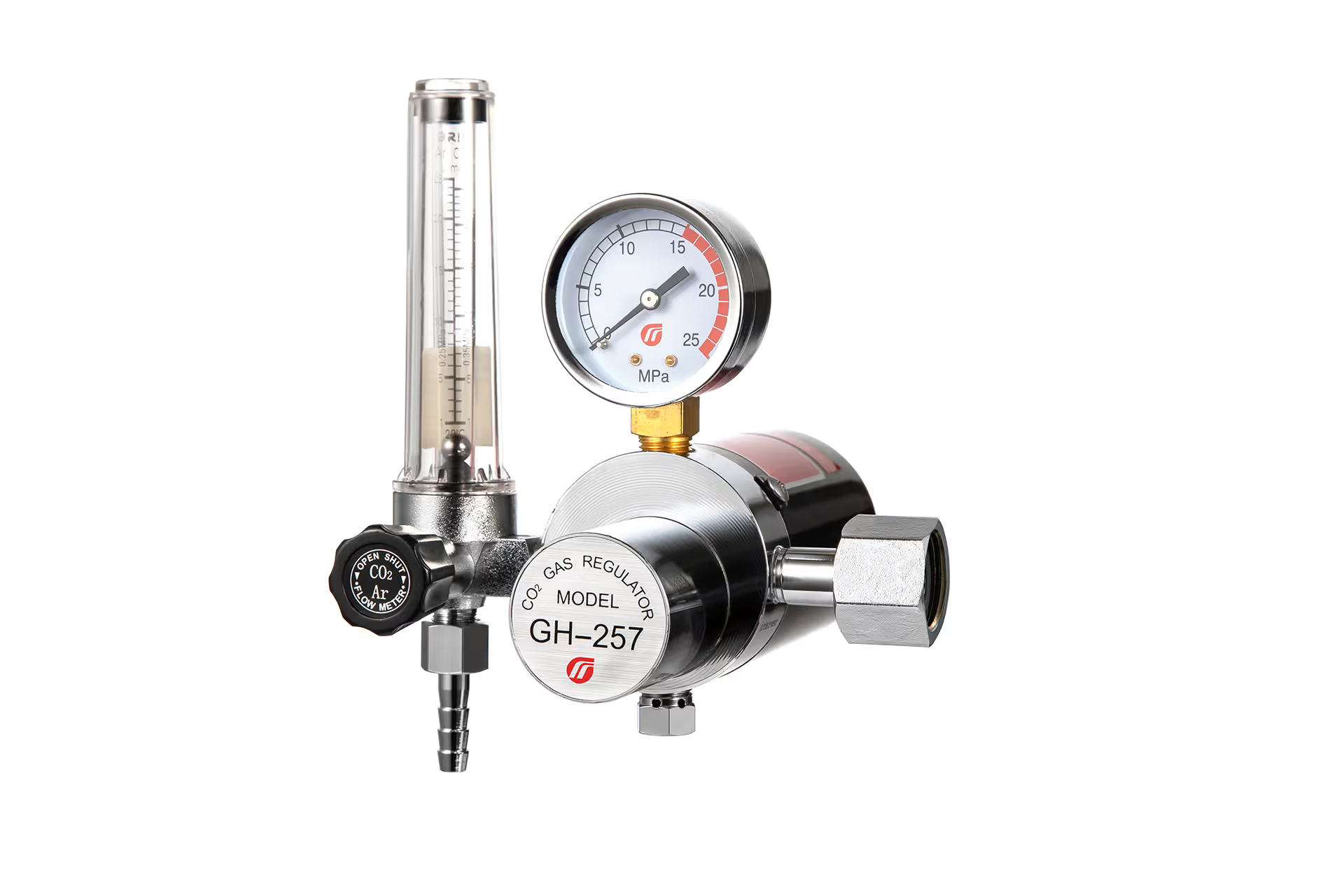
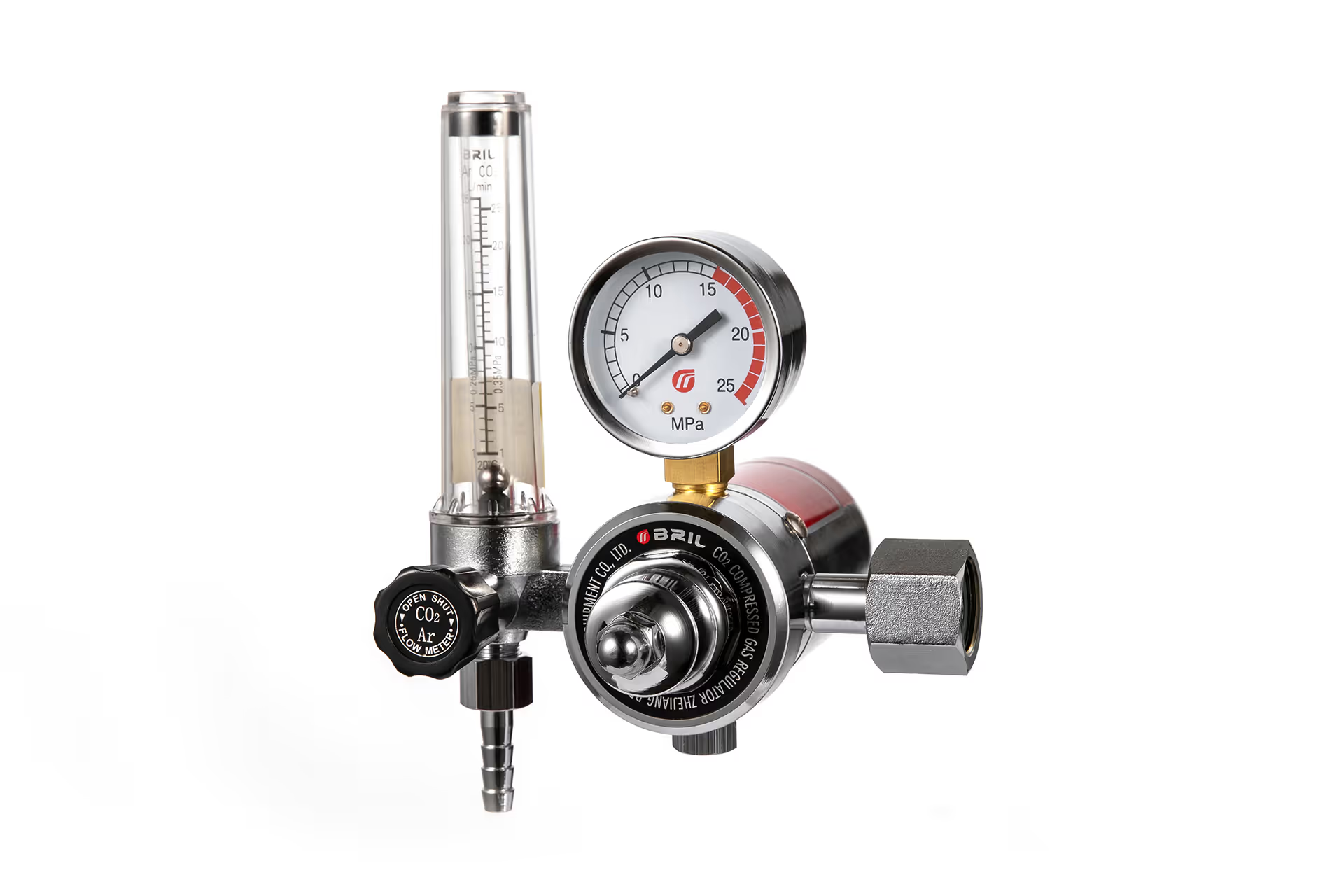
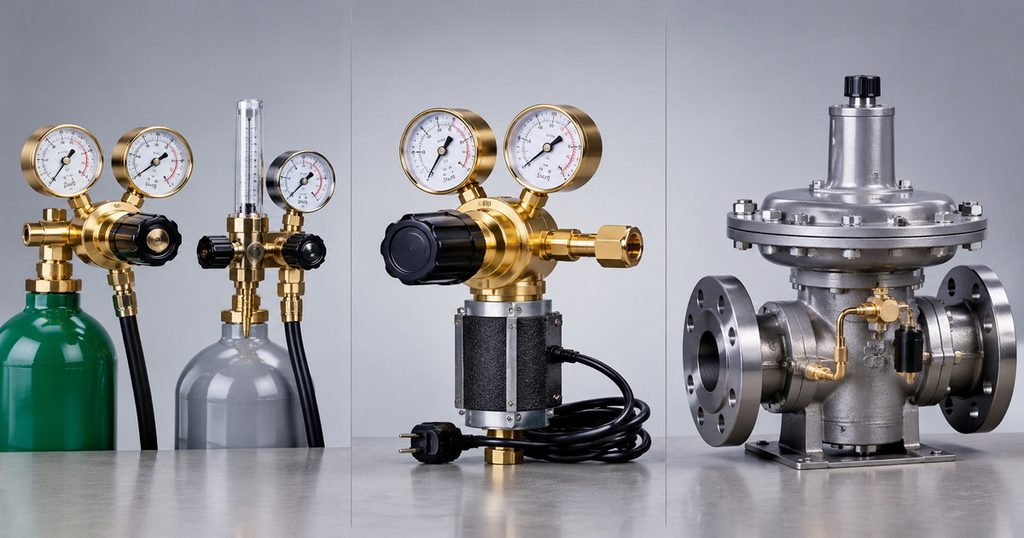
Bril’s supplied product scope includes CO₂ regulators, heated CO₂ regulators, argon regulators, oxygen regulators, acetylene regulators, propane regulators, nitrogen regulators, and dual-stage gas regulators.
Core Strengths and Purchasing Relevance
For overseas brands and distributors, Bril is relevant as a focused OEM manufacturing candidate rather than a broad industrial equipment reseller. Its public profile describes regulator development and manufacturing capabilities and identifies OEM supply relationships with welding equipment businesses. Those customer references are supplier-published claims and should be checked directly when material to a purchasing decision.
For small and midsized brands, the practical opportunity is to evaluate whether a dedicated regulator manufacturer can provide:
– A manageable initial product range.
– Consistent technical communication.
– Private-label packaging and product identification.
– Market-specific connections, gauges, and instructions.
– Engineering support for more substantial product changes.
These points should become measurable qualification requirements—not assumptions about service quality.
OEM/ODM Scope and Main Markets
Bril identifies both domestic and international business, reporting coverage across 30+ countries and regions without publishing a detailed country-by-country sales breakdown. Its profile supports its positioning as an OEM candidate, while the precise boundaries of ODM development, tooling ownership, engineering charges, and exclusivity require a written agreement.
For a meaningful quotation, buyers should separate:
1. Existing-model private labeling.
2. Modified configurations using approved components.
3. New designs requiring engineering validation and tooling.
Bril can be positioned as a potential cost-conscious option for emerging brands, but “high value” should be established through comparable quotations, sample testing, and total landed cost—not an unsupported claim that it is cheaper than Turkish competitors.
Due-Diligence Priority
Bril’s website uses certification language involving ISO 9001, UKAS, IAF, CNAS, and CE. Buyers should request the underlying documents and distinguish the certification body, accreditation body, laboratory accreditation, product test report, and conformity declaration. A logo alone does not demonstrate current approval for a particular regulator.
2. Yıldız Gaz Armatürleri
A Directly Relevant Turkish Welding Regulator Manufacturer
Established in 1979, Yıldız is one of the most directly relevant companies in this shortlist for cylinder-mounted welding and cutting regulators. Its company profile reports more than 120 personnel and an 18,000 m² enclosed manufacturing facility in Istanbul. It also explicitly identifies OEM activity alongside sales under the YILDIZ brand.
Core Strengths
Yıldız provides useful model-level technical information. One published argon regulator specification identifies:
– EN ISO 2503 conformity.
– EN ISO 5171-compliant pressure gauges.
– A forged brass body.
– A bronze filter.
– An operating temperature range of −20°C to +60°C.
Such detail helps buyers construct a technical comparison. It does not eliminate the need to verify the exact model revision, pressure rating, gas service, and test documentation.
Main Markets and OEM/ODM Scope
The company identifies Turkey and Europe as established markets and describes expansion objectives in Asia, the Middle East, and Africa. It also states that it supplies international businesses as an original equipment manufacturer.
Yıldız is therefore a suitable candidate for distributors seeking Turkish manufacturing with documented OEM experience. Buyers should separately confirm whether the proposed arrangement includes only branding and packaging or extends to custom regulator design.
Due-Diligence Priority
Request quotations by exact product code. Confirm inlet connection, outlet connection, gauge units, rated flow, and available spare parts. For OEM projects, establish who owns drawings and tooling and whether engineering changes require customer approval.
3. Gedik Welding
A Broad Welding Supply Partner With Gas Regulator Products
Gedik Welding was established in 1963. Its published materials describe a substantial welding business spanning consumables, equipment, and related engineering activities. Its wider corporate profile reports a presence reaching more than 100 countries.
Gedik’s regulator range includes argon, carbon dioxide, nitrogen, acetylene, and oxygen products. A separate high-pressure nitrogen regulator listing specifies an inlet range of 0–230 bar and an outlet range of 0–50 bar.
Core Strengths
Gedik is particularly relevant when a buyer wants to consolidate several welding-related product categories under one commercial relationship.
A distributor purchasing regulators, torches, flashback arrestors, and welding equipment may find this broader portfolio more useful than a regulator-only supply arrangement. Gedik publicly lists these categories within its welding and cutting equipment range.
Main Markets and OEM/ODM Scope
Gedik’s corporate information supports an international market position. However, the reviewed regulator pages do not establish an unrestricted private-label or ODM offer. Buyers should treat customization availability as an RFQ question rather than a confirmed service.
Likewise, a company’s manufacturing strength in welding consumables does not prove that every regulator is produced in-house.
Due-Diligence Priority
Ask which entity and factory manufacture the quoted regulator. Request model-specific inspection records and establish whether the commercial arrangement is branded distribution, contract manufacturing, or project supply.
Do not use Gedik’s published welding consumables output as evidence of regulator production capacity.
4. SMS-TORK
A Process-Control Supplier for Natural Gas and Propane Applications
SMS-TORK has operated under the TORK brand since 1985. Its published information identifies production in the IMES Organized Industrial Zone in Dilovası, Kocaeli, within a 9,000 m² enclosed facility. The company states that TORK products are used in 87 countries.
Core Strengths
TORK’s portfolio is most relevant to buyers seeking pressure control alongside valves, actuators, and industrial automation components.
Its natural gas catalog includes filtered regulators, shut-off regulator configurations, and gas/propane regulators. Several listed natural gas regulator families operate at inlet pressures around 0.5–1 bar, illustrating why these products must be distinguished from high-pressure cylinder regulators.
Main Markets and OEM/ODM Scope
The company’s reported international reach makes it a relevant candidate for export-oriented industrial projects. However, the reviewed sources do not establish a general private-label regulator program or a defined ODM service package.
Buyers should ask whether the proposed product is manufactured by SMS-TORK or supplied through a represented brand, particularly when selecting from its broader measurement and control offering.
Due-Diligence Priority
Specify the gas, inlet-pressure range, outlet setpoint, flow conditions, installation orientation, and required safety functions before requesting a model recommendation.
TORK belongs on a broader gas pressure-control shortlist, but buyers should not assume its natural gas products are suitable for oxygen-cylinder or shielding-gas service.
5. ESKA Valve
A Specialist in Natural Gas Regulation and Safety Systems
ESKA traces its history to 1968. Its current corporate timeline identifies development of single-stage and double-stage gas pressure regulators and gas filtration systems. Its website states that it exports to more than 60 countries and manufactures in Arifiye, Sakarya.
Core Strengths
ESKA’s published manufacturing portfolio includes:
– Natural gas pressure regulators.
– Gas shut-off valves.
– Relief valves.
– Filters.
– Ultrasonic smart gas meters.
– Related spare parts.
This makes ESKA particularly relevant to natural gas distribution, industrial installations, and projects requiring regulation and associated safety equipment.
Main Markets and OEM/ODM Scope
ESKA identifies international operations across more than 60 countries, but the reviewed current pages do not provide a detailed regional sales breakdown. Its documented design and manufacturing history supports engineering capability; it does not, by itself, confirm private-label availability or a standard ODM contract model.
Project-specific configuration, branding rights, technical support, and approval responsibilities should therefore be confirmed during qualification.
Due-Diligence Priority
Do not confuse a double-stage natural gas regulator with a dual-stage welding-cylinder regulator. Similar terminology does not establish the same pressure capability, connection arrangement, gas compatibility, or intended service.
Technical Buyer’s Guide: What to Check Before Comparing Prices
Match the Standard to the Regulator’s Actual Function
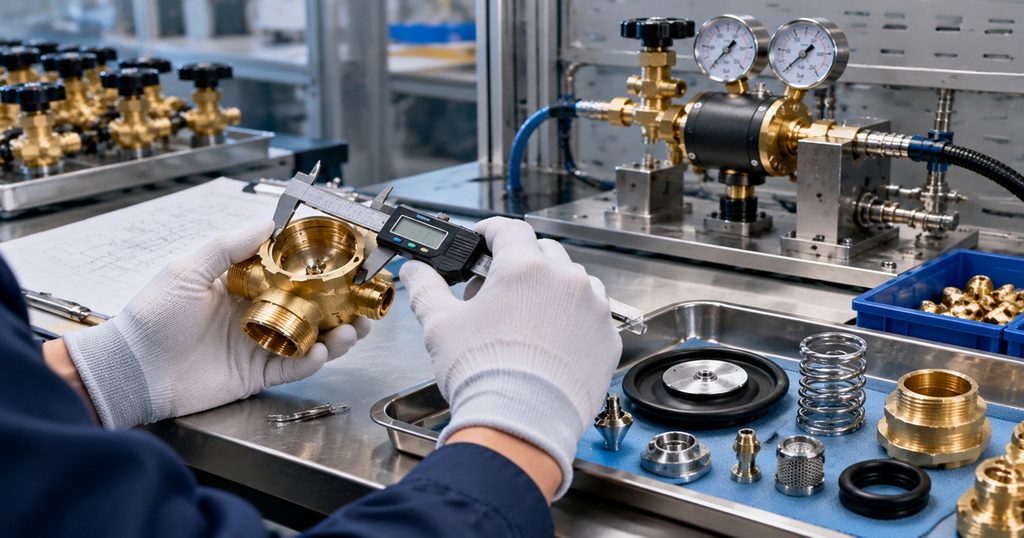
ISO 2503:2009 addresses cylinder-connected pressure regulators and regulators with flow-metering devices used in welding, cutting, and allied processes. Its scope includes specified compressed gases up to 300 bar, dissolved acetylene, LPG, and CO₂. Importantly, its pressure-regulator scope excludes nominal outlet pressures above 20 bar.
Consequently, a nitrogen regulator rated to 50 bar outlet pressure cannot be accepted solely on the basis of a generic ISO 2503 statement. Buyers need the applicable design basis and performance evidence for that model.
For manifold systems, ISO 7291 addresses a different application and explicitly excludes regulators fitted directly to cylinders as defined in ISO 2503.
Specify Materials Rather Than “High-Quality Brass”
“Brass body” is an incomplete purchasing specification.
For a meaningful technical comparison, require the supplier to identify:
– Body alloy designation and material standard.
– Forged, machined-bar, or cast construction.
– Material certification and heat or batch traceability.
– Seat and diaphragm materials.
– Inlet filter specification.
– Surface treatment.
– Gas-service compatibility.
These requirements are proposed procurement controls, not claims that every listed supplier offers the same construction.
A golden sample should be accompanied by an approved bill of materials. Without that document, substitutions can be difficult to detect after production begins.
Treat Oxygen Cleanliness as a Separate Requirement
A regulator can have an attractive brass body and still be unsuitable for oxygen service if contamination control is inadequate.
The UK Health and Safety Executive specifically warns against applying oil, grease, or other lubricants to oxygen fittings and instructs users to select regulators appropriate to the gas and appliance.
Ask suppliers to explain cleaning, assembly handling, packaging, and contamination-prevention procedures. Do not accept a generic leakage report as proof of oxygen cleanliness.
Evaluate CE and RoHS Claims by Product Configuration
A CE logo is not a substitute for identifying the applicable legislation, exact product configuration, and supporting technical documentation.
RoHS concerns electrical and electronic equipment. Its relevance should therefore be evaluated carefully for heated CO₂ regulators and other electrically equipped assemblies rather than treated as a universal certificate for every mechanical regulator.
For an electrically heated model, request a written compliance assessment covering the supplied heater, power arrangement, controls, and destination-market requirements.
An Overlooked Procurement Trap: Testing the Gauge Instead of the Regulator
A pressure reading at one operating point does not demonstrate stable regulation throughout the intended operating range.
A useful acceptance plan should distinguish:
– Performance while gas is flowing.
– Behavior when downstream flow stops.
– Response as inlet pressure changes.
– Repeatability after adjustment.
– Leakage and shut-off performance.
The practical procurement lesson is to approve a test matrix—not merely a photograph of a gauge.
Ask the supplier to record results at agreed inlet pressures and flow conditions, using the actual outlet fitting, flowmeter, and accessory arrangement intended for sale. Tie the acceptance criteria to the applicable standard and model specification. ISO 2503’s distinction between regulators with and without flow-metering devices reinforces the importance of evaluating the complete configuration.
An especially useful safeguard is to have an inspector randomly select production units for comparison with the approved sample and bill of materials. Supplier-prepared demonstration samples should not be the only evidence supporting a volume order.
Common Sourcing Problems and How to Reduce Them
| Procurement problem | What can go wrong | Practical prevention |
|---|---|---|
| Unspecified body material | Production differs from the approved sample | Approve the alloy, construction route, and material records |
| Generic compliance claims | Documents cover another model or company | Match certificate holder, model, scope, and revision |
| Unverified gas compatibility | Similar-looking products are supplied for different gases | Specify gas service and prohibit substitutions without approval |
| Misleading capacity claims | Factory size is presented as available output | Review process capacity, committed orders, and inspection throughput |
| Undocumented component changes | Seats, gauges, or diaphragms change between batches | Require written engineering-change approval |
| Unclear OEM ownership | Disputes arise over drawings, molds, or branding | Define ownership and usage rights in the contract |
| Missing spare-parts planning | Warranty support becomes difficult | Agree service kits, identification, and availability before ordering |
From Supplier Shortlist to First Shipment
Step 1: Issue a Complete Technical RFQ
Provide gas type, maximum inlet pressure, outlet range, required flow, duty cycle, operating temperature, cylinder connection, outlet connection, gauge units, branding, packaging, and destination market.
For heated CO₂ regulators, also specify the electrical supply and intended operating conditions.
Step 2: Qualify the Factory and Documentation
Review the legal entity, production address, in-house processes, outsourced components, inspection equipment, and traceability system.
Request capacity evidence for the proposed model family—not company-wide output in an unrelated product category.
Step 3: Approve Samples Against Written Criteria
Use samples for connection checks, performance evaluation, labeling review, and agreed independent testing.
Record the approved configuration in drawings, photographs, and a controlled bill of materials.
Step 4: Place a Pilot Order
A pilot batch can reveal problems that individual samples do not: inconsistent assembly, packaging damage, labeling errors, inspection bottlenecks, and document mismatches.
Set pilot quantities according to the number of configurations and inspection needs rather than applying one arbitrary quantity to every supplier.
Step 5: Define Logistics and Warranty Responsibilities
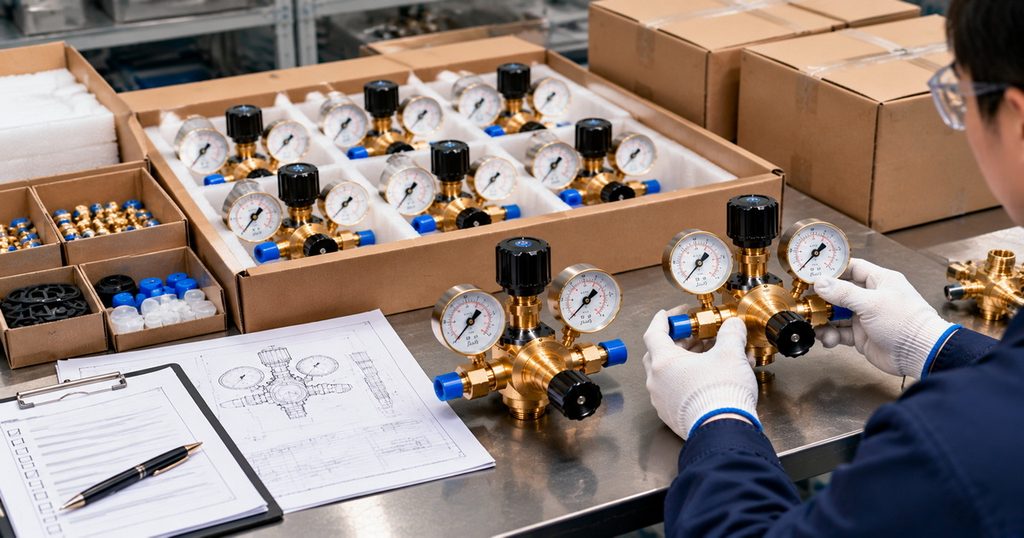
Confirm the named Incoterms rule and place, freight responsibility, insurance arrangements, packaging protection, documentation, and claim process.
For powered models, obtain carrier confirmation of any additional documentation requirements associated with the actual supplied configuration.
Evaluate total landed cost, including testing, freight, duties, inventory, warranty replacements, and spare parts—not simply unit price.
Conclusion: Build a Shortlist Around Product Fit and Verifiable Evidence
Yıldız is a directly relevant Turkish candidate for welding and cutting regulators, while Gedik merits consideration for broader welding equipment procurement. SMS-TORK and ESKA are more closely aligned with process control and natural gas applications. Bril provides a clearly identified China-based alternative for buyers evaluating an OEM regulator manufacturing program.
The next commercial step is a specification-led RFQ.
For a Bril quotation, submit the required gas, inlet and outlet ratings, flow conditions, cylinder connection, destination market, branding requirements, and expected order mix. Request a model-specific documentation package and sample-validation plan before committing to tooling or volume production.
FAQ
1. How Can I Check Whether a Supplier’s ISO 9001 Certificate Is Expired or Suspended?
Search the certificate number or legal company name in IAF CertSearch. Check the status, certified site, scope, issuing certification body, and accreditation details.
If the certificate is not found, do not immediately conclude it is fraudulent. IAF explains that missing records can result from database or visibility issues. Contact the issuing certification body and obtain confirmation directly.
2. Can One Regulator Design Be Used for Oxygen, Argon, Nitrogen, and Acetylene?
Do not approve cross-gas use based on appearance or shared body construction.
Require explicit manufacturer confirmation for the gas, pressure range, connections, internal materials, and cleaning condition. HSE advises using regulators appropriate to the particular gas and appliance and warns against oil or grease on oxygen fittings.
3. Is ISO 2503 Evidence Sufficient for a Nitrogen Regulator With a 50-Bar Outlet?
Not on its own. ISO 2503:2009 excludes pressure regulators with nominal outlet pressure above 20 bar from that part of its scope.
Request the applicable design standard, engineering justification, and model-specific test evidence for the higher-pressure product.
4. How Can Buyers Distinguish Genuine ODM Capability From Private Labeling?
Ask for evidence of controlled engineering work: drawings, design reviews, prototype records, validation plans, engineering-change procedures, and tooling documentation.
Then define the project in writing. A logo change is private labeling; a new pressure-control configuration may require development, testing, and a revised compliance assessment. Existing OEM activity should not be treated as automatic proof that a supplier accepts full ODM responsibility.
5. What Should Happen if Production Units Differ From the Approved Sample?
The contract should define an escalation process before production starts.
A practical arrangement is to require written approval for material and component changes, retain a controlled reference sample, and compare randomly selected production units against the approved specification.
The supplier should investigate deviations, document corrective action, and obtain approval before shipment where the deviation affects contractual requirements. Test acceptance should remain tied to the applicable model and standard rather than subjective visual similarity.
Source Notes
1. – Machinery Exporters’ Association: 2025 machinery export figures provide sector-wide context, not regulator-specific market size. [makinebirlik]
2. – Zhejiang Bril: company history, location, factory information, and supplier-published credentials. [chinesewelding]
3. – Yıldız: company profile, OEM activity, and selected regulator specifications. [yildizgaz.com]
4. – Gedik: company history, international presence, and regulator range. [gedik.com]
5. – SMS-TORK: manufacturing profile and natural gas product specifications. [smstork]
6. – ESKA: company history, export footprint, and current manufacturing portfolio. [en.eskavalve]
7. – ISO: cylinder and manifold regulator standard scopes. [iso]
8. – IAF CertSearch: certificate verification and interpretation of missing records. [iafcertsearch]
9. – European Commission and HSE: RoHS scope and gas-equipment safety guidance. [hse.gov]
Hot Tags: Gas Pressure Reducing Regulator Manufacturers In Turkey, Gas Pressure Regulator Suppliers In Turkey, Industrial Gas Pressure Regulators, Welding Gas Regulator Manufacturers, OEM Gas Pressure Regulators, Dual Stage Gas Pressure Regulators, CO₂ Heated Regulators, Oxygen Pressure Regulator Manufacturers, Argon Gas Regulator Suppliers, Wholesale Gas Pressure Regulators