Content Menu
● Oxygen Gas Pressure Regulator vs Industrial Cutting Regulator: Quick Comparison
● What Is an Oxygen Gas Pressure Regulator?
>> Oxygen Compatibility Is More Than a Brass Body
>> An Oxygen Regulator Is Not Automatically a Cutting Regulator
● What Is an Industrial Cutting Regulator?
>> Cutting Duty Changes the Selection Criteria
● Pressure and Flow: The Most Important Performance Difference
>> Static Pressure vs Working Pressure
>> Ask for Performance Curves, Not Just Maximum Ratings
● Single-Stage vs Two-Stage Regulators for Cutting
>> Two Gauges Do Not Mean Two Stages
● Materials, Oxygen Cleanliness, and Safety Equipment
>> Evaluate the Complete Material System
>> A Regulator Does Not Replace Flashback Protection
● Practical Selection Method: Start at the Cutting Torch
>> Step 1: Identify the Cutting Process
>> Step 2: Obtain the Torch and Nozzle Requirements
>> Step 3: Define the Supply Conditions
>> Step 4: Assess the Complete Delivery Path
>> Step 5: Verify Before Production Approval
● Why an Upgrade May Not Solve Weak Cutting
>> Match the Standard to the Actual Product
● OEM and ODM Procurement Checklist
● Specify the Application Before Selecting the Regulator
>> 1.Can an oxygen gas pressure regulator be used for industrial cutting?
>> 2.Is every industrial cutting regulator suitable for oxygen?
>> 3.Is a two-stage regulator always better for cutting?
>> 4.Why does pressure fall when cutting starts?
>> 5.What pressure should I use for oxygen cutting?
>> 6.What should I send a manufacturer for an accurate quotation?
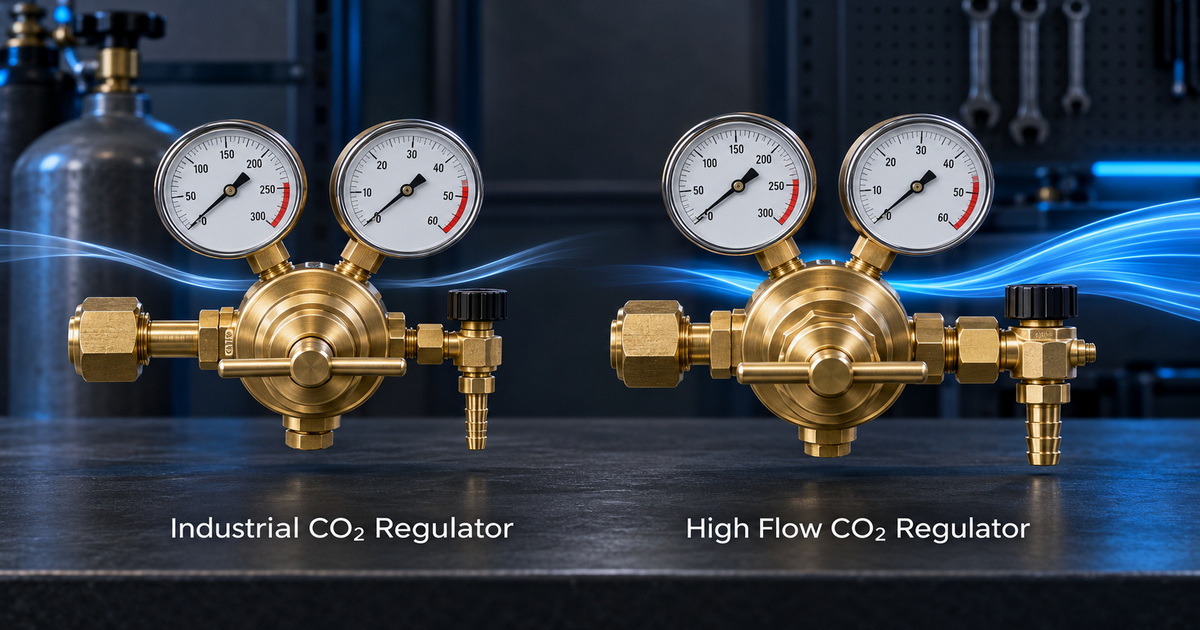
Choosing between an oxygen gas pressure regulator and an industrial cutting regulator starts with an important distinction: these are not necessarily competing products. An oxygen gas pressure regulator is defined by the gas it controls, while an industrial cutting regulator is defined by its application. An oxygen-rated regulator designed for cutting can belong to both categories.
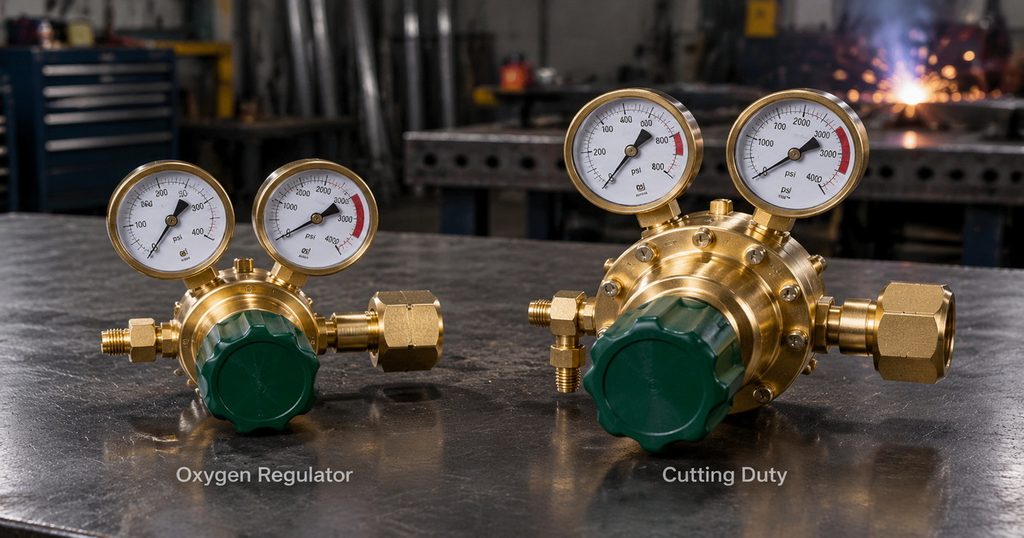
Oxygen Gas Pressure Regulator vs Industrial Cutting Regulator: Quick Comparison
| Selection factor | Oxygen gas pressure regulator | Industrial cutting regulator |
|---|---|---|
| Defining characteristic | Designed and prepared for oxygen service | Selected for cutting-system requirements |
| Gas compatibility | Oxygen, within the specified service conditions | Oxygen or a specific fuel gas, depending on the model |
| Main function | Reduces oxygen supply pressure to a controlled outlet pressure | Supplies a cutting process at the required pressure and flow |
| Typical applications | Suitable industrial oxygen applications, including cutting where rated | Manual cutting, machine cutting, and related operations |
| Flow requirement | Depends on the intended application and model | Must support the selected torch, nozzle, and duty cycle |
| Pressure stability | Model-dependent | Especially important during sustained or changing demand |
| Stage configuration | Single-stage or two-stage | Single-stage or two-stage |
| Main purchasing risk | Assuming every oxygen regulator can support cutting demand | Assuming every cutting regulator is oxygen-compatible |
What Is an Oxygen Gas Pressure Regulator?
An oxygen gas pressure regulator reduces supply pressure to a usable downstream pressure. Depending on its design, it may connect to a cylinder or another specified supply arrangement.
The regulator uses a pressure-control mechanism—typically involving a valve, spring, and diaphragm—to balance downstream pressure against the selected setting.
Oxygen Compatibility Is More Than a Brass Body
Brass is commonly used in industrial regulator construction, but body material alone does not establish oxygen suitability.
A complete assessment includes:
– Compatibility of internal materials and components.
– Cleaning and contamination-control procedures.
– Appropriate pressure and temperature ratings.
– Correct inlet and outlet connections.
– Assembly, inspection, and packaging controls.
Oil and grease must never be applied to oxygen fittings. Buyers should therefore treat oxygen cleanliness as a documented manufacturing requirement, not simply a visual inspection item.
An Oxygen Regulator Is Not Automatically a Cutting Regulator
An oxygen regulator may provide the desired outlet pressure but still lack the flow capacity required by a particular cutting nozzle.
That distinction becomes important when equipment moves from intermittent work to larger nozzles, longer operating periods, or multiple cutting stations.
What Is an Industrial Cutting Regulator?
An industrial cutting regulator supplies gas to a cutting system under specified operating conditions. In this article, the term primarily refers to regulators used in oxy-fuel cutting.
An oxy-fuel system has separate oxygen and fuel-gas supplies. Each requires equipment appropriate to that gas. A regulator intended for acetylene or propane is not interchangeable with an oxygen regulator simply because both serve a cutting process.
Cutting Duty Changes the Selection Criteria
For cutting applications, buyers should evaluate more than maximum outlet pressure:
– Required gas flow at the specified delivery pressure.
– Pressure stability while the cutting oxygen valve is open.
– Performance across the expected inlet-pressure range.
– Compatibility with hoses, protective devices, and connections.
– Suitability for the operating environment and maintenance program.
A “heavy-duty” label is not a substitute for these specifications.
Pressure and Flow: The Most Important Performance Difference
The most common selection mistake is treating pressure and flow as equivalent.
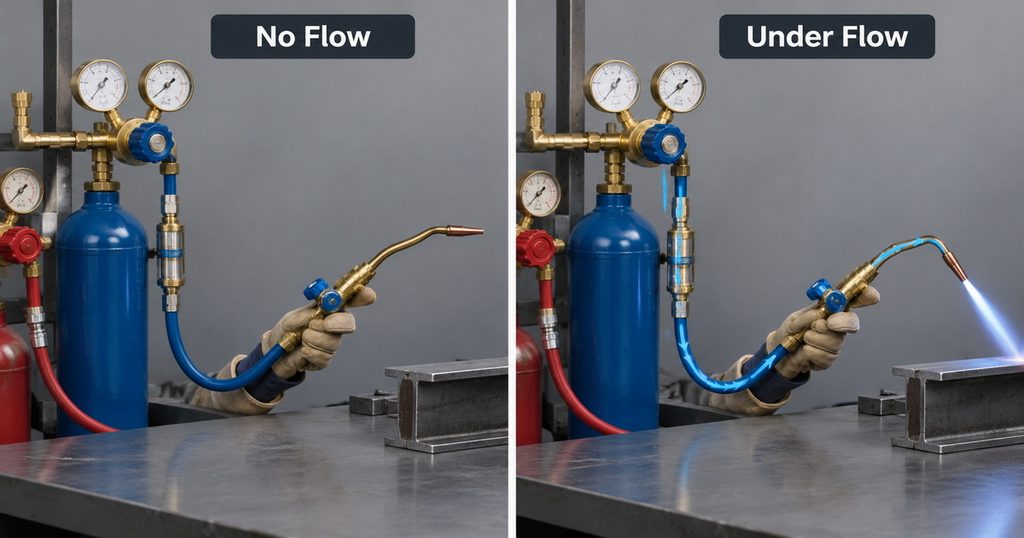
Pressure describes the gas pressure at a measurement point. Flow describes the quantity of gas moving through the system over time. A regulator can show an acceptable pressure with no flow, yet fail to maintain adequate delivery when demand increases.
Static Pressure vs Working Pressure
Static pressure is observed when downstream gas is not flowing. Working pressure is assessed under the operating conditions specified by the equipment manufacturer.
For cutting applications, the second measurement is essential. The regulator, hose, fittings, and protective devices form a complete delivery system.
A satisfactory gauge reading at the regulator does not automatically establish adequate conditions at the torch.
Ask for Performance Curves, Not Just Maximum Ratings
A useful supplier evaluation asks:
1. What flow can the regulator deliver at the required outlet pressure?
2. What inlet pressure applies to that rating?
3. How does outlet pressure change as demand increases?
4. What happens as cylinder pressure decreases?
5. Under what test conditions were the results obtained?
These questions make product comparisons more meaningful than comparing gauge scales or connection sizes.
Single-Stage vs Two-Stage Regulators for Cutting
Stage count describes how pressure reduction occurs. It does not describe the number of gauges.
Single-Stage Regulators
A single-stage regulator reduces supply pressure in one regulating stage.
A properly selected model can suit many cutting applications. Buyers should nevertheless check its outlet-pressure behavior across the expected supply-pressure range rather than assume constant performance.
Two-Stage Regulators
A two-stage regulator reduces pressure in two successive stages. This design can provide more consistent delivery pressure as inlet pressure changes.
It may be valuable for precision machine cutting or applications where stable delivery is a purchasing priority.
However, two-stage construction does not automatically mean higher flow capacity. Buyers must still verify the model’s operating range and flow performance.
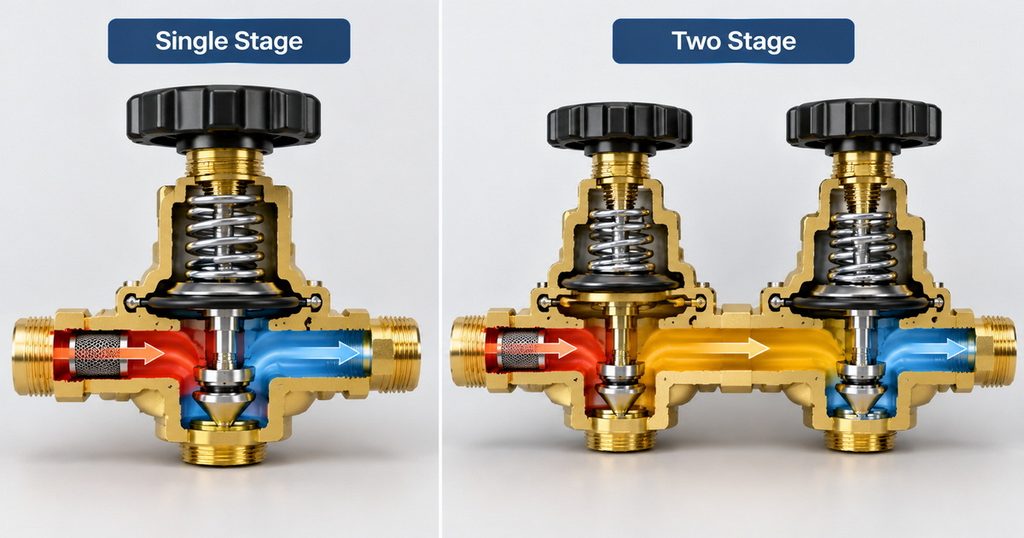
Two Gauges Do Not Mean Two Stages
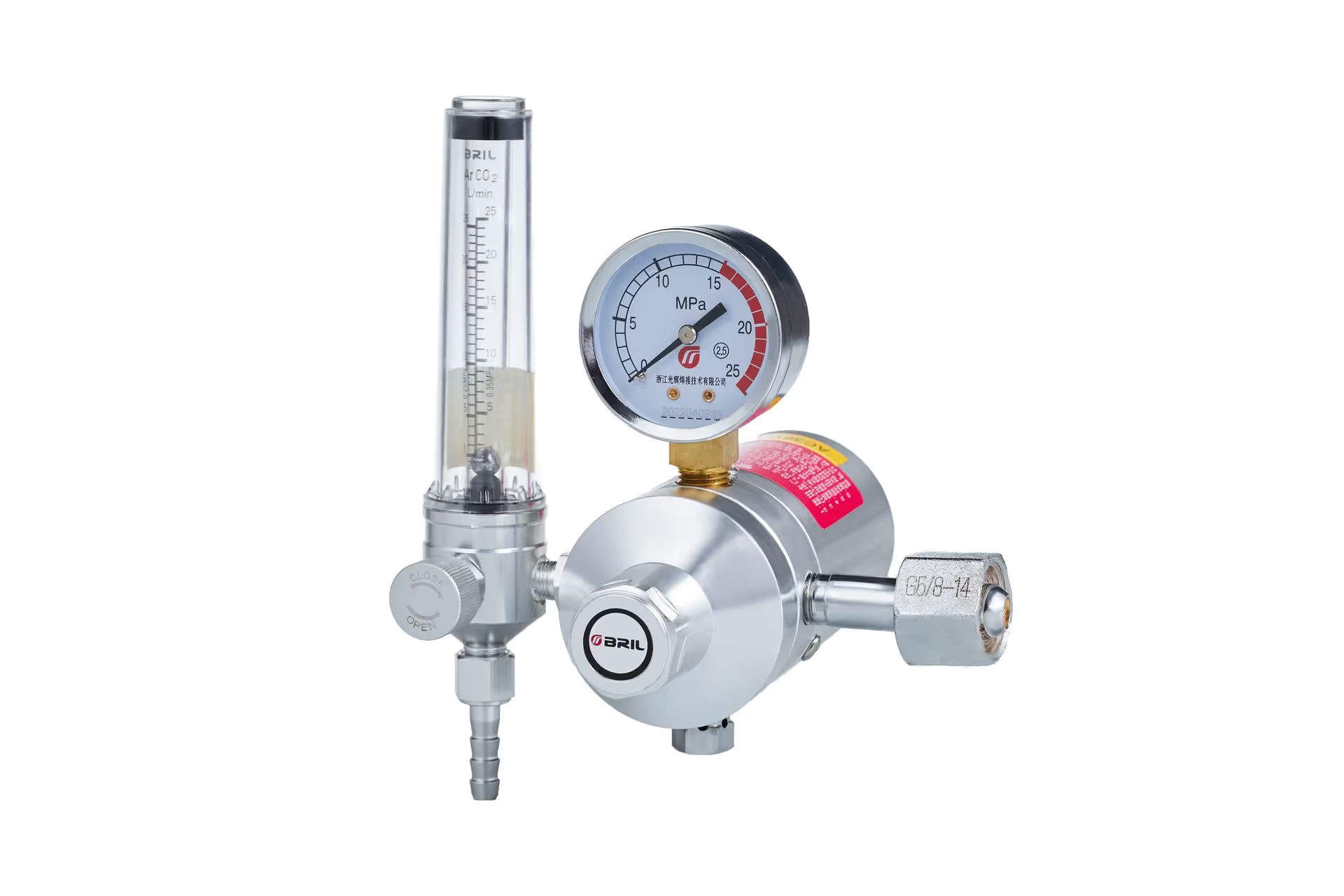
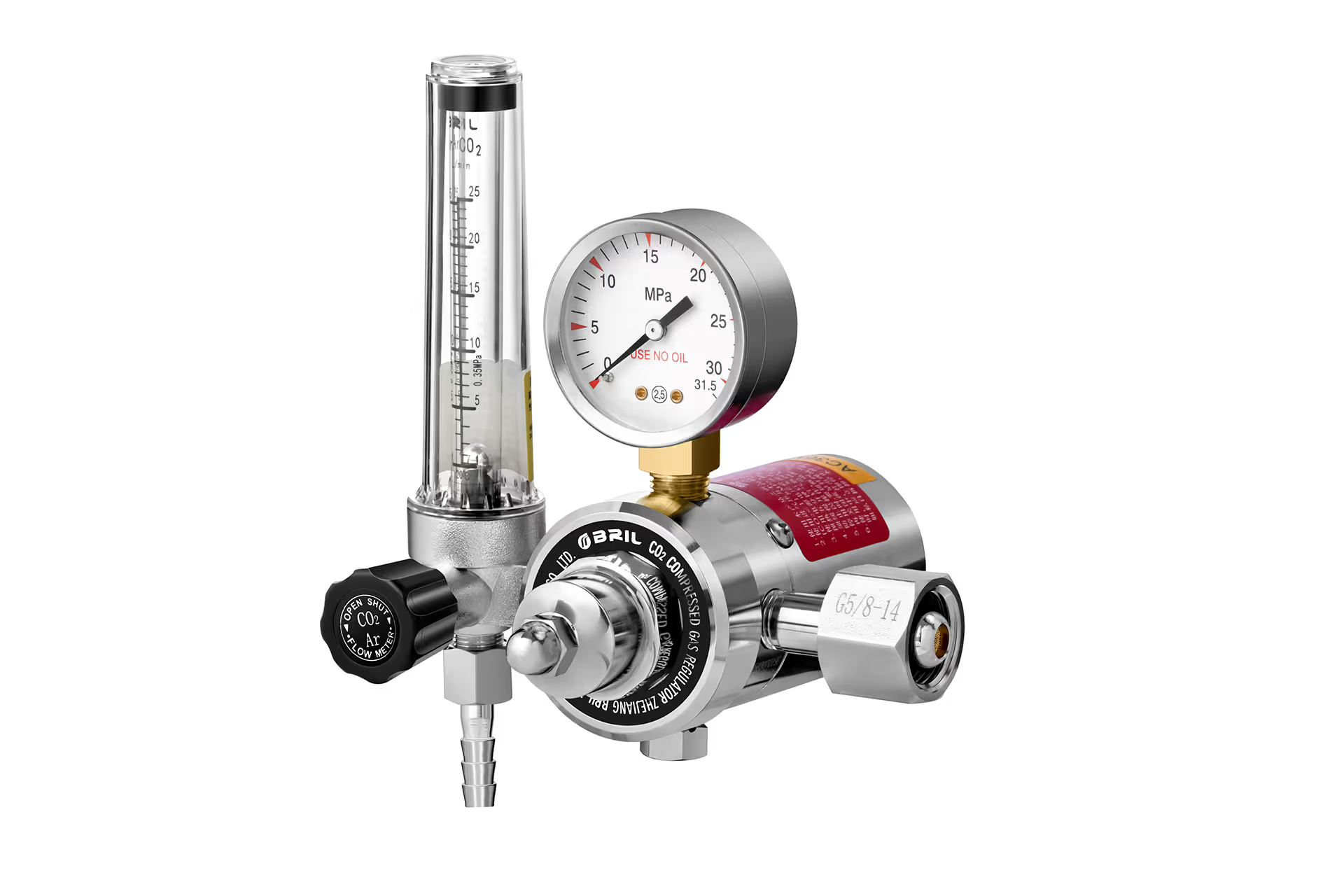
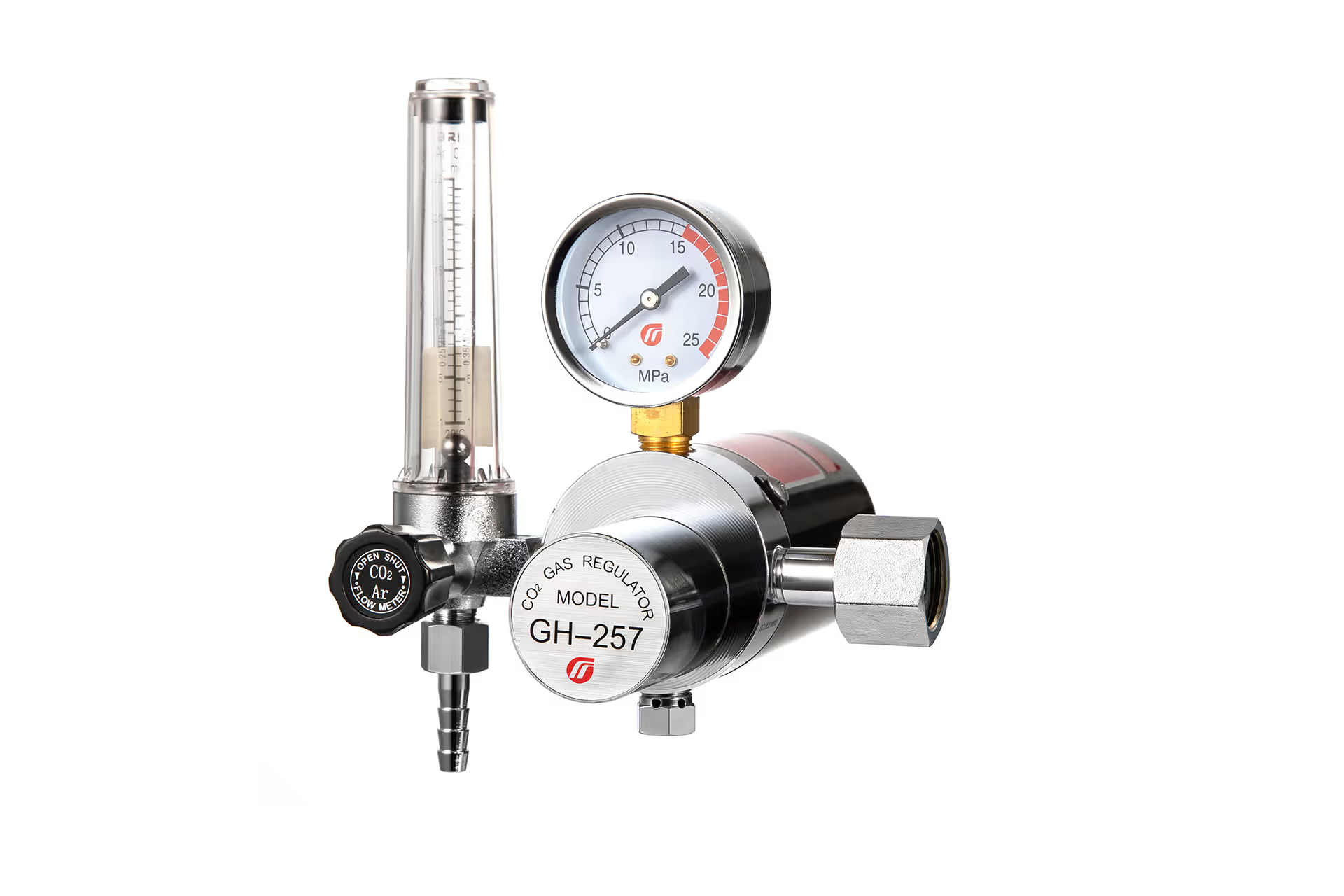
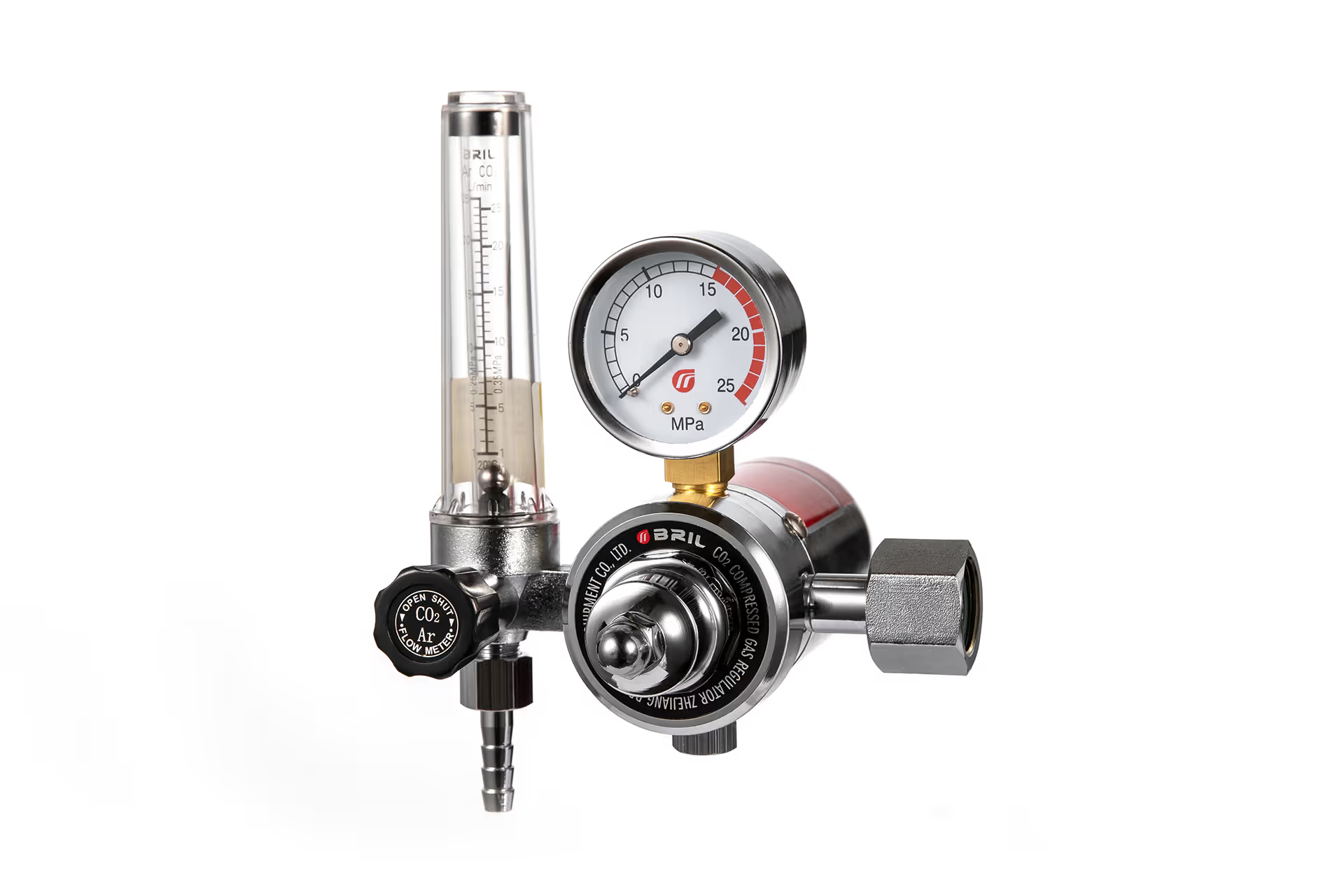
A regulator with one cylinder-pressure gauge and one outlet-pressure gauge may still be single-stage.
For purchasing teams, stage configuration should appear explicitly on the technical specification and approved sample documentation.
Materials, Oxygen Cleanliness, and Safety Equipment
Regulator performance depends on the complete assembly, not only the body material or machining finish.
Evaluate the Complete Material System
When comparing brass oxygen regulators, request information about:
– Body material specification.
– Diaphragm and valve-seat materials.
– Sealing-component compatibility.
– Rated service conditions.
– Oxygen-cleaning and handling procedures.
– Inspection and traceability arrangements.
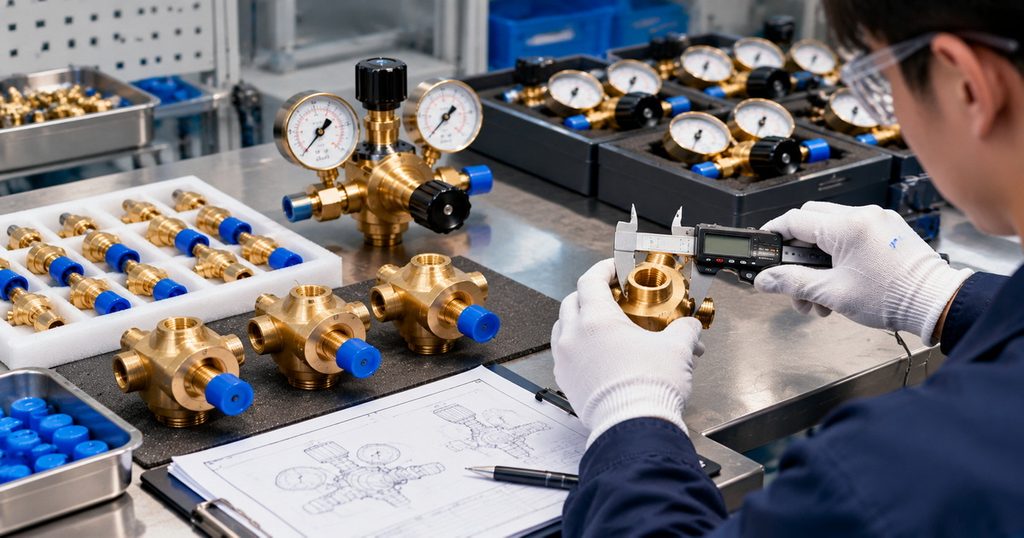
Precision machining supports consistent assembly, but it does not replace appropriate materials, cleanliness, or verification.
A Regulator Does Not Replace Flashback Protection
Pressure regulation and flashback protection perform different functions.
Cutting systems require protective arrangements appropriate to the equipment, gas, operating conditions, and applicable requirements. UK safety guidance recommends flashback arresters near the regulator on both oxygen and fuel supplies, with additional precautions for long hoses.
Installation, inspection, and operation should be performed by trained, competent personnel following the relevant equipment instructions.
Practical Selection Method: Start at the Cutting Torch
A reliable purchasing process works backward from the application instead of forward from the lowest-priced regulator.
Step 1: Identify the Cutting Process
Record whether the equipment supports manual cutting, machine cutting, intermittent maintenance, or sustained production.
Specify each gas separately. Do not combine oxygen and fuel-gas requirements into one generic regulator request.
Step 2: Obtain the Torch and Nozzle Requirements
Use the equipment manufacturer’s operating information to identify the required pressures and consumption for the selected nozzle and material thickness.
Avoid choosing a universal pressure setting based only on a supplier’s general recommendation.
Step 3: Define the Supply Conditions
Specify the gas source, maximum inlet pressure, connection standard, and expected supply-pressure range.
A cylinder-mounted regulator should not automatically be substituted for equipment intended for a different supply arrangement.
Step 4: Assess the Complete Delivery Path
Include hose length, internal diameter, fittings, protective devices, and any simultaneous demand.
If several torches operate together, assess their combined requirements rather than multiplying an assumed “typical” consumption.
Step 5: Verify Before Production Approval
Compare candidate regulators under representative operating conditions. Agree on acceptance criteria before testing, including the required delivery pressure and flow.
Why an Upgrade May Not Solve Weak Cutting
Consider an illustrative workshop replacing a small cutting nozzle with a larger one. The existing regulator still displays the previous pressure setting, but cutting performance deteriorates when oxygen demand rises.
The first response should not automatically be “increase the pressure” or “buy a two-stage regulator.”
A structured assessment checks:
– The new nozzle’s specified operating requirements.
– Regulator capacity at the available inlet pressure.
– Hose and fitting restrictions.
– Protective-device flow ratings.
– Equipment condition and possible leaks.
The underlying issue may involve the delivery system rather than the regulator alone.
This example is a diagnostic framework, not a documented customer case. Its value is the purchasing lesson: define the operating requirement before prescribing a replacement.
What Buyers Should Request
Standards provide a basis for specifying and evaluating equipment, but a standard number on a quotation is not proof of conformity.
ISO 2503 addresses pressure regulators used with gas cylinders in welding, cutting, and allied processes within its defined scope. ISO 5171 addresses pressure gauges used in those applications.
Match the Standard to the Actual Product
Ask the supplier to identify:
– The applicable standard and edition.
– The product model covered.
– Relevant pressure and gas-service limitations.
– Available test reports or conformity documentation.
– Whether supporting evidence covers the proposed configuration.
Do not describe ISO conformity as universal approval for every country, installation, or application.
For overseas procurement, connection requirements and market-specific obligations should be confirmed before drawings and packaging are finalized.
OEM and ODM Procurement Checklist
| Procurement area | Information to confirm |
|---|---|
| Application | Cutting process, torch type, and operating duty |
| Gas service | Oxygen or the specifically identified fuel gas |
| Inlet conditions | Maximum pressure and connection specification |
| Delivery performance | Required pressure, flow, and acceptance criteria |
| Construction | Approved materials and component configuration |
| Oxygen preparation | Cleaning, handling, and packaging requirements |
| Verification | Agreed inspections, tests, and documentation |
| Branding | Labels, gauge units, manuals, and packaging |
Frequently Asked Questions
1.Can an oxygen gas pressure regulator be used for industrial cutting?
Yes, provided it is oxygen-rated and meets the cutting equipment’s inlet-pressure, outlet-pressure, flow, connection, and operating requirements. Oxygen compatibility alone does not establish sufficient cutting capacity.
2.Is every industrial cutting regulator suitable for oxygen?
No. Cutting equipment also uses fuel-gas regulators. The regulator must be specifically suitable for the gas it controls. Product appearance and thread fit are not adequate evidence of compatibility.
3.Is a two-stage regulator always better for cutting?
No. Two-stage regulation can improve delivery-pressure consistency as inlet pressure changes. However, application suitability also depends on flow capacity, operating range, and the complete gas-delivery system.
4.Why does pressure fall when cutting starts?
The pressure may change as flow increases. Excessive loss can involve regulator capacity, supply conditions, hoses, fittings, or protective devices. Assessment should follow the equipment manufacturer’s instructions and use the specified operating conditions.
5.What pressure should I use for oxygen cutting?
Use the torch and nozzle manufacturer’s specified settings for the selected application. There is no single correct oxygen pressure for every nozzle size, material thickness, hose arrangement, or cutting system.
6.What should I send a manufacturer for an accurate quotation?
Provide the gas, supply pressure, required delivery pressure and flow, connection specifications, cutting application, target market, quantities, and documentation requirements. Include torch or nozzle information wherever available.
References
1. International Organization for Standardization. *ISO 2503:2009 — Gas welding equipment: Pressure regulators and pressure regulators with flow-metering devices for gas cylinders used in welding, cutting and allied processes up to 300 bar.* Source for the standard’s application and scope. [iso]
2. International Organization for Standardization. *ISO 2503:2009/Amd 1:2015.* Amendment information relevant to specifying the standard and edition accurately. [iso]
3. International Organization for Standardization. *ISO 5171:2019 — Gas welding equipment: Pressure gauges used in welding, cutting and allied processes.* Source for the pressure-gauge standard’s scope. [iso]
4. UK Health and Safety Executive. *Welding and flamecutting.* Guidance on gas-specific equipment, oxygen fittings, competent inspection, leak testing, and flashback protection. [hse.gov]
5. Harris Products Group. *Model 896 — Two-Stage Regulator.* Manufacturer information supporting the relationship between two-stage regulation and consistent delivery pressure across changing inlet pressures. [harrisproductsgroup]
6. Harris Products Group. *Model 896 Two-stage regulator.* Manufacturer application information covering precision machine cutting, hand cutting, and other cutting duties. [harrisproductsgroup]
Hot Tags: Oxygen Gas Pressure Regulator, Industrial Cutting Regulator, Oxygen Regulator Manufacturer, Gas Pressure Regulator Supplier, Oxygen Regulator For Cutting, Two Stage Oxygen Regulator, Brass Oxygen Regulator, Heavy Duty Oxygen Regulator, OEM Gas Pressure Regulator, Industrial Gas Regulator Manufacturer