Content Menu
● Brazil’s Industrial Gas Regulator Market: Why Source Locally?
>> What the Latest Industry Figures Actually Show
● How These Gas Pressure Regulator Suppliers Were Selected
● Supplier Comparison: Capabilities, Capacity, MOQ, and Certification
● 1. Zhejiang Bril Welding Equipment Co., Ltd.
>> An Overseas OEM Option for Brazilian Importers and Growing Brands
>> Core Strengths and OEM/ODM Scope
>> A Brazilian Manufacturer with an Established Industrial Range
>> Core Strengths and Main Market
>> Locally Manufactured Oxyfuel Equipment with Custom Development Support
>> Core Strengths and Main Market
>> A Technical Option for Industrial and Specialty-Gas Regulation
>> Core Strengths and Main Markets
>> An Industrial Gas Supplier Offering Regulator Procurement
>> Core Strengths and Main Market
● Technical Buyer’s Guide: What Determines Regulator Quality?
>> Specify Materials Beyond “High-Quality Brass”
>> Match the Standard to the Installation
>> Separate Quality-System Certification from Product Compliance
● An Under-Discussed Procurement Trap: Testing at Only One Inlet Pressure
● How to Verify a Factory and Approve Samples
>> Step 1: Establish Who Actually Manufactures the Product
>> Step 2: Approve the Specification Before the Sample
>> Step 3: Connect Sample Approval to Production Control
>> Step 4: Compare Landed Cost and Replenishment Risk
● Conclusion: Choose by Application, Evidence, and Partnership Fit
● FAQ
>> 1. How can I check whether a manufacturer’s ISO certificate has expired or been suspended?
>> 2. Does a CE-marked regulator automatically meet Brazilian requirements?
>> 3. How can I confirm that production regulators use the same brass as the approved sample?
>> 4. When is a two-stage regulator worth the additional cost?
>> 5. How should an OEM buyer prevent unapproved component substitutions?
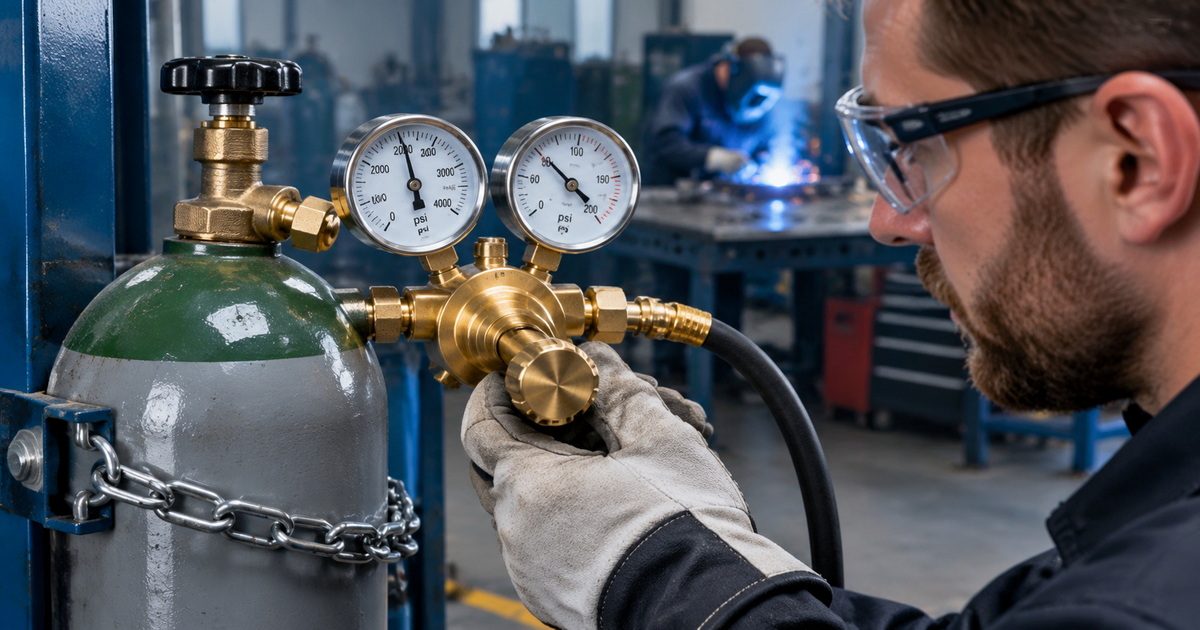
Choosing a gas pressure reducing regulator supplier in Brazil requires more than comparing catalog prices. For welding distributors, industrial equipment brands, and fabrication businesses, the real questions concern pressure stability, material traceability, oxygen-service cleanliness, production consistency, and long-term technical support.
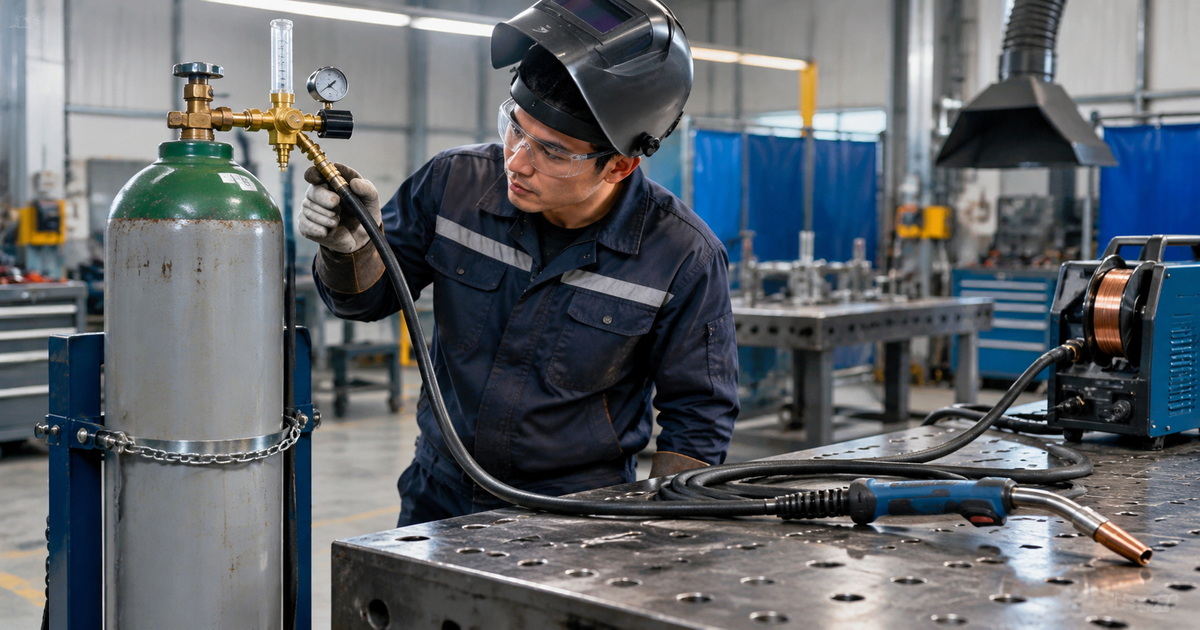
A useful supplier assessment begins with five areas: manufacturing credentials, engineering capability, documented quality control, delivery reliability, and willingness to support application-specific requirements. A regulator that looks acceptable in a photograph may behave very differently under continuous flow or as cylinder pressure falls.
Brazil offers both locally manufactured equipment and established supply channels for international regulator brands. This guide examines five relevant sourcing options, beginning with Zhejiang Bril Welding Equipment Co., Ltd. as an overseas OEM alternative, followed by manufacturers and suppliers operating in the Brazilian market.
Brazil’s Industrial Gas Regulator Market: Why Source Locally?
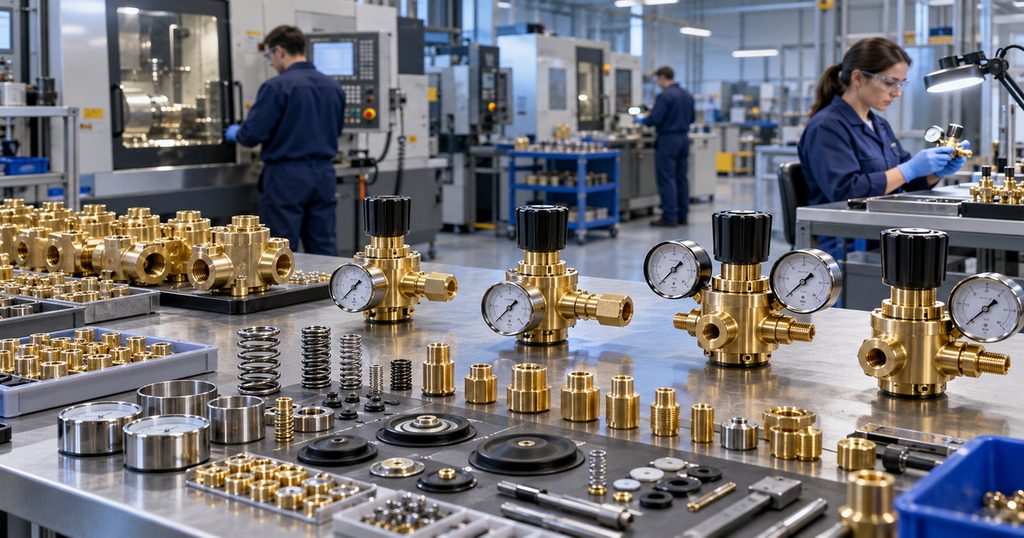
Brazil has an established industrial base supporting welding, metal fabrication, machinery production, maintenance, and industrial gas distribution.
Its regulator supply ecosystem includes domestic manufacturers, international equipment brands, and gas companies that supply pressure-control equipment alongside gases. Buyers can therefore choose between local availability, established branded products, and imported private-label manufacturing.
Two locations illustrate this ecosystem:
– Itaquaquecetuba, in São Paulo state, is home to Famabras, a manufacturer with an industrial pressure-regulator range.
– Contagem, in Minas Gerais, is the base identified by ESAB for Condor’s oxyfuel equipment manufacturing.
These locations demonstrate relevant manufacturing activity within Brazil’s broader industrial regions. They should not, however, be interpreted as evidence of a formally defined regulator-only manufacturing cluster.
What the Latest Industry Figures Actually Show
ABIMAQ’s published 2025 review reported Brazilian machinery and equipment revenue of R$298.98 billion, up 7.3% from 2024. Domestic revenue reached R$221.68 billion, while machinery imports reached US$32.17 billion.
These figures describe the wider machinery and equipment industry—not the market size for welding gas regulators. They provide context for industrial purchasing, but cannot substantiate regulator-specific demand or supplier market shares.
For product-level trade research, Brazil’s official Comex Stat system allows analysis by customs classification, trading partner, period, and other variables. Buyers should validate the appropriate classification before using trade data to estimate their addressable market.
How These Gas Pressure Regulator Suppliers Were Selected
A credible shortlist must distinguish documented capabilities from claims that still require verification.
The following criteria guide this selection:
| Assessment area | Evidence a professional buyer should request |
|---|---|
| Product relevance | Regulators designed for the required gas, pressure range, flow, and application |
| Manufacturing identity | Legal entity, factory address, and clarification of manufacturer versus distributor status |
| Engineering capability | Drawings, configuration control, test procedures, and application support |
| Material control | Specified alloy, supplier traceability, and inspection records |
| Quality management | Current certificate, relevant manufacturing scope, and issuing-body verification |
| Functional testing | External leakage, seat leakage, outlet stability, and flow-performance results |
| Delivery reliability | Confirmed production schedule, inventory policy, and spare-parts availability |
| Customization support | Written scope covering branding, connections, gauges, packaging, and design changes |
Supplier Comparison: Capabilities, Capacity, MOQ, and Certification
| Company | Supply position | Established | Main purchasing fit | Public capacity information | MOQ | Certification and compliance position |
|---|---|---|---|---|---|---|
| Zhejiang Bril Welding Equipment Co., Ltd. | China-based manufacturer; overseas OEM option | 2002 | Private-label industrial regulators and customized product ranges | Company reports 200+ employees and 3,500+ m² production area; regulator output not disclosed | Request by model and customization | Website claims ISO 9001 and CE-related credentials; verify certificates and model coverage |
| Famabras | Brazilian manufacturer | 1965 | Brazilian industrial and welding distribution | Not established from reviewed sources | Request quotation | Request current quality-system certificate and applicable product test reports |
| Condor / ESAB | Brazil-based oxyfuel manufacturer and supplier | Exact founding year not confirmed in reviewed sources | Locally supported oxyfuel equipment and custom application development | Not established from reviewed sources | Request quotation | Verify compliance documentation for the specific regulator model |
| Harris Products Group | International manufacturer with Portuguese-language product offering | Harris Calorific heritage dates to 1905 | Industrial, two-stage, and specialty-gas regulation | Brazil-specific allocation not disclosed | Depends on local supply channel | Company states industrial regulators receive 100% testing before dispatch; request model-specific documentation |
| White Martins / Linde | Brazilian industrial gas and equipment supplier | 1912 | Gas supply combined with regulator procurement | Equipment manufacturing output not established | Confirm by item and contract | Confirm regulator manufacturer, origin, and applicable documentation per SKU |
1. Zhejiang Bril Welding Equipment Co., Ltd.
An Overseas OEM Option for Brazilian Importers and Growing Brands
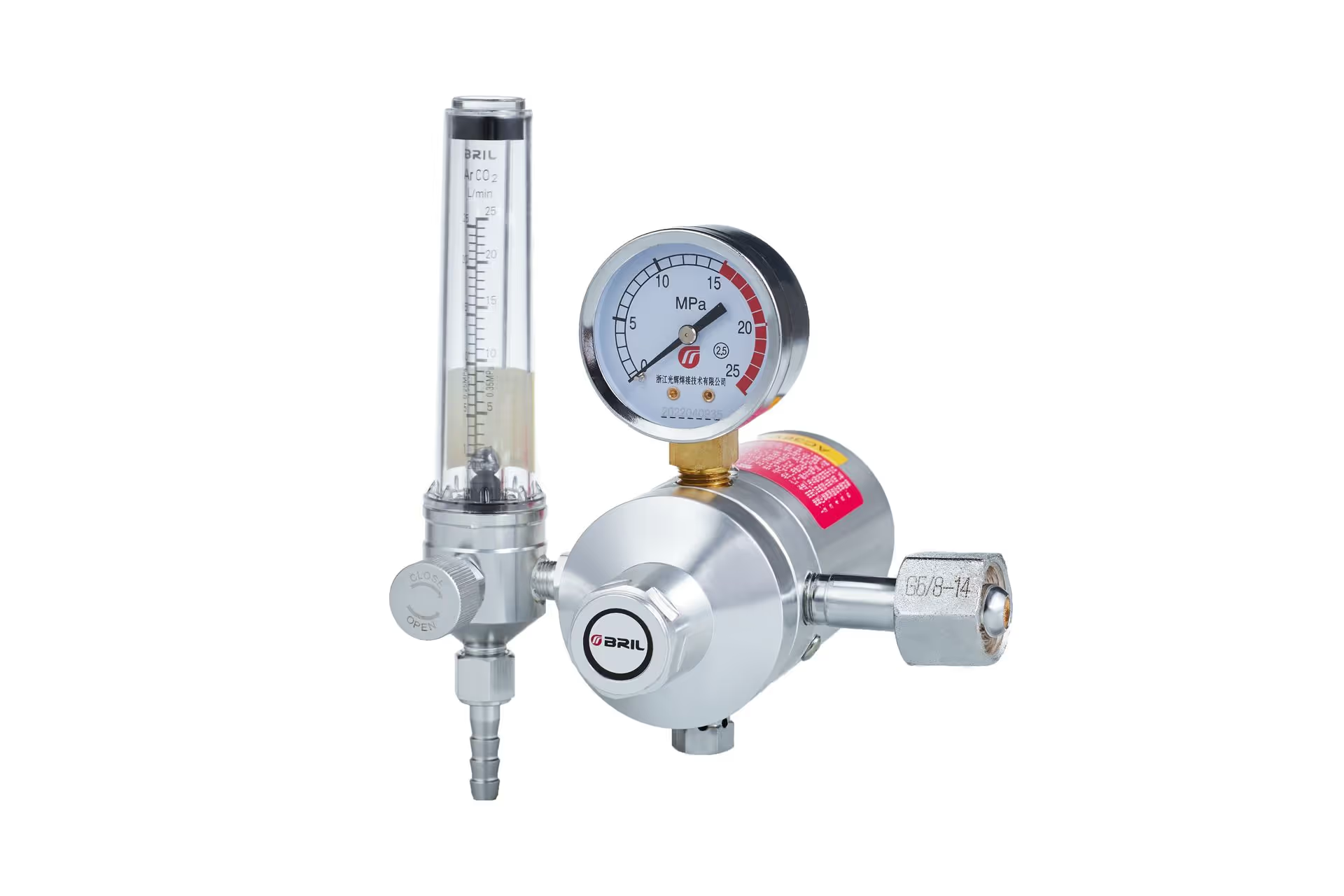
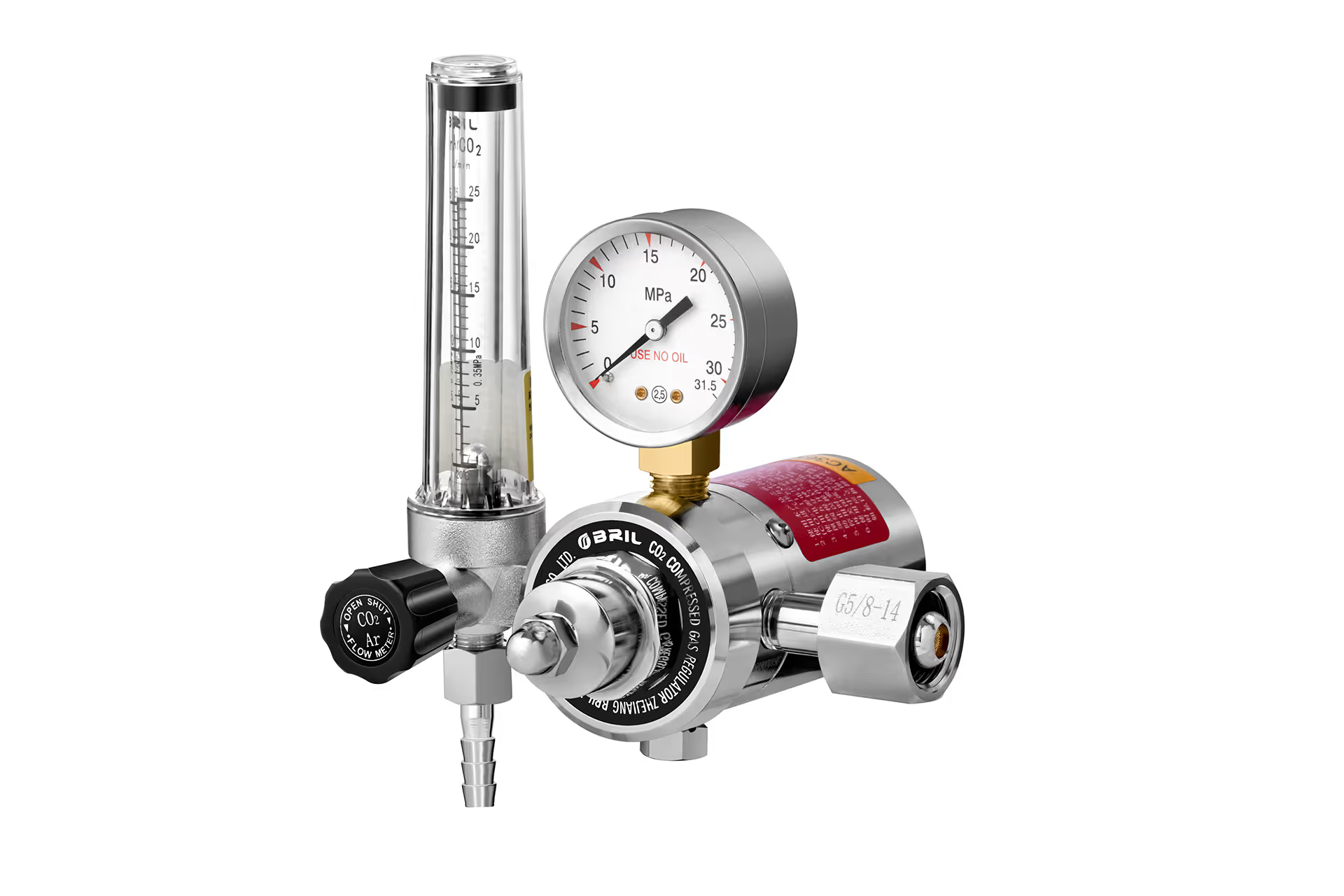
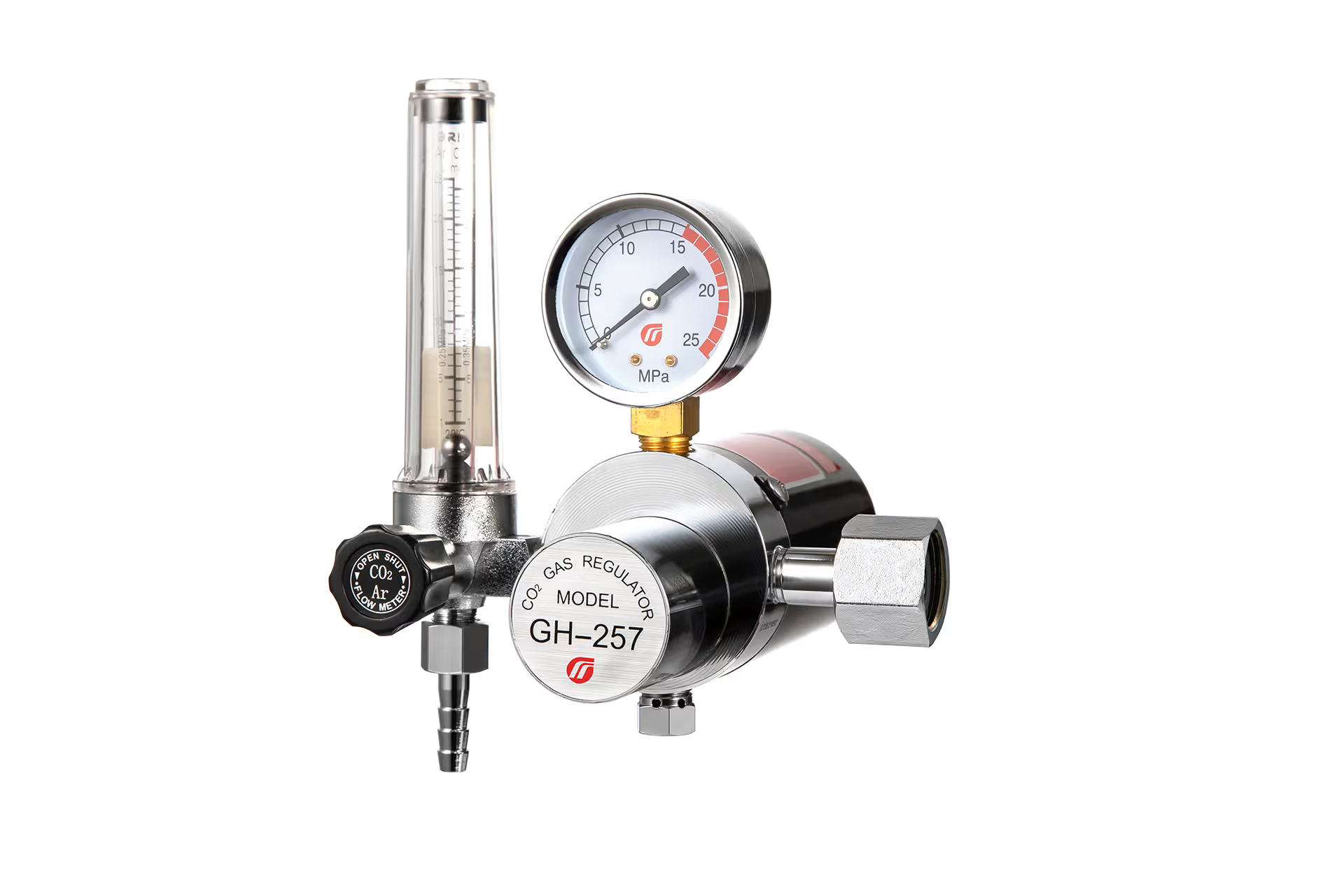
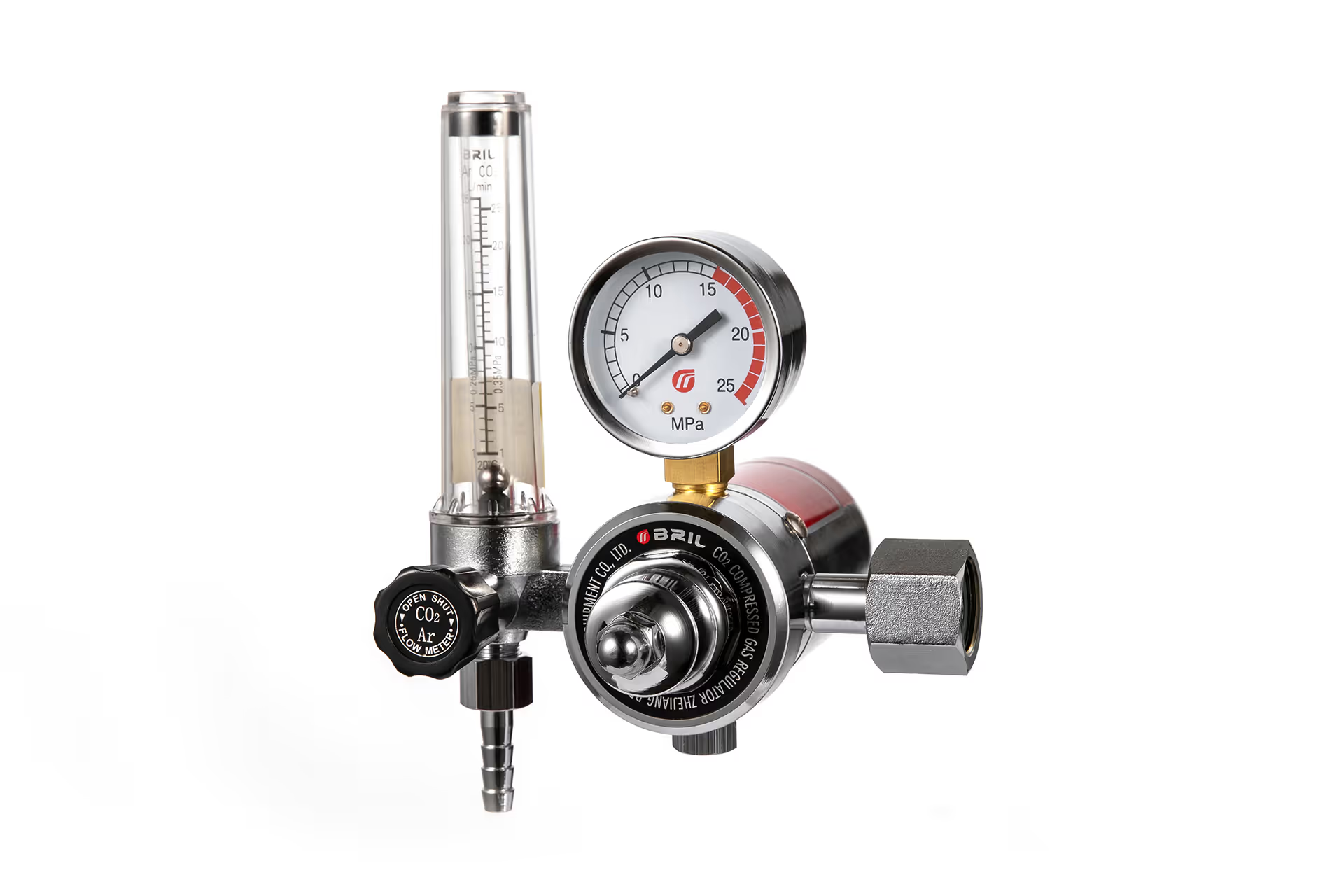
Zhejiang Bril Welding Equipment Co., Ltd. was founded in 2002 and is located in Wenzhou, Zhejiang, China. Its company profile describes a business specializing in the development, manufacture, and sale of industrial gas pressure regulators.
Its published information reports service to more than 30 countries and regions, over 200 employees, and more than 3,500 m² of production area. These are company-reported figures rather than independently audited production statistics.
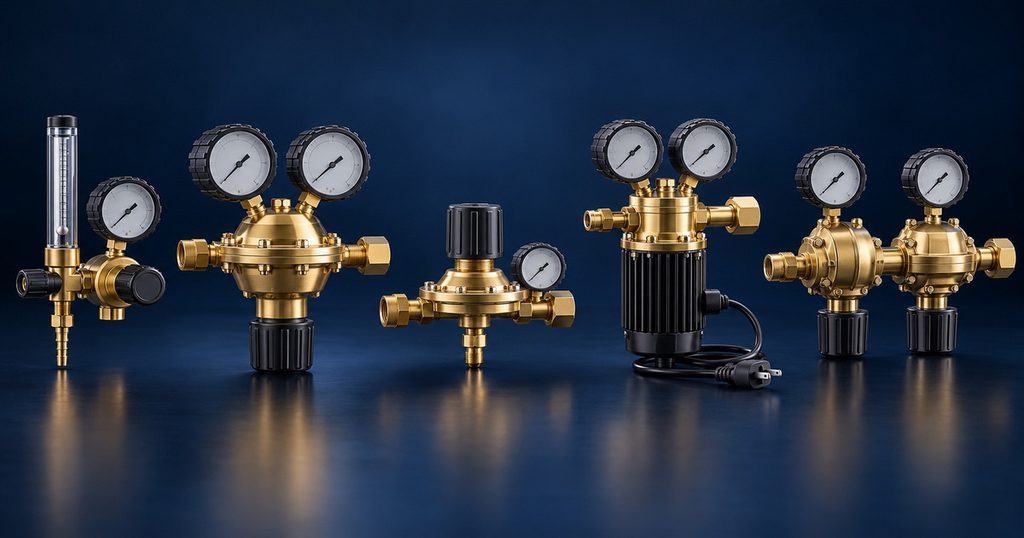
The manufacturer’s stated range includes:
– CO₂ regulators and CO₂ heated regulators.
– Argon and nitrogen regulators.
– Oxygen and acetylene regulators.
– Propane regulators.
– Dual-stage gas regulators.
Core Strengths and OEM/ODM Scope
Bril is relevant to importers seeking a potential value alternative to established branded products, particularly when developing a coherent private-label range.
Its company profile describes OEM manufacturing relationships with domestic and international welding equipment businesses. Buyers should treat those references as supplier statements and request supporting evidence where commercially appropriate.
For smaller and medium-sized brands, the practical opportunity is to discuss:
– Gas-specific product configurations.
– Cylinder inlet and outlet connections.
– Gauge scales, branding, and model identification.
– Portuguese-language packaging and instructions.
– Heated CO₂ regulator electrical configurations.
– Engineering changes subject to technical review and validation.
The depth of OEM or ODM work should be defined in a project agreement. A logo change is not equivalent to a redesigned regulator platform.
What Buyers Should Verify
Bril’s focus on regulator development and its stated OEM background make it a candidate for flexible cooperation. Nevertheless, communication efficiency, minimum order flexibility, tooling ownership, and engineering response times should be demonstrated during quotation and sampling.
Its website uses wording referring to ISO 9001, UKAS, IAF, CNAS, and CE. Buyers should request the underlying documents and distinguish certification bodies, accreditation bodies, laboratory accreditation, and product conformity requirements. These are not interchangeable credentials.
2. Famabras
A Brazilian Manufacturer with an Established Industrial Range
Famabras identifies its operating history as beginning in 1965 and lists its address in Itaquaquecetuba, São Paulo.
Its published pressure-regulator range includes the RI industrial series, with models such as RI-03P, RI-30P, RI-40P, and RI-50P.
For procurement teams serving Brazil, Famabras represents a domestic manufacturing option rather than an overseas brand supplied exclusively through import channels.
Core Strengths and Main Market
Its relevance lies in the combination of industrial pressure regulators and measurement-related products.
This makes it a practical candidate for:
– Welding supply distributors.
– Industrial maintenance suppliers.
– Brazilian equipment resellers.
– Buyers seeking direct discussion with a domestic manufacturer.
Its Brazilian location may simplify supplier visits and domestic coordination. Actual stock availability, service coverage, and replenishment lead times still require confirmation.
OEM/ODM Position
A comprehensive private-label or ODM program was not established from the reviewed public sources.
Buyers should therefore ask whether Famabras supports customized connections, distributor packaging, alternative gauges, or application-specific pressure settings. Do not assume that domestic manufacturing automatically includes unrestricted private-label production.
For every proposed model, request a technical drawing and confirm the intended gas, maximum inlet pressure, outlet range, and rated flow conditions.
3. Condor / ESAB
Locally Manufactured Oxyfuel Equipment with Custom Development Support
ESAB identifies Condor as a Brazil-based supplier of oxyfuel equipment located in Contagem.
Its listed manufacturing range includes pressure regulators, welding and heating torches, cutting nozzles, and related safety equipment.
Condor’s own website also identifies the business as part of the ESAB group and a Brazilian distributor for several gas-control product lines.
Core Strengths and Main Market
Condor is particularly relevant when a buyer needs a coordinated oxyfuel equipment package rather than a stand-alone regulator.
Typical purchasing applications include:
– Oxyfuel cutting.
– Heating and brazing.
– Fabrication shop equipment.
– Industrial maintenance.
– Gas-control equipment distribution.
ESAB’s description states that Condor products are manufactured and serviced locally and that custom product development is available.
OEM/ODM Position
Application-specific development has clearer public support than private-label manufacturing.
Buyers should distinguish between:
1. A Condor-branded product configured for an application.
2. A custom engineering project.
3. A regulator manufactured under the buyer’s own brand.
These commercial arrangements may have different approval requirements and minimum volumes.
The reviewed primary sources describe more than 20 years of activity but do not establish an exact founding year. A precise date should be confirmed with the company rather than inferred.
4. Harris Products Group
A Technical Option for Industrial and Specialty-Gas Regulation
The Harris regulator business traces its equipment heritage to Harris Calorific, established in 1905.
Its Portuguese-language product pages present industrial regulators and specialty-gas equipment. The company states that its industrial regulators are 100% tested before dispatch.
Its specialty-gas range also addresses applications such as analytical research, gas chromatography, chemical processing, and other controlled gas-delivery environments.
Core Strengths and Main Markets
Harris is relevant to buyers whose requirements extend beyond general workshop regulation.
Potential applications include:
– Industrial cutting and welding.
– Two-stage pressure control.
– Laboratory and analytical gas delivery.
– Specialty-gas systems.
– Equipment requiring clearly differentiated regulator configurations.
The manufacturer’s product range provides a basis for comparing regulator architecture and application suitability. However, global catalog availability does not establish Brazilian inventory or local lead time.
OEM/ODM Position
A generally available Brazilian private-label program was not confirmed.
For most buyers, Harris should initially be assessed as a branded equipment source through an appropriate supply channel. Any special configuration, equipment-integration project, or branding arrangement requires written confirmation.
Ask the seller to identify the manufacturing origin, authorized distribution status, warranty process, and availability of service components for the exact model.
5. White Martins / Linde
An Industrial Gas Supplier Offering Regulator Procurement
White Martins has operated in Brazil since 1912 and is part of Linde.
Its industrial equipment store lists oxygen, argon, and CO₂ regulators among other products. Its broader business supplies industrial, specialty, and medical gases.
This makes White Martins relevant to buyers who want to coordinate gas supply and associated pressure-control equipment.
Core Strengths and Main Market
Its main distinction is its gas-supply relationship with industrial users.
A customer may benefit from discussing the regulator together with:
– Gas specification.
– Cylinder supply arrangements.
– Consumption requirements.
– Delivery frequency.
– Application support.
Nevertheless, supplying a regulator does not establish that the seller manufactures it. Buyers should request the actual manufacturer and country of origin for each item.
OEM/ODM Position
White Martins is better treated in this comparison as an industrial supply and service channel than as an independently verified private-label regulator factory.
A broad OEM/ODM offer was not established from the reviewed sources. Buyers seeking custom-branded production should clarify whether the request can be supported directly, through a manufacturing partner, or not at all.
Technical Buyer’s Guide: What Determines Regulator Quality?
Specify Materials Beyond “High-Quality Brass”
“Brass body” is an incomplete specification.
Request the alloy designation, material standard, manufacturing route, and traceability method. The specification should also identify critical wetted components, including valve seats, diaphragms, springs, and seals.
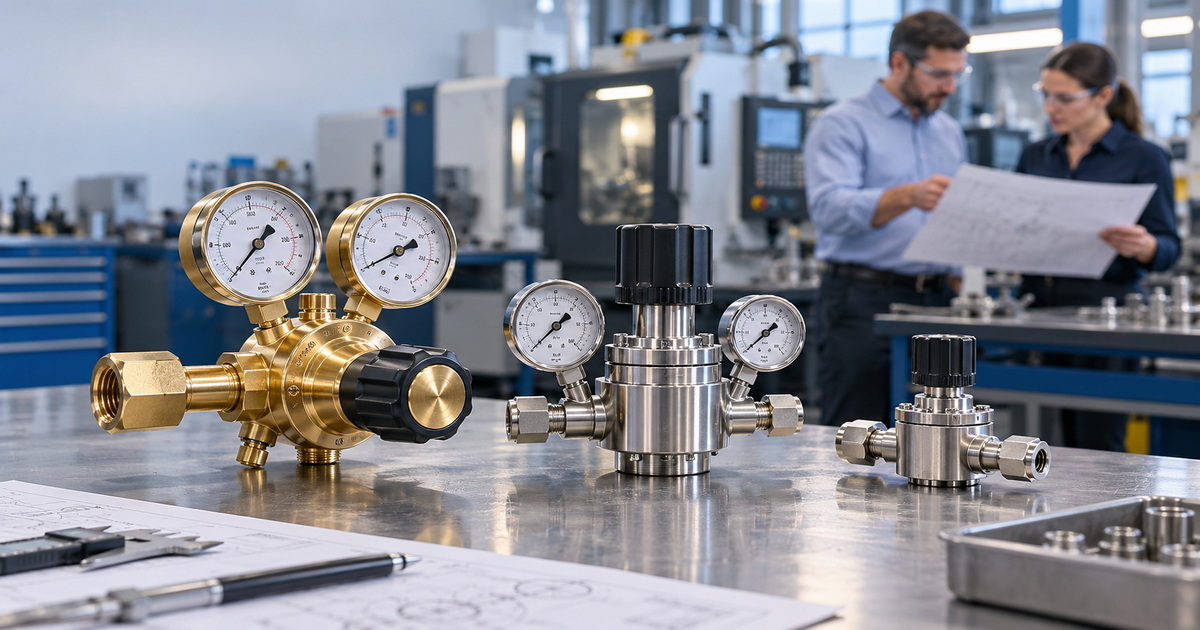
Forged brass may be suitable for many industrial regulators, but forging alone does not prove acceptable machining, clean internal passages, or reliable pressure control.
Likewise, stainless steel is not automatically necessary for ordinary welding gases. Material selection should follow gas compatibility, purity requirements, corrosion exposure, and the intended application.
Match the Standard to the Installation
ISO 2503 addresses cylinder regulators and regulators with flow-metering devices used in welding, cutting, and allied processes within its defined scope.
ISO 7291 addresses pressure regulators used in manifold systems and explicitly distinguishes them from regulators fitted directly to individual cylinders.
This matters because a buyer cannot assume that one test report covers:
– A cylinder-mounted regulator.
– A manifold regulator.
– A pipeline station regulator.
– Every inlet and outlet pressure combination.
Ask the supplier to identify the applicable standard and edition, explain its scope, and show how the report relates to the proposed model.
Separate Quality-System Certification from Product Compliance
ISO 9001 certification concerns the management system. It does not independently certify the performance of every regulator shipped.
Similarly, CE marking is not an environmental award or a general quality certificate. European pressure-equipment requirements depend on the product’s characteristics, scope, classification, and applicable conformity route.
RoHS concerns hazardous substances in electrical and electronic equipment. It should not be requested indiscriminately for every mechanical regulator. Heated CO₂ regulators introduce electrical components that require a more detailed compliance assessment.
Neither a CE logo nor a RoHS statement automatically establishes suitability for the Brazilian market.
An Under-Discussed Procurement Trap: Testing at Only One Inlet Pressure
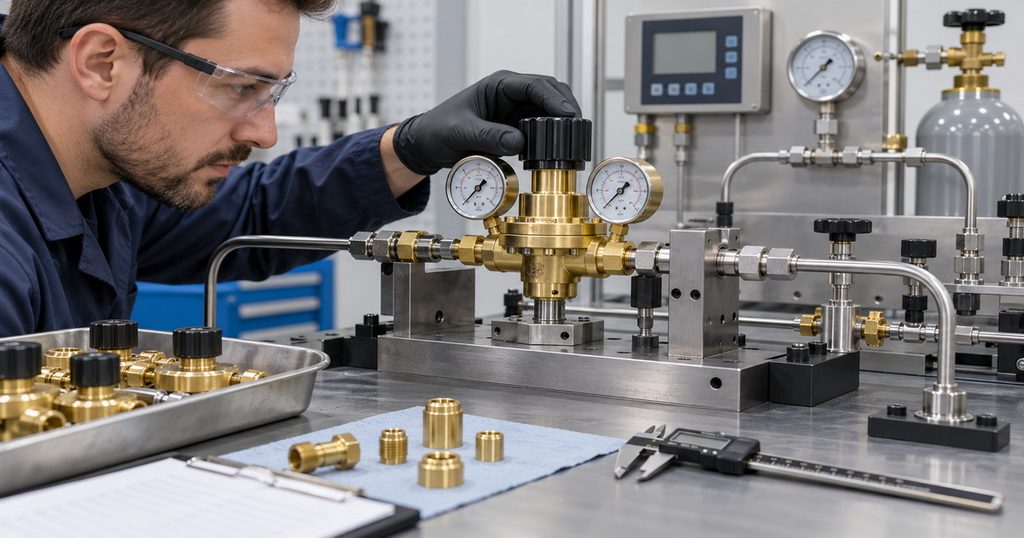
A regulator can appear stable during a short demonstration while performing poorly across its operating range.
The purchasing mistake is approving a sample after checking only one inlet pressure, one outlet setting, and a brief no-flow condition.
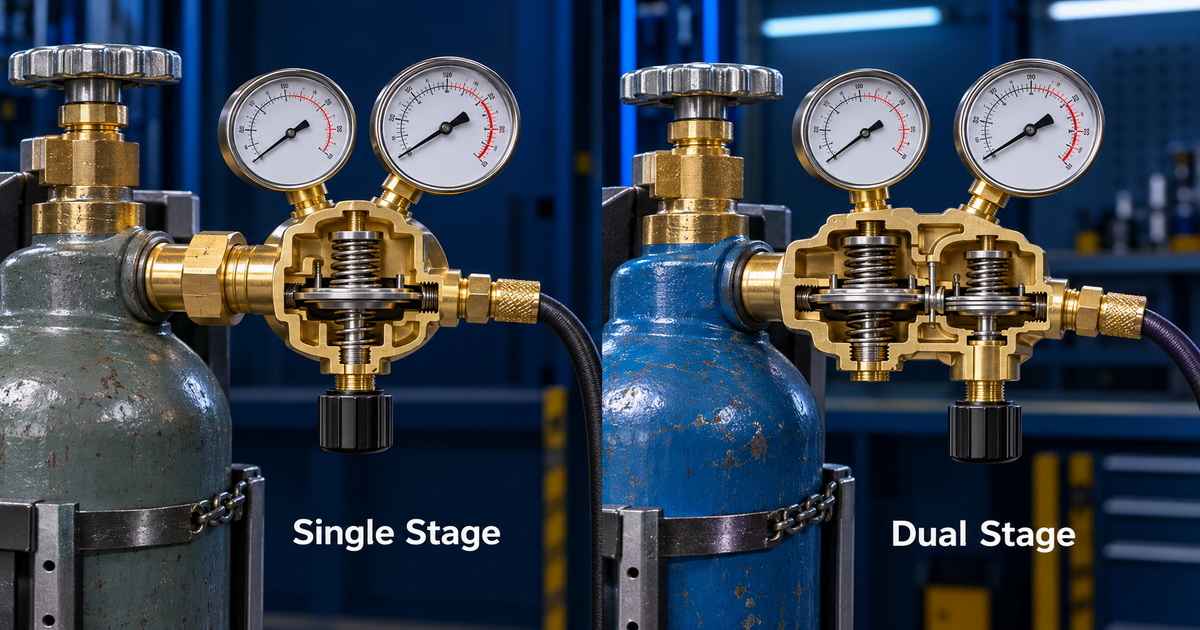
Two-stage designs can improve delivery-pressure control as cylinder pressure changes, but a two-stage label is not a substitute for measured performance.
A stronger acceptance protocol records:
1. Outlet pressure at high, intermediate, and lower inlet pressures within the approved operating range.
2. Performance at several specified flow points.
3. Pressure behavior when flow starts and stops.
4. Shutoff behavior and any outlet-pressure creep.
5. Ambient conditions and instrument calibration.
6. Results against contractually agreed limits.
A second, related trap concerns flow-indicating gauges. A gauge marked in litres per minute is not automatically a direct flowmeter. Buyers must verify the gas, calibration conditions, and required downstream restriction.
The practical safeguard is simple: attach the test method and acceptance criteria to the purchase specification before approving the sample.
How to Verify a Factory and Approve Samples
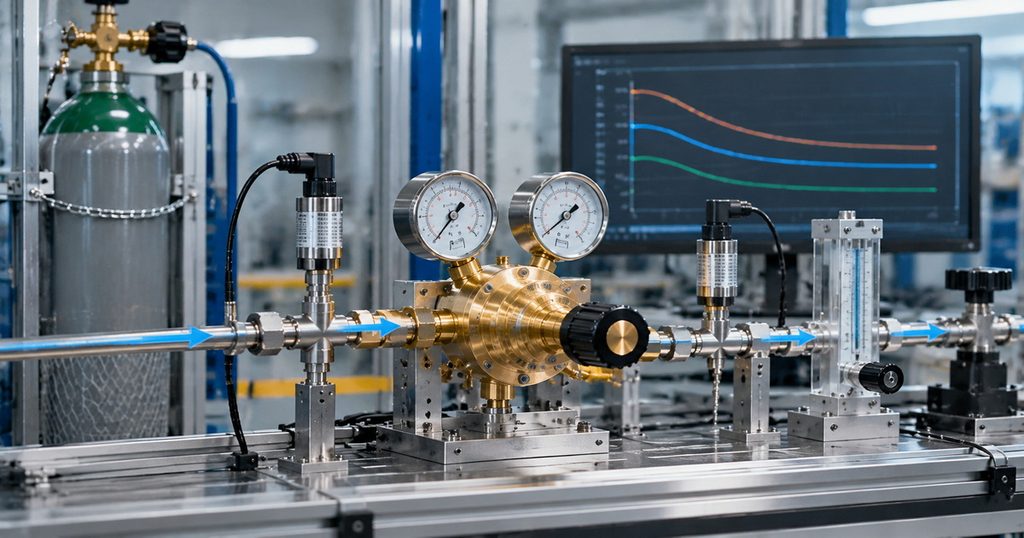
Step 1: Establish Who Actually Manufactures the Product
Request:
– The legal company name and registration details.
– The factory address.
– A live production walkthrough or independent audit.
– Identification of outsourced machining, assembly, or testing.
– A sample production record linked to a batch number.
For Brazilian entities, verify company registration through official channels. For overseas manufacturers, verify the corresponding legal registration and ensure the quotation, payment beneficiary, and manufacturing entity are consistent.
Step 2: Approve the Specification Before the Sample
The sample request should define gas service, maximum inlet pressure, outlet range, flow requirement, connections, mounting orientation, and environmental conditions.
For heated CO₂ regulators, also specify voltage, frequency, power rating, plug configuration, temperature protection, and intended duty.
Do not approve a product merely because it fits the cylinder.
Step 3: Connect Sample Approval to Production Control
Retain an approved reference sample and controlled specification.
Require written approval before changing critical materials, valve seats, diaphragms, springs, gauges, or subcontracted components.
Incoming inspection should compare production units with the approved configuration, not just the packaging artwork.
Step 4: Compare Landed Cost and Replenishment Risk
For imports into Brazil, review customs classification with a qualified broker before committing to volume.
Compare freight, insurance, applicable taxes, clearance costs, payment terms, warranty handling, and inventory carrying costs—not just the factory price.
Confirm protective packaging for gauges, clean and capped connections where required, and documentation appropriate to the destination market.
For all suppliers, negotiate spare-parts availability and a process for investigating field failures.
Conclusion: Choose by Application, Evidence, and Partnership Fit
Brazilian buyers have several distinct sourcing routes.
Famabras offers a domestic manufacturing option. Condor combines locally supported oxyfuel equipment with publicly described custom development capability. Harris provides a broad industrial and specialty-gas portfolio. White Martins connects regulator purchasing with industrial gas supply.
Zhejiang Bril adds an overseas OEM option for importers and growing brands seeking customized product ranges. Its suitability should be established through certificate verification, engineering discussions, sample testing, and a written production agreement.
Before requesting final prices, prepare one consistent specification and send it to every shortlisted supplier. For a private-label project with Zhejiang Bril, include your target gases, pressure ranges, cylinder connections, expected annual volume, packaging requirements, and required compliance documents. This gives both parties a practical basis for evaluating cost, customization, and delivery.
FAQ
1. How can I check whether a manufacturer’s ISO certificate has expired or been suspended?
Obtain the complete certificate, including the legal entity, site address, certificate number, scope, issuing body, and validity dates.
Check its status through the issuing certification body and an accredited certificate-verification platform such as CertSearch. Confirm that the scope covers relevant manufacturing activities rather than unrelated trading or services.
An expiry date alone is insufficient: a certificate may be suspended or withdrawn before that date.
2. Does a CE-marked regulator automatically meet Brazilian requirements?
No.
CE marking relates to applicable European legislation and the manufacturer’s conformity obligations. It does not replace an assessment of Brazilian requirements, local connection compatibility, intended use, labeling, or electrical requirements for heated models.
Ask a qualified local compliance specialist to assess the exact product rather than relying on a generic certificate.
3. How can I confirm that production regulators use the same brass as the approved sample?
Put the alloy designation and material standard in the purchase specification.
Require material certificates, batch traceability, and change-control obligations. Where justified, commission independent alloy verification using a suitable method.
Appearance, surface plating, and product weight alone cannot establish alloy identity or internal material consistency.
4. When is a two-stage regulator worth the additional cost?
Consider it when delivery-pressure consistency across changing cylinder pressure is important to the process.
However, compare measured performance at your required flow and inlet-pressure range. A correctly selected single-stage regulator may suit routine industrial work, while a poorly specified two-stage unit may still disappoint.
Also remember that two gauges indicate inlet and outlet readings; they do not prove two-stage construction.
5. How should an OEM buyer prevent unapproved component substitutions?
Use a controlled drawing, agreed bill of materials, approved reference sample, and written change-notification procedure.
Identify safety- and performance-critical components explicitly. Require approval before substitutions and define when requalification testing is necessary.
Include batch traceability, inspection rights, and failure-investigation responsibilities in the supply agreement. Sample approval without production change control leaves a significant gap.
References
1. – Zhejiang Bril Welding Equipment Co., Ltd. — Company history, location, reported facilities, markets, certification claims, and OEM background. [chinesewelding]
2. – Famabras — Official industrial pressure-regulator range, operating history, and Brazilian address. [famabras.com]
3. – ESAB — Condor’s Brazilian manufacturing location, oxyfuel product range, local service, and custom development capability. [esab]
4. – Condor — ESAB group affiliation and Brazilian gas-control supply activities. [condornet.com]
5. – Harris Products Group — Company history and industrial and specialty-gas regulator information. [harrisproductsgroup]
6. – Harris Products Group — Two-stage regulator product description. [harrisproductsgroup]
7. – White Martins — Official company history and industrial regulator catalog. [whitemartins.com]
8. – ABIMAQ — “Desempenho em 2025 e Perspectivas 2026,” including machinery revenue and import figures. [abimaq.org]
9. – Brazil’s Ministry of Development, Industry, Trade and Services — Official Comex Stat data structure and customs-classification-based trade statistics. [gov]
10. – International Organization for Standardization — Cylinder-regulator and manifold-regulator scope information. [iso]
11. – European Commission — Pressure Equipment Directive scope and conformity framework. [single-market-economy.ec.europa]
12. – European Commission — RoHS scope for electrical and electronic equipment. [environment.ec.europa]
13. – CertSearch — Accredited management-system certificate verification and status checking. [iafcertsearch]
Hot Tags: Gas Pressure Regulator Manufacturers, Gas Pressure Regulator Suppliers, Industrial Gas Pressure Regulators, Gas Pressure Regulators in Brazil, Welding Gas Regulators, OEM Gas Pressure Regulators, CO₂ Heated Regulators, Oxygen Pressure Regulators, Argon Gas Regulators, Dual Stage Gas Regulators