Content Menu
● How We Selected These Acetylene Regulator Suppliers
● Why Source Acetylene Regulators Through the UAE?
>> A Regional Industrial and Distribution Platform
>> Do Not Confuse Local Supply With Local Manufacture
● Acetylene Regulator Supplier Comparison
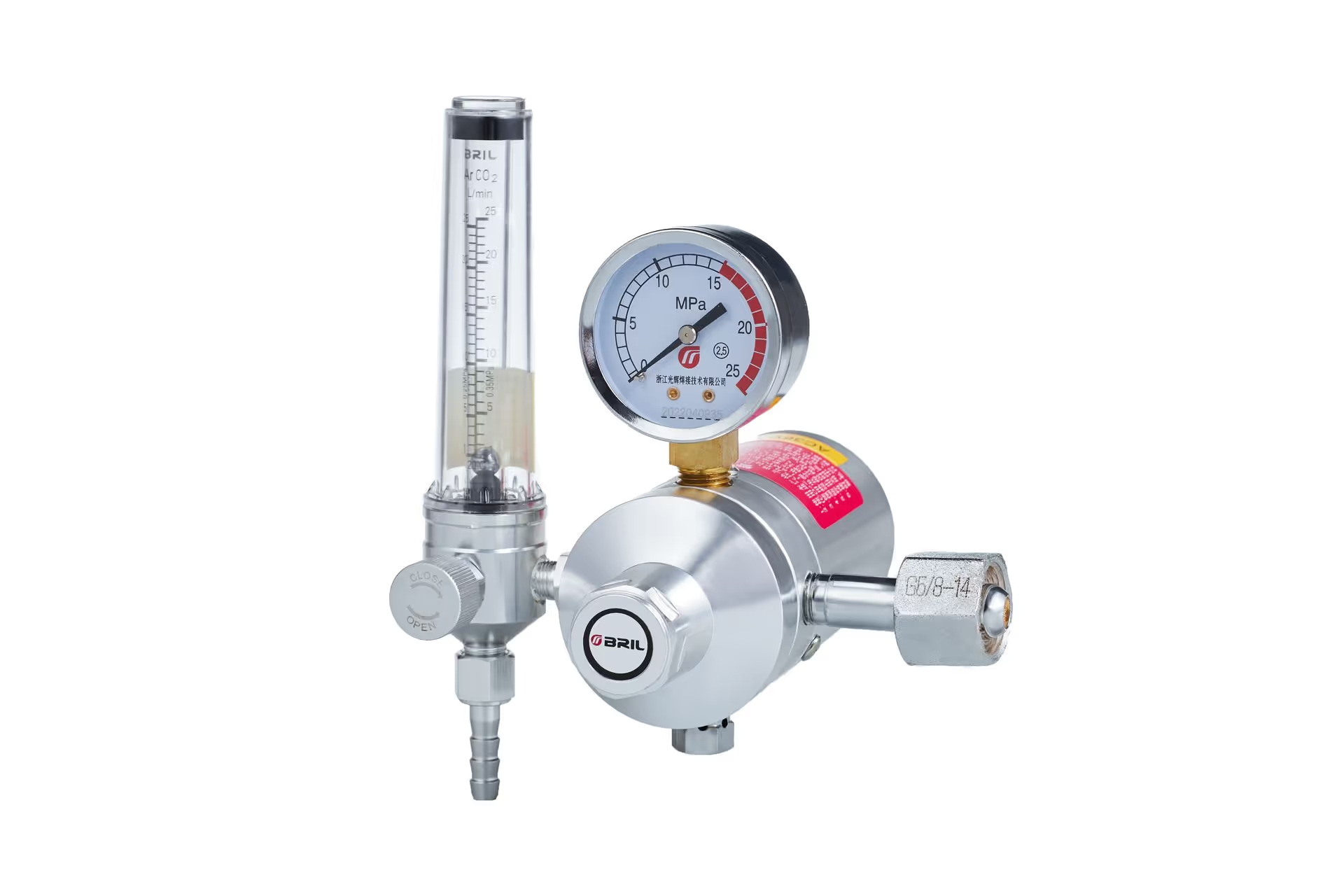
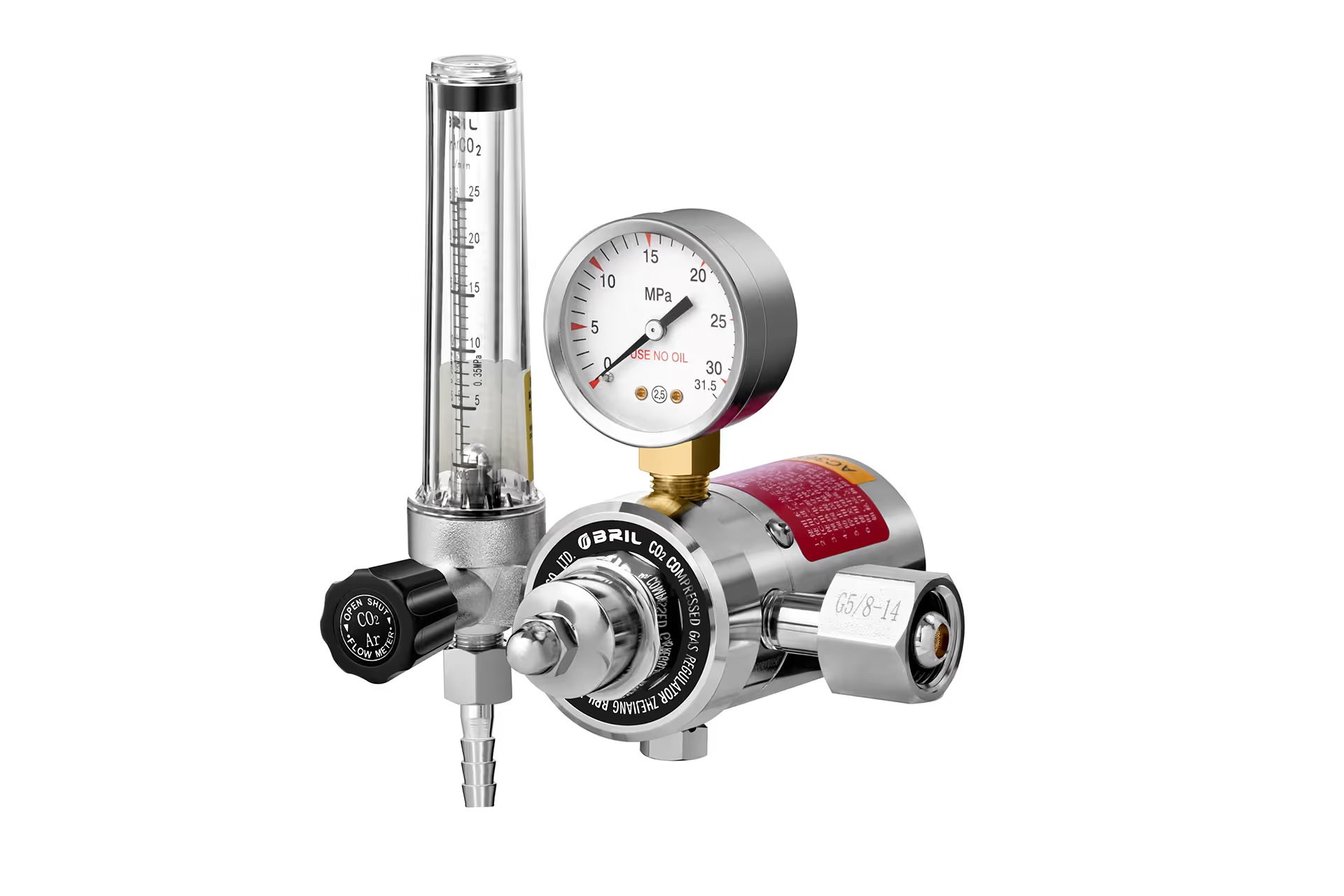
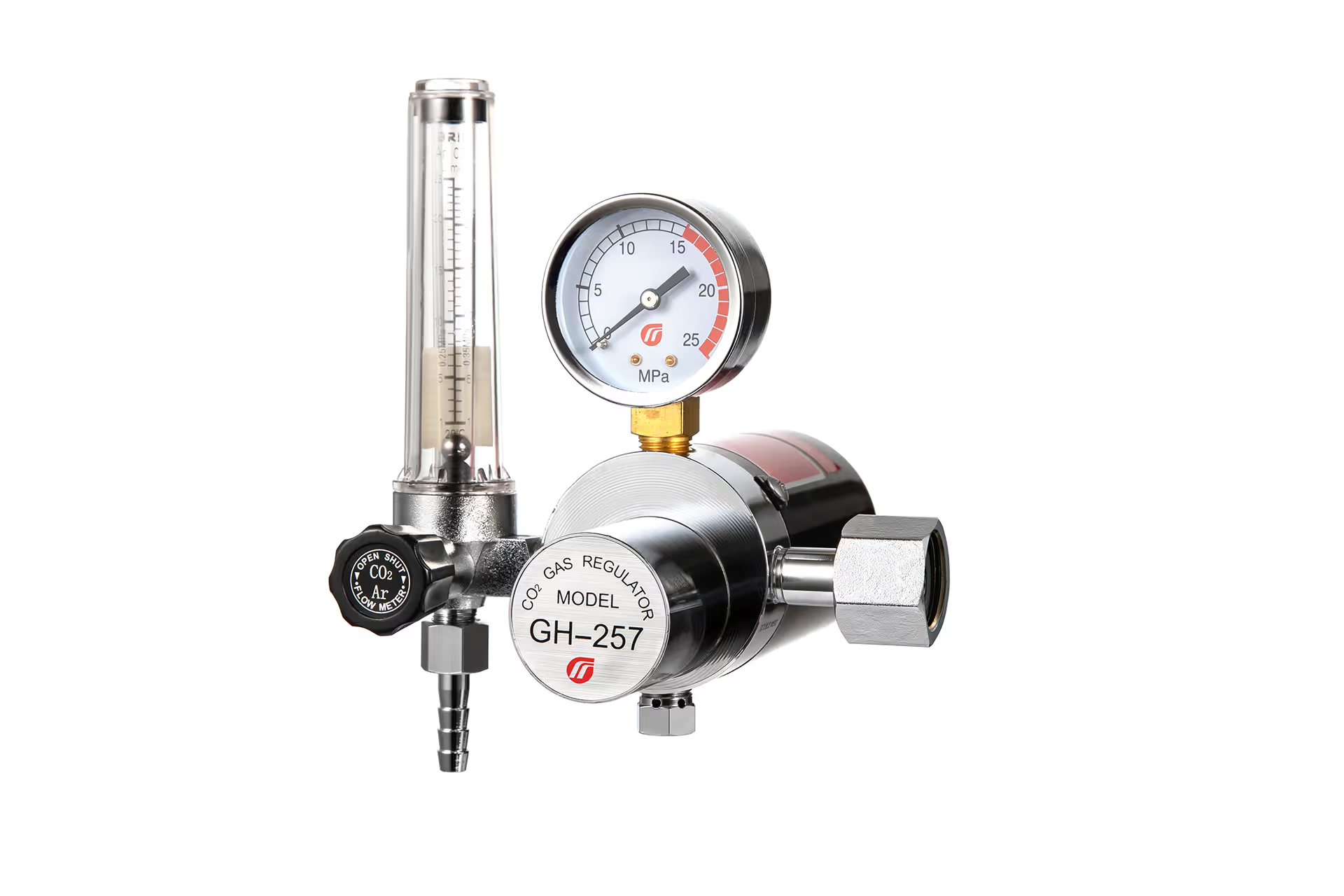
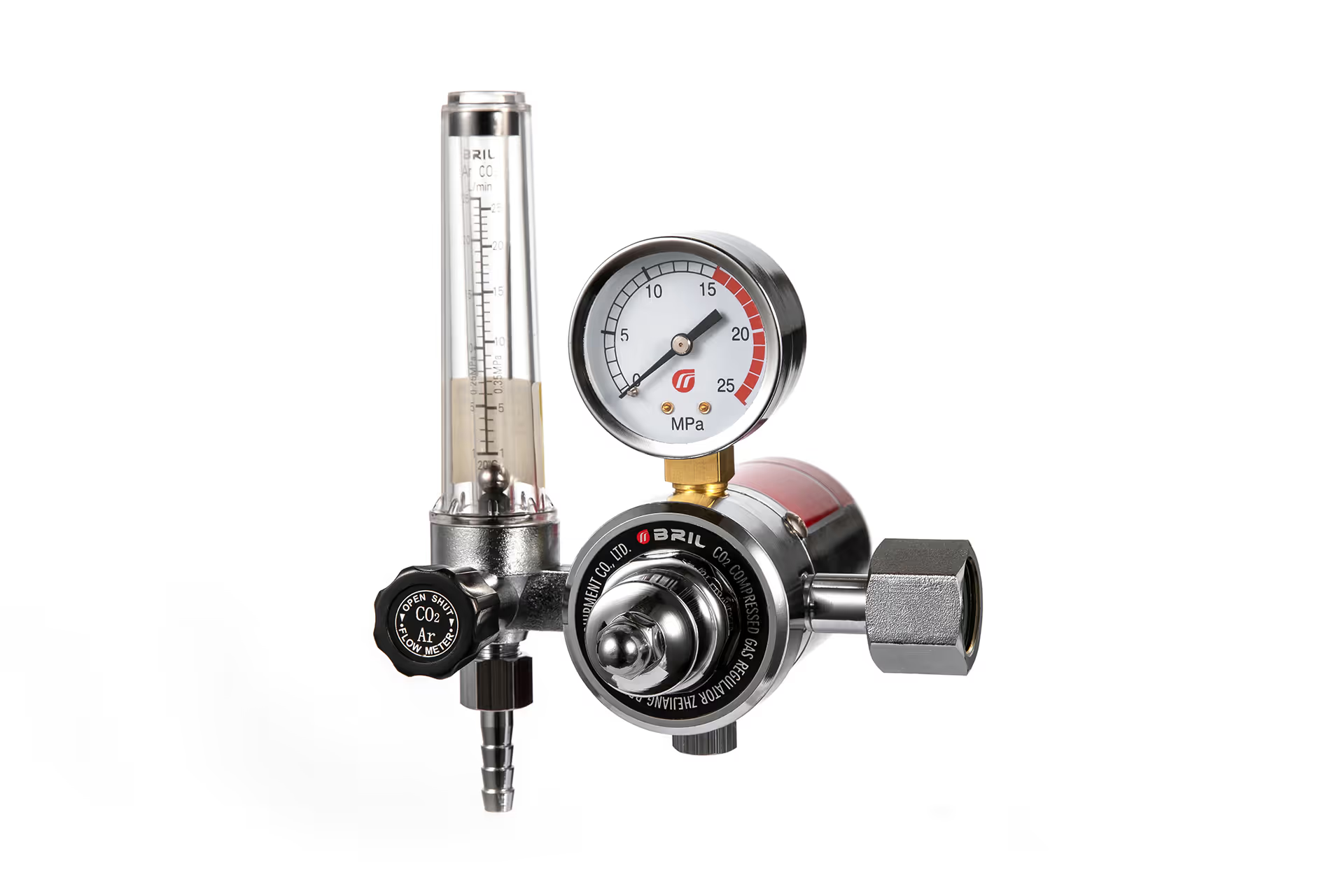
● 1. Zhejiang Bril Welding Equipment Co., Ltd.
>> Factory-Direct Option for UAE Importers and Private-Label Brands
>> Core Strengths and OEM/ODM Relevance
● 2. Weldtron International FZCO
>> Dubai-Based Access to Branded Gas Regulators
>> Core Strengths and Market Focus
>> OEM/ODM Scope and Purchasing Checks
>> Multi-Category Industrial Supply From Dubai
>> Core Strengths and Procurement Fit
>> OEM/ODM Scope and Purchasing Checks
>> Ajman-Based Supply for Workshop and Hardware Channels
>> Core Strengths and Market Focus
>> OEM/ODM Scope and Purchasing Checks
>> Dubai-Based Tools and Welding Equipment Supply
>> Core Strengths and Market Focus
>> OEM/ODM Scope and Purchasing Checks
>> International Gas-Control Manufacturing With Regional Access
>> Core Strengths and Market Focus
>> OEM/ODM Scope and Purchasing Checks
● Technical Buyer’s Guide: What Makes an Acetylene Regulator Suitable?
>> 1. Confirm Acetylene-Specific Design and Pressure Limits
>> 2. Specify Material Compatibility, Not Just “High-Quality Brass”
>> 3. Evaluate Regulation Performance, Not Gauge Count
>> 4. Separate Management-System Certification From Product Evidence
● Common Procurement Pitfalls—and How to Avoid Them
>> An Overlooked Trap: A Passing Leak Test Is Not a Complete Performance Test
● Factory Verification, Samples, and Logistics
>> Verify the Legal and Manufacturing Entities
>> Use a Three-Step Sample Approval Process
>> Clarify Shipping and Origin Before Comparing Prices
● Conclusion: Select the Supply Model Before Selecting the Supplier
>> 1. How can I verify whether a manufacturer’s ISO certificate has expired?
>> 2. Can we use an oxygen, nitrogen, or propane regulator for acetylene if the connection fits?
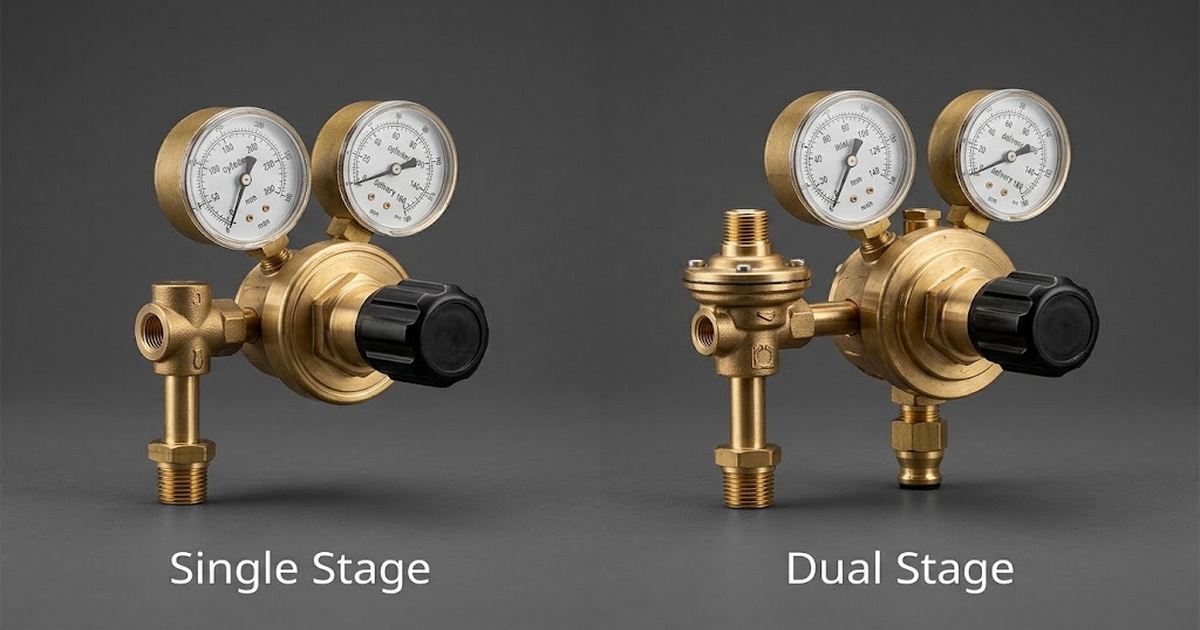
>> 3. How should we compare a single-stage regulator with a two-stage regulator?
>> 4. What evidence should we require when a supplier claims CE, CNAS, UKAS, or IAF approval?
>> 5. How can we detect unauthorized component changes after approving a sample?
Finding a dependable acetylene regulator supplier in the UAE requires more than comparing prices or checking whether a product has a brass body. Professional buyers need to distinguish between the company that manufactures the regulator, the distributor that stocks it, and the organization responsible for technical support, traceability, and warranty claims.
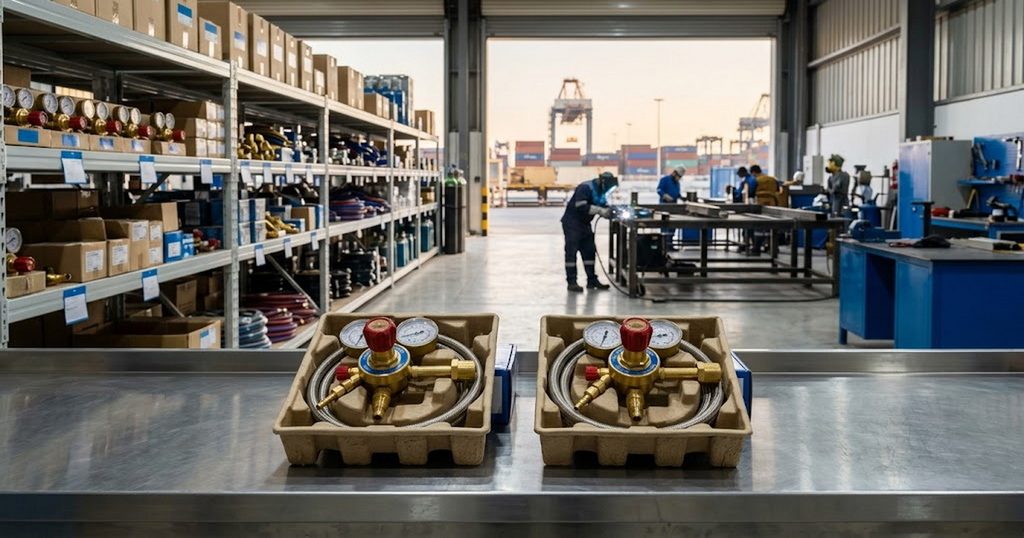
How We Selected These Acetylene Regulator Suppliers
A useful supplier shortlist should explain its selection method before presenting company names.
For this guide, the assessment considers publicly available company information, documented acetylene regulator offerings, manufacturing or distribution roles, and the relevance of each business to professional purchasing.
The following qualification framework is recommended for buyers conducting their own supplier assessment. It is not a claim that every listed company has passed an independent factory audit.
| Assessment area | What professional buyers should verify | Suggested weighting |
|---|---|---|
| Product suitability and safety | Acetylene-specific design, correct connections, suitable pressure range, applicable product standards | 30% |
| Manufacturing and quality control | Material identification, controlled assembly, calibrated inspection equipment, leakage and performance testing | 25% |
| Documentation and traceability | Valid certificates, model-specific reports, batch identification, manufacturer details | 20% |
| Supply reliability | Confirmed stock or production allocation, component availability, delivery records, spare parts | 15% |
| Customization and communication | Drawing approval, change control, packaging support, technical response quality | 10% |
No independently verified monthly production capacity or universal minimum order quantity was found in the reviewed sources. Where these details are unavailable, this guide identifies them as quotation-stage requirements rather than inventing figures.
Why Source Acetylene Regulators Through the UAE?
A Regional Industrial and Distribution Platform
The UAE offers a combination of industrial demand, international logistics, and access to imported welding equipment.
A July 2026 U.S. International Trade Administration market intelligence update reports that UAE industrial exports reached $71 billion in 2025. This is a broad industrial figure, not an acetylene regulator market estimate, but it provides useful context for the country’s manufacturing and industrial procurement environment.
Jebel Ali is particularly relevant to buyers evaluating regional distribution. A March 2025 Jafza industry briefing describes a manufacturing cluster of approximately 800 companies from 75 countries and connections through Jebel Ali Port to more than 150 ports. Its cited AED 100 billion trade figure relates to 2022, not 2025.
These advantages support a practical sourcing model: imported regulators can be stocked, consolidated, and distributed alongside welding machines, cutting equipment, consumables, and workshop supplies.
Do Not Confuse Local Supply With Local Manufacture
Publicly available product listings show that UAE suppliers offer internationally manufactured acetylene regulators, including Harris and Victor models. Weldtron lists Harris equipment, while Adex lists Victor SR 350/360 oxygen and acetylene regulators.
However, those listings do not establish that the regulators are manufactured in the UAE.
A procurement team should therefore ask three separate questions:
1. Who manufactures the regulator?
2. Who imports and supplies the specific model?
3. Who provides warranty service and replacement parts?
Treating these as separate responsibilities helps prevent disputes when a product needs technical support or a replacement component.
Acetylene Regulator Supplier Comparison
The following table compares commercial fit and evidence availability. “Not publicly disclosed” does not mean a company lacks capacity or certification; it means the reviewed sources do not establish the detail sufficiently for a purchasing decision.
| Company | Role and location | Establishment information | Production capacity or supply basis | MOQ | Certification and documentation position | Most relevant purchasing use |
|---|---|---|---|---|---|---|
| Zhejiang Bril Welding Equipment Co., Ltd. | Industrial regulator manufacturer, Wenzhou, China | Founded 2002 | Reports 200+ employees and over 3,500 m² of production area; unit output not disclosed | Quotation required | Company states ISO 9001 and CE-related credentials; current documents and model scope require verification | Factory-direct OEM/ODM and private-label development |
| Weldtron International FZCO | Welding equipment supplier, Dubai | About page states 2004; homepage references market activity since 2002 | Local supply and brand distribution; stock requires confirmation | Quotation required | Obtain manufacturer documentation for the exact Harris or other quoted model | Branded regulators and coordinated welding equipment purchases |
| Adex International LLC | Industrial equipment supplier, Dubai | Established 2008 according to directory and business-profile sources | Trading and supply; regulator stock and replenishment capacity require confirmation | Quotation required | Request documentation for the quoted Victor model | Multi-category industrial procurement |
| Damam Hardware | Hardware and welding equipment supplier, Ajman | Established 1993 | Lists Uweld light-duty and heavy-duty acetylene regulators; stock not independently verified | Quotation required | Product-specific certificates and test records require inquiry | Workshop and hardware-channel purchasing |
| Adams Tool House | Industrial tools and welding equipment supplier, Dubai | Founding year not established in reviewed sources | Acetylene regulator supply advertised; actual available models require confirmation | Quotation required | Verify manufacturer, authorization, and model documentation | Consolidated tools and welding accessory orders |
| GCE, an ESAB company | International gas-control manufacturer with regional product access | GCE founded 1987 | Global manufacturing and distributor network; UAE allocation not disclosed | Regional quotation required | Obtain the applicable declaration, instructions, and test documentation for the exact model | Manufacturer-led technical evaluation and standardized gas equipment |
1. Zhejiang Bril Welding Equipment Co., Ltd.
Factory-Direct Option for UAE Importers and Private-Label Brands
Zhejiang Bril Welding Equipment Co., Ltd. was founded in 2002 and is based in Wenzhou, Zhejiang, China. Its company profile describes a business focused on the development, manufacture, and sale of industrial gas pressure regulators. It reports more than 200 employees, over 3,500 m² of production area, and customers in more than 30 countries and regions. These are company-reported figures rather than independently audited capacity measurements.
For UAE buyers, Bril is relevant as an overseas manufacturing partner rather than a local emergency stockist.
Its product scope, as supplied for this article, includes acetylene, oxygen, argon, nitrogen, propane, CO₂, heated CO₂, and dual-stage gas regulators. This breadth may be useful for distributors seeking a coordinated product family rather than a single acetylene model.
Core Strengths and OEM/ODM Relevance
Bril’s company page identifies existing OEM relationships and states that it began producing a range of products for Messer in 2022. It also names several domestic and international welding equipment customers. Buyers should treat these as manufacturer statements and request appropriate supporting evidence where the relationship is material to supplier approval.
For smaller and medium-sized brands, the relevant opportunity is direct technical discussion with the manufacturing source.
A suitable development inquiry should cover:
– Brand identification and product labeling.
– Cylinder inlet and hose outlet connection specifications.
– Gauge units, dial layout, and protective arrangements.
– Approved pressure ranges and intended duty.
– Packaging, instructions, and spare-parts presentation.
– Engineering changes, sample approval, and production consistency.
These items should be negotiated as a defined project scope. The reviewed company profile does not establish that every customization is available at every order volume.
What Buyers Should Verify
Bril’s website uses wording referring to ISO 9001, UKAS, IAF, CNAS, and CE. Buyers should request the actual documents and identify what each one represents rather than treating the logos or names as equivalent approvals. In particular, the certificate holder, issuing body, manufacturing address, covered activities, and applicable product models should be checked.
Bril’s main markets are described broadly as domestic and overseas markets, with supply to more than 30 countries and regions; a country-by-country sales breakdown is not published on the reviewed page.
For a cost-sensitive OEM program, the sensible next step is a technical RFQ and sample evaluation—not an assumption that factory-direct supply automatically delivers the lowest total cost.
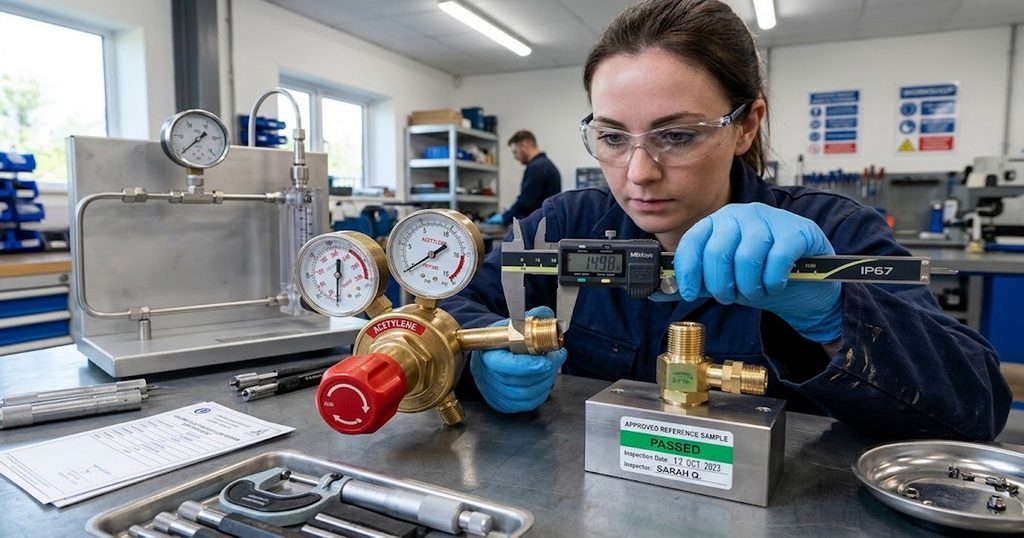
2. Weldtron International FZCO
Dubai-Based Access to Branded Gas Regulators
Weldtron supplies welding and cutting equipment in Dubai and lists Harris gas regulators, including the Harris 25GX acetylene regulator. Its regulator page also discusses single-stage and double-stage pressure regulators.
Its establishment information deserves a small but important qualification: the company’s About page states that Weldtron was founded in 2004, while its homepage says it has offered equipment in the UAE market since 2002. Buyers requiring a verified incorporation date should check the trade license rather than selecting one website statement without qualification.
Core Strengths and Market Focus
Weldtron’s documented market focus is the UAE welding and fabrication sector. Its broader equipment offering makes it relevant when a buyer wants regulators, welding equipment, and associated supplies through one commercial relationship.
This can suit:
– Fabrication workshops replacing established branded equipment.
– Maintenance teams purchasing a defined regulator model.
– Contractors consolidating welding equipment orders.
OEM/ODM Scope and Purchasing Checks
The reviewed sources establish a supply and distribution role for gas regulators, not an acetylene regulator OEM/ODM service.
Before ordering, request the exact manufacturer part number, inlet connection, pressure range, country of origin, warranty terms, and replacement-parts availability.
If brand authorization is a procurement requirement, obtain current confirmation from the manufacturer for the relevant product line. A supplier’s general brand relationship should not replace model-specific verification.
3. Adex International LLC
Multi-Category Industrial Supply From Dubai
Adex International LLC is identified as a Dubai-based industrial trading company established in 2008. Its business profile describes supply across industrial tools, machinery, welding equipment, and related categories, with UAE, GCC, and other Arab markets identified as its commercial focus.
Its product listings include Victor SR 350/360 oxygen and acetylene single-stage regulators.
Core Strengths and Procurement Fit
Adex is most relevant to purchasing teams that need a regulator within a broader industrial equipment order.
The potential advantage is procurement consolidation rather than a publicly demonstrated proprietary regulator manufacturing capability.
A buyer can evaluate Adex for:
– Mixed industrial equipment requirements.
– Replacement of specified Victor regulator models.
– Regional sourcing where commercial coordination matters alongside product selection.
OEM/ODM Scope and Purchasing Checks
No acetylene regulator manufacturing or private-label engineering capability was established in the reviewed sources.
For repeat orders, request a quotation that identifies the full model code and prohibits substitution without written approval. Also distinguish between stock physically available in the UAE and equipment that must be ordered from an overseas source.
4. Damam Hardware
Ajman-Based Supply for Workshop and Hardware Channels
Damam Hardware states that it was established in 1993 and operates from Ajman. Its registered business activity is described as trading in building and construction materials, tools, and machinery.
Its Uweld product range includes both light-duty and heavy-duty acetylene regulators.
Core Strengths and Market Focus
Damam’s relevant commercial position is as a UAE hardware and workshop supplier.
For buyers already purchasing cutting tools, workshop accessories, and related equipment, its acetylene regulator range may provide a convenient addition to a consolidated order. The reviewed sources establish UAE supply but do not provide a detailed export-market breakdown.
OEM/ODM Scope and Purchasing Checks
No regulator-specific OEM/ODM program was verified.
The most important technical clarification concerns the meaning of “light duty” and “heavy duty.” These are not sufficient purchasing specifications on their own.
Request:
– Rated flow at stated inlet and outlet conditions.
– Maximum permitted inlet pressure.
– Outlet adjustment range.
– Inlet and outlet connection drawings.
– Instructions and replacement-parts information.
– Applicable manufacturer test documentation.
A heavier body or larger gauge does not, by itself, prove better pressure regulation.
5. Adams Tool House
Dubai-Based Tools and Welding Equipment Supply
Adams Tool House describes itself as a professional trading company supplying tools and related industrial products. A supplier listing advertises gas regulators, flow meters, and acetylene regulators in Dubai and the wider UAE.
A reliable founding year was not established from the reviewed company information. Buyers should verify the legal entity and incorporation details through official business-license channels if these form part of vendor onboarding.
Core Strengths and Market Focus
Its relevant market is UAE industrial and workshop procurement, particularly buyers combining welding accessories with other tools.
However, a broad product listing does not establish the manufacturer, configuration, or certification of the regulator that will actually be delivered.
OEM/ODM Scope and Purchasing Checks
No acetylene regulator OEM/ODM manufacturing program was verified in the reviewed material.
Before approving Adams Tool House for a regulator order, ask for:
1. The manufacturer and complete model designation.
2. A current datasheet and photographs of actual stock.
3. Supporting documents for any authorization claim.
4. Written warranty responsibility.
5. Confirmation that the supplied connection matches the customer’s cylinder system.
These checks are especially important when an advertised product category includes several brands or configurations.
6. GCE, an ESAB Company
International Gas-Control Manufacturing With Regional Access
GCE was founded in 1987 and acquired by ESAB in 2018. ESAB describes GCE as a manufacturer of pressure and flow-control equipment, with a global distributor network exceeding 6,000 distributors. Its product scope extends from pressure regulators to more complex gas supply systems.
ESAB’s regional website includes GCE within its brand portfolio and presents gas equipment for welding, heating, and flow control. This supports its relevance to regional procurement, although it does not prove that a particular acetylene regulator is immediately available from UAE stock.
Core Strengths and Market Focus
GCE is relevant to buyers seeking manufacturer-led gas-control documentation and a broad industrial product portfolio.
Its market coverage is global, including industrial, specialty-gas, and medical applications. Those categories must remain distinct: documentation for a medical or specialty-gas product should not be treated as evidence for a welding acetylene regulator.
OEM/ODM Scope and Purchasing Checks
The reviewed sources do not establish a general private-label OEM/ODM service for UAE buyers.
For project purchasing, identify the exact acetylene model, regional supplying entity, applicable connections, and support arrangements. Ask separately about technical modifications; do not assume that a global manufacturer offers small-batch customization.
Technical Buyer’s Guide: What Makes an Acetylene Regulator Suitable?
1. Confirm Acetylene-Specific Design and Pressure Limits
ISO 2503:2009 covers single-stage and two-stage cylinder pressure regulators used in welding, cutting, and allied processes, including regulators for dissolved acetylene. It is a relevant starting point when specifying cylinder-mounted equipment.
As an important safety benchmark, U.S. OSHA rules prohibit generating, piping—with a specified exception for approved cylinder manifolds—or using acetylene above 15 psig. This is a U.S. requirement, not a statement of UAE law; local requirements and the equipment manufacturer’s instructions must also be checked.
Buyers should not confuse cylinder-side pressure with permitted working delivery pressure. A Miller acetylene regulator example lists a maximum inlet pressure of 400 psig but a maximum delivery pressure of 15 psig, illustrating why these are separate specifications.
2. Specify Material Compatibility, Not Just “High-Quality Brass”
Brass quality matters, but “more copper” is not a suitable quality rule for acetylene-wetted components.
Air Products’ acetylene safety guidance warns against unalloyed copper, silver, and mercury in direct acetylene contact and advises against alloys containing more than 65% copper. EIGA guidance distinguishes between different equipment contexts and notes the 65% copper figure used for transportable equipment in referenced standards.
Consequently, a buyer should request:
– The designated alloy for relevant wetted components.
– Material certificates linked to production batches.
– The manufacturer’s documented compatibility basis.
– Controls preventing unapproved alloy substitution.
Do not approve an acetylene regulator merely because the supplier advertises a familiar brass grade used successfully in water valves or general plumbing fittings.
3. Evaluate Regulation Performance, Not Gauge Count
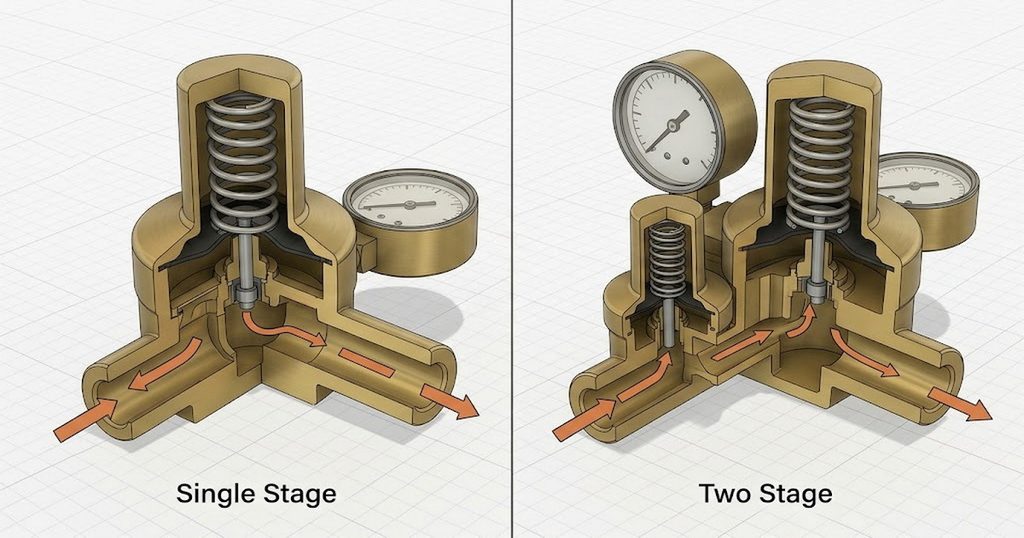
Two gauges do not establish that a regulator has two pressure-reduction stages. For example, Damam lists dual-gauge acetylene products, while other manufacturer specifications explicitly identify stage count as a separate attribute.
For technical qualification, request a sectional drawing or manufacturer declaration identifying the number of stages.
Then define the performance that matters to the application:
– Outlet pressure variation as inlet pressure changes.
– Pressure droop as flow increases.
– Lock-up behavior when downstream flow stops.
– Leakage acceptance limits.
– Performance after endurance testing.
The purchase specification should describe acceptable behavior, not rely on appearance.
4. Separate Management-System Certification From Product Evidence
ISO 9001 certification is useful supplier information, but it should be checked against the company, manufacturing site, and activities covered.
IAF CertSearch provides a way to examine accredited management-system certification, including certificate status, scope, issuing certification body, and accreditation information.
For product acceptance, request separate model-specific evidence.
Where CE marking or RoHS compliance is claimed, ask the supplier to identify the applicable requirements, the product covered, and the supporting declaration or report. Do not write either term into a purchasing specification as a substitute for an acetylene regulator performance standard.
Common Procurement Pitfalls—and How to Avoid Them
| Procurement pitfall | Why it creates risk | Recommended purchasing control |
|---|---|---|
| Accepting “brass body” as a full material specification | The wording does not identify acetylene compatibility or the alloy used in wetted parts | Specify material designations and require batch-linked evidence |
| Assuming two gauges mean two stages | Gauge arrangement and pressure-reduction architecture are different attributes | Obtain stage confirmation and a technical drawing |
| Buying by photograph | Similar-looking regulators can have different seats, connections, and pressure ranges | Approve an exact model and controlled specification |
| Accepting an expired or mismatched certificate | The certificate may cover another entity, address, or business activity | Validate status and scope with the issuing body |
| Treating a sample as proof of future consistency | Production components may differ from the evaluated sample | Freeze the approved configuration and require written change approval |
| Ignoring after-sales responsibility | The supplier and manufacturer may each expect the other to resolve a failure | Define warranty handling and spare-parts supply in the contract |
The material and architecture concerns above are supported by acetylene compatibility guidance and manufacturer specifications; the recommended controls are proposed procurement practices rather than claims that any listed supplier has committed these failures.
An Overlooked Trap: A Passing Leak Test Is Not a Complete Performance Test
A regulator can appear acceptable during a brief demonstration while the buyer still lacks evidence of its behavior across changing flow and inlet-pressure conditions.
The procurement mistake is accepting a statement such as “100% tested” without defining what was tested.
A stronger RFQ asks the supplier to identify:
1. Which tests apply to every production unit.
2. Which tests are performed only on samples.
3. The test medium and test conditions.
4. The acceptance limits.
5. How the results are linked to production batches.
For the approved sample, record performance with the intended downstream configuration specified in the test plan. Keep that approved configuration as the reference for future orders.
This is a proposed purchasing safeguard, not an allegation about any company in this guide. Acetylene equipment testing and commissioning should be performed by qualified personnel using suitable procedures; buyers should not improvise gas tests.
Factory Verification, Samples, and Logistics
Verify the Legal and Manufacturing Entities
For UAE suppliers, the official government portal identifies channels for checking business licenses through emirate-level authorities and the National Economic Register. Match the licensed entity to the quotation, purchase order, invoice, and warranty undertaking.
For overseas factories, request a factory walkthrough, quality-process review, and evidence linking the manufacturing location to the documents supplied.
A practical remote audit should follow one product through material identification, machining, cleaning, assembly, inspection, and packing.
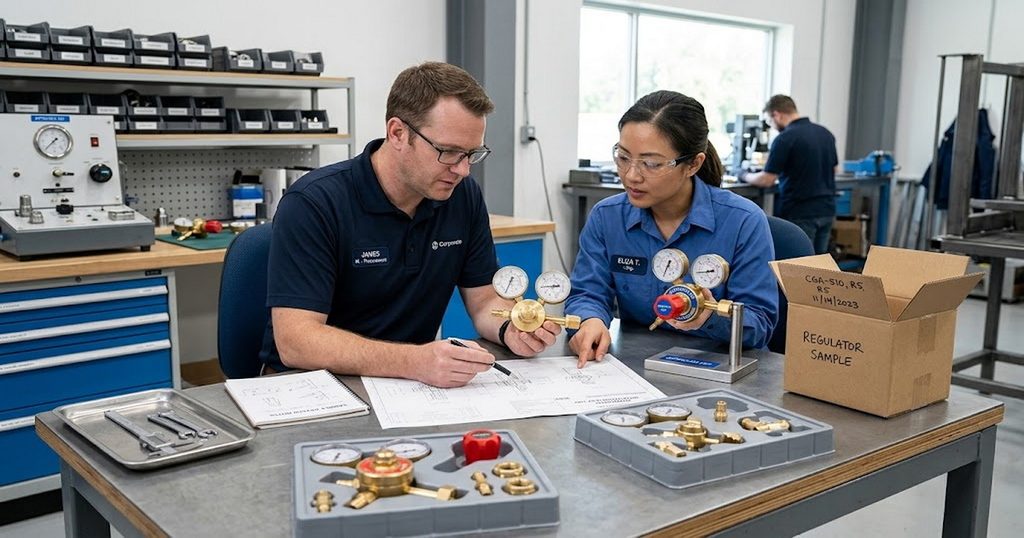
Use a Three-Step Sample Approval Process
A structured approval process can reduce ambiguity:
1. Technical review: approve the drawing, connection specification, pressure range, and documentation requirements.
2. Sample evaluation: assess fit, function, labeling, and agreed performance criteria through qualified personnel.
3. Pilot order: examine consistency across multiple units before committing to regular-volume purchasing.
The pilot order should include a written rule that changes to materials, seats, diaphragms, gauges, or connection suppliers require prior approval when they affect the agreed specification.
Clarify Shipping and Origin Before Comparing Prices
A complete RFQ should identify:
– Delivery term and named place.
– Country of origin.
– Packing dimensions and gross weight.
– Required origin and shipping documents.
– Responsibility for customs classification.
– Warranty return arrangements.
– Whether the shipment contains only new equipment or any cylinders, residual gas, or other regulated contents.
For UAE-stocked imported regulators, distinguish the country of manufacture from the country of dispatch. A Dubai supplier address does not establish UAE origin.
Conclusion: Select the Supply Model Before Selecting the Supplier
The six companies in this guide serve different purchasing needs.
Zhejiang Bril Welding Equipment Co., Ltd. provides an overseas factory-direct option for OEM and private-label evaluation. Weldtron, Adex, Damam Hardware, and Adams Tool House offer UAE-based supply routes with different product and procurement emphases. GCE provides an international manufacturer-led route through regional channels. Their roles should be evaluated separately rather than treated as interchangeable.
For an immediate replacement, prioritize the correct model, verified stock, and local warranty responsibility. For a recurring branded range, prioritize controlled specifications, sample approval, manufacturing consistency, and documented change management.
To discuss a Bril OEM/ODM project, submit a technical RFQ stating the intended acetylene service, required connections, pressure and flow requirements, annual forecast, target markets, and packaging needs. Request a documented sample proposal and current supporting certificates before approving production.
Frequently Asked Questions
1. How can I verify whether a manufacturer’s ISO certificate has expired?
Request the complete certificate, including its number, legal entity, site address, scope, issuing body, and validity dates.
Search the certificate number or company name in IAF CertSearch and review the status and accreditation information. If the result is missing or inconsistent, contact the issuing certification body directly rather than assuming that a PDF or printed expiry date proves current validity.
Also check that the scope covers the activities relevant to your order. A certificate for trading alone does not establish that the same entity operates the manufacturing process you intend to approve.
2. Can we use an oxygen, nitrogen, or propane regulator for acetylene if the connection fits?
Do not approve that substitution based on mechanical fit.
Air Products states that equipment used with acetylene should be designed and constructed for acetylene service and that equipment designed for other flammable gases must not be used with acetylene. Material compatibility is an additional concern.
Purchase an acetylene-designated regulator with the correct connections and documented operating limits.
3. How should we compare a single-stage regulator with a two-stage regulator?
Start by confirming the actual stage architecture rather than counting gauges.
ISO 2503 covers both single-stage and two-stage cylinder pressure regulators, so either architecture must still be assessed against the application and applicable requirements.
Ask suppliers for comparable performance data at the same inlet pressure, outlet setting, and flow conditions. The commercially useful comparison is whether each model meets your allowable pressure variation—not simply whether one carries a “two-stage” label.
4. What evidence should we require when a supplier claims CE, CNAS, UKAS, or IAF approval?
Ask for the underlying document and identify exactly what it demonstrates.
Separate management-system certificates, accreditation information, laboratory reports, and product declarations. IAF CertSearch, for example, is a platform for validating accredited certification and its chain of issuing and accreditation bodies; it is not a substitute for model-specific product evidence.
For Bril or any other supplier, match each document to the legal entity, site, product model, relevant standard, and current status before acceptance.
5. How can we detect unauthorized component changes after approving a sample?
Make the approved configuration contractually identifiable.
Use a controlled drawing, agreed bill-of-material references for critical components, retained reference samples, and a written engineering-change procedure. Define which substitutions require approval and which verification activities apply to repeat orders.
If a critical component changes, require an impact review and the agreed requalification testing before shipment. Visual comparison alone is not a sufficient control for internal regulator components.
Source Notes
1. – UAE industrial exports and 2025 manufacturing context: U.S. International Trade Administration, “United Arab Emirates Manufacturing Growth.” [trade]
2. – UAE industrial cluster and logistics context: Jafza, “DP World and Jafza’s Manufacturing Clusters,” published March 2025; its trade figure refers to 2022. [jafza]
3. – Cylinder regulator standard scope: International Organization for Standardization, ISO 2503:2009. [iso]
4. – Industry association safety guidance: European Industrial Gases Association, “Code of Practice: Acetylene.” [eiga]
5. – Acetylene materials and equipment guidance: Air Products, “Acetylene Safetygram 13.” [airproducts]
6. – Working-pressure safety benchmark: U.S. Occupational Safety and Health Administration, 29 CFR 1910.253. [osha]
7. – UAE supplier identity checks: Official UAE Government Portal, “Verify Business Licences.” [u]
8. – Management-system certificate validation: IAF CertSearch. [prerender.iafcertsearch]
Hot Tags: Acetylene Regulator, Acetylene Regulator Manufacturers, Acetylene Regulator Suppliers, Acetylene Regulator Suppliers in UAE, Acetylene Regulator Manufacturers in UAE, Industrial Acetylene Regulator, OEM Acetylene Regulator, Wholesale Acetylene Regulators, Two Stage Acetylene Regulator, Oxygen and Acetylene Regulators