Content Menu
● Single-Stage vs. Dual-Stage Gas Regulator: Quick Comparison
● How Does a Single-Stage Gas Regulator Work?
>> When Is a Single-Stage Regulator a Good Choice?
● How Does a Dual-Stage Gas Regulator Work?
>> Two Gauges Do Not Mean Two Stages
● The Most Important Performance Difference: Supply Pressure Effect
>> An Illustrative Pressure-Drift Calculation
● Pressure Stability Is Not the Same as Flow Stability
>> Droop, Lock-Up, and Creep: Three Different Behaviors
● Choosing Gas Regulators for Specific Applications
>> Argon Regulators for MIG and TIG Welding
>> CO₂ Regulators and CO₂ Heated Regulators
>> Acetylene and Propane Regulators
● A Practical Five-Step Regulator Selection Process
>> 1. Define the Complete Operating Envelope
>> 2. Identify the Main Source of Instability
>> 3. Compare Performance at Real Conditions
>> 4. Verify Compatibility and Connections
>> 5. Validate a Sample Before Volume Purchasing
● OEM and ODM Procurement: What Should Buyers Specify?
● Request a Regulator Matched to Your Application
>> 1. Is a dual-stage gas regulator always better?
>> 2. Does a dual-gauge regulator have two stages?
>> 3. Can a single-stage regulator support precision applications?
>> 4. Will a dual-stage CO₂ regulator prevent freezing?
>> 5. Can one regulator handle oxygen, argon, and acetylene?
>> 6. Why does outlet pressure rise after flow stops?
Choosing between a single-stage vs. dual-stage gas regulator comes down to one practical question: how stable must your delivery pressure remain as the gas supply changes? A single-stage regulator reduces pressure in one step. A dual-stage regulator uses two successive reductions to limit the effect of changing cylinder pressure.
For welding, cutting, and industrial gas applications, neither design is automatically the better purchase. The right choice depends on gas compatibility, flow demand, operating duration, pressure tolerance, and maintenance requirements.
From our perspective as a gas regulator manufacturer and OEM/ODM supplier, the priority is application-fit: matching the regulator’s verified performance to the process rather than selecting by appearance, gauge count, or price alone.
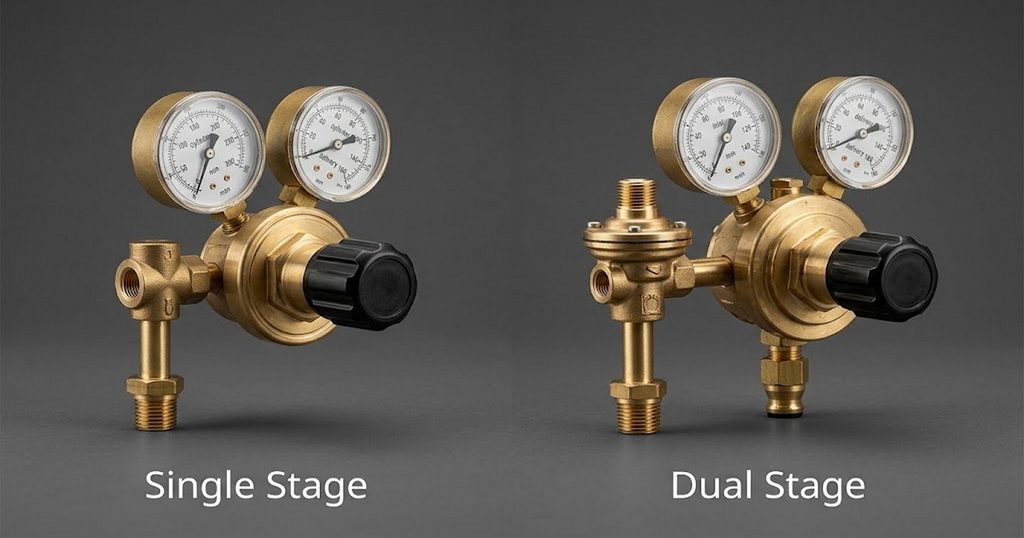
Single-Stage vs. Dual-Stage Gas Regulator: Quick Comparison
| Selection factor | Single-stage gas regulator | Dual-stage gas regulator |
|---|---|---|
| Pressure reduction | One reduction stage | Two successive reduction stages |
| Response to changing cylinder pressure | Generally greater outlet-pressure variation | Generally lower outlet-pressure variation |
| Operator adjustment | May require periodic readjustment | Usually requires less readjustment |
| Construction | Typically simpler and more compact | Typically larger and more complex |
| Initial cost | Usually lower | Usually higher |
| Suitable applications | Supervised, intermittent work or stable inlet supplies | Extended operation and processes sensitive to pressure drift |
| Main limitation | Greater inlet-pressure dependency in conventional designs | Additional cost; does not eliminate flow-related pressure changes |
| Important buying check | Supply pressure effect and flow curve | Supply pressure effect, flow curve, and minimum inlet requirements |
These are general tendencies. A well-engineered single-stage regulator can outperform an unsuitable dual-stage model under particular operating conditions.
How Does a Single-Stage Gas Regulator Work?
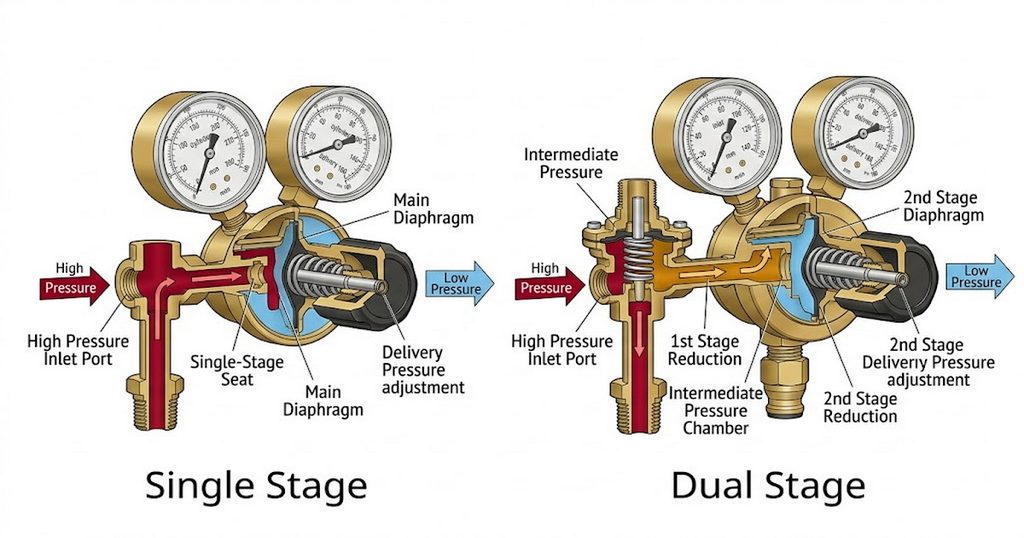
A single-stage gas regulator reduces high inlet pressure directly to the required delivery pressure.
In a typical spring-loaded design, an adjusting mechanism changes spring force. A diaphragm or piston responds to downstream pressure and moves a valve to balance gas supply against demand.
The operating sequence is straightforward:
1. High-pressure gas enters the regulator.
2. Gas passes through a controlled valve opening.
3. The sensing element responds to downstream pressure.
4. The valve adjusts as downstream consumption changes.
This simpler construction makes single-stage regulators attractive for portable equipment, intermittent welding, heating, and other supervised operations.
However, “single-stage” does not necessarily mean low precision. Balanced-valve designs can reduce sensitivity to changing inlet pressure. Performance specifications matter more than the category name.
When Is a Single-Stage Regulator a Good Choice?
Consider a single-stage gas pressure regulator when:
– The inlet supply remains relatively stable.
– Operators can monitor and adjust delivery pressure.
– The application tolerates some pressure variation.
– Compact size and purchase cost are important.
– Operating periods are relatively short.
A single-stage regulator may also work well downstream of an already regulated gas distribution supply, provided its inlet rating and operating characteristics match the system.
How Does a Dual-Stage Gas Regulator Work?
A dual-stage gas regulator, also called a two-stage gas regulator, combines two pressure-reduction stages in series.
The first stage reduces cylinder pressure to an intermediate level. The second reduces that intermediate pressure to the required delivery pressure. In many integrated cylinder regulators, the first stage is factory-set and the second is operator-adjustable.
The second stage therefore receives a much smaller inlet-pressure variation than it would directly from the cylinder.
This arrangement is particularly useful when cylinder pressure changes substantially during use and the downstream process needs consistent delivery pressure.
However, a dual-stage regulator cannot maintain its specified performance indefinitely as a cylinder empties. Once inlet pressure becomes insufficient for the intended two-stage reduction, regulation deteriorates.
Two Gauges Do Not Mean Two Stages
Gauge count and stage count describe different features.
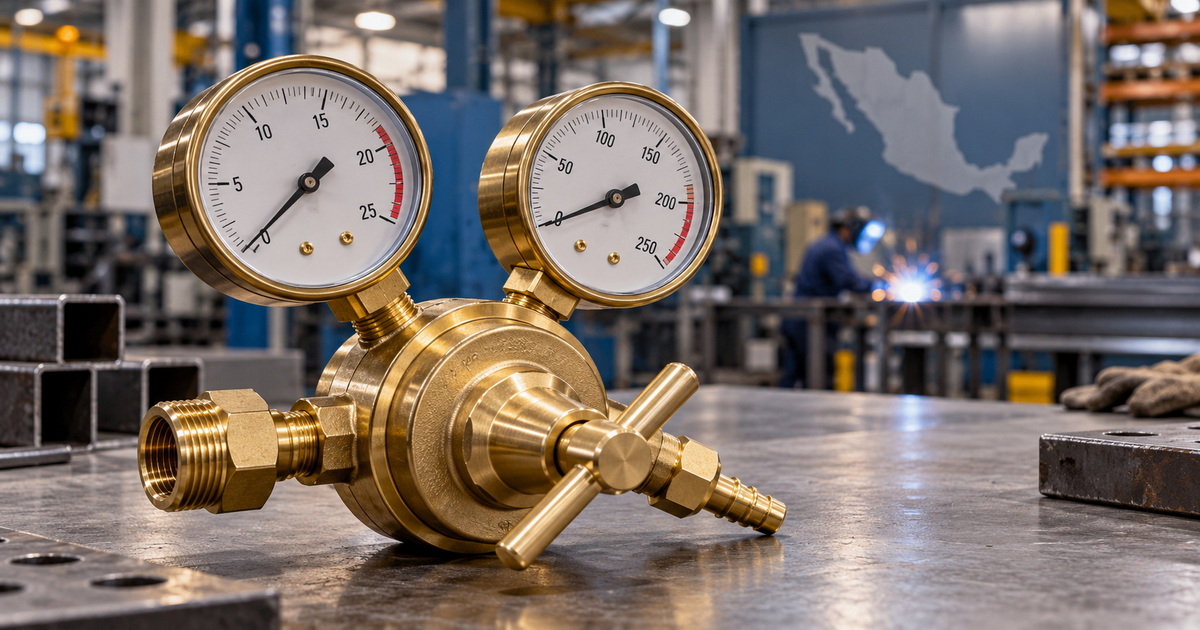
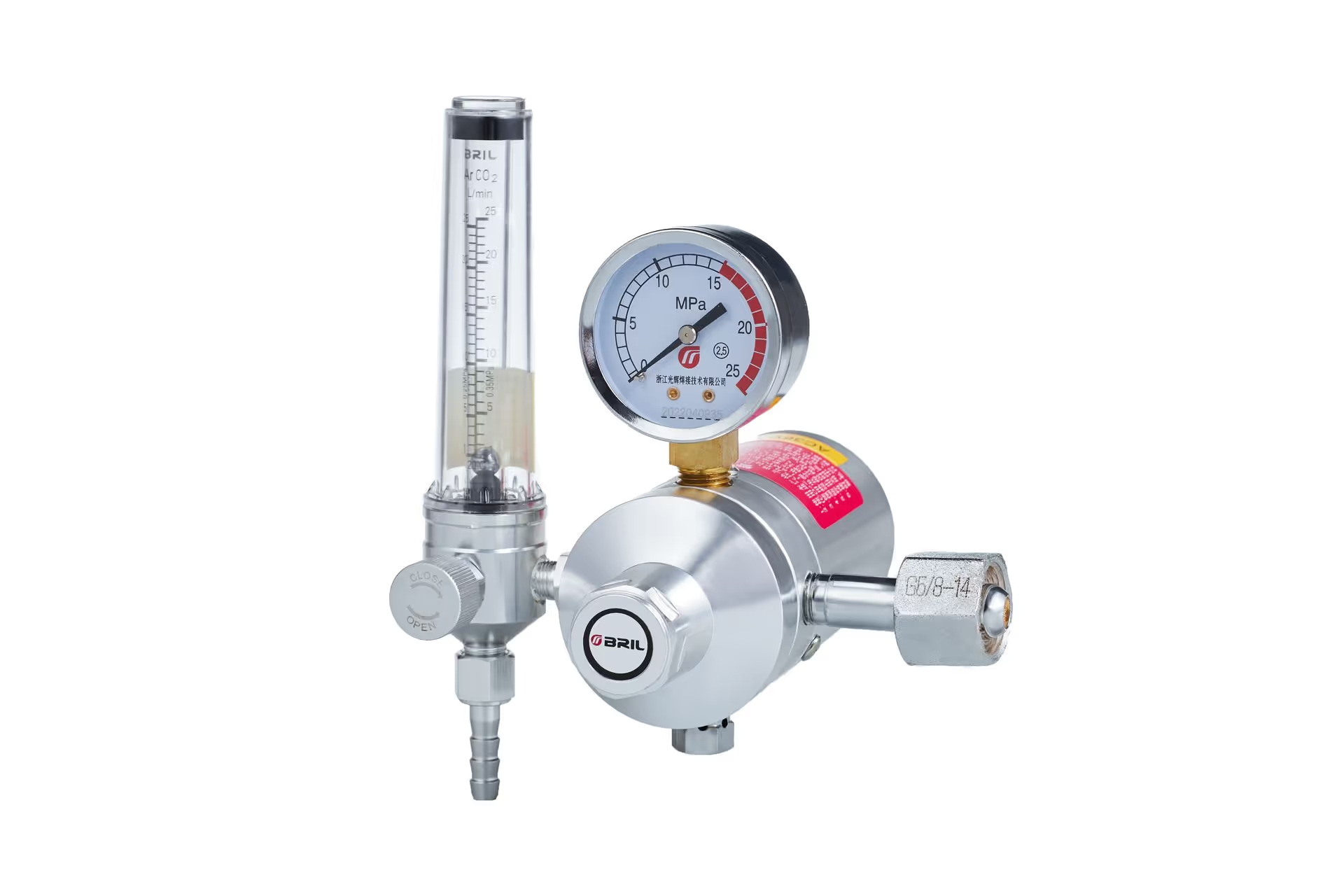
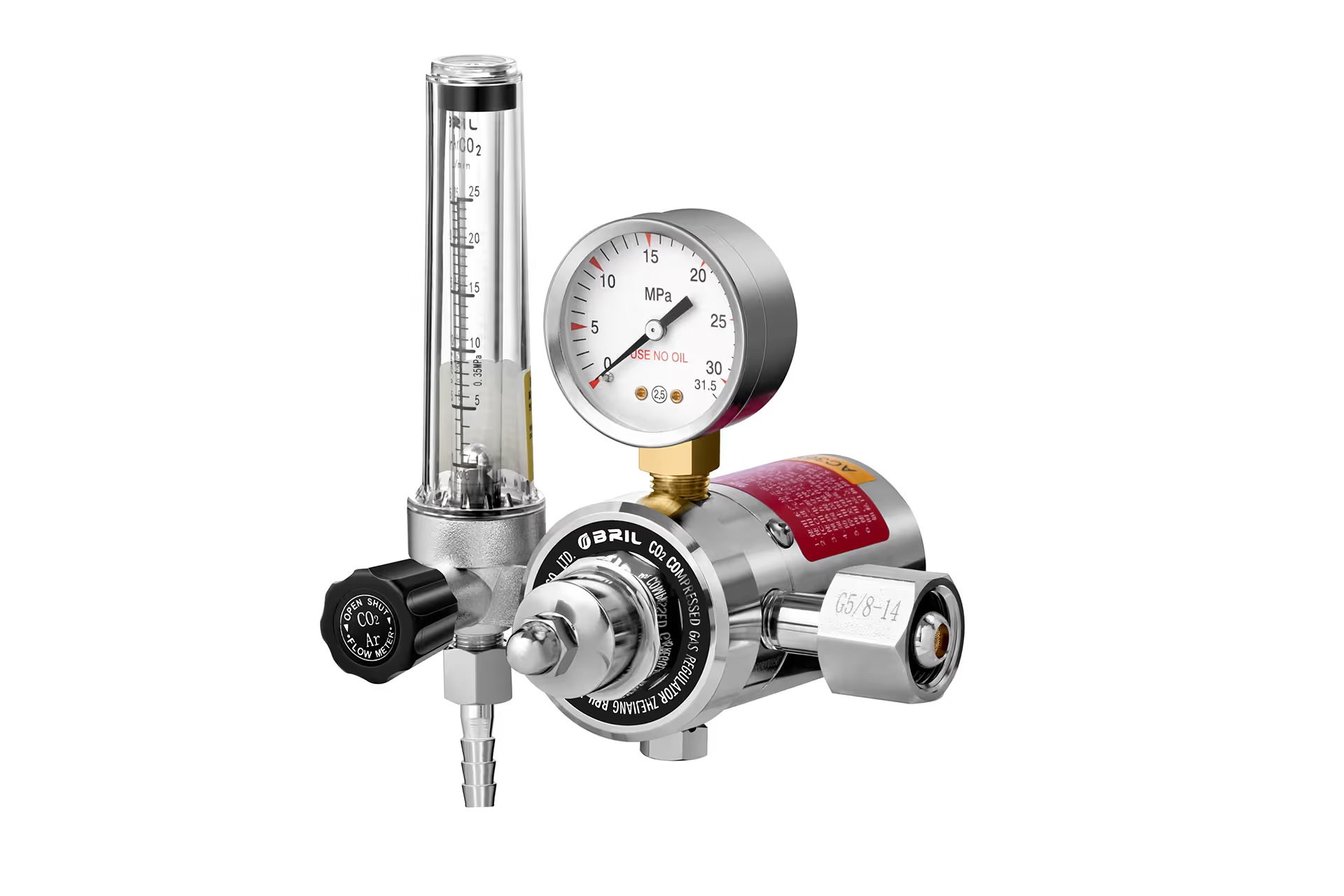
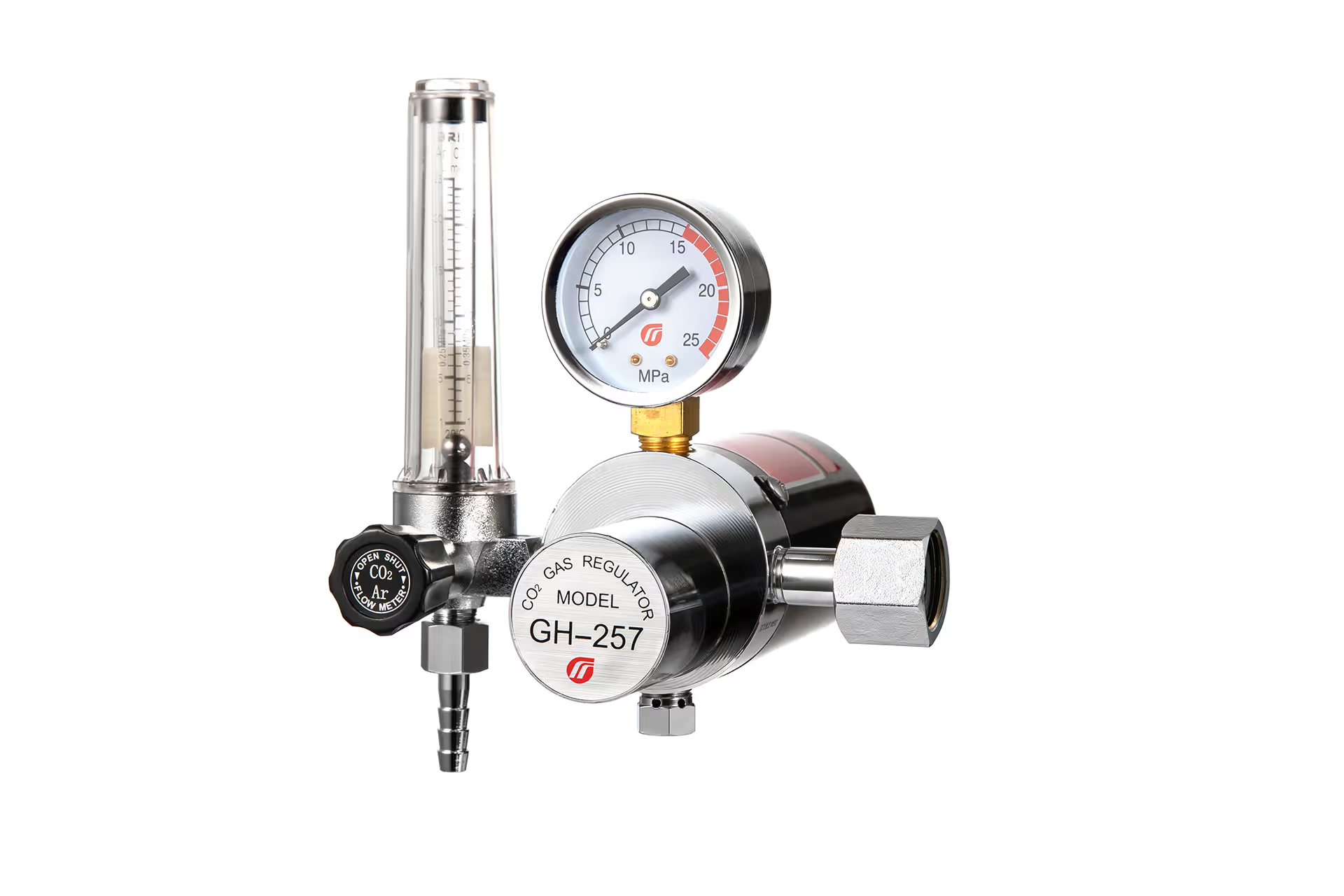
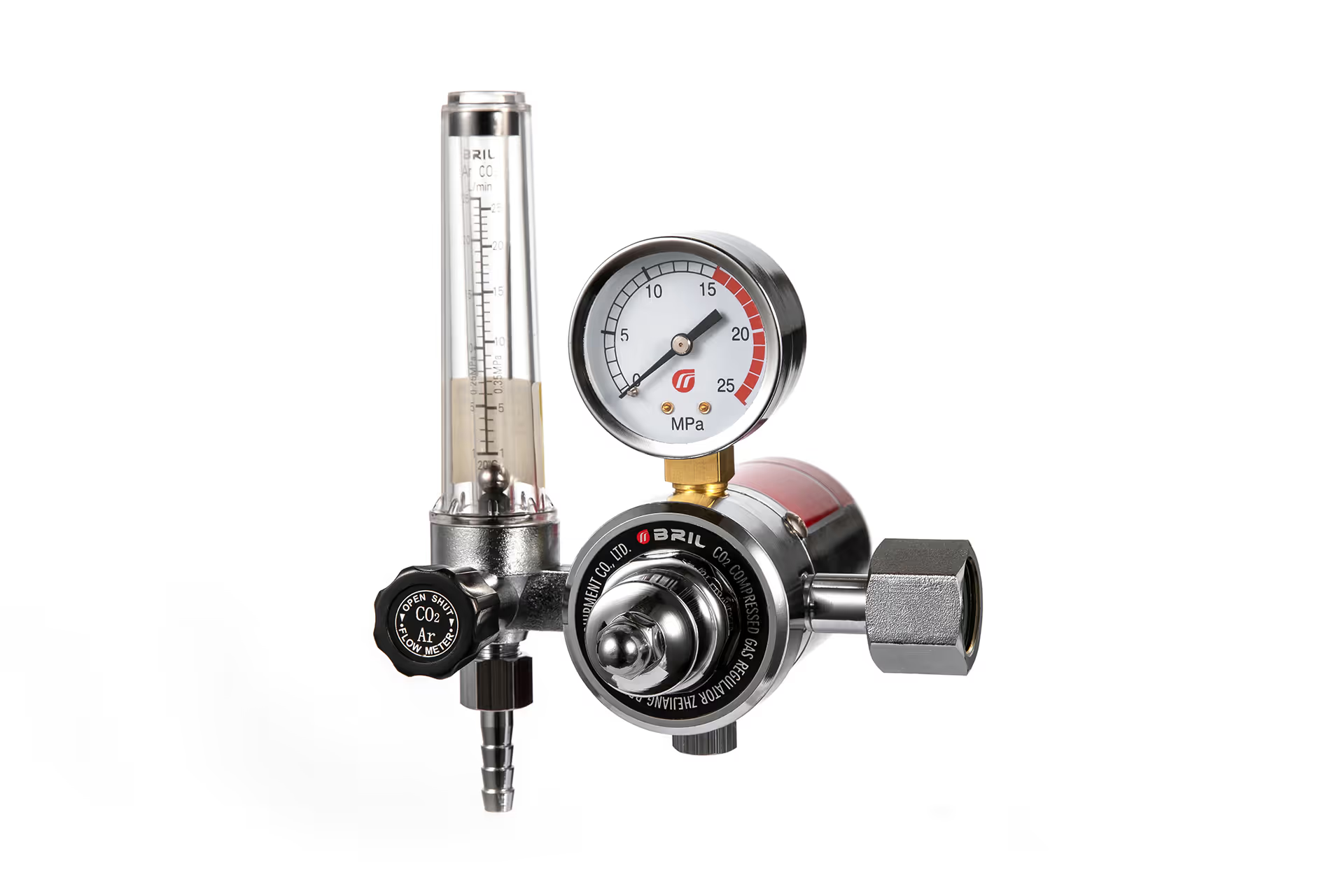
A dual-gauge regulator commonly displays cylinder pressure on one gauge and delivery pressure on the other. It may still contain only one regulating stage.
For procurement, ask the supplier to identify the internal pressure-reduction arrangement. Product photographs alone are not sufficient.
The Most Important Performance Difference: Supply Pressure Effect
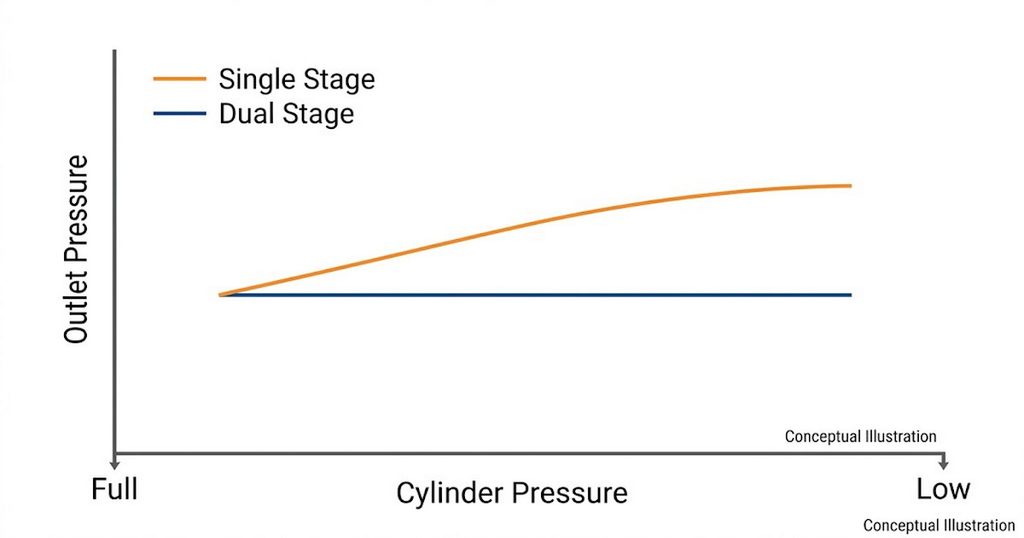
Supply pressure effect describes how outlet pressure changes when inlet pressure changes.
In many conventional unbalanced single-stage regulators, delivery pressure rises as cylinder pressure falls. The size of that change depends on the regulator design and operating conditions.
A dual-stage design reduces this influence because the second stage receives an already regulated supply.
An Illustrative Pressure-Drift Calculation
Suppose a regulator has a specified supply pressure effect of 0.5 psi outlet change per 100 psi inlet change.
If inlet pressure falls by 1,000 psi, the estimated outlet-pressure change is:
0.5 × 10 = 5 psi.
These figures are illustrative, not specifications for our products or any referenced model.
The purchasing lesson is more important than the arithmetic: a regulator that initially holds the correct setting may drift outside the process tolerance later in the cylinder cycle.
Ask for supply-pressure-effect data across your intended inlet range, not just a maximum inlet-pressure rating.
Pressure Stability Is Not the Same as Flow Stability
A common selection mistake is assuming that a dual-stage regulator guarantees constant gas flow.
A pressure regulator controls pressure. Actual flow also depends on downstream restrictions, valves, hoses, equipment demand, and the characteristics of any flow-control device.
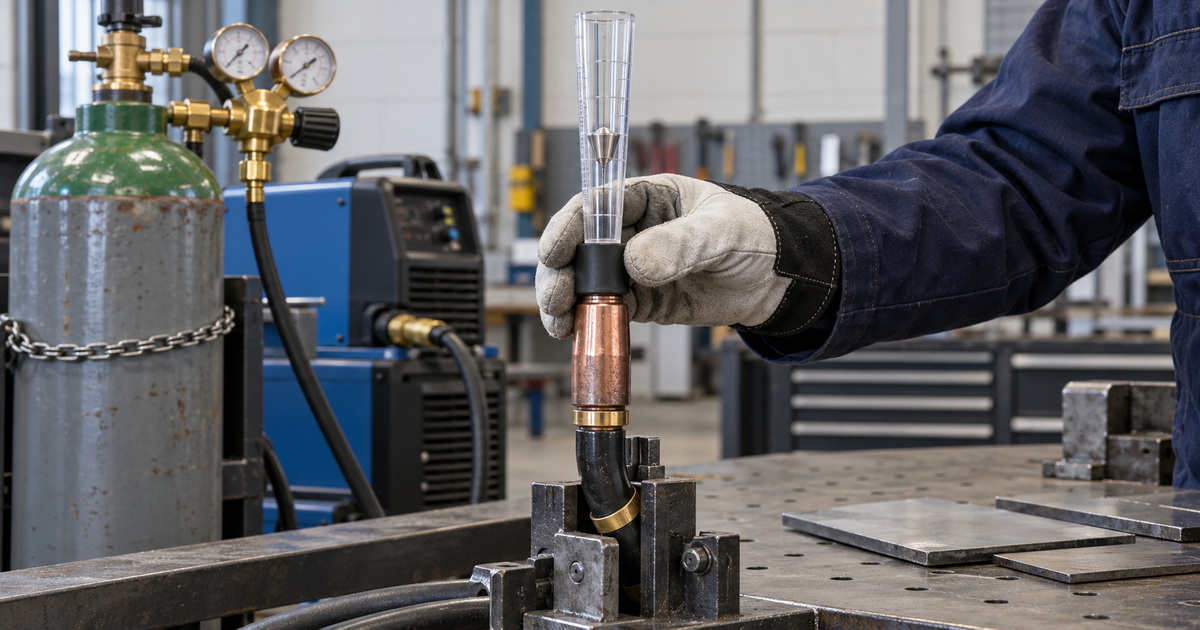
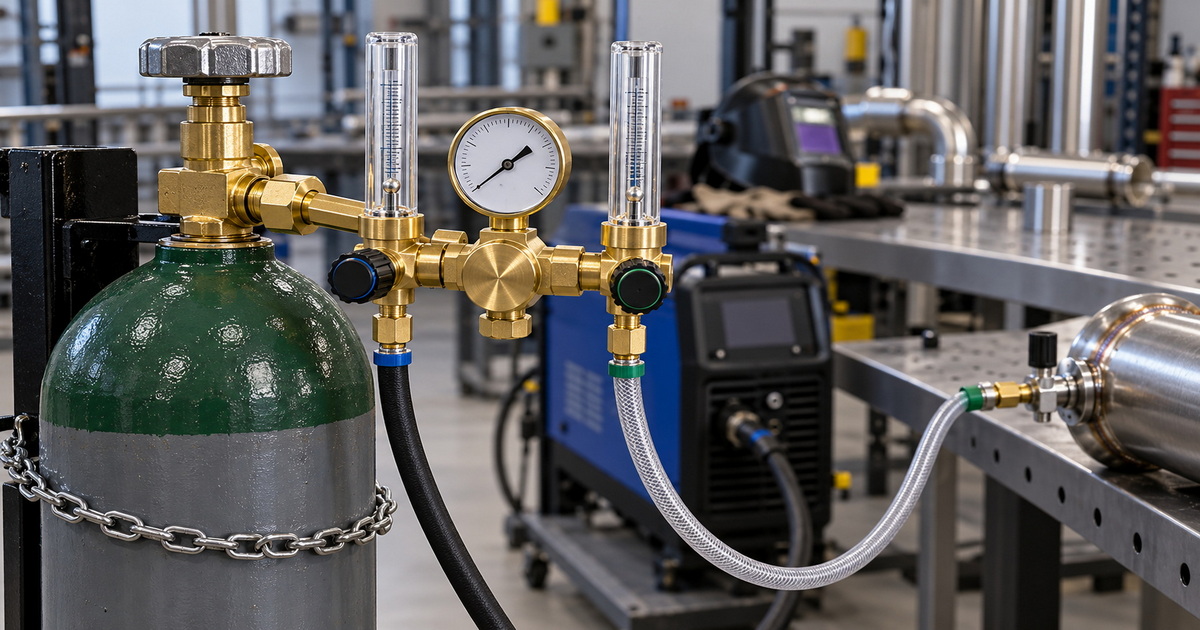
For argon and CO₂ shielding applications, the regulator and flowmeter or flow-control arrangement must be evaluated together.
Droop, Lock-Up, and Creep: Three Different Behaviors
| Term | What it means | Why it matters |
|---|---|---|
| Droop | Delivery pressure decreases as flow demand increases | The regulator may not maintain the required pressure at production flow |
| Lock-up | Outlet pressure rises above the flowing setpoint as the regulator closes at zero demand | Downstream equipment must tolerate the specified no-flow pressure |
| Creep | Outlet pressure continues rising because gas leaks across the regulator seat | Requires investigation; possible causes include contamination or seat damage |
Dual-stage construction primarily addresses inlet-pressure dependency. It does not automatically eliminate droop, lock-up, or creep.
When comparing models, request flow curves at relevant inlet pressures. Maximum flow capacity alone does not show whether usable pressure remains stable.
Choosing Gas Regulators for Specific Applications
Argon Regulators for MIG and TIG Welding
For intermittent manual welding, a suitable single-stage argon regulator can be a practical choice.
For extended welding cycles or pressure-sensitive automated equipment, dual-stage regulation may reduce adjustments associated with cylinder depletion.
In either case, verify shielding-gas delivery using the correct flow-control equipment. Excessive or insufficient flow cannot be solved simply by adding another regulating stage.
CO₂ Regulators and CO₂ Heated Regulators
CO₂ service introduces a separate challenge: cooling during pressure reduction and gas withdrawal can contribute to regulator freezing under demanding conditions.
A CO₂ heated regulator or a compatible gas heater may be appropriate when required by the application and equipment specifications.
Stage count and heating address different problems:
– Two-stage reduction limits inlet-pressure effects.
– Heating helps manage freezing risk.
– Correct sizing supports the required continuous flow.
Specify flow rate, ambient temperature, operating duration, cylinder withdrawal arrangement, and electrical supply. Never substitute improvised heating for equipment designed for the service.
Oxygen Regulators
For oxygen service, cleanliness and material compatibility are fundamental.
Use only equipment intended for oxygen at the applicable pressures. Keep oxygen regulators and connections free from oil, grease, and other incompatible contamination.
A brass body alone does not establish oxygen suitability. Seals, valve seats, cleaning procedures, assembly controls, and the complete design also matter.
Acetylene and Propane Regulators
Fuel-gas regulators must match the specific gas, connection, pressure range, and downstream equipment.
For U.S. oxygen-fuel operations covered by the applicable workplace rule, acetylene must not be utilized above 15 psig. A two-stage design does not override that restriction.
Do not assume an acetylene regulator is interchangeable with a propane regulator simply because both gases are fuels.
Nitrogen Regulators
Nitrogen applications range from low-pressure purging to higher-pressure industrial duties.
Choose the outlet range and flow capacity for the actual task. Dual-stage regulation may help with stable cylinder-fed delivery, but it is not a substitute for adequate pressure ratings, downstream protection, or appropriate materials.
A Practical Five-Step Regulator Selection Process
1. Define the Complete Operating Envelope
Record:
– Gas or gas mixture.
– Maximum and minimum inlet pressure.
– Required outlet pressure and allowable variation.
– Minimum, normal, and peak flow.
– Ambient temperature and duty cycle.
Include transient demand, not just average consumption.
2. Identify the Main Source of Instability
Ask whether the problem comes from declining cylinder pressure, changing demand, freezing, restrictions, or leakage.
Adding a second stage will not correct every pressure-control problem.
3. Compare Performance at Real Conditions
Request relevant flow curves, supply-pressure-effect data, lock-up specifications, and minimum inlet requirements.
Check whether the published flow data applies to your gas. Curves generated using a different test gas may require the manufacturer’s correction method.
4. Verify Compatibility and Connections
Confirm all wetted materials, cylinder connections, outlet fittings, pressure units, and flowmeter calibration.
Avoid selecting by connector appearance or using adapters to bypass gas-specific compatibility checks.
5. Validate a Sample Before Volume Purchasing
For overseas distributors and equipment manufacturers, sample approval should include documented functional testing.
A useful evaluation covers pressure stability, external leakage, seat tightness, adjustment behavior, and performance at representative flow conditions.
OEM and ODM Procurement: What Should Buyers Specify?
For an OEM or ODM gas regulator project, a detailed specification reduces uncertainty more effectively than a general request for “high quality.”
Our manufacturing focus includes precision machining, brass construction, pressure control, inspection, and application-specific customization. Buyers should translate those priorities into measurable acceptance requirements.
| Specification area | Information to define |
|---|---|
| Configuration | Single-stage or dual-stage; pressure-only or flow-control arrangement |
| Gas service | Exact gas, mixture, and cleanliness requirements |
| Performance | Inlet range, outlet range, flow, allowable drift, and lock-up |
| Materials | Brass grade and compatible internal components |
| Market interface | Cylinder standard, outlet connection, gauge units, and labeling |
| Verification | Test methods, acceptance limits, traceability, and supporting documents |
ISO 2503 addresses cylinder-mounted regulators for welding, cutting, and allied processes within its stated scope. It is not a universal specification for every industrial regulator.
Request evidence applicable to the exact model and intended market. A reference to a standard does not itself prove testing or certification.
Request a Regulator Matched to Your Application
Send us your gas type, cylinder connection, inlet-pressure range, required delivery pressure, flow demand, operating temperature, destination market, and expected order quantity.
We can review these requirements for a single-stage or dual-stage configuration and discuss CO₂ heating, brass construction, labeling, packaging, and OEM/ODM customization.
The objective is a regulator specification your purchasing team can compare and your production team can validate.
Frequently Asked Questions
1. Is a dual-stage gas regulator always better?
No. It generally offers lower sensitivity to changing cylinder pressure, but a suitable single-stage regulator may meet the application at lower cost and with less complexity.
2. Does a dual-gauge regulator have two stages?
Not necessarily. Two gauges usually indicate inlet and outlet pressure. Stage count refers to the internal pressure-reduction arrangement.
3. Can a single-stage regulator support precision applications?
Yes, when its verified performance meets the process requirements. Stable inlet supplies and balanced-valve designs can make single-stage regulation appropriate.
4. Will a dual-stage CO₂ regulator prevent freezing?
Not by itself. Freezing risk requires separate assessment of flow demand, temperature, withdrawal conditions, and any specified heating arrangement.
5. Can one regulator handle oxygen, argon, and acetylene?
Do not assume interchangeability. Use a regulator approved for the specific gas, pressures, materials, cleanliness requirements, and connections.
6. Why does outlet pressure rise after flow stops?
A limited rise may be normal lock-up. A continuing increase may indicate creep. Follow the manufacturer’s troubleshooting instructions and have suspected faults assessed by qualified personnel.
References
1. ESAB — “Single Stage vs. Two Stage Regulators.” Manufacturer explanation of pressure-reduction arrangements and typical application differences. [esab]
2. Swagelok — “How to Manage Supply Pressure Effect (SPE) in Pressure-Reducing Regulators Used in Industrial Gas Systems.” Technical basis for inlet-pressure dependency, balanced designs, and two-stage reduction. [swagelok]
3. Swagelok — “Choosing a Regulator in Five Steps.” Guidance on operating conditions, material compatibility, flow curves, droop, lock-up, and creep. [swagelok]
4. Swagelok — “Pressure Regulator Flow Curves.” Technical bulletin explaining regulator performance curves and their interpretation. [swagelok]
5. GCE — “CO₂ Gas Heaters.” Product information describing heaters installed between the cylinder and regulator to help prevent internal freezing. [uk.gcegroup]
6. Occupational Safety and Health Administration — “29 CFR 1910.253: Oxygen-Fuel Gas Welding and Cutting.” Requirements addressing gas-specific regulator use, oxygen contamination precautions, and acetylene pressure limitations. [osha]
7. International Organization for Standardization — “ISO 2503:2009: Gas Welding Equipment—Pressure Regulators and Pressure Regulators with Flow-Metering Devices for Gas Cylinders Used in Welding, Cutting and Allied Processes up to 300 bar (30 MPa).” Official scope information. [iso]
Hot Tags: Gas Pressure Regulator, Industrial Gas Regulator, Single Stage Gas Regulator, Dual Stage Gas Regulator, Two Stage Gas Regulator, Welding Gas Regulator, CO₂ Gas Regulator, Heated CO₂ Regulator, Gas Regulator Manufacturer, OEM Gas Regulator