Content Menu
● Why CO₂ Regulators Freeze During High-Flow Welding
>> Typical signs that a standard CO₂ regulator is struggling
● Start With the Welding Application, Not the Regulator Model
>> Key application questions to answer
● Confirm the Correct Gas and Cylinder Connection
>> Do not use a “universal” workaround
● Calculate the Flow Requirement Before Choosing a Heated Regulator
>> A practical selection principle
● Choose the Right Heating System for Real Working Conditions
>> Important heater specifications to evaluate
● Single-Stage vs. Dual-Stage CO₂ Regulators
● Material Quality: Why Brass Construction Matters
>> What professional buyers should verify
● A Field Checklist for Selecting a CO₂ Heated Regulator
● Installation and Operating Practices That Protect Performance
>> Recommended operating practices
● What OEM and ODM Buyers Should Ask a Regulator Manufacturer
>> A capable CO₂ regulator manufacturer should offer
● Common Buying Mistakes to Avoid
● FAQ
>> 1. What is a CO₂ heated regulator used for?
>> 2. Do I need a heated CO₂ regulator for normal MIG welding?
>> 3. Can I use a CO₂ regulator for argon or nitrogen?
>> 4. What is the difference between a CO₂ heated regulator and a dual-stage regulator?
>> 5. What flow rate is considered high flow for CO₂ welding?
>> 6. Why does my CO₂ regulator become covered in frost?
>> 7. Can I use an adapter if the regulator does not fit the cylinder?
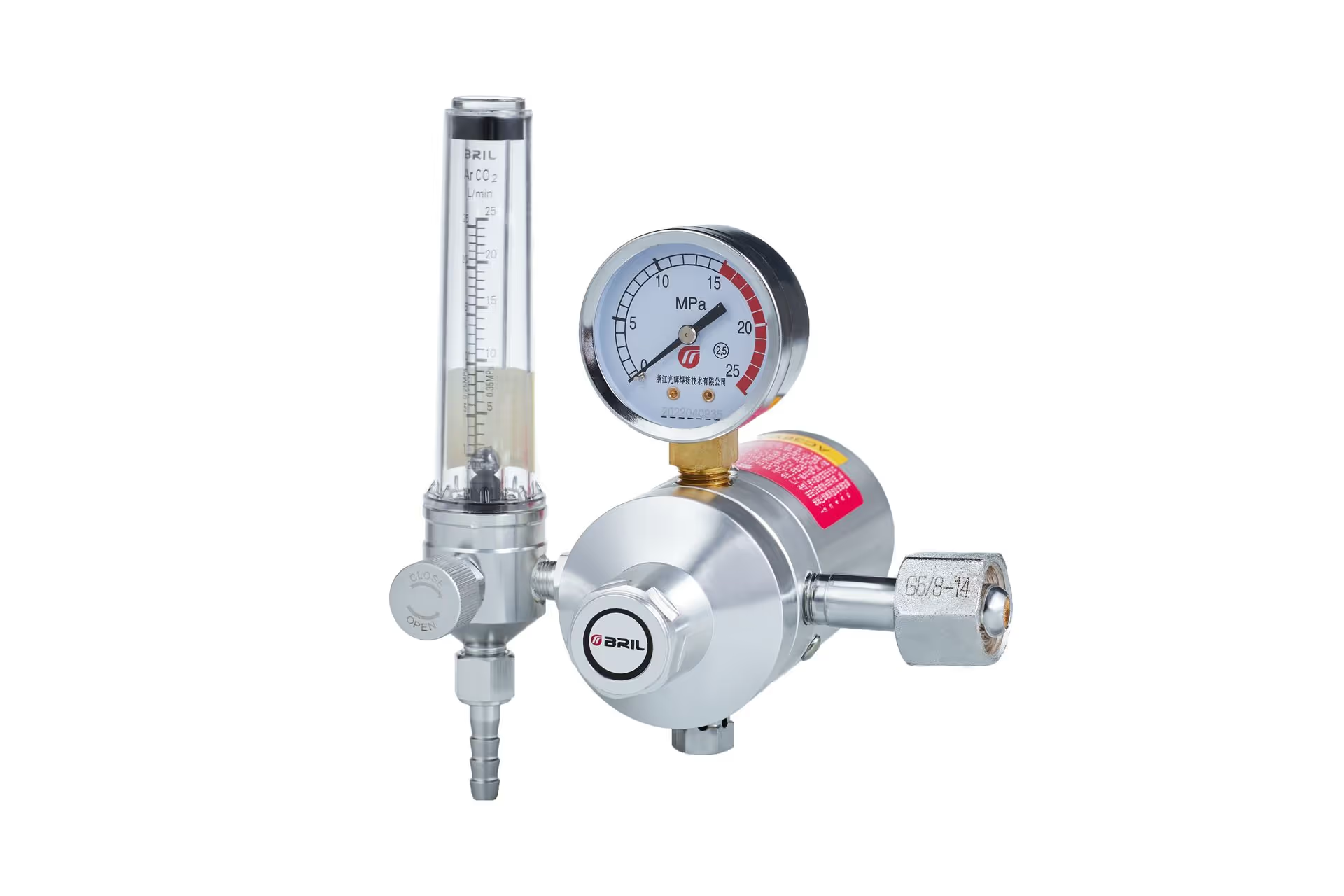
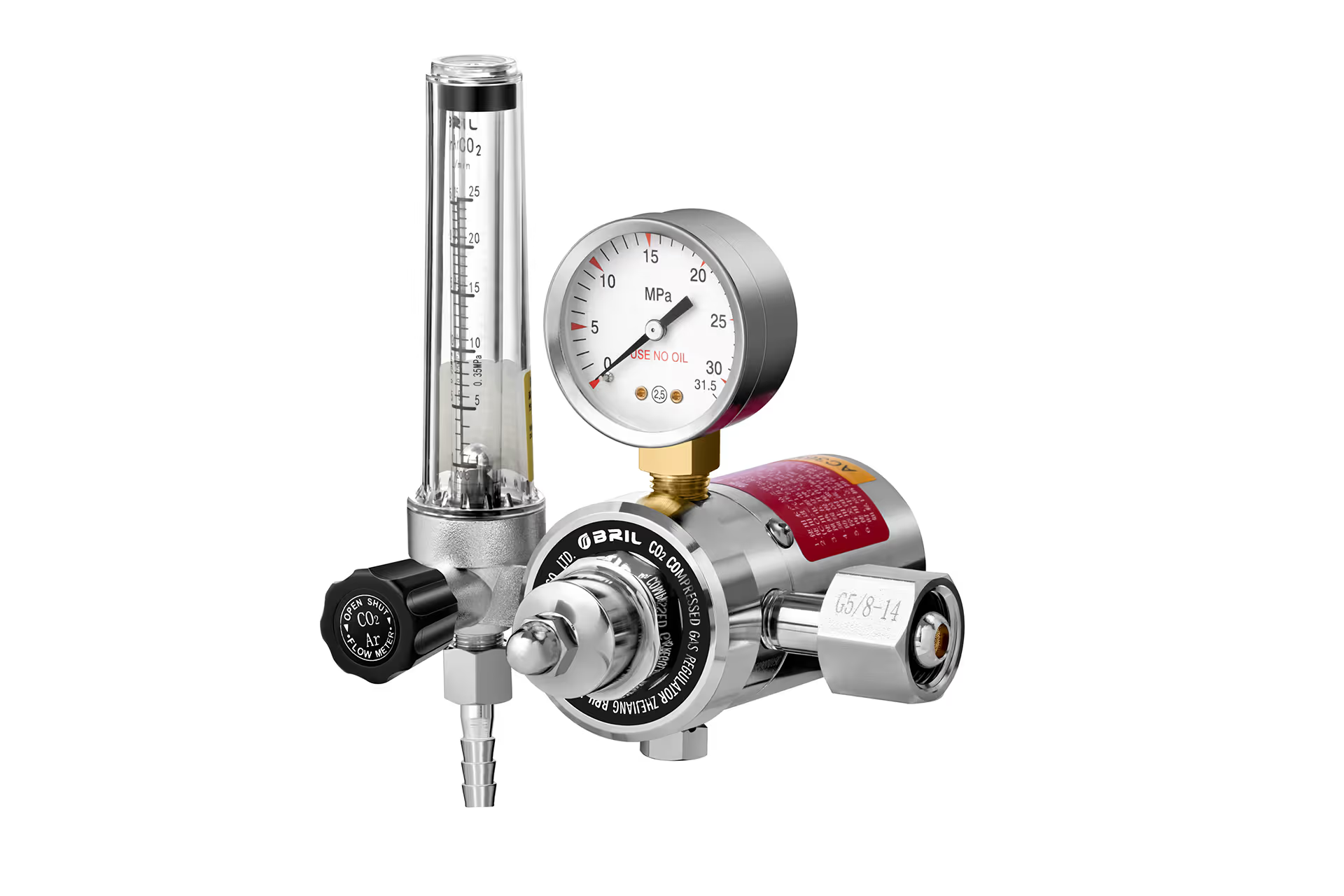
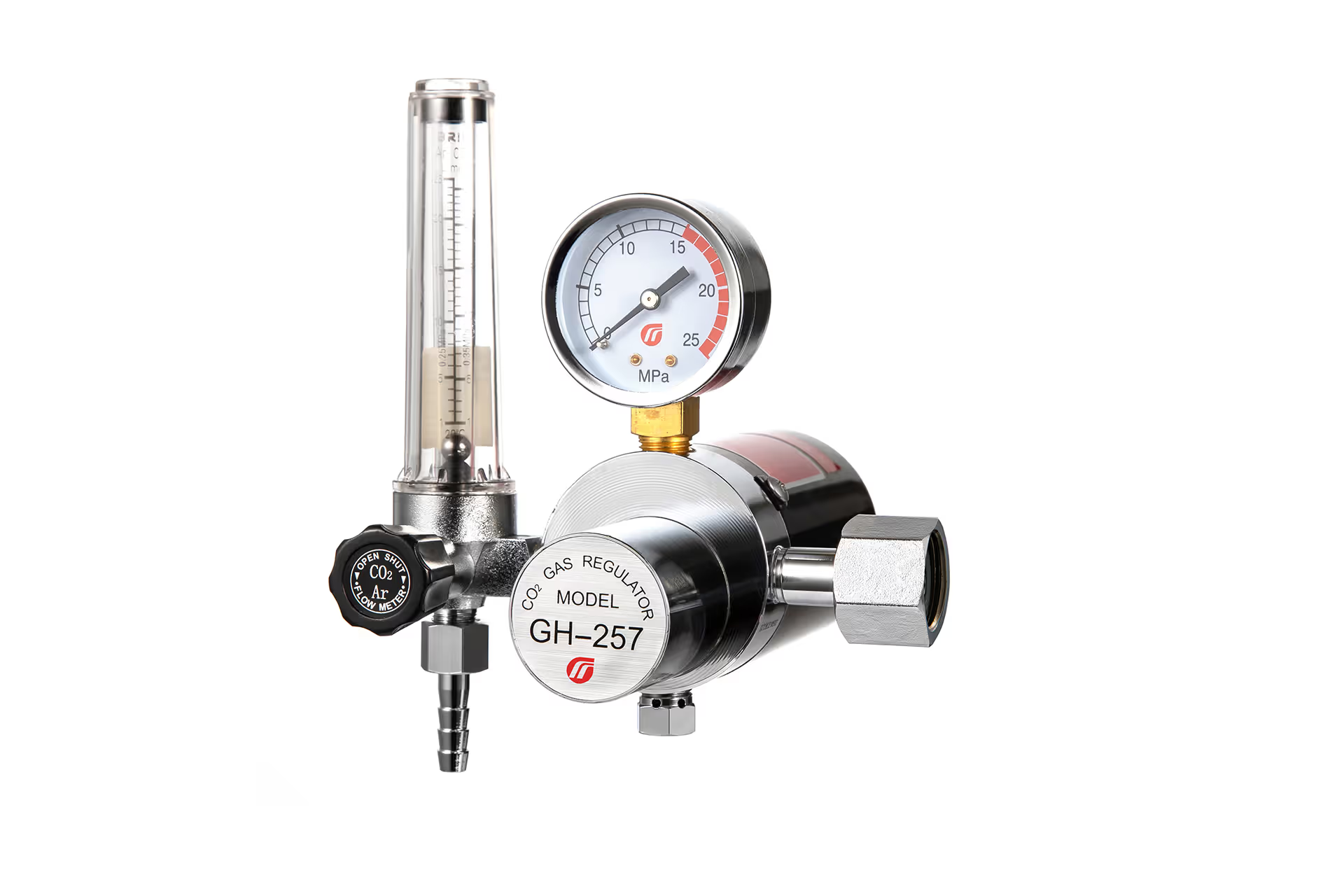
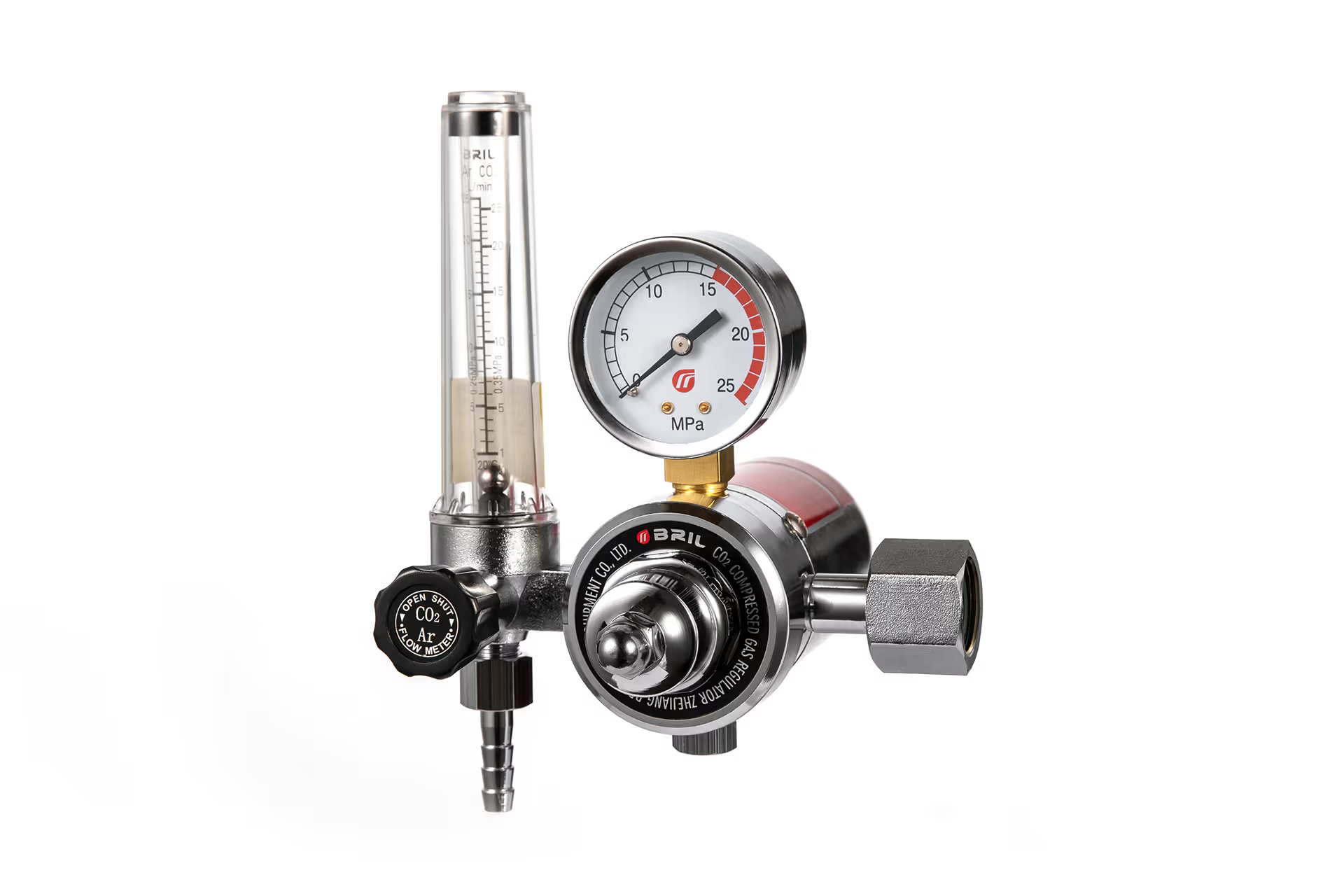
Selecting the right CO₂ heated regulator for high-flow welding is not simply a matter of matching a regulator to a cylinder. In demanding MIG/MAG welding, robotic cells, long weld cycles, or cold workshop conditions, the regulator must provide stable gas delivery while helping prevent CO₂ freeze-up caused by rapid gas expansion.
For welding equipment brands, distributors, and industrial users, the right CO₂ heated gas regulator should combine correct cylinder compatibility, adequate flow capacity, reliable heating performance, durable brass construction, accurate pressure control, and rigorous quality inspection. A poorly matched regulator can create unstable shielding-gas coverage, porosity, inconsistent bead appearance, unnecessary downtime, and avoidable service claims.
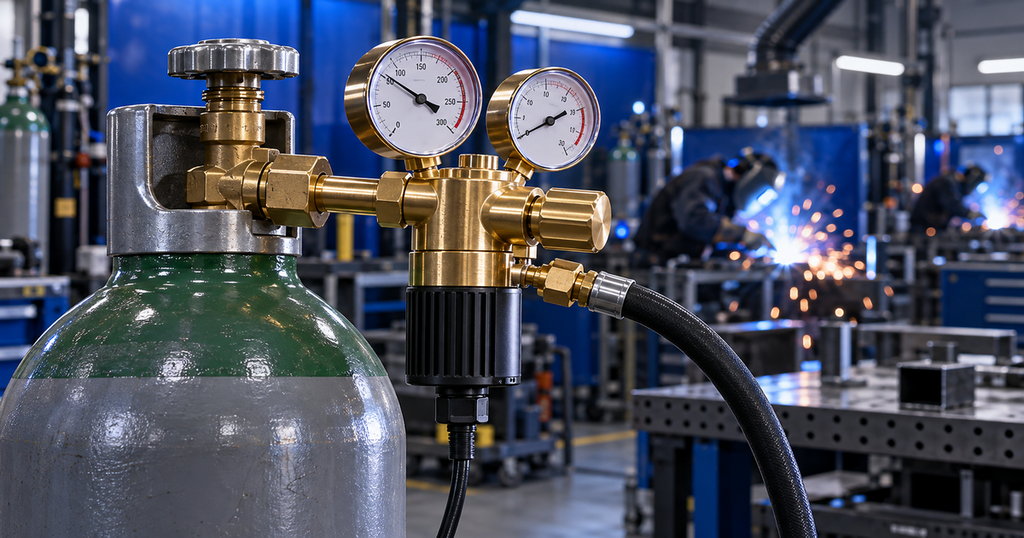
Why CO₂ Regulators Freeze During High-Flow Welding
Carbon dioxide behaves differently from many inert shielding gases. When CO₂ leaves the cylinder and expands through a regulator, its temperature drops. At moderate flow rates, this cooling effect may not cause an immediate problem. However, during continuous welding, high-duty-cycle work, or operation in low ambient temperatures, the regulator can become cold enough for moisture in the surrounding air to condense and freeze around critical components.
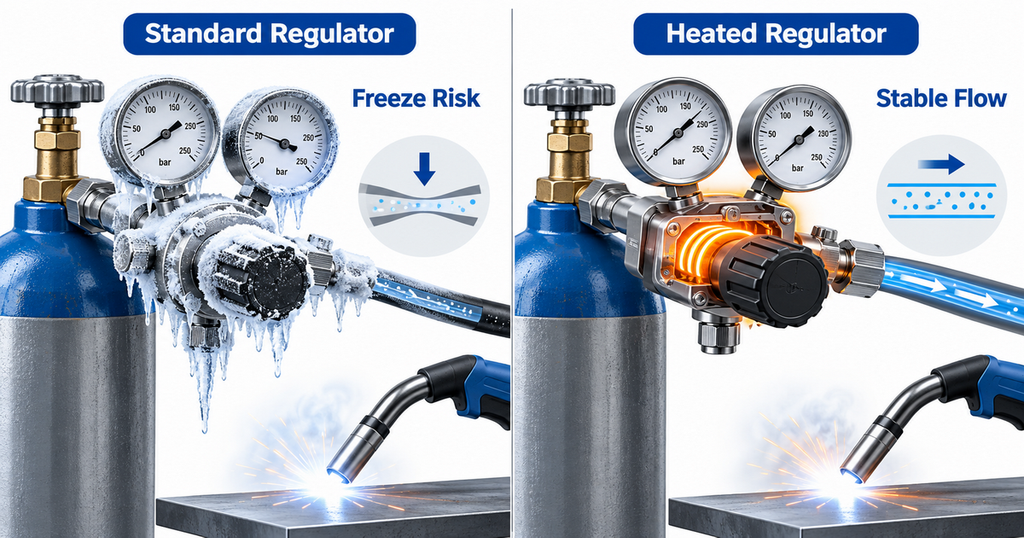
A CO₂ heated regulator adds controlled heat around the pressure-reduction area to offset the temperature drop caused by gas expansion. The goal is not to overheat the gas. The goal is to maintain sufficiently stable operating conditions so the regulator can continue delivering gas consistently.
Typical signs that a standard CO₂ regulator is struggling
– Frost or ice forming on the regulator body
– A gradual reduction in shielding-gas flow during welding
– Fluctuating delivery pressure or flowmeter readings
– Inconsistent weld shielding and increased porosity risk
– Unstable arc behavior during long welds
– Repeated production interruptions in cold environments
– Operators increasing settings to compensate for weak gas flow
If these issues occur, a heated CO₂ regulator may be a more appropriate solution than simply increasing the pressure setting or changing the flowmeter.
Start With the Welding Application, Not the Regulator Model
The most effective way to choose a CO₂ heated regulator is to define the application requirements before reviewing product specifications. A regulator that works for one welding station may not be adequate for another.
For example, a small fabrication shop running short MIG welds has very different needs from a manufacturer operating multiple high-duty-cycle welding fixtures. Likewise, outdoor welding in winter demands more from a heated regulator than indoor work in a temperature-controlled facility.
Key application questions to answer
| Selection question | Why it matters |
|---|---|
| What gas is being used? | Pure CO₂, CO₂/argon blend, oxygen, argon, nitrogen, propane, and acetylene require different regulator designs and connections |
| What welding process is used? | MIG/MAG welding, flux-cored welding, cutting, and automated welding may have different gas-demand patterns |
| What is the required flow rate? | Higher sustained flow increases cooling and freeze-up risk |
| How long are weld cycles? | Continuous welding places more thermal demand on the regulator |
| What is the workplace temperature? | Cold environments increase the value of integrated heating |
| How many torches operate from one supply? | Shared gas systems may need higher capacity or a separate manifold design |
| What is the cylinder connection standard? | The regulator must match the actual cylinder valve connection and regional market requirements |
| What outlet connection is required? | Hose fittings, flowmeter interfaces, and downstream equipment must be compatible |
A professional manufacturer should be able to help buyers confirm these details before finalizing an OEM or bulk order. This is especially important for overseas distributors selling into markets with different cylinder-valve standards.
Confirm the Correct Gas and Cylinder Connection
Gas compatibility is the first non-negotiable requirement. A pressure regulator must be designed for the specific gas service, inlet pressure range, and intended outlet pressure range. USC Environmental Health & Safety notes that a regulator must be compatible with the gas used, accommodate the maximum cylinder pressure, and provide an appropriate output pressure range for the application. It also warns against using adapters to force incompatible connections.
In the United States, common CGA connection examples include:
| Gas | Common CGA connection | Typical industrial use |
|---|---|---|
| Carbon dioxide | CGA 320 | MIG/MAG welding, beverage, industrial processes |
| Argon | CGA 580 | TIG welding, MIG welding, shielding gas |
| Nitrogen | CGA 580 | Purging, testing, industrial gas supply |
| Oxygen | CGA 540 | Oxy-fuel cutting, welding, medical and industrial applications |
| Acetylene | CGA 510 or other specified connection | Oxy-fuel welding and cutting |
| Propane | Application-dependent | Heating and cutting systems |
Do not use a “universal” workaround
Never select a regulator based only on thread appearance or assume that an adapter makes a regulator safe. The regulator’s inlet connection, sealing method, materials, pressure rating, and internal components must all be suitable for the target gas and service conditions.
For CO₂ regulators, buyers should also verify whether the design requires a specific sealing washer and whether replacement washers will be readily available in the destination market.
Calculate the Flow Requirement Before Choosing a Heated Regulator
High flow is often described too vaguely. A regulator should be selected based on the required continuous flow, not merely the maximum number printed on a gauge or flowmeter.
The actual gas requirement depends on several factors:
– Welding wire diameter
– Welding current and voltage
– Torch nozzle size
– Welding position
– Drafts and ventilation conditions
– Joint design
– Robotic or manual welding method
– Number of torches in operation
– Duty cycle and weld duration
A single welding torch might use a moderate shielding-gas flow during normal work. But a robotic line, large fabrication project, or multi-torch station can demand sustained flow for long periods. When gas demand stays high, the CO₂ expansion effect becomes more significant.
A practical selection principle
Choose a CO₂ heated regulator with a flow capacity that exceeds the normal expected operating demand by a reasonable margin. This helps avoid operating constantly at the extreme limit of the regulator’s capability.
For example, if a production cell normally consumes 25 L/min but periodically requires higher flow during long welds, a regulator designed only for 25 L/min may offer little operational reserve. A higher-capacity heated regulator may deliver more stable results, especially in colder working conditions.
However, oversized equipment alone does not guarantee better gas control. The regulator must also have a suitable pressure range, accurate adjustment, reliable heater design, and compatible downstream flow-control device.
Choose the Right Heating System for Real Working Conditions
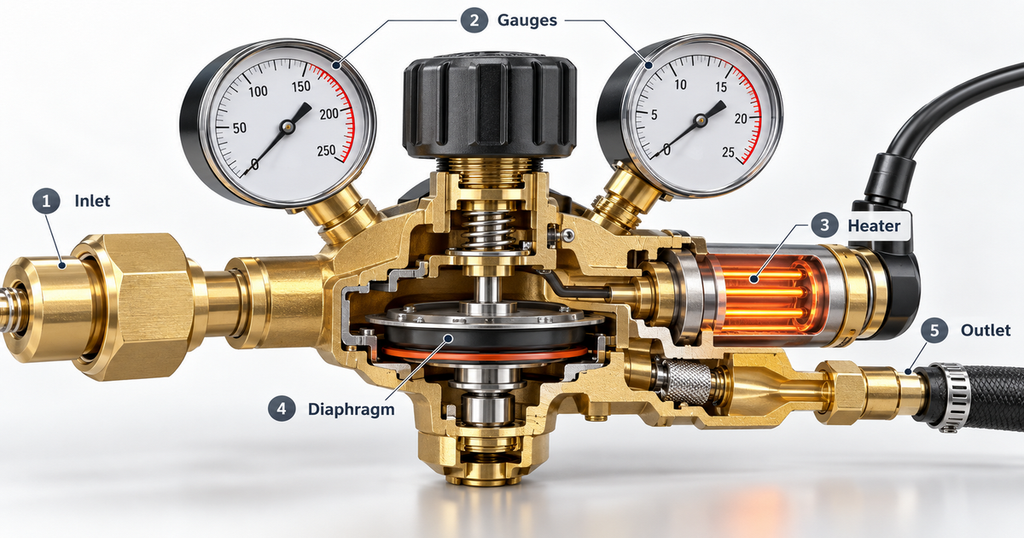
The heater is the defining feature of a CO₂ heated regulator. Its function is to reduce the risk of freeze-up during high-flow discharge by stabilizing the regulator’s operating temperature.
When comparing heated regulator designs, ask the supplier for specific technical information rather than relying on generic statements such as “anti-freeze” or “high performance.”
Important heater specifications to evaluate
– Input voltage: Common options may include 110–120 V or 220–240 V, depending on the market
– Power rating: Heating capacity should be suitable for the target flow and ambient conditions
– Thermal control: A controlled system helps avoid excessive temperatures and improves consistency
– Electrical protection: Check insulation, wiring quality, terminal protection, and relevant electrical requirements
– Heating location: The heat should support the pressure-reduction area where cooling is most likely to affect performance
– Warm-up behavior: Confirm whether the heater requires preheating before high-flow welding begins
– Serviceability: Evaluate cable replacement, heater replacement, and spare-part availability
– Environmental durability: Consider dust, welding spatter exposure, workshop vibration, and cold conditions
A heated regulator is not a substitute for correct gas-system design. If gas hoses are damaged, fittings leak, the flowmeter is inaccurate, or the cylinder is improperly handled, a heater alone cannot solve the underlying problem.
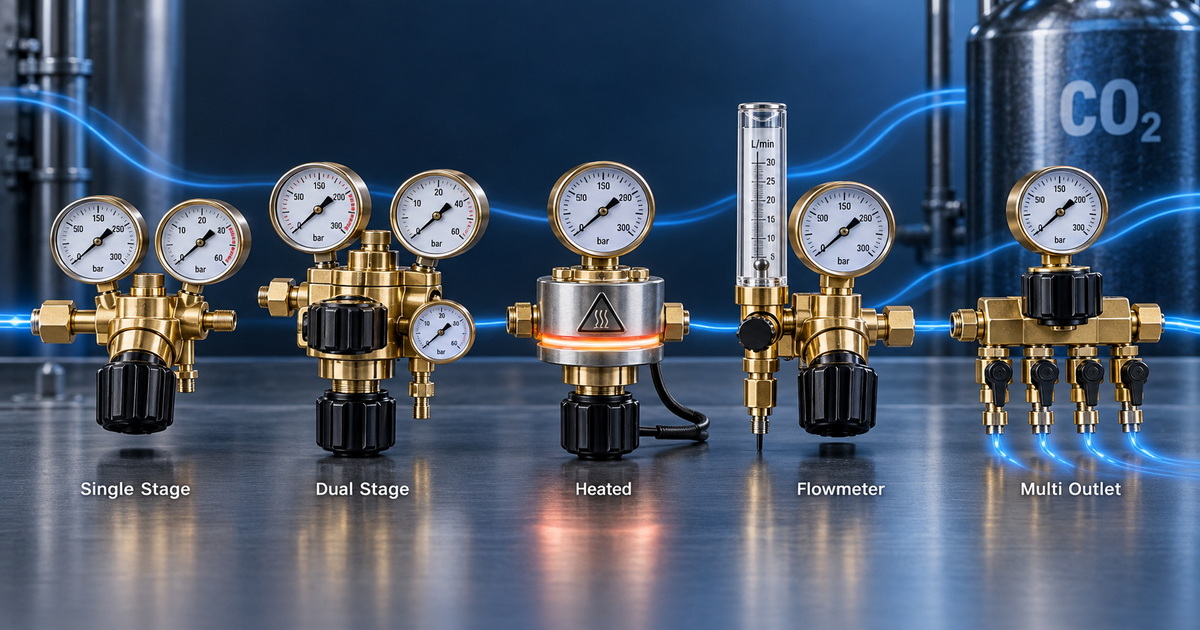
Single-Stage vs. Dual-Stage CO₂ Regulators
A key decision is whether to use a single-stage or dual-stage configuration.
A single-stage regulator reduces cylinder pressure to the desired working pressure in one step. It is often suitable for routine welding work where moderate pressure variation is acceptable and the application does not require highly stable delivery pressure over the full cylinder life.
A dual-stage regulator reduces pressure in two steps. This design can provide more stable outlet pressure as cylinder pressure changes. It may be preferred for applications where delivery-pressure consistency is particularly important, including precision processes, automated systems, laboratory-adjacent work, or demanding industrial gas control.
| Feature | Single-stage CO₂ regulator | Dual-stage CO₂ regulator |
|---|---|---|
| Pressure reduction | One step | Two steps |
| Structure | Simpler | More complex |
| Cost | Usually lower | Usually higher |
| Outlet-pressure stability | Suitable for many routine applications | Better stability as cylinder pressure changes |
| Best fit | General welding and standard industrial use | High-consistency, automated, or precision-oriented applications |
| Heated version availability | Common | Available for specialized requirements |
For high-flow welding, heating and staging solve different problems. Heating addresses cooling and freeze-up risk. Dual-stage regulation improves pressure stability. A buyer should not assume that a dual-stage regulator is automatically heated or that a heated single-stage regulator automatically offers dual-stage pressure control.
Material Quality: Why Brass Construction Matters
Industrial welding regulators operate in environments that expose them to handling, vibration, temperature changes, and frequent connection cycles. Material selection affects durability, sealing reliability, machining precision, and long-term service performance.
High-quality brass is widely used in regulator bodies and critical gas-contact components because it offers good machinability, corrosion resistance, and mechanical reliability for many industrial gas applications. For an OEM supplier, however, “brass body” should not be the end of the discussion.
What professional buyers should verify
– Brass grade and material traceability where required
– Body-wall thickness and forged or machined construction
– Thread accuracy and surface finish
– Diaphragm material and durability
– Valve-seat material compatibility
– Gauge accuracy and readability
– Relief-device design, if applicable
– Inlet nipple, nut, and sealing interface quality
– Resistance to vibration and repeated adjustment
– Consistency across production batches
For export programs, buyers should also request clear product drawings, technical datasheets, inspection standards, packaging specifications, and part-number control. These details make it easier for distributors and brands to manage after-sales service.
A Field Checklist for Selecting a CO₂ Heated Regulator
Use this practical checklist before placing a purchasing order.
1. Confirm the exact gas: pure CO₂, mixed shielding gas, or another industrial gas.
2. Verify the target market’s cylinder connection standard and sealing requirements.
3. Define normal and peak flow requirements in L/min or CFH.
4. Record the expected welding duty cycle and continuous weld duration.
5. Identify the lowest likely ambient operating temperature.
6. Choose the correct inlet-pressure and outlet-pressure range.
7. Decide whether a single-stage or dual-stage design is more suitable.
8. Confirm heater voltage, wattage, thermal protection, and plug configuration.
9. Check outlet thread, hose barb, flowmeter, or quick-connect compatibility.
10. Request material information, inspection records, and sample testing.
11. Evaluate packaging, manuals, labels, spare parts, and private-label capability.
12. Confirm the supplier’s OEM/ODM process, lead time, and quality-control plan.
This process reduces the risk of selecting a regulator that looks suitable in a catalog but does not fit the real gas cylinder, workflow, electrical supply, or weld-cell demand.
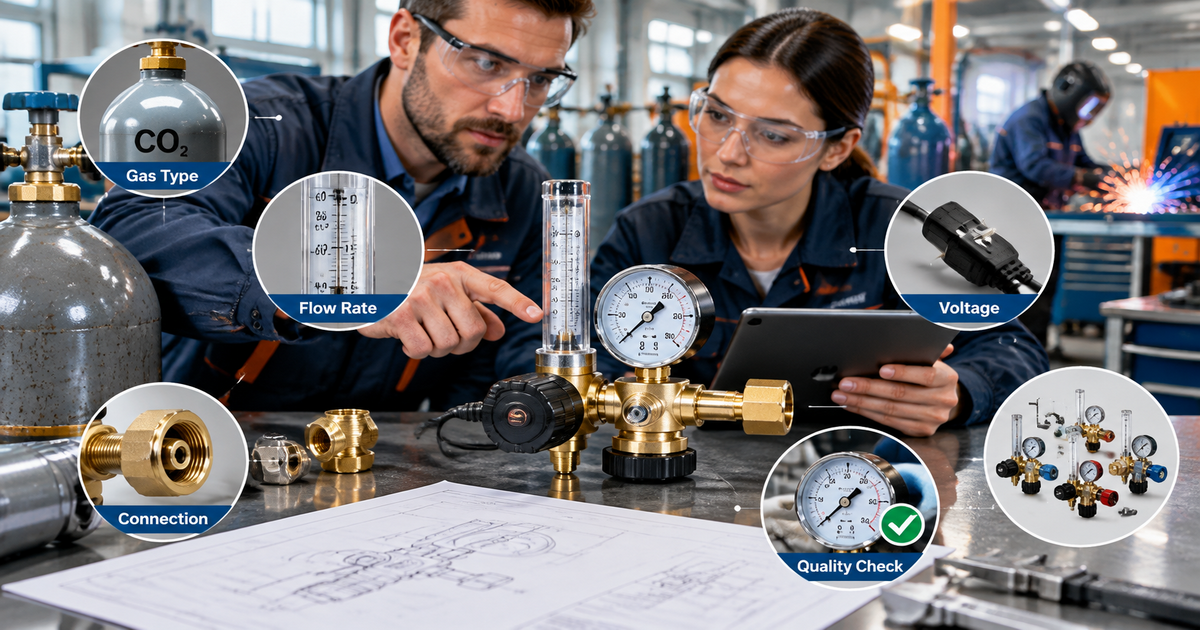
Installation and Operating Practices That Protect Performance
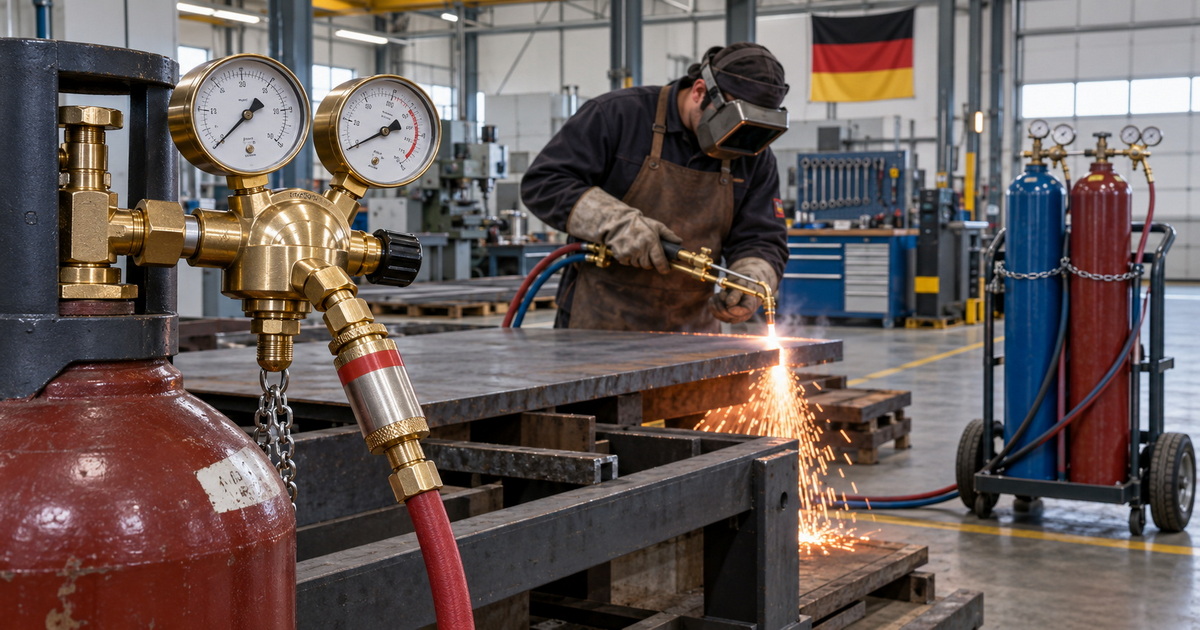
Even a well-designed CO₂ heated regulator needs correct installation and operation. OSHA requires regulators and gauges used in welding applications to be in proper working order. OSHA also states that pressure-reducing regulators must be used only for the gases and pressures for which they are intended, and regulator connections must comply with applicable CGA connection standards.
Recommended operating practices
– Inspect the regulator body, gauges, threads, cable, and fittings before use.
– Keep cylinder valves, regulator connections, and gauges clean and free from oil or grease.
– Secure the gas cylinder before connecting the regulator.
– Ensure the pressure-adjustment knob is backed off before opening the cylinder valve.
– Stand to the side of the regulator outlet when opening the cylinder valve.
– Open the valve slowly and check for leaks using an approved leak-detection method.
– Allow the heater to reach normal operating condition if the manufacturer specifies preheating.
– Set flow based on welding procedure requirements, not guesswork.
– Close the cylinder valve after work is complete and relieve downstream pressure according to safe operating procedures.
– Never repair or modify a damaged regulator without qualified service procedures.
For oxygen-service equipment, oil and grease contamination is especially dangerous. OSHA specifically requires oxygen regulator gauges to be marked “USE NO OIL.” Although this article focuses on CO₂ heated regulators, gas-specific safety practices must always be followed across an industrial regulator product range.
What OEM and ODM Buyers Should Ask a Regulator Manufacturer
Overseas brands, importers, distributors, and welding-equipment manufacturers need more than a finished product. They need supply consistency, documentation, customization control, and a partner who understands industrial gas applications.
A capable CO₂ regulator manufacturer should offer
– OEM logo, private label, color, gauge face, and packaging customization
– ODM support for connection type, outlet configuration, heater voltage, and product appearance
– Options for CO₂ heated regulators, argon regulators, oxygen regulators, acetylene regulators, propane regulators, nitrogen regulators, and dual-stage gas regulators
– Stable brass-component sourcing and controlled machining processes
– In-process and final quality inspections
– Leak testing and functional pressure testing
– Clear technical drawings and specification confirmation before mass production
– Export-oriented packaging and product-identification support
– Spare parts, service kits, and consistent replacement-part availability
– Transparent sample approval and production lead-time management
From an industrial buyer’s viewpoint, consistency matters as much as nominal performance. A regulator that performs well in one sample but varies across production batches can create warranty costs, distributor complaints, and damage to a brand’s reputation.
Common Buying Mistakes to Avoid
The most common errors are usually preventable.
– Choosing a regulator based only on price
– Ignoring the actual sustained flow requirement
– Using a standard CO₂ regulator for high-duty-cycle work in cold conditions
– Selecting the wrong CGA or local cylinder connection
– Using adapters to force incompatible equipment together
– Confusing flow capacity with pressure range
– Assuming every heated regulator has the same heater performance
– Overlooking voltage and plug requirements for export markets
– Failing to test samples under real welding conditions
– Treating private-label packaging and technical documents as an afterthought
A reliable supplier will ask detailed questions before recommending a model. That is a positive sign. Correct regulator selection requires engineering information, not just a product photo and a target price.
Final Recommendation
For high-flow welding, choose a CO₂ heated regulator based on actual flow demand, duty cycle, ambient temperature, cylinder connection, outlet requirements, heating specification, pressure-control needs, and expected service conditions. Prioritize gas compatibility, stable performance, quality materials, and verified inspection over superficial features.
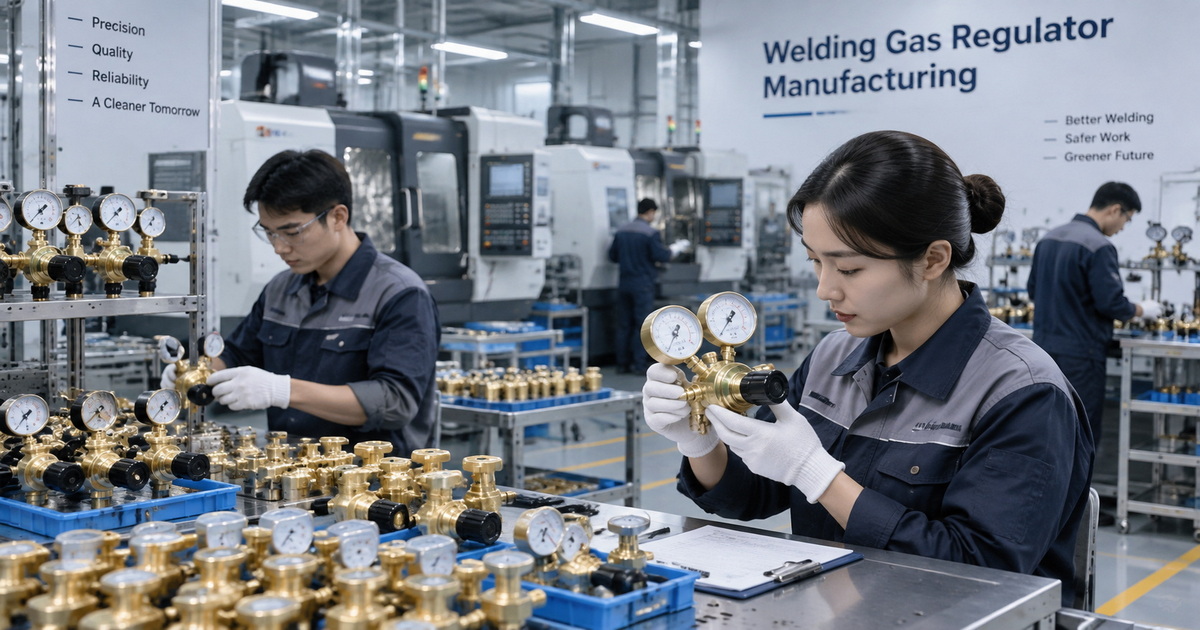
For brands and distributors, the most dependable approach is to work with a manufacturer that can provide precision brass construction, consistent quality control, customized connections and heater configurations, and OEM/ODM support for your target market.
Need a reliable CO₂ heated regulator for high-flow MIG/MAG welding or an OEM industrial gas-regulator program? Contact our engineering team with your gas type, cylinder connection, voltage, target flow, and application requirements for a customized recommendation and sample evaluation.
FAQ
1. What is a CO₂ heated regulator used for?
A CO₂ heated regulator is used to reduce the risk of regulator freeze-up during high-flow or long-duration CO₂ gas consumption. It is commonly used in MIG/MAG welding, automated welding, and industrial applications where a standard regulator may become excessively cold.
2. Do I need a heated CO₂ regulator for normal MIG welding?
Not always. For short, intermittent welding at moderate gas flow in normal ambient temperatures, a standard CO₂ regulator may be sufficient. A heated model becomes more valuable when welding is continuous, gas consumption is high, or the workplace is cold.
3. Can I use a CO₂ regulator for argon or nitrogen?
Only if the regulator is specifically designed, marked, and approved for that gas service and has the correct connection and pressure rating. Do not assume compatibility based on similar appearance. Gas-specific fittings help prevent incorrect connections.
4. What is the difference between a CO₂ heated regulator and a dual-stage regulator?
A heated regulator helps reduce freeze-up caused by CO₂ expansion. A dual-stage regulator reduces inlet pressure in two steps to improve outlet-pressure stability as cylinder pressure changes. A product can be heated, dual-stage, both, or neither depending on its design.
5. What flow rate is considered high flow for CO₂ welding?
The answer depends on the welding process, torch design, nozzle size, welding parameters, drafts, and duty cycle. Instead of relying on a universal threshold, determine the normal and peak flow required by the welding procedure, then select a regulator with suitable capacity above that expected demand.
6. Why does my CO₂ regulator become covered in frost?
Rapid CO₂ expansion can lower the regulator temperature. Moisture from the surrounding air may then condense and freeze on the regulator body. In sustained high-flow work, frost can be a warning sign that the regulator is approaching a condition where gas delivery may become unstable.
7. Can I use an adapter if the regulator does not fit the cylinder?
No. Do not force connections or use an adapter to overcome an incompatible gas-cylinder connection. The correct regulator must match the gas, cylinder valve, pressure range, and intended service.
References
1. [Occupational Safety and Health Administration (OSHA): 29 CFR 1926.350, Gas Welding and Cutting] — Requirements for welding regulators and gauges to be maintained in proper working order. [osha]
2. [Occupational Safety and Health Administration (OSHA): 29 CFR 1910.253, Oxygen-Fuel Gas Welding and Cutting] — Federal safety requirements relevant to cylinders, regulators, gas welding, and cutting equipment. [osha]
3. [USC Environmental Health & Safety: Gas Regulators] — Guidance on regulator compatibility, cylinder pressure, outlet-pressure selection, CGA connections, and the risks of incompatible adapters. [ehs.usc]
4. [The Fabricator: Understanding and Choosing Gas Control Devices] — Industry discussion of gas-control-device selection and pressure-management considerations. [thefabricator]
5. [Zoro: Welding Regulator Selection Guide] — Overview of common welding-gas CGA connections, including CO₂ CGA 320, oxygen CGA 540, and inert gas CGA 580. [zoro]
6. [Earlbeck Gases & Technologies: How Do I Select a Gas Regulator?] — Practical guidance on gas type, CGA connections, pressure requirements, and avoiding forced or altered fittings. [earlbeck]
7. [OSHA: Protective Equipment, Hose, and Regulators—29 CFR 1910.253(e)] — Summary of requirements that regulators be used only for their intended gases and pressures, including the “USE NO OIL” marking for oxygen regulators. [up]
Hot Tags: CO₂ Heated Regulator, High Flow Welding Regulator, CO₂ Welding Gas Regulator, Industrial Gas Pressure Regulator, Heated Gas Regulator For Welding, MIG Welding CO₂ Regulator, Dual Stage Gas Regulator, Brass Gas Regulator Manufacturer, OEM Gas Regulator Supplier, Industrial Welding Gas Control