Content Menu
● What Is the Difference Between Industrial and Commercial Pressure Regulators?
>> Industrial vs Commercial Pressure Regulator Comparison
● Why Continuous Operation Changes Regulator Selection
>> The Four Continuous-Operation Stress Factors
>>> 1. Pressure Droop Under Flow Demand
>>> 2. Cylinder Pressure Decline
>>> 3. Thermal Effects and Regulator Icing
>>> 4. Material and Gas Compatibility
● Industrial Pressure Regulator Applications
>> CO₂ Regulators for Welding and Beverage Systems
>> Argon and Nitrogen Regulators
>> Oxygen and Acetylene Regulators
>> Propane Regulators for Industrial Heating and Cutting
● How to Select a Pressure Regulator for Continuous Operation
>> A Practical Seven-Step Selection Method
● Do Not Buy “Maximum Pressure” When You Need “Stable Pressure”
● Installation and Inspection Checklist
● When a Commercial Pressure Regulator Is Enough
● Choose a Regulator Built Around Your Application
>> 1. What is the main difference between an industrial and commercial pressure regulator?
>> 2. Is a dual-stage gas regulator better for continuous operation?
>> 3. Why does a CO₂ regulator freeze during continuous use?
>> 4. Can I use the same pressure regulator for oxygen and argon?
>> 5. How do I choose the correct outlet-pressure range?
>> 6. What information should I provide to an OEM gas regulator supplier?
>> 7. How often should a gas regulator be inspected?
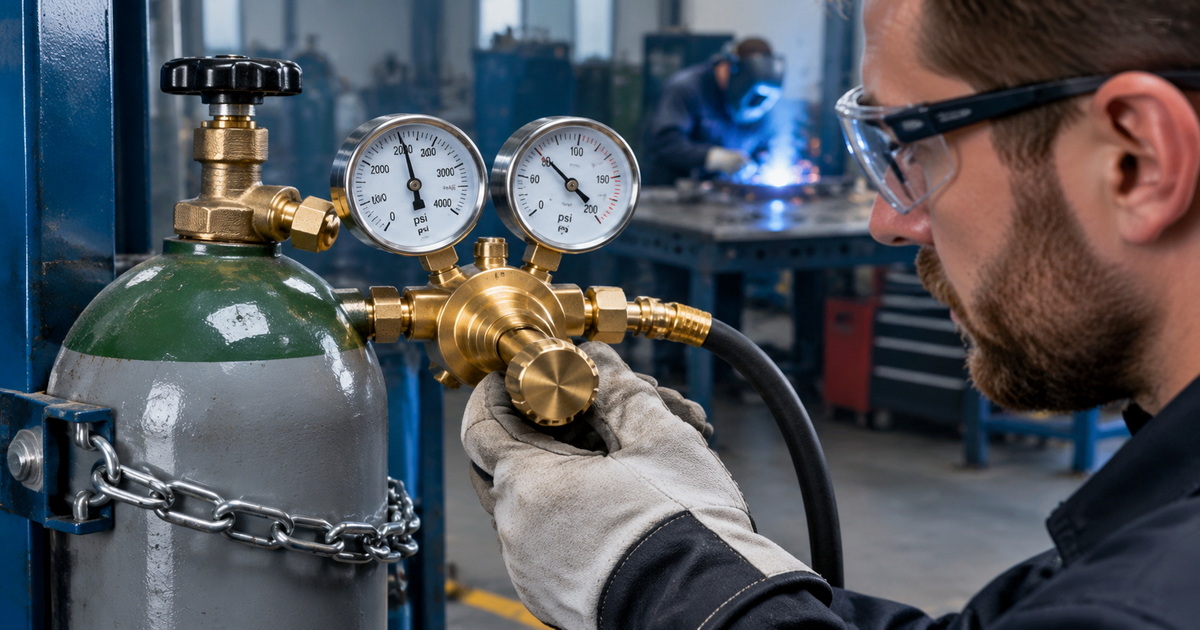
Choosing between an industrial pressure regulator and a commercial pressure regulator is not simply a matter of selecting the highest-pressure model. For continuous welding, cutting, gas-distribution, beverage, laboratory, or production-line applications, the correct regulator must maintain stable outlet pressure, match the gas and cylinder connection, and withstand the real operating cycle.
In my experience supporting industrial gas control projects, the most expensive regulator is rarely the best choice. The best choice is the unit that delivers consistent pressure, suitable flow capacity, gas-compatible materials, and dependable safety performance throughout its intended duty cycle.
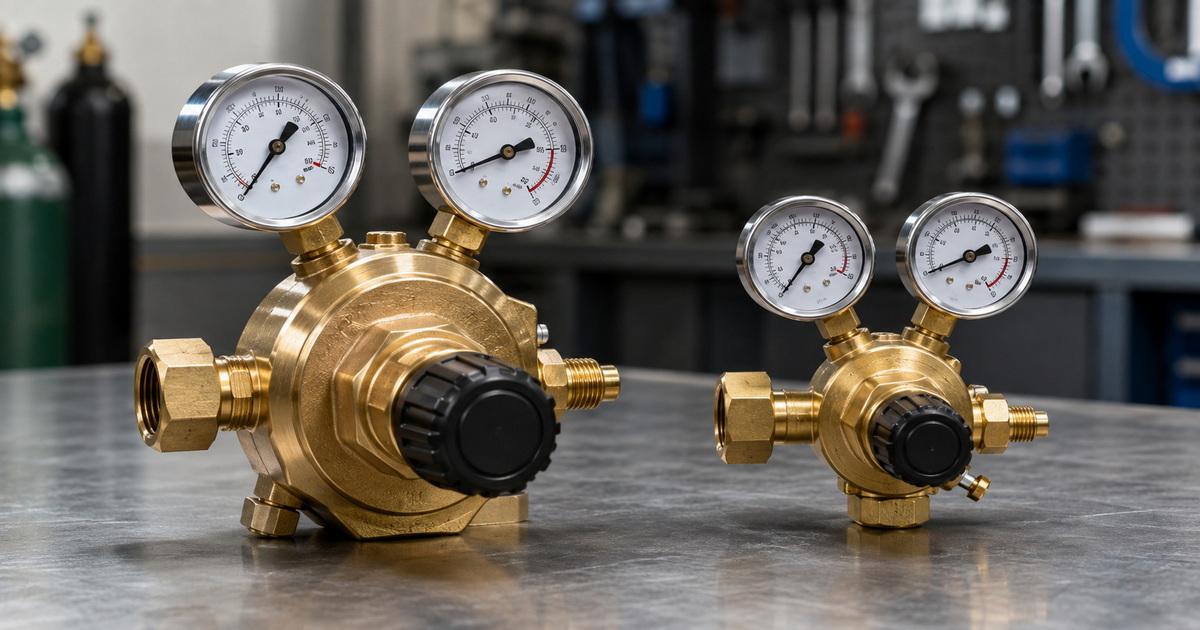
What Is the Difference Between Industrial and Commercial Pressure Regulators?
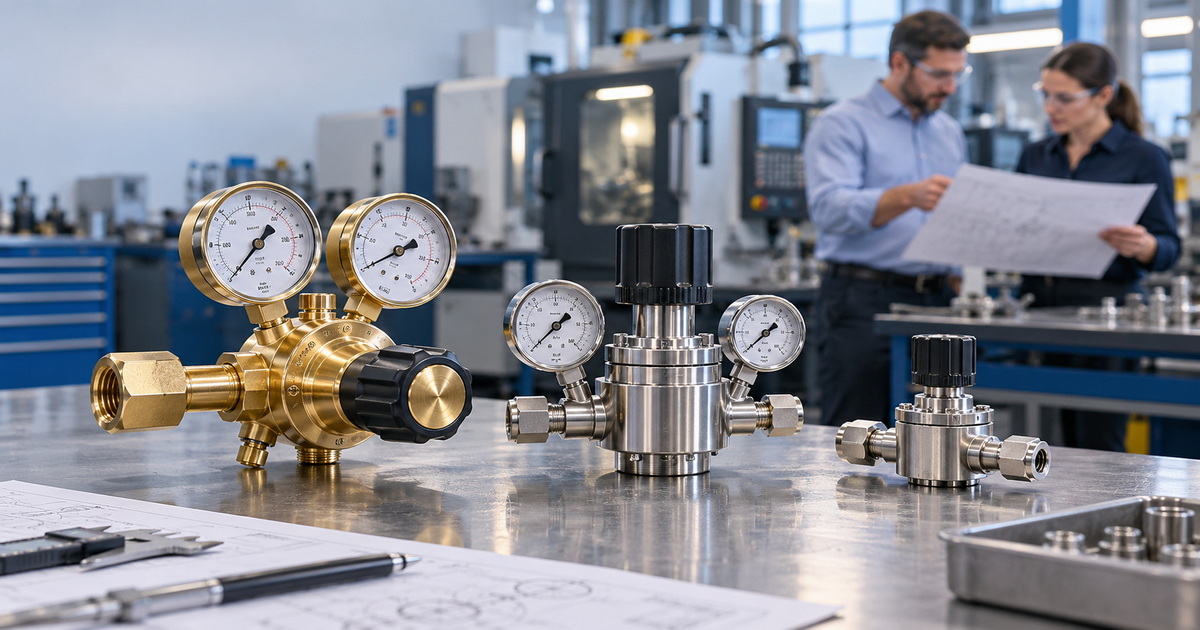
A pressure regulator reduces higher inlet pressure from a cylinder or gas source to a controlled outlet pressure for downstream equipment. In practical purchasing decisions, industrial and commercial models usually differ in construction strength, flow capability, operating duty, adjustment precision, maintainability, and application risk.
An industrial pressure regulator is typically specified for demanding, repetitive, or continuous gas use. Typical applications include fabrication workshops, automated welding cells, metal cutting, industrial gas manifolds, process equipment, and production lines.
A commercial pressure regulator is generally designed for lighter-duty, intermittent, or less critical applications. It may be suitable for small restaurants, beverage dispensing, retail gas systems, occasional workshop tasks, portable equipment, or low-demand utility use.
The right selection begins with a simple question:
Can the regulator hold the required outlet pressure and flow safely during your real operating cycle—not just during a short test?
Industrial vs Commercial Pressure Regulator Comparison
| Selection Factor | Industrial Pressure Regulator | Commercial Pressure Regulator |
|---|---|---|
| Typical operating pattern | Continuous, frequent, or high-demand operation | Intermittent, moderate, or lower-demand operation |
| Primary design goal | Stable control under demanding conditions | Economical pressure reduction for routine use |
| Construction | Often heavier-duty brass body, stronger internal components, robust gauges | May use lighter construction depending on application |
| Pressure stability | Better suited to applications where pressure consistency affects output quality | Usually adequate where small pressure variation has limited impact |
| Flow capacity | Often selected for higher and more variable flow requirements | Usually selected for lower or predictable flow demand |
| Adjustment range | May offer application-specific pressure ranges and finer control | Often uses general-purpose pressure ranges |
| Maintenance expectations | Better suited to planned inspection and service programs | Frequently replaced rather than rebuilt in lower-cost applications |
| Typical users | Manufacturers, welding shops, gas distributors, OEMs, production facilities | Restaurants, small workshops, retailers, service businesses |
| Cost priority | Lower lifecycle risk and uptime protection | Lower initial purchase cost |
| Best for continuous operation | Usually the stronger choice when properly specified | Only when actual flow, pressure, gas, and duty requirements are modest |
Why Continuous Operation Changes Regulator Selection
Continuous operation exposes weaknesses that may not appear during occasional use. A regulator can seem acceptable at startup, then show unstable outlet pressure, insufficient flow, gauge drift, icing, leakage, or premature wear after sustained demand.
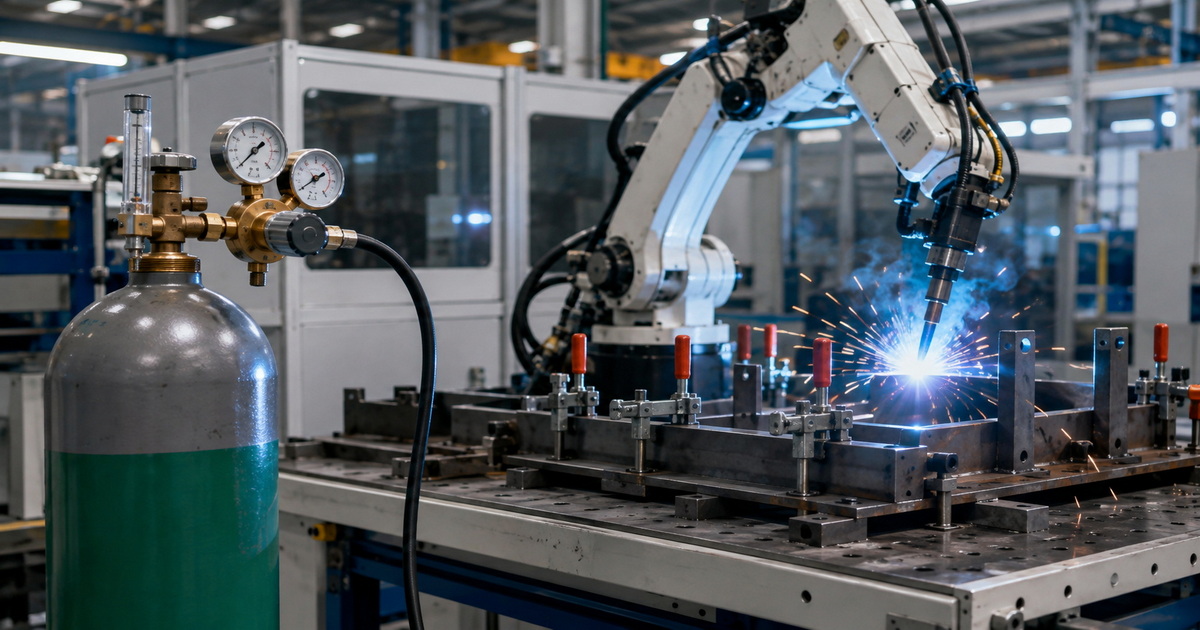
For welding and cutting operations, unstable gas pressure can affect arc shielding, cut quality, gas consumption, and repeatability. In CO₂ beverage systems, unstable delivery pressure may cause inconsistent carbonation or dispensing behavior. In automated manufacturing, even minor pressure fluctuations can create process variation.
The Four Continuous-Operation Stress Factors
1. Pressure Droop Under Flow Demand
Pressure droop is the reduction in outlet pressure as downstream flow increases. It matters when a regulator must supply gas continuously or when equipment cycles rapidly.
For example, a regulator set at 50 psi may not maintain 50 psi when flow demand rises. If the outlet pressure drops significantly under load, downstream equipment may not receive stable gas supply.
Industrial users should request performance information at the expected operating flow, rather than relying only on the maximum outlet pressure printed on the gauge.
2. Cylinder Pressure Decline
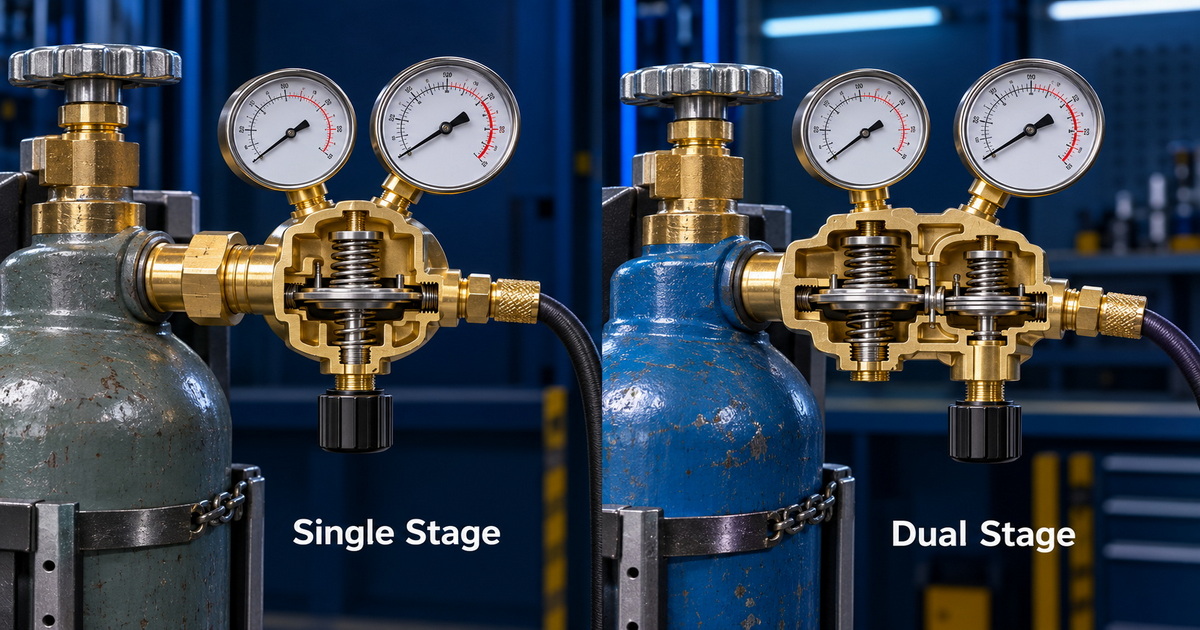
A single-stage regulator responds directly to changing inlet pressure. As cylinder pressure falls, the delivered pressure can change and require readjustment.
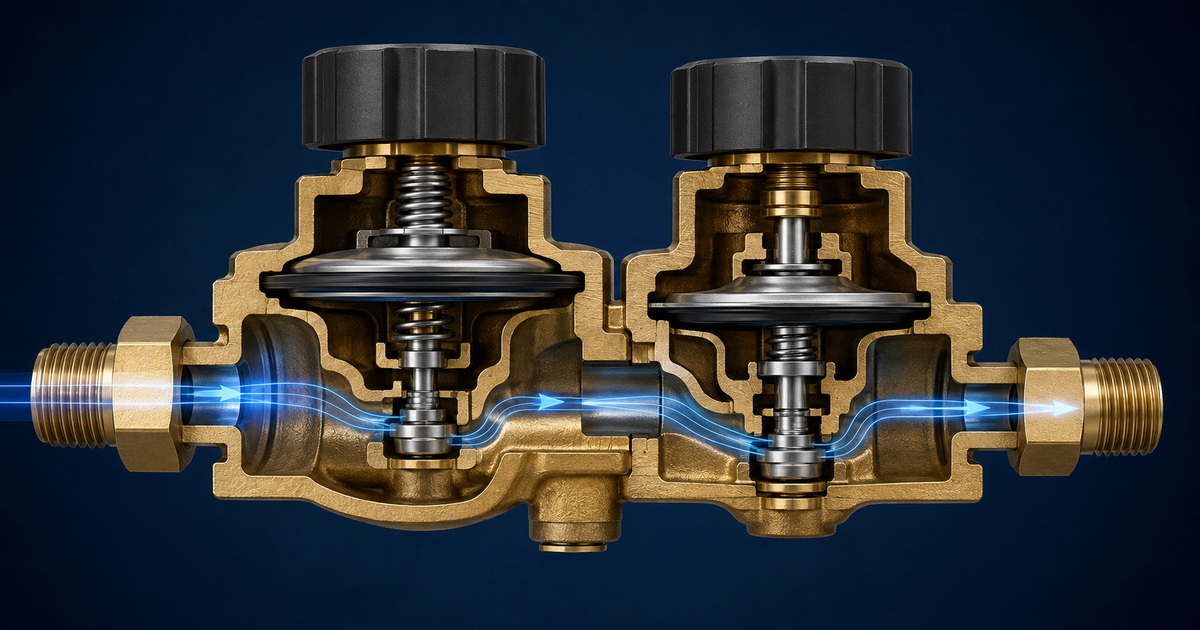
For applications that need tighter pressure consistency over the life of a cylinder, a dual-stage gas regulator is often a better option. Its two-stage reduction design helps reduce the influence of declining inlet pressure on the final outlet pressure.
This is particularly relevant for:
– Analytical and specialty gas systems
– Extended welding cycles
– Laboratory processes
– Precision gas mixing
– Automated equipment with narrow operating windows
– Applications where operators cannot constantly readjust the regulator
3. Thermal Effects and Regulator Icing
When compressed gas expands rapidly, temperature can fall. High flow rates, sustained draw, cold work environments, and certain gases can increase the risk of cooling-related performance issues.
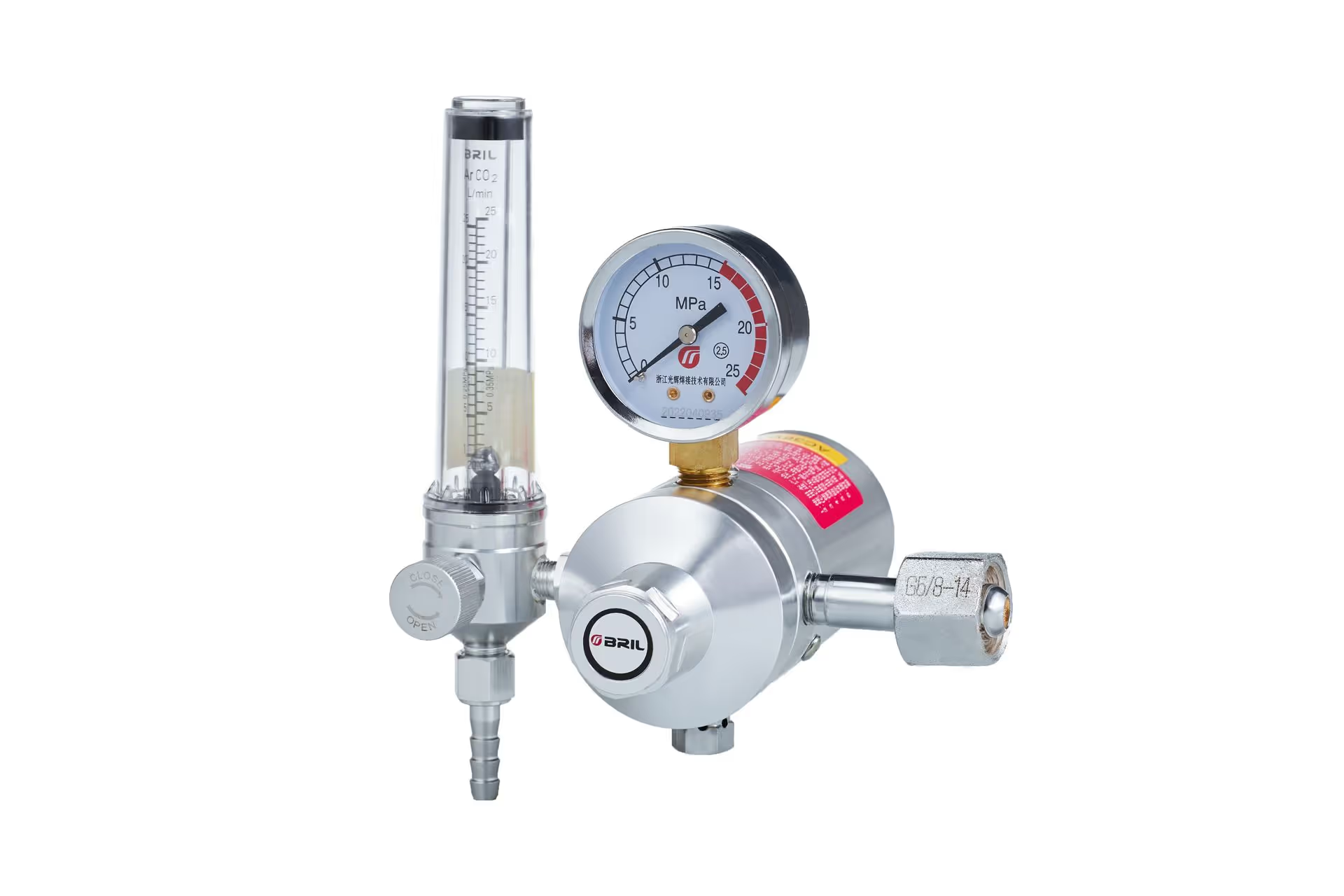
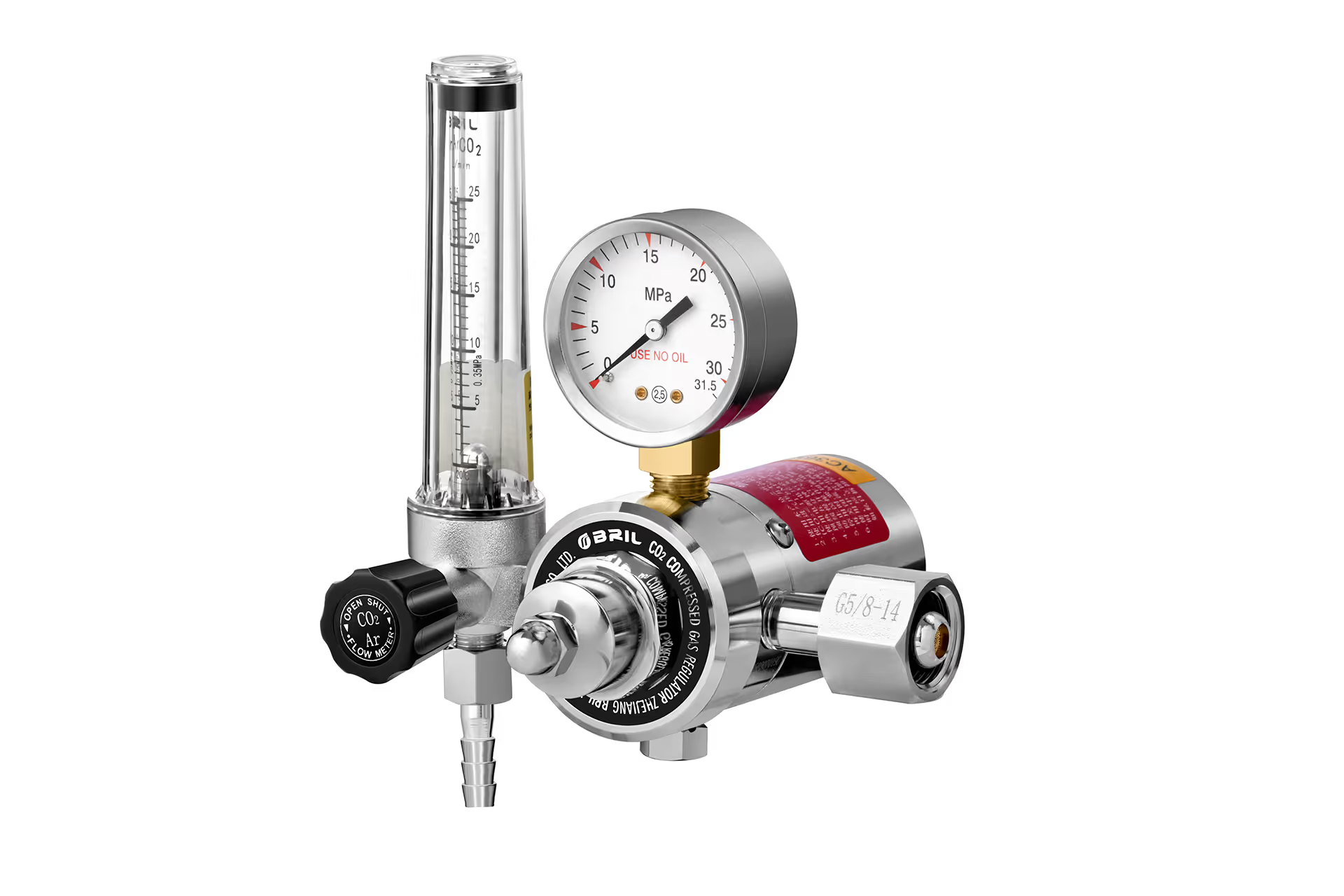
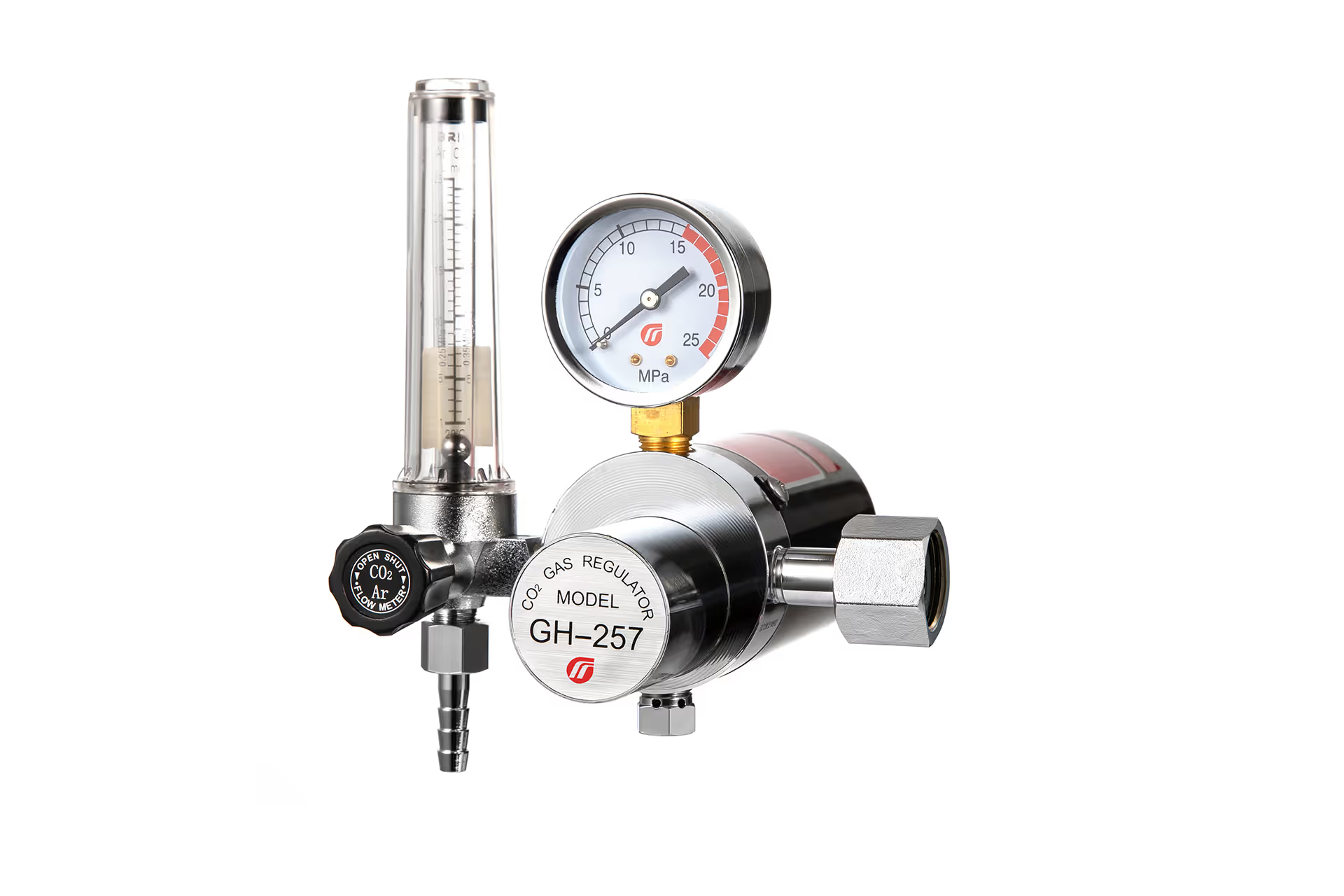
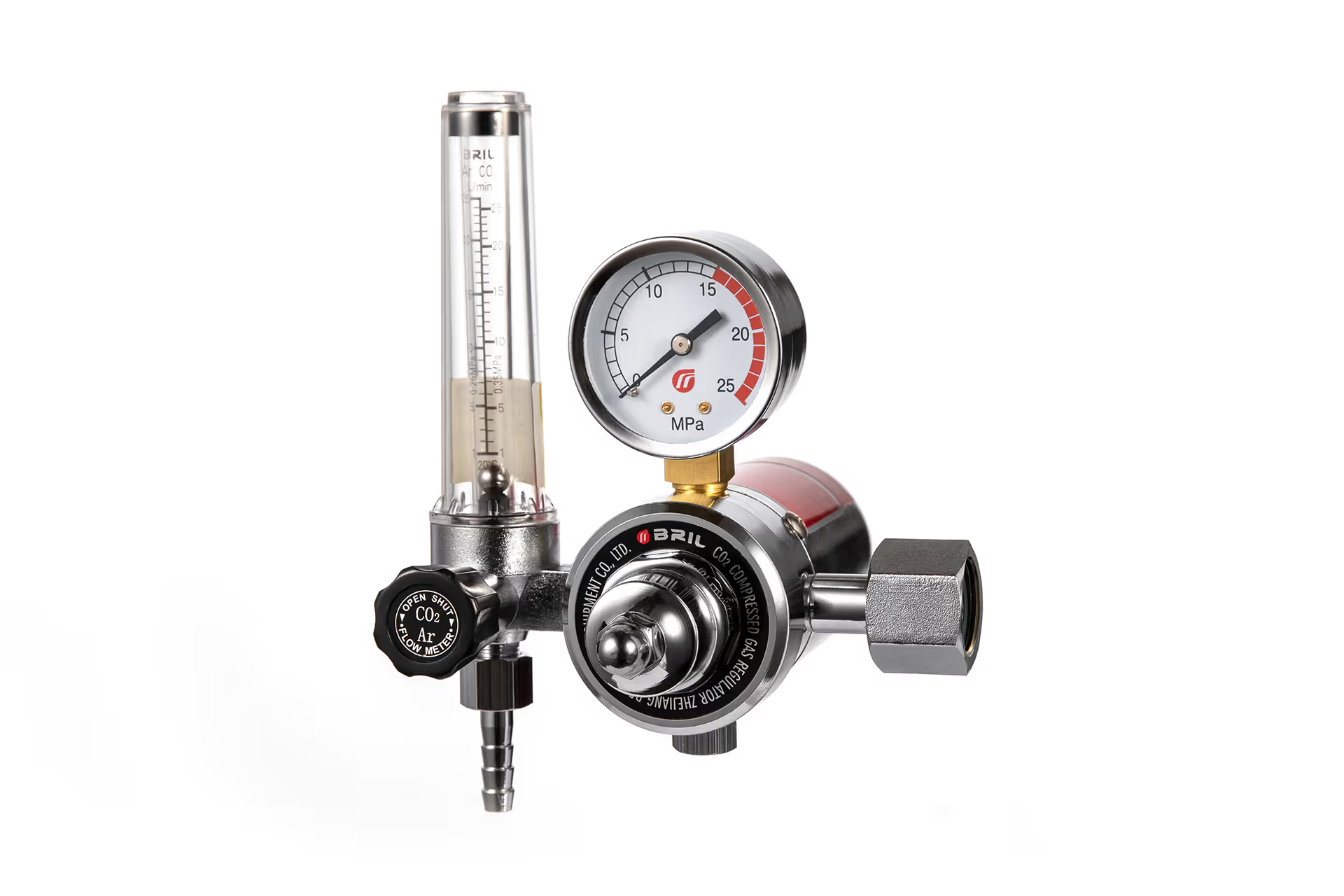
A CO₂ heated regulator can be valuable where regular CO₂ withdrawal creates freeze-up risk or unstable delivery caused by cooling. Heating solutions must be selected carefully for the specific gas system, voltage, environment, safety requirements, and manufacturer instructions.
A heated regulator is not a universal upgrade. It should solve a documented operating problem, such as repeated icing during sustained high-demand CO₂ use.
4. Material and Gas Compatibility
A regulator must be compatible with the gas, maximum cylinder pressure, required outlet pressure, and intended service environment. Material selection is not cosmetic.
For many industrial gas regulators, high-quality brass is widely used because it provides good machinability, corrosion resistance, and reliable mechanical performance. However, the full internal construction also matters, including diaphragms, valves, seals, filters, threads, gauges, and fittings.
Never use a regulator merely because it physically appears to fit a cylinder. Connection systems are designed to reduce the risk of incompatible gas connections. Gas-specific compatibility remains essential for oxygen, acetylene, propane, nitrogen, argon, CO₂, and mixed gases.
Industrial Pressure Regulator Applications
An industrial regulator should be evaluated as part of the whole gas-control system. The cylinder, valve, hose, torch, manifold, flowmeter, fittings, downstream equipment, and operating environment all influence the final result.
CO₂ Regulators for Welding and Beverage Systems
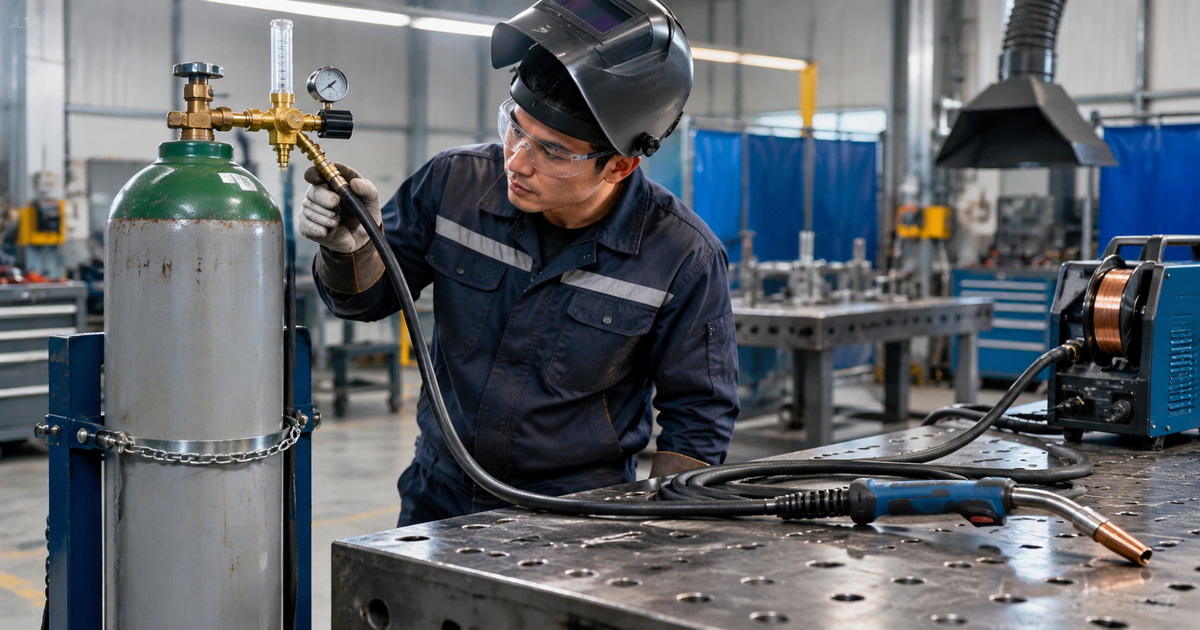
A CO₂ pressure regulator is used in MIG welding, beverage dispensing, greenhouse systems, dry ice-related processes, and industrial gas applications. The correct design depends on whether the priority is shielding-gas consistency, dispensing pressure, flow volume, or freeze resistance.
For continuous CO₂ use, evaluate:
– Required outlet pressure range
– Actual operating flow rate
– Cylinder connection standard
– Flowmeter compatibility, if required
– Risk of icing during extended gas withdrawal
– Gauge readability and protection
– Brass body quality and sealing reliability
– Need for an electrically heated CO₂ regulator
Argon and Nitrogen Regulators
Argon regulators are widely used for TIG welding, MIG welding blends, purging, and inert-gas shielding. Nitrogen regulators are used in purging, testing, pressurizing, tire inflation, laser-related systems, and industrial maintenance.
For inert-gas applications, buyers should not focus only on the gas name. They should define:
– Maximum inlet pressure
– Required delivery-pressure range
– Minimum and maximum flow
– Required connection type
– Single-stage or dual-stage configuration
– Environmental temperature
– Downstream equipment sensitivity
Oxygen and Acetylene Regulators
Oxygen regulators and acetylene regulators are critical components in oxy-fuel welding and cutting systems. Because oxygen supports combustion and acetylene is highly flammable, gas compatibility, correct connections, approved operating practices, and clean installation are essential.
Industrial buyers should select oxygen and fuel-gas regulators as matched components of a compliant gas-cutting or welding system. They should also verify local regulations and site-specific requirements before installation.
Propane Regulators for Industrial Heating and Cutting
A propane pressure regulator may be used in heating, cutting, roofing, industrial burners, and LPG-related equipment. Selection should consider gas type, inlet supply conditions, temperature, pressure range, flow demand, hose and fitting compatibility, and the specific appliance or burner requirements.
How to Select a Pressure Regulator for Continuous Operation
The most effective sourcing process is specification-driven. Avoid choosing only by product appearance, price, or a broad label such as “heavy duty.”
A Practical Seven-Step Selection Method
1. Identify the gas.
State whether the system uses CO₂, argon, oxygen, acetylene, propane, nitrogen, or a mixed gas.
2. Confirm maximum inlet pressure.
The regulator must accommodate the cylinder or supply pressure under the expected temperature conditions.
3. Define the required outlet-pressure range.
Choose a regulator whose usable control range matches the process requirement. A gauge range is not always identical to the regulator’s approved delivery-pressure range.
4. Calculate normal and peak flow demand.
Continuous operation requires more than a “maximum flow” claim. Define the normal operating flow, peak demand, duration of peaks, and number of simultaneous downstream users.
5. Choose single-stage or dual-stage control.
Use single-stage designs for many general industrial applications. Consider dual-stage designs where outlet-pressure stability across cylinder depletion is important.
6. Verify gas connection and outlet fitting.
Confirm the required cylinder connection, thread specification, hose interface, and regional standard. Do not use improvised adapters to force an incompatible cylinder-to-regulator connection.
7. Review quality-control and customization requirements.
For OEM and distributor programs, define logo marking, gauge units, outlet fittings, packaging, pressure ranges, inspection criteria, and documentation before mass production.
Do Not Buy “Maximum Pressure” When You Need “Stable Pressure”
One of the most common sourcing mistakes is comparing regulators by their maximum inlet pressure or maximum gauge reading alone.
For continuous operation, the more useful question is:
What outlet pressure can this regulator hold at our actual flow rate, throughout a full cylinder-use cycle?
Ask the supplier for the following before approving a model:
– Rated inlet-pressure range
– Approved outlet-pressure range
– Flow performance or flow curve
– Gas compatibility statement
– Regulator type: single-stage or dual-stage
– Body and internal material details
– Inlet and outlet connection specifications
– Leak-test and pressure-test process
– Gauge specification and accuracy class, where available
– Traceability, inspection records, and batch-control process
– OEM or ODM customization options
This documentation-based approach helps distributors and equipment manufacturers reduce returns, field complaints, and product mismatch.
Installation and Inspection Checklist
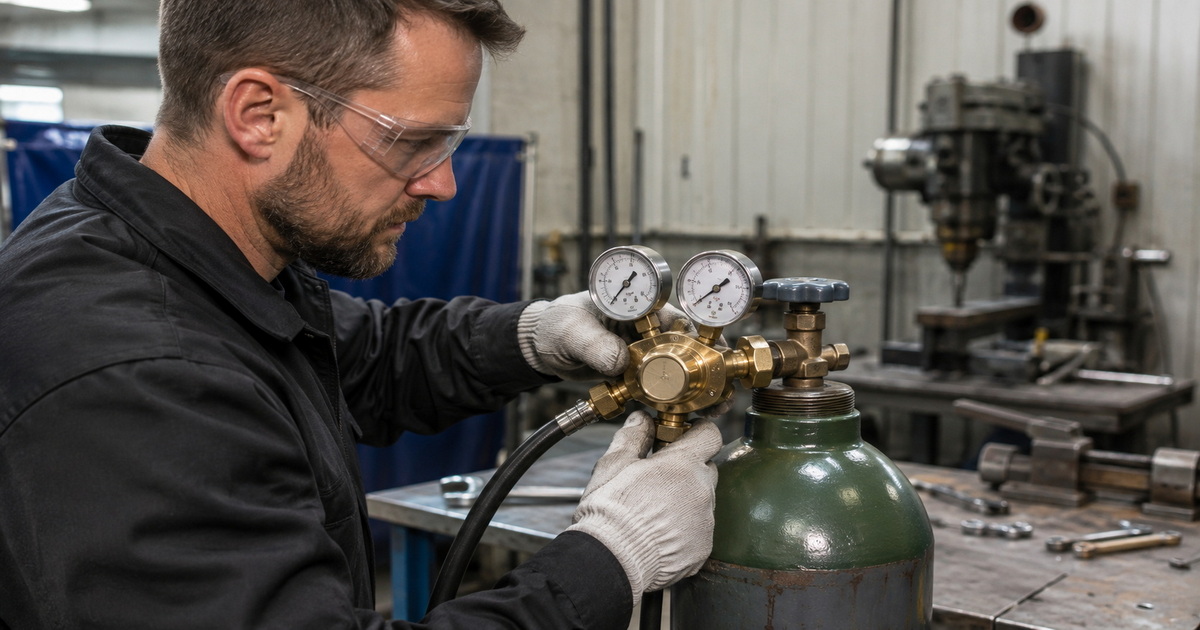
Correct installation is as important as regulator selection. Compressed-gas safety guidance consistently emphasizes using equipment compatible with the gas, suitable for the cylinder’s maximum pressure, and appropriate for the required outlet pressure.
Before Installation
– Confirm the cylinder label and gas type
– Verify the regulator is designed for that gas
– Inspect gauges, body, threads, seals, hoses, and fittings
– Confirm the cylinder is secured upright
– Ensure the work area is appropriately ventilated
– Keep ignition sources away from flammable-gas systems
– Ensure oxygen equipment is clean and free from oil or grease contamination
– Check that the regulator connection matches the cylinder valve
During Startup
1. Turn the regulator adjustment control fully counterclockwise before opening the cylinder valve.
2. Open the cylinder valve gradually and follow the applicable gas supplier or equipment procedure.
3. Adjust outlet pressure to the process requirement.
4. Perform a leak check using an approved leak-detection method.
5. Observe gauges and downstream performance before beginning full production.
During Routine Operation
– Check for vibration, abnormal noise, leaks, or gauge damage
– Monitor whether outlet pressure remains stable under normal flow
– Record repeated pressure-adjustment needs
– Remove damaged or leaking equipment from service
– Follow site procedures for inspection and cylinder handling
OSHA addresses compressed-gas equipment through standards covering general industry, maritime, and construction settings; facilities should apply the regulations that govern their location and operation.
When a Commercial Pressure Regulator Is Enough
A commercial pressure regulator may be the practical choice when the system has low or moderate flow demand, short operating cycles, low process sensitivity, and a well-defined gas application.
Examples may include:
– Small beverage dispensing systems
– Intermittent workshop tasks
– Retail or service applications
– Portable equipment with limited runtime
– Low-demand gas supply points
– Non-critical utility applications
However, lower initial cost should not override compatibility or safety requirements. If a commercial regulator repeatedly needs adjustment, freezes during operation, cannot maintain flow, or fails prematurely, the apparent savings disappear through downtime, gas waste, replacement cost, and customer dissatisfaction.
Choose a Regulator Built Around Your Application
For continuous welding, cutting, and industrial gas control, prioritize stable pressure control, verified gas compatibility, appropriate flow performance, and durable material construction over generic product labels.
A professional regulator manufacturer can help convert your operating requirements into a practical configuration. This may include a CO₂ heated regulator for demanding CO₂ withdrawal, a dual-stage regulator for improved pressure consistency, customized gauge units for your market, or branded OEM packaging for distributor programs.
Share your gas type, inlet pressure, target outlet pressure, flow demand, connection standard, and application. Our engineering and production team can help develop a reliable industrial gas regulator solution for your brand or project.
Frequently Asked Questions
1. What is the main difference between an industrial and commercial pressure regulator?
An industrial pressure regulator is generally selected for higher duty cycles, more demanding flow conditions, stronger durability expectations, and process applications where outlet-pressure stability matters. A commercial regulator is often intended for lighter or less critical service, but the actual specification sheet should always determine suitability.
2. Is a dual-stage gas regulator better for continuous operation?
A dual-stage regulator is often better when stable outlet pressure is needed as cylinder inlet pressure falls. It is especially useful for precision, laboratory, analytical, and extended-use gas applications. For basic welding or general utility service, a properly sized single-stage regulator may still be appropriate.
3. Why does a CO₂ regulator freeze during continuous use?
Rapid gas expansion can reduce temperature. During sustained CO₂ withdrawal, cooling may become significant enough to affect flow and pressure control. A correctly selected CO₂ heated regulator may help where repeated freeze-up is a confirmed operating issue.
4. Can I use the same pressure regulator for oxygen and argon?
No. The regulator must be specifically compatible with the gas, cylinder connection, inlet pressure, outlet-pressure requirement, materials, and safety requirements. Never force an incorrect connection with an adapter.
5. How do I choose the correct outlet-pressure range?
Start with the required operating pressure of the downstream equipment. Then select a regulator whose approved delivery-pressure range covers that requirement with usable adjustment control. Do not assume the gauge’s highest marking equals the regulator’s approved maximum delivery pressure.
6. What information should I provide to an OEM gas regulator supplier?
Provide the gas type, required inlet and outlet pressures, flow demand, connection standard, preferred gauge units, product application, branding needs, packaging requirements, quantity forecast, quality expectations, and any required market certifications or testing documentation.
7. How often should a gas regulator be inspected?
The correct interval depends on the gas, duty cycle, workplace rules, equipment instructions, and local regulations. At minimum, inspect before use for visible damage, leaks, corrosion, loose fittings, or damaged gauges, and remove unsafe equipment from service.
References
1. U.S. Occupational Safety and Health Administration. “[Compressed Gas and Equipment—Standards].” Accessed August 15, 2026. [osha]
2. University of Southern California Environmental Health & Safety. “[Gas Regulators].” Accessed August 15, 2026. [ehs.usc]
3. National Oceanic and Atmospheric Administration, Global Monitoring Laboratory. “[Guidelines for Standard Gas Cylinder and Pressure Regulator Use].” Accessed August 15, 2026. [gml.noaa]
4. Emerson. “[Pressure Reducing Regulators].” Accessed August 15, 2026. [emerson]
5. Parker Hannifin. “[A Guide to Safe Handling of Compressed Gases in the Laboratory].” Accessed August 15, 2026. [parker]
好的,这是按要求生成的标签:
Hot Tags: Industrial Pressure Regulator, Commercial Pressure Regulator, Continuous Operation Gas Regulator, Dual Stage Gas Regulator, CO2 Heated Regulator, Industrial Gas Pressure Control, Welding Gas Regulator, High Flow Gas Regulator, OEM Gas Regulator Manufacturer, Brass Gas Regulator