Content Menu
● Why Source Industrial Gas Regulators from China?
● How We Selected These Manufacturers
● Top 10 Industrial Gas Regulator Manufacturers in China
>> 1. Zhejiang Bril Welding Equipment Co., Ltd.
>> 2. ABYDA
>> 3. NOVORS
>> 4. Ningbo Longtime Gas Control System Co., Ltd.
>> 5. Beijing Jingcheng Gas Equipment Co., Ltd.
>> 6. Ningbo Keryfine Electronic Co., Ltd.
>> 7. Shenzhen Wofly Technology Co., Ltd.
>> 8. Shanghai Empire Mechanical Engineering Co., Ltd.
>> 9. Hangzhou Zhenda Precision Metallic Technology Co., Ltd.
>> 10. Suzhou Maxonic Automation Control Co., Ltd.
● Capacity, MOQ, and Certification Comparison
● Technical Requirements Buyers Should Specify
>> Brass Grade and Material Control
>> Diaphragm, Seat, and Spring Quality
>> CO₂ Heated Regulator Requirements
>> CE, RoHS, and PED Are Different Requirements
● The Overlooked Industry Risk: “Same Appearance, Different Internal Parts”
● Buyer’s Guide: How to Verify a Chinese Regulator Factory
>> 1. Review Documents Before Quoting
>> 2. Verify ISO Certification Properly
>> 3. Inspect the Production Process
>> 4. Start with Samples and a Trial Order
>> 5. Use a Detailed Purchase Specification
● FAQ
>> 1. How can I check whether a supplier’s ISO certificate has expired?
>> 2. Does a CE certificate mean every regulator can be sold in Europe?
>> 3. Can the same regulator be used for CO₂ and argon?
>> 4. How can I prevent material substitution after the sample stage?
>> 5. What MOQ should a new private-label brand expect?
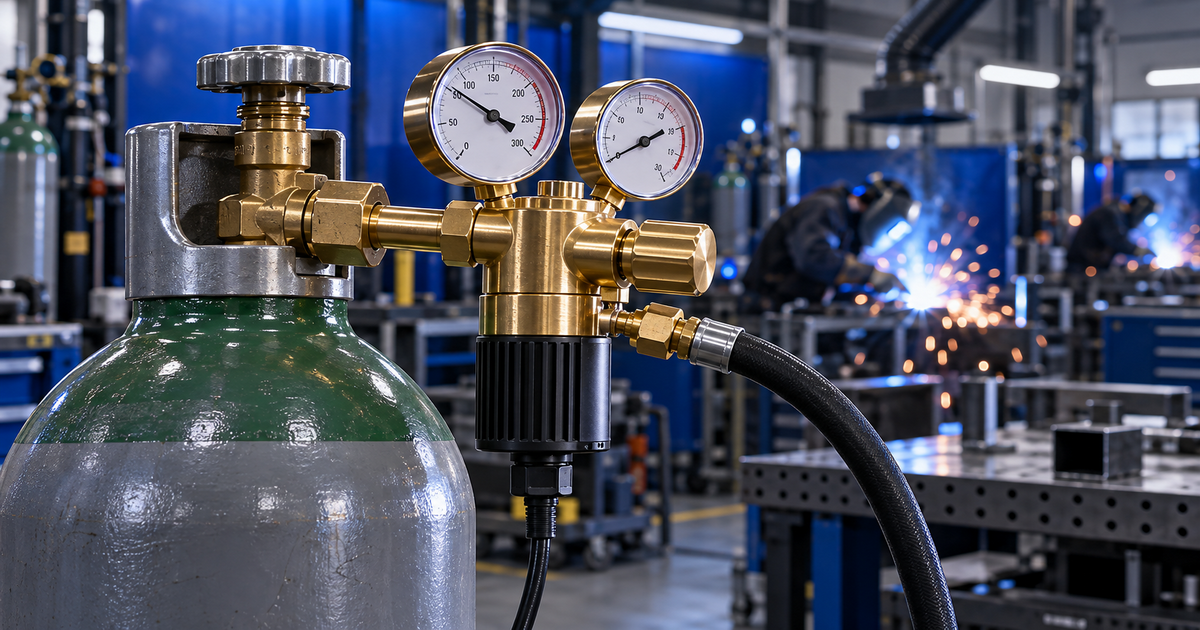
China has become an important sourcing base for industrial gas regulators used in welding, cutting, industrial gas distribution, laboratories, and process-control applications. For importers, private-label brands, wholesalers, and equipment manufacturers, the key benefit is not simply competitive pricing—it is access to integrated supply chains for brass machining, pressure gauges, valves, plastic components, assembly, packaging, and export logistics.
However, an industrial gas regulator should never be purchased as a purely commodity product. A regulator that looks similar externally may differ significantly in brass grade, diaphragm quality, seat material, spring performance, pressure stability, leakage control, and batch consistency.
The industrial gas regulator market was estimated at USD 18.10 billion in 2025 and is projected to reach USD 21.95 billion by 2030. Brass remains the dominant material category, while Asia-Pacific accounted for the largest regional share in 2024.
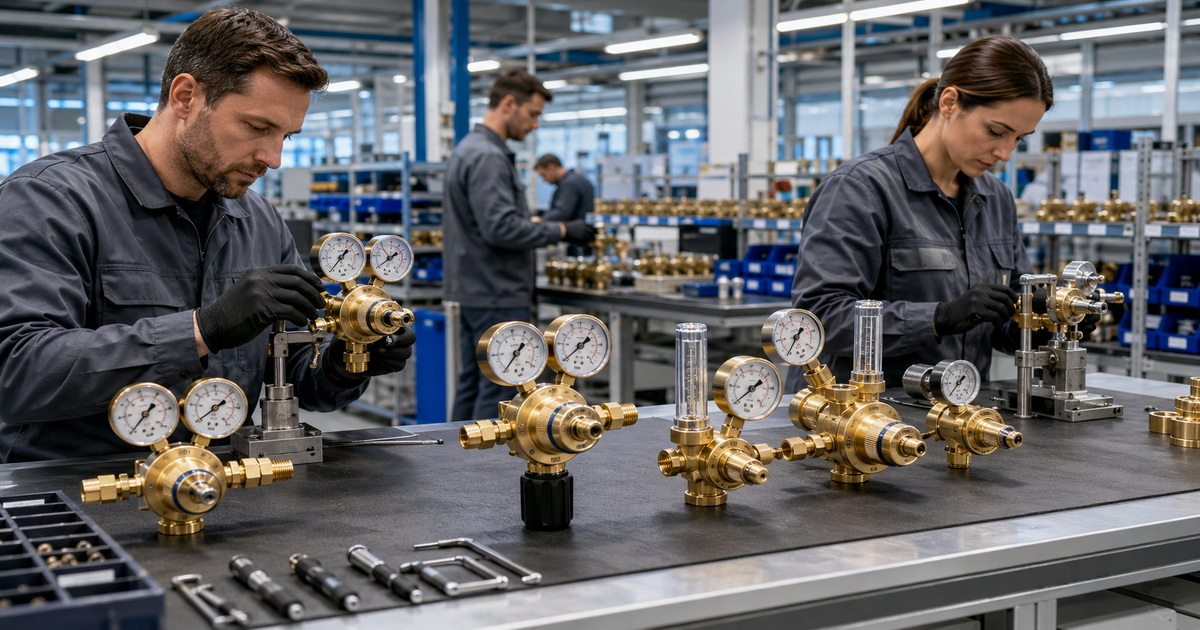
Why Source Industrial Gas Regulators from China?
China’s industrial gas regulator supply chain is concentrated in manufacturing regions including Zhejiang, Guangdong, Jiangsu, Shanghai, and Beijing.
Zhejiang—especially Wenzhou and Ningbo—has a mature ecosystem for brass valves, pressure-control components, precision machining, gauges, castings, and welding accessories. Guangdong and Shenzhen are often stronger in automation-oriented, high-purity gas-control, and export engineering projects. This regional specialization enables buyers to source both standard catalog regulators and customized OEM products.
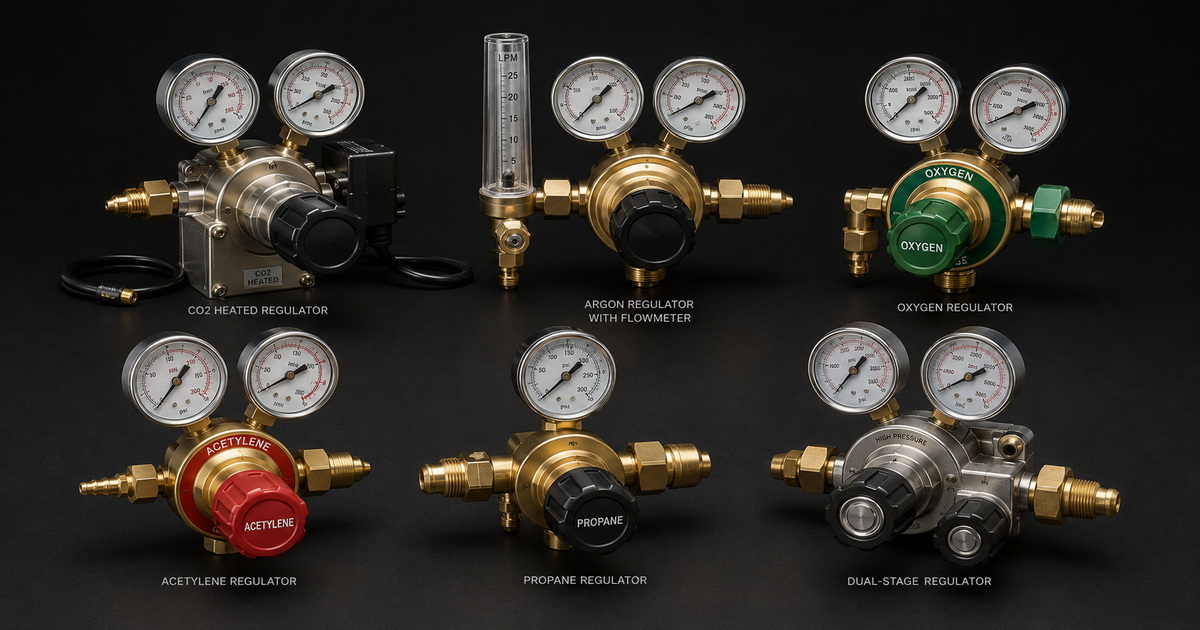
Typical products available from Chinese manufacturers include:
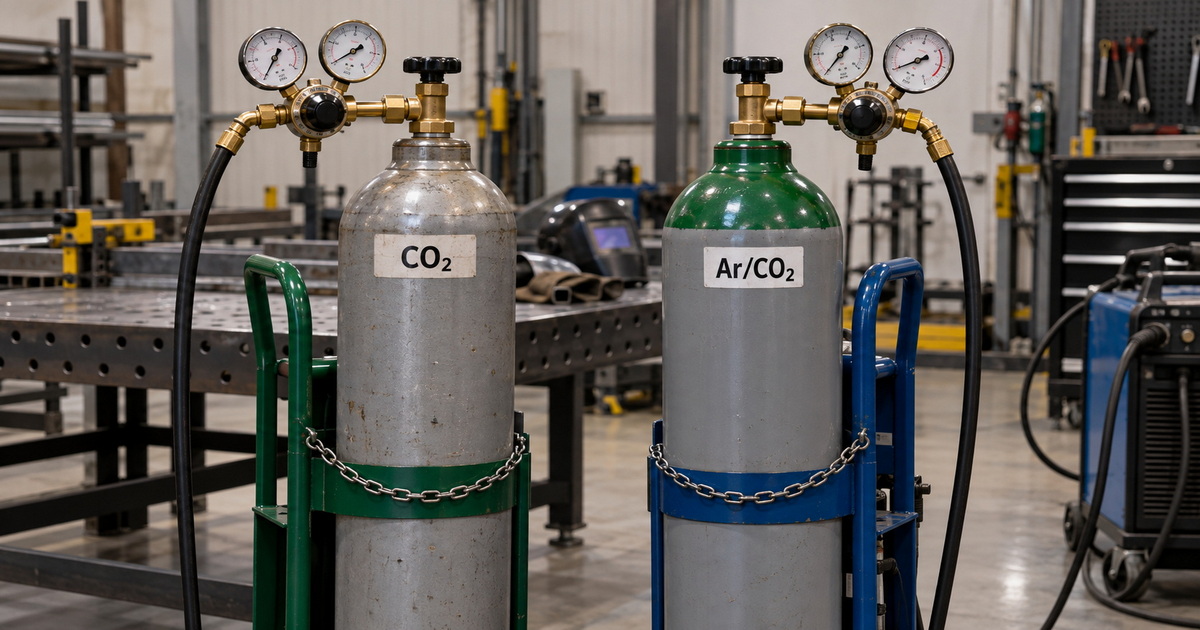
– CO₂ gas regulators and CO₂ heated regulators
– Argon regulators for MIG/TIG welding
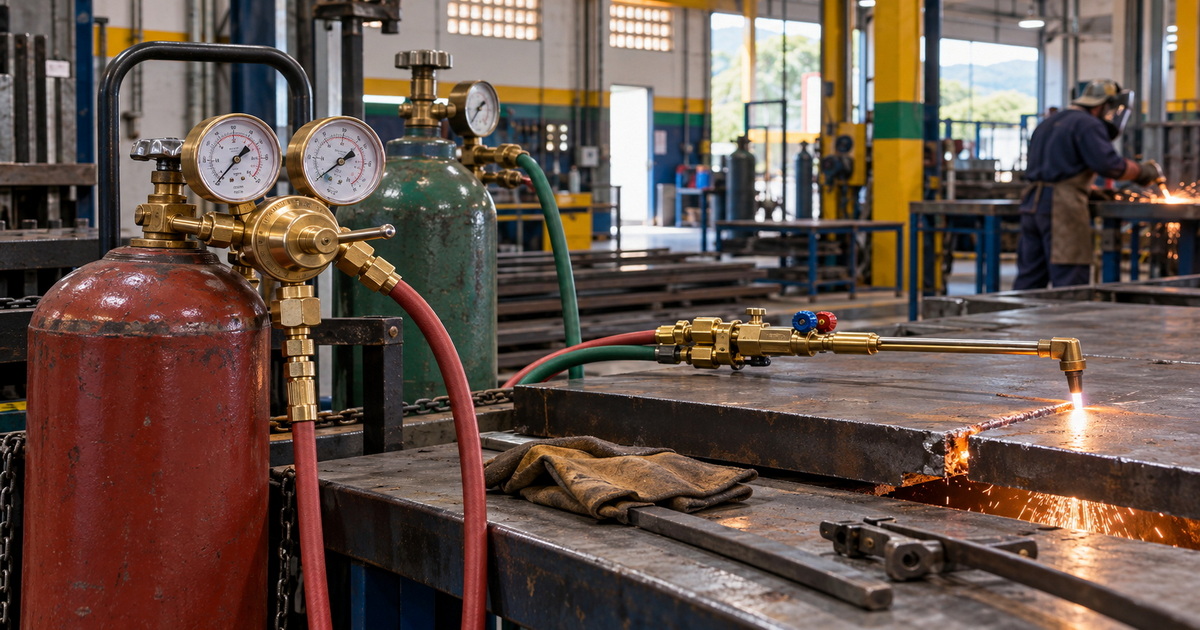
– Oxygen and acetylene regulators for cutting and welding
– Propane and nitrogen regulators
– Dual-stage gas regulators
– High-pressure gas regulators
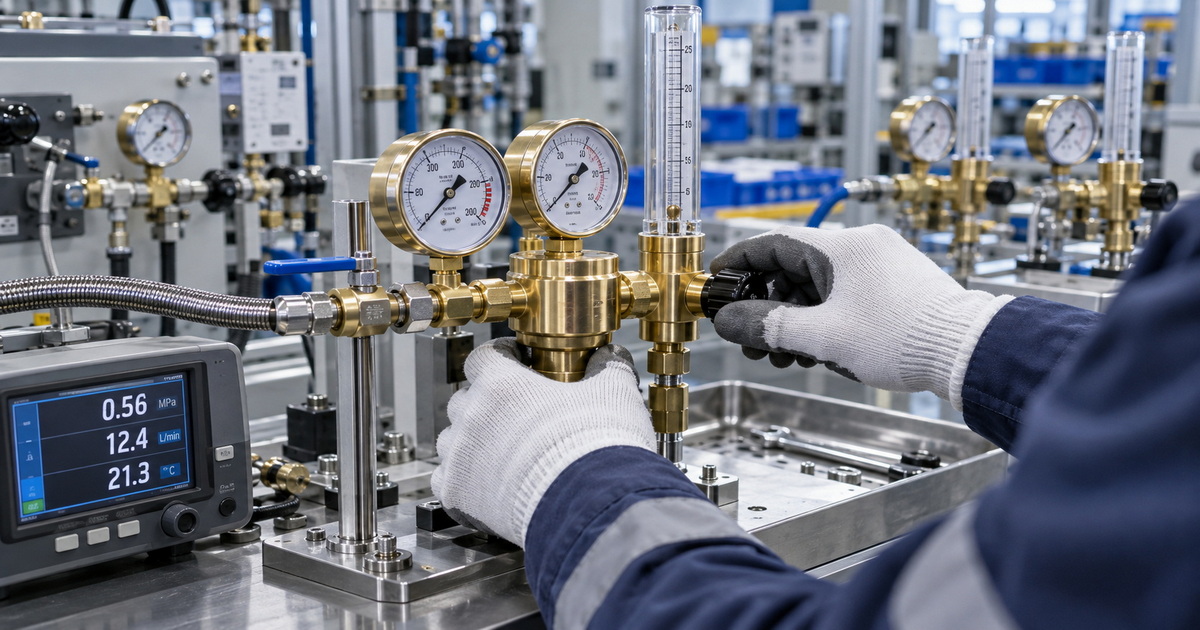
– Gas flowmeters, pressure gauges, solenoid valves, and welding accessories
– Private-label packaging, customized gauges, inlet/outlet fittings, and manuals
How We Selected These Manufacturers
This shortlist focuses on suppliers that appear relevant for industrial gas regulator sourcing, particularly for buyers seeking stable long-term OEM/ODM partnerships.
| Selection Factor | What Buyers Should Verify | Why It Matters |
|---|---|---|
| Manufacturing focus | Whether the company actually manufactures regulators rather than only trading them | Reduces sourcing and quality-control uncertainty |
| Product coverage | Gas types, pressure ranges, single-stage or dual-stage options, heated CO₂ models | Ensures product fit for the intended application |
| OEM/ODM capability | Custom dial faces, labels, fittings, packaging, instructions, and design support | Essential for private-label and distributor projects |
| Quality control | Leakage testing, pressure testing, calibration, incoming inspection, final inspection | Determines field reliability and batch consistency |
| Compliance support | ISO system, CE-related documentation, RoHS/REACH support, product test reports | Important for export-market readiness |
| Delivery reliability | MOQ, lead time, component inventory, production scheduling, export experience | Important for replenishment and channel planning |
ISO 9001 is a quality-management-system standard, not automatic proof that every regulator model meets every application or market requirement. Buyers should verify the certificate scope, factory address, issuing body, validity period, and surveillance status.
Top 10 Industrial Gas Regulator Manufacturers in China
1. Zhejiang Bril Welding Equipment Co., Ltd.
Founded: 2002
Location: Wenzhou, Zhejiang, China
Core products: CO₂ regulators, heated CO₂ regulators, argon regulators, oxygen regulators, acetylene regulators, propane regulators, nitrogen regulators, dual-stage regulators, flowmeters, solenoid valves, and welding accessories.
Main markets: North America, South America, Europe, Southeast Asia, the Middle East, Africa, and Oceania.
OEM/ODM focus: Private-label regulators, customized pressure gauges, fittings, branding, color options, packaging, manuals, and application-specific configurations.
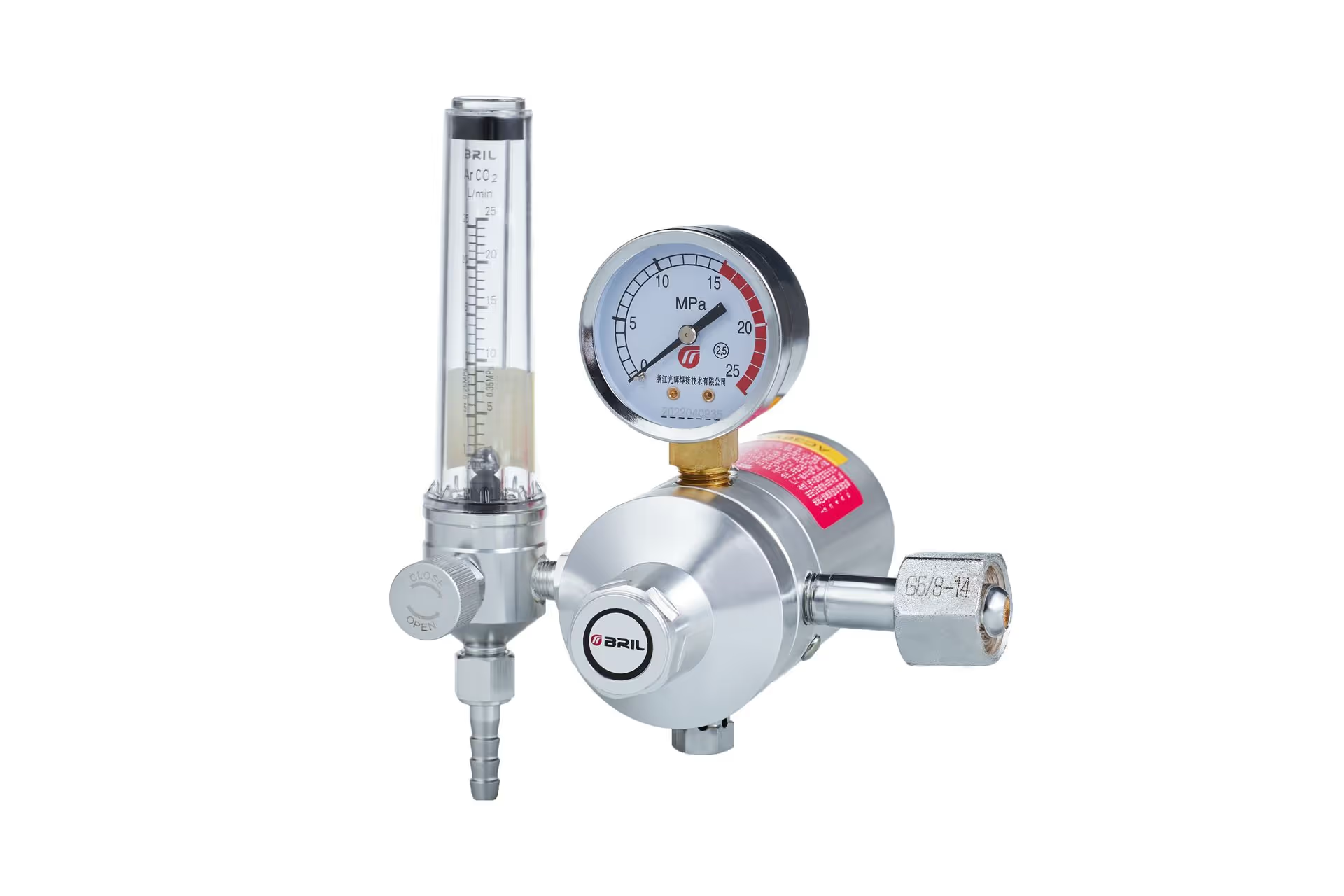
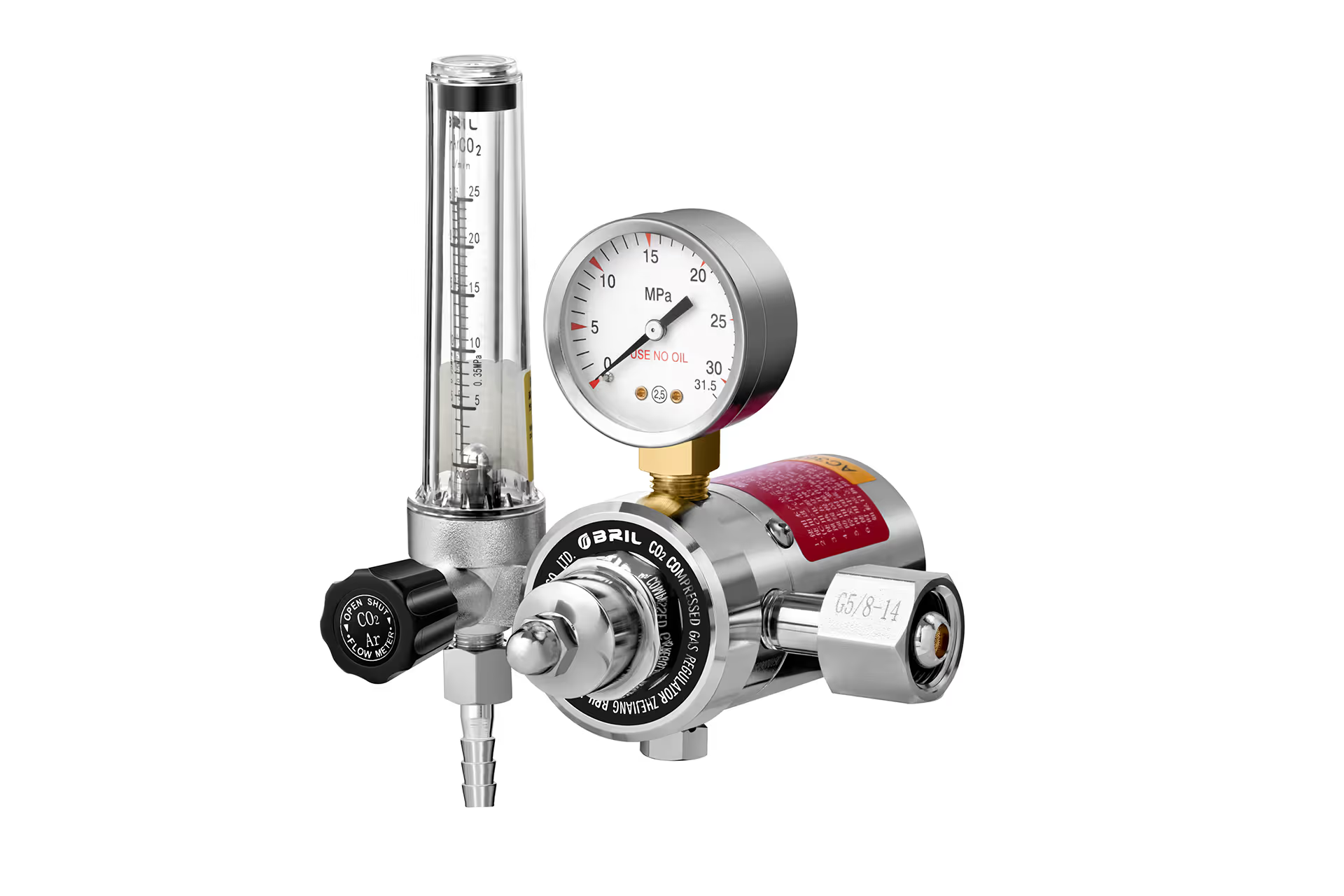
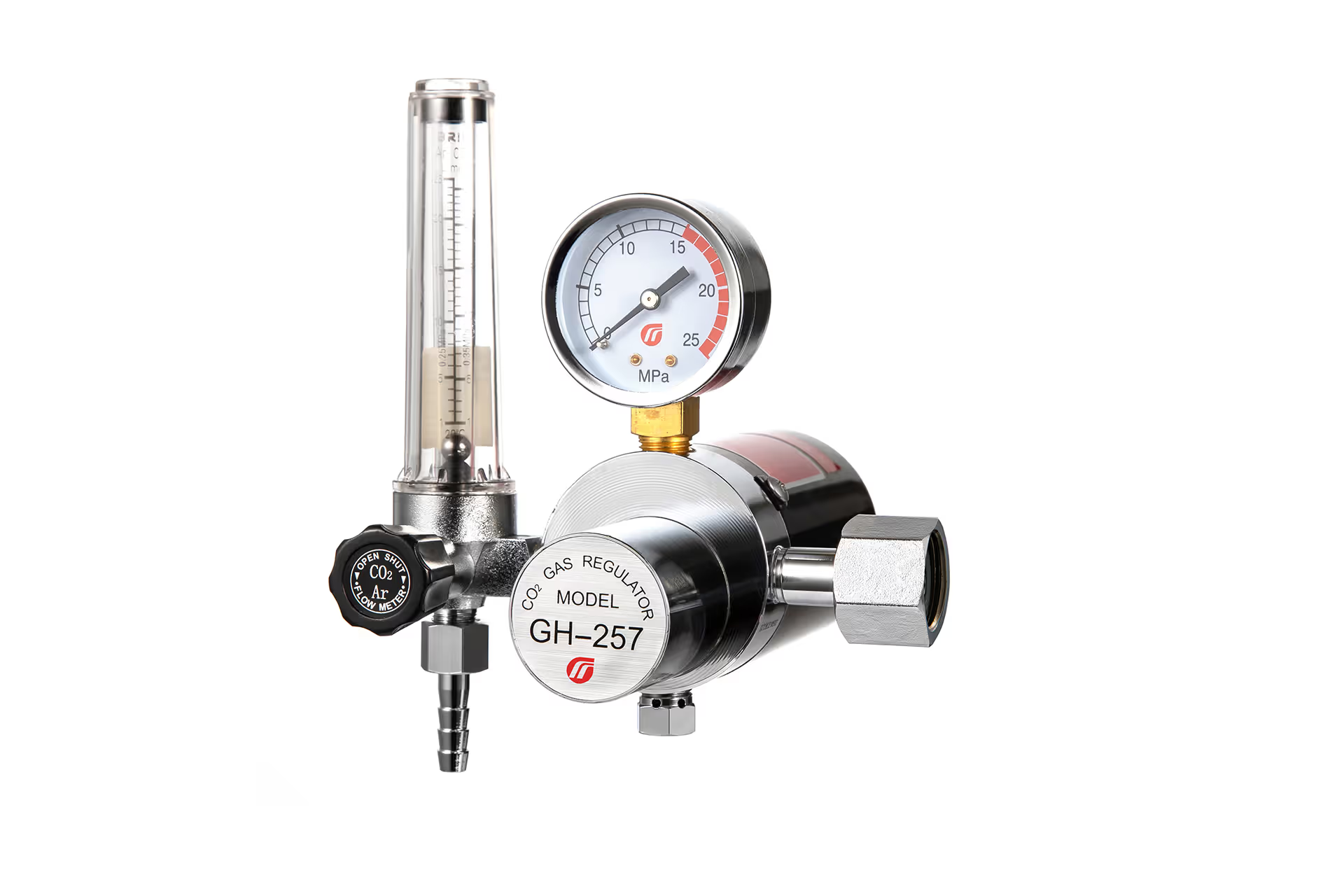
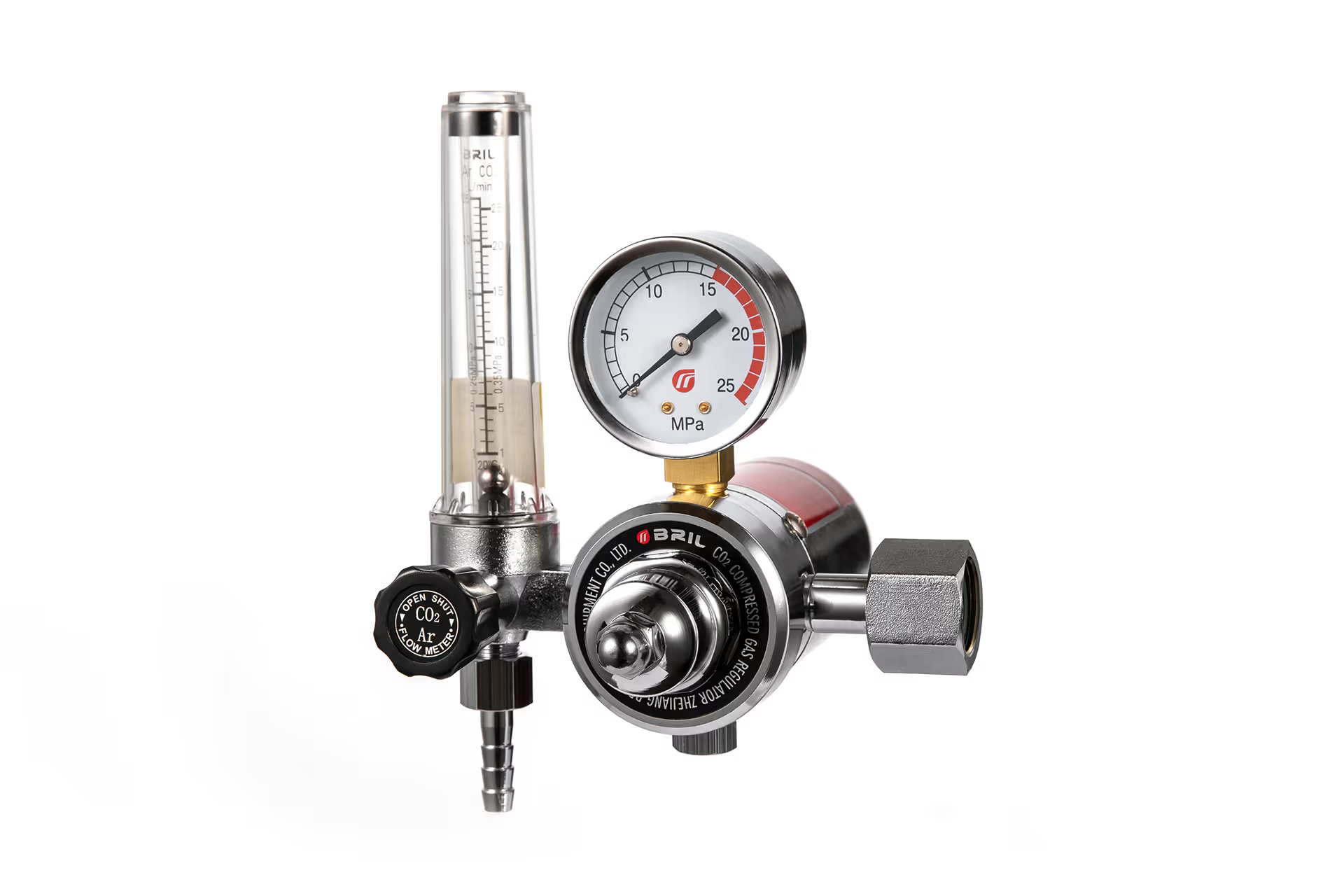
Zhejiang Bril Welding Equipment Co., Ltd. is a specialized welding and industrial gas-control equipment manufacturer rather than a broad general-valve supplier. Its product focus makes it particularly relevant for buyers sourcing regulators for welding, cutting, CO₂ shielding gas, and industrial gas applications.
Bril is positioned as a practical option for overseas brands, wholesalers, and mid-sized distributors that need flexible OEM communication rather than only high-volume standardized supply. The company states that it supports trial orders before mass production, while MOQ depends on the customer’s specific product and customization requirements.
Public company information states that Bril was founded in 2002 in Wenzhou’s Longwan District and holds ISO 9001 and ISO 14001 management-system certifications. Its products are also described as having CNAS and CE certification support.
Why buyers may shortlist Bril:
– Specialized focus on welding gas regulators and related gas-control accessories
– Suitable for CO₂, argon, oxygen, acetylene, propane, nitrogen, and dual-stage regulator projects
– Flexible OEM/ODM support for smaller and medium-sized private-label brands
– Ability to begin with samples or trial orders before moving into volume production
– Export-oriented quality-system and compliance-documentation support
– Practical communication for custom packaging, dial design, fittings, and branding
Best suited for:
Importers and brands that need a balance of product specialization, customization flexibility, responsive communication, and cost control.
2. ABYDA
Primary focus: Brass valves, gas regulators, gas-control accessories
Typical markets: Export-oriented distributors and private-label buyers
OEM/ODM scope: Standard product branding, labels, packaging, and selected product customization.
ABYDA is commonly associated with brass valve and gas-control product categories. It may be relevant for buyers who want to consolidate the purchase of regulators, valves, fittings, and related brass products from a single supplier.
For industrial gas regulator projects, buyers should verify whether the requested model is designed specifically for welding gases, CO₂, oxygen, argon, acetylene, propane, or nitrogen—not merely household or low-pressure gas use.
3. NOVORS
Primary focus: Standard gas regulators and export-oriented gas-control products
Typical markets: International distributors, wholesalers, and branded buyers
OEM/ODM scope: Private labels, packaging, and standard regulator adaptation.
NOVORS is listed in public industry roundups as a gas regulator supplier with ISO 9001:2015-related quality-system information. It may be suitable for buyers seeking standard regulator models for distribution or branding projects.
Before placing an order, request model-specific information including inlet pressure, outlet pressure, flow range, gas compatibility, leakage-test requirements, fitting standards, and current production lead time.
4. Ningbo Longtime Gas Control System Co., Ltd.
Location: Ningbo, Zhejiang, China
Primary focus: Industrial and high-pressure gas regulators
OEM/ODM scope: Pressure range, connection type, private-label packaging, and customized product configurations.
Ningbo Longtime Gas Control System positions itself as a manufacturer and supplier of industrial gas pressure regulators in China. The company may be relevant for buyers looking for high-pressure or industrial-grade regulator product lines beyond entry-level welding accessories.
Longtime should be evaluated through model-level performance data, especially for high-pressure applications. Buyers should request pressure test records, burst-pressure requirements where applicable, leakage-test criteria, and relevant certification documents for the intended destination market.
5. Beijing Jingcheng Gas Equipment Co., Ltd.
Location: Beijing, China
Primary focus: Gas equipment for welding, cutting, heating, laboratory, and industrial applications
OEM/ODM scope: Industrial gas equipment configuration and project-based supply.
Beijing Jingcheng Gas Equipment is frequently referenced in public supplier lists as an established gas equipment company with long-term industry experience. Its product orientation appears broader than welding regulators alone, which may benefit buyers sourcing across several industrial-gas application categories.
For welding regulator projects, buyers should evaluate the exact model range for CO₂, argon, oxygen, and acetylene use. Particular attention should be given to gauge accuracy, diaphragm durability, outlet-pressure stability, and gas-specific connection standards.
6. Ningbo Keryfine Electronic Co., Ltd.
Location: Ningbo, Zhejiang, China
Primary focus: Industrial, commercial, and gas-control regulators
OEM/ODM scope: Multi-product private-label projects, packaging, labels, and connection adaptation.
Ningbo Keryfine is often included in Chinese gas regulator supplier lists and is associated with broad product coverage. Public market information references compliance claims such as CE, CSA, AGA, and UL across relevant product areas.
Buyers should not treat company-level certification claims as automatic approval for every product. Ask for the certificate number, issuing organization, model coverage, applicable standard, factory address, and validity date for the exact regulator being purchased.
7. Shenzhen Wofly Technology Co., Ltd.
Location: Shenzhen, Guangdong, China
Primary focus: High-purity gas control, laboratory gas systems, specialty-gas regulators, and gas-control assemblies
OEM/ODM scope: Custom fittings, pressure configurations, gas panels, manifolds, and project-based assemblies.
Shenzhen Wofly is generally associated with higher-specification gas-control systems and custom gas-delivery solutions. It may be more relevant for laboratory, analytical, semiconductor, specialty gas, and engineering projects than for basic welding regulators.
For high-purity gas applications, evaluate more than standard pressure-control specifications. Buyers should also assess internal surface finish, dead volume, material compatibility, sealing method, cleaning process, leak rate, and traceability.
8. Shanghai Empire Mechanical Engineering Co., Ltd.
Location: Shanghai, China
Primary focus: Engineering-oriented gas and pressure-control equipment
OEM/ODM scope: Non-standard designs, technical-documentation support, and system integration.
Shanghai Empire Mechanical Engineering appears relevant for industrial projects requiring broader engineering support, including applications related to oil and gas, chemical processing, and aviation-related systems.
It may be a more appropriate candidate for customized industrial gas-control projects than for simple catalog-based CO₂ regulators. Buyers should clarify whether they need standard welding regulators or a project-specific pressure-control solution before requesting quotations.
9. Hangzhou Zhenda Precision Metallic Technology Co., Ltd.
Founded: Public industry information indicates a manufacturing history dating back to approximately 1995
Location: Hangzhou, Zhejiang, China
Primary focus: Precision metal products, gas regulators, and gas valves
OEM/ODM scope: Standard regulator models, metal-processing support, and selected private-label programs.
Hangzhou Zhenda is associated with precision metallic manufacturing, gas valves, and regulator-related products. Its longer manufacturing history may appeal to buyers who prioritize metalworking experience and traditional industrial production capability.
Buyers should request clear documentation on brass grade, forging or machining process, surface treatment, thread standards, internal components, pressure testing, and final inspection practices.
10. Suzhou Maxonic Automation Control Co., Ltd.
Location: Suzhou, Jiangsu, China
Primary focus: Pressure-control valves, regulators, and industrial automation components
OEM/ODM scope: Industrial component integration, non-standard assemblies, and selected customized orders.
Suzhou Maxonic Automation Control is relevant for buyers looking to combine pressure regulators with broader fluid-control or automation components.
For welding and industrial gas regulator sourcing, buyers should confirm that the supplier has established production and testing capability for the intended gases, particularly oxygen, acetylene, CO₂, argon, and nitrogen. Product-specific evidence is more important than a broad automation product catalog.
Capacity, MOQ, and Certification Comparison
Public, independently audited capacity and MOQ data are not consistently available for every manufacturer. Therefore, buyers should treat the following table as an RFQ framework—not as a fixed commercial commitment.
| Manufacturer | Product Focus | Typical OEM/ODM Scope | MOQ Approach | Certification / Compliance Focus |
|---|---|---|---|---|
| Zhejiang Bril Welding Equipment | Welding and industrial gas regulators, heated CO₂, dual-stage models | Deep branding, dials, fittings, packaging, manuals | Trial orders supported; MOQ depends on requirements | ISO 9001, ISO 14001, CNAS/CE-related product support |
| ABYDA | Brass valves and gas-control products | Labels, packaging, standard product customization | RFQ confirmation required | Verify model-specific files |
| NOVORS | Standard gas regulators | Private label and packaging | RFQ confirmation required | ISO 9001:2015 information should be verified |
| Ningbo Longtime | Industrial and high-pressure regulators | Pressure and connection customization | RFQ confirmation required | Verify model-specific files |
| Beijing Jingcheng | Welding, cutting, heating, laboratory gas equipment | Multi-application and project supply | RFQ confirmation required | Verify model-specific files |
| Ningbo Keryfine | Industrial and commercial regulator products | Product range consolidation and branding | RFQ confirmation required | Verify exact CE/CSA/AGA/UL scope |
| Shenzhen Wofly | High-purity gas and engineering systems | Specialty fittings, manifolds, gas panels | Project-based RFQ | Verify material and leakage requirements |
| Shanghai Empire | Engineering gas-control systems | Non-standard systems and technical documentation | Project-based RFQ | Verify application-specific requirements |
| Hangzhou Zhenda | Precision metal regulators and valves | Standard models and metal-product OEM | RFQ confirmation required | Verify material and test files |
| Suzhou Maxonic | Automation and pressure-control components | Industrial integration and customized assemblies | RFQ confirmation required | Verify material and test files |
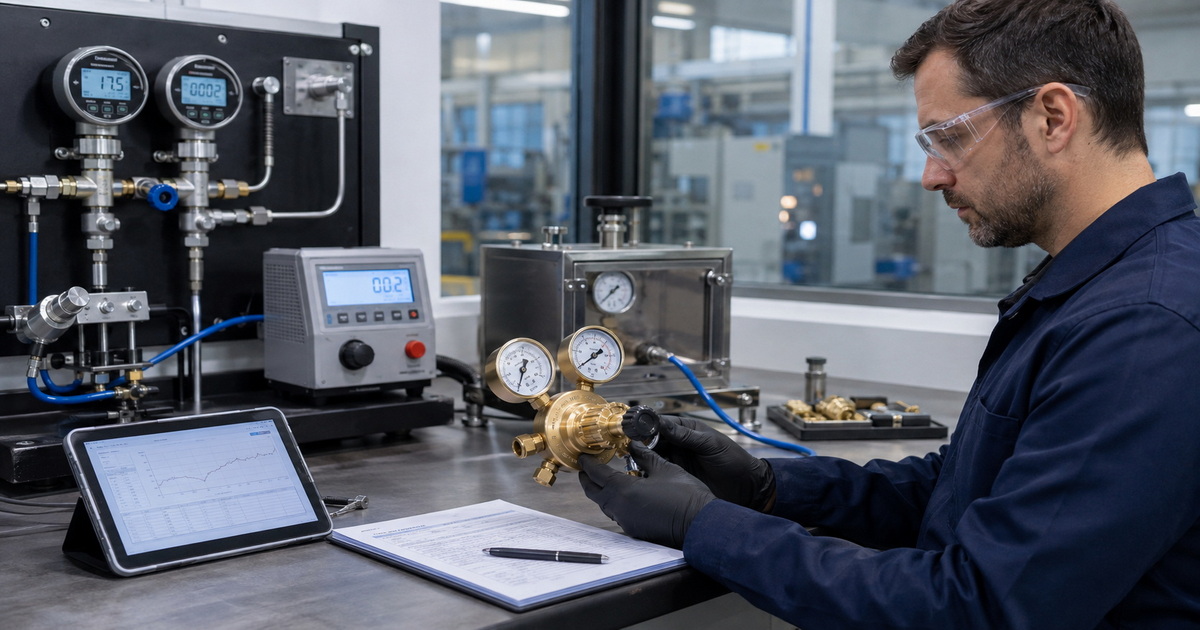
Technical Requirements Buyers Should Specify
Brass Grade and Material Control
Do not accept a vague statement such as “made of brass.” Ask the supplier to clarify:
– Brass grade for regulator body, inlet connector, outlet connector, and valve stem
– Whether forging, hot stamping, die casting, or machining is used
– Surface treatment and corrosion-resistance requirements
– Material compatibility with oxygen, acetylene, CO₂, nitrogen, argon, and propane
– Traceability of critical brass components
A lower-cost regulator may use lower-grade brass, zinc-alloy substitutions, thinner walls, or inconsistent internal components. These differences may not be visible in product photos.
Diaphragm, Seat, and Spring Quality
The most important performance components are often hidden inside the regulator. Buyers should examine:
– Diaphragm material and thickness
– Valve-seat material and structure
– Spring material and heat treatment
– Pressure-adjustment repeatability
– Outlet-pressure creep and drift
– Leakage performance after repeated use
CO₂ Heated Regulator Requirements
CO₂ heated regulators require additional evaluation because continuous gas flow and lower temperatures may lead to frosting or unstable performance.
Buyers should confirm:
– Heater voltage, wattage, plug type, and cable specification
– Thermal protection and overheat-control method
– Electrical safety documentation for the destination market
– Performance during continuous welding use
– Installation, warning-label, and instruction-manual requirements
CE, RoHS, and PED Are Different Requirements
CE marking is not a universal certificate that applies automatically to every regulator. The applicable EU requirements depend on the product’s pressure characteristics, intended use, and whether electrical heating components are included.
The EU Pressure Equipment Directive 2014/68/EU establishes a framework for pressure equipment presenting a pressure hazard. Buyers should determine whether PED applies to their exact product configuration rather than relying on a generic CE claim.
The Overlooked Industry Risk: “Same Appearance, Different Internal Parts”
One of the least discussed risks in the gas regulator industry is that visually identical products can contain very different internal components.
A supplier may provide a strong initial sample but later substitute a lower-cost diaphragm, spring, valve seat, pressure gauge, or brass component during mass production. This can lead to leakage, pressure instability, poor adjustment performance, gauge deviations, or shorter service life.
How to Prevent This
– Approve and retain a signed golden sample.
– Include a technical specification sheet in the purchase order.
– Lock the bill of materials for critical components.
– Require written approval before any material or component changes.
– Define leakage-test and pressure-test requirements.
– Use third-party pre-shipment inspection.
– Require traceability for critical internal parts in long-term programs.
– Include AQL requirements and defect-handling procedures in the supply agreement.
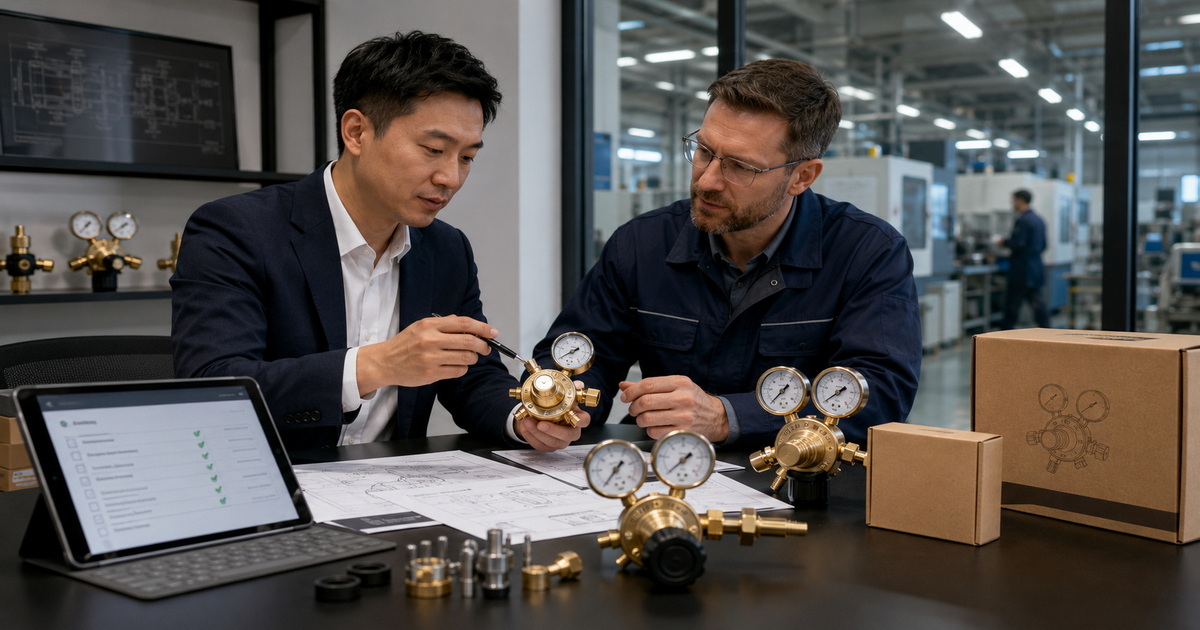
Buyer’s Guide: How to Verify a Chinese Regulator Factory
1. Review Documents Before Quoting
Request the following before placing a trial order:
– Business license and factory address
– Product catalog and technical datasheets
– ISO certificate and certification scope
– CE declaration or test reports where required
– Product-specific test reports
– Quality-control process flow
– Main export-market list
– Sample lead time, mass-production lead time, and MOQ proposal
2. Verify ISO Certification Properly
Check the certificate number, issuing certification body, validity dates, factory address, business scope, and surveillance status. IAF CertSearch provides a global platform for verifying accredited certification information.
3. Inspect the Production Process
A video audit or in-person factory audit should cover:
– Brass machining or incoming component inspection
– Assembly workstations
– Air leakage testing
– High-pressure or proof-pressure testing
– Gauge calibration or verification
– Finished-product inspection
– Packaging and export-carton control
– Warehouse management and traceability
4. Start with Samples and a Trial Order
Do not jump directly from a website inquiry to a container-sized purchase order. Begin with samples that match your exact target configuration, including gas type, fittings, branding, gauges, and packaging.
Then place a controlled trial order before approving a larger production program.
5. Use a Detailed Purchase Specification
Your purchase order should state:
– Product model and approved drawing
– Gas type and application
– Inlet and outlet thread standards
– Pressure range and flow requirements
– Gauge range and accuracy requirements
– Material requirements
– Leakage-test and pressure-test criteria
– Branding, labels, cartons, and manuals
– AQL inspection standard
– Packaging requirements
– Delivery time and spare-parts policy
– Change-control requirements
Conclusion
Selecting an industrial gas regulator manufacturer in China should be based on verified engineering capability, quality consistency, certification scope, communication efficiency, and long-term delivery reliability—not on the lowest quotation alone.
For buyers sourcing CO₂ heated regulators, argon regulators, oxygen regulators, acetylene regulators, propane regulators, nitrogen regulators, and dual-stage regulators, Zhejiang Bril Welding Equipment Co., Ltd. is a relevant supplier to include in a comparative RFQ and sample-testing process. Its focused experience in welding gas-control equipment, flexible OEM/ODM support, trial-order approach, and export-oriented quality systems make it particularly suitable for overseas brands and distributors seeking a responsive manufacturing partner.
FAQ
1. How can I check whether a supplier’s ISO certificate has expired?
Check the certificate number, issuing body, factory name, address, scope, issue date, and expiration date. Then verify the certificate through the issuing certification body or IAF CertSearch. Make sure the certificate covers the manufacturing activity—not only trading or unrelated products.
2. Does a CE certificate mean every regulator can be sold in Europe?
No. CE conformity must be evaluated for the specific model and its applicable regulations. A supplier’s general CE claim does not automatically cover every pressure range, gas type, electrical heating configuration, or destination-market requirement.
3. Can the same regulator be used for CO₂ and argon?
Not automatically. The correct model depends on gas compatibility, inlet fitting, cylinder-valve standard, outlet-pressure range, flow requirement, seal design, and intended application. Always confirm gas-specific suitability in writing.
4. How can I prevent material substitution after the sample stage?
Use a signed golden sample, an approved bill of materials, defined material requirements, test standards, and a contractual change-control process. Add third-party inspection and batch traceability for critical components if the project is long-term.
5. What MOQ should a new private-label brand expect?
MOQ varies by regulator model, branding requirements, gauge design, packaging, fittings, and whether new tooling is needed. New brands should normally start with a limited number of high-demand SKUs, validate market demand through a trial order, and expand after confirming product performance and sales velocity.
References
1. [ISO 9001:2015 — Quality Management Systems]
2. [ISO Certification Overview]
3. [IAF CertSearch — Certification Verification]
4. [European Commission — Pressure Equipment Sector and PED]
5. [China National Certification and Accreditation Information Platform]
6. [Zhejiang Bril Welding Equipment Co., Ltd.]
Hot Tags: Industrial Gas Regulator, Industrial Gas Regulator Manufacturer, Gas Regulator Manufacturer China, CO2 Gas Regulator, CO2 Heated Regulator, Argon Gas Regulator, Oxygen Gas Regulator, Welding Gas Regulator, Dual Stage Gas Regulator, OEM Gas Regulator