Content Menu
● What Argon Is and Why It Matters in Welding
● Why Welders Choose Argon Over Other Gases
● Where Argon Is Used in Welding
● How Argon Supports Weld Quality
● Why the Regulator Is as Important as the Gas
● Single-Stage vs Dual-Stage Regulators
● Expert View: What Industrial Buyers Should Look For
● Why Safety and Standards Matter
● Common Argon Welding Mistakes
● Practical Setup Tips for Better Argon Performance
● OEM and ODM Value for Global Buyers
● Why This Matters for Welding and Industrial Gas Users
● FAQ
>> 1. Why do welders use argon?
>> 2. Is argon used for MIG or TIG welding?
>> 3. What does an argon regulator do?
>> 4. What is the advantage of a dual-stage regulator?
>> 5. Why is brass commonly used in gas regulators?
>> 6. What standards should industrial gas regulators follow?
>> 7. Can one regulator be used for all gases?
Argon is one of the most widely used shielding gases in modern welding because it helps protect the weld pool from air contamination and supports stable arc performance. For welders, fabrication shops, and industrial buyers, the real value of argon comes not only from the gas itself, but also from using the right argon regulator to maintain safe, consistent pressure and flow.
In MIG and TIG welding, small changes in gas delivery can affect arc stability, bead appearance, porosity, and overall productivity. That is why professional users often pair argon with a high-quality single-stage or dual-stage gas regulator designed for stable output, durable brass construction, and reliable control in demanding industrial environments.
What Argon Is and Why It Matters in Welding
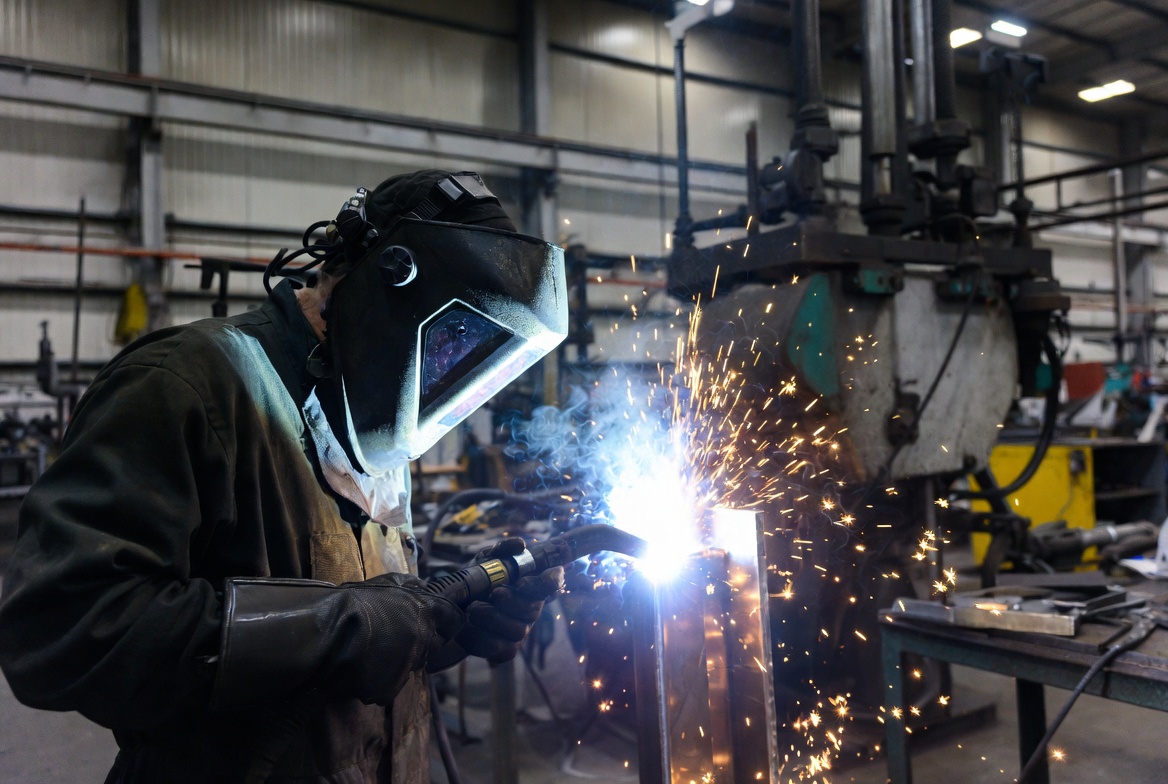
Argon is a noble gas, which means it is chemically inert under normal conditions. That inertness is exactly what makes it useful in welding, because it helps create a protective atmosphere around the weld area instead of reacting with the molten metal.
Welders use argon because it helps reduce oxidation and contamination during the welding process. In practical terms, that means a cleaner weld, better arc consistency, and fewer defects caused by exposure to oxygen, nitrogen, or moisture in the surrounding air.
Argon is also non-flammable, which makes it suitable for high-heat processes where a stable shielding environment is essential. It is not the flame that matters here; it is the gas’s ability to protect the weld zone while the metal is being joined.
Why Welders Choose Argon Over Other Gases
Argon is often preferred for applications that require a smooth, stable arc and minimal weld contamination. It is especially common in TIG welding and in MIG welding of aluminum, stainless steel, and other non-ferrous metals.
Compared with a direct atmosphere exposure, argon helps the weld pool remain cleaner and easier to control. That can improve penetration consistency, reduce spatter, and support a more professional finish in both shop and field work.
For many industrial users, the choice of argon is not only about weld quality. It is also about process repeatability, operator efficiency, and lowering the chance of rework in high-volume production environments.
Where Argon Is Used in Welding
Argon is used across a wide range of welding tasks, from precision fabrication to general industrial assembly. The most common applications include TIG welding, MIG welding with argon-based blends, aluminum fabrication, stainless steel welding, and non-ferrous metal joining.
In many workshops, argon is also used with other shielding gas mixtures depending on the material and process requirements. For example, argon-CO2 blends are common in MIG welding, while pure argon is often selected for TIG welding and aluminum work.
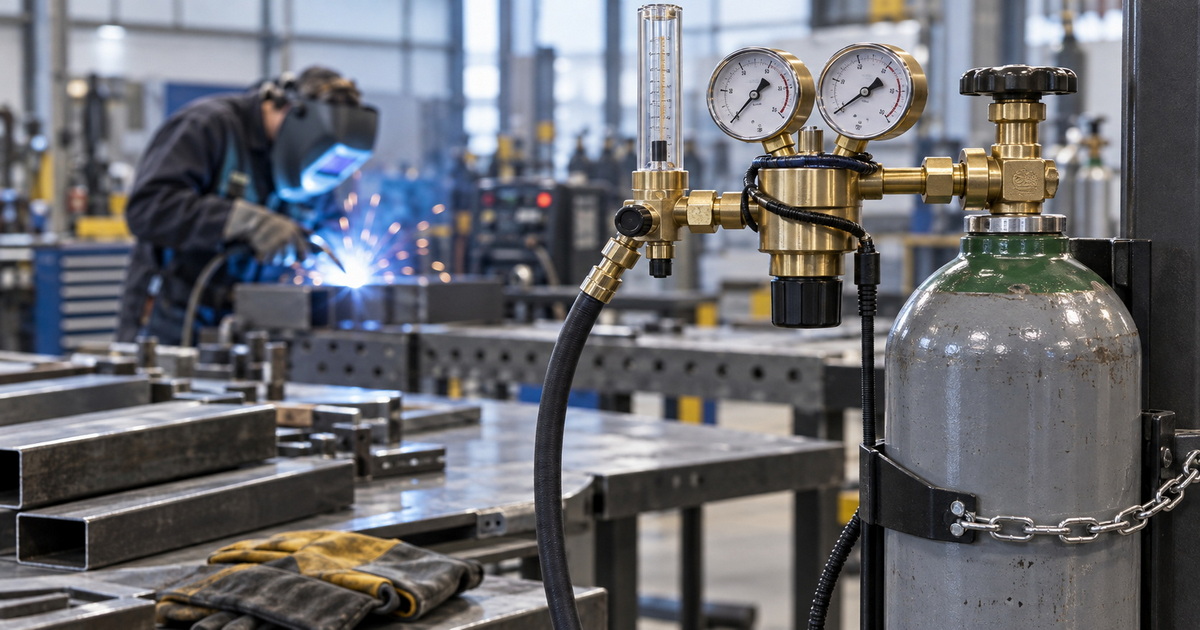
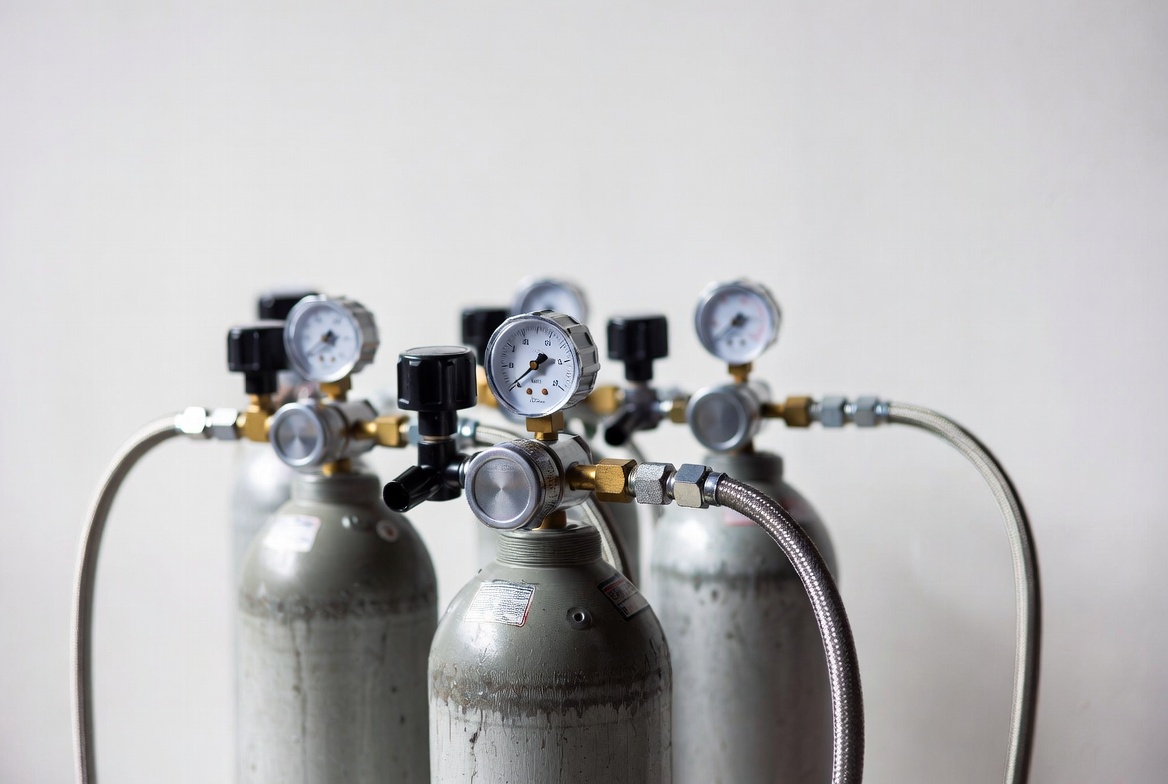
For industrial buyers, this matters because the gas cylinder is only one part of the system. The regulator, flowmeter, hose, and fitting compatibility all need to work together for stable performance.
How Argon Supports Weld Quality
Argon helps improve weld quality in several ways. First, it creates a shielding environment that protects the molten weld pool from atmospheric gases. Second, it helps produce a steadier arc, which supports better control and cleaner bead formation.
A stable shielding gas flow also helps reduce common weld problems such as porosity and oxidation. When the gas supply is inconsistent, weld quality can drop quickly, even if the welder’s technique is correct.
This is why industrial welding teams often focus on gas delivery as part of quality control. In many cases, the regulator becomes a quality tool as much as a pressure-control device.
Why the Regulator Is as Important as the Gas
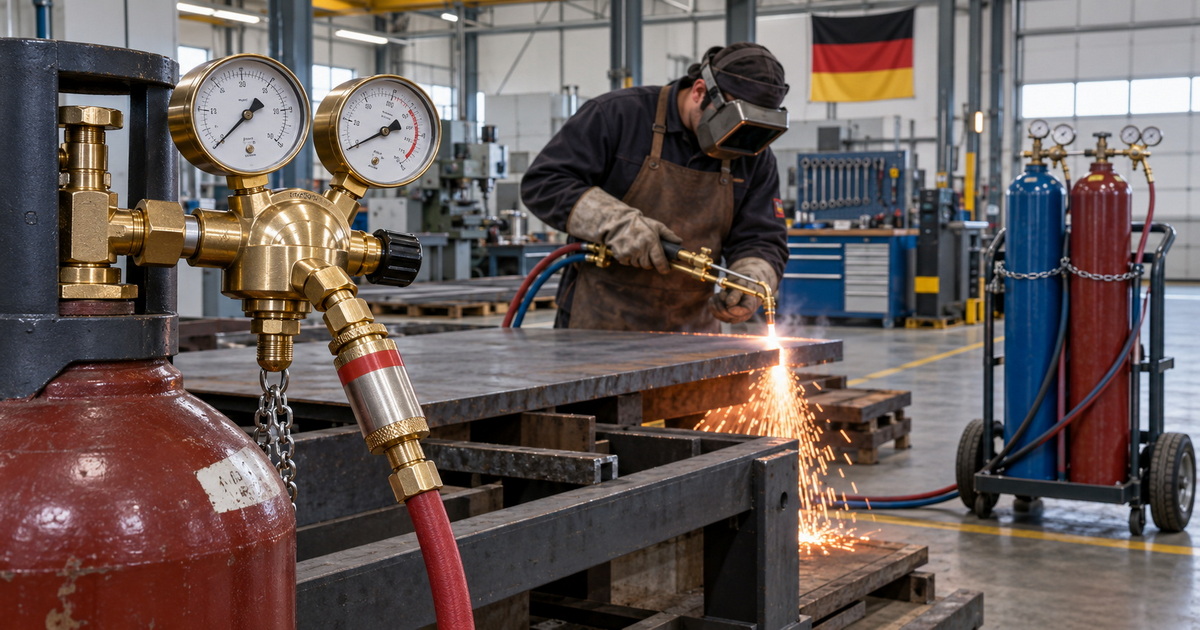
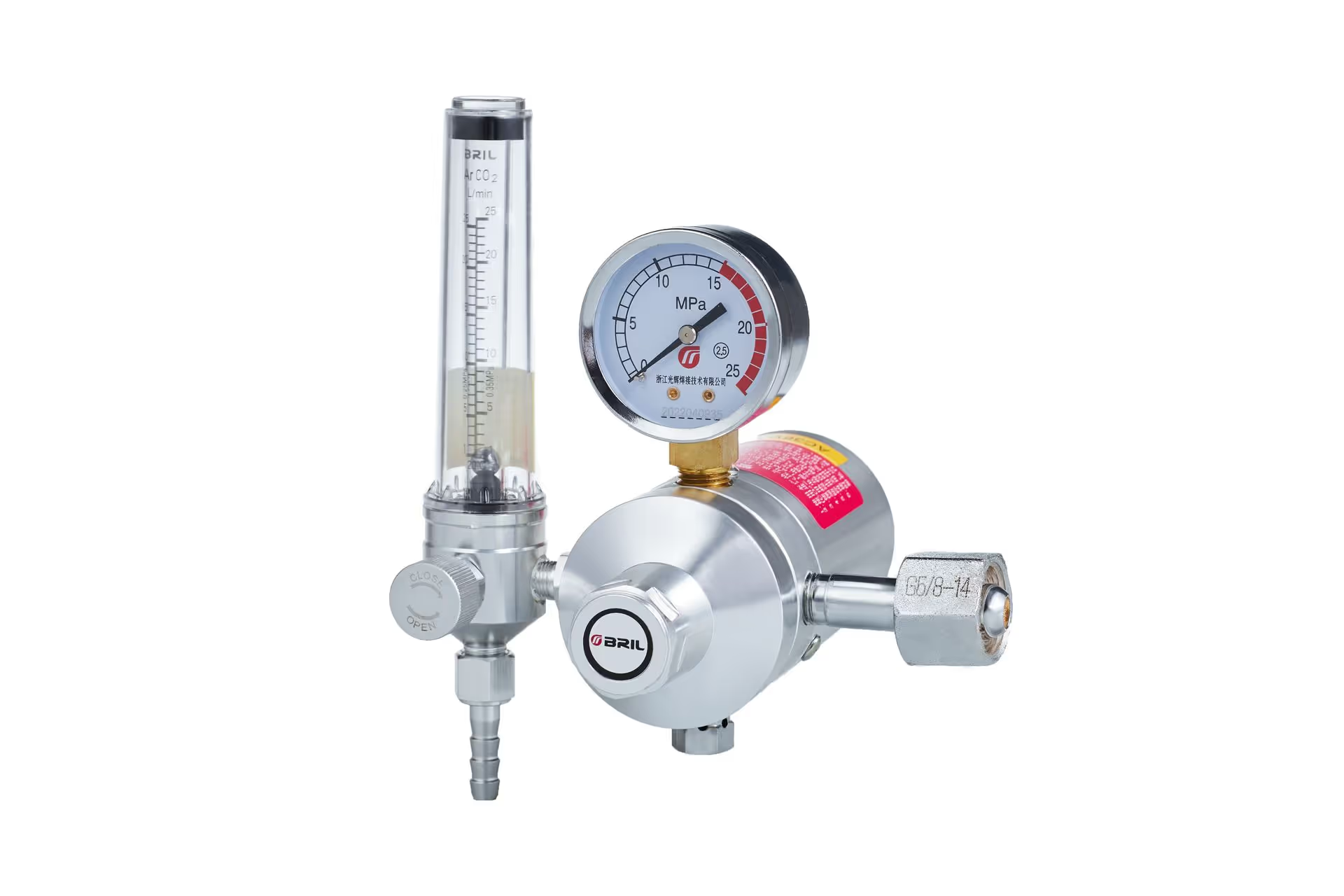
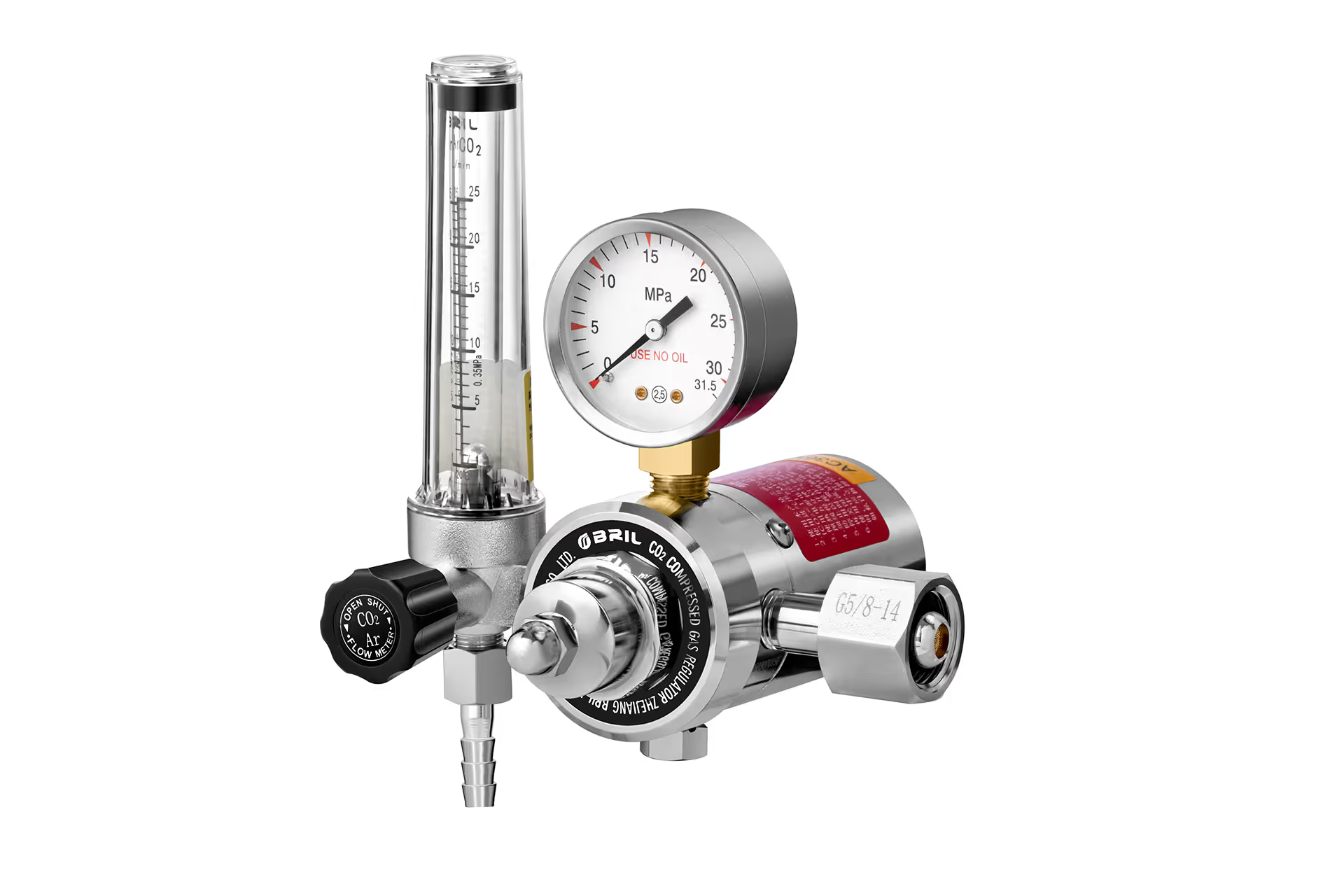
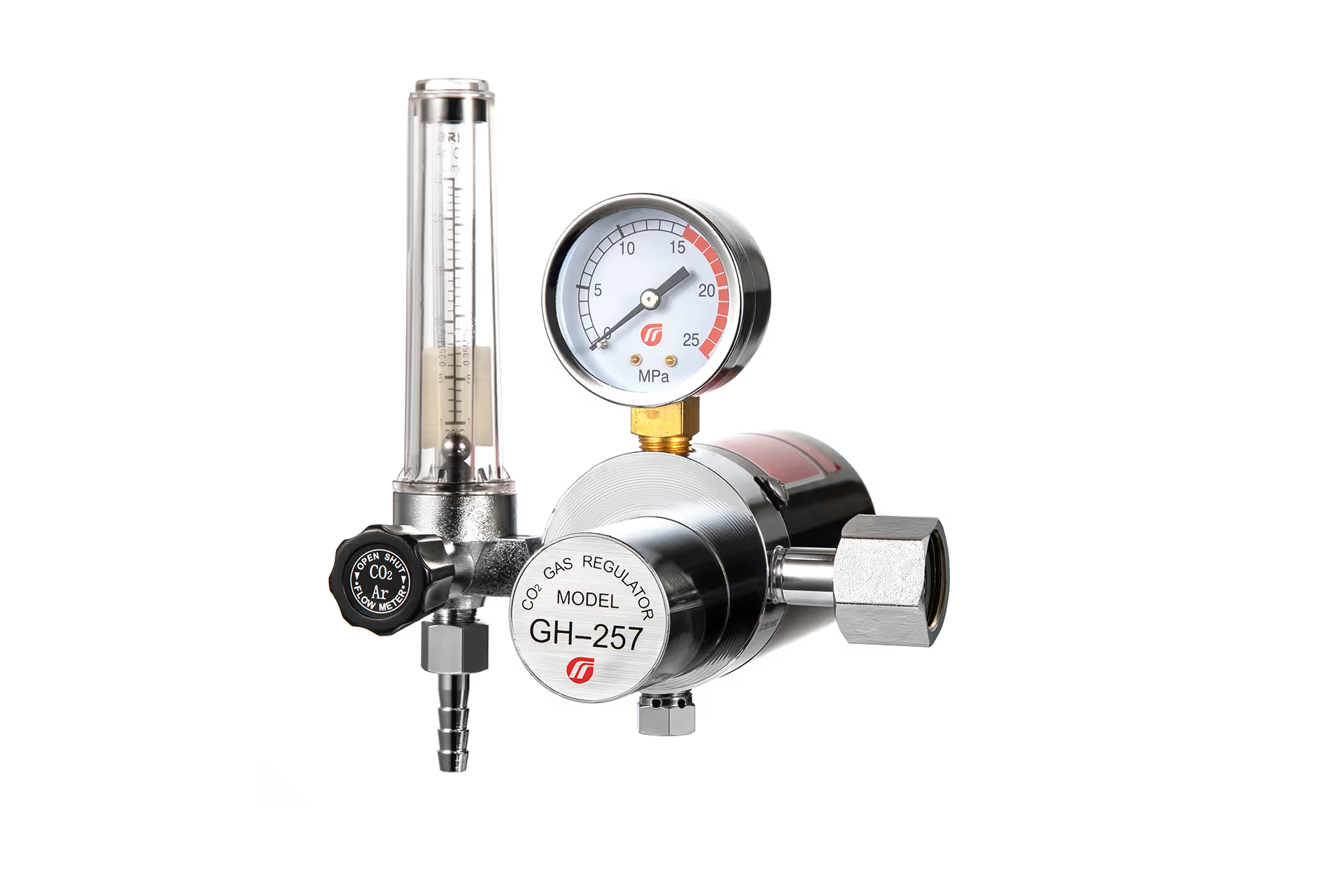
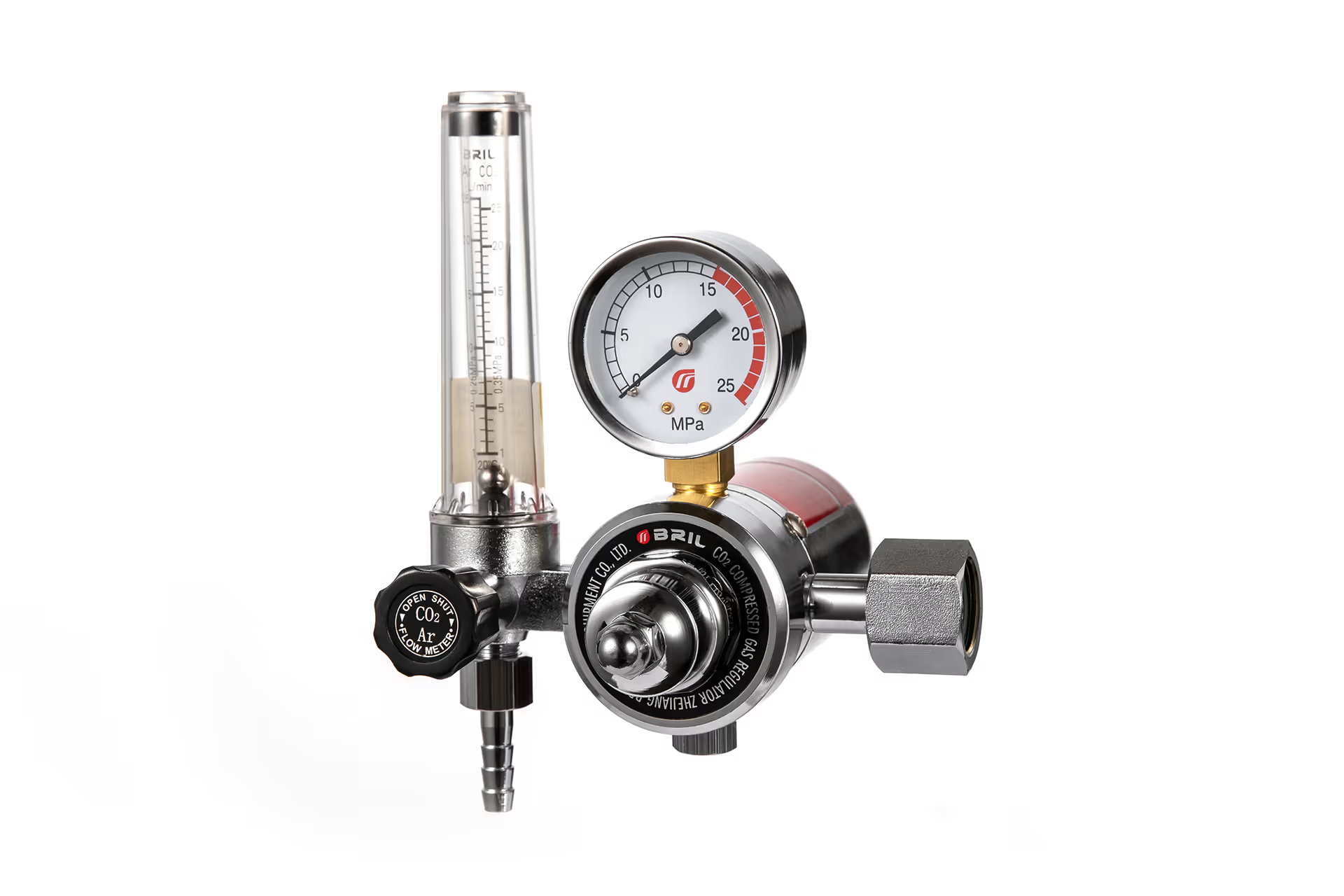
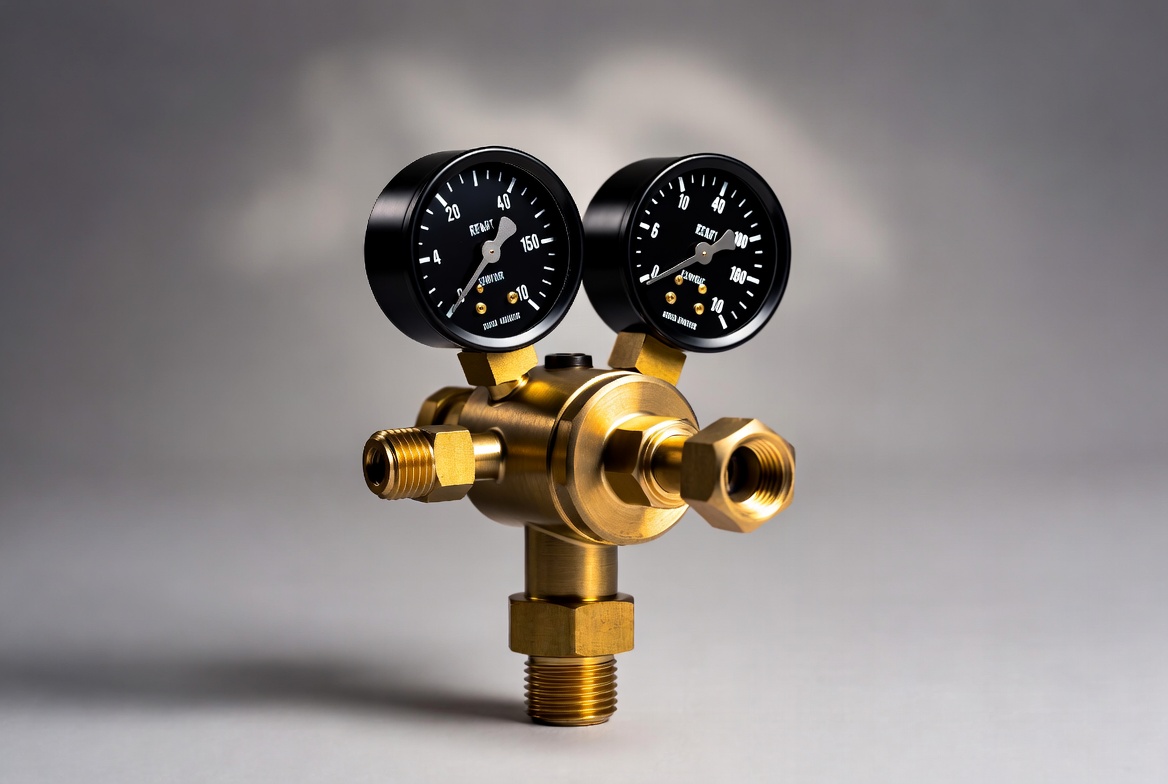
A regulator controls the pressure and flow rate of gas from the cylinder to the torch or welding hose. Without proper regulation, gas delivery can become unstable, wasteful, or unsafe.
For argon applications, the regulator should match the gas type, connection standard, and required flow range. A purpose-built argon regulator helps ensure the welder gets the correct output pressure and can adjust flow more accurately for the job.
For industrial applications, a two-stage regulator can provide even better stability because it reduces cylinder pressure in two steps, helping maintain a more consistent outlet pressure as the cylinder empties.
Single-Stage vs Dual-Stage Regulators
Choosing between a single-stage and dual-stage regulator depends on the application and the level of pressure stability required. A single-stage regulator is often suitable for general use and simpler setups, while a dual-stage regulator is often preferred when consistency matters more.
| Regulator Type | Best For | Main Advantage | Typical Use Case |
|---|---|---|---|
| Single-stage | General welding setups | Simpler design, cost-effective | Routine MIG/TIG work |
| Dual-stage | Precision and long-duration work | More stable outlet pressure | Critical welding, industrial production |
| Flowmeter regulator | Flow-sensitive applications | Easier gas flow reading | Argon shielding gas setups |
Dual-stage models are especially useful when consistent gas delivery is critical over long welding cycles. They help reduce pressure fluctuation, which can improve process stability and reduce unnecessary gas waste.
Expert View: What Industrial Buyers Should Look For
From a manufacturing and procurement perspective, the regulator should be evaluated as a precision control component, not just an accessory. Buyers should look at material quality, pressure stability, gauge clarity, connection compatibility, and quality inspection standards.
A well-designed gas regulator for industrial use should offer:
– Stable pressure control for repeatable welding performance.
– Brass body construction for durability and corrosion resistance.
– Clear gauge visibility for safer operation and easier monitoring.
– Proper gas-specific fittings to reduce installation errors.
– Strict quality inspection before shipment to support reliability.
For OEM and ODM projects, these points become even more important because brand reputation depends on consistent field performance and low defect rates.
Why Safety and Standards Matter
Industrial gas regulators should be selected with safety and compliance in mind. Standards such as AS 4267-1995 specify requirements for pressure regulators used with industrial compressed gas cylinders, including design and safety considerations.
That standard focus is important because industrial gas equipment must perform reliably under high pressure and in varied working environments. In practice, this means correct construction, proper use, and suitable maintenance are all part of safe operation.
For export-focused manufacturers, aligning products with international standards and quality systems strengthens market trust. It also helps distributors and brands position the product more confidently in global markets.
Common Argon Welding Mistakes
Even good equipment can produce poor results if the setup is wrong. The most common mistakes include incorrect gas flow, the wrong regulator type, loose fittings, and using a shielding gas setup that does not match the application.
Here are the issues that often cause trouble:
1. Too little gas flow, which can let air contaminate the weld.
2. Too much gas flow, which can create turbulence and waste gas.
3. Wrong gas connection, which creates leakage or fitting problems.
4. Poor maintenance, which can affect gauge accuracy and sealing performance.
5. Using a mismatched regulator, which can reduce stability and control.
These problems are avoidable when gas selection, regulator design, and setup procedures are treated as part of the welding process itself.
Practical Setup Tips for Better Argon Performance
To get more consistent results, welders should treat shielding gas setup as a repeatable workflow. Start by confirming the cylinder type, then make sure the regulator matches the gas and connection standard, and finally check the hose and torch system for leaks.
A practical approach looks like this:
1. Confirm the correct argon cylinder and fitting.
2. Inspect the regulator body, gauges, and seals.
3. Attach the regulator securely and check for leaks.
4. Set the flow according to the welding process and material.
5. Monitor weld appearance and adjust if needed.
This process is simple, but it prevents many of the weld defects that come from unstable shielding gas delivery.
OEM and ODM Value for Global Buyers
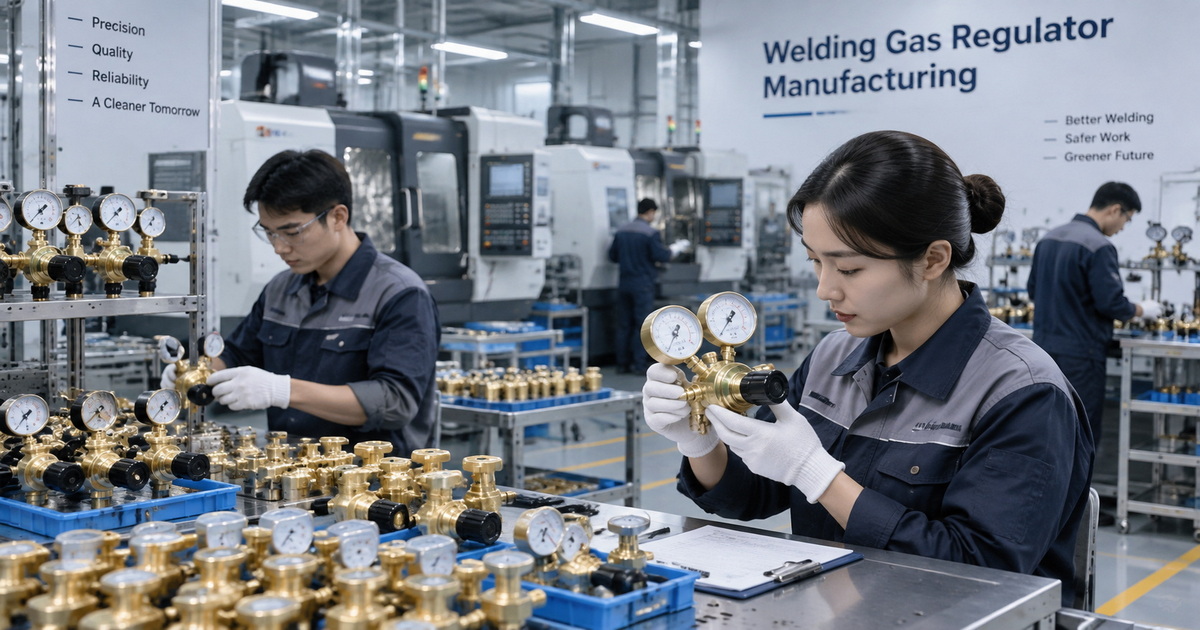
For overseas brands, wholesalers, and distributors, OEM and ODM capability is often a deciding factor. A manufacturer that can support custom logo branding, fitting options, packaging, technical labeling, and product adaptation gives buyers a stronger route to market.
In industrial gas control, customization is especially valuable because different regions and applications may require different thread standards, gas types, pressure ranges, and appearance preferences. That is why OEM/ODM gas regulators are widely used by importers looking to build private-label product lines with dependable performance.
If you are sourcing argon regulators, CO2 regulators, oxygen regulators, acetylene regulators, propane regulators, nitrogen regulators, or dual-stage gas regulators, working with a factory that understands both engineering and export requirements can reduce risk and speed up launch time.
Why This Matters for Welding and Industrial Gas Users
Argon remains essential because it supports cleaner, more stable welding outcomes. But the gas alone does not guarantee quality; the whole delivery system must be engineered correctly.
That is where a professionally manufactured regulator adds value. With the right pressure control, precise machining, high-quality brass materials, and strict inspection, industrial users can improve consistency, reduce gas waste, and support safer operations.
For manufacturers and suppliers, this is the message that builds trust: stable gas control is not just a product feature, it is part of weld quality.
If your business needs OEM or ODM gas regulators for argon, CO2, oxygen, acetylene, propane, nitrogen, or dual-stage applications, partner with a manufacturer that understands precision control, export standards, and industrial reliability. A well-engineered regulator can improve welding performance, strengthen product credibility, and support long-term customer satisfaction.
FAQ
1. Why do welders use argon?
Welders use argon because it is an inert shielding gas that protects the weld pool from atmospheric contamination and helps improve arc stability and weld quality.
2. Is argon used for MIG or TIG welding?
Argon is used in both MIG and TIG welding, but it is especially common in TIG welding and in MIG welding of aluminum and other non-ferrous metals.
3. What does an argon regulator do?
An argon regulator controls cylinder pressure and gas flow so the welder can deliver shielding gas at a stable and usable level.
4. What is the advantage of a dual-stage regulator?
A dual-stage regulator provides more stable outlet pressure by reducing cylinder pressure in two steps, which is useful for precision welding and long-duration use.
5. Why is brass commonly used in gas regulators?
Brass is widely used because it offers durability, machinability, and corrosion resistance, which are important for industrial gas control equipment.
6. What standards should industrial gas regulators follow?
For industrial compressed gas cylinders in Australia, AS 4267-1995 is a relevant standard for pressure regulators and safety considerations.
7. Can one regulator be used for all gases?
No. Regulators should match the specific gas type, pressure range, and connection standard to ensure safe and correct operation.
References
1. [What is Argon & Why is It Used for Welding?]
2. [Specialty Gas Regulators – BOC Australia]
3. [AS 4267-1995 Pressure regulators for use with industrial compressed gas cylinders]
4. [Safety around gases – Coregas Australia]
5. [The GasiQ Optimator CO2 two-stage regulator]
6. [Gtech Argon/CO2 2 Stage Regulator]
7. [Dual Stage Argon/CO2 Flowmeter Gas Regulator]
Hot Tags: Argon Regulator, Argon Welding Gas, Welding Shielding Gas, Dual Stage Gas Regulator, CO2 Regulator, TIG Welding, MIG Welding, Industrial Gas Regulator, OEM Gas Regulator, Brass Gas Regulator