Content Menu
● Understanding TIG Welding Gas Control Basics
● What Is a Single Flowmeter Regulator?
● What Is a Dual Output Argon Flowmeter Regulator?
● Dual Output vs Single Flowmeter: Key Differences at a Glance
>> Practical Differences for TIG Welding
● When a Single Flowmeter Regulator Is Enough
● When a Dual Output Argon Flowmeter Makes Business Sense
● Expert View: Gas Stability, Defect Rates, and Cost
● Hands-On Perspective: Daily Use Differences
● Technical Design Considerations: Precision and Materials
● Case Example: TIG Welding with Back Purge
● How to Choose: A Simple Decision Framework
● Safety and Compliance Considerations
● OEM & ODM Opportunities for Overseas Brands
● Practical Tips for Getting the Best from Your Regulator
● Why Partner with a Professional Gas Regulator Manufacturer?
● FAQs: Dual Output vs Single Flowmeter for TIG Welding
Dual output argon flowmeter regulators and single flowmeter regulators serve the same core purpose—delivering stable shielding gas for TIG welding—but they differ significantly in control, flexibility, and long-term cost efficiency. Choosing the right one depends on your welding setup, process mix, and how much precision you demand from your gas management. [specialisedwelding.co]
What This Guide Covers
In this article, we will compare “dual output argon flowmeter regulators” and “single flowmeter regulators” for TIG welding from the perspective of an industry practitioner and gas control manufacturer. We will also share expert insights, application scenarios, and purchasing tips to help you make a confident, cost-effective choice. [boc.co]
Understanding TIG Welding Gas Control Basics
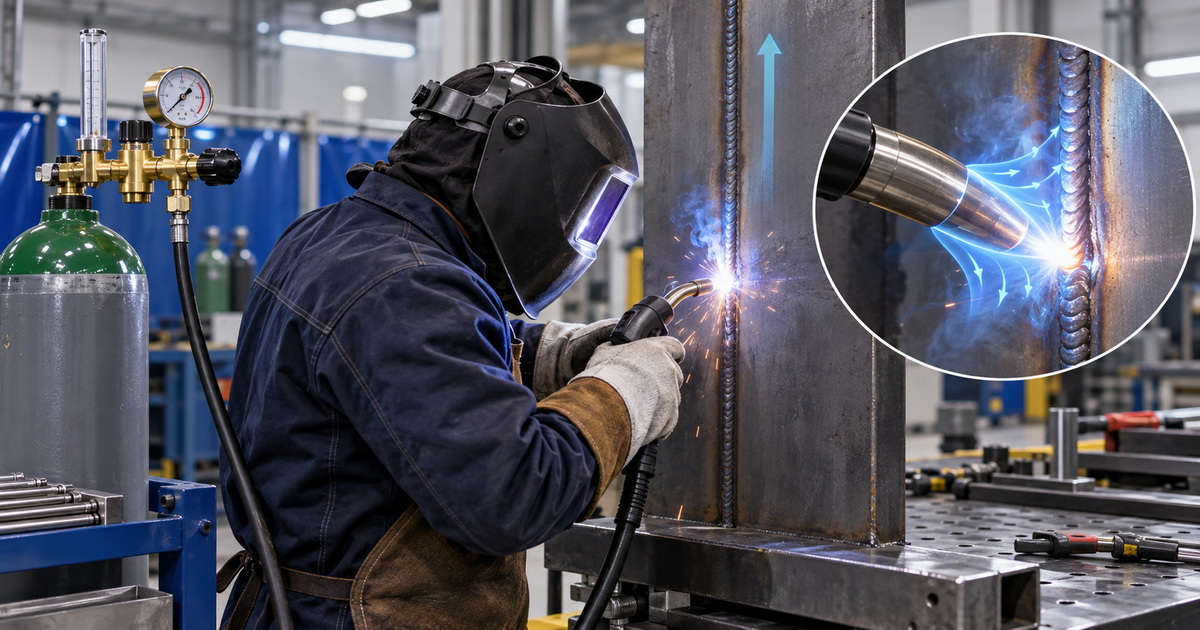
TIG welding relies on a continuous flow of high‑purity argon (sometimes argon mixes) to protect the weld pool from oxygen and nitrogen in the air. Any fluctuation in gas flow can cause porosity, arc instability, and inconsistent bead appearance. [store.mathesongas]
In practice, a TIG welding gas regulator + flowmeter must provide:
– Stable outlet pressure from high‑pressure cylinders. [pakoxygen]
– Consistent flow rate, typically in liters per minute (L/min) or cubic feet per hour (CFH). [specialisedwelding.co]
– Durable construction, often brass bodies and precision-machined seats, to handle industrial usage. [pakoxygen]
Both dual output and single flowmeter regulators are built around these fundamentals, but they differ in how many independent outputs and channels of measurement they provide. [specialisedwelding.co]
What Is a Single Flowmeter Regulator?
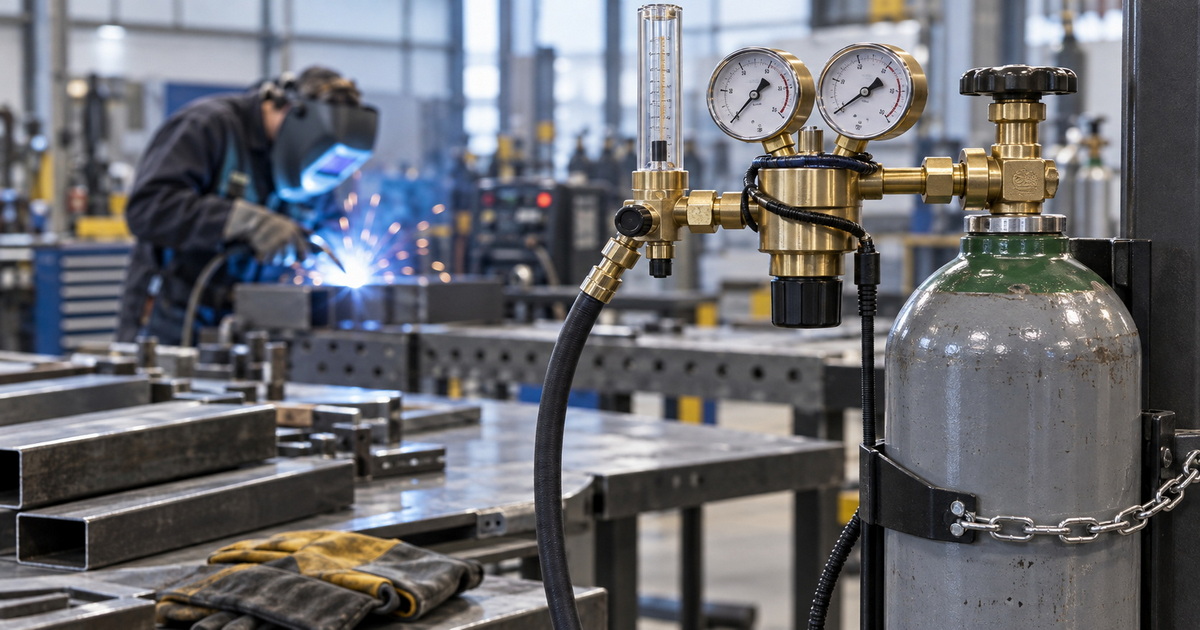
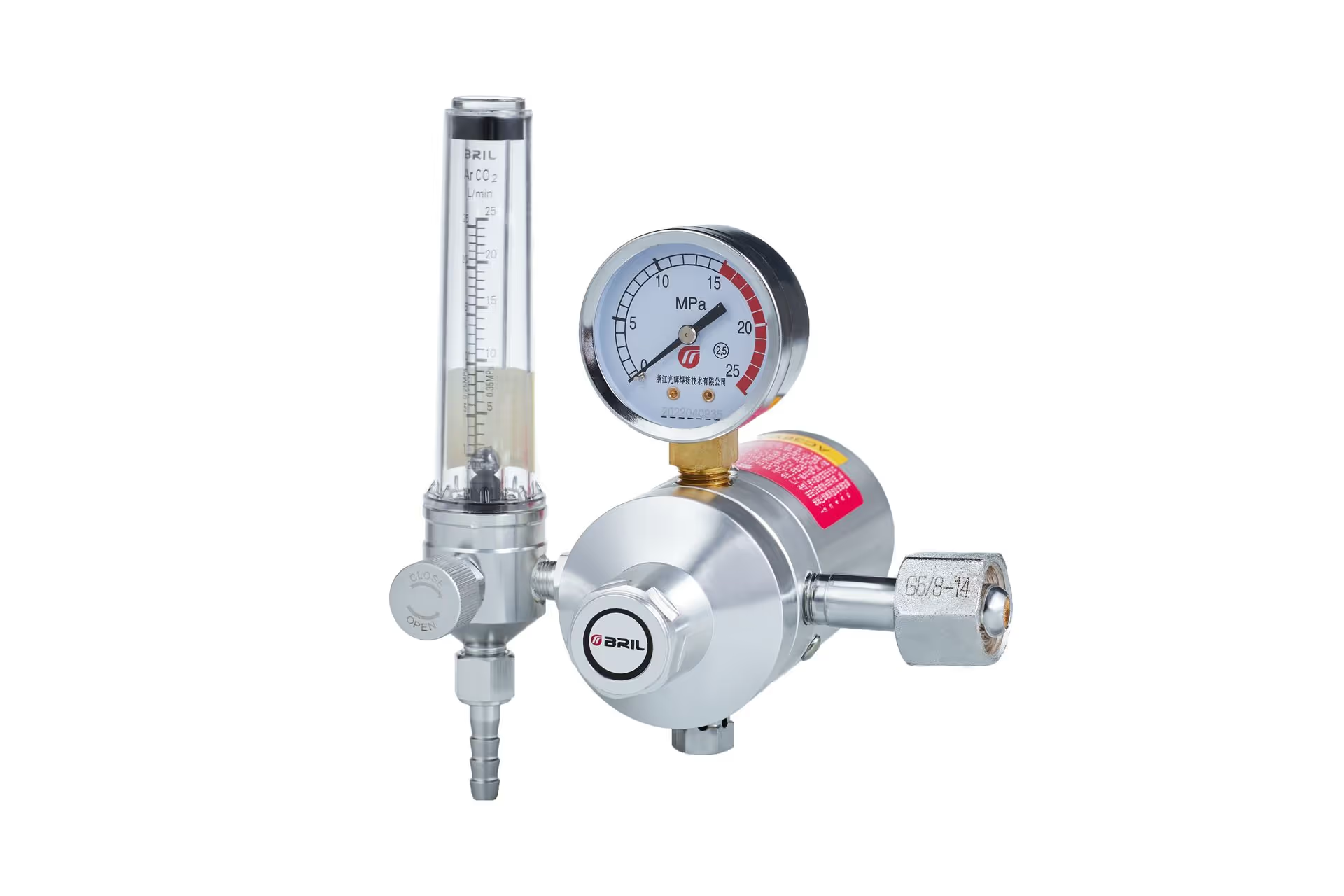
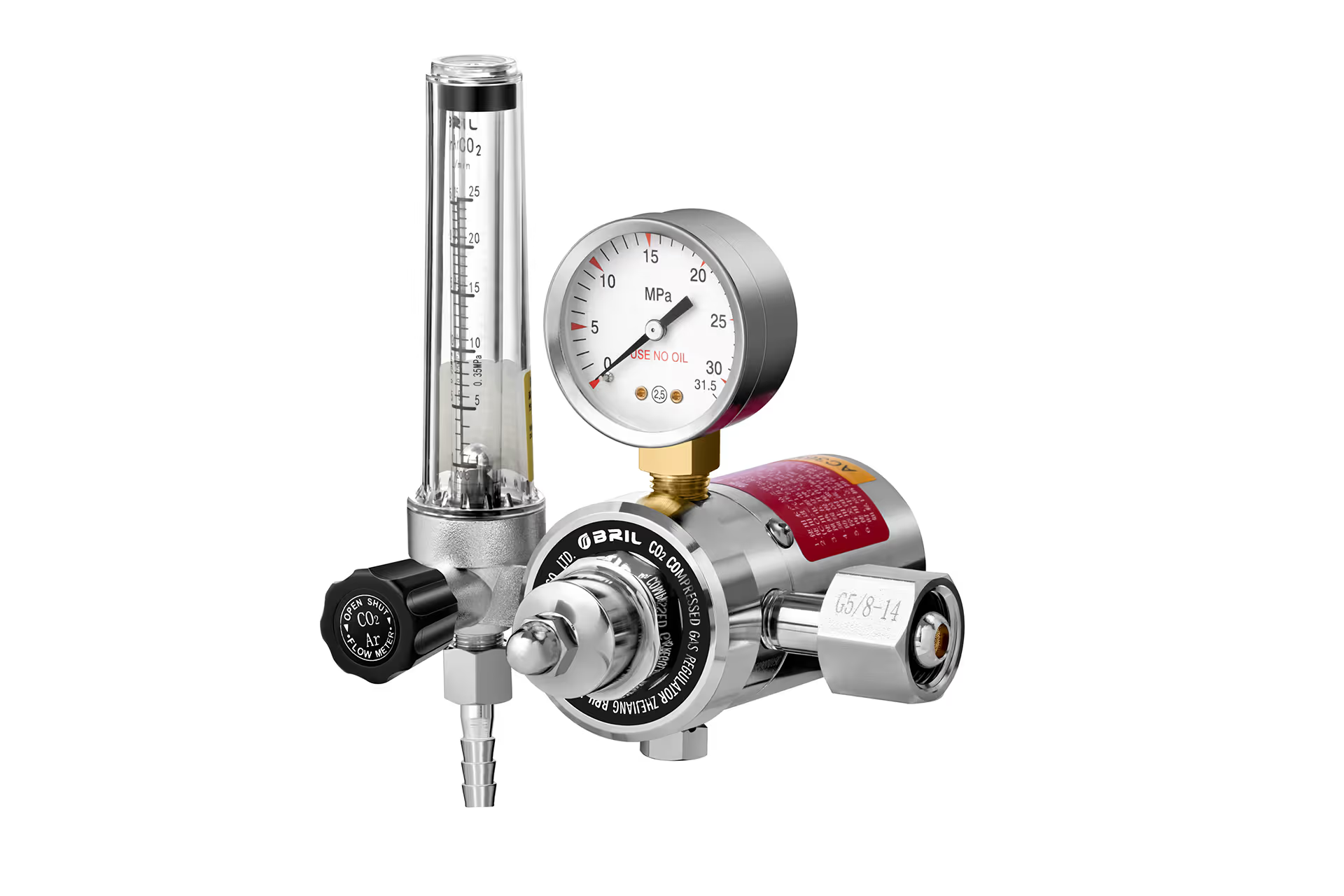
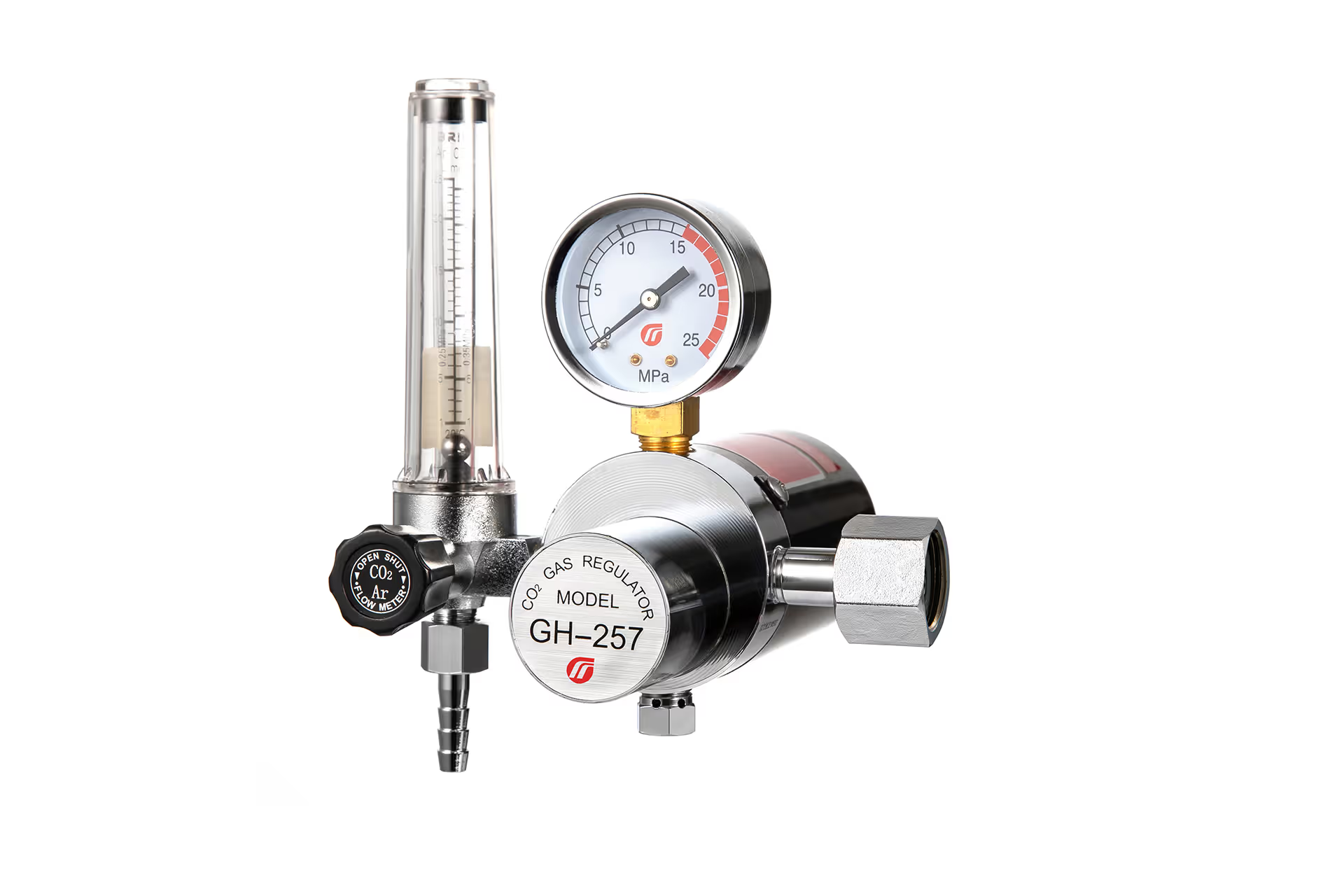
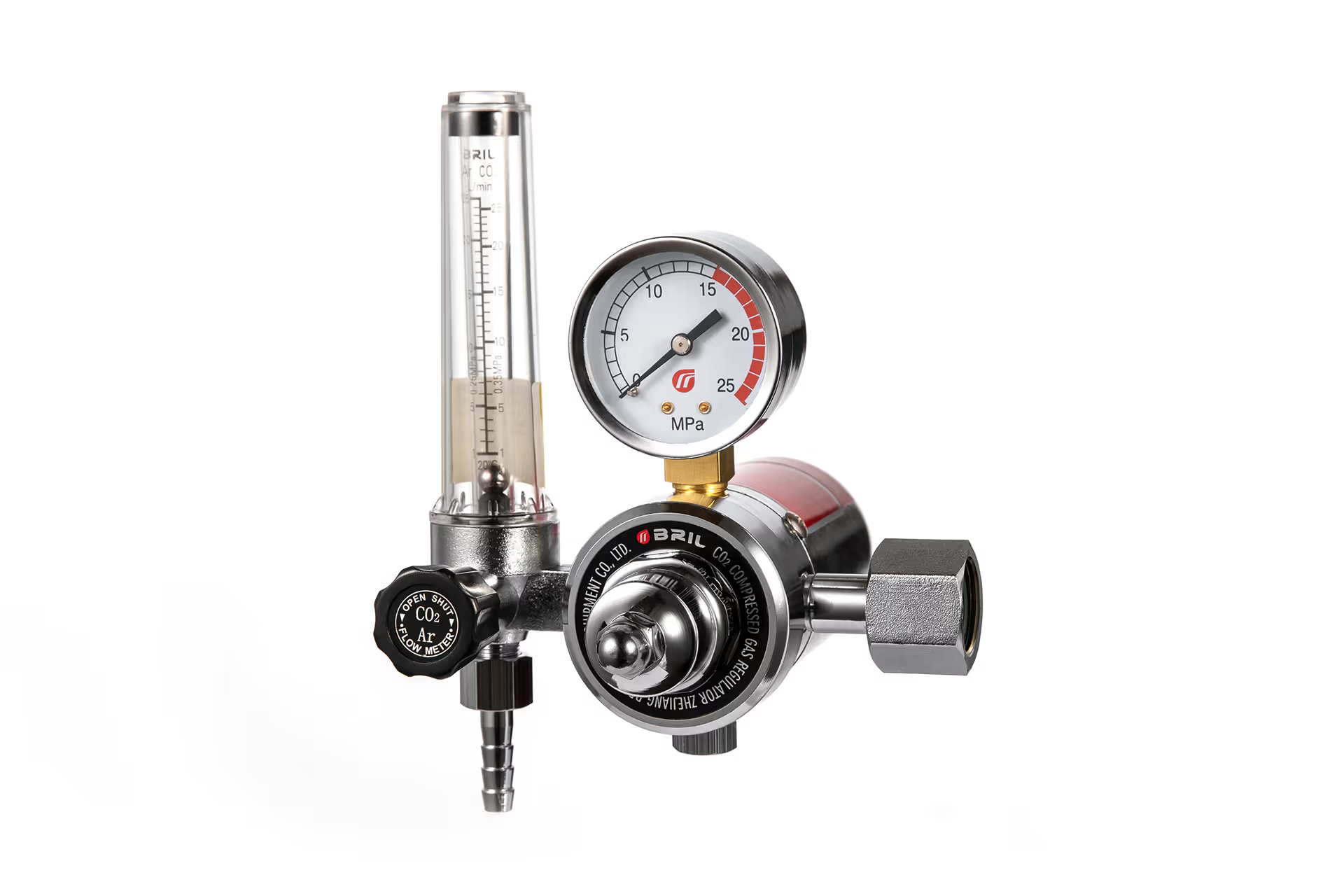
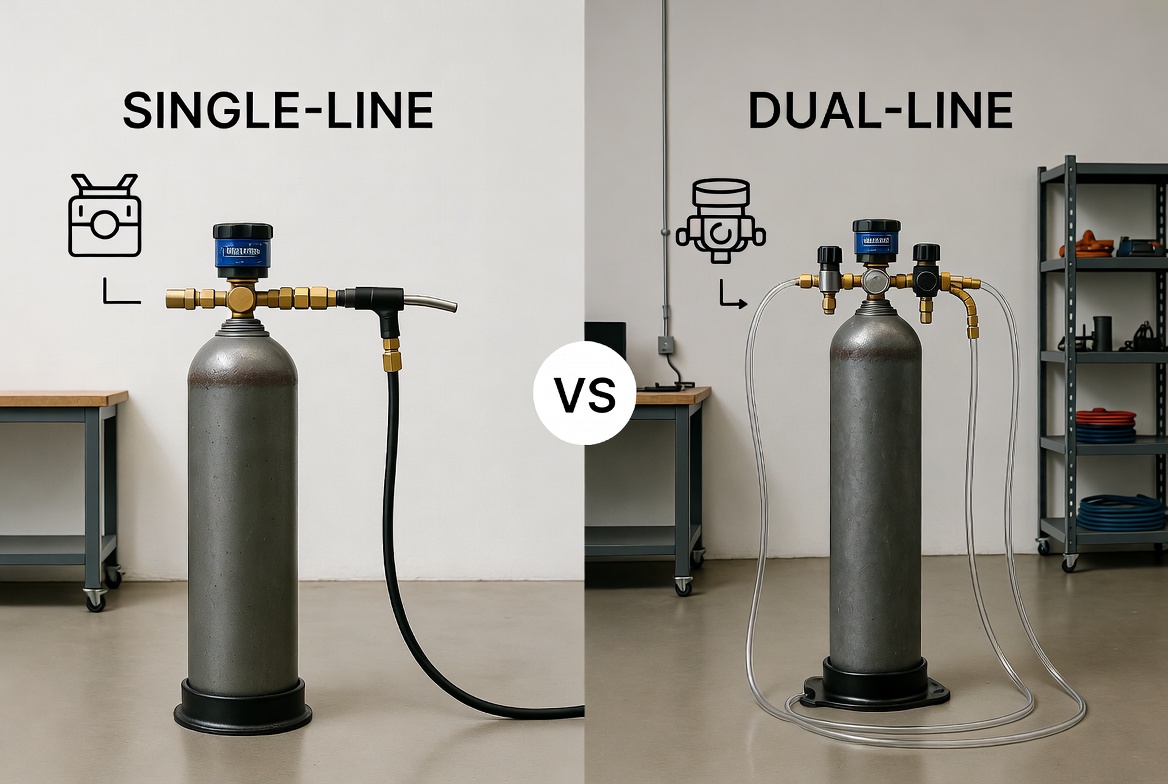
A single flowmeter regulator combines a pressure regulator and one flowmeter tube for a single gas line. It reduces cylinder pressure to a usable level and displays/controls flow for one welding torch or one process. [boc.co]
Typical use cases:
– Single TIG torch setup on a bench or production line. [specialisedwelding.co]
– Hobbyists or light fabrication shops with one operator. [boc.co]
– Applications where only one argon line is needed at a time. [specialisedwelding.co]
Key characteristics:
– Simple design, easier to understand and operate. [specialisedwelding.co]
– Lower initial cost vs dual output units. [pakoxygen]
– Compact and lightweight. [boc.co]
For many entry‑level TIG setups, a single argon flowmeter regulator is the default choice. [specialisedwelding.co]
What Is a Dual Output Argon Flowmeter Regulator?
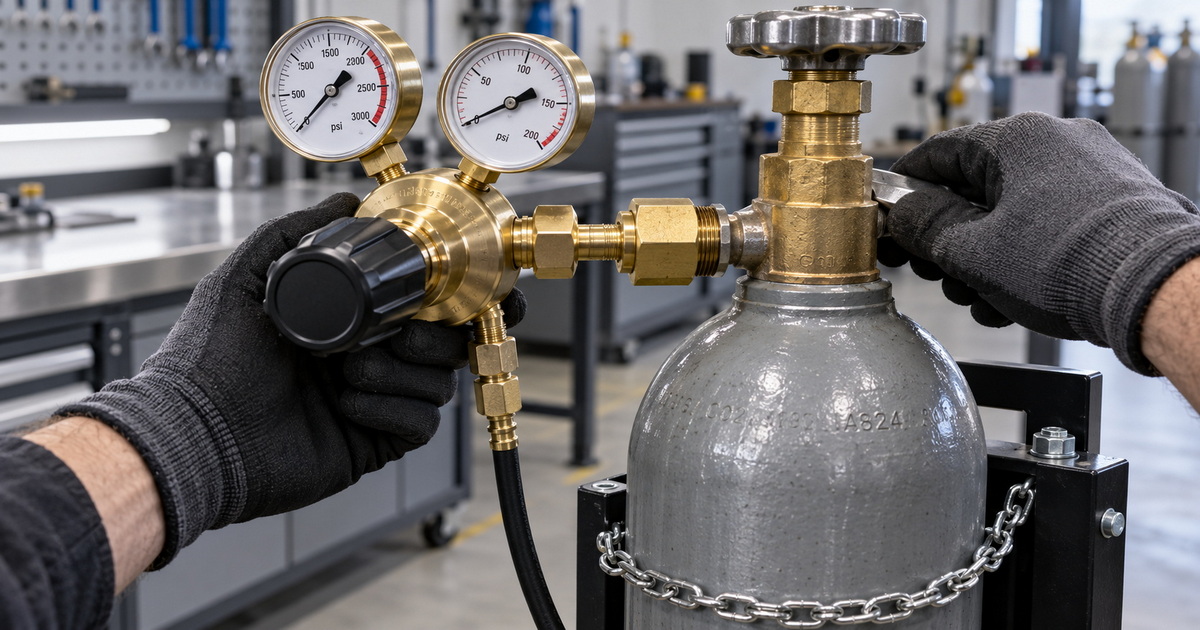
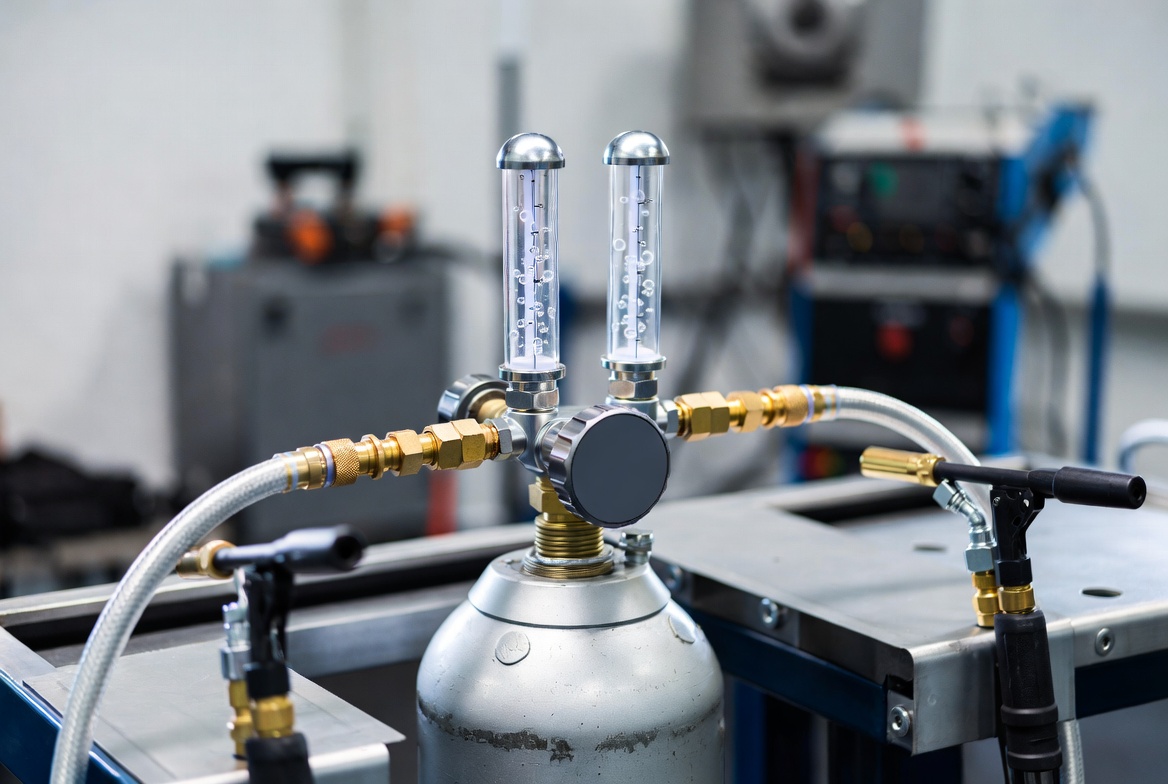
A dual output argon flowmeter regulator (often called a two‑stage / dual flowmeter regulator in the welding market) provides two independent flowmeter outlets fed from a single cylinder. Each outlet typically has its own control valve and scale, allowing different flow settings for different lines. [store.mathesongas]
Common use scenarios:
– Two TIG torches running from one cylinder (e.g., tandem workstations). [specialisedwelding.co]
– One line for TIG torch, another as a purge line (back purging stainless steel pipes). [store.mathesongas]
– One line for a trailing shield or auxiliary gas envelope in high-spec applications. [boc.co]
Core benefits:
– Two separately controlled gas flows from one regulator body. [specialisedwelding.co]
– Better control over purge gas and welding gas without extra cylinders. [store.mathesongas]
– Cleaner, more compact gas manifold vs improvising with tees and extra valves. [pakoxygen]
Dual Output vs Single Flowmeter: Key Differences at a Glance
Below is a structured comparison for TIG welding users evaluating which option fits their shop.
Practical Differences for TIG Welding
| Dimension | Dual Output Argon Flowmeter Regulator | Single Flowmeter Regulator |
|---|---|---|
| Number of outputs | Two independent gas outputs with separate flowmeters (specialisedwelding.co) | One gas output with single flowmeter (specialisedwelding.co) |
| Typical use | Two torches, torch + purge, torch + trailing shield (specialisedwelding.co) | Single torch, basic TIG setups (specialisedwelding.co) |
| Gas management | Centralized control, less need for extra cylinders and regulators (store.mathesongas) | Separate regulators needed for each cylinder or line (boc.co) |
| Setup complexity | Slightly more complex, but more flexible (specialisedwelding.co) | Very simple, minimal training (specialisedwelding.co) |
| Upfront cost | Higher unit price (pakoxygen) | Lower initial investment (pakoxygen) |
| Operating efficiency | Better cylinder utilization, fewer changeovers (store.mathesongas) | Can require more cylinders and changeovers (boc.co) |
| Space and hoses | Fewer cylinders, tidier gas distribution (pakoxygen) | More cylinders or add‑on flowmeters, more clutter (pakoxygen) |
| Future scalability | Ready for added torch/purge without extra regulator (specialisedwelding.co) | Limited; upgrades require more hardware (pakoxygen) |
When a Single Flowmeter Regulator Is Enough
From a practical shop perspective, a single flowmeter regulator is generally sufficient when:
– You run one TIG torch at a time. [specialisedwelding.co]
– There is no back purging or trailing shield requirement. [store.mathesongas]
– You operate low‑volume or job‑shop style production. [boc.co]
A typical example:
> A small fabrication shop doing mild steel and basic stainless TIG work with a single welder station, where cost sensitivity is high and workflows change frequently.
In this case, a high‑quality single argon flowmeter regulator with stable pressure control and robust brass construction already ensures reliable arc performance and consistent bead quality. [pakoxygen]
When a Dual Output Argon Flowmeter Makes Business Sense
From the industry expert and cost‑of‑ownership perspective, a dual output argon flowmeter regulator becomes highly attractive when:
– You need two active gas lines (torch + purge, dual torches) on a regular basis. [specialisedwelding.co]
– You want to minimize cylinder inventory by sharing one cylinder across multiple lines. [store.mathesongas]
– Your weld quality requirements include controlled back purging for stainless or titanium. [boc.co]
An example from practice:
> Pipe fabricators and pressure vessel shops often must meet strict internal cleanliness requirements. Consistent purge flow is critical; running both torch and purge from a dual output argon flowmeter regulator ensures synchronized gas control and reduces errors compared with separate ad‑hoc setups. [store.mathesongas]
Over time, the reduction in extra cylinders, regulators, and fittings helps offset the higher purchase price. [pakoxygen]
Expert View: Gas Stability, Defect Rates, and Cost
From a process engineering viewpoint, two metrics matter most:
1. Gas stability and defect rate
2. Total cost of gas delivery over time
Industry field data shows a strong correlation between consistent shielding gas delivery and lower rates of porosity, undercut, and rework in TIG welding. While any regulator can theoretically provide stable flow, poorly sized or unstable setups (e.g., improvised tees, mismatched regulators) often result in inconsistent flow at the torch. [store.mathesongas]
A dual output argon flowmeter regulator, designed for multi-line use, maintains balanced flow distribution and pressure control, reducing the risk of flow starvation during simultaneous use. This can directly translate into: [store.mathesongas]
– Fewer weld repairs.
– More predictable bead appearance.
– Lower unit cost per finished weld.
Hands-On Perspective: Daily Use Differences
From a welder’s daily experience, the contrast between the two configurations is very tangible.
With a single flowmeter regulator:
– Setup is straightforward: connect cylinder, adjust one flowmeter. [specialisedwelding.co]
– Operators rarely deal with complex gas routing.
– Any additional purge or backup torch typically demands extra hardware. [boc.co]
With a dual output argon flowmeter regulator:
– There are two knobs and two scales to manage. [specialisedwelding.co]
– Once dialed in, switching between jobs with purge/without purge is easier.
– The welder or supervisor can visually verify both flows at a glance, reducing mis‑set purges. [store.mathesongas]
For multi-operator cells, dual output units also simplify supervision—one glance tells the supervisor whether both lines are correctly set. [specialisedwelding.co]
Technical Design Considerations: Precision and Materials
High‑quality regulators—single or dual—share several design features:
– Precision‑machined brass bodies, chosen for corrosion resistance and machinability. [pakoxygen]
– Stable pressure‑reducing stages, designed to deliver consistent outlet pressure as cylinder pressure decays. [store.mathesongas]
– Clear flowmeter tubes with calibrated scales for argon or argon CO₂ mixtures. [specialisedwelding.co]
From an OEM manufacturer’s standpoint, dual output models demand careful internal channel design to ensure that flow adjustments on one line do not excessively disturb the other. This is where experience in industrial gas control and strict quality inspection becomes a decisive advantage. [store.mathesongas]
Case Example: TIG Welding with Back Purge
Consider a stainless steel pipe fabrication project for process industries:
– Root pass is TIG welded with argon shielding.
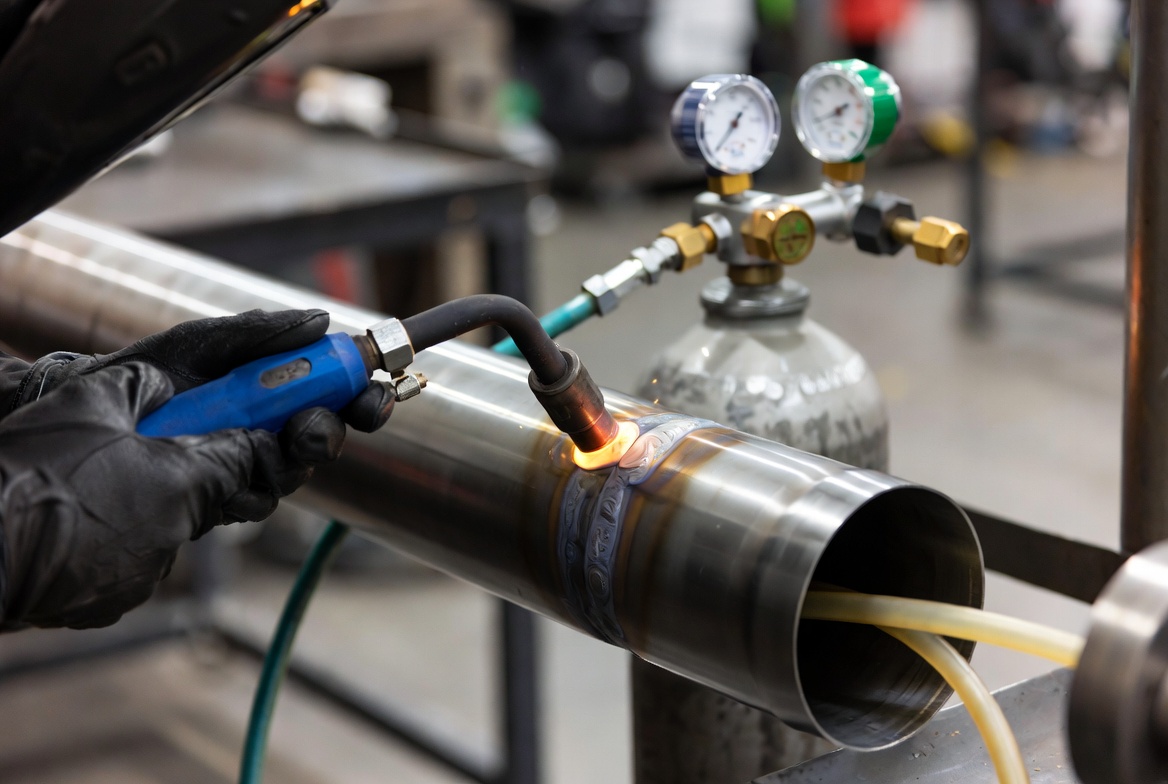
– Inside of the pipe is back purged to prevent oxidation and sugar formation. [store.mathesongas]
With two separate single flowmeter regulators:
– You may need two cylinders or a manual tee arrangement.
– Each regulator is adjusted independently, increasing setup time.
With a dual output argon flowmeter regulator:
– Torch and purge flows come from the same cylinder and body. [specialisedwelding.co]
– Operators can fine‑tune torch and purge flows while observing both flowmeters. [specialisedwelding.co]
– This approach often results in more repeatable purge quality and reduced nitrogen pick‑up, especially over long runs. [store.mathesongas]
How to Choose: A Simple Decision Framework
Use this practical decision checklist when choosing between a dual output argon flowmeter and a single flowmeter regulator for TIG welding.
Step 1: Define your current setup
1. How many TIG torches or gas lines are in regular use?
2. Do you use purge lines or trailing shields?
3. How many cylinders are you willing to manage?
Step 2: Match to configuration
– If you only use one torch and no purge, a single flowmeter regulator is usually sufficient.
– If you regularly use two lines (e.g., torch + purge), a dual output argon flowmeter regulator is typically more efficient. [store.mathesongas]
Step 3: Consider future growth
– Planning to add another torque station or implement purge on more jobs?
– Dual output units allow incremental upgrades without purchasing additional regulators immediately. [store.mathesongas]
Safety and Compliance Considerations
Regardless of configuration, the safety rules for gas regulators remain the same:
– Always match gas service: argon, argon mix, CO₂, oxygen, acetylene, etc., each have dedicated regulator designs. [boc.co]
– Use regulators that comply with relevant regional standards and pressure ratings. [pakoxygen]
– Ensure regular inspection and maintenance to avoid leaks, gauge failures, or stuck needles. [pakoxygen]
Using a manufacturer specializing in industrial gas regulators—including argon, CO₂, oxygen, acetylene, propane, nitrogen, and dual‑stage regulators—helps ensure that design, materials, and testing align with international safety expectations. [boc.co]
OEM & ODM Opportunities for Overseas Brands
For overseas brands, wholesalers, distributors, and equipment manufacturers, dual output argon flowmeter regulators represent a high‑value product segment:
– Demand is rising as fabricators consolidate gas systems and optimize cylinder usage. [store.mathesongas]
– Dual output TIG gas regulators offer a clear functional upgrade over basic single flowmeter units and can be positioned as a premium line. [specialisedwelding.co]
An experienced OEM/ODM gas regulator manufacturer can provide:
– Custom branding and dial faces tailored to your market.
– Material optimization (e.g., high‑quality brass, nickel plating, reinforced gauges) for specific environments. [pakoxygen]
– Configurable outlet connections, flow ranges, and integrated heating options for CO₂ or mixed gas applications. [boc.com]
This allows distributors and welding equipment brands to differentiate with stable pressure control, long service life, and application‑ready configurations.
Practical Tips for Getting the Best from Your Regulator
Regardless of whether you choose a dual output argon flowmeter or a single flowmeter regulator, follow these operation best practices to maximize performance:
– Open cylinder valves slowly to protect the regulator’s internal components. [pakoxygen]
– Set flow with the torch gas solenoid active, not idle, to simulate real use. [specialisedwelding.co]
– Avoid running cylinders completely empty to prevent contamination and unexpected pressure drops. [store.mathesongas]
– Mount the regulator upright so the flowmeter scale can be read accurately. [specialisedwelding.co]
For dual output setups:
– Label each outlet clearly (e.g., TORCH, PURGE) to prevent operator confusion.
– Periodically verify that both flow settings match procedure specifications, especially on critical stainless or alloy jobs. [store.mathesongas]
Why Partner with a Professional Gas Regulator Manufacturer?
As a specialized industrial gas regulator manufacturer, a supplier offering CO₂ heated regulators, argon regulators, oxygen, acetylene, propane, nitrogen, and dual‑stage gas regulators is uniquely positioned to support both standard and custom TIG welding applications. [boc.co]
Key advantages for buyers:
– Precision manufacturing ensures repeatable pressure control and smooth operation across the product line. [pakoxygen]
– Strict quality inspection reduces field failures and warranty claims. [pakoxygen]
– OEM/ODM capability allows customizing dual output argon flowmeter regulators and single flowmeter regulators to fit different brand strategies and regional requirements. [boc.com]
For welding distributors and equipment brands, this means you can provide application‑matched gas control solutions instead of generic, one‑size‑fits‑all products.
FAQs: Dual Output vs Single Flowmeter for TIG Welding
1. Is a dual output argon flowmeter regulator always better than a single flowmeter regulator?
No. A dual output argon flowmeter regulator is more flexible but also more expensive. For single torch setups without purge requirements, a high‑quality single flowmeter regulator is often the most cost‑effective choice. [pakoxygen]
2. Can I run two TIG torches from one single flowmeter regulator using tees?
Technically, it is possible, but it is not recommended because flow distribution becomes unpredictable and can compromise gas coverage and weld quality. A dual output argon flowmeter regulator is specifically designed to manage two flows more reliably. [store.mathesongas]
3. Do dual output regulators consume more argon than single flowmeter regulators?
Gas consumption depends on flow settings, not the number of outlets. If both outlets are active, the total flow is higher, but each flowmeter allows accurate control so you can avoid over‑shrouding and waste. [specialisedwelding.co]
4. Is there a difference in maintenance between dual output and single regulators?
Basic maintenance routines are similar: periodic leak checks, gauge inspection, and cleaning of connections. Dual output units simply have more valves and seals, so they benefit from slightly more rigorous inspection. [pakoxygen]
5. What should I specify when ordering an OEM dual output argon flowmeter regulator?
You should define gas type, inlet and outlet pressures, connection standards, desired flow range (L/min or CFH), and whether you need branding or special coating. Working with an experienced OEM/ODM gas regulator manufacturer helps standardize these details in line with your market. [pakoxygen]
References
1. BOC – Industrial Gas Regulators (argon, CO₂, oxygen, nitrogen, acetylene) –
<https://www.boc.co.nz/shop/en/nz/gas-welding-heating-cutting-brazing/gas-regulator/industrial-gas-regulators> [boc.co]
2. Specialised Welding – Gas Regulators & Flowmeters (argon and mixed gas regulators for welding) –
<https://specialisedwelding.co.uk/collections/gas-regulators> [specialisedwelding.co]
3. MATHESON – Specialty Gas Regulators and Flow Control Equipment –
<https://store.mathesongas.com/regulators/> [store.mathesongas]
4. PakOxygen – Gas Regulators (single and multi‑stage industrial regulators) –
<https://www.pakoxygen.com/Hardgoods/GasRegulators> [pakoxygen]
5. BOC – Specialty Gas Regulators and Related Equipment –
<https://www.boc.com.au/shop/en/au/specialty-gas-regulators> [boc.com]
Hot Tags: Dual Output Argon Flowmeter, Single Flowmeter Regulator, TIG Welding Gas Regulator, Argon Flowmeter Regulator, Dual Output Gas Regulator, Manufacturers, Customized, Custom, Suppliers, Buy, Cheap, Quality, Advanced, Durable, Made in China, Price, Quotation