Content Menu
● What Is a CO₂ Heater Regulator?
● What Is a Mini Gas Regulator for Portable Shielding Gas Kits?
● Key Technical Differences at a Glance
>> Specification‑Level Comparison
● Performance and Gas Quality: Engineer’s View
>> Stability Under Continuous Load
>> Impact on Weld Consistency and Rework Rates
● Portability, Ergonomics, and Safety in the Field
>> Safety and Compliance Considerations
● Total Cost of Ownership and ROI
>> Direct Costs vs Hidden Costs
>> When to Invest in Each Type (Expert Rule‑of‑Thumb)
● OEM/ODM Perspective: Designing for Different Users
>> Customizing CO₂ Heater Regulators for Brands
>> Tailoring Mini Gas Regulators for Portable Kits
● Practical Selection Framework for Welding and Cutting Shops
>> Step‑by‑Step Selection Checklist
● Case Snapshot – Upgrading a Mixed Welding Fleet
● How a Professional OEM/ODM Partner Adds Value
● When Should You Choose Each Regulator Type?
● Call to Action – Design Your Ideal Gas Regulator Portfolio
● FAQs
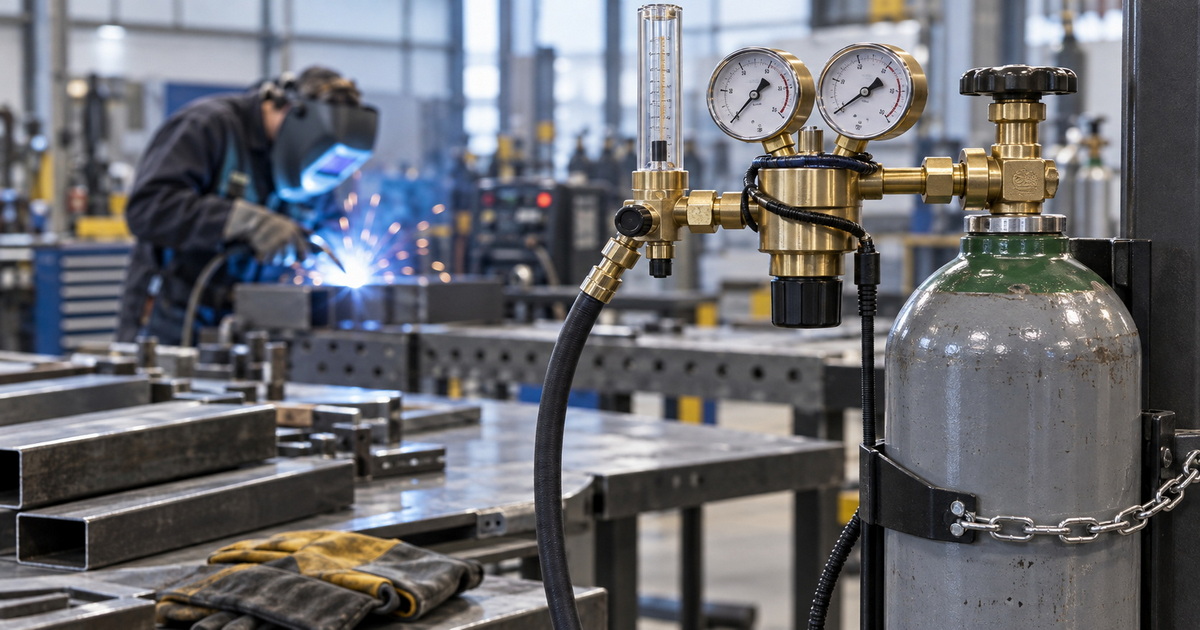
CO₂ heater regulators are designed for stable, high‑flow shielding gas in demanding welding environments, while mini gas regulators for portable shielding gas kits focus on compactness, quick setup, and mobility for light to medium‑duty work. Both have a place in a modern fabrication workflow, but they solve different problems for different users. [genstartech]
Choosing between a CO₂ heater regulator and a mini gas regulator for portable shielding gas kits is ultimately about how you weld, where you weld, and how stable your shielding gas flow needs to be over time. From an OEM/ODM manufacturer’s perspective, these two categories reflect two distinct design philosophies: maximum gas stability under load versus maximum portability and convenience. [chinesewelding]
What Is a CO₂ Heater Regulator?
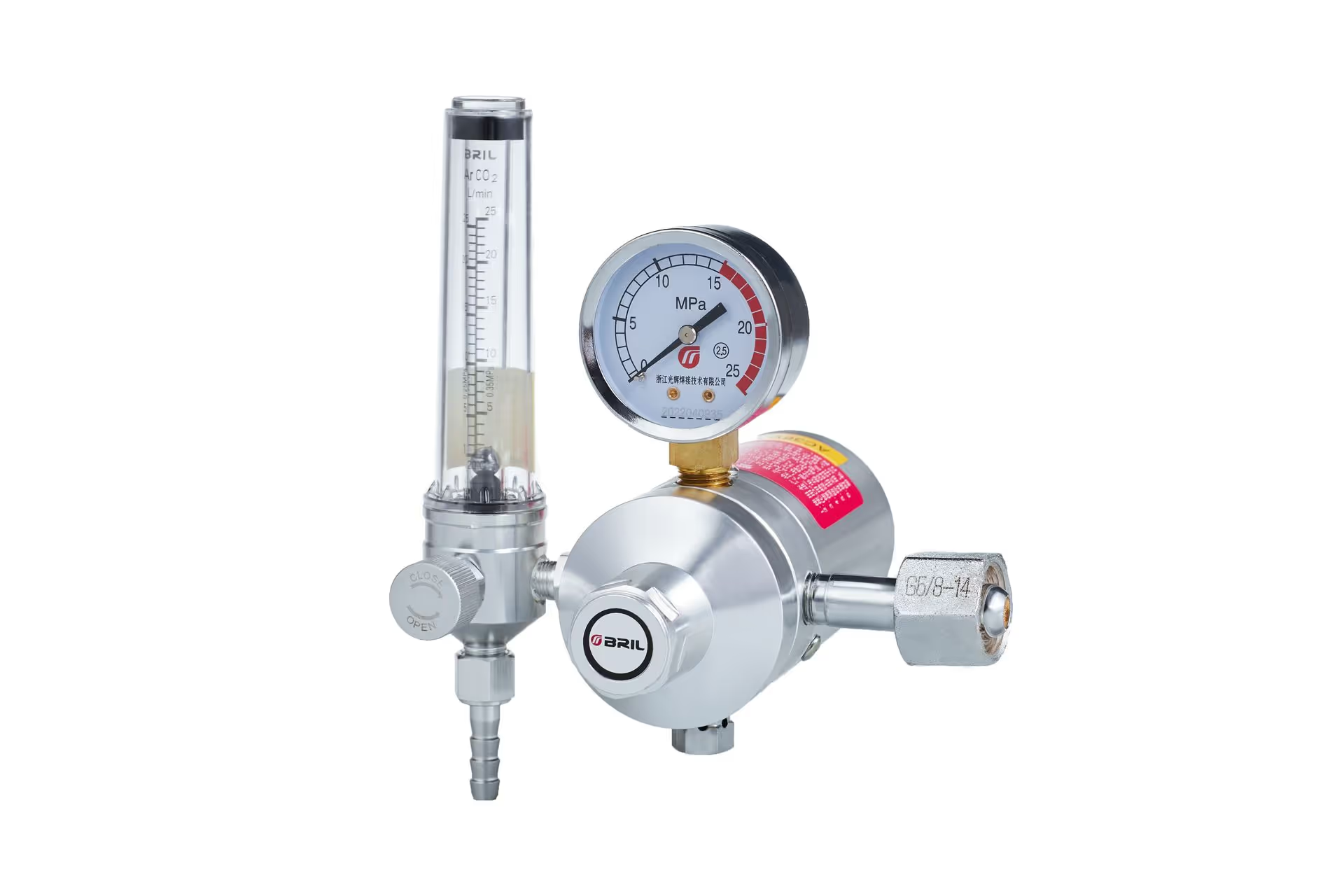
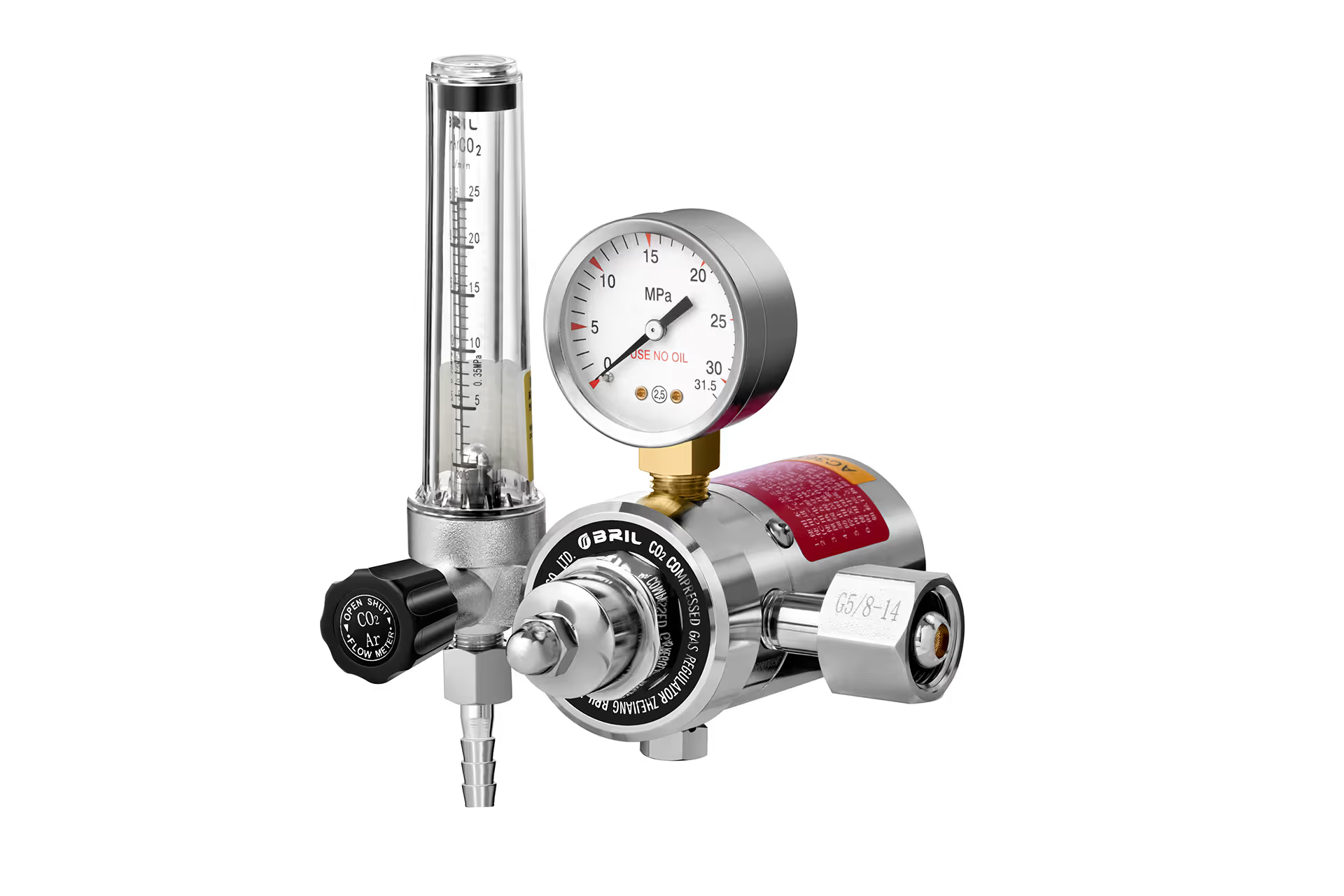
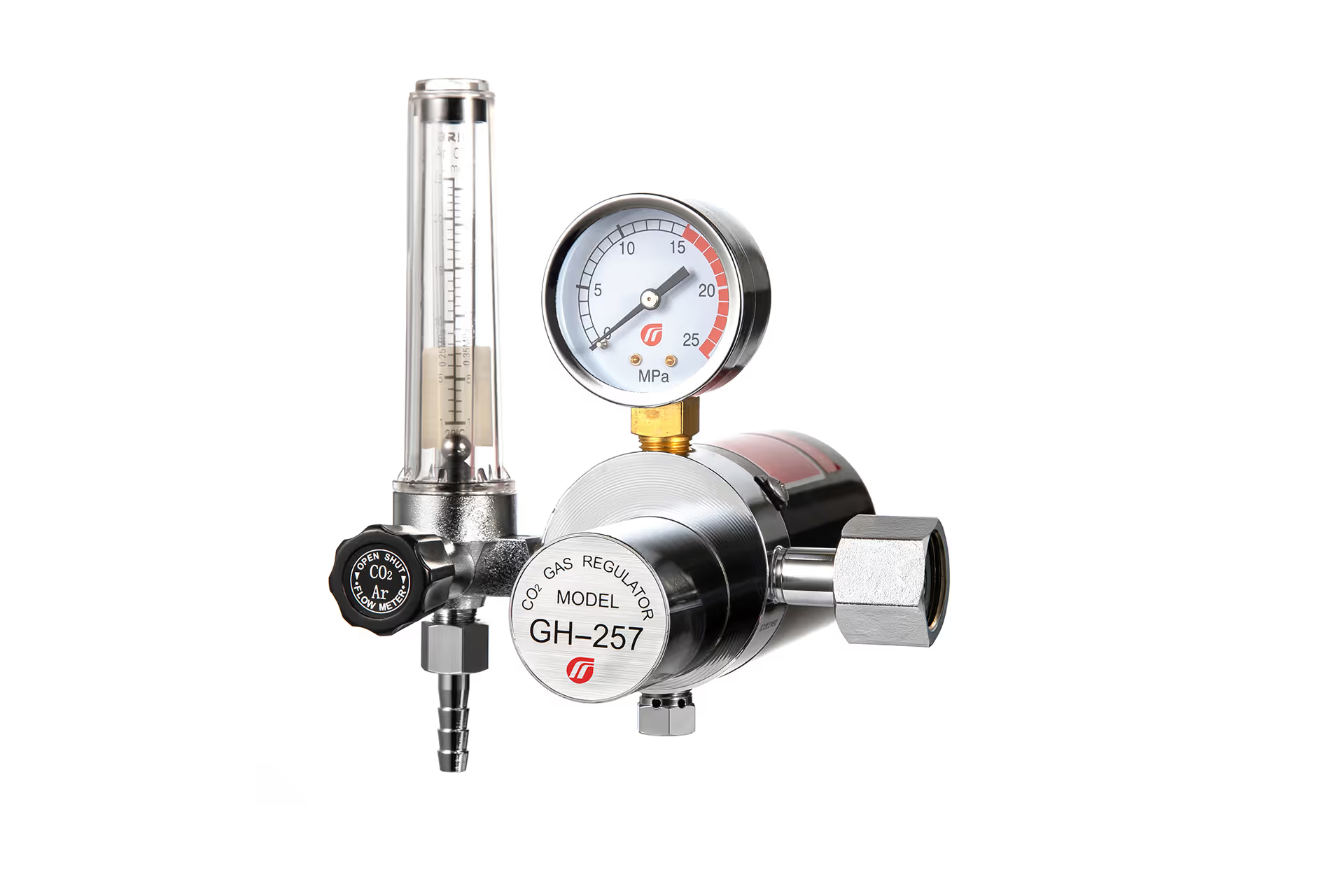
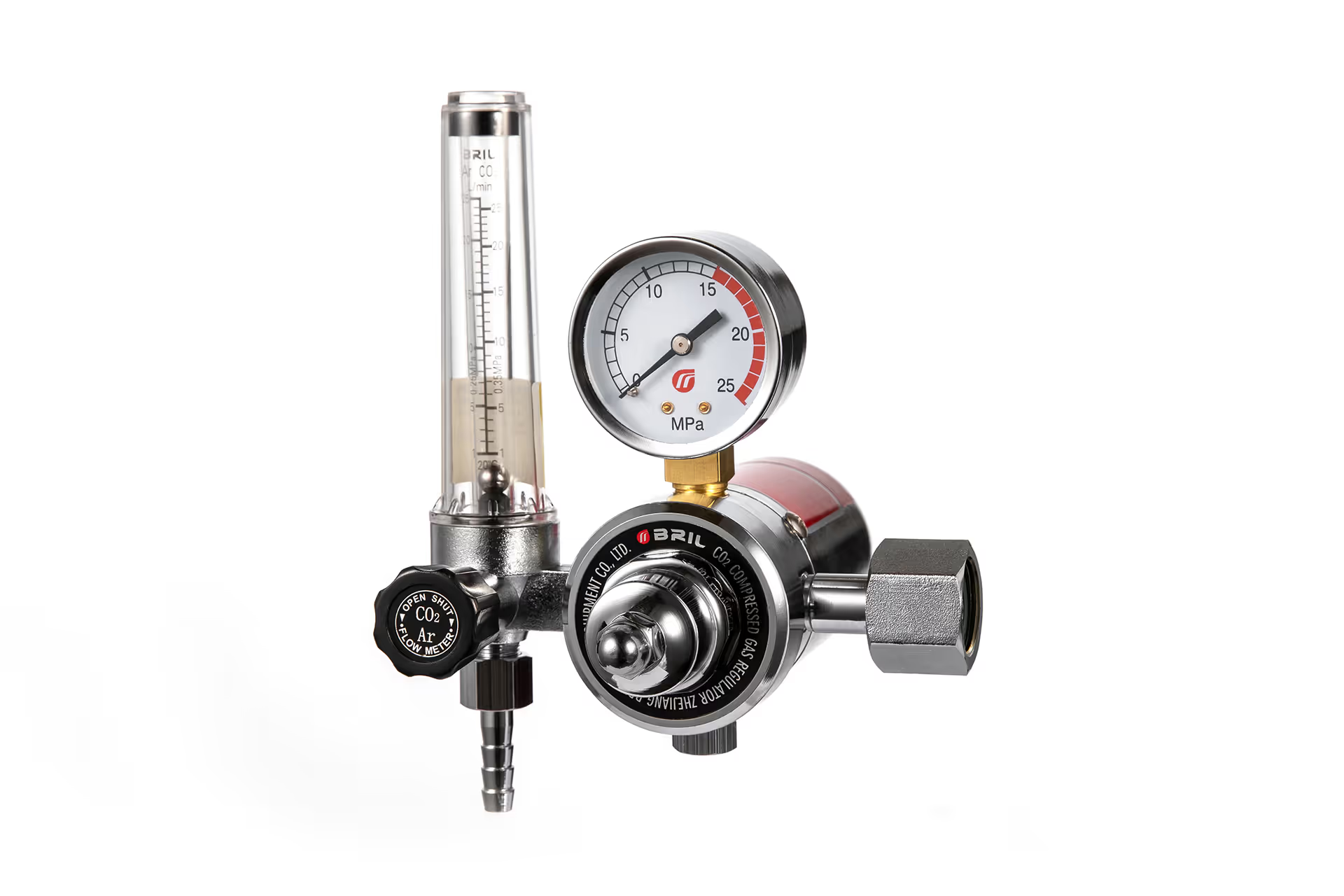
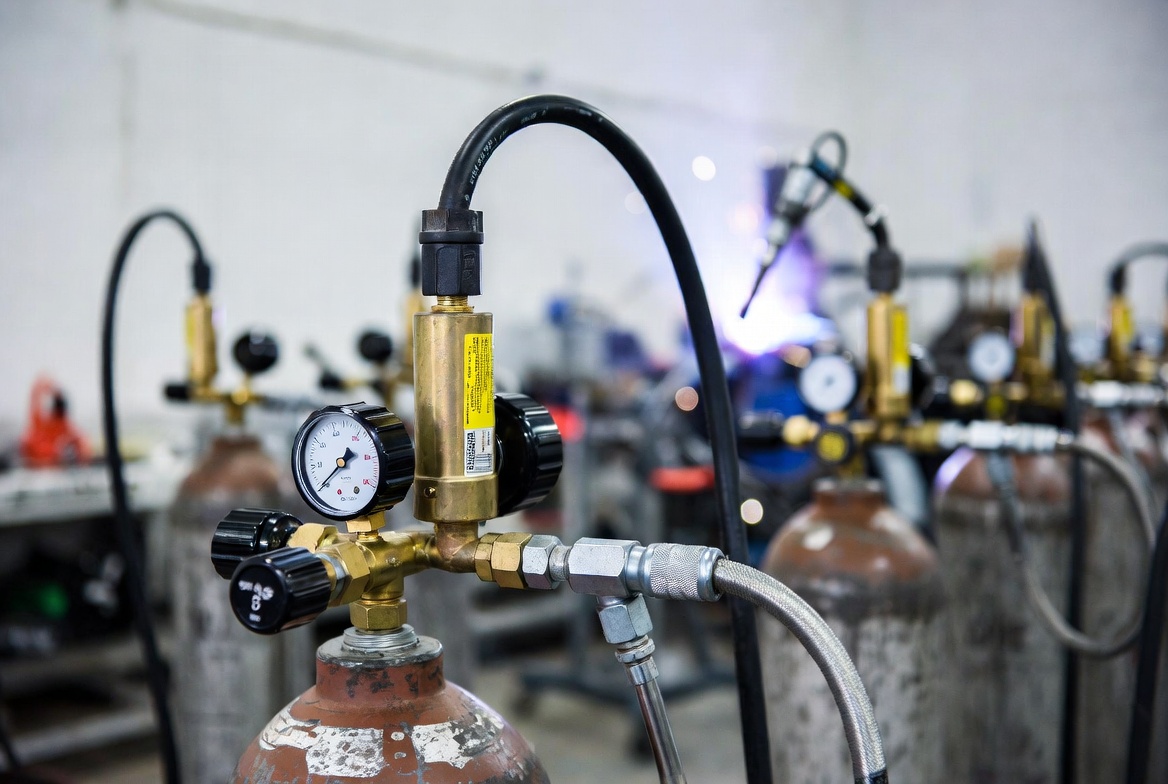
A CO₂ heater regulator combines a pressure regulator with an integrated electric heater to prevent CO₂ from freezing when you draw gas at higher flow rates. When CO₂ expands from liquid to gas inside the cylinder and regulator, the temperature drops significantly, which can cause icing, blocked passages, and unstable flow if the system is not heated. [arc-zone]
In a production welding line, that freezing risk translates directly into porosity, inconsistent bead appearance, and rework. A properly specified CO₂ heater regulator keeps the gas temperature and pressure within a narrow, predictable window, even at high flow rates. This is why you will often see heated regulators on high‑duty MIG lines, robotic welding cells, and heavy fabrication shops where CO₂ or CO₂‑rich mixed gases are used. [genstartech]
What Is a Mini Gas Regulator for Portable Shielding Gas Kits?
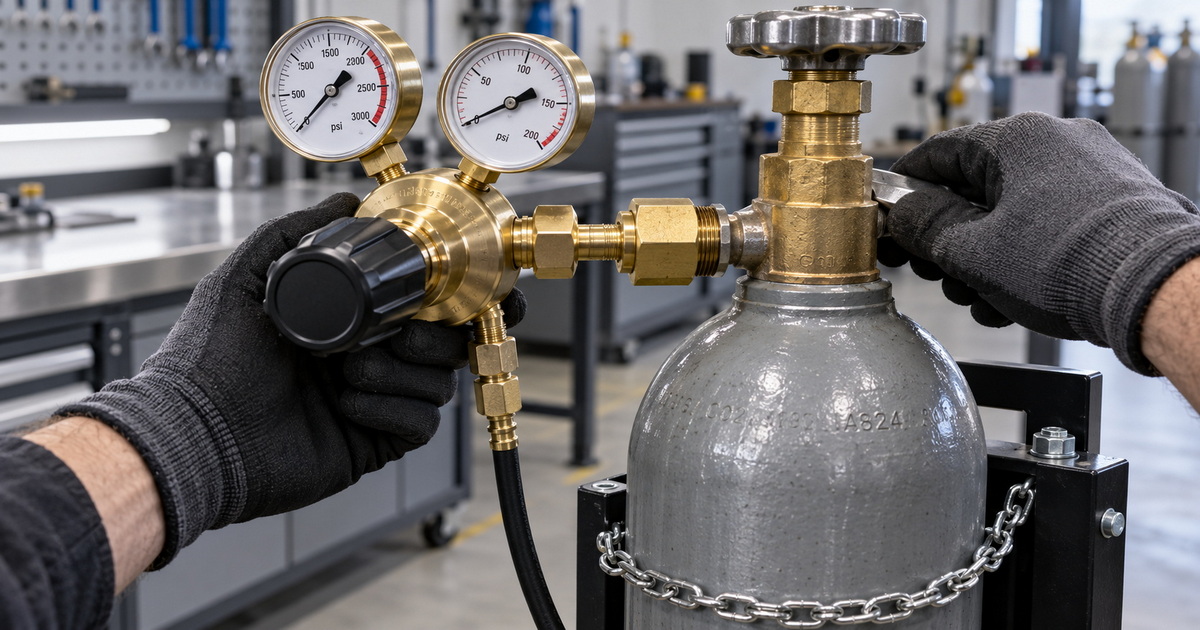
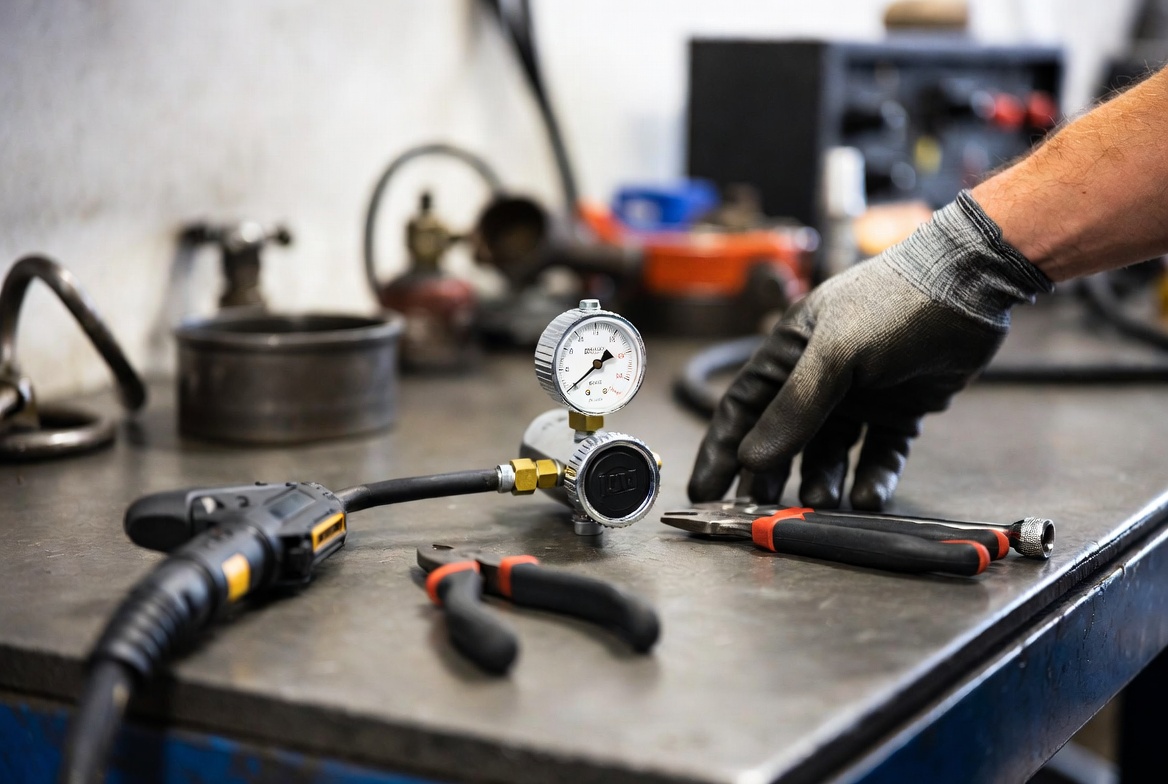
A mini gas regulator for portable shielding gas kits is a compact, lightweight regulator designed to be mounted on small cylinders or disposable gas bottles used in mobile welding, repair, and field service applications. These regulators prioritize small form factor, quick installation, and easy reading of outlet pressure or flow, rather than extreme high‑flow stability. [boc.com]
Contractors, maintenance teams, and small workshops often rely on mini regulators when they need occasional welds in different locations rather than continuous production welding. In this context, portability, rugged housing, and simple operation can matter more than the ultra‑tight control you would demand in an automated welding cell. [lincenergysystems]
Key Technical Differences at a Glance
Specification‑Level Comparison
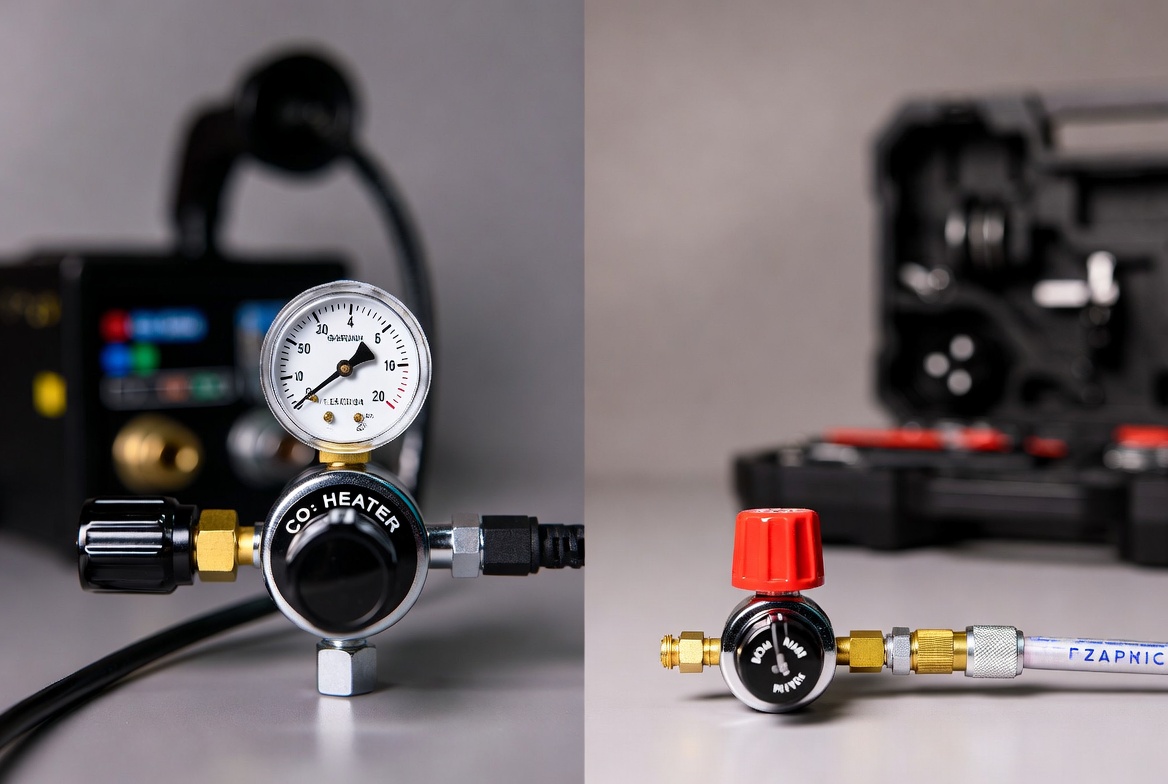
From an engineering and purchasing perspective, it helps to map typical design choices side by side. The figures below are typical ranges seen across industrial suppliers rather than fixed values for a single brand. [rotarex]
| Aspect | CO₂ Heater Regulator | Mini Gas Regulator for Portable Kits |
|---|---|---|
| Main use case | High‑flow CO₂ / mixed gas for production welding | Portable shielding gas for field and light‑duty work |
| Heating function | Integrated electric heater to prevent freezing and flow drop | No heater, relies on moderate flow and ambient conditions |
| Typical outlet control | Fine control with stable outlet pressure at high flow | Adequate control for low to medium flow rates |
| Flow rates | Designed for higher continuous flow (e.g. tens of SCFH and above) (genstartech) | Lower flow suitable for short welds and occasional use (boc.com) |
| Size and weight | Larger body, more mass, electrical cable or connector | Very compact, designed for hand‑carry kits |
| Power requirements | Requires electrical power (commonly 110–240 V) for heating (genstartech) | No external power, purely mechanical |
| Typical applications | Production MIG/MAG, robotic cells, heavy fabrication | On‑site repair, maintenance, small workshops, training |
| Cost level | Higher initial cost due to heating and robust construction | Lower cost, economical for small and mobile kits |
A purchasing manager or welding engineer will often start from duty cycle and expected gas draw; if the operation runs full shifts with high CO₂ flow, heater regulators quickly justify their higher cost. For light repair and intermittent welding, the premium of a heater unit might not be necessary. [boc.com]
Performance and Gas Quality: Engineer’s View
Stability Under Continuous Load
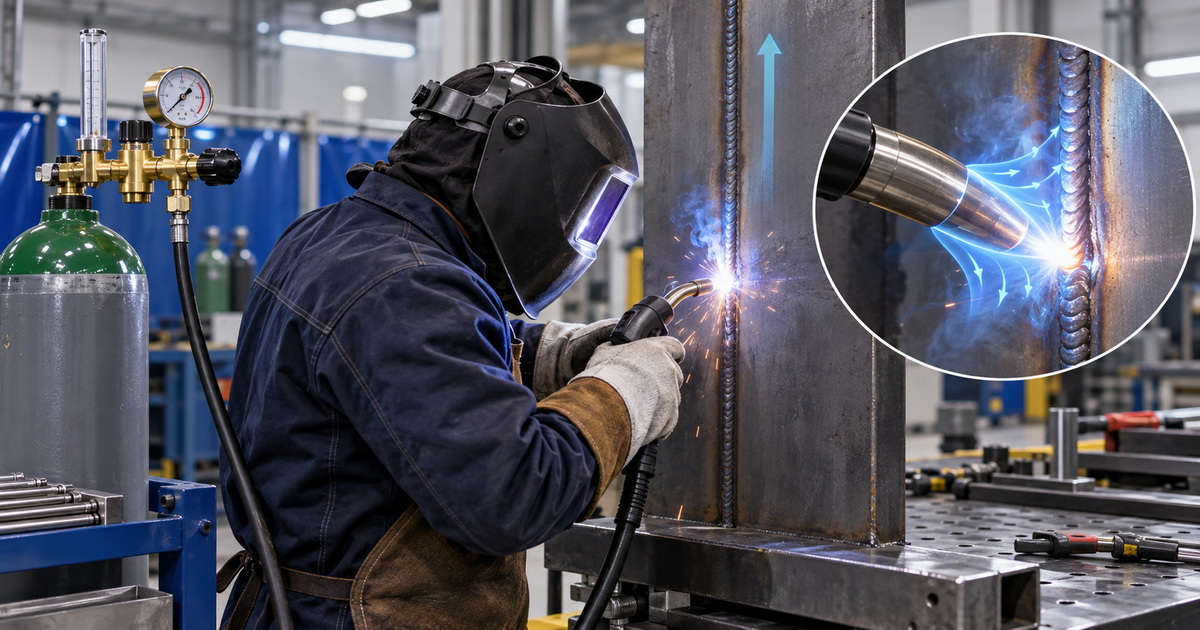
In continuous MIG production, gas flow is both long‑duration and high‑volume, which makes Joule‑Thomson cooling inside the regulator a serious issue. CO₂ heater regulators add thermal energy precisely where the phase change happens, keeping the internal passages above freezing and preventing ice buildup at the orifice. [airgas]
This yields several concrete benefits for welding quality:
– More consistent gas coverage over long welds and multiple shifts. [arc-zone]
– Lower risk of porosity due to sudden flow restrictions or pressure dips.
– Reduced unplanned downtime, since operators do not need to pause to thaw iced regulators or cylinders. [airgas]
Mini gas regulators, by contrast, are engineered around the expectation of lower duty cycles and shorter welds. They can deliver stable gas for these scenarios, but they will not compensate for aggressive continuous CO₂ withdrawal in the same way a heated regulator can. [controlair]
Impact on Weld Consistency and Rework Rates
From an operations KPI perspective, gas regulator choice shows up in:
– Rework and scrap rates.
– Visual defect rates (porosity, undercut influenced by shielding).
– Operator complaints about unstable gas or visible icing on the regulator.
Shops that switch from standard or mini regulators to properly sized CO₂ heater regulators for high‑flow stations often report fewer gas‑related weld defects and a measurable reduction in line stoppages. On the other hand, a service team that moved from bulky shop regulators to compact mini regulators in their portable kits may see lower logistical overhead and faster job setup, which are equally important business outcomes. [lincenergysystems]
Portability, Ergonomics, and Safety in the Field
Portability and Setup Time
Mini gas regulators were essentially born out of the need to get good enough gas control into a small, easy‑to‑carry package. Their typical design advantages include: [boc.com]
– Compact body that fits directly onto small or disposable cylinders.
– Simple, easy‑to‑read gauges or flow indicators with minimal controls.
– Lower overall system weight in portable shielding gas kits.
For technicians moving between rooftops, plant rooms, or scattered repair points, this design makes a real difference in fatigue and setup speed. Adding an electrically heated CO₂ regulator to the same kit would increase weight, complexity, and the need for power access, which is not always available in the field. [genstartech]
Safety and Compliance Considerations
Both regulator types must be engineered and tested to relevant pressure, electrical, and gas safety standards, which may include ISO, EN, CGA, and local regulations depending on the market. In heated CO₂ regulators, electrical insulation, over‑temperature protection, and proper grounding are critical design and testing points. [rotarex]
Mini regulators, while mechanically simpler, still require:
– Correct material selection compatible with CO₂, argon, or mixed shielding gases.
– Reliable overpressure protection and leak tightness.
– Clear labeling for maximum inlet pressure and gas type to avoid misuse. [controlair]
For overseas brands, wholesalers, and distributors working with OEM/ODM partners, ensuring that both heated and mini regulator designs are validated to applicable international standards is essential for liability control and market access. [goreg]
Total Cost of Ownership and ROI
Direct Costs vs Hidden Costs
CO₂ heater regulators generally involve higher upfront investment, driven by the heater element, electrical components, and more robust construction. Mini regulators, by contrast, are more affordable per unit and often chosen as standard accessories in compact kits for light users. [boc.com]
However, for continuous welding environments, the hidden costs are often more significant:
– Downtime when standard or mini regulators freeze and must be thawed.
– Scrap and rework due to inconsistent shielding gas or flow interruptions.
– Additional maintenance and regulator replacement cycles under heavy use.
When you factor in operator time, rework, and lost production, a heater regulator can offer a better lifetime ROI for high‑duty stations, even though the purchase price is higher. For occasional field welding, these hidden costs are smaller, so mini regulators usually remain the more economical choice. [boc.com]
When to Invest in Each Type (Expert Rule‑of‑Thumb)
From an industrial gas application engineer’s perspective, the choice can be simplified into a few decision points:
1. If your duty cycle is high (multi‑shift production, long welds, robotic cells) and CO₂ flow is sustained and significant, prioritize CO₂ heater regulators for critical stations. [arc-zone]
2. If your primary need is mobility and short welds with small cylinders, and you rarely encounter freezing, a mini gas regulator is more appropriate. [boc.com]
3. For mixed fleets, many shops standardize on heater regulators at fixed production lines and mini regulators for mobile kits and backup sets. [genstartech]
This balanced approach makes it easier for purchasing teams to build a scalable, consistent regulator portfolio that still fits different use cases.
OEM/ODM Perspective: Designing for Different Users
Customizing CO₂ Heater Regulators for Brands
As an OEM/ODM gas regulator manufacturer, you can tune CO₂ heater regulators to match a brand’s positioning and end‑user profile:
– Outlet pressure ranges and flow characteristics optimized for specific welding processes (e.g. high‑speed MIG for automotive lines).
– Heater wattage and control logic calibrated for typical ambient temperatures and cylinder sizes in target markets. [arc-zone]
– Branding, gauges, and housing design aligned with the customer’s portfolio and regional standards. [chinesewelding]
High‑end brands may request additional features such as dual‑stage regulation, digital displays, or integrated flowmeters to differentiate their premium line of industrial regulators. [goreg]
Tailoring Mini Gas Regulators for Portable Kits
For mini gas regulators, OEM/ODM projects often focus on:
– Compact packaging that fits in custom portable shielding gas kits or tool cases.
– Simple, intuitive controls suitable for less specialized operators, such as maintenance staff or multipurpose technicians. [lincenergysystems]
– Robust, impact‑resistant housings for harsher field environments.
Distributors and overseas brands may also request different inlet connections and outlet fittings to match local cylinder standards and popular torch systems. Since mini regulators are often sold in higher quantities with lower unit prices, small design improvements can have a significant impact on user satisfaction at scale. [boc.com]
Practical Selection Framework for Welding and Cutting Shops
Step‑by‑Step Selection Checklist
For welding engineers, workshop managers, or distributors advising end users, the following step‑by‑step framework can help determine when to recommend CO₂ heater regulators vs mini gas regulators:
1. Define duty cycle and flow.
Estimate how many hours per shift the regulator will deliver gas and at what approximate flow range.
2. Check power availability.
Confirm whether stable electrical power is available and acceptable at the regulator location; if not, heater solutions may be impractical. [airgas]
3. Assess mobility requirements.
Determine whether the operator stays near a weld cell or moves frequently between job sites or work areas. [lincenergysystems]
4. Evaluate environment and climate.
Colder environments and higher withdrawal rates increase the risk of freezing, strengthening the case for heater regulators. [genstartech]
5. Quantify quality risk.
Consider the cost of gas‑related defects, rework, and downtime; critical joints and high‑value products justify more advanced regulators. [rotarex]
6. Align with brand and portfolio.
For OEM/ODM buyers, ensure that the chosen regulator fits the brand’s technical positioning and compliance framework. [chinesewelding]
Using this kind of structured approach makes regulator selection more consistent and easier to explain to non‑technical stakeholders.
Case Snapshot – Upgrading a Mixed Welding Fleet
Consider a mid‑size fabrication company that runs two high‑duty MIG production lines and maintains a fleet of portable shielding gas kits for on‑site repairs and installation work. Initially, all stations used the same non‑heated regulators, and the company struggled with:
– Regulator icing on the production lines during longer runs.
– Inconsistent gas flow leading to occasional porosity issues.
– Bulky, inconvenient regulators in portable kits that technicians disliked.
After consultation with an industrial gas specialist and their OEM/ODM supplier, the company switched to CO₂ heater regulators on the production lines and compact mini regulators in all portable kits. Over the next three quarters, they observed: [boc.com]
– Fewer gas‑related weld defects on critical production seams.
– Less downtime due to regulator thawing or adjustment.
– Higher technician satisfaction with lighter, easier‑to‑carry kits in the field.
While this is a composite example based on typical industry outcomes, it illustrates how combining both regulator types can support different operational needs within the same organization. [arc-zone]
How a Professional OEM/ODM Partner Adds Value
For overseas brands, wholesalers, and distributors, partnering with a specialized gas regulator manufacturer adds value beyond basic product supply. [longtimeregulator]
Key elements include:
– Precision manufacturing and quality inspection. Reputable manufacturers use controlled machining, high‑quality brass and alloys, and documented leak and pressure testing to ensure stable performance under real‑world conditions. [controlair]
– Multiple gas types and regulator families. Beyond CO₂ heater regulators and mini regulators, a complete portfolio may include argon, oxygen, acetylene, propane, nitrogen, and dual‑stage regulators for different welding and cutting applications. [chinesewelding]
– Custom design and branding. OEM/ODM services allow international customers to specify connection types, pressure ranges, gauge styles, and surface finishes to match their local market requirements and brand strategy. [goreg]
This combination of technical depth, customization, and quality control is especially important for customers who need a consistent global product family that still reflects local standards and user preferences.
When Should You Choose Each Regulator Type?
Bringing the comparisons together, you can distill the decision into a simple guide:
– Choose a CO₂ heater regulator if:
– You run continuous or high‑flow CO₂ or CO₂‑rich mixed gas welding.
– You have access to stable electrical power at the welding cell.
– Gas‑related weld quality and uptime are critical KPIs for your operation. [genstartech]
– Choose a mini gas regulator for portable shielding gas kits if:
– Your welding needs are intermittent, mobile, or service‑oriented.
– Portability, compactness, and fast setup are top priorities.
– You use smaller cylinders and typically work at modest flow rates. [boc.com]
For many companies, the optimal strategy is to implement both: heater regulators on fixed, high‑duty stations and mini regulators in every service van and portable kit. [boc.com]
Call to Action – Design Your Ideal Gas Regulator Portfolio
If you are a welding equipment brand, industrial gas distributor, or OEM kit assembler, now is the right time to audit your regulator lineup. By aligning CO₂ heater regulators and mini gas regulators with the real duty cycles and environments your customers face, you can increase weld quality, reduce downtime, and differentiate your product offering. [controlair]
Work with a specialized gas regulator manufacturer that offers OEM and ODM services, covering CO₂ heated regulators, mini regulators for portable shielding gas kits, and complete families for argon, oxygen, acetylene, propane, nitrogen, and dual‑stage control. With the right partner, you can co‑develop gas control solutions that meet international standards while reflecting your unique brand and the needs of your target markets. [longtimeregulator]
FAQs
Q1: Do I always need a CO₂ heater regulator for CO₂ shielding gas?
In many light‑duty or intermittent applications with low flow rates, a standard or mini regulator is sufficient; heater regulators become essential when flow is high and continuous, especially in colder environments. [arc-zone]
Q2: Can a mini gas regulator be used with different shielding gases?
Most mini regulators are designed for specific gases or gas families and must use compatible materials and calibrations; always check the manufacturer’s datasheet and markings before mixing gas types. [boc.com]
Q3: How do I know if freezing is causing my welding problems?
Signs include visible frost on the regulator or cylinder, fluctuating flow, and weld porosity that worsens during longer welds or higher current settings; in such cases, a heater regulator is a strong candidate solution. [airgas]
Q4: What certifications should I look for when buying industrial gas regulators?
Look for compliance with relevant ISO, EN, and local safety standards, as well as adherence to recognized industry practices for precision pressure regulation and gas handling. [rotarex]
Q5: Can an OEM/ODM supplier customize regulators for my local cylinder and connection standards?
Yes, many specialized manufacturers offer custom inlet and outlet connections, gauges, and accessories tailored to local cylinder norms and equipment interfaces, which is standard practice in OEM/ODM projects. [goreg]
References
1. Genstar Technologies – Electrically Heated Flowmeter Regulators for CO₂: design and application notes. [Link] [genstartech]
2. Arc‑Zone – CO₂ Heaters & Regulators for high‑flow welding applications. [Link] [arc-zone]
3. Zhejiang Bril Welding Equipment – OEM/ODM gas regulator manufacturing for CO₂, argon, and industrial gases. [Link] [chinesewelding]
4. ControlAir – Precision pressure regulators for stable outlet control. [Link] [controlair]
5. BOC – Specialty and shielding gas regulators for laboratory and industrial use. [Link] [boc.com]
6. Harris / Airgas – Electrically heated CO₂ flowgauge regulators for high‑flow gas withdrawal. [Link] [airgas]
7. Rotarex – High precision pressure regulators overview and industrial use cases. [Link] [rotarex]
8. GO Regulator (Crane I&S) – Instrumentation pressure regulators and OEM solutions. [Link] [goreg]
9. Linc Energy Systems – Industrial and commercial gas regulators in field applications. [Link] [lincenergysystems]
Hot Tags: CO₂ Heater Regulator, Manufacturers, Customized, Custom, Suppliers, Buy, Cheap, Quality, Advanced, Durable, Made in China, Price, Quotation