Content Menu
● What Does a Gas Regulator Actually Do?
● Key Types of Gas Regulators Welders Use
>> Single‑Stage vs Dual‑Stage Regulators
>> Gas‑Specific Regulators: Oxygen, Acetylene, Argon, CO₂, Propane, Nitrogen
● How Gas Regulators Work: A Quick Expert Walk‑Through
● How to Choose the Right Gas Regulator for Your Welding Process
>> Step‑by‑Step Selection Checklist
● Practical Installation and Setup Tips from the Shop Floor
>> Setting Working Pressure and Flow
● Maintenance, Troubleshooting, and When to Replace a Regulator
>> Troubleshooting Common Symptoms
● Why Material and Build Quality Matter (Manufacturer’s Perspective)
>> High‑Quality Brass and Precision Components
● OEM and ODM Gas Regulator Solutions for Global Brands
>> What Professional OEM/ODM Support Looks Like
● Safety Standards and Regulatory Trends Every Welder Should Know
● Real‑World Example: Upgrading to Dual‑Stage CO₂ Regulators in a Fabrication Shop
● When Should You Replace a Gas Regulator?
● Call to Action: Build Safer, More Stable Gas Systems
● Frequently Asked Questions (FAQ)
A well-chosen gas regulator is one of the most important safety and quality decisions a welder makes, especially when working with CO₂, argon, oxygen, acetylene, propane, and nitrogen in industrial environments. As a manufacturer that lives and breathes precision pressure control every day, we see first-hand how the right regulator design, material, and setup can transform weld quality, gas efficiency, and long-term equipment reliability. [longtimeregulator]
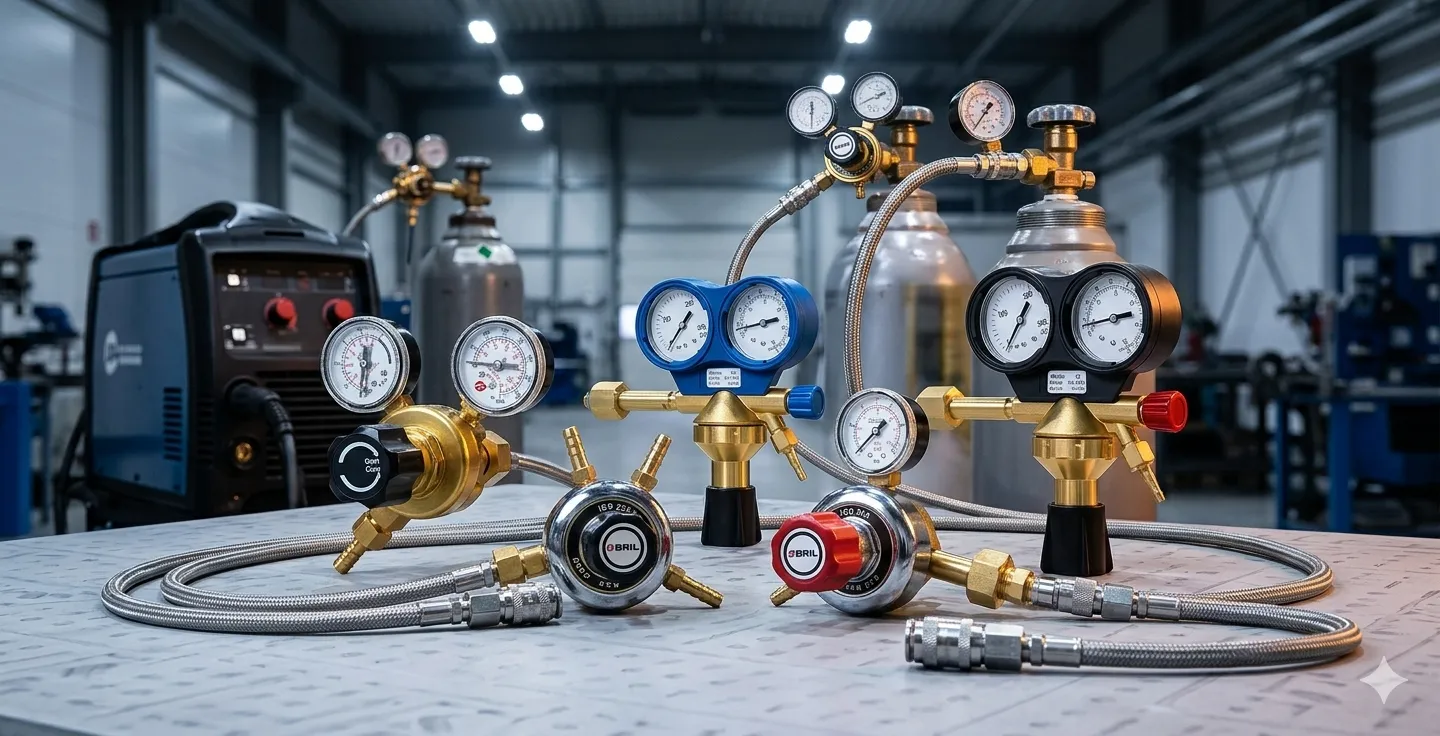
What Does a Gas Regulator Actually Do?
At its core, a gas regulator takes high-pressure gas from a cylinder and delivers it at a safe, stable working pressure and flow to your torch or welding machine. Inside the body, a valve, spring, and diaphragm work together: as downstream pressure drops during welding, the diaphragm moves and opens the valve, keeping the outlet pressure consistent. [cksupply]
For welders, this means:
– A stable arc and consistent weld bead.
– Reduced porosity and spatter caused by fluctuating shielding gas.
– Less gas waste, because you are not oversupplying flow to compensate for an unstable regulator. [meritusgas]
Key Types of Gas Regulators Welders Use
From a practical welding standpoint, most regulators you’ll see fall into a few core categories. Choosing the right type is just as important as choosing the right gas. [meritusgas]
Single‑Stage vs Dual‑Stage Regulators
– Single‑stage regulators reduce cylinder pressure to working pressure in one step.
– Common in oxy‑fuel cutting and brazing where flow demand is relatively high and stable.
– Slight outlet pressure “creep” is normal as cylinder pressure falls, which most cutting applications can tolerate.
– Dual‑stage regulators reduce pressure in two steps: from cylinder to an intermediate pressure, then to the final working pressure. [cksupply]
– Ideal for MIG and TIG shielding gases (argon, CO₂, mixed gases), where a stable flow is critical for bead appearance and defect-free welds. [meritusgas]
– Better long-term set‑and‑forget stability for production lines or automated welding.
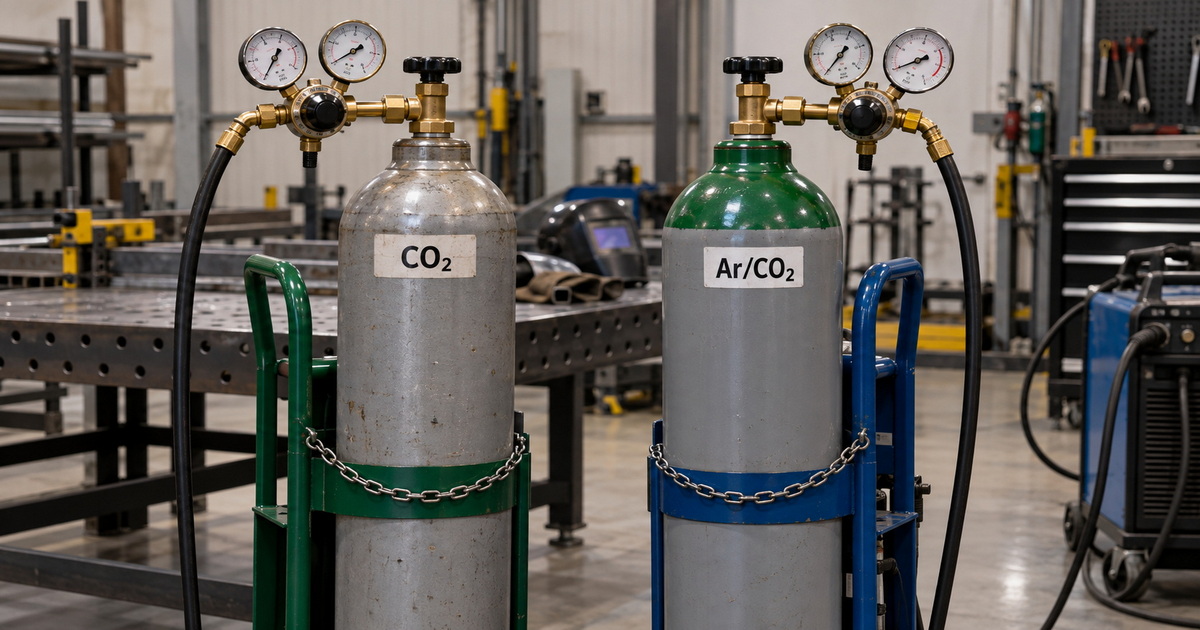
As a manufacturer, we recommend dual‑stage CO₂ and argon regulators for any operation where weld appearance, repeatability, and rework costs are tightly tracked—especially in OEM fabrication and export projects. [boc.com]
Gas‑Specific Regulators: Oxygen, Acetylene, Argon, CO₂, Propane, Nitrogen
Every gas has its own properties and safety rules, so regulators are gas-specific with dedicated materials, seals, seat designs, and thread standards (CGA, BS, DIN). Never mix them. [earlbeck]
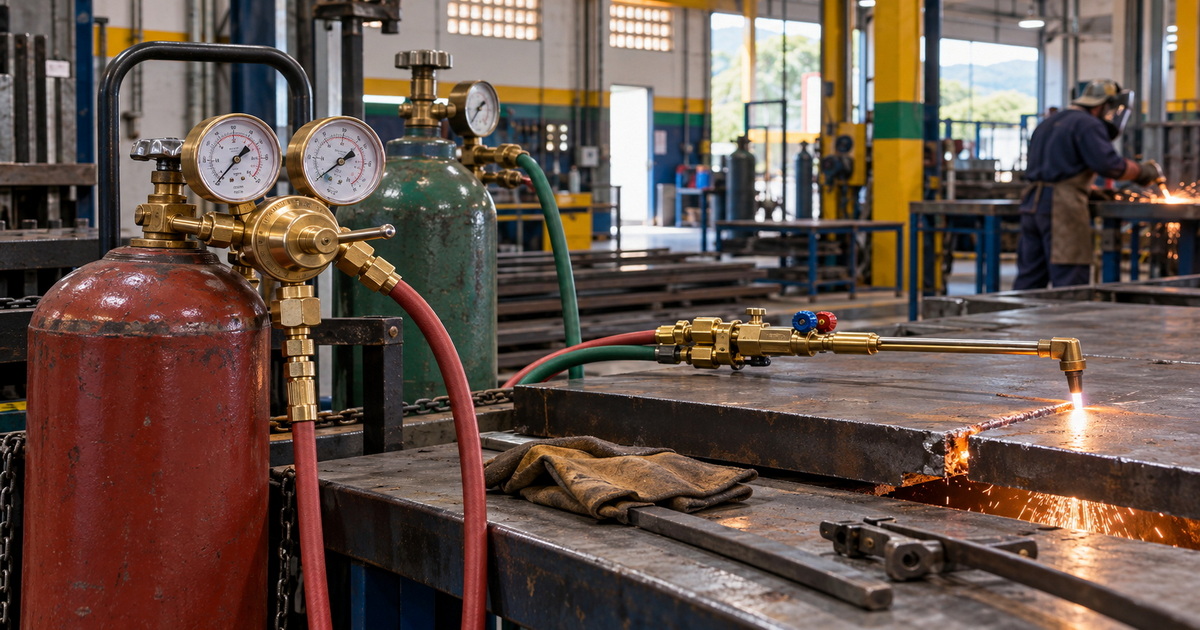
– Oxygen regulators
– Built for high cylinder pressures (often up to around 200 bar).
– Require oil‑free, grease‑free handling to prevent fires or explosions. [osha.oregon]
– Acetylene regulators
– Designed for low-pressure fuel gas (typically under 1.5 bar / 15 psi) due to acetylene’s instability at higher pressures.
– Must always be used with flashback arrestors and correct hose types. [osha]
– Argon and CO₂ regulators
– Common in MIG and TIG as shielding gas regulators.
– Often dual‑stage, low‑pressure designs with flow scales in L/min or CFH. [wcr-tools]
– Heated CO₂ regulators prevent freezing and pressure drop in high‑flow or cold environments, which is a growing requirement in modern fabrication shops. [cognitivemarketresearch]
– Propane regulators
– Built for low‑pressure fuel gas service (cutting, heating).
– Require specific elastomers and seat materials to handle LPG safely. [lincenergysystems]
– Nitrogen regulators
– Used for purging, pressure testing, and some plasma/laser processes.
– Typically high‑pressure regulators with good fine‑control at low flows. [lincenergysystems]
How Gas Regulators Work: A Quick Expert Walk‑Through
Most welding guides give a basic explanation, but it’s helpful to understand the mechanical logic behind your regulator. [cksupply]
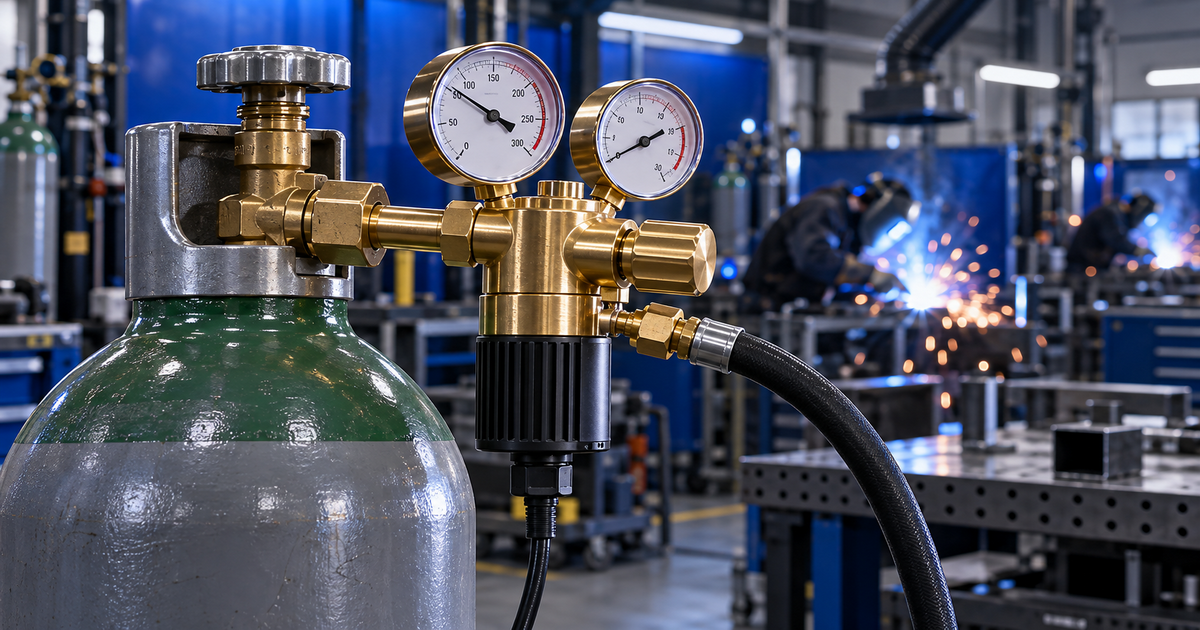
Inside a typical welding regulator you will find:
– An inlet port and filter, which protects the internals from debris and rust particles from the cylinder. [cksupply]
– A valve seat and orifice, where actual pressure reduction happens.
– A spring‑loaded diaphragm that senses outlet pressure and moves the valve accordingly. [cksupply]
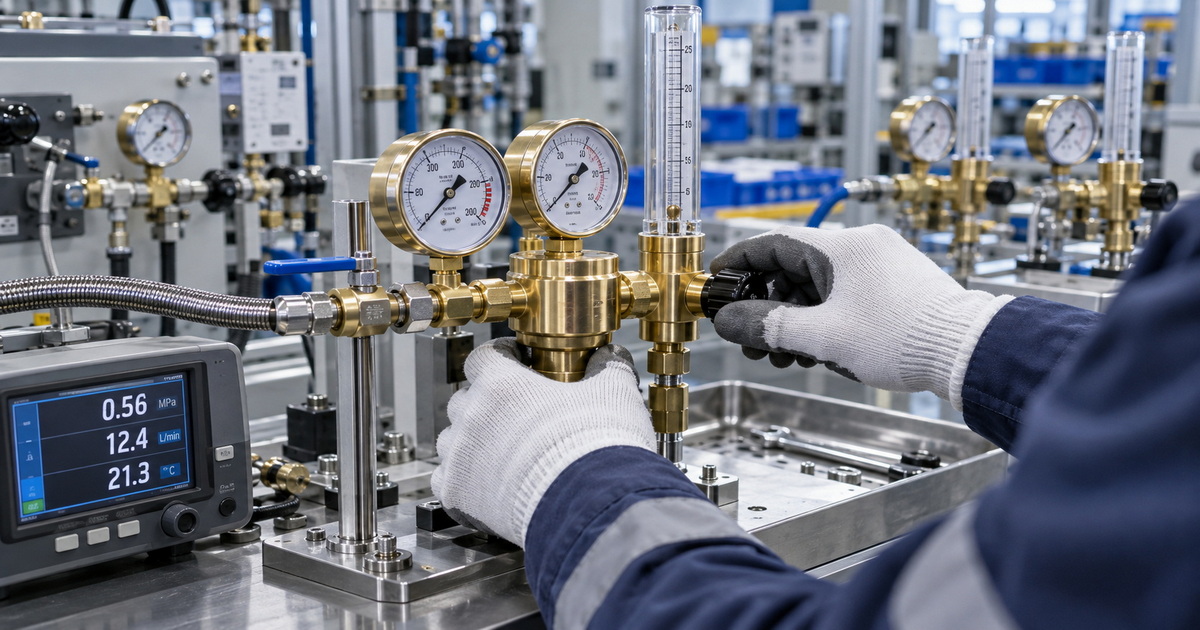
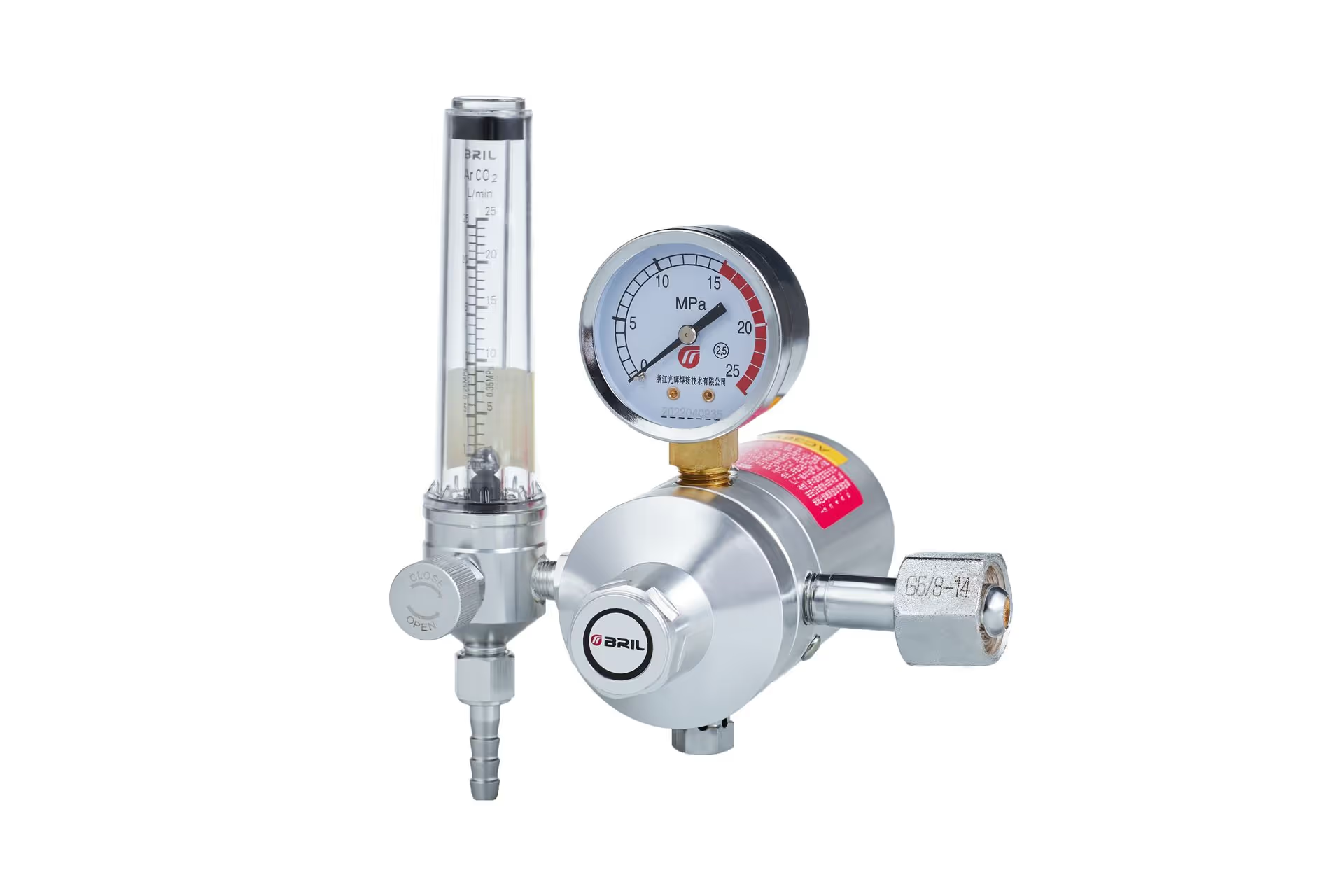
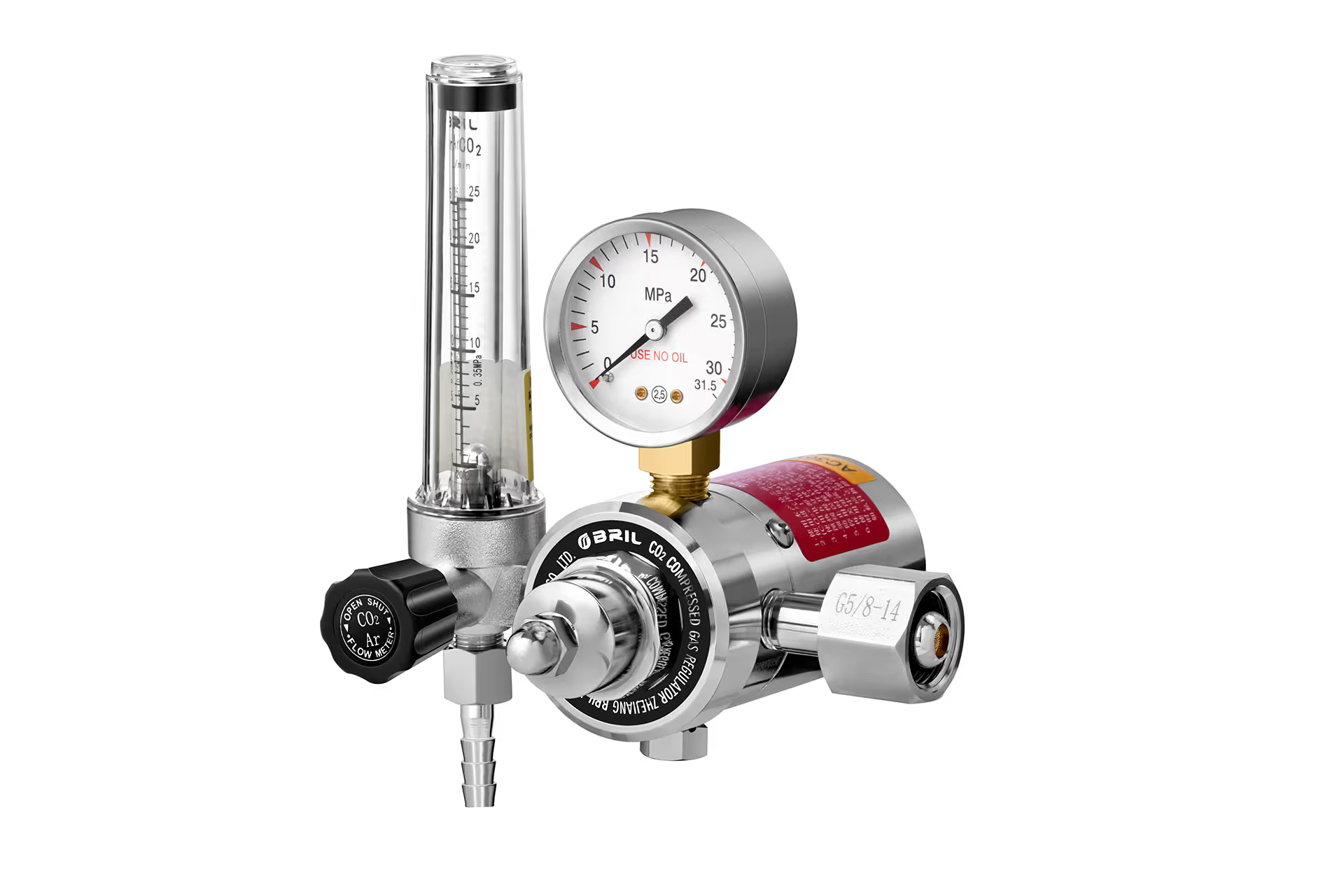
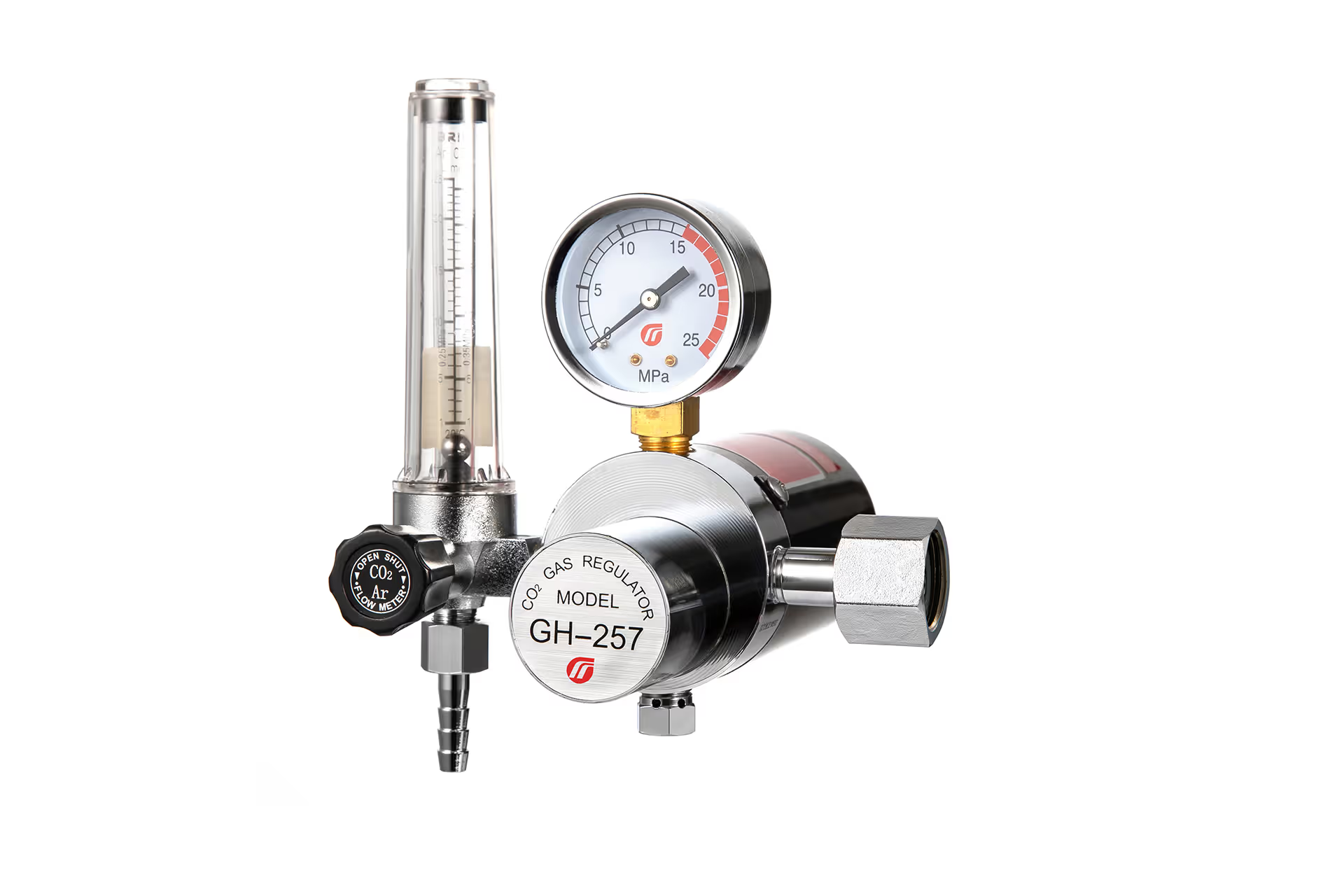
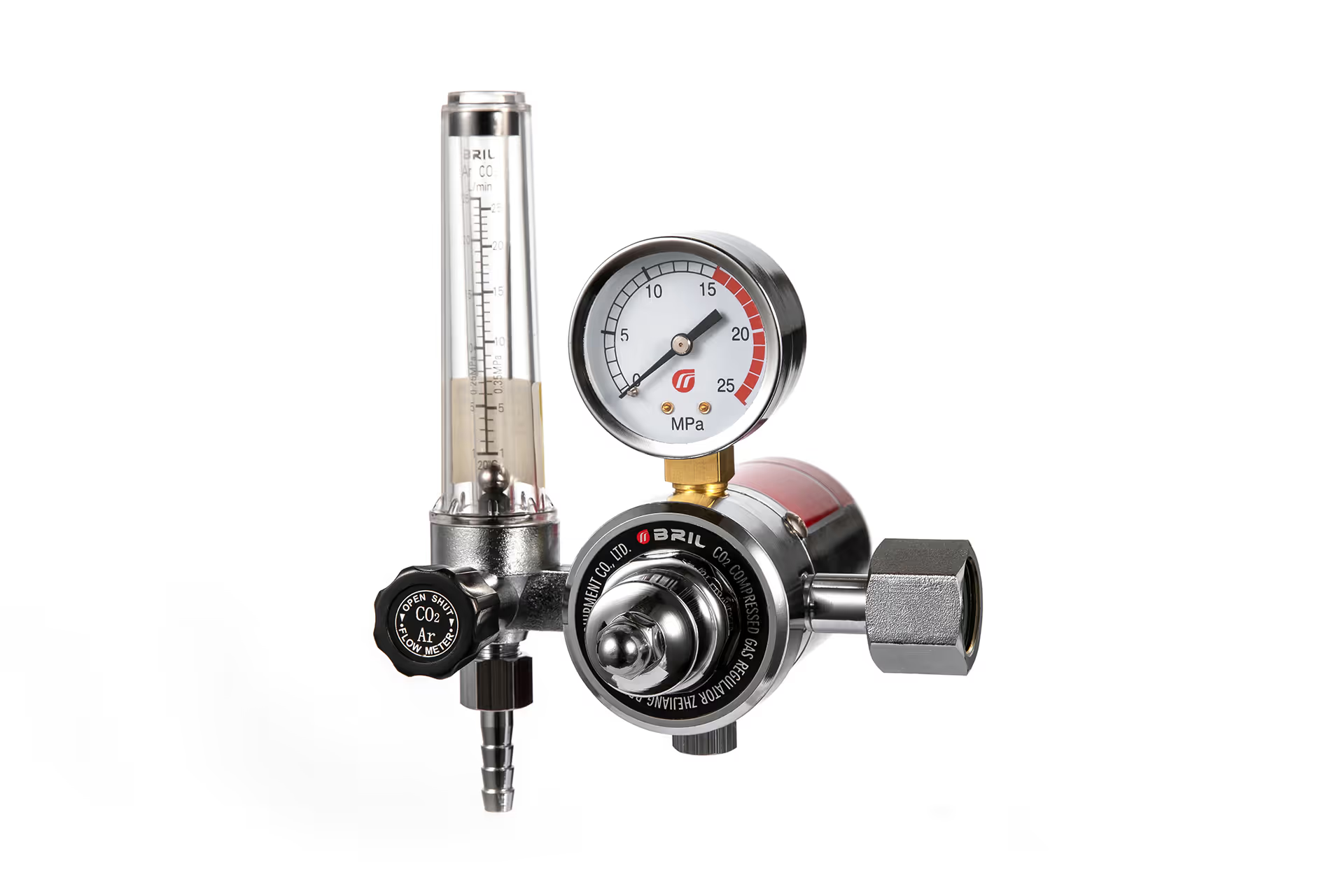
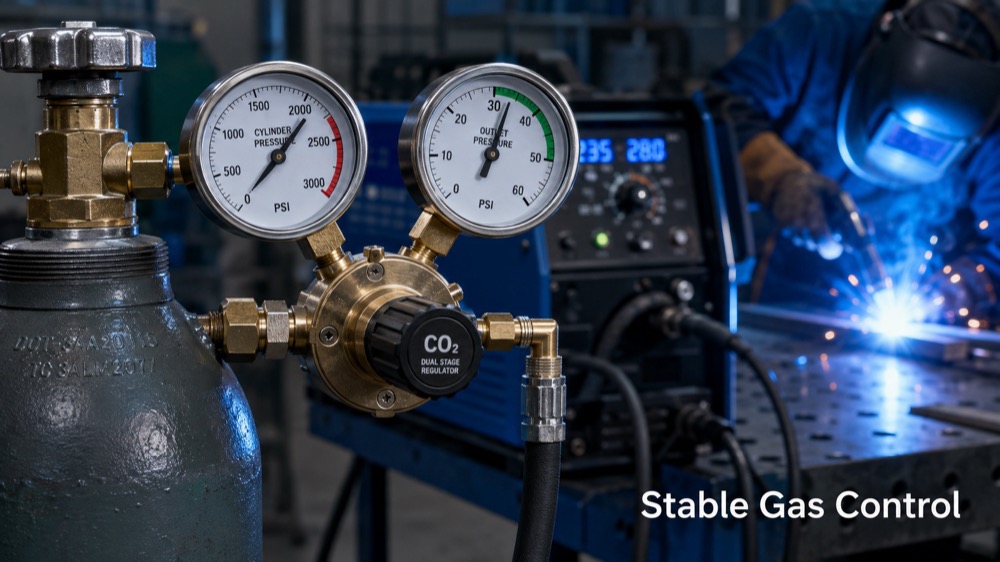
– Gauges showing cylinder pressure and outlet pressure (or flow, on flowmeter‑regulators).
When you turn the adjusting knob in, you compress the spring, which presses the diaphragm and opens the valve—allowing gas to flow until outlet pressure balances the spring force. If downstream pressure increases (for example, if you close the torch valve), the diaphragm shifts back and the valve closes, stopping the flow. [youtube]
From an industrial design perspective, the precision of the diaphragm, seat geometry, and spring characteristics is what separates an entry‑level regulator from a professional‑grade unit built for OEM and heavy‑duty use. [gas-oil-equipment]
How to Choose the Right Gas Regulator for Your Welding Process
Choosing a gas regulator is not just a product decision—it’s a process control decision. A good rule is to match your regulator to gas type, welding process, flow demand, and safety standard. [earlbeck]
Step‑by‑Step Selection Checklist
1. Identify your gas and process
– Oxygen + acetylene or propane for cutting, heating, brazing.
– Argon, CO₂, or mixes for MIG/TIG welding.
– Nitrogen for purging or pressure tests. [earlbeck]
2. Define your pressure and flow requirements
– Required outlet pressure range (e.g., 0–10 bar oxygen for cutting tips, low‑pressure shielding gas for MIG/TIG). [youtube]
– Flow rate in L/min or CFH based on tip size, wire diameter, and travel speed. [wcr-tools]
3. Match regulator type
– Single‑stage for general oxy‑fuel where slight pressure drift is acceptable.
– Dual‑stage for precision shielding gases and critical industrial processes. [meritusgas]
– Heated CO₂ regulators where high flow and cold ambient temperatures cause freezing. [cognitivemarketresearch]
4. Check connection standards and compatibility
– Cylinder valve standard (CGA, BS, DIN) for your country or export region. [youtube]
– Hose size and thread type in your existing setup.
– For OEM/ODM, confirm compatibility with target market standards early in the design phase (EU, North America, Asia‑Pacific). [abydaglobal]
5. Confirm certifications and quality standards
– Look for CE, ISO, and industry‑specific welding standards, especially when supplying to EU or multinational customers. [process.honeywell]
– Ensure the manufacturer has a documented quality control system and test reports for leak, strength, and life‑cycle testing. [bousit]
Practical Installation and Setup Tips from the Shop Floor
Even the best regulator will fail early if it is installed or handled incorrectly. From our experience supporting welding shops and distributors, these small habits make a big difference. [osha.oregon]
Before Installation
– Inspect the cylinder and valve for damage, corrosion, or illegible labels. If you’re not sure what gas is inside, do not use it. [osha.oregon]
– Crack the cylinder valve briefly (open then close) to blow out dust before attaching the regulator.
– Verify that threads match and are clean. Never force a mismatched fitting.
Mounting the Regulator
– Attach the regulator to the cylinder by hand first, then tighten with the correct spanner—avoid overtightening, which can distort seats and threads.
– Position gauges so they can be read safely without leaning over the valve.
– Stand to the side of the regulator, then slowly open the cylinder valve to avoid “pressure slam” on the seat and diaphragm. [osha.oregon]
Setting Working Pressure and Flow
– Turn the adjusting knob fully out before opening the cylinder.
– Once the cylinder is open, turn the knob in slowly until you reach the manufacturer’s recommended pressure or flow for your process. [youtube]
– Start with slightly lower flow, test the arc, and then fine‑tune. This minimizes gas waste without compromising weld quality. [wcr-tools]
Maintenance, Troubleshooting, and When to Replace a Regulator
A regulator is a safety device, not a lifetime asset. Industrial users often try to extend service beyond what is safe. From a manufacturer’s standpoint, preventive replacement is far cheaper than a failure in the field. [meritusgas]
Routine Maintenance Habits
– Leak checks: Use approved leak detection fluid or soapy water on joints and connections after installation or cylinder changeover. [osha.oregon]
– No oil or grease on oxygen regulators or fittings—ever. [osha]
– Store regulators upright, dry, and protected from impact and contamination when not in use. [osha.oregon]
Troubleshooting Common Symptoms
| Symptom | Likely Cause | Recommended Action |
|---|---|---|
| Creeping outlet pressure | Worn valve seat or diaphragm | Remove from service, replace |
| Inconsistent gas flow | Blocked filter or undersized regulator | Clean filter or upgrade size |
| Hissing or visible leaks | Damaged seals or loose fitting | Replace seals, retighten safely |
| Freezing CO₂ regulator | High flow, cold ambient, non‑heated model | Use heated CO₂ regulator |
If you notice weld defects like porosity, excessive spatter, or unstable arc, rule out nozzle and hose issues first, then perform a flow test and check regulator performance. If in doubt, take the regulator out of service and consult your gas supplier or manufacturer. [meritusgas]
Why Material and Build Quality Matter (Manufacturer’s Perspective)
From the outside, most regulators look similar. Inside, the choice of materials, machining tolerances, and quality control is what determines real-world performance. [longtimeregulator]
High‑Quality Brass and Precision Components
– Forged brass bodies provide excellent strength, corrosion resistance, and machining stability, which is why they’re the standard for professional regulators. [boc.com]
– Internal parts such as seats, springs, and diaphragms are made from carefully selected alloys and elastomers to handle specific gases and temperatures without premature wear. [gas-oil-equipment]
As an OEM/ODM‑focused manufacturer, we invest heavily in:
– CNC machining and tight tolerances to ensure consistent performance across large batches.
– 100% leak and functional testing on finished regulators, not just sample-based checks. [bousit]
– Compliance with international standards so that our partners can sell under their own brand in multiple markets with confidence. [energy.ec.europa]
OEM and ODM Gas Regulator Solutions for Global Brands
If you are a wholesaler, distributor, or equipment manufacturer, your regulator strategy directly affects customer loyalty, warranty costs, and brand perception. Many global brands now prefer to work with specialized regulator factories rather than general hardware suppliers. [ensun]
What Professional OEM/ODM Support Looks Like
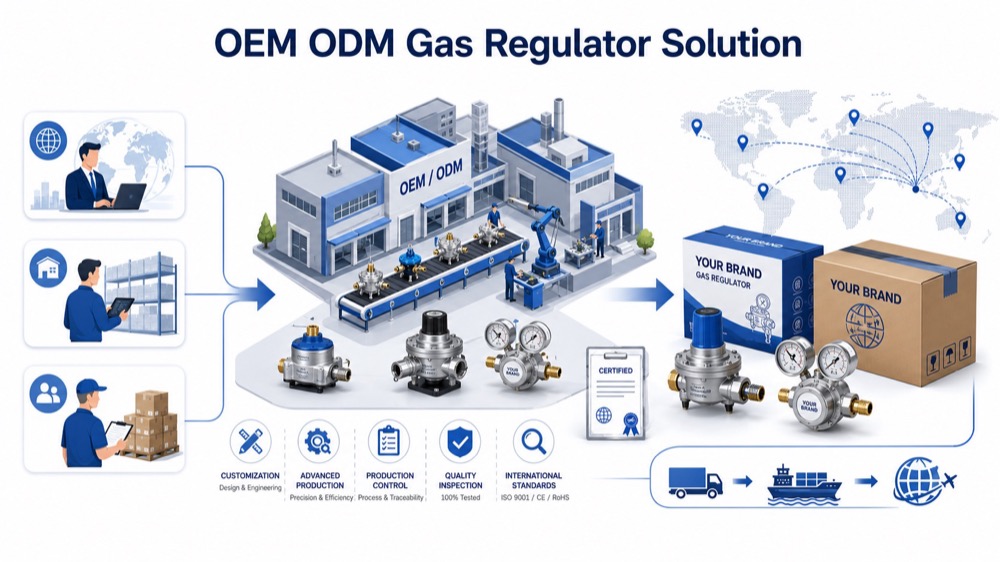
A capable OEM/ODM gas regulator partner should offer:
– Custom engineering for CO₂, argon, oxygen, acetylene, propane, and nitrogen regulators, including dual‑stage and heated designs. [boc.com]
– Standardized production lines and documented processes for assembly, calibration, and testing. [bousit]
– Support for private labeling, packaging design, and documentation tailored to your target markets.
– Experience with certification and compliance (CE, ISO, regional gas codes) to reduce your approval risk. [process.honeywell]
For industrial welding, cutting, and gas supply projects, we typically work with clients to:
– Map their existing product line‑up and target performance specs.
– Propose a harmonized regulator platform (same core design, different gauges and connections) to simplify stocking and after‑sales support.
– Build custom test and inspection plans that match their internal quality requirements.
Safety Standards and Regulatory Trends Every Welder Should Know
Beyond the workshop, gas regulators sit inside a tightening web of safety and environmental regulations. For welders and buyers, understanding this landscape helps avoid compliance surprises. [energy.ec.europa]
– Occupational safety agencies such as OSHA require proper storage, handling, and inspection of compressed gas cylinders and regulators. [osha]
– In the EU, recent regulations on methane and greenhouse gas emissions push energy and industrial companies to tighten leak detection and reporting practices, indirectly raising expectations for gas control equipment performance and traceability. [energy.ec.europa]
For end users, the takeaway is simple:
– Buy regulators that clearly state standards and certifications on the product and documentation.
– Make sure your internal safety training covers regulator use, leak checks, storage, and incident reporting. [osha.oregon]
Real‑World Example: Upgrading to Dual‑Stage CO₂ Regulators in a Fabrication Shop
A mid‑size fabrication shop running multiple MIG welding stations on mixed argon/CO₂ shielding gas was experiencing inconsistent bead quality and high gas consumption during long shifts. Operators frequently nudged up the flow to compensate for what they described as “breathing” regulators.
After switching from generic single‑stage CO₂ regulators to industrial dual‑stage, heated CO₂ regulators and standardizing flow settings:
– Weld rework due to porosity dropped noticeably, according to their internal quality records.
– Gas consumption per part decreased, as operators no longer “over‑flowed” to mask pressure drift.
– The shop was able to document more stable process parameters for key export customers who required traceability.
This kind of upgrade is typical when welding operations grow from job‑shop scale to semi‑automated or export‑oriented production, and it’s where OEM‑grade regulators provide clear ROI.
When Should You Replace a Gas Regulator?
From both safety and cost perspectives, regulators should not be treated as lifetime equipment. Although exact intervals depend on usage and environment, consider planned replacement when: [meritusgas]
– The regulator has visible damage, corrosion, or has been exposed to fire or severe impact.
– Gauges no longer return to zero or show erratic readings.
– You see symptoms of creeping, unstable flow, or frequent leak repairs.
– The regulator is older than your company’s internal safety threshold (many industrial sites adopt 5–10 year replacement cycles).
If you are standardizing equipment globally, it is often more efficient to phase out old, mixed‑origin regulators and replace them with a unified, certified product family from a single OEM/ODM source.
Call to Action: Build Safer, More Stable Gas Systems
Whether you are a welder choosing your first argon regulator or a purchasing manager responsible for thousands of units across multiple plants, the key message is the same:
– Invest in high‑quality, gas‑specific regulators for oxygen, acetylene, propane, argon, CO₂, and nitrogen.
– Prioritize dual‑stage and heated designs where weld quality and process stability are critical.
– Partner with an experienced OEM/ODM regulator manufacturer that backs every unit with documented testing, compliance support, and flexible customization.
If you are planning to upgrade your regulators or develop a branded line for your welding or gas distribution business, now is the best time to review your specifications and align them with current safety and market requirements.
Frequently Asked Questions (FAQ)
1. Can I use the same regulator for different gases?
No. Regulators are designed for specific gases, with different materials, pressures, and thread standards. Mixing them is unsafe and may violate safety regulations. [earlbeck]
2. What is the main advantage of a dual‑stage regulator for welding?
Dual‑stage regulators deliver more stable outlet pressure as cylinder pressure drops, which is especially beneficial for MIG/TIG shielding gases where consistent flow is critical to weld quality. [wcr-tools]
3. Do I really need a heated CO₂ regulator?
If you run high CO₂ flow rates, weld continuously, or work in cold environments, a non‑heated regulator can freeze and cause flow instability. Heated CO₂ regulators reduce freezing, maintain stable flow, and minimize downtime. [linkedin]
4. How often should gas regulators be inspected?
Visual checks and leak tests should be part of daily or pre‑shift routines, with more detailed inspections scheduled according to your company’s safety policy and applicable regulations. Many industrial users also adopt periodic replacement intervals. [osha.oregon]
5. What certifications should I look for when buying regulators for international projects?
Look for CE and ISO compliance for international markets, plus any local gas or welding standards. When in doubt, request documentation from the manufacturer, including test reports and quality system certificates. [abydaglobal]
References
1. Welding & Welder. “The Welder’s Guide to Gas Regulators: Selection, Setup, and Maintenance.” https://www.weldingandwelder.com/help-and-advice/understanding-gas-regulators-an-introduction-for-welders/
2. CK Supply. “Understanding Gas Regulators: A Beginner’s Guide.” https://cksupply.com/understanding-gas-regulators-a-beginners-guide/
3. Meritus Gas Partners. “Types of Gas Regulators & Which Is Best for You.” https://meritusgas.com/types-of-regulators/
4. WCR Tools. “Flow Meters vs Regulators: Welding Gas Control Guide.” https://wcr-tools.com/blogs/news/flow-meters-vs-regulators-welding-gas-control-guide-wcr-tools
5. Earlbeck Gases & Technologies. “How Do I Select a Gas Regulator?” https://www.earlbeck.com/welding-blog/how-do-i-select-a-gas-regulator
6. Oregon OSHA. “Compressed Gas Safety – Fact Sheet.” https://osha.oregon.gov/oshapubs/factsheets/fs09.pdf
7. OSHA. “1910.253 – Oxygen-fuel gas welding and cutting.” https://www.osha.gov/laws-regs/regulations/standardnumber/1910/1910.253
8. European Commission. “Methane Emissions – Energy.” https://energy.ec.europa.eu/topics/carbon-management-and-fossil-fuels/methane-emissions_en
9. BOC. “Specialty Gas Regulators.” https://www.boc.com.au/shop/en/au/gas-welding-heating-cutting-brazing/specialty-gas-regulators
10. Jiangsu Changrun Gas Equipment. “Custom Natural Gas Pressure Regulator Manufacturers.” https://www.gas-oil-equipment.com/product/gas-pressure-regulator/
Hot Tags: Gas Regulator For Welding, CO2 Regulator Manufacturer, OEM Gas Regulator Supplier, Industrial Gas Regulator Factory, Dual Stage Gas Regulator, CO2 Heated Regulator, Argon Regulator Supplier, Oxygen Acetylene Regulator, Welding Gas Control Solution, Brass Gas Regulator Manufacturer