Content Menu
● Why Source Welding Gas Regulators From China?
● How We Selected These Suppliers
>> Technical Requirements Buyers Should Understand
● Top 10 Welding Gas Regulator Manufacturers in China
>> 1. Zhejiang Bril Welding Equipment Co., Ltd.
>> 2. Ningbo Longtime Gas Control System Co., Ltd.
>> 3. Ningbo Keryfine Electronic Co., Ltd.
>> 4. Beijing Jingcheng Gas Equipment Co., Ltd.
>> 5. ABYDA
>> 6. NOVORS
>> 7. Shenzhen Wofly Technology Co., Ltd.
>> 8. Shanghai Empire Mechanical Engineering Co., Ltd.
>> 9. Hangzhou Zhenda Precision Metallic Technology Co., Ltd.
>> 10. Suzhou Maxonic Automation Control Co., Ltd.
● The Procurement Risks Many Buyers Miss
>> 1. “Brass Body” Does Not Guarantee the Same Quality
>> 2. Gauge Quality Can Destroy Product Reputation
>> 3. Oxygen-Service Cleanliness Is Not a Generic Feature
>> 4. Certification May Be Valid—but Not for Your Model
>> 5. The Hidden Problem: “Same Sample, Different Mass Production”
● Buyer’s Guide: How to Qualify a Welding Gas Regulator Factory
>> Step 1: Define Your Application Before Requesting Quotes
>> Step 2: Request a Documentation Package
>> Step 3: Conduct a Structured Sample Test
>> Step 4: Audit the Factory or Use a Third Party
>> Step 5: Use Pre-Shipment Inspection
>> 1. How can I verify whether a supplier’s ISO 9001 certificate has expired?
>> 2. Is CE certification enough to sell welding gas regulators in Europe?
>> 3. What is the difference between a single-stage and dual-stage gas regulator?
>> 4. What MOQ should I expect for OEM welding gas regulators?
>> 5. How do I prevent a factory from changing components after sample approval?
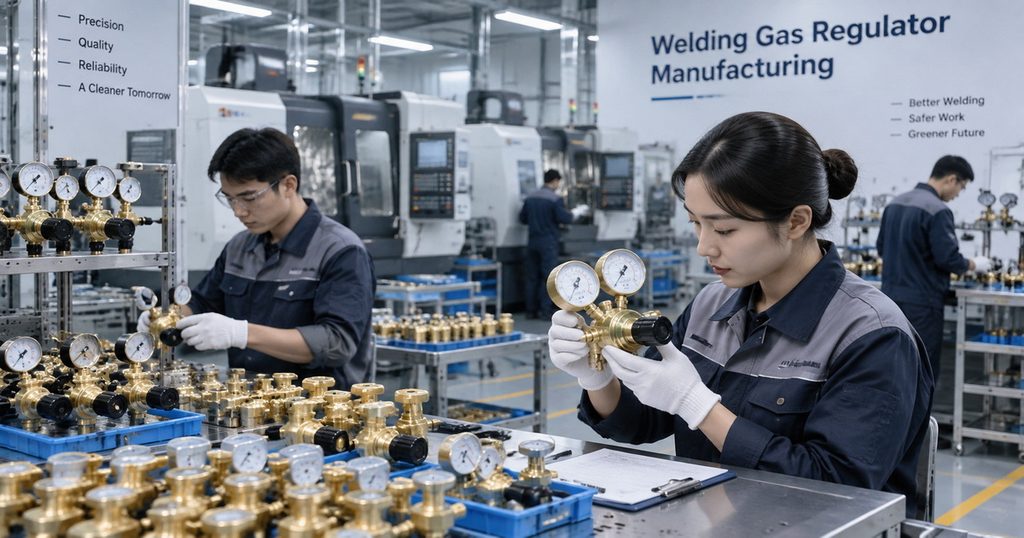
China remains an important sourcing base for welding gas regulators because it combines specialized component supply chains, competitive machining costs, mature export logistics, and a broad range of OEM/ODM capabilities. For procurement managers, however, selecting a supplier should never be based only on quotation price or a catalog’s product count.
A welding gas regulator is a safety-critical pressure-control component. Poor diaphragm materials, unstable springs, low-grade brass, inaccurate gauges, weak thread machining, or incomplete leak testing can create performance inconsistency, excessive gas consumption, customer complaints, and potentially serious safety exposure. The right supplier is therefore not simply the factory with the lowest unit cost—it is the one that can repeatedly deliver stable inlet-to-outlet pressure performance, documented quality control, traceable materials, export-compliant product configurations, and dependable communication.
Why Source Welding Gas Regulators From China?
China has developed a broad manufacturing ecosystem for welding and industrial-gas equipment. Rather than being concentrated in a single city, the supply chain is spread across several industrial regions:
– Zhejiang: Known for valves, brass fittings, pressure-control components, electrical products, tooling, and export-oriented light industrial manufacturing. Wenzhou and Ningbo are particularly relevant for valves, regulators, gauges, castings, and component machining.
– Guangdong: Strong in welding machines, electronics, industrial assemblies, and export-oriented product integration.
– Shanghai and Jiangsu: Important for industrial automation, precision instruments, pressure-control systems, laboratory gas equipment, and higher-specification engineering applications.
– Hebei and Shandong: Active in gas equipment, cylinders, LPG-related products, industrial fittings, and broader metalworking supply chains.
For welding regulator buyers, China’s main advantage is not only price. It is the availability of complete supply-chain support: brass forgings, die casting, pressure gauges, diaphragms, valves, hoses, fittings, packaging, printing, private-label accessories, and export documentation can often be coordinated through one qualified manufacturer or sourcing network.
China also has a large supplier base. Made-in-China lists more than 2,000 gas-regulator manufacturers and suppliers, illustrating both the breadth of available sourcing options and the need for careful qualification rather than relying on marketplace visibility alone.
How We Selected These Suppliers
This list is designed for professional procurement rather than casual retail buying. The companies below were assessed using public company information, stated product focus, manufacturing positioning, certification signals, export orientation, and OEM/ODM relevance.
Evaluation Criteria
| Evaluation area | What professional buyers should examine | Why it matters |
|---|---|---|
| Product specialization | Whether the supplier focuses on welding or industrial gas regulators rather than only household LPG products | Welding regulators require different pressure ranges, gas compatibility, safety expectations, and flow-control characteristics |
| Manufacturing experience | Company age, product history, engineering depth, and established customer base | Longer experience can indicate more stable processes, although it does not replace factory verification |
| Materials and machining | Brass grade, forged vs. cast bodies, thread tolerance, seat materials, diaphragms, springs, and gauge quality | Internal component quality strongly affects pressure stability, leakage rate, and service life |
| Quality-control system | Incoming inspection, air-tightness testing, pressure testing, gauge accuracy checks, traceability, and final inspection | A regulator may look acceptable externally while having unstable internal performance |
| Certifications | ISO 9001, CE, RoHS, REACH, UKCA, CSA, UL, or other destination-market requirements | Certification must be checked for scope, issuing body, validity date, and model coverage |
| OEM/ODM support | Branding, color, packaging, fittings, gauges, gas-specific labels, manuals, and customized performance requirements | Overseas brands often need differentiation beyond a standard catalog model |
| Delivery reliability | Capacity planning, component inventory, lead-time control, export packing, and communication speed | An attractive quote has little value if delivery is inconsistent |
| Commercial flexibility | MOQ, sample process, tooling ownership, payment terms, and after-sales response | Particularly important for new brands and mid-sized distributors |
Technical Requirements Buyers Should Understand
A competent supplier should be able to discuss technical details beyond “brass body” and “good quality.” Key areas include:
– Body material: Brass is widely used because of corrosion resistance, machinability, and compatibility with many industrial gases. Buyers should ask whether the body is forged brass, hot-stamped brass, or a lower-cost casting, and request material documentation where appropriate.
– Gas compatibility: Oxygen regulators require special cleanliness and lubrication control. Acetylene regulators need gas-specific safety consideration. CO₂ regulators may require anti-freeze or heating designs for certain duty cycles.
– Pressure stability: A regulator should maintain controlled outlet pressure as cylinder pressure declines. This is one reason dual-stage regulators are used in applications requiring more stable delivery pressure.
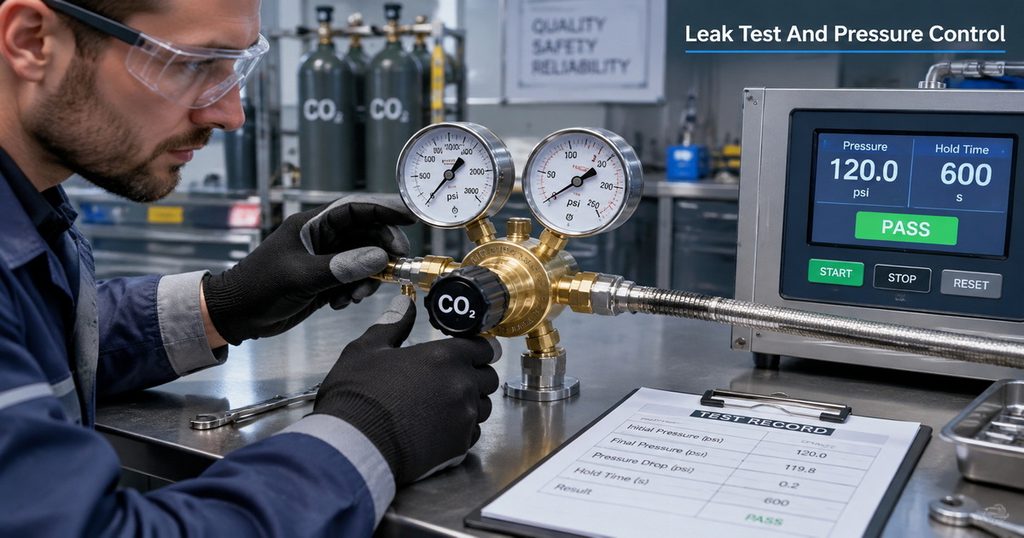
– Leakage testing: Confirm the test medium, test pressure, test duration, acceptance criteria, and whether every assembled unit is tested.
– Gauge quality: Inexpensive regulators often fail first at the gauge. Ask about gauge accuracy class, casing material, lens material, dial printing, thread sealing, and supplier traceability.
– Thread and inlet/outlet fitting standards: CGA, DIN, BS, JIS, G-thread, NPT, BSP, and country-specific cylinder connections must be confirmed before production—not after shipment.
– Compliance documentation: CE marking does not automatically mean every model is legally compliant for every market. Buyers should verify the applicable directive or regulation, technical documentation, declaration of conformity, and model-specific scope.
Top 10 Welding Gas Regulator Manufacturers in China
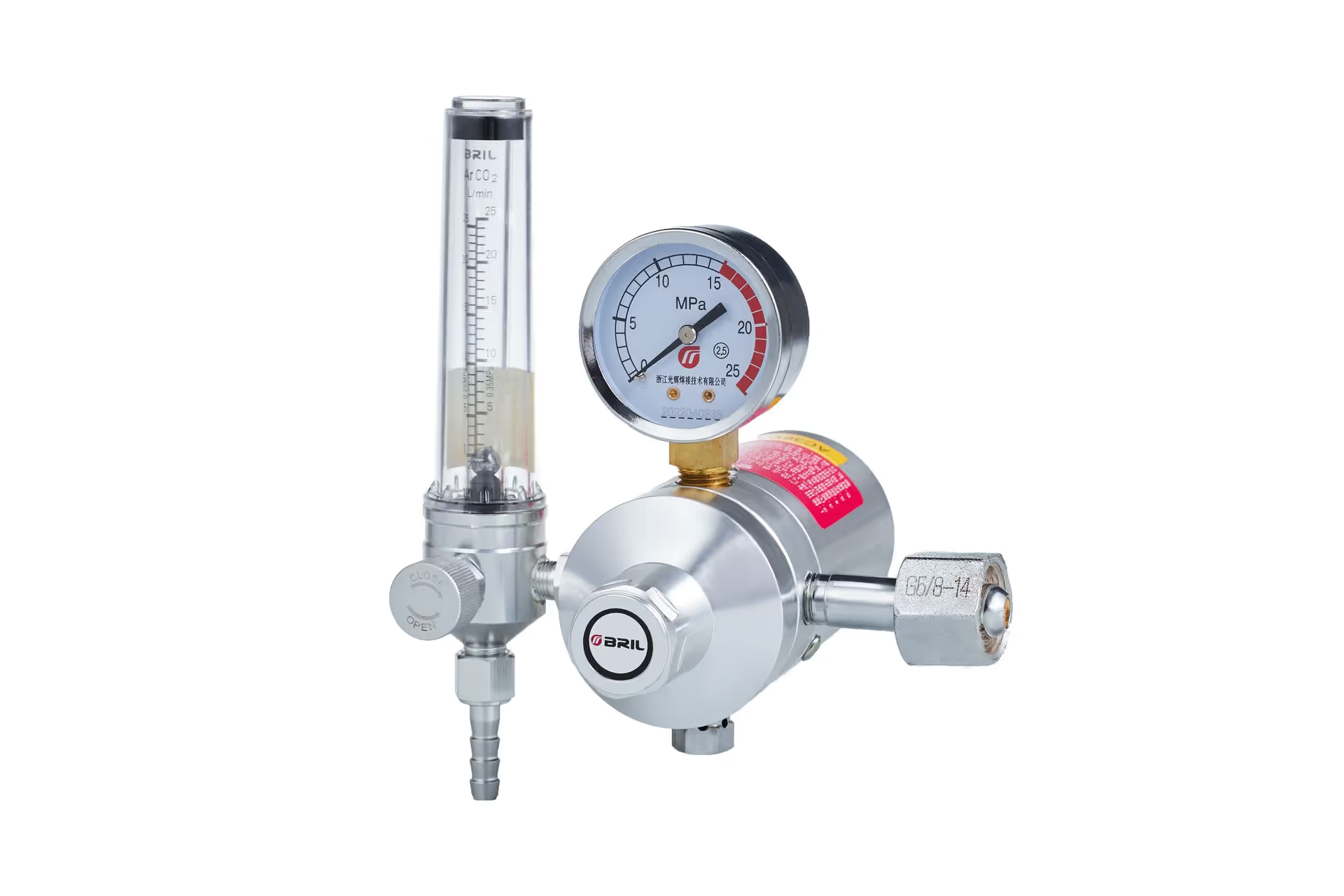
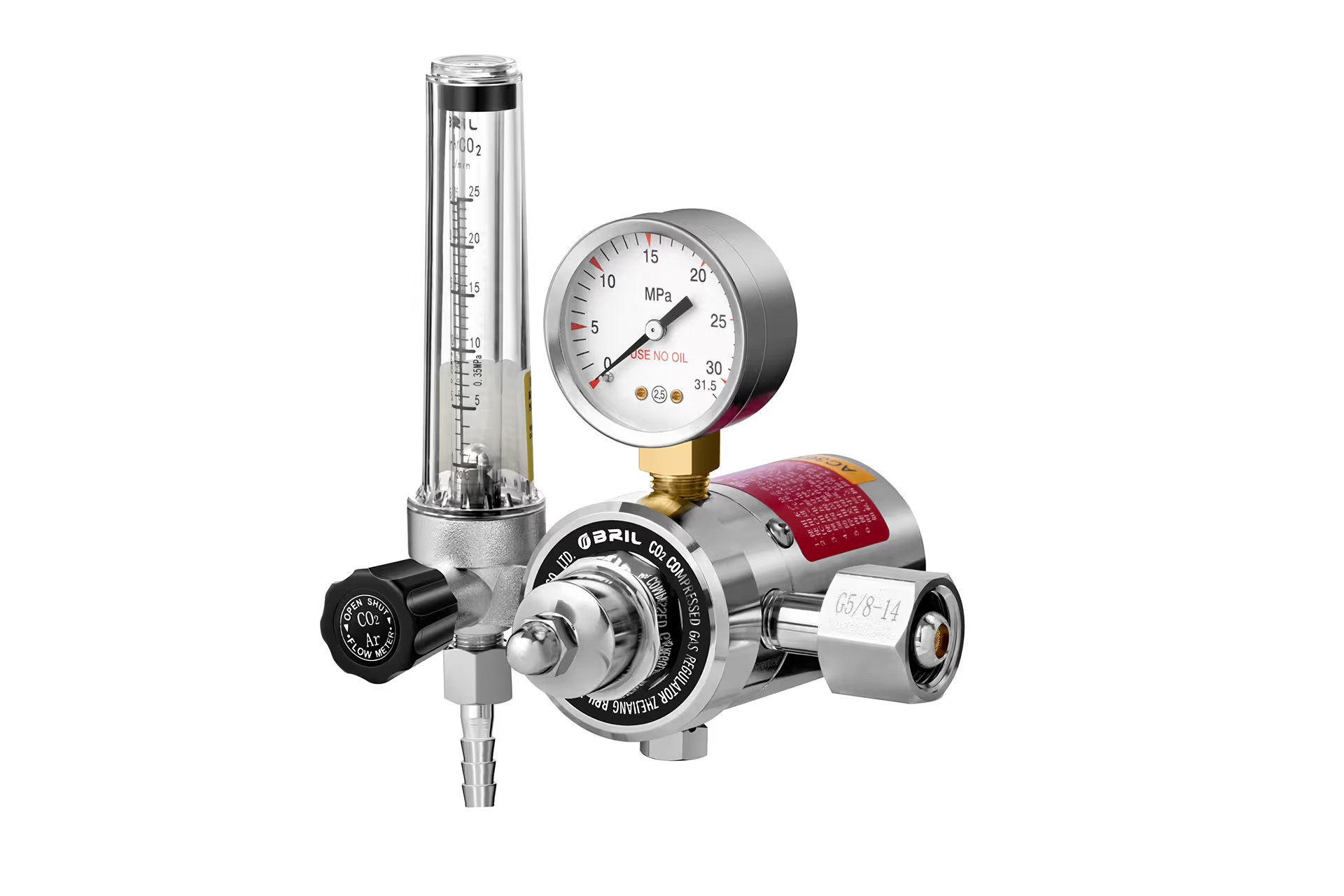
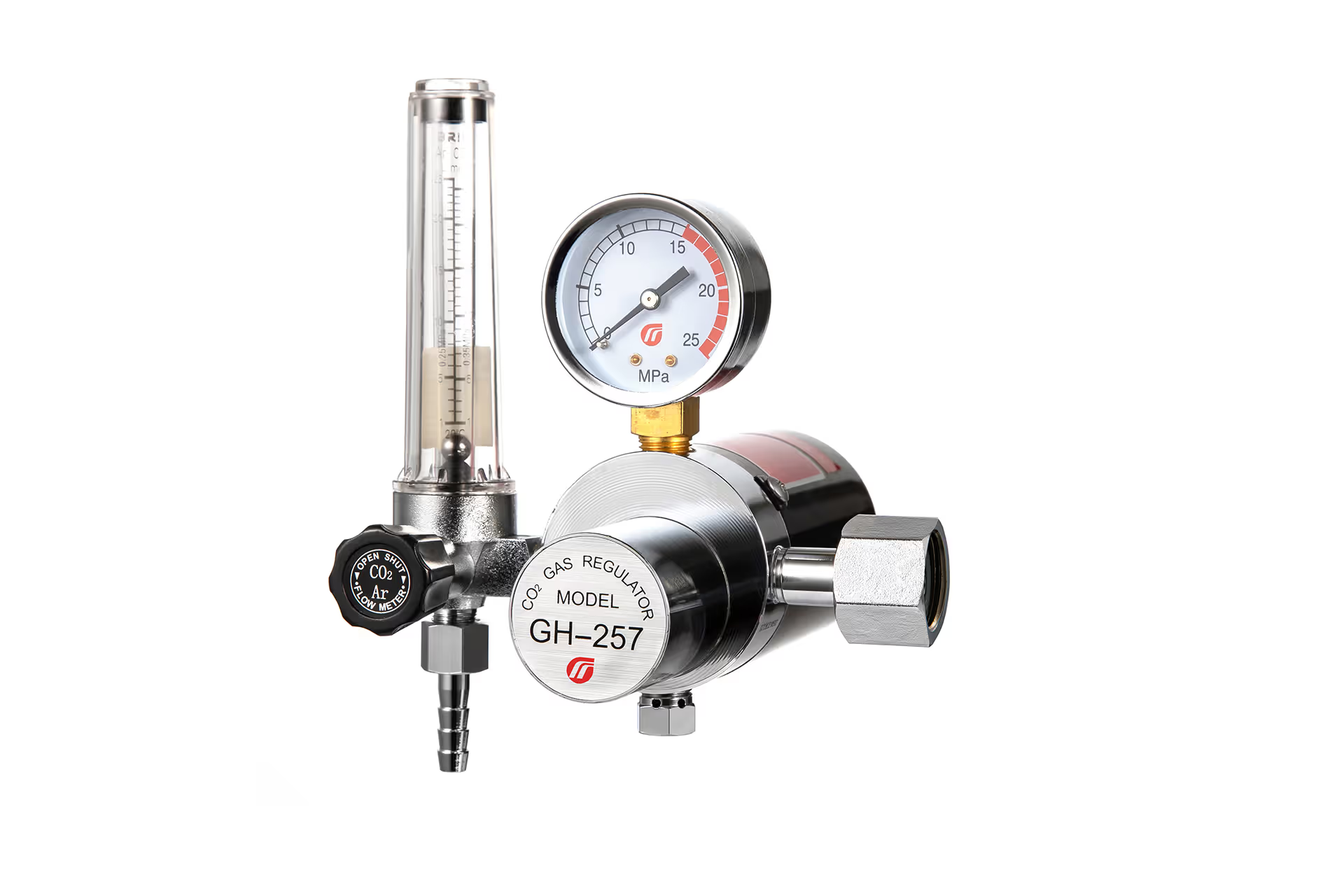
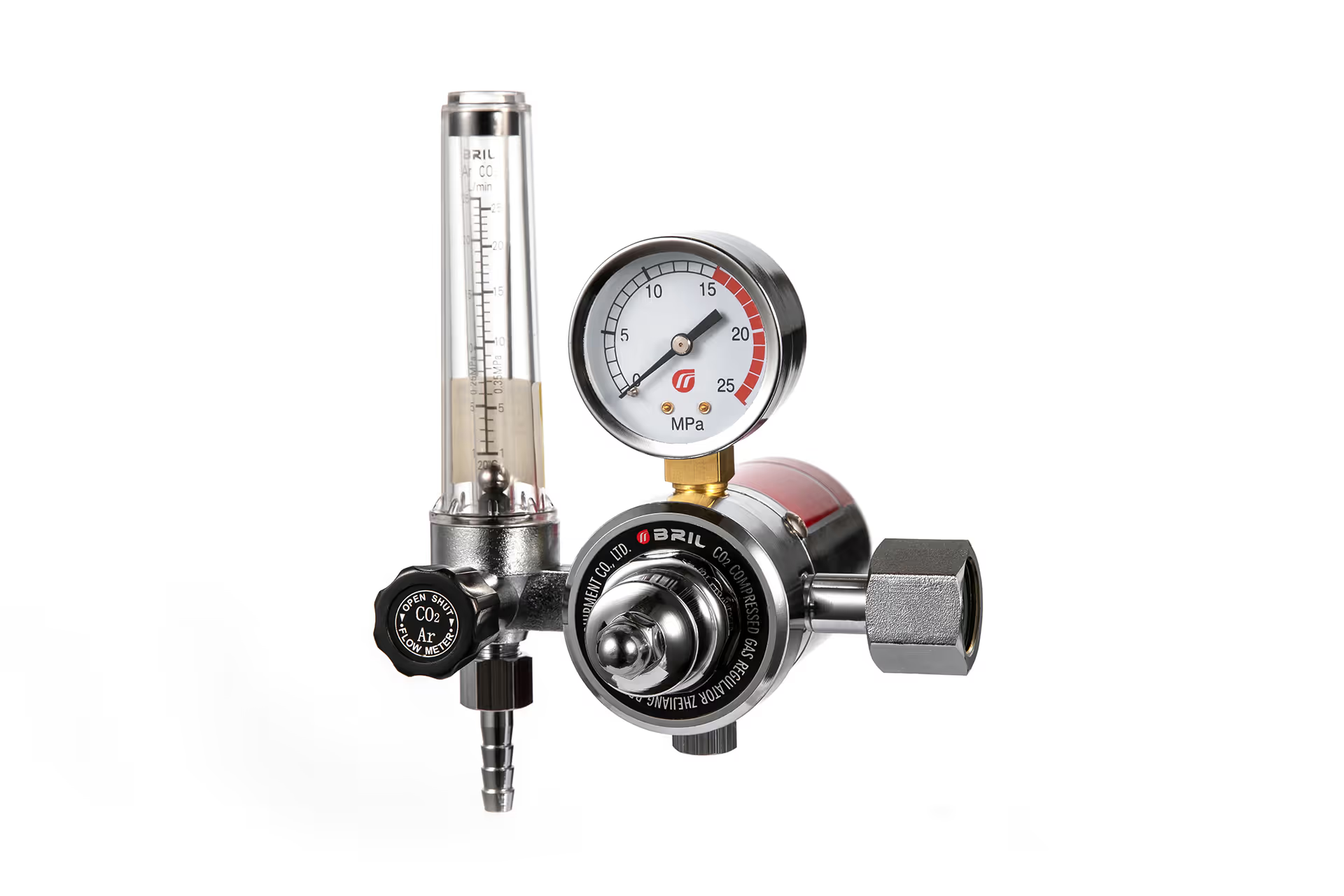
1. Zhejiang Bril Welding Equipment Co., Ltd.
Founded: 2002
Location: Wenzhou, Zhejiang, China
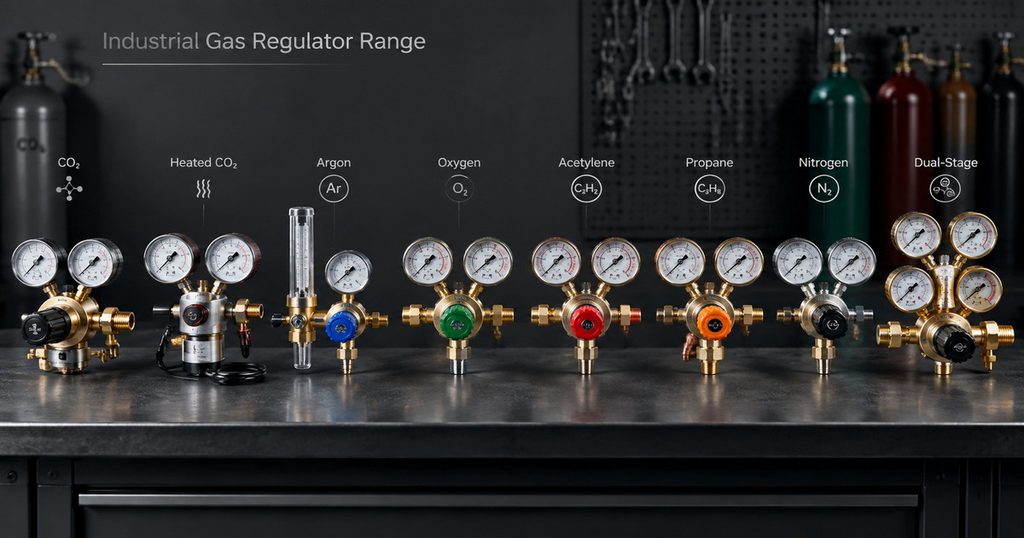
Main products: CO₂ regulators, heated CO₂ regulators, argon regulators, oxygen regulators, acetylene regulators, propane regulators, nitrogen regulators, flowmeter regulators, and dual-stage gas regulators
Core markets: Welding and cutting equipment, industrial gas applications, overseas OEM brands, distributors, and equipment manufacturers
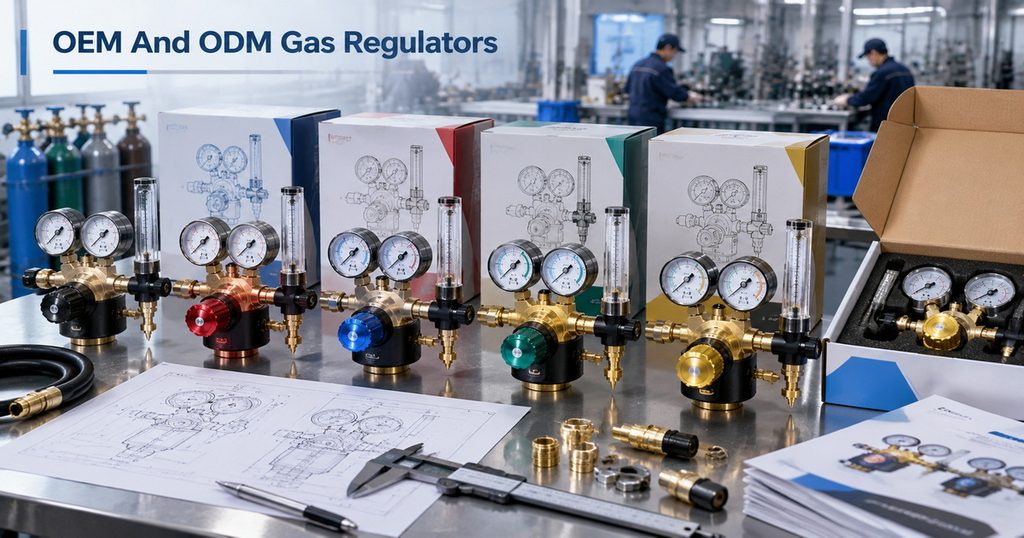
OEM/ODM focus: Private labeling, regulator configuration, packaging, gauges, fittings, color customization, branded product lines, and technical adaptation for export markets
Zhejiang Bril Welding Equipment Co., Ltd. is a specialized gas pressure regulator manufacturer with more than 20 years of experience in industrial gas-control products. The company states that it was founded in 2002 and is located in Wenzhou’s Binhai Economic Development Zone. Its product range covers CO₂, argon, oxygen, acetylene, propane, nitrogen, and dual-stage regulator applications relevant to welding, cutting, and industrial-gas supply.
For overseas buyers, Bril is particularly relevant as a practical partner for mid-sized brands, distributors, welding-machine companies, and industrial-gas businesses that need more support than a basic catalog transaction. Its strength is not just supplying standard regulator models; it is its ability to work on OEM/ODM details such as customer branding, packaging, gauge combinations, gas-specific inlet/outlet fittings, product appearance, label language, and market-oriented product configurations.
The company reports ISO 9001 system certification through UKAS and IAF channels, as well as CE and CNAS-related product certification support. It also states that it has supplied domestic welding-equipment brands and has provided OEM production for international customers, including Messer-related product programs from 2022 onward. These claims should be treated as a strong starting point for due diligence, with buyers requesting current certificates and product-specific documentation during supplier qualification.
Why buyers may shortlist Bril:
– Focused specialization in welding and industrial gas pressure regulators rather than a broad, unrelated product catalog.
– Product coverage across common welding gases, including CO₂ heated regulators and dual-stage designs.
– More than 20 years of stated manufacturing experience.
– Flexible OEM/ODM support that can suit emerging brands, regional distributors, and established equipment companies.
– In-house quality-control positioning, including stated 100% leakage testing before shipment. [chinesewelding]
– Potentially suitable for buyers who value direct engineering communication and customization responsiveness alongside cost control.
Best fit: Private-label welding-equipment brands, distributors requiring differentiated packaging and fittings, industrial-gas suppliers, and customers developing tailored regulator product lines.
2. Ningbo Longtime Gas Control System Co., Ltd.
Location: Ningbo, Zhejiang, China
Main focus: Industrial and gas-control products
Typical buyer profile: Importers, industrial distributors, gas-equipment customers, and buyers requiring Zhejiang-based supply-chain access
OEM/ODM scope: Confirm current capability for branded regulators, packaging, fittings, and model-specific export customization
Ningbo has a strong export-manufacturing environment and is close to major shipping infrastructure, making it attractive for international buyers managing consolidated container shipments. Ningbo Longtime Gas Control System is frequently associated with gas-control product categories and represents the kind of specialist supplier buyers may evaluate when seeking pressure-control products from Zhejiang.
Its suitability will depend on the exact welding-regulator range required. Buyers should distinguish between suppliers focused on household LPG regulators, industrial gas-control assemblies, and welding-specific pressure regulators. The product may look similar externally, but the technical requirements can differ substantially in gas compatibility, working pressure, pressure stability, gauge configuration, and connection standards.
What to verify:
– Whether the factory manufactures welding-specific oxygen, argon, CO₂, acetylene, or nitrogen regulators.
– Whether it can provide export-standard inlet fittings for the buyer’s target country.
– Whether model-level pressure and leakage test records are available.
– Whether OEM customization applies to functional parts or only packaging and logo printing.
Best fit: Buyers seeking Zhejiang-region sourcing options and potentially efficient export consolidation through Ningbo.
3. Ningbo Keryfine Electronic Co., Ltd.
Location: Ningbo, Zhejiang, China
Main focus: Gas-regulation and related gas-control products
Compliance signals: Public listings reference CE, CSA, AGA, and UL-related certifications for selected product categories; buyers must verify exact model and market scope.
OEM/ODM scope: Product configuration, export-market variation, labeling, and packaging should be confirmed project by project
Ningbo Keryfine is relevant for buyers who need a broader gas-control portfolio and may serve multiple commercial, industrial, or residential gas categories. The company is often positioned as a manufacturer with a diverse gas-regulator offering, which can be useful for distributors sourcing several product families from one supplier.
For welding-gas buyers, the key issue is not the total number of certifications shown on a catalog or marketplace page. It is whether the exact model being purchased has valid, applicable test documentation for the intended use and destination market. A CSA, UL, AGA, or CE claim attached to one category should never be assumed to cover all regulator models.
What to verify:
– The precise certification number and scope for the selected regulator.
– Whether the regulator is designed for inert gas, oxygen, CO₂, fuel gas, or general LPG use.
– The design pressure, outlet-pressure range, and flow capability.
– Traceability of gauges, diaphragms, brass components, and safety valves.
Best fit: Distributors that source several gas-control categories and need to evaluate compliance options for specific export markets.
4. Beijing Jingcheng Gas Equipment Co., Ltd.
Location: Beijing, China
Reported experience: Around 30 years in gas-equipment applications, according to public market information.
Main focus: Gas regulators and related equipment for welding, cutting, heating, and laboratory applications
OEM/ODM scope: Likely more suitable for technical or project-based inquiries; confirm commercial MOQ and private-label flexibility
Beijing Jingcheng Gas Equipment is often positioned as an experienced supplier for gas welding, cutting, heating, and laboratory-use products. That broader application focus can be valuable for buyers who need more than standard workshop welding regulators and are also sourcing equipment for gas-distribution, laboratory, or specialized pressure-control environments.
Its potential strength is technical application range. However, buyers should assess whether its production model fits their business. Some technically capable suppliers are strongest in project orders, engineering sales, or higher-specification products, while others are optimized for high-volume private-label export programs.
What to verify:
– Whether the company supports recurring OEM production rather than only technical project supply.
– Product approval documents for oxygen-clean service, laboratory use, or higher-purity applications where relevant.
– Availability of technical drawings, pressure curves, bill of materials, and inspection records.
– Whether spare parts and repair kits are available for long-term distribution programs.
Best fit: Buyers with specialized gas-control requirements, laboratory-related demand, or technical projects requiring more documentation.
5. ABYDA
Location: China
Main focus: Brass valves, gas regulators, and related gas-control products
Public compliance signals: ISO 9001 and claims involving CE, CSA, AGA, RoHS, and REACH in selected product categories; verify by product and destination market.
OEM/ODM scope: Mixed volume, project-based, and catalog-oriented opportunities
ABYDA is frequently presented as a broader brass gas-valve and regulator manufacturer. Its broader product range can be useful for buyers who want to combine regulators with related valves, fittings, connectors, or gas-control accessories in one procurement program.
The trade-off is that product breadth should be matched with application expertise. A supplier that performs well in gas valves or residential regulators may not automatically be the strongest option for professional welding regulators. Procurement teams should review product drawings and testing standards rather than relying only on brass-product experience.
What to verify:
– Whether welding regulator models are developed and tested specifically for industrial gases.
– Brass material composition and manufacturing route.
– Availability of oxygen-clean assembly processes if oxygen-service regulators are needed.
– RoHS and REACH declarations for the exact product, especially for European distribution.
Best fit: Buyers needing combined procurement of brass gas-control hardware and regulators, subject to welding-specific qualification.
6. NOVORS
Location: China
Reported experience: More than 15 years, according to public supplier information.
Main focus: General gas-regulator products, including propane-related regulator categories
Quality-system signal: ISO 9001:2015 referenced in public listings.
OEM/ODM scope: Standard catalog orders, branded packaging, and export configurations should be confirmed directly
NOVORS is known in online sourcing channels for gas-regulator products and is often positioned as a manufacturer with mature experience in regulator production. Its portfolio may appeal to buyers that need standard models at commercially competitive volumes, particularly in gas-regulator categories with established specifications.
For welding buyers, the central qualification question is whether a standard catalog regulator meets the actual performance and safety needs of professional welding and cutting applications. A low-cost regulator can be appropriate for some markets, but it must still meet agreed pressure stability, leak-rate, thread, gauge, and material requirements.
What to verify:
– Technical distinction between welding regulators and household/propane regulator models.
– Consistency of gauge suppliers across repeat orders.
– Whether pressure testing is conducted on 100% of finished units.
– The supplier’s support for customer-specific manuals, labels, and warning information.
Best fit: Buyers seeking commercially competitive standard regulator programs with clear incoming inspection and sample-testing controls.
7. Shenzhen Wofly Technology Co., Ltd.
Location: Shenzhen, Guangdong, China
Main focus: Gas-control systems, pressure regulators, valves, and higher-specification gas-delivery applications
OEM/ODM scope: Technical customization, gas-system integration, precision pressure-control projects, and engineered product requirements
Shenzhen Wofly is relevant for buyers whose needs go beyond conventional single-stage welding regulators. Shenzhen’s industrial ecosystem is strong in electronics, automation, engineering support, and export-oriented manufacturing. Suppliers in this region may be better suited to more technical gas-control products, including systems requiring detailed specifications, specialized materials, multiple-stage regulation, or integration with gas panels and instrumentation.
For standard distributor-grade welding regulators, Wofly may not always be the lowest-cost route. However, it can be worth evaluating when buyers require more technical documentation, specialized pressure ranges, laboratory gas control, semiconductor-related gas handling, or precision-control products.
What to verify:
– Whether the required product is a standard welding regulator or a high-purity/precision regulator.
– Material compatibility and cleanliness requirements.
– Repeatability data, pressure-decay data, and gas-purity considerations.
– Commercial fit for MOQ, lead time, and distributor-level packaging requirements.
Best fit: Technical buyers, laboratory-gas applications, gas-panel projects, and specialized pressure-control programs.
8. Shanghai Empire Mechanical Engineering Co., Ltd.
Location: Shanghai, China
Main focus: Mechanical engineering and industrial gas-control-related solutions
OEM/ODM scope: Project-oriented industrial configurations, technical sourcing, and specialized mechanical requirements
Shanghai remains a major center for industrial engineering, automation, instruments, international trade, and technical service. Suppliers associated with the Shanghai industrial ecosystem can be relevant for purchasers that require documentation, engineering communication, custom assemblies, or support for complex project specifications.
For welding regulator sourcing, Shanghai-based providers can offer a different value proposition from volume-focused factories in Zhejiang or Guangdong. The emphasis may be more technical or project-driven, but buyers should carefully assess whether the company owns core manufacturing, operates as an engineering integrator, or sources from partner factories.
What to verify:
– Whether the supplier is the original manufacturer or a trading/engineering company.
– Factory audit access and control over core machining and assembly.
– Ability to provide manufacturing traceability rather than only commercial documentation.
– Actual OEM ownership, tooling control, and inspection responsibility.
Best fit: Engineering buyers with industrial projects, customized assemblies, or documentation-intensive supply requirements.
9. Hangzhou Zhenda Precision Metallic Technology Co., Ltd.
Location: Hangzhou, Zhejiang, China
Main focus: Precision metal components and related manufacturing
OEM/ODM scope: Precision-machined or metal-component programs, potentially suitable for buyers with custom housing, fitting, or component requirements
Hangzhou’s manufacturing base combines precision metalworking, export production, and proximity to the wider Zhejiang supply chain. A company specializing in precision metallic technology may be relevant where regulator projects require custom metal parts, brass components, machined fittings, or proprietary housing designs.
However, a precision-machining capability does not automatically equal complete regulator-engineering capability. The buyer should verify whether the company designs and assembles finished pressure regulators, conducts full pressure and leak testing, and has experience with gas-specific safety requirements.
What to verify:
– Finished-regulator assembly competence versus component-only manufacturing.
– In-house testing equipment for pressure, leakage, and gauge verification.
– Whether diaphragms, seals, springs, and gauges are internally controlled or sourced externally.
– The company’s experience with export-market regulator standards.
Best fit: Buyers developing custom regulator components, special fittings, or proprietary hardware requiring close machining control.
10. Suzhou Maxonic Automation Control Co., Ltd.
Location: Suzhou, Jiangsu, China
Main focus: Automation control, industrial pressure-control, and engineered systems
OEM/ODM scope: Industrial-control and technically configured pressure-regulation programs
Suzhou is part of one of China’s strongest advanced manufacturing regions, with close links to Shanghai and major industrial customers. Companies in this area often serve automation, instrumentation, process-control, and industrial-system applications.
Maxonic may be of interest to buyers looking for industrial control expertise, especially when gas pressure regulation connects with instrumentation, automation, or system-level control. For standard welding distributor products, the buyer should compare cost structure, MOQ, and catalog breadth against welding-specialist manufacturers.
What to verify:
– Product suitability for portable welding/cutting use versus industrial fixed-system applications.
– Technical documentation, calibration, and pressure-control accuracy.
– Whether the company supports branded retail packaging and distributor-oriented product presentation.
– Availability of standard welding-gas inlet connections and regulator formats.
Best fit: Industrial-system buyers, automation-linked gas-control requirements, and technically specified pressure-control projects.
Supplier Comparison Table
The following comparison is intended as a procurement screening tool, not a substitute for direct supplier quotation, factory audit, or sample validation. Actual capacity, MOQ, and certificates vary by model, order volume, export destination, and customization scope.
| Manufacturer | Main positioning | Typical product focus | Estimated MOQ approach | Certification / compliance signals | OEM/ODM suitability |
|---|---|---|---|---|---|
| Zhejiang Bril Welding Equipment Co., Ltd. | Specialized welding and industrial gas regulator manufacturer | CO₂, heated CO₂, argon, oxygen, acetylene, propane, nitrogen, dual-stage regulators | Often suitable for phased OEM programs; confirm by model, gauge, fittings, and packaging | ISO 9001 claims via UKAS/IAF; CE and CNAS-related claims; ISO 14001 also publicly listed | Strong for private label, technical configuration, packaging, gauges, fittings, and branded product lines |
| Ningbo Longtime Gas Control System | Zhejiang gas-control supplier | Industrial gas-control products and regulators | Model- and project-dependent | Confirm current certificates directly | Suitable where Ningbo sourcing and export consolidation are priorities |
| Ningbo Keryfine Electronic | Broad gas-control portfolio | Industrial, commercial, and general gas regulators | Mixed catalog and customized MOQ | CE, CSA, AGA, UL-related claims for selected products; verify model scope | Suitable for multi-category sourcing and regulated-market product evaluation |
| Beijing Jingcheng Gas Equipment | Technical gas-equipment supplier | Welding, cutting, heating, and laboratory gas equipment | More project-dependent | Confirm current management and product certificates | Potentially suitable for technical projects and higher-documentation requirements |
| ABYDA | Brass gas-control supplier | Brass valves, regulators, fittings, gas-control hardware | Mixed volume and project-based | ISO 9001 and selected CE/CSA/AGA/RoHS/REACH claims | Suitable for combined brass hardware and regulator procurement |
| NOVORS | Standard regulator supplier | General gas regulators and propane-related products | Standard catalog orders commonly possible | ISO 9001:2015 publicly referenced | Suitable for standard product programs after welding-specific validation |
| Shenzhen Wofly Technology | Precision gas-control and system supplier | High-specification regulators, gas systems, valves | Technical/project-oriented | Confirm model-specific standards and material compatibility | Suitable for precision, laboratory, gas-panel, and technical gas-control projects |
| Shanghai Empire Mechanical Engineering | Engineering-oriented supplier | Mechanical and industrial gas-control solutions | Project-dependent | Confirm manufacturer status and certificates | Suitable for technical sourcing and customized industrial requirements |
| Hangzhou Zhenda Precision Metallic Technology | Precision metalworking supplier | Machined metal parts and potential regulator components | Depends on tooling and part design | Confirm finished-product compliance capability | Suitable for proprietary hardware, fittings, housings, and custom component programs |
| Suzhou Maxonic Automation Control | Industrial automation and control supplier | Pressure-control and industrial-system solutions | Typically specification-dependent | Confirm current documentation | Suitable for system-level or automation-linked gas-control applications |
The Procurement Risks Many Buyers Miss
1. “Brass Body” Does Not Guarantee the Same Quality
One of the most common sourcing mistakes is assuming every brass regulator body has comparable performance. Suppliers may use different brass grades, different forging processes, different machining tolerances, and different internal sealing designs.
A regulator body can look identical in product photos while having meaningful differences in:
– Wall thickness.
– Thread engagement depth.
– Machining finish.
– Seat geometry.
– Valve-stem alignment.
– Internal burr removal.
– Brass composition.
– Leakage resistance over repeated adjustment cycles.
How to avoid the risk: Request a material declaration, dimensional drawing, sample cross-section comparison where practical, and a clear statement of whether the body is forged, hot-stamped, or cast. For high-volume programs, consider third-party material verification using XRF testing or laboratory analysis.
2. Gauge Quality Can Destroy Product Reputation
Many distributors focus on the regulator body and forget that gauges are often the most visible source of warranty claims. A poor gauge can have inaccurate readings, condensation inside the lens, pointer deviation, dial-printing inconsistency, damaged threads, or vibration-related failure.
How to avoid the risk:
– Specify gauge diameter and pressure range.
– Define accuracy requirements.
– Confirm gauge supplier and approved sample.
– Ask for incoming inspection requirements.
– Require gauge calibration or verification records when appropriate.
– Keep an approved “golden sample” for repeat-order comparison.
3. Oxygen-Service Cleanliness Is Not a Generic Feature
A regulator intended for oxygen should not be treated as a standard gas regulator with a different label. Oil, grease, particulate contamination, and unsuitable assembly practices can be hazardous in oxygen service.
How to avoid the risk: Ask the supplier to explain its oxygen-cleaning process, lubricant policy, assembly controls, packaging method, and contamination-prevention procedure. If the answer is vague, treat that as a warning sign.
4. Certification May Be Valid—but Not for Your Model
An ISO 9001 certificate indicates a quality-management system, not automatic approval of every product. A CE document may apply only to selected models, test conditions, or regulatory interpretations.
How to avoid the risk:
1. Request the complete certificate, not a cropped image.
2. Check the certificate holder’s legal company name and factory address.
3. Verify the issuing body through its official database where available.
4. Check validity dates and scope.
5. Match the model number on reports to the model you plan to import.
6. Confirm whether the documentation applies to the finished regulator, a component, or a different product category.
5. The Hidden Problem: “Same Sample, Different Mass Production”
An industry issue rarely discussed openly is that some suppliers can produce an excellent pre-production sample but substitute internal components after the order is confirmed. The exterior may remain unchanged while springs, seals, diaphragms, gauges, or brass fittings change to reduce cost.
This is especially common when buyers approve only appearance samples and do not control the bill of materials.
Internal sourcing safeguard: Create an approved technical specification pack before the purchase order is issued. It should include:
– Product photos from multiple angles.
– Full model number.
– Drawing and critical dimensions.
– Approved gauge specification.
– Brass-body requirement.
– Diaphragm and seal material requirements.
– Inlet and outlet thread standard.
– Pressure range.
– Leak-test requirement.
– Packaging standard.
– Required markings.
– A clause prohibiting material or component substitution without written approval.
For larger programs, retain a sealed golden sample signed by both parties and use a pre-shipment inspection plan based on that sample.
Buyer’s Guide: How to Qualify a Welding Gas Regulator Factory
Step 1: Define Your Application Before Requesting Quotes
A complete inquiry should include more than “Please quote CO₂ regulator.” Provide:
– Gas type: CO₂, argon, oxygen, acetylene, propane, nitrogen, or mixed gas.
– Application: MIG/MAG welding, TIG welding, cutting, industrial gas distribution, beverage, laboratory, or other use.
– Required inlet pressure and outlet pressure range.
– Required flow range.
– Cylinder valve connection standard.
– Outlet fitting and hose connection.
– Single-stage or dual-stage requirement.
– Gauge size and pressure scale.
– Heated or non-heated CO₂ requirement.
– Target destination market.
– Required certifications and documents.
– Estimated annual quantity.
– Branding, logo, packaging, and manual requirements.
The better the inquiry, the easier it is to identify suppliers with real technical capacity.
Step 2: Request a Documentation Package
Before sampling, ask shortlisted suppliers for:
– Company registration details.
– Factory photos and production-line video.
– ISO certificates and issuer details.
– Product test reports.
– Product drawings.
– Quality-control flowchart.
– Material information.
– Leakage-test method.
– Packing specification.
– Export-market experience.
– References or case studies where appropriate.
A serious factory should be able to provide organized documentation, even if confidential customer details must be removed.
Step 3: Conduct a Structured Sample Test
Do not approve a sample based only on appearance. A practical sample evaluation should include:
| Test item | What to inspect |
|---|---|
| Visual quality | Surface finish, logo clarity, plating consistency, gauge alignment, label accuracy |
| Thread compatibility | Confirm fit with the intended cylinder valve, hose, torch, or flowmeter |
| Leakage | Test at agreed pressure and duration using an appropriate method |
| Pressure stability | Observe whether outlet pressure remains stable during use and as inlet pressure declines |
| Gauge behavior | Check readability, zero position, repeatability, and accuracy against a reference |
| Adjustment feel | Confirm smooth knob movement without sticking, excessive force, or unstable response |
| CO₂ performance | For heated CO₂ models, test heater function and anti-freeze performance under realistic duty conditions |
| Packaging | Confirm carton strength, inner protection, barcode, labels, manuals, and shipping marks |
Step 4: Audit the Factory or Use a Third Party
A physical audit remains one of the strongest ways to separate a real manufacturer from a trader or loosely controlled assembly operation. If an on-site visit is not practical, buyers can use a reputable third-party inspection company.
During the audit, focus on:
– Brass or metal component storage.
– Machining and assembly workflow.
– Incoming inspection.
– Gauge storage and traceability.
– Air-tightness and pressure-test stations.
– Defective-product segregation.
– Calibration records for measuring tools.
– Finished-goods storage.
– Export packaging line.
– Engineering and sample-development capacity.
Step 5: Use Pre-Shipment Inspection
For first orders, pre-shipment inspection is strongly recommended. Inspectors should use an agreed AQL plan and verify both functional and cosmetic requirements.
Critical checks should include:
– Quantity.
– Correct product model.
– Correct inlet and outlet connection.
– Gauge range and dial language.
– Leakage test.
– Function test.
– Packaging.
– Barcode and label information.
– Carton marks.
– Random comparison with approved golden sample.
Conclusion
China offers a broad and increasingly capable supplier base for welding gas regulators, ranging from standard single-stage models to heated CO₂ regulators, dual-stage designs, high-precision industrial systems, and customized OEM product lines. The most suitable manufacturer depends on the buyer’s product category, destination market, compliance needs, technical specification, annual volume, and branding strategy.
For buyers seeking a welding-focused regulator manufacturer with practical OEM/ODM flexibility, Zhejiang Bril Welding Equipment Co., Ltd. is worth evaluating first. Its stated product coverage includes CO₂, heated CO₂, argon, oxygen, acetylene, propane, nitrogen, and dual-stage regulator solutions, while its Wenzhou manufacturing base and long-term emphasis on industrial gas pressure regulators may suit overseas brands, distributors, and welding-equipment manufacturers that need reliable communication and customized product support.
The strongest procurement approach is straightforward: define the technical requirement, verify certificates and factory capability, approve samples through functional testing, lock the bill of materials, and inspect the first production orders. This process may take more effort than selecting the lowest quote, but it is far less expensive than managing field failures, returns, regulatory problems, or damaged customer trust.
For a tailored quotation, buyers should prepare a clear request covering gas type, connection standard, pressure range, flow requirement, gauge configuration, target market, expected order volume, and OEM packaging needs.
Frequently Asked Questions
1. How can I verify whether a supplier’s ISO 9001 certificate has expired?
Request the complete certificate, including the certificate number, issuing body, validity period, company legal name, and factory address. Then check the issuing certification body’s official validation database when available. Ensure the scope covers the relevant manufacturing activity, not only trading, sales, or unrelated products. ISO certification is useful, but it does not prove that every regulator model meets your performance requirements.
2. Is CE certification enough to sell welding gas regulators in Europe?
Not necessarily. CE marking is not a universal “Europe-approved” label. Buyers must identify which EU legal requirements apply to the exact product and application, confirm the manufacturer’s declaration of conformity, ensure technical documentation is available, and verify that the relevant model—not merely another catalog item—is covered. RoHS, REACH, packaging requirements, product labeling, and local market expectations may also apply.
3. What is the difference between a single-stage and dual-stage gas regulator?
A single-stage regulator reduces cylinder pressure in one step. As cylinder pressure falls, its outlet pressure may change more noticeably. A dual-stage regulator reduces pressure in two stages, generally providing improved outlet-pressure stability as inlet pressure changes. Dual-stage designs are often preferred when steady pressure matters, although the right choice depends on gas type, application, duty cycle, and cost target.
4. What MOQ should I expect for OEM welding gas regulators?
MOQ depends on the level of customization. A standard catalog item with a sticker label may have a relatively manageable MOQ. A custom brass body, proprietary tooling, custom gauge dial, unique fitting, colored finish, printed carton, or dedicated packaging can increase the requirement. Ask suppliers to separate MOQ by product, logo, gauge, packaging, and tooling so you can build a staged launch plan rather than ordering everything at high volume immediately.
5. How do I prevent a factory from changing components after sample approval?
Use a detailed approved specification sheet and a signed golden sample. Include part-level requirements for body material, gauge supplier or specification, diaphragm and seal materials, inlet and outlet fittings, pressure range, leakage criteria, packaging, and labeling. Add a written “no substitution without buyer approval” clause to the purchase order. For new suppliers or high-value orders, use pre-shipment inspection and periodically purchase samples from production batches for independent testing.
References
1. – [Zhejiang Bril Welding Equipment Co., Ltd. — About Us] — Company profile, stated founding year, product scope, certifications, and OEM background. [chinesewelding]
2. – [Bril Welding Equipment — Official Website] — Product categories, stated quality-control approach, and manufacturing positioning. [chinesewelding]
3. – [Made-in-China — Welding Regulator Supplier Directory] — Market directory for comparing Chinese welding-regulator suppliers. [made-in-china]
4. – [Made-in-China — Gas Regulator Supplier Directory] — Broad supplier landscape for gas regulators in China. [made-in-china]
5. – [China Welding Equipment Industry Association] — Industry information and welding-sector reference source.
6. – [General Administration of Customs of the People’s Republic of China] — Official trade and customs information for import/export research.
Hot Tags: Welding Gas Regulator Manufacturers, China Welding Gas Regulator Supplier, OEM Welding Gas Regulator, Industrial Gas Regulator Manufacturer, CO2 Gas Regulator Manufacturer, Argon Gas Regulator Supplier, Oxygen Gas Regulator Manufacturer, Dual Stage Gas Regulator, Heated CO2 Gas Regulator, Welding Regulator OEM ODM