Content Menu
● Why Source Argon Gas Regulators From Turkey?
● How We Selected These Suppliers
>> 1. Verifiable Argon Regulator Relevance
>> 3. Manufacturing and Quality Transparency
>> 4. Commercial Fit and Customization
● Supplier Comparison: Manufacturing Role, Capacity, MOQ, and Compliance
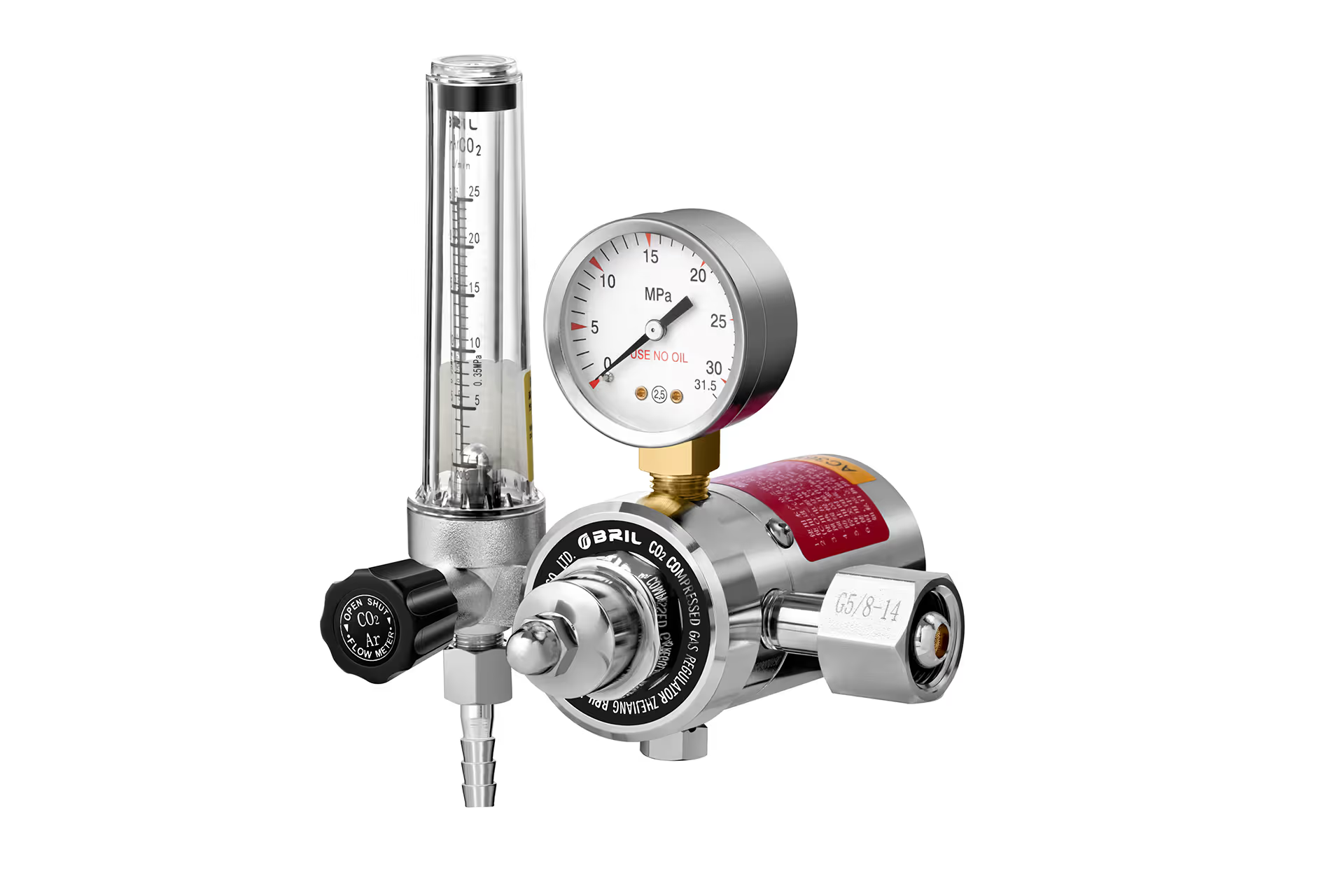
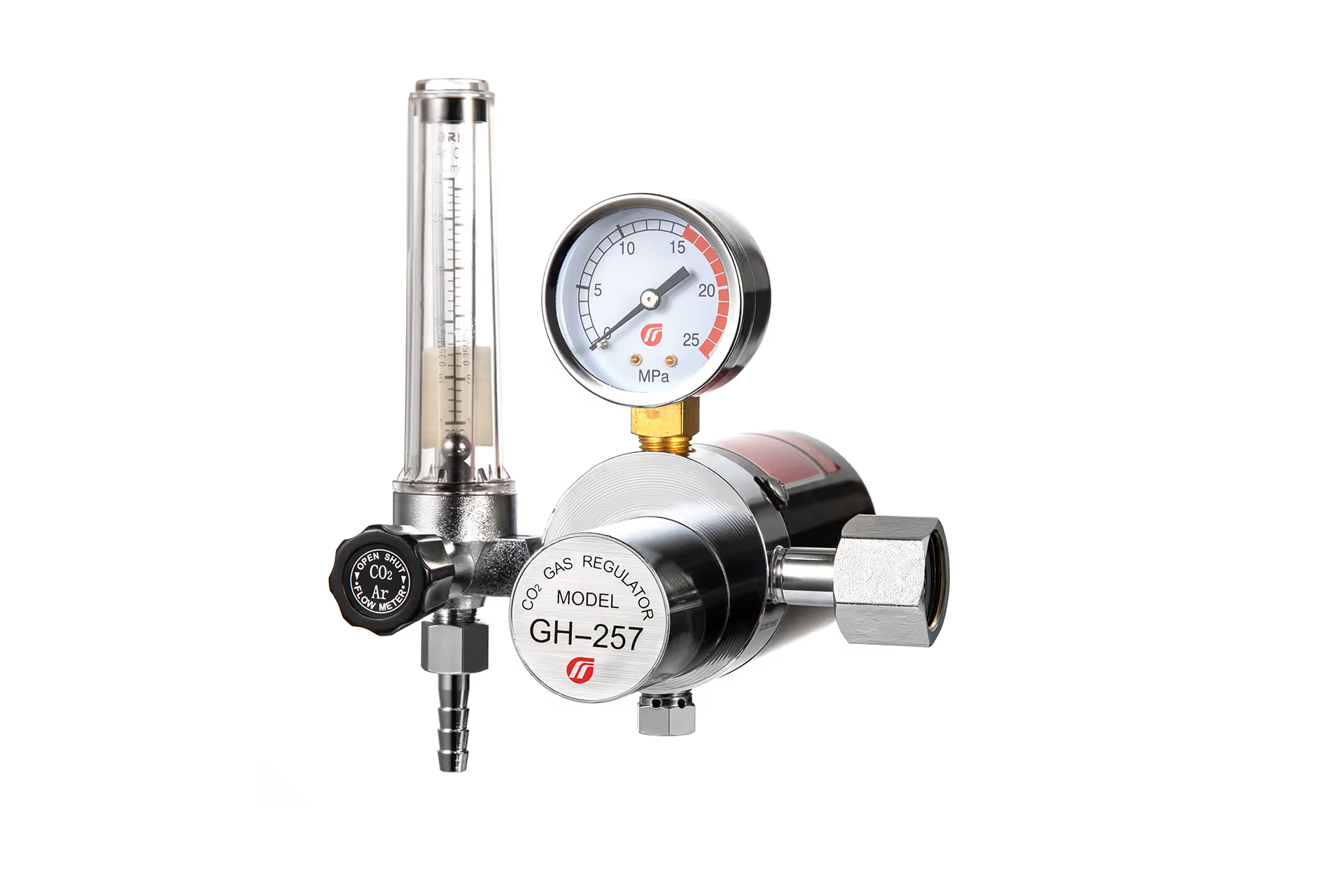
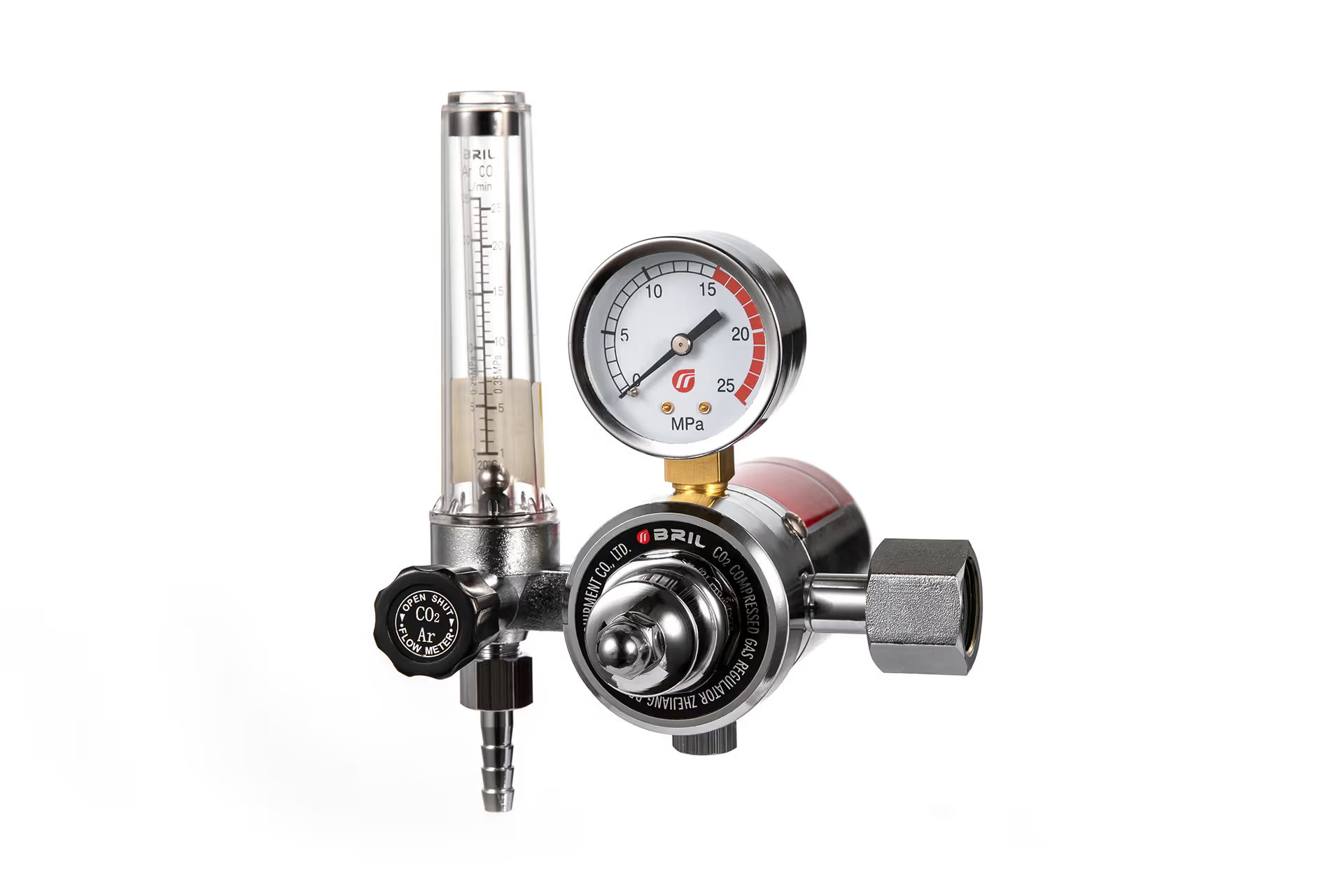
● 1. Zhejiang Bril Welding Equipment Co., Ltd.
>> Company Background and Market Position
>> OEM and ODM Scope to Discuss
● 2. Yıldız Gaz Armatürleri A.Ş.
>> Company Background and Markets
>> Company Background and Markets
>> Company Background and Markets
● 5. Özensan Industrial Machinery and Materials Inc.
>> Company Background and Market Role
● Technical Buying Guide: What Matters Beyond the Brass Finish?
>> Specify the Material, Not Just “High-Quality Brass”
>> Understand Flow-Gauge Versus Flowmeter Designs
>> Treat Compliance as a Model-Specific Exercise
● An Overlooked Procurement Trap: Approving the Regulator but Not the Complete Configuration
● Buyer’s Guide: From Factory Verification to Shipment
>> Verify the Actual Manufacturing Site
>> Use a Written Sample Acceptance Plan
>> Compare Capacity at the Bottleneck
>> Calculate Landed Cost and Delivery Responsibility
● FAQ
>> 1. How Can I Check Whether a Supplier’s ISO 9001 Certificate Is Still Valid?
>> 2. Must Every Argon Regulator Sold in Europe Have a CE Mark?
>> 3. How Can I Confirm That Repeat Orders Use the Same Brass Material?
>> 4. Is a Dual-Stage Regulator Automatically Necessary for TIG Welding?
>> 5. How Can I Tell Whether a Turkish Supplier Manufactures Its Own Regulators?
Choosing an argon gas regulator supplier requires more than comparing brass bodies, pressure gauges, and unit prices. For professional buyers, the real questions concern pressure stability, connection compatibility, production consistency, traceable inspection, and the supplier’s ability to support repeat orders without unexpected design changes.
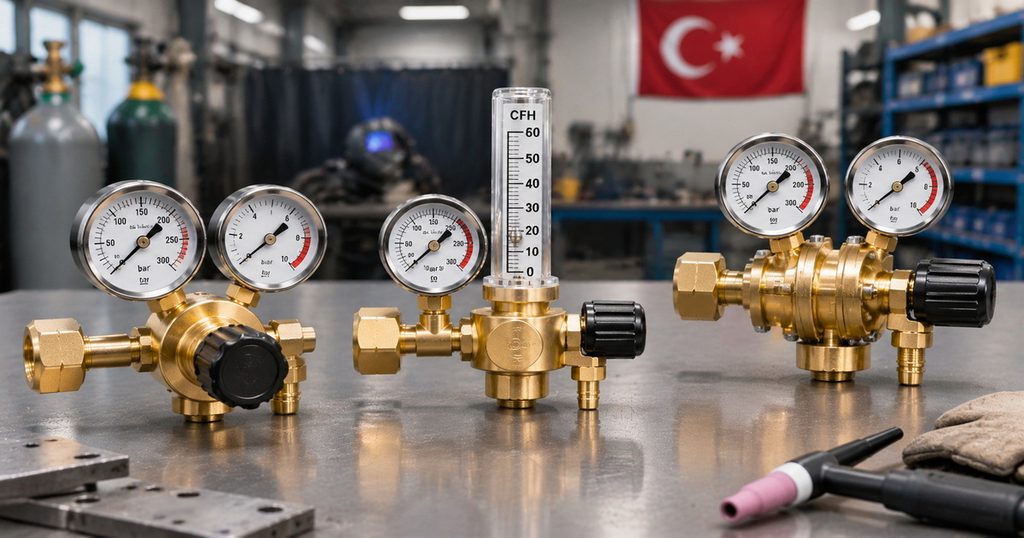
Why Source Argon Gas Regulators From Turkey?
Turkey’s broader machinery industry provides useful context for industrial sourcing. According to the Investment Office of the Presidency of the Republic of Türkiye, machinery exports reached USD 28.7 billion in 2025. The same official industry overview states that 54% of machinery exports go to the United States and European Union countries. These figures describe machinery overall; they are not estimates of Turkey’s argon regulator production or market share.
For buyers, Turkey’s attraction lies in the combination of an established welding-equipment sector, regional distribution networks, and manufacturing locations serving industrial customers. Istanbul and its surrounding industrial corridor are particularly relevant to the companies discussed here: Yıldız identifies Istanbul as its manufacturing base, while Gedik has a long-established Turkish welding-equipment presence. However, a supplier’s location alone does not prove that its regulators are manufactured in-house.
The practical opportunity is therefore not simply “buy Turkish.” It is to identify which sourcing model fits the purchase:
– Direct factory cooperation for repeat specifications and engineering changes.
– Established welding brands for bundled equipment and accessory purchasing.
– Authorized distribution for branded replacements and local technical support.
– Overseas OEM manufacturing for buyers developing their own regulator range.
How We Selected These Suppliers
The comparison uses five procurement criteria.
1. Verifiable Argon Regulator Relevance
A supplier must offer identifiable argon gas regulators, relevant gas-control products, or a documented distribution relationship with a gas-control manufacturer.
A general industrial valve catalog is not sufficient evidence of cylinder-regulator capability.
2. Technical Documentation
Useful documentation should identify:
– Maximum inlet pressure.
– Outlet pressure or flow range.
– Gas service and calibration basis.
– Cylinder and outlet connections.
– Body and cover materials.
– Operating temperature.
– Applicable product standards.
For example, Yıldız publishes model-specific information for its 5343S argon regulator, including inlet-pressure options, a 0–30 L/min flow range, forged brass construction, and EN ISO 2503 compliance claims. Magmaweld also publishes detailed specifications for its argon regulator model 7020001004.
3. Manufacturing and Quality Transparency
Buyers should distinguish manufacturing resources from verified production output.
Employee count, factory area, and the size of a welding-consumables business do not establish how many argon regulators a supplier can assemble, calibrate, and inspect each month.
4. Commercial Fit and Customization
The evaluation distinguishes confirmed OEM activity from customization that still requires negotiation.
Private-label packaging, revised connections, different flow scales, and a redesigned pressure-control mechanism involve very different levels of engineering responsibility.
5. Evidence Boundaries
Public sources do not consistently disclose regulator-specific capacity, minimum order quantities, current certificate status, or committed lead times. Where these details are unavailable, this article marks them as requiring confirmation rather than presenting estimates as facts.
The featured company, Bril, supplied the commissioning information for this article. Its profile below separates company-reported capabilities from independently established product evidence.
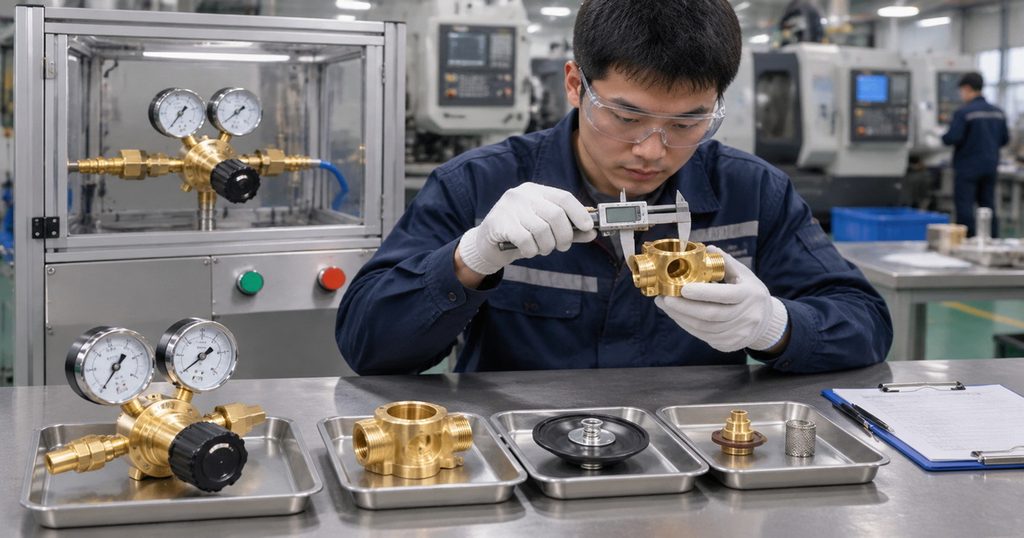
Supplier Comparison: Manufacturing Role, Capacity, MOQ, and Compliance
| Company | Location and sourcing role | Main procurement fit | Public capacity information | MOQ | Certification or standards evidence |
|---|---|---|---|---|---|
| Zhejiang Bril Welding Equipment Co., Ltd. | Wenzhou, China; overseas OEM comparison | Private-label industrial regulator programs | Company reports 200+ employees and over 3,500 m² of production area; regulator output not disclosed | Request by model and customization level | Company reports ISO 9001 and CE-related credentials; obtain current certificates and model-specific documents |
| Yıldız Gaz Armatürleri A.Ş. | Turkey; specialist welding and gas-equipment manufacturer | Buyers prioritizing documented regulator specifications | Regulator-specific monthly output not disclosed in reviewed sources | Request quotation | Model 5343S lists EN ISO 2503 and EN ISO 5171 references |
| Gedik Welding / GEKA | Turkey; welding manufacturer and gas-accessory supplier | Consolidated welding-equipment procurement | Group manufacturing scale is not evidence of regulator-specific capacity | Request quotation | Argon regulator listed; request product-specific reports and current certificates |
| Magmaweld | Turkey; welding-equipment manufacturer and regulator supplier | Equipment packages and standardized accessories | Regulator-specific output not disclosed | Request quotation | Model 7020001004 states EN ISO 2503 compliance |
| Özensan Industrial Machinery and Materials Inc. | Turkey; distributor identifying itself as a GCE representative | Branded gas-control sourcing and local support inquiries | Distributor stock and replenishment capacity require confirmation | Request stock and project-order terms | Confirm authorization, exact GCE model, and associated product documents |
1. Zhejiang Bril Welding Equipment Co., Ltd.
Company Background and Market Position
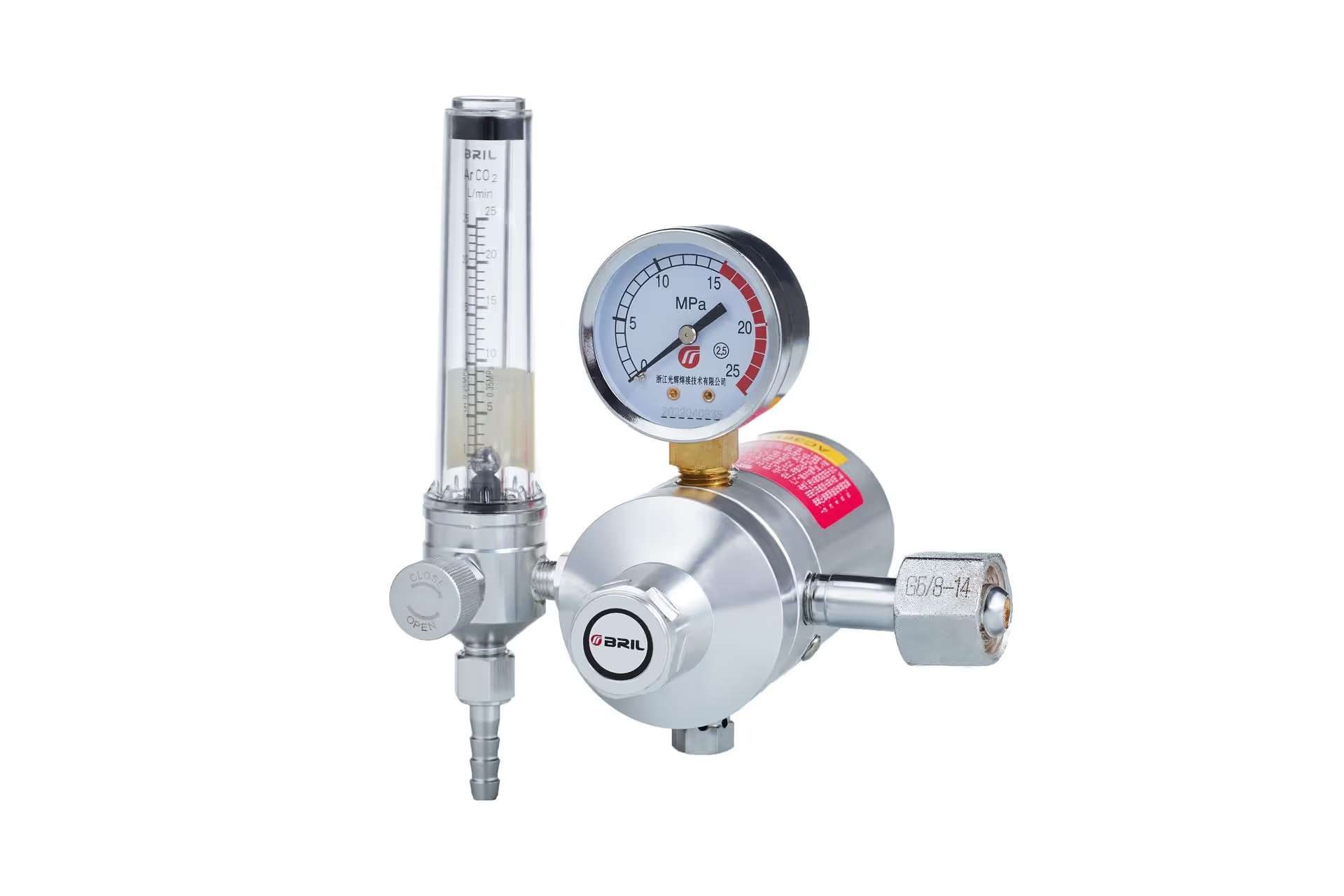
Founded in 2002, Zhejiang Bril Welding Equipment Co., Ltd. is based in Wenzhou, Zhejiang, China. Its company profile describes a business specializing in the development, manufacture, and sale of industrial gas pressure regulators. Bril reports serving more than 30 countries and regions, employing over 200 people, and operating more than 3,500 m² of production space. These are company-published figures rather than independently audited capacity measurements.
Bril is included as an overseas alternative for buyers comparing Turkish supply with direct OEM manufacturing. Its stated product scope includes argon, CO₂, heated CO₂, oxygen, acetylene, propane, nitrogen, and dual-stage gas regulators.
Core Strengths
Bril’s most relevant positioning is as a focused regulator manufacturing partner rather than a broad welding-equipment reseller.
Its company profile reports OEM supply relationships with established welding-equipment businesses and states that it has supplied OEM products for Messer since 2022. Buyers considering these references should request supporting evidence appropriate to the commercial discussion, rather than treating website statements as third-party endorsements.
For smaller and medium-sized brands, the commercial attraction is the potential to coordinate several regulator families through one manufacturing relationship. This may simplify specifications, packaging development, and repeat-order communication.
OEM and ODM Scope to Discuss
The commissioning brief identifies OEM and ODM services as a central offering. A practical development inquiry should cover:
– Cylinder connections for the destination market.
– Gauge scales, units, and artwork.
– Flow ranges and outlet configurations.
– Branding, manuals, and retail packaging.
– Spare-parts kits and product identification.
– Engineering changes requiring fresh validation.
Buyers seeking flexibility should ask Bril to nominate one technical contact and one commercial contact, issue a controlled specification, and confirm how drawing revisions receive approval. Communication efficiency and small-brand suitability should be assessed during sampling—not assumed from promotional language.
Procurement Considerations
Bril’s website refers to ISO 9001, CE, CNAS, UKAS, and IAF-related credentials. These terms describe different parts of the certification and accreditation system and should not be treated as interchangeable product approvals. Request the actual documents, issuing organizations, certificate scope, validity dates, and covered models before approval.
Bril is worth evaluating for a cost-conscious private-label program, but the final value comparison should include testing, freight, import charges, spare parts, and warranty handling—not only the factory price.
2. Yıldız Gaz Armatürleri A.Ş.
Company Background and Markets
Yıldız’s trade-show profile states that the company was established in 1979 and identifies it as a Turkish welding and cutting equipment manufacturer with international expansion ambitions. Its product portfolio includes pressure regulators and other gas-handling equipment.
Its documented market orientation covers Turkey and export customers. The reviewed sources do not provide an audited geographical sales breakdown.
Core Strengths
Yıldız provides particularly useful model-level technical information.
Its 5343S argon pressure regulator lists:
– Inlet-pressure options described as 0–230 bar and 0–300 bar.
– Outlet flow of 0–30 L/min.
– Forged brass body and cover.
– Stainless steel inlet filtration.
– A safety relief valve.
– Operating temperature from −20°C to +60°C.
– Country-specific cylinder connections.
The same page references EN ISO 2503 for regulators and EN ISO 5171 for its gauges, along with TSE and APRAGAZ in the compliance description. These claims provide a clear starting point for requesting the underlying documents.
OEM and ODM Suitability
Yıldız is a logical candidate for buyers prioritizing a specialist Turkish gas-equipment manufacturer.
However, the reviewed material does not establish a standard private-label program, published OEM MOQ, or guaranteed ownership terms for custom tooling. Ask separately about branding, connection variants, modified scales, and engineering development.
Procurement Considerations
Confirm whether the quoted regulator is a flow-gauge model or a regulator with a separate flowmeter. Also obtain the exact inlet-pressure rating and connection drawing for the ordered configuration; a product-family page may cover more than one variant.
3. Gedik Welding / GEKA
Company Background and Markets
Gedik Welding was established in 1963. Its trade-show profile describes a manufacturer of welding consumables and equipment exporting across all continents, with production facilities in Türkiye, Azerbaijan, and India. These statements describe the broader welding business, not necessarily the manufacturing origin of every gas accessory.
Gedik’s GEKA gas-equipment page specifically lists an argon regulator under product code 1051300003, alongside a CO₂ regulator, CO₂ preheater, and flowmeter.
Core Strengths
Gedik is particularly relevant when a buyer wants to consolidate purchasing across welding machines, consumables, and accessories.
An established welding supplier can simplify commercial coordination for distributors assembling a complete product range. Its value proposition differs from that of a regulator-only factory: the benefit may be range integration rather than extensive regulator redesign.
OEM and ODM Suitability
The reviewed sources support Gedik’s broad welding and engineering capabilities but do not establish the available private-label scope for its argon regulator.
Ask whether the regulator is:
– Manufactured in a Gedik-owned facility.
– Produced by an approved external manufacturer.
– Available only under the GEKA brand.
– Eligible for connection or packaging customization.
Procurement Considerations
Do not use electrode or welding-wire production capacity as a proxy for regulator capacity. Request regulator-specific assembly, calibration, inspection, and replenishment information.
For warranty planning, identify which entity supplies repair kits and who approves a replacement when a regulator fails in service.
4. Magmaweld
Company Background and Markets
Magmaweld traces its manufacturing heritage to Oerlikon Kaynak Elektrodları ve Sanayi A.Ş., founded in Turkey in 1957. Its published catalog describes a portfolio covering welding consumables, machines, ancillary products, and automation systems.
The company serves Turkish and international welding customers, although the reviewed regulator materials do not provide a country-by-country sales distribution.
Core Strengths
Magmaweld offers an identifiable argon pressure regulator under product code 7020001004.
Its product page specifies:
– Argon and mixed-gas service.
– Inlet pressure of 0–230 bar.
– Outlet flow of 0–22.5 L/min.
– G 5/8 inlet connection.
– G 1/4 outlet connection.
– Brass body and cover.
– Stainless filtration.
– EN ISO 2503 compliance.
Magmaweld also lists MIG accessory kits combining torches and argon/mixed-gas regulators, making it relevant to distributors purchasing complete welding packages.
OEM and ODM Suitability
The strongest documented fit is standardized branded equipment and accessory supply.
Private-label production, modified internals, and exclusive regulator designs are not established by the reviewed sources. Buyers should obtain written confirmation rather than assuming that a large welding manufacturer offers open OEM development.
Procurement Considerations
Check live availability and replenishment terms. A published catalog entry does not establish stock, production allocation, or delivery time.
For equipment bundles, confirm whether the regulator is included, optional, or replaced by another regional configuration.
5. Özensan Industrial Machinery and Materials Inc.
Company Background and Market Role
Özensan identifies itself as an official Türkiye distributor for several equipment brands, including GCE. Its public introduction emphasizes engineering and spare-parts support. A reliable founding year was not established from the reviewed material and should be requested during supplier onboarding.
This is a distributor sourcing route, not evidence of Turkish regulator manufacturing.
Core Strengths
The potential advantage is access to an established gas-control brand through a Turkey-based commercial contact.
GCE’s published argon portfolio includes regulators for TIG and MIG shielding-gas applications. Its UNICONTROL documentation states conformity with ISO 2503, while its current product description identifies solid-brass construction and a filter-protected valve. Exact models available through Özensan require confirmation.
OEM and ODM Suitability
Buyers should not assume distributor access includes private-label rights.
The more appropriate discussion concerns model selection, cylinder connections, local availability, genuine spare parts, and after-sales support. Any project-specific adaptation should receive written approval from the responsible manufacturer.
Procurement Considerations
Ask for current manufacturer authorization and a quotation identifying the complete product code.
Confirm whether stock is physically held in Turkey, imported against an order, or supplied through another regional warehouse. These distinctions directly affect lead time and warranty administration.
Technical Buying Guide: What Matters Beyond the Brass Finish?
Specify the Material, Not Just “High-Quality Brass”
The reviewed Yıldız and Magmaweld product pages identify brass construction, with Yıldız specifically describing forged brass. Neither statement alone establishes the exact alloy supplied for every model.
Your purchase specification should therefore request:
– Alloy designation and applicable material standard.
– Manufacturing method for pressure-retaining components.
– Material traceability requirements.
– An agreed verification method.
– Written approval before material substitutions.
Surface appearance cannot establish alloy composition or internal manufacturing quality.
Understand Flow-Gauge Versus Flowmeter Designs
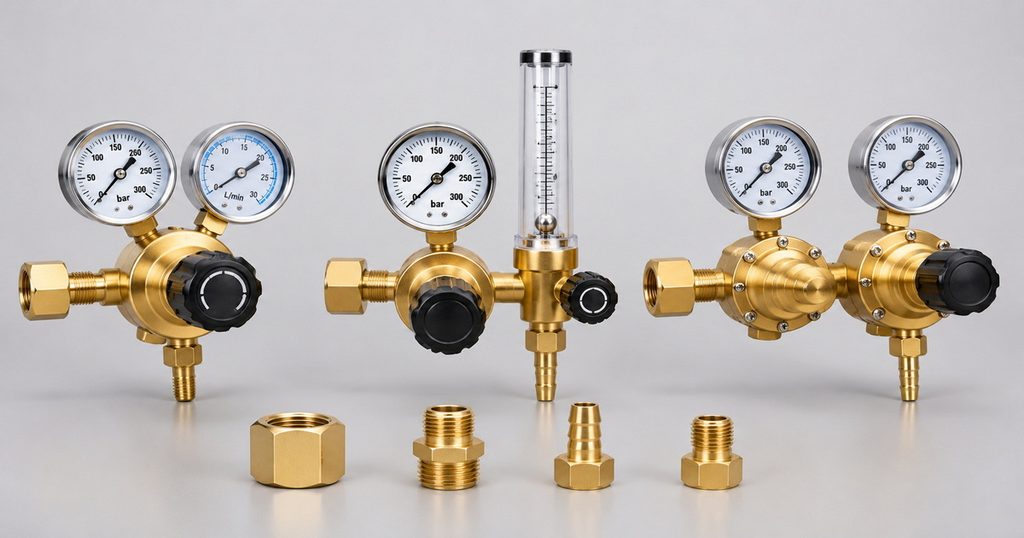
Yıldız and Magmaweld describe the cited models as flow-gauge designs. A flow-gauge regulator and a separate variable-area flowmeter should not be treated as identical purchasing specifications.
Ask the supplier to explain how the displayed flow is derived, the gas and operating conditions used for calibration, and the permitted downstream arrangement.
For acceptance testing, specify whether flow is measured at the regulator outlet or at the torch. Otherwise, two parties can report different results while using different test configurations.
Treat Compliance as a Model-Specific Exercise
EN ISO 2503 is a relevant regulator standard referenced by both Yıldız and Magmaweld for the models discussed here. Buyers should request the applicable report and verify that its model identification matches the supplied product.
CE marking is not a universal quality award. For European supply, the applicable legal framework and pressure-equipment classification must be established. Under the Pressure Equipment Directive, equipment falling within Sound Engineering Practice must not carry CE marking on the basis of that directive, whereas categorized equipment follows the applicable conformity route.
Similarly, do not use a generic RoHS document as proof of pressure safety. For a purely mechanical regulator or an electrically equipped assembly, ask the supplier to explain which requirements apply to the actual supplied configuration.
An Overlooked Procurement Trap: Approving the Regulator but Not the Complete Configuration
A common purchasing weakness is approving a sample by model name while leaving the connection, outlet fitting, gauge range, and downstream test arrangement uncontrolled.
This matters because suppliers may offer country-specific connections within one regulator family. Yıldız explicitly states that cylinder connections are made according to the relevant country and standard, while Magmaweld publishes a particular connection configuration for its listed model.
An effective prevention method is to create a configuration-controlled “golden sample” package:
1. Record the complete product code and revision.
2. Photograph all markings and connections.
3. Approve dimensioned inlet and outlet drawings.
4. Record the gas, inlet pressure, outlet setting, and test arrangement.
5. Seal an approved reference sample.
6. Require written approval for component or configuration changes.
The overlooked issue is not necessarily a visibly defective regulator. It is a repeat order that looks the same but no longer matches the configuration originally tested.
Buyer’s Guide: From Factory Verification to Shipment
Verify the Actual Manufacturing Site
Before placing a production order, ask for a live walkthrough covering the processes relevant to your product.
The review should distinguish in-house activities from subcontracted operations and identify where final assembly, calibration, inspection, and batch release occur.
Request sample records rather than only photographs of equipment.
Use a Written Sample Acceptance Plan
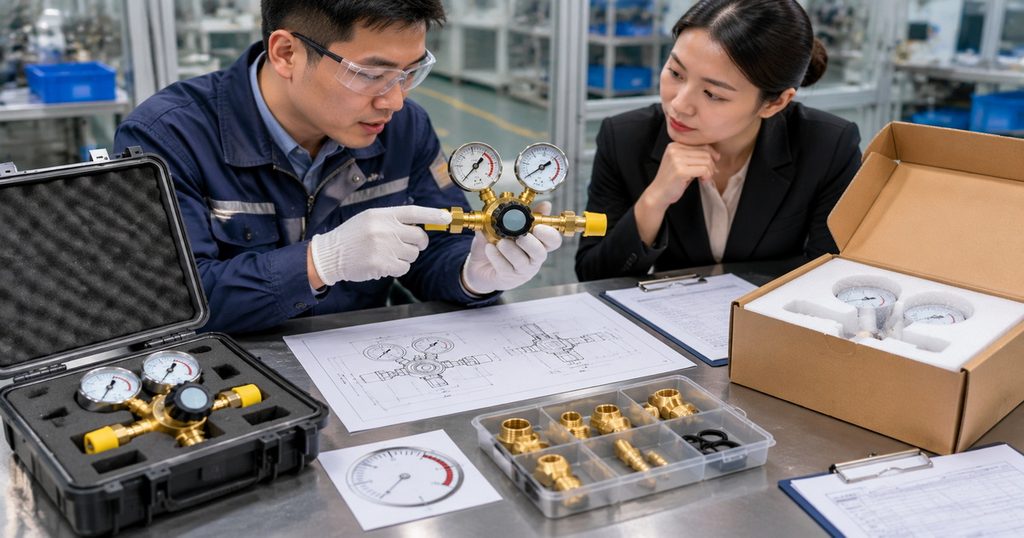
A practical approval sequence is:
1. Review drawings and compliance documents.
2. Evaluate engineering samples.
3. Agree on test methods and acceptance limits.
4. Approve a pilot lot.
5. Review production records before volume release.
Testing involving compressed gas should be performed by qualified personnel using suitable guarded equipment and an agreed procedure.
Do not approve a production program solely because one demonstration sample holds pressure.
Compare Capacity at the Bottleneck
Ask each supplier to quote capacity for your specific model and configuration.
Useful questions include:
– How many units can be assembled and fully tested per week?
– Which operation limits output?
– What quantity is already committed?
– What component has the longest replenishment time?
– How is inspection maintained during overtime production?
A credible answer links capacity to staffing, equipment, test duration, and existing orders—not merely factory floor area.
Calculate Landed Cost and Delivery Responsibility
Compare quotations using the same Incoterm, specification, inspection scope, packaging standard, and warranty arrangement.
The landed-cost model should include freight, insurance, import charges, inspection, inventory holding, and likely replacement handling.
For logistics, protect gauges, threads, and adjustment mechanisms against transit damage. Confirm clean, dry shipping condition and destination-specific documentation with the supplier and freight forwarder.
Country of dispatch should not be confused with country of manufacture. This distinction is particularly important when buying internationally branded products through a Turkish distributor.
Conclusion
The strongest argon gas regulator supplier is the one whose documented capabilities match the purchasing program.
Yıldız offers detailed regulator-specific specifications. Gedik and Magmaweld are relevant to buyers consolidating welding equipment and accessories. Özensan provides a distributor route for inquiries involving GCE equipment, subject to model availability and authorization checks. Bril offers a China-based OEM comparison for buyers developing private-label industrial regulator ranges.
For your next inquiry, send the same specification to every shortlisted supplier: gas service, maximum inlet pressure, required flow, cylinder connection, annual volume, packaging, compliance requirements, and sample acceptance criteria.
For an OEM project with Zhejiang Bril Welding Equipment Co., Ltd., request a drawing review, sample proposal, customization scope, and quotation against that specification. A controlled pilot order provides a stronger basis for long-term cooperation than a low initial price.
FAQ
1. How Can I Check Whether a Supplier’s ISO 9001 Certificate Is Still Valid?
Request the complete certificate, including certificate number, legal company name, manufacturing address, scope, issuing certification body, and validity dates.
Verify its status directly with the issuing certification body using independently obtained contact details. Ask whether it is active, suspended, withdrawn, or affected by an address or scope change.
Also check relevance: a certificate covering trading activities does not establish that the named factory operates a certified regulator-manufacturing process. ISO 9001 documentation should be evaluated separately from model-specific pressure-safety evidence.
2. Must Every Argon Regulator Sold in Europe Have a CE Mark?
Do not decide from the product name alone.
The supplier must identify the applicable legislation and classification for the actual design. Under the Pressure Equipment Directive, Sound Engineering Practice equipment must not carry CE marking under that directive; categorized pressure equipment follows the appropriate conformity-assessment route. Other legislation may apply to additional features or assemblies.
Request a written classification rationale and the documents appropriate to that conclusion.
3. How Can I Confirm That Repeat Orders Use the Same Brass Material?
Make material identity a contractual requirement.
Specify the alloy, component coverage, traceability method, and approval procedure for substitutions. Agree on whether independent material verification will be performed on samples, pilot lots, or periodic production shipments.
Do not accept weight, color, plating appearance, or the phrase “premium brass” as a substitute for a controlled material specification.
4. Is a Dual-Stage Regulator Automatically Necessary for TIG Welding?
No. The procurement decision should follow the required pressure and flow performance, operating conditions, and welding process—not the number of gauges.
Ask the supplier to provide performance data over the intended inlet-pressure range and explain whether the proposed unit has one or two pressure-reduction stages. Two gauges do not, by themselves, document two-stage construction.
For ordinary welding packages, compare the proposed regulator against an agreed performance requirement before paying for additional complexity.
5. How Can I Tell Whether a Turkish Supplier Manufactures Its Own Regulators?
Ask the supplier to identify the manufacturing legal entity and the site responsible for machining, assembly, calibration, and final release.
Cross-check those answers against product markings, certificates, inspection records, and the commercial contract. Request clarification if the brand owner, exporter, and manufacturer are different entities.
An authorized distributor can still be a suitable partner. The important requirement is transparency about origin, technical responsibility, spare parts, and warranty support.
References
1. – Investment Office of the Presidency of the Republic of Türkiye, Machinery Sector Overview: 2025 machinery export value and export-market context. [invest.gov]
2. – Zhejiang Bril Welding Equipment Co., Ltd., About Us: founding year, location, company-reported scale, credentials, and OEM relationships. [chinesewelding]
3. – SCHWEISSEN & SCHNEIDEN, Yıldız Gaz Armatürleri Exhibitor Profile: company history and product categories. [schweissen-schneiden]
4. – Yıldız Gaz Armatürleri, Argon Pressure Regulator With Safety, Model 5343S: technical specifications and standards references. [yildizgaz.com]
5. – SCHWEISSEN & SCHNEIDEN, Gedik Welding Exhibitor Profile: history, production footprint, and international business. [schweissen-schneiden]
6. – Gedik Welding, GEKA Gas Equipment: argon regulator and related accessory listings. [gedik.com]
7. – Magmaweld, 2025 Welding and Cutting Machines Catalog: company heritage and product portfolio. [magmaweld]
8. – Magmaweld, Argon Pressure Regulator 7020001004: materials, connections, flow range, and standards claim. [magmaweld]
9. – Özensan Industrial Machinery and Materials Inc., Official Website: stated Türkiye distribution relationships. [ozensanas]
10. – GCE, Argon and UNICONTROL Product Information: shielding-gas applications, construction, and ISO 2503 statement. [gcegroup]
11. – Intertek, EU Pressure Equipment Directive Compliance: classification, conformity assessment, and Sound Engineering Practice. [intertek]
12. – CE Marking Association, Pressure Equipment: distinction between categorized equipment and Sound Engineering Practice. [cemarkingassociation.co]
13. – U.S. International Trade Administration, Turkey—Standards for Trade: Turkish standards and conformity-assessment context. [trade]
Hot Tags: Argon Gas Regulator Manufacturers, Argon Gas Regulator Suppliers, Argon Gas Regulator Manufacturers In Turkey, Argon Gas Regulator Suppliers In Turkey, Wholesale Argon Gas Regulators, OEM Argon Gas Regulators, Industrial Argon Gas Regulators, Argon Welding Gas Regulators, Dual Stage Argon Regulators, Brass Argon Gas Regulators