Content Menu
● What Is 75/25 Argon CO₂ Welding Gas?
● Argon Regulators vs. CO₂ Regulators: Which Works With C25?
● Flowmeter Regulator vs. Flow-Gauge Regulator
>> Flowmeter Regulators: A Direct Visual Flow Indication
>> Flow-Gauge Regulators: Compact and Practical
● Single-Stage vs. Dual-Stage Gas Regulators
>> When Single-Stage Regulation Makes Sense
>> When Dual-Stage Regulation Adds Value
● Five Specifications to Check Before Buying
>> 1. Cylinder Inlet and Maximum Inlet Pressure
>> 2. Gas Approval and Flow Calibration
>> 4. Delivery Pressure and Downstream Compatibility
>> 5. Materials, Workmanship, and Inspection
● Does C25 Require a Heated CO₂ Regulator?
● A Practical C25 Regulator Setup and Verification Checklist
● An Overlooked Comparison: Steady Flow vs. Start-Up Surge
● How to Compare Regulator Samples Without Misleading Results
● OEM and ODM Buying: Specify the Application Before the Branding
>> 1.Can I use an argon regulator for 75/25 welding gas?
>> 2.Can I use a pure-CO₂ regulator with C25?
>> 3.What flow rate should I use for 75/25 MIG welding?
>> 4.Is a dual-stage regulator necessary for ordinary MIG welding?
>> 5.Why does porosity continue even when the regulator shows flow?
>> 6.Can I use 75/25 argon CO₂ for TIG welding?
Choosing a 75/25 argon CO₂ regulator starts with gas compatibility, cylinder connections, and measurable flow—not simply whether the regulator fits the bottle. For most mild-steel MIG welding applications, a manufacturer-approved argon/CO₂ flowmeter regulator is a practical choice. A dedicated pure-CO₂ regulator may have a different inlet connection, calibration, and thermal design, so the two should not be treated as interchangeable.
What Is 75/25 Argon CO₂ Welding Gas?
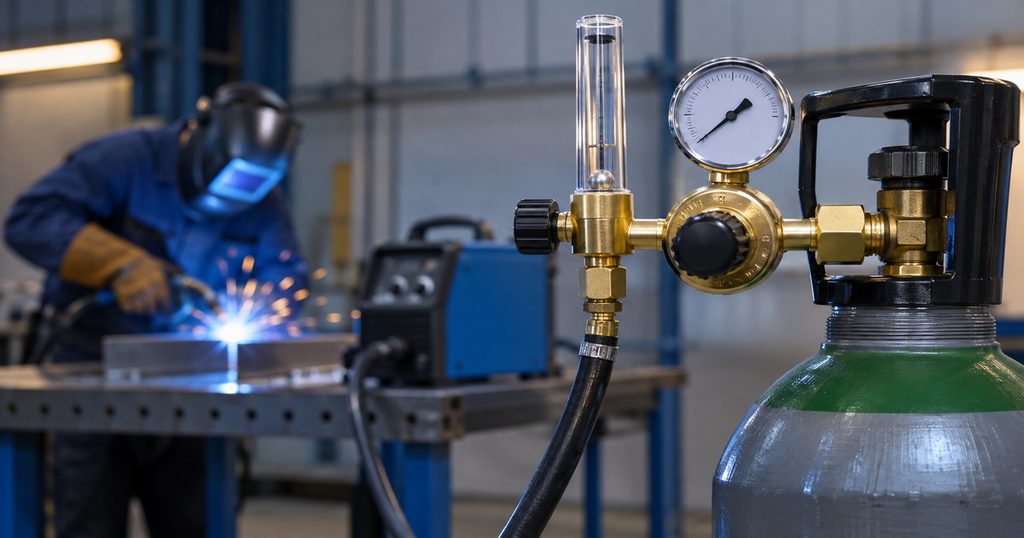
Commonly called C25, this shielding gas contains 75% argon and 25% carbon dioxide. It is widely used for short-circuit MIG welding of mild steel.
Argon supports favorable arc characteristics, while CO₂ contributes to the mixture’s welding performance. Compared with pure CO₂, C25 generally produces less spatter and a smoother bead profile. However, it usually costs more.
The regulator does not create this mixture. When connected to a premixed cylinder, it reduces cylinder pressure and supplies gas to the downstream flow-control system.
Keep three functions separate:
– Pressure regulation reduces high cylinder pressure.
– Flow control determines gas delivery to the welding circuit.
– Gas mixing combines separate gas supplies in specified proportions.
A dual-outlet regulator is not automatically a gas mixer, and an ordinary cylinder regulator cannot independently maintain a 75/25 blend from two cylinders.
Argon Regulators vs. CO₂ Regulators: Which Works With C25?
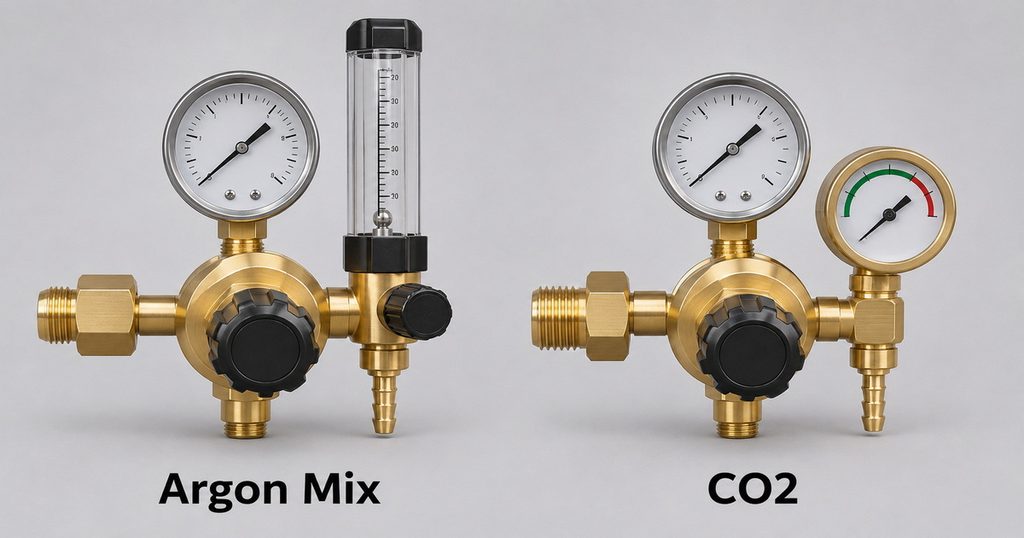
Product names can be misleading. “Argon regulator” sometimes describes equipment approved for both argon and argon-rich shielding mixtures. Conversely, a regulator labeled “CO₂” may be intended specifically for pure carbon dioxide.
| Selection factor | Argon/mixed-gas regulator | Dedicated pure-CO₂ regulator |
|---|---|---|
| Typical service | Argon and approved shielding mixtures | Pure CO₂ or specified CO₂ service |
| Suitability for C25 | Suitable when explicitly approved | Requires explicit manufacturer approval |
| Inlet connection | Often CGA-580 in North American argon-service configurations | Often CGA-320 in North American CO₂-service configurations |
| Flow indication | Must match the approved gas and calibration | Must match CO₂ or another approved calibration |
| Thermal considerations | Selected around mixed-gas operating conditions | May require freeze-resistant or heated designs |
| Purchasing priority | Confirm C25 compatibility and cylinder fit | Confirm gas approval, connection, and thermal capacity |
Flowmeter Regulator vs. Flow-Gauge Regulator
For shielding-gas selection, this comparison is often more useful than “argon versus CO₂.”
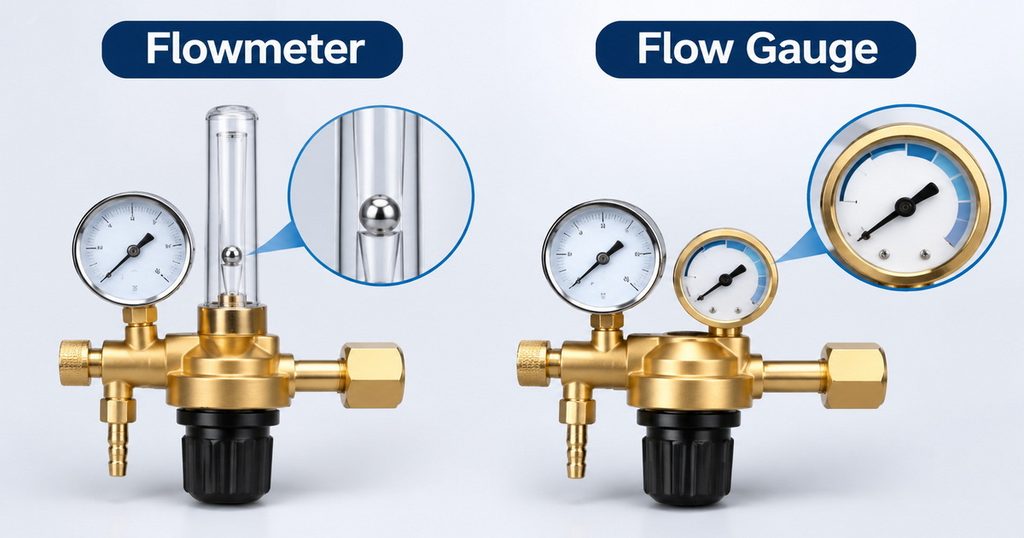
Flowmeter Regulators: A Direct Visual Flow Indication
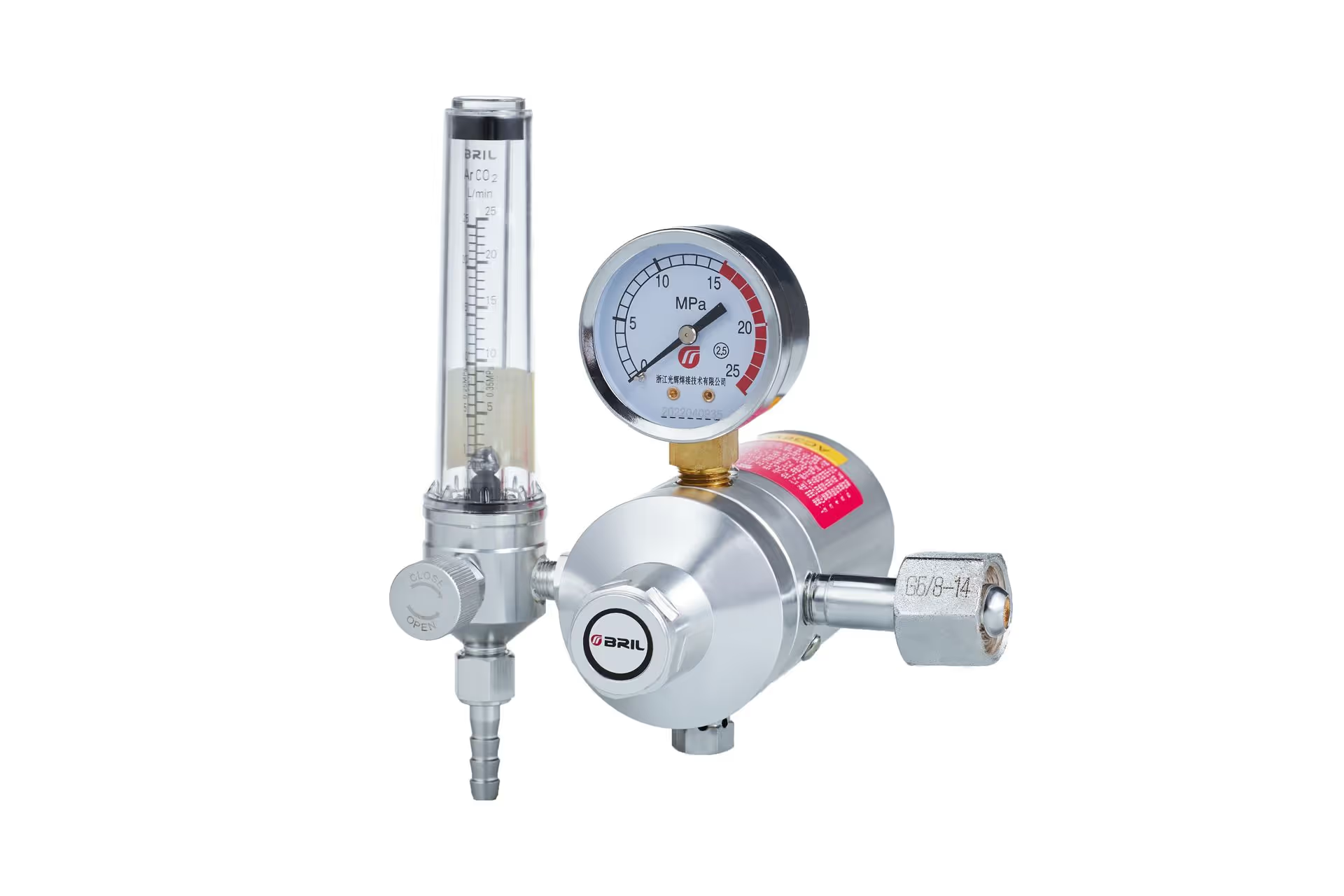
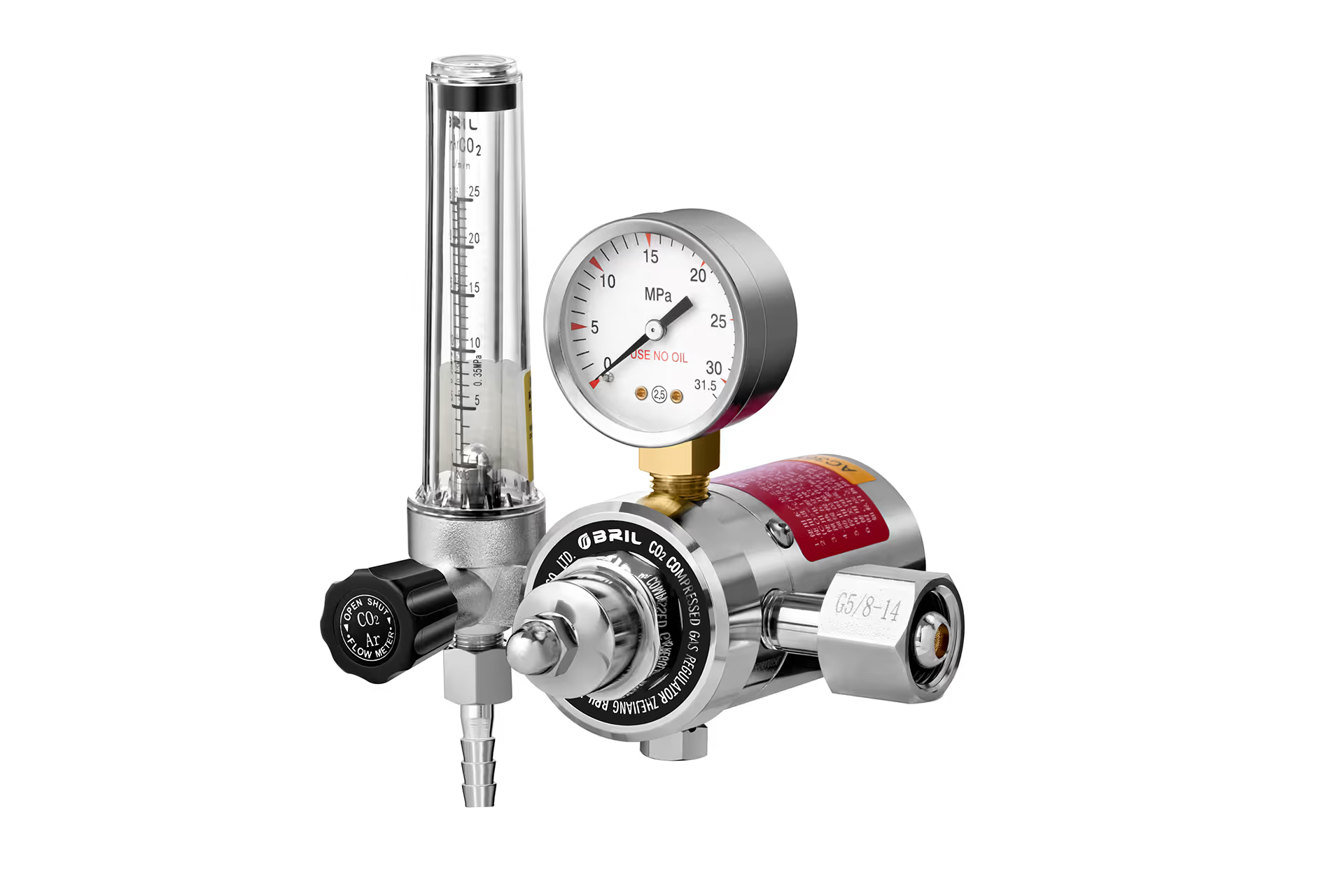
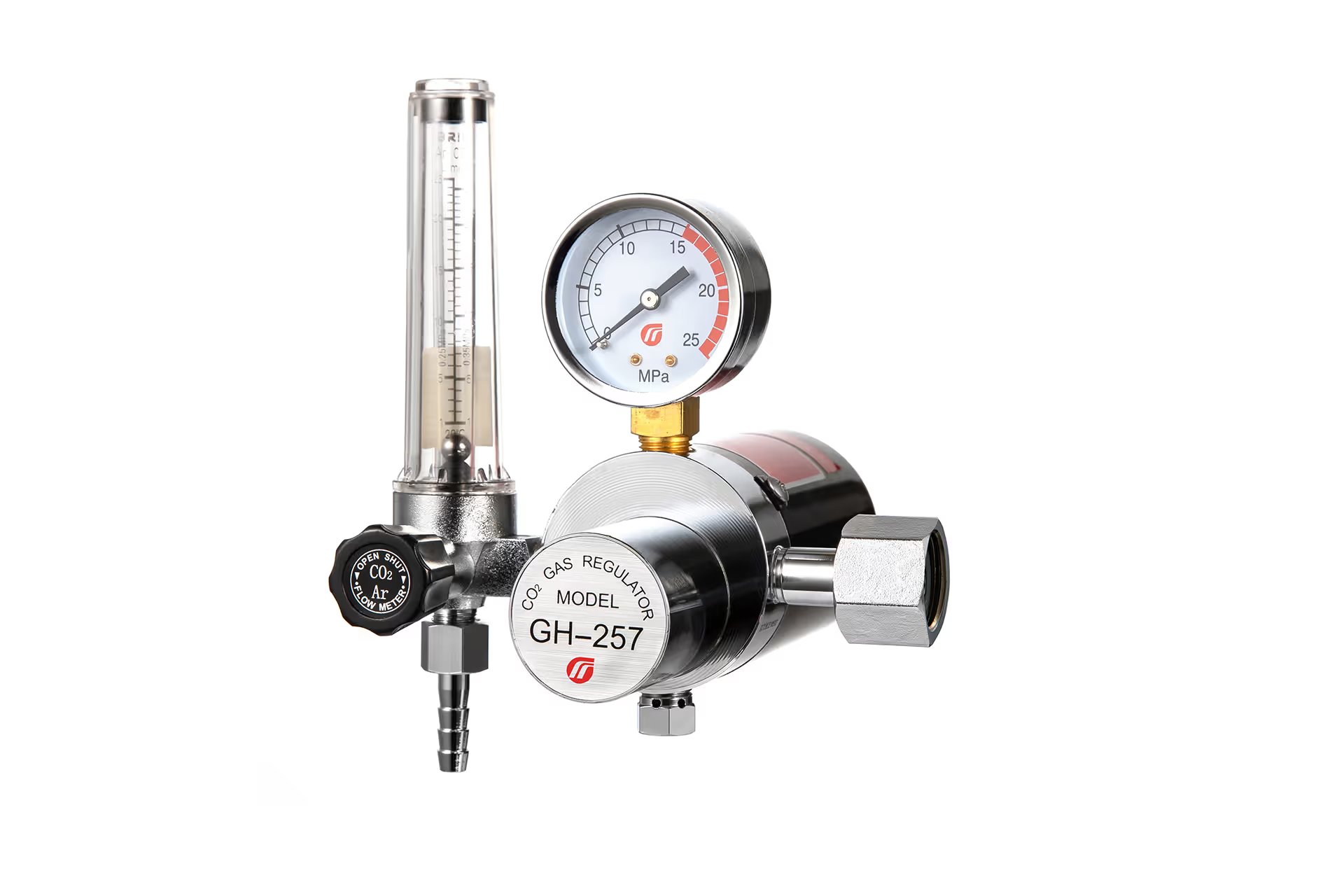
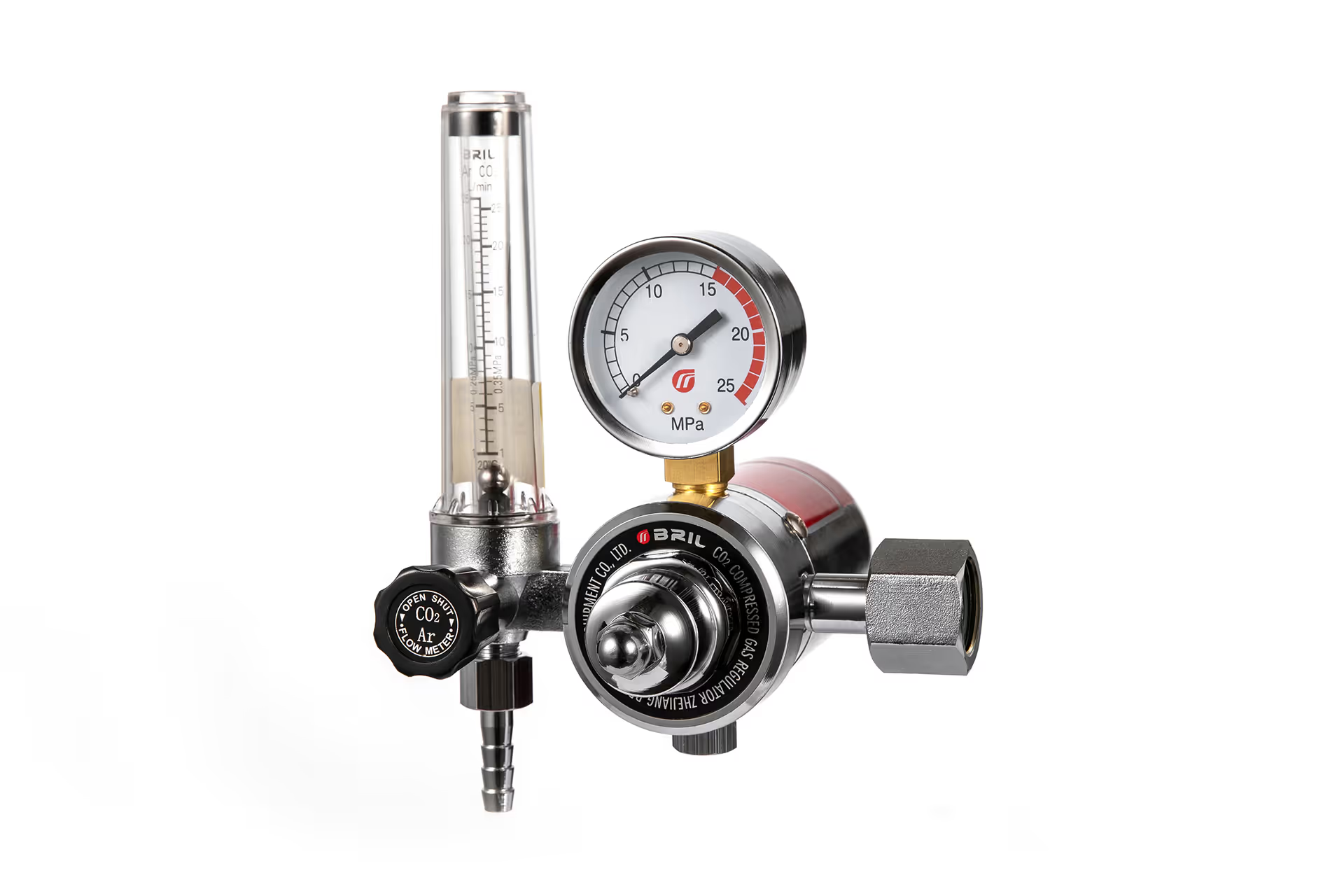
A common flowmeter regulator combines a pressure-reducing regulator with a transparent tapered tube and float.
Its advantages include:
– A visible indication of gas movement.
– Convenient adjustment while gas is flowing.
– An accessible reference for routine setup checks.
However, the reading depends on the specified gas, operating pressure, and installation orientation. Many conventional tubes must remain vertical. Follow the manufacturer’s instructions for reading the float.
A flowmeter is not automatically accurate simply because it has a transparent tube. Calibration conditions still matter.
Flow-Gauge Regulators: Compact and Practical
A flow-gauge regulator typically uses a round dial marked in flow units. It infers flow through a calibrated restriction rather than displaying a float in a tube.
This design can suit routine fabrication and compact equipment packages. However, its reading relies on the intended downstream conditions. Changes in restrictions can affect the relationship between indicated and delivered flow.
| Your priority | Selection approach |
|---|---|
| Easy visual monitoring | Consider a protected tube flowmeter |
| Compact installation | Consider a suitably protected flow-gauge model |
| Different hoses or torches | Verify actual delivery at the torch |
| Consistent production setup | Standardize the regulator and downstream circuit |
| Demanding accuracy | Request documented performance under defined conditions |
Neither design should be judged on appearance alone. Ask how its performance was measured.
Single-Stage vs. Dual-Stage Gas Regulators
A single-stage regulator reduces cylinder pressure in one step. A dual-stage regulator performs that reduction in two successive stages.
When Single-Stage Regulation Makes Sense
A properly selected single-stage regulator is suitable for many industrial welding applications. It can provide a practical balance of cost, size, and performance.
However, delivery pressure can change as cylinder pressure falls. The magnitude depends on the regulator’s design and operating conditions.
When Dual-Stage Regulation Adds Value
Dual-stage regulators generally maintain more consistent delivery pressure as inlet pressure changes. They deserve consideration for:
– Long production runs.
– Difficult-to-monitor cylinders.
– Applications sensitive to delivery-pressure changes.
– Systems where frequent readjustment is undesirable.
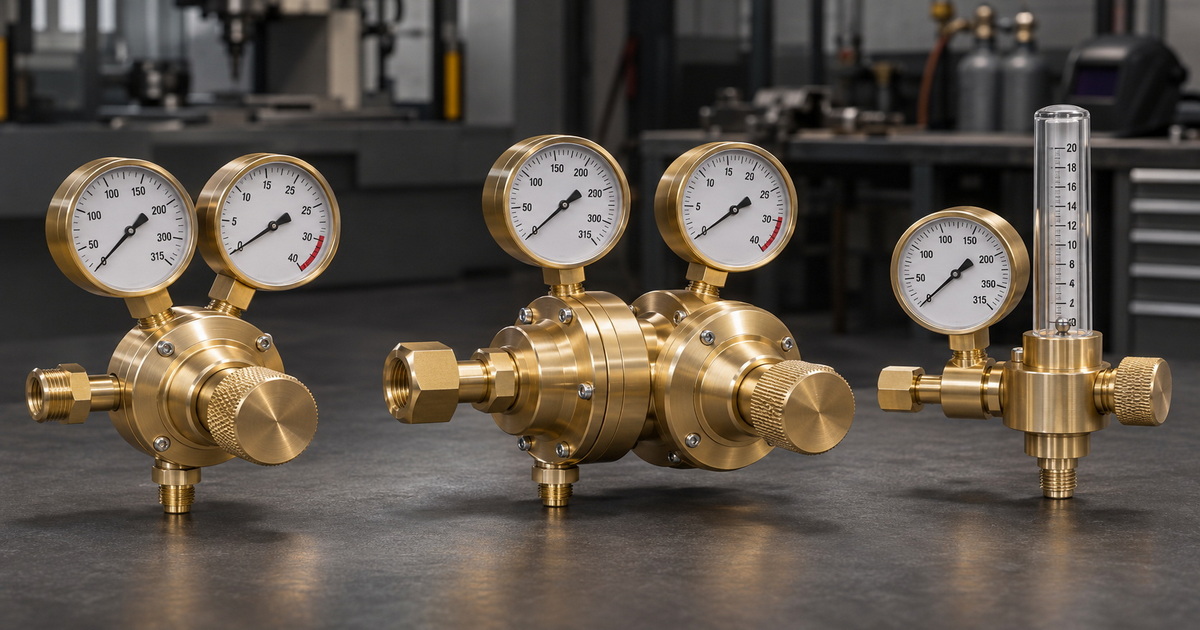
Two gauges do not mean two-stage construction. One gauge may indicate cylinder pressure while another indicates delivery pressure or inferred flow.
Likewise, two flowmeter tubes usually indicate two controlled outlets—not two pressure-reduction stages.
Five Specifications to Check Before Buying
1. Cylinder Inlet and Maximum Inlet Pressure
Obtain the cylinder supplier’s valve specification before ordering.
Confirm the connection standard, sealing arrangement, and maximum supply pressure. A regulator’s maximum inlet rating must be appropriate for the cylinder supply, not merely its pressure on the day of installation.
2. Gas Approval and Flow Calibration
Ask whether the exact model is approved for 75/25 argon/CO₂.
Then confirm:
– Which scale applies to the mixture.
– The required flowmeter operating pressure.
– Whether a correction factor is necessary.
– The stated accuracy and its measurement basis.
A scale for one gas should not automatically be treated as accurate for another.
3. Useful Flow Range
Choose a range that makes normal operating settings easy to read and adjust. An unnecessarily large scale can make fine adjustment less convenient.
Miller recommends 25–35 cubic feet per hour for MIG short-circuit welding in its general guidance. That is approximately 12–17 liters per minute.
Treat this as a starting reference, not a universal setting. The welding procedure, wire supplier, nozzle, joint geometry, and environment take priority.
4. Delivery Pressure and Downstream Compatibility
Flow and pressure are different quantities.
Commercial argon/CO₂ flowmeter regulators are available with different preset pressures. A higher pressure does not automatically mean better shielding or better equipment.
Match the regulator’s delivery conditions to the flowmeter, hose, machine inlet, and other downstream components.
5. Materials, Workmanship, and Inspection
Brass is widely used in industrial regulator construction, but “brass body” alone does not establish quality.
For a meaningful supplier comparison, request information about:
– Material identification and traceability.
– Machining and connection tolerances.
– Diaphragm, seat, and seal compatibility.
– External leakage and seat-leakage inspection.
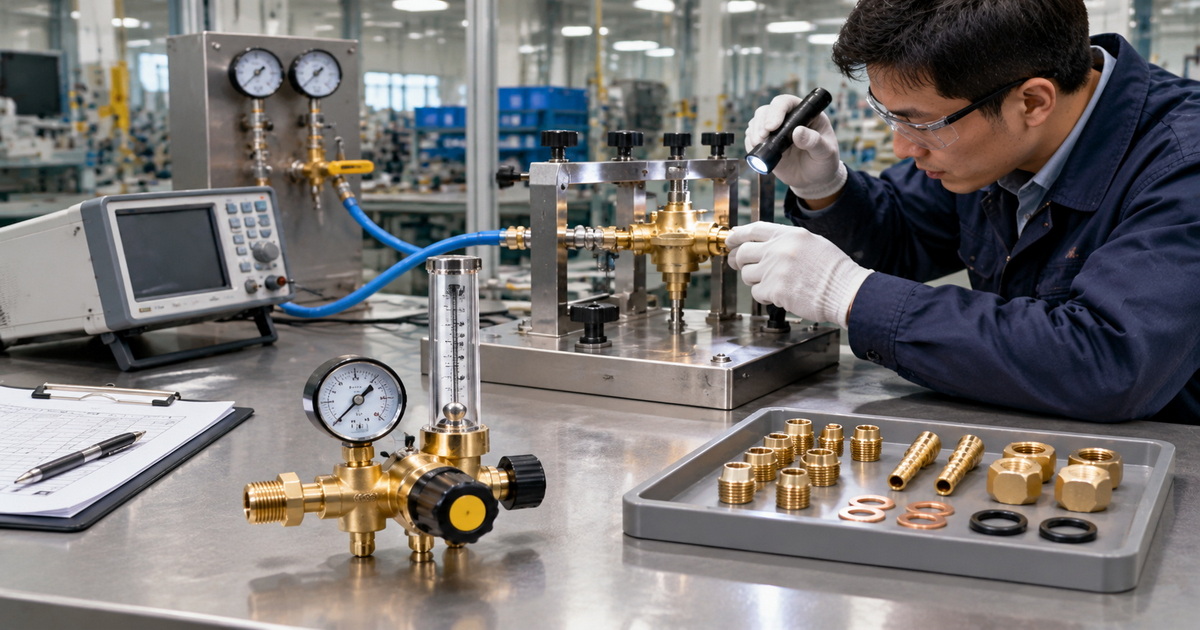
– Pressure and flow verification.
Evaluate the complete assembly rather than body weight or surface finish.
Does C25 Require a Heated CO₂ Regulator?
Do not specify a heater merely because the gas mixture contains CO₂.
Heated regulators address applications where operating conditions create a significant freeze-up risk. Harris identifies flow rate, inlet conditions, duty cycle, and regulator size as important factors in CO₂ freeze-up.
This is especially relevant to demanding pure-CO₂ service. C25 selection should instead begin with the mixed-gas regulator manufacturer’s approved operating envelope.
Before adding heating, establish:
1. The exact gas composition.
2. Whether the supply is gaseous or involves liquefied-gas equipment.
3. Required continuous and peak flow.
4. Ambient operating conditions.
5. The manufacturer’s thermal limitations.
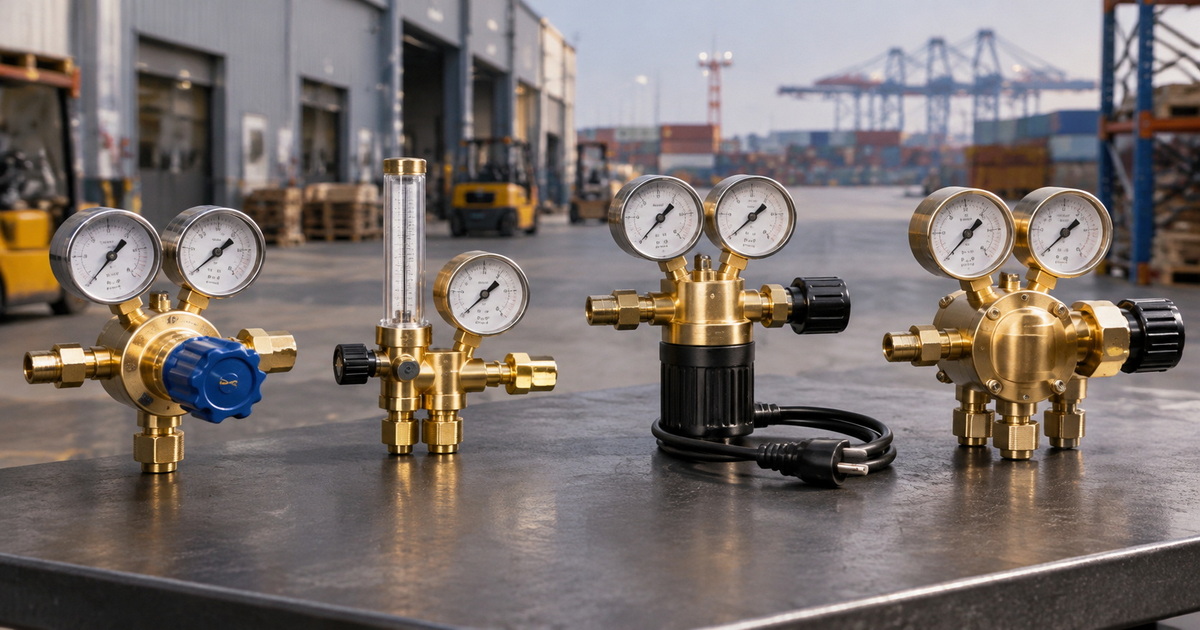
If heating is required, also verify electrical supply, temperature protection, and destination-market requirements. Never attempt to solve icing with an open flame or improvised heating method.
A Practical C25 Regulator Setup and Verification Checklist
Installation should be performed by trained personnel following the cylinder supplier’s and equipment manufacturer’s instructions.
Use this checklist to structure verification—not to replace the product manual.
1. Secure the cylinder and confirm its label. Identify the gas from the label, not cylinder color alone.
2. Inspect the regulator and connection. Stop if components are damaged, contaminated, or incompatible.
3. Confirm pressure ratings and approved gas service. Include downstream equipment in this check.
4. Install and pressurize according to the manual. Do not force mismatched fittings.
5. Check for leaks using an approved method. Never use a flame.
6. Set flow with gas actually moving. Use the machine’s purge function or approved setup procedure.
7. Verify delivery at the torch when troubleshooting. A regulator reading does not prove adequate nozzle flow.
8. Record the successful configuration. Include flow, nozzle, hose, wire, and welding conditions.
If shielding remains poor, investigate leaks, restrictions, drafts, and torch assembly before increasing the setting.
Excessive flow can waste gas and create turbulence that draws atmospheric contamination into the shielding envelope.
An Overlooked Comparison: Steady Flow vs. Start-Up Surge
Two regulators can show the same steady-flow setting yet behave differently when the welding-machine solenoid opens.
Gas stored under pressure in the hose can discharge as an initial surge. For stop-start production, this transient behavior deserves attention alongside the dial reading.
Harris offers shielding-gas regulators specifically designed to control surge, illustrating why steady-state flow is not the only selection criterion.
For a purchasing evaluation, request measurements of:
– Initial flow behavior after the solenoid opens.
– Time required to reach stable flow.
– Flow repeatability over repeated cycles.
– Performance with the intended hose arrangement.
Do not assume a dual-stage regulator automatically solves surge. Pressure stability and transient-flow control are related but distinct design questions.
How to Compare Regulator Samples Without Misleading Results
| Test item | What it helps establish |
|---|---|
| Steady-flow repeatability | Whether settings remain reproducible |
| Performance across inlet pressures | Sensitivity to cylinder-pressure changes |
| Start-stop cycling | Transient behavior during production |
| Leakage checks | Connection and sealing integrity |
| Adjustment usability | How easily operators achieve the target setting |
OEM and ODM Buying: Specify the Application Before the Branding
For overseas brands and distributors, a successful regulator program begins with an application specification.
Provide the manufacturer with:
– Destination country and cylinder-valve standard.
– Approved gas mixtures and maximum inlet pressure.
– Required flow range and units.
– Outlet connection and hose requirements.
– Single-stage or dual-stage preference.
– Operating environment and duty cycle.
– Inspection, labeling, packaging, and documentation requirements.
Avoid treating “international standards” as a complete specification. Request the applicable standard, edition, product scope, and supporting documentation.
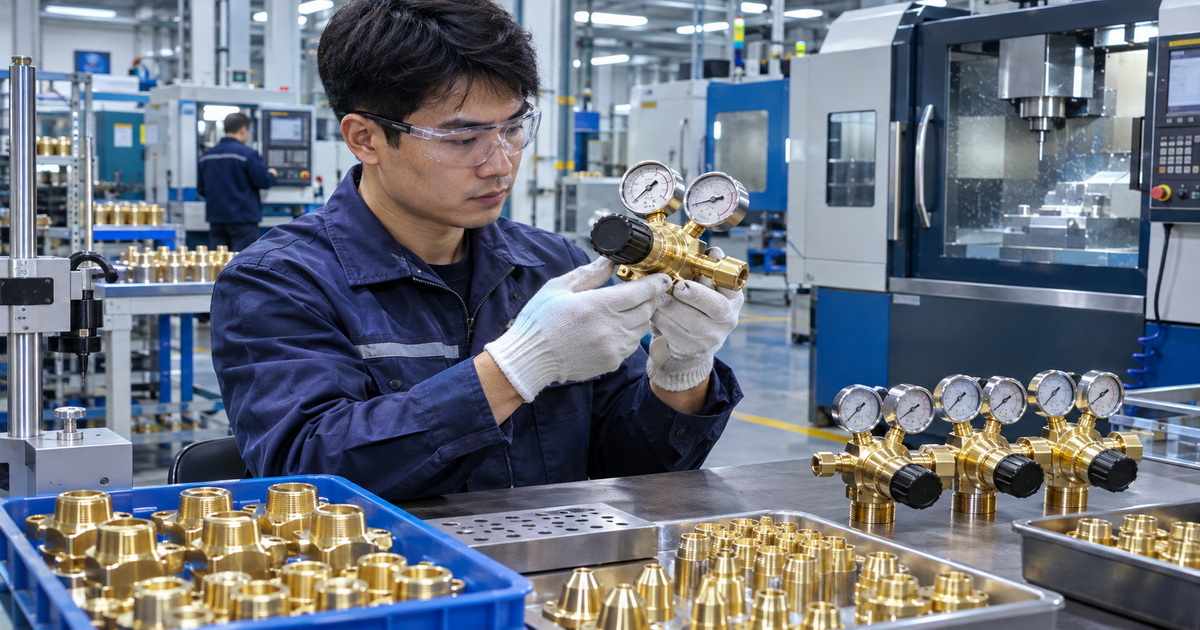
Our manufacturing focus includes precision machining, brass components, pressure control, quality inspection, and customized industrial gas solutions. For an OEM or ODM inquiry, send your cylinder connection, C25 operating requirements, and target-market documentation needs so we can review a suitable configuration and sample-evaluation plan.
Frequently Asked Questions
1.Can I use an argon regulator for 75/25 welding gas?
Yes, when the manufacturer explicitly approves that model for argon/CO₂ mixtures and the connection, pressure rating, and flow indication suit the application.
2.Can I use a pure-CO₂ regulator with C25?
Only with explicit manufacturer approval. A compatible-looking fitting or adapter does not establish correct gas service or calibration.
3.What flow rate should I use for 75/25 MIG welding?
Miller gives 25–35 CFH as general short-circuit MIG guidance. Follow your welding procedure and equipment recommendations, then verify shielding under actual conditions.
4.Is a dual-stage regulator necessary for ordinary MIG welding?
Usually, single-stage regulation is sufficient for routine applications. Dual-stage equipment becomes more attractive when cylinder-pressure changes and readjustment are important concerns.
5.Why does porosity continue even when the regulator shows flow?
Possible causes include leaks, drafts, blocked passages, incorrect torch assembly, inadequate flow, or excessive turbulent flow. Check delivery at the nozzle and inspect the complete gas path.
6.Can I use 75/25 argon CO₂ for TIG welding?
C25 is not a general-purpose TIG shielding gas. Miller identifies pure argon as the best all-around TIG option. Follow the requirements for the material and process.
References
1. [Miller — What Type of Gas Is Best for MIG Welding in DIY Applications?]
Supports the C25 comparison, short-circuit MIG flow guidance, excessive-flow warning, and torch-flow troubleshooting. [millerwelds]
2. [Miller/Smith — Argon/CO₂ Heavy-Duty Flowmeter Regulator, 80 PSIG]
Provides a documented example of flow range, preset pressure, inlet rating, and CGA-580 connection. [millerwelds]
3. [Miller/Smith — Argon/CO₂/Helium Flowmeter Regulator, 30 PSIG]
Demonstrates that approved flowmeter regulators can use different preset operating pressures. [millerwelds]
4. [Harris Products Group — Gas Regulation]
Explains selection by gas service, source, delivery pressure, and stage configuration. [harrisproductsgroup]
5. [Harris Products Group — Two-Stage Regulators]
Explains two-stage construction and reduced sensitivity to changing cylinder pressure. [harrisproductsgroup]
6. [Harris Products Group — Model 861 Flowmeter]
Documents gas application and specified calibration pressure. [harrisproductsgroup]
7. [Harris Products Group — CO₂ Freeze-Up: Why It Happens, What You Can Do]
Explains freeze-up mechanisms, relevant operating variables, and heated-regulator applications. [harrisproductsgroup]
8. [Harris Products Group — Model 25GX Inert Gas Guard Regulator]
Documents a shielding-gas regulator designed to control surge. [harrisproductsgroup]
9. [Harris Products Group — Model 25GX]
Lists separate inert-gas and CO₂ configurations, including CGA-580 and CGA-320 examples. [harrisproductsgroup]
10. [Miller — Best Practices for Proper Shielding Gas in TIG Welding]
Supports the TIG shielding-gas distinction. [millerwelds]
Hot Tags: Argon CO2 Regulator, Welding Gas Regulator, Argon Regulator Manufacturer, CO2 Regulator Supplier, Argon CO2 Flowmeter Regulator, 75/25 Argon CO2 Regulator, Dual Stage Gas Regulator, Industrial Gas Regulator, OEM Welding Gas Regulator, Wholesale Gas Regulators