Content Menu
● Industrial Pressure Regulator vs High Cycle Life Regulator
● What Is an Industrial Pressure Regulator?
>> Common Industrial Gas Regulator Applications
● What Is a High Cycle Life Regulator?
>> Why Cycle-Life Claims Need Context
● Pressure Performance: Stability Matters as Much as Endurance
>> Droop Under Increasing Demand
>> Supply Pressure Effect During Cylinder Depletion
● Materials and Construction: What Actually Improves Service Life?
>> Brass Bodies and Precision Manufacturing
>> Diaphragm vs Piston Regulators
>> Seats, Seals, and Filtration
● Gas-Specific Requirements Can Override Cycle-Life Advantages
>> CO₂ Regulators and Heated CO₂ Regulators
>> Argon and Nitrogen Regulators
>> Oxygen, Acetylene, and Propane Regulators
● A Practical Method for Evaluating Cycle-Life Evidence
>> Step 1: Define the Actual Duty
>> Step 2: Establish Acceptance Criteria
>> Step 3: Request Comparable Test Reports
>> Step 4: Validate in the Intended System
● Automated Welding vs Manual Fabrication
● How OEM and ODM Buyers Should Specify Industrial Gas Regulators
● Compare Lifetime Cost, Not Just Purchase Price
● Specify a Regulator Around Your Production Requirements
>> 1. Is a high cycle life regulator different from an industrial pressure regulator?
>> 2. How many cycles should a high cycle life regulator withstand?
>> 3. Does a dual-stage regulator last longer?
>> 4. Does a heated CO₂ regulator prevent all freezing problems?
>> 5. Can one regulator handle oxygen, argon, and propane?
>> 6. What should distributors request before ordering?
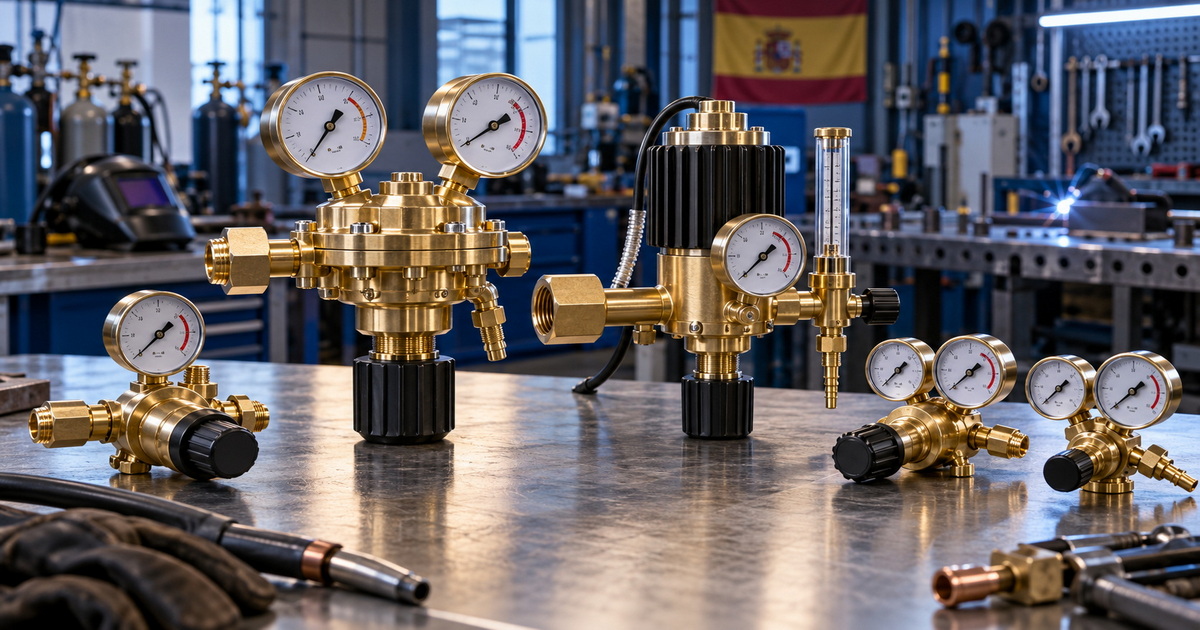
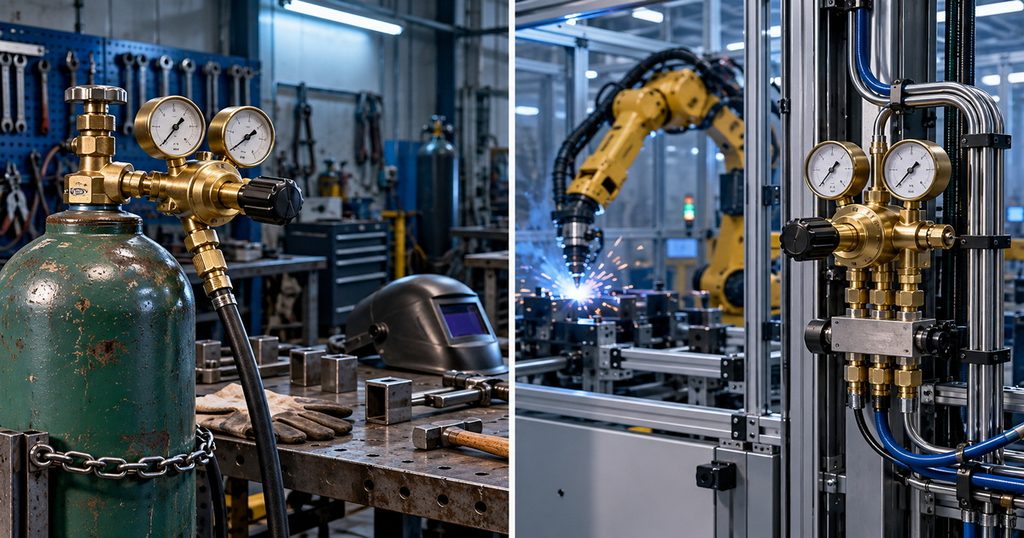
Choosing an industrial pressure regulator vs high cycle life regulator starts with an important distinction: these are overlapping descriptions, not mutually exclusive product categories. An industrial pressure regulator controls gas pressure in manufacturing applications. A high cycle life regulator emphasizes durability under repeated operating cycles.
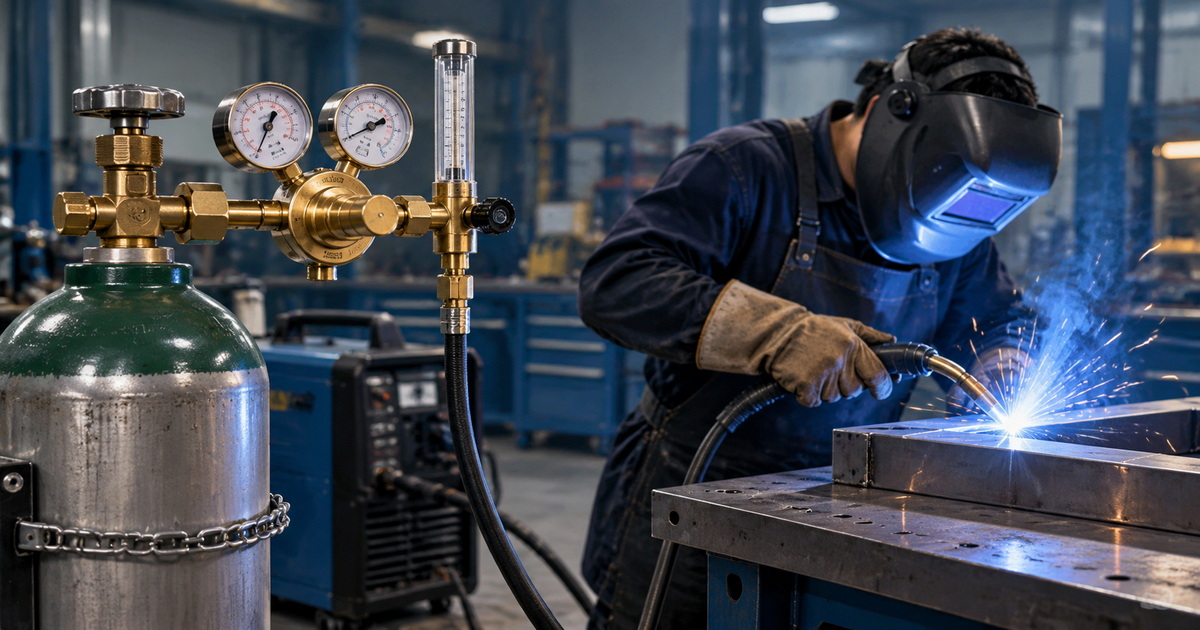
For welding, cutting, and automated production, the right choice depends on more than body material or maximum inlet pressure. Gas compatibility, pressure stability, demand patterns, and documented endurance all matter.
Industrial Pressure Regulator vs High Cycle Life Regulator
| Selection factor | Industrial pressure regulator | High cycle life regulator |
|---|---|---|
| Primary description | Broad application category | Durability-focused performance description |
| Main purchasing priority | Suitable pressure control for industrial service | Sustained performance under repeated cycling |
| Typical applications | Welding stations, cutting equipment, gas distribution | Automated welding, repetitive processing, frequently changing demand |
| Operating pattern | May support intermittent or continuous operation | Selected for applications involving frequent operating cycles |
| Important evidence | Pressure ratings, flow curves, gas compatibility | The same evidence, plus defined endurance-test results |
| Material selection | Depends on gas, pressure, and environment | Also depends on fatigue, friction, and wear mechanisms |
| Main limitation | Industrial labeling alone does not establish endurance | High cycle life labeling alone does not establish application suitability |
What Is an Industrial Pressure Regulator?
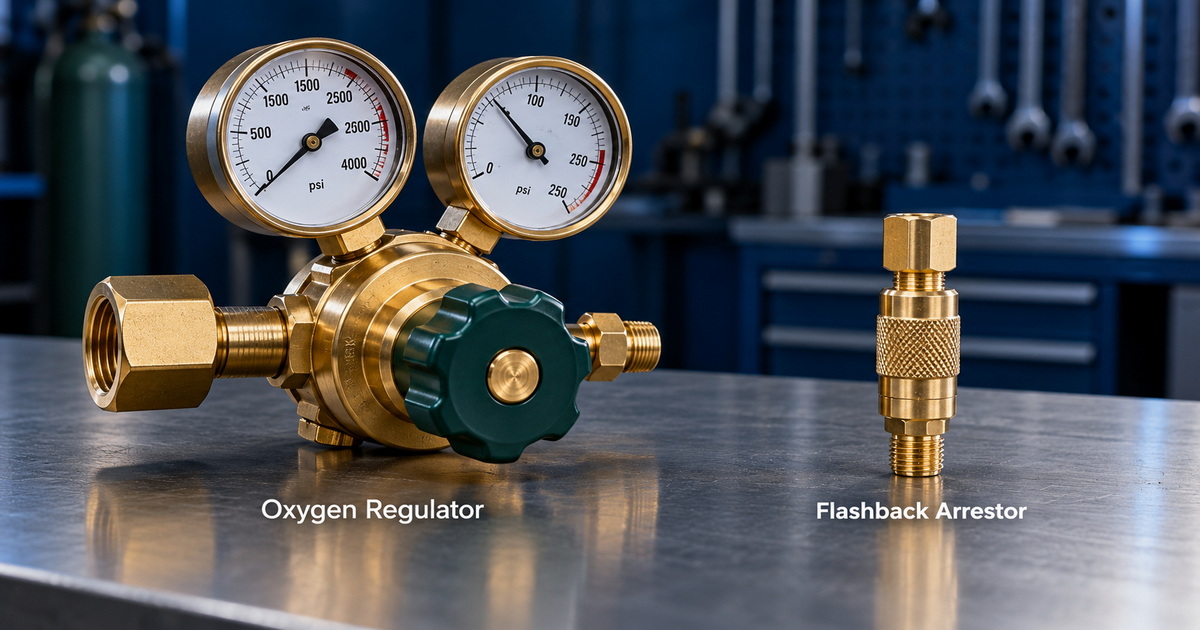
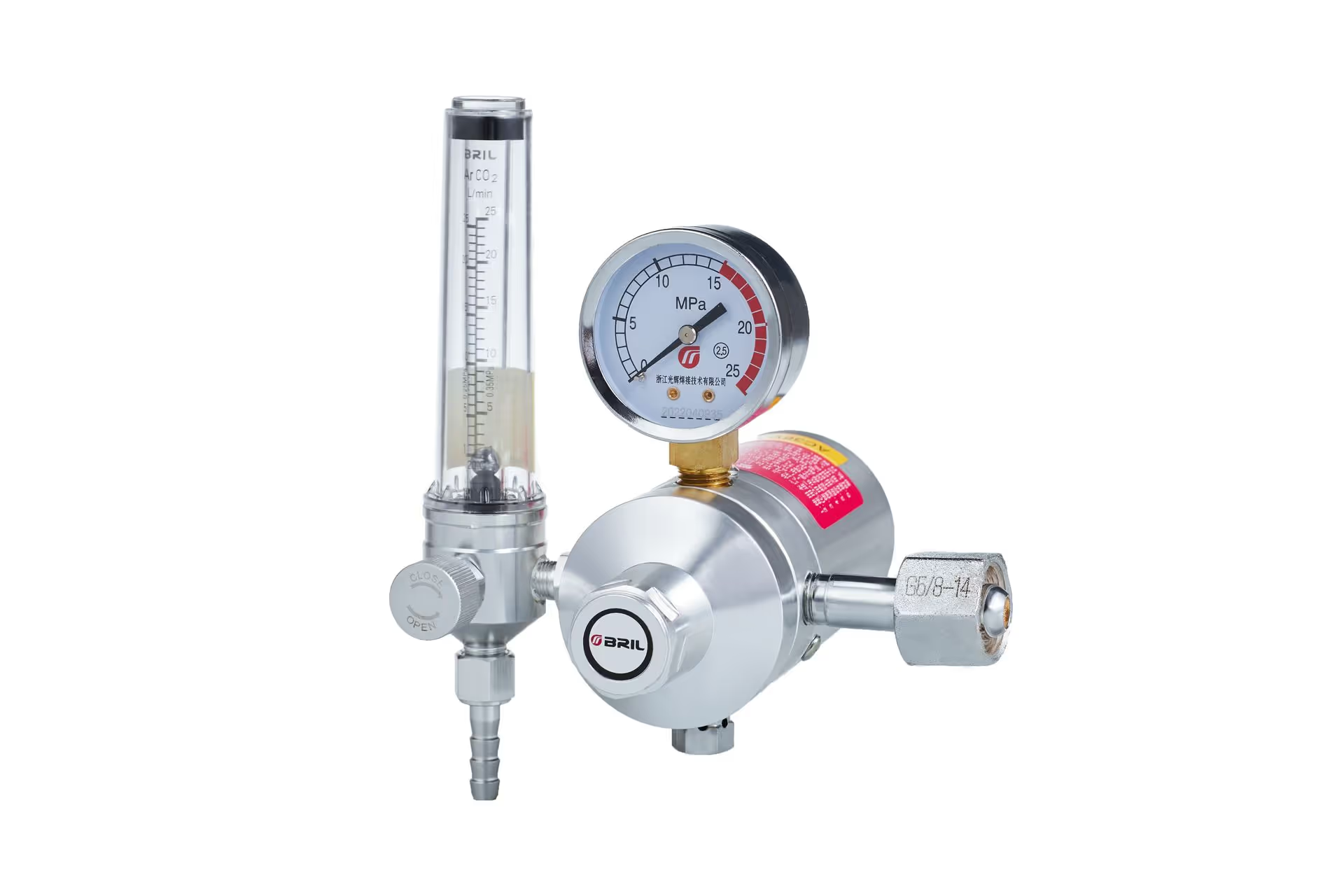
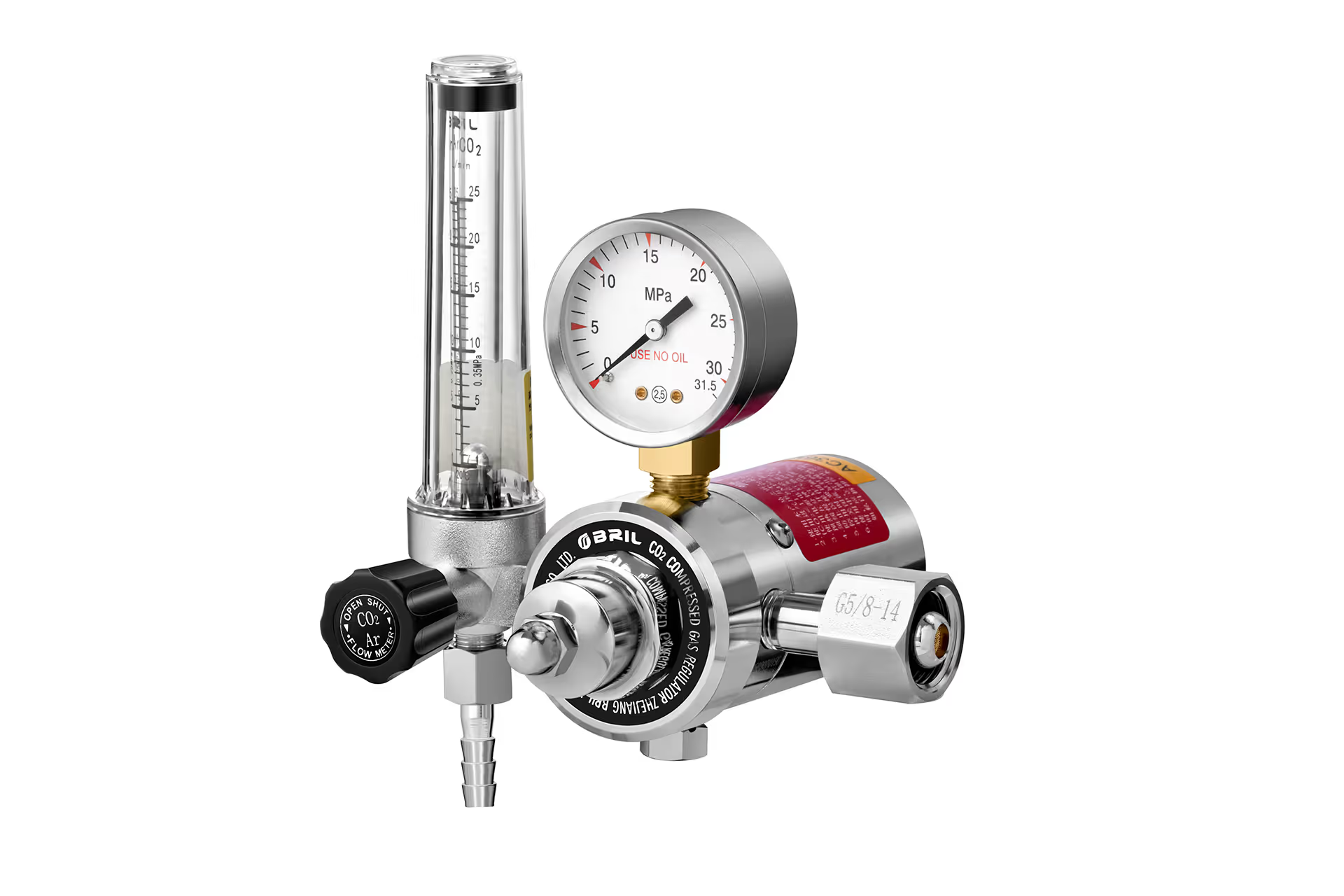
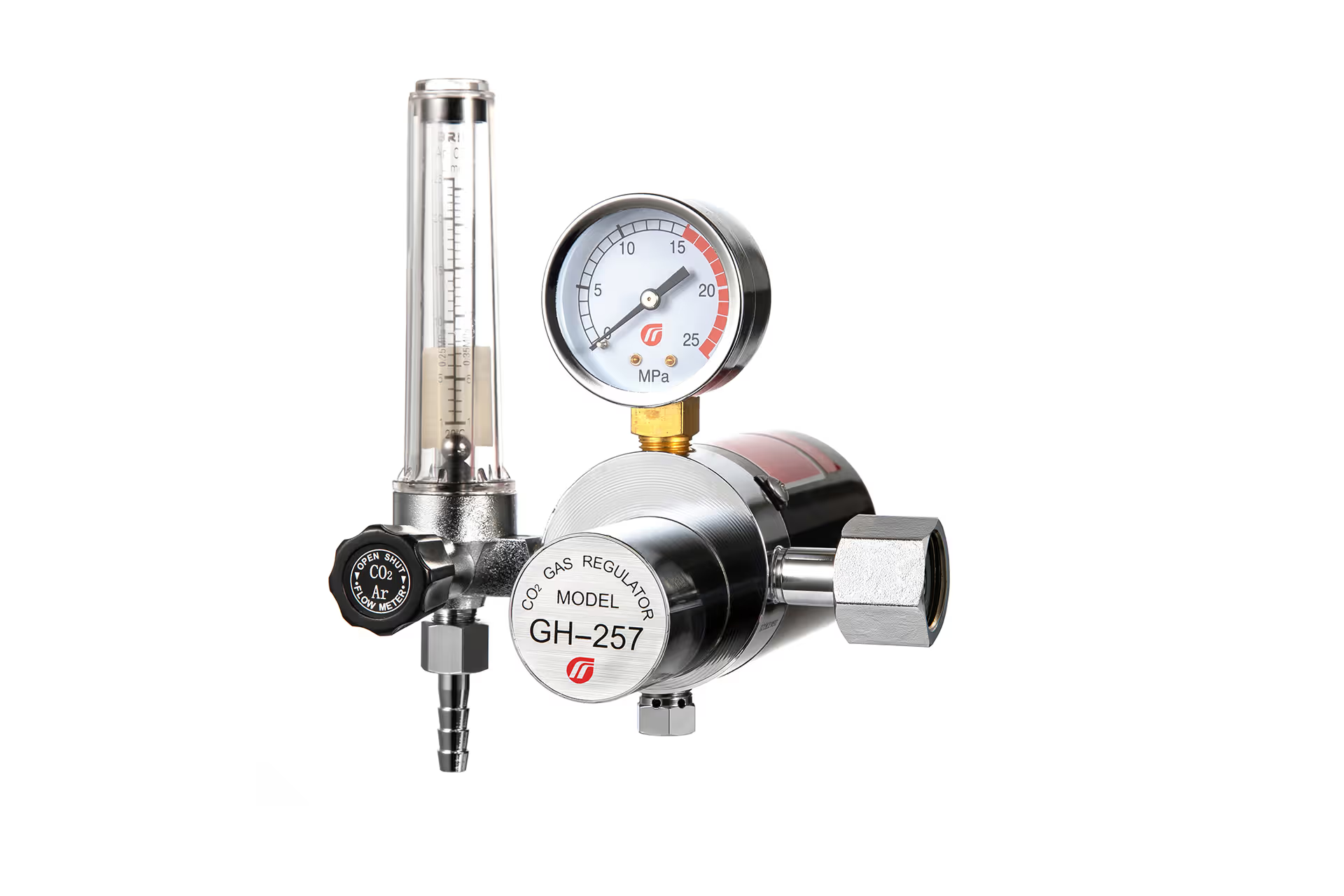
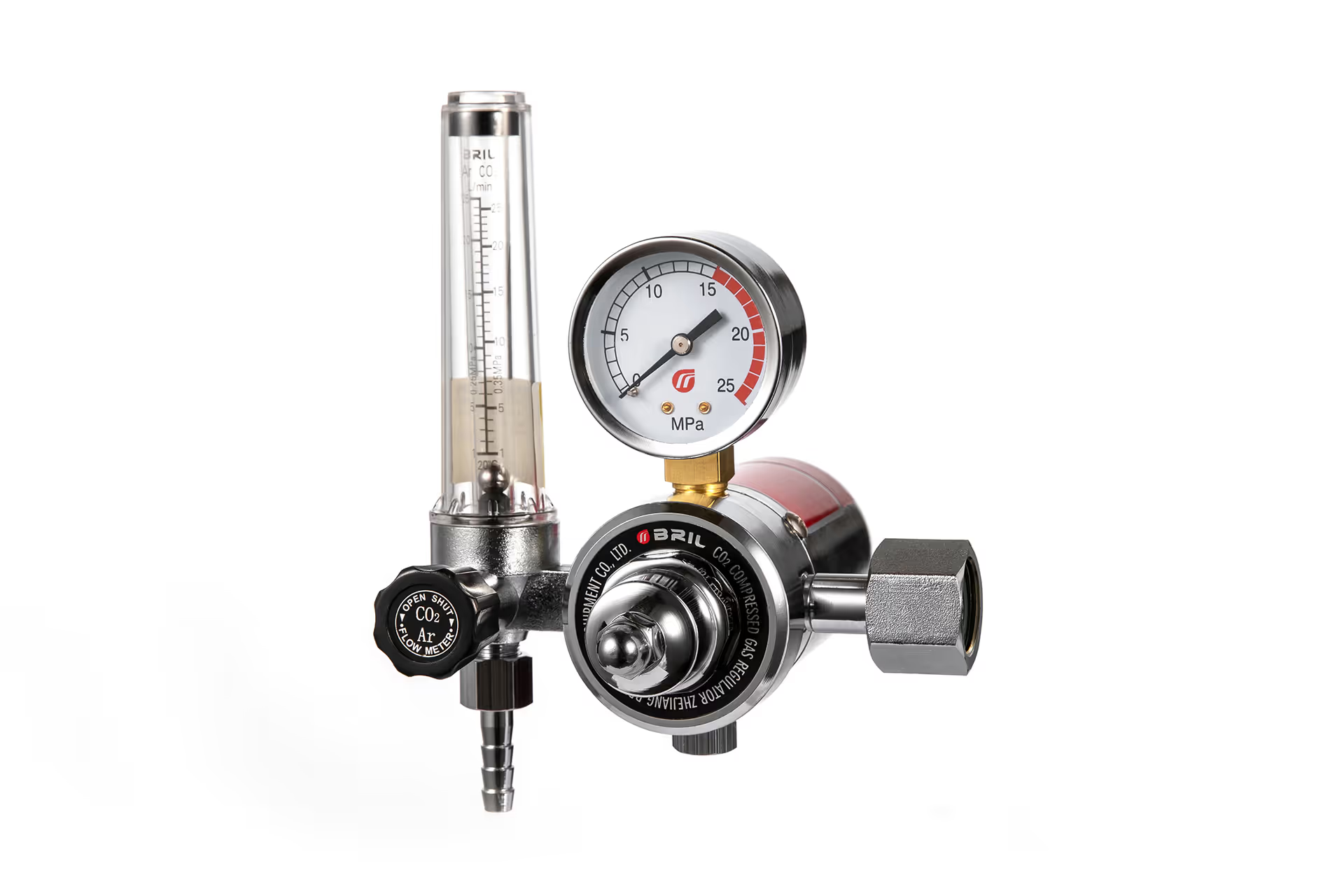
An industrial gas pressure regulator reduces supply pressure to a usable downstream pressure and adjusts its internal opening as operating conditions change.
In a typical spring-loaded design, the loading spring, sensing element, and valve mechanism balance forces to control outlet pressure. The sensing element may be a diaphragm or piston.
However, regulating pressure is not the same as controlling flow. Welding systems may also require a flowmeter or another suitable flow-control device.
Common Industrial Gas Regulator Applications
Different processes impose different requirements:
– CO₂ welding requires appropriate gas compatibility and attention to cooling during withdrawal.
– Argon shielding applications require suitable pressure delivery and correctly selected flow equipment.
– Oxygen cutting requires oxygen-compatible construction and service preparation.
– Acetylene and propane applications require fuel-specific pressure ranges and connections.
– Nitrogen systems require ratings matched to supply pressure and process demand.
A regulator should therefore be selected for its specified gas service—not simply because its connection can be made to fit.
What Is a High Cycle Life Regulator?
A high cycle life regulator is designed or marketed for repeated operation while maintaining specified performance.
The critical question is what the manufacturer means by a “cycle.”
A cycle could describe:
– Repeated changes between low and high flow.
– Pressurization and depressurization.
– Repeated internal valve opening and closing.
– Adjustment between defined pressure settings.
These conditions stress components differently. A downstream solenoid switching once does not necessarily produce one complete regulator endurance cycle.
Why Cycle-Life Claims Need Context
A claim such as “one million cycles” is incomplete without the test conditions.
Ask for the inlet pressure, outlet setting, gas or test medium, temperature, cycling frequency, and acceptance criteria. Also establish whether the result applies to the complete regulator or only a component.
Do not assume that “high cycle life” defines one universal numerical class. Treat it as a performance claim requiring model-specific evidence.
Pressure Performance: Stability Matters as Much as Endurance
A durable regulator can still perform poorly if incorrectly sized. Three characteristics deserve particular attention.
Droop Under Increasing Demand
Droop is the reduction in outlet pressure as flow increases.
For an automated welding cell, a regulator may show the desired pressure while idle but deliver less pressure when demand rises. Compare flow curves at relevant inlet pressures and outlet settings.
Select a model whose usable operating region accommodates your actual minimum and maximum demand.
Supply Pressure Effect During Cylinder Depletion
Changing inlet pressure can change outlet pressure. This behavior is known as supply pressure effect.
Two-stage pressure reduction can reduce the influence of inlet-pressure changes. Balanced valve designs can also help, depending on the regulator.
However, a dual-stage gas regulator is not automatically a high cycle life regulator. Stage count describes pressure-reduction architecture; cycle life describes endurance.
Lock-Up and Recovery
Lock-up concerns the pressure behavior as flow stops and the regulator closes. Recovery concerns its response when demand resumes or changes.
For repetitive production, request evidence of acceptable pressure behavior during transitions—not only at steady flow.
This separates a regulator that looks suitable on a specification sheet from one that supports the actual process.
Materials and Construction: What Actually Improves Service Life?
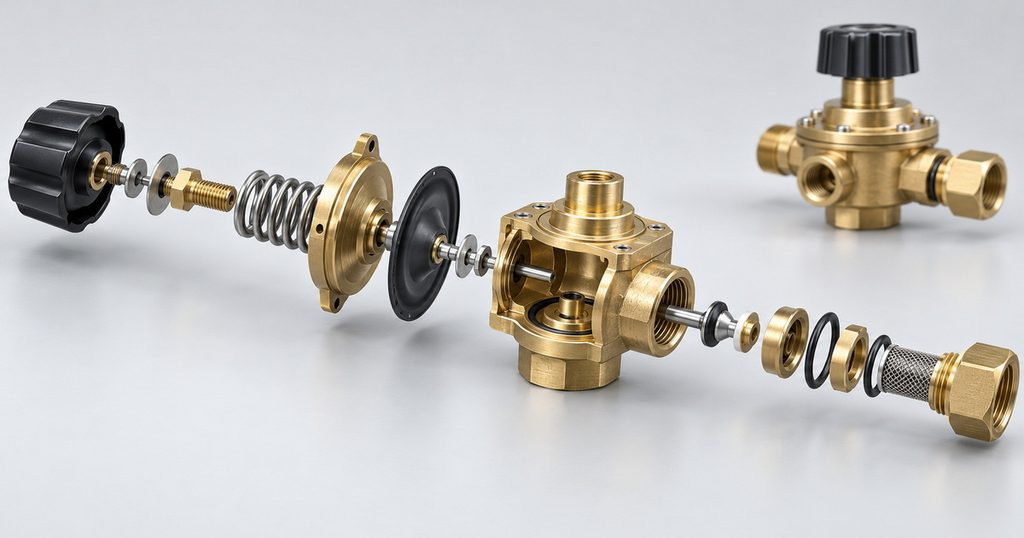
High-quality brass is a useful construction choice for many industrial gas regulators, but body material alone cannot establish precision or endurance.
Brass Bodies and Precision Manufacturing
A material specification should identify the alloy and its suitability for the intended gas service.
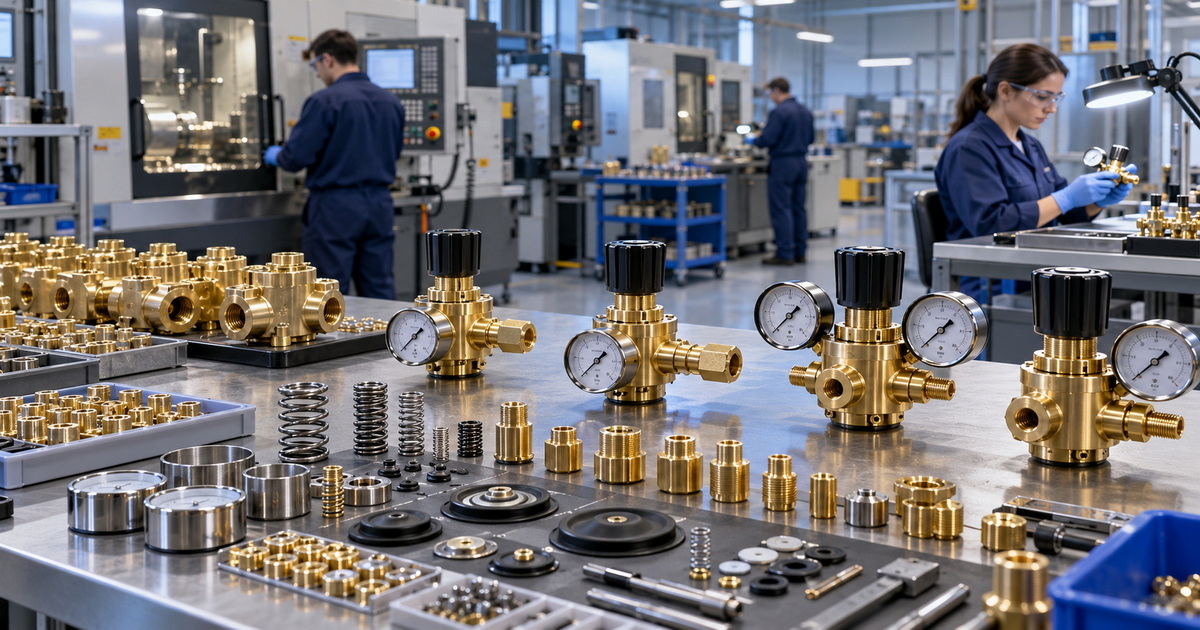
Manufacturing consistency also matters. Seat geometry, component alignment, surface condition, and assembly cleanliness can affect sealing and repeatability.
For procurement, request material documentation and inspection criteria rather than relying on descriptions such as “premium brass.”
Diaphragm vs Piston Regulators
Neither sensing design guarantees superior endurance in every application.
Compare the complete design, including:
– Operating pressure and temperature.
– Required sensitivity and pressure stability.
– Diaphragm material and movement.
– Piston seal compatibility and friction.
– Maintenance requirements.
Published manufacturer literature demonstrates that endurance depends on construction and service conditions. A blanket claim that metal diaphragms or pistons always last longer is not a sound purchasing basis.
Seats, Seals, and Filtration
Repeated operation can expose seats and seals to wear. Contamination may also interfere with closure.
Some regulator designs incorporate inlet filtration to protect internal components. Nevertheless, filtration does not replace clean gas handling or correct installation.
Request inspection and replacement guidance for the components that actually determine serviceability.
Gas-Specific Requirements Can Override Cycle-Life Advantages
A longer endurance claim never compensates for the wrong gas-service specification.
CO₂ Regulators and Heated CO₂ Regulators
High CO₂ withdrawal rates can create cooling and freeze-up problems. A heated CO₂ regulator addresses thermal management, which is a different requirement from mechanical endurance.
For repetitive CO₂ service, evaluate both:
1. Pressure-control performance under changing demand.
2. Thermal performance at the intended withdrawal rate.
Confirm heater voltage, electrical requirements, operating limits, and gas-supply capacity. Heating should not be treated as permission to exceed the supply system’s capabilities.
Argon and Nitrogen Regulators
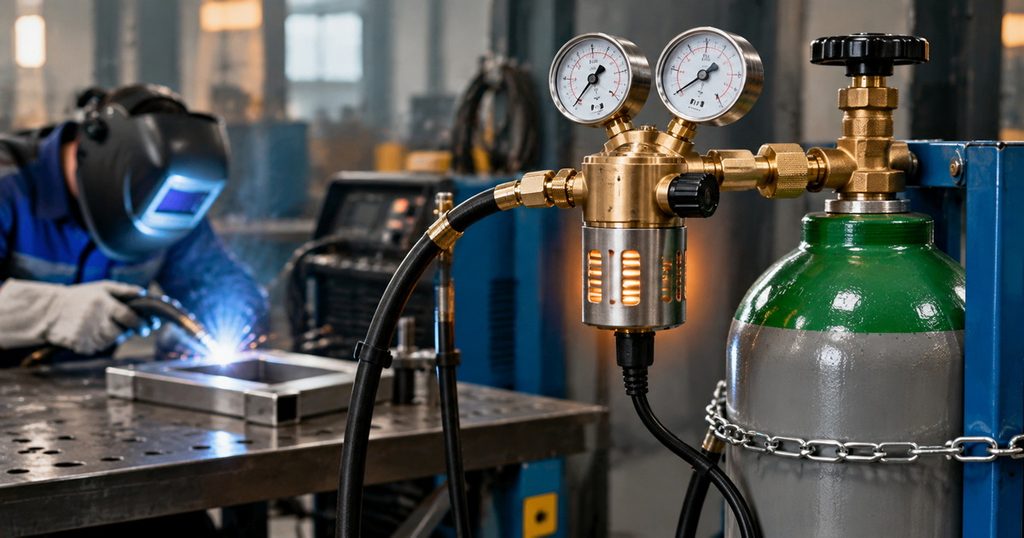
For argon shielding and nitrogen processing, compare pressure stability, usable flow capacity, and response to demand changes.
When cylinder-pressure variation affects the process, evaluate dual-stage regulation alongside endurance requirements.
For shielding gas, remember that stable regulator pressure does not by itself confirm correct flow at the torch.
Oxygen, Acetylene, and Propane Regulators
Use equipment specifically approved by its manufacturer for the intended gas.
For oxygen service, obtain documented suitability and cleaning information. For acetylene and propane, verify fuel-specific ratings, connections, and operating instructions.
A shared brass appearance does not make regulators interchangeable.
A Practical Method for Evaluating Cycle-Life Evidence
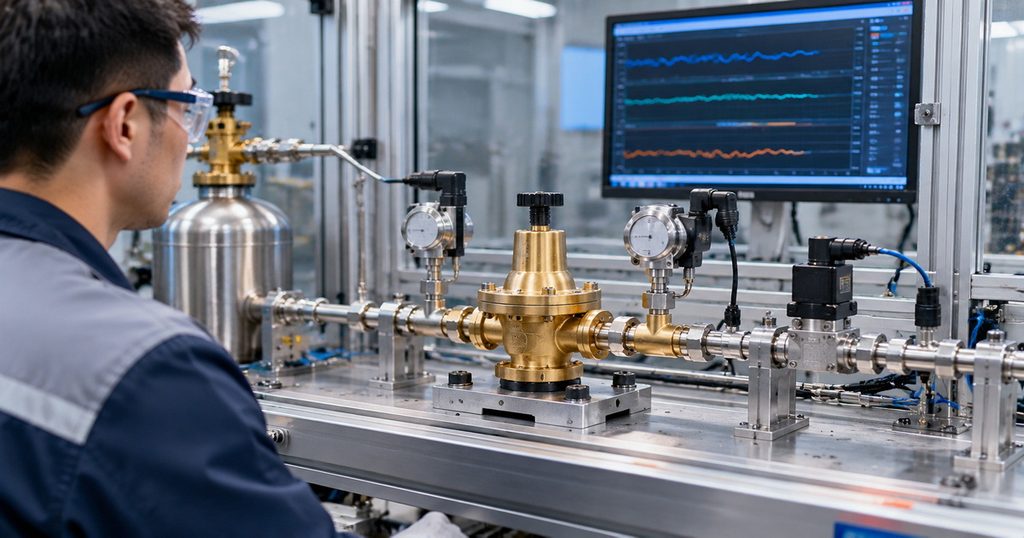
The most useful comparison is a documented test matrix agreed before purchasing.
Step 1: Define the Actual Duty
Record supply-pressure range, delivery pressure, peak flow, operating temperature, and demand frequency.
Distinguish downstream valve operations from the regulator’s actual pressure and mechanical excursions.
Step 2: Establish Acceptance Criteria
Agree on measurable limits for:
– External leakage.
– Internal seat leakage.
– Outlet-pressure drift.
– Pressure stability under flow.
– Physical damage or component failure.
Specify whether the regulator must meet these limits throughout testing or only afterward.
Step 3: Request Comparable Test Reports
Compare products tested under similar conditions. Record sample quantity, maintenance performed during testing, and any component replacements.
A single favorable result should not be presented as a guaranteed service life for every installation.
Step 4: Validate in the Intended System
After reviewing documentation, conduct an appropriate application trial with qualified personnel.
Check startup, steady operation, demand transitions, and shutdown. Follow the manufacturer’s procedures and applicable safety requirements.
This approach makes endurance evidence commercially useful instead of merely impressive.
Automated Welding vs Manual Fabrication
Consider two hypothetical buyers.
A manual fabrication workshop operates several welding stations intermittently. Its priorities may be suitable gas connections, reliable adjustment, readable gauges, and straightforward servicing.
An automated welding line experiences frequent changes in shielding-gas demand. It may require stronger evidence of repeated-operation performance, pressure recovery, and maintenance predictability.
These are selection examples, not reported customer results.
The automated line should not automatically buy the regulator with the largest cycle number. If pressure droop exceeds the process tolerance, that regulator remains unsuitable.
Likewise, the manual workshop should not pay a premium for endurance characteristics it does not need without identifying a maintenance or reliability benefit.
How OEM and ODM Buyers Should Specify Industrial Gas Regulators
For overseas brands, wholesalers, distributors, and equipment manufacturers, a detailed purchasing specification reduces ambiguity.
Include:
1. Gas type and intended application.
2. Minimum and maximum inlet pressure.
3. Required outlet-pressure range.
4. Minimum, normal, and peak flow.
5. Demand pattern and expected operating frequency.
6. Environmental and temperature conditions.
7. Inlet and outlet connection requirements.
8. Gauge units, labeling, and adjustment features.
9. Applicable standards and supporting documentation.
10. Inspection, endurance, and traceability requirements.
Customization should extend beyond branding. Gauge ranges, connectors, heater configuration, packaging, and service documentation should match the destination market and application.
ISO 2503 addresses specified cylinder-connected regulators used in welding, cutting, and allied processes. Its scope is not identical to every industrial gas-control installation.
Ask suppliers to identify the applicable standard and provide evidence for the exact model and configuration. Do not interpret a general standards statement as proof that every customized version has identical verification.
Compare Lifetime Cost, Not Just Purchase Price
Evaluate total ownership cost using:
Total ownership cost=purchase+installation+maintenance+replacement+downtime
A higher initial price may be justified when documented performance reduces maintenance or interruption costs.
However, do not convert laboratory cycles directly into guaranteed calendar life. Field conditions, contamination, thermal exposure, and duty severity may differ substantially.
Request recommended inspection intervals, spare-part availability, and service instructions. These details can matter as much as the initial endurance result.
Specify a Regulator Around Your Production Requirements
Our manufacturing focus includes brass gas regulators, precision production, quality inspection, and OEM/ODM customization for welding, cutting, and industrial applications.
For a targeted quotation, send your gas type, inlet-pressure range, required outlet pressure, maximum flow, operating frequency, connection standard, and destination market.
For CO₂ applications, include withdrawal conditions and heater requirements. For repetitive production, request an agreed endurance-validation plan.
This information allows us to discuss a suitable industrial pressure regulator configuration—and determine whether enhanced cycle-life performance should form part of your specification.
Frequently Asked Questions
1. Is a high cycle life regulator different from an industrial pressure regulator?
Not necessarily. Industrial describes the application category, while high cycle life describes an endurance emphasis. One regulator can satisfy both descriptions.
2. How many cycles should a high cycle life regulator withstand?
There is no useful universal purchasing number without a defined test. Compare cycle definition, pressure conditions, temperature, sample quantity, and acceptance criteria.
3. Does a dual-stage regulator last longer?
Not automatically. Dual-stage regulation mainly addresses pressure reduction in two stages and can improve stability against inlet-pressure changes. Endurance requires separate evidence.
4. Does a heated CO₂ regulator prevent all freezing problems?
No blanket guarantee is appropriate. Suitability depends on withdrawal rate, supply conditions, ambient temperature, and heater capability. Review the complete gas-delivery arrangement.
5. Can one regulator handle oxygen, argon, and propane?
Do not assume interchangeability. Use the manufacturer-specified gas service, connections, pressure ratings, materials, and preparation requirements.
6. What should distributors request before ordering?
Request drawings, ratings, gas compatibility, applicable compliance documentation, inspection procedures, traceability information, and endurance evidence where repeated operation is important.
References
1. Swagelok Northern California. “Parts and Performance: Selecting the Right Pressure Regulator for Each Job.” Explains regulator operation, pressure versus flow control, and application-based selection. [northerncal.swagelok]
2. Swagelok Northern California. “Online Tool Lets You Compare Regulator Flow Curves.” Explains how flow curves relate outlet pressure to flow demand and operating conditions. [northerncal.swagelok]
3. Swagelok Northern California. “Video: Another Way To Deal With The Supply Pressure Effect.” Discusses balanced designs and two-stage pressure reduction. [northerncal.swagelok]
4. Emerson / TESCOM. “Products by Industry.” Includes regulator designs described as providing high cycle life and extended-life operation, demonstrating application-specific endurance positioning. [emerson]
5. TESCOM. “SG Series” product brochure. Discusses regulator endurance, diaphragm options, inlet filtration, and serviceability. Manufacturer performance statements apply to the identified products, not regulators generally. [tescom-sales]
6. Emerson / Fisher. “Arctic Construction Regulator Flier.” Illustrates how diaphragm material, temperature, and construction affect service-life considerations. [emerson]
7. LIBNOR. “Pressure Regulators for Gas Cylinders Used in Welding, Cutting and Allied Processes up to 300 bar.” Provides a published scope description for the adopted ISO 2503 standard. [libnor.gov]
8. Victor. Product catalogue, hosted by Katje Welding. Includes gas-specific regulator information, CO₂ withdrawal considerations, heater references, and operating cautions. [katjewelding]
Hot Tags: Industrial Pressure Regulator, High Cycle Life Regulator, Industrial Gas Regulator, Gas Pressure Regulator Manufacturer, CO₂ Regulator Manufacturer, Heated CO₂ Regulator, Dual Stage Gas Regulator, Argon Gas Regulator, OEM Gas Pressure Regulator, Wholesale Gas Regulators