Content Menu
● Spain’s Position in Industrial Gas-Control Sourcing
● How These Gas Pressure Reducing Regulator Suppliers Were Selected
>> 2. Manufacturing and Engineering Evidence
>> 3. Quality and Compliance Transparency
● Supplier Comparison: Capacity, MOQ, and Certification Evidence
● 1. Zhejiang Bril Welding Equipment Co., Ltd.
>> An Overseas OEM Alternative for Buyers Serving Spain
>> A Spanish Manufacturer for Specialized Gas-Control Requirements
● 3. GCE
>> A Broad Gas-Control Manufacturer Serving the Spanish Market
>> An Established Option for Branded Welding and Cutting Equipment
>> A Spanish Supplier for Integrated Gas and Equipment Procurement
● Technical Buyer’s Guide: What Makes a Reliable Gas Pressure Reducing Regulator?
>> Specify Performance Before Comparing Construction
>> Brass Quality Requires More Than a Visual Inspection
>> Oxygen Cleanliness Must Be Maintained After Cleaning
>> Treat CE and RoHS as Applicability Questions
● The Overlooked Procurement Trap: A Good Gauge Reading Is Not a Performance Test
● How to Audit, Sample, and Ship Your First Order
>> Verify the Factory and the Contracting Entity
>> Use a Documented Sample-Approval Process
>> Separate Sample Lead Time From Production Lead Time
>> Control Packaging and Shipping Assumptions
● Conclusion: Match the Supplier Model to the Purchasing Objective
● FAQ
>> 1. How Can I Check Whether a Manufacturer’s ISO Certificate Is Still Valid?
>> 2. Does Every Industrial Gas Regulator Sold in Spain Need PED CE Marking?
>> 3. When Should I Choose a Dual-Stage Regulator Instead of a Single-Stage Model?
>> 4. How Can I Prevent Internal Material Changes After Sample Approval?
>> 5. What Extra Information Should I Request for a Heated CO₂ Regulator?
Choosing a gas pressure reducing regulator supplier requires more than comparing prices, gauge sizes, and brass body weights. Professional buyers need evidence of manufacturing control, gas-specific engineering, repeatable inspection, and dependable support after delivery.
For companies sourcing in Spain, the strongest shortlist combines Spanish manufacturers, established international brands serving the Spanish market, and qualified overseas factories for private-label production. These supplier types solve different purchasing problems and should not be treated as interchangeable.
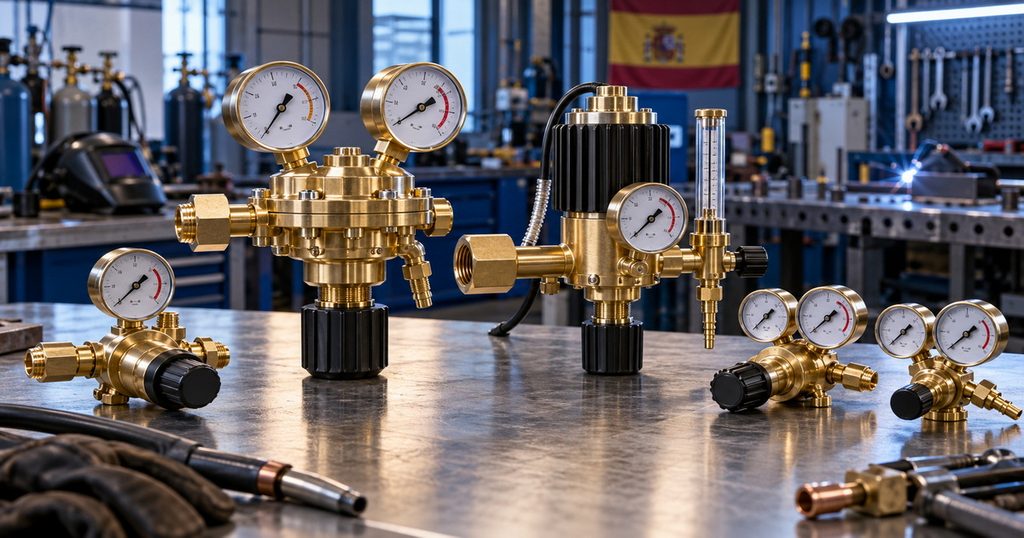
Spain’s Position in Industrial Gas-Control Sourcing
Spain offers a useful procurement environment for welding equipment, industrial gases, metalworking machinery, and associated components. Its advantages include access to European technical support, established industrial distribution, and proximity to customers operating under European product requirements.
The Basque Country’s machine-tool ecosystem is particularly relevant to industrial equipment sourcing. AFM, the Spanish machine-tool and advanced-manufacturing association, is based in San Sebastián. Its final 2025 figures, published on May 6, 2026, reported sector revenue of €2,247.6 million and exports of €1,763.8 million. Revenue declined 3.27%, while exports increased 0.82%. These are machinery-sector figures, not gas-regulator market figures, but they demonstrate the scale and international orientation of Spain’s wider manufacturing ecosystem.
Barcelona and its surrounding area also provide relevant gas-control supply connections. Gasinox operates from L’Hospitalet de Llobregat, while Carburos Metálicos has its corporate presence in Cornellà de Llobregat. These locations are useful sourcing reference points, although they do not establish a dedicated national regulator-manufacturing cluster.
For buyers, the practical attraction is therefore not a claim that Spain dominates regulator production. It is the combination of industrial customers, technical suppliers, gas-distribution infrastructure, and access to European-market support.
How These Gas Pressure Reducing Regulator Suppliers Were Selected
The shortlist uses publicly available company information and product documentation. It does not imply that factory audits, laboratory comparisons, or confidential production-capacity checks have been completed.
1. Product Relevance
Suppliers should offer identifiable pressure-regulation products for industrial gases, welding, cutting, laboratory applications, or related gas-distribution systems.
A company selling industrial gases is included only where its published offering also includes regulators or gas-control equipment.
2. Manufacturing and Engineering Evidence
Preference goes to suppliers that explain their manufacturing role, technical product range, customization capabilities, or engineering support.
Buyers should distinguish among:
– A factory producing complete regulators.
– A brand using multiple manufacturing sites.
– A distributor supplying established brands.
– A gas company integrating purchased equipment into a wider service package.
3. Quality and Compliance Transparency
Relevant evidence includes quality-system certificates, model-specific technical documents, product standards, and declarations required for the destination market.
An ISO management-system certificate does not certify every regulator model. Likewise, a medical-device certification does not automatically demonstrate compliance of an industrial welding regulator.
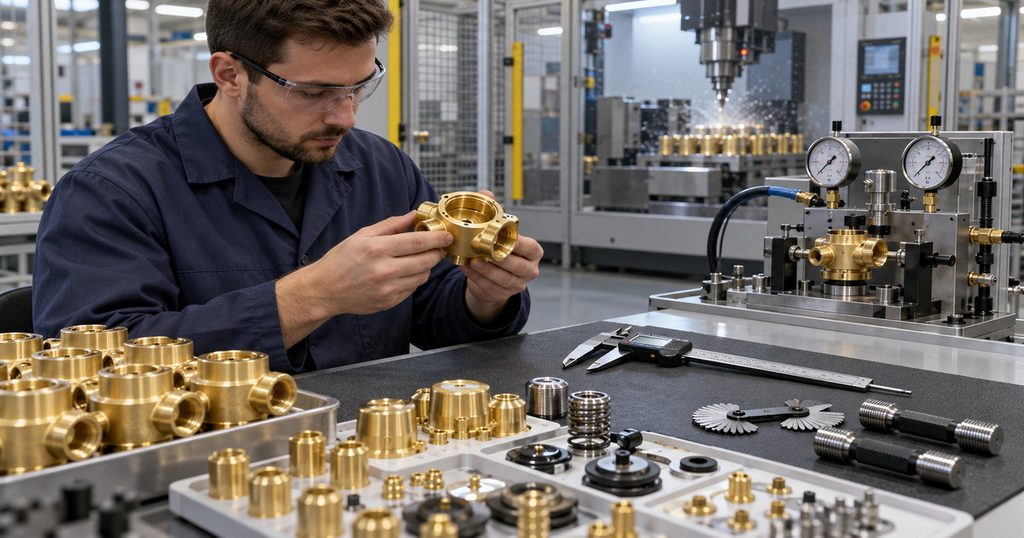
4. Operational Reliability
Before awarding a contract, buyers should review actual delivery performance, available production capacity, critical-component sourcing, and corrective-action procedures.
Published employee counts and factory floor areas can provide context. They are not substitutes for verified monthly output or available capacity.
5. OEM and ODM Suitability
Private-label procurement requires more than a different logo. Buyers should establish whether the supplier can support engineering changes, approved bills of materials, packaging, instructions, spare parts, and controlled product revisions.
Supplier Comparison: Capacity, MOQ, and Certification Evidence
| Supplier | Role and location | Establishment information | Capacity evidence | MOQ | Certification or technical evidence | Most relevant purchasing route |
|---|---|---|---|---|---|---|
| Zhejiang Bril Welding Equipment Co., Ltd. | Regulator manufacturer in Wenzhou, China; overseas sourcing alternative | Founded in 2002 | Company reports more than 200 employees and over 3,500 m² of production area; unit output not disclosed | Confirm by model and customization | Company reports ISO 9001 and CE-related credentials; request underlying documents | Private-label and customized industrial regulator procurement |
| Gasinox | Spanish gas-equipment manufacturer in the Barcelona area | Founding year not verified in reviewed materials | Monthly output not publicly verified | Confirm directly | Website reports an ISO 13485 quality system and medical-product CE credentials; industrial models require separate checks | Specialized regulators, product adaptation, repairs, and spares |
| GCE | International gas-control manufacturer serving Spain | Group formed in 1987 | Allocated capacity for Spanish orders not publicly verified | Confirm through sales channel | Publishes industrial standards information; verify the current model and standard edition | Industrial regulators and broader gas-control systems |
| Harris Products Group | International manufacturer with Spanish-market product channels | Harris brand dates to 1905; present group formed in 2006 | Model-specific capacity not publicly verified | Confirm through sales channel | Product documentation available; obtain model-specific conformity evidence | Branded welding, cutting, and gas-distribution equipment |
| Carburos Metálicos | Spanish industrial-gas and equipment supplier | Founded in 1897 | Regulator manufacturing capacity not established; equipment supplier role | Confirm directly | Publishes single- and dual-stage regulator offerings; request original manufacturer documentation | Integrated gas supply and gas-control equipment |
1. Zhejiang Bril Welding Equipment Co., Ltd.
An Overseas OEM Alternative for Buyers Serving Spain
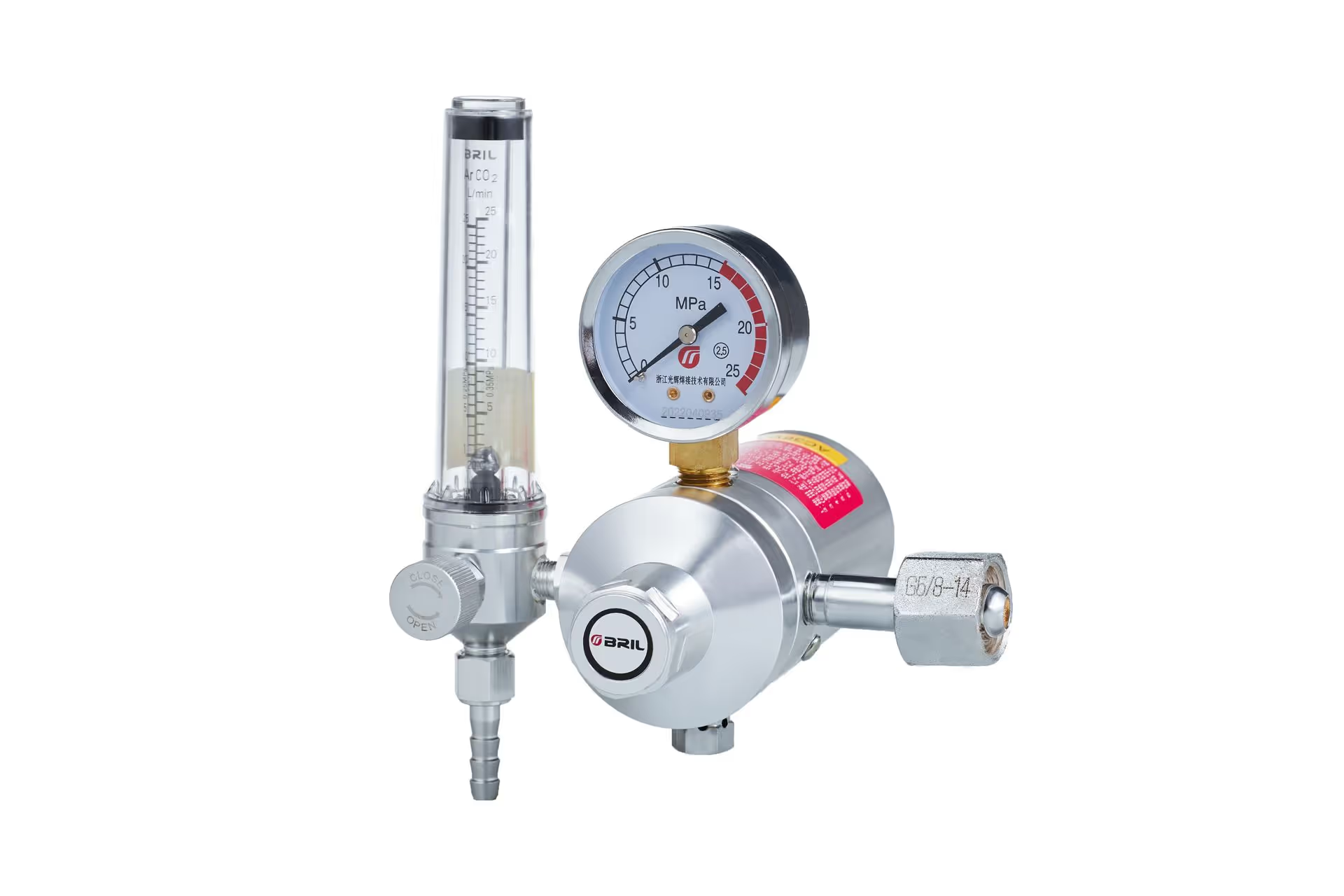
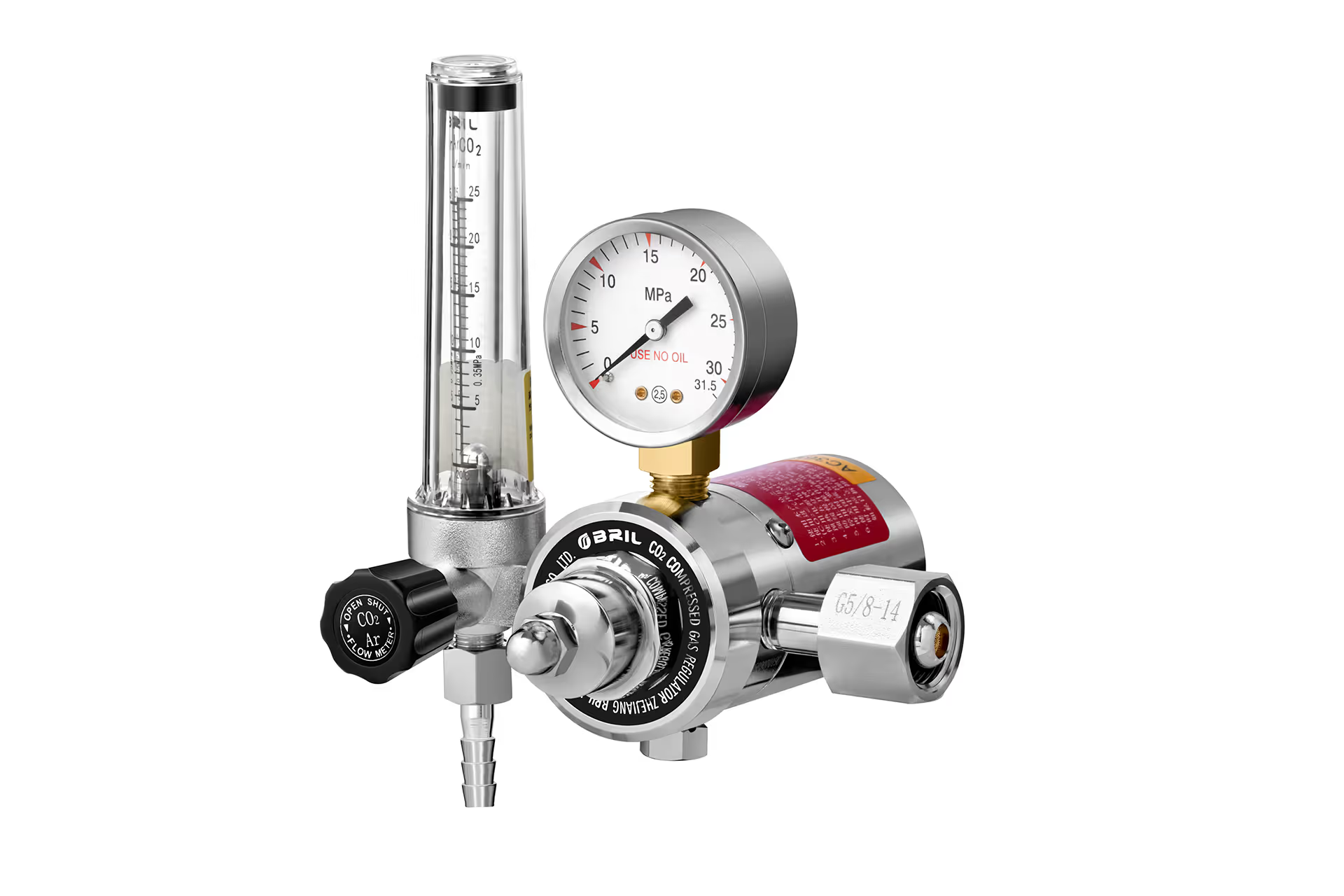
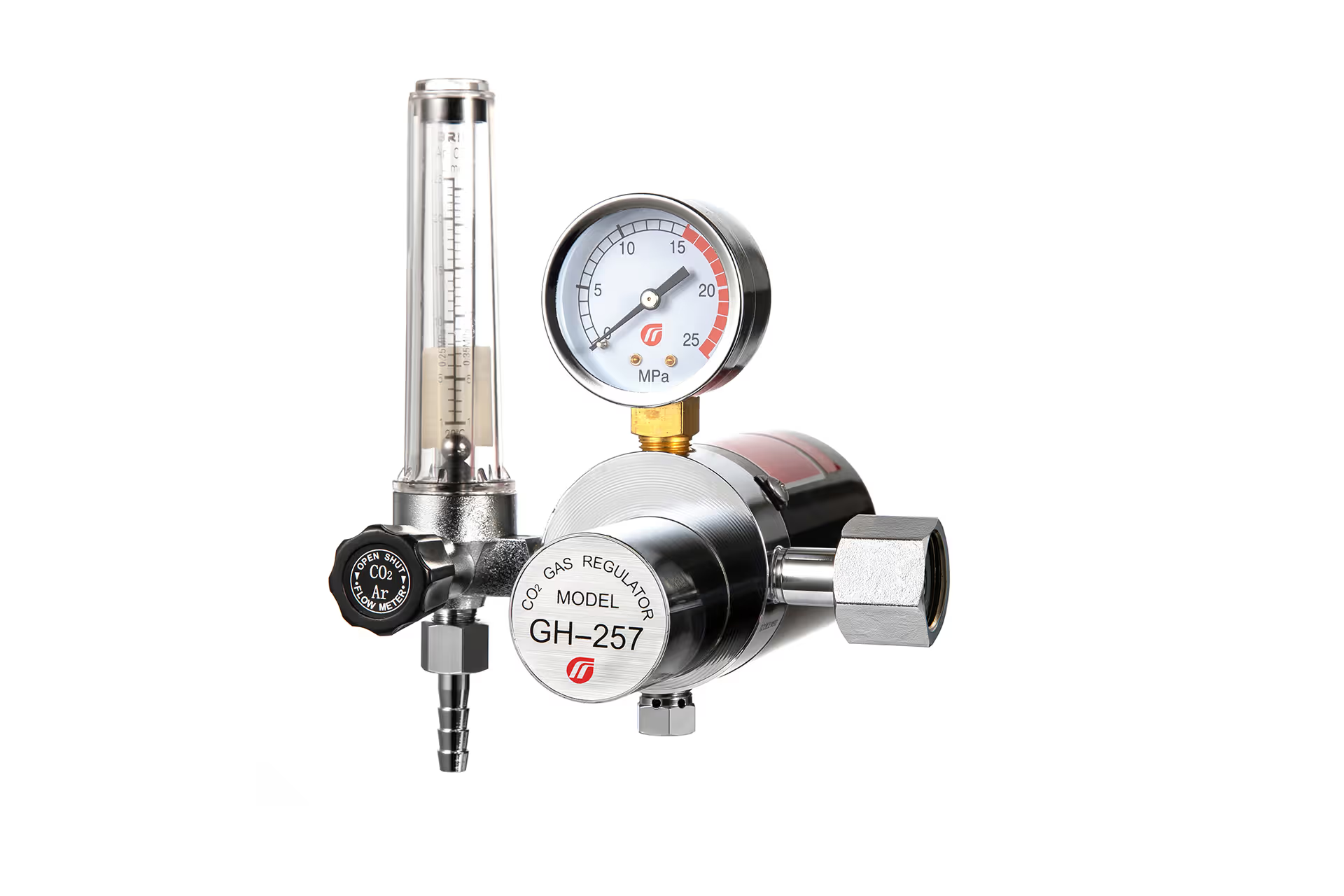
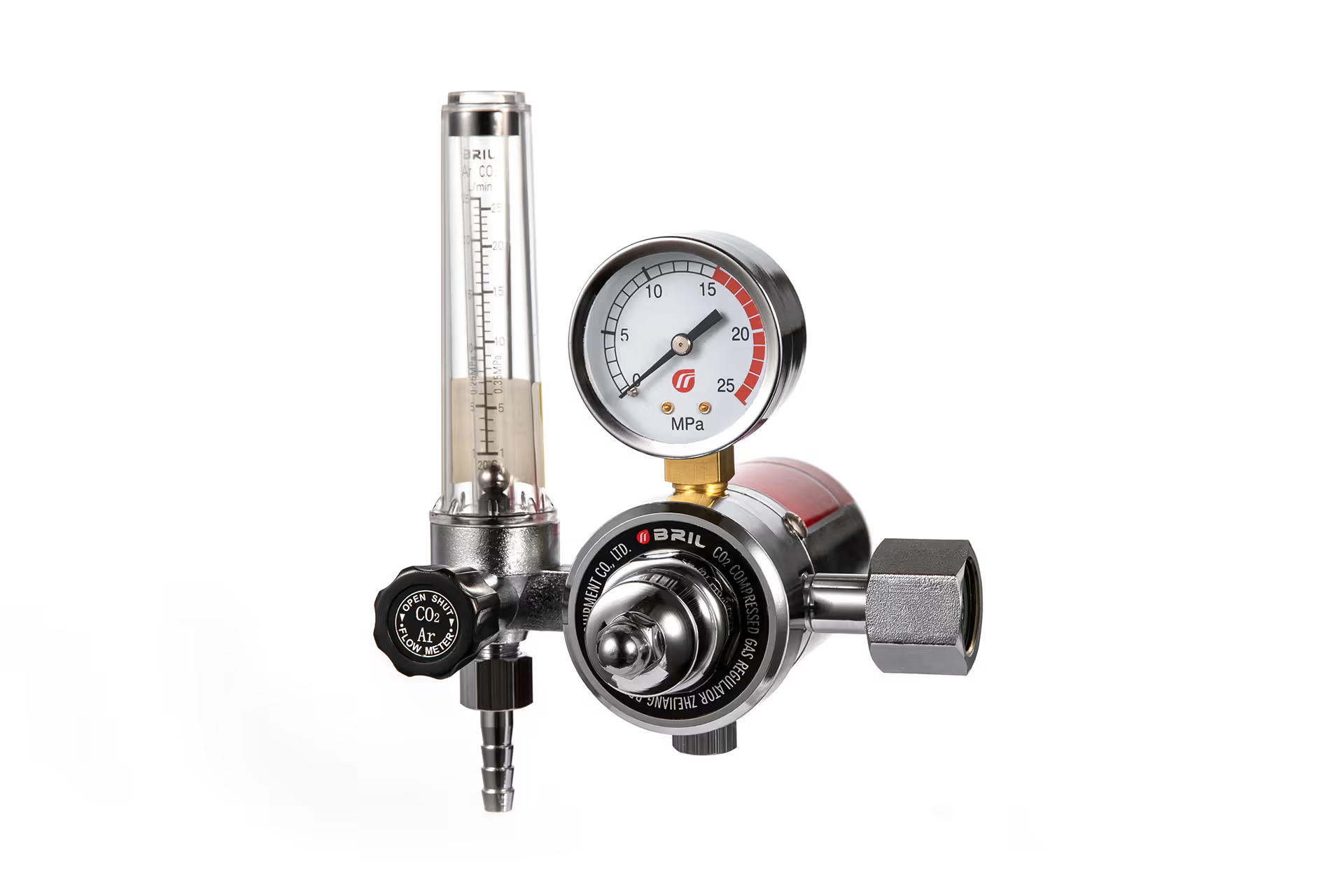
Zhejiang Bril Welding Equipment Co., Ltd. was founded in 2002 and is based in Wenzhou, Zhejiang, China. Its company profile identifies industrial gas pressure regulators as its development, manufacturing, and sales specialization. The company reports serving more than 30 countries and regions.
Bril belongs on this shortlist as a comparison option for buyers considering direct factory sourcing alongside Spanish or European supply channels. It should not be described as a Spanish factory or assumed to maintain Spanish stock.
Core Strengths
Bril’s published profile emphasizes regulator development, testing and inspection equipment, and supporting production for welding-equipment brands. It also reports OEM production for Messer-related product ranges beginning in 2022. These are company statements and should be checked through authorized references or an audit when material to a purchasing decision.
For smaller and medium-sized brands, Bril is worth evaluating where the commercial requirement combines:
– A focused industrial regulator range.
– Direct factory communication.
– Private-label presentation.
– Gas-specific configurations.
– A target landed cost compatible with distributor margins.
Its cost-effectiveness should be established through a like-for-like quotation, not assumed from its manufacturing location.
Markets and OEM/ODM Scope
Bril reports domestic and overseas customers, including welding-equipment suppliers. Its profile supports an OEM manufacturing proposition, but buyers should confirm the precise ODM scope for each project.
A useful development brief should specify the regulator architecture, gas, inlet pressure, outlet range, flow duty, connection standard, gauge configuration, branding, and documentation requirements.
For communication efficiency, request a named technical contact, a drawing-approval timetable, and a written process for resolving engineering questions. For flexibility, obtain separate prices and minimum quantities for logo changes, packaging changes, and structural redesigns. These are different levels of customization.
What Buyers Should Verify
Bril’s website uses wording linking ISO 9001, UKAS, IAF, CNAS, and CE-related credentials. Buyers should request the actual documents and identify the certification body, accreditation body, laboratory, test scope, and covered models. These organizations and conformity mechanisms perform different functions and should not be treated as interchangeable approvals.
2. Gasinox
A Spanish Manufacturer for Specialized Gas-Control Requirements
Gasinox is a Spanish manufacturer specializing in oxygen-therapy equipment while also offering an industrial range. Its published industrial products include low-pressure pipeline regulators and high-pressure cylinder regulators for noncorrosive gases.
Its founding year was not verified in the reviewed company materials. Buyers requiring a complete corporate history should obtain a registry extract rather than rely on an estimated date.
Core Strengths
Gasinox explicitly offers special equipment, product customization, repairs, spare parts, and technical-commercial advice. These services make it relevant when procurement involves adaptation or lifecycle support rather than only purchasing a standard catalog item.
Its published product documentation also includes a preset dual-stage high-pressure regulator within its medical range. That demonstrates a specific product capability, but buyers should not assume that a medical model is suitable for welding or another industrial duty without written confirmation.
Markets and OEM/ODM Scope
The company’s documented application markets include hospitals, ambulances, oxygen therapy, and nonmedical industrial gas applications. Its website does not establish a detailed geographic export breakdown.
Product customization is explicitly advertised. A wider private-label or ODM agreement should still define design ownership, testing responsibility, documentation, and spare-part availability.
What Buyers Should Verify
Gasinox reports an ISO 13485 quality system and medical-product CE credentials. These are relevant to its medical activities, but industrial buyers need documentation for the exact industrial regulator being purchased.
Confirm the gas, pressure rating, duty cycle, industrial standard, and intended use before treating an existing medical product platform as a suitable substitute.
3. GCE
A Broad Gas-Control Manufacturer Serving the Spanish Market
GCE was formed in 1987, although its heritage extends further back into oxy-fuel welding and cutting. Its Spanish-language presence and ESAB Spain’s brand information establish its relevance to buyers sourcing gas-control equipment in Spain.
GCE’s portfolio covers industrial, medical, and specialty gas-control applications. Its industrial range includes regulators, valves, central gas-supply systems, welding and cutting equipment, and safety equipment.
Core Strengths
GCE is particularly relevant when the project extends beyond a cylinder-mounted regulator. A buyer installing a workshop distribution network may need compatible pressure-control equipment, manifolds, point-of-use devices, and supporting documentation.
Its specialty-gas business also addresses applications where gas purity and repeatable pressure control are important.
Markets and OEM/ODM Scope
GCE serves international industrial, medical, laboratory, and high-purity applications. However, its broad engineering capability should not be interpreted as an automatic commitment to private-label manufacturing.
For OEM or ODM inquiries, ask whether the proposed project is:
– A standard branded product purchase.
– A configured gas-supply system.
– A custom engineering project.
– A private-label manufacturing arrangement.
These routes can involve different commercial conditions and design responsibilities.
What Buyers Should Verify
GCE publishes information on industrial product standards, including ISO 2503 and ISO 7291. Some publicly accessible standards pages also reference older regulatory documents, so buyers should request current documentation rather than copy historical references into a purchase specification.
Also confirm the manufacturing origin, authorized Spanish sales channel, spare-part arrangements, and documentation for the selected model.
4. Harris Products Group
An Established Option for Branded Welding and Cutting Equipment
The Harris brand dates to 1905. Harris Products Group was formed in 2006 through the merger of Harris Calorific and J.W. Harris. Its published corporate information describes a global manufacturing footprint that includes Spain, although buyers must verify the production origin of each regulator model.
Its Spanish-language product channels include pressure-regulation equipment, while its wider portfolio covers welding, cutting, specialty-gas equipment, manifolds, and gas-distribution accessories.
Core Strengths
Harris is a relevant candidate for distributors and industrial buyers seeking an established branded equipment range rather than developing a new private-label regulator.
Its wider product offering can simplify sourcing where regulators form part of a broader welding and cutting package.
Markets and OEM/ODM Scope
Documented application markets include metalworking, brazing, soldering, welding, cutting, and gas distribution. Its international footprint supports relevance to cross-border procurement, but it does not establish equal availability for every model in Spain.
The reviewed materials do not establish an open, small-volume private-label program. Buyers seeking OEM or ODM supply should obtain explicit confirmation rather than assume that manufacturing scale implies willingness to produce an outside brand.
What Buyers Should Verify
Confirm the exact model number, inlet connection, pressure range, gas compatibility, production origin, local stock, and repair route.
A familiar brand name does not eliminate configuration risk. An otherwise suitable regulator may still be incompatible with the buyer’s cylinder valve or operating requirements.
5. Carburos Metálicos
A Spanish Supplier for Integrated Gas and Equipment Procurement
Founded in 1897, Carburos Metálicos is an established Spanish industrial-gas supplier. Its equipment offering includes single- and dual-stage regulators, high- and low-pressure options, brass and stainless-steel versions, line regulators, and manual or automatic manifold systems.
It should be evaluated as a gas-and-equipment supplier, not automatically classified as the original regulator manufacturer.
Core Strengths
Carburos Metálicos is relevant when a customer wants to coordinate gas supply and pressure-control equipment through the same commercial relationship.
Its published regulator and manifold range provides a starting point for laboratories, industrial installations, and applications needing more than a standalone cylinder regulator.
Markets and OEM/ODM Scope
The company serves Spanish industrial customers across multiple gas applications. Its website also identifies welding gases and a wider range of industrial gases, equipment, and services.
Its documented strength is equipment selection and supply. The reviewed information does not establish a private-label regulator manufacturing service.
What Buyers Should Verify
Ask for the original equipment manufacturer, model-specific documentation, maintenance responsibility, spare-part availability, and the division of warranty obligations.
This is especially important when the same purchase includes cylinders, gas contracts, regulators, and installation services.
Technical Buyer’s Guide: What Makes a Reliable Gas Pressure Reducing Regulator?
Specify Performance Before Comparing Construction
A useful request for quotation should define:
| Specification | Information to provide |
|---|---|
| Gas service | Exact gas or mixture and any purity requirement |
| Inlet conditions | Maximum inlet pressure and operating range |
| Outlet conditions | Set pressure, adjustment range, and allowable variation |
| Flow requirement | Normal and peak demand, with reference conditions |
| Operating environment | Temperature range, indoor/outdoor duty, and exposure |
| Connections | Cylinder-valve interface, outlet fitting, and sealing arrangement |
| Materials | Body alloy, diaphragm, seat, seals, and wetted components |
| Testing | Leakage, pressure regulation, lock-up, endurance, and other applicable tests |
| Documentation | Drawings, instructions, conformity evidence, and traceability records |
ISO 2503 addresses defined categories of cylinder-mounted regulators for welding, cutting, and allied processes. ISO 7291 addresses regulators for manifold systems. Buyers should check the current applicable edition and product scope rather than specifying a standard solely because its title contains “pressure regulator.”
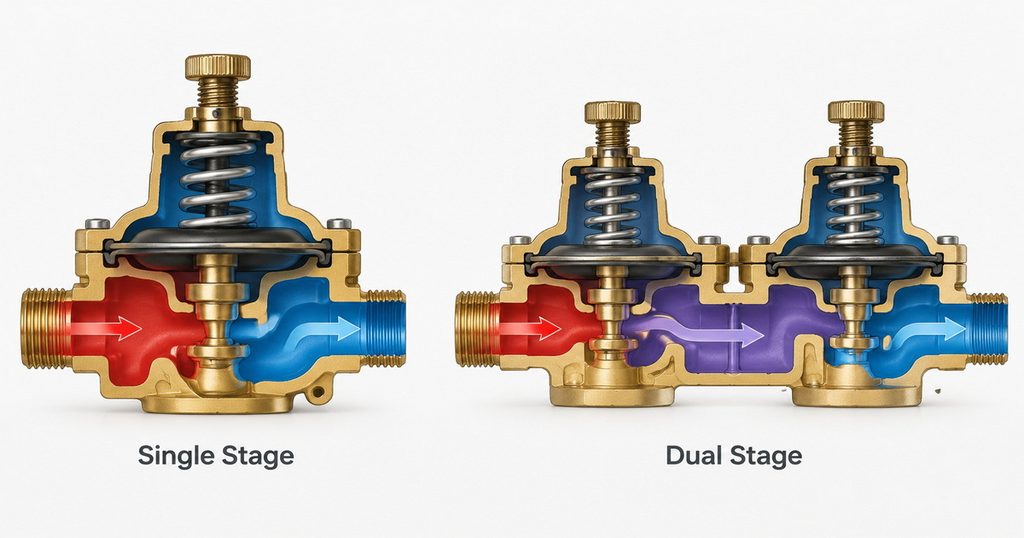
Brass Quality Requires More Than a Visual Inspection
A polished brass body does not establish alloy composition, manufacturing consistency, or gas compatibility.
Specify an identified alloy and obtain batch-linked material evidence. Depending on the purchasing risk, the inspection plan can include material verification and checks of machining, threads, sealing surfaces, and internal cleanliness.
Avoid accepting “high-quality brass” as the complete material specification. Equally, do not assume that one brass grade is appropriate for every gas or pressure condition.
Oxygen Cleanliness Must Be Maintained After Cleaning
For oxygen service, cleanliness is a safety requirement rather than a cosmetic feature. EIGA guidance identifies oil, grease, particles, and other contamination as important concerns and refers users to its oxygen-equipment cleaning guidance.
Ask how the supplier controls:
– Cleaning acceptance criteria.
– Drying and assembly conditions.
– Lubricants and assembly materials.
– Protective caps and packaging.
– Recontamination during inspection or rework.
A cleaning operation has limited value if the regulator is subsequently handled or packaged under uncontrolled conditions.
Treat CE and RoHS as Applicability Questions
The Pressure Equipment Directive, 2014/68/EU, generally applies to pressure equipment with maximum allowable pressure above 0.5 bar, subject to its scope and exclusions. The conformity route depends on the equipment’s classification; the pressure threshold alone does not determine the complete obligation.
An important distinction is that equipment falling under Article 4(3), the sound-engineering-practice provisions, must not bear the directive’s CE marking, although other applicable legislation may independently require CE marking. A blanket requirement that every regulator carry PED CE marking can therefore be incorrect.
For electrically heated CO₂ regulators, require a model-specific assessment covering the electrical assembly as well as the pressure-control function. Request the supplier’s written determination of applicable electrical-safety, electromagnetic-compatibility, and restricted-substance requirements rather than accepting “CE/RoHS approved” as a complete explanation.
The Overlooked Procurement Trap: A Good Gauge Reading Is Not a Performance Test
One easily overlooked sourcing mistake is approving a regulator because its outlet gauge displays the requested pressure when no gas is flowing.
That observation does not establish how the regulator performs during actual consumption or as cylinder pressure falls. Buyers should make dynamic operating conditions part of sample acceptance, consistent with the relevant regulator test requirements.
For a meaningful comparison, request test results showing:
1. Inlet pressure at each test point.
2. Outlet pressure at the agreed flow.
3. Behavior across the intended inlet-pressure range.
4. Shutoff or lock-up behavior after flow stops.
5. Leakage results and test conditions.
Another useful safeguard is a controlled bill of materials. Require written approval before changing the seat material, diaphragm, spring, gauge, seals, or critical machining dimensions.
The regulator’s external appearance may remain unchanged after an internal substitution. A packaging photograph therefore cannot demonstrate that repeat production matches the approved sample.
How to Audit, Sample, and Ship Your First Order
Verify the Factory and the Contracting Entity
Check that the quotation, bank details, certification documents, and contract identify the correct legal entity.
During a factory review, establish which operations occur on-site and which are outsourced. Examine incoming inspection, assembly controls, calibration records, nonconforming-product handling, and final testing.
For distributors or gas suppliers, verify authorization, original manufacturer identity, and access to technical support instead of requesting evidence of manufacturing processes they do not perform.
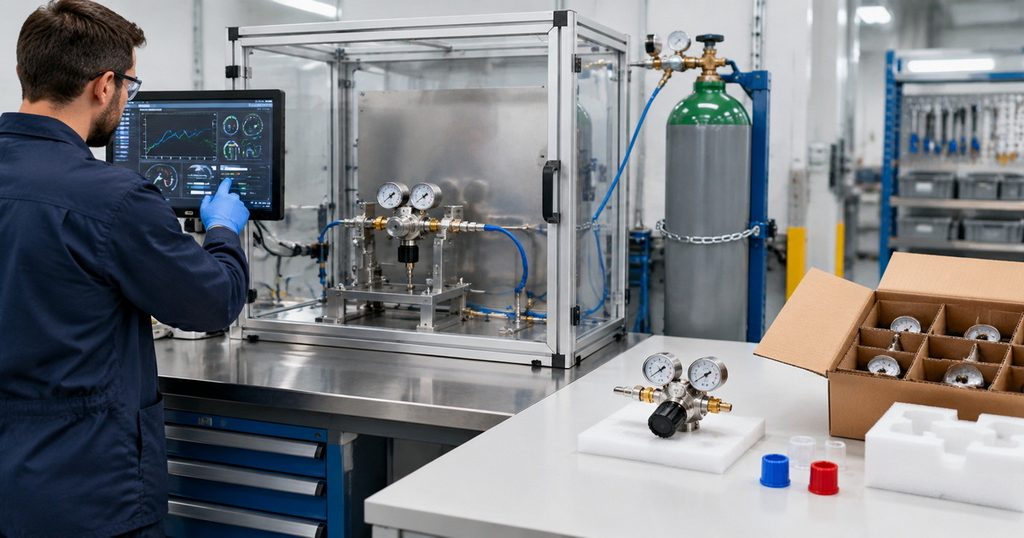
Use a Documented Sample-Approval Process
A practical sequence is:
1. Issue a complete technical specification.
2. Review drawings and documentation.
3. Test samples against written acceptance criteria.
4. Record approved construction and labeling.
5. Run a pilot order.
6. Review inspection results before expanding volume.
Do not approve only a “golden sample” without defining how subsequent production will be checked.
Separate Sample Lead Time From Production Lead Time
Request distinct commitments for engineering review, sample manufacture, sample approval, production, inspection, and shipping readiness.
For customized products, specify whether the production lead time starts after deposit, drawing approval, packaging approval, or final sample acceptance. Otherwise, two suppliers may quote the same number of weeks using different starting points.
Control Packaging and Shipping Assumptions
Require protective packaging for gauges, adjustment mechanisms, threads, and cleaned gas connections.
Before shipment, establish whether the products are new and free of gas, whether any accessories create additional transport requirements, and which party is responsible for classification and transport documentation.
For Spain-bound shipments, define the Incoterm, importer responsibilities, documentation requirements, and language of instructions before placing the order.
Conclusion: Match the Supplier Model to the Purchasing Objective
The most useful shortlist is not necessarily the one with the largest companies. It is the one that matches the buyer’s operating conditions and business model.
Bril merits evaluation for direct-factory OEM sourcing. Gasinox offers Spanish manufacturing with published customization and service capabilities. GCE and Harris provide established gas-control product ranges. Carburos Metálicos offers a route to combined gas and equipment procurement. Their roles differ, so quotations should be compared against the same technical specification rather than a common product description alone.
Before requesting prices, prepare a specification covering gas type, pressure, flow, connections, materials, documentation, and annual demand.
For an OEM project with Zhejiang Bril Welding Equipment Co., Ltd., submit that specification together with branding requirements, target order quantities, and destination-market documentation needs. Request a documented sample plan and a like-for-like commercial proposal before committing to production.
FAQ
1. How Can I Check Whether a Manufacturer’s ISO Certificate Is Still Valid?
Obtain the complete certificate and check its legal entity, site address, scope, certificate number, issue date, and expiry date.
Then verify its status directly with the issuing certification body through independently obtained contact details. Ask whether the certificate remains active, has been suspended, or has been withdrawn.
Also check whether the certified scope includes the activities relevant to the order. A certificate for trading industrial equipment is not equivalent to one covering regulator design and manufacture.
2. Does Every Industrial Gas Regulator Sold in Spain Need PED CE Marking?
No. The answer depends on the product’s scope, classification, and applicable legislation.
Under the PED, equipment governed by Article 4(3) follows sound engineering practice and must not carry the directive’s CE marking. Other legislation may create separate marking obligations. Ask the supplier for its written classification and the documents supporting the route selected.
3. When Should I Choose a Dual-Stage Regulator Instead of a Single-Stage Model?
Choose based on the required outlet-pressure stability across the expected inlet-pressure range—not simply on the number of gauges.
Ask suppliers to demonstrate performance at the same flow and inlet conditions. Two gauges indicate two measurements, not necessarily two pressure-reduction stages. The relevant cylinder-regulator standard includes both single- and two-stage designs, so stage count should be confirmed in the technical documentation.
4. How Can I Prevent Internal Material Changes After Sample Approval?
Attach an approved drawing and controlled bill of materials to the purchasing agreement.
Identify critical components and require written authorization for substitutions. Link the inspection plan to material records, component identification, and agreed performance tests.
Where the risk justifies it, include independent inspection or destructive examination of selected production samples. Approval should apply to a defined construction, not merely a model name.
5. What Extra Information Should I Request for a Heated CO₂ Regulator?
Request the intended continuous flow, inlet conditions, ambient-temperature range, electrical supply, heater rating, temperature-control arrangement, protective features, and permitted installation conditions.
Ask the supplier to demonstrate performance under a defined operating duty rather than using heater wattage alone as evidence of suitability. Also request the conformity assessment for the complete supplied assembly and clear instructions for installation, use, and maintenance.
Reference
1. – Zhejiang Bril Welding Equipment Co., Ltd. — company history, operating figures, and supplier-reported OEM and certification information. [chinesewelding]
2. – Gasinox — industrial product range, customization, repairs, and quality-system statements. [gasinox]
3. – GCE — corporate history, Spanish-market presence, industrial portfolio, and published standards information. [gcegroup]
4. – Harris Products Group — brand history, group formation, manufacturing footprint, and product portfolio. [harrisproductsgroup]
5. – Carburos Metálicos — company history and published pressure-regulation equipment range. [linkedin]
6. – AFM — final 2025 Spanish advanced-manufacturing and machine-tool results, published May 6, 2026; figures are not regulator-specific. [afm]
7. – European Industrial Gases Association — oxygen-service safety and cleaning guidance, and acetylene equipment guidance. [eiga]
8. – European Union — Pressure Equipment Directive 2014/68/EU, including conformity assessment and sound-engineering-practice provisions. [eur-lex.europa]
Hot Tags: Gas Pressure Regulator Manufacturers, Gas Pressure Regulator Suppliers, Industrial Gas Pressure Regulators, Welding Gas Regulators, CO₂ Gas Regulators, Heated CO₂ Regulators, Dual Stage Gas Regulators, Oxygen Pressure Regulators, Argon Gas Regulators, OEM Gas Regulators