Content Menu
● Oxygen Regulator vs Flashback Arrestor: Key Differences
● What Does an Oxygen Regulator Do?
>> Pressure Control Is Not Flame Protection
>> What Buyers Should Evaluate
● What Does a Flashback Arrestor Do?
>> Understand the Different Protective Functions
>> Flashback Arrestor vs Check Valve
● Backfire, Sustained Backfire, and Flashback
● Do You Need Flashback Arrestors on Oxygen and Fuel Lines?
>> Regulator-Mounted vs Torch-Mounted Arrestors
● Hidden Selection Issue: Pressure Drop Across the Complete System
>> Why a Normal Gauge Reading Can Be Misleading
>> Ask for Operating Data, Not Just Maximum Flow
● Oxygen Regulator Materials: Why Brass Alone Is Not Enough
>> Cleanliness and Compatibility Matter
● Standards and Documentation for Overseas Buyers
● Practical Pre-Use and Post-Incident Checks
>> Before Use
>> After a Suspected Flashback
● OEM and ODM Procurement: Specify a System, Not Just a Regulator
>> 1.Can an oxygen regulator replace a flashback arrestor?
>> 2.Can a flashback arrestor replace an oxygen regulator?
>> 3.Is a flashback arrestor necessary on the oxygen side?
>> 4.Will a flashback arrestor reduce gas flow?
>> 5.Can oxygen and acetylene arrestors be interchanged?
>> 6.How often should flashback arrestors be replaced?
An oxygen regulator controls gas pressure. A flashback arrestor helps stop a flame from travelling backward through an oxy-fuel system. In the oxygen regulator vs flashback arrestor comparison, the central point is complementary: these devices perform different jobs, and neither replaces the other.
For welding, cutting, and heating operations, selecting one without considering the other leaves important risks unaddressed. Stable pressure supports correct torch operation, while appropriately specified flashback protection helps limit the consequences of a dangerous flame reversal.
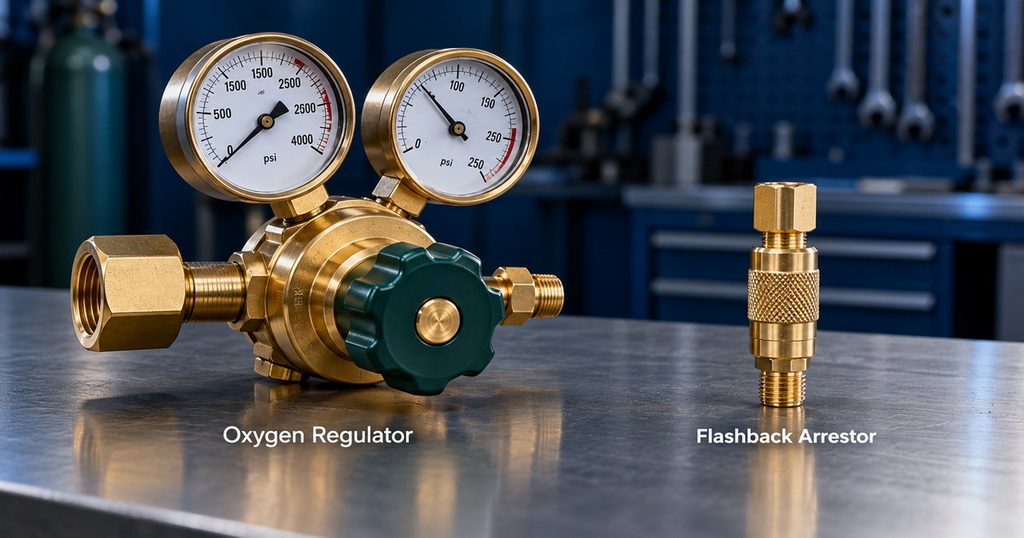
Oxygen Regulator vs Flashback Arrestor: Key Differences
| Comparison point | Oxygen regulator | Flashback arrestor |
|---|---|---|
| Primary function | Reduces and controls oxygen delivery pressure | Arrests a flame travelling backward through the gas system |
| Normal operation | Continuously regulates pressure during gas delivery | Allows normal flow while providing specified protective functions |
| Typical location | Cylinder valve or suitable supply outlet | Regulator outlet, torch inlet, or another approved location |
| Main components | Pressure-control mechanism, valve seat, adjustment system, and usually gauges | Flame-arresting element; additional valves depend on the model |
| Reverse-flow protection | Must not be assumed from an ordinary cylinder regulator | Available when the device includes a non-return valve |
| Pressure adjustment | Provides an adjustable delivery-pressure setting | Does not replace a pressure regulator |
| Selection priorities | Gas service, inlet pressure, delivery range, flow performance, and connections | Gas compatibility, pressure rating, flow capacity, protective functions, and installation position |
| Interchangeability | Cannot substitute for a flashback arrestor | Cannot substitute for a regulator |
The practical distinction is straightforward: a regulator manages the gas supply; a flashback arrestor addresses a specific combustion hazard.
What Does an Oxygen Regulator Do?
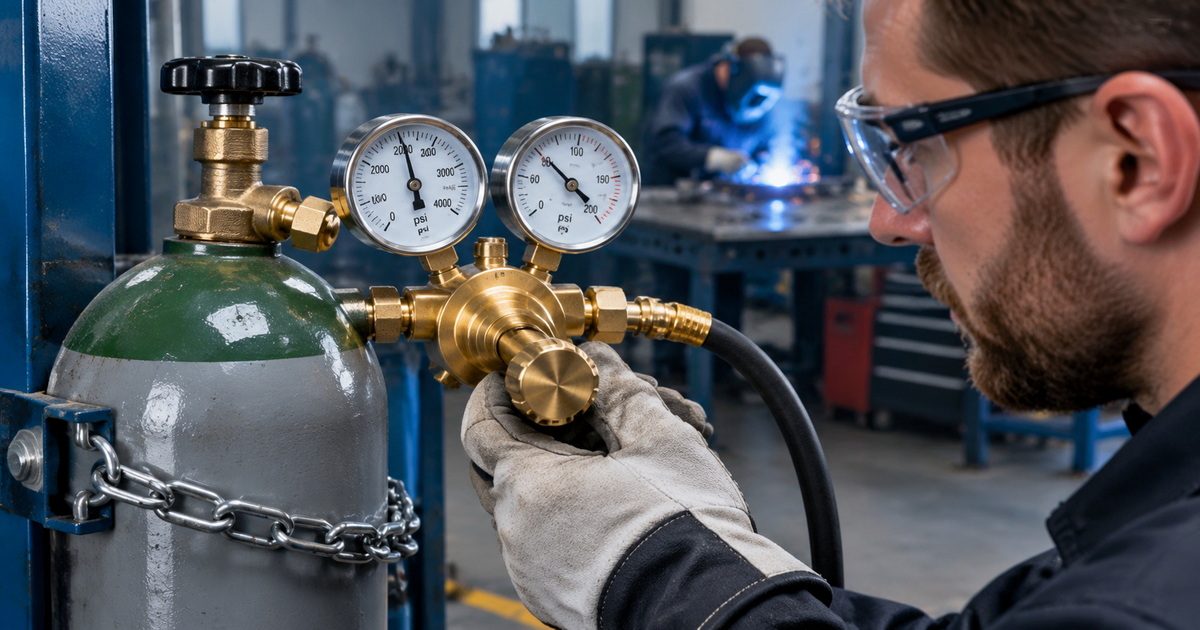
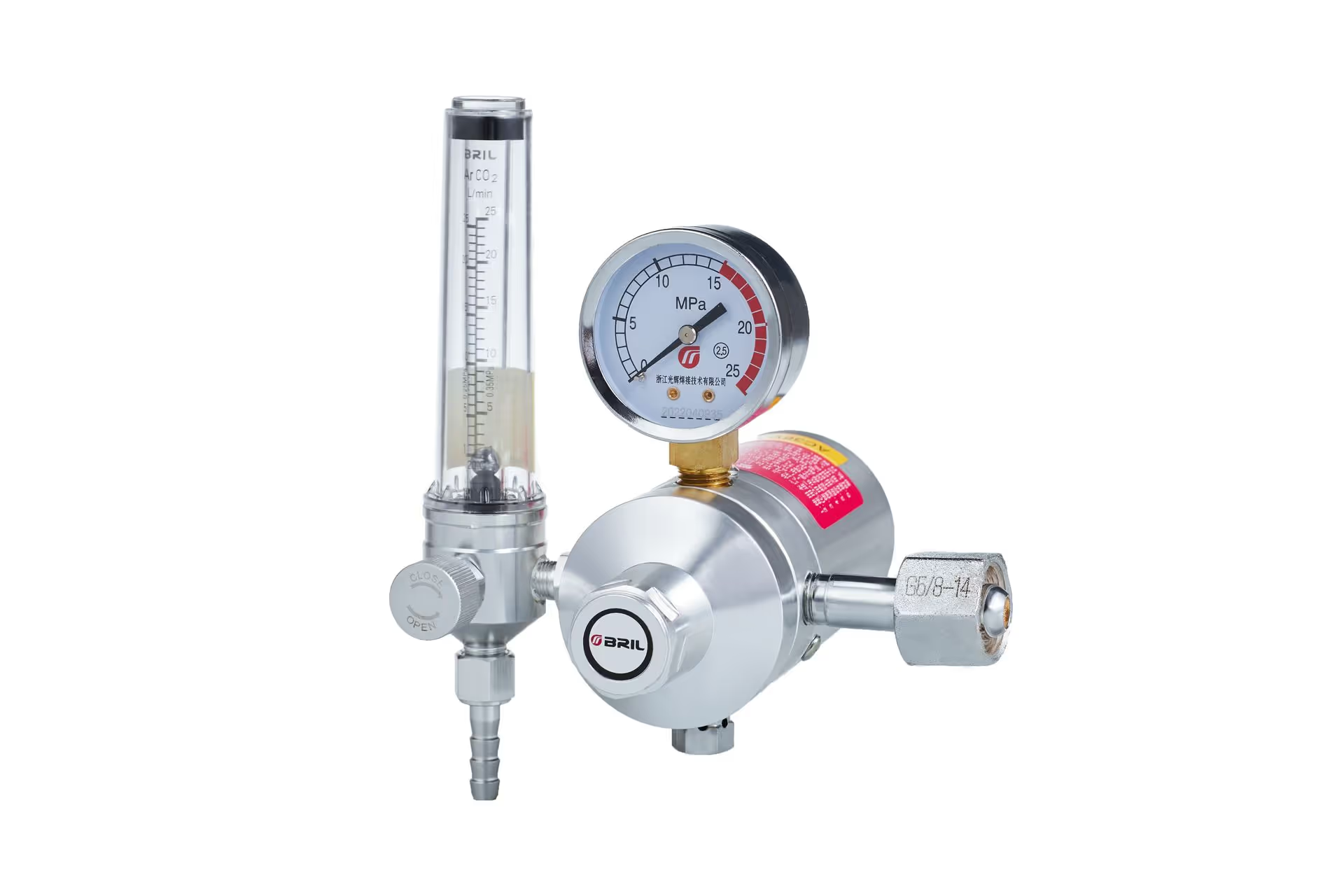
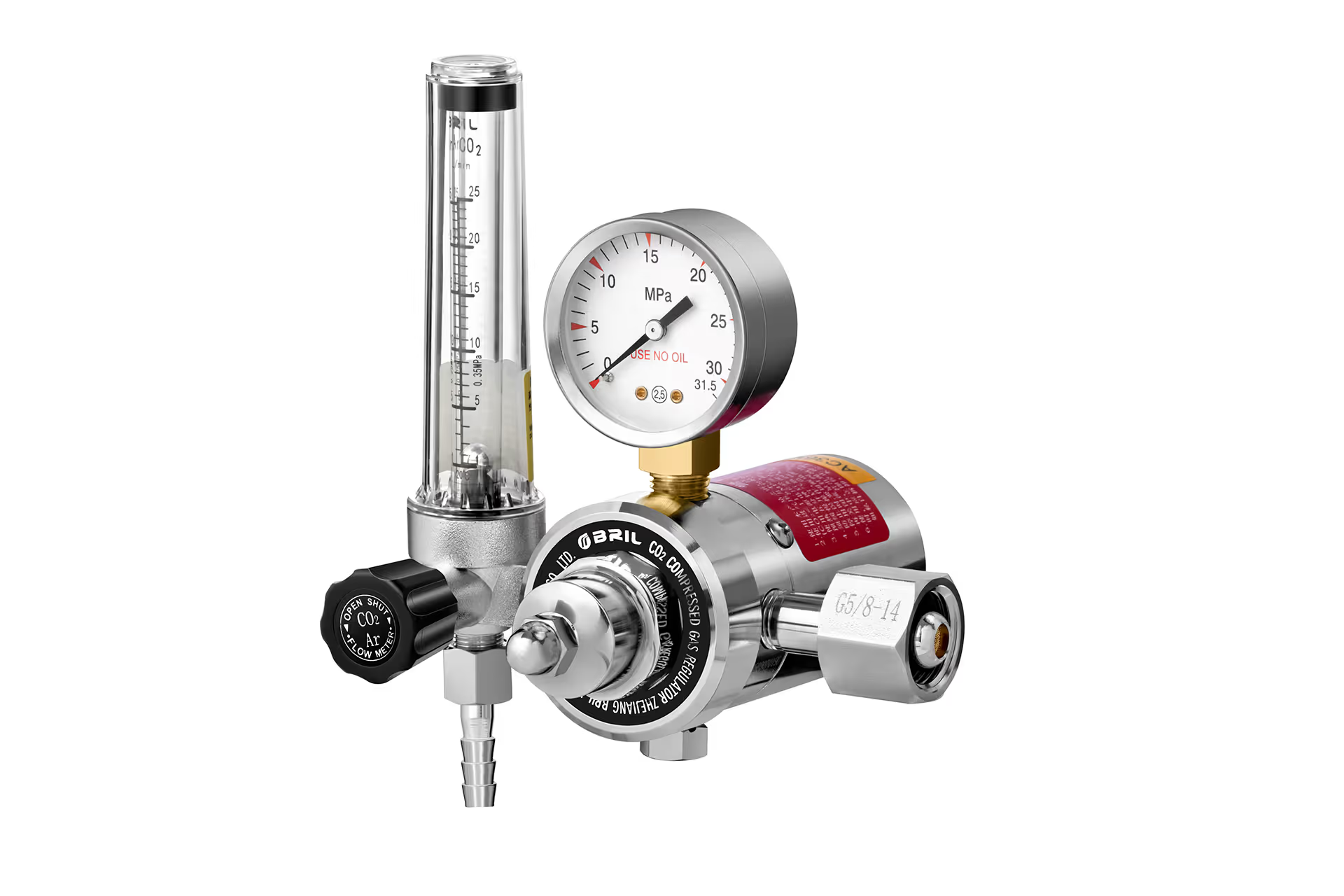
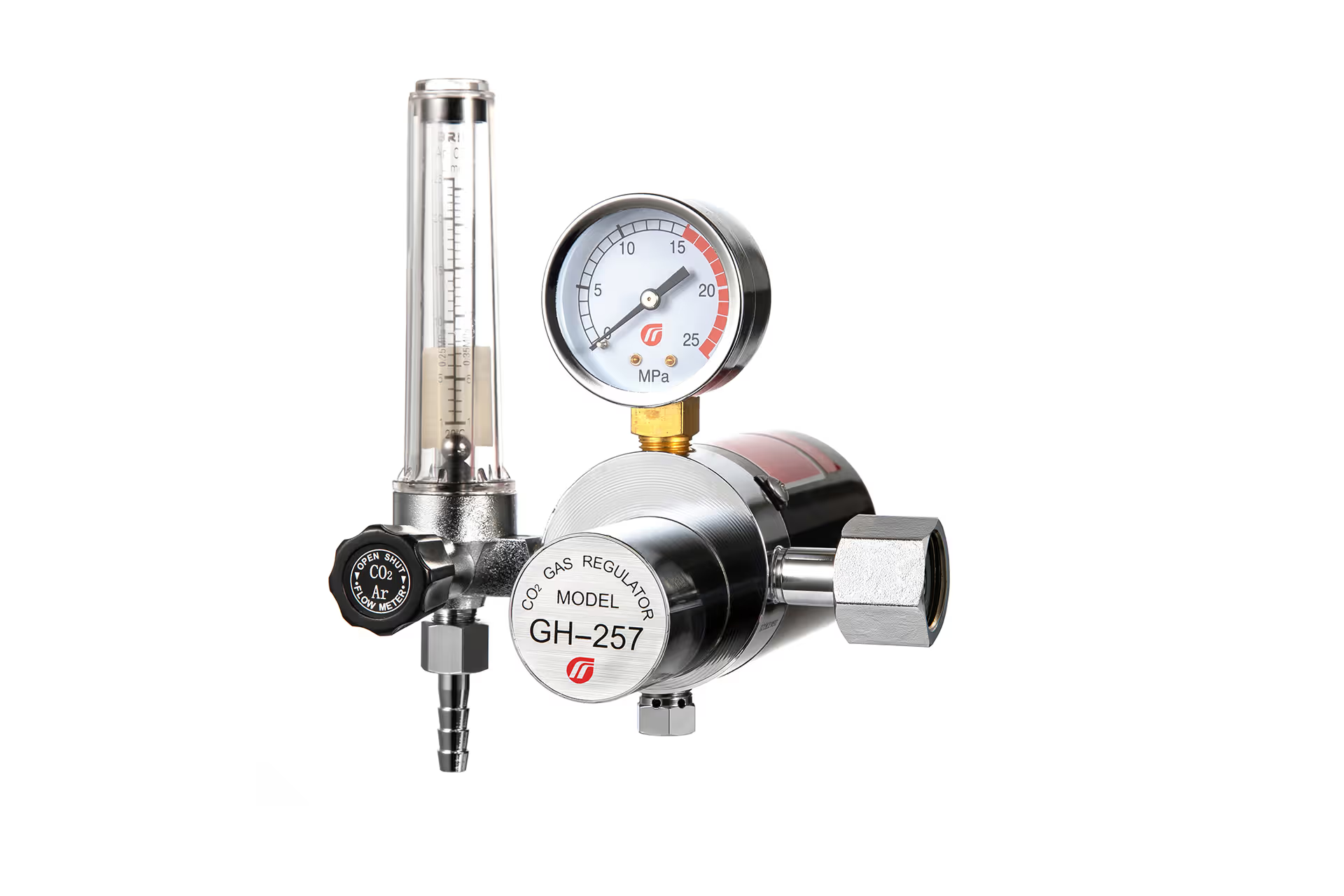
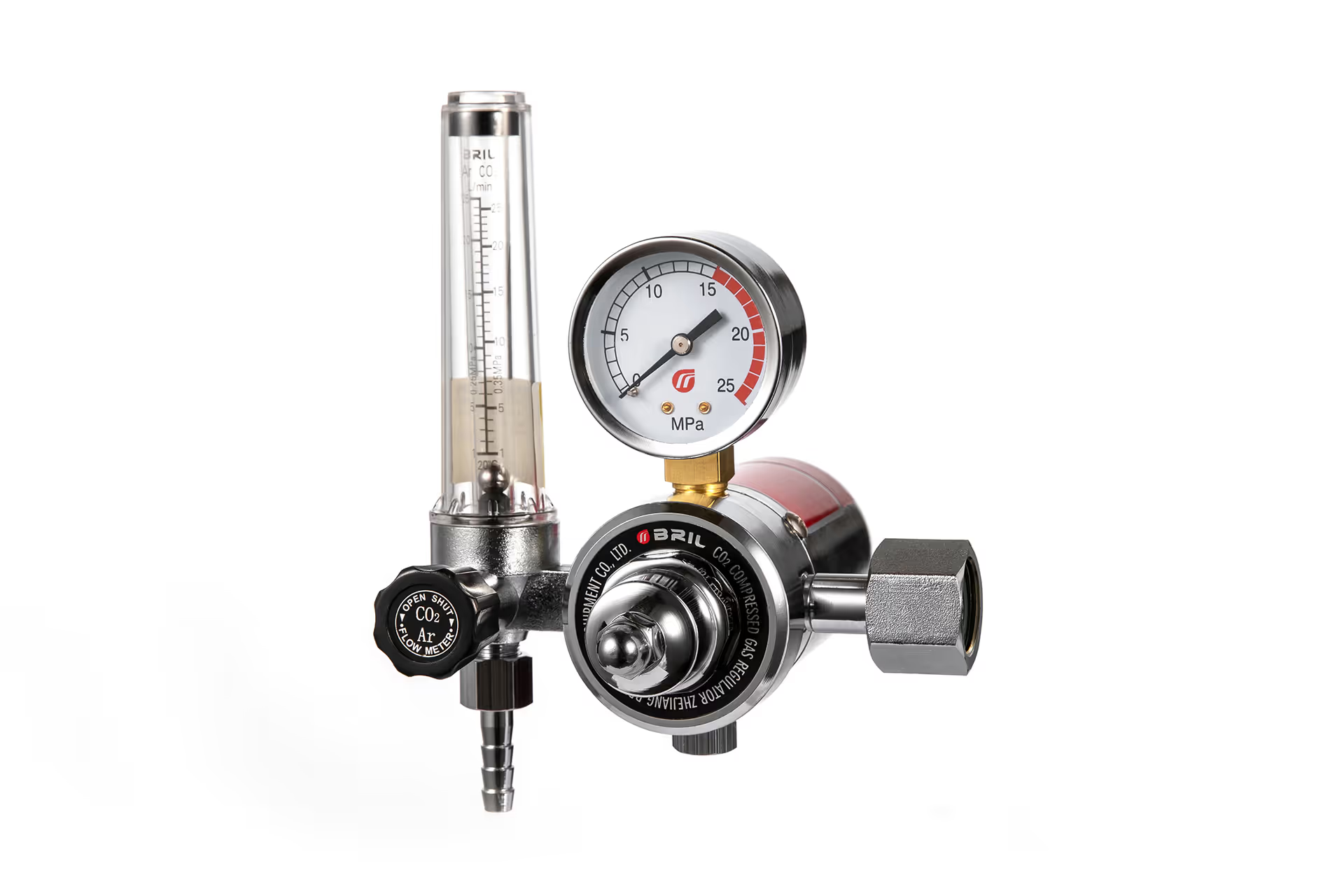
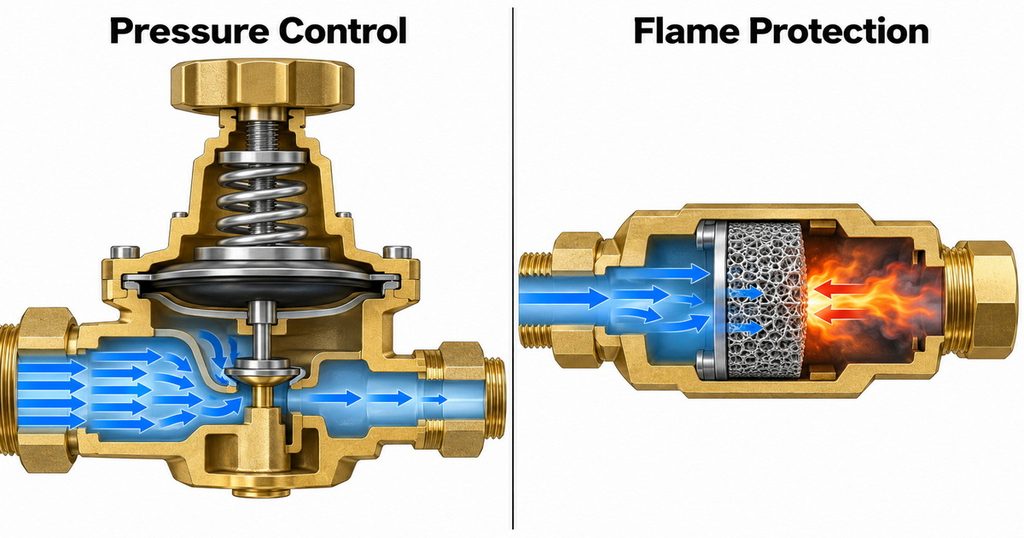
An oxygen regulator reduces cylinder pressure to a controlled delivery pressure suitable for downstream equipment.
Its pressure-control mechanism responds to changing conditions to maintain the selected outlet pressure within its performance limits. The operator must still choose settings specified for the torch, nozzle, gas combination, and task.
Pressure Control Is Not Flame Protection
A stable oxygen supply supports correct torch performance. However, an ordinary oxygen regulator is not a dedicated flame-arresting device.
Do not assume that a pressure gauge, relief valve, or heavy brass body provides flashback protection. If a regulator assembly incorporates additional protective functions, those functions should be identified in its documentation.
Likewise, a regulator relief valve is not a replacement for a flashback arrestor.
What Buyers Should Evaluate
For an oxygen regulator for welding or cutting, review:
– Maximum permitted inlet pressure.
– Suitable delivery-pressure range.
– Flow performance at the required operating conditions.
– Cylinder and outlet connection specifications.
– Oxygen-compatible materials, seals, and cleanliness.
– Inspection, servicing, and traceability documentation.
A regulator should be selected for its intended gas and pressure service—not simply because an adapter makes it fit.
What Does a Flashback Arrestor Do?
A flashback arrestor contains an element designed to quench a flame propagating backward through the gas passage.
A common design uses a porous, sintered-metal element. Its small passages remove heat from the flame, helping prevent propagation beyond the element under the device’s specified conditions.
Additional protection varies by model.
Understand the Different Protective Functions
A flashback arrestor may combine:
– Flame arrestor: quenches a travelling flame.
– Non-return valve: helps prevent reverse gas flow.
– Temperature-sensitive cut-off valve: interrupts gas flow when its activation temperature is reached.
– Pressure-sensitive cut-off valve: interrupts flow in response to a specified pressure event.
Not every device includes every function. Some products are resettable under defined conditions; others require replacement after activation.
Read the actual model specification rather than relying on the general product name.
Flashback Arrestor vs Check Valve
A check valve and a flashback arrestor are not equivalent.
A check valve addresses reverse gas flow. A flame-arresting element addresses flame propagation. A combined device can provide both functions, but a standalone check valve should not be treated as complete flashback protection.
This distinction matters when purchasing replacement parts: two fittings with similar dimensions may offer substantially different protection.
Backfire, Sustained Backfire, and Flashback
These events are related, but they are not identical.
| Event | What happens | Why it matters |
|---|---|---|
| Backfire | The flame briefly burns back into the torch, often producing a pop | It indicates that operating conditions or equipment need attention |
| Sustained backfire | Combustion continues inside the torch | Internal heating can damage equipment and create escalating danger |
| Flashback | The flame travels backward into a supply hose or farther upstream | It can threaten hoses, regulators, and the gas supply |
Incorrect gas pressures, restricted passages, defective torch components, and reverse flow can contribute to dangerous conditions.
A regulator helps establish appropriate supply conditions. An arrestor provides a separate protective barrier. Neither removes the need for trained operators and maintained equipment.
Do You Need Flashback Arrestors on Oxygen and Fuel Lines?
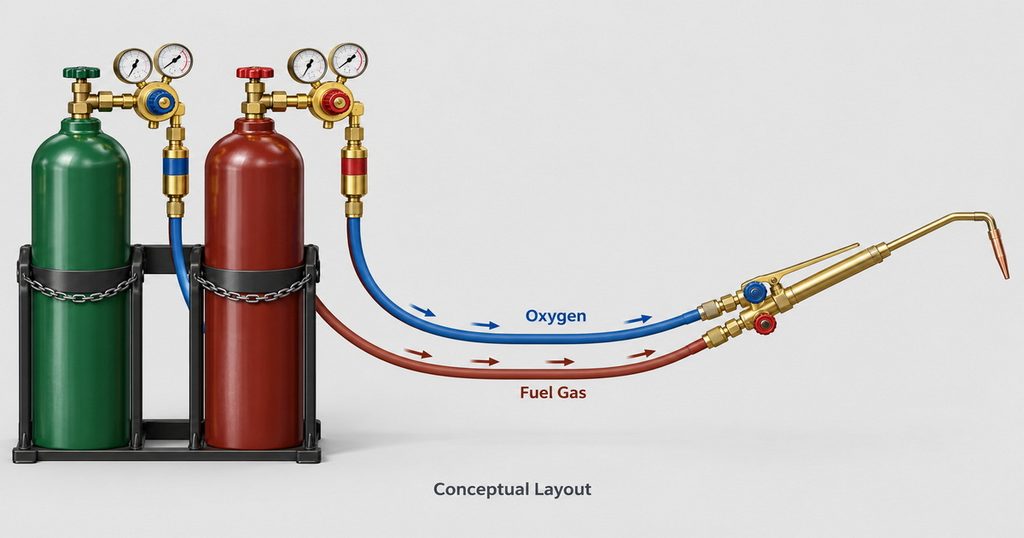
For oxy-fuel systems, do not consider only the fuel side.
Although oxygen is not a fuel, reverse flow can introduce fuel gas into an oxygen passage. A combustible mixture can then create a flashback hazard.
UK safety guidance recommends flashback arrestors near the regulators on both oxygen and fuel supplies. For long hoses, it also recommends protection at both the torch and regulator.
Installation must still follow the equipment manufacturers’ instructions, applicable local requirements, and the system risk assessment. Requirements for portable cylinder sets, manifolds, and fixed piping are not necessarily identical.
Regulator-Mounted vs Torch-Mounted Arrestors
Regulator-mounted devices provide protection near the supply end of the hose. Torch-mounted devices intercept a flashback close to its potential origin.
Their locations are not interchangeable in every respect. A torch-mounted device does not offer the same supply-end protection against a sustained hose fire as a suitable regulator-mounted device.
Where both are specified, confirm that their combined restriction does not compromise the required gas flow.
Hidden Selection Issue: Pressure Drop Across the Complete System
One of the most important purchasing mistakes is evaluating the regulator and flashback arrestor separately.
Every component in the flow path can contribute to pressure loss. Hoses, connectors, valves, and arrestors all affect the conditions available at the torch.
Why a Normal Gauge Reading Can Be Misleading
Consider this illustrative scenario—not a documented customer incident:
A workshop changes from a small welding nozzle to a larger cutting attachment. The regulator gauge still appears normal, but torch performance deteriorates.
The issue may be inadequate flow through the complete assembly rather than a defective regulator. An undersized arrestor, restrictive connector, or unsuitable hose can contribute.
Increasing pressure without checking component ratings and the torch instructions is not a sound remedy.
Ask for Operating Data, Not Just Maximum Flow
Request flow-performance information showing:
1. The gas used for the rating.
2. Inlet pressure.
3. Outlet pressure or pressure drop.
4. Flow units and reference conditions.
5. Whether the value represents free discharge or actual service conditions.
A headline flow figure alone does not establish that an arrestor will support a particular torch.
Oxygen Regulator Materials: Why Brass Alone Is Not Enough
Our company emphasizes precision manufacturing and high-quality brass components. However, material choice is only one part of a suitable oxygen regulator.
A substantial brass body does not prove oxygen cleanliness, correct sealing, reliable pressure control, or verified safety performance.
Cleanliness and Compatibility Matter
Oxygen equipment must remain free from oil and grease. Contamination creates a serious ignition hazard.
Procurement checks should therefore include:
– Documented oxygen-service suitability.
– Compatible internal materials and sealing components.
– Controlled cleaning and handling requirements.
– Protection against contamination during packaging and storage.
– Clear warnings and operating instructions.
Never apply ordinary lubricants to oxygen fittings. Any servicing or cleaning should follow approved procedures performed by competent personnel.
Standards and Documentation for Overseas Buyers
Two standards commonly encountered in this comparison address different equipment categories:
| Standard | Equipment focus | Procurement significance |
|---|---|---|
| ISO 2503 | Cylinder pressure regulators used in welding, cutting, and allied processes | Relevant to regulator requirements within its scope |
| ISO 5175-1 | Safety devices incorporating a flame arrestor | Relevant to flashback-arresting devices |
| ISO 5175-2 | Safety devices without a flame arrestor | Helps distinguish other protective devices from flame-arresting equipment |
These references do not mean that every product bearing a standard number has identical functions or suits every installation.
Ask for documentation identifying the exact model, applicable standard edition, gas service, pressure limits, and test scope.
In the United States, oxygen-fuel equipment is also subject to relevant workplace requirements. Avoid interpreting provisions for piping systems as a blanket installation rule for every portable cylinder arrangement.
Practical Pre-Use and Post-Incident Checks
The following checklist supports equipment review; it does not replace operator training or the manufacturer’s operating procedure.
Before Use
1. Verify gas identity and component markings. Confirm that regulators, arrestors, hoses, and torches suit their intended service.
2. Inspect visible condition. Look for damaged gauges, loose connections, hose burns, contamination, and missing identification.
3. Confirm installation direction. Follow arrestor flow arrows and mounting instructions.
4. Check for leaks. Use an appropriate leak-detection product, never a flame.
5. Confirm operating settings. Follow the torch manufacturer’s instructions for the selected nozzle and task.
6. Resolve abnormalities before ignition. Unexplained leakage, pressure behavior, or damage requires competent assessment.
After a Suspected Flashback
Stop work and follow the site emergency procedure. Isolate supplies only when safe to do so.
Do not immediately relight the torch or reset a protective device without investigation. A competent person should assess the affected torch, hoses, regulators, and arrestors before return to service.
If an acetylene cylinder becomes warm, vibrates, or may be affected by fire, evacuate and contact emergency services. An arrestor does not make an affected cylinder safe to approach.
OEM and ODM Procurement: Specify a System, Not Just a Regulator
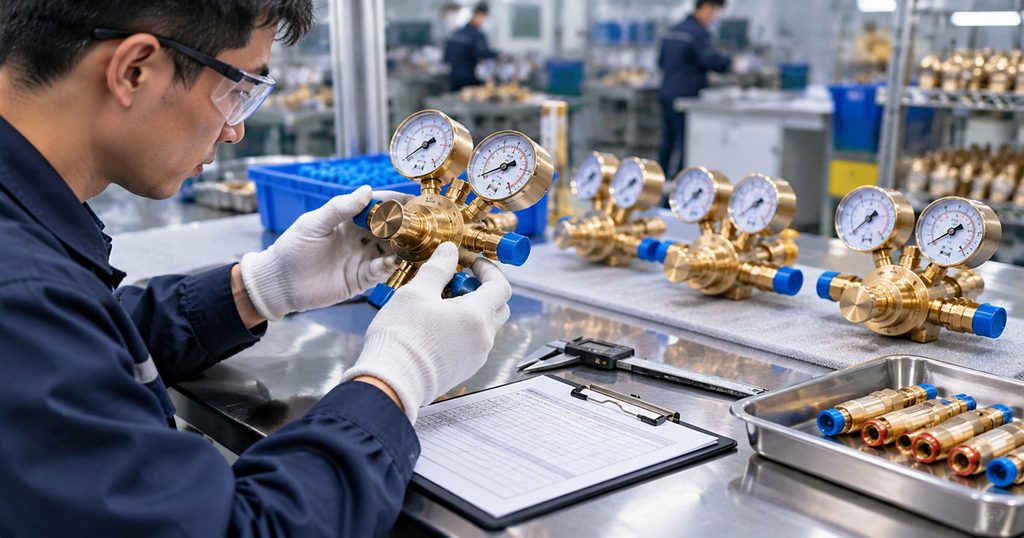
For overseas brands, distributors, and equipment manufacturers, the strongest purchasing brief defines the intended application before discussing appearance or packaging.
A useful specification includes:
– Destination market and relevant requirements.
– Oxygen and fuel-gas types.
– Cylinder connections and inlet pressures.
– Delivery-pressure and flow requirements.
– Torch types, nozzle range, and hose arrangement.
– Proposed arrestor models and mounting positions.
– Required inspection records, markings, and manuals.
– Spare-parts and servicing arrangements.
Evaluate lifecycle cost as well as unit price. An inexpensive component that lacks application data or replacement support can complicate maintenance and increase downtime.
As a regulator manufacturer offering OEM and ODM services, we encourage buyers to begin with operating requirements. Send us your gas types, cylinder connections, pressure range, flow demand, and destination market to discuss a suitable regulator specification and compatibility review.
Frequently Asked Questions
1.Can an oxygen regulator replace a flashback arrestor?
No. An ordinary oxygen regulator controls delivery pressure; it does not provide dedicated flame-arresting protection. Any integrated safety functions must be explicitly documented.
2.Can a flashback arrestor replace an oxygen regulator?
No. It does not reduce cylinder pressure to an adjustable working pressure. Each device performs a separate function.
3.Is a flashback arrestor necessary on the oxygen side?
Oxygen-side protection is important in oxy-fuel systems because reverse flow can introduce fuel into the oxygen passage. Follow applicable guidance and the approved equipment arrangement.
4.Will a flashback arrestor reduce gas flow?
It introduces flow resistance. Whether that resistance affects torch performance depends on the model, gas, pressure, and complete system configuration.
5.Can oxygen and acetylene arrestors be interchanged?
Do not assume so. Use a device specifically rated for the intended gas, pressure, connection, and mounting location. Some models support multiple gases, but documentation must confirm suitability.
6.How often should flashback arrestors be replaced?
There is no universal interval covering every model and application. Follow the manufacturer’s inspection, testing, replacement, and post-activation instructions.
References
1. Occupational Safety and Health Administration. “29 CFR 1910.253—Oxygen-Fuel Gas Welding and Cutting.” Covers gas-specific regulator use, oxygen cleanliness, equipment maintenance, and protective requirements for relevant systems. [osha]
2. Health and Safety Executive. “Welding and Flamecutting.” Includes oxygen and fuel-side arrestor placement, long-hose precautions, leak testing, and acetylene-cylinder emergency guidance. [hse.gov]
3. Health and Safety Executive. “The Safe Use of Compressed Gases in Welding, Flame Cutting and Allied Processes,” HSG139. Explains flame arresters, cut-off functions, installation locations, and limitations of torch-mounted protection. [books.hse.gov]
4. WITT-Gasetechnik. “Flashback Arrestors.” Technical explanation of flashback mechanisms, flame-quenching elements, protective functions, and installation options. Individual model specifications take precedence over general descriptions. [wittgas]
5. GCE Group. “Quality Standards for Industrial Products.” Summarizes the scope of ISO 2503 for welding and cutting regulators and related equipment standards. [gcegroup]
6. IBEDA. “The New International Standard for Gas Safety Devices.” Explains the scope of DIN EN ISO 5175-1 and its relationship to the earlier EN 730-1 standard. [ibeda]
7. International Organization for Standardization. “ISO 5175:1987—Equipment Used in Gas Welding, Cutting and Allied Processes.” Historical catalogue entry identifying its replacement by ISO 5175-1 and ISO 5175-2. [iso]
Hot Tags: Oxygen Regulator, Flashback Arrestor, Oxygen Regulator Manufacturer, Flashback Arrestor Supplier, Welding Gas Regulator, Industrial Oxygen Regulator, Oxy Acetylene Regulator, Oxygen Flashback Arrestor, OEM Gas Regulator, Gas Regulator Supplier