Content Menu
● What Does a CO₂ Regulator Do?
● Common Uses of CO₂ Regulators
>> CO₂ Regulators for Welding and Metal Fabrication
>> CO₂ Regulators for Beverage and Draft Beer Systems
>> CO₂ Regulators for Aquariums and Greenhouses
● Why Stable Pressure Control Matters
>> Understanding Pressure Creep
● Single-Stage vs. Dual-Stage CO₂ Regulators
● How to Choose the Right CO₂ Regulator
>> 1. Confirm Gas Compatibility
>> 2. Match the Cylinder Connection
>> 3. Define the Outlet Pressure Range
>> 4. Evaluate Material Quality and Construction
>> 5. Consider the Operating Environment
● Safe CO₂ Regulator Installation and Use
● What Buyers Should Ask Suppliers
● CO₂ Regulator Maintenance Tips
● Choose a Reliable CO₂ Regulator Manufacturer
>> 1. What is a CO₂ regulator used for in welding?
>> 2. Can I use an argon regulator for CO₂?
>> 3. Why does my CO₂ regulator freeze?
>> 4. What is the difference between a single-stage and dual-stage CO₂ regulator?
>> 5. How do I know whether a CO₂ regulator is leaking?
>> 6. How often should a CO₂ regulator be inspected?
>> 7. Can a CO₂ regulator be customized for OEM projects?
A CO₂ regulator reduces the high, variable pressure inside a carbon dioxide cylinder to a controlled outlet pressure or flow that equipment can use safely and consistently. In welding, beverage dispensing, aquariums, laboratories, food processing, and industrial gas systems, the regulator is the component that makes CO₂ delivery stable, adjustable, and repeatable.
For manufacturers, distributors, and end users, choosing the right CO₂ gas regulator is not simply a matter of connecting a cylinder to a hose. The correct regulator must match the gas, cylinder connection, required outlet pressure, flow demand, operating environment, and safety expectations of the application. A reliable regulator helps protect equipment, improve process consistency, reduce gas waste, and support safer day-to-day operations.
What Does a CO₂ Regulator Do?
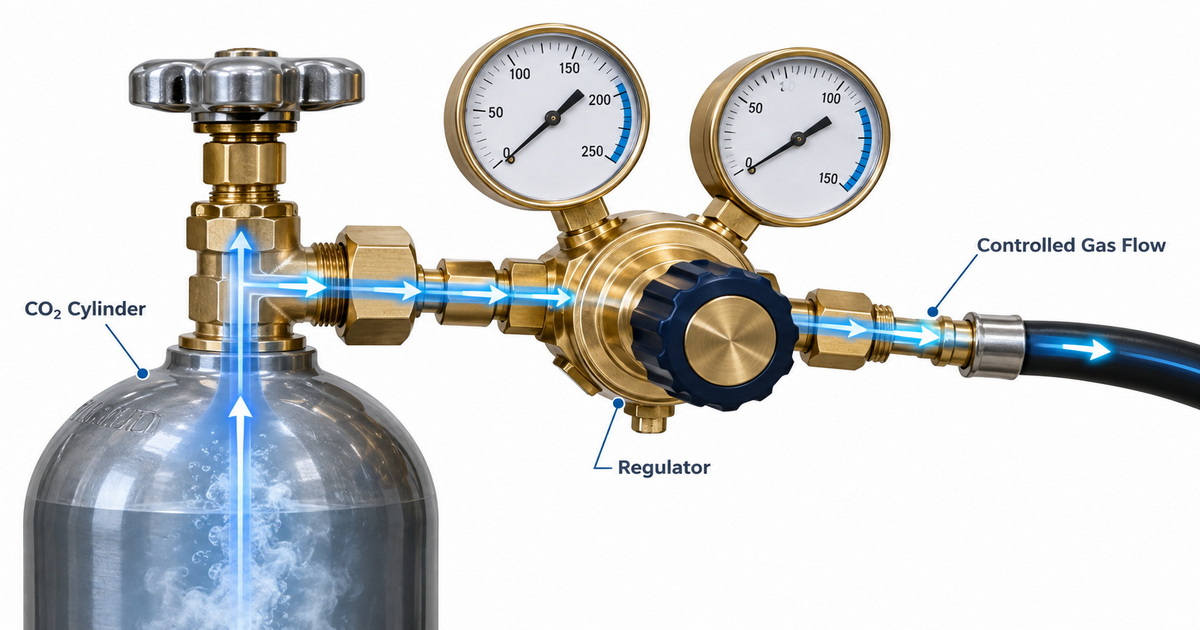
A CO₂ cylinder stores gas at high pressure. However, most downstream equipment cannot use cylinder pressure directly. A CO₂ regulator controls that pressure by reducing it to a usable level before the gas reaches a welding torch, beverage system, aquarium diffuser, industrial machine, or gas distribution line.
In basic terms, a CO₂ pressure regulator performs three key jobs:
– Reduces cylinder pressure to a lower working pressure
– Maintains stable delivery pressure as gas is consumed
– Allows the operator to adjust output for the connected application
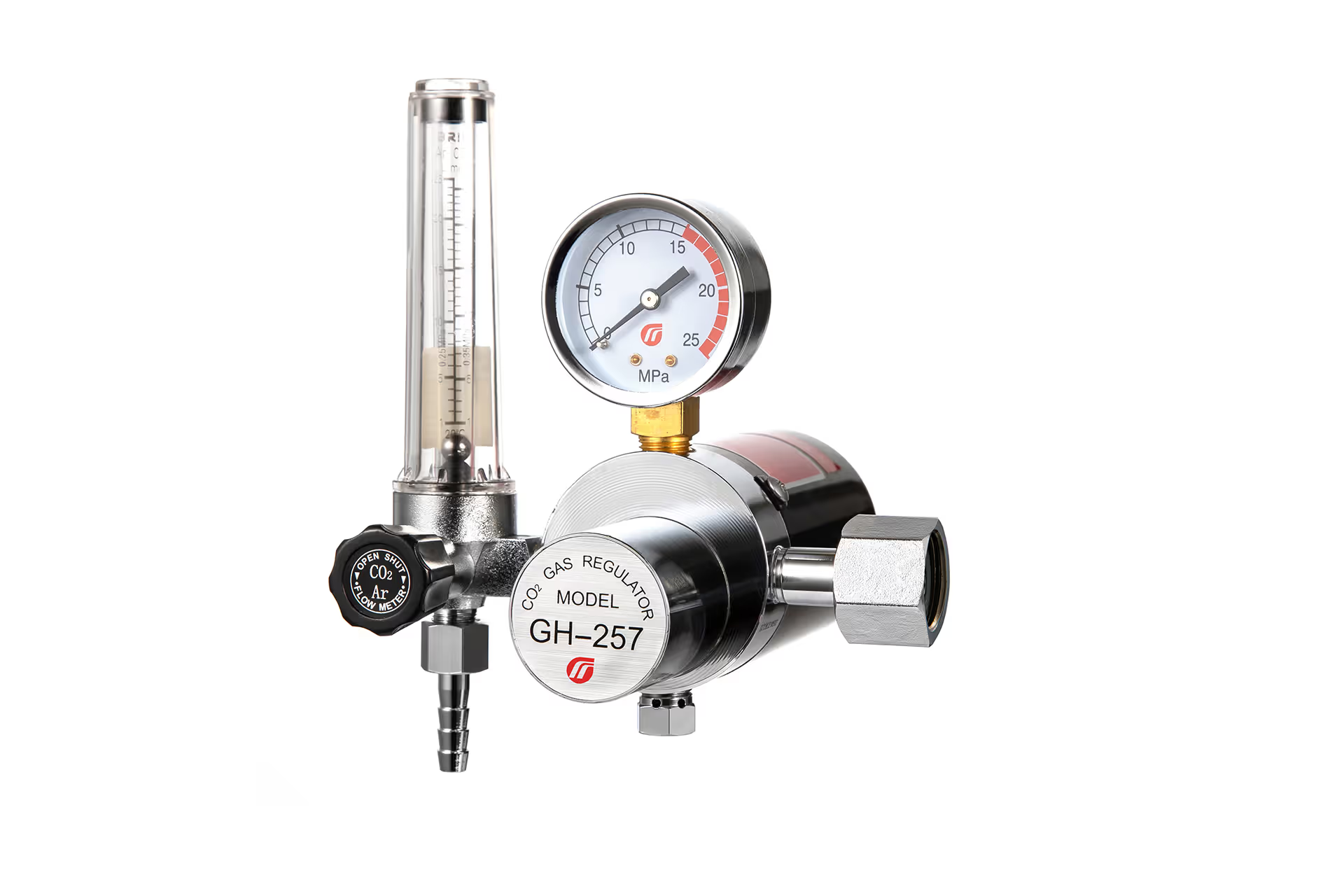
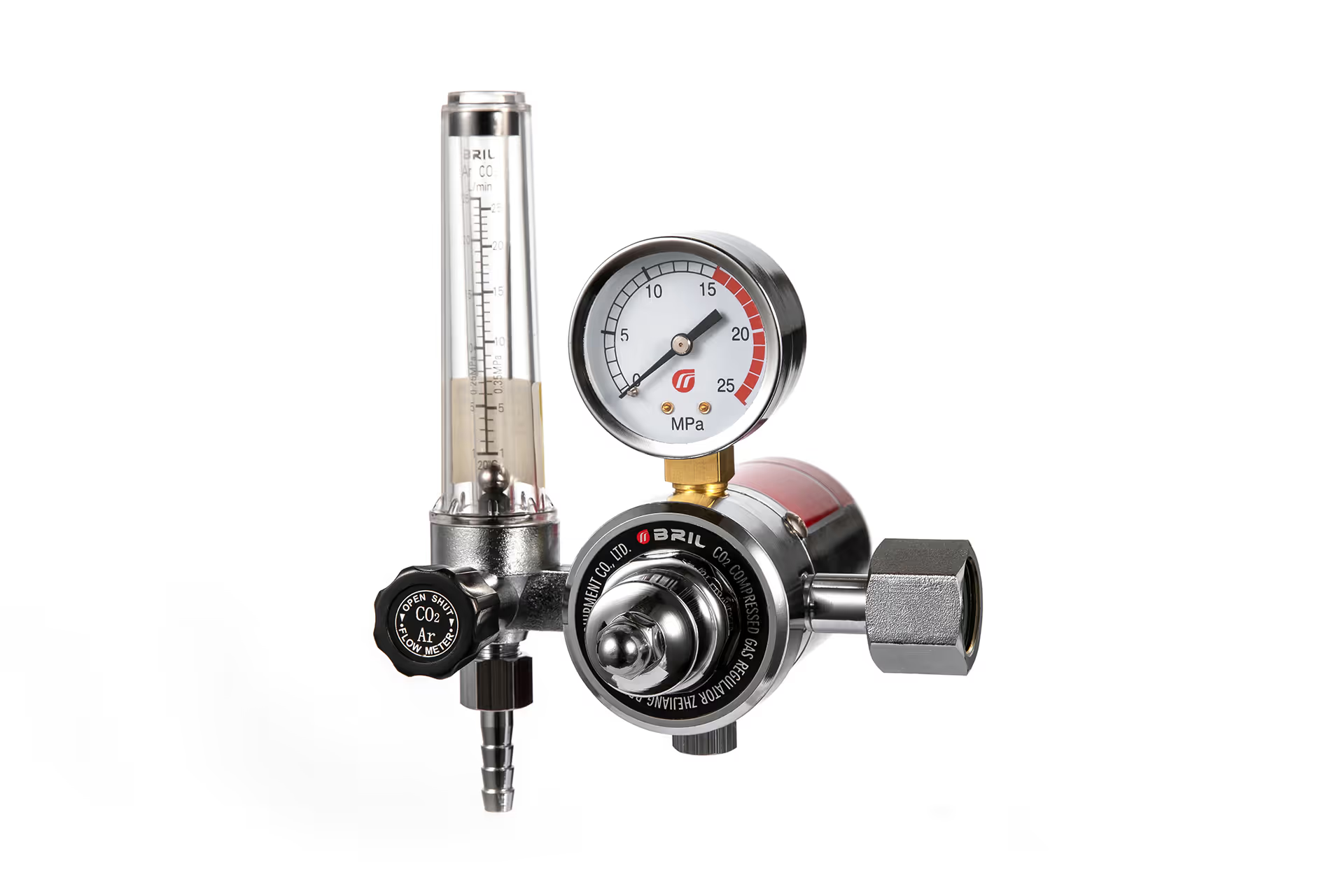
The regulator usually includes a brass body, pressure-adjustment mechanism, diaphragm, valve seat, gauges, inlet connection, outlet connection, and pressure-relief function. When the operator turns the adjustment knob, the internal spring applies force to the diaphragm and valve mechanism. This opens or closes the gas pathway to establish the desired outlet pressure.
A properly selected CO₂ regulator helps ensure that gas reaches the process at a predictable pressure. That matters because unstable pressure can cause inconsistent shielding-gas coverage during welding, foaming or poor carbonation in beverage systems, irregular plant growth in aquariums, or process variation in industrial equipment.
Common Uses of CO₂ Regulators
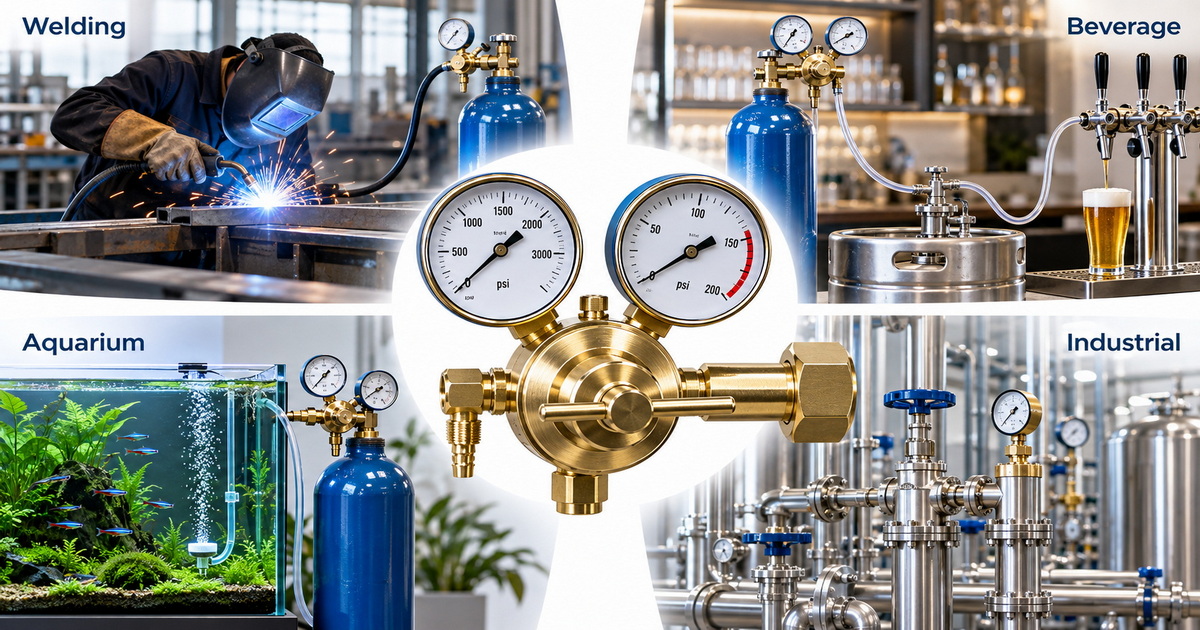
CO₂ regulators are used in many commercial and industrial settings. Although the gas is the same, each application may require a different pressure range, outlet configuration, flow-control design, and material specification.
| Application | How the CO₂ Regulator Is Used | Typical Selection Priority |
|---|---|---|
| MIG/MAG welding | Controls shielding-gas delivery to the welding machine and torch | Stable flow, durable brass body, accurate gauges |
| Beverage dispensing | Reduces cylinder pressure for beer, soda, sparkling water, and beverage systems | Consistent carbonation pressure, sanitary-compatible setup |
| Aquarium systems | Delivers controlled CO₂ to planted aquariums | Fine adjustment, needle valve compatibility, low flow control |
| Food processing | Supports CO₂ blanketing, packaging, chilling, or process gas delivery | Process consistency, gas compatibility, system reliability |
| Laboratories | Supplies controlled CO₂ to instruments, incubators, analyzers, or test systems | Accuracy, low leakage, proper connection standard |
| Greenhouses | Helps deliver CO₂ for enrichment systems | Stable pressure and dependable long-duration operation |
| Industrial gas distribution | Reduces pressure before gas enters a manifold or production process | Capacity, pressure stability, safety design |
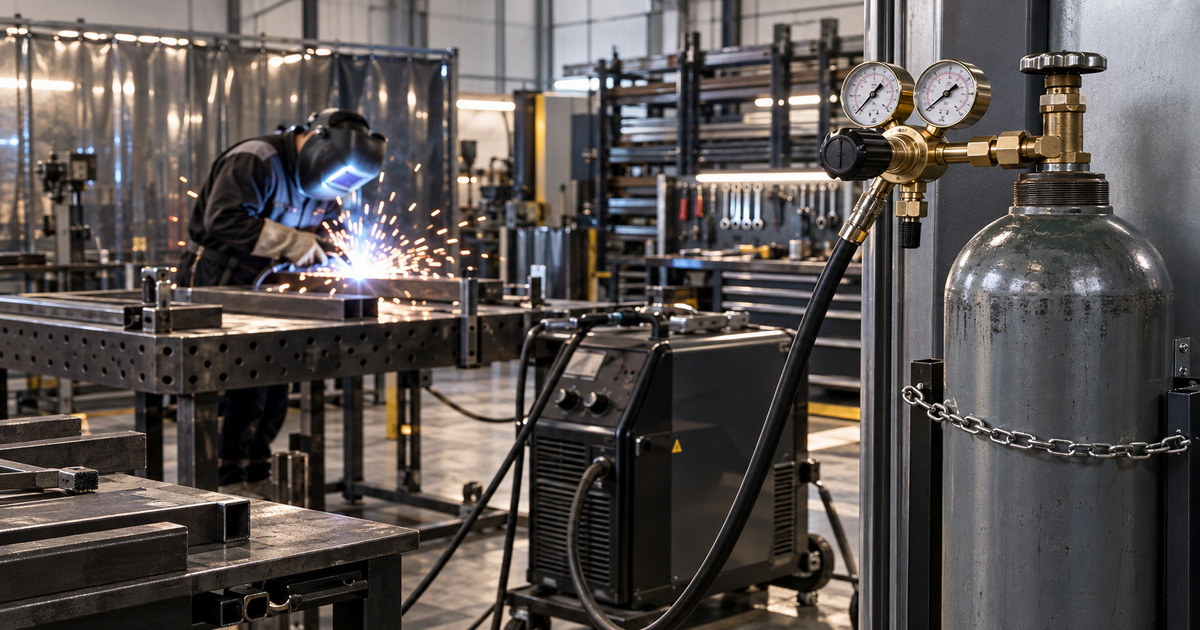
CO₂ Regulators for Welding and Metal Fabrication
In MIG and MAG welding, CO₂ is commonly used as a shielding gas, either alone or as part of a mixed-gas blend. The purpose of the gas is to protect the weld pool from atmospheric contamination while supporting the desired arc characteristics and penetration profile.
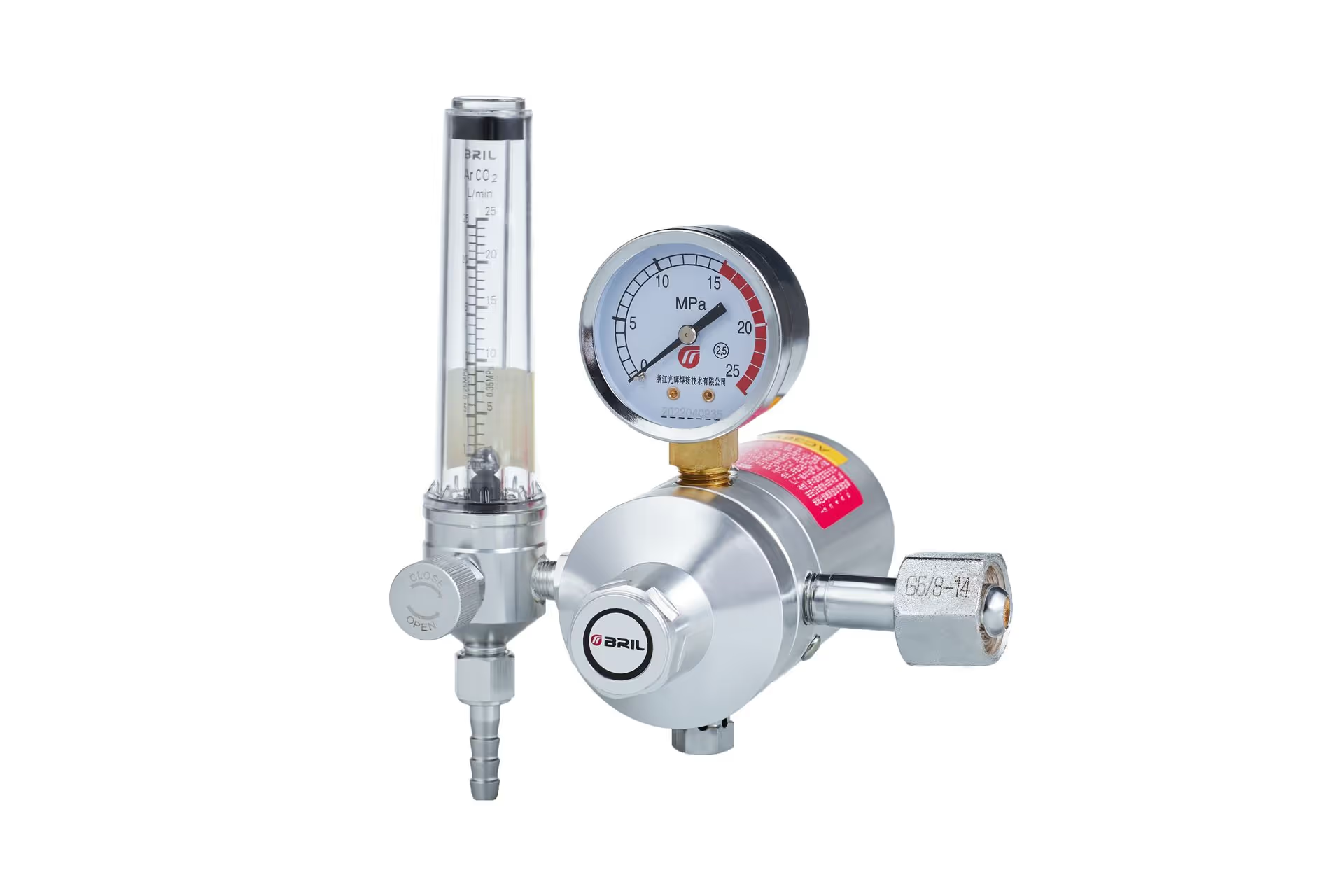
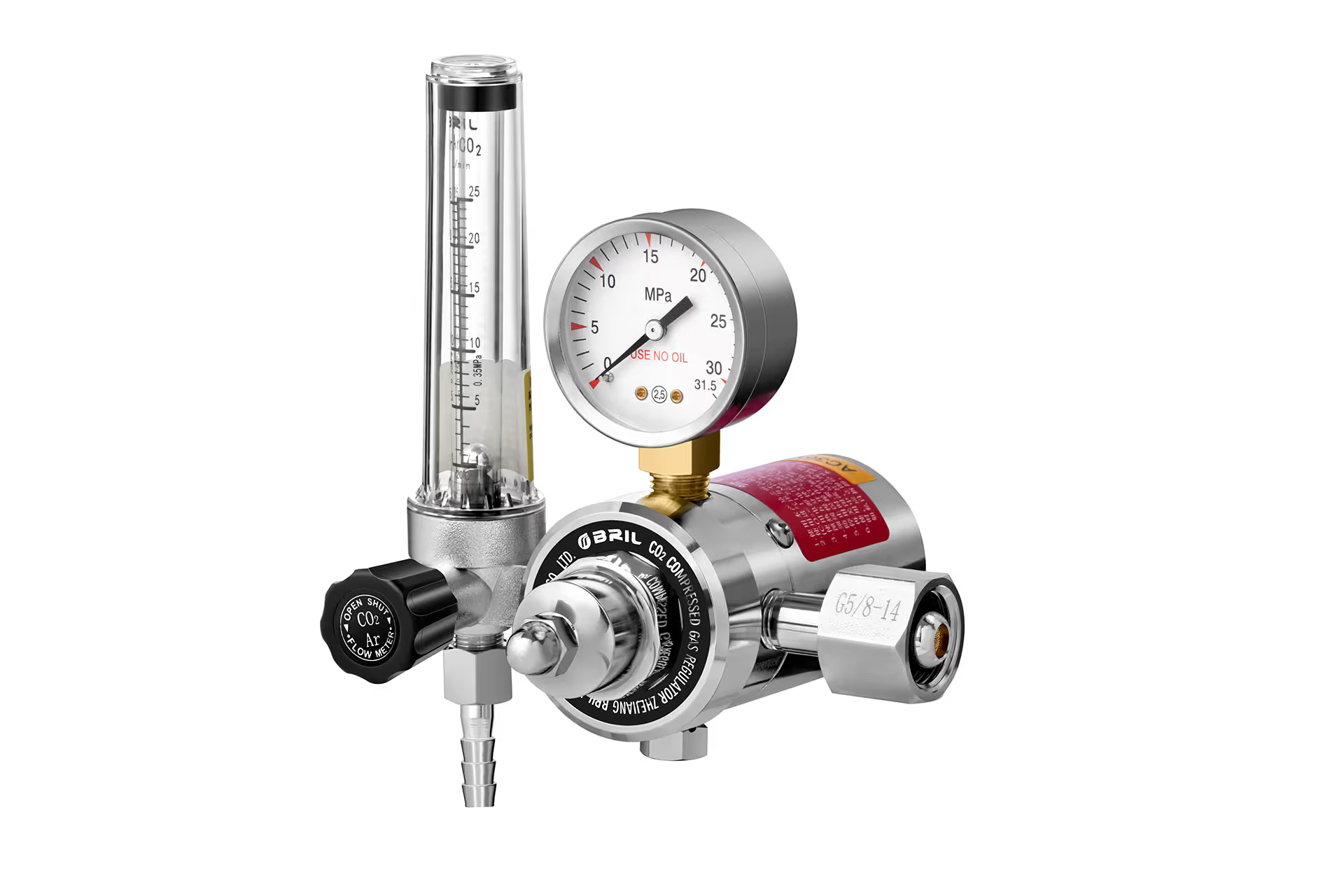
A CO₂ welding regulator controls the gas delivered from the cylinder to the welding machine. Depending on the setup, the system may use a pressure regulator, a flowmeter regulator, or a regulator combined with a flow-control device.
For welding professionals, the practical objective is not merely “more gas.” The objective is stable and appropriate shielding-gas delivery. Too little gas can expose the weld pool to air, increasing the risk of porosity and poor weld appearance. Too much gas can create turbulence, draw surrounding air into the shielding zone, and waste gas.
A robust welding CO₂ regulator should provide:
– A durable brass construction for frequent industrial use
– Clear, accurate pressure gauges
– Stable outlet pressure during cylinder depletion
– Compatible inlet and outlet connections
– Easy adjustment while wearing work gloves
– Reliable sealing and leak resistance
– A design appropriate for the required gas flow and working pressure
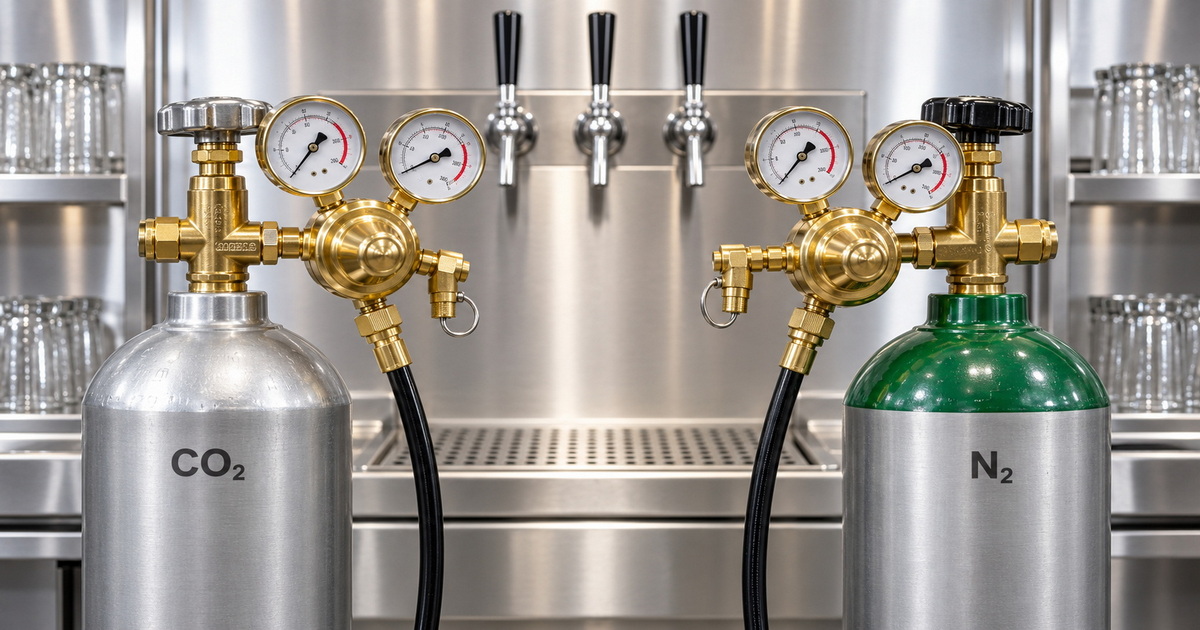
CO₂ Regulators for Beverage and Draft Beer Systems
In beverage dispensing, CO₂ is used to push beer, soda, sparkling water, and other carbonated drinks from a keg or storage container to the dispensing point. The regulator controls the pressure that maintains carbonation and moves the beverage through the line.
Pressure that is too low may lead to flat beer, slow dispensing, or poor foam formation. Pressure that is too high may cause excessive foaming, inconsistent pours, and unnecessary CO₂ consumption. The ideal setting depends on the beverage type, temperature, line length, elevation, carbonation target, and system design.
For beverage applications, buyers often look for:
– Food-service-compatible system design
– Easy-to-read low-pressure gauges
– Multiple outlets for multi-keg systems
– Secondary regulators for different pressure zones
– Shutoff valves and check-valve options
– Reliable pressure adjustment for stable dispensing
A single primary CO₂ regulator may control pressure for one keg. A multi-body regulator system may support several kegs with separate pressure settings, allowing a bar, restaurant, brewery, or beverage distributor to manage different drinks more effectively.
CO₂ Regulators for Aquariums and Greenhouses
Aquarium CO₂ systems use controlled gas injection to support aquatic plant growth. In this application, adjustment precision becomes especially important because flow demand is low and small changes can affect water chemistry.
Many aquarium systems use a CO₂ regulator together with a solenoid valve, bubble counter, check valve, diffuser, and needle valve. The regulator reduces cylinder pressure, while the needle valve allows fine control of the low gas flow entering the aquarium.
Greenhouse CO₂ enrichment systems also rely on controlled pressure reduction before carbon dioxide enters distribution equipment. A regulator must be selected based on system pressure requirements, total consumption, operating duration, environmental conditions, and compatibility with downstream valves and piping.
For these applications, a regulator should offer:
– Smooth pressure adjustment
– Low-pressure stability
– Compatibility with precision flow components
– Reliable sealing during extended operation
– An appropriate outlet configuration for the installation
Why Stable Pressure Control Matters
The best CO₂ regulator is not necessarily the one with the highest pressure range. It is the one that delivers the required pressure reliably within the conditions of the application.
CO₂ behaves differently from many permanently compressed gases because it may exist as liquid and vapor inside the cylinder. As gas is withdrawn, the cylinder pressure can remain relatively steady while liquid CO₂ is still present, then change more rapidly near the end of the cylinder’s usable contents. Temperature also affects CO₂ cylinder pressure and delivery behavior.
This is why pressure stability, internal component quality, and correct sizing matter. A poorly matched regulator may show pressure creep, unstable delivery, frozen components, inconsistent flow, difficult adjustment, or premature seal wear.
Understanding Pressure Creep
Pressure creep occurs when outlet pressure gradually rises even when the adjustment setting has not changed. It can result from wear, contamination, damage to the valve seat, or internal sealing problems.
In a welding application, pressure creep may contribute to unstable gas delivery. In a beverage system, it may create pour inconsistency. In an industrial process, it can affect product quality or activate downstream safety devices.
A practical inspection method is to set the desired delivery pressure, close downstream flow where appropriate, and observe whether the outlet gauge rises unexpectedly over time. Any abnormal behavior should be evaluated by a qualified technician or addressed through regulator replacement or service.
Single-Stage vs. Dual-Stage CO₂ Regulators
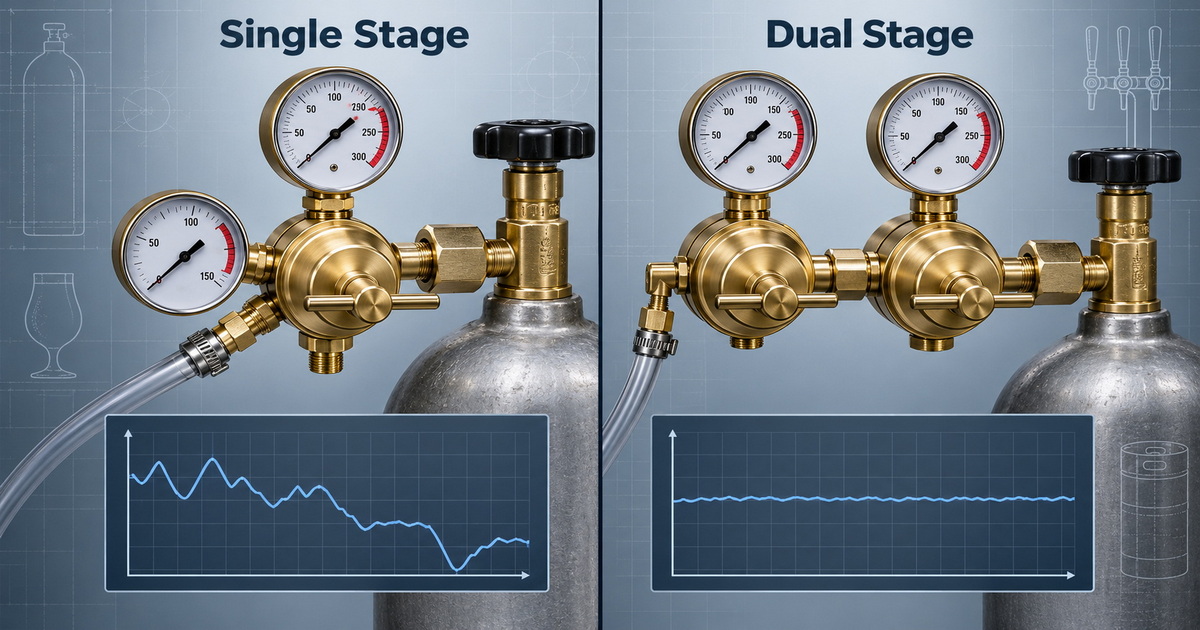
One of the most important selection decisions is whether to use a single-stage or dual-stage regulator.
A single-stage CO₂ regulator reduces cylinder pressure in one step. It is widely used in standard welding, beverage, and general industrial applications where normal pressure variation is acceptable and cost efficiency matters.
A dual-stage CO₂ regulator reduces pressure in two internal stages. This design can provide improved stability as cylinder pressure falls, making it valuable for applications requiring more consistent delivery pressure over the life of the cylinder.
| Feature | Single-Stage CO₂ Regulator | Dual-Stage CO₂ Regulator |
|---|---|---|
| Pressure reduction | One step | Two steps |
| Cost | Generally lower | Generally higher |
| Pressure stability | Suitable for many standard uses | Better stability during cylinder depletion |
| Typical applications | Welding, beverage service, general industrial gas supply | Laboratories, analytical instruments, critical processes |
| System complexity | Simpler | More sophisticated internal design |
| Best for | Applications with normal tolerance for pressure variation | Applications where pressure consistency is a priority |
For many distributors and OEM buyers, offering both single-stage and dual-stage models is a practical way to serve different market segments. A basic industrial regulator can meet general demand, while a higher-performance dual-stage gas regulator can support customers in laboratory, instrumentation, specialty gas, and precision process markets.
How to Choose the Right CO₂ Regulator
Selecting a regulator should begin with the application—not with appearance alone. A polished brass body and large gauges may look professional, but the regulator must be technically compatible with the gas source and downstream system.
Use the following selection checklist.
1. Confirm Gas Compatibility
A regulator must be designed for the gas and inlet pressure for which it will be used. Connection standards exist to reduce the chance of attaching an incompatible regulator to a cylinder containing a hazardous or unsuitable gas. Never use adapters to force a regulator onto a different cylinder connection. USC Environmental Health & Safety specifically warns that incompatible regulator and gas combinations can create a risk of catastrophic failure.
For companies supplying multiple gas regulator types—including CO₂, argon, oxygen, nitrogen, acetylene, and propane regulators—clear product labeling and gas-specific inlet connections are essential.
2. Match the Cylinder Connection
CO₂ cylinder connections vary by country, gas standard, and market requirements. In North America, CO₂ cylinders commonly use CGA-320 connections, but exporters should verify destination-market specifications before manufacturing or supplying a product.
For OEM and ODM projects, the inlet nut, thread standard, outlet fitting, gauge unit, and packaging language can all be customized for the target market. This reduces installation issues and makes the product more suitable for local distributors.
3. Define the Outlet Pressure Range
Choose a regulator whose delivery-pressure range fits the application. A regulator with an excessively high outlet range may make fine adjustment more difficult at low operating pressures. Conversely, a low-pressure model may not meet the needs of an industrial process.
Define:
– Required working pressure
– Maximum downstream pressure
– Required flow rate
– Pressure-adjustment precision
– Whether flow control is integrated or separate
– Need for single-stage or dual-stage regulation
4. Evaluate Material Quality and Construction
For industrial gas control applications, brass remains a widely used regulator-body material because it offers strength, machinability, corrosion resistance, and dependable thread performance. However, quality depends on much more than material selection.
A professional CO₂ regulator manufacturer should control:
– Brass raw-material quality
– Precision machining of threads and sealing surfaces
– Diaphragm and valve-seat performance
– Gauge accuracy and durability
– Assembly torque and leak testing
– Pressure testing and functional inspection
– Traceable quality-control procedures
Reliable pressure control comes from the complete manufacturing process, not from one component alone.
5. Consider the Operating Environment
Cold environments, high flow demand, frequent cylinder changes, and continuous-duty use can affect regulator performance. Rapid CO₂ withdrawal may cause cooling or frosting around the regulator due to gas expansion. This does not automatically mean the regulator is defective, but it may indicate that flow demand, ambient temperature, or regulator capacity should be evaluated.
For demanding conditions, a CO₂ heated regulator may help reduce freezing-related disruption by keeping key areas warmer. Heated regulators can be particularly relevant in high-consumption industrial processes or environments where low temperatures interfere with stable gas delivery.
Safe CO₂ Regulator Installation and Use
A quality regulator must be paired with correct installation and operating practice. OSHA welding and cutting requirements state that pressure-reducing regulators should only be used with the gas and pressures for which they are intended.
Before installing a CO₂ regulator, inspect the cylinder valve, regulator inlet, sealing surfaces, gauges, hoses, and outlet fittings. Do not use damaged, contaminated, or incompatible components.
Follow this practical workflow:
1. Secure the cylinder upright using a chain, strap, or appropriate cylinder stand before connecting equipment.
2. Confirm compatibility between the CO₂ cylinder valve, regulator inlet connection, and downstream equipment.
3. Back off the adjustment knob before opening the cylinder valve, reducing spring force on the regulator mechanism.
4. Keep oil, grease, dirt, and solvents away from the regulator, cylinder valve, and fittings. Contamination can damage components and create safety concerns.
5. Open the cylinder valve slowly while standing to the side of the regulator outlet area, not directly in front of it. OSHA guidance emphasizes careful cylinder handling and safe operating practices for gas welding and cutting systems.
6. Set the required outlet pressure gradually using the adjustment knob.
7. Leak-test all connections with an approved leak-detection solution or suitable method. If a leak is found, close the cylinder valve, depressurize the system, and correct the issue before use. NOAA guidance recommends leak checking the regulator-to-cylinder connection and depressurizing before attempting repairs.
8. Close the cylinder valve after use, then release downstream pressure according to the equipment instructions before removing the regulator.
Never attempt to repair internal regulator components without the appropriate training, procedures, parts, and pressure-testing capability.
What Buyers Should Ask Suppliers
For overseas brands, wholesalers, and industrial distributors, a CO₂ regulator is more than a catalog item. It is a safety-critical gas-control component that affects customer confidence, warranty exposure, and brand reputation.
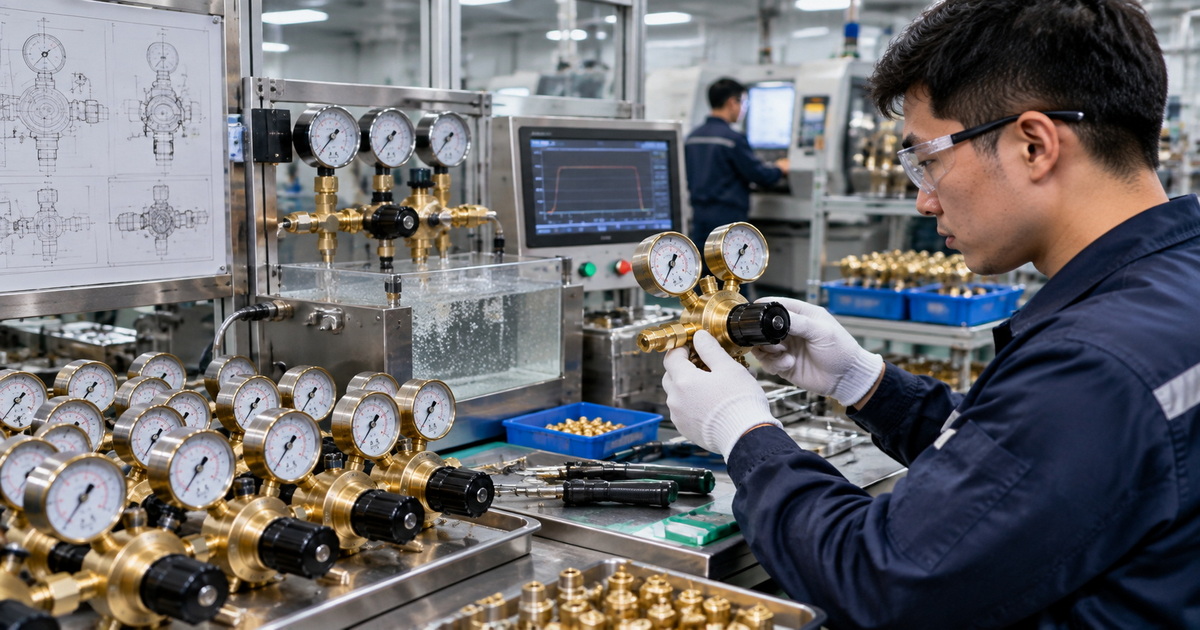
When evaluating a CO₂ regulator manufacturer, ask these questions:
– Can the supplier provide gas-specific designs for CO₂, argon, oxygen, nitrogen, acetylene, and propane?
– Are brass materials, diaphragms, seals, gauges, and fittings subject to incoming quality inspection?
– Is every regulator leak-tested and function-tested before packing?
– Can outlet pressure ranges, gauge units, inlet connections, outlet fittings, and packaging be customized?
– Does the factory support OEM logos, color options, manuals, private-label packaging, and market-specific labels?
– Can the supplier provide dual-stage regulators for customers requiring greater pressure stability?
– Does the manufacturer maintain traceability for key batches and quality records?
– Can the product be configured to support applicable international standards and destination-market requirements?
A capable OEM/ODM supplier should combine precision production with responsive engineering support. The goal is not simply to make a regulator that fits a cylinder; it is to produce a product that fits the customer’s market, application, quality expectations, and commercial strategy.
CO₂ Regulator Maintenance Tips
Routine inspection can extend service life and reduce unexpected downtime. The following practices are particularly useful for welding shops, beverage operators, distributors, and industrial facilities.
– Inspect gauges for cracks, clouding, needle irregularities, or physical damage
– Check fittings, threads, hoses, and seals for wear or leaks
– Keep the regulator clean and protected from impact
– Avoid using unapproved lubricants or sealing products
– Store regulators in a dry, protected environment
– Do not exceed the regulator’s rated inlet or outlet pressure
– Replace regulators that show pressure creep, damaged gauges, persistent leakage, or difficult adjustment
– Follow the manufacturer’s maintenance instructions and local safety requirements
For facilities using several gas types, keep regulators clearly identified by gas service. Oxygen, acetylene, propane, argon, nitrogen, and CO₂ regulators should not be treated as interchangeable simply because they may appear similar.
Choose a Reliable CO₂ Regulator Manufacturer
A CO₂ regulator is used wherever carbon dioxide must move from high-pressure storage to a controlled working process. Whether the application is MIG welding, beverage dispensing, aquarium CO₂ injection, laboratory gas supply, greenhouse enrichment, or industrial production, the correct regulator supports safer operation, stable performance, and better process control.
As a professional gas regulator manufacturer and supplier, we provide CO₂ regulators, CO₂ heated regulators, argon regulators, oxygen regulators, acetylene regulators, propane regulators, nitrogen regulators, and dual-stage gas regulators for welding, cutting, and industrial gas applications.
Our OEM and ODM services support overseas brands, wholesalers, distributors, and manufacturers with customized gas-control solutions. From brass material selection and precision machining to strict quality inspection, pressure testing, custom connections, branded packaging, and application-focused product development, we help customers build reliable gas regulator product lines for international markets.
Contact our team to discuss your CO₂ regulator requirements, target market, desired specifications, OEM branding, or custom industrial gas control project.
Frequently Asked Questions
1. What is a CO₂ regulator used for in welding?
A CO₂ regulator reduces cylinder pressure and controls the shielding gas delivered to a MIG or MAG welding machine. Stable gas delivery helps protect the weld pool from atmospheric contamination and supports more consistent welding performance.
2. Can I use an argon regulator for CO₂?
Do not assume that a regulator designed for argon is automatically suitable for CO₂. The regulator must have the correct inlet connection, pressure rating, materials, and gas-service compatibility. Use only a regulator designed and labeled for the intended gas and pressure.
3. Why does my CO₂ regulator freeze?
Frosting can occur when CO₂ expands rapidly and absorbs heat from the surrounding area. It is more likely during high gas consumption, rapid withdrawal, low ambient temperatures, or when regulator capacity is insufficient for the application. A CO₂ heated regulator or a system designed for the required flow rate may help in demanding conditions.
4. What is the difference between a single-stage and dual-stage CO₂ regulator?
A single-stage regulator reduces pressure in one step and is appropriate for many standard applications. A dual-stage regulator reduces pressure in two stages and generally provides more stable outlet pressure as cylinder pressure decreases, making it useful for precision or sensitive processes.
5. How do I know whether a CO₂ regulator is leaking?
Apply an approved leak-detection solution to the cylinder-to-regulator connection and other fittings. Bubbles may indicate a leak. If leakage is found, close the cylinder valve, depressurize the system, and inspect or replace the affected component before use.
6. How often should a CO₂ regulator be inspected?
Inspect the regulator before use for physical damage, contamination, loose connections, gauge condition, and signs of leakage. The appropriate service or replacement interval depends on usage frequency, operating conditions, manufacturer guidance, and site safety procedures.
7. Can a CO₂ regulator be customized for OEM projects?
Yes. A qualified OEM/ODM gas regulator manufacturer can often customize inlet connections, outlet fittings, gauge units, pressure ranges, labels, logos, colors, packaging, manuals, and product configurations to meet the needs of overseas brands, distributors, and industrial equipment manufacturers.
References
1. Occupational Safety and Health Administration. “[1910.253 – Oxygen-Fuel Gas Welding and Cutting].” OSHA. Guidance on safe cylinder handling, welding, cutting, and gas equipment requirements. [osha]
2. National Oceanic and Atmospheric Administration, Global Monitoring Laboratory. “[Guidelines for Standard Gas Cylinder and Pressure Regulator Use].” Procedures covering regulator installation, leak checking, flushing, pressure checks, and safe handling. [gml.noaa]
3. University of Southern California Environmental Health & Safety. “[Gas Regulators].” Guidance on CGA connections, gas compatibility, and avoiding unsafe adapters. [ehs.usc]
4. Electronic Code of Federal Regulations. “[29 CFR Part 1926 Subpart J — Welding and Cutting].” U.S. construction safety regulations related to welding and cutting. [ecfr]
5. Oregon Occupational Safety and Health Administration. “[Compressed Gas Safety Fact Sheet].” Safety guidance on compressed-gas cylinder handling, storage, and use. [osha.oregon]
Hot Tags: CO₂ Regulator, CO₂ Gas Regulator, CO₂ Welding Regulator, Industrial Gas Regulator, Dual Stage Gas Regulator, CO₂ Heated Regulator, Welding Gas Regulator, Brass Gas Regulator, OEM Gas Regulator Manufacturer, Gas Regulator Supplier