Content Menu
● Introduction: Why This Choice Matters
● What a Single Stage Regulator Does
● What a Dual Stage Regulator Does
● Performance in Industrial Manufacturing
● Gas Type and Application Match
● How to Choose the Right Regulator
● FAQ
Choosing between a single stage gas pressure regulator and a dual stage gas pressure regulator is not just a technical decision; it directly affects pressure stability, weld quality, gas efficiency, and process reliability in industrial manufacturing. For welding, cutting, and other gas-control applications, the right regulator design can reduce downtime and improve consistent output.
Introduction: Why This Choice Matters
In industrial manufacturing, gas pressure regulation is the control point between the cylinder and the process. When pressure fluctuates, the impact can show up as unstable flame behavior, inconsistent shielding gas, poor cut quality, or production interruptions. That is why manufacturers, distributors, and OEM buyers should compare single stage and dual stage designs by process demand, gas type, and operating conditions rather than price alone.
From a supplier and manufacturing perspective, this topic matters even more because different gases behave differently in use. CO₂, argon, oxygen, acetylene, propane, and nitrogen all have unique pressure and flow requirements, and some applications benefit from heated CO₂ regulators or dual-stage designs for steadier delivery.
What a Single Stage Regulator Does
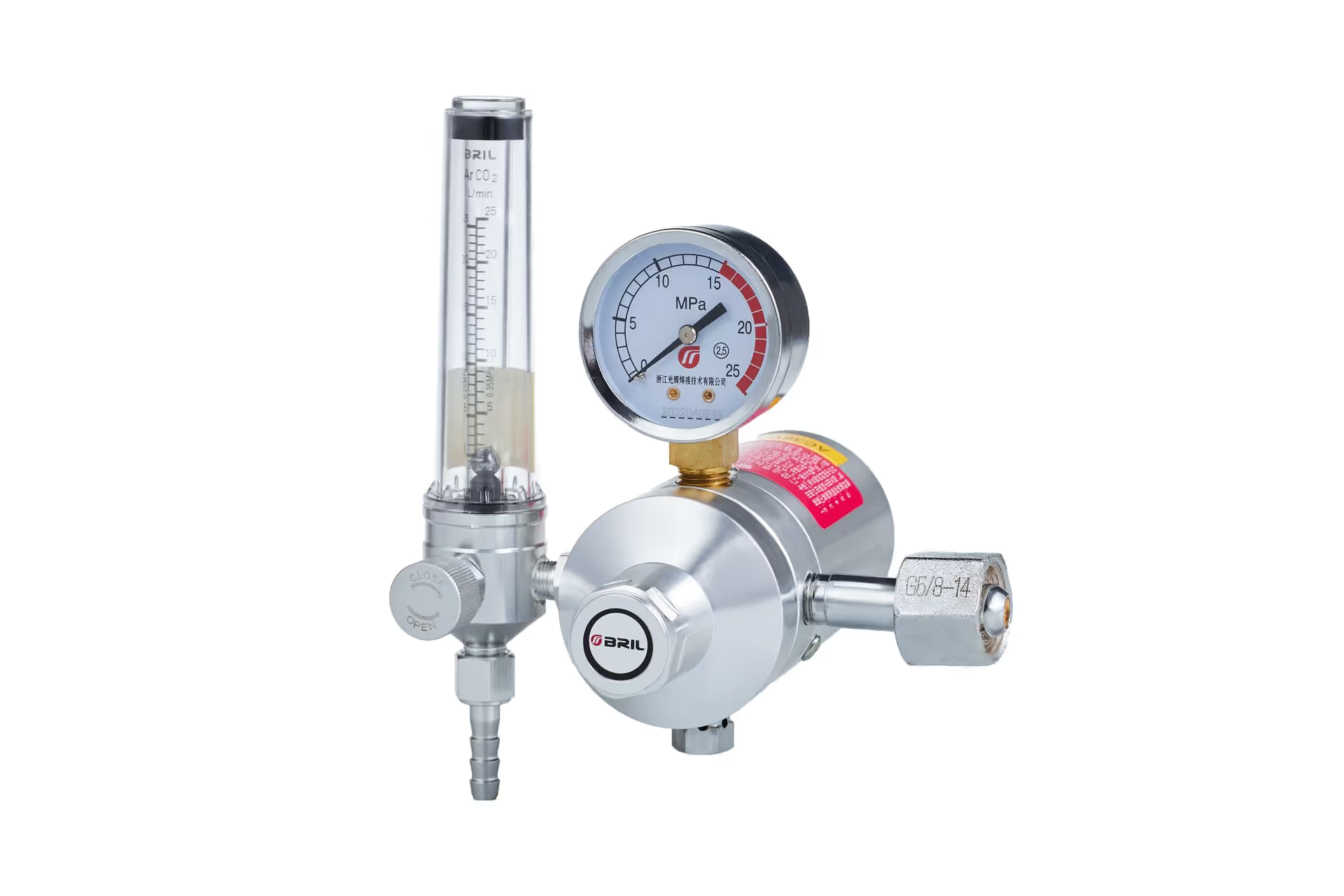
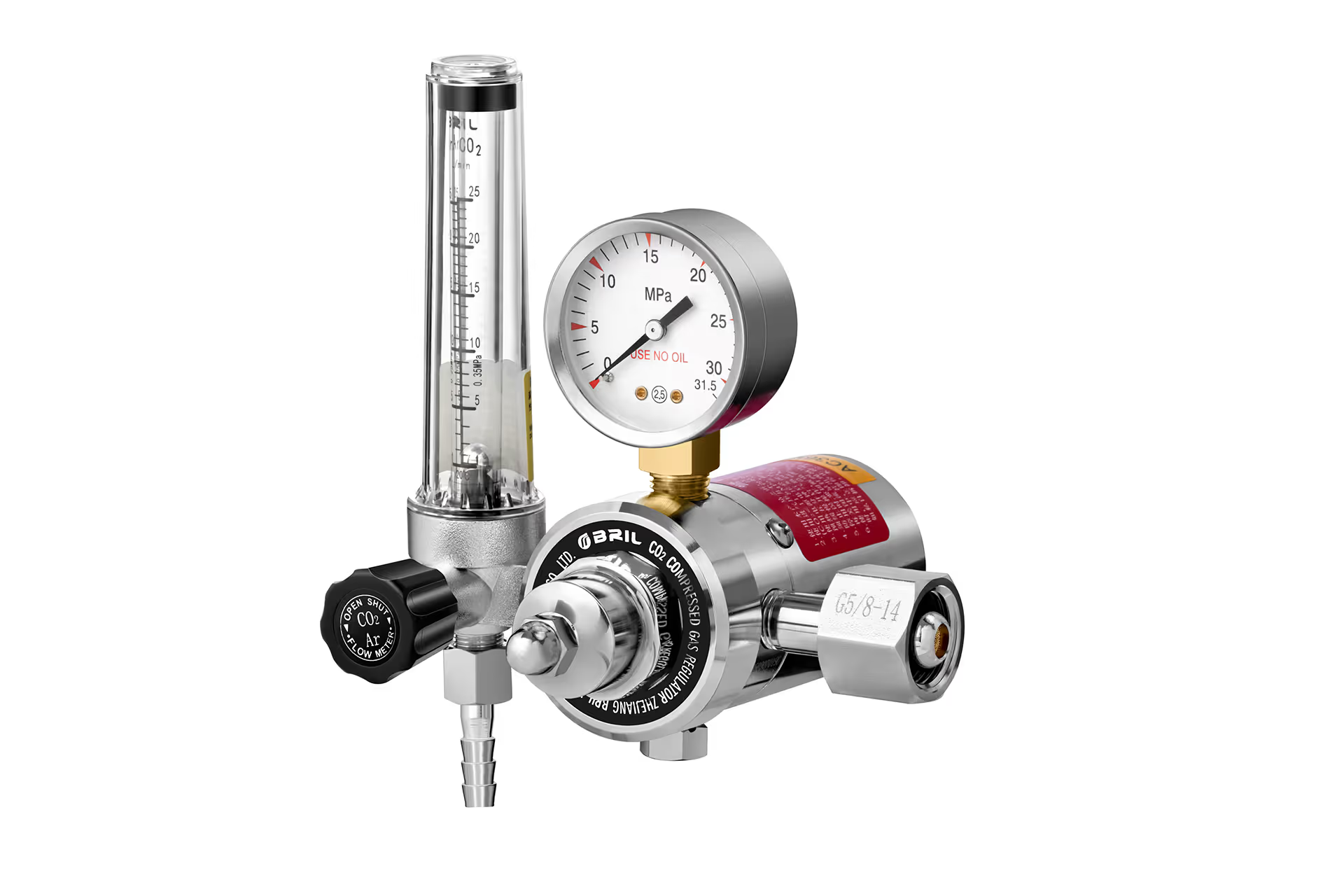
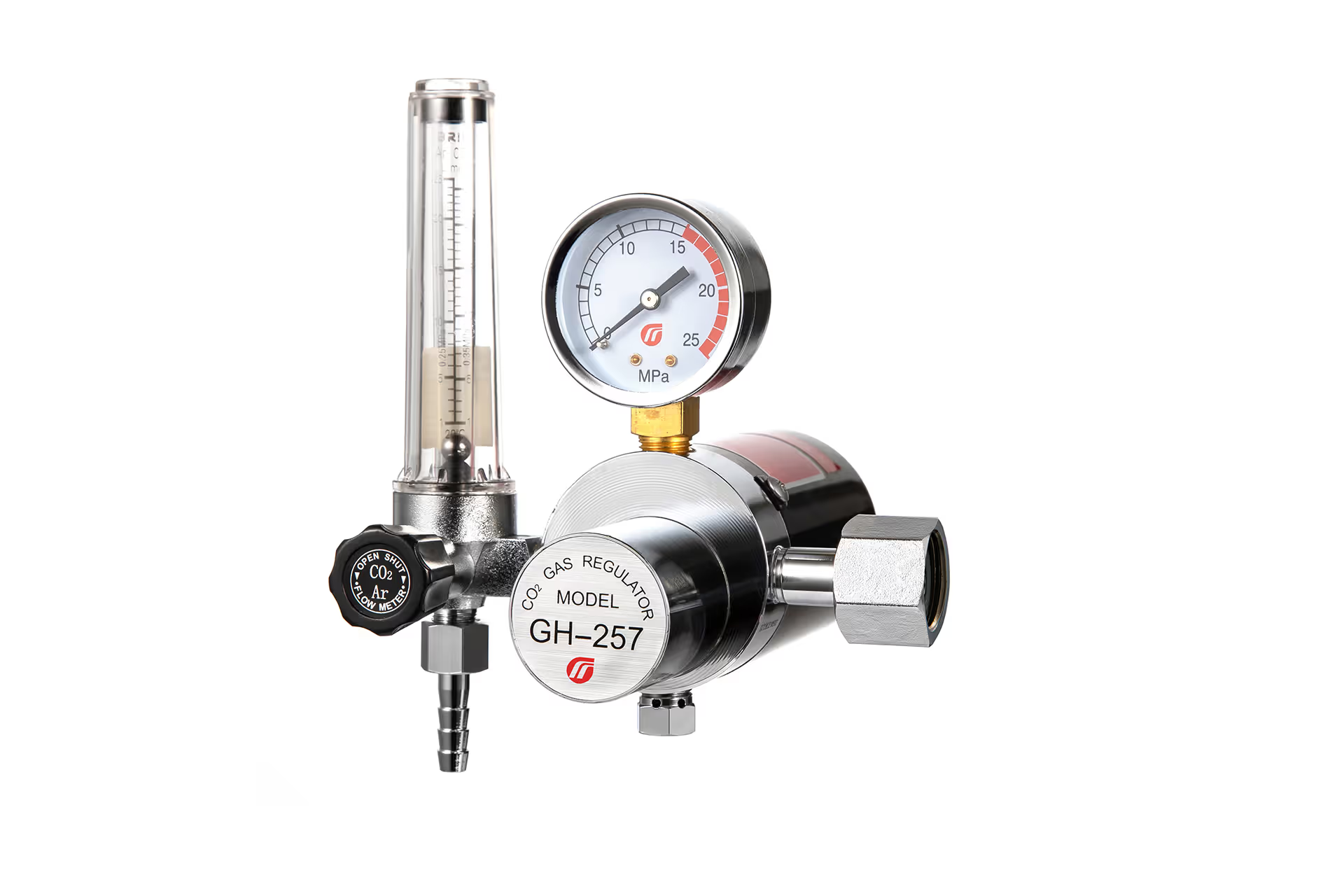
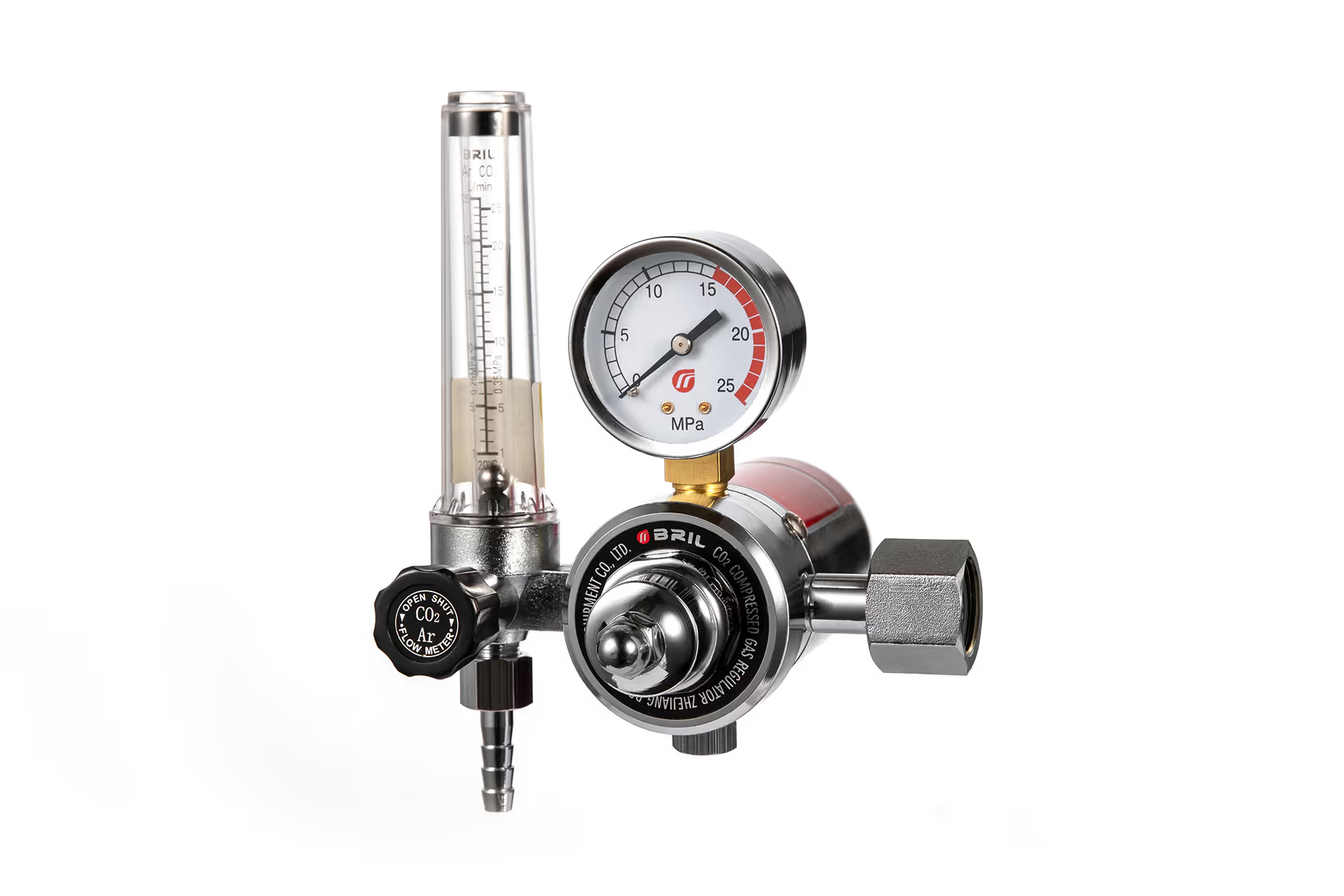
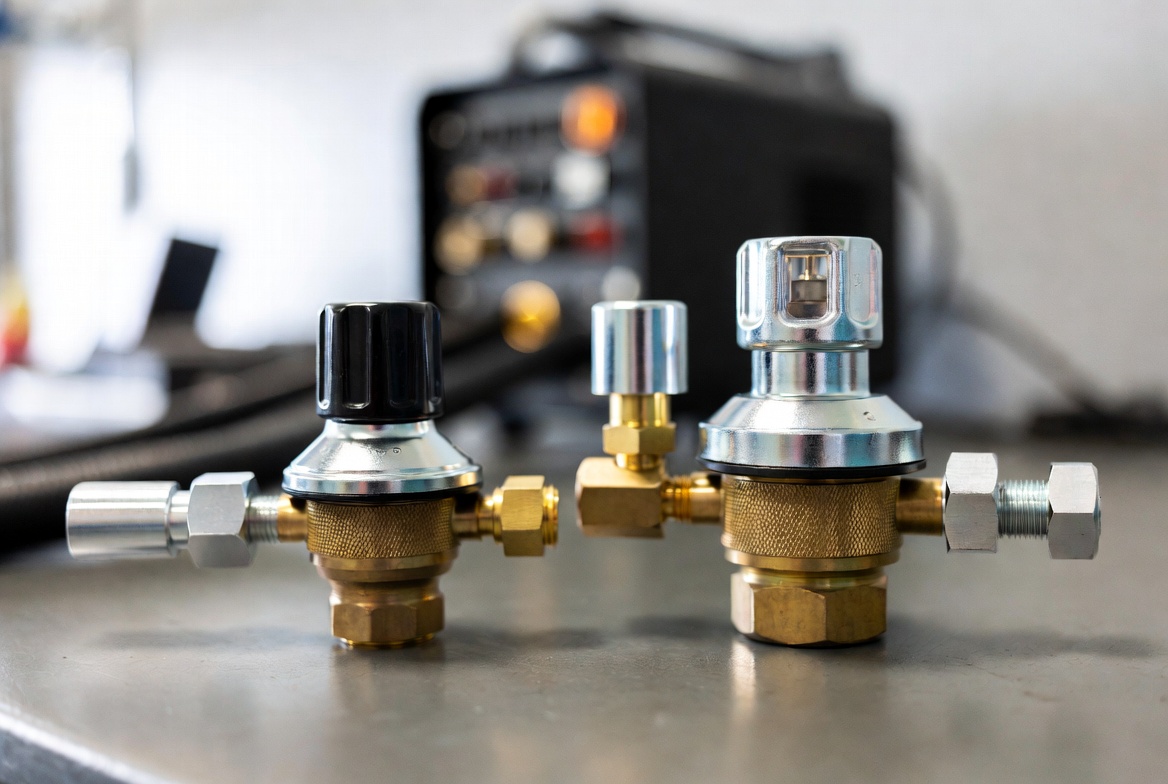
A single stage gas pressure regulator reduces cylinder pressure to the outlet pressure in one step. This design is simple, compact, and usually cost-effective, which makes it attractive for users who need straightforward gas control and do not require ultra-fine stability over long operating periods.
In practice, a single stage regulator is often chosen for shorter duty cycles, mobile setups, and applications where moderate pressure variation is acceptable. It is widely used in welding and industrial gas systems where ease of use, lower initial cost, and compact installation matter.
Strengths of Single Stage
– Lower purchase cost.
– Simpler internal structure.
– Easier to install and maintain.
– Compact size for portable applications.
– Good choice for less demanding pressure stability needs.
Limits of Single Stage
– Outlet pressure may drift as cylinder pressure drops.
– Less suitable for long continuous runs.
– Can be less stable in high-precision industrial workflows.
– May require more frequent monitoring in sensitive applications.
What a Dual Stage Regulator Does
A dual stage gas pressure regulator reduces pressure in two separate steps. This design is built to improve output stability, especially when the inlet pressure changes significantly during cylinder depletion. The result is more consistent outlet pressure, which is valuable in manufacturing environments where precision matters.
For industrial manufacturing, dual stage regulators are often preferred when stable gas delivery is critical over long operating cycles. They are especially useful in welding lines, cutting stations, manifold systems, and high-consumption processes where pressure swings can affect product quality.
Strengths of Dual Stage
– Better outlet pressure stability.
– More consistent performance as cylinder pressure drops.
– Better suited to precision manufacturing.
– Helps reduce process variation in continuous operations.
– Often preferred for demanding welding and allied processes.
Limits of Dual Stage
– Higher cost than single stage.
– More complex internal design.
– Can be slightly larger or heavier.
– May be unnecessary for simple low-demand tasks.
Direct Comparison Table
| Factor | Single Stage Regulator | Dual Stage Regulator |
|---|---|---|
| Pressure stability | Good at the start, but may drift as cylinder empties. | More stable across changing inlet pressure. |
| Cost | Usually lower. | Usually higher. |
| Complexity | Simpler design. | More complex design. |
| Best for | Basic, portable, or lower-demand applications. | Precision, continuous, and high-consistency applications. |
| Maintenance | Generally easier. | Slightly more technical. |
| Industrial fit | Suitable for general use. | Better for production environments. |
Performance in Industrial Manufacturing
For industrial manufacturing, the biggest difference is not just in mechanism but in process outcome. A stable gas supply supports consistent welding penetration, cleaner seams, fewer defects, and less rework. In cutting applications, stable pressure helps preserve cut quality and improves repeatability across shifts and operators.
In a plant environment, the choice often comes down to how sensitive the process is to pressure fluctuation. If your line uses high gas volume, runs continuously, or produces products with tight quality tolerances, a dual stage regulator usually provides better overall control. If the process is more flexible and the goal is practical, economical gas delivery, single stage can still be the right fit.
Gas Type and Application Match
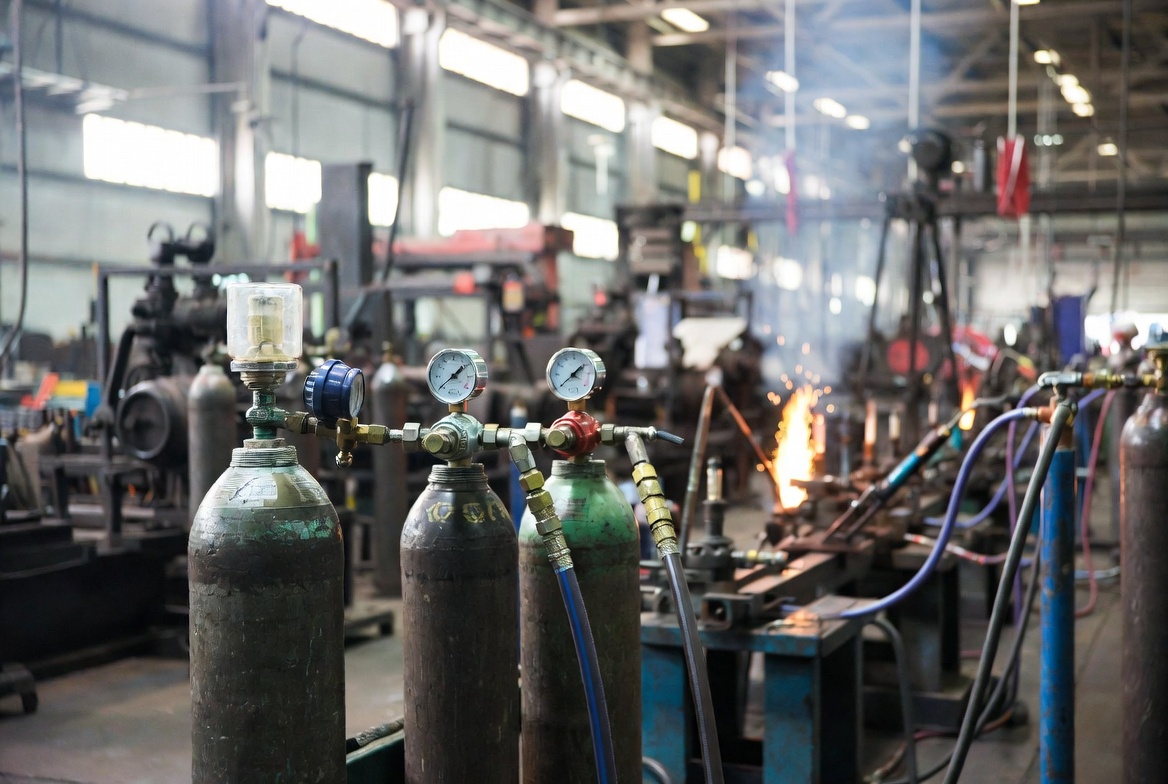
Not every gas behaves the same way in service. CO₂ systems can face freeze-up issues in high-flow conditions, which is why heated CO₂ regulators are commonly used in demanding welding and industrial gas applications. Argon, oxygen, acetylene, propane, and nitrogen each have different performance expectations, so regulator selection should match the gas and the process, not just the connection size.
Here is a practical way to think about application fit:
– CO₂ welding: Consider dual stage or heated CO₂ regulators when flow demand is high or freeze resistance is important.
– Argon shielding: Stability matters, especially in precision welding and laser-related processes.
– Oxygen and acetylene cutting: Safety, delivery consistency, and correct pressure range are essential.
– Propane and nitrogen systems: Match regulator design to the system’s operating pattern and required outlet stability.
Latest Industry Insight
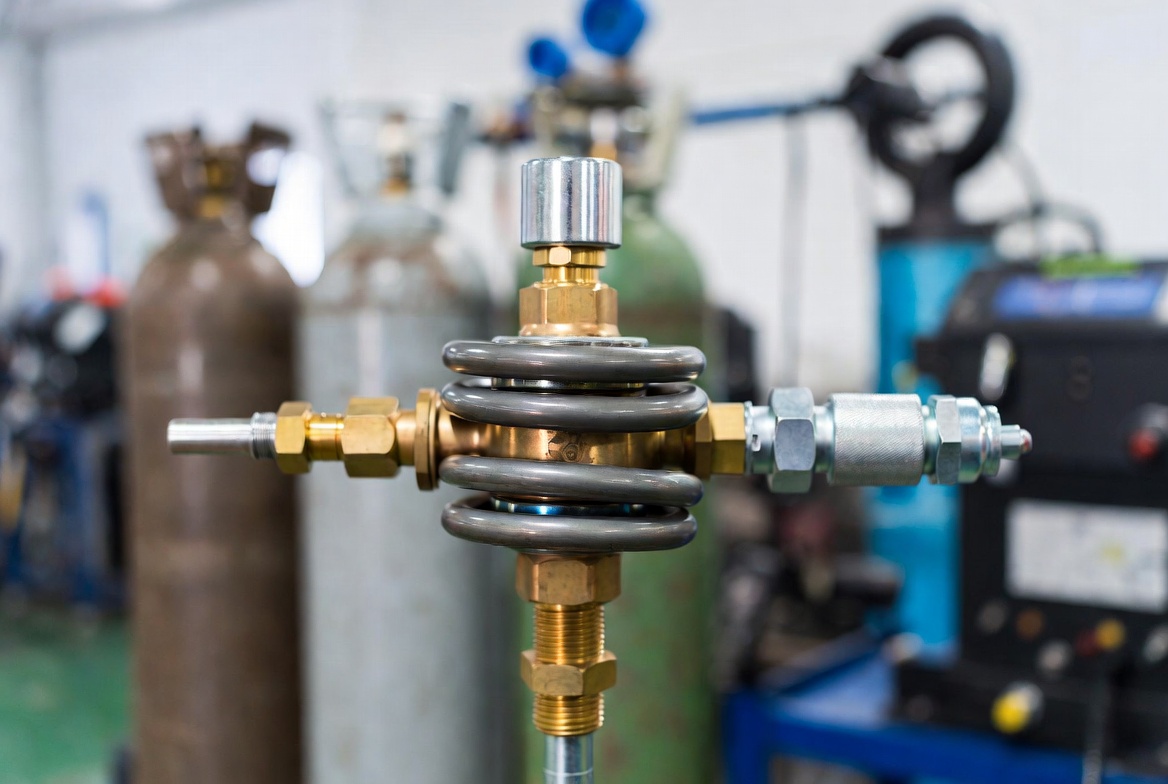
One important trend in the industrial gas sector is the growing preference for application-specific regulation instead of one-size-fits-all purchasing. Buyers increasingly ask for heated CO₂ models, dual-stage stability, and OEM customization because production environments now demand fewer interruptions and tighter process control.
Another practical insight is that standards matter more than ever in procurement decisions. ISO references for welding and manifold regulator systems help buyers evaluate whether a regulator is designed for the correct pressure range and intended use, especially in welding, cutting, and allied processes.
How to Choose the Right Regulator
If you are buying for industrial manufacturing, use this decision path:
1. Define the gas and process. CO₂, argon, oxygen, acetylene, propane, and nitrogen all require different handling.
2. Check flow demand. High and continuous flow usually favors dual stage or heated designs.
3. Assess pressure sensitivity. If pressure drift affects quality, choose dual stage.
4. Match the operating environment. Portable, light-duty use may fit single stage better.
5. Verify standards and customization needs. OEM/ODM, materials, and inspection controls matter for long-term reliability.
Expert Buying Guidance
As a manufacturer focused on precision brass construction, stable pressure control, and industrial gas solutions, our practical recommendation is simple: choose the regulator based on process criticality, not just gas type. For high-volume welding lines, dual stage often delivers better consistency. For general industrial use or lower-demand setups, single stage offers good value and simplicity.
If your business supplies overseas brands, wholesalers, or distributors, customization also becomes a competitive advantage. OEM and ODM support for materials, branding, packaging, and gas-specific configurations can help you serve different markets more effectively.
Conclusion
The single stage vs dual stage gas pressure regulator decision comes down to a trade-off between simplicity and stability. Single stage is efficient, economical, and suitable for many standard applications, while dual stage is the stronger choice for precision, continuous operation, and pressure-sensitive industrial manufacturing.
For businesses that need reliable gas control solutions, the smartest approach is to align regulator design with the gas, the workload, and the required quality level. That is how you reduce waste, improve consistency, and build a more dependable production system.
If your project involves CO₂, argon, oxygen, acetylene, propane, or nitrogen regulators, evaluate your flow demand and pressure stability requirements first, then choose a customized single stage or dual stage solution that fits your exact manufacturing process.
FAQ
1. What is the main difference between single stage and dual stage gas pressure regulators?
Single stage reduces pressure in one step, while dual stage reduces pressure in two steps for better stability.
2. Which regulator is better for industrial manufacturing?
Dual stage is usually better for precision or continuous manufacturing because it maintains more stable outlet pressure.
3. Is a single stage regulator enough for welding applications?
Yes, for many general welding tasks it can be enough, but high-demand or precision work often benefits from dual stage or heated solutions.
4. Why are heated CO₂ regulators important?
They help prevent freeze-up during high-flow CO₂ use, which supports stable gas delivery in welding and industrial applications.
5. Can gas regulators be customized for OEM and ODM projects?
Yes, many manufacturers offer OEM and ODM services for logo, package, materials, and product configuration.
6. What standards should buyers check before purchasing?
Buyers should confirm the regulator matches the intended application and relevant gas welding or manifold system standards.
References
– [ISO 7291:2010 — Gas welding equipment, pressure regulators for manifold systems]
– [BS EN ISO 2503:2009+A1:2015 — Gas welding equipment, pressure regulators and flow-metering devices]
– [Ningbo Longtime Gas Control System Co., Ltd. — Company profile and OEM/ODM service]
– [DEM WR1690E CO2 Heater Regulator — Heated regulator product page]
– [Arc-Zone — CO2 heaters and regulators overview]
– [Harris Products Group — Model 811 electric heated flowguage regulator]
– [Bril Welding Equipment — OEM welding gas regulator manufacturer]
Hot Tags: Single Stage Gas Pressure Regulator, Dual Stage Gas Pressure Regulator, Industrial Gas Regulator, CO2 Regulator, Heated CO2 Regulator, Welding Gas Regulator, Gas Pressure Control, OEM Gas Regulator, ODM Gas Regulator, Brass Gas Regulator