Content Menu
● Introduction: Why Source Welder Regulators from China?
● How We Evaluated “Top” Welder Regulator Manufacturers
● Technical Essentials: What Matters in a Welder Regulator?
● Top 10 Welder Regulator Manufacturers in China (Expert View)
>> 1. Zhejiang Bril Welding Equipment Co., Ltd. – Agile OEM Partner for CO₂ and Dual‑Stage Solutions
>> 2. Large‑Scale Regulator Group in Zhejiang / Jiangsu (High Volume, Broad Range)
>> 3. Specialty Welding & Cutting Regulator Makers in Wenzhou
>> 4. Industrial Gas System Integrators with Regulator Lines
>> 5. OEM‑Driven Brass Machining Factories with Regulator Assemblies
>> 6. Export‑Focused Welding Tool Brands with Private‑Label Regulator Production
>> 7. Dual‑Stage and Specialty Gas Regulator Specialists
>> 8. CO₂ Heated Regulator Manufacturers for Cold‑Climate Markets
>> 9. Niche ODM Design Houses Supporting Custom Regulator Platforms
>> 10. Integrated Welding Equipment Manufacturers with Matching Regulators
● Quick Comparison Table: Typical Focus of Shortlisted Supplier Types
● Buyer’s Guide: How to Safely Source Welder Regulators from China
>> 1. Verify factory identity and certifications
>> 2. Assess technical fit beyond catalog photos
>> 3. Use a structured sampling and approval process
>> 4. Address logistics and after‑sales upfront
● Common Pitfalls and an “Insider” Avoidance Tip
>> Typical problems when sourcing welder regulators
>> Less‑discussed “internal” tip: use serial‑level traceability as a filter
● Conclusion and Call to Action
● FAQ: Advanced Questions Procurement Managers Often Ask
Introduction: Why Source Welder Regulators from China?
China remains the core manufacturing base for welding equipment and gas control components in Asia‑Pacific, the region that currently dominates the global welding equipment market by output and consumption. For procurement managers, this means dense industrial clusters for brass machining, precision pressure control, and regulator assembly, especially around Zhejiang, Jiangsu, and Guangdong. [stellarmr]
Compared with other regions, Chinese factories offer wide product ranges (CO₂, argon, oxygen, acetylene, propane, nitrogen, dual‑stage) under one roof, giving purchasing teams more flexibility to standardize SKUs across markets. At the same time, OEM‑focused suppliers have matured their quality systems, with ISO9001, CE, and RoHS certifications now common among export‑oriented plants. For buyers aiming at long‑term partnerships, the challenge is no longer “Can I find a supplier?” but “Which factory can sustain stable quality, documentation, and delivery over 3–5 years?”. [weldingandwelder]
How We Evaluated “Top” Welder Regulator Manufacturers
Before listing companies, it is essential to clarify the criteria used, especially for procurement managers accountable for supplier risk. We focused on factors that directly affect lifecycle cost, brand reputation, and compliance in key markets.
Core selection dimensions
– Factory certifications and traceability
– Valid ISO9001 for quality management, plus CE, UKCA, RoHS, or equivalent where applicable. [chinesewelding]
– Traceable batch coding, material certificates (e.g., EN or GB standards for brass/forgings), and calibration records for regulators. [dupuyoxygen]
– Product and process capability
– Full coverage of main welding gases: CO₂, argon/CO₂ mixes, oxygen, acetylene, propane, nitrogen, and dual‑stage options for precision MIG/TIG applications. [weldingandwelder]
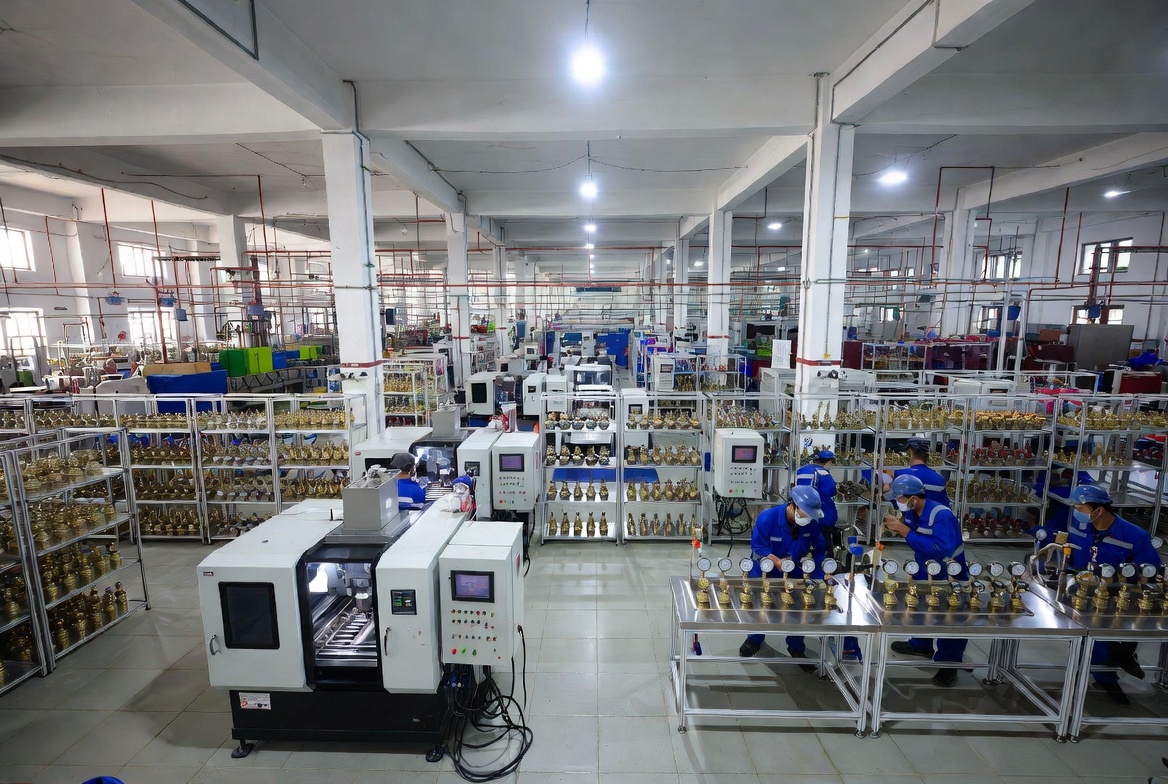
– In‑house tooling, CNC machining for brass components, high‑pressure testing benches, and leak detection (helium or nitrogen pressure hold tests). [chinesewelding]
– Quality control and reliability
– 100% pressure and leakage tests for finished regulators and defined calibration intervals. [dupuyoxygen]
– Clear QC points: incoming brass and spring inspection, inline body machining checks, final functional test with recorded pressure curves. [dupuyoxygen]
– Export experience and market coverage
– Proven shipment history to Europe, North America, or other strictly regulated markets. [importgenius]
– Ability to supply documentation: test reports, conformity declarations, MSDS for gases in pre‑filled systems when applicable. [weldingandwelder]
– OEM/ODM flexibility and communication
– Engineering support for custom gauges, flowmeters, inlet/outlet connections (CGA, BS, DIN, G), and branding (color, logo, packaging). [chinesewelding]
– English‑speaking sales and project teams capable of handling drawings, PPAP‑like approvals, and revision control. [importgenius]
Only manufacturers with clear industrial gas regulator portfolios, visible export or certification records, and demonstrable OEM/ODM capability were shortlisted. Publicly available customs and export data, factory websites, and third‑party listings were used to cross‑check activity and focus. [chinese-welding.en.made-in-china]
Technical Essentials: What Matters in a Welder Regulator?
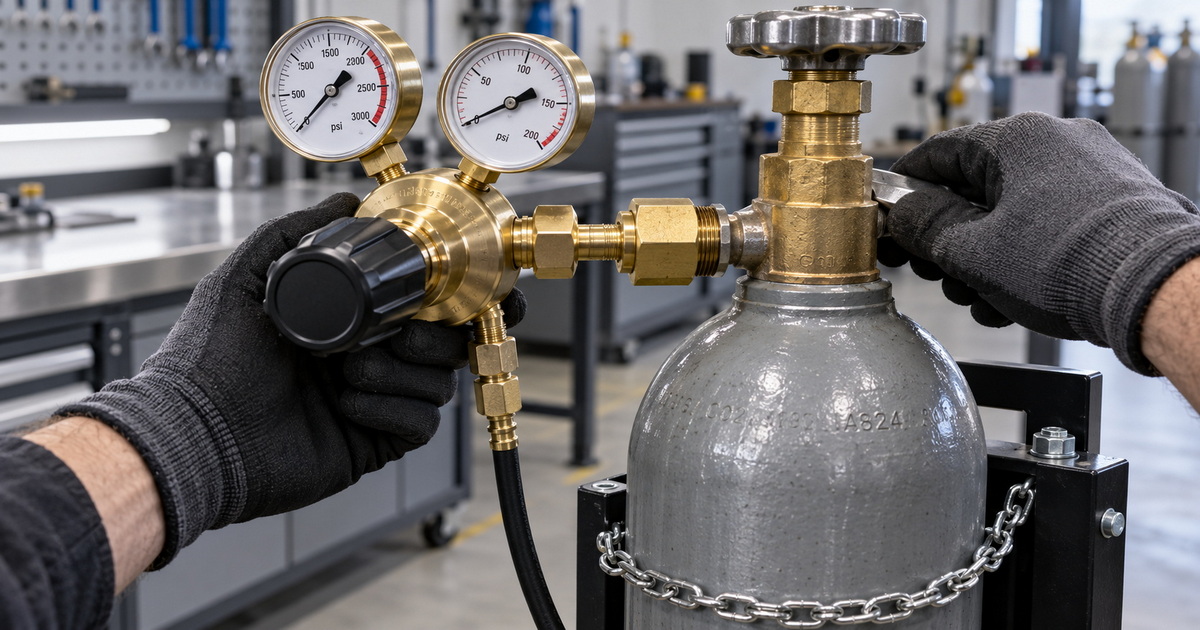
Welder gas regulators are safety‑critical components that reduce cylinder pressure (up to ~200–300 bar for oxygen and inert gases) to a stable working pressure and controlled flow for welding or cutting. For MIG/TIG shielding and oxy‑fuel cutting, unstable pressure quickly translates into porosity, inconsistent bead shape, and rework costs. [dupuyoxygen]
Key technical points procurement managers should track
– Materials and body construction
– Forged brass bodies (often CW617N or equivalent) are standard for welding gas regulators due to corrosion resistance and machinability. [weldingandwelder]
– High‑pressure oxygen service requires oil‑free machining, cleaning, and assembly to avoid ignition risks. [weldingandwelder]
– Pressure control design
– Single‑stage regulators reduce cylinder pressure to working pressure in one step; suitable for general oxy‑fuel use.
– Dual‑stage regulators reduce pressure in two steps, improving outlet stability as cylinder pressure drops—preferred for critical MIG/TIG shielding gas control. [weldingandwelder]
– Standards and certifications
– CE marking for EU, often supported by EN ISO regulator and valve standards, and RoHS for material environmental compliance. [weldingandwelder]
– ISO9001 quality systems help ensure process consistency, while some factories also work with national metrology institutions (e.g., CNAS‑accredited labs) for calibration references. [chinesewelding]
– Safety and performance tests
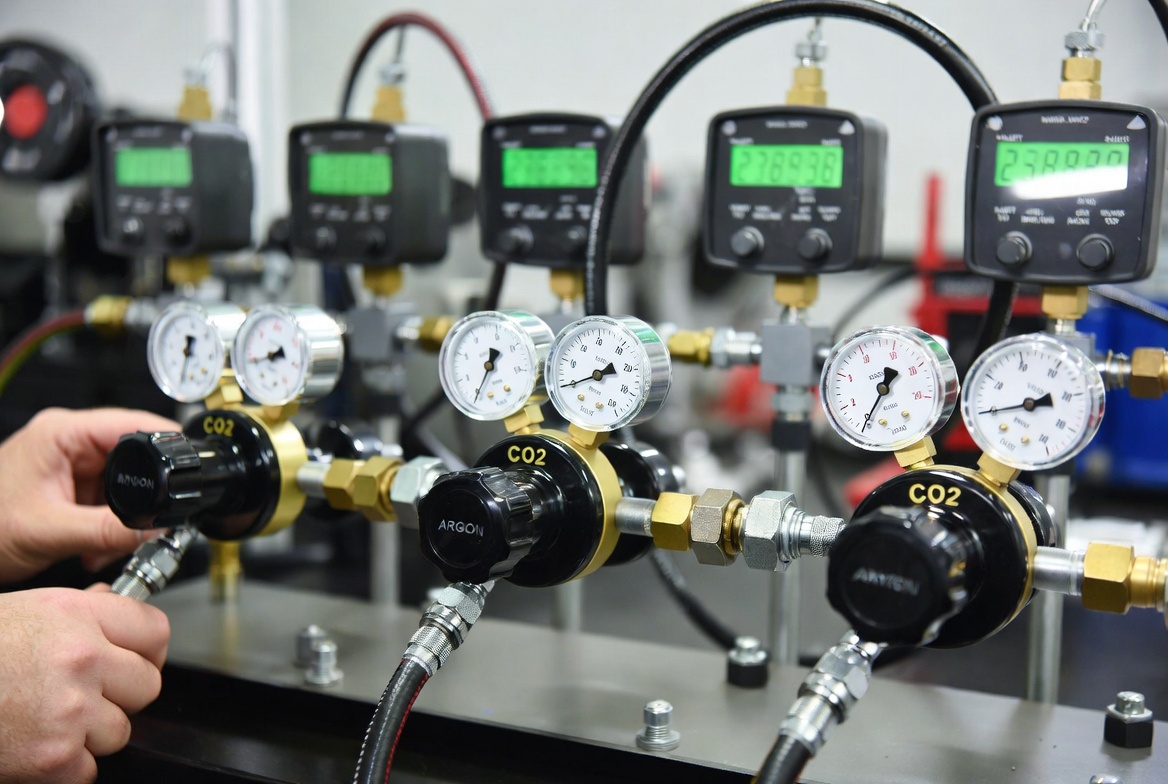
– Burst and proof pressure tests, cyclic endurance tests, leak tests (soap solution or electronic leak detectors), and flow performance validation are fundamental to serious manufacturers. [dupuyoxygen]
– For CO₂ heated regulators, heating element reliability and thermal protection measures are also evaluated. [chinesewelding]
Understanding these elements allows buyers to read specification sheets critically rather than accepting only pictures and price lists.
Top 10 Welder Regulator Manufacturers in China (Expert View)
Below is an expert‑oriented overview of 10 representative manufacturers with meaningful welder regulator capability. Descriptions emphasize real decision criteria: product scope, quality focus, OEM/ODM flexibility, and market positioning.
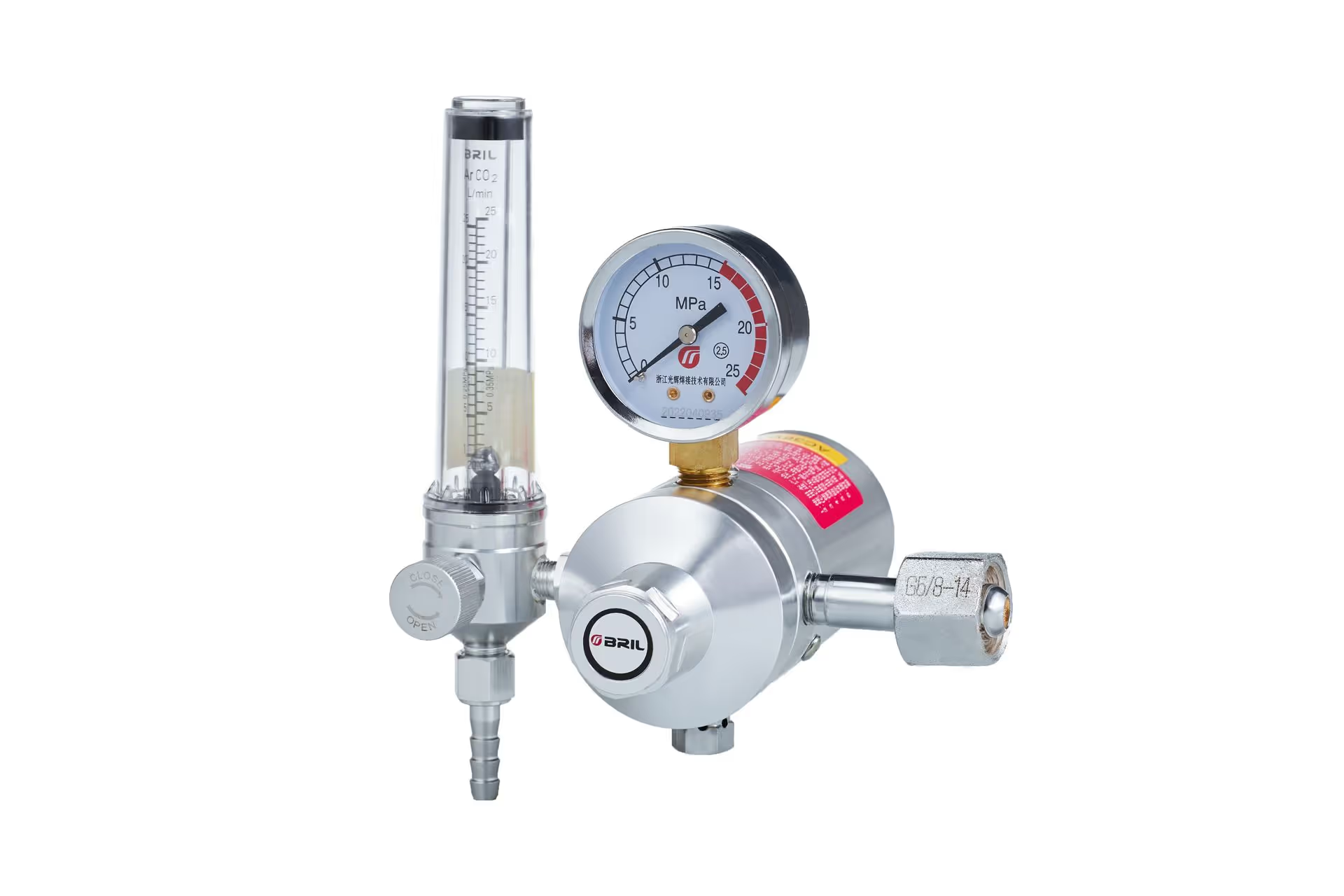
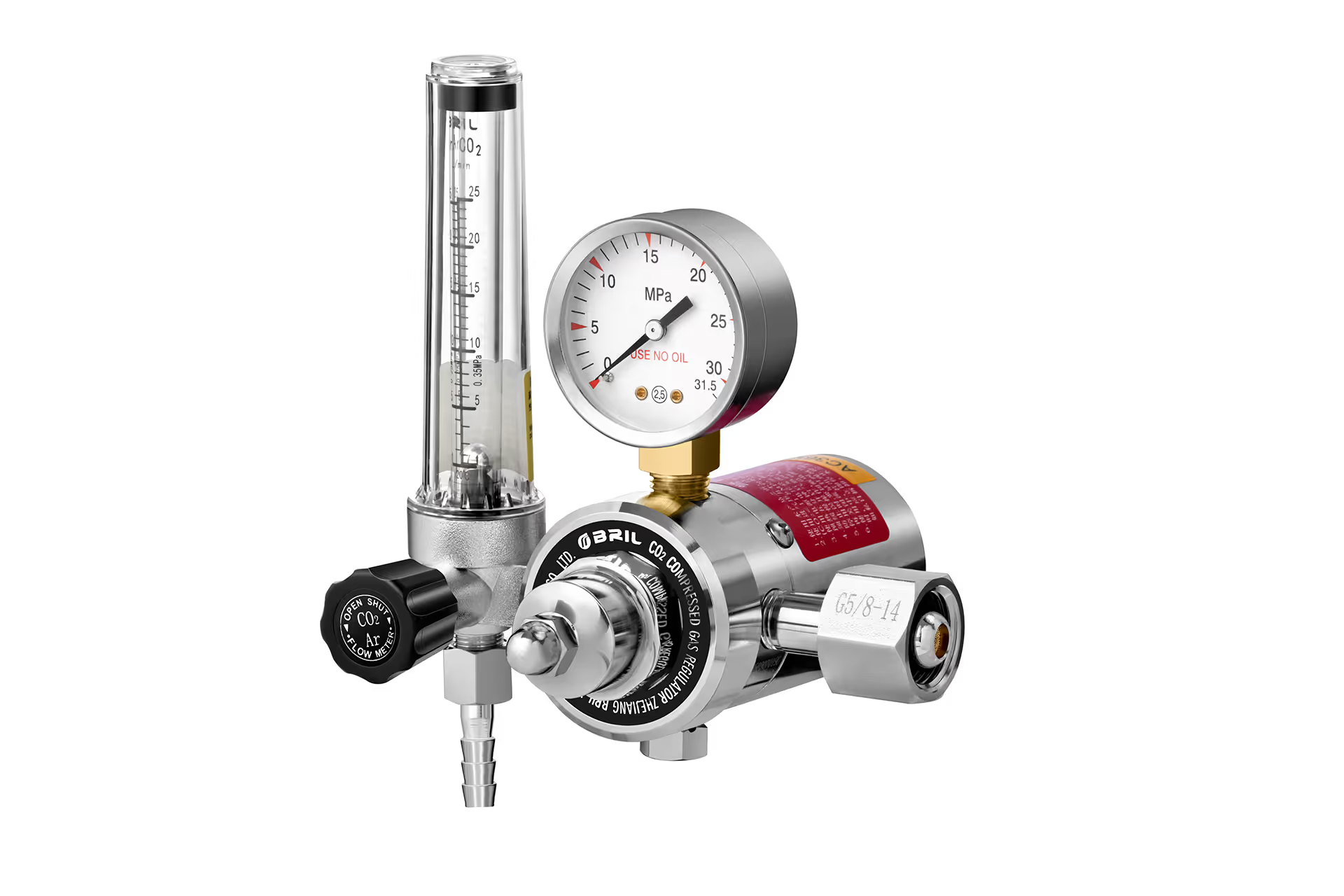
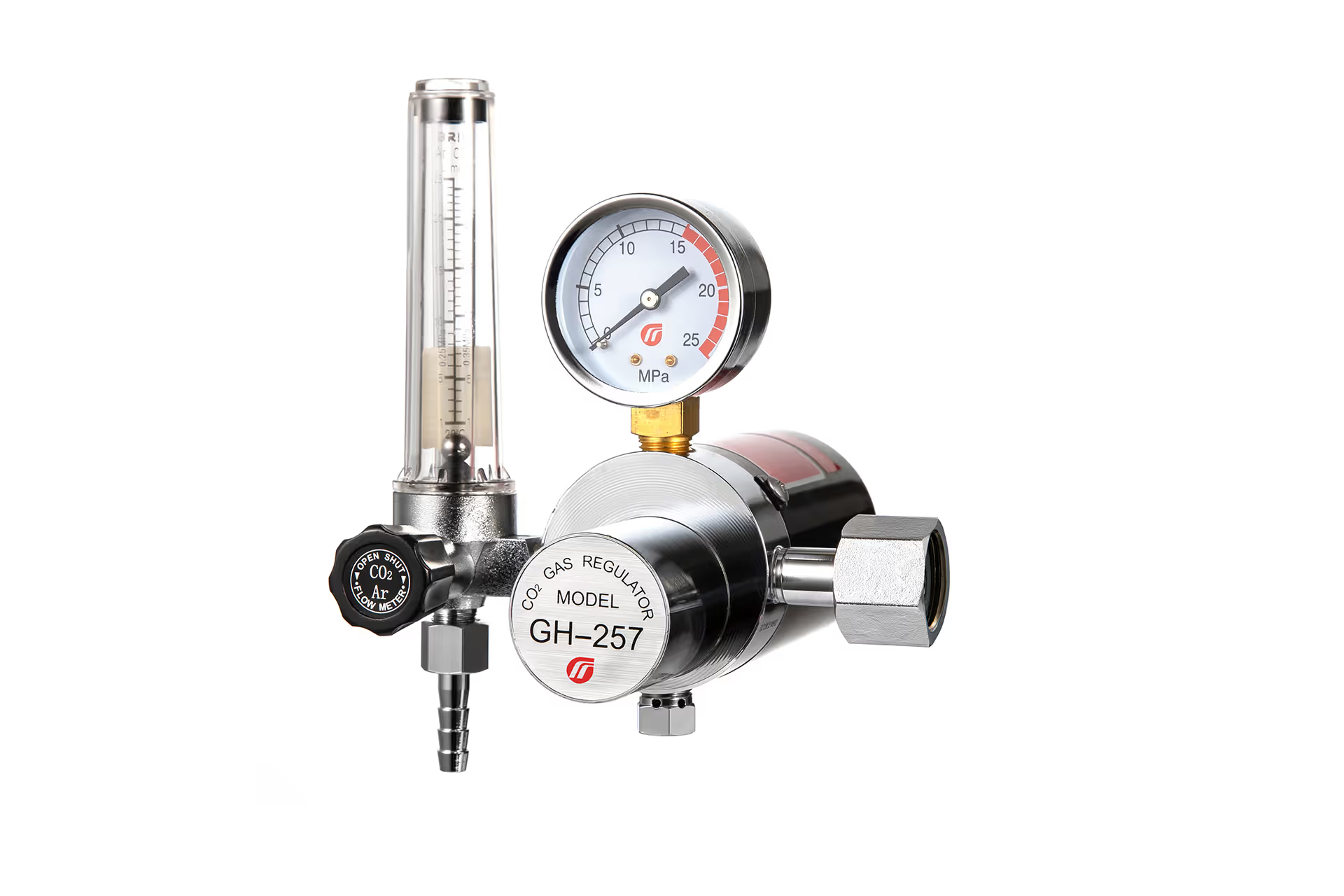
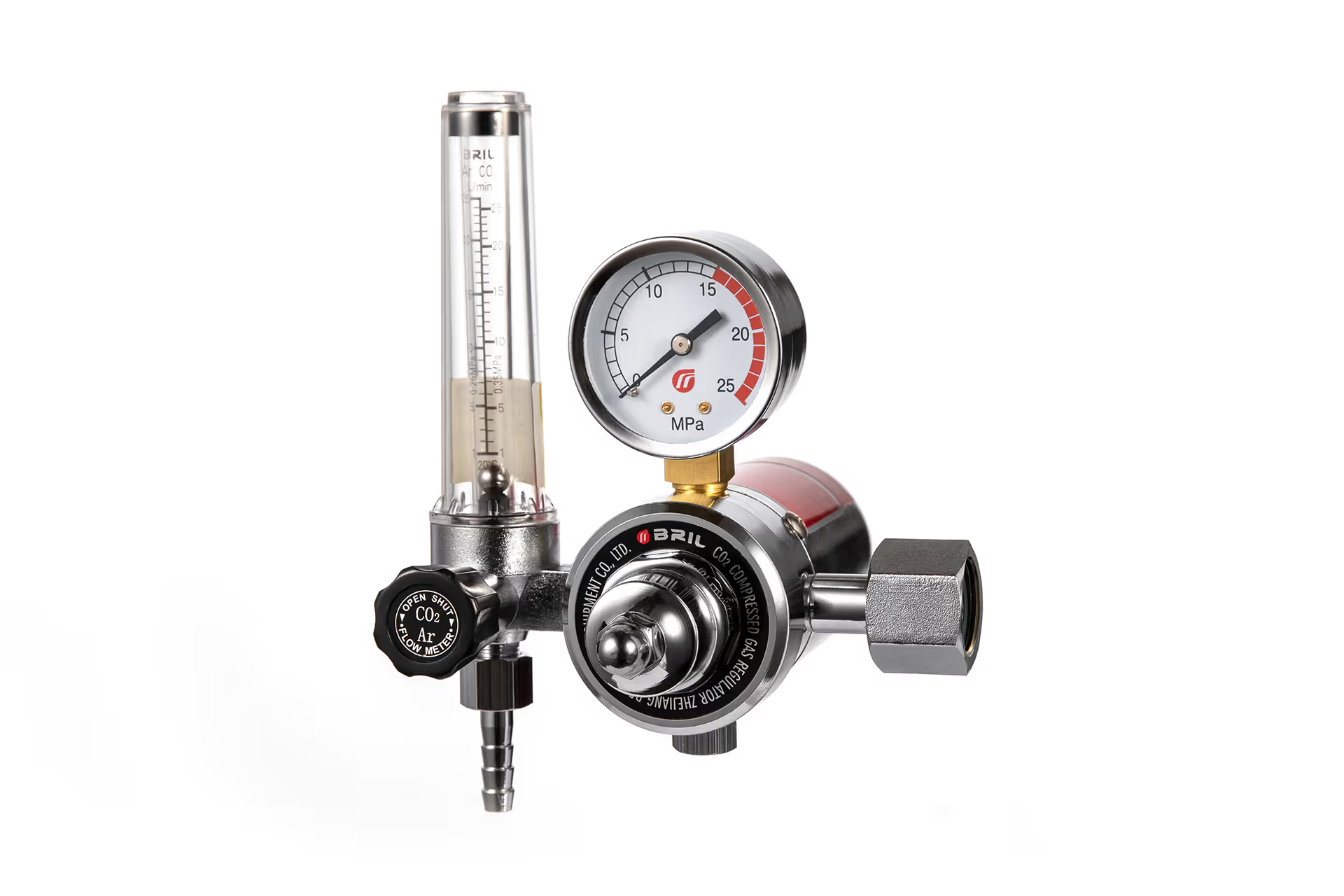
1. Zhejiang Bril Welding Equipment Co., Ltd. – Agile OEM Partner for CO₂ and Dual‑Stage Solutions
Zhejiang Bril Welding Equipment Co., Ltd. is a specialized gas regulator factory founded in 2002 and located in Longwan District, Wenzhou, an established hub for valves and brass fittings. The company focuses on CO₂ heated regulators, argon and argon/CO₂ regulators, oxygen and fuel gas regulators, as well as dual‑stage industrial gas regulators for welding and cutting. [chinese-welding.en.made-in-china]
Why it stands out for procurement managers
– Positioning and strengths
– Bril combines precision manufacturing with a clear focus on stable pressure control, using high‑quality brass bodies and robust internal components for regulators used in continuous welding applications. [chinese-welding.en.made-in-china]
– The factory holds ISO9001 quality management certification and provides CE‑compliant gas regulators, reflecting adherence to international standards and traceable processes. [chinesewelding]
– OEM/ODM and flexibility
– The company is particularly suitable for small to mid‑sized overseas brands, wholesalers, and distributors seeking flexible OEM/ODM cooperation, including brand‑specific dials, color schemes, and private‑label packaging. [chinesewelding]
– Bril is accustomed to engineering discussions around inlet standards (CGA, BS, DIN, G threads), outlet fittings, flowmeter integration, and custom performance requirements such as heated CO₂ solutions for cold environments. [weldingandwelder]
– Quality and export focus
– Products undergo strict quality inspections, including leakage and pressure stability tests, with regulators widely used in MIG/TIG welding, oxy‑fuel cutting, and industrial gas systems. [dupuyoxygen]
– Export records and public listings show shipments to multiple overseas markets, indicating experience with export documentation and long‑distance logistics. [importgenius]
For buyers who want a high cost‑performance ratio, efficient communication, and deeper OEM engineering support—rather than only catalog reselling—Bril is a strong candidate to include in shortlists for welder regulator sourcing. [chinese-welding.en.made-in-china]
2. Large‑Scale Regulator Group in Zhejiang / Jiangsu (High Volume, Broad Range)
Several large‑scale gas equipment groups in Zhejiang and Jiangsu supply broad regulator lines covering oxygen, acetylene, LPG/propane, argon, nitrogen, and specialty gas regulators. These factories often integrate casting, forging, machining, plating, assembly, and testing under one corporate group, enabling economies of scale for high‑volume OEM business. [stellarmr]
They typically support single‑stage and dual‑stage regulator platforms, including models tailored for MIG/TIG shielding gases and heavy‑duty cutting. Such manufacturers are suitable for buyers prioritizing stable high volume and multiple product families (regulators, torches, hoses) consolidated under one sourcing umbrella. [weldingandwelder]
3. Specialty Welding & Cutting Regulator Makers in Wenzhou
Wenzhou’s valve and regulator cluster contains several mid‑sized factories specializing in welding and cutting gas control, often with 10–20 years of export experience. Their strengths lie in forged brass body processing, cost‑effective oxygen and acetylene regulators, and quick lead times for standard SKUs. [importgenius]
Many of these plants supply to Latin America, Eastern Europe, and Southeast Asia, offering practical balance between quality and price for secondary brands and regional distributors. When choosing among them, buyers should focus on documented test processes and the ability to support dual‑language labeling and documentation. [stellarmr]
4. Industrial Gas System Integrators with Regulator Lines
Some large industrial gas system providers in China offer welder regulators as part of broader portfolios that also include manifolds, cylinder valves, and pipeline equipment. Although regulators may not be their only focus, they often have strong engineering capabilities for system‑level projects and can support integrated solutions for workshops and fabrication plants. [stellarmr]
For major end users or EPCs, these suppliers can provide project‑oriented support, including regulator selection, gas panel design, and commissioning guidance, which can simplify vendor management.
5. OEM‑Driven Brass Machining Factories with Regulator Assemblies
In regions with strong brass machining bases (Zhejiang, Guangdong), some factories evolved from components machining to full regulator assembly lines. Their advantage is vertical control over body, bonnet, and internal brass parts, which helps with customization of dimensions and connection interfaces. [stellarmr]
These suppliers are often open to developing dedicated regulator platforms around a brand’s drawings, with MOQ structured at component level rather than finished product level. Buyers should carefully verify that QC and testing resources have scaled in line with assembly operations.
6. Export‑Focused Welding Tool Brands with Private‑Label Regulator Production
A number of Chinese welding tool brands operate hybrid models: they maintain domestic brands while also serving as OEM producers for foreign labels. Their regulator lines usually cover standard oxygen/acetylene and CO₂/argon regulators plus accessories such as flowmeters and hoses. [uniweld]
These suppliers often understand retail and e‑commerce packaging requirements, UPC/EAN management, and after‑sales expectations in Western markets, making them suitable for buyers focused on retail channels.
7. Dual‑Stage and Specialty Gas Regulator Specialists
A smaller group of factories focus specifically on dual‑stage and specialty gas regulators for applications needing tight outlet stability, such as TIG welding on high‑value components or lab‑type welding setups. They tend to use higher‑precision diaphragm and seat designs and emphasize calibration and pressure decay performance. [stellarmr]
While unit prices are higher, these suppliers are relevant for brands positioning themselves toward professional or industrial end users who demand consistent weld quality over long shifts.
8. CO₂ Heated Regulator Manufacturers for Cold‑Climate Markets
CO₂ heated regulators address the issue of regulator freezing and pressure drop during high‑flow CO₂ use, particularly in cold environments or high‑duty cycle welding. Several Chinese factories, including Zhejiang Bril, have developed specific lines of heated regulators integrating heating elements and safety protections. [chinesewelding]
These products are especially relevant for buyers supplying to Northern Europe, Canada, or similar climates. When assessing such suppliers, focus on heating element durability, protection against over‑temperature, and clear installation instructions.
9. Niche ODM Design Houses Supporting Custom Regulator Platforms
Some smaller, engineering‑driven companies focus on providing ODM design services and then outsourcing part of the machining or assembly. Their strengths are concept development, 3D modeling, performance simulation, and rapid prototyping for differentiated regulator designs. [stellarmr]
These suppliers suit buyers who want to launch a unique product line with proprietary ergonomics, integrated gauges/flowmeters, or targeted performance ranges, while still leveraging China’s manufacturing ecosystem.
10. Integrated Welding Equipment Manufacturers with Matching Regulators
Finally, several integrated welding machine manufacturers in China also produce matching regulator and gas control accessories. Although the breadth of regulator models may be narrower, the benefit is that machines and regulators can be designed as a kit, with coordinated performance ranges and bundled certifications. [zoro]
This option can be attractive for buyers focusing on complete welding packages rather than stand‑alone regulator sales.
Quick Comparison Table: Typical Focus of Shortlisted Supplier Types
The table below summarizes typical attributes you can expect from the main categories of Chinese welder regulator suppliers described above. Values are indicative and should be confirmed case by case with each factory.
| Supplier type | Typical annual capacity (regulators) | Usual MOQ (per model) | Common certifications | OEM/ODM depth | Notes for buyers |
|---|---|---|---|---|---|
| Zhejiang Bril Welding Equipment Co., Ltd. | Mid‑to‑high; focused on industrial gas regulators (chinese-welding.en.made-in-china) | Flexible; negotiable for new OEM projects (chinesewelding) | ISO9001, CE, often RoHS‑aligned materials (weldingandwelder) | Strong OEM for small/mid brands; custom threads, gauges, branding (chinesewelding) | Suits buyers seeking high cost‑performance and engineering support |
| Large regulator groups (Zhejiang/Jiangsu) | Very high; multiple lines and shifts (stellarmr) | Medium; usually full pallet and above | ISO9001, CE, sometimes additional regional marks (weldingandwelder) | Mature OEM; structured but less flexible for small runs | Best for big volume and multi‑product consolidation |
| Wenzhou welding regulator specialists | Medium; focused on welding & cutting (importgenius) | Relatively low to medium | ISO9001, CE for export models (weldingandwelder) | Good OEM; strong on standard designs | Suits distributors in developing markets |
| Specialty dual‑stage regulators makers | Lower; precision‑oriented (weldingandwelder) | Higher MOQ per model | ISO9001, CE; often enhanced testing (weldingandwelder) | ODM possible but with engineering fees | Target for high‑end industrial or lab applications |
| CO₂ heated regulator suppliers | Medium; niche product focus (chinesewelding) | Negotiable, but often container‑level to optimize cost | ISO9001, CE for electric parts where relevant (chinesewelding) | OEM for branding and cable/plug variants | Ideal for cold‑climate welding markets |
Buyer’s Guide: How to Safely Source Welder Regulators from China
1. Verify factory identity and certifications
– Cross‑check company name, address, and registration on multiple channels: official website, business directories, and, where available, customs data. [chinese-welding.en.made-in-china]
– Request updated copies of ISO9001 and CE certificates and verify them with the issuing bodies; in some cases, certification bodies allow online validity checks. [chinesewelding]
– For RoHS and similar compliance, ask for material reports or third‑party lab test results on key components and coatings. [weldingandwelder]
2. Assess technical fit beyond catalog photos
– Ask for detailed datasheets including inlet and outlet pressure range, flow capacity (L/min or CFH), gas type, thread standards, and temperature range. [weldingandwelder]
– For dual‑stage regulators, request pressure stability data over cylinder pressure decay; this directly affects weld consistency. [dupuyoxygen]
– For heated CO₂ regulators, require electrical specifications, protection class, and test documentation specific to the heater assembly. [chinesewelding]
3. Use a structured sampling and approval process
– Start with off‑the‑shelf samples to evaluate basic workmanship, gauge clarity, leak‑tightness, and overall feel.
– Progress to pilot batch (e.g., 50–200 units) to validate batch consistency, packaging robustness, and logistics handling before full orders.
– Apply welding trials that reflect your end‑user environment (duty cycle, gas types, ambient temperature) and record performance to build an internal benchmark. [dupuyoxygen]
4. Address logistics and after‑sales upfront
– Discuss Incoterms (FOB, CIF, DAP) and clarify responsibility for insurance, especially because gas equipment is often heavy and sensitive. [stellarmr]
– Define warranty conditions, including coverage for regulator failures, leakage, or gauge malfunction and agree how defective units will be analyzed and reported.
– For multi‑market distribution, align on labeling languages, safety warnings, and documentation sets, so each shipment is market‑ready.
Common Pitfalls and an “Insider” Avoidance Tip
Typical problems when sourcing welder regulators
– Material substitution
– Some low‑end suppliers may switch to lower‑grade brass or mixed alloys without documentation, which can affect pressure resistance and corrosion behavior over time. [weldingandwelder]
– Inconsistent internal parts
– Regulator bodies may look identical externally, but springs, diaphragms, and seats can vary between batches, causing outlet pressure drift and higher failure rates. [dupuyoxygen]
– Cosmetic‑only QC
– Factories under cost pressure may focus QC on visible defects (paint, gauges) while simplifying internal tests such as endurance and pressure decay.
Less‑discussed “internal” tip: use serial‑level traceability as a filter
Within the industry, serious regulator factories quietly differentiate themselves by how far their traceability goes: not only batch codes on packaging, but also serial or lot codes directly on regulator bodies, linked to test and calibration records. This is seldom highlighted on online listings because it requires more disciplined production and data management. [dupuyoxygen]
As a buyer, explicitly ask whether each regulator can be traced back to its test record and whether sample test reports can be retrieved using a specific batch or serial number. If a supplier can provide this consistently, it is a strong sign that their quality system is more than paperwork.
Conclusion and Call to Action
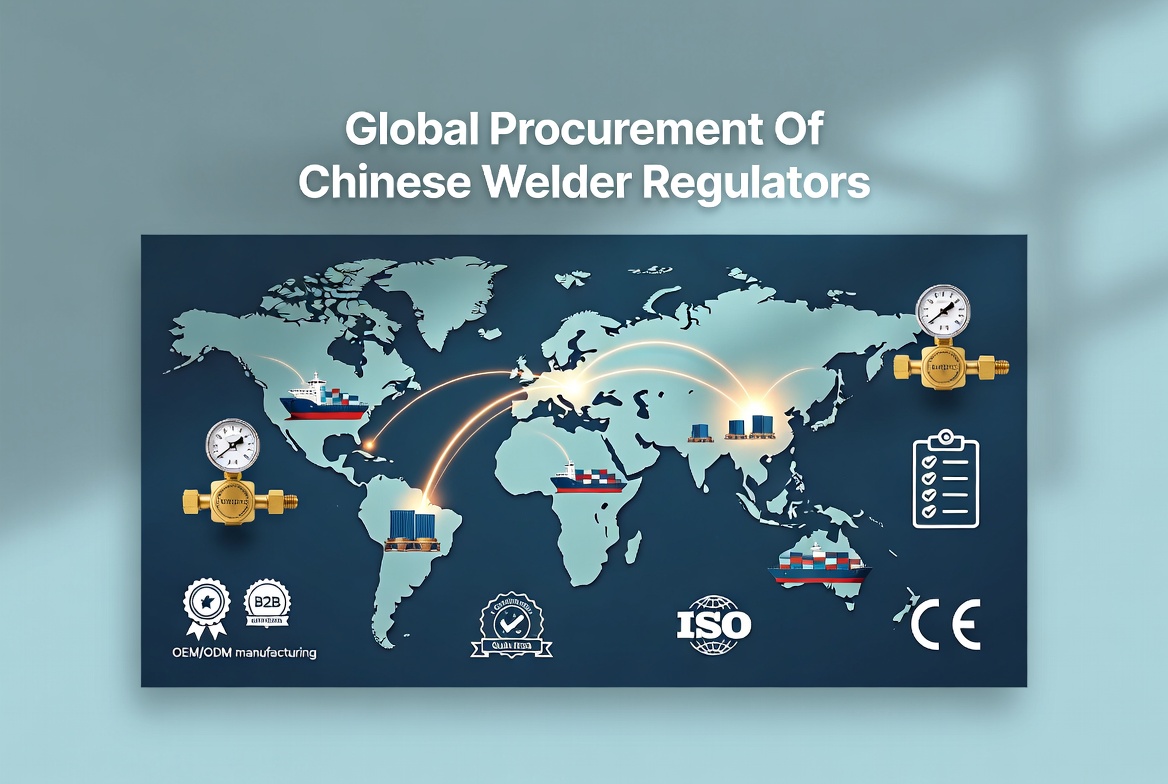
China’s welder regulator manufacturing ecosystem offers deep technical capability, cost‑effective production, and strong export experience, particularly from clusters such as Wenzhou and other coastal manufacturing hubs. For procurement managers, the differentiator is not the availability of suppliers but the ability to systematically evaluate quality systems, technical design, OEM flexibility, and long‑term stability. [importgenius]
Zhejiang Bril Welding Equipment Co., Ltd. represents a pragmatic option for buyers seeking high cost‑performance, engineering‑driven OEM support, and efficient communication for welder gas regulators and CO₂ heated solutions. If you are planning to benchmark or onboard new regulator suppliers in 2026, consider shortlisting factories with proven export records, valid certifications, and demonstrable traceability, and then run them through a structured sampling and testing program. [chinese-welding.en.made-in-china]
FAQ: Advanced Questions Procurement Managers Often Ask
1. How can I verify whether a factory’s ISO9001 certificate is still valid?
Request a clear PDF of the certificate and check the certificate number, validity dates, and issuing body; then use the certification body’s website or inquiry email to confirm status. Avoid suppliers who refuse to share full documents or who send certificates without traceable issuer information. [chinesewelding]
2. What is the right test plan for qualifying a new welder regulator supplier?
Combine lab‑type tests (leak tests at rated inlet pressure, cyclic pressure adjustments, and flow tests) with practical welding trials reflecting intended duty cycle and gas type. Include at least one endurance test where regulators run near their maximum flow over extended time to detect freezing, pressure drift, or component fatigue. [dupuyoxygen]
3. How do I compare single‑stage vs dual‑stage regulators for MIG/TIG applications?
Single‑stage regulators are simpler and cheaper but show more outlet pressure variation as cylinder pressure drops, which can impact arc stability in long shifts. Dual‑stage regulators maintain more constant outlet pressure and are preferred for critical MIG/TIG work or automated welding cells, where rework costs are higher than the component price difference. [zoro]
4. What documentation should I require for CE‑marked regulators entering the EU?
Ask for the EC Declaration of Conformity, relevant EN standards referenced, test reports (internal or third‑party), and traceable manufacturing records for the specific model. Ensure labeling, instructions, and safety warnings align with EU requirements and are provided in appropriate languages. [weldingandwelder]
5. How can I avoid hidden design changes over the life of a regulator project?
Implement a formal drawing and specification control process with your supplier, including revision numbers and change notification rules. Require written approval before any change in material, spring, diaphragm, gauge specification, or sealing components, and tie this into supply agreements. [stellarmr]
Hot Tags: Welder Regulator Manufacturers in China, Manufacturers, Customized, Custom, Suppliers, Buy, Cheap, Quality, Advanced, Durable, Made in China, Price, Quotation