Content Menu
● Two Gauges on a Gas Regulator: A Quick Comparison
● What Does the Cylinder Pressure Gauge Tell You?
>> Can Cylinder Pressure Show How Much Gas Remains?
>> Why a CO₂ Gauge Can Look Normal Before Supply Runs Out
● What Does the Delivery Pressure Gauge Tell You?
>> Static Pressure Versus Working Pressure
>> Does Turning the Knob Change Both Gauges?
● Pressure Gauge Versus Flow Gauge: Check the Units
>> Why Some Argon Regulators Have a Flow-Calibrated Dial
● Does Having Two Gauges Mean a Two-Stage Regulator?
● How to Read Both Regulator Gauges Safely
● Three Practical Scenarios That Explain Confusing Readings
>> Scenario 1: CO₂ Inlet Pressure Looks Stable, but the Cylinder Is Nearly Empty
>> Scenario 2: Outlet Pressure Looks Correct Until Production Starts
>> Scenario 3: A CO₂ Regulator Becomes Cold and Delivery Deteriorates
● What Unusual Gauge Readings May Mean
● What OEM and Distributor Buyers Should Specify
● Specify the Right Regulator for Your Application
>> 1.Which Gauge Shows Tank Pressure?
>> 2.Which Gauge Should I Adjust?
>> 3.Can Both Gauges Show the Same Pressure?
>> 4.Why Does My Outlet Gauge Stay Above Zero After Shutdown?
>> 5.Can I Use One Regulator for Oxygen, Argon, and CO₂?
>> 6.Do Two Gauges Prove That a Regulator Is Accurate?
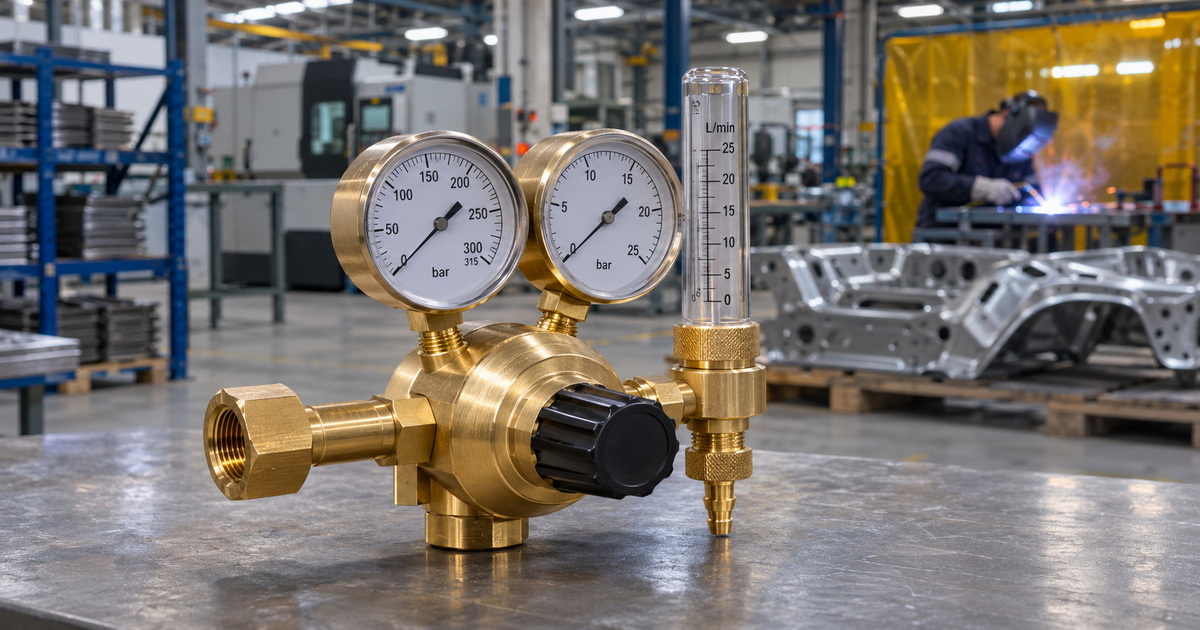
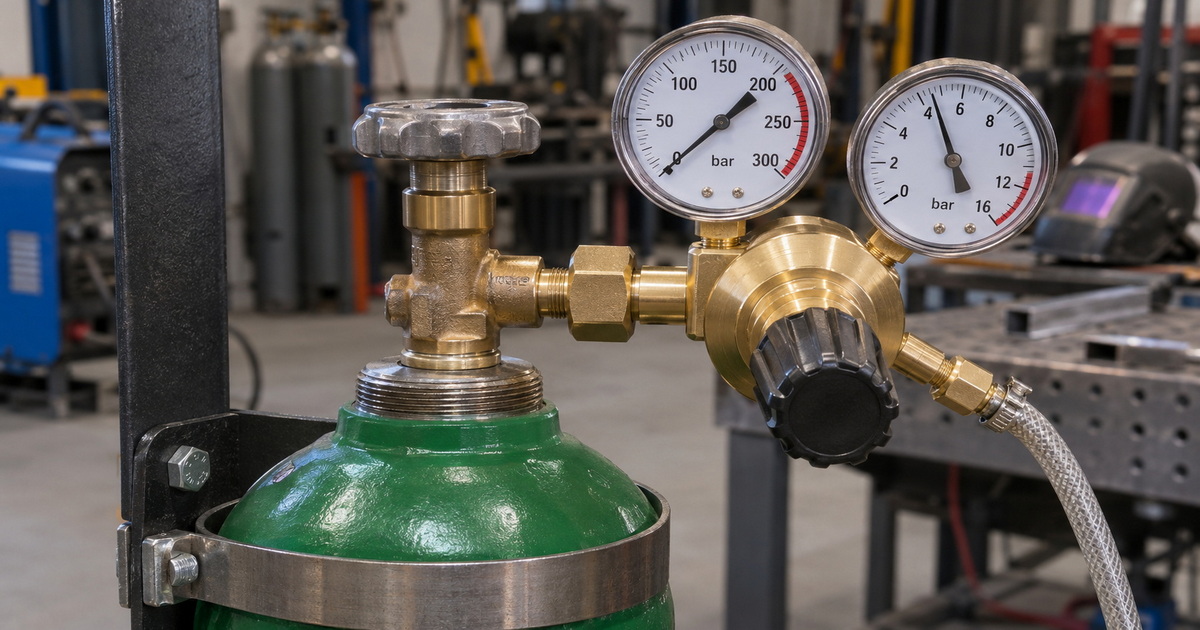
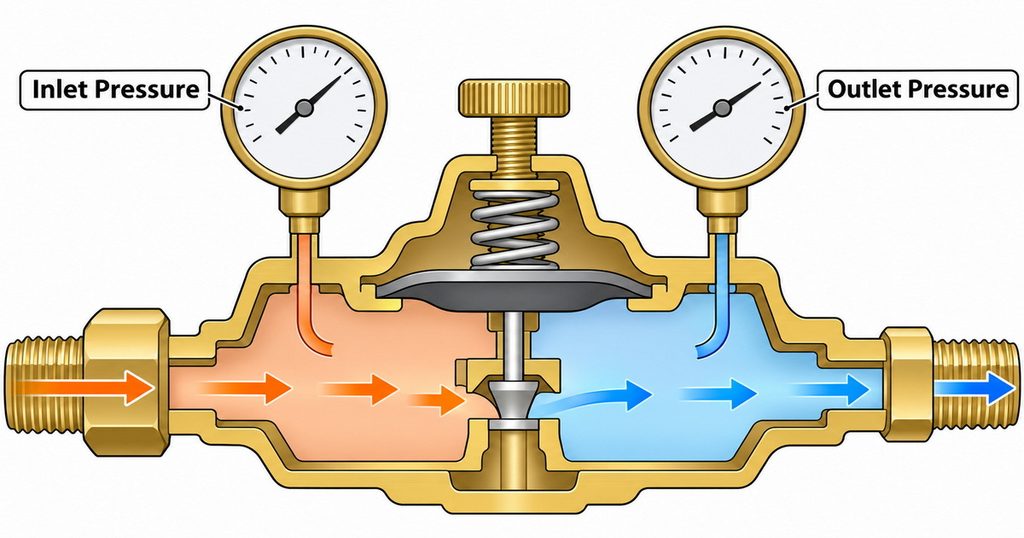
The two gauges on a gas regulator usually show cylinder pressure and delivery pressure. The first indicates pressure entering the regulator from the gas supply. The second indicates the reduced pressure leaving the regulator for your equipment.
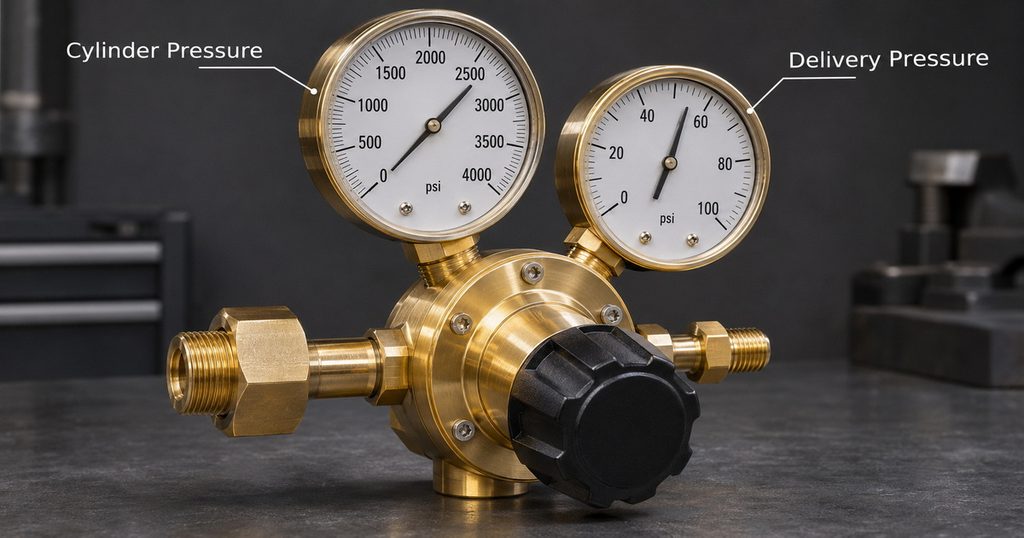
Two Gauges on a Gas Regulator: A Quick Comparison
On a conventional two-pressure-gauge regulator, each gauge monitors a different side of the pressure-reducing mechanism.
| Comparison point | Cylinder pressure gauge | Delivery pressure gauge |
|---|---|---|
| Other names | Inlet, supply, or high-pressure gauge | Outlet, working, or low-pressure gauge |
| What it measures | Pressure upstream of the regulating valve | Pressure downstream of the regulating valve |
| Main purpose | Monitor supply pressure | Monitor pressure supplied to equipment |
| Typical scale | Higher pressure range | Lower pressure range |
| Response to adjustment | Not directly controlled by the adjustment knob | Normally changes with regulator adjustment |
| Main limitation | Does not always indicate remaining gas quantity | Does not automatically indicate actual gas flow |
Think of the first gauge as monitoring the supply and the second as monitoring the regulated output. Neither replaces the equipment manual or the regulator’s operating instructions.
What Does the Cylinder Pressure Gauge Tell You?
The cylinder pressure gauge measures pressure at the regulator inlet. When the cylinder valve is open and the inlet is connected correctly, this generally corresponds to cylinder pressure.
Its scale must suit the maximum intended supply pressure. However, the highest number printed on the dial is not your cylinder’s required filling pressure or the regulator’s complete pressure rating.
Can Cylinder Pressure Show How Much Gas Remains?
For compressed gases such as nitrogen, oxygen, and argon in conventional high-pressure cylinders, pressure can provide a rough indication of remaining contents when temperature is comparable.
It is not an exact inventory measurement. Temperature changes affect pressure, and usable supply also depends on the minimum inlet pressure your process requires.
Liquefied gases behave differently. CO₂ and propane can contain both liquid and vapor inside the cylinder. While liquid remains, pressure depends strongly on temperature rather than decreasing proportionally with the amount withdrawn.
For those gases, weighing the cylinder and subtracting its tare weight is generally more useful than treating the pressure gauge as a fuel indicator.
Why a CO₂ Gauge Can Look Normal Before Supply Runs Out
A CO₂ cylinder can lose substantial contents while maintaining a broadly similar pressure at a stable temperature.
Once the liquid phase is exhausted, pressure falls as the remaining vapor is consumed. That explains why a CO₂ regulator gauge may offer little advance warning of depletion.
For distributors and production users, this distinction matters: a steady inlet reading does not necessarily mean the cylinder contains plenty of CO₂.
What Does the Delivery Pressure Gauge Tell You?
The delivery pressure gauge measures pressure on the regulated outlet side.
This is the pressure available at that measurement point—not necessarily the pressure reaching a distant torch, machine, or other application.
Hoses, valves, fittings, and downstream restrictions can create pressure losses when gas flows. Consequently, a satisfactory reading at the regulator does not, by itself, prove that the entire delivery system is performing correctly.
Static Pressure Versus Working Pressure
Static pressure is observed when downstream gas consumption has stopped. Working pressure is observed while equipment consumes gas.
These readings may differ. A regulator can also exhibit a specified difference between flowing pressure and its stabilized shutoff pressure.
My practical recommendation is to evaluate performance under the operating conditions specified by the equipment manufacturer. Do not judge regulator suitability from an attractive no-flow reading alone.
Does Turning the Knob Change Both Gauges?
The adjustment mechanism normally changes the outlet pressure setting. It does not refill the cylinder or directly control cylinder pressure.
Reducing the setting may not immediately lower the displayed outlet pressure if gas remains trapped downstream. Pressure reduction must follow the manufacturer’s approved operating procedure.
Never loosen a connection to release trapped gas.
Pressure Gauge Versus Flow Gauge: Check the Units
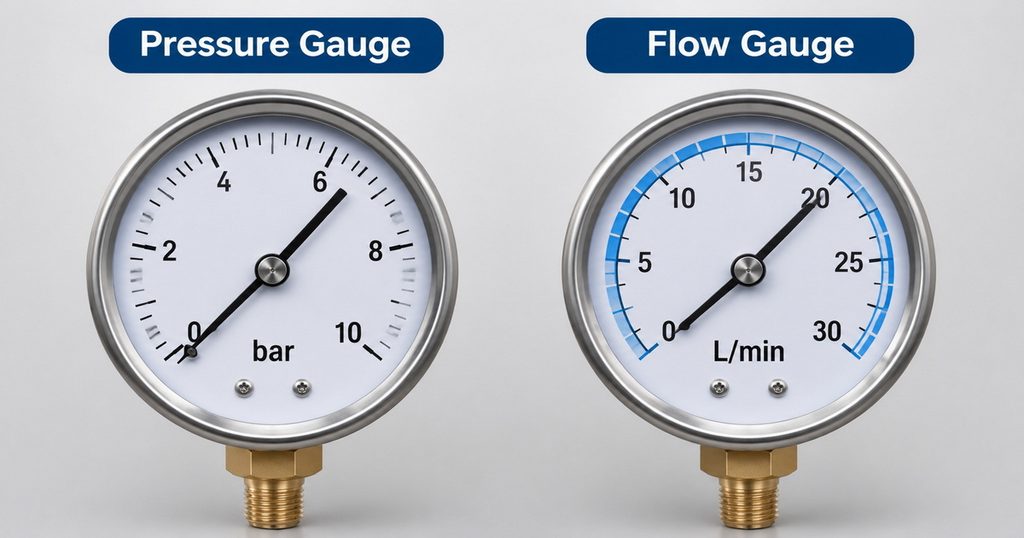
Before interpreting either dial, read its units.
– psi, bar, kPa, or MPa indicate pressure.
– L/min or SCFH indicate flow.
– Two concentric scales may simply express the same measurement in different units.
A dial displaying both psi and bar is still one pressure gauge. It is not measuring two separate operating conditions.
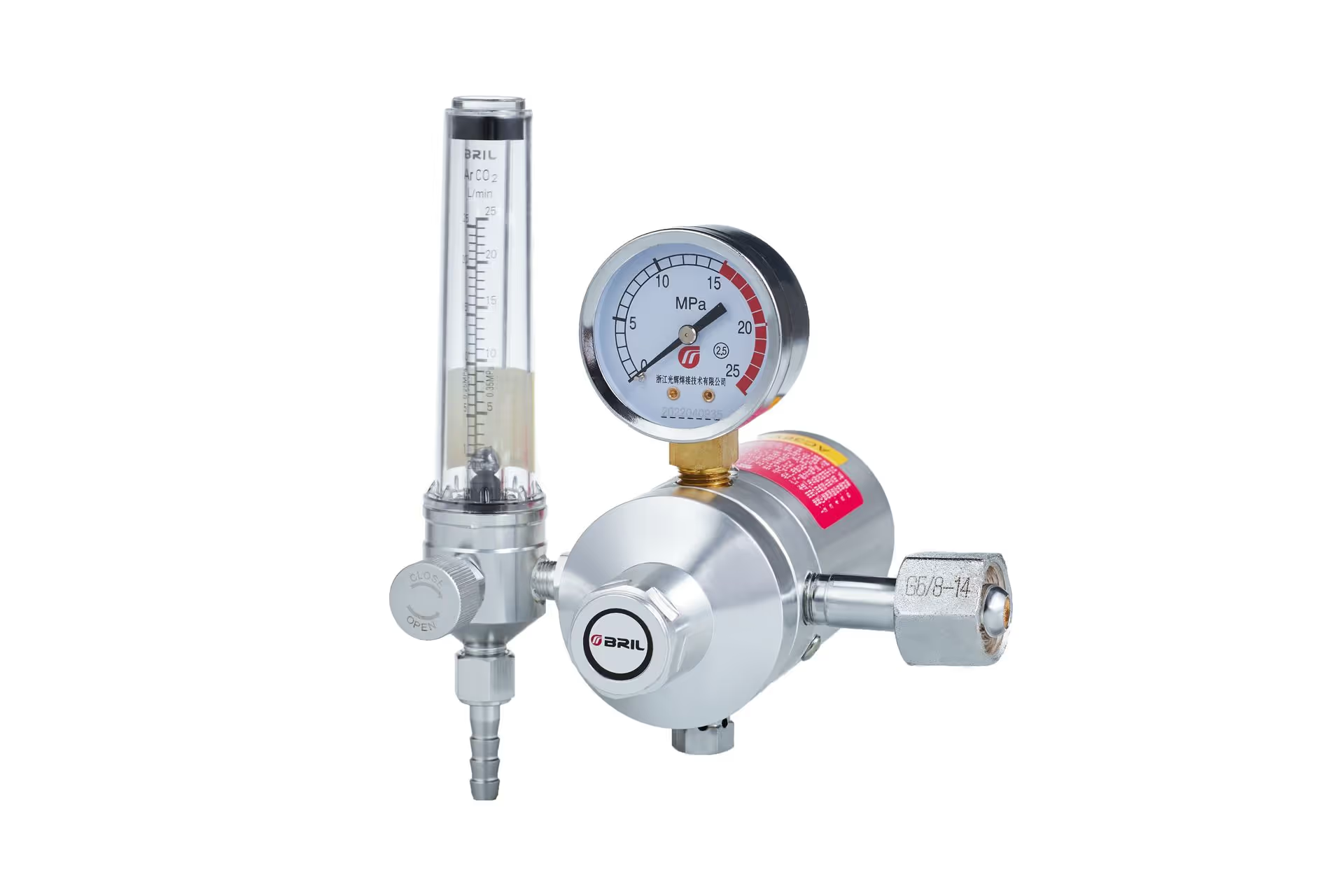
Why Some Argon Regulators Have a Flow-Calibrated Dial
Some shielding-gas regulators use an outlet gauge calibrated in flow units. These instruments infer flow from pressure across a specified downstream restriction.
That calibration depends on the intended gas and equipment configuration. Changing the gas or introducing unsuitable downstream restrictions can make the indicated flow misleading.
A flow-calibrated dial should therefore be used only as specified. It is not interchangeable with an ordinary outlet pressure gauge, and a pressure reading alone cannot establish shielding-gas flow at the torch.
Does Having Two Gauges Mean a Two-Stage Regulator?
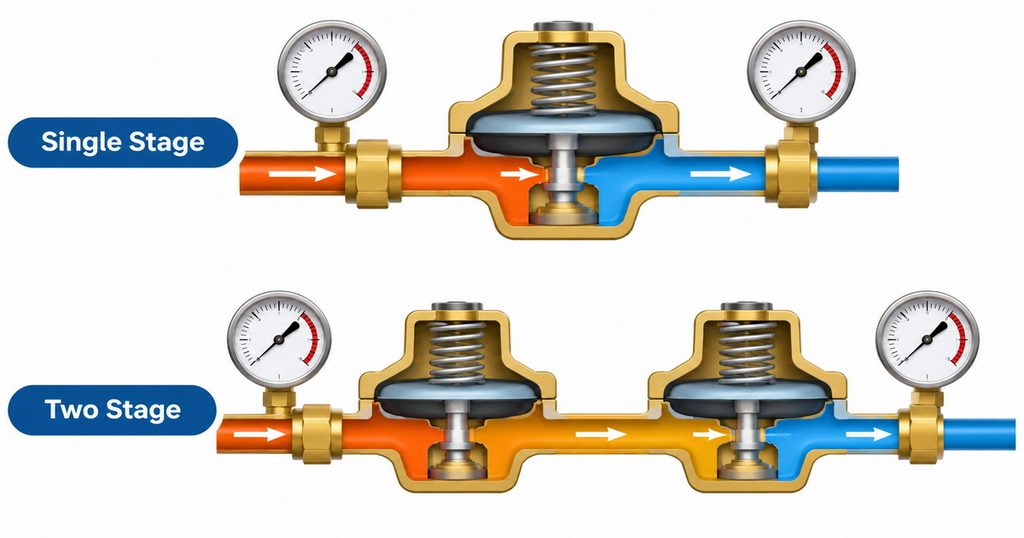
No. Dual-gauge describes the instruments; two-stage describes the internal pressure-reduction arrangement.
A single-stage regulator can have two gauges. A two-stage regulator can also have two gauges.
Single-Stage Regulation
A single-stage regulator reduces supply pressure to delivery pressure through one regulating stage.
Depending on the design, outlet pressure may change as inlet pressure falls. Some applications therefore require monitoring and readjustment during cylinder use.
Two-Stage Regulation
A two-stage regulator first reduces cylinder pressure to an intermediate pressure, then reduces it again to the required delivery pressure.
This arrangement generally reduces the influence of changing cylinder pressure on the final outlet pressure.
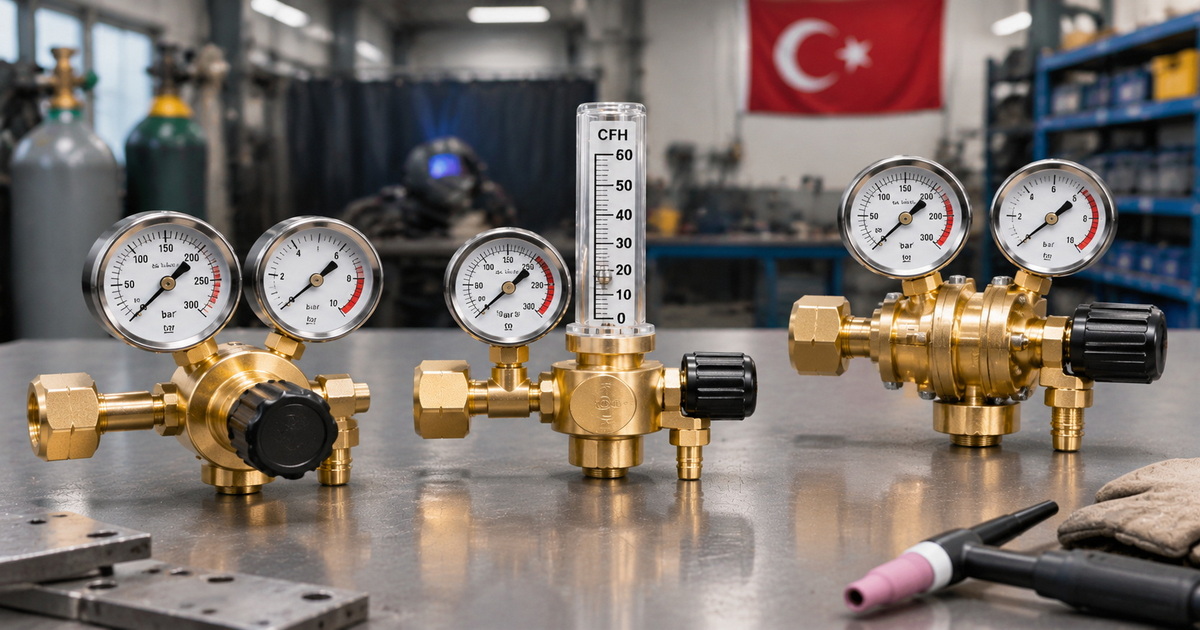
For buyers comparing dual-stage gas regulators, gauge count is not evidence of internal construction. Ask for the regulator specification and performance information.
How to Read Both Regulator Gauges Safely
The following checklist supports trained operators; it does not replace gas-specific instructions.
1. Identify the gas and regulator. Confirm gas compatibility, inlet connection, pressure rating, and intended application.
2. Inspect the assembly. Look for damaged gauges, unreadable markings, contaminated connections, or other defects.
3. Follow the approved startup procedure. Use the manufacturer’s instructions for the cylinder valve, adjustment mechanism, and downstream equipment.
4. Read the inlet gauge. Interpret the result according to gas type and temperature.
5. Read the outlet instrument. Establish whether it indicates pressure or calibrated flow.
6. Check performance under the specified operating conditions. Compare the reading with equipment requirements.
7. Follow the approved shutdown and depressurization procedure. Do not disconnect pressurized equipment.
For oxygen service, keep equipment free from oil and grease and use components prepared for oxygen service.
Acetylene requires particular care. U.S. occupational rules prohibit its use above 15 psig, subject to the regulation’s stated scope and exceptions. That limit concerns utilization pressure, not the pressure stored inside an acetylene cylinder. Applicable local requirements and equipment instructions must also be followed.
Three Practical Scenarios That Explain Confusing Readings
These are illustrative diagnostic situations, not documented customer cases.
Scenario 1: CO₂ Inlet Pressure Looks Stable, but the Cylinder Is Nearly Empty
The likely misunderstanding is treating pressure as a direct contents measurement.
If liquid CO₂ remains, temperature can dominate the reading. Check remaining contents by an appropriate weighing method rather than assuming a stable needle means adequate inventory.
Scenario 2: Outlet Pressure Looks Correct Until Production Starts
The regulator may hold the desired static pressure but fail to maintain it at the required demand.
Possible contributors include insufficient regulator capacity, inadequate supply, or restrictions elsewhere in the system. Record inlet and outlet readings during operation, then have qualified personnel assess the complete installation.
Increasing the pressure setting is not a substitute for identifying the cause.
Scenario 3: A CO₂ Regulator Becomes Cold and Delivery Deteriorates
CO₂ expansion can produce strong cooling, and dry ice can form within restrictive passages under some conditions.
A correctly specified CO₂ heated regulator may help manage cooling-related problems. However, heating does not create an unlimited gas supply or eliminate cylinder withdrawal limitations.
Selection should account for gas demand, supply arrangement, ambient conditions, heater rating, and the manufacturer’s operating limits. Never apply an improvised external heat source to a cylinder.
What Unusual Gauge Readings May Mean
A gauge pattern can guide investigation, but it rarely proves a single fault.
| Observation | Possible explanation | Appropriate response |
|---|---|---|
| Inlet pressure falls during heavy demand | Supply or withdrawal limitations; temperature effects | Review gas demand and supply conditions |
| Outlet pressure falls while gas flows | Capacity limitation, low inlet pressure, or restriction | Assess the complete delivery system |
| Outlet pressure continues rising after stabilization with downstream demand stopped | Possible regulator seat leakage | Stop use and arrange qualified inspection |
| Pointer remains off zero after verified depressurization | Possible gauge damage or calibration issue | Have the instrument evaluated |
| Needle fluctuates noticeably | Pulsating demand or system instability | Investigate operating conditions |
Do not attempt internal repairs unless you are qualified and authorized. Oxygen and fuel-gas regulators and gauges must remain in proper working order.
What OEM and Distributor Buyers Should Specify
For overseas brands, wholesalers, and equipment manufacturers, clear instrumentation is part of the product specification—not simply a cosmetic feature.
A useful purchasing checklist includes:
– Gas type and supply arrangement.
– Maximum inlet pressure and required delivery range.
– Required flow at defined inlet and outlet conditions.
– Single-stage or two-stage construction.
– Pressure-gauge or flow-gauge configuration.
– Dial units, readability, accuracy specification, and branding.
– Gas-compatible wetted materials and seals.
– Required inspection records and market-specific documentation.
High-quality brass can be appropriate for many industrial regulator designs, but brass alone does not establish suitability. Cleanliness, seat construction, sealing materials, manufacturing precision, and testing also matter.
I would evaluate a regulator through documented performance at the intended operating conditions rather than appearance or an unsupported claim of “international quality.”
Specify the Right Regulator for Your Application
Send our team your gas type, inlet pressure, required outlet pressure or flow, application, destination market, and branding requirements.
We provide OEM and ODM industrial gas regulator solutions, including CO₂ heated regulators and dual-stage models. These details help us recommend a suitable gauge configuration, connection arrangement, and customization proposal for your equipment or distribution range.
Frequently Asked Questions
1.Which Gauge Shows Tank Pressure?
The inlet gauge shows supply pressure when connected to the cylinder with its valve open. Identify it through markings and documentation rather than assuming it is always on the same side.
2.Which Gauge Should I Adjust?
You adjust the regulator mechanism, not the gauge itself. On a conventional pressure regulator, the outlet gauge shows the resulting delivery pressure. Follow the equipment’s specified setting procedure.
3.Can Both Gauges Show the Same Pressure?
A substantial pressure reduction is normal in many cylinder applications. Unexpectedly similar readings require checking the units, supply pressure, regulator type, and operating condition. Stop use if the readings suggest unsafe operation.
4.Why Does My Outlet Gauge Stay Above Zero After Shutdown?
Gas may remain trapped downstream. Closing the cylinder valve does not automatically depressurize every part of the assembly. Follow the prescribed shutdown procedure before disconnecting equipment.
5.Can I Use One Regulator for Oxygen, Argon, and CO₂?
Do not assume interchangeability. Gas compatibility, connections, pressure ratings, cleanliness, and intended service must all match. Use a regulator only for gases and pressures approved by its manufacturer.
6.Do Two Gauges Prove That a Regulator Is Accurate?
No. Two gauges provide two indications, not proof of accuracy or stable regulation. Gauge specifications, inspection results, and operating performance provide more meaningful evidence.
References
1. [The Harris Products Group — Gas Regulation]. Regulator selection by supply source, delivery pressure, and stage configuration. [harrisproductsgroup]
2. [The Harris Products Group — Two-Stage Regulators]. Internal operating principles and reduced sensitivity to changing inlet pressure. [harrisproductsgroup]
3. [Airgas — Gas, Equipment and Services Guide]. Explanations of inlet and outlet gauges, flow-gauge calibration, downstream orifices, and gas-specific flow instrumentation. [airgas]
4. [Airgas — RDF Equipment and Accessories Catalog]. Liquefied-gas contents measurement, cylinder pressure limitations, and weighing methods. [airgas]
5. [Airgas — Gas Withdrawal Rates for Liquefied Gases]. CO₂ expansion cooling, dry ice formation, and supply withdrawal limitations. [airgas]
6. [Occupational Safety and Health Administration — 29 CFR 1910.253: Oxygen-Fuel Gas Welding and Cutting]. Acetylene utilization pressure, intended regulator service, oxygen cleanliness, and repair requirements. [osha]
7. [Occupational Safety and Health Administration — 29 CFR 1926.350: Gas Welding and Cutting]. Regulator and gauge condition, cylinder handling, and oxygen contamination precautions. [osha]
Hot Tags: Gas Regulator, Gas Pressure Regulator, Dual Gauge Gas Regulator, Industrial Gas Regulator, CO₂ Gas Regulator, CO₂ Heated Regulator, Argon Gas Regulator, Two Stage Gas Regulator, Gas Regulator Manufacturer, OEM Gas Regulator