Content Menu
● Which Standards Apply to Welding Gas Pressure Regulators?
● ISO 2503: The Core Standard for Cylinder Regulators
>> Understand the Pressure Limits
>> Specify the Edition and the Model
● ISO 7291: When a Manifold Regulator Is Required
● Pressure Gauges, Connections, and Materials
>> ISO 5171: Pressure-Gauge Requirements
>> ISO 5145 and Regional Cylinder Connections
>> ISO 9539: Material Compatibility
● U.S. Requirements for Welding Gas Regulators
>> The Acetylene Pressure Limit
● European Requirements: Standards and CE Marking
>> Why CE Marking Is Not a Universal Requirement
● Gas-Specific Requirements Buyers Should Address
>> Acetylene and Propane Regulators
>> Argon, Nitrogen, and CO₂ Regulators
● A Practical Compliance Review Before Placing an Order
>> 2. Build a Model-Specific Requirements Matrix
>> 3. Separate Design Testing From Production Inspection
>> 4. Review Changes Before Approval
>> 5. Verify Documents Against the Delivered Product
● A Common Purchasing Trap: A Certificate Without Configuration Control
● Specify Your Regulator Before Requesting a Quotation
>> 1.Is ISO 2503 mandatory everywhere?
>> 2.Do dual-stage gas regulators use a different main standard?
>> 3.Can one regulator be used for oxygen and argon?
>> 4.Does CE marking prove ISO 2503 conformity?
>> 5.Is brass construction enough to prove regulator quality?
>> 6.What documents should an overseas buyer request?
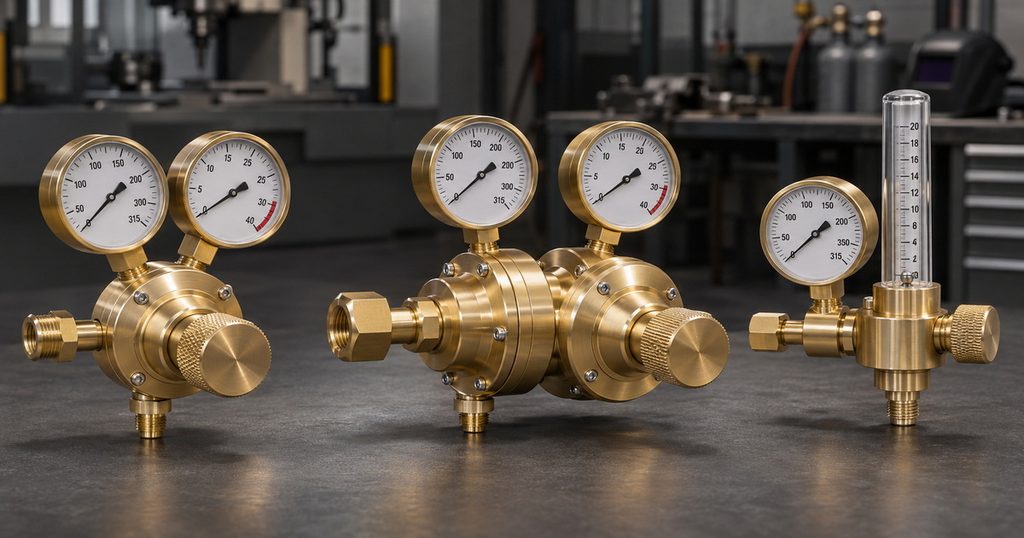
The main standards for welding gas pressure regulators include ISO 2503 for cylinder-mounted regulators, ISO 7291 for manifold regulators, ISO 5171 for pressure gauges, and ISO 9539 for construction materials. Cylinder connections must also match applicable connection standards. In addition, destination-market regulations—including U.S. workplace rules and European pressure-equipment legislation—can create separate obligations.
Which Standards Apply to Welding Gas Pressure Regulators?
| Standard or requirement | Main subject | What buyers should establish |
|---|---|---|
| ISO 2503:2009, including Amendment 1:2015 | Cylinder-mounted welding gas regulators, including specified flow-metering designs | Whether the exact model falls within its scope |
| ISO 7291:2010, including Amendment 1:2015 | Regulators for manifold systems | Whether the installation requires a manifold regulator |
| ISO 5171:2019 | Pressure gauges for welding, cutting, and allied processes | Whether supplied gauges meet applicable requirements |
| ISO 9539:2010 and applicable amendments | Materials for gas welding equipment | Suitability of metallic and nonmetallic gas-contact components |
| ISO 5145 and applicable regional or national standards | Cylinder valve outlet connections | Correct gas-specific connection and sealing interface |
| OSHA 29 CFR 1910.253 | U.S. oxygen-fuel welding and cutting | Applicable workplace-use and apparatus requirements |
| EU Pressure Equipment Directive 2014/68/EU | Pressure-equipment market access | Scope, classification, documentation, and marking obligations |
ISO 2503: The Core Standard for Cylinder Regulators
ISO 2503 addresses single-stage and two-stage pressure regulators connected to gas cylinders for welding, cutting, and allied processes. Its scope includes specified regulators for compressed gases up to 300 bar, dissolved acetylene, LPG, certain fuel-gas mixtures, and carbon dioxide.
It also covers specified regulators incorporating flow-metering devices, including equipment used for shielding-gas applications.
Understand the Pressure Limits
The “300 bar” in the title does not mean every regulator bearing a reference to ISO 2503 is rated for a 300-bar supply.
Each model has its own declared inlet rating. The standard also excludes regulators with nominal outlet pressure above 20 bar.
This distinction matters when sourcing nitrogen regulators. A high-output-pressure model for industrial testing may require a different assessment from a conventional welding regulator.
Specify the Edition and the Model
A purchasing requirement should identify:
– The standard edition and applicable amendment.
– The regulator model and configuration.
– Intended gas or gas mixture.
– Maximum inlet pressure.
– Outlet-pressure range.
– Required flow capacity.
– Cylinder and outlet connections.
“Manufactured to international standards” is too broad to establish product suitability.
ISO 7291: When a Manifold Regulator Is Required
ISO 7291 addresses pressure regulators for manifold systems used in welding, cutting, and allied processes, with a stated scope extending to 30 MPa, or 300 bar.
A cylinder regulator and a manifold regulator are not interchangeable simply because their pressure gauges look similar.
For a centralized supply, define the installation first:
– Number of connected cylinders or supply banks.
– Maximum simultaneous gas demand.
– Required downstream pressure.
– Expected supply-pressure variation.
– Integration with downstream protection and distribution equipment.
Then select the applicable regulator specification. Do not assume a cylinder-regulator test report establishes suitability for a manifold installation.
Pressure Gauges, Connections, and Materials
ISO 5171: Pressure-Gauge Requirements
ISO 5171 addresses pressure gauges used in welding, cutting, and allied processes.
For buyers, the practical issue is whether the gauge suits the regulator’s intended service—not merely whether its dial displays the desired units.
Specify readable scales, suitable measuring ranges, and gas-service identification. Request supporting documentation for the supplied gauge configuration.
A pressure gauge also does not automatically establish gas flow. Where a device indicates flow indirectly, confirm its calibration conditions and intended gas.
ISO 5145 and Regional Cylinder Connections
ISO 2503 requires compatible inlet connections designated for the intended gas service, with reference to ISO 5145 and regional or national requirements.
Matching thread diameter alone is insufficient. Confirm the complete interface:
– Thread specification and direction.
– Sealing geometry.
– Required sealing components.
– Gas designation.
– Pressure suitability.
Our recommended procurement approach is to approve a connection drawing before production. This is particularly valuable when one distributor serves several countries with different cylinder-valve arrangements.
ISO 9539: Material Compatibility
ISO 9539 addresses general and certain special material requirements for gas welding equipment.
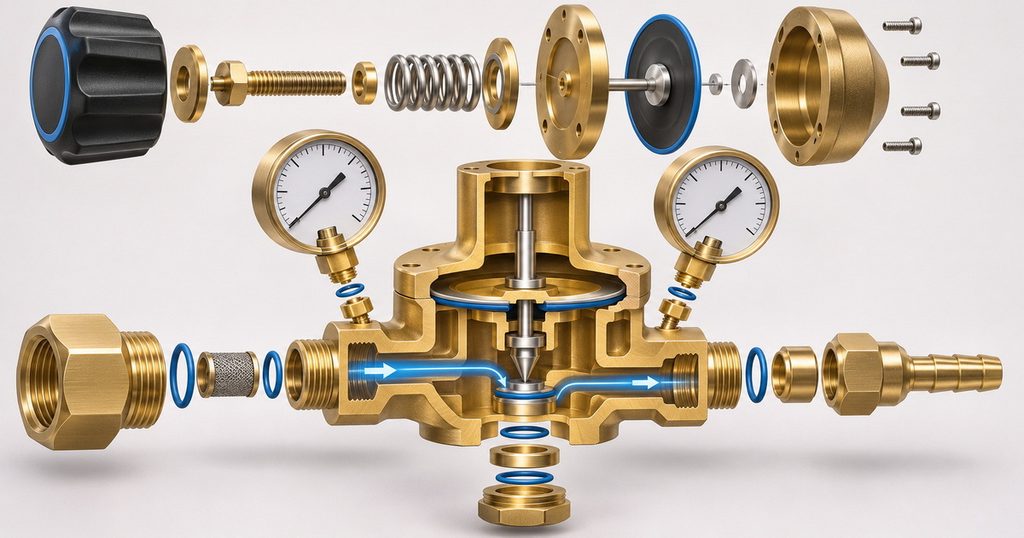
High-quality brass is valuable, but “brass construction” is not a complete safety specification. Alloy composition, seals, filters, lubricants, and gas-contact surfaces all require consideration.
For example, acetylene service introduces restrictions related to acetylide formation. Oxygen service requires attention to ignition resistance and suitable nonmetallic materials.
The useful purchasing question is therefore: “Which materials contact the gas, and what evidence supports their suitability?”
U.S. Requirements for Welding Gas Regulators
OSHA 29 CFR 1910.253 governs oxygen-fuel gas welding and cutting in covered U.S. workplaces.
It requires pressure-reducing regulators to be used only for their intended gases and pressures. It also requires approved apparatus. OSHA identifies relevant provisions within its guidance on standards requiring nationally recognized testing laboratory approval.
An ISO conformity statement should therefore not be presented as automatically satisfying U.S. approval requirements.
The Acetylene Pressure Limit
Under this OSHA rule, acetylene generally must not be generated, piped, or used above 15 psig, subject to the regulation’s stated exceptions.
That operating restriction is not the storage pressure limit for dissolved acetylene inside a compliant cylinder.
For acetylene regulator procurement, verify the intended service, pressure range, instructions, and applicable approval evidence. Never select an operating pressure solely because it appears on a gauge.
Also distinguish oxygen-fuel requirements from shielding-gas applications. An argon regulator for TIG welding should not be evaluated by assuming every oxygen-fuel provision applies identically.
European Requirements: Standards and CE Marking
For European sales, assess whether the regulator falls within the Pressure Equipment Directive, including its exclusions and classification rules.
The directive generally addresses pressure equipment with maximum allowable pressure above 0.5 bar. However, that threshold alone does not determine the conformity-assessment route.
Relevant considerations include equipment type, pressure, fluid classification, and applicable size parameters.
Why CE Marking Is Not a Universal Requirement
Equipment covered by Article 4(3) must follow sound engineering practice and include adequate instructions. It must not carry CE marking under the directive’s pressure-equipment provisions.
Other applicable legislation may independently require CE marking.
This creates an important distinction: the absence of a pressure-equipment CE mark does not automatically indicate noncompliance, and its presence does not replace a classification assessment.
Before approving packaging, obtain a written explanation of the applicable legal route. An EN ISO designation alone does not establish every market-access obligation.
Gas-Specific Requirements Buyers Should Address
Oxygen Regulators
Oxygen regulator evaluation should prioritize gas-compatible materials, appropriate cleaning, contamination control, and protective packaging.
Premium brass cannot compensate for unsuitable lubricants or contaminated internal surfaces.
Ask how the manufacturer controls cleaning, assembly, handling, and packaging for oxygen service. Confirm those controls apply to the actual production model.
Acetylene and Propane Regulators
Both are fuel-gas applications, but they should not be treated as equivalent.
Material compatibility, seals, connections, pressure ranges, and instructions must match the specified gas. A shared housing design does not establish interchangeability.
For acetylene models, include gas-specific material requirements and destination-market operating restrictions in the specification.
Argon, Nitrogen, and CO₂ Regulators
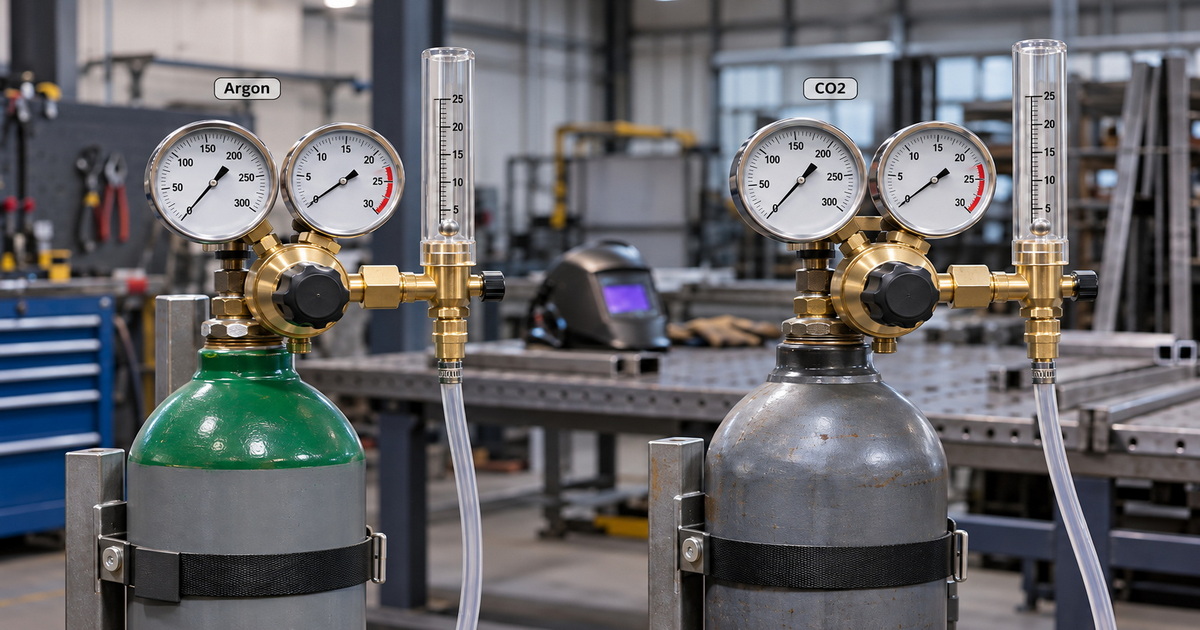
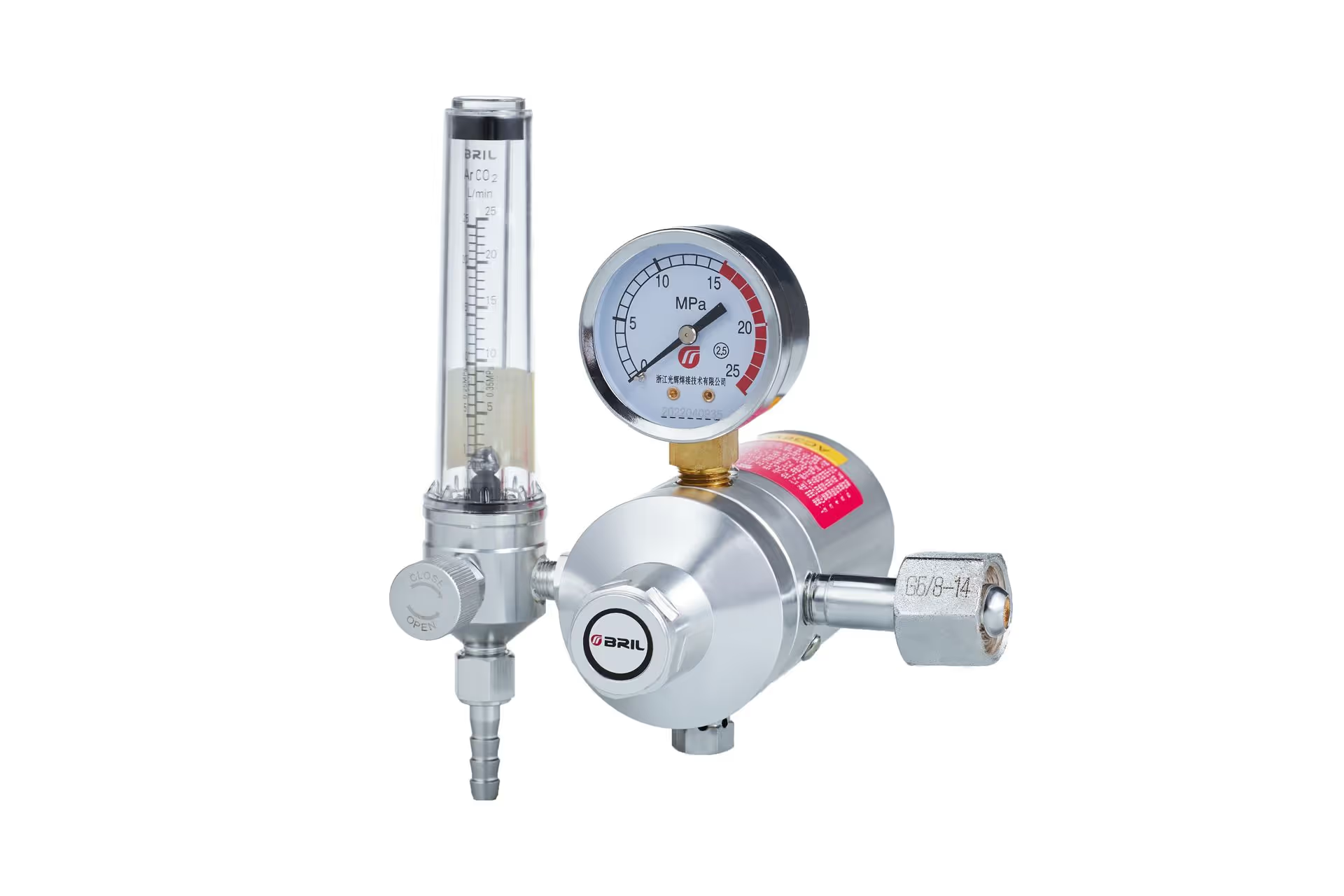
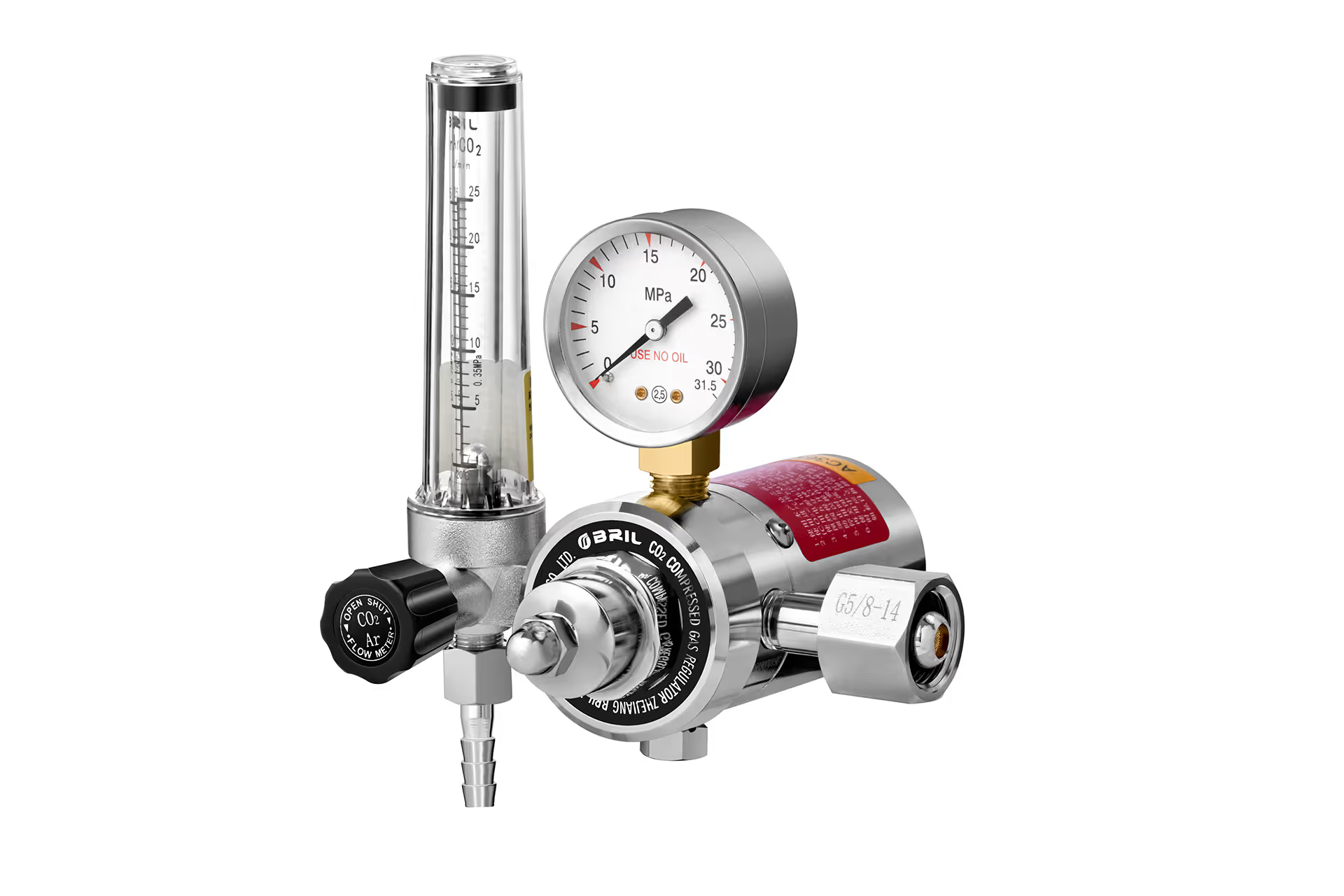
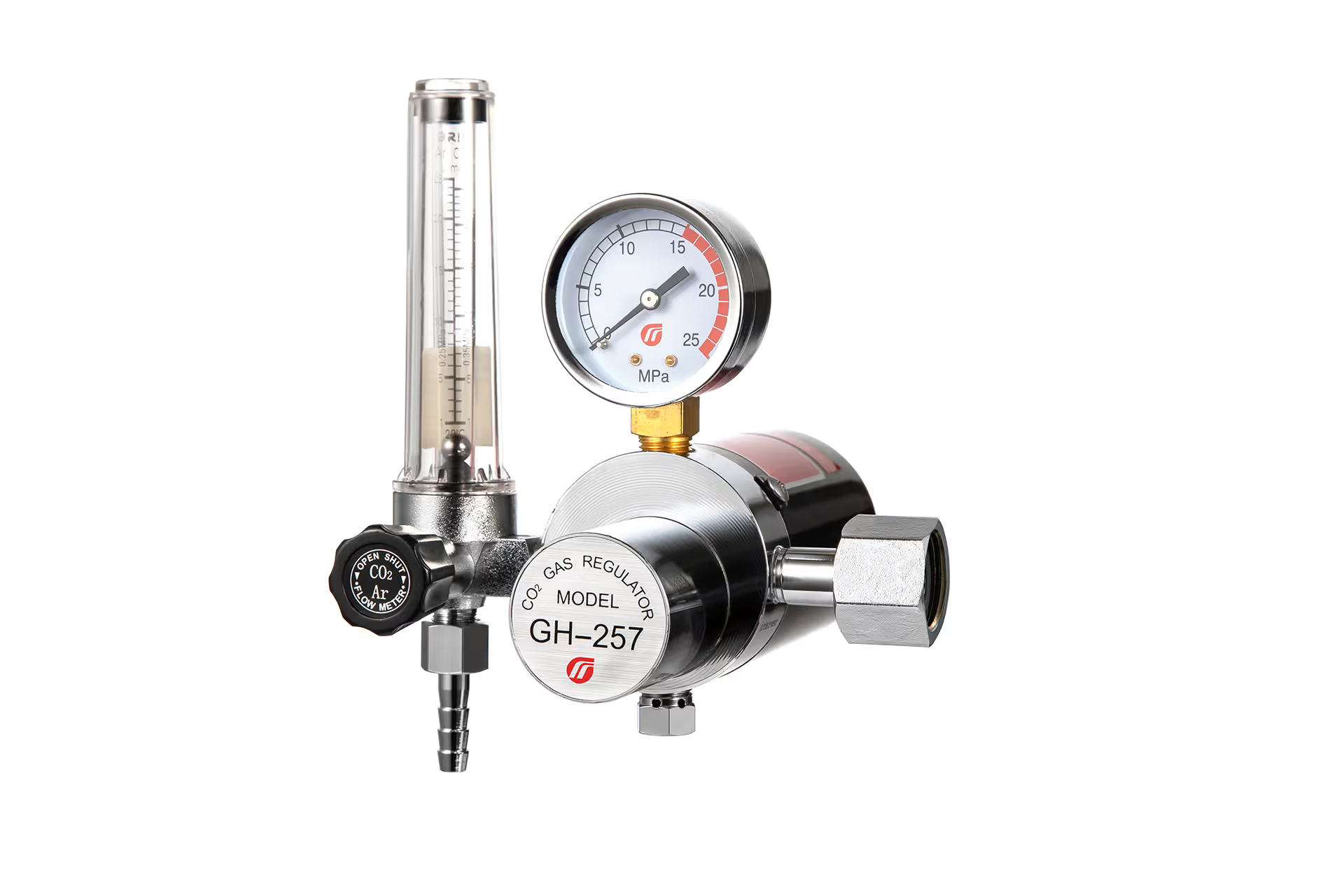
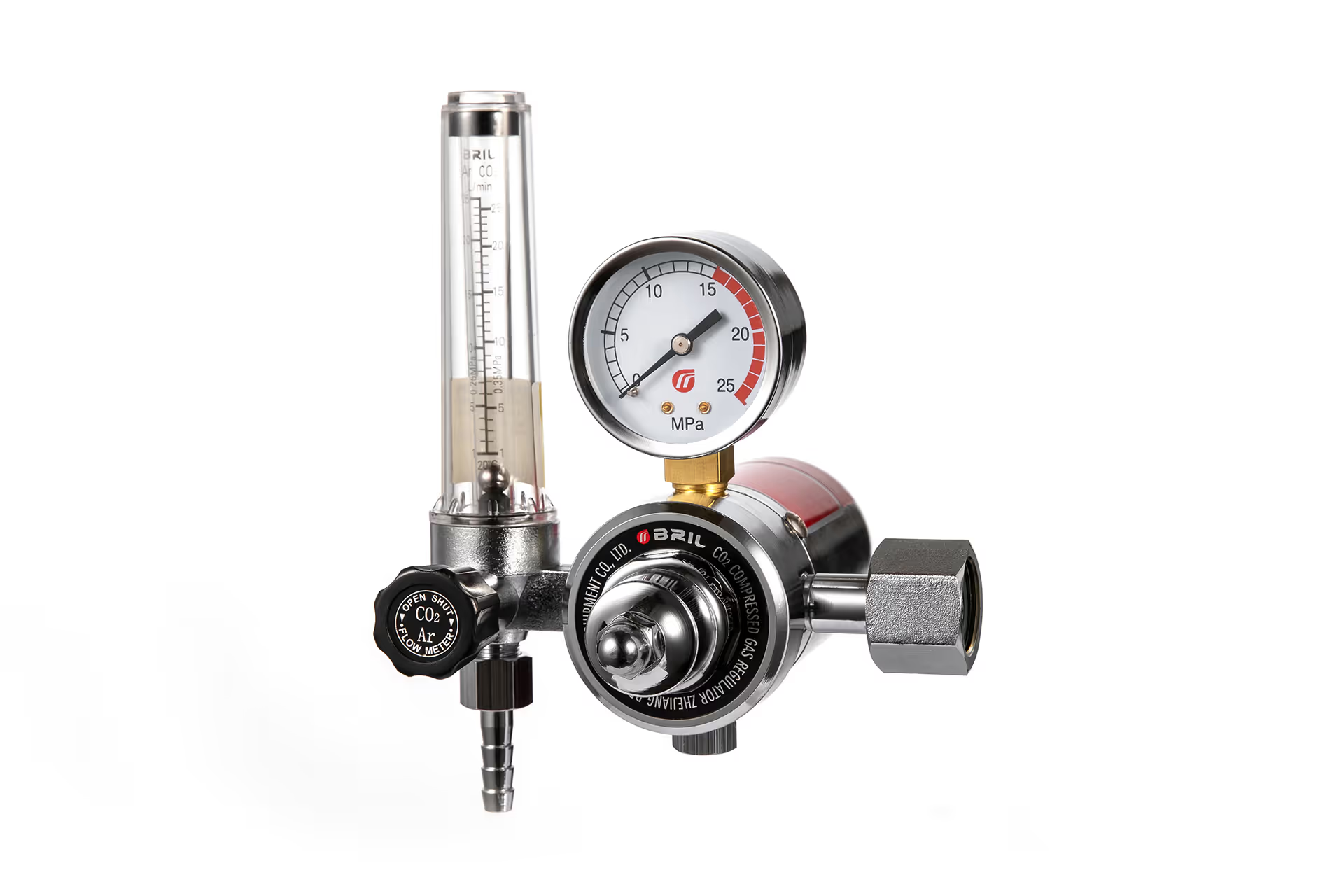
For shielding-gas regulators, establish the gas mixture, delivery pressure, and flow-metering requirements.
Where flow indication is gas-dependent, confirm the calibration rather than assuming an argon scale remains accurate for CO₂ or another mixture.
For nitrogen regulators, check the outlet-pressure requirement carefully. Industrial applications can extend beyond the scope of a conventional welding regulator.
Heated CO₂ Regulators
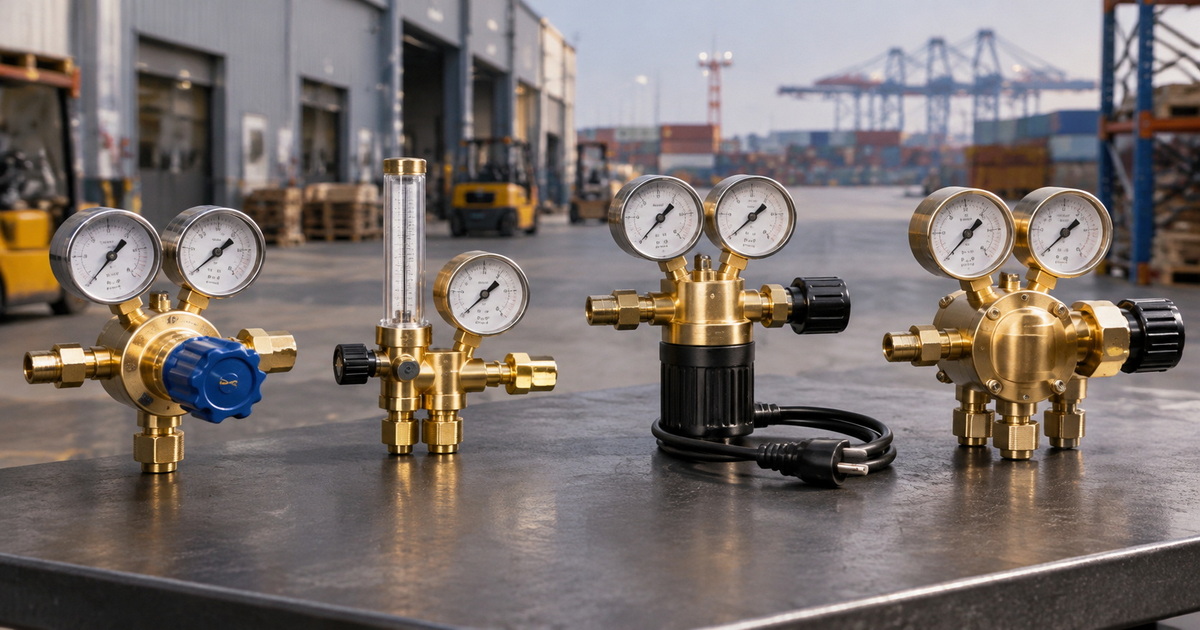
A heated CO₂ regulator combines pressure regulation with an electrical heating function.
Its assessment should therefore address both aspects. Specify voltage, frequency, heater configuration, temperature control, installation conditions, and the applicable electrical requirements for the destination.
A pressure-regulator test report alone should not be accepted as evidence covering every electrical safety obligation.
A Practical Compliance Review Before Placing an Order
Our recommended approach is to turn broad compliance claims into five reviewable steps.
1. Define the Application
Document the gas, supply arrangement, inlet pressure, outlet range, flow demand, ambient conditions, and destination.
Separate cylinder-mounted, manifold, and heated configurations.
2. Build a Model-Specific Requirements Matrix
| Requirement | Evidence to request |
|---|---|
| Product-standard conformity | Model-specific report identifying edition and scope |
| Material suitability | Approved material specifications and compatibility rationale |
| Connection compatibility | Controlled drawings and inspection criteria |
| Pressure-control performance | Results under defined operating conditions |
| Market-access obligations | Classification assessment and required approval documents |
| Production consistency | Inspection plan and batch or serial traceability |
3. Separate Design Testing From Production Inspection
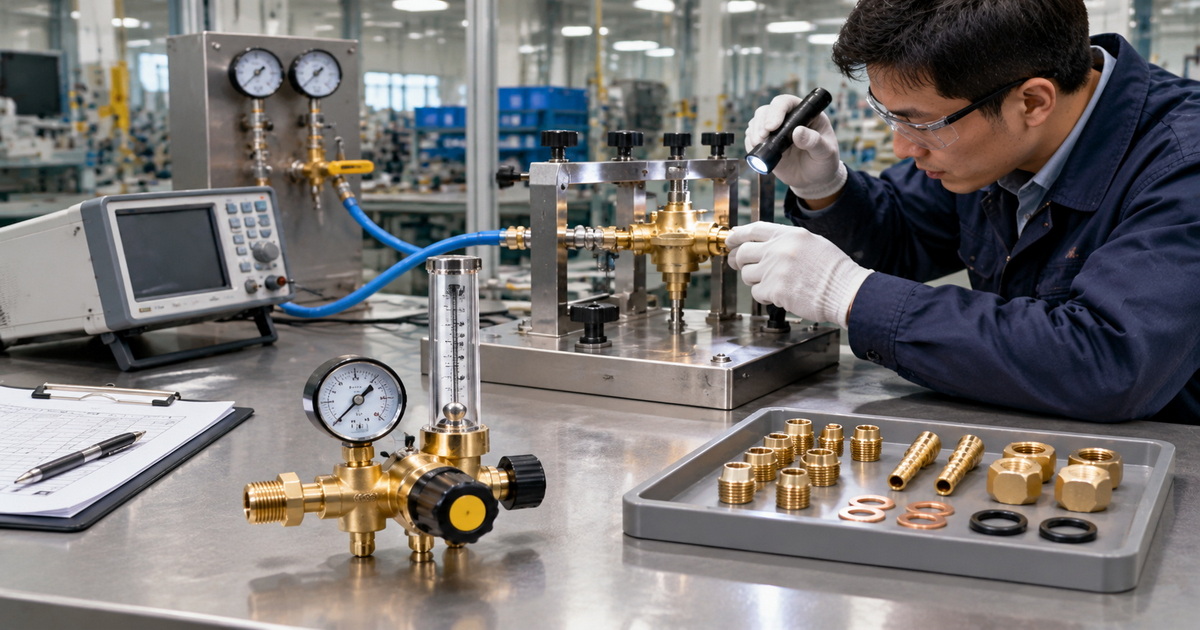
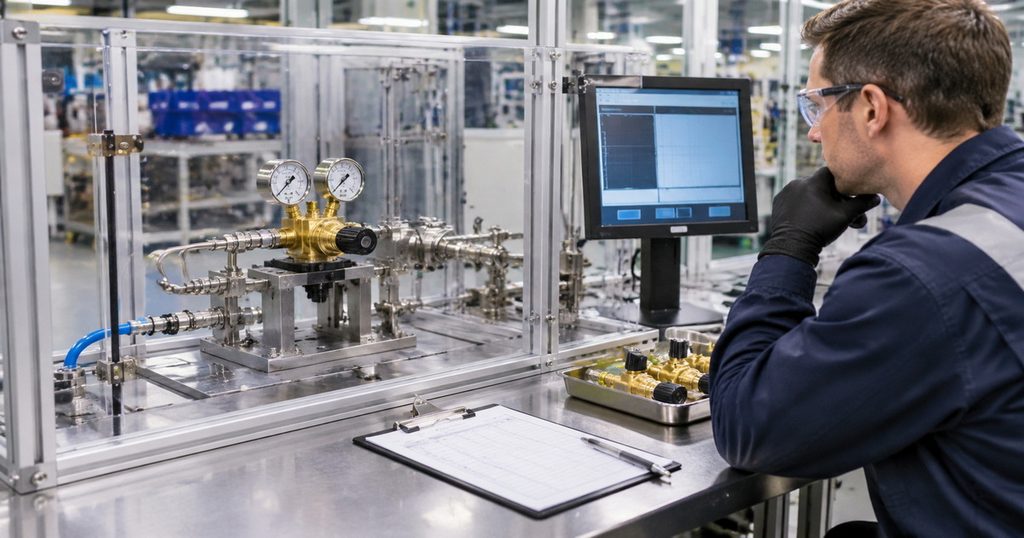
Design testing evaluates a representative configuration. Production inspection checks ongoing manufacturing consistency.
Request both the qualification evidence and the routine inspection plan. A tested sample does not, by itself, demonstrate that every subsequent unit receives equivalent control.
4. Review Changes Before Approval
Changing a seat material, gauge, inlet fitting, heater, or supplier can affect the original assessment.
For OEM and ODM projects, define which changes require engineering review, customer approval, or additional testing.
5. Verify Documents Against the Delivered Product
Compare the report’s model designation, drawings, ratings, and components with the approved sample and production shipment.
A report for a similar-looking regulator is not enough.
A Common Purchasing Trap: A Certificate Without Configuration Control
Consider an illustrative sourcing scenario: a distributor approves a dual-stage argon regulator, then requests a different inlet fitting and a CO₂ flow scale under the same private label.
The commercial change may look minor. The technical questions are not.
Does the existing evidence cover the revised connection? Is the flow indication suitable for CO₂? Do the model identification and instructions reflect the change?
This example is not a reported incident. It illustrates why configuration control often provides more purchasing protection than collecting additional certificates without checking their scope.
Specify Your Regulator Before Requesting a Quotation
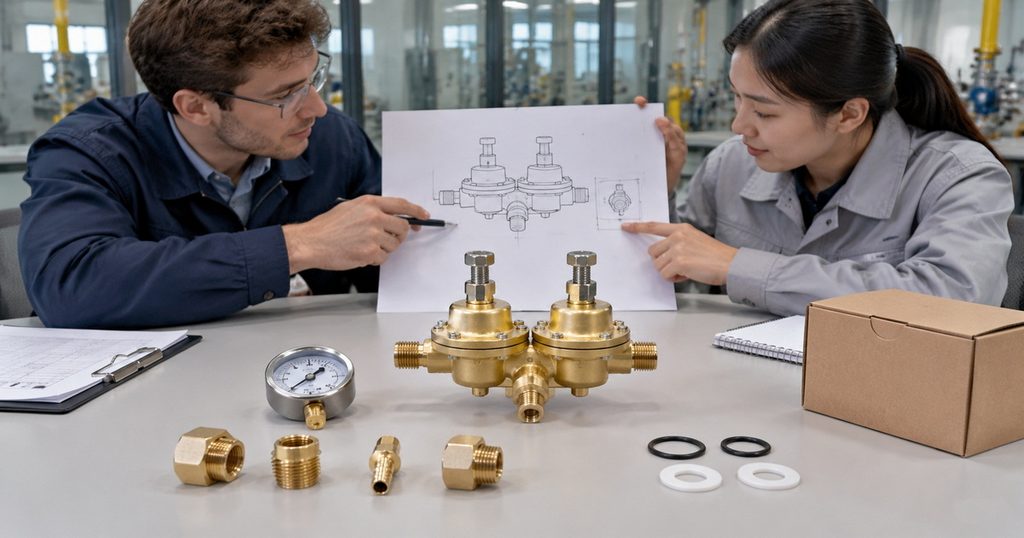
Send us your destination market, gas type, inlet pressure, outlet range, required flow, cylinder connection, and branding requirements.
For CO₂, heated CO₂, argon, oxygen, acetylene, propane, nitrogen, and dual-stage regulators, these details provide the foundation for an OEM or ODM proposal. Agree the applicable standards, inspection plan, and documentation scope before production—not after shipment.
Frequently Asked Questions
1.Is ISO 2503 mandatory everywhere?
No. Its legal or contractual status depends on the destination and application. It is an important product standard, but it does not replace local regulations, approval requirements, or customer specifications.
2.Do dual-stage gas regulators use a different main standard?
Not simply because they have two stages. ISO 2503 includes both single-stage and two-stage cylinder regulators within its scope. Verify the actual gas, ratings, configuration, and supporting evidence.
3.Can one regulator be used for oxygen and argon?
Do not assume so. Regulators must suit their designated gases and pressures. Oxygen service introduces material and contamination-control considerations that cannot be established by appearance or connection fit.
4.Does CE marking prove ISO 2503 conformity?
No. CE marking addresses applicable European legislation. ISO 2503 conformity is a separate technical claim requiring appropriate evidence. The two should not be treated as interchangeable.
5.Is brass construction enough to prove regulator quality?
No. Brass is only one part of the design. Material compatibility, machining, sealing, cleaning, pressure-control behavior, inspection, and traceability also require evaluation.
6.What documents should an overseas buyer request?
Request a model-specific specification, applicable test reports, connection drawings, material information, inspection criteria, instructions, and relevant market-access documentation. Check that every document matches the purchased configuration.
References
The standards and regulations below support the technical discussion. The purchasing workflow and illustrative scenario are editorial recommendations, not additional statutory requirements.
1. International Organization for Standardization. *ISO 2503:2009—Gas welding equipment: Pressure regulators and pressure regulators with flow-metering devices for gas cylinders used in welding, cutting and allied processes up to 300 bar (30 MPa).* Includes publication status and amendment information. [iso]
2. British Standards Institution. *BS EN ISO 2503:2009+A1:2015.* Scope, pressure limits, construction, and pressure-relief overview. [knowledge.bsigroup]
3. ISO/TC 44/SC 8. *Published standards catalogue.* Identifies ISO 7291:2010, its 2015 amendment, and ISO 5171:2019. [committee.iso]
4. International Organization for Standardization. *ISO 2503:2009, publicly available preview.* Connection requirements and references to pressure-gauge standards. [cdn.standards.iteh]
5. International Organization for Standardization. *ISO 9539:2010—Materials for equipment used in gas welding, cutting and allied processes.* Public preview covering gas-contact materials and gas-specific requirements. [cdn.standards.iteh]
6. Occupational Safety and Health Administration. *29 CFR 1910.253—Oxygen-fuel gas welding and cutting.* Intended gas service, approved apparatus, and acetylene pressure restrictions. [osha]
7. Occupational Safety and Health Administration. *Specific References to OSHA Standards Requiring NRTL Approval.* Relevant oxygen-fuel apparatus provisions. [osha]
8. European Union. *Directive 2014/68/EU on pressure equipment, consolidated text.* Scope, conformity obligations, sound engineering practice, and marking provisions. [eur-lex.europa]
Hot Tags: Welding Gas Pressure Regulators, Gas Regulator Manufacturer, Industrial Gas Regulators, OEM Gas Regulators, Dual Stage Gas Regulators, CO₂ Welding Regulators, Oxygen Pressure Regulators, Argon Gas Regulators, Acetylene Pressure Regulators, ISO 2503 Gas Regulators